Case of the Day – Thursday, October 9, 2025

ONE CROWDED HOUR

A British army officer and poet, Thomas Osbert Mordaunt, wrote in his poem, “The Call,” a line now misattributed to Sir Walter Scott: “One crowded hour of glorious life is worth an age without a name.”

It’s so much fun to be nasty. Even for just one glorious, crowded hour. It’s just not so much fun when the age without a name knocks on the door, seeking payment. Just ask John and Anne Estes.

Everything started when John and Anne tried to extend the Massachusetts Rule to cut some branches from their neighbors’ trees. The problem was that the trees and branches were both on the neighbors’ properties.

Then they built a fence. So far, so good, at least until the fence they built was on their neighbors’ property, too. The neighbors, Matt and Rachel Milcic, objected. After mediation, the Estes fence was removed.

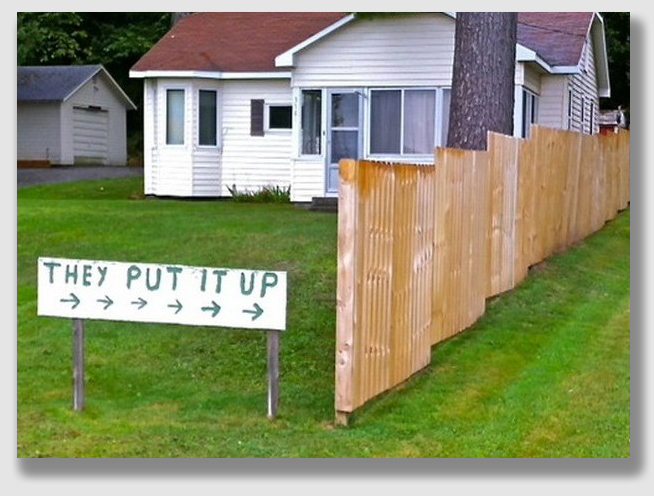
Obviously, John and Anne were sore at having been upbraided for their brazen trespasses. So they rebuilt the fence, and on the Milcics’ side, painted in large block letters, “PULL YOUR WEEDS.”

“Hah!” You can imagine John and Anne giving each other high-fives at their in-your-face cattiness. They sure showed those jerk neighbors, who thought they were so cool that they could stop John and Anne from trespassing. Their snickers and winks lasted for one crowded hour of glorious fun.

Maybe the neighbors really did need to weed. It’s hard to say. Certainly, Matt Milcic did some landscaping in response to the fence. After he had done so, and after he asked John to remove the sign, John said he might. But petulantly, he did not.

Cute, John… at least until the Milcics sued. Then, John offered to paint out the words if the Milcics would drop the suit. But that horse had left the barn…

The Esteses’ conduct was brazen enough that the trial court granted the Milcics summary judgment. But then, the battle continued over damages. By the time the court was done, the Esteses’ cruel prank had cost them northward of $10,000.00. Not nearly what the Milcics wanted, the award nevertheless undoubtedly deterred the juvenile conduct.

You’d better find your checkbook, John. You and Anne enjoyed your crowded, glorious hour. The age without a name (but with a dollar sign) has now arrived.

Milcic v. Estes, 2018 Wash. App. LEXIS 1798 (Ct. App. Wash., Aug. 6, 2018). The Milcics and Estes are next-door neighbors. In 2013, the Estes cut branches off trees located on the Milcics’ property and began to build a fence along the parties’ common boundary.

When a dispute regarding fence encroachments arose, the parties submitted it to mediation. In April 2014, the parties executed a settlement agreement in which the Estes agreed, among other things, to remove both the excess dirt from the Milcics’ property and portions of fence footings that were visible above ground.

In July 2014, the Estes painted the words “PULL YOUR WEEDS!” in white, 10-inch block letters on the Milcics’ side of the Estes’ fence. The Milcics threatened a lawsuit unless the Esteses removed the sign. The words remained, and the Milcics sued.

The Milcics’ complaint alleged private nuisance, trespass, timber trespass, spite fence, quiet title and damages to land and property. Shortly after the Milcics filed, the Estes offered to remove the painted message if the Milcics dismissed their complaint. The Milcics rejected the offer, telling the Estes, “If you were willing to do so voluntarily… you could have removed the sign at any time for the past nine months.”

The Milcics moved for partial summary judgment, alleging there were no issues about the Estes’ branch cutting, fence encroachments, and dumping of fill dirt on the Milcics’ property. The trial court granted relief, including ordering the Estes to the fence encroachments. The court awarded the Milcics some but not all, of their requested damages, but denied them reimbursement of their legal fees.

The Milcics appealed the adverse ruling on damages and fees.

Held: The appeals court upheld the damage award, and sent the case back to the trial court for a legal fee award.

In January 2017, the matter proceeded to trial solely on the issues of damages and attorney fees and costs. Rachel Milcic testified that the Estes cut branches off their trees and put fill dirt on their property without their permission. She said the branch removal ruined the beauty and privacy of the Milcics’ property. The loss of the branches upset her and she did not sleep well. She also testified that the Milcics were not sure where the property line was when the branches were cut.

She also testified that she was “shocked,” “horrified,” and “scared” when the Estes painted the “PULL YOUR WEEDS!” message on the fence facing the Milcics’ property. She had trouble sleeping and no longer felt that she and her children were safe. She testified that before the painted message appeared, her family spent around 12 hours per week in her yard. After the message appeared, they spent less than an hour a week in the yard. She valued her use of the yard at $40 per day. She testified that the message was visible for 922 days.

Matt Milcic testified that after the painted sign on the fence, the Milcics installed a surveillance system to “protect our property” and to “capture any trespasses by the Esteses on our land.” Matt also testified that the fence message could be seen from roughly a quarter of their property and prevented the Milcics from enjoying their yard. Their dreams and aspirations for landscaping the yard “got instantly crushed into a reminder of, you don’t get to enjoy this part of your property that you had hopes and dreams for.” He estimated that the affected portion of his property had a market value of $152,500.

Matthew conceded that he had not seen a doctor or any medical professional for his emotional distress and had no medical bills related to that distress. Matthew also conceded that he did not accept the Estes’ April 2015 offer to remove the fence message.

John Estes testified that he painted the “PULL YOUR WEEDS!” message to protest the “weeds and invasive vegetation coming onto my property.” He conceded that Matt told him in August 2014 that he had pulled the weeds and that he wanted the message removed, but he did nothing for nine months, at which time John offered to remove the message if the Milcics dismissed the lawsuit.

The court ruled that the Milcics were entitled to some, but not all, of their alleged damages. It awarded them $3,557, which it trebled to $10,673. However, it denied damages for the installation of the surveillance system, for lost enjoyment of property, for emotional distress, and for legal fees.

On appeal, the Milcics argued the court erred in awarding no damages for their alleged lost enjoyment of their property on their trespass and private nuisance claims. They claim they were entitled to such damages due to the significant length of time — 922 days — that the fence message remained in place. But the Court of Appeals held that the trial court was free to discount or reject the Milcics’ testimony regarding their alleged lost enjoyment. “On this record, and in light of our deference to the trial court’s view of the weight and credibility of the evidence,” the Court held, “we cannot say the court abused its discretion in declining to award damages for the Milcics’ claimed lost enjoyment of their property.”

The Milcics also contended that the trial court abused its discretion in failing to award them damages for emotional distress caused by the Esteses’ fence message and branch cutting. A plaintiff who proves liability for intentional wrongful conduct is entitled to damages for emotional distress upon a showing of actual anguish or emotional distress. The distress need not be severe and a plaintiff “need not demonstrate objective symptomology, medical bills, or a medical diagnosis.”

Here, the trial court found the Esteses engaged in intentional wrongful conduct, including nuisance, timber trespass, and a spite fence. The trial court also found, however, that the Milcics “have not provided sufficient evidence to establish that they have suffered emotional distress.” The Milcics pointed to their testimony that they suffered initial shock and distress, trouble sleeping for a week, and ongoing feelings of insecurity and fear of further invasions. “But,” the Court of Appeals held, “the trial judge’s evaluation of the sufficiency of the evidence includes determinations as to the weight and credibility of the evidence – matters that require our deference.”

The Milcics also contended the trial court erred in concluding that the Estes’ conduct was not the legal cause of their purchase and installation of a surveillance system. To determine if legal causation exists, a court considers whether “‘as a matter of policy, the connection between the ultimate result and the act of the defendant is too remote or insubstantial to impose liability.” The Court said that the judge’s determination rests on ”mixed considerations of logic, common sense, justice, policy, and precedent.”

Here, the Court of Appeals ruled, “the Milcics offer no relevant precedent supporting their argument regarding legal causation. Nor do they advance any persuasive arguments supporting their claim that logic, common sense, justice, and policy favor the imposition of liability for the surveillance system. There was never any doubt as to who had trespassed onto the Milcics’ property. The Estes readily admitted cutting the branches, painting the message, and installing the fence. There was therefore no need for a surveillance system to catch the perpetrators, and no reason to believe that a surveillance system would act as a deterrent to future incursions. In addition, except for the branch cutting, the trespasses were de minimis incursions. Thus, the trial court did not err in concluding that the Estes’ conduct was not a legal cause of the Milcics’ surveillance system expenses.”

– Tom Root

TNLBGray140407

Case of the Day – Monday, October 6, 2025

UNSKILLED LABOR

W.C. Fields once quipped, “He’s a self-made man – which shows the horrors of unskilled labor.”

When Farmer Wilson decided to sue his neighbor, demanding after 50 years of not bothering to enforce an agreement on keeping trees bordering his field trimmed that the neighbor clear-cut a 40-foot wide swath, he decided to represent himself. After all, it seemed that the lawyering business was just so much talk. Anyone ought to be able to do it…

Well, not just anyone. It turned out that as a lawyer, Farmer Wilson was more a son of the soil than he was a barrister. The heart of Farmer Wilson’s nuisance beef was that the trees cut down the crop yield on his land, because they shaded the field. Reduced to its essence, that was just a claim that he had a right to light, that is, a right to the sun being shaded by his neighbor’s trees. What he was claiming was the easement known as “ancient lights,” the Court said, and “ancient lights” was a doctrine that had been run out of West Virginia.

If that weren’t enough, the Court threw even more shade on Farmer Wilson’s lawsuit. The prior owner of Farmer Wilson’s land had had a deal with the former owner of the next-door property on keeping the bordering trees trimmed. Farmer Wilson candidly admitted he had not tried to enforce the contract for a half-century, confidently asserting that this meant his damages had really accumulated.

But what it really meant was that under the West Virginia statute of limitations that applied to nuisance suits, his lawsuit was about 48 years too late.

Farmer Wilson may not have been a self-made man, but his lawsuit was an excellent illustration of the horrors of unskilled labor.

Wilson v. Polino Enterprises, Inc., 2018 W. Va. LEXIS 413, 2018 WL 2277812 (Supreme Ct. of Appeals W.Va., 2018). Farmer Wilson and Polino Enterprises own adjacent properties in Upshur County, West Virginia. The Wilson property borders the Polino land’s western and southern boundaries. Farmer Wilson sued Polino, complaining that the Company had created a nuisance on the western boundary of its property that was damaging his farmland.

Farmer Wilson claimed that trees on Polino’s side of the property line were nuisances because of “[d]amage to the production (yield and quality) of crops as a result of invasion by roots and shading.” For this alleged crop damage, Farmer Wilson asked for $100 per year for a total of $4,500 from May of 1969 through 2014 when he originally filed the action. He also sought unspecified “labor and equipment cost[s] of removing branches and limbs of trees fallen” on his farmland. Finally, he wanted Polino to remove deer stands placed in trees near the property line because he had “no way of policing the killing of deer” on his property.

Polino filed a motion for summary judgment in the trial court. The Company showed the court letters between the parties regarding the care of boundary areas between the properties. In the letter, Farmer Wilson noted that Polino had previously agreed to his “cutting overhanging limbs and dragging them back to the wooded area” of the Wilson property, but that the proposal would restrict his cutting of tree limbs to those “no higher than 25 to 30 feet from the ground level.” Consequently, Farmer Wilson requested that Polino “clear-cut all the area 40 feet from our fenced border to remove the encroaching limbs and roots of trees from your forested land.” His letter explained that ‘I have neglected enforcement of the agreement between Mr. Robert Woofter[, a previous owner of the Polino property,] and my father. As a result, [I] have suffered economic loss during the past 50 years and [am] suffering economic loss each year in the form of forage crops harvested from the cultivated fields involved.’

In its motion for summary judgment, Polino argued that assuming all of Farmer Wilson’s allegations were true, it was nevertheless entitled to judgment as a matter of law on the nuisance claim. The trial court agreed.

Farmer Wilson appealed.

Held: Polino’s trees were no nuisance.

A private nuisance is a substantial and unreasonable interference with the private use and enjoyment of another’s land.

Abe Lincoln could have been talking about Farmer Wilson, who has a real dummy for a client.

The lower court properly ruled that Farmer Wilson’s nuisance claim was barred by the statute of limitations under West Virginia Code § 55-2-12(a). That section gave a party claiming a nuisance only two years from the time the claim arose to sue.

The Supreme Court even considered the statute of limitations, because it determined that Farmer Wilson’s rather opaque and do-it-yourself nuisance claim was fatally flawed. His contention, as best the Court could surmise, was that insufficient sunlight caused by overhanging trees on the respondent’s property had resulted in his farmland yielding fewer crops. That claim, the Court said, “fails as a matter of law… The common law doctrine of ancient lights has been abolished in West Virginia… Though an adjoining property owner may still establish an easement implied by necessity to light and air, such an easement does not exist here because there is no prior common ownership of the parties’ properties.”

In Cobb v. Daugherty, the court discussed easements of necessity, also called easements by necessity or ways of necessity. Such easements are typically implied to provide access to a landlocked parcel. Easements implied from quasi-easements, also called implied easements or easements by implication, are based on a landowner’s prior use of part of the landowner’s property (the quasi-servient tenement) for the benefit of another portion of the property (the quasi-dominant tenement). Three elements – common ownership, transfer of part of the land (severance), and necessity of some kind – are required in both cases. The fundamental distinction is that easements implied from quasi-easements are based on prior use.

While Cobb recognized that a certain type of easement to light and air still exists in West Virginia, the Court said, Farmer Wilson did not meet the legal requirements. He had not previously owned the Polino property. Therefore, the Court ruled, “We conclude that the circuit court did not err in awarding respondent judgment as a matter of law with regard to petitioner’s nuisance claim.”

– Tom Root

TNLBGray

Case of the Day – Friday, October 3, 2025

DO YOU HAVE A POINT?

More than one reader wondered where I was headed yesterday when I wrote about the New Hampshire law of animals ferae naturae. Other than showing you a picture of my dog – always a worthwhile goal, in my book – the blog may not have seemed all that relevant. After all, neighbors, especially urban neighbors, are seldom overrun with wild animals intent on committing mayhem in your backyard.

But, yes, I had a point. As that great philosopher Elvis once said, “I said all that to say all this…” The law of animals ferae naturae translates a bit into “plants ferae naturae.”

In today’s case, the afflicted neighbor, Linda Pesaturo, claimed that her neighbor’s trees were overhanging her property, making her driveway unusable, and collapsing her fence. The trees, she complained, were a private nuisance.

The New Hampshire Supreme Court nixed the claim. It pointed out that just as the law of animals ferae naturae required human interference with the animal before making a property owner liable for a resulting nuisance, it was not enough that Linda said the trees caused damage. Unless she could somehow show that neighbor Robbin had somehow interfered with nature in the planting or growth of the pine and maple, the lush and fecund trees.

Tree’s gonna tree.

Pesaturo v. Kinne, 161 N.H. 550, 20 A.3d 284 (Supreme Ct. N.H., 2011). Linda Pesaturo brought a small claims action against her neighbor, Robbin Kinne, seeking more than $2,000 in damages because two of Robbin’s trees overhung her property; one limited Linda’s use of her driveway, while the other one damaged her fence.

Robbin moved to have the claim dismissed, arguing that Linda failed to state a claim upon which relief could be granted. The trial court agreed, dismissing Linda’s negligence and nuisance claims.

Linda appealed.

Held: Linda had adequately raised a claim for negligence with respect to one tree, but she failed on the other. Her claim of private nuisance was properly rejected.

It is the common law rule that a landowner is under no affirmative duty to remedy conditions of purely natural origin on his or her land, even though they are dangerous or inconvenient to his neighbors. In order to create a legal nuisance, a human act must have contributed to its existence, just as under the law of animals ferae naturae, as held in Belhumeur, a landowner cannot be held liable for the acts of wild animals occurring on his property unless the landowner has actually reduced indigenous wild animals to possession or control, or introduced non-indigenous animals into the area.

But ferae naturae does not apply to plants, such as trees. Instead, the Court ruled, a duty exists on the part of a landowner when it is foreseeable that an injury might occur as a result of the landowner’s actions or inactions. A landowner’s liability may extend beyond the borders of his or her property, and a duty may be present if the landowner’s acts or omissions create a sufficiently foreseeable risk of harm in such a case, where it can be found that the landowner did not use reasonable care in the maintenance and operation of his or her property.

Because there is a foreseeable risk of injury when a tree is decayed or defective, a landowner who knows or should know that his tree is decayed or defective has a duty to maintain the tree to eliminate this dangerous condition. Thus, a landowner who knows or should know that his tree is decayed or defective and fails to maintain the tree reasonably is liable for injuries proximately caused by the tree, even when the harm occurs outside of his property lines. However, a landowner does not have a duty to consistently and constantly check all trees for non-visible decay. Rather, the manifestation of the tree’s decay must be readily observable in order to require a landowner to take reasonable steps to prevent harm.

To recover for negligence, a plaintiff must demonstrate that the defendant has a duty, that he or she breached that duty, and that the breach proximately caused injury to the plaintiff. In this case, Linda’s complaint failed to allege a cause of action for negligence because she had not alleged that Robbin’s trees were decayed or defective, or that Robbin knew that the trees were in such a condition but failed to eliminate the danger to Linda.

But when Linda amended her complaint, which she did after Robbin filed his defense of failure to state a claim, she sufficiently alleged that Robbin knew her oak tree had “swinging, dead limbs” and, thus, that the tree was decayed or defective, thereby imposing a duty upon him to eliminate the condition. The amended complaint also sufficiently alleged that Robbin breached his duty by failing to act and that this breach caused Linda injury by denying her use of her driveway.

But Linda’s claim that Robbin’s pine tree damaged her fence was insufficient. She claimed the tree failed because of “rain, wind, ice and snow,” and because of Robbin’s “insufficient management” of his pine tree, and that limbs broke off and damaged her fence. Her claim was insufficient to establish that the tree was decayed or defective.

– Tom Root

TNLBGray

Case of the Day – Tuesday, September 23, 2025

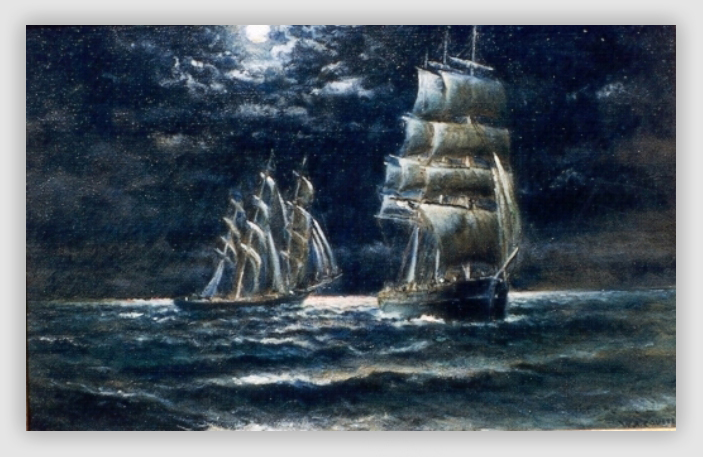
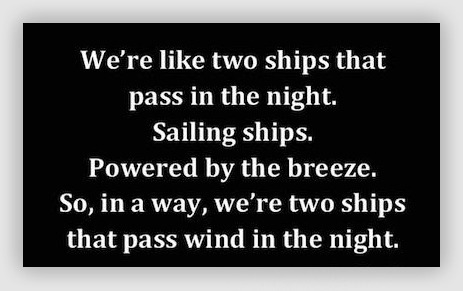
SHIPS PASSING IN THE NIGHT

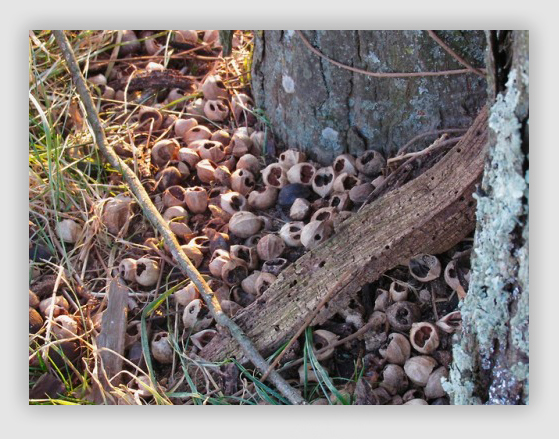
When Al Mattikow finally tripped and fell on a walkway outside of his rented townhouse, all because of a hickory tree that dropped twigs, nuts, leaves, and sap all over the common area, he sued the condo association for negligence and for maintaining a nuisance.

The condo folks defended themselves, showing that they had maintained the tree carefully, using the services of an arborist, to prevent it from becoming a hazard. Because they were so dutiful, the condo folks argued, they could not possibly be negligent. And that meant that the tree couldn’t be a nuisance, either.

“Whoa,” you’re thinking, “that’s so-o-o wrong!” And you are right. The defendant condo association’s arguments and Al’s complaint were like ships passing in the night. It’s laudable that the condo folks took care of the hickory so that it didn’t fall on Al’s pad some dark and stormy midnight. But that was hardly Al’s point. It wasn’t the tree’s falling that bothered Al. It was the falling leaves, twigs, nuts, and sap that covered the walkways, making Al’s perambulation difficult.

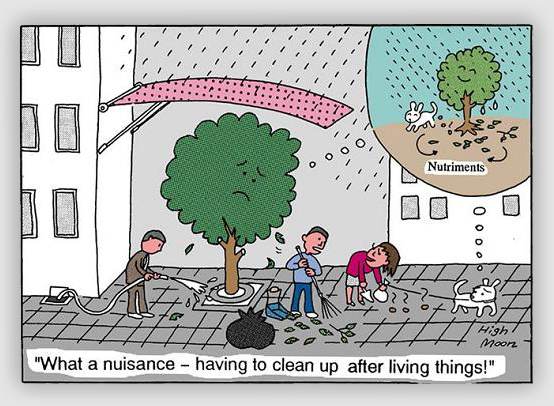
Negligence and nuisance both start with “n,” but they’re not synonyms. You can be negligent without creating a nuisance, and you can create and harbor a nuisance without ever being negligent. The condo association conflated the two terms, as well as conflating “safe tree” with “well-behaved tree.”

Viva la difference!

Mattikow v. West Lyon Farm Condominium Association, 2019 Conn. Super. LEXIS 2296; 2019 WL 4344368 (Superior Ct of Connecticut, Aug. 20, 2019). Al and Nina Mattikow rented a condominium unit in which they had lived for a number of years. They had complained to West Lyon Farm Condominium Association, the condominium association that managed the common areas of the property and enforced the regulations, about the extent to which leaves, hickory nuts, pollen, and sap continually fell onto the surface of the common deck near their unit, making walking hazardous. The Mattikows contended that their complaints explained that Al walked with a cane, making him more vulnerable to the conditions of the surface upon which he was walking.

Eventually, Al fell because of the droppings, he claimed, seriously injuring his ankle.

The Mattikows sued, alleging negligence and nuisance. The Association argued that pursuant to the bylaws and rules of the association, to which the Mattikows were bound by their lease agreement, the deck was considered to be a “limited common element.” A “limited common element” benefited one condo unit over the others, due to its location, and the condo unit that most benefited was responsible for maintenance, including clearing leaves and other debris. The Association claimed that under the bylaws, it had no duty to maintain the surface of the deck.

The Association moved for summary judgment, claiming there was no issue of fact – it simply had no duty to maintain the premises upon which Al fell, and conversely, Al had the obligation to maintain the deck surfaces himself.

Held: The Association’s motion for summary judgment was denied.

In addition to claiming negligence, Al claimed that the Association is liable under a theory of nuisance. The Association was dismissive of the claim, arguing that it is derivative of the negligence claim such that if the Association wins on the negligence count, it will necessarily win on nuisance as well. But that ain’t necessarily so.

The Court noted that “the elements of nuisance are different—otherwise it wouldn’t be a distinct cause of action. Simplistically, private nuisance is based on a theory of invasion of property rights rather than a breach of the duty to use reasonable care to avoid causing harm to others. Thus, even if there were no duty to maintain the deck on the part of the defendant, as the defendant vigorously argues, the lack of any duty of maintenance or control over the deck would have no automatic consequence for the nuisance claim… Generally speaking, a duty of maintenance or right of control over the affected premises is irrelevant to a claim of nuisance, which focuses on the conduct of a party external to the affected property and the effect of that conduct on the use of the affected property.”

The Court noted that there were at least a few allegations of negligence that focused on the tree depositing debris, rather than a claimed duty to clear the debris. The main focus, however, is the common area owner’s responsibility, including the hickory tree, for the debris constantly being rained down on the deck. The Association, the Court complained, paid more attention to the clearer issue of lack of duty to maintain and less attention to possible liability emanating from the claimed negligence relating to the tree, for which the defendant was responsible.

Factually, the Court said, the evidence showed the Mattikows had lodged numerous complaints about the tree. The Association called in a licensed arborist, and he had inspected the tree on a number of occasions, repeatedly giving the tree a clean bill of health as long as it was properly pruned and had sufficient cables to ensure stability. The focus of the inspections by the arborist was on whether the tree was likely to fail. He also focused on the tree’s stability, given the apparent shallowness of the root system. The Association did not ask the arborist to evaluate the extent to which nuts, leaves, sap, and branch detritus were being deposited on the deck of the Mattikows’ condominium unit or whether anything could or should be done in that regard.

The Mattikow complaint claimed the Association was negligent “[i]n that it failed to trim, remove or maintain the hickory tree or to prevent the deposit of materials on the subject deck in that it failed to remedy the condition of the deck as described in paragraph four in the deck although it or should have known that such a condition(s) existed.” In turn, the condition described in paragraph four is that there was “an accumulation of materials, including but not limited to sap, mold, liquids and acorns from a large hickory tree, whose branches and limbs hung directly over said deck.”

The Association argued that it had undertaken to trim and maintain the hickory tree. Specifically, the arborist had been called in 2013, and his recommendations had been promptly followed. He was again called to inspect the tree in 2015, and his recommendations were implemented promptly. He came again in 2018, at which time his assessment was that as long as the Association “continued to prune and monitor the tree, the tree posed no hazard.”

And there was the problem, the Court said. The Association focused on whether the tree was a “hazard,” that is, not viable and likely to fall. But, the Court said, these conditions “are irrelevant to the claims being made” by Al and Nina.

The Court noted that the Association’s evidence said nothing about whether the tree should have been removed, for reasons unrelated to its viability or likelihood of toppling or shedding large branches, despite the fact that removal was the Mattikows’ stated goal. The Association did not address the issue of the existence or nonexistence of a duty to “prevent the deposit of materials on the subject deck.”

The Court compared the situation to Connecticut General Statute § 13a-149. In the absence of an ordinance enacted pursuant to General Statutes § 7-163a (and limited to snow/ice conditions), a municipality is liable for the maintenance of sidewalks and the abutting property owner cannot be held responsible for any injuries caused by a failure to maintain the sidewalk, even if there is an ordinance directing the abutting property owner to maintain the sidewalk. However, if a property owner is responsible for creating the condition on the sidewalk — and that often is a result of depositing snow on the sidewalk or having a drain/downspout releasing water onto the sidewalk which subsequently freezes — then despite the absence of any legal duty to maintain the sidewalk, an abutting property owner may be held responsible for injuries resulting from a condition causally related to the conduct of that owner of the abutting property.

The Association is in a similar role here, the Court said. “It is in control of the common areas abutting the condominium unit for which the occupant of the condominium unit has primary responsibility of maintenance. It is a situation on property over which the defendant had no control [that emanates] from property within the control of the defendant, with an ability of control implicating the condition causing an injury to the plaintiff.”

Returning to the nuisance claim, the Association rather perfunctorily asserted that if it is right with respect to the claim of negligence, then necessarily the nuisance claim must also be a matter for which the defendant is entitled to judgment as a matter of law. This is wrong. To succeed under a nuisance theory, a plaintiff need not establish the predicate for a negligence claim. An invasion of a person’s interest in the private use and enjoyment of land by any type of liability-forming conduct is a private nuisance. The invasion that subjects a person to liability may be either intentional or unintentional.

The generation of malodorous smells offensive to neighbors can form the basis for a private nuisance, and the location of the odor-generating activity is an appropriate factor to be considered. The odors do not have to be formed negligently. “The benchmark,” the Court said, “is the reasonableness or unreasonableness of the interference with the ability of another (the plaintiff) to enjoy his/her property.”

The Court ruled that it could not grant summary judgment in favor of the Association on the nuisance claim, particularly given the court’s focus on the negligence claims that did not implicate possession and control over the deck, but rather control over the tree on the property, which was within the defendant’s control. Those claims, the Court said, were closely aligned with the possible existence of a private nuisance.

– Tom Root

TNLBGray140407

Case of the Day – Monday, September 15, 2025

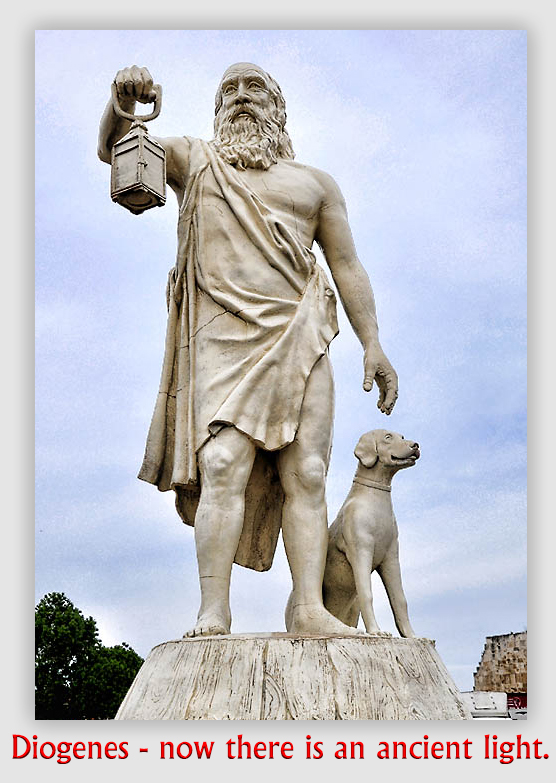
FOLLOWING DIOGENES (AND OTHER ANCIENT LIGHTS)

I found myself reading a revealing scientific (well, a “social scientific”) paper once about pseudo-profound bullshit.

No bullshit. I am not making this up. The study asked people to rate the profundity of randomly-generated sentences of touchy-feely crap (such as “wholeness quiets infinite phenomena”). The authors concluded, among other things, that “a bias toward accepting statements as true may be an important component of pseudo-profound bullshit receptivity.”

I was impressed because up to the time I read the study, I firmly believed that wholeness really does quiet infinite phenomena. Guess not, huh?

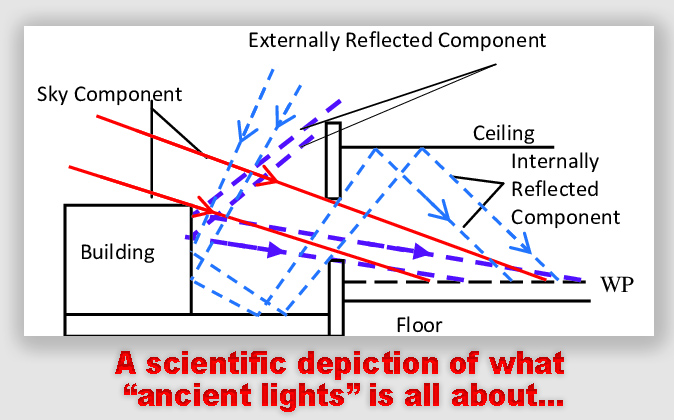
Unsurprisingly, when I considered today’s case – which illuminates the old doctrine of “ancient lights” – I looked for the type of bogus profundity that Professor Pennycook and his colleagues were writing about. As you can see to the left, finding something that was suitably bullshit was not hard.

“Ancient lights” was decidedly not bullshit. The name refers to, of all things, windows that have been around for awhile but eventually the name was loaned to an English doctrine of “presumptive title to light and air, received over land of another person, arising from the uninterrupted enjoyment of it for twenty years and upward, through the window of a dwelling house” (as described in Clawson v. Primrose). But America, being a land of opportunity and progress, was unwilling to tie the hands of property owners by implying easements of light and air in favor of countless neighbors.

Still, some found need for the “ancient lights” doctrine, and – because the doctrine was unavailable to them – tried the “side door.” The “side door” did not work for Rick Singer and the parents who bribed their kids’ way into college. And it didn’t work too well for the plaintiffs in today’s case.

Mohr v. Midas Realty Corporation, 431 N.W.2d 380 (Supreme Court, Iowa, 1988). Erick Mohr owned an office building situated on a commercial “strip” along Highway 20 in Fort Dodge, Iowa, with parking in front for use by tenants and customers. In 1983, Mohr’s neighbors to the west, Midas Realty Corporation and the Stan and Lynn Building Partnership, built a muffler shop on the front of their property with parking in the rear.

The muffler shop complied with zoning restrictions and setback lines, but it blocked the view of the Mohrs’ building to traffic approaching from the west.

Erick sued Midas for “unreasonable interference with Plaintiff’s lawful use and enjoyment of his private property.” He claimed damages and sought abatement of the alleged nuisance, that is, removal of the muffler shop.

Midas moved for summary judgment, arguing that Erick could not win under existing law. The trial court agreed, holding that Iowa nuisance law did not allow a suit for interference with view.

Erick appealed.

Held: Iowa law does not recognize a right to a view, and therefore, interference with a neighbor’s view does not a private nuisance make.

A private nuisance is generally defined at common law as “a substantial and unreasonable interference with the interest of a private person in the use and enjoyment of his land,” Not every interference with a person’s use and enjoyment of land is actionable, however. Here the trial court focused on a preliminary determination of whether Midas’ construction of the building, whether reasonable or unreasonable, interfered with a legally protected interest belonging to Erick Mohr.

Although the petition alleges interference with light, air, and view, Erick admitted at oral argument that the heart of his claim was that the Midas Muffler shop blocked the motoring public’s view of Erick’s building, thereby diminishing its value as a commercial property. Thus, he argued, Midas had enhanced its property at Erick’s expense, giving rise to a private nuisance action, where the parties’ competing interests in the use and enjoyment of land are weighed according to a reasonableness standard.

Midas argued that while Erick tried to pigeonhole his claim into a nuisance action, it was really a claim under the old English common law doctrine of “ancient lights.” Under that doctrine, a landowner acquired a negative prescriptive easement for sunlight across an adjoining landowner’s property and could prevent the adjoining landowner from obstructing the light once the easement was established by the passage of time.

The only problem with the “ancient lights” doctrine, Midas argued, was that every state considering the doctrine, including Iowa, repudiated its premise as inconsistent with the needs of a developing country. In fact, Iowa’s legislature passed a law in 1873 prohibiting the implied acquisition by adjoining landowners of “any easement of light or air, so as to prevent the erection of any building on such land.” Iowa Code § 564.2.

Mohr vigorously argued that his claim of nuisance had nothing to do with any claim of prescriptive easement for light and air, but the Court was unpersuaded: “We recognize,” the Court ruled, “that while disavowing any cause of action for interference with light, air, and view unless granted by express contract, our prior cases have left unanswered the question whether such claim might be sustained under the doctrine of nuisance. Squarely confronted with the question, however, we are convinced that giving vitality to such a cause of action in nuisance would be the same thing as granting a prescriptive easement.”

In other words, recognizing Erick’s right to enforce a nuisance claim for intentional interference with light, air, or view as something other than enforcement of the doctrine of “ancient lights” would be a distinction without a difference. “For a variety of reasons,” the Court said, “we think such an expansion of the law of nuisance would be unwise, at least in regard to the interference with view claimed here.”

Extending the law of nuisance to encompass obstruction of view due to lawful construction of a neighboring building would unduly restrict a property owner’s right to the free use of his or her property, interfere with established zoning ordinances, and result in an endless flood of litigation. Every new construction project is bound to block someone’s view of something, opening every landowner up to a claim of nuisance. The practical implication of such a right would be the need of every servient owner to obtain a waiver of the view easement from the “dominant” landowner. This would reduce development decisions to being made by a committee of all owners with sightlines to the project.

The Court found “no compelling reason to recognize an enforceable right of view over private property. Accordingly, we hold there can be no cause of action grounded in nuisance for blocking that view.”

– Tom Root

TNLBGray140407

Case of the Day – Friday, September 12, 2025

SPITE FENCE TAFFY PULL

Trust an angry plaintiff and a clever lawyer to stretch a useful concept like “spite fence” – which we have been talking about the last few days – like a salt water taffy pull.

We have established that a spite fence requires unreasonable height and a malicious motive. We have also figured out that a spite fence can be something other than a fence, such as the Maine widow woman’s “spite trees.”

It was probably inevitable that someone would go after a neighbor for planting plants that may someday be too tall. Add a complaint that the neighbor refused to knuckle under when the plaintiff tried to boss him and her around regarding their landscaping, and, voilà, you have malice.

Just as the cops in Minority Report arrested people who would someday commit a crime (surely a useful idea), this theory holds people liable because their plantings might someday be a natural spite fence.

Fortunately, the Mississippi courts that heard this one all made short work of it.

Blackwell v. Lucas, 271 So. 3d 638 (Ct. App. Mississippi, Nov. 20, 2018): The Lucases planted some plants and shrubs in the front yard of their Ocean Springs, Mississippi, home. The Blackwells believed that if allowed to grow, the plants and shrubs would at some indeterminate time in the future block their view of the ocean, the sunsets and the beautiful areas normally and typically available to property owners in the Oak Bluff Subdivision.

Thus, the Blackwells asked the Lucases to remove the plants and shrubs or to retard their growth so that their view of the ocean and surrounding area would not be impaired. The Lucases, being your average, reasonable American homeowners, declined courteously.

Actually, it may not have been “courteously.” The Blackwells argued that the Lucases were being mean: “The shrubs and plants installed by Mr. & Mrs. Lucas have no beneficial use and were installed and maintained by them for the purpose of annoying the Blackwells and preventing them from enjoying their property.”

The Blackwells, also being your all-too-common American homeowners, sued the Lucases for planting shrubs that “will unreasonably block the view of the Blackwells.” The term “unreasonably,” in this case, apparently meant anything that might alter the status quo in any manner the Blackwells found objectionable: “The actions of Mr. & Mrs. Lucas,” the Blackwell’s complaint alleged, “amounts [sic] to and/or equates [sic] to an invasion of the Blackwells’ interest in the use and enjoyment of their land and the invasion is intentional and unreasonable or negligent.”

Strong words, indeed! But the trial court was unimpressed and tossed the suit out on its ear. Not taking the hint, the Blackwells appealed.

Held: The trial court’s dismissal was upheld.

The Blackwells had no common law or statutory right to an unobstructed view across the Lucases’ property, nor did they have a right to dictate the type or placement of the Lucases’ plants and shrubs. The Blackwell complaint failed to state a cause of action for a nuisance or to allege any present injury or an imminent threat of irreparable harm for which there was no adequate remedy at law.

The Court of Appeals observed that a cause of action arises out of a pre-existing primary legal right with which the law invests a person. The right to maintain an action depends upon the existence of a cause of action which involves a combination of a right on the part of the plaintiff and the violation of such right by the defendant. Thus, the existence of a legal right is an essential element of a cause of action, inasmuch as a plaintiff must recover on the strength of his own case instead of on the weakness of the defendant’s case. It is the plaintiff’s right, not the defendant’s wrongdoing, that is the basis of recovery.

That right or duty must be a legal right or duty, and not a mere moral obligation that is enforceable neither in law nor in equity.

Applying the general notion to this case, the Court of Appeals observed that property owners have a legal right to cut and remove any part of a plant or shrub that grows on or overhangs their property. They have a legal right to sue to abate a nuisance. But property owners have no legally cognizable right to a view across their neighbors’ property. Nor do they have a right to dictate the type or placement of the neighbors’ shrubs.

The shrubs were not a nuisance. The Lucases would be subject to liability for a private nuisance only if their conduct is a legal cause of an invasion of the Blackwells’ interest in the private use and enjoyment of land. Again, without a legal right to a view across the property, there simply is no such interest to be invaded.

But the Blackwells tried to bootstrap their claim into a “spite fence” argument. They argued that the plants and shrubs would someday obstruct their view, and this fact gave them a viable cause of action for a “spite fence” nuisance.

The Court of Appeals held that the Blackwells’ “spite fence” claim had no basis in Mississippi law. Because the one Mississippi case on “spite fences” was decided by an evenly divided Court, “there is still no precedent for such a claim under Mississippi law. Moreover, we decline to recognize a new cause of action for a “spite fence” in a case that does not even involve a fence,” but instead only “some unspecified ‘plants and shrubs’ that, “[i]f allowed to grow,” allegedly may obstruct the Blackwells’ view.

– Tom Root

TNLBGray140407

Case of the Day – Monday, August 18, 2025

GIVE ‘EM AN INCH …

fence150722We continue our tour through the House of Bad Neighbor Horrors today (see our post from Wednesday) with a look at neighbors Paula A. Luckring and Christopher Blair.

An old legal adage holds that “a bad settlement is better than a good lawsuit.” Paula Luckring sued her neighbor, arguing that branches from his trees overhung her property, and that they were doing all the kinds of things trees do – you know, dropping twigs and leaves, leaking sap, growing roots, just normal tree stuff. Paula insisted that she was entitled to something north of $13,000 because the trees were “trespassing” on her property, making claims that sounded a lot like her lawyer had read Fancher v. Fagella.

Neighbor Chris Blair counterclaimed, pointing out that if Paula wanted to really get technical, her deck – which she claimed was being damaged by his trees – was built partly on his property, and it should be removed.

The case looked like the trial would be the Saturday night main event, but alas … before trial, the parties settled. There’s nothing wrong with that. Civil actions are just a formalized means of settling disputes, a little more complex and fact-driven than “rock, paper, scissors,” but often, it seems, just as random. When the parties find a means short of a full-blown trial to resolve things, time and money are saved, and people are able to get on with their lives.

That must be what Chris thought, because he settled the case with Paula before trial. He agreed to give Paula title to an 11-foot strip of his own land and to build, at his own expense, a fence marking the new boundary line between their properties.

appease150722We have to hand it to Chris. He apparently was a Bible scholar, and remembered Matthew 5:39 – 40: “But I say to you, do not resist an evil person; but whoever slaps you on your right cheek, turn the other to him also. If anyone wants to sue you and take your shirt, let him have your coat also…” For that matter, Neville Chamberlain thought that giving Hitler Czechoslovakia would keep the brown shirts out of Paris.

We’re not saying Ms. Luckring was evil, nor would we ever equate her territorial ambitions with those of the Third Reich. For a concession to be effective, however, the party being appeased has to be acting in good faith. This is rarely the case. Rather, the problem is that the party being appeased has probably acted in bad faith in order for affairs to get to the point that appeasement is necessary. Hitler had the “Anschluss.” Without it, Chamberlain wouldn’t have needed to make a deal. Putin started by taking South Ossetia from Georgia. Then, he grabbed Crimea, and now he is busy trying to take Ukraine (if not Moldova, Estonia and the other Baltic states as well). History has shown us that appeasement doesn’t work because appeasement only convinces the appeased party that bad conduct pays. And just two years ago today, notwithstanding years of negotiations, the Taliban just went ahead and took it all.

Ask Chris Blair about appeasement. Chris thought he had bought peace by giving away a piece of this land. But when Chris hired a fence company to build the agreed-upon fence along the new boundary, Paula Luckring refused to let the contractor set foot on her property during the construction process. It’s hard to build a fence from one side only. To further appease Ms. Luckring, the contractor built the fence 13 inches into Chris’s side of the boundary. After that, when Chris’s caretaker (Chris himself had severe Parkinson’s, a condition that undoubtedly only goaded Ms. Luckring into further predations) would try to use a weed whacker on the grass growing in the 13-inch space between the new boundary and the fence, Ms. Luckring demanded that he do the cutting without setting foot on her property. However, she magnanimously conceded, she would cut the grass on the 13-inch strip… if Chris gave her an easement for the 13 inches of space.

nomans150722The trial court was drawn back into what it called the “predictable drama” that arose from Ms. Luckring’s demands. It told Paula that she had to pay to have the fence moved and reinstalled right along the boundary. No 13-inch “no man’s land.” No easements. No more trespassing actions.

Naturally, Ms. Luckring appealed. The appellate panel was having none of it. It held that “a mere cursory review of the Plaintiff’s pleadings and her own testimony … adduces an ongoing pattern of bullying of a Defendant who granted her the moon and the stars in acquiescing to her unceasing demands, and yet was confronted with demands for more …” It’s not unheard-of for a plaintiff to cripple her case by her own testimony, but to prove yourself to be a bully?

Under the circumstances, making Paula pay to relocate the fence seemed to the court to be a lot like justice. Approximate justice, but still justice.

Luckring v. Blair, 2014 Pa. Dist. & Cnty. Dec. LEXIS 3 (Com.Pl.Ct. Pennsylvania, Dec. 3, 2014). Paula Luckring sued neighbor Christopher Blair, alleging that his pine and sycamore trees trespassed onto her property, causing public safety issues that had been presented to the local township authorities. She additionally complained of damage caused by “tree sap, needles, branches, cones, roots” constituting a “nuisance” because the trees overhung, fell upon, and grew under her property which caused damage such as a broken window, damage to a deck and stamped concrete, as well as clogging a sewer line and causing landscape damage. She demanded $13,369 for cutting down or trimming the offending trees and restoring her property to its previous condition.

trespass150722Blair countered that he had given Luckring permission to trim the sap-dripping white pine tree all the way back to its trunk, but her trimming caused the sap to drip excessively because there were no tree branches remaining to catch and absorb its flow. He also said that she had previously accepted his written permission and cut down the encroaching white pine tree at her own expense. He argued she should not now be able to renegotiate that contract. He also counterclaimed, alleging that Luckring was trespassing on his property with her deck and retaining wall.

The parties settled the case before trial by signing a settlement agreement that called for Blair to grant title to Luckring, free of charge, to an 11-foot strip of his own land and to build, at his own expense, a fence marking the new boundary line between their respective parcels. Nevertheless, the parties were back in court a year later seeking to resolve the predictable drama ensuing from the Plaintiff’s abject and literal refusal to allow the fence company to set foot on her newly acquired property in order to erect the structure. The contractor then built the fence thirteen inches inside the Blairs’ side of the new property line in order to appease the Plaintiff in that regard. Adding further insult to injury to Blair, who suffered from severe Parkinson’s Disease, Luckring demanded that when Blair cut the tall grass and weeds on the 13-inch strip of his property on Luckring’s side of the fence, such work must be accomplished without setting foot on her land. She offered to cut the grass and weeds herself, but only if Blair granted her an easement to that additional piece of his property.

The appellate court enforced the settlement agreement by ordering Luckring to move the fence to the boundary line of the respective properties at her own expense.

Luckring appealed.

Held: The enforcement of the settlement agreement was upheld.

The appellate panel noted with disdain that after Blair applied for a building permit for the fence in May 2013, Luckring made multiple calls to Haverford Township officials to note her opposition to the fence despite having agreed in the settlement not to oppose in any manner the erection of the fence and to waive any and all objections thereto. She also erected signs on her property pointing in the direction of Blair’s residence that said “No Trespassing,” and put up a sign on her property ordering the fence company not to install the fence all the way to the sidewalk, contrary to Blair’s instructions. She also initiated a verbal confrontation with Mary Blair, in which she accused the Blairs of being “too cheap to get their own survey”, even though the settlement agreement required Luckring to bear the expense; and she hammered stakes into the ground on Blair’s property and – after the fence was built – she entered Blair’s property to “wash” the brand new fence.

Whatever Ms. Lucking might do for a living, we're betting it's not driving the Welcome Wagon.

Whatever Ms. Lucking might do for a living, we’re betting it’s not driving the Welcome Wagon.

The Court noted that when Luckring was asked at the hearing to expound upon her belief that the parties must strictly adhere to the terms of their settlement agreement regarding the need to care for the portion of the Blairs’ land outside the fence line and abutting her property, she replied that if the caretaker stepped on her property during this process, he would be trespassing and that she would sue.

The Court concluded that a “mere cursory review of the Plaintiff’s pleadings and her own testimony at the Hearing on the Defendant’s Petition to Enforce Settlement adduces an ongoing pattern of bullying of a Defendant who granted her the moon and the stars in acquiescing to her unceasing demands, and yet was confronted with demands for more. The parties’ Settlement Agreement and Release provided for a fence to be built by the Defendant on his side of the new boundary line of the neighboring properties, albeit without trespassing on the Plaintiff’s land. A reasonable interpretation of this requirement would result in the edge of the fence being placed on the edge of the Plaintiff’s new property line and not crossing this point of demarcation. Moreover, the momentary intrusion involved in its construction would be of no concern whatsoever with regard to the fence contractor’s presence on the Plaintiff’s side of the boundary line in order to complete the effort. However, the Plaintiff took the extreme position that enforcement of these provisions must be strict, and refused to permit the fence installer to step on her property to undertake its construction in the place designated by the Defendant in express accordance with the parties’ stipulated Agreement. As a result, the fence contractor took it upon itself to erect the structure thirteen inches inside the Defendant’s side of the boundary line, instead of on the line itself, in order to placate the Plaintiff. The Plaintiff then added to this mix of unreasonableness and bad faith by complaining that the Defendant’s landscaper was stepping on her property when clearing weeds and high grass growing on the 13-inch strip on her side of the fence that remained in the ownership and possession of the Defendant.”

Calling Luckring’s conduct “obdurate and [in] bad faith,” the Court concluded that Luckring had not acted in good faith, and the trial court’s order that she pay to move the fence “was warranted and necessary to achieve justice in this case.”

– Tom Root

TNLBGray140407