Case of the Day – Wednesday, February 12, 2025

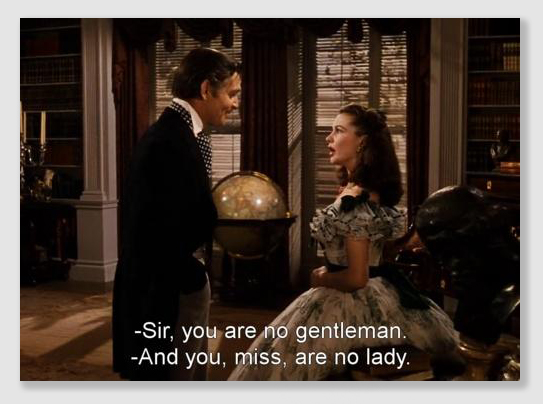
YOU, SIR, ARE NO GENTLEMAN
It is fairly common to find people in some kind of kerfuffle over an alleged breach of contract, where one complains that despite what the document might say, the parties had really orally agreed to something else altogether.

That’s why canny lawyers make sure that every contract has an integration clause in it. An integration clause is no relic of the civil rights era. Instead, it provides that the parties have no deals but the deal written down in the contract; in other words, everything has been integrated into the document, and if it ain’t written, well… then it just ain’t so.

Beyond the careful draftsmanship lies the common-law “parol evidence rule.” The word here means “oral” or “solely evidenced by speech.” Today’s case provides a perfect example of it. When the power company got a written easement to trim trees on the Larew estate, that easement provided the power people could keep the lines free of tree hazards. But as the easement was being signed, Mr. Larew asked, “How about my 300-year-old white oak?”

“Oh, that?” the slick power company real estate man said. “We’ll never touch it. You have my word on it.”

Right. It may have taken the power company 20 years, but the tree did get hacked up. When old man Larew’s kids sued – he was long gone by then – the power company said, “What gentlemen’s agreement?”

The utility’s lawyers, having gone to law school, said, “Parol evidence rule! You can’t introduce evidence of an inconsistent oral deal to undercut a clear written easement.”

They were right about that, but dead wrong that the easement meant that they could do as they liked to the trees. The trimming crew boss talked to the property owners but then unlimbered the saws and, as for what was needed, said, “I’ll be the judge of that!”

The West Virginia Supreme Court said, “Not so fast, my friend!” ‘Reasonableness’ and due regard for the rights of the Larews had a lot to do with it, too.

Larew v. Monongahela Power Co., 199 W. Va. 690 (Supreme Ct. W.Va., 1997). In 1975, Glen Larew (a predecessor-in-interest to Susan and Keith Larew) granted a written easement to Monongahela Power Company giving Monongahela the right to trim, cut or remove trees in order to maintain electric service. According to the Larews, there was also a “gentlemen’s agreement” in 1975 that a 300-year-old white oak tree on the Larew property would never be touched.

However, one day in 1994, Asplundh Tree Expert Company, Monongahela’s tree trimming contractor, told the Larews that tree trimming would commence shortly pursuant to the easement. The Larews discussed the extent of the trimming with Asplundh but to no avail. Two months later, the trimmers arrive with chainsaws blazing. They trimmed three trees on the Larews’property, including severely cutting up the 300-year-old white oak.

The Larews sued for wrongful cutting, arguing that the extent of trimming was unreasonable. Monongahela filed for summary judgment, alleging that “reasonableness” is not an issue because the determination of the extent of tree trimming needed rests solely with the easement holder. The trial court agreed with Monongahela and dismissed the LaLarews’omplaint.

The Larews appealed.

Held: The power company’s easement gave it the right to trim trees to the extent that the trees endangered the safety or interfered with the use of the power lines, but such trimming has to be done in a reasonable manner with due regard to the rights of all parties. The trimming must not inflict unnecessary damage to the land or unreasonably increase the burden on the servient tenement (the property owner’sights).

The Larews raised two arguments on the appeal. First, they claimed, the trimming violated the 1975 “gentlemen’sgreement” not to trim the white oak. Second, they argued that the trimming performed was unreasonable.

The Supreme Court made short work of the “gentlemen’s agreement.” The parol evidence rule, which generally prohibits the introduction of any extrinsic evidence to vary or contradict the terms of written contracts, is quite clear: prior or contemporaneous statements that contradict the clear, unambiguous language of a written contract are inadmissible. Parol evidence may only be admitted to explain uncertain, incomplete or ambiguous terms.

Here, the terms of the written easement were clear, and evidence of an oral “side deal” that contradicted those written terms was inadmissible.

The fee interest in land over which a power company has been granted an easement remains with the party making the grant. The grantor-owner of the land retains the right to make any reasonable use of the land subject to the easement so long as that use is not inconsistent with the rights of the grantee.

In exercising the rights granted under an easement, a power company must follow the rule of reasonableness. In other words, the power company may not inflict unnecessary damage on the land and may not unreasonably increase the burden placed upon the servient tenement.

Under a general right-of-way easement, a power company has the right to enter upon the land to maintain and repair its equipment to the extent necessary to ensure the safe and effective operation of that equipment. In exercising that right of entry, however, the power company may not inflict unnecessary damage on the land or unreasonably increase the burden placed upon the servient tenement. This right of entry includes the right to enter upon the land to cut or trim trees or limbs that might be a danger to the power lines.

A power company’s right as an easement holder is limited to the removal of growth that endangers the safety or interferes with the use of the power company’s lines on the right-of-way, and any removal must be done in a reasonable manner with due regard to the rights of all the parties. The power company’s rights are not unlimited. The power company must not inflict unnecessary damage to the land nor may its exercise of its rights unreasonably increase the burden placed on the servient tenement.

The Larews also maintained that there was a genuine issue of material fact concerning the reasonableness of Monongahela’s trimming. The trial court held that “the easement permits Mon Power to exercise its own opinion in determining how much to trim to prevent the trees from interfering with the power lines” and that the rule of reasonableness stated in Kell v. Appalachian Power did not apply.

In Kellthe Court observed that the “fee interest in land over which a power company has been granted an easement remains in the party making the grant. The grantor-owner of the land retains the right to make any reasonable use of the land subject to the easement so long as that use is not inconsistent with the rights of the grantee.” Thus, the Court said, in exercising the rights granted under an easement, a power company must follow the rule of reasonableness. It “may not inflict unnecessary damage on the land” and “may not unreasonably increase the burden placed upon the servient tenement.” The Kell court held that the right given by the utility easement was “to cut and remove trees, overhanging branches or obstructions that endanger the safety, or interfere with the use, of the power company’s lines on the right-of-way granted by the indenture.

Given the principles upon which Kell is predicated, the Court said, “We find that the [trial] court erred in holding that as a matter of law, the appellees were not subject to the reasonableness rule of Kell.” Monongahela’s right is limited to the removal of that which endangers the safety, or interferes with the use of the power company’s lines on the right-of-way, and any removal must be done “in a reasonable manner, with due regard to the rights of all the parties.” 

Because there is a genuine question of material fact concerning whether the power company unreasonably increased the burden on the Larews’ property when it exercised its rights under the easement, and whether Monongahela limited the trimming to that necessary to assure the safety and continued use of the power company’s lines, summary judgment should not have been granted.

– Tom Root

TNLBGray140407

Case of the Day – Monday, February 10, 2025

HERE WE CUT DOWN THE MULBERRY BUSH…

When Mamie’s lights went out, she called the electric company to fix them. The linemen tracked down the problem and fixed it while Mamie was off at Wal-Mart. But while they were there and Mamie wasn’t, the electric workers saw an excellent opportunity to saw… and to get rid of some trees in the utility’s easement across Mamie’s yard that they thought were in the way of the distribution line to Mamie’s house.

Mamie returned, shopping bags in hand, to find her mulberry tree had been cut down and cherry tree topped. Naturally, she sued. After all, her trees had not caused the power outage. Nevertheless, the electric company said the tree could have caused the power loss, but for the grace of God, and it relied on its easement to support its right to remove the one tree and permanently stunt the other out of concern that someday they might pose a hazard.

I would have bet a new chainsaw that the electric company was going to win this one, and I can only conclude that it may have been “homered” by the local judge. After all, Mamie was a neighbor, and the big, bad electric co-op was just some faceless out-of-towner. I know of no other way (than possibly an inability to read precedent and engage in reasoned thought) to justify a holding that while the utility had an easement, as well as the duty to maintain the reliability of its lines, it nonetheless could not merely be liable for overzealous trimming but even be socked with treble damages.

Treble damages are only appropriate in Missouri if the malefactor lacks probable cause to believe it owned the land the tree stood on. That test should have been modified to comport with the facts. Consolidated had an easement for the electric lines to cross Mamie’s property, and whether its decision to trim or remove the trees near its lines was correct or not, the decision should have been accorded deference.

Tomorrow, we’ll look at a subsequent Missouri electric company case, where we will see the utility get clobbered despite its desperate reliance on today’s holding.

Segraves v. Consolidated Elec. Coop., 891 S.W.2d 168 (Ct.App. Missouri, 1995). Mamie Segraves sued Consolidated Electric Co-op – her electricity provider – after one of its linemen cut down her mulberry tree and “topped off” her cherry tree.

One summer day, Mamie awoke to find that her electricity was off. She left to go shopping at 9 a.m., and when she returned two hours later, the lights were back on. However, the mulberry and cherry trees in her front yard had been cut down and one branch of her elm tree had been cut off.

Mamie testified these trees had never interfered with her electrical service before. In the past, Consolidated had asked to trim the trees around her electric lines, and she had always agreed, but it had not done so in the past six years. Mamie estimated the value of the mulberry tree was $2,000.00, and the value of the cherry tree was $500.00.

Mitch Hurt, a senior lineman with Consolidated, testified he was called to handle an electrical outage. He tracked the outage to a problem with one of the lines near Mamie’s home, but he could not pinpoint the problem. He had to drive down the road and look at the individual lines to try to find the problem. When he passed the line leading up to her house, he could not see the transformer pole. He stopped and went to inspect her service. He noticed her mulberry tree was very close to the transformer, and so he cut it down “to get it away from the transformer pole.” He also cut off the entire top of a nearby cherry tree because its branches had all grown towards the line. He felt these branches presented a safety hazard because children could easily climb them and reach the power lines. Mitch admitted it may not have been necessary to cut down either of these trees to reinstate electrical service.

Bob Pogue, Jr., Mitch’s boss, testified he told Mitch to trim as much of the trees as he thought was necessary. Bob Jahn, Consolidated’s general manager, testified Mamie knew about the location of the electric lines when she bought the place.

The trial court found in Mamie’s favor and assessed treble damages. Consolidated appealed.

Held: The Co-op had no right to cut the trees, and treble damages were proper.

The trial court did not find Consolidated to be a trespasser because it had the right to enter onto Mamie’s premises to maintain the electric lines. The right to remove limbs that have fallen onto the lines, however, “does not extend to cutting down trees or ‘topping’ trees that are not presently interfering with electrical service without prior consultation with the property owner.” While the mulberry and the cherry trees probably needed to be trimmed, the trial court said, there was no evidence that the mulberry “needed to be cut to a stump and that the cherry needed to be cut back to its major trunks, eliminating all of the fruit-bearing branches.”

Section 537.340 of the Revised Statutes of Missouri allowing for treble damages for the destruction of trees, does not require that a party wrongfully enter upon the property. In fact, the Court of Appeals said, Mamie can recover for wrongfully cutting down trees if she can establish either that Consolidated wrongfully entered her land and cut down the trees, or Consolidated entered her land with consent but exceeded the scope of the consent by cutting down the trees without permission.

While it is true, as Consolidated argued, that a license may be converted into an easement by estoppel if the license holder can establish it spends a great deal of time and money to secure enjoyment of its use, the scope of such an easement nevertheless will be determined by the meaning and intent that the parties give to it. The Court found no history between the parties of cutting down trees, and nothing from which such a right to cut down trees can be implied. Thus, even if Consolidated did acquire an easement by estoppel, it exceeded the scope of the easement by cutting down Mamie’s mulberry and cherry trees.

The utility also argued it was required by law to trim or remove the trees to ensure safety. Under the National Electrical Safety Code, Consolidated argued, it was required to trim or remove trees that may interfere with ungrounded supply conductors should be trimmed or removed, and where that was not practical, the conductor should be separated from the tree with proper materials to avoid damage by abrasion and grounding of the circuit through the tree. Consolidated maintained it had the authority to remove Mamie’s trees according to the Code because there was substantial evidence showing limbs of both trees had been burned by electricity, the mulberry tree was blocking the transformer pole, and the children living nearby could have easily climbed either tree and reached the live electric wires.

The Court rejected that, holding that Consolidated failed to show that the Code applied here because it failed to present evidence that the electrical wires leading to Mamie’s home were “ungrounded supply conductors.” Further, even if the Code applied, it gives electric companies two options, to trim or to remove the trees. The trial court found it was unnecessary to remove the trees in this case.

Not to be deterred, Consolidated also argued it was obligated to remove the trees because it had a non-delegable duty to maintain a safe clearance around its electrical lines. “Although Consolidated was required to exercise the highest degree of care in maintaining its electrical wires,” the Court said, “it was not required to remove the trees surrounding them, and it exceeded its authority by doing so.”

Section 537.340 of Missouri Revised Statutes holds that if any person shall cut down, injure, or destroy or carry away any tree placed or growing for use, shade, or ornament, or any timber, rails, or wood standing, being or growing on the land of any other person, the person so offending shall pay to the party injured treble the value of the things so injured, broken, destroyed, or carried away, with costs.

The Court noted that a person can only fell trees wrongfully in one of two ways: he can enter the land wrongfully and fell the trees, or he can enter with the landowner’s consent and then exceed the scope of that consent by felling trees without permission. While the statute limits damages recoverable to single damages in certain cases, such as where it appears the defendant has probable cause to believe that the land on which the trespass is alleged to be committed, or that the thing so taken, carried away, injured, or destroyed, is his own. It was up to Consolidated to prove it had such probable cause.

The determination of whether the defendant proved probable cause existed rests with the trial judge. Here, the Court said, “the trial judge did not abuse his discretion in finding Consolidated did not have probable cause” to believe it had the right to cut down Mamie’s trees.

– Tom Root

TNLBGray140407

Case of the Day – Monday, December 30, 2024

PINKY SWEAR

pinkyswear150204Hey, kids! Remember “cross my heart and hope to die?” How “swear on a stack of Bibles?” Even if you’re too young for those old chestnuts, you all know what a “pinky swear” is.

Sadly, Robert Grey Johnson, Jr., does not. Mr. Grey Johnson lived in tony Monarch Bay Terrace, on the Pacific Ocean between Long Beach and San Diego. The community is governed by the Monarch Bay Terrace Property Owners Association, a type of local quasi-governmental regulatory body that gives despotism a bad name.

A few years ago, Monarch Bay POA and Grey Johnson became embroiled in a dispute concerning his alleged installation of various “unapproved” trees on his property, and his failure to properly trim and maintain all of his trees so they didn’t impede either use of the sidewalks adjacent to his property or – more important when the “starter houses” in your neighborhood sell for over a million bucks – the ocean views of his neighbors.

To settle that earlier case, Grey Johnson promised to abide by a settlement that spanned more than 20 pages. He said he would abide by Monarch Bay’s “Covenants, Conditions and Restrictions” and seek prior approval of any trees planted on his property. He conceded that Monarch Bay POA’s board of directors would have “sole discretion” to determine the proper height of any tree, or whether any new or existing planting constitutes a view impediment or a nuisance – and that its decisions would be “final.” Finally, Grey Johnson promised to remove certain trees, trim or top other trees, as necessary, to maintain them at rooftop level; and pay a fine of $250.00 plus $500.00 in attorney fees to Monarch Bay.

crossedfingers150206No one looked behind Grey Johnson’s back while he signed off on the deal, or they might have seen his crossed fingers. A few years later, after Grey Johnson had failed to trim his trees as he promised, the parties were back in court. The POA wanted the trial judge to enforce the deal. Grey Johnson, who channeled Joyce Kilmer, argued that he should not be required to “top” the tree that some of his neighbors characterize as an impediment to their ocean views, even though he earlier agreed to do that very thing.

The court was unimpressed. Kilmer, the judge pointed out, didn’t say that trees were lovelier than ocean views – just poems. Grey Johnson offered fifty shades of justification for not honoring the deal, but the court saw through them. After the trial court upheld the deal, he took his plea to the Court of Appeals, which wisely observed that “this case is not about whether Johnson should be required to top his tree – or whether Kilmer would have approved of his doing so. It’s about whether Johnson’s voluntary agreement to do it is legally enforceable, even though he doesn’t want to do it anymore. It is.”

My hat is off in homage to the salesmanship of the lawyer who convinced Grey Johnson that he ought to bankroll this turkey. Had Grey Johnson come to me, I probably would have uncreatively told him to “keep your word… you signed the deal, now live with it.” Which, come to think of it, is exactly what the Court of Appeals told him.

The moral? Lawyers often say that a “bad settlement is better than a good lawsuit.” True, but that settlement is more than a technicality on the road to ending some pesky litigation. Courts presume the parties understand what they’re signing and won’t later entertain deviceful arguments for ignoring the plain terms of the deal.

It's a pretty fine view - what you'd expect for ocean vistas that start round $2.5 million.

It’s a pretty fine view – what you’d expect for ocean vistas that start around $2.5 million.

Monarch Bay Property Owners Ass’n v. Johnson, Case No. G043518 (Ct.App. 4th Div. Cal., Oct. 19, 2011), 2011 Cal. LEXIS 13258. Bob Johnson, a homeowner in Monarch Bay, became embroiled in a dispute with the Monarch Bay Property Owners Association over his installation of various “unapproved” trees on his property, and his failure to properly trim and maintain other trees to ensure they were not impeding the use of the sidewalks adjacent to his property or the ocean views of his neighbors.

In 2008, the parties settled the dispute with a lengthy settlement agreement, in which Johnson promised to abide by the community’s Covenants, Conditions and Restrictions, and would seek prior approval of any plantings on his property. He also agreed that the POA’s board of directors would have sole discretion to determine the proper height of any trees, or whether new or existing trees constitute a view impediment or a nuisance. Johnson promised to remove some trees and trim others as necessary to maintain them at roof level and to pay a modest fine. The parties agreed that a particular Canary pine “will be inspected” nine months after the date of settlement to determine whether it creates any view impediments. If it does, it would be further trimmed – but only if a “neutral arborist” (paid by Monarch Bay) determines that doing so would not permanently injure the tree. The settlement specified that the POA could enter a judgment against Johnson if he didn’t comply.

Right after signing the settlement agreement, Johnson removed and trimmed trees as he had promised to do. However, when Monarch Bay inspected his property nine months after the settlement, it determined that he had failed to properly maintain the trimming of his existing trees, and also that the Canary pine appeared to be impeding the views of his neighbors. The POA concluded that Johnson was in breach of the settlement agreement, and sought entry of judgment against him.

Monarch Bay’s motion for entry of judgment was filed just over one year after the settlement date. Johnson opposed the motion, arguing that he was in compliance with the terms of the settlement agreement but that Monarch Bay had breached it by “fail[ing] to inspect the Canary pine within the nine-month period of the agreement.” Johnson also argued that Monarch Bay had provided no evidence that further trimming of the Canary pine would not endanger it and that the stipulated judgment was too “vague” and lacking in objective standards to be enforceable.

The court denied the POA’s motion without prejudice because it lacked sufficient supporting evidence to establish Johnson’s breach of the agreement. The POA refiled its motion for entry of judgment five months later, supported by additional evidence, including the declaration of a neutral arborist, and declarations of neighbors attesting to view impairment. Also included with the moving papers was a copy of the stipulated judgment that the court was being asked to enter. Johnson again filed an opposition. The trial court entered judgment for the POA on December 29, 2009.

Johnson appealed.

Held: The POA was entitled to its judgment. Johnson asserted two primary bases for challenging the stipulated judgment which arose out of the prior settlement. First, he claims the court was without jurisdiction to enter an order enforcing the parties’ settlement pursuant to Code of Civil Procedure section 664, because Monarch Bay’s motion was brought more than one year after the date of the settlement in violation of a provision requiring that the case be dismissed no later than one year after the settlement date. Second, Johnson claimed that the terms of the judgment as entered were materially different from those to which he stipulated.

Neither argument persuaded the Court.

stackofbibles150204Instead, the Court ruled that the settlement agreement did not actually require that the case be dismissed within a year after the settlement date – or at all. Instead, what the provision Johnson relied upon did was prohibit dismissal of the case for a period of time. But even if the settlement had imposed a deadline or dismissal of the case, Johnson would have waived any right to rely upon it by failing to enforce it prior to entry of judgment. Until the case was actually dismissed – which this one never was – the Court retained jurisdiction to enter judgment.

The Court also held that Johnson’s argument concerning the specific terms of the judgment ignored the plain fact that, as part of the settlement agreement, he had expressly stipulated to the exact terms of the judgment to be entered against him if he failed to comply with his obligations under the settlement agreement. While Johnson might be unhappy with its terms, the Court held, it was much too late for him to raise that issue now.

Finally, Johnson challenged the trial court’s award of about $60,000 in attorney fees incurred by the POA in enforcing the settlement agreement. The Court of Appeals upheld the award, holding that “the parties specifically provided in their stipulated judgment for an additional award of attorney fees incurred by Monarch Bay ‘in enforcement of the stipulation,’ which would equate to the fees expended to obtain entry of the stipulated judgment. Nor did the court err by including in its award the fees Monarch Bay incurred in its first motion to obtain entry of judgment. The court explicitly denied the first motion “without prejudice, ” thus signaling that the issue of whether Monarch Bay was entitled to such a judgment was yet to be determined – in other words, that neither party had yet won nor lost the fight. The court’s fee award, entered after Monarch Bay ultimately prevailed, was consistent with that approach: One fight, one victor – and to the victor went the spoils.

– Tom Root

TNLBGray140407

Case of the Day – Thursday, December 19, 2024

WHATCHA GONNA DO WHEN THEY COME FOR YOU?

cops150225Many people find it hard to believe that until about 50 years ago or so, a citizen was largely without remedy when federal employees violated his or her Constitutional rights. Oh, sure, if the feds beat a confession out of you or take your stash of B.C. Bud without a warrant, you might get the confession suppressed or the fruits of the illegal search excluded from your trial. But this pretty much meant that only the guilty could get their Constitutional rights vindicated. For the truly innocent – like the readers of this blog – suppression seems like a pretty pale palliative.

What if you were like Webster Bivens, whose door was kicked in by drug agents who had the wrong house? In Bivens v. Six Unknown Named Agents of the Federal Bureau of Narcotics, 403 U.S. 388 (1971), the Supreme Court said that when the government, its agents, its employees, or even its minions, breach a person’s Constitutional rights, a remedy must exist. (For a state/local version of this, look at Anjanette Young, the naked, frightened social worker whose door was kicked in (mistakenly it turned out) by Chicago police).

Badboys150226Since that time, Bivens actions have been employed (mostly without marked success) by citizens whose rights have been allegedly trampled by federal agents and employees. A lot of those citizens are not in very good positions to begin with (as you can see here at our sister blog). [And, practically speaking, Bivens is dead and buried].

But a citizen can still sue for non-monetary remedies (like injunctions). So it’s worth looking at what kind of mountain an average Joe, like rancher Charlie Robbins, has to scale to stop the Feds from running roughshod over him.

Charlie bought a ranch whose predecessor had given the federal Bureau of Land Management an easement. But the BLM knuckleheads never recorded it, so when Robbins bought the place, he took the ranch free of the easement. BLM demanded that he sign another one. He refused.

What followed was a disgraceful reign of harassment which caused one BLM official to resign, saying “[i]t has been my experience that people given authority and not being held in check and not having solid convictions will run amuck [sic] and that [is] what I saw happening.” But the BLM’s war of attrition was one of a thousand petty slights — trespasses, spurious administrative sanctions, even videotaping of his guests — and Mr. Robbins didn’t have the money or energy to litigate every one of them.

Too bad for him. The Supreme Court held that there was no Constitutional remedy for the non-stop harassment by government employees. Instead, the victim must bankrupt himself or herself by litigating the slights as they occur. It’s like suggesting that the best remedy for death by a thousand cuts is a thousand Band-Aids. To add insult to injury, the Court held that what would be extortion if inflicted on an East Side shopkeeper by the Mob is perfectly lawful if practiced by a government employee to gain an advantage for the government.

"Nice place," BLM told Rancher Wilkie. "Can we harass you out of it, maybe?"

“Nice place,” BLM told Rancher Wilkie. “Can we harass you out of it, maybe?”

Wilkie v. Robbins, 551 U.S. 537 (2007). Robbins’s Wyoming guest ranch was a patchwork of land parcels intermingled with tracts belonging to other private owners, the State of Wyoming, and the federal government. The previous owner granted the United States an easement to use and maintain a road running through the ranch to federal land in return for a right-of-way to maintain a section of road running across federal land to otherwise isolated parts of the ranch. When Robbins bought the ranch, he took title free of the easement, which the Bureau had not recorded.

Robbins continued to graze cattle and run guest cattle drives under grazing permits and a Special Recreation Use Permit (SRUP) issued by the Bureau of Land Management. Upon learning that the easement was never recorded, a BLM official demanded that Robbins re-grant it, but Robbins declined. Robbins claims that after negotiations broke down, BLM employees began years of low-level harassment of him in order to force him to re-grant the BLM easement. This harassment included an unauthorized survey of the desired easement’s terrain and an illegal entry into Robbins’s lodge. In each instance, Robbins had a civil damages remedy for trespass, but he did not pursue it because the isolated trespass had caused inconsequential damages. At the same time, BLM began vigorous — perhaps unduly vigorous — enforcement actions against Robbins, including administrative claims for trespass and other land-use violations, a fine for an unauthorized road repair, and two criminal charges.

Robbins had the opportunity to contest all of the administrative charges. He fought some of the land-use and trespass citations and challenged the road repair fine as far as the Interior Board of Land Appeals, but did not seek judicial review after losing there. He exercised his right to a jury trial on the criminal complaints, and the jury acquitted him after only 30 minutes of deliberation. Although the quick verdict tended to support Robbins’ baseless-prosecution charge, the federal trial judge did not find the Government’s case thin enough to justify attorney’s fees, and Robbins appealed that ruling too late.

Extortion is ugly, no matter whether the Mob or Uncle Sam is behind it.

Extortion is ugly, no matter whether the Mob or Uncle Sam is behind it.

BLM also canceled a right-of-way given to Robbins’s predecessor in return for the Government’s unrecorded easement, a 1995 decision to reduce the Robbins’ special recreational use permit duration from five years to one, and termination of the SRUP and a grazing permit in 1999. Robbins also alleged BLM employees videotaped his ranch guests during a cattle drive, and they attempted unsuccessfully to pressure a Bureau of Indian Affairs employee to impound Robbins’s cattle. Robbins has an administrative, and ultimately a judicial, process for vindicating virtually all of these complaints. Instead, he filed a claim against the BLM employees he alleged had orchestrated and carried out the low-intensity warfare against him to pressure him into granting BLM an easement, claiming that they had violated his due process rights under color of their office, relying on Bivens v Six Unknown Named Agents of the Federal Bureau of Narcotics, a Supreme Court case from the 1970s that permitted citizens to sue federal employees who had violated their constitutional rights. Robbins also claimed the employees had engaged in RICO (Racketeer-Influenced and Corrupt Organizations Act) conduct by blackmail and extortion (a so-called Hobbs Act violation) in order to obtain a new easement. The trial court threw out the suit, but the 9th Circuit Court of Appeals reinstated it. The BLM sought review from the U.S. Supreme Court.

Held: The Supreme Court dismissed the case against the BLM employees. The Court held that a landowner did not have a private action against BLM’s employees for damages of the sort recognized under Bivens, and the alleged violations of the Hobbs Act and state blackmail statutes by BLM employees in their efforts to obtain an easement over landowner’s property for the exclusive benefit of the Government did not qualify as a predicate RICO offense.

The Court said that trying to induce someone to grant an easement for public use was a perfectly legitimate purpose, and, as a landowner, the Government had a valid interest in getting access to neighboring lands. To permit a lawsuit to redress retaliation against those who resist Government impositions on their property rights would invite claims in every sphere of legitimate governmental action affecting property interests, from negotiating tax claim settlements to enforcing OSHA regulations. The Court observed that Congress is in a far better position than a court to evaluate the impact of a new species of litigation against those who act on the public’s behalf (like Congress is going to do anything about it). At any rate, the Court said, the Hobbs Act does not apply when the federal government is the intended beneficiary of extortionate acts by government employees. given that the alleged conduct did not fit the traditional definition of extortion.

The Court found it noteworthy that Robbins had judicial and administrative remedies for all of the minor annoyances, harassments and inconveniences that he, in the aggregate, claimed merited a Constitutional rights lawsuit. However, he did not pursue many of these remedies, and those he did pursue, he often did not pursue to the end. Given that the wrongs he complained of were not without remedy, the Court was uncomfortable with trying to create a new one, especially one that it feared would spawn so much litigation.

Two justices dissented in part from the decision.

– Tom Root

TNLBGray

Case of the Day – Wednesday, December 18, 2024

TAKING THE “EASE” OUT OF EASEMENT

It started out harmlessly enough. About 65 years ago, the owner of a piece of land gave some neighbors an easement to use a gravel driveway over his property in order to get to their own houses. But time marched on, the grantor of the easement moved elsewhere, and a few conveyances later, Chris Clark and his wife owned the property over which the easement ran (the “servient estate,” we call it).

The Clarks apparently liked neither the easement nor the easement holders. Chris argued that the easement and the driveway it surrounded were in the wrong place, but that complaint seemed to just be a makeweight for his general irritation over there being an easement at all. Trees and shrubs overgrew the gravel driveway, but when the easement holders would try to trim them back, Chris and his wife would threaten them, even calling the police on one occasion. Chris erected stakes and signs marking what he thought was the proper easement, leaving a width more suitable for a rattlesnake to negotiate than a car or pickup truck. It got so bad that even the fire department complained it could not get to the easement holders’ homes in the event of fire.

You could have made it easy, Chris. Read your deed, note the easement it reserved to the dominant estate, and then just go with the flow for a change… But not you: you’re the guy who intends to take the “ease” out of easement, but all you ended up doing – several years and a lot of legal fees later – was to find yourself under a permanent injunction that left you a lot more restricted than you would have been if you had just shaken hands with your neighbors and made it easy.

You can’t spell “easement” without “e-a-s-e,” but you can spell “l-a-w-s-u-i-t” without it if you put your mind to it.

Crittenden v. Clark, 2018 Ill.App.Unpub. LEXIS 2236 (Ct. App. Illinois, Dec. 18, 2018). The Crittendens and some of their neighbors had a permanent easement over Chris Clark’s property for purposes of getting to access their residences and businesses. The easement was improved with a gravel driveway, but memories clouded over exactly where it lay. Over the years, trees and bushes encroached on part of it, even as Chris got increasingly steamed at the easement holders.

The easement holders were equally unhappy with Chris. Whenever they attempted to maintain or improve the easement by removing trees and shrubs or even fixing potholes, Chris threatened them and called the cops. Later, Chris placed signs and metal stakes inside the easement area. The distance between the signs and stakes prevented the easement holders from getting through. Additionally, it was impossible for fire, emergency, and waste removal vehicles to access their properties properly.

There had been many other arguments between the holders and Chris related to the maintenance and use of the easement. Chris even threatened to move the driveway at one point.

Finally having had enough, the Crittendens and five neighbors sued Chris for a declaratory judgment that they had an “exclusive right to reasonable maintenance of the Permanent Easement at their expense to preserve their ingress and egress without unreasonable interference” from Chris. They requested an injunction prohibiting Chris “from interfering with the full rights of ingress and egress over the Permanent Easement, including a mandatory injunction ordering Defendant to remove the existing impediments to such access.” The Crittendens demanded attorney fees.

The trial court granted the injunction, ruling that the easement was 20 feet wide and 13.5 feet tall. Inside the easement area, Chris was prohibited from “inserting any object that would restrict or impede the use of the drive portion of the easement” by the easement holders. The injunction gave Chris until November 30, 2016, to trim the trees and remove any impediments, after which the easement holders could remove trees, shrubs and other impediments that interfered with the easement.

Chris appealed.

Held: The permanent injunction was affirmed.

Chris argued that the trial court erroneously granted a permanent injunction. He said the court should have simply affirmed “the existence of the Subject Easement as platted,” which he claimed should just be a 10-12 foot-wide gravel driveway rather than allowing the Crittendens to improve the easement with a wider drive. Chris argued that the court materially altered the easement, placed a greater burden on his servient estate, interfered with his use and enjoyment of the land, and exposed him to liability to the electric utility because the wider easement purportedly invaded the utility’s easement. Chris argued the easement holders suffered no irreparable harm and the equities did not favor their position.

The Crittendens cited trial evidence supporting the court’s finding that the defendant unreasonably interfered with their rights under the easements.

An easement is a right or privilege in the real estate of another. The Crittendens and their neighbors, the Court said, as the owners of the dominant estates are entitled to the “necessary use of the easements.” This means such use as is “reasonably necessary for full enjoyment of the premises,” including the right to maintain the easement. Easement holders may not, however, for the mere sake of convenience, “materially alter the easements so as to place a greater burden on the servient estate or interfere with the use and enjoyment of the servient estate by its owner.”

Chris, the Court said, as the owner of the servient estate may use his property for any purpose that is consistent with the easement holders’ use of the easement, provided Chris’s use does not materially interfere with or obstruct the use of the land as a right of way. The reasonableness of the use of an easement presents a question of fact that depends on the circumstances of the case.

Here, the Court ruled, the trial judge’s findings were supported by the evidence, and the injunction was not an abuse of discretion. Chris insisted the easement was only the existing 10-12’ wide drive, but the evidence showed the easement area is about twice that width. The rule is that the owner of a right of way for ingress and egress has the right to use the full width of the area or strip having definite boundaries, unhampered by obstructions.

This case depended a lot on witness credibility, and Chris’s habit of preventing the Crittendens from maintaining the drive, placing delineators and signs along the drive that made it impossible for two cars to use it at the same time, and planting lilacs within the easement area, did not help his case. The Court of Appeals held that “instead of altering the parties’ rights and obligations with respect to the easements, it is apparent that the trial court merely intended to allow plaintiffs to restore the drive to something approximating what it believed were the dimensions prior to the mid-2000s. It seems that the court also had safety concerns in mind.” The width the trial court allowed for the easement comported with a fire chief’s testimony about the requirements for this drive as a fire apparatus access road.

The Court dismissed Chris’s fear that he might encounter problems with ComEd if the width of the drive was changed, noting that the Crittendens’ easement predated ComEd’s utility easement, and ComEd’s own evidence showed that there was no clearance issue.

– Tom Root

TNLBGray140407

Case of the Day – Friday, December 13, 2024

DON’T SIT ON YOUR RIGHTS

burgerk150223Today’s case appears at first blush to be nothing more than a titanic conflict between a fast food purveyor and a strip mall, hardly the material that will get a tree or neighbor law fan’s blood pumping. But it illustrates a few worthwhile points.

A Burger King and a Long John Silver’s sat next to each other in Bay City, Michigan. The owners of the lots agreed to mutual easements so that patrons of each could use a common driveway while their arteries clanged shut from the cholesterol and trans fat. The easements were written without the benefit of a legal description of the land subject to the easement (perhaps to save the $300 or so a surveyor would have cost). Sometime after that, the Burger King was dethroned, and the restaurant was torn down. The buyer of the land, the strip mall next door, tore down the BK and expanded the mall. In so doing, the developer built over where one of the access drive easements lay (although the actual common driveway had never been constructed).

The Long John Silver’s crew observed the construction, but the company didn’t complain until the construction was completed. Then, the fish folks sought an injunction in federal court to get the offending building torn down. The Court agreed that the mall developer had violated the easement, but the facts that the remedy was so drastic (tearing down the building) and the fact that Long John Silver’s sat on its complaint during the construction and said nothing when the mall developer could have remedied the problem easily. That is called “laches,” and the law doesn’t think much of people who engage in it.

The case wasn’t resolved at that point, but Long John Silver’s was more likely to just win the difference in the value of the real estate (about $35,000, or 1,591 8-piece family meals). But the lesson is that if you sit on your rights and permit the other party to really damage you, you may be severely limited in your remedies.

The lesson of laches - don't sit on your rights.

The lesson of laches – don’t sit on your rights.

BR Associates, Inc. v. LaFramboise, 2007 U.S. Dist. LEXIS 46036, 2007 WL 1840031 (E.D.Mich., June 26, 2007). BR operated a Long John Silver’s restaurant just west of a busy intersection in Bay City, Michigan. LR owned a commercial plaza east of the Long John Silver’s at the intersection itself. In 2004, a Burger King operated on the LR site, but it closed and was sold to LR. LR demolished the Burger King and added to its existing plaza, making space for five new tenants. BR’s fish fryers were aware of the construction, and they informed BR’s corporate offices of the activity.

BR never complained during the construction. But after LR was done, BR claimed that the plaza blocked an easement arising out of a written agreement entered into by BR and the old Burger King owner, in which BR and the prior owner gave a mutual “perpetual, non-exclusive easement” for the customers of each other to use two driveways (the “North Access Drive” and the “South Access Drive”) on the easement areas, which were the boundaries of the two properties. Under the easement, the parties had the right “to relocate from time to time and in each party’s own discretion, those driving aisles and ingress and egress points located on their own Parcels … provided that such relocation does not adversely effect [sic] the other party’s right to use the Easement Area … [and] upon the mutual written agreement of the parties hereto.”

Apparently, the contemplated South Access Drive was never constructed when the Burger King still operated. The easement agreement did not specify the width or the length of the access drives nor did it include a legal description of the areas. LR did not get BR’s permission to move the North Access Drive, nor did it have permission to completely block the South Access Drive, which it did as a result of the construction.

BR sued LR for trespass during the construction, but mostly for breach of the easement agreement, seeking an injunction to compel LR to honor the easement. BR contended that LR’s conduct violated the easement agreement and placed an increased burden on the easement. LR’s actions constituted a trespass, in BR’s view, and created additional wear and tear on BR’s parking lots. Finally, LR’s activities interfered with BR’s business. BR claimed that the easement agreement simply did not contemplate loading and unloading of vendor vehicles as well as parking or that LR would use BR’s property for uses beyond simple customer ingress and egress contemplated by the easement agreement.

LR argued that any recovery for breach of the easement agreement should be limited to $35,000 because BR’s appraiser valued its property with the easement at $650,000 and without the easement at $615,000. BR and LR both moved for summary judgment on all issues.

Imagine 1,591 of these monster meals - that's probably what the damages will buy.

Imagine 1,591 of these monster meals – that’s probably what the damages will buy.

Held: BR was entitled to summary judgment on some claims, and others would go to trial. The District Court noted that Michigan law defined an easement as the right to use the land of another for a specific purpose. In order to create an express easement, there must be language in the document manifesting a clear intent to create a servitude. Any ambiguities are resolved in favor of use of the land free of easements. The unambiguous language of an agreement controls the determination of whether a breach has occurred.

Here, the Court said, there could be no dispute the LR breached the express terms of the easement when it constructed the addition to the plaza. The easement agreement provided that an “access drive” could only be relocated upon the parties’ mutual written agreement. LR didn’t contend that it got BR’s consent. Instead, it claimed that the South Access Drive never came into existence at all. No curb cut was made, and the electrical installations otherwise blocking the south access drive and preventing its use were never removed. The parties’ course of performance, LR argued, demonstrated that there was never an intent to open the south access drive.

However, the Court found that the parties’ mutual intent was clearly expressed in the plain language of the easement agreement, which granted BR a “perpetual, non-exclusive easement.” The fact that one of the access drives hadn’t been built, the Court said, provided no basis to depart from the language of the agreement. However, the Court noted that requiring LR to remove the building blocking the south access drive was unjustified because BR waited until construction was complete to seek any type of relief. It couldn’t identify the specific dimensions of the South Access Drive. Neither party required that level of precision in the easement agreement. The Court said it would be difficult, if not impossible, to fashion such injunctive relief to the extent of the breach. Finally, destroying the structure would necessarily be economic waste.

The Court refused summary judgment on BR’s remaining issues, denied summary judgment on all of LR’s issues, and set trial dates.

– Tom Root

TNLBGray

Case of the Day – Wednesday, October 9, 2024

DIAMONDS ARE FOREVER – EASEMENTS, NOT NECESSARILY…

Easements are fairly easy to grant. A blank piece of paper, a wild notion that some right should be given to your neighbor, a notary public to make it all legal, and maybe a fifth of good whisky to make you sufficiently reckless, and you can blot your title for a good long time.

How long, you ask? How about “perpetually,” the answer usually goes. But not always. Normally, one would hope that the easement was drafted precisely enough to specify its duration, or at least leave the intent of the grantor clear. But not always.

Young law students learn quickly enough in contract law that where a time for performance is not specified, a “reasonable” period of time is assumed. A “reasonable time” varies according to subject. If I promise the neighbor kid I will pay $20.00 to have my lawn cut, the little layabout cannot wait two months before showing up with the mower expecting the deal to still apply. On the other hand, if I agree with a neighbor that if he plants an apple tree on my land for me, he can have half of the apples, he can wait 15 years before showing up with a basket, and I have no beef with him.

So it is with easements. In today’s case, neighbors granted mutual easements a half-century before, relating to maintaining a fence, letting the one cross the property of the other, and letting one party cut timber on the other’s land. No term was specified. When the fence maintenance and property crossing continued for 50 years, the court had no problem. But the timber harvest was clearly, according to the court, intended to be accomplished in the short term. The holder of the timber harvesting right could not wait two score and ten before arriving with his saw.

You snooze, you lose.

Lewison v. Axtell, 195 N.W. 622 (Supreme Court, Iowa, 1923). Ollie Lewison and Oscar Axtell owned tracts of land on both sides of the Iowa River. The prior owners of both properties had signed a contract many years before – in fact, 20 years before the predecessors sold their land to Ollie and Oscar – that granted easements for the construction and maintenance of a fence along Ollie Lewison’s tract, as well as a right for Oscar Axtell to pass through Lewison’s property. In exchange for the fence, the prior owner of Oscar Axtell’s tract was given the right to trim timber and brush from certain areas of the Ollie Lewison property.

When each of Ollie and Oscar took possession of his respective tract, no mention of the easement contract was made in either deed.

The fence remained in place for many years, during which time Ollie Lewison had allowed Oscar Axtell to cross his property. However, when Oscar Axtell decided to remove timber from Ollie Lewison’s property, Ollie sued to prevent Oscar from doing so, claiming that too much time had elapsed for him to exercise that right. The trial court found in favor of Ollie.

Oscar Axtell appealed.

Held: Oscar was not permitted to cut any timber on Ollie’s land.

The Supreme Court of Iowa defined the sole issue as being “whether the [defendant] now has a right to remove timber or brush from [the plaintiff’s property].” In Iowa, the Court said, “contracts for the purchase of growing trees must remove the same within the time specified, and, if the contract is silent as to time, then within a reasonable time after the contract becomes effective.” In this case, the Court found that Oscar Axtell was required to have removed the trees within a reasonable time, and – given that he had been in possession of his tract for more than 30 years without doing so – his attempt to do so was no longer reasonable.

The Supreme Court conceded that the question could have gone either way, but its conclusion was buttressed by the fact that some rights in the contract – such as the right to build a fence and for Oscar Axtell to pass across Lewison’s land – were described as “perpetual,” but the right to cut the timber was devoid of any language suggesting the original parties had foreseen, when signing the contract a half-century earlier, that the timber harvesting would extend into perpetuity as well.

– Tom Root

TNLBGray