Case of the Day – Thursday, August 29, 2024

GETTING HIT BY A BUS
Many times during our seemingly long, long, long career practicing law, we would run into clients who resisted putting their agreements and understandings into writing. “But,” Ray might sputter, “Tom and I have been partners for years. We don’t need anything in writing. We know each other and trust each other.”

Of course they trust each other. After all, partners always conduct the affairs of the enterprise with “not honesty alone, but the punctilio of an honor the most sensitive…,” as Judge Cardozo once put it. Don’t they?

Still, knowing that partners or contractors or even buyers and sellers seldom complete a relationship or transaction with the same good feelings they had going into them did us little good. It was like telling a bride and groom about to walk down the aisle that in 10 years she would devolve into a screaming shrew and he would sit around in his underwear drinking beer, belching and watching televised bowling. So what if it’s as likely as the sun rising tomorrow? No one wants to hear it.

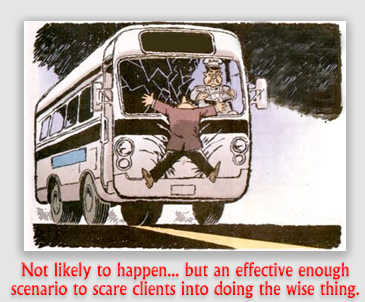
Thus, we would never argue to Tom that Ray was a bum, or tell Ray that Tom liked to use the partnership till to play the ponies. Instead, we would always nod knowingly and say, “Of course you two honest chaps don’t need a written agreement. But what if you walk out the door and Tom here gets hit by a bus? Suddenly, he’s dead, and you’re in business with Tom’s wife, or kids, or executor, or even some distant cousin you’ve never met. And none of them knows the deal, and none of them is likely to be the upstanding guy Tom is.”

That usually worked. Tom and Ray would sign a detailed agreement, and when the falling out came in a couple years (as it inevitably did), the business divorce was much easier for everyone.

In today’s case, neighbors bought adjoining properties subject to a bare-bones easement signed by the prior neighboring owners. The previous people knew the deal and probably had each other over for cookouts. But when the new neighbors proved to be considerably cooler to each other, the imprecision of the easement was decidedly unhelpful.

Kersey v. Babich, 780 N.W.2d 248 (Ct. App. Iowa, 2010). The Kerseys and Leslie Babich owned adjacent properties. Les’s lot had a driveway serving the front of his home. A second driveway located on the Kerseys’ lot provided access to the garages of both property owners. Both landowners purchased their properties subject to a “Drive and Landscaping Easement” agreed to by the previous owners.

According to the easement, Les Babich had the right to use the western 30 feet of the Kerseys’ lot, which he was responsible for maintaining. The easement was intended for “a residential driveway to serve the garage” located on Leslie’s property. Les normally allowed friends, relatives, and home maintenance workers to use the second driveway, but he did nothing to trim vegetation along the western driveway.

The Kerseys sued him, seeking a declaratory judgment. They argued that third-party use of the driveway should be restricted, Les should be required to maintain the whole easement, and he should be liable for injury to a tree along the driveway.

The district court found that Les, his family, friends and agents had the right to use the driveway. It also found that Les was required to maintain a tree canopy over the driveway at a height and width of 10 feet. Finally, the trial court found he was liable for repairs to the driveway.

The Kerseys and Leslie were unhappy, and both parties appealed.

Held: The Court of Appeals agreed with the trial court. The overarching goal of contract interpretation is to determine the intent of the parties at the time they entered into the contract. Words and conduct are interpreted in the light of all the circumstances, and if the principal purpose of the parties can be ascertained, it is given great weight.

The court’s interpretation, in this case, was consistent with the evidence showing Les’s expansive use of the second driveway for more than a decade, as well as with the absence of limiting language in the easement. While the Kerseys argued that the term “garage” limited Les’s use to garage ingress and egress, the easement did characterize the driveway as “residential,” a term that suggested a more expansive use. The appellate court thus agreed with the trial court’s interpretation of the purpose of the easement.

Both parties argued that the 10-foot width allowed by custom for the easement (the document setting out which was itself silent on the driveway dimensions) should be changed. The Kerseys claimed that the dimensions should be reduced to a width that would allow Les to fit his vehicles into his garage. Les wanted more, arguing that the easement should be 12 feet wide by 14 feet high. Ruling that a grantee of an unspecified easement “is ordinarily entitled to a way of such width as is sufficient to afford reasonable ingress and egress,” the Court agreed with the trial judge that there was “scant” evidence that residential use of a driveway would require a width in excess of 10 feet.

Finally, Les argued that the Kerseys should not have been awarded damages for his tree trimming and tree removal. The appellate court reasoned that the easement required Les to landscape the easement area on an ongoing basis. He failed to do so, compelling the Kerseys to do the job. Thus, they were entitled to damages for Leslie’s failure to have done so.

– Tom Root

Case of the Day – Tuesday, August 13, 2024

POUNDING ON THE TABLE

The old trial strategy aphorism recommends that “if your case is weak on the law, pound on the facts; if it’s weak on the facts, pound on the law; and if it’s weak on the law AND facts, pound on the table.” 

transguide140519It doesn’t always work all that well, as our hapless landowners in today’s case, the Wimmers, found out.

“Wimmers” rhymes with “winners,” which is ironic given the outcome in this case. It seems the Wimmers owned land for which they had given the electric utility an easement for its power lines. That’s pretty common – anywhere power or communications lines cross over land, or pipes run under the ground, there’s probably an easement involved. The easement in the Wimmers’ case let Ohio Edison trim and remove trees as needed to keep vegetation clear of the lines.

The Wimmers didn’t want to see much of their foliage cut away, and because trimming and removing trees costs money, the utility didn’t want to do more than was absolutely necessary. Thus, there was a happy confluence of interest that continued for years.

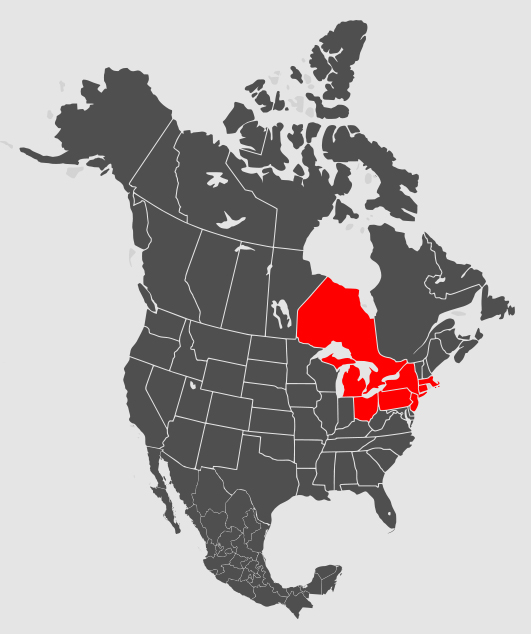
transdanger140519Then came August 14, 2003. Some high-voltage transmission lines owned by the same Ohio Edison – hot from weather and the high electrical demand of the day – sagged into untrimmed trees just south of Cleveland. Three lines shorted out simultaneously. Normally, such a condition would have tripped an alarm at a monitoring center, letting technicians redistribute the load. But a bug in the software permitted what engineers call a “race condition,” and the alarms didn’t sound. The result was a cascading power failure that became the great North American Blackout of 2003, affecting 55 million people on the eastern seaboard and midwestern United States, as well as the province of Ontario.

After that day, everything changed. The public fumed, the media chastised, politicians fulminated. Changes had to be made. Ohio Edison was understandably humiliated by being the utility whose poor vegetation management started it all. Suddenly, occasional and desultory tree trimming became much more scorched earth. For the Wimmers, that meant that the power company’s crews showed up at their place one day to clear-cut the entire easement.

The family took exception to the plan and sued to stop it. While their case was wending its way through the courts – not very satisfactorily to them, because Ohio Edison was winning every step of the way – the Ohio Supreme Court handed down its decision in Corrigan v. Illuminating Co. (which we, being the thorough types that we are) have discussed previously.  Corrigan held that vegetation management issues fell within the exclusive jurisdiction of the Public Utilities Commission of Ohio. Common pleas courts had no authority to decide whether tree trimming and removal within easements was prudent or unduly robust.

Mulligan140519The Wimmers recognized a break when they saw one, and promptly took a mulligan. Sadly, they fared no better before PUCO than they had in the state court system. That might be because Ohio Edison rolled out the IEEE standards for vegetation management to an expert witness who had inspected the easement, could identify the individual trees involved, and had facts and figures at her fingertips on the risk each tree posed to the power lines.

There wasn’t any question that the easement permitted Ohio Ed to cut down trees. The only issue was whether it was reasonably necessary. The Wimmers didn’t have any facts to counter the power company’s showing. They didn’t have any compelling legal arguments. All their lawyer could do was pound on the table, and argue that it was speculative that the trees would grow to be a hazard to the power lines.

Well, sure… the expert was only speculating that the trees would grow and that they would reach the average height for that kind of tree, and for that matter, that there would ever be a high wind or ice storm that would cause them to ensnare the electric lines. Likewise, it’s speculation that the sun will rise in the morning, based on nothing more than a sheer guess loosely based on the fact that it’s done so for the past 1.6 trillion days since the earth was formed. You see where this is going?

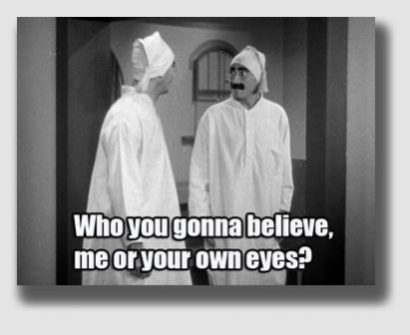
Neither PUCO nor the Ohio Supreme Court – which reviewed the agency’s denial of the family’s complaint – was impressed with the Wimmers’ defense. “Who are you going to believe – me, or your own eyes?” their lawyer seemed to argue. The Commission and the Court both answered that question. Actual evidence carried the day.

Pound on the table, indeed.

Wimmer v. PUCO, 131 Ohio St.3d 283, 964 N.E.2d 411 (Sup.Ct. Ohio, 2012). Ohio Edison owned a transmission-line easement running over the Wimmers’ property. For years, Ohio Edison – in accordance with the company’s general policy – trimmed and, once in a great while, removed trees growing in the easement. However, its policy changed after the 2003 Northeastern United States blackout. When the company tried to remove all of the trees in the easement, the Wimmers sued to stop it. They went to court, where Ohio Edison won. But before the decision was final, the Ohio Supreme Court ruled in Corrigan v. Illuminating Co. that PUCO, not a court, was required to decide whether removal was reasonable.

The area of North America affected by the 2003 Blackout is marked in red.

The area of North America affected by the 2003 Blackout is marked in red.

The Wimmers then took their complaint to PUCO. After an evidentiary hearing, the commission ruled that Ohio Edison could remove the trees.

The Wimmers appealed.

Held: Ohio Edison was permitted to remove the trees. The Supreme Court held that there was “no question that the company has a valid easement,” that “the tree is within the easement,” and that the easement “grants the company the right to remove any tree within the easement that could pose a threat to the transmission lines.”

The Wimmers nevertheless argued that PUCO’s decision that the circumstances permitted Ohio Edison to remove the trees was not reasonable. They argued that Ohio Edison failed to present evidence that their trees “may interfere with or endanger the utility’s transmission lines.” The Wimmers maintained that the utility’s evidence was “long on Ohio Edison’s fear and speculation and short on hard facts.”

The Court disagreed. It found that evidence presented to the commission showed that “the vegetation in question has the genetic disposition to grow to heights tall enough to potentially interfere with” the power lines, and that Ohio Edison “reasonably determined that this vegetation may interfere or threaten to interfere with the transmission line and should be removed.” The utility had presented an expert witness who had described the trees growing in the right-of-way – which she had personally examined – and explained that their average mature heights were well above the height of the power lines. She had testified that “even with continuous trimming and pruning, at least one tree had already grown to within four feet of the line, in violation of the National Electrical Safety Code, which is published by the Institute of Electrical and Electronics Engineers and sets the industry-accepted safety standards.“

groucho140519The Wimmers didn’t present any contrary evidence or challenge the Ohio Edison witness’s credentials, but rather just complained that her testimony was speculative. In order to overturn PUCO’s determination, the Wimmers had to show that the decision was “so clearly unsupported by the record as to show misapprehension, mistake, or willful disregard of duty.” They did not come close to doing that.

The Ohio Supreme Court did, however, “note with approval the commission’s admonition that Ohio Edison ‘attempt to minimize the impact to property owners, to the extent possible and without sacrificing safety and reliability, when performing [utility-vegetation-management] activities’.” The Court dryly observed that “Ohio Edison must comply with the commission’s order.”

– Tom Root

TNLBGray140407

Case of the Day – Monday, August 12, 2024

OOPSIE!

OOPS sign with clipping pathAnyone can make a mistake. Or two.

Consider today’s case on mutual mistake. Mutual mistake is a doctrine that started with a barren cow with a fancy name, Rose 2nd of Aberlour (popularly mislabeled as “Aberlone”), in the case of Sherwood v. Walker, the classic case on mutual mistake in contract law. Well, maybe it didn’t start there, but a generation or two of law students think it did. Wherever it started,  the doctrine remains alive and well.

In today’s decision, Mr. Thomas entered into an easement with Ohio Power to let the company string lines across his place to service his neighbor’s new house. But it turned out the house was in another power company’s service area, something no one figured out until after Ohio Power had sliced up Mr. Thomas’s trees. Thomas sued Ohio Power to rescind the easement and for damages, claiming mutual mistake. The trial court disagreed, but the Court of Appeals threw out the easement.

The Court’s most important point was this: maybe Thomas and his neighbor Baker didn’t know where the electric service boundary lay. But after all, they weren’t in the power binness. Why should they know? Ohio Power, on the other hand, was just plain sloppy in not recognizing the problem. In Court-speak, “the equities of this situation show that Ohio Power, as the company in the business of providing electric power, was in a much better position than the Thomases to discover the mistake.”

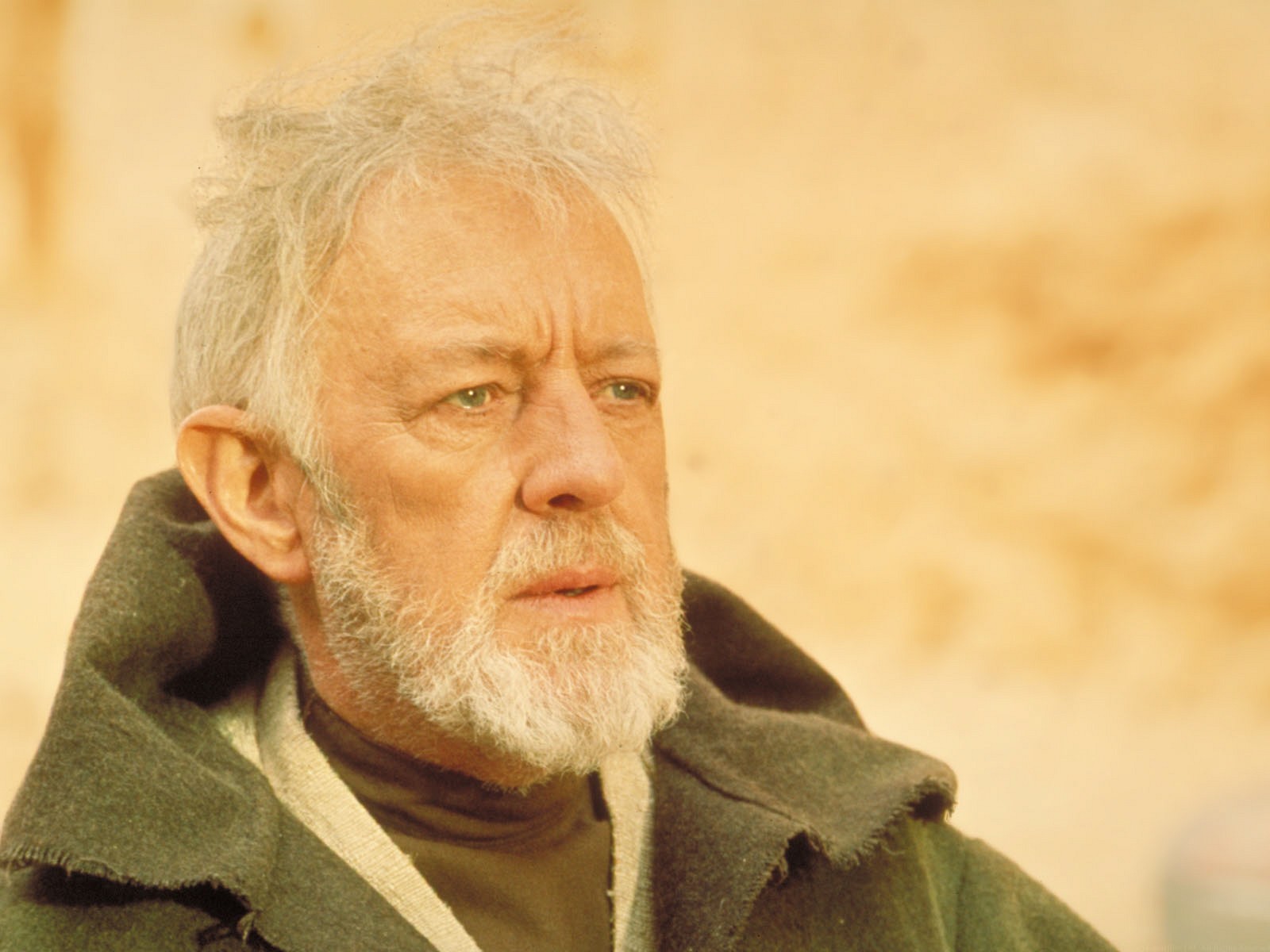
mistakes141223In order to provide grounds to rescind (undo) a contract, the mistake must be mutual. The Battle of New Orleans was a mutual mistake – Andy Jackson thought we were at war with the British, and British Admiral Thomas Cochrane thought they were still at war with the U.S. Meanwhile, on the mythical planet of Tatooine, it appears that the mistake was not mutual – Obi-wan Kenobi was fully aware that the droids he was with were indeed the droids the stormtroopers were looking for, but he led the storm troopers to believe otherwise. Not a mutual mistake at all.

Thomas v. Ohio Power Co., 2007-Ohio-5350,  Ohio App. LEXIS 4715, 2007 WL 2892029 (Ct. App. Carroll Co., Sept. 27, 2007). The Thomases owned 159 acres of property in Augusta Township. Right next door was land owned by Brent Baker. The Thomas property is within the area served by Ohio Power Company, but the Baker property is served by Carroll Rural Electric Power. Neither of the power companies may provide power to the area assigned to the other without the consent of both companies and the affected customer.

Baker asked Thomas for permission for Ohio Power to take an easement across the Thomas property to bring power to a house Baker planned to build. Thomas agreed. As a result, an easement was executed, and Ohio Power — in reliance on the easement — cut and cleared many trees on the Thomas property and along the neighboring road. But then Baker found out the house wasn’t in the Ohio Power service area, and the other power company wouldn’t permit Ohio Power to provide service to him, frustrating the purpose for the easement. The Thomases sued Ohio Power, seeking rescission of the easement contract and damages. The trial court concluded that the easement was valid and, therefore, not subject to rescission.

The Thomases appealed.

Rose, not barren at all, was worth about 12 times what farmer Sherwood sold her for.

Rose, not barren at all, was worth about 12 times what farmer Sherwood sold her for.

Held: The parties had made a mutual mistake, and the contract should be rescinded. Mutual mistake is grounds for rescission of a contract if there is a mistake made by both parties as to a material part of the contract, and where the party complaining is not negligent in failing to discover the mistake. A mistake is material to a contract when it is “a mistake … as to a basic assumption on which the contract was made [that] has a material effect on the agreed exchange of performances.” Thus, the intention of the parties must have been frustrated by the mutual mistake.”

In order to claim mutual mistake as a basis for rescinding a contract, a complaint must allege (1) the existence of a contract; (2) a material mutual mistake by the parties when entering into the contract; and (3) no negligence in discovering the mistake on the complainant’s behalf. Here, the Court said, the purpose of the easement was to provide electric power to the Thomases’ neighbor. Both the Thomases and Ohio Power believed Ohio Power could provide electric power to that neighbor, but they were both mistaken about that fact. Ohio Power was in a better position to know that this belief was mistaken than the Thomases, and thus, the Court held the contract should have been rescinded at the Thomases’ request.

– Tom Root

TNLBGray

Case of the Day – Friday, August 9, 2024


UNSNARLING DUTIES

negligence-overviewWhen negligence rears its ugly head, compensation usually depends on the extent of the duty owed the victim by the party whose pocket the injured plaintiff seeks to pick. Take Tim Jones, an experienced cable television installer. One cold day in the bleak midwinter, he climbed an Indiana Bell pole to work on a cable installation. On the way down, he grabbed a phone line instead of a ladder rung. Not being intended as a support structure, the line gave way, and down Mr. Jones went.

Having no evidence that Indiana Bell knew the line was defective and likely to fall away from the pole, Mr. Jones did the only thing he could do – he sued anyway. Finding a defendant with money – always the aim of a negligence action – was a little daunting, because the only target with money was Indiana Bell, the owner of the pole, hadn’t ever hired Mr. Jones. Instead, I-Bell just rented pole space to the cable company, which in turn hired the company that employed Jones. So what duty did the telephone company owe Jones in this totem-pole relationship?

Not that much of one, as it turned out. Mr. Jones lost his case, but the Court of Appeals took the opportunity to clarify the duty an easement holder has to invitees on the easement. The lesson is one that a utility holding an easement for, say, power lines, might owe to the employee of a tree-trimming service brought in to keep the easement clear of vegetation.

Jones v. Indiana Bell Telephone Co., 854 N.E.2d 1125 (Ind.App., 2007). Timothy Jones was performing a cable equipment upgrade for Sentry Cable, a cable TV provider. Jones – who had been doing this type of work for about 20 years and knew the associated dangers of the occupation – was working as a subcontractor on this project. He was wearing the appropriate safety equipment.

The plucky old Field Marshal might have been Jones' lawyer here ... but the attack failed nonetheless.

The plucky old Field Marshal might have been Jones’ lawyer in this case … but the legal attack on the easement holder failed nonetheless.

Jones climbed a telephone pole owned by Indiana Bell, in order to access the cable TV line, which was located about a foot above the telephone line. On his way down, he grabbed the telephone line like it was a ladder rung. It wasn’t. It broke free, and Jones fell 20 feet to the ground, breaking his ankle. Jones sued the phone company for negligence.

At trial, Jones admitted he hadn’t observed any problems with either the telephone line or the clamp assembly. He also admitted he had no evidence that Indiana Bell knew that there was anything wrong with the pole, telephone line, or clamp assembly. Indiana Bell moved for judgment “based upon the … absence of any evidence of a breach of duty as the duty is established in Indiana law.” The trial court found Indiana Bell had no duty to Jones and granted judgment to the phone company.

Jones appealed.

Held: Indiana Bell owed Jones nothing.

The Court observed that to prevail on a theory of negligence, Jones had to show Indiana Bell owed him a duty, it breached the duty, and his injuries were caused by the breach. Whether a defendant owes a duty of care to a plaintiff is a question of law for the court to decide. Whether an act or omission is a breach of one’s duty is generally a question of fact for the jury, but it can be a question of law where the facts are undisputed and only a single inference can be drawn from those facts.

The parties and the Court focused on the Indiana Supreme Court’s opinion in Sowers v. Tri-County Telephone Co., which involved a telephone utility, the employee of an independent contractor, and a discussion of both duty and breach. In Sowers, the telephone company hired Covered Bridge Tree Service to trim trees located near its telephone lines and clear a right of way in order to ease the work of crews mounting cable television lines on the same poles. While trimming trees, a Covered Bridge employee fell into an abandoned manhole.

manhangfromtelephonepole140603The phone company did not own the land on which the manhole was located, but it had a prescriptive easement on the land. Sowers sued Tri-County for negligence, and the trial court granted summary judgment in favor of Tri-County. The Sowers court held that a landowner or occupier is under a duty to exercise reasonable care for the protection of business invitees and that the employees of independent contractors are business invitees. The court held that Tri-County did not have a duty to inspect and warn and that the boundaries of Tri-County’s duty of reasonable care to its business invitees “must be defined from the utility’s own use of the easement.”

But here, the Court said, the facts of Sowers were distinguishable (which means that they make the case different, not that there was anything especially celebratory about them). There, the telephone utility itself hired the tree service company, whose employee was then injured while on the telephone utility’s easement. In this case, however, Indiana Bell just rented space on its telephone poles to the cable company, whose subcontractor was then injured on Indiana Bell’s telephone pole. Still, the Court said, the policy reasons articulated in Sowers apply to this case, making the duties owed the same. Sowers first acknowledged that a telephone utility is a special breed in that it is not a traditional landowner or occupier. In addition, it acknowledged that a telephone utility does not often access its property except for the occasional necessity to effect repairs. Because of these facts, Sowers concluded that a great burden would be placed on a telephone utility if it were required to conduct regular inspections of its property for the sole purpose of discovering possible hazards.

Applying Sowers here, the Court concluded that Indiana Bell owed a duty of reasonable care to its invitees – including Jones – but the duty did not include the duty to inspect and warn. However, to the extent that Indiana Bell learned of dangerous conditions on its poles, it had a duty to warn its invitees. The evidence did not show Indiana Bell had any actual knowledge of the dangerous condition, meaning that the trial court properly entered judgment on the evidence in favor of Indiana Bell.

– Tom Root

Case of the Day – Tuesday, August 6, 2024

DANGER TREES

It sounds like some kind of leafy superhero – you know, “look, out in the woods, it’s a fern, it’s a shrub, no, it’s … Danger Tree!!!

Alder, Hemlock and Big Leaf Maple - the "bad boys" of danger trees.

Alder, Hemlock and Big Leaf Maple – the “bad boys” of danger trees.

To arborists, a danger tree is no superhero, but rather a menace. In the non-utility context, a danger tree generally has two attributes. First, there’s something wrong with the tree – old age and decay, disease, an injury … something that adversely affects the tree’s structural integrity.

Second, the tree has to be in such a location that its falling or shedding branches is a hazard to people or property. A weakened and decayed tree in the middle of the forest might concern the fauna, but it’s like a shark in the middle of the Pacific – no cause to empty the beaches a thousand miles away.

Today’s case illustrates again – as did yesterday’s tree falling on a car – that good trial preparation trumps purity of purpose. Perhaps proving in the starkest of terms that no good deed goes unpunished, young and sharp-eyed Patrick Connelly spotted a brush fire burning next to the road. Unaware that the fire had been started after a power line was knocked downed by a poplar tree that had fallen in the wind, our hero jumped from his car to stamp out the flames. But sadly (and terminally), what he stomped on was the live power line tangled in the flaming grass.

Death lasts an eternity; litigation only seems to. Mr. Connelly’s estate sued after the 2003 accident. Nearly ten years later, the case was finally over.

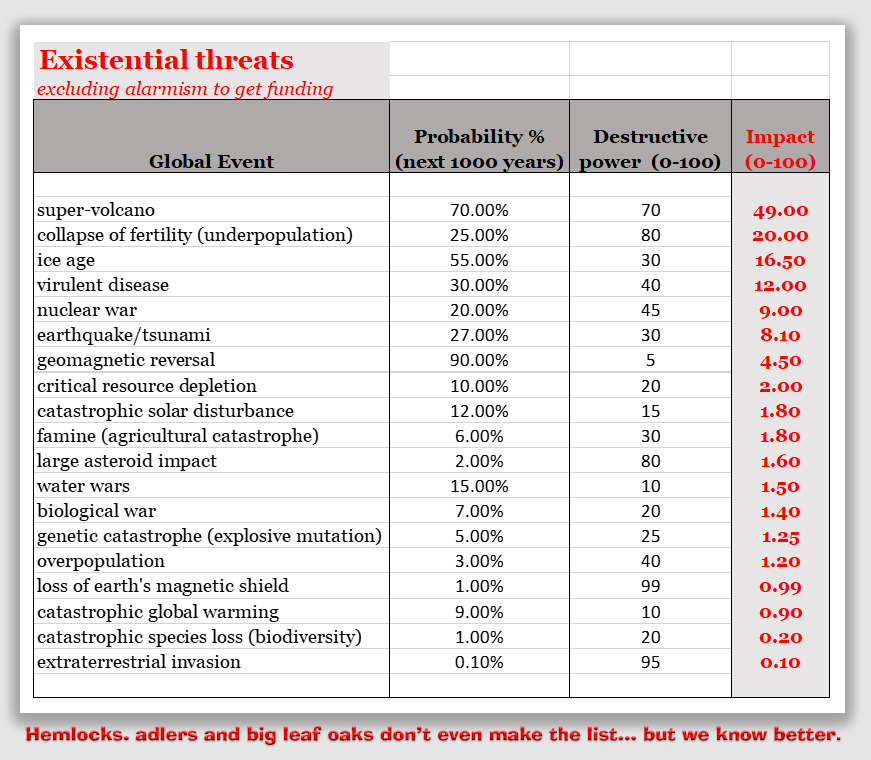
Besides the pathos, our interest is in the power utility’s own Transmission & Distribution Guidelines, which defined a “danger tree” from the electric company’s perspective. For a utility, a ‘danger tree’ might be structurally unsound, but it doesn’t have to be. Sometimes, just being too close to the wires will be enough. In fact, three trees – the hemlock, the alder and the big leaf maple – pose an existential threat, according to the T&D Guidelines.

But here, the tree in question was not even within the clearance zone under the lines, and by all reports was strong and healthy. Connelly’s executor was unable to convince the court that the utility should be held responsible for what happened beyond its 12’ clearance zone. The power company’s adherence to its own standards, as well as to national guidelines, was its salvation.

That’s the takeaway in most of these cases. Adherence to an accepted standard is enough to show that you’ve met the applicable standard of care.

Estate of Connelly v. Snohomish County Public Utility District #1, Case No. 66714-9-I, 2012 Wash. App. LEXIS 2818 (Ct.App. Wash. 2012). During a high windstorm, one of the Lombardy poplar trees located on the property owned by a local school district fell approximately 40 feet across a road onto three high-voltage electrical distribution power lines. Two of the power lines shut off, but the third broke off and landed in a ditch on the north side of the road. The energized power line started a small brush fire.

cartoon140521Michael Varnell and Patrick Connelly were driving westbound on the street when they saw the brushfire. Connelly suggested they stop and stomp out the flames. He was electrocuted when he came into contact with the downed power line.

The Connelly Estate filed a wrongful death action against the Public Utility District No. 1, charging that it negligently performed vegetation management and designed and operated the electrical distribution system. But after a trial, the court ruled that the PUD did not have a duty to inspect trees that did not obviously pose a danger, and did not breach its duty of utmost care in the design, operation, or maintenance of the distribution power line system.

The Estate appealed.

Held: The PUD was not liable.

The parties agreed the PUD owed Connelly a duty of the “utmost care.” However, they disputed whether this meant that the PUD had a duty to inspect every tree outside of the 10- to 12-foot power line “clearance zone,” and whether the protection devices the PUD used were sufficient to meet the duty to protect the public and prevent exposure from high-voltage power lines.

Connelly’s expert testified that the standard of care required the PUD to inspect every tree outside the 10- to 12-foot power line clearance zone that was tall enough to fall on a power line. Relying on prior testimony regarding the condition of the poplar tree, the expert also testified that the PUD had a duty to remove the poplar tree located on the School District property. However, on cross-examination, he admitted that he did not know when the tree would have been an imminent danger and that “I, of course, didn’t see the tree and don’t know anything — don’t know much about the trees.” Bollen also admitted the last time he oversaw a vegetation management program was from 1951-56.

dangertree151222

Now THIS is a Danger Tree.

A PUD expert examined the tree in 2007 and 2009, and reviewed photos of the fallen tree. He testified the poplar tree that fell showed signs of preexisting rot, decay, and disease. Furthermore, a PUD arborist had inspected the tree within a week of the accident, and found were no external indicators of rot or decay. He said that he would not have identified the tree as a hazard for removal or trimming.

Another PUD expert, Stephen Cieslewicz ­– a certified arborist and a national consultant on vegetation management practices for utility companies –testified that PUD’s vegetation management practices were consistent with industry standards during the period in question. Mr. Cieslewicz testified that the objective of “line clearance inspections is to review the air space between the lines and along the lines for trees or limbs.” PUD periodically inspected the trees within the 10- to 12-foot clearance zone of the power lines, and removed trees or tree limbs that posed a threat to the power lines. As well, PUD also identified “danger trees” outside the clearance zone that pose a threat to the electrical lines. Mr. Cieslewicz said that the vast majority of electrical utility companies do not routinely inspect trees outside the clearance zone simply because the trees are tall enough to fall on the line.

Powerlinetotreeclearance140521Mr. Cieslewicz also said that absent an obvious danger or notification from a property owner, the PUD had no duty to inspect every tree outside the clearance zone. In fact, such inspection would border on being impossible. He also testified that inspecting every tree outside the clearance zone in Snohomish County was impossible. Cieslewicz also testified that “[t]here likely would not be records” of the inspection of East Sunnyside School Road “if there was no work required.”

A PUD line clearance coordinator testified that he inspected the area several years before the accident. He said that he had looked down the line segment “and saw that the line was clear; that no tree was in the line.” At no time did the School District notify the PUD that any of the poplar trees located in the area posed a hazard. The evidence showed that during the five years before the accident, the poplar trees were healthy.

The trial court found the testimony of the PUD witnesses more credible than the Estate’s experts, neither of whom had inspected the trees. It held that absent obvious signs or notice that a tree posed a danger, the standard of care did not require the PUD to investigate every tree outside the 10- to 12-foot power line clearance zone. The court also concluded the PUD did not breach its duty of utmost care in the design of the electrical power distribution system.

The Court of Appeals held that in order to prevail on a negligence claim, the Estate had to establish duty, breach, causation, and damages. The standard of care for a utility in Washington is daunting: a power company must exercise “the utmost care and prudence consistent with the practical operation of its plant” to prevent injury.

Although the Estate disputed it, the Court of Appeals found that the trial court had correctly applied this “utmost care” standard. In so doing, the trial court did not improperly emphasize the practical operation of the utility; rather, such practical operation is a relevant factor in determining “whether the utility has conducted its operations under the known safety methods and the present state of the art.” The trial court was within its discretion to let PUD present testimony about whether it was practical to inspect trees outside the clearance zone that did not obviously pose a danger.

The Estate challenged a number of the trial court’s factual findings as well, but the Court of Appeals held that there was substantial evidence to support the determinations. That was all the law required. In particular, the appellate court held that “the evidence established the PUD vegetation management met the standard of care, and the PUD was only required to inspect trees outside the clearance zone if there is ‘obvious evidence of decay or rotting or threat to the power line’.”

The Estate also claimed the trial court’s findings were inconsistent with the utility’s own Transmission and Distribution Guidelines. The T&D Guidelines are evidence of the standard of care, but the state statute relied on by Connelly – RCW 64.12.035 – did not require PUD to comply with the T&D Guidelines. Instead, it only provided electric utilities with immunity for cutting or removing vegetation. The statute does not set a standard of care for the utility, and as the PUD points out, no cases have interpreted the statute as creating a duty or setting a standard of care.

PUD’s T&D Guidelines stated that a “danger tree” was

  • forked trees;
  • dead or rotten trees;
  • trees weakened by decay, disease or erosion;
  • trees visibly leaning toward the power line;
  • trees or parts of trees which may contact the line under snow, ice or wind loads;
  • trees originating from fallen decaying logs, old growth stumps or other unstable rooting positions; or
  • troublesome trees such as alder, big leaf maple and hemlock.

The T&D Guidelines did not impose a duty to inspect every tree that may come in contact with the power lines, but rather just trees within the clearance zone and obvious “danger trees.”

The power company prevailed.

– Tom Root

TNLBGray140407

Case of the Day – Thursday, July 11, 2024

STRICTLY SPEAKING

Strict liability statutes, also known as “liability without fault,” occupy the blameless end of the “mens rea” spectrum. Our traditional notions of fair play lead us to believe that people should not be held to blame for injury unless they are somehow at fault, either being negligent, grossly negligent, reckless, or just plain acting with intent to bring about the harm they cause.

But at common law, some acts were considered to be so inherently dangerous – the classic case was a lion that escaped from a keeper of exotic animals – that courts let the res ipse loquitur, the “thing speak for itself,” and found the owner liable for whatever mayhem ensued from a force that had once been under the owner’s control. Negligence need not be shown.

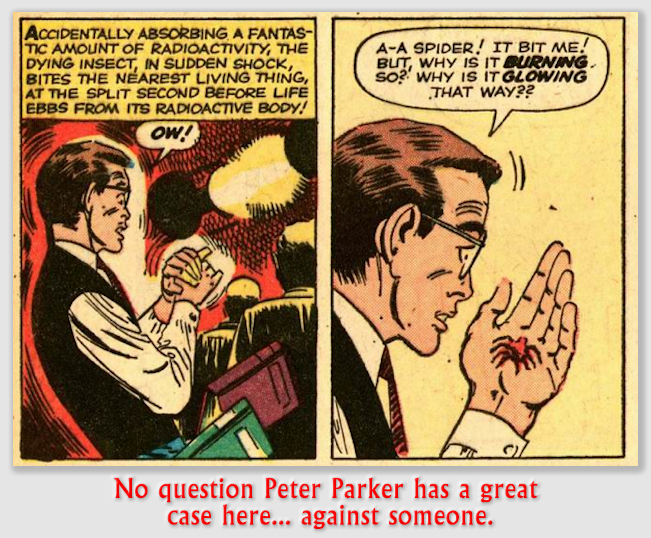
Remember the radioactive spider that bit Peter Parker and made him super-powered Spiderman? Peter (or maybe Spidey) could have sued the lab that let the spider escape. Everyone knows that a radioactive spider is an inherently dangerous instrumentality, and whoever the last guy was to have the arachnid in captivity had better be prepared to pay big, regardless of whether he was at fault or not.

But should strict liability extend to dogs? Speaking as the owner of a 40-lb. canine who is a terror to woodchucks but a marshmallow around humans, we don’t really see why they should. Nevertheless, many states have dog bite statutes that make owners strictly liable for their canines’ misdeeds, regardless of fault. To be sure, some of the statutes are hybrids, making the owner absolutely liable except for all the cases in which he or she is not. In today’s case, the statute at issue made an owner strictly liable for his or her dog’s bite, unless the person so bitten was engaged in criminal trespass or other criminal conduct, or was tormenting or teasing or harassing the dog. So the owner is absolutely liable… sort of.

Today’s case is the kind of tree law/neighbor law mashup that you have come to rely on us to deliver. The trial court here made the tree trimmer into a trespasser, despite the obvious fact that the power company had every right to enter its easement to prune back trees. The Court of Appeals could not swallow that but instead suggested that while not a trespasser, the employee owed the dog’s owner notice that he was entering the premises, so the owner had the chance to control his dog.

With certain Supreme Court justices disappointing activists everywhere by deciding cases according to their perception of the law rather than the politics (you can tell I’m a fan of the rule of law, whether I agree with the political effects or not), there will be a lot of talk over the next few months about “judge-made law.” Do you want to see judge-made law? Just look at the gyrations of the trial and appellate court in the case below.

The judges here clearly could not accept that the dog’s owner should have to pay when the dog had been contained in a yard behind a fence and a “no trespassing” sign. A stranger—regardless of intention and right—barged in anyway and complained because the dog chased him. And they found a way to bend the law to suit their sense of propriety.

Collins v. Bergman, 2010-Ohio-6213 (Ct.App. Montgomery Co., Dec. 17, 2010), 2010 Ohio App. LEXIS 5233, 2010 WL 5274. Jason Collins worked for Nelson Tree Service, which was under contract with the power company to remove trees that were too close to utility poles and lines. Jason’s job was go from house to house inspecting all trees encroaching Dayton Power & Light utility lines and poles so any trees too close could be trimmed back at a later time.

When Jason reached Jeff Bergman’s house, there was no answer when he knocked on the door. Jason left a courtesy card on the door, notifying Jeff that a tree trimming would occur in the future. Jason then went around the back of the house to count the trees. He could hear a dog barking. The dog was a Labrador-Rottweiler mix named Taz. Jason didn’t know Taz had a dog door giving him unfettered access to the back yard.

Jason could see that Jeff and his neighbor had built 6-foot privacy fences, which made it impossible for the power company to check its easement. Thinking that Taz was inside the house, Jason entered the fenced-in backyard through a gate marked “no trespassing.”

Taz was not inside. As Jason fled the barking dog, the cantankerous canine planted his fretwork in Jason’s pant leg. Jason tried to climb the privacy fence, but fell back, injuring his shoulder.

Jason sued Jeff under Ohio’s dog bite statute, O.R.C. § 955.28. Jeff filed for summary judgment. At the time, that statute provided that “the owner, keeper, or harborer of a dog is liable in damages for any injury, death, or loss to person or property that is caused by the dog, unless the injury, death, or loss was caused to the person or property of an individual who, at the time, was committing or attempting to commit a trespass or other criminal offense on the property… or was committing or attempting to commit a criminal offense against any person, or was teasing, tormenting, or abusing the dog …”

The issues in this case were whether Jason entered Jeff’s property pursuant to the utility easement and whether he was a trespasser within the meaning of the dog bite statute.

The trial court determined that Jason was injured within the easement, where he had a right to be. However, the court said, the easement did not provide a specific place for the utility to enter the property, and therefore, Jason was required to make use of the easement in a reasonable manner. The court found that Jason did not act reasonably in deciding to enter Jeff’s property without notice and through a latched gate and a fence with a posted “no trespassing” sign. The court also noted that Jason failed to follow his own company’s policy in entering a property when there is a dog barking in an enclosed area. Because Jason did not make reasonable use of the express easement granted to the utility company, he was a trespasser within the terms of O.R.C. § 955.28(B). The trial court granted Jeff’s summary judgment motion.

Jason appealed.

Held: Jason was a trespasser and not entitled to damages.

The Court of Appeals agreed with Jason that he had a right to enter the easement, and because entry to the easement was blocked, he took the only reasonable avenue open to him through the backyard fence.

However, in determining whether a person is a “harborer” under the statute, the Court said, “the focus shifts from possession or control over the dog to possession and control of the premises where the dog lives.” The hallmark of control is the ability to both prevent and exclude others from coming onto the property. Because Jason entered the property without permission, Jeff lost the ability to control his property at the time of the incident. Thus the trial court properly denied Jason’s motion for partial summary judgment and properly granted summary judgment to Jeff on the O.R.C. § 955.28 claim.

– Tom Root

TNLBGray140407