Case of the Day – Monday, July 28, 2025

SMOKEY’S REVENGE

California, land of perpetual drought, wildfires of Biblical proportions, rivers running down the streets. The news out of California never seems to be good. It’s the kind of thing Smokey Bear always warned us about (and no, his name is not “Smokey the Bear.” I thought it might be interesting to revisit the tale of another large corporation involved in a wildfire, the Great Storrie Fire of 23 years ago.

One hot August day in northern California, a Union Pacific track repair crew let some grass next to the tracks catch fire. They tried to put the blaze out … rather ineffectively, it turns out.
The Bear was not amused.

The Bear was not amused.

By the time it was all over, 81 square miles of national forest burned in the Storrie Fire of August 2000. The Forest Service, which has compiled a poor record of reforestation – chiefly because of a lack of money – sued Union Pacific for the cost to rehabilitate the burned-out area. Smokey Bear would have his day in court.

Before the case was to go on trial, the lawyers tussled over the proper measure of damages. The railroad argued that the correct measure was the diminution of property value caused by the fire. What’s more, the losses had to be mitigated by the value of the timber that could be salvaged from the burned land. The catch was that most of the land was restricted by law and could not be harvested until the law expired several years after the fire. Union Pacific argued that if it could have been sold, it would have fetched so much that the damages only reached about $5.7 million.

The Government cried foul, contending that the traditional measure of damages wasn’t appropriate for natural resources. Instead, it claimed damages to the timber, damages to the soil, reforestation costs and loss of environmental habitat to birds and mammals on the order of $167 million.

Over 71,000 acres were burned by a railroad crew's careless fire.

Over 71,000 acres were burned by a railroad crew’s careless fire.

Big difference! So the crucial battle was joined, well before the trial commenced, when the court was asked to rule on what damages would be allowed. When the decision was handed down, it turned out to be a bad day for the railroad. The trial court showed little sympathy for Union Pacific, holding that California law let the Government pile on the damages – timber, soil, reforestation, and loss of habitat. What’s more, in a double whammy if ever there was one, the District Court ruled that even though the timber on the restricted land couldn’t be sold in 2000 (and couldn’t be for many years thereafter, because the law was extended), the value of the timber was appropriately considered in setting damages. OK, Union Pacific conceded, but then the salvage value of the timber left on the restricted land should be considered in mitigation. No, the Court disagreed, it couldn’t be considered … because it couldn’t be sold. The law, you know.

Having been thoroughly sandbagged by the Court, the railroad knew better than to go to trial. It settled the case for $102 million. And that was real money back then.

For all of the Court’s feel-good rhetoric about the sacred trust of the national forest, the Forest Service hadn’t done very much to remedy the mess the fire left behind in the eight years after the fire. Private landowners who suffered loss have done much more, but then they’re not hamstrung by regulation and interest groups. Once the Union Pacific millions started pouring in, the Forest Service didn’t have any excuse for further sloth.

How about Union Pacific? A settlement of over $100 million has to hurt, right? Take heart — the venerable old railroad had insurance.

As for the national forest, it’s slowly returning to green. But even an untrained eye looking at August 2013 satellite pictures can tell that the timber is gone. To the north and west of Storrie, rising from the Feather River, the unforested land stands in obvious contrast to the rest of the area.

The interesting tree law lesson drawn from today’s case is the Federal District Court’s free-wheeling approach to damages. With a creative lawyer, a political hot potato and a sympathetic court, the sky can be the limit.

United States v. Union Pacific Railway Co., 565 F.Supp.2d 1136 (E.D.Cal., 2008). A Union Pacific (“UP”) track repair crew negligently ignited the fire while repairing a rail, and — not recalling their Boy Scout days — didn’t put it out properly. The resulting conflagration, known as the “Storrie Fire,” destroyed 52,000 acres of National Forest in August 2000. The Government sued UP.

Union Pacific on span northeast of Storrie.

Union Pacific on a span northeast of Storrie.

The issue raised before the Federal district court concerned the proper measures of natural resource damages, whether diminution of the market value of the forest land was the overarching measure of the Government’s damage in the case, and if not, whether the Government may recover as separate injuries timber damages of over $121 million, reforestation costs of $33 million, and loss of habitat and environment during the period of regrowth of $13 million.

Also, some of the National Forest had been specified by Congress as being temporarily exempt from timber harvest. Had the trees on these lands not been wholly destroyed by the fire, the Government could have harvested the trees over time, after the expiration of the law. Similarly, no logging or reforestation was allowed in the Bucks Lake Wilderness at the time of the fire, and the general forest areas were lands where commercial logging may occur, subject to other legal restrictions, such as environmental assessment requirements.

The Government conducted salvage sales of the charred timber that was not located on restricted lands, recovering $335,616. UP contended that a post-fire salvage sale of the burned timber on the restricted lands — had federal law permitted it — would have generated over $73.6 million. UP claimed that at most, the Government incurred only $5.7 in net lost timber value ($79.3 million minus $73.6 million).

Held: The U.S. District Court found that the loss in market value of the land was not the proper measure of damages. Instead, the Government could argue to the jury that it was entitled to recover damages for damages to the trees, the soil and pre-merchantable timber, and its loss of use of habitat and environmental services during the period of forest regrowth. UP would not be allowed to argue at trial that it was entitled to an offset based on the theoretical salvage value of the timber. Finally, the Government’s habitat equivalency damages were legally permissible.

California law applied to the Government’s damage claims. Although UP argued that under California law, the measure of damage for negligent injury was the difference between the value of the property before and after the injury. The Court agreed this was generally correct, but California law also held that [t]here is no fixed rule for the measure of tort damages under Civil Code § 3333 … [and t]he measure that most appropriately compensates the injured party for the loss sustained should be adopted.” The general measure of tort damages under California law is broadly defined as “… the amount which will compensate for all the detriment proximately caused thereby, whether it could have been anticipated or not.”

Don't kid yourself - the case was a political hot potato, and politics undoubtedly influenced the District Court decision.

Don’t kid yourself – the case was a political hot potato, and politics undoubtedly influenced the District Court decision.

Thus, the Court held, the Government – as the injured party here – was entitled to full compensation for all of its damages, considering the unique character of the land at issue and that natural resources have values not fully captured by the market system. Resource damages, including timber damages, rehabilitation, and restoration costs, and environmental and habitat damages, were all recoverable as separate injuries, the Court ruled. In this case, the fire damaged the Government’s property and reduced its value, not only through the destruction of trees used for timber but through damage to the soil. In addition, the USFS was required by law to replant to a certain minimum density, and they incurred expenses in their salvage operation. These, the Court said, were separate injuries.

UP also argued that the Government couldn’t recover damages for the value of the trees located on the restricted lands because commercial logging of those lands was not permitted by law. But, the Court held when the Storrie Fire occurred in August 2000, the restriction was set to expire in 2004. Had the fire not destroyed the trees within the restricted areas, the trees would have been commercially available for harvesting within a few years, and the Government could have recovered their timber market value. Instead, as a result of the damage caused by the fire and the subsequent decay of the burned trees, the trees were dead or dying and no longer had any viable timber value. That the law had been extended post-fire, the Court ruled, was of no consequence because, at the relevant time in 2000, the law had a definite expiration date.

UP argued that in areas where commercial logging is not allowed the reasonable cost of reforestation is the proper measure of damages, but the Court rejected the argument. It said that the Government’s timber damages of $121.9 million were supported by detailed expert analysis of actual timber values. The Court waxed eloquent that UP had wholly ignored the wilderness areas in question “[w]ere national treasures created by Congress ‘to secure for the American people of present and future generations the benefits of an enduring resource of wilderness…’” In such circumstances, the Court held, the Government could recover damages for the timber burned in the wilderness areas. Destroyed timber values were a relevant means to capture at least part of the lost value of the burned lands because there is no available real property market value by which to determine the pre- and post-fire value of thousands of acres of national forest lands that can’t be sold.

UP asserted that if such damages were permitted by the court, it should be allowed to argue to the jury that the damages calculation did not account for the full administrative costs that the Government would have incurred in marketing unburned timber at the prices it claims, including environmental assessment costs and road-building costs. The Court disagreed, holding that the harm in this case was caused by UP’s admitted negligence, which essentially created a “forced sale” of the trees. Thus, the Court said, deduction for administrative costs was not appropriate.

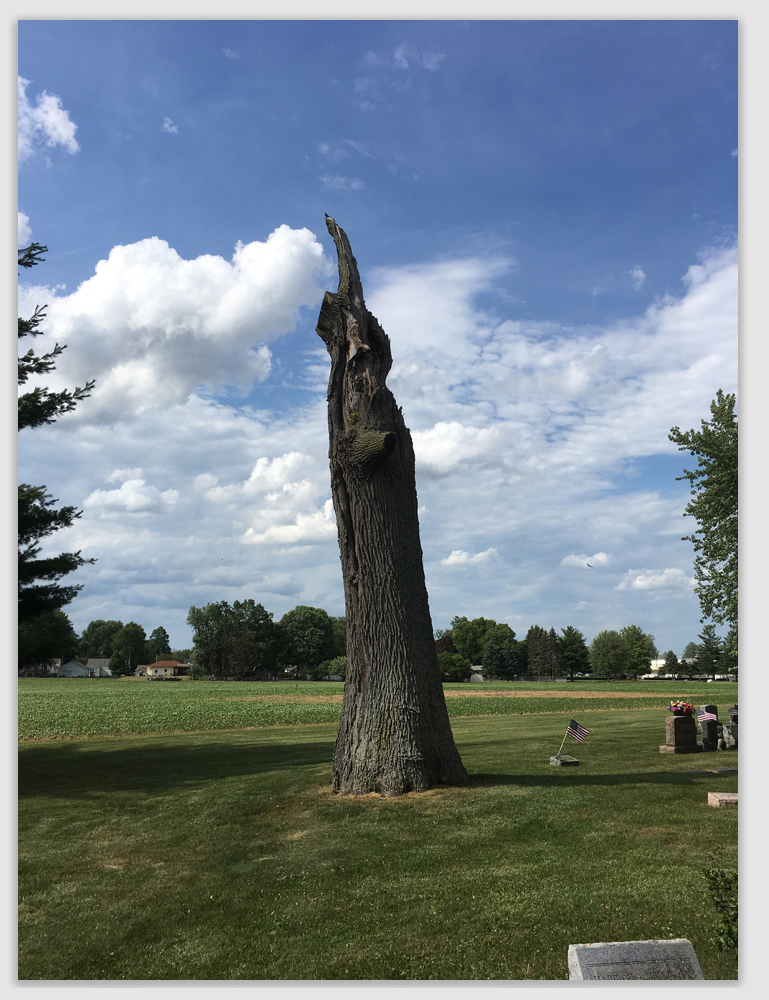
The area of the fire – 23 years later, growth was still sparse.

Finally, UP argued it was entitled to an offset of the timber damages based upon the amount UP contended the Government could have obtained in a theoretical post-fire salvage sale of the timber on the restricted lands, $73.6 million. The Government argued against this, noting that the law prohibited the post-fire salvage sale. UP agreed but pointed out that the law also prohibited a pre-fire sale, and thus, if the Government were permitted damages based in part on the theoretical pre-fire, sale value of the timber on these lands, UP should also receive a corresponding offset to those damages based on a theoretical post-fire salvage sale.

The Court disagreed, holding that salvage value is a question of mitigation after actual damages have been ascertained and then only for amounts that were realized or could have been realized. Thus, assessing the Government’s actual damages is a separate inquiry from assessing the Government’s duty to mitigate its damages after the commission of the tort. Under the doctrine of avoidable consequences (or mitigation of damages), the person injured by another’s wrongful conduct may not recover continuing damages “that the injured person could have avoided by reasonable effort or expenditure.” Thus, the Court said, UP was entitled to an offset of damages only for the salvage value realized by the Government for its salvage sale with respect to timber not located on the restricted lands.

– Tom Root

Case of the Day – Thursday, May 1, 2025

DEDICATED TO THE ONE I LOVE

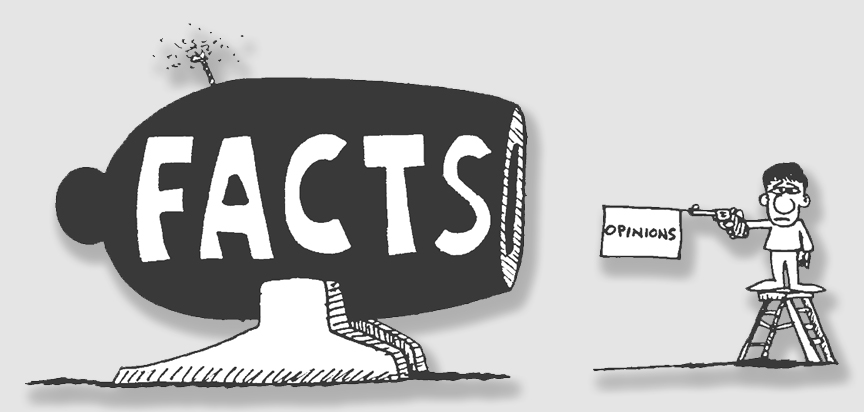
Facts150501Courts of appeal sit mostly to determine how the law should apply to facts. Usually, when a trial court decides a legal question, a court of appeals will give a fresh look to the issue, called “de novo” review. You Latin scholars will recall that this literally means “of new.” Think “fresh look.”

Not so with facts. Whether the trial court got the facts right is something that seldom worries an appellate court. Usually, the appellate court won’t alter a trial court’s factual finding unless it’s clearly wrong. This is known generally as the “clearly erroneous” standard.

The different states and the Federal government apply slightly different standards of review to different types of cases, and generalizing may be useful for our purposes, but not for real life. Still, as a rule, appellate courts treat trial courts’ findings of fact with great deference. Today’s case is one of those decisions that makes you wonder why they should.

The Tinnes had owned a lakefront resort for years and used a private road, Corewood Lane, for their guests to have access to the beachfront property. When they retired, the couple sold all of the place except for a small piece on the north side, where they built a retirement home.

The Brands tore up the asphalt a bit…

Their golden-age digs had a driveway that attached to Corewood Lane. The new resort owners, the Brands, promptly began obstructing Corewood Lane, even tearing out big chunks of the asphalt. Finally being roused from their retired reverie by the Brands’ unfriendly conduct, which even included the Brands trimming trees on the Tinnes’ property, the retired couple sued for a judgment that Corewood Lane had become a public road by implied dedication. They asked for an injunction against future obstruction and treble damages for the cut tree limbs.

The trial court obliged on a record that was pretty thin. It ordered that Corewood was public, told the Branches to repave it, pay $10,000 to the Tinnes for having obstructed it, and $250 (which it trebled to $750) for having trimmed the Tinnes’ trees without permission.

The Court of Appeals reversed it all.

It turned out that Mrs. Tinnes had herself testified that she and her husband had never intended Corewood to be a public street.  The landowner’s intent is the most crucial element in an implied dedication of a private road as a public one. What’s more, no one bothered to introduce any evidence of the amount of damage that had been caused by the trespass and pruning of the Tinnes’ trees, and at any rate, Missouri’s treble damage statute related to cutting down trees, not just pruning them. To be sure, damages are presumed when a trespass is proven, but the damages that are awarded are nominal – think “symbolic and puny” – unless actual harm is shown.

And how much was nominal in this case? The Court of Appeals cut the damage award to one dollar.  About enough for one-eighth of a Starbucks Mocha Cookie Crumble Frappucchino.

One is left to wonder what evidence the trial court was weighing when it throttled the Brands to begin with. It would appear that the trial judge decided the case with his heart, not his head.

Tinnes v. Brand, 248 S.W.3d 113 (Mo.App. S.D. 2008). Corewood Lane runs through property once owned by the Tinnes but now owned by the Brands. When they owned the land, Mr. and Mrs. Tinnes ran a lakefront resort on the property. Corewood Lane was the access road through their property to the resort site and lakefront. When the Tinneses sold the resort in 1996, they retained four acres on the property’s north side, where they built a home and a driveway leading to Corewood Lane.

As soon as they bought the resort, the Brands started obstructing Corewood Lane with tree limbs, boats, and open ditches. They also removed asphalt pieces (which they claimed were broken) from the paved road, after which parts of the road eroded and washed away. They even trimmed some tree limbs on the Tinnes property.

The Tinneses sued for a declaratory judgment that Corewood Lane was “a road easement for Plaintiffs, and the public,” or alternatively that plaintiffs had the right to use it as an easement appurtenant to their residential property. They also sought an injunction requiring the Brands to repair the road and not damage or obstruct it in the future, plus actual and punitive damages. The trial court found that the entire length of Corewood Lane was dedicated to the public for use as a roadway; ordered the Brands to repair and repave the road at their own expense; enjoined them from interfering with the use of the road by plaintiffs or the public; awarded $100 actual damages against the Brands for obstructing and damaging the road; and awarded trespass damages of $250, “trebled according to law” to $750, for the Brands’ cutting of trees and limbs on the Tinnes’ property.

The Brands appealed.

The Tinnes didn't need a formal street dedication ... but if they had actually intended to dedicate the street, it would have helped ...

The Tinnes didn’t need a formal street dedication … but if they had actually intended to dedicate the street, it would have helped …

Held: The decision was reversed because the evidence didn’t support a finding that Corewood Lane had been dedicated to public use.

To show implied or common-law dedication of a roadway, a plaintiff must prove (1) the landowner’s unequivocal intent to dedicate the land to public use; (2) public acceptance; and (3) public use. Intent must be unequivocally manifested, expressly or by plain implication. Here, plaintiff Deanna Tinnes herself denied on the stand that they had ever intended to dedicate the lane to public use. The Court held that the record did not “convincingly demonstrate” that any landowner meant to create public rights in Corewood Lane adverse to the owner’s own rights.

As for the $250.00 trespass award, “trebled according to law” to $750.00, the Court of Appeals held that the Brands had only cut tree limbs, not any whole trees, and neither party presented evidence as to damages. However, the Brands admitted the trespass, and the Tinnes were entitled to nominal damages, even if they proved no actual damage. Because the trial court awarded $100.00 for the Corewood Lane access damages, the Court of Appeals said that the $250.00 damages for the trespass could hardly be called nominal.

The Court ordered damages for the tree trimming to be reduced to $1.00.

– Tom Root

TNLBGray

Case of the Day – Friday, March 28, 2025

I KNOW IT WHEN I HEAR IT

I don’t know how, but somehow I managed to stay awake in Constitutional Law, despite the fact that the first-year law class was right after lunch in a too-warm lecture hall. My alertness undoubtedly is why I so well recall Justice Potter Stewart’s concurring opinion in the otherwise unremarkable obscenity case Jacobellis v. Ohio.

The Justices were wrestling with how best to craft a working definition of obscenity against which to judge a triple-X movie reel confiscated from alleged porn purveyor Nico Jacobellis. Justice Potter Stewart knew better than to waste time conjuring up limitations on the meaning of “obscenity.” In his now-famous concurrence, he declared that

I shall not today attempt further to define the kinds of material I understand to be embraced within that shorthand description; and perhaps I could never succeed in intelligibly doing so. But I know it when I see it, and the motion picture involved in this case is not that.

Justice Stewart’s verbal frustration with an evanescent standard came to mind last night when I got a call from long-time reader Wendy Whist, who was being driven to distraction by the neighbor’s dogs. Wendy lives on a quiet residential street in the sleepy little Ohio town of Snoreburg. Well, it was quiet and sleepy, until neighbor Bertha Barkley acquired a pair of noisy little yapmeisters.

It may just be my perception (driven no doubt by the pair of mini-noisemakers my uncaring neighbor Ann leads past my house several times a day), but it seems to me that the smaller the dog, the more annoying the bark. That is certainly the case for Bertha’s little snack dogs: she leaves the pint-sized yappers outside all day in her fenced-in backyard. Wendy reports that the dogs bark at intruders, clouds, insects, leaves, grass, trees, the air, the moon, the sun, light, dark… you get the idea. Wendy says the cacophony is incessant.

When Wendy complained to her neighbor, Bertha – whose disdain for others makes her much more cat-like than dog-like – retorted that the dogs were in a fenced-in yard, so there was not a thing Wendy could do about the noise. When the neighbor on the other side of Bertha’s place called the police, the responding officer said that because the dogs were fenced in behind Bertha’s place, there was nothing law enforcement could do.

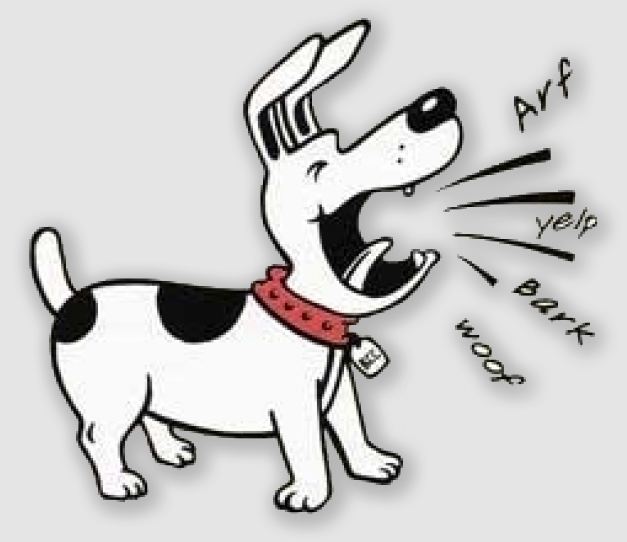
Wendy called me because I write about tree law. Trees have bark. Dogs bark. It’s a logical connection.

The police officer was mistaken. Like many towns, Snoreburg has an ordinance that prohibits people from “keep[ing] or harbor[ing] any animal or fowl in the Municipality which frequently create unreasonably loud and disturbing noises of such character, intensity, and duration as to disturb the peace, quiet and good order of the Municipality.” The ordinance makes the first offense a minor misdemeanor. For a second offense within two years, jail time and an order to get rid of the barking dogs (or chickens, as the case may be) may be imposed.

I suggested that the next time the nice policeman is called, point out the ordinance to him and demand politely that he go and do his best endeavor (which in this case would be to cite Bertha and her dogs).

But the whole episode set me to wondering. This blog’s approach to tree and neighbor law is much more civil and less criminal than just getting your neighbor locked up. Could Bertha’s continual and continuous barking (OK, it’s really her dogs making the noise, but it’s hard to keep Bertha’s uncivil attitude separate from her canines’ caterwauling) constitute a nuisance? Could the long-suffering Wendy sue Bertha, seeking an order requiring Bertha to abate the nuisance, which is legalese for “shut the dogs up?” Those musings reminded me of Potty Stewart wrestling with the definition of obscenity in Jacobellis. At what point does the barking cross that fuzzy line between mere irritation and legally actionable annoyance?

The court in today’s case grappled with that question. Like Justice Stewart, the panel of appellate judges eschewed drawing a bright line. Instead, they delivered the usual nuisance law mush that “the amount of annoyance or inconvenience will constitute a legal injury resulting in actual damage, being a question of degree, is dependent on varying circumstances, cannot be precisely defined, and must be left to the good sense and sound discretion of the tribunal called upon to act.”

But that being said, the appellate judges held, here the defendants’ four dogs had clearly barked themselves well over that line, indistinct though it may be. The Court of Appeals said of the nuisance that ‘they know it when they hear it, and the dogs’ barking was clearly it.’

Zang v. Engle, Case No. 00AP-290 (Ct.App. Franklin Co., Sept. 19, 2000) 2000 Ohio App. LEXIS 4222, 2000 WL 1341326. Charles Zang and his family lived next door to the Engles, who owned four dogs. Charlie testified that since they moved into their house in 1997, the dogs were outside and barked continuously. He could hear the dogs barking from inside his house, both with the windows open and closed. He described the barking in the two years prior to trial as extreme, excessive, and loud, barking that at times affected his ability to sleep, interrupted meals, and interfered with phone calls, television watching, and entertaining. Charlie, who worked from home, had to move his office from the back of his home to the front, yet he still at times heard the barking.

Ms. Zang said that it affected her ability to concentrate, it caused her to become “more stressed out” when the dogs were out and barking excessively, and it affected her mood when she entertained guests. Id. at 150-151. She has not been able to relax, and the barking has interrupted her sleep. She said, “We find that there are times when we are trying to have a normal dinner conversation and the dogs come out barking and we become so frustrated and so upset because we can’t do anything about that that we have to go and shut the windows, or we have felt on many occasions that we don’t want to necessarily be at home and that we will just leave, just to get away.”

The barking had gone on regularly over the past couple of years. Charlie kept a log of the dog barking. Entries were made almost every day from mid-December 1997, to mid-March 1999. Most days, the dogs were described as barking continuously for at least fifteen minutes up to over one hour. The remaining time the dogs were out, they barked periodically. Some of the barking occurred around 11 p.m. and 12 a.m. A lot of the barking was during the evening hours of 5 to 6 p.m. However, the logs as a whole show that the dogs were outside and barking at various times.

Charlie sued the Engles, claiming that barking dogs constituted a nuisance. The trial court agreed and ordered the Engles to abate the nuisance. The Engles appealed.

Held: The barking dogs constituted an absolute nuisance.

An absolute nuisance, for which strict liability (or liability without fault) is imposed by law, is a civil wrong arising or resulting from the invasion of a legally protected interest, and consisting of unreasonable interference with the use and enjoyment of the property of another. It is the doing of anything or the permitting of anything under one’s control or direction to be done without just cause or excuse, the necessary consequence of which interferes with or annoys another in the enjoyment of his legal rights which results in injury to another.

A private nuisance, on the other hand, involves the invasion of the private interest in the use and enjoyment of land. The law of private nuisance is a law of degree, and it generally turns on the factual question of whether the use to which the property is put is a reasonable use under the circumstances and whether there is an appreciable, substantial, tangible injury resulting in actual material and physical discomfort. What amount of annoyance or inconvenience will constitute a legal injury resulting in actual damage, being a question of degree, is dependent on varying circumstances, cannot be precisely defined, and must be left to the good sense and sound discretion of the tribunal called upon to act.

To entitle the Zangs to recover damages for a nuisance, it is not necessary that they be driven from their home or that the Engles create a positive unhealthy condition. Instead, it is enough that the Zangs’ enjoyment of life and property is rendered uncomfortable. In so determining, a trial court must look at what persons of ordinary tastes and sensibilities would regard as an inconvenience or interference materially affecting their physical comfort.

Given all of the facts, the Court held, “there was sufficient competent, credible evidence to support a finding of a private nuisance.”

The permanent injunction issued by the trial court directed in part that the Engles are “permanently enjoined and restrained from permitting any of the dogs they own or harbor, to bark in the manner described in the following paragraph, while said dogs are outside their residence… All parties understand that an infrequent bark is not what this permanent injunction is enjoining; rather, the intent of this Permanent Injunction is to restrain and enjoin the Engles’ dogs from creating an unreasonable amount of noise so as to interfere with the peace, quiet and normal enjoyment to which the Zangs are entitled in the use of their residence… The Engles are to obtain an anti-barking device for the dogs.”

The Court of Appeals held that the injunction was enforceable and proper. “The law of nuisance,” the Court held, “is a law of degree and reasonableness. It does not follow then that an injunction cannot issue which addresses the exact nuisance found to exist. Here, the nuisance is dog barking. While the amount of barking that may be found excessive cannot be measured exactly, there is sufficient evidence in the record as to dog barking that can be looked to if enforcement of the injunction is necessary.”

– Tom Root

TNLBGray140407

Case of the Day – Tuesday, March 25, 2025

BEATING AROUND THE BUSHES

bush141014 When the telephone company built a substation on Mr. Doelle’s land, he didn’t beat around the bush. He sued for trespass.

The phone company replied that it intended to take a corner of his place under the doctrine of eminent domain. The trial court agreed the phone company could do so, upheld Mr. Doelle’s claim of trespass, and awarded $300 for the value of the land taken under eminent domain. In addition, the trial court granted Mr. Doelle an extra $400 for “shrubbery support.”

Sounds more like a divorce, doesn’t it? The idea was that Mr. Doelle could screen the substation from his view with a few strategically placed bushes, and the money was to enable him to plant whatever he wanted.

Despite the trial court’s crafty decision, no one was happy. Mr. D appealed the eminent domain, and the phone company appealed the “shrubbery support” award.

support141014The Court of Appeals cleaned things up. It upheld the trespass and the phone company’s right to take the property for the public good. It approved the $300 value for the land, but it reversed the “shrubbery support.” You see, Mr. Doelle had never asked for trees or shrubs to screen his view of the substation. The trial court has certain inherent powers to fashion an appropriate set of damages for the wrongs brought before it, but the “shrubbery support” award appeared to be based more on the trial court’s sympathy for Mr. Doelle’s visual plight than on any evidence.

Doelle v. Mountain States Tel. & Tel., 872 F.2d 942 (10th Cir. 1989). In this case (which primarily involved questions of easement and eminent domain), Mr. Doelle sued Mountain Bell for trespass, alleging it had put a substation on his property without his permission. Mountain Bell laid claim to a small portion of Mr. Doelle’s property in order to build and maintain a substation. Mountain Bell sued to have him evicted from his property.

The trial court upheld the trespass but found Mr. Doelle hadn’t been damaged. It also awarded Mountain Bell to claim the property for the common good, awarding Mr. Doelle $300 for the value of the land that was taken. The Court then awarded him an additional $400 to install shrubbery to screen his view of the substation, thereby making the intrusion less onerous. Mr. Doelle appealed the eminent domain ruling, and Mountain Bell appealed the $400 in “shrubbery support.”

These are not the Bushes we are talking about.

The Bush family – remember them?  They are not related to the bushes involved in today’s case.

Held: The Court of Appeals upheld the trespass and Mountain Bell’s right to claim the property by eminent domain. However, it reversed the $400 shrubbery award to Mr. Doelle.

The Court observed that Utah’s law of eminent domain does not provide for equitable damages. Rather, the trial court found authority to make the award entirely from its inherent power. Even assuming that the trial court had the equitable power to fashion an appropriate remedy, the Court of Appeals said, Mr. Doelle never sought equitable relief in the form of trees to screen his view of the substation nor presented evidence concerning the cost of planting trees.

While a trial court’s award of damages will not be set aside unless it is clearly erroneous, an award must be based on reasonable inferences rather than on mere sympathy. When damages cannot be fixed with the desired certainty, the proof must be reasonable under the circumstances.

This damage award was not reasonable.

– Tom Root

TNLBGray140407

Case of the Day – Tuesday, March 18, 2025

WHO GIVES A HOOT?

mexowl160422

The Mexican Spotted Owl is easily identified by its distinctive headgear.

Now a paean to the Mexican Spotted Owl, that cute, furry little critter. Well, maybe it’s not furry – more like feathery – but the bird is an endangered species just the same.

When Precision Pine & Timber landed 14 contracts to destroy wildlife habitats — uh, make that harvest timber — its performance of the agreements got derailed by a U.S. District Court, which stopped the Forest Service because it had been sloppy in figuring out how to save the owls. The contracts covered the eventuality, but Precision Pines was entitled to ask for its “out-of-pocket” expenses incurred if the performance of the contracts was delayed. And performance was indeed delayed… for up to 15 months as the Forest Service was sent back to school by the district court until it got its analysis of the spotted owl problem done to the court’s satisfaction.

The Forest Service extended the termination date of the contracts, but Precision Pines nevertheless counted up its expenses and turned in a bill for a breathtaking $13 million. The Forest Service took a sharp pencil to the invoice and offered about $18 grand. So Precision Pines sued, arguing it was entitled to a “lost volume” theory. Follow this: if Precision Pines hadn’t been delayed, it would have made a ton of money during those 15 months that, because of the interruption, it didn’t make until much later. If it had made the money when it originally contracted to make it, it would have used the profits to invest in other contracts, where it would have made profits to invest in other contracts, and so on.

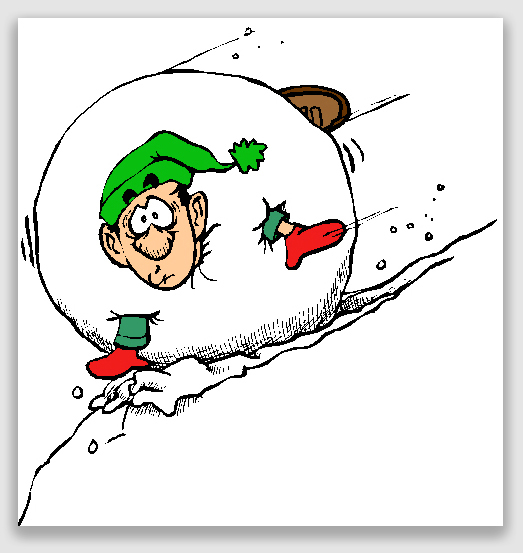
Like a snowball rolling down a slope, the few bucks from the interrupted contract would have yielded an avalanche of green someday. But the Court said while that might be so, it didn’t make the deals that never were legitimate damages from the interrupted timber deals. The damages were simple: the profits that weren’t made during the period of delay, minus the profits made after the contracts resumed.

The wise old Mexican Spotted Owls couldn’t have reached a better decision.

Precision Pine & Timber, Inc. v. United States, 81 Fed. Cl. 235, 2007 U.S. Claims LEXIS 295, 2007 WL 2753329 (Fed.Cl., Sept. 14, 2007). Precision Pine & Timber held 14 timber contracts with the U.S. Forest Service. In August 1995, the Forest Service suspended the contracts after a U.S. District Court required the Forest Service to submit its Land and Resource Management Plans for consultation with the Fish and Wildlife Service in light of the listing of the Mexican Spotted Owl as a threatened species.

About eight weeks after the Mexican Spotted Owl suspensions were imposed, the Forest Service released three of the 14 timber sale contracts from the suspension. The balance did not get released for more than a year afterward. Each of the suspended contracts contained a provision on interruption or delay that provided in the event of interruption or delay of operations, Precision Pine’s exclusive remedy was an adjustment of the contract term and out-of-pocket expenses incurred as a direct result of the interruption or delay. Out-of-pocket expenses did not include lost profits, replacement cost of timber, or any anticipatory losses.

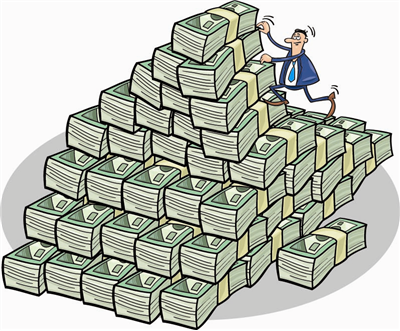
Profits begat profits, Precision Pine argued ... and the pile grows ever larger.

Profits begat profits, Precision Pine argued … and the pile grows ever larger.

Throughout the suspensions, Precision Pine considered the Forest Service to have breached the timber sale contracts, but Precision Pines treated the breaches as partial and resumed harvesting timber after the suspensions were lifted. Precision Pines requested contract term adjustments for each contract affected by the suspensions, which were granted, and it submitted claims for $13,097,209.62 in damages resulting from the suspension of the 14 contracts under the “lost-volume” seller theory. The Forest Service decided Precision Pines was entitled to only $18,242.78 in damages. Precision Pines sued.

Held: The Forest Service breached the contracts, but the damages were severely curtailed.

The Court held that the lost volume seller theory, as formulated by Precision Pines, depended on showing that its failure to make profits on the 14 timber contracts in a timely manner rendered it unable to participate in other future contracts, thus missing out on profits from those deals. The Court held that such future damages for independent and collateral timber contracts not related to the subject matter of the breached contracts were unrecoverable.

youlose160422

A wise owl, indeed …

The Court further held that permitting Precision Pines to use these unrecoverable damages to reduce the amount of the deduction required to be made in the lost profits calculus — to account for the profits earned on the breached contracts — would be the functional equivalent of actually awarding damages for the lost profits on the future additional contracts. What’s more, the Court said that even if Precision Pine’s theory of recovery did not require it to show unrecoverable damages, Precision Pines had failed to show that it met the criteria for application of a modified lost-volume theory.

The Court found that the plaintiff was entitled to recover lost profits on the breached contracts as measured by the expected profits it would have earned on the breached contracts during the suspension period, minus profits it actually earned on the breached contracts in the post-suspension period. And that was it.

– Tom RootTNLBGray

Case of the Day – Monday, January 13, 2025

CONNECT THE DOTS

A negligence action is a lot like a child’s “connect-the-dots” game. If you want to win, you have to connect the dots of “duty” to “breach of duty” to “proximate cause of damages” to “amount of loss.”

Skip a step, and you can walk away empty-handed, or – like the couple in today’s case – with a lot less.

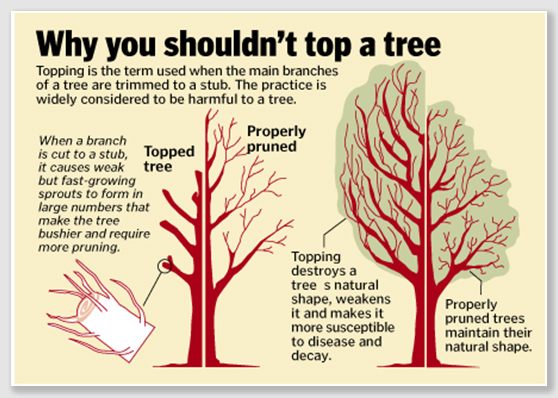
We find it a bit unsettling that a tree service was not alerted to a bigger problem by the 100-lb. concrete plug stuck in the bottom of a tree it was to trim, and that the trimming crew proceeded to “top” the tree in order to make it healthier. Perhaps using animal magnetism on the tree or dousing the roots in snake oil might have helped.

This case has cautionary tales aplenty. First, with digital film as cheap as it is (as in, 80% of Americans have smartphones), take pictures of the trees before and right after trimming. This is true whether you’re Harry and Harriet Homeowner or whether you run Paul Bunyan’s Tree Service.

Second, do not ignore warning signs that a tree has significant problems. Pretending that a concrete plug was not poured into a tree by a former owner and that some simple shaping will keep it strong and healthy, is confusing a dangerous conflation of wishes and facts.

Third, both the homeowners and the tree service should insist on a detailed contract, one that spells out the obligations and expectations of both parties.

Finally, if litigation ensues, take a serious look at your expert’s analysis. Try to poke holes in the expert’s report. Be your own “tiger team.” When you read in the decision that the expert was unable to testify to a crucial element, it’s already too late.

Sandblom v. Timber Tree Service, Inc., 2009 R.I. Super. LEXIS 126, (Super. Ct. Rhode Island, Oct. 27, 2009). Steve and Terri Sandblom hired Timber Tree Services, Inc., to provide tree services to five trees located on their Arlington Street property. Steve told Timber Tree that he and his wife wanted one tree removed and the other four trimmed – two in the backyard and two in the front yard, one of which was a mature silver maple tree.

A concrete patch in a tree… never a good idea.

Even before work commenced, Timber Tree told Steve that total removal of the silver maple tree was an option, due to the fact that the tree appeared to be damaged, with a basketball-sized cement plug in the base of the tree. The concrete suggested rot, which was later confirmed by Timber Tree workers. The plug had been in the tree when the Sandbloms bought the property in 2004. Steve elected to have the tree “topped” instead because Timber Tree’s owner told Steve that after “topping off,” the tree would be healthy and regain a healthy condition similar to a neighbor’s fully-grown silver maple.

Timber Tree gave the Sandbloms a written estimate of the charges for the work to be performed, a total charge of $1,400.00 without itemization. Work began in April 2005.

Late in the day, a Timber Tree worker asked Steve whether he wanted the silver maple tree cut down entirely. Steve examined the tree, and testified later that so much growth had been cut from the silver maple that it only could be described immediately after the work as two bare trunks, totally denuded of any vegetation.

The Sandbloms sued, claiming that as a result of Timber Tree’s negligent services, the silver maple tree in the front yard suffered permanent and irreversible damage, thereby reducing the value of their property as a whole. Pursuant to G.L. 1956 § 34-20-1, they sought twice the value of the tree and three times the value of the wood. Timber Tree counterclaimed for the outstanding balance due for services rendered.

Held: The Court, rejecting Steve’s testimony that the tree was healthy, found that the silver maple was already a diseased tree when it was topped. Steve’s expert was unable to quantify how much of the tree’s condition was caused by existing rot or prior improper pruning. The expert’s damage calculation thus was rejected.

Steve testified that before Timber Tree’s work, the silver maple was “overgrown” with vegetation and needed trimming, but was otherwise healthy. The Court found the testimony not credible in light of the observations of rot made by Timber Tree’s owner and workers. The placement of a cement plug sometime before suggested that rot may have been present for a considerable period of time.

Despite Timber Tree’s suggestion that perhaps the tree was not worth further substantial investment, Steve chose to proceed with the request to “top off” the maple. Steve said he expected the silver maple would be “topped” to get tree growth away from electrical wires. Timber Tree’s owner described the work to be performed as the removal of “sucker growth.”

Instead, Timber Tree trimmed so much growth from the silver maple that was nothing but two bare trunks. However, because there was no photographic evidence of the condition of the silver maple prior to the trimming, the Court could only conclude from the evidence that the silver maple was not healthy before it was topped.

Steve’s expert, John Campanini, testified that Timber Tree’s work was contrary to industry standards in that its workers removed more than 20% of the live wood from the tree. He also testified that Timber Tree failed to adhere to industry standards by pruning or cutting known nodes of the tree, which he found by observing the “cuts” made to the tree.

As for Timber Tree’s other work, John Campanini said some of the work appeared improper in that Timber Tree failed to remove all of the dead wood on one of the trees. On a second tree in the backyard, Timber Tree did not complete the job of thinning out the crown of the tree, in that many branches on the lower canopy were not removed. This, John Campanini described, was “sub-par performance.” John Campanini supplied no testimony to quantify the damage caused by Timber Tree’s errors and omissions.

Mr. Campanini used a formula called the “trunk formula,” whereby the calculation of loss starts with the circumference of the trunk near the ground and continues based on certain objective and subjective factors relative to the tree’s location and condition. According to Mr. Campanini, this mode of calculation is approved by the International Society of Arboriculture. The result of the calculation is to determine an “appraised” value of the tree before Timber Tree’s work, which he concluded to be $5,100.00.

Although it found his testimony credible, the Court declined to rely on Mr. Campanini’s analysis. It noted that, for example, the formula failed to account for the apparent rot of the tree, as evidenced by the concrete plug. Also, the photographic evidence of the current condition of the tree undercut any claim that the silver maple was “totally lost” as a result of Timber Tree’s work. On the contrary, the evidence of the tree’s current condition showed that the silver maple had returned to a tree lush with foliage; indeed, even Mr. Campanini testified that the Silver Maple was not dead and did not need to be replaced.

Mr. Campanini said that damage to the silver maple could be cured by four or five subsequent remedial prunings at $750.00 apiece, to select branches that may develop good supporting unions and help regain the form and shape of a natural silver maple. The tree was about 80 years old, making replacement almost impossible. Such a mature tree would not be available from a nursery for transplantation, leaving the only replacement alternative as a young sapling that would take many years to develop into the stature of the silver maple prior to Timber Tree’s work.

In order to establish a negligence claim against Timber Tree, the Sandbloms had to prove by a preponderance of the credible evidence that Timber Tree was negligent, by showing that Timber Tree owed the Sandbloms a legally cognizable duty, a breach of that duty, proximate causation between the conduct and the resulting injury, and the actual loss or damage. Then, the Sandbloms had to prove that Timber Tree’s negligence caused loss or damage to their property and demonstrate the value of those damages as determined by the reasonable value of the loss or damage. Although mathematical exactitude is not required, the damages must be based on reasonable and probable estimates.

The Rhode Island Supreme Court has held that “the general rule is that where the damage to realty is temporary, the cost of repair measure is proper, and where the damage is permanent, the diminution in value measure is most appropriate.”

Looks good to me…

Although the Court found that Steve proved negligence by Mr. Campanini’s testimony, his evidence on the issues of whether the negligence caused damage and how much those damages were was “somewhat shaky.” The evidence showed that the silver maple was not healthy when it was pruned, meaning that the evidence did not show that Timber Tree’s negligence damaged the tree beyond where it was before the topping. What’s more, the evidence did not show that the silver maple was completely destroyed, such that replacement would be the proper measure of damages. Good thing, too, because an actual replacement cost would be very difficult to calculate, “due to the fact that a similar mature maple would not be available at a nursery for transplantation.”

Because the evidence showed that the tree had made a considerable recovery since it was pruned, the damage it suffered was temporary and the cost of repair would be the appropriate measure of the damages. The only credible testimony concerning the cost remedial measures was Mr. Campanini’s testimony that the silver maple could be restored with four to five remedial prunings, at a cost of $ 750.00 per pruning. The Court awarded the Sandbloms $ 3,750.00 in damages.

The Sandbloms asked for double damages under § 34-20-1. But that section only provides such damages where the cutting or destruction of a tree occurred “without leave of the owner thereof.” Here, Timber Tree performed its services with Steve’s permission. “While the services may not have been to Mr. Sandblom’s satisfaction, “ the Court said, “the Legislature did not intend double damages for negligent services that were performed at Plaintiffs’ request.”

– Tom Root

TNLBGray140407

Case of the Day – Monday, January 6, 2025

COUNT YOUR SILVERWARE

You know people like this. They leave restaurants with their pockets bulging from stolen packets of sugar, jelly or ketchup. They return from a vacation with a valise full of shampoo, conditioner, soap and teabags, boosted from every hotel on their itinerary. When they move from a house, they are sure to pick it clean of light bulbs, curtains, and even the unused toilet paper rolls left on the dispensers. In rare cases, they even uproot garden plants as they leave.

When you have folks like this over for dinner, you should audit your silverware before they leave.

The late Mr. Thomas was that kind of guy, probably a man with a closet full of mini-shampoo bottles, Bob Evans jelly tubs, and McDonald’s sugar packets. He was quite a thrifty guy. Maybe there’s a better word to use than “thrifty.” A word like “light-fingered.”

However you might describe him, after he signed the deal to sell his Iowa farm to Mr. Laube, but before he surrendered possession, Mr. Thomas thought he just might thin the timber a bit by cutting down and selling about a hundred walnut trees. True, the walnuts weren’t really ready for harvest – the 20-year-old trees were only about halfway to an age where they should be harvested – but Mr. Thomas could hardly see the sense of leaving all of that nice hardwood for Mr. Laube to cash in on a couple decades after closing.

Mr. Laube sued. Sadly, while he won the case, he was butchered on damages. There was no question that Mr. Thomas was liable. After all, the contract of sale didn’t reserve any timber rights to the seller. But the issue was the value of the trees that had been removed.

Generally, there are several ways to figure damages for the loss of trees. Where the trees are for a special purpose, such as for windbreaks, shade or ornamental use, the measure is usually the difference in the value of the real estate before and after the destruction of the trees. Where the trees have no special use beyond being marketable timber, the measure of damages is the commercial market value of the trees at the time of taking. Where the trees can feasibly be replaced, the measure of damages is the reasonable cost of replacement.

The Court ruled that the value of the 100 immature walnut trees was their present-day value at the mill, despite Mr. Laube’s lament that they would have been worth so much more had they been 20 years older. The Iowa Supreme Court admitted that Mr. Laube had a point – he had been deprived of trees that had great potential value, something that just giving him present commercial value didn’t recognize. But the Court said that the law had never allowed such damages, and it didn’t intend to do so here. The Court speculated – and that’s exactly what it was – that it “was perhaps to address this criticism that the legislature provided for treble damages in Iowa Code section 658.4.”

When taking all of the lightbulbs from your just-sold house, be sure to wear gloves so as to avoid being burned. The only one who should be burned by this process is the unwitting buyer.

     When taking all of the lightbulbs from your just-sold house, be sure to wear gloves so as to avoid being burned. The only one who should be burned by this process is the unwitting buyer.

Poppycock. Punitive damages are intended to punish, not make up for deficiencies in the law of compensatory damages. Farmer Thomas did not profit from his selling of the walnut trees on his way out the door, but Mr. Laube was hardly made whole.

Laube v. Estate of Thomas, 376 N.W.2d 108 (Sup.Ct. Iowa, 1985). In 1983, the Thomases contracted to sell a farm to Mr. Laube. Possession was to pass on March 1, 1984. Although no timber rights were reserved to the Thomases, they removed about 100 walnut trees from the tract between the contract and closing. There was no question of liability; in fact, at trial, Thomases offered to confess judgment for $1,000. The offer was refused.

The trial court awarded Laube the commercial value of the trees at the time they were cut. Laube appealed.

Held: The measure of damages used by the trial court was correct.

The walnut trees were timber or forest, not used for a windbreak or ornamental purposes. The trees had stood at two sites on the farm, one a low-level area near a stream and the other in a permanent pasture. The 100 in question were smaller, presumably inferior for marketing purposes. The evidence showed that it was not a practical marketing time for the trees in question. At an age of 20 years, they would not mature so as to reach their reasonable marketing potential for another 20 years. Mr. Laube argued he should be awarded damages that took the current market price, considering the size and quality of trees 20 years hence, then discounting the figure appropriately to reach the present value.

It's he present-day value of the commercial timber that matters.

It’s the present-day value of the commercial timber that matters.

The Supreme Court admitted that “especially [in] the showing of the inappropriateness of cutting the trees at their stage of semi-maturity, there is at first blush an attractiveness in plaintiffs’ contention that a routine allowance of only log value is inadequate. On the other hand, their suggested recovery does not conform with any recognized measure of damages for loss of trees.” Where the trees were put to a special purpose, such as for windbreaks, shade or ornamental use, the measure is usually the difference in value of the realty before and after the destruction of the trees. Where the trees had no such special use, the measure is the commercial market value of the trees at the time of taking. Where the trees can be replaced, damages are the reasonable cost of replacement.

Here, the Court said, the commercial value of the trees was the appropriate measure of damages. It suggested that the law provided for treble damages in Iowa Code § 658.4 to help adjust for the unfairness of situations such as the one in this case. However, it would not take into account future value in setting compensatory damages.

– Tom Root

TNLBGray140407