Case of the Day – Friday, November 22, 2024

THOU SHALT NOT COVET THY NEIGHBOR’S TREES
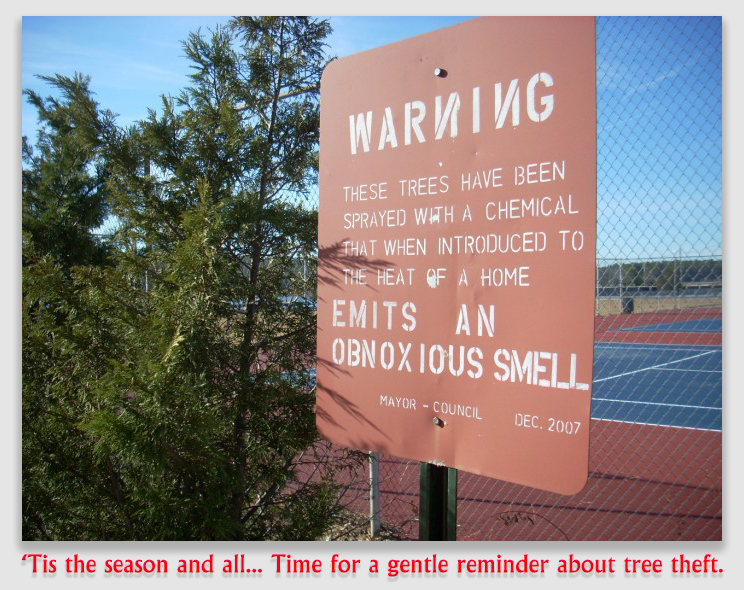
Kee Nee Moo Sha, Inc., had a tract of wooded land on a lake, next to a Bible camp owned by the Baptist Church. What could be wrong with that? No loud music, no dancing all hours of the night, no boozing or riotous living… right?

The minister in charge of the Bible camp knew where the boundaries between the Baptists’ and the company’s lands lay. But he had a problem. How could he build more cabins for the pittance that had appeared in his collection plate? The Lord turned seven small loaves and a few fishes into a feast for 4,000 people. But the preacher, a lesser mortal, couldn’t stretch what little he had into more lodging.

And verily, he began to covet his neighbor’s trees.

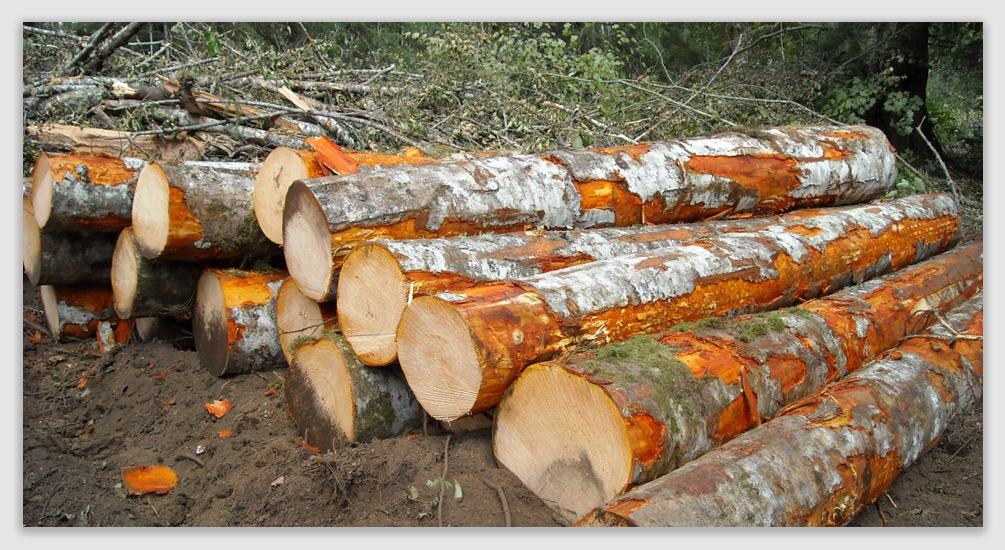
The minister had a logger cut down about a hundred of Kee Nee Moo Sha’s pine trees. Surely this was manna from heaven — free timber! Except it wasn’t free, as the Baptists soon found out.

Kee Nee Moo Sha reacted much like a modern, more restrained version of the angry vineyard owner.  It sued. The Baptists failed to heed the Lord’s admonition to make peace with the plaintiff before you get to court.

Too bad, too. The court found that the minister’s trespass was willful, and in fact, it appeared to be rather irked with the fact that – once on the witness stand – the man of the cloth wasn’t very familiar with the 9th Commandment, you know, the one about bearing false witness and all.

Kee Nee Moo Sha wanted the Baptists to pay for the enhanced value of the timber — that is, the value of the timber after being milled — and the court agreed that the measure of damages is acceptable where the trespass is willful. But the court can’t guess what that value might be, and where Kee Nee Moo Sha failed to introduce any evidence of the enhanced value, it missed its opportunity.

The Baptists introduced evidence of the stumpage value of the timber, that is, the value at the point it had been cut down, but before it was hauled and milled. Stumpage value is always lower because the owner of the timber has to deliver it to the sawmill and pay for the milling before having a product to sell. Because the stumpage value was the best evidence of value in the record, the Baptists were charged for the lower figure.

The trial court assessed punitive damages against the church camp instead of the treble damages for wrongful cutting which the statute permits. The Court of Appeals noted that this was entirely permissible because sometimes trebling the damages just isn’t good enough to deter such conduct. Where the trespass is wanton but the damage only amounts to $100, $300 might just not get an errant preacher’s attention nearly so effectively as a whopping punitive award. The Court said that either trebling or punitive damages may be applied, at the trial court’s discretion.

covet150212And thus, the Baptists rendered unto Kee Nee Moo Sha …

Kee Nee Moo Sha, Inc., v. Baptist Missions of Minnesota-Plymouth Point Bible Camp, 1990 Minn. App. LEXIS 1305, 1990 WL 212222 (Minn.App. 1990). Kee Nee Moo Sha, Inc., is a family-owned corporation organized for the purpose of holding more than 100 acres of forested land near Hackensack, Minnesota, with a resort on the southern end of the property. The resort belongs to the Baptist Church.

In late 1976, in connection with the transfer of the Baptist’s church property to another church unit, a surveyor was hired to survey and mark the boundary between the Baptists’ land and the Kee Nee Moo Sha property. Shortly after the survey was completed, and while the brush was all cleared and orange flags marked the line, the surveyor walked the boundary line with one of the church’s pastors, pointing out in detail the location of the boundary.

About four years later, the pastor wanted to build more camp buildings as cheaply as possible. Looking for some do-it-yourself financing, he arranged for a local logger to cut about 100 pine trees in and near the main camp buildings. While most of the timber was cut on church property, 26 pines were cut on Kee Nee Moo Sha land. In addition, the pastor had the logger clear-cut nearly 100 birches and aspen from the same area of the Kee Nee Moo Sha property, along with 1,600 cubic yards of sand which were used in a drain field near the Baptist building project. Kee Nee Moo Sha was unamused.

A lawsuit inevitably followed. The trial court granted Kee Nee Moo Sha damages for trespass and an injunction against further trespass by the Baptists. Unhappy with the paltry damages awarded, Kee Nee Moo Sha appealed, seeking a higher measure of compensation, a more extensive permanent injunction, and costs, disbursements and attorney fees.

Held: The appellate court upheld the trial court decision.

The Court observed that there were several possible measures of damages that could be used when trespass to property involves the taking of timber. One of the oldest is the “enhanced value” of the timber after being sawed and transported to the place of sale or transfer, to be used when the trespass is willful. The presumption in trespass cases where timber is cut is that the trespass is willful, and the burden of proof falls to the trespasser to show otherwise.

Here, the trial court found it couldn’t use the “enhanced value” measure, because no evidence was introduced to permit the Court to determine the value of the processed lumber. Consequently, the trial court used the stumpage value presented by the Baptists to set compensatory damages, and awarded punitive damages, in addition, to arriving at a fair number. The trial court, passing up treble damages that were authorized but not required by statute, awarded punitive damages instead. The trial court found that “even an award of treble damages for that taking would not adequately punish [the Baptists] or compensate [Kee Nee Moo Sha] for the willful trespass which has occurred.”

The Court agreed that the trial judge’s approach was justifiable under Rector v. C.S. McCrossan, Inc., and the treble damage statute. It observed that Rector, while referring to various measures of damages, does not refer directly to punitive damages. Punitive damages may be awarded, however, when “the acts of the defendant show a willful indifference to the rights or safety of others.” The trial court found that the Baptists’ behavior was willful, and the evidence supported it.

ba150212Minnesota law provides that any award of punitive damages will be “measured by those factors which justly bear upon the purpose of punitive damages, including… the profitability of the misconduct to the defendant… the attitude and conduct of the defendant upon discovery of the misconduct… and the total effect of other punishment likely to be imposed upon the defendant as a result of the misconduct, including compensatory and punitive damage awards.” In this case, the Court didn’t think much of the Baptists’ attitude. First, the defendant cut the timber and removed the sand in order to line its own pocket, that is, to obtain cheap building materials for the camp. Second, the pastor continued to deny any willful misconduct throughout the trial, a denial that flew in the face of proof to the contrary and his own admission that he had been shown a clearly marked boundary prior to these takings. The appellate court dryly called the jury’s awarding of compensatory and punitive damages a “just” result.

Kee Nee Moo Sha argued for the use of the “replacement value” measure of damages also authorized by Rector, but the Court noted that in instances where the cost of replacement is unreasonable or excessive in relation to the damage to the land itself, the trial court may, in its discretion, allow the jury to consider more than one measure of damages in order to permit flexibility and achieve a just and reasonable result.

– Tom Root

TNLBGray

Case of the Day – Thursday, November 21, 2024

EVERY RULE HAS AN EXCEPTION

It’s a great old saw, but as logicians like to point out, “every rule has an exception” is a logical fallacy. As if anyone could possibly know every rule, so that he or she could be sure that every rule had an exception (sort of like the people who claim no two snowflakes are alike: how could they possibly know that?).

But beyond that, if every rule has an exception, then the rule that every rule has an exception itself has no exception, in which case every rule does not have an exception. It’s enough to make your head throb.

But all we care about here are rules in tree law. If there is any rule that seems immutable, it is the rule that a boundary tree belongs to the owners of both properties on which it is growing. No owner can do anything to trim or kill the tree without the permission of the other owner. Boundary Tree Law 101 right?

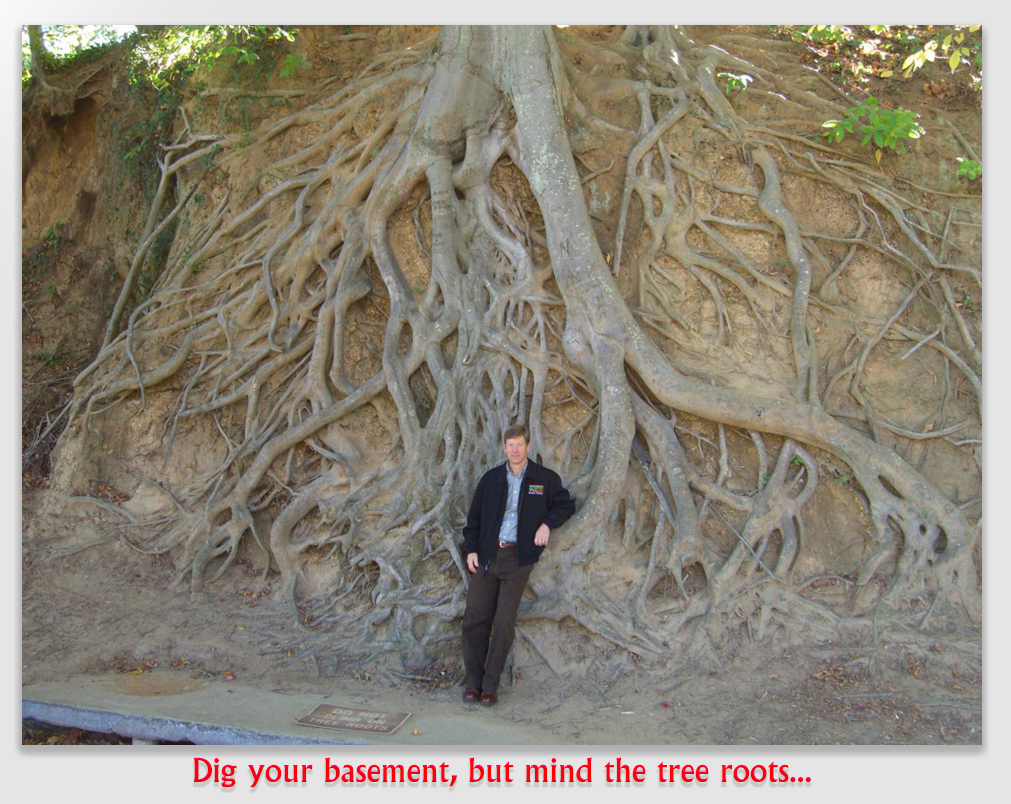
Well, yes, but for the exception. In today’s case, one property owner ignores the warnings of the other, and excavates for a basement, only to sever the roots of the big, beautiful boundary oak tree. The court agreed with the aggrieved plaintiffs all the way, except at the end, where the Supreme Court said, “Sure, that’s the rule… but there’s an exception.”

The exception is that if an owner harms or kills the tree while using his property in a reasonable way, the other owner is without recourse.

Does that tiny little exception look big enough to drive a truck through?

Amazingly enough, this decision remains good law in Oklahoma.

Higdon v. Henderson, 304 P.2d 1001 (Supreme Ct. Okla, 1956). The Higdons filed their petition seeking damages for the destruction of a shade tree they said was located on the lot line between their property and that of John Henderson. They said it had been a large towering oak tree which was a valuable shade tree for both lots. They claimed John had been building his house when, over their objections, he excavated a basement, cutting the tree’s roots and killing it.

John argued the Higdons could not recover, because their complaint did not say to whom the tree belonged, and at any rate, they did not state a claim on which they could collect. The trial court agreed, and the case ended up in the Oklahoma Supreme Court.

Held: Identifying the tree as a boundary tree was good enough, but the Higdons could not collect for Henderson’s killing of the tree.

The Court acknowledged the general proposition that “trees whose trunks stand partly on the land of two or more coterminous owners belong to them in common.” The Higdons’ complaint referred to the tree as a boundary tree, and that was quite adequate to identify common ownership of it by John and the Higdons. The Court acknowledged the general proposition that “trees whose trunks stand partly on the land of two or more coterminous owners belong to them in common.” The complaint referred to the tree as a boundary tree, and that was quite adequate to identify common ownership of it by John and the Higdons.

The Supreme Court also agreed with the Higdons that because the tree was standing on the boundary line, it was the common property of both owners, so neither had the right to damage or destroy the tree without the consent or permission of the other. But, the Court said, that rule is “qualified by the right of an abutting owner to use his property in a reasonable way and conversely, not in an unreasonable way.”

Here, the Higdons complained that John was building a house. This is not an unreasonable use of the property, the Court ruled. Therefore, the resulting incidental injury to the tree did not give the Higdons a right to recover damages.

– Tom Root

TNLBGray140407

Case of the Day – Wednesday, November 13, 2024

I FEEL PRETTY, OH SO PRETTY …

Hawkins v. McGee - the case of the hairy hand

Hawkins v. McGee – the case of the hairy hand

There’s always a tension between the value that a lover of the land places on his or her trees and the price tag affixed to those same trees by the green-eyeshade crowd of financial experts testifying in some cold courtroom.

The general rule is that the measure of damages when trees are wrongfully cut should be the difference between the value of the property before the trees were removed and the value after the trees are taken down. Fans of the old case of the hairy hand (Hawkins v. McGee) from law school remember the general diminution of value concept. Notwithstanding this staple of first-year contracts class, courts in many states have carved out exceptions to the rule for situations just like today’s case.

The problem usually arises when only a relatively few trees of limited commercial value are removed or destroyed. In today’s case, an Episcopal Church lost 22 small trees when a contractor dumped too much fill dirt – taken from a road construction project – around their bases. The Church proved in court that replacing the trees — a couple cherry trees and a score of red oaks — would cost just over $17,000. But the trial court threw the case out because it believed that the replacement costs weren’t relevant. Rather, the trial court said, the Church was obligated to prove how much less its land was worth with the trees gone.

The "tree volcano" ... pile dirt around the base, and suffocate the sapling.

The “tree volcano” … pile dirt around the base, and suffocate the sapling. The Church lost 22 trees this way.

Holy birch bark! The problem was that the worth of the property hadn’t fallen much, it being close to a road and of limited use (there’s not that much of a market for church properties). But the Church didn’t want the diminution in property’s value for its collection plate: it wanted its trees back. The Minnesota Supreme Court had mercy on the Church, holding that where the trees served a function that was primarily aesthetic, replacement cost was a fair calculation.

Sometimes justice can’t be done by using the cold, analytical diminution-of-value approach. Occasionally, the wronged owner just plain likes the trees that had been taken, and who’s to say that because the loss may be measured psychologically rather than economically, the damaged party shouldn’t be compensated. We always thought that in such cases, the wrongdoer should be held to lose much of his or her moral standing to complain about how injured the injured party is. In this case, the Court said, that the owner’s enjoyment of the trees might not be quantifiable in a real-estate-value analysis just didn’t matter. (The second case we studied in law school, Peevyhouse v. Garland Coal & Mining Co., has always illustrated the mischief that can be done when a court ignores the aesthetic expectations of the wronged party).

The decision is necessary in the world of tree law because otherwise, too many cases would founder on the rocks of damages: too many malefactors could cut down too many trees, and the likely penalties, even with treble damages available, would not deter the conduct.

Rector, Wardens & Vestry of St. Christopher’s Episcopal Church v. C.S. McCrossan, Inc., 306 Minn. 143, 235 N.W.2d 609 (Sup.Ct. Minn. 1975). When the Minnesota Department of Highways took about 8/10ths of an acre from St. Christopher’s to enlarge the intersection, the church lost its existing access and part of its parking area. The Rector hired C.S. McCrossan to construct a new parking space and access road.

irrelevant150123A grove of trees was located at the north end of the lot. In the process of grading, McCrossan dumped fill around the base of the trees, which the church argued caused the trees — two black cherry trees and twenty red oaks — to suffocate and die. The church’s expert testified that because of the variety, size, and condition of the trees, they had a total value of $17,267.

The church asserted that the grove of trees not only acted to screen the area from heavy traffic on two sides but also gave the area a natural, pleasing, aesthetic, wooded atmosphere. The trial court directed a verdict for C.S. McCrossan on the ground that the church failed to prove damage based on the diminution in value of the real estate.

The church appealed.

Held: The decision was reversed. The Minnesota Supreme Court ruled that the proper measure of damages for negligence in suffocating the trees was the replacement cost of trees rather than merely the loss of value of the real estate, notwithstanding the inability of the church to prove that the destruction of trees diminished the value of the property as a whole. The replacement cost of trees that have an aesthetic value to the owner as ornamental and shade trees or for purposes of screening sound and providing privacy may be considered in determining damage incurred from the destruction of the trees to the extent that the cost is reasonable and practical.

Although the evidence may be presented in rebuttal that the effect on the value of land as a whole is minimal, it is for the jury to balance elements of damage in arriving at a just and reasonable award.

– Tom Root

TNLBGray140407

Case of the Day – Thursday, October 31, 2024

YOU SNOOZE, YOU LOSE

This past weekend was sunny, brisk and glorious, one that called for enjoying the fall splendor. Outside of a Halloween fright for the first three quarters of Ohio State-Nebraska football (before my beloved Buckeyes awakened from their gridiron snooze to eke out a four-point win in a game where the Buckeyes were three-touchdown favorites – and, by the way, I should say “well fought, Nebraska”), I spent the weekend raking up the fall splendor. A lot of it. By 7 o’clock Sunday night, I was nodding off to sleep.

I used to have the same problem many decades ago in Property Law, a required course for first-year law students. All of those terms I had happily lived 22 years without knowing: fee simple absolute, livery of seizen, life estates, enfeeoffment, trespass quare clausum fregit… Contract law made great sense, civil procedure had a certain elegance,  but property…

More often than they should have, my eyes glazed over, my head slumped, and I slumbered while Professor Prosser droned. Even without first raking leaves. Ah, how education is wasted on the young.

Speaking of slumber, the defendant in today’s blast from the past did just that. Like your author, he paid too little attention to Byzantine concepts like life estates. When the owner of a life estate gave him permission to harvest timber on her land, Hempy slept on his rights. The owner of the life estate died, whereupon Hempy awoke from his slumber and figured maybe he had better get those trees cut.

Too little, too late. A life estate lasts only as long as the person holding the life estate does. While the holder lives, the life estate can create real mischief, but once the life expires, so does the estate. And so do any rights the estate holder may have granted.

But the reason the timber cutting was a trespass is not terribly relevant to today’s case. Instead, it is only the setup for the real issue, which is how to value the damages.

Koonz v. Hempy, 120 N.W. 976 (Supreme Court, Iowa, 1909). Koonz sued Hempy for cutting timber on property in which he had recently obtained an interest following the death of his mother. Apparently, Koonz’s mother, who had held a life estate in the property granted by her deceased husband, had contracted with Hempy to remove timber on the property. However, Hempy did not harvest the timber until after the mother had died. The trial court ruled that mom’s demise meant that Hempy had lost his right to cut the timber, because the life estate was extinguished with her passing, and Koonz was now in possession. The court awarded damages to Koonz, and both parties appealed.

Held: Hempy was liable to pay the value of the harvested timber to Koonz. However, Hempy argued that if he was liable at all, it was only for the reduction in the value of the property after he removed the timber. The Court disagreed, ruling that “where the thing destroyed or removed from real property, although it is part of the realty, has a value which can be accurately measured … without reference to the soil on which it stands, the recovery may be of the value of thing thus destroyed or removed, and not for the difference in the value of the land.”

Applying this rule, the Court held that the trial court had properly measured damages in terms of the value of the timber alone. Throwing a bone to Hempy, the Court ruled that the trial court properly denied treble damages, because Hempy’s actions failed to demonstrate the requisite willfulness to warrant such an award.

– Tom Root

Case of the Day – Friday, June 14, 2024

I WANT MY TREES BACK…

A long, long time ago, before I was trained to think like a lawyer, I was a neophyte law student and still thinking like a layman, that is to say, “normally.” New law students are first exposed to contract law. Digging into Basic Contract Lawthat boring-looking brown tome that was chock-a-block with fascinating cases, I very quickly ran into Peevyhouse v. Garland Coal Co. (on the second day of class, I recall).

Farmer Peevyhouse signed a deal with Garland Coal Co., to strip mine his land. The land was hilly, and Farmer P thought the strip mining was the ideal time to fix that. So he got Garland Coal to agree to level the land when the company was done strip mining.

Garland Coal left a lot of hills behind…

When the coal was gone, so was Garland Coal, leaving the farm just as hilly as it was before the mining. Farmer Peevyhouse sued for breach of contract. He won, of course, but when it came to figuring damages, the court noted that the diminution in value of the farm because it was still hilly (as opposed to flat) was only about $5,000. But if Garland Coal were required to come back to keep its promise to level the place, Garland Coal would have to spend $25,000 to pull it off. The higher award would constitute economic waste, the court held, and the court was not about to be wasteful with the coal company’s money.

Back then, as a tyro-at-law, I couldn’t understand the decision. Who cared if the damages were wasteful, or if the market value of the farm was only slightly less? To me, Farmer Peevyhouse made a deal, Garland Coal agreed to the deal, and – inasmuch as Garland got all the coal it bargained for – Farmer P should get what he bargained for as well, economics be damned. The economics did not matter to me nearly as much as did the reasonable expectations of the parties.

Now, with many years of practice under my belt, I tend to think like a lawyer. But Peevyhouse still makes no sense to me. The farmer would not have let Garland Coal strip his land without the promise to level the hills. So the promise was material to the farmer. Why reward Garland Coal simply because Mr. Peevyhouse’s legitimate desires might not make great economic sense?

In The Princess Bride, Inigo Montoya ends his years-long quest to avenge his father’s untimely death in a fight to the death with the six-fingered man. At last, Montoya has the tip of his sword at Count Rugan’s throat:

Inigo Montoya:   Offer me money.
Count Rugen:     Yes!
Inigo Montoya:   Power, too, promise me that.
Count Rugen:     All that I have and more. Please…
Inigo Montoya:   Offer me anything I ask for.
Count Rugen:     Anything you want…
[Rugen knocks Inigo’s sword aside and lunges. But Inigo traps his arm and aims his sword at Rugen’s stomach]
Inigo Montoya:   I want my father back, you son of a bitch!

That, on a less dramatic level, was Paul Harder’s complaint. As we read in yesterday’s installment on this case, while Paul was gone from Alaska, Joel and Darlene Wiersum clear-cut his land without permission in order to improve their view. In seeking money to restore his property – a sum that came to something like four times the fair market value of his land before the clear-cutting – Paul told the jury he “didn’t want money,” but rather he only wanted his trees back. Paul, therefore, asked for damages to restore the property by replanting the forested area.

Count Rugen could give Inigo money and power and land. But he could not give Inigo what he wanted the most, a desire that was heartfelt if utterly infeasible (and rather uneconomical). In that regard, Inigo Montoya and Farmer Peevyhouse had something in common. The question is whether they both had something in common with Paul Harder. We’ll find that out now…

Wiersum v. Harder, 316 P.3d 557 (Alaska, 2013). Paul Harder owned a pretty nice piece of Alaskan wilderness near Kodiak. He built a cabin on it and lived happily for quite a stretch. But when wanderlust set in, he subdivided the land, sold the plot with the cabin on it to his sister Lisa, and kept one for himself, and left for a 15-year sojourn in warmer climes.

Paul lived in Hawaii but returned to visit his plot of land occasionally and enjoy the hunting, fishing and recreation opportunities it afforded.

About nine years after Paul went south, Joel and Darlene Wiersum bought some land at the top of a hill, adjacent to the Harder tracts. Looking down the hill, they could see Lisa’s cabin several hundred yards below, and incorrectly assumed she owned it all. One day, Darlene called Lisa at work and asked whether they could cut down some trees on Lisa’s property that Darlene thought might “come down with the wind” and hit their home. Lisa gave them permission because she thought the removal of some trees would “let a little more light in” to the woods.

Darlene and Joel did not just thin out a few hazard trees. Instead, they clear-cut the entire hill, out to almost 400 feet beyond their property line. When Lisa returned home to find that bare naked hillside, she told the Wiersums not to cut any more trees.

When Paul returned a couple of years later, he discovered the clear-cut hillside (which really was on his plot, not that of his sister), and promptly sued the Wiersums for timber trespass. A jury him $161,000 in compensatory restoration damages, which was trebled under Alaska statute AS 09.45.730.

The Wiersums appealed.

Held: The jury’s restoration damage award was reversed and sent back for retrial.

A party who is injured by an invasion of his or her property that does not totally destroy its value may choose as damages either the loss in property value or “reasonable restoration costs.” To determine whether an award of restoration costs is appropriate, Alaska follows the Restatement (Second) of Torts § 929. The Restatement says if a plaintiff is entitled to damages for harm to land resulting from a trespass that does not amount to a total destruction of value, the damages include either (1) the difference between the value of the land before the harm and the value after the harm, or—if the plaintiff so chooses—the cost of restoration that may be reasonably incurred. Damages are measured by the difference between the value of the land before and after the harm only if the cost of restoring the land to its original condition is disproportionate to the loss in the value of the land caused by the trespass “unless there is a reason personal to the owner for restoring the original condition.”

That’s the law for you. A layman untrained in legal niceties would say “a personal reason,” but the legal phrase is a “reason personal.” The distinction is intended to convince you that the law must be complex, and thus you ought to pay that “bill inflated” your lawyer hands you without a whimper.

A “reason personal,” the Court said, is a reason peculiar or special to the owner, where “the owner holds property primarily for use rather than for sale and where the owner is likely to make repairs with the restoration costs award rather than to pocket the funds and enjoy a windfall.” For example, the Court in the past had found a “reason personal” where the damaged property was used by the plaintiff as “a showplace in connection with his nursery business” and, in another case, where the property enjoyed “unique views… abundant trees, and the unusual juxtaposition of the trees, the cabin, and the views,” and its owners, who planned to retire on the property, had testified that “other properties in the area were not comparable.”

To find that a plaintiff had a “reason personal” for restoration, where those costs were much higher than the loss of value to the land, a court should look for evidence showing “a reasonable likelihood that the trees would be restored.”

Paul showed at trial that he held on to the Monashka property for 34 years and that he intended to build a house and live on it once his son graduated from college because “it’s a very beautiful piece of property.” A real estate agent testified that he approached Paul about selling the land, but Paul had refused. Paul testified he “didn’t want money,” but rather he only “wanted his trees back” and was asking for damages to restore the property by replanting the forested area. He said he enjoyed spending time with his children on the property, but that after the trees were cut down, the property “looked totally different,” full of salmonberry bushes… whereas it was just like thick moss before,” and he reported that he had not heard any ravens there since the trees were cut.

The Wiersums argued the award of restoration damages was objectively unreasonable because the total market value of Paul’s property before the timber trespass was only $40,000. A damage award of $161,000, they contended, was disproportionate to the property’s diminution. Besides, peripatetic Paul’s “minimal use of and contribution to the land’s special value would at most justify a marginal award of restoration costs.”

The Court noted it had found in the nursery case that restoration damages were not “grossly disproportionate” where the owner had paid $4,000 per acre for the property, but the jury awarded $12,550 for restoring a quarter-acre of land. Because the principal value of the property stemmed from the creek running through it, and the owner intended to use the property to create “a showplace in connection with his nursery business,” the cost of restoration, although disproportionate to value, was reasonable. Nevertheless, the Court had previously cautioned that “restoration costs exceeding diminished market value may be awarded only to the extent such added costs are objectively reasonable in light of the ‘reason personal’ and in light of the diminution in value.”

The “reason personal” may be a non-commercial one based on the property’s uniqueness, but the restoration award must be limited to the cost that has been or may be reasonably incurred.  The reason for this rule, the Court said, is “to reduce the economic waste that occurs when a party incurs repair costs in excess of the diminished value of the property.” The application of this principle “must ensure that an award of restoration damages does not confer a windfall upon a landowner.” Where proposed replacement costs are excessive in relation to the damage caused by the trespass, “the achievement of a reasonable approximation of the land’s former condition may involve something less than substantially identical restoration… It may be more appropriate to award costs for the planting of saplings, or a few mature trees, or underbrush to prevent erosion and achieve a lesser but, over time, reasonable aesthetic restoration.”

Applying these principles to Paul’s denuded hillside, the Court held that the award of $161,000 in restoration costs was objectively unreasonable in light of the $40,000 pre-trespass total value of the property. Paul’s “reason personal” for restoration, and the absence of any proof of the extent of the decrease in the value of his property, made it more appropriate to award costs “for the planting of saplings or a few mature trees or underbrush to prevent erosion and achieve a lesser but, over time, reasonable aesthetic restoration.” The Court’s conclusion was based on its determination that the “property could be reasonably restored by replacing at least some of the mature Sitka spruce with saplings or smaller trees and that because the property’s large trees were growing in a forested environment where the root zones were intertwined” it was not possible to ” replace that exact tree in that environment.”

The jury must base its award on a finding that the restoration costs were objectively reasonable in light of the value of Paul’s land, the loss of value due to the Wiersums’ trespass, and his “reason personal.” Here, the Court said, no reasonable juror would award restoration costs totaling more than four times the full fair market value of the property before the trespass. Thus, the Court sent the case back for a new trial on damages.

And what’s my take on this case, based upon my decades of thinking like a lawyer? I’m with Inigo Montoya and Paul Harder: “I want my trees back, you son-of-a-bitch,” and economics be damned.

This is a bad decision.

– Tom Root

TNLBGray

Case of the Day – Tuesday, May 21, 2024

SHORT AND SWEET

There have been more than a few recurring themes in our posts over the past decade-plus. Some of the most repeated are (1) hire a lawyer when you should have one, such as anytime you feel the need to sue someone; (2) courts follow prior decisions – called stare decisis – in order to bring certainty to the law; and (3) the Massachusetts Rule has traditionally been the law of the land, and while that has been changing, it is still the “go to” rule in most places.

Alas, Virginia Scott is not one of our regular readers. Had she been back in 2010 (and yes, we were around then, when people were still surfing the Web with their Packard Bell 286s sporting 56K modems), she would have consulted a lawyer about the mess that trees belonging to her neighbor, Julie, were making in her yard. She would have told the lawyer that she wanted damages for the dropped leaves and twigs, and she wanted to be compensated for what she paid tree trimmers to cut the offending branches and roots back to her property line.

The lawyer would have said, “Nothing doing,” or words to that effect, which would have saved Virginia the cost and aggravation of trying a do-it-yourself lawsuit against Julie. As well as having her hat handed to her by the trial court and the court of appeals.

“But,” Virginia wailed, “the law is stupid. It should be changed.” Notably, that argument has worked some places – Virginia, Hawaii, North Dakota – but Virginia had no idea how to press for modification of the rule, and the Court was unimpressed.

At least the Court of Appeals kept it short and sweet. As we will be…

Scott v. McCarty, 41 So.3d 989 (Fla.App. 4 Dist. 2010). Virginia Scott owned property next to Julie McCarty’s place. Dr. Julie had some pretty lush trees – this being Florida, plants like to grow there – and eventually some of the branches were overhanging Virginia’s place, and the roots were intruding underground.

Virginia sued the Doc for the damages Julie’s trees caused her property and for the cost of trimming the branches back to the property line and digging up the intruding roots. Apparently, having spent so much on damage repair and tree trimming, Virginia decided to save money on a lawyer and represented herself.

The trial court dismissed her complaint forthwith, citing the Florida common law rule that “a possessor of land is not liable to persons outside the land for a nuisance resulting from trees and natural vegetation growing on the land. The adjoining property owner to such a nuisance, however, is privileged to trim back, at the adjoining owner’s own expense, any encroaching tree roots or branches and other vegetation which has grown onto his property.”

This rule not seeming right to Virginia, she appealed.

Held: Virginia’s case was properly dismissed. The Court of Appeals said that the reason for Florida’s common-law rule “was that it was wiser to leave the individual to protect himself than to subject the other to the annoyance of actions at law which would likely be innumerable.”

On appeal, Virginia acknowledged that the common-law rule, first adopted in the 1987 Florida appellate case Gallo v. Heller, was the prevailing law, but she asked the Court to “take a different course.” The Court refused to do so, saying that “the Gallo view is the predominant view in the country… [and] departing from the precedent would invite further litigation between neighbors on this issue, which as a public policy matter should be avoided.”

– Thomas L. Root

TNLBGray140407

Case of the Day – Wednesday, May 1, 2024

MEASURING HARM

oopsMr. Harper accidentally cut down 70 trees on Ms. Dumas’ property, thus markedly improving his view. Oops! 

The more skeptical among us think that cutting one Dumas tree would have been an accident, and cutting down a few would be a tragedy. But cutting down 70 of ‘em, and coincidentally achieving the better view Mr. Harper coveted… well, that sounds like enemy action.

The Connecticut court is considerably more credulous than are we. The judge bought the notion that Mr. Harper and his woodsmen goofed, but pondered long and hard about how to figure the damages. In a weird inversion of schadenfreude, Ms. Dumas argued her damages should be measured by the value that Mr. Harper derived from his better view. The Court rejected that.

Instead, it held that the measure of damages is either the value of the timber or the diminution in value of Ms. Dumas’ place. Harper said that the trees he accidentally lopped weren’t ornamental, so the only damage is about $1,000 worth of debris (thus proving that while he couldn’t identify a property line, old Mr. Harper didn’t lack for chutzpah).

schaden141031The Court disagreed. The trees weren’t strictly ornamental, but that was their purpose, regardless of Mr. Harper’s sad attempt at botanical speciesism. The damages should be measured by the cost of repair, the Court said, and the repair will cost $16,000.

Careful testimony by Ms. Dumas’ expert was crucial to establishing her damages, and arborists and landscape professionals should consider how plenty of detail can persuade a court to side with an expert’s report. For the same reason that play-by-play people keep a color commentator near at hand, an expert should tell a story that’s not only accurate and complete, but interesting as well.

Dumas v. Harper, 2008 Conn. Super. LEXIS 264, 2008 WL 496558 (Conn. Super.Ct., Feb. 6, 2008). Yvon Dumas claims that Emery Harper and his agents entered her land without permission and cut down about 70 trees. Dumas claimed trespass and sought compensatory and treble damages under Connecticut law, and other equitable relief. The matter was tried to the judge instead of a jury.

Based on the evidence, including a site inspection, the court found that Harper and his minions had indeed cut down about 70 trees, making the area unsightly with tree stumps, branches and debris strewn about. The Court found that Harper’s trespass was the result of a mistake.

Nothing left but a stump field ...

Nothing left but a stump field …

Dumas introduced evidence of the value of the “view” to Harper with the trees on her property cut down. But the Court ruled that the value of any view to Harper was not the measure of damages, but rather the damages were either the market value of the tree once cut down, or the diminution in the market value of Dumas’ property caused by the cutting. Harper argued that the only measure of damages the court was permitted to award under Connecticut General Statute § 52-560 was the market value of the 70 trees as severed from the soil, because the trees in question were neither ornamental nor shade trees. The Court disagreed, holding that while the trees were not ornamental trees as such, the evidence was that they had ornamental value insofar as their removal rendered that portion of Dumas’ property unsightly. It would make no sense, the Court said, for the damages to be limited to the value of the trees as severed from the real estate. The damages to be awarded to Dumas should be based on the reduction in the pecuniary value of the land because of the cutting.

The Court found that the decrease in value of the Dumas property should be measured by the cost of cleanup and screening the area with new trees. The Court accepted the expert opinion of Dumas’ landscape consultant, who testified that the work would take a week or more and would cost $9,180 for labor and $6,000 for new trees.

– Tom Root

TNLBGray140407