Case of the Day – Tuesday, June 24, 2025

WE’RE FROM THE GOVERNMENT, HERE TO HELP OURSELVES

Marlborough should have heeded Marlboro's advice -

Marlborough should have heeded Marlboro’s advice – “better makin’s” … as in “we’d better be makins sure we own the land befores we go diggin’ it up.”

Some time years ago, Marlborough (the City, not the cigarette) abandoned a seldom-used city street, even noting in the land record the misspelled sentiment that it “hearby abandon[ed] and discontinu[ed] any and all rights …” in the street.

Well, time passed. While much improved in the world, the competence of decision-by-committee did not.

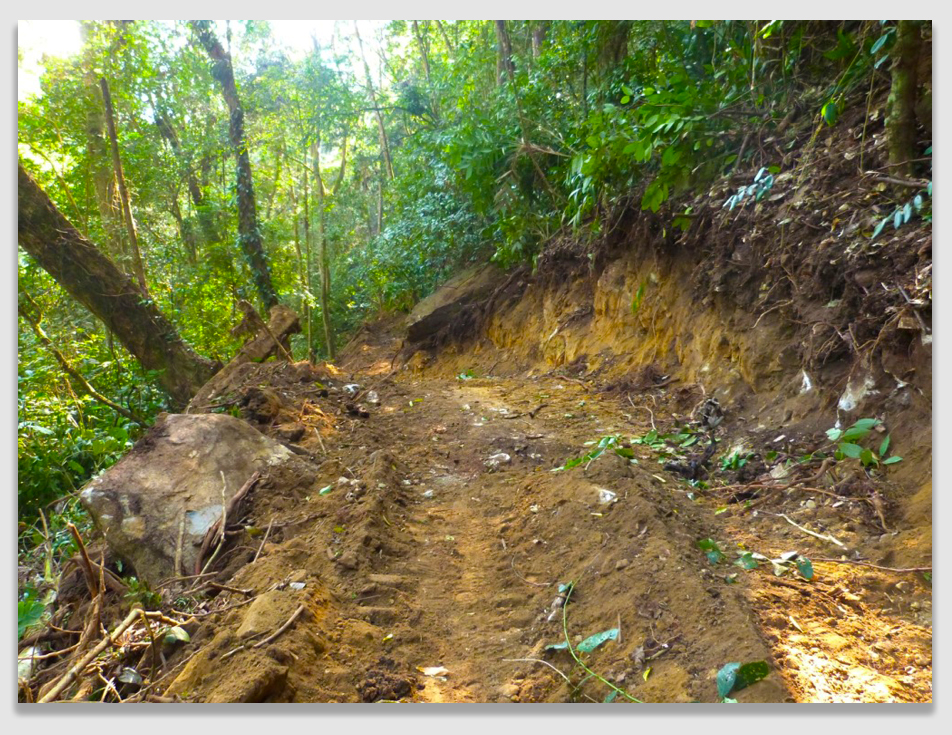
When the Marlborough powers that be decided that a new water main had to be installed, they concluded they should go right down the right-of-way they had abandoned. “What, we abandoned it? Well,” the city fathers and mothers chuckled, “we’ll just take it back!”

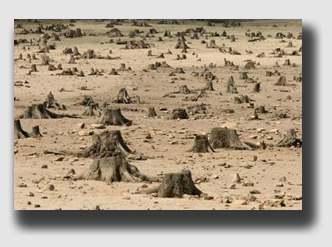
And they did, too, going right up the center of the abandoned street, tearing up the place and downing a number of trees (which is how we ended up writing about this, to begin with). America’s a relatively civilized place (albeit one with a lot of lawyers), so the landowners sued.

Obtaining a judgment that the City had trespassed was easy: after all, the land records themselves revealed the City had no rights in the street. But figuring the damages was tricky, especially because the landowners wanted treble damages. In Massachusetts, a trespasser to trees is liable for treble damages unless he or she had “good cause to believe” that he or she had a right to cut down the trees. The City argued it had relied on one of its attorney-employees, who opined that the street remained a public thoroughfare despite the unambiguous and misspelled language of the recordation and Massachusetts law. The City said it took “extensive steps” to determine its rights.  Sure, and COVID-19 came from Australia, the 2020 election was rigged, and Ukraine invaded Russia.

The Court said “nonsense” to Marlborough (and probably would have said the same to that other stuff).  It seemed the plans for the water main construction themselves carried the notation “Ownership to be determined,” and the trial judge warned the City at the temporary restraining order stage that its rights were pretty shaky. But the City dug and cut on. Sow the wind, reap the whirlwind.

An interesting damages note to the case: the City offered “expert” testimony from a real estate professional as to the loss of value of the property because of the trespass, calling this a “common sense” approach to valuation. The Court rejected the expert and the approach because the loss calculation necessarily must include the value of the trees that had been cut down. Besides, the Court said, a real estate expert — no matter how good in his or her area of expertise — knew diddly-squat about trees.

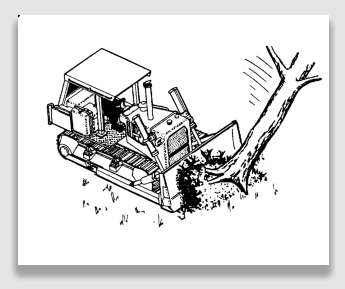
street150615The damage approach approved by the Court – the “cost of cure” method – took into account the cost of replacing the trees that had been cut, as well as the removal of the larger stumps.

Smith v. City of Marlborough, 67 Mass.App.Ct. 1104, 852 N.E.2d 137, (Mass.Ct.App., 2006). Abutting landowners brought an action against the City of Marlborough, alleging that the city had trespassed, destroyed trees, and removed soil and gravel during the installation of a water main through their properties along an allegedly abandoned lane. The Superior Court entered judgment for landowners and awarded treble damages, and the City appealed.

Held: The award of treble damages was upheld. The Court agreed that the City of Marlborough had abandoned the street, and it thus committed trespass when it destroyed trees while installing a water main along the abandoned street. A recorded order stated that the city “hereby abandons and discontinues any and all rights that it now has or ever had” in the lane. The Court held that the City did not have a good reason to believe that it owned land which it had previously abandoned, and thus the landowners abutting the street — who received the property following abandonment — were entitled to treble damages due to the city’s removal of trees while installing the water main.

Marlborough tried to make Sandy Posey's 1967 country-pop song into the city anthem ...

Marlborough tried to make Sandy Posey’s 1967 country-pop song into the city anthem …

The evidence showed that the survey “was performed without the benefit of the determination of the status” of the lane and that the landowners raised questions about the ownership of the land with city personnel immediately after receiving notice of blasting near the lane, but the city continued its work nonetheless.

No one disputed the amount of damages determined under the “cost of cure” method on appeal. The damages included the cost of replacing trees, as well as the removal of stumps of larger trees that had been cut. Marlborough complained that it was deprived of an opportunity to present its own “common sense and expert approach” when its expert, a real estate appraiser, was not allowed to testify because he was not an arborist and did not determine the value of the trees.

Marlborough offered no specific allegations of errors in procedure or in the jury instructions and merely concluded that “according to common sense,” the loss of trees could not be worth more than the damages awarded for the land taking. The Court rejected this argument, too.

– Tom Root

TNLBGray140407

Case of the Day – Monday, June 23, 2025

TREBLE DAMAGES FOR TRESPASS TO TREES

AdvPossSignIn an Ohio case we were working on recently, we had occasion to consider a “wrongful cutting” statute. Many states have them, statutes that require people who trespass on land and remove trees to pay multiple damages, most commonly three times the value of the timber but in some states double damages. Usually, the statute requires that the person trespassing and removing trees have some culpability beyond mere negligence. The notion is that people who recklessly or intentionally cut down someone else’s trees need a strong incentive to abandon their nefarious ways, and awarding a multiple of actual damages is intended to encourage them to walk on the paths of righteousness.

But like any good statute (look at the federal RICO statute in the event you need some proof of this), the opportunity for misuse of the wrongful cutting law is rife. In today’s case, we start with your garden-variety adverse possession case. The plaintiff really had encroached on his neighbor’s property over a period of close to 50 years, although he had not gone to court to get record title. When the record owner of the land cut down some of the trees on land his title said still was his, the adverse possessor not only sued to quiet title – that is, get a judicial acknowledgment that he now owned the disputed strip of real estate – but even wanted treble damages for the timber his neighbor had cut.

The Massachusetts Land Court wisely declined the plaintiff’s invitation. It ruled that if your title says the land is yours, even if someone might be able to take it away from you if the case goes to court, you can hardly be blamed for cutting timber on it. The Massachusetts statute required that you have “good reason to believe that the land on which the trespass was committed” wasn’t yours, in order to be on the hook for treble damages.

The adverse possessor was already acquiring title to land he had never bought, a judicial act that some would call unjust enrichment. Giving him treble damages because the guy who owned the property, according to the title, cut down some of what the records said were his trees, would really be piling on.

Mendes v. Bachant, 15 LCR 308 (Mass. Land Ct., June 29, 2007). George Mendes bought land in 1969. At that time, a shed stood at the rear of the parcel, and in fact, intruded on land owned by a man named Gleason. Neither Mendes nor the prior owner had permission to locate a shed on Gleason’s land, and apparently, no one was aware that the shed was in the wrong place.

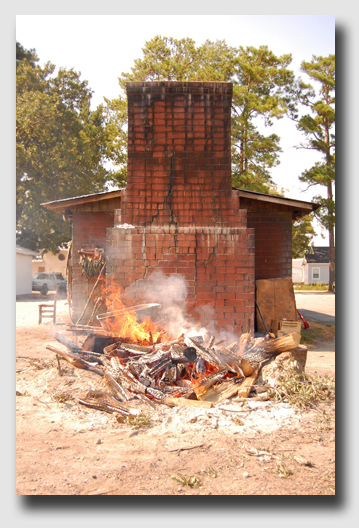
Mendes installed a barbeque pit on the disputed land ... do you think the Bachants were ever invited to a pig roast?

Mendes installed a barbeque pit on the disputed land … but do you think the Bachants were ever invited to a hog roast?

Gleason sold the land in 1969 to the Bachants. In the 1970s, Mendes installed a garden and trellis on the disputed land. Ten years later, Mendes replaced the shed with a larger shed, which further encroached, and built a stockade fence behind the shed, which enclosed the area in dispute. He also added a barbecue pit. Again, he did this without permission and apparently even without knowing that he was intruding.

Some 46 years or more after the first intrusion, the Bachants figured out that they held title to the disputed land, and in 2005, they tore down the fence, tore up the garden, and cut down and removed trees in the disputed area. Mendes sued, claiming the land by adverse possession and seeking damages for trespass to trees. He demanded treble damages under Massachusetts G.L. c. 242, §7 for the destroyed timber.

The Bachants said that Mendes had failed to establish what portion of their property he adversely possessed, and had not proven the elements of dominion and control or open and notorious possession sufficient to establish his claim of adverse possession. The trial issued a temporary restraining order enjoining the Bachants from undertaking any construction or related activities on the disputed land. After the trial, the court made findings.

Held: The land belonged to Mendes by adverse possession, but the Bachants weren’t liable for cutting down the trees.

The Court ruled that Mendes’ possession had been actual, exclusive, and non-permissive, exercising dominion and control for a continuous period of at least 20 years. The Bachants argued that because the land was undeveloped woods, a stricter rule applied, and Mendes was required to have enclosed the area he possessed. The Court agreed that where a party claims adverse possession of woodlands, it must also demonstrate that the land at issue was either enclosed or reduced to cultivation and, in contrast, title by adverse possession cannot be shown to wild or woodland that has always been, and remains, open and unenclosed. But, the Court said, Mendes met the stricter standard imposed upon woodland parcels by enclosing a substantial portion of the disputed area with a stockade fence and the cultivation of a vegetable garden within the same enclosure, coupled with the aforementioned additional activities.

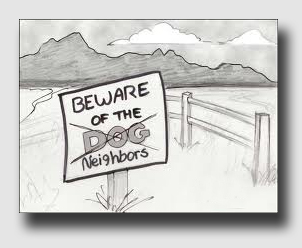
beware140430As for the trespass to trees, the Court observed that under G.L. c. 242, §7, a person who, without the right to do so, cuts down and removes another’s trees and timber is liable for treble damages. Mendes contended that the Bachants unlawfully entered his land and removed all of the trees and brush up to his shed. The Bachants argued that they were entitled to enter upon the land pursuant to their record title. The Court didn’t buy either argument, but it observed that the statute permitted treble damages only where the trespasser did not have “good reason to believe that the land on which the trespass was committed was his own.”

Here, the Court said, the Bachants’ record title indicated they owned the disputed area. Thus, even if damages were appropriate, treble damages wouldn’t apply. All they had done was to cut trees from land that remained theirs as a matter of law until the courts said otherwise.

– Tom Root
TNLBGray140407

Case of the Day – Wednesday, June 18, 2025

YEAH, WELL, THEY WERE UGLY TREES…

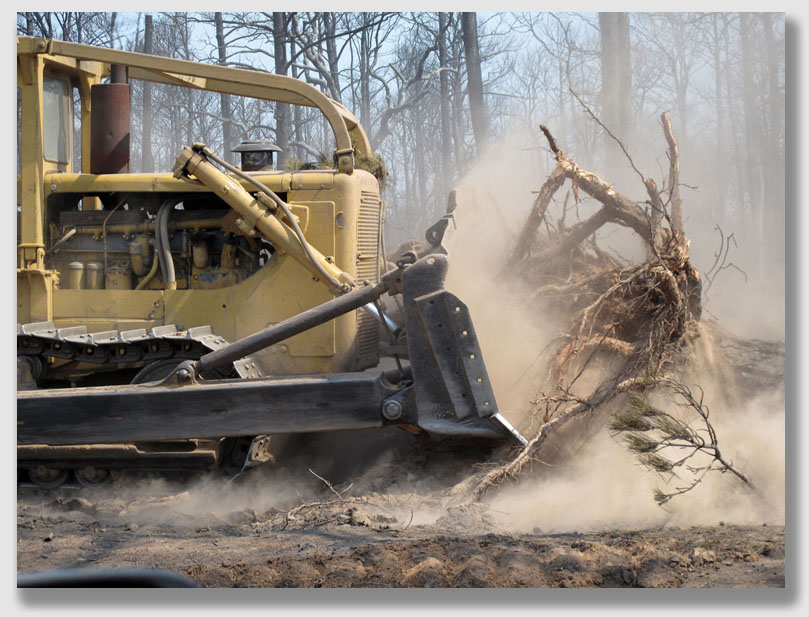
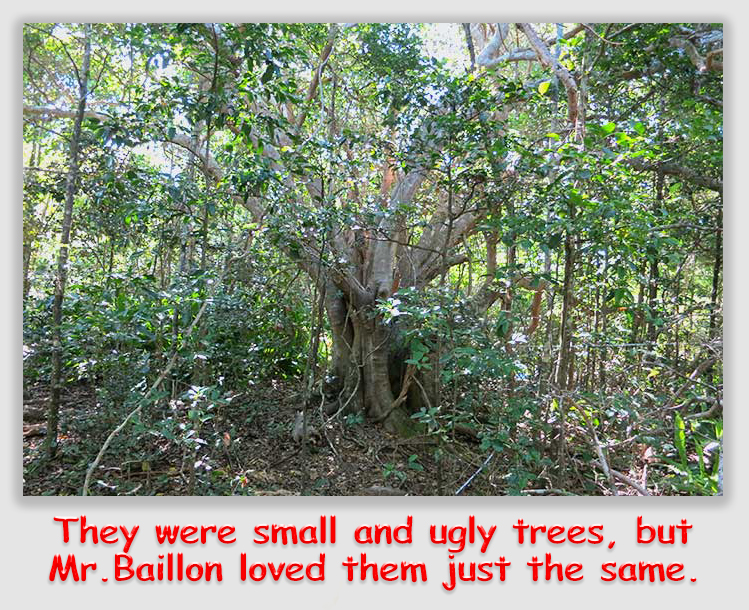
When the contractor building an interstate highway interchange needed some space to park bulldozers, the state highway department asked Mr. Baillon for an easement.  Being justly proud of his scrubby little trees and stunted bushes, he refused.

A couple of volunteer oak trees and some forsythia bushes are no match for a Caterpillar D10, so the contractor, Carl Bolander & Sons Co., went ahead and used Mr. Baillon’s land anyway.  But it turns out a Caterpillar D10 is no match for a Minnesota trial court.  Mr. Baillon sued and won.

But he won what?  The trial court judged his damages by the diminution in value of his land.  That is, how much less is the scrawny strip of real estate worth with the scrub trees gone?  Not much, the Court said, giving Mr. Baillon just $500.00.

Mr. Baillon appealed.  He argued he had wanted the trees and bushes as a sound barrier between himself and the road.  Also, he should have gotten treble damages because of the intentional trespass.

The appeals court sort of agreed.  It held that the measure of damages for the loss of trees — because they weren’t particularly desirable as shade trees or ornamental trees — was the reduction value of the real estate.  Clearly, however, treble damages should be assessed under Minnesota Statute 561.04, Minnesota’s wrongful cutting statute, because the trespass was anything but casual.

This type of damage calculation, well known to contract law students who read Peevyhouse v. Garland Coal Co., is intended to avoid economic waste.  The thinking is that the courts won’t order restoration of the property if the cost exceeds the reduction in value caused by the conduct.  But at what price to freedom?  Mr. Baillon didn’t want to sell his property; he wanted his trees, pathetic though they might be.  The fact that the marketplace might not share his desires shouldn’t matter all that much: it was his land, and he should be able — within broad parameters — to keep it as he likes.  Letting the bulldozer operator off the hook for the intentional trespass by not requiring that the land be restored to what it looked like before the trespass, even if that cost ten times the difference in real property value, seems to us to not accord Mr. Baillon’s rights the respect they deserved.

Baillon v. Carl Bolander & Sons Co., 306 Minn. 155, 235 N.W.2d 613 (Sup.Ct. Minn. 1975).  The Highway Department tried to get Baillon to grant a temporary construction permit, giving the state an easement to go on his property adjacent to where Bolander was constructing I-35.  Although Baillon wouldn’t grant the easement, Bollander’s workers trespassed on the land and destroyed a number of trees and shrubs. Baillon wanted the particular trees, in order to preserve a natural and wild appearance, to abate noise from the highway, and to preserve the beauty of the premises.  The trial court found that Baillon was damaged by the Bolander company’s intentional acts in the sum of $500.00.  

Arguing that the trial court should have applied as a measure of damages the replacement cost of the trees and not, as the trial court held, the diminution in value of the real estate, and that he was entitled to treble damages, Baillon appealed.

Held: The award of damages was upheld in part.  The Supreme Court held that the proper measure of damages for the destruction of trees which, for the most part, were quite small, ill-formed and not particularly desirable as shade trees or ornamental trees, but which served to prevent erosion and acted as a sound barrier, was the diminution in value of the real estate rather than the replacement cost of trees (even though the trespass was willful).

However, treble damages should be awarded. The Court held that where the highway contractor — in the course of building the freeway — intentionally cut the trees, which did not protrude over the highway. The trespass was not necessary for the contractor’s purposes and was not “casual.”  It was clearly the duty of the trial court to order treble damages unless Bolander’s activities came within one of the exceptions specified in the statute, and those activities clearly did not.

– Tom Root

TNLBGray140407

Case of the Day – Monday, May 19, 2025

NOT A HAPPY BUNCH AT ALL

This bunch is pretty happy ... The Wongs? Not so much.

This bunch is pretty happy … The Wongs? Not so much.

The Wong family, through their company Happy Bunch, LLC, was quite happy indeed with the nice piece of property the family occupied. The Wongs especially liked the 10 trees that lined one boundary. They had planted and nurtured them for 20 years or so, and the trees had gotten big enough that eight of them actually straddled the boundary line with their neighbor.

But what a hot dog the neighbor turned out to be! Grandview North was a developer and planned a Wienerschnitzel franchise on the lot next door. The City required that Grandview add about four feet of fill to the lot, and Grandview was afraid the Wongs’ boundary trees would get in the way. Grandview had a survey done, and the company knew the trees were on the boundary line, with most of the trunks on the Happy Bunch land (two were entirely on the Happy Bunch side of the boundary). So what? After finding itself unsuccessful at getting Mr. Wong to consent to the trees being cut down, Grandview made its view grander by taking out the trees itself. Mr. Wong was done wrong …

Happy Bunch sued. The trial court ruled that Grandview owed $32,000 or so for the trespass to timber, but it refused to impose statutory treble damages, finding them not applicable to boundary trees.

The Court of Appeals, in a case of first impression, disagreed. It ruled that boundary trees in Washington State are owned by both landowners as common property, and neither may cut them down without the consent of the other. The Court ruled that damages resulting from a boundary tree being cut down are the replacement value of the tree, apportioned by the percentage of the trunk on the injured landowner’s property, a method that strikes us as rather artificial and likely to undervalue the tree to the injured property owner. What, Happy Bunch gets half a tree back? There was a little bit of justice, however: the Court of Appeals ruled that the treble damage statute for trespass to timber applied to boundary trees as well as other trees.

Happy Bunch, LLC v. Grandview North, LLC, 173 P.3d 959 (Wash.App. Div. 1, 2007). The Wong family owned land through its limited liability company, Happy Bunch LLC. Grandview was a property development company that purchased a parcel of property next door to the Happy Bunch property to build a Wienerschnitzel drive-through restaurant. The City of Mount Vernon required that four feet of fill be placed on the Grandview property as part of the planned development.

cutdownTwelve mature trees stood either on or near the boundary line between the Happy Bunch and Grandview properties. Some portion of the trunks of 10 of the trees — all originally planted by the Wongs some years before — extended from the Happy Bunch property onto the Grandview property. Grandview believed it couldn’t meet the city’s fill requirement without putting a retaining wall on the Happy Bunch/Grandview property line. Because the roots and trunks of the trees extended onto Grandview’s property, Grandview believed that they would interfere with the construction of the retaining wall and decided to move them, even though Grandview knew a survey showed the trees’ true location on the property line.

The Happy Bunch was not happy, not agreeing with the plan and finding through its own survey that the trees were either on the boundary line or entirely on the Happy Bunch land. Despite Happy Bunch’s opposition, Grandview cut down all ten trees. Happy Bunch sued, claiming that it had acquired title to the land under and around the trees by adverse possession due to the Wongs’ maintenance of the trees and surrounding area. It also sought damages for both the value of the cut trees and the estimated $15,065 cost of digging up the trees’ root systems and repairing damage to the Wongs’ driveway likely to be sustained as a result. Happy Bunch also requested that the entire award be trebled under Washington law because of Section 64.12.030 of the Revised Code of Washington, the state’s timber trespass statute. Happy Bunch was thus happy to seek a total damage award of $168,294.

Hotdogg160610The trial court ruled that Grandview committed timber trespass by cutting the trees on the Wong/Grandview property line. The trial court took the damage figure to the trees of $40,033 and multiplied it by the percentage of the cut trees that had been growing on Happy Bunch’s property, resulting in damages of $32,519.22 to Happy Bunch on its timber trespass claim, as well as $2,500 for the cost of grinding out the remainder of the stumps. The court denied the damages of $15,065 for completely removing the trees’ root systems and repairing the resulting damage. Finally, the trial court ruled that Happy Bunch was not entitled to treble damages as provided by the timber trespass statute “[b]ecause the trees that were cut straddled the common property line.”

Happy Bunch appealed.

Held: Judgment was reversed on most counts. The Court of Appeals concluded that Happy Bunch was only entitled to recover damages for injury to those portions of the trees growing on its land. However, the Court found that RCW § 64.12.030’s treble damages provision did apply.

In most jurisdictions, a tree standing on a common property line is considered the property of both landowners as tenants in common. Although Happy Bunch admitted that courts commonly calculate damages based on the value of each cut tree, apportioned according to the percentage of the tree that was located on the injured landowner’s property, it contended that the proper approach here was the one applied in the Colorado case, Rhodig v. Keck. Rhodig held that absent a showing of an agreement to the contrary, a boundary line tree belongs entirely to the party on whose land the tree was originally planted, with damages calculated accordingly.

The Court of Appeals rejected Rhodig, holding that adoption of its rule would enable Washington landowners to effect boundary line adjustments with trees, creating “an entirely new theory of adverse possession without a basis in either the statutory or common law of this state.” The Court said the Rhodig holding would mean that Happy Bunch acquired title to the land under the trees simply because had once had planted the trees. Therefore, the Court held, a tree standing directly upon the line between adjoining owners so that the line passes through it is the common property of both parties, whether marked or not; and trespass will lie if one cuts and destroys it without the consent of the other. Grandview had an interest in the trees proportionate to the percentage of their trunks growing on Grandview’s property, and thus, the trial court correctly awarded Happy Bunch only that portion of the trees’ value reflecting Happy Bunch’s property interest in them.

Happy Bunch contended that an award of treble damages was mandatory pursuant to RCW § 64.12.030, unless Grandview proved one of the mitigating factors listed in the statute. The Court agreed, holding that the trespasser must allege and prove mitigation, and absent such a showing, treble damages will be imposed. The Court rejected Grandview’s argument that it believed it had a right to remove the trees, noting that Grandview possessed a survey that indicated that the majority of the trees were predominantly located on Happy Bunch’s property, and that at least two of the trees were not located on Grandview’s property at all.

The Court said that where a person has been given notice that another has an ownership interest in trees, and the person nonetheless cuts them down, the actor will be liable for treble damages under the statute. Both the punitive and compensatory policies underlying the statute are implicated with respect to boundary line trees, the Court reasoned, and for that reason, the statute must be applied.

– Tom Root

TNLBGray140407

Case of the Day – Wednesday, April 23, 2025

TESTING THE BOUNDARIES

forgot150430Before I forget to do this, I’d like to report on a case of a conveniently forgetful property owner from the Land of 10,000 Lakes.

Mr. Meixner made an agreement with his neighbor, a sawmill, to replace some boundary fences. The first several fencelines were replaced according to the parties’ agreement, with Meixner and the sawmill sharing the costs. Everything seemed hunky-dory, as they like to say in Minnesota..

Out of nowhere, Mr. Meixner sued, claiming that the sawmill had cut down 73 trees on his land before replacing the second of the three fences.

The sawmill said, “Yup. Sure did.” These Minnesotans are people of few words, when they’re not saying things like “hunky-dory.” But the sawmill employee did say, “Had to cut down the trees to build the new fence. Meixner agreed.” Those words were plenty, and the jury found for the sawmill.

On appeal, the Court agreed with the level-headed jurors. It first adopted the general principle that trees on a boundary line are owned in common by the property owners, and neither may cut down a boundary tree without the consent of the other. But here, the Court said, it’s pretty clear that the sawmill employees had Mr. Meixner’s OK to axe the trees. After all, the Court observed, Mr. Meixner had given the sawmill permission to build the new fence, and he even shared the cost. If permission is given to enter onto the property to build a new fence, that permission implies authority to do all acts necessary to the completion of the task.

Don't you believe it ...

Don’t you believe it …

The sawmill employee said the trees had to go if the new fence was to be built. That evidence was good enough for the Court. Mr. Meixner wanted a fence, so he necessarily wanted the trees cut in order to build it.

Meixner v. Buecksler, 216 Minn. 586, 13 N.W.2d 754 (Sup.Ct. Minn. 1944). Meixner owned property next to a lumber company. He had an agreement with the company to replace old fences standing on the common boundary line.

Meixner and Buecksler, a tenant and employee of the company, built a new east-west fence in September 1938. Pursuant to the lumber company’s direction, Buecksler then cleared out the brush and cut down some trees in preparation for building a new fence to replace the old one that marked the boundary between Meixner’s south forty and the company’s north forty. A survey was made of this line, and thereafter Meixner and Buecksler constructed the replacement fence. A third fence was later completed, marking the east-west boundary.

Meixner contended that Buecksler and the company unlawfully cut 73 trees on his property prior to building the north-south fence, and that such acts were done without his knowledge or consent, and constituted trespass. The lumber company claimed Meixner had consented to clearing away the brush and cutting the trees, and that such acts were necessary in order to carry out the mutual plans to build the fence. The jury found for the defendants.

Meixner appealed.

Held: The appeals court upheld the verdict. It found that trees on the boundary line are the common property of the adjoining landowners, neither of whom may destroy without the consent of the other. However, trespass is not committed if there is permission or consent to do acts complained of, which consent may be implied from circumstances, and the jury was entitled to find that the Defendants had Meixner’s consent.

Generally, the Court said, permission to do a particular act carries with it authority and right, by implication, to do all that is necessary to effect principal objects and to avail the licensee of his rights under the license. Meixner’s agreement with Buecksler and the company for building a line fence between the adjoining properties carried with it by implication the right to do such things as were reasonably necessary in order properly to build the fence, including the cutting of trees on the boundary line.

Meixner had asked the court to award him treble damages under the Minnesota statute on wrongful cutting. The court declined, pointing out that there had to be damages in order to treble them, and Meixner simply had none.

– Tom Root

TNLBGray

Case of the Day – Tuesday, April 8, 2025

HEAD IN THE SAND

ostrich150416When Dominick Cristino and his brother got sued for cutting down a silver maple and a couple of elms on his neighbor’s land, Don’s bro hired a lawyer. But Dom wasn’t worried. His brother was a nervous Nellie. What did Dom need a high-priced lawyer for?

He soon found out. Acting as his own attorney, Dom had a fool for a client. He missed the deadline for pleading, and he couldn’t figure out that the judge was throwing him a life ring when he suggested Dom work something out with the plaintiff’s attorney. When Dom did not, the court entered a default against him. When the judge ruled that the tree damage was about $12,000, Dom thought that maybe having a mouthpiece wasn’t such a bad idea.

The new solicitor asked the court to set aside the judgment because Dom thought his brother’s lawyer was his lawyer, too. Horse-puckey, the Court said. Then Dom said he and his brother hadn’t cut the trees down willfully, meaning that treble damages could not be assessed under state law. The Court had to balance justice and judicial efficiency, fairness, and the public interest in finality. Dom had had his chance to argue that he hadn’t deliberately chopped down the trees. He sat on his rights.

The judge may have been no Solomon, but he did all right: he decided that justice demanded that Dominick not be hammered with treble damages — which, after all, are punitive in nature — without a chance to be heard. So the court told the plaintiff he could take the $12,000 and run, or the Court would decide the treble damage issue on the merits.

The judge was not Solomon, and he kept the swords out of the courtroom - but he brokered a balanced, efficient and fair result.

     The judge was not Solomon, and he kept the swords out of the courtroom – but he brokered a balanced, efficient, and fair result.

Still, Dominick would have done a lot better if he had hired counsel at the outset.

Bontempo v. Cristino, 2007 Mass. Super. LEXIS 407, 2007 WL 3014707 (Mass.Super., Sept. 6, 2007).  Bontempo sued the Cristino brothers for the harm caused when Dominick Cristino cut down three trees located on the Bontempo property without permission.

One brother settled, but Dominick Cristino did not bother to defend the action. A default judgment was entered against him, despite the fact he was in court when it occurred. He declined the court’s invitation to talk to the plaintiffs to settle and offered no reason why a judgment should not enter against him.

At a damages hearing, Noel Bontempo and Dominick Cristino both testified. An expert estimated the replacement cost of the silver maple that had been cut down at $30,000 and two other elms at $7,000 each. The court determined that damages in the amount of $12,000 should be awarded against Dominick Cristino.

After the hearing, Dominick Cristino hired a lawyer and moved to set aside the default on the grounds that Dominick Cristino was misled into thinking that the law firm representing his brother also represented him. Also, Dominick and his brother Antonio filed affidavits that maintained they acted on the mistaken but good-faith belief, that the trees in question were located on their land.

chop150416Held: The default judgment would stand because Dominick Cristino had admitted that he cut down trees on Bontempo’s land without license in violation of Massachusetts G.L. Chapter 242, §7. What was in dispute, according to Dominick Cristino, was whether he acted willfully. If he did, the Court held, he would be liable to the owner for three times the amount of the damages assessed. The Court held that the interests of justice required that Bontempo should be given the opportunity to offer evidence in rebuttal to Dominick’s affidavit, and then the Court would decide the issue of willfulness on the merits, that is, whether the damages should be trebled or not.

If Bontempo was satisfied with the $12,000 award, the Court would uphold that and everyone could go home.  To Cristino’s relief, Bontempo took the deal.

– Tom Root

TNLBGray140407

Case of the Day – Friday, April 4, 2025

VIRTUAL TRESPASS

More today from the annals of good neighboring. Out in Washington State, where some mighty big trees grow, the Herrings shared a boundary tree with their next-door neighbors, Jose and Blanca Pelayo.

What do we know about boundary trees, trees that grow with part of the base in each of two or more properties? First and most important, states generally hold that the trees are owned by all of the property owners as a tenancy in common. For the purpose of tree ownership, “tenancy in common” is a fancy way of saying that no one owner may do anything to the tree without the permission of all of the owners.

In 2011, the Herrings trimmed some of the branches from the boundary tree, branches that were overhanging their property. They did not ask permission of the Pelayos before they did so.

That, of course, was so wrong. But rather than suing the Herrings – the Pelayos may have considered their response restrained on this point – Jose and Blanca decided to go tit for tat. They called their own arborist to look at the tree. He told them the tree seemed unbalanced and dangerous with the branches on the Herring side removed. He suggested a few options, including cutting all of the remaining branches off. Amazingly, the Pelayos thought that sounded like a good idea.

Just as had the Herrings, the Pelayos did not discuss their plans with the neighbors. After the arborist left what was essentially a very dead telephone pole standing on the boundary line, the Herrings (with no sense of irony) sued the Pelayos for trespass to trees, asking for treble damages under state law for wrongful cutting. The trial court found the Pelayos liable, awarding $10,475 to the Herrings.

On appeal, the Pelayos argued that they could not have possibly trespassed in cutting the tree, because they had never stepped off their own property when they butchered the tree, and anyway, under the Massachusetts Rule, they had every right to trim branches that were overhanging the property. They also argued they could not be liable for treble damages, because the trial court had not made a finding that the cutting was willful.

The appeals court made short work of the Pelayos’ arguments. Yes, the court said, you can trespass on timber without necessarily trespassing on the underlying land (I guess that’s virtual trespassing). No, the Massachusetts Rule does not let you cut overhanging branches from a boundary tree in which you have an ownership interest. And no, the trial court does not have to make a willfulness finding unless you have argued that the cutting was casual and involuntary. No one contended the cutting had not been willful.

There is a certain irony that the Herrings had done exactly what the Pelayos had done, except for merely mauling the tree rather than killing it. But the Pelayos apparently figured they could get even simply by replicating the Herrings’ bad conduct. The law does not work that way.

Herring v. Pelayo, 198 Wn. App. 828, 397 P.3d 125 (Ct. App. Washington, May 2, 2017). The Herrings and Pelayos are neighbors who share a common property line. In early December 2011, the Herrings hired a tree trimmer to remove some branches from a tree located on the common property line. The Herrings did not discuss their plan to remove branches from the tree with the Pelayos. The Pelayos thought the trimming done by the Herrings unbalanced the tree, constituting a danger to their home. So four weeks later, the Pelayos’ own tree trimmer removed all of the remaining branches, without first discussing their plan with the Herrings. The tree obligingly died.

The Herrings sued the Pelayos, claiming timber trespass in violation of RCW 64.12.030 or RCW 4.24.630. At trial, Jose Pelayo admitted he knew the tree was on the common property line, he told his tree trimmer to remove all of the remaining branches from the tree, he did not discuss his plan with the Herrings, the tree was alive prior to the removal of the remaining branches, and he figured that removing the remaining branches would kill the tree.

The trial court found the Pelayos liable for timber trespass under RCW 64.12.030 and awarded treble damages.

The Pelayos appealed.

Held: The Pelayos committed timber trespass. Although the Pelayos argued the trial court never specifically found their conduct to be willful, the court noted that Jose’s testimony “was tantamount to a concession that his conduct in removing the branches was willful, and there was no other evidence presented at trial from which the trial court could infer that this conduct was casual or involuntary. Therefore, no specific finding as to willfulness was required to conclude that the Pelayos were liable under RCW 64.12.030.”

The Pelayos also argued they couldn’t be liable for trespass “because they were lawfully authorized to remove branches from the boundary tree that were overhanging their property.” The Court agreed a landowner has the authority to “engage in self-help and trim the branches and roots of a neighbor’s tree that encroach onto his or her property.” A landowner does not, however, have the right to cut down an encroaching tree.

The Court held that the right of self-help, derived from the Massachusetts Rule, does not apply where the landowner using self-help owns an interest in the tree because the portions of the tree overhanging his or her property cannot be said to be “encroaching.” You simply cannot encroach upon yourself.

What’s more, the Court said, as tenants in common, the Pelayos and Herrings were each entitled to use, maintain, and possess the boundary tree, but not in a manner that “interfered with the coequal rights of the other cotenants.” Unlike a landowner engaging in self-help to trim branches overhanging his or her property from a tree situated entirely on the property of another, a cotenant to a boundary tree has a duty not to destroy the common property and thereby interfere with the rights of the other cotenants.

The Court said, “We discern no meaningful distinction between cutting down a tree and trimming a tree in a manner intended to kill the tree.”

The Pelayos argued that because they cut the tree branches while standing on their property, they had probable cause to believe that they owned the land where such conduct took place. Their argument was based on the mistaken belief that the trebling provisions of RCW 64.12.030 don’t apply when the defendant’s conduct resulting in the destruction of a tree occurs while the defendant is on his or her own property. The Court held that even if the conduct resulting in the tree’s death occurred solely on the Pelayos’ own property, the trial court would not be required to conclude that mitigating circumstances applied to reduce the damages award. Instead, when determining whether mitigating circumstances applied, the relevant inquiry for the trial court was whether the Pelayos proved that their trespass on the common property tree was casual or involuntary.

At trial, the Pelayos did not claim, let alone prove, that the trespass upon the tree was casual or involuntary. Thus, they were liable for treble damages.

– Tom Root

TNLBGray140407