Case of the Day – Monday, June 29, 2026

I CHANGED MY MIND… I GUESS
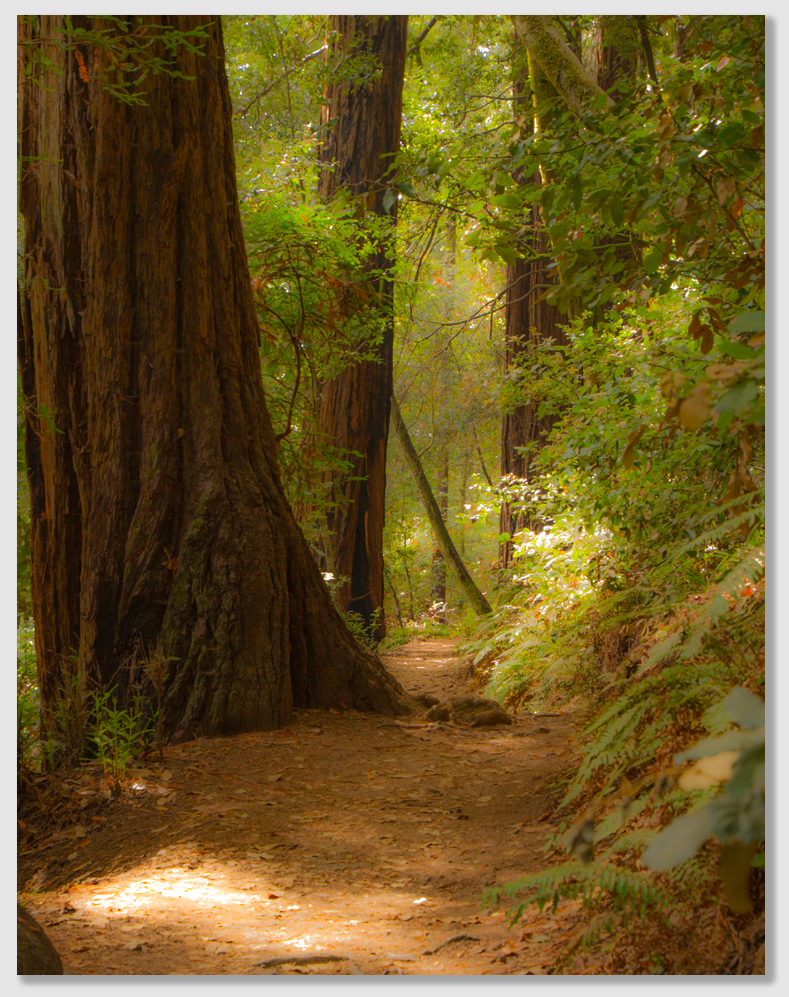
Doug Van Dyne had big plans for getting folks back to nature. He wanted to build a nature trail along a ravine that split his property and that of his waffling neighbor, Eunice North. People could enjoy the birds, the babbling brook, the scent of pine… that kind of thing.

If you ever wonder whether it’s a good idea to get agreements in writing, Doug’s $70,000 mistake will settle that question for you. Because Doug’s nature path would meander a bit onto Eunice’s side of the ravine, he told her about his plans for the trail. Eunice, who admitted that she really had no idea what Doug was talking about, said she just “shrugged my shoulders” and replied that “I guess it would be okay.”

To Doug, that was like the green flag at Indy.  But little did he know that Eunice promptly began to fret about her confused acquiescence. She had trouble sleeping due to her worry, and finally asked a friend about the plan. Her friend told Eunice the trail idea was a mistake. Armed with this advice, Eunice said, she reneged. She claimed she told Doug that she didn’t want him around.

“No probalo,” Doug – who had no intention at all of honoring Eunice’s change-of-heart – allegedly responded. Regardless of his actual intentions, Doug promised Eunice that he “would go to a different plan.”

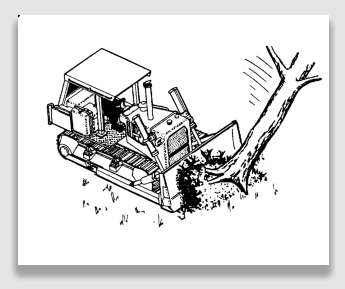
That different plan seems to have involved having his contractor run the bulldozers at full throttle instead of half throttle. By the time the diesel fumes cleared, 20 of Eunice’s trees had been ground under Caterpillar treads and the trail encroached on her land.

Eunice sued Doug for trespass, loss of lateral support, and loss of trees. The jury awarded Eunice $50,000 on the trespass and lateral support claims and $20,100 in treble damages on the loss-of-tree claim. It mattered little that Doug and the contractor both told a different story, the bulldozer operator testifying that Eunice had agreed to Doug’s plan. The jury believed Eunice.

Juries do that, often buying one side of the story and not the other, many times against common sense. We don’t know that that happened here, but it sure did not help Doug that he had not bothered to have the property boundaries surveyed before the ‘dozers started dozing.

Much of Doug’s appeal focused on damages. The jury agreed that Doug’s dozing had made Eunice’s side of the ravine unstable. Eunice’s expert testified that there were three ways to repair the damage, but none of the three would restore the ravine to its pristine state. Doug argued that said because the land could not be repaired to the way it was before the bulldozers rolled through, then the diminution of the fair market value of the ravine was all that mattered.

Not so, the court said. The law does not require that the evidence show the damage can be repaired to make the property as good as new. While it is a general rule of Iowa law that the cost to repair property is the fair and reasonable cost of repair not to exceed the value of the property immediately prior to the loss or damage, all Eunice was required to do was to establish a fair and reasonable cost to fix things up in order to arrest further deterioration and make the place as good as it can be made. In this case, Eunice showed that she had three means of stabilizing the steep bank after Doug’s earth-moving frolic, and only one of those made any sense. She established the cost of that repair and the value of the property before the damage.

Because the damages did not exceed her expert’s $129,000 repair price tag, it was clear the jury fulfilled its function in weighing the evidence.

Next time, Doug, get the landowner’s OK in writing. Call a surveyor. Stake the property boundaries. Surely that’s cheaper than $71,000.
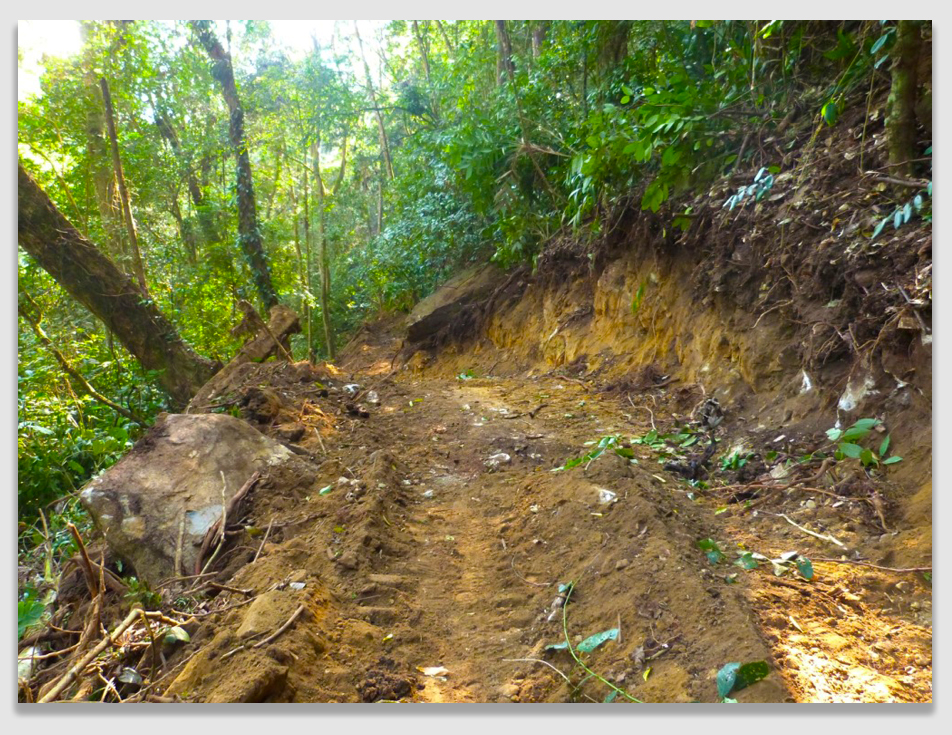
North v. Van Dyne, Case No. 16-0165 (Ct.App. Iowa, Sept. 13, 2017). Douglas Van Dyke hired Heck’s Dozer, Inc., to build a trail along a ravine between his property and adjacent land owned by Eunice North. Twenty of North’s trees were removed during the trail’s construction, and a portion of the completed trail encroached upon North’s property. Doug said Eunice gave him permission. Eunice said she initially sort of equivocated, but later told Doug in no uncertain terms that he was to stay off her land.

Doug said he would do so, but he never had the land surveyed or staked, and his guess as to the location of the property line was by guess and by gosh. Doug’s contractor said he met with Eunice, and she approved the plans. Eunice said she had never met the contractor.

Eunice testified that after she told Doug to steer clear of her property, she heard a “‘loud commotion.’ Standing on her deck, she saw ‘two pieces of heavy equipment’ below and ‘trees… flying.’ She decided not to go into the ravine to check on the commotion because she was ‘afraid’ she would get ‘hit with something,’ and she had physical difficulties getting ‘down there.’ Suspicious of an encroachment on her land, she commissioned a survey. The surveyor confirmed her fears.”

Eunice sued Doug for trespass, loss of lateral support, and loss of trees. The jury awarded her damages of $50,000 on the trespass and lateral support claims and $20,100 in treble damages on the loss-of-tree claim, Doug appealed.

Held: Eunice amply proved that Doug should pay treble damages under Iowa Code § 658.4 (2013). The statute requires the damage to trees be committed willfully or without reasonable excuse.” The term “willfully” has been characterized as an intentional and deliberate act without regard to the rights of others. Here, the Court of Appeals said, a reasonable juror could have believed that Eunice said “no” and that Van Dyke “acted… without reasonable excuse.”

The jury could also have found that Doug’s failure to commission a survey before building the trail deprived him of any reasonable excuse for the trespass. The testimony established that Doug relied on an “old fence,” “old posts,” a “shed,” and a “roofline” to gauge the boundary.

The measure of damages is the cost of repair, as long as that cost does not exceed the value of the property prior to the damage. Doug complained that because Eunice’s expert testified only that the continued deterioration of the property could be stopped by stabilizing the steep bank, she was not able to show that the property could be repaired to its original state.
The Court of Appeals held that nothing requires the repair estimate to be sufficient to restore the land to its state before the damage. As long as Eunice provided evidence of the fair market value of the land before and after the damage, and a repair cost that is less than the value of the place before the damage – which she did – she met her obligation. Here, the damages awarded by the jury were higher than Doug’s estimate of $2,500.00 to fix it, but well below Eunice’s estimate of $127,000. Plus, the jury’s $50,000 award for trespass and lateral support was well below Eunice’s evidence that the land was worth $250,000.

The damage to the trees was assessed separately, with the value of the lost timber found to be $6,700, trebled to $20,100.

– Tom Root

TNLBGray140407

Case of the Day – Friday, April 20, 2026

I NEED THE MONEY, MAN

The old fence marked something ... just not the boundary.

The old fence marked something … just not the boundary.

Poor (and we mean that quite literally) Mr. Hartshorne. He and next-door neighbor Coldsnow had had some disagreements about the property boundary about 25 years ago or so, and it’s fair to conclude that the Hartshornes probably don’t ask the Coldsnows over for tea and crumpets all that often.

In the late 90s, Mrs. Hartshorne went to her reward. Her death left Mr. Hartshorne saddled with debts, and he sold some of his timber to pay for it. He probably should have had his property surveyed (which would have cut into the timber profits, meager though those might be). Instead, Widower Hartshorne just told the logger that he could log to the old fence, which the Hartshornes had always thought was the property boundary.

It wasn’t. You know how these things go.

Sadly, had the timber sale been enough to cover Mr. Hartshorne’s debts, no one would ever have discovered that some of the trees he sold had actually belonged to his neighbor. But the proceeds were a little light. Thus, Mr. Hartshorne divided his property in order to sell some of it off.

When you divide property, you have to line up a surveyor to measure things out. The survey showed Mr. Hartshorne that the old fencerow was not the boundary after all.

His neighbor, Coldsnow (perhaps aptly named for all the sympathy he showed a poor widower), found out the same and realized that this meant that some of the trees Hartshorne’s logger had cut were on his land. Coldsnow sued for trespass, seeking treble damages under the Ohio treble-damages-for-timber-trespass statute. The jury agreed with Coldsnow that the cost to restore or replace the timber was $11,500.00 and that Hartshorne was reckless. The damage award trebled to $34,500.

Hartshorne complained that the proper measure of damages should have been the decrease in value of Coldsnow’s land, and anyway, he wasn’t reckless. He had just made a mistake, and regular negligence did not support treble damages under the statute.

The Court of Appeals didn’t buy it. Coldsnow’s successful conflation of a few isolated border skirmishes over an eight-year period into a boundary war convinced the Court that Hartshorne — knowing of Coldsnow’s prior aggressiveness in enforcing the boundary — should have gotten a survey. Frankly, we suspect that Mr. Hartshorne must not have cleaned up very well for court, because there’s very little in the written decision that supports a conclusion that he acted recklessly, and thus, no other reason the Court should have oppressed him so.

work_for_freeWe don’t think much of this decision. The Court is saying, in essence, that the more unreasonable your neighbor is, the more careful you’re required to be. It certainly makes it hard to define a community-wide standard of care. Because I live next to a sweet old lady who would let me sell her front door if I wanted to, I should be held to a lower standard of reasonableness? That simply does not make sense.

Knowing that your neighbor is a curmudgeon is hardly a basis for saying that your failure to take his cantankerousness into account is reckless conduct.

Coldsnow v. Hartshorne, 2003-Ohio-1233, 2003 WL 1194099, 2003 Ohio App. LEXIS 1163 (Ct. App. Columbiana Co., Ohio, March 10, 2003). Coldsnow sued Hartshorne for cutting down some of the trees on Coldsnow’s property. Hartshorne began cutting down some trees in 1991, one of which was near the fence line between his and Coldsnow’s property. At the time, Coldsnow complained to Hartshorne about cutting down that tree, and Hartshorne stopped cutting down trees near the fence line. In 1995, Hartshorne had problems with people trespassing on his land to hunt. In response, Hartshorne bought some “no trespassing” signs and placed them all around his property. He also spray-painted orange circles on trees near the signs to bring them to people’s attention. Some of the trees he spray-painted were on Coldsnow’s property. Coldsnow complained about the signs and the spray paint to the Hartshornes. In 1997, Hartshorne’s wife died, and to pay the bills from her illness, Hartshorne decided to log and sell some of the trees on his property. He hired a forester, to do the logging and agreed to evenly split the profits with the forester.

Lawyers always advise their clients to dress well for court. Maybe Mr. Hartshorne ignored his attorney's advice. What else would account for this whacked decision?

Lawyers always warn their clients to dress well for court. Maybe Mr. Hartshorne ignored his attorney’s advice. What else would account for this whacked decision?

Hartshorne asked the forester to selectively harvest the forest in order to thin out the canopy to allow smaller trees to grow more quickly. He also showed the forester the property lines and asked him to only log trees more than 15-20 feet away from those lines. He did not have his property surveyed before hiring the forester, instead just showing him an old fence line which Hartshorne believed was the property line. Coldsnow became aware of the tree harvesting when Hartshorne’s property was being surveyed, so a portion of it could be sold as another means of paying off his wife’s debt. Coldsnow hired a surveyor, who found that some of the stumps from harvested trees were on Coldsnow’s property. Coldsnow sued, claiming trespass and a violation of §901.51 of the Ohio Revised Code, and Hartshorne claimed adverse possession, a claim that was dismissed before the end of the trial. The jury returned a verdict in favor of Coldsnow in the amount of $11,500 as the cost of restoration or replacement and found Hartshorne had acted recklessly. Accordingly, the trial court granted judgment in the amount of $34,500. Hartshorne appealed.

Held: The jury verdict was upheld. The Court found the jury’s damages award was reasonable. Hartshorne argued that the proper measure of damages was the diminution of the value of the real estate because of the logging. But in a case involving a violation of O.R.C. § 901.51, the Court said, the restoration/replacement cost of the trees is a proper measure of damages when the injured party intended to use the property for residential and/or recreational purposes, according to their personal tastes and wishes. As Coldsnow used his property in this way, the Court held, he did not first need to show a diminution in the value of the land before receiving restoration damages.

The Court also found that the jury’s conclusion that Hartshorne acted recklessly was not against the manifest weight of the evidence, because the evidence showed that Hartshorne had a history of ignoring the boundary line between the properties.

– Tom Root

TNLBGray140407

Case of the Day – Thursday, February 26, 2026

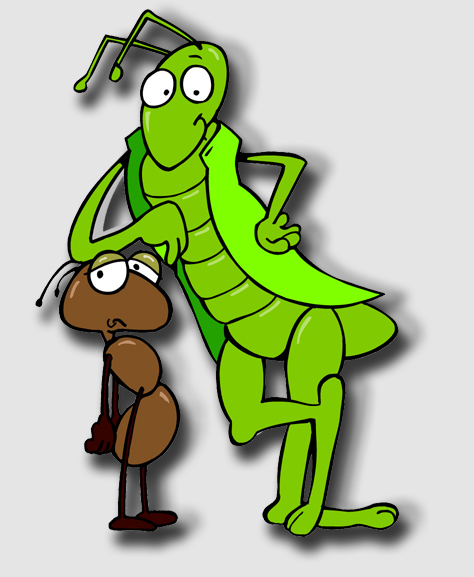
THE GRASSHOPPER AND THE ANT

grasshopper140314Perhaps the problem with America these days is that too many people want something for nothing. Former President Biden waned to give people who understood that they were borrowing money for college a free pass. President Trump wants people to believe the 2020 election was stolen, affordability is a hoax, and that the government owes him billions. And we all want the people we disagree with – and face it, they’re all wrong – to shut the hell up.

Here’s a Vermont case about someone else who wanted something for nothing, a modern take on the grasshopper and the ant. About 50 years ago, the brothers Stanley partnered up to buy some woodland. But only industrious brother George, a busy little worker ant, ponied up the cash for the place, paid the taxes, paid the rent, and managed the affairs of the woodland. Grasshopper John was too busy doing whatever grasshoppers do.

After about 45 years of this, ant George started getting tired of grasshopper John never paying his fair share. Ant George was out a lot of investment, and he decided it was time to pay it back. So he sold the timber on the land for about $46,000.

Suddenly, grasshopper John was very interested in the goings-on, and he sued ant George. But he didn’t just want half of the proceeds. Surely that would be unfair. Instead grasshopper John hires three wise old owls as expert witnesses, and they opine that the timber was really worth anywhere from $60,000 to $80,000. Plus, he retained the services of a foxy old lawyer, who told him he could get treble damages for ant George’s wrongful cutting of the timber (plus a legal fee for the fox).

foxylawyer140314The trial court suspected that John was more snake than grasshopper, but it nevertheless didn’t have much choice but to award him half the value of the timber. The court selected the lowest of the various estimates given by the several owls who testified as experts, still awarding the grasshopper one-half of the $61,785 value of the timber. The court refused treble damages.

The grasshopper was furious! He had been denied what was fair, namely all of it! He wanted the timber valued at $80,000, with his one-half share trebled to $120,000. Fortunately, the wise Supreme Court upheld the trial court, finding that treble damages for wrongful cutting don’t apply where one owner of the land — even if he’s an industrious ant — gives permission. Still, the ant lost $31,000 of his $46,000 to his brother, the grasshopper, whose investment had never amounted to a farthing.

grasshopperb140314The moral, boys and girls, is that a slothful existence and a good lawyer beats hard work and careful investment any day.

Stanley v. Stanley, 928 A.2d 1194 (Sup.Ct. Vt., 2007). Some 50 years ago, brothers John and George Stanley bought a perpetual lease of a 100-acre wooded lot in Victory, Vermont. Defendant George paid the entire purchase price, but the brothers owned the lot as tenants-in-common. From the beginning of their ownership, George paid the annual rent as well as property taxes when they were assessed.

In 1965, he received money from Portland Pipe Company for the right to lay pipe across the property. In the spring of 2002, he hired a logging contractor to harvest and sell the trees from the lot. The logging operations were completed that summer. George didn’t discuss the logging operation with plaintiff John until after it was completed. George figured that “since he had been paying all the expenses relating to the property, he should be able to make the decisions relating to the land.” George got $45,803.32 for the timber removed from the lot. When John learned that timber was being cut, he took pictures of the operation and tried to reach George — who had neither an iPhone nor broadband — without success.

John didn’t try to stop the logging, but after it was over, he sued his brother, seeking an accounting, partition, treble damages under 13 V.S.A. §3606, costs of the action, and attorney’s fees. While he couldn’t afford to share the expense of the land with his brother, John apparently found his checkbook when it came time to hire expert witnesses. He presented testimony from three experts on the value of the timber cut. Thomas Hahn, a private consulting forester, presented two different methods of determining the value of the timber cut from the property, the prevailing market price of a unit of wood in the summer of 2002 based on trade publications (using which he concluded that the value of the timber was $61,785.79), and the “timber cruising” or “sampling” method that would support a finding that the fair market value of the timber was $82,000. Stanley Robinson reviewed the logging contractor’s summary of mill slips and trip tickets, and Alan Bouthelier on his observations from visiting the property prior to the logging. The testimony of these two experts supported a finding that the fair market value of the timber cut was approximately $80,000.

woodpile140314The trial court refused to rely on Hahn’s “sampling” method, dismissing it as too speculative. Instead, it found that the fair market value of the timber cut was $61,785.79, and that plaintiff was entitled to half of this amount. It also ruled that the treble damage statute does not apply to actions between tenants-in-common for the sale of common property, and granted a request for partition. Following the hearing, George gave John $22,901.66, half of what he had been paid for the timber.

None of this was good enough for the rapacious John. So he appealed.

Held: The trial court was affirmed. The Supreme Court held that Vermont’s timber trespass statute — which reads in part that if a person cuts down trees belonging to another person “without leave from the owner,” the injured party can recover treble damages — is plain and unambiguous. The Court said that the statute’s language presupposed that the injured party had ownership rights to the exclusion of the party from whom treble damages are being sought.

The statute is a punitive one, intending to deter intentional trespass and wrongful taking of another’s timber. Because George had an undivided ownership interest in the trees at the time of the logging, the treble damages statute simply does not apply. He simply was not among the intended targets of the statute, those “‘tree pirates’ and ‘arboreal rustlers’ who trespass on another’s property and remove timber to which they have no right.”

John also argued that the trial court erred when it held that the “timber cruising” or “sampling” method of determining the quality and quantity was too speculative. The Supreme Court held that because the trial court, after evaluating several different methods, relied on the testimony of the expert as to one of the methods to determine the fair market value of the timber cut and sold, the Supreme Court would not second-guess it on whether it could have used an alternative method.

– Tom Root
TNLBGray140407

Case of the Day – Tuesday, February 24, 2026

THE ODD COUPLE

odd150925What is it with some neighbors? These folks — an “odd couple” of neighbors if ever there were such — lived next to each other in a pretty good Iowa City neighborhood for over 20 years. And they were always at each other’s throats.

Ironically, it was the Felix Ungar neighbors who were the victims. Apparently, the Oscar Madisons were unhappy with two trees that stood entirely in the Felix property, but had branches overhanging the Oscars. So what, you wonder, and for good reason. The Oscar property was such a mess that a couple of leaves and twigs hardly mattered. However, all of you loyal readers know the answer: under the Massachusetts rule, the Oscars can trim the trees’ branches back to their property line. In fact, borrowing from Virginia and Hawaii, maybe the Oscars could sue the Felixes, alleging that their neighbor’s trees were a nuisance.

Nothing that subtle for our heroes. Instead, the Oscars came onto the Felix property and simply cut the trees down. There. That settled that!

Well, not really.

The Felixes sued. The trial court was clearly appalled by the Oscars’ brazenness. It observed with some amazement that in order to cut down the trees, the Oscars “had to intentionally trespass on [Felixes’] property to cut down the trees and that is exactly what they did.”

The Court rendered its opinion accordingly. What the Oscars did was a trespass, pure and simple, and the damages in a trespass are the costs to restore the property. Those costs were the cost to replant trees about as mature as the two 50-foot-tall trees that were removed. On top of that, the Court imposed treble damages under Iowa Statute 658.4 for “willfully injuring any timber, tree, or shrub on the land of another.” The Court held it applied because the Oscars had “willfully trespassed” in order to cut down the trees.

They're after your trees ...

They’re after your trees …

We don’t want to be critical, because the Oscars clearly were bad actors here and deserved what befell them. However, courts need to be careful not to get out in front of their statutes. The trial court, in its ire, focused on the wrong “willfully.” Treble damages applied when the Oscars “willfully injured” the trees, not when they “willfully” trespassed. Under the court’s mangled standard, the treble damage statute would have applied if the Oscars willfully sneaked onto the Felixes’ property to smash a jack-o-lantern, but accidentally trampled on Mrs. Felix’s prize rose bushes in their haste to run home. It’s not the willful trespass, it’s the willful chainsaw that matters.

Luckily for the Felixes, the error made no difference. Any way you apply the “willfully” here, the Oscars are liable. They willfully trespassed, willfully fired up their chainsaws, and willfully undertook arboreal mayhem. Game, set, match.

Wunder v. Jorgensen, Not Reported in N.W.2d, 2004 WL 3569694 (Iowa Dist., 2004) (unpublished). The Wunders and the Jorgensens lived next to each other in a wooded neighborhood on Iowa City’s west side for over 20 years. During this period, their relationship was acrimonious, with the Wunders continually upset about the debris, both natural and manufactured, which the Jorgensens allowed to build up on or over their common boundary. Among other complaints, the Wunders complained that the Jorgensens erected a lean-to next to an outbuilding, essentially on the property line, which the Jorgensens used to keep garden tools.

pos150925Two trees stood on the Wunders’ property, scotch pines or Canadian hemlocks, with branches that extended over the Jorgensen property. The Jorgensens knew the trees were on Wunders’ lot because they had built the lean-to roof around one of the trees. The trees disappeared one day, setting the Wunders to wondering. Suspecting the Jorgensens, the Wunders sued. And small wonder.

Held: The Jorgensens were liable. The Court found that the Jorgensens had knowingly and willfully cut down two mature trees that they knew to be on Wunders’ property. The Court found the conduct to be inexcusable, noting that the “Jorgensens had to intentionally trespass on Wunders’ property to cut down the trees and that is exactly what they did.”

The Court found the replacement cost of the trees to be $4,061.40. The measure of damages for trespass is replacement cost, and treble damages — awarded if trees are willfully cut down on another’s property — apply in this case, the Court said, because, Jorgensen willfully trespassed on Wunders’ property to cut down the Wunders’ trees.

The Court threw in an observation for the Jorgensens: if trees are replanted, the Jorgensens ought to be informed that the general rule is that an adjoining landowner may cut off growth that intrudes on his or her property … but not more.

– Tom RootTNLBGray

Case of the Day – Wednesday, February 4, 2026

INTENTIONAL GROUNDING


intent160205Intentional grounding? You can bet that was the call after Mr. and Mrs. Peters bought a lot next to the Kriegs.

The Peters didn’t know where the lot lines were. Their real estate agent didn’t, either. Ah, details, details … That didn’t stop them from hacking down trees on the property as soon as the ink was dry on the deed, in order to build their dream house. You probably know where this is going. Harry Peters, acting as his own tree service, goofed and cut down 29 trees on the Kriegs’ land.

The Peters admitted their honest error. OK, they intended to ground the trees. They just didn’t know that the trees they grounded were the Kriegs’. They were willing to pay for the mistake. But what they were not willing to do was pay the treble damages authorized in the law for wrongful timber cutting.

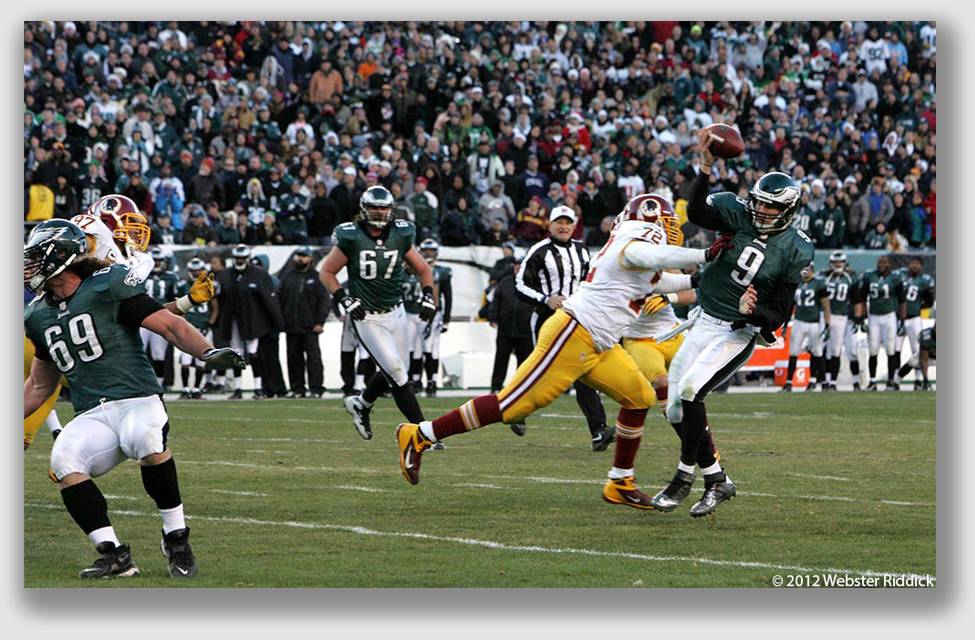
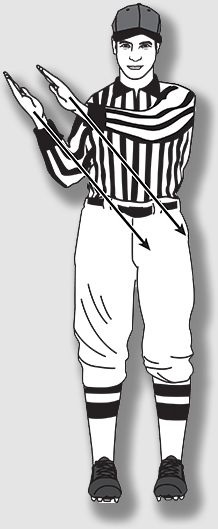
It was sort of like the intentional grounding foul in football. It’s one thing to get assessed a 10-yard penalty. But on top of that, the team loses the down. Sort of like the double whammy (or triple, if you like) of the statutory multiplier for wrongfully cutting trees.

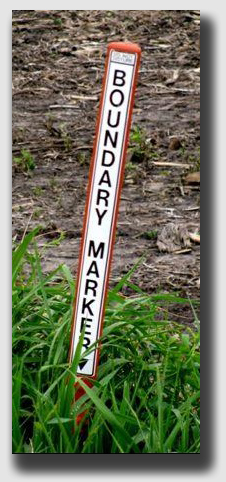
BMarker140130 C’mon, the Peterses said, there wasn’t any evidence they knew they were cutting Kriegs’ trees. The Court pointed out that the state of the evidence was precisely the problem. It was up to the Peterses to prove that they thought the land was theirs. The wife’s testimony was all they had offered, and it didn’t help: she explained they didn’t really know where the boundaries were, and never bothered to find out. But the biggest problem was what Mr. Peters testified to: nothing. He was the one who cut the trees down, and the Court seemed to expect that he would have material testimony to offer. But he didn’t testify.

Ch 1 Art.xlsThere’s a well-known principle in evidence known generally as the “missing witness instruction.” As the legendary Professor Wigmore put it, the principle holds that “the nonproduction of evidence that would naturally have been produced by an honest and therefore fearless claimant permits the inference that its tenor is unfavorable to the party’s cause.” In other words, if you have particular control of evidence, and you do not bring it forward, a court is allowed to assume it would have been harmful to your cause if you had done so.

The Court didn’t say it here, but it strongly implied that the absence of testimony from Harry Peters led it to conclude that if he had taken the stand, he wouldn’t have helped his cause any.

Krieg v. Peters, 46 A.D.3d 1190, 850 N.Y.S.2d 211 (N.Y.A.D. 3 Dept., 2007). In May 2004, the parties became adjoining property owners when the Peters family purchased the vacant lot next to the Kriegs. The Peterses intended to construct a house on their property, so Mr. Peters began clearing land without consulting the map referenced in their deed or having a survey conducted. He removed 29 trees from Krieg’s property. Following a jury trial, the Kriegs were awarded damages, including treble damages under New York statute for the removal of this timber. On appeal, the Peterses only contest the treble damages award.

Held: The treble damages were upheld. Under RPAPL §861[2], the New York treble damage statute, in order to avoid treble damages, the Peterses had the burden of proving by clear and convincing evidence that when they removed the trees from the Kriegs’ property, they “had cause to believe the land was [their] own.” Their proof in this regard was woefully inadequate. Mrs. Peters was the only defense witness to testify on this critical issue, and the appellate court found that her testimony had been more damning than helpful in sustaining their burden. She said that, before she and her husband purchased the property, she walked it on one occasion with their realtor. At that time, she specifically asked about the boundary lines but the realtor couldn’t answer her question with any certainty. She said she told her husband of the realtor’s uncertainty when they later walked the property together. She also candidly admitted that no steps were taken to obtain a survey or consult the map referenced in their deed before clearing the land. The Court found it significant that, although he had logged the property, Mr. Peters never testified. It found plenty of evidence that the defendants had no cause to know whether the land Mr. Peters was logging belonged to them or not.

The Peterses also argued that the legislature never intended for RPAPL §861 to apply to individuals such as themselves who make “honest” mistakes about boundary lines. The Court disagreed, holding that on its face, the statutory scheme clearly applied to the facts and circumstances of the case and, in the absence of sufficient proof on the defendants’ part to avoid treble damages, it didn’t find the treble damage award to be inconsistent with the law’s purpose or intent.

– Tom Root

TNLBGray140407

Case of the Day – Tuesday, January 13, 2026

BOB AND TED’S EXCELLENT ADVENTURE

In these days, when so many people do the bare minimum needed to get by, it’s refreshing to read about a pair of go-getters like Bob and Ted. When the Weisslers built their dream home on the Finger Lakes in Palmer, Alaska, they arranged for electric coop Matanuska Electric Association to provide electric power. They signed off on an easement with MEA for a 4-foot-wide easement, a matter of some importance to the Weisslers, who wanted the maintain their privacy by cutting as small a swath through the trees as possible.

A work order was drawn up for the electric installation, noting “R2-4, 80 ft,” which in MEA-speak meant a four-foot right of way, 80 feet long. MEA dispatched Bob and Ted to clear the path on Weissler’s property. Ted admitted that they knew the clearing was to be four feet wide, 80 feet long, but the boys were energetic and looking for a chainsaw adventure. They cleared the stately pines from the road all the way to the northeast corner of the house and then, spying the meter box on the southeast corner of the building, decided to continue to clear to that corner as well. Ted knew the Weisslers wanted electrical service as soon as possible, and he and Bob figured they were exceeding expectations by enlarging the clearance to get the lights turned on that much quicker.

Their enthusiasm was as unbridled as their chainsaws were sharp. Bob and Ted cut a swath that, instead of being four feet wide, was up to 21 feet wide. The cutting cleared about 1,200 square feet, some four times what the work order called for and what the Weisslers wanted.

The Weisslers sued MEA for breach of contract and trespass, claiming treble damages for loss of timber under Alaska Statute 09.45.730. Punitive statutes mandating double or triple damages for wrongful cutting of timber are common in virtually all states, on the theory that merely requiring a wrongdoer to pay the value of the tree was insufficient deterrence when the cutting was reckless or intentional.

There is always a tension in calculating damages when the trees cut were not for commercial timber. It’s straightforward where the stand of timber is kept for sale. The plaintiff does some timber cruising, and the stumpage value is set. The trial court then trebles it and sometimes (depending on the state) dumps in attorneys’ fees, too. But what happens when the loss is of trees that lack much commercial value but are of great value to the homeowner… say, like the Weisslers, the homeowners love the privacy a stand of trees affords. Here, as the proper measure of damages, the court chose the cost of restoring the property to its approximate pre-cutting condition. The judge awarded compensatory damages of $5,250.00 ($4,050.00 restoration costs and $1,200.00 for maintenance) and then applied the treble damages provision of AS 09.45.730, ultimately ordering payment of $15,750.00, as well as attorney’s fees of $2,200.00 and interest of $6,300.00, for a total judgment of about $25,000.00.

MEA argued vigorously that the treble damages statute did not apply to cases like this one, where it was lawfully on the property but just sort of exceeded its brief. The statute provides that treble damages apply unless “the trespass was casual… or the defendant had probable cause,” in which case, only actual damages may be recovered. But the appellate court said ‘nothing doing.’ “Casual” means, essentially, negligent entry onto the property, such as if a car swerved off the road and hit a tree. MEA’s crew intentionally went beyond the easement and meant to cut down the trees.

As for “probable cause,” the court said that means “an honest and reasonable belief.” Ted and Bob knew the easement limits. They went beyond them, and – good intentions aside – they were trespassers, and not casual ones, either.

Matanuska Electric Association v. Weissler, 723 P.2d 600 (Alaska 1986). A couple of overzealous electric utility workers cleared a swath of up to 21 feet wide to bring electric service to a new home, even though the homeowner had given the utility only a 4-foot wide easement. The homeowners sued for trespass and asked that Alaska’s treble damages statute for wrongful timber cutting be applied.

The trial court agreed and trebled the damages, which were based in the first instance on the cost of restoration of the property. The homeowners won a $25,000 judgment. The utility, MEA, appealed.

Held: MEA was liable for treble damages. The utility argued that the treble damage statute’s primary purpose was to deter those who pursue their own objectives on a public right of way from disregarding the adjacent landowner’s interest. The Alaska Supreme Court rejected that argument, pointing out that “MEA’s construction of the statute would allow the most willful of trespassers, i.e., those who enter onto timber land to cut and sell another’s merchantable timber, to be liable for only single damages.”

MEA also argued that urges the court to apply common law principles governing punitive damages. Punitive damages require malice, MEA argued, and there was none here. The Supreme Court looked to Oregon’s treble damages statute (the law on which Alaska’s version was based). The Oregon courts had held that the legislature properly exercised its prerogative to define when single damages should apply and when treble damages should apply. The legislature abrogated common law here, and the statute is reasonable.

The statute requires that the trespass be without lawful authority, and MEA argued that it did not trespass because it had the Weisslers’ permission to be there. But, harkening to the Restatement (Second) of Torts § 168 comment d (1965), the Court held that the rule is well recognized that “one who has a private easement of way becomes a trespasser when he goes beyond its boundaries.” MEA exceeded the scope of the easement that the Weisslers granted and thus trespassed without lawful authority.

But, MEA asserted, any trespass it committed was “casual,” and hence only single damages should be awarded. MEA contended the trial court “found MEA’s excessive cutting to be the result of negligence and mistake,” but the Alaska Supreme Court disagreed. While the trial judge said that this was not a case where people were “recklessly cutting down other people’s trees without regard for them,” she nevertheless described MEA’s conduct as negligence “verg[ing] on recklessness.” At any rate, “casual” does not mean negligent. Instead, it comes from a 19th-century New York statute, in which “casual” meant “casualty” or “involuntarily,” contrasted with “designedly and under a claim of right.”

“Casual,” the Court said, “does not include a mistaken belief in the authority to cut trees.” A trespass committed under a negligently mistaken belief in the right to cut would not be “casual,” the Court said, because “the trespasser intends to cut.” Only where the trespass is unintended is it “casual.” Once a trespasser forms an intent to enter the land, the trespass becomes “willful,” and the plaintiff may recover treble damages.

The Court said, “MEA’s negligent decision to exceed the scope of the Weisslers’ permission to cut cannot qualify as ‘casual’ negligence. MEA’s agents intended to cut the trees under a mistaken belief that Weissler would approve. Since MEA’s agents intended to cut, their actions were not ‘casual’.”

Finally, MEA lacked probable cause to cut the Weisslers’ trees. The statute awards only single damages where a defendant had probable cause to believe that the land on which the trespass was committed was the defendant’s own or that of the person in whose service or by whose direction the act was done. The Court said that probable cause means “an honest and reasonable belief.” By definition, the Court ruled, “a negligent mistake as to authority cannot qualify as probable cause since negligence involves unreasonable conduct.

The Alaska Supreme Court concluded that the tree damages statute “mandates treble damages unless the trespasser exempts him or herself” by proving, as an affirmative defense, that single damages apply.

– Tom Root

TNLBGray140407

Case of the Day – Monday, January 5, 2026

RECKLESS ABANDON

Blink-182 – You have any daughters? Look what they could bring home ...

     Blink-182 – What fine-looking lads!  You have a teenage daughter? Speaking of recklessness, look what she could bring home …

On and on, reckless abandon, something’s wrong, this is gonna shock them …” The velvet tones of Blink-182, so reminiscent of the Kingston Trio!

OK, not velvet tones, just some teenage angst and a little toilet humor. But today’s protagonist might have had the punk rockers blaring on Spotify while he was wielding his chainsaw with… well, with reckless abandon.

One day last winter, complains loyal reader Jeff Phylum of Maple Falls, Ohio, he went to work as usual. In the middle of the day, his neighbor called him to report that some tree cutters had cut the top 60 feet off his prize 75-foot-tall silver maple tree. His neighbor, the kind of nice old lady who every kid in the ‘hood can’t stand, had carefully noted the name of the tree trimming service in a little spiral notebook. She gave the name to Jeff, and Jeff called the service.

“Ha, ha,” the owner exclaimed, “what a gaffe! Boy, is our face red! We had an order to cut down a silver maple, and we went to the wrong house! Isn’t that just the funniest thing?”

Jeff didn’t think so. The owner sent a representative over to look at the forlorn 15-foot trunk still standing, admitted the crew had come to the wrong address, and offered $1,000 to forget the whole thing. But Jeff loved that tree, which shaded the house, provided nesting for squirrels and birds, and offered a canopy for family picnics. Jeff’s arborist figured that replacement of the tree with the most comparable silver maple available would cost somewhere around $25,000.

Section 901.51 of the Ohio Revised Code lets an injured party collect treble damages from a party who “recklessly cut down, girdle, or otherwise injure a vine, bush, shrub, sapling, tree or crop growing on the land of another.” Jeff wondered whether the tree trimming service had been reckless and whether his $25,000 might be tripled to $75,000. If it did, he might even afford a fill-up.

The tree service owner was red-faced ... somehow, that didn't make Jeff feel much better.

The tree service owner was red-faced … but somehow, that didn’t make Jeff feel much better.

A person acts recklessly when, with heedless indifference to the consequences, he perversely disregards a known risk that his conduct is likely to cause a certain result or is likely to be of a certain nature. A person is reckless with respect to circumstances when, with heedless indifference to the consequences, he perversely disregards a known risk that such circumstances are likely to exist.

In Collins v. Messer, a woman hired a tree trimmer to clear some of her land. She told the trimmer to only clear to a fencerow, which she later said she believed was the property line. It was not, and the other property owner was unhappy. Mrs. Messer tried to settle with him, but things broke down and led to a lawsuit.

The trial court found Mrs. Messer’s testimony about her mistaken belief that the fence marked the boundaries credible, as well as her statement that she told the trimmers not to go beyond the fence. Based upon those findings, the trial court determined that Messer’s actions were not reckless and she was not liable for treble damages under the statute. In assessing damages for the trespass, the court held that the measure of damage is the cost of reasonable restoration of property to the pre-existing condition or to a condition as close as reasonably feasible without requiring grossly disproportionate expenditures and with allowance for the natural processes of regeneration within a reasonable period of time.

What does this mean for Jeff? Whether the tree trimmer was reckless depends on what led him to the wrong house, and what steps he might have taken to verify the address. Cutting down a healthy 75-foot-tall hardwood shade tree is a pretty final act. The industry standard directs the tree-trimming employee who performed the estimate and pre-work inspection to be on-site when the work begins. The irrevocability of cutting down a large tree on a residential lot in the city is such that the trimming company is presumed to have understood the known risk that if the work was performed at the wrong house, the consequences would not be pretty.

One might think that the tree-trimming company would want to settle this one for the cost of restoration rather than roll the dice on whether it will have to pay triple that amount. It is pretty clearly liable for the blunder. When its best hope is to convince a jury that the blunder was just negligence, there isn’t much upside in litigation. As Ronald Reagan once said, “If you’re explaining, you’re losing.”

Collins v. Messer, 2004-Ohio-3007 (Ct.App. Butler Co., June 14, 2004) 2004 Ohio App. LEXIS 2666, 2004 WL 1301393 – Collins sued his neighbor, Messer, for having trees and vegetation removed from Collins’ residential property.

The rear of Collins’ home abuts the rear of Messer’s property in a residential subdivision. Mrs. Messer hired Wilson Garden Center to clear vegetation up to an old farm fence, which she thought was the property line. She was not present when the Garden Center employees cleared the vegetation. Mrs. Messer had never met Mr. Collins, and she didn’t speak to him before the Garden Center performed the work. The vegetation, with the exception of a few trees, was cleared up to and beyond the farm fence at a time when neither party was at home. It turned out that Messer’s property line did not extend to the old farm fence and that most of the vegetation cleared was on Collins’ property. Mr. Collins testified that he was “devastated” when he learned of the destruction of the vegetation.

Collins and Messer split the $1,647.91 cost of hiring a landscaper to plant some pine trees in the area between the properties, but the relationship between the parties deteriorated during the year that followed. Finally, Collins sued Messer in trespass, seeking treble damages under O.R.C. §901.51.

Treble damages ... when

Treble damages … when “uh-oh” just isn’t good enough.

Held: The Court found that the evidence was sufficient to support the finding that Mrs. Messer’s actions were not reckless, and thus Mr. Collins was not entitled to treble damages. She testified that she was mistaken in thinking the fence constituted the boundary, and that she never told the Garden Center workers to go beyond it. Mr. Collins had no evidence to rebut Messer’s claim of mistake, and the trial court may have been swayed by Mrs. Messer’s willingness to share the cost of the mistake before things deteriorated into a lawsuit.

Also, because the parties had already agreed on splitting the costs of planting replacement trees, Mr. Collins wasn’t entitled to additional trespass damages for loss of vegetation. In assessing damages for the trespass, the trial court held that the measure of damage is the cost of reasonable restoration of property to the pre-existing condition or to a condition as close as reasonably feasible without requiring grossly disproportionate expenditures and with allowance for the natural processes of regeneration within a reasonable period of time.

The appeals court agreed with the trial court that Mrs. Messer compensated Mr. Collins for his damages by paying $823.00 for the pines planted on Mr. Collins’ land.

– Tom Root
TNLBGray