Case of the Day -Tuesday, July 2, 2024

NOW LOOK WHAT YOU’VE DONE!

Rarely (as in “I don’t recall when I’ve ever said this before”) do I caution that the prevailing law in any particular state is wrong, and likely to be cruisin’ for a bruisin’ the next time an appellate court has to think about it. But I feel comfortable issuing that warning about today’s case.

From Ohio (home of rock ‘n roll, pro football, the first guy to walk on the moon, the brothers who turned a bicycle into the first airplane, and a ton of other cool things), comes a case that pretty much runs smack into Fancher, Herring, the Hawaii Rule, and a raft of other cases reflecting the modern view that a homeowner whose tree is wreaking havoc on the neighbor’s property may be ordered by a court to fix the damage at his expense.

To be fair, this case may be proof of the old legal aphorism that “hard cases make bad law.” Even the most cursory reading of the facts suggests that Dave Rababy may well have been a horse’s ass, hounding his neighbor because a tree dropped leaves and twigs on his property. Speaking as a guy who owns all of my five southerly neighbors’ leaves every fall – and these things are the size of dinner plates – I understand how it can be irritating to have other peoples’ leave on your lawn. But I would never sue them over it. I don’t think I would…

Dave had no such compunction, and his emesis of woe delivered to the court made him the boy who cried wolf. He howled so loudly about leaves and twigs and that his trimming crew was not allowed to trespass on Roy’s property and hack away at the offending tree, and minutiae of a similar nature, that his real complaint – his driveway was being heaved and foundations dislodged by the roots – got lost in the underbrush. In Fancher, Whitesell and even Iny, such damage was enough to get the neighbor’s tree declared a nuisance. If Dave had exercised a little plaintiff self-control, he might have gotten there, too.

We are too urban and too suburban, and our properties are too developed for the Massachusetts Rule to be the exclusive remedy for genuine harm done by a neighbor’s tree. That is the way the law is trending throughout the civilized world, and it is bound to reach Ohio sooner or later.

Rababy v. Metter, 30 N.E.3d 1018 (Ct.App. Cuyahoga Co., 2015). David Rababy and Roy Metter were next-door neighbors. Dave’s driveway abutted Roy’s property in certain places and nearly abuts in others. A fence separated the properties, and a stand of mature trees ran along the fence on Roy’s side of the boundary line.

Dave sued Roy for negligence, nuisance, trespass, and interference with a business contract. Dave asserted that trees at the edge of Roy’s property extended over his own property, and dropped leaves, needles, sap, and branches onto his car and home, and that some of the trees were rotten. He said the trees cast shadows over his property and cause mold growth on his roof, as well as damaged his driveway and foundation.

Dave complained he had a company to trim the overhanging branches, but Roy’s daughter prevented the unnamed landscape service company from properly performing this work. The complaint alleged the trees constituted an ongoing nuisance and trespass and that Roy negligently maintained the trees. Dave asked for $52,500: $37,000 for future tree trimming services and $15,000 in compensatory damages.

Both parties filed motions for summary judgment. Dave argued that on “an ongoing basis, Roy’s trees encroach onto my property, specifically over my home and driveway. His trees deposit leaves, debris, and sap onto my property, causing damage.” Dave also repeated the claim about Roy’s daughter running off the tree trimmers.

Roy argued that he owed no duty to Dave to trim otherwise healthy trees on his property. He claimed the trees were mature and preexisted either party’s ownership of the property. He said that a year before, Dave hired Cartwright Tree Service to trim the row of pine trees that ran along the driveway. He said no one complained when Cartwright trimmed the overhanging branches from Dave’s property free, but when Cartwright began trimming branches and trees back further than the property line, Roy’s daughter objected. Roy said that he has no objection to Dave trimming the overhanging branches back to the property line.

Dave replied with new allegations that the trees in question were decaying or dead. Attached to the reply was a new affidavit that averred that the trees were decaying and dangerous and that one had fallen on his property. He included a picture of a tree that appears to have fallen across a driveway. However, the affidavit was neither signed nor notarized.

The trial court granted Roy’s motion for summary judgment and denied Dave’s. Dave appealed.

Gen. Robert E. Lee – a man rapidly being consigned to the ash head of history – knew something about duty … and even he couldn’t have found that Roy owed one to Dave.

Held: Roy owed Dave no duty, so the trial court’s dismissal of the case was upheld.

In order to succeed in a negligence action, the Court said, Dave must demonstrate that Roy owed him a duty, that Roy breached the duty, and that he suffered damages that proximately resulted from Roy’s breach. Here, Dave offered evidence that falling pine needles, leaves, sap, and sticks had damaged his car, driveway, and roof. He also alleges, without evidentiary support, that encroaching tree roots damaged his driveway and home.

While he showed damage, Dave was unable to show that Roy owed him any duty. A landowner is generally not responsible for the losses caused by the natural condition of the land. Instead, the Court observed, states generally allow one impacted by such growth the remedy of self-help. A privilege existed at common law, such that a landowner could cut off, sever, destroy, mutilate, or otherwise eliminate branches of an adjoining landowner’s tree that encroached on his land. But, the Court said, whether a separate remedy exists is an open question.

The Massachusetts Rule provides that in almost all circumstances, the sole remedy for damages resulting from the natural dropping of leaves and other ordinary debris from trees is the common law remedy of self-help. The rule does provide a limited exception for dead trees, just as Ohio has established a duty for urban landowners of reasonable care relative to the tree [hat overhangs a public street, including inspection to make sure that it is safe.” Where constructive or actual knowledge of an unreasonably dangerous condition exists on the land of an urban landowner, such as a dead tree, the duty prong of a negligence claim may be satisfied.

The reasoning set forth in support of the Massachusetts Rule, the Court said, is apt to the facts of this case: “[T]o grant a landowner a cause of action every time tree branches, leaves, vines, shrubs, etc., encroach upon or fall on his property from his neighbor’s property, might well spawn innumerable and vexatious lawsuits.” The Court thus adopted the Massachusetts Rule as the law of this jurisdiction.

But Dave also argued that in Ohio a “landowner in an urban area has a duty to exercise reasonable care to prevent an unreasonable risk of harm to others from decaying, defective or unsound trees of which such landowner has actual or constructive notice.” Dave contended Roy’s trees were in such a defective condition and thus constituted a nuisance. Dave also argued that Roy, an urban landowner, had a duty to inspect his trees and protect others from a dangerous condition created by any unsound trees. Even if such a duty existed, the Court said, it only is breached when the owner has actual or constructive notice of a dangerous condition.

Leaves – often a pain in the arse, but seldom a nuisance

The Court held that Dave put forth no evidence that any of the trees constituted a dangerous condition of which Roy was aware or should have been aware. He presented no any evidence that the trees are dead, decaying, or unsound, and cited no case holding that “the normal yearly life-cycle of a tree and the natural shedding of leaves, twigs, and sap constituted a nuisance. Thus, he provided no compelling justification for a court to hold that Roy’s trees case constituted a nuisance or a dangerous condition. The problems Dave had experienced with the trees “are the natural consequence of living in an area beautified by trees. Dave’s remedy is to trim tree limbs that overhang his property back to the property line, to which Roy averred he has no objection.”

The trees at issue in this case do not constitute a nuisance, and Roy is not negligent in regard to them.

Dave also asserted that the trees on Roy’s property constituted a trespass. But the elements of a successful trespass claim include an unauthorized intentional act, and entry upon land in the possession of another. Here, there is no intentional act. Dave claimed that Roy’s actions of not removing or trimming the trees constitute an intentional act. But, the Court said, as it explained, Dave’s remedy for intrusion by vegetation is to trim it back to the property line.

In sum, Dave’s claims that detritus falling from trees from the neighboring property constituted a trespass, a nuisance, and negligence were simply not actionable. The Court cited a Maryland case that “it is undesirable to categorize living trees, plants, roots, or vines as ‘nuisances’ to be abated. Consequently, we decline to impose liability upon an adjoining landowner for the ‘natural processes and cycles’ of trees, plants, roots, and vines.”

– Tom Root

TNLBGray140407

Case of the Day – Wednesday, June 12, 2024

PARTNERING WITH THE GOVERNMENT

Unfiled lawsuits rarely get better if you continue to delay.

Unfiled lawsuits rarely get better if you continue to delay.

Tony Balducci had a couple of parcels on Sumner Street in beautiful Lunenburg, Massachusetts. One of them, a property at 240 Sumner, was subject to occasional flooding problems arising from poor drainage. Tony wanted the problem remedied, so he made a deal to partner up with the Town to install a drainpipe. Like most deals of this nature, Tony’s job was simply to pay, and the Town’s end of the project was to do the actual work.

The directionally-challenged workers for the town installed a drainpipe. It’s just that Mr. B had two places on Sumner, not just one. And (you guessed it), the drainpipe was installed at 244 Sumner Street instead of 240 Sumner Street (where it was supposed to be set). The result, of course – besides a drainpipe installed where it wasn’t needed – was that the flooding problems continued at 240 Sumner, where it was needed but not installed.

Tony was galvanized into action… some seven years after the error. The mystery is why it took him so long to notice the Town’s error and why – after he figured it out a year later – it took him more than six years to sue. There is, of course, a statute of limitations to just about every kind of action, civil or criminal. In the case of contracts in Massachusetts, it’s six years. The Town argued he had waited too long to sue. Tony responded that he had six years from the time he discovered the mistake – not from the time of the mistake itself – to sue.

The Court agreed that the “discovery rule” let Tony run his time to file a lawsuit from the day he learned of the Town’s blunder, but his victory proved to be a hollow one. Quite often, laws permitting suits against governments contain what are called “exhaustion” requirements. Before you can sue, you have to “exhaust” your administrative remedies by filing a claim with the governmental agency, usually on a prescribed form with a prescribed number of copies and according to a prescribed schedule. The goal, public policy types tell us, is to enable the governmental agency to resolve problems short of lawsuits by promptly and fairly addressing the claimant’s concerns.

Well, Bill Barr has a description that fits that notion and characterizes the former President’s election theories. The real purpose of the “exhaustion” requirement is to exhaust people like Tony or—barring the grinding down of the citizenry with arcane complaint requirements—to set a snare to trap the unwary.

Tony Balducci was one of those unwary ones. Whatever else he might have done during the six-year interregnum between discovering that the drainpipe was in the wrong place and suing, Tony never made a demand on the Town to cure its negligence. That meant that his claim for negligence had not been administratively exhausted, and the count was thus thrown out. Unsurprisingly, the Massachusetts Tort Claims Act required that such a demand — called “presentment” — be made on the municipality before a lawsuit could be filed.

It is not clear how Mr. Balducci missed the fact the Town had put the drainpipe in the wrong place, or - for that matter - that his property was still a little damp.

It is not clear how Tony missed the fact the Town had put the drainpipe in the wrong place, or – for that matter – that his property was still a little damp.

Tony had a few other claims to make against the Town, including trespass and wrongful removal of trees. After all, he had given the Town the OK to enter 240 Sumner but not 244 Sumner. Those counts were not subject to an exhaustion requirement, and they survived. But it’s clear that early in his lawsuit, Tony already had a big mountain to climb. More careful procedural planning — not to mention being quicker out of the chute — would have saved him some legal headaches now.

Balducci v. Town of Lunenburg, 23 Mass. L. Rep. 289 (2007), 2007 Mass. Super. LEXIS 497, 2007 WL 4248021 (Mass.Super. 2007). Tony Balducci owned two properties next to each other on Sumner in the Town of Lunenburg. In 2000, he and the Town entered into a written agreement for the replacement of a drainpipe located on his property, with Tony and the Town splitting the cost. He gave the Town an easement for the installation. But instead of installing the drainpipe at 240 Sumner Street, the Town installed it at 244 Sumner Street. As a result, Tony continued to experience flooding in his building at 240 Summer Street. He sued the Town of Lunenburg, alleging breach of contract, negligence, trespass, willful trespass to trees, and nuisance.

The Town moved to dismiss, arguing that the various counts should be dismissed due to the statute of limitations, a failure to comply with the Massachusetts Tort Claims Act, and failure to state a claim upon which relief may be granted.

Held: The Town’s motion was only granted in part. The Town first argued that Tony’s claim was barred by the statute of limitations because he brought the action more than six years after the alleged breach. But the Court observed that the “discovery rule” operates to toll — or suspend — a limitations period until a plaintiff learned or should have learned that he has been injured by the defendant’s conduct. Because Tony could present facts that show that he only learned of the improper installation of the drainpipe in 2001 when his basement flooded, the Court was unwilling to dismiss the action on the basis of the Town’s motion alone.

Likewise, the Court denied the Town’s argument that the contract action should be dismissed for failure to state a claim. The Court said there were genuine issues of material fact as to whether the Town had permission to install the drainpipe where it did, and whether it did so properly. The agreement was vague as to where the drainpipe should be installed, and the Town’s easement only referred to the agreement.

However, the Town was able to get the negligence claim dismissed. The Massachusetts Tort Claims Act required that a party present its claim in writing before suing. If a party does not fulfill this requirement, its case has to be dismissed for failure to state a claim upon which relief may be granted. Tony did not aver in his complaint that he has complied with the MTCA, requiring that the negligence count be dismissed.

The trespass claim — that the Town trespassed when it entered the wrong parcel of land to install the drainpipe and that the permanent nature of the drainpipe has created a continuous trespass — would not be dismissed. An action for trespass against a municipality does not come under the MTCA, so Tony was able to proceed on this claim without making any form of presentment. Tony’s complaint that the Town unlawfully removed trees from his property in violation of state statute, would not be dismissed.

SL151123Tony argued that because the easement deed wasn’t recorded until late 2004, the discovery rule barred dismissal of this count under the statute of limitations. While the Court didn’t agree with that argument, it held Tony appeared to be able to show a set of facts, such as that he did not become aware that trees on the wrong property were cut down until the easement deed was filed in December 2004.

Finally, Tony argued the Town created a private nuisance when it installed the drainpipe on Tony’s property. The Town argued the count should be dismissed for failure to state a claim upon which relief may be granted, as the allegations could not constitute a private nuisance. The Court disagreed, noting that where a municipality is the owner or in control of real estate and creates or permits a private nuisance to another person’s real property, it was liable just as a natural person would be. The essence of private nuisance is injury to property or persons outside the public place controlled by the municipality. There was a genuine issue of material fact as to whether the Town installed a drainpipe on the property it controlled, which is now causing injury to Tony’s land.

– Tom Root

TNLBGray

Case of the Day – Friday, June 7, 2024

EVERYTHING WE KNOW IS WRONG – PART 1

If there are two basic building blocks of tree law, they are the Massachusetts Rule – that New England rock of individualism and self-reliance – and the Hawaii Rule – that piece of creeping socialism that lets a property owner use the courts to force a neighbor to remove a tree that was a bother (we said that tongue-in-cheek).

After running out of gas and the funds needed to pay for it, I was homebound. For something to do, I went on a quest to identify the legal precedent in every state that addresses the issue of the encroachment of overhanging limbs and subsurface roots, so that we could present a state-by-state compendium of encroachment law. It was either that or cut the grass on my hands and knees with a pair of scissors (no gas for the mower). Wisely, I opted to go the encroachment route.

I had not even gotten out of the Northwest Territory – remember what that is? – when I found that the Massachusetts Rule did not start in Massachusetts. What’s more, as we see today, the Hawaii Rule was the law of the land in the Hoosier State back when Hawaii still had a queen, and the Americans had yet to diddle in the affairs of the Kingdom in order to engineer annexation.

Indiana’s rule can be summed up as this: a tree that encroaches on a neighbor’s property and creates a nuisance – producing such a condition that in the judgment of reasonable persons is “naturally productive of actual physical discomfort to persons of ordinary sensibility, tastes, and habits” – has to be removed at the expense of the tree’s owners.

A tough place, Indiana… In today’s case, a tree that had once belonged to the plaintiff – who had sold the property to the defendant – had grown into the boundary fence, damaging it. The roots raised some sidewalk slabs on a walkway the plaintiff maintained near the boundary. The plaintiff, unwilling to fix the rather minor damage ($2,500 in 2010, not a princely sum), went to small claims court to make the other guys pay.

It seems to us that as a matter of equity, the plaintiff knew something like this would happen when he let the tree sprout years before, at a time when he owned the parcel on which the tree was growing. But equity appeared not to have any place in the courtroom that day.

But back to my basic point: the Hawaii Rule did not originate in Hawaii at all. What we thought we knew about that Rule turns out to be wrong. What next? Is the Massachusetts Rule equally mislabeled? Tune in tomorrow…

Scheckel v. NLI, Inc., 953 N.E.2d 133 (Ind.App. 2011). Steve Scheckel owned a piece of property separated by a chain-link fence from a plot belonging to NLI, Inc. Steve has a walkway paralleling the fence that runs about five feet from the boundary line. Steve had previously owned both his land and the NLI property, and – when he had – a tree grew on the NLI property near the fence. After he sold the land to NLI, the tree continued to grow, as trees are wont to do, until it grew into the fence and its roots grew under the walkway, leaving the gate in the fence unusable and the walkway badly cracked and buckled. Steve spent $2,500 fixing the mess.

Steve complained to NLI about the damage, but the corporation took no action. He then sued NLI for negligence and nuisance in small claims court. The court found for NLI on the grounds that while the size and placement of the tree damaged the fence and walkway, a landowner is not liable for harm caused beyond property boundaries by a natural condition of the land.

Steve appealed.

Held: The Court of Appeals reversed, and ordered that the trial court find NLI liable.

Steve contended that the trial court erred in applying the “natural condition” rule. The natural condition rule, as set out in which provides that a landowner was not liable for harms caused to others outside of his land caused by a natural condition of the land, arose “at a time when land was largely unsettled and the burden imposed on a landowner to inspect it for safety was held to exceed the societal benefit of preventing possible harm to passersby.”

Over the years, the rule has been subject to exceptions when landowners had actual knowledge of a dangerous natural condition, regardless of location, and – in an urban area – when he or she fails to exercise reasonable care to prevent an unreasonable risk of harm arising from the condition of the trees on the land near the highway. The rationale for imposing such a duty on urban landowners is that the risk of harm to highway users is greater and the burden of inspection on landowners is lighter in such populated areas.

Most recently, the Indiana Supreme Court observed that the natural condition rule, as stated in the Restatement of Torts § 363(2), has little or no utility in an urban setting. A landowner in an urban or residential area “has a duty to exercise reasonable care to prevent an unreasonable risk of harm to neighboring land owners, arising from the condition of trees on his or her property.”

Here, the Court of Appeals said that

[s]trictly applying the Restatement rule in these settings would leave landowners powerless in the face of a neighbor who refuses to remove or secure an obviously decayed and dangerous tree simply because it is a natural condition of the land. As a result, Indiana, along with several of our sister states, has retreated from strictly applying the Restatement rule in urban or residential settings where the landowners have actual or constructive knowledge of the dangerous condition.

Here, the small claims court held that the condition of NLI’s tree did not pose an unreasonable risk of harm to neighboring landowners, but rather the placement and size of the tree that caused the damage. The Court of Appeals, however, disagreed, seeing “no meaningful difference between the two situations. Indeed, it may be difficult to determine whether a tree is decayed to such an extent that it poses an unreasonable risk of harm to an adjoining property owner, but a tree upon one’s property that is growing into a structure on an adjoining property is readily observable.”

The Court applied a three-part duty analysis it adopted from an Indiana Supreme Court ruling, concluding that a landowner in a residential or urban community owes a duty to prevent an unreasonable risk of harm to adjoining property owners or their property resulting from trees growing upon the landowner’s property. Those three factors – relationship, foreseeability and public policy – all support its conclusion that NLI owed Steve a duty:

The relationship is significant in that it is between the owners of adjoining property, and will often be that of next door neighbors. There is a high degree of foreseeability of harm where one’s tree is growing into a structure on an adjoining property. Finally, the landowner is best situated to prevent or minimize the harm by trimming the tree upon the landowner’s property. Accordingly, we conclude that the trial court erred in applying the natural condition rule to bar Scheckel’s negligence claim.

The Court also said the natural condition rule did not bar Steve’s private nuisance claim, either. A nuisance is defined as whatever is injurious to health, indecent, offensive to the senses, or an obstruction of the free use of property, such that it essentially interferes with the comfortable enjoyment of life or property. Ind.Code § 32-30-6-6. A public nuisance affects an entire neighborhood or community, while a private nuisance affects only one individual or a determinate number of people, arising when it has been demonstrated that one party has used his property to the detriment of the use and enjoyment of another’s property.

Nuisance actions may either be nuisances per se (at law) or nuisances per accidens (in fact). A nuisance per se occurs when the use itself is unlawful. A nuisance per accidens, a nuisance-in-fact, is not a nuisance in itself but becomes one by the manner in which it operates. In determining whether a private nuisance per accidens is actionable, the inquiry is whether the alleged nuisance produces such a condition that, in the judgment of reasonable persons, is “naturally productive of actual physical discomfort to persons of ordinary sensibility, tastes, and habits.”

Ever since 1894, the Court said, Indiana has recognized the right of landowners to recover damages to their property caused by trees growing on an adjoining property as a private nuisance. In the 1894 Toledo, St. Louis & Kansas City Railroad Co. v. Loop decision, the Indiana Supreme Court held that in the event of trees growing so close to the boundary line between two properties that their branches encroach on the adjoining premises, the adjoining landowner may have an action for damages in nuisance if injury were shown.

The Court of Appeals concluded that the trial court erred by applying the Restatement’s natural condition rule to Steve’s cause of action.

– Tom Root

TNLBGray140407

Case of the Day – Thursday, May 9, 2024

INJUNCTION JUNCTION

To a nonlawyer, nothing sounds as enticing as running to a judge who will immediately express shock and dismay at a plaintiff’s shoddy treatment by issuing a thundering injunction to stop the defendants in their tracks.

OK, we’re wrong. To a nonlawyer, a lot of things sound more enticing… a cold beer after a long, hot day of work, the only winning ticket in a $140 million Powerball drawing, watching your neighbor wrap his new Porsche – a car you lust after but could never afford – around a utility pole.

But when a person feels wronged, the urge to have his or her lawyer blast the defendants with both barrels right out of the gate is almost irresistible. So let’s get a temporary restraining order, followed by a preliminary injunction, followed by a first-class trial and a hanging.

But getting a preliminary injunction is not all that easy a thing. First, you have to show that without it, you will be irreparably harmed. That’s not easy, because almost any harm can be repaired, usually by a liberal application of money. Then, you have to show that you’re “likely to succeed on the merits,” a fancy term for proving that you’re going to win when you go to trial. Inasmuch as a trial is when you put on all of your evidence, winning a preliminary injunction means you have to try the case twice, and at the injunction stage, you have not had the benefit of perusing your opponent’s files and harassing him or her in a deposition.

Finally, you have to show that equity is on your side. That’s a fairly squishy concept, but generally, it measures how big a pain it’s going to be for the other party if the injunction is granted. If the injunction is, for example, do not cut down my trees in your easement before we work out whether you have the right to do so, that’s not tough. The cost to the other guy of not cutting them down is not that great, and the cost to you if he does certainly is great, probably irreparable harm.

On the other hand, if – like plaintiff John Haverland in today’s case – you want a mandatory injunction, one which does not prevent something from happening but instead orders that the other guy do something, that’s a much taller order.

Two things to remember: First, getting a preliminary injunction does not mean that you’re going to win the case. We have no idea how John Haverland made out after the trial, or even if there was a trial. Second, because this is New York State, where everything is upside down, the “Supreme Court” is a trial court. New York’s highest court is the New York Court of Appeals.

Go figure.

Haverland v. Lawrence, 800 N.Y.S.2d 347 (Supreme Ct. Suffolk Co., Dec. 1, 2004): Mike Haverland sued his neighbor, Guy Lawrence, and his landscaper. The suit was brought because Guy had his landscaper plant an 80-foot line of 13’ tall pine trees along the boundary between the two homes. Mike said the trees were so close to the boundary line that, although their trunks did not cross the line, the root balls (which of course were well buried) did.

Mike complained that, besides the root balls, the trees had been staked, and some of the stakes were in his yard. He said Guy’s contractor crossed onto his land while planting the trees and knocked down five of his oak trees and construction stakes marking the site of his new house. Finally, he argued that the pine trees changed the grade slightly, so that water accumulates and floods in a 22-foot strip of his property after a hard rain. This, Mike said, would result in a foot of standing water, making this part of his land unusable.

Mike’s real complaint was that this flooding and the fast-growing roots of the trees would undermine the integrity of the foundation of his house, which had not yet been built. He asked for a preliminary injunction directing that Guy Lawrence and East Hampton Bayberry, Inc., his contractor, remove the pine trees, rootballs and stakes from his land, and restore the previous natural grade and surface water flow on Mike’s property.

Mike’s surveyor, David L. Saskas, said he had placed surveyor stakes on Mike’s property to enable Mike’s general contractor to mark the location of the foundation of Mike’s new house. In the course of this survey, he determined that ten large evergreen trees had been planted very near the boundary line with Mike’s property. The trunks of five of these trees were within six inches of the line. and the holes and root balls for these trees extended up to 2½ feet onto Mike’s land. Only two of these ten trees were planted entirely on Guy’s property. The metal stakes and guy wires for the trees extended as much as four feet into Mike’s property. Finally, David said, the planting of the new trees created a small berm that raised the grade of the land extending into Mike’s yard. David offered his opinion that the change of grade altered the run-off pattern of surface water and “contributed” to the flooding on Mike’s land.

Mike’s first cause of action in the complaint was for trespass and the second alleged commission of a nuisance based on a violation of the East Hampton Town Code Section 255-10-50. Mike also wanted a permanent injunction forcing Guy to restore the old grade so as to return the runoff to its prior state, and to remove all trees, stakes and rootballs that were encroaching on his land.

Guy’s contractor argued there was no trespass because Mike’s own surveys showed that all of the tree trunks were on Guy’s land. The contractor said it was conjectural to believe that the tree roots would someday undermine the foundation of Mike’s house. The contractor said any flooding that might occur did not constitute irreparable injury. Instead, the condition was minor and easily remedied.

Guy agreed that the tree trunks did not encroach, and argued Mike was just guessing as to the size of the buried rootballs. He said Mike’s claims of flooding were exaggerated, and Mike had no proof that the newly planted trees were responsible for it. He also argued that Mike failed to show how any of the East Hampton Town Code had been violated and that equity is not balanced in Mike’s favor “since removal of the trees and re-grading of the land is a drastic remedy and there are other and less drastic remedies available.” Guy alleged that Mike never said anything about the grade or flooding, but only brought it up after he hired an attorney.

Mike responded that this is a case where the planting of the trees, as opposed to their natural growth, caused the encroachment. Self-help is not an appropriate remedy, Mike argued, because trimming the encroaching part of the trees would kill them. He said it was hardly unfair to make Guy and his contractor “pay for what they would have had to pay originally but for their illegal trespass.”

Held: The Court denied Mike his preliminary injunction.

For a preliminary injunction, Mike had to show (1) a likelihood of ultimate success on the merits; (2) irreparable injury unless the preliminary injunction was granted; and (3) that a balancing of equities favors Mike’s position.” Preliminary injunctive relief is a drastic remedy that will not be granted unless a clear right to the injunction is established under the law and the undisputed facts. The burden to show that undisputed right rests upon the movant.

The Court held that Mike’s allegation that Guy’s contractor drove across his yard, tore out construction stakes and killed five oaks was enough to show he was likely to prevail on a trespass action. Any unauthorized entry upon the land of another constitutes trespass. The Court said that Mike, to the extent he has alleged (and Guy admitted he had told the contractor to drive over Mike’s land) that the contractor drove over Mike’s land and destroyed property, “has established the likelihood of success on the merits. However, as to the remainder of the complaint, defendants’ submissions in opposition to the application raise numerous and significant triable issues of fact which preclude such a finding.”

Mike’s real problem, the Court ruled, was that he had not shown that he would suffer an irreparable injury if the preliminary injunction was not granted. Mike’s claim that the newly-planted trees have fast growing roots that will undermine the foundation, “lacks specific evidentiary support and is merely speculative and conclusory.” His claim that the foundation will suffer irreparable damage should the flooding continue is contradicted by his admission that the integrity of that foundation will be gradually undermined. The fact that Mike claimed he was temporarily deprived of the use of part of his property because of flooding after heavy rain was not an irreparable injury. Anyway, the Court said, “there is also a sharp factual dispute with regard to the cause of the flooding as well as the frequency and extent of the flooding.”

Finally, the Court held, Mike did not show that equity was on his side. First, the Court said, Mike was seeking a preliminary injunction directing not that Guy abstain from some conduct, but rather that he and his contractor actively do something: remove planted trees and re-grade Mike’s property to restore the previous pattern of surface water runoff. As a general rule, the Court observed, “mandatory injunctions are not favored and will be granted in only the most extraordinary circumstances.” This is especially so where, as here, Mike sought to get the same injunctive relief he sought in the final, permanent injunction. In such a case, “a preliminary injunction will not be granted unless the plaintiff demonstrates, upon clear and undisputed facts, that such relief is imperative and because without it, a trial would be futile.”

The Court weighed the drastic nature of the relief sought against Mike’s conjecture that the tree roots might eventually reach his foundation, as well as the “sharply disputed claim” that Guys’ planting of the trees and re-grading of his property caused extensive flooding, is not enough to prove the existence of the “extraordinary circumstances which would tip the balance of equity in his favor.”

– Tom Root

TNLBGray

Case of the Day – Wednesday, May 8, 2024

BAMBOO-ZLED

The common-law rules governing rules on matters like encroachment can, of course, be modified by meddling legislatures. For example, we all know that if your neighbor’s tree encroaches above or below the soil onto your yard, you have the right of self-help and no more. You do not have the right to force your neighbor to correct things unless the encroachment causes “sensible harm,” and indeed becomes a nuisance.

The law recognizes negligence per se, which is essentially presumed negligence because you broke the law. Likewise, the law can declare that some things constitute nuisances for no better reason than the law says they are.

In Connecticut, where the state has yet to meet a tax or regulation it doesn’t like, there is a statute that declares running bamboo a nuisance. It falls on the homeowner to prevent his or her running bamboo from running into someone else’s yard, whether the encroachment causes harm or not. If you fail to control your running bamboo according to statute, you are negligent per se, and the bamboo is a statutory nuisance.

Who ever imagined that running bamboo was such a problem in temperate Connecticut? Well, the legislature for one. Generally, it seems to be a common enough problem, with running bamboo making kudzu propagation look like a bonsai tree by comparison.

Whatever the reason Connecticut may have had for enacting a law directed specifically at running bamboo, it seemed to come in handy for Jean Walden, when a neighbor’s running bamboo ran into her backyard. She sued, wanting an order that her neighbor remove it.

The neighbor Nationstar, a mortgage company, filed a motion that the amount of damages be apportioned between it and Jean. Jean was not much interested in talking about whether she was negligent: as far as the statute and Jean were both concerned, Nationstar let the bamboo encroach, and it was solely liable. Apportionment is premised on the notion that it takes two to tango, an approach Jean – who considered herself blameless – was not interested in at all.

What ensued was an “angels-on-the-head-of-a-pin” kind of thing, where the court wrestled with whether a negligence action could be found anywhere within Jean’s complex complaint. A negligence claim would justify apportionment. A claim that did not sound in negligence would not.

Walden v. Nationstar Mortgage, LLC, Case No. KNLCV176030465S (Superior Ct. Connecticut, November 27, 2017) 2017 Conn. Super. LEXIS 4963. Nationstar controlled property which contained a colony of running bamboo that had grown beyond the property line into the Walden Property. Jean Waldon had warned Nationstar on a number of occasions to control the bamboo colony so that it would not invade her yard. Nevertheless, Nationstar’s uncontrolled colony of bamboo has crossed onto the Walden Property and started to take over the yard.

Jean hired a lawyer who knew how to plead a complaint. Her suit claimed Nationstar was negligent because it had a duty not to allow the bamboo to encroach onto Jean’s land, but failed to control the bamboo. She also claimed the bamboo colony physically invaded her property without her permission, she had asked Nationstar to do something, but it had not. She complained its failure to act was intentional. Jean also included two counts claiming Nationstar violated Connecticut General Statutes § 22a-16 and § 22a-381e (part of the “Connecticut Environmental Policy Act,” or “CEPA”), creating “an unreasonable harm and future threat of harm to the public trust in the natural resources of the state.” Finally, she alleged that the migration of the bamboo colony unreasonably interfered with the peaceable use and enjoyment of her property.

Nationstar filed a complaint for apportionment, asking that responsibility for the negligence be apportioned between itself and Jean. as the parties responsible for negligence, under General Statutes § 52-572h. Jean quickly amended any mention of “negligence” out of the complaint, and then opposed the apportionment request on the grounds that Nationstar was maintaining a nuisance, she should not share in any blame for it, and apportionment was improper.

Held: Nationstar is entitled to its claim for apportionment, to have responsibility for the damage apportioned between itself and Jean.

Jean argued that General Statutes § 52-572h – the apportionment statute – does not apply to a violation of the CEPA because such a violation is not based on negligence, and the apportionment complaint cannot rest on any basis other than negligence. The statutory cause of action of the running bamboo, Jean said, is based on nuisance and not negligence. Nationstar retorted that a defendant found liable under CEPA will be deemed to have been negligent by virtue of violating the statute because such a violation is negligence per se.

General Statutes § 22a-16 provides that “any person… may maintain an action in the superior court… for declaratory and equitable relief against… any person, partnership, corporation, association, organization or other legal entity, acting alone, or in combination with others, for the protection of the public trust in the air, water and other natural resources of the state from unreasonable pollution, impairment or destruction…”

That is what Jean is doing, the Court said. She was enforcing General Statute § 22a-381e(b), which provides in relevant part that “[n]o person who… allows running bamboo to be planted on his or her property shall permit such bamboo to grow beyond the boundaries of his or her property.” General Statutes § 22a-381e(c) provides in relevant part that “no person shall… allow running bamboo to be planted on his or her property at a location that is forty feet or less from any abutting property…”

Negligence per se, the Court said, “serves to superimpose a legislatively prescribed standard of care on the general standard of care… A violation of the statute or regulation thus establishes a breach of duty when (1) the plaintiff is within the class of persons intended to be protected by the statute, and (2) the injury is the type of harm that the statute was intended to prevent.” Connecticut courts treat a statutory violation as negligence per se in situations in which the statutes… at issue have been enacted for the purpose of ensuring the health and safety of members of the general public.”

The CEPA was enacted to enable people to seek redress in the court when someone is polluting the environment, the Court said. Plus, the Appellate Court has held that “§ 22a-16 imposes on the defendants a standard of care, the violation of which constitutes negligence per se.” The two-pronged test applied to establish negligence per se is: (1) that the plaintiff was within the class of persons protected by the statute; and (2) that the injury suffered is of the type that the statute was intended to prevent.”

Here, Jean alleges damage to her property caused by bamboo. She is within the class of persons protected by the anti-bamboo statute. Furthermore, the Court said, the alleged injury suffered by the plaintiff is of the type that CEPA intended to prevent – in this case, the continued violations of the running bamboo going beyond Nationstar’s property and onto Jean’s abutting property.

Jean also argued that the apportionment statute, General Statutes § 52-572h, applies exclusively in negligence cases. Her claim, she said, for nuisance, alleging common-law nuisance and statutory nuisance under General Statutes § 22a-318e(f). Nationstar said that a cause of action for nuisance may be based upon a defendant’s negligent misconduct, and thus, apportionment was permissible.

The Court disagreed with Jean’s alleged statutory nuisance. General Statutes § 22a-318e(f) provides that allowing running bamboo to grow beyond the boundaries of a parcel of property “shall be deemed to be a nuisance,” but Jean just argued in the complaint that the bamboo colony “unreasonably interferes with the peaceable use and enjoyment by the plaintiff of the Walden Property.” That, the Court said, sounds like common law nuisance.

A common-law nuisance claim has four elements: (1) the condition complained of had a natural tendency to create danger and inflict injury upon person or property; (2) the danger created was a continuing one; (3) the use of the land was unreasonable or unlawful; [and] (4) the existence of the nuisance was the proximate cause of the [plaintiff’s] injuries and damages. While there are some similarities between a public and a private nuisance, the two causes of action are distinct. Public nuisance law relates to the interference with a public right such as public health and safety. Private nuisance law, on the other hand, concerns conduct that interferes with an individual’s private right to the use and enjoyment of his or her land.

Jean was alleging that the bamboo colony unreasonably interfered with the peaceable use and enjoyment of her land; she does not allege interference with a public right. Therefore, the Court said, the nuisance she alleged is a common-law private nuisance. A common-law private nuisance cause of action must show that the defendant’s conduct was the proximate cause of an unreasonable interference with the plaintiff’s use and enjoyment of his or her property. The interference may be either intentional or the result of the defendant’s negligence.

Thus, a common-law private nuisance can be based on negligence, and Nationstar’s complaint to apportion the liability can go forward.

– Tom Root

TNLBGray

Case of the Day – Wednesday, April 10, 2024

DOING NOTHING IS NOT AN OPTION

Among our favorite meaningless aphorisms is the admonition that “doing nothing is not an option.”

Who are these guys kidding? Doing nothing is always an option, which helps explain why so many people do it so often and so well. We admit that sometimes doing nothing brings unpleasant results. But a lousy outcome does not mean that doing nothing is not an option. It only means that it may not be a wise option.

In a lot of legal decisions, you can sense some of the undercurrents at work behind the law that’s being applied, like you’re getting a glimpse of the litigants’ B-roll. In today’s case, you have the good guy defendants – Ev and Marie Walsh, who happily occupy their snug little home – and then there’s the ogre plaintiff, the absentee owner of the rental house next door.

How do we know this? First, when landlord Ed Scannavino noticed his retaining wall starting to tilt and break apart, he didn’t stop by at the Walshes for a pleasant chat. Instead, he sent the neighbors a letter complaining that their trees were knocking down his wall. The nice-guy neighbors ignore the impersonal slight that the letter represents and hire contractors to professionally trim their trees along the wall.

The trimming did not help, because the problem was encroaching roots. So a few months later, Ed ramps it up with a certified letter, so the Walshes would have to sign for it. How often have you ever gotten a certified letter containing good news? In the letter, Ed complains again, but this time he adds that if the Walshes try to fix the problem he had demanded they fix – like the dutiful neighbors they are – they had better not let their contractors step on his land unless they first prove they have insurance and permits.

This time, the Walshes detected Ed’s condescension, or at least sensed the futility of trying to make this guy happy. In response to the certified letter, they did nothing. Which, it turns out, was as good an option as anything.

Face it – absentee landlord Ed was spoiling for a fight right from his first letter. How did that work out for Ed? Well, as the Good Book says, sow the wind, reap the whirlwind. Ed got a fight all right, and when the smoke cleared, Ed’s retaining wall lay in small chunks in his yard.

Ed had to rebuild the wall, and he had to pay for it. Donald Trump could be inspired by such an outcome.

Scannavino v. Walsh, 445 N.J.Super. 162, 136 A.3d 948 (N.J.Super.A.D. 2016). Ev and Marie Walsh had a house next to \one owned by Ed Scannavino. Ed was a landlord, with a tenant occupying his parcel. The Walsh family moved into their home in 2004.

The properties were separated by a cinder block retaining wall, about four feet high and 100 feet long. Sometime after the Walshes moved in, a mulberry tree and some shrubs began growing on their property near the retaining wall. No one knew how the tree got there, and the trial court held it was a natural occurrence.

Once the tree and shrubs began growing, Marie or her son trimmed the trees every year, but never trimmed any of the roots below ground level. No evidence was presented that trimming trees above the ground had any effect on the growth of the roots.

Ed said he first noticed damage to the retaining wall in January 2012, and he asserted roots from the mulberry tree and shrubs caused the retaining wall to tilt. He sent a letter to Marie expressing concern about the damage. She hired some guys to trim the trees and bushes near the retaining wall. But 10 months later, Ed sent Marie a second letter, this one by certified mail, complaining again that “the trees on your property have caused excessive damage to my retaining wall.” In a spirit of accommodation, Ed also warned Marie not to have any workers she hired enter his property to remove the trees without first supplying him with proof of insurance and permits. Marie did not respond.

Nine months later, Ed sued the Walshes, alleging that their careless, negligent, and grossly negligent maintenance of their property caused damage to the retaining wall. He demanded $12,750 in damages.

At trial, the Walshes argued that improper installation, or “simple wear, tear, and deterioration,” could have caused the damage to the retaining wall. Marie also asserted that when she and her husband moved onto the property, the retaining wall was already tilting and had some cinder blocks missing.

The trial court found that the trees near the wall were a “naturally occurring condition and therefore defendants cannot be held liable for the condition of the wall.”

Ed appealed.

Held: The mulberry and shrubs were not a nuisance, and the Walshes were thus not liable. The Court noted that the Restatement (Second) of Torts held that “neither a possessor of land, nor a vendor, lessor, or other transferor, is liable for physical harm caused to others outside of the land by a natural condition of the land.” A natural condition of the land includes the natural growth of trees, weeds, and other vegetation upon land not artificially made receptive to them.

Thus, the Court said, “we have recognized that the Restatement (Second) of Torts ‘draws a distinction between nuisances resulting from artificial and natural conditions of land. The former are actionable; the latter are not’.” But here, Ed was claiming that Marie and Ev were liable “not because of the natural process of the growth of the tree roots. Instead it is the positive act — the affirmative act — of the property owner in the actual planting of the tree which instigated the process.”

The Court disagreed. “The fact that the affirmative act is helped along by a natural process does not thereby make the condition a natural one within the meaning of the traditional rule.” Here, the trial court found the tree roots that grew and allegedly damaged the retaining wall were a natural condition. It is true, the Court said, that the Restatement (Second) of Torts may permit liability for damage caused by a tree not planted by the possessor of land where the possessor has “preserved” the tree. However, the preservation envisioned by the comment “means some sort of affirmative action on the part of the defendant and not its failure to act.” There was no evidence Marie took affirmative action to preserve the trees or engaged in any “nurturing” like fertilizing, or in any other maintenance “designed to keep the trees alive or growing.” Rather, she and her son simply trimmed the trees.

The Court rejected the notion that it needed to explore whether evidence of trimming or pruning that improves the health or growth of a tree would be sufficient to convert a “natural” tree into an “artificial condition.” Ed had not introduced any evidence that Marie’s trimming had improved the tree’s health or accelerated root growth, and the trial court had found nothing else in the record that suggested that “Marie or her agent caused the damage to the wall.” Even Ed admitted on appeal that he was not suggesting that Marie’s trimming back the trees had increased root growth.

Instead, Ed argued that the mere fact she had trimmed the trees made her responsible for whatever damage the tree caused. The Court rejected this, pointing out that “the rule of non-liability for natural conditions of land is premised on the fact that it is unfair to impose liability upon a property owner for hazardous conditions of his land which he did nothing to bring about just because he happens to live there.” Because Marie’s trimming did not bring about root growth, she could not be blamed for the damage to the retaining wall. Besides, the Court said, Ed’s proposed rule of liability would “lead to the anomaly of imposing liability upon one who cuts back wild growth ‘while precluding liability of an adjacent landowner who allows the natural condition of his property to run wild’.”

The Court wanted to be sure it did not send the signal that doing nothing was an option.

– Tom Root

TNLBGray140407

Case of the Day – Friday, April 5, 2024

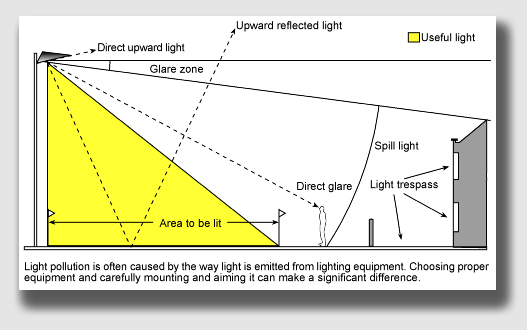
BLINDED BY THE LIGHT

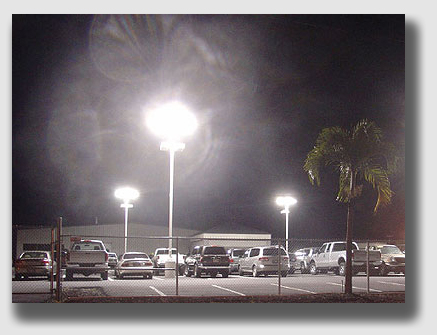
Angelspathsite140325Rare is the opportunity to glean two instructive cases from one malefacting (if that’s a word) defendant. However, such is our good fortune with Ohio developer Angel’s Path, LLC (and yes, the apostrophe suggests there was only one angel on the path). Last month, we reported on disgruntled Angel’s Path neighbor Clarence Peters, who narrowly escaped being thrown out of court because he defended against summary judgment on the cheap. At the time, we promised the tale of the Kramers the next day. Sorry about that – who knew how much interesting stuff would happen in the meanwhile?

But at long last, we find out how his neighbors, the Kramers, fared when they went after the same developer because their home was disrupted by noise, dirt and even light from the new home development.

The Kramers claimed the dust and dirt was a public nuisance, and that Angel’s Path was causing the light to trespass on their homestead. These were both creative arguments, but the Kramers were doing their best to find a legal theory that would address the injustice they were experiencing. The developer leveled its legal guns, taking a very legalistic approach: the nuisance couldn’t be a public nuisance, it said: a public nuisance has to be affecting the plaintiff differently from the general public, and the general public was eating Angel Path’s dust just as badly as were the Kramers. As for the annoying light, Angel’s Point contended, there just weren’t any cases that said light could be a trespasser.

Chief Justice Oliver Wendell Holmes once famously chided a lawyer arguing before him that “this is a court of law, young man, not a court of justice.” Fortunately for the Kramers, the Ohio Sixth District Court of Appeals wasn’t having any of that. Often one can tell when a court is stretching to find some way to do justice. Clearly, the appellate judges were disenchanted with the developer, the lawyers for which were essentially telling them that while Angels’ Path had done everything the Kramers accused it of, there wasn’t anything the law could do about it. Nyah-nyah-nyah-nyah-nyah.

But it turned out that there was something the Court could do about it. It reinstated the suit, warning the Kramers that they might find it tough to win a trial, but the facts they had alleged suggested several theories they could pursue.

With the case once again headed for a jury of just plain folks who would be unimpressed with Angel Path’s legal hair-splitting and probably sympathetic to the sleep-deprived, dust-covered Kramers, one imagines that Angel’s Path very quickly recalled another pithy legal aphorism: “A bad settlement is better than a good lawsuit.”

Our takeaway from this case is that nuisance actions can be both flexible and powerful means of redressing neighbors’ activities that interfere with the legitimate enjoyment of home and hearth.

Kramer v. Angel’s Path, LLC, 174 Ohio App.3d 359, 882 N.E.2d 46 (Ct.App. 6 Dist. Ohio 2007). William and Patricia Kramer sued Angel’s Path, L.L.C., alleging that construction in its housing development resulted in blowing dust and dirt tracked onto their street and trespass from a lighted “promotional” sign that blazed in the front of the Kramers’ residence 24 hours a day. They alleged that Angel’s Path’s development was a public nuisance because of the dirt and Angel’s Path was actually trespassing on their land with the 24-hour lighted sign.

The trial court threw the suit out altogether. The Kramers appealed.

Held: The Kramers could proceed to trial against Angel’s Path.

The Court of Appeals held that the Kramers were clearly wrong that the development was a public nuisance, but the facts they had alleged in their complaint, if true, did make out a claim for a private nuisance. The rule is that courts should interpret complaints to do “substantial justice,” and it would be unfair to make hyper-technical demands for precision in complaints. The rules only require that a complaint “contain a short and plain statement of the circumstances entitling the party to relief and the relief sought.” The factual allegations in the complaint should control whether some legal cause of action has been properly pleaded and supported on summary judgment.

The opinion contains a welcome primer on nuisance law. The Court noted that the law of nuisance “has been described as the most ‘impenetrable jungle in the entire law’.” Generally, though, nuisance” is defined as “the wrongful invasion of a legal right or interest.” It may be designated as “public” or “private.” A public nuisance is “an unreasonable interference with a right common to the general public,” and arises only where a public right has been affected. To recover damages under a claim of public nuisance, the plaintiff must establish (1) an interference with a public right and (2) that the plaintiff has suffered an injury distinct from that suffered by the public at large.

To the Kramers, “Blinded by the Light” was more than a Springsteen ditty once covered by Manfred Mann … it was an every-night occurrence.

By contrast, a “private nuisance” is a non-trespass “invasion of another’s interest in the private use and enjoyment of land.” Unlike a public nuisance, a private nuisance threatens only one or a few persons. In order for someone to be entitled to damages for a private nuisance, the invasion has to be either (a) intentional and unreasonable or (b) unintentional but caused by negligent, reckless, or abnormally dangerous conduct.

A nuisance may be “continuing or permanent.” A continuing nuisance arises when the wrongdoer’s tortious conduct is ongoing, perpetually generating new violations. A permanent nuisance, on the other hand, occurs when the wrongdoer’s tortious act has been completed, but the plaintiff continues to experience injury in the absence of any further activity by the defendant.

For a nuisance to be an absolute nuisance, it must be based on intentional conduct or an abnormally dangerous condition that cannot be maintained without injury to property, no matter what precautions are taken. Strict liability is imposed upon an absolute-nuisance finding. When a defendant commits an unlawful act deemed to be an absolute nuisance, he or she becomes an insurer, and will be liable for “loss resulting from harm which may happen in consequence of it to persons exercising ordinary care, irrespective of the degree of skill and diligence exercised by himself… to prevent such injury.”

Every day seemed like the Dust Bowl to the Kramers ...

Every day seemed like the Dust Bowl to the Kramers …

On the other hand, if the conduct is a “qualified” nuisance, it is premised upon negligence. A qualified nuisance is defined as essentially a lawful act “so negligently or carelessly done as to create a potential and unreasonable risk of harm, which in due course results in injury to another.” Under such circumstances, the nuisance arises from a failure to exercise due care. To recover damages for a qualified nuisance, negligence must be alleged and proven. Whether a party’s actions were reasonable is generally a matter for the trier of fact.

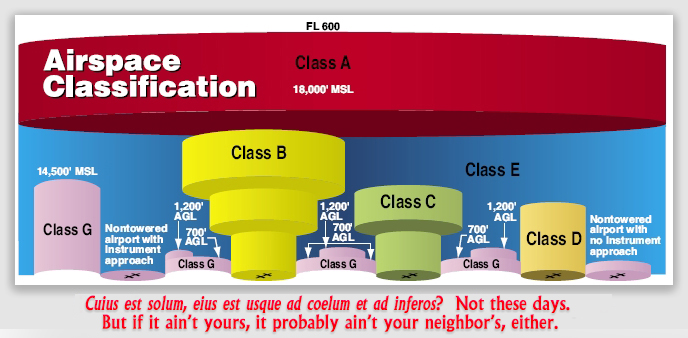
Trespass on real property occurs when a person, without authority or privilege, physically invades or unlawfully enters the private premises of another. The elements of a trespass claim are “(1) an unauthorized intentional act and (2) entry upon land in the possession of another.” A trespass claim exists even though damages may be insignificant. A person can be a trespasser without actually stepping onto another’s property. A trespass may be committed by invading the airspace of the property. This principle is based upon the concept that an owner of land owns as much of the space above the ground as he or she can use.

Here, Angel’s Path argued that the Kramers’ “public nuisance” was undercut by their admission that several neighbors suffered from the same excessive dirt and dust that bothered the Kramers. Therefore, it claimed, the Kramers failed to establish a claim for nuisance because their injuries were no different than those suffered by the public in general. Angel’s Path also argued that the light shining into the Kramer home was not a trespass.

The Kramers countered with an affidavit and photos of the property across from their home and of their home, showing that the dirt and dust blew straight from the Angel’s Path property across their land. They even produced Weather Service wind records supporting the claim. As for the light, they contended that the entrance-sign light ­– directly across from their house – continuously lit up their home “in an annoying and harassing manner,” including the three front bedrooms. They had asked Angel’s Path turn off the light, nothing changed until after they sued, and took the deposition of an Angel’s Path executive.

The Kramers showed proof of the dirt in their home, and documented the costs of cleaning it up. They also described the Angel’s Path sign – “like a headlight shining into [the] bedroom windows” – and the problems this caused.

The Court of Appeals disagreed with Angel’s Path that a claim for “public” nuisance could not be sustained, because too many people apparently suffered the same deprivations. Under this line of reasoning, the Court observed, a person creating a public nuisance could escape liability simply by harming more than one party. Plus, the Court held, even if the Kramers had no public nuisance claim, they may still have a claim for private nuisance. Although Angel’s Path construction may be lawful, questions of fact remained as to whether the developer failed to exercise due care and was so negligent “as to create a potential and unreasonable risk of harm” resulting in the Kramers’ injuries. Thus, the Court wouldn’t through out the suit.

The Court was concerned that the light invasion claim was “an unusual and perhaps creative application of trespass law.” The Court conceded that arguably, the Kramers could assert that the light physically invaded the airspace over their property. But even if this argument doesn’t carry the day, the Court said, genuine issues of material fact remained as to whether the lighted sign may be a public or private nuisance.

– Tom Root

TNLBGray140407