Case of the Day – Wednesday, September 18, 2024

BLINDED BY THE LIGHT

revveduplikeadeuce140721None of us really knew what the lyrics were to that great piece of mid-’70s music by Manfred Mann’s Earth Band (written and first recorded by Bruce Springsteen). You know, Springsteen wrote the second line as “cut up like a deuce.” Not until Manfred Mann rewrote the line to be “revved up like a deuce,” did the mondegreen of the line famously become a reference to a feminine hygiene product.

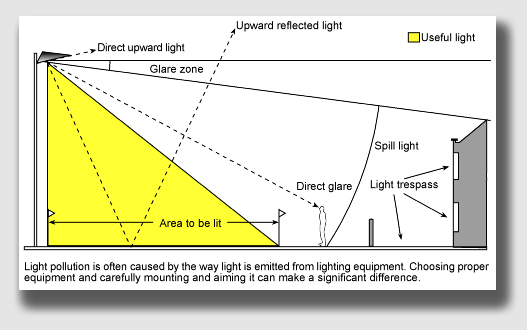
But we digress. We’re really talking light and soybeans here. Recently, the vigilant treeandneighborlawblog editors read a book review for a new tome on light pollution called The End of Night.” It reminded us how soybeans like the dark, and about the plight of Farmer Smalley.

Farmer Smalley raises soybeans in Wyandot County, Ohio. When the Ohio Department of Transportation installed high mast lighting at the US 30/US 23 interchange, Mr. Smalley’s soybeans would not flower and flourish under the bright nighttime lights. This is apparently not an unknown effect. He sued the DOT in the Ohio Court of Claims, seeking damages in a self-written complaint.
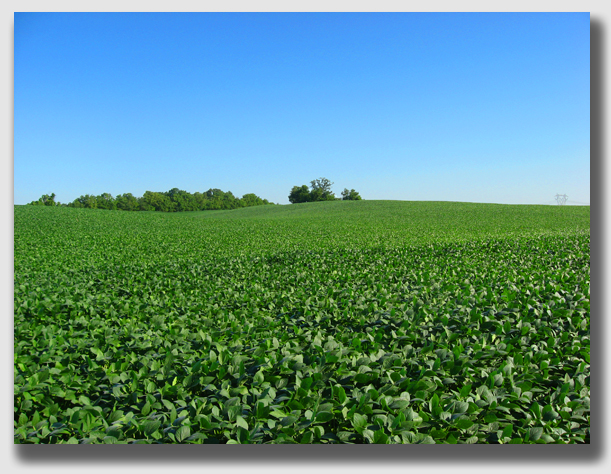
soybeans140721The Clerk heard the matter administratively and concluded that the lights were not a nuisance, apparently because of the benefit such lights had for the motoring public. However, the loss of two acres of beans did constitute a constitutional “taking of property” for which he should be compensated. The damages were pretty meager for 2007: $512 plus his $25 filing fee.

Still, the Clerk did not dismiss out of hand the notion that light pollution could constitute a nuisance in some circumstances, those where the social benefit of the light was insignificant next to the interference caused the neighbor.

A few months later, the full Court of Claims reversed the judgment. It held that the Ohio constitution did not permit compensation for consequential damages to property, only for the actual taking of property. Because of that. Farmer Smalley’s loss was not compensable.

Even so, both the Court and the Clerk apparently accepted the notion that the light pollution damaged Smalley’s property. It was just that the damage, however real, could not be compensated.
lightpoll140721Smalley v. Ohio Dept. of Transportation, 142 Ohio Misc.2d 27, 869 N.E.2d 777, 2007 -Ohio- 1932 (Ohio Ct.Cl., Mar. 15, 2007). Farmer Smalley has a soybean field next to a four-lane highway intersection. The Ohio Department of Transportation constructed high-mast lighting at the intersection in 2005, and since then, Farmer Smalley’s soybeans failed to mature during the growing season. Smalley was forced to mow down two acres of failed crop, a failure he attributes to the lighting. He lost about 120 bushels of beans, which — at $6.00 a bushel — were worth $720.

Farmer Smalley sued the DOT in the Ohio Court of Claims. DOT admitted it had installed the mast lighting, which it said was intended to “safely illuminate the expressway.” DOT argued the installed lights “are the safest and most efficient lighting source given the traffic flow and lighting required at interchanges.” It admitted that light did “occasionally bleed onto adjacent property [and] there is little doubt that defendant’s light encroaches upon plaintiff’s property.” It argued, however, that it could not be held liable for any damage to the plaintiff’s bean crop caused by its light encroachment. It also argued that Farmer Smalley’s cost of raising the beans was $256.47 an acre, reducing his net loss to $512.94.

Held: The Clerk of the Court held that the light pollution was not a nuisance. However, he found that the actual harm suffered by the farmer was different in kind from harm suffered by the general public, as required to establish a taking under the “Takings Clause” of the Ohio Constitution.

It appears that farmer Smalley filed his complaint himself, because DOT flailed about in its defense as if it wasn’t sure where the farmer was going. It argued at length that its lighting was not a nuisance, because Smalley had offered no proof that DOT was negligent in erecting the lighting. It asked the Court to weigh the benefit that the high mast lighting gave to thousands of motorists against the harm the lights caused the plaintiff in destroying two acres of his bean crop.
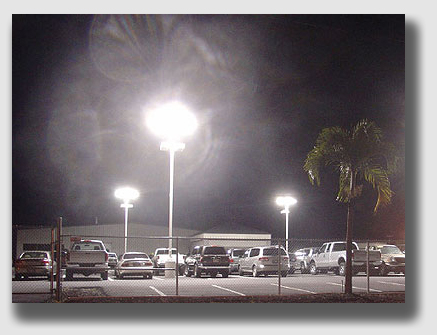
lights140721The Clerk sagely noted that DOT “… essentially proposed that plaintiff should have to bear a financial burden for his crop loss in a situation where he was legally using his land for a specific valuable purpose and the harm caused was attributable to the acts of DOT.”

He defined an absolute nuisance as a distinct civil wrong arising or resulting from the invasion of a legally protected interest, one consisting of unreasonable interference with the use and enjoyment of the property of another. Such a nuisance was the doing of anything without just cause or excuse, the necessary consequence of which interferes with or annoys another in the enjoyment of his or her legal rights, or the collecting and keeping on one’s premises of anything inherently dangerous or likely to do mischief, if it escapes, which, escaping, injures another in the enjoyment of his legal rights. A qualified nuisance, on the other hand, was distinguished from absolute nuisance as being dependent upon negligence consists of anything lawfully but so negligently or carelessly done or permitted as to create a potential and unreasonable risk of harm which, in due course, results in injury to another.

Considering the utility of the high mast lighting to the motoring public, the Clerk correctly concluded that the lighting was neither an absolute nor qualified nuisance. But that didn’t mean that Mr. Smalley was out of luck. Under the “Takings Clause,” any taking — whether it be physical or merely deprives the owner of an intangible interest appurtenant to the premises — entitles the owner to compensation. In order to establish a taking, a landowner must demonstrate a substantial or unreasonable interference with a property right, and such interference may involve the actual physical taking of real property, or it may include the deprivation of an intangible interest in the premises. Something more than the loss of market value or loss of comfortable enjoyment of the property is needed, to constitute a taking under the “Takings Clause:” governmental activity must physically displace a person from space in which he was entitled to exercise dominion consistent with the rights of ownership. To constitute a taking, an actual harm suffered by the plaintiff must differ in kind rather than in degree from the general public.

Later, the full court reversed on different grounds, holding that the Ohio Constitution did not permit compensation for less than a full loss of land.

Nevertheless, the notion that light can constitute a nuisance and that a property owner suffering from light shining onto his or her land from another location appears to be accepted.

– Thomas L. Root

TNLBGray

Case of the Day – Monday, September 9, 2024

FOOTBALL IS (NOT SO) BACK!

It’s supposed to be the most wonderful time of the year… high school games every Friday night, our beloved Ohio State Buckeyes (and how those Wolverines?) on Saturday, and the Super Bowl-bound Cleveland Browns on Sundays.

In honor of the gridiron season, we resort to cheap metaphors today while considering an unusual and (to us) troubling tree law case. Change the fact pattern by about three feet, and the outcome would have been the opposite of what the court ruled. That is, if Jennifer’s trees had been growing a yard or so south of where they were rooted, they would have been boundary trees. Neighbors Tony and Xiaoye couldn’t have touched them. But because the trunks and root flares of the conifers were all on Jennifer’s land, Tony got away with whacking away so much root support that Jennifer had to take the three trees down.

“Can they do that?” you ask, because you seem to remember a California case that said otherwise. Good recall, tree law fan. Unfortunately, the answer is pretty much, “Yeah, in Washington, they can do that.” But somehow it seems that the answer ought to be otherwise, that your right to Massachusetts Rule-style hacking at your neighbor’s tree should be informed by some kind of a duty not to kill the tree in the process.

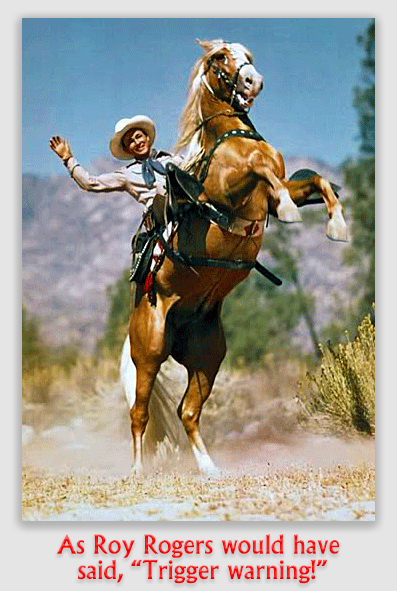
Trigger warning: the outcome of this case is tragic for the trees involved, and those sensitive readers among us who cower at the sound of chainsaws might be needlessly upset.

Mustoe v. Ma, 371 P.3d 544 (Wash.App. 2016). Jennifer Mustoe had two large Douglas fir trees located entirely on her property, about three feet from the property line. Her neighbors were Anthony Jordan and Xiaoye Ma. In October 2013, Tony dug an 18-to-20-inch deep ditch on his property along the border of Jennifer’s lot. In the process, he exposed and removed the trees’ roots, leaving them to extend only 3-4 feet from the trunks, a loss of nearly half of the trees’ roots, all from the south side of the trees. The trees were thus exposed to southerly winds with no support, making the damaged trees likely to fall on Jennifer’s home.

The landscape value of the trees was estimated to be $16,418; the cost of their removal was estimated to be $3,913.

Jennifer filed suit against Xiaoye and Tony, asserting that Tony had negligently, recklessly, and intentionally excavated and damaged her trees. The trial court dismissed Jennifer’s claims, holding that Tony was entitled to remove those portions of roots that had encroached onto his and Xiaoye’s property and that in so doing, he did not owe Jennifer a duty of due care to prevent damage to the trees.

Jennifer appealed.

Held: The Court rejected Jennifer’s claims.

Jennifer started out a field goal behind, because she was compelled to acknowledge that Washington law lets an adjoining landowner engage in self-help and trim the branches and roots of a neighbor’s tree that encroach onto his or her property. Yet, Jennifer argued, the right to self-help does not extend to removing the tree itself, and the State’s common “does not immunize a landowner against liability for damage to the trimmed trees” and argues that the Court should hold that in exercising self-help, a landowner owes a duty of care to prevent damage to the trees themselves.

Jennifer thought she’d put one through the uprights and tie the score, but the Court played Lucy to her Charlie Brown. The law was clear, the Court said, that an adjoining landowner may trim only those branches or roots that encroach on his own property, but it did not hold that a landowner owes a duty to act in good faith or reasonably to prevent damage to the trees.

Jennifer also claimed that under state law, all members of society owe a broader legal duty to their fellow citizens and must not use their own property in such a way as to cause injury to others. She cited an exception to the common enemy doctrine in water trespass cases as an example of this duty. The common enemy doctrine allows landowners to dispose of unwanted surface water in any way they see fit, without liability for resulting damage to their neighbors, but a “due care” exception requires that a landowner change surface water flow in good faith and in such a way as not to cause unnecessary damage.

The Court rejected Jenn’s comparison, observing that no court had ever extended the “due care” exception beyond surface water. The Court said, “Surface water is a common enemy precisely because it is a force of nature which may indiscriminately affect any landowner. As such, each landowner may defend against it so long as he or she does not do so in a manner that unnecessarily redirects the wrath of the common enemy upon a neighbor. Unlike surface water, tree roots and branches are not a force of nature that indiscriminately wreak havoc among adjoining landowners. Instead, they are an encroachment upon the land of one’s neighbor.

Jennifer, facing second and long, argued that Booska v. Patel, a California case, found that adjoining landowners had a duty to act reasonably in trimming encroachments where neighbors’ trees were concerned. Citing a decision from the other end of the country, Jennifer argued that in Fliegman v. Rubin, a New York court – relying on Booksa – reversed the trial court’s summary dismissal of a plaintiff’s claims for damages to his trees allegedly resulting from the defendant’s severance of roots that had encroached on to his property. The Fliegman court held there was an issue as to whether severance of the trees’ roots damaged the plaintiff’s trees because “the right to self-help is limited, in that an adjoining landowner’s right to engage in self-help ‘does not extend to the destruction or injury to the main support system of the tree… .'”

Jennifer’s court was unswayed, holding that Booska and Fliegman appeared to be “outliers.” In Alvarez v. Katz, the Vermont Supreme Court rejected the holdings in Booska and Fliegman, finding that the “right to cut encroaching trees where they enter the land of another, without regard to the impact on the encroaching tree by such cutting, is well established under Vermont law.”

Here, the Court was likewise persuaded that the law in Washington was consistent with the general rule as applied in Vermont.

Pinned deep in her own territory on third down, Jennifer aired it out. She contended that her nuisance action against Tony and Xiaoye should go forward because Tony’s excavation and removal of tree roots was unreasonable in relation to the harm it caused to her trees. A nuisance is an unreasonable interference with another’s use and enjoyment of property. RCW 7.48.010 defines an actionable nuisance as “whatever is injurious to health or indecent or offensive to the senses, or an obstruction to the free use of property, so as to essentially interfere with the comfortable enjoyment of the life and property.

The fundamental question in a nuisance issue is whether the use to which land is put can be considered reasonable in relation to all the facts and circumstances. Tony argued that Jennifer had no action for nuisance because she had no legally recognized right. The Court agreed that Jennifer had not established that she had any legal cause for complaint or interference with the lawful removal of the roots on Ma’s property.

A nuisance claim will fail if it is nothing more than a negligence claim “in the garb of nuisance” unless the negligence claim has merit. Where the alleged nuisance is a result of the alleged negligent conduct, the rules of negligence are applied.

Here, Jennifer’s nuisance claim arose from Tony’s actions that damaged the trees; the nuisance is the result of his alleged breach of duty. But there was no breach of duty: because Jennifer’s negligence claim failed, her nuisance claim did, too.

On fourth down and a mile, with only a few seconds left, Jennifer threw the Hail Mary. She complained that she was entitled to damages under the timber trespass statute, RCW 64.12.030. The statute reads, “Whenever any person shall cut down, girdle, or otherwise injure, or carry off any tree… timber, or shrub on the land of another person, … without lawful authority, in an action by the person, city, or town, against the person committing the trespasses or any of them, any judgment for the plaintiff shall be for treble the amount of damages claimed or assessed.”

Alas, the ball fell short. By its own terms, the Court said, the timber trespass statute applied only to persons acting without lawful authority. Because Tony did not act unlawfully when he removed roots that encroached onto his property, the claim fails.

– Tom Root

TNLBGray140407

Case of the Day – Wednesday, August 21, 2024

THIS IS WHY YOU SHOULD COME IN OUT OF THE RAIN

duh160901Sad to say, stupidity abounds.

Most of us know – thanks to our mothers – that we should come in out of the rain. One dark and stormy night, Katherine Grigg forgot that life lesson.

Kate was driving on Mount Pleasant Road, in rolling farmland at the foot of the California Sierra Madres. Normally an enjoyable drive, Mount Pleasant Road had become anything but pleasant in the driving rain. She encountered a large tree that had fallen from Dennis Taylor’s yard across the road. Naturally, she got out of her car. Who wouldn’t? Standing in the wind and sheets of rain, she and another weather-challenged motorist, David Eggert, determined the tree was too big for them to move.

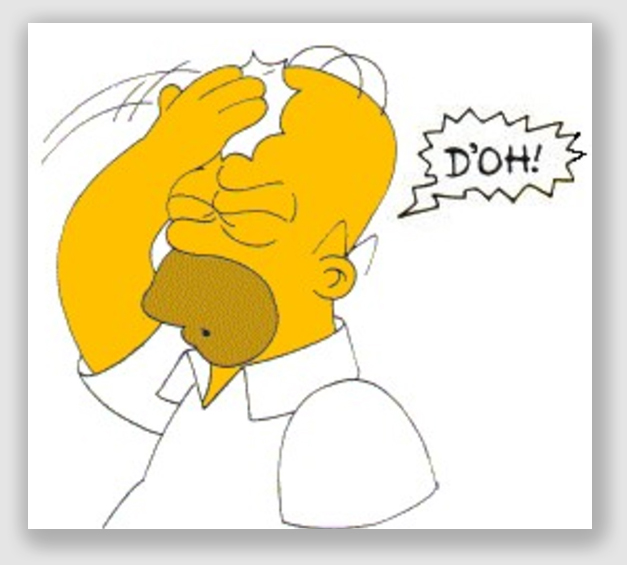
As their two-party Mensa meeting continued, a second tree fell, hitting both Grigg and Eggert. This is where you perform a face-slap and say, “D’oh!” You might think these two were Darwin Award contenders, but this was California. So they became plaintiffs instead.

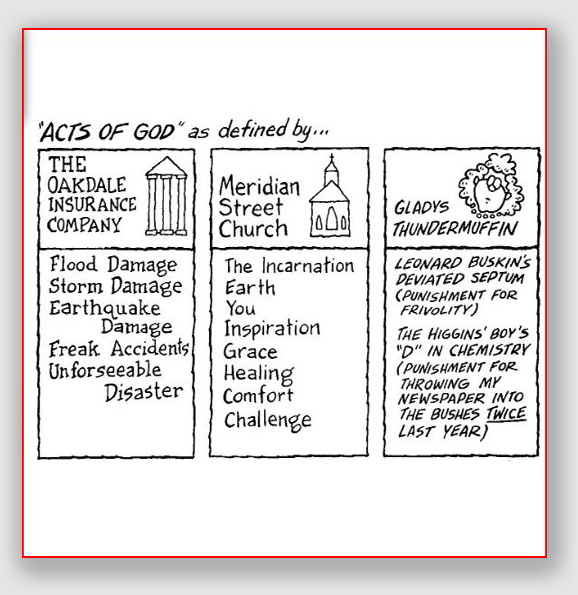
actofgod160901At least Grigg did. The court reports that when she asked Eggert whether they should sue Taylor. Eggert replied, “Why? … this was what I call an act of God.”

Maybe the tree knocked a little sense into him. It had no salubrious effect on Kate Grigg, however. She sued, claiming that Dennis Taylor should have removed the danger trees, and his “conscious choice… to neglect his duties which are prescribed to protect the public, is despicable conduct which is the basis for punitive damages.”

It turned out that Eggert was right. It was an act of God. What’s more, despite the fact that Dennis Taylor had reason to know that this act of God was likely to happen, he nevertheless was found to have done enough – not much, but enough – to discharge his duty to the public. Dennis was found not to be liable.

D’oh, Kate.

Grigg v. Taylor, Case No. C050070 (Superior Ct. Cal. June 28, 2006) 2006 Cal. App. Unpub. LEXIS 5661, 2006 WL 1756843. Plaintiff Katherine Grigg encountered a large tree blocking her way one stormy night on Mount Pleasant Road in Lincoln. The tree had fallen from Dennis Taylor’s property, which was adjacent to the road. Another motorist traveling on the road, David Eggert, parked behind Grigg’s car. Grigg and Eggert got out of their vehicles and determined the tree was too big for them to move. As Eggert was thinking of an alternate route they could take, a second tree fell, striking both Grigg and Eggert.

The tree that had fallen on Grigg and Eggert was one-half of a “V” shaped double-trunk tree. The tree’s other trunk had fallen a few weeks before the accident. When the first trunk fell, Taylor inspected the tree and believed it was not going to fall because several other double-trunk trees on his property were still standing after one trunk had fallen. He decided not to take care of the remaining trunk right away “[b]ecause there w[ere] a series of storms” and he “didn’t feel like getting wet.” Nevertheless, once a week, Dennis checked his property for danger trees. Placer County, California, had no law, ordinance, or regulation requiring landowners to prune their trees.

Grigg sued Taylor for negligence and for maintaining a nuisance by failing to maintain the trees on his property. She wanted compensatory and punitive damages.

The court granted Taylor’s motion for nonsuit regarding punitive damages, and the jury found for Taylor on the remaining claims. Grigg appealed.

daffyduck160901Held: Dennis Taylor was not liable to Kate. On appeal, she complained there was insufficient evidence to support the jury’s verdict that Taylor was not negligent and had not created a nuisance. The Court of Appeals disagreed, citing evidence Taylor had inspected his trees weekly, that he had several double-trunked trees on his property that had lost one trunk but remained safe, and that his neighbor — who had lost a tree in the storm himself — hadn’t seen any hazardous-looking trees on Taylor’s property.

Grigg’s complaint that Taylor had created a nuisance failed on the same evidence. Without Taylor having any liability to Grigg, the complaint that he should have been ordered to pay punitive damages was moot. The Court said, “The jury found Taylor was not negligent in maintaining his property and did not create a nuisance. There was substantial evidence to support those verdicts. Given the jury’s verdicts, any error in granting the nonsuit on Grigg’s theory that Taylor’s conduct was ‘despicable’ was harmless.”

– Tom Root
TNLBGray140407

Case of the Day – Tuesday, July 30, 2024

TREE GONNA DO WHAT A TREE GONNA DO

When I was a kid, we had a cottonwood in the far backyard that my father christened “The Mess Tree.” It was not a sobriquet of affection.

The Mess Tree seemed to shed leaves and twigs all 12 months of the year. It was stubbornly marcescent, slow rolling its autumnal leaf drop from late August through February. Its twig production was prodigious: we all knew never to walk barefooted anywhere near the drip line. And when it released its seeds in June, the backyard looked as though it had been dusted with an early November snow.

Until I became responsible for my own yard, I could not understand my father’s disgust at The Mess Tree. But I am now responsible for a pair of cottonwoods in my own side yard, and I have empathy – a little late in coming, I admit – for Dad’s frustration.

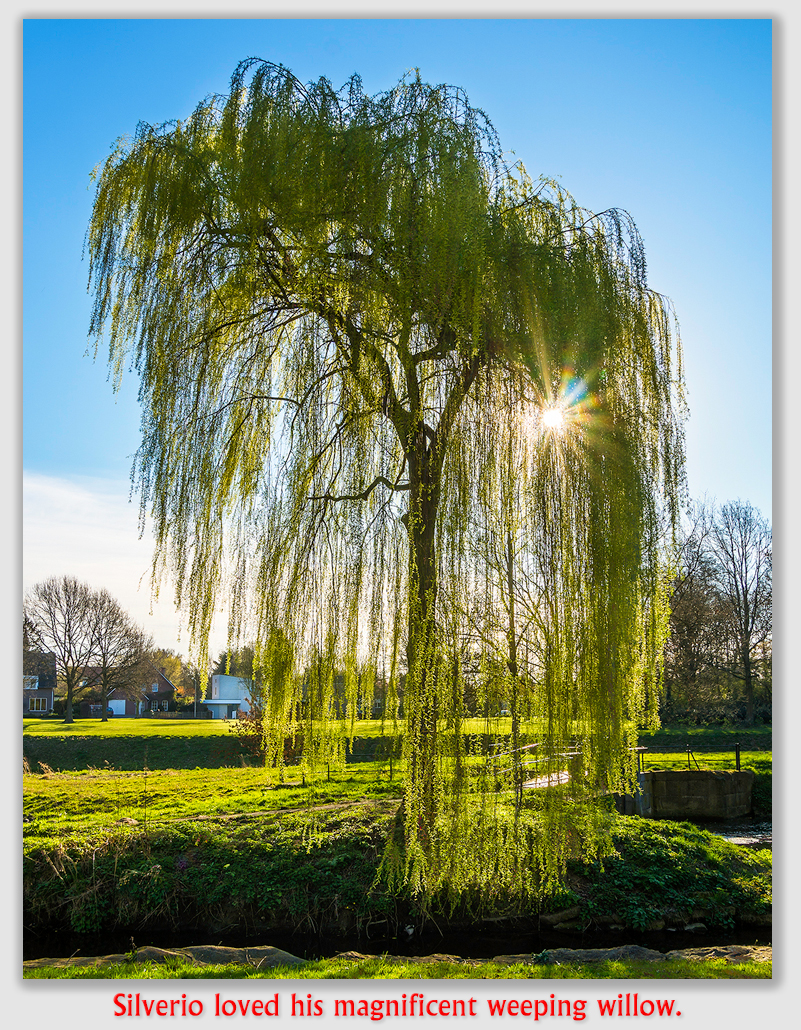
For that matter, like many people, I understand Helena and Joe Ponte’s vexation at Silverio DaSilva’s weeping willow. As unhappy as Dad was at his cottonwood, it was his cottonwood: he could remedy the problem with a single call to our neighborhood tree service. But when Silverio’s tree rained its ration of sap, twigs and other debris onto the Pontes’ lawn and driveway, all they could do is demand that Silverio cut it down.

He would not.

Finally, when Helena slipped on some wet leaves and twigs, breaking her ankle, the Pontes brought in their lawyer.

Satisfaction did not follow. Silverio’s weeping willow was a fine, healthy tree. It was just doing what trees do. And that, the Court said, was fine. A tree gonna do what a tree gonna do, and the law won’t get in its way.

Ponte v. DaSilva, 1982 Mass.App.Div. 6 (1982). Helena Ponte lived next to Silverio DaSilva and his magnificent weeping willow tree. The tree, standing about four feet from Silverio’s boundary with Helena, overhung the picket fence and Helena’s driveway.

Helena began noticing all of the leaves, sap and branches that fell from the tree onto her driveway about two years before the accident. She complained to Silverio, demanding he cut down the tree. Leaves and debris were clogging Helena’s gutters and swimming pool filter. Sap and tree debris (leaves and twigs, no doubt, inasmuch as willows don’t have much fruit) fell on Helena’s Studebaker. And of course, Helena darkly foretold, there was the ever-present slip-and-fall risk.

Helena’s attorney then wrote to Silverio, complaining that Helen’s husband had already fallen on the leaves and debris. The letter portended similar incidents unless the tree was removed.

Sure enough, about 10 days later, Helena fell due to the leaves and sap, breaking her ankle. She sued.

The trial court found that the tree was not diseased and that the leaves, sap and debris which fell were due to the natural characteristics of weeping willow trees. They do, after all, “weep.” Nevertheless, the trial court awarded Helena $15,000 and her husband another $3,000 for loss of consortium (which we will not endeavor to describe here).

Silverio appealed.

Held: Helena and Joseph got nothing, and the tree kept on being a tree.

The crucial issue, the Court of Appeals said, was whether under the circumstances Silverio owed a legal duty to Helena and Joseph to remove the tree. If so, then he would be liable for the damages caused by a breach of that duty.

The Pontes claimed essentially that the weeping willow was a nuisance because it bothered them. But the test for nuisance, the Court held, was not whether the conduct or activity would be objectionable to a hypersensitive person, but rather whether a normal person in the community would find the conduct at issue clearly offensive and annoying.

The Court observed that the tree had been there for some time, and it was obviously quite alive. No evidence in the record showed the tree to be a hazard (beyond Helena’s ankle, of course) to life or property. Trees “whose roots or branches extend beyond the boundary line,” the Court said, “have been held not to constitute a nuisance in themselves.” In fact, the Court noted, “the Restatement of Torts suggests that where the tree is a part of the natural condition of the land, there is no liability for private nuisance.”

The Court characterized Michalson v. Nutting (the case that was the origin of the Massachusetts Rule) as addressing the notion, albeit obliquely, of a tree as a nuisance. There, the Court said, “the Supreme Judicial Court held that the natural and reasonable extension of the roots and boughs of trees into adjoining property was damnum absque injuria.” The rationale given for this approach “is that to allow recovery in such situations would inundate the courts with frivolous and vexatious suits.”

But Helena argued that the underpinnings of the Michalson case had eroded to the point that a new theory of liability would and should make the defendant legally responsible in a case such as this. The Court dismissed her argument for a change in the law, noting that the line of cases she relied on to make her point all involved trees that were diseased, decayed or dead. Silverio’s weeping willow, on the other hand, was very healthy.

The right of a landowner to use and enjoy it for lawful purposes, the Court said, must be weighed against the likelihood of substantial harm to a neighboring landowner in cases of private nuisance. A dead, diseased or decayed tree has little or no utility to its owner and poses a foreseeable threat to adjoining landowners from falling limbs. A live tree, on the other hand, provides shade and will generally enhance the landowners’ property. The fact that leaves or other debris will naturally fall from live and healthy trees that are harmless in and of themselves and that such falling leaves and twigs might cause some inconvenience or annoyance to neighbors does not render the tree’s owner liable for damages.

– Tom Root

TNLBGray140407

Case of the Day -Tuesday, July 2, 2024

NOW LOOK WHAT YOU’VE DONE!

Rarely (as in “I don’t recall when I’ve ever said this before”) do I caution that the prevailing law in any particular state is wrong, and likely to be cruisin’ for a bruisin’ the next time an appellate court has to think about it. But I feel comfortable issuing that warning about today’s case.

From Ohio (home of rock ‘n roll, pro football, the first guy to walk on the moon, the brothers who turned a bicycle into the first airplane, and a ton of other cool things), comes a case that pretty much runs smack into Fancher, Herring, the Hawaii Rule, and a raft of other cases reflecting the modern view that a homeowner whose tree is wreaking havoc on the neighbor’s property may be ordered by a court to fix the damage at his expense.

To be fair, this case may be proof of the old legal aphorism that “hard cases make bad law.” Even the most cursory reading of the facts suggests that Dave Rababy may well have been a horse’s ass, hounding his neighbor because a tree dropped leaves and twigs on his property. Speaking as a guy who owns all of my five southerly neighbors’ leaves every fall – and these things are the size of dinner plates – I understand how it can be irritating to have other peoples’ leave on your lawn. But I would never sue them over it. I don’t think I would…

Dave had no such compunction, and his emesis of woe delivered to the court made him the boy who cried wolf. He howled so loudly about leaves and twigs and that his trimming crew was not allowed to trespass on Roy’s property and hack away at the offending tree, and minutiae of a similar nature, that his real complaint – his driveway was being heaved and foundations dislodged by the roots – got lost in the underbrush. In Fancher, Whitesell and even Iny, such damage was enough to get the neighbor’s tree declared a nuisance. If Dave had exercised a little plaintiff self-control, he might have gotten there, too.

We are too urban and too suburban, and our properties are too developed for the Massachusetts Rule to be the exclusive remedy for genuine harm done by a neighbor’s tree. That is the way the law is trending throughout the civilized world, and it is bound to reach Ohio sooner or later.

Rababy v. Metter, 30 N.E.3d 1018 (Ct.App. Cuyahoga Co., 2015). David Rababy and Roy Metter were next-door neighbors. Dave’s driveway abutted Roy’s property in certain places and nearly abuts in others. A fence separated the properties, and a stand of mature trees ran along the fence on Roy’s side of the boundary line.

Dave sued Roy for negligence, nuisance, trespass, and interference with a business contract. Dave asserted that trees at the edge of Roy’s property extended over his own property, and dropped leaves, needles, sap, and branches onto his car and home, and that some of the trees were rotten. He said the trees cast shadows over his property and cause mold growth on his roof, as well as damaged his driveway and foundation.

Dave complained he had a company to trim the overhanging branches, but Roy’s daughter prevented the unnamed landscape service company from properly performing this work. The complaint alleged the trees constituted an ongoing nuisance and trespass and that Roy negligently maintained the trees. Dave asked for $52,500: $37,000 for future tree trimming services and $15,000 in compensatory damages.

Both parties filed motions for summary judgment. Dave argued that on “an ongoing basis, Roy’s trees encroach onto my property, specifically over my home and driveway. His trees deposit leaves, debris, and sap onto my property, causing damage.” Dave also repeated the claim about Roy’s daughter running off the tree trimmers.

Roy argued that he owed no duty to Dave to trim otherwise healthy trees on his property. He claimed the trees were mature and preexisted either party’s ownership of the property. He said that a year before, Dave hired Cartwright Tree Service to trim the row of pine trees that ran along the driveway. He said no one complained when Cartwright trimmed the overhanging branches from Dave’s property free, but when Cartwright began trimming branches and trees back further than the property line, Roy’s daughter objected. Roy said that he has no objection to Dave trimming the overhanging branches back to the property line.

Dave replied with new allegations that the trees in question were decaying or dead. Attached to the reply was a new affidavit that averred that the trees were decaying and dangerous and that one had fallen on his property. He included a picture of a tree that appears to have fallen across a driveway. However, the affidavit was neither signed nor notarized.

The trial court granted Roy’s motion for summary judgment and denied Dave’s. Dave appealed.

Gen. Robert E. Lee – a man rapidly being consigned to the ash head of history – knew something about duty … and even he couldn’t have found that Roy owed one to Dave.

Held: Roy owed Dave no duty, so the trial court’s dismissal of the case was upheld.

In order to succeed in a negligence action, the Court said, Dave must demonstrate that Roy owed him a duty, that Roy breached the duty, and that he suffered damages that proximately resulted from Roy’s breach. Here, Dave offered evidence that falling pine needles, leaves, sap, and sticks had damaged his car, driveway, and roof. He also alleges, without evidentiary support, that encroaching tree roots damaged his driveway and home.

While he showed damage, Dave was unable to show that Roy owed him any duty. A landowner is generally not responsible for the losses caused by the natural condition of the land. Instead, the Court observed, states generally allow one impacted by such growth the remedy of self-help. A privilege existed at common law, such that a landowner could cut off, sever, destroy, mutilate, or otherwise eliminate branches of an adjoining landowner’s tree that encroached on his land. But, the Court said, whether a separate remedy exists is an open question.

The Massachusetts Rule provides that in almost all circumstances, the sole remedy for damages resulting from the natural dropping of leaves and other ordinary debris from trees is the common law remedy of self-help. The rule does provide a limited exception for dead trees, just as Ohio has established a duty for urban landowners of reasonable care relative to the tree [hat overhangs a public street, including inspection to make sure that it is safe.” Where constructive or actual knowledge of an unreasonably dangerous condition exists on the land of an urban landowner, such as a dead tree, the duty prong of a negligence claim may be satisfied.

The reasoning set forth in support of the Massachusetts Rule, the Court said, is apt to the facts of this case: “[T]o grant a landowner a cause of action every time tree branches, leaves, vines, shrubs, etc., encroach upon or fall on his property from his neighbor’s property, might well spawn innumerable and vexatious lawsuits.” The Court thus adopted the Massachusetts Rule as the law of this jurisdiction.

But Dave also argued that in Ohio a “landowner in an urban area has a duty to exercise reasonable care to prevent an unreasonable risk of harm to others from decaying, defective or unsound trees of which such landowner has actual or constructive notice.” Dave contended Roy’s trees were in such a defective condition and thus constituted a nuisance. Dave also argued that Roy, an urban landowner, had a duty to inspect his trees and protect others from a dangerous condition created by any unsound trees. Even if such a duty existed, the Court said, it only is breached when the owner has actual or constructive notice of a dangerous condition.

Leaves – often a pain in the arse, but seldom a nuisance

The Court held that Dave put forth no evidence that any of the trees constituted a dangerous condition of which Roy was aware or should have been aware. He presented no any evidence that the trees are dead, decaying, or unsound, and cited no case holding that “the normal yearly life-cycle of a tree and the natural shedding of leaves, twigs, and sap constituted a nuisance. Thus, he provided no compelling justification for a court to hold that Roy’s trees case constituted a nuisance or a dangerous condition. The problems Dave had experienced with the trees “are the natural consequence of living in an area beautified by trees. Dave’s remedy is to trim tree limbs that overhang his property back to the property line, to which Roy averred he has no objection.”

The trees at issue in this case do not constitute a nuisance, and Roy is not negligent in regard to them.

Dave also asserted that the trees on Roy’s property constituted a trespass. But the elements of a successful trespass claim include an unauthorized intentional act, and entry upon land in the possession of another. Here, there is no intentional act. Dave claimed that Roy’s actions of not removing or trimming the trees constitute an intentional act. But, the Court said, as it explained, Dave’s remedy for intrusion by vegetation is to trim it back to the property line.

In sum, Dave’s claims that detritus falling from trees from the neighboring property constituted a trespass, a nuisance, and negligence were simply not actionable. The Court cited a Maryland case that “it is undesirable to categorize living trees, plants, roots, or vines as ‘nuisances’ to be abated. Consequently, we decline to impose liability upon an adjoining landowner for the ‘natural processes and cycles’ of trees, plants, roots, and vines.”

– Tom Root

TNLBGray140407

Case of the Day – Wednesday, June 12, 2024

PARTNERING WITH THE GOVERNMENT

Unfiled lawsuits rarely get better if you continue to delay.

Unfiled lawsuits rarely get better if you continue to delay.

Tony Balducci had a couple of parcels on Sumner Street in beautiful Lunenburg, Massachusetts. One of them, a property at 240 Sumner, was subject to occasional flooding problems arising from poor drainage. Tony wanted the problem remedied, so he made a deal to partner up with the Town to install a drainpipe. Like most deals of this nature, Tony’s job was simply to pay, and the Town’s end of the project was to do the actual work.

The directionally-challenged workers for the town installed a drainpipe. It’s just that Mr. B had two places on Sumner, not just one. And (you guessed it), the drainpipe was installed at 244 Sumner Street instead of 240 Sumner Street (where it was supposed to be set). The result, of course – besides a drainpipe installed where it wasn’t needed – was that the flooding problems continued at 240 Sumner, where it was needed but not installed.

Tony was galvanized into action… some seven years after the error. The mystery is why it took him so long to notice the Town’s error and why – after he figured it out a year later – it took him more than six years to sue. There is, of course, a statute of limitations to just about every kind of action, civil or criminal. In the case of contracts in Massachusetts, it’s six years. The Town argued he had waited too long to sue. Tony responded that he had six years from the time he discovered the mistake – not from the time of the mistake itself – to sue.

The Court agreed that the “discovery rule” let Tony run his time to file a lawsuit from the day he learned of the Town’s blunder, but his victory proved to be a hollow one. Quite often, laws permitting suits against governments contain what are called “exhaustion” requirements. Before you can sue, you have to “exhaust” your administrative remedies by filing a claim with the governmental agency, usually on a prescribed form with a prescribed number of copies and according to a prescribed schedule. The goal, public policy types tell us, is to enable the governmental agency to resolve problems short of lawsuits by promptly and fairly addressing the claimant’s concerns.

Well, Bill Barr has a description that fits that notion and characterizes the former President’s election theories. The real purpose of the “exhaustion” requirement is to exhaust people like Tony or—barring the grinding down of the citizenry with arcane complaint requirements—to set a snare to trap the unwary.

Tony Balducci was one of those unwary ones. Whatever else he might have done during the six-year interregnum between discovering that the drainpipe was in the wrong place and suing, Tony never made a demand on the Town to cure its negligence. That meant that his claim for negligence had not been administratively exhausted, and the count was thus thrown out. Unsurprisingly, the Massachusetts Tort Claims Act required that such a demand — called “presentment” — be made on the municipality before a lawsuit could be filed.

It is not clear how Mr. Balducci missed the fact the Town had put the drainpipe in the wrong place, or - for that matter - that his property was still a little damp.

It is not clear how Tony missed the fact the Town had put the drainpipe in the wrong place, or – for that matter – that his property was still a little damp.

Tony had a few other claims to make against the Town, including trespass and wrongful removal of trees. After all, he had given the Town the OK to enter 240 Sumner but not 244 Sumner. Those counts were not subject to an exhaustion requirement, and they survived. But it’s clear that early in his lawsuit, Tony already had a big mountain to climb. More careful procedural planning — not to mention being quicker out of the chute — would have saved him some legal headaches now.

Balducci v. Town of Lunenburg, 23 Mass. L. Rep. 289 (2007), 2007 Mass. Super. LEXIS 497, 2007 WL 4248021 (Mass.Super. 2007). Tony Balducci owned two properties next to each other on Sumner in the Town of Lunenburg. In 2000, he and the Town entered into a written agreement for the replacement of a drainpipe located on his property, with Tony and the Town splitting the cost. He gave the Town an easement for the installation. But instead of installing the drainpipe at 240 Sumner Street, the Town installed it at 244 Sumner Street. As a result, Tony continued to experience flooding in his building at 240 Summer Street. He sued the Town of Lunenburg, alleging breach of contract, negligence, trespass, willful trespass to trees, and nuisance.

The Town moved to dismiss, arguing that the various counts should be dismissed due to the statute of limitations, a failure to comply with the Massachusetts Tort Claims Act, and failure to state a claim upon which relief may be granted.

Held: The Town’s motion was only granted in part. The Town first argued that Tony’s claim was barred by the statute of limitations because he brought the action more than six years after the alleged breach. But the Court observed that the “discovery rule” operates to toll — or suspend — a limitations period until a plaintiff learned or should have learned that he has been injured by the defendant’s conduct. Because Tony could present facts that show that he only learned of the improper installation of the drainpipe in 2001 when his basement flooded, the Court was unwilling to dismiss the action on the basis of the Town’s motion alone.

Likewise, the Court denied the Town’s argument that the contract action should be dismissed for failure to state a claim. The Court said there were genuine issues of material fact as to whether the Town had permission to install the drainpipe where it did, and whether it did so properly. The agreement was vague as to where the drainpipe should be installed, and the Town’s easement only referred to the agreement.

However, the Town was able to get the negligence claim dismissed. The Massachusetts Tort Claims Act required that a party present its claim in writing before suing. If a party does not fulfill this requirement, its case has to be dismissed for failure to state a claim upon which relief may be granted. Tony did not aver in his complaint that he has complied with the MTCA, requiring that the negligence count be dismissed.

The trespass claim — that the Town trespassed when it entered the wrong parcel of land to install the drainpipe and that the permanent nature of the drainpipe has created a continuous trespass — would not be dismissed. An action for trespass against a municipality does not come under the MTCA, so Tony was able to proceed on this claim without making any form of presentment. Tony’s complaint that the Town unlawfully removed trees from his property in violation of state statute, would not be dismissed.

SL151123Tony argued that because the easement deed wasn’t recorded until late 2004, the discovery rule barred dismissal of this count under the statute of limitations. While the Court didn’t agree with that argument, it held Tony appeared to be able to show a set of facts, such as that he did not become aware that trees on the wrong property were cut down until the easement deed was filed in December 2004.

Finally, Tony argued the Town created a private nuisance when it installed the drainpipe on Tony’s property. The Town argued the count should be dismissed for failure to state a claim upon which relief may be granted, as the allegations could not constitute a private nuisance. The Court disagreed, noting that where a municipality is the owner or in control of real estate and creates or permits a private nuisance to another person’s real property, it was liable just as a natural person would be. The essence of private nuisance is injury to property or persons outside the public place controlled by the municipality. There was a genuine issue of material fact as to whether the Town installed a drainpipe on the property it controlled, which is now causing injury to Tony’s land.

– Tom Root

TNLBGray

Case of the Day – Friday, June 7, 2024

EVERYTHING WE KNOW IS WRONG – PART 1

If there are two basic building blocks of tree law, they are the Massachusetts Rule – that New England rock of individualism and self-reliance – and the Hawaii Rule – that piece of creeping socialism that lets a property owner use the courts to force a neighbor to remove a tree that was a bother (we said that tongue-in-cheek).

After running out of gas and the funds needed to pay for it, I was homebound. For something to do, I went on a quest to identify the legal precedent in every state that addresses the issue of the encroachment of overhanging limbs and subsurface roots, so that we could present a state-by-state compendium of encroachment law. It was either that or cut the grass on my hands and knees with a pair of scissors (no gas for the mower). Wisely, I opted to go the encroachment route.

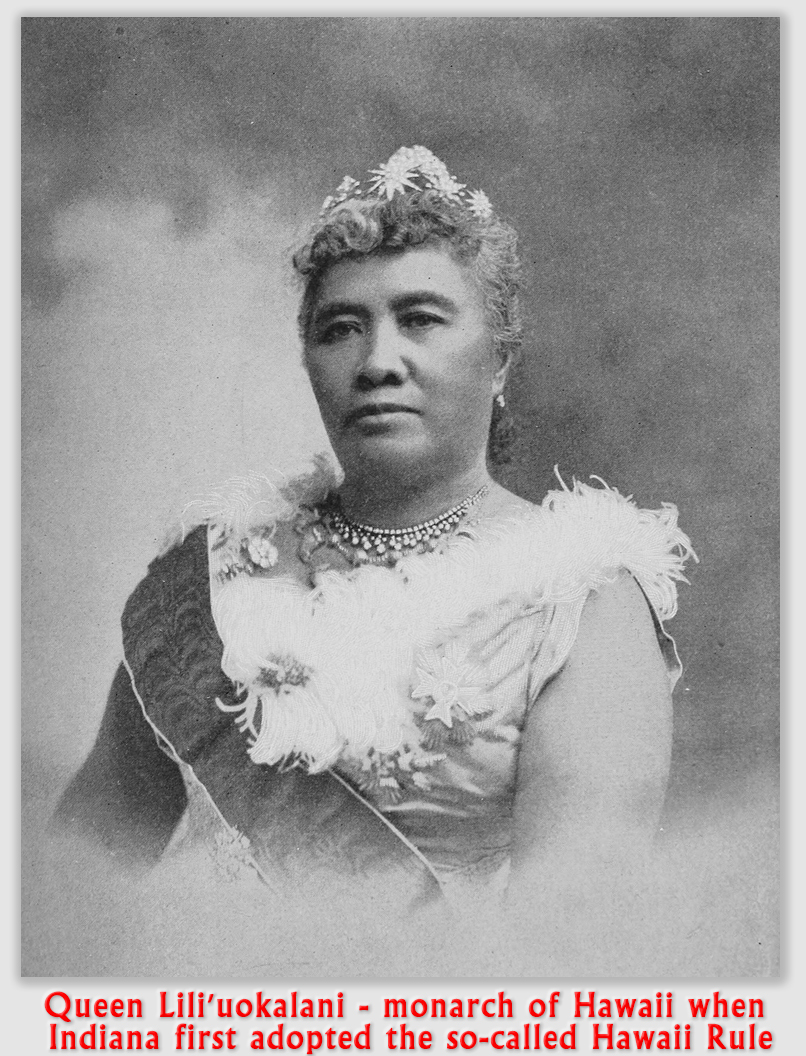
I had not even gotten out of the Northwest Territory – remember what that is? – when I found that the Massachusetts Rule did not start in Massachusetts. What’s more, as we see today, the Hawaii Rule was the law of the land in the Hoosier State back when Hawaii still had a queen, and the Americans had yet to diddle in the affairs of the Kingdom in order to engineer annexation.

Indiana’s rule can be summed up as this: a tree that encroaches on a neighbor’s property and creates a nuisance – producing such a condition that in the judgment of reasonable persons is “naturally productive of actual physical discomfort to persons of ordinary sensibility, tastes, and habits” – has to be removed at the expense of the tree’s owners.

A tough place, Indiana… In today’s case, a tree that had once belonged to the plaintiff – who had sold the property to the defendant – had grown into the boundary fence, damaging it. The roots raised some sidewalk slabs on a walkway the plaintiff maintained near the boundary. The plaintiff, unwilling to fix the rather minor damage ($2,500 in 2010, not a princely sum), went to small claims court to make the other guys pay.

It seems to us that as a matter of equity, the plaintiff knew something like this would happen when he let the tree sprout years before, at a time when he owned the parcel on which the tree was growing. But equity appeared not to have any place in the courtroom that day.

But back to my basic point: the Hawaii Rule did not originate in Hawaii at all. What we thought we knew about that Rule turns out to be wrong. What next? Is the Massachusetts Rule equally mislabeled? Tune in tomorrow…

Scheckel v. NLI, Inc., 953 N.E.2d 133 (Ind.App. 2011). Steve Scheckel owned a piece of property separated by a chain-link fence from a plot belonging to NLI, Inc. Steve has a walkway paralleling the fence that runs about five feet from the boundary line. Steve had previously owned both his land and the NLI property, and – when he had – a tree grew on the NLI property near the fence. After he sold the land to NLI, the tree continued to grow, as trees are wont to do, until it grew into the fence and its roots grew under the walkway, leaving the gate in the fence unusable and the walkway badly cracked and buckled. Steve spent $2,500 fixing the mess.

Steve complained to NLI about the damage, but the corporation took no action. He then sued NLI for negligence and nuisance in small claims court. The court found for NLI on the grounds that while the size and placement of the tree damaged the fence and walkway, a landowner is not liable for harm caused beyond property boundaries by a natural condition of the land.

Steve appealed.

Held: The Court of Appeals reversed, and ordered that the trial court find NLI liable.

Steve contended that the trial court erred in applying the “natural condition” rule. The natural condition rule, as set out in which provides that a landowner was not liable for harms caused to others outside of his land caused by a natural condition of the land, arose “at a time when land was largely unsettled and the burden imposed on a landowner to inspect it for safety was held to exceed the societal benefit of preventing possible harm to passersby.”

Over the years, the rule has been subject to exceptions when landowners had actual knowledge of a dangerous natural condition, regardless of location, and – in an urban area – when he or she fails to exercise reasonable care to prevent an unreasonable risk of harm arising from the condition of the trees on the land near the highway. The rationale for imposing such a duty on urban landowners is that the risk of harm to highway users is greater and the burden of inspection on landowners is lighter in such populated areas.

Most recently, the Indiana Supreme Court observed that the natural condition rule, as stated in the Restatement of Torts § 363(2), has little or no utility in an urban setting. A landowner in an urban or residential area “has a duty to exercise reasonable care to prevent an unreasonable risk of harm to neighboring land owners, arising from the condition of trees on his or her property.”

Here, the Court of Appeals said that

[s]trictly applying the Restatement rule in these settings would leave landowners powerless in the face of a neighbor who refuses to remove or secure an obviously decayed and dangerous tree simply because it is a natural condition of the land. As a result, Indiana, along with several of our sister states, has retreated from strictly applying the Restatement rule in urban or residential settings where the landowners have actual or constructive knowledge of the dangerous condition.

Here, the small claims court held that the condition of NLI’s tree did not pose an unreasonable risk of harm to neighboring landowners, but rather the placement and size of the tree that caused the damage. The Court of Appeals, however, disagreed, seeing “no meaningful difference between the two situations. Indeed, it may be difficult to determine whether a tree is decayed to such an extent that it poses an unreasonable risk of harm to an adjoining property owner, but a tree upon one’s property that is growing into a structure on an adjoining property is readily observable.”

The Court applied a three-part duty analysis it adopted from an Indiana Supreme Court ruling, concluding that a landowner in a residential or urban community owes a duty to prevent an unreasonable risk of harm to adjoining property owners or their property resulting from trees growing upon the landowner’s property. Those three factors – relationship, foreseeability and public policy – all support its conclusion that NLI owed Steve a duty:

The relationship is significant in that it is between the owners of adjoining property, and will often be that of next door neighbors. There is a high degree of foreseeability of harm where one’s tree is growing into a structure on an adjoining property. Finally, the landowner is best situated to prevent or minimize the harm by trimming the tree upon the landowner’s property. Accordingly, we conclude that the trial court erred in applying the natural condition rule to bar Scheckel’s negligence claim.

The Court also said the natural condition rule did not bar Steve’s private nuisance claim, either. A nuisance is defined as whatever is injurious to health, indecent, offensive to the senses, or an obstruction of the free use of property, such that it essentially interferes with the comfortable enjoyment of life or property. Ind.Code § 32-30-6-6. A public nuisance affects an entire neighborhood or community, while a private nuisance affects only one individual or a determinate number of people, arising when it has been demonstrated that one party has used his property to the detriment of the use and enjoyment of another’s property.

Nuisance actions may either be nuisances per se (at law) or nuisances per accidens (in fact). A nuisance per se occurs when the use itself is unlawful. A nuisance per accidens, a nuisance-in-fact, is not a nuisance in itself but becomes one by the manner in which it operates. In determining whether a private nuisance per accidens is actionable, the inquiry is whether the alleged nuisance produces such a condition that, in the judgment of reasonable persons, is “naturally productive of actual physical discomfort to persons of ordinary sensibility, tastes, and habits.”

Ever since 1894, the Court said, Indiana has recognized the right of landowners to recover damages to their property caused by trees growing on an adjoining property as a private nuisance. In the 1894 Toledo, St. Louis & Kansas City Railroad Co. v. Loop decision, the Indiana Supreme Court held that in the event of trees growing so close to the boundary line between two properties that their branches encroach on the adjoining premises, the adjoining landowner may have an action for damages in nuisance if injury were shown.

The Court of Appeals concluded that the trial court erred by applying the Restatement’s natural condition rule to Steve’s cause of action.

– Tom Root

TNLBGray140407