Case of the Day – Friday, January 2, 2026

A “READILY APPARENT” THUMP

journeyends140312A great philosopher perhaps put it best: a very long journey can sometimes end suddenly… and rather badly.

Howie Conine should have had the Despair, Inc. “Ambition” poster on his wall, where he could have contemplated its message. He surely could empathize with the hapless salmon. He and his wife had their journey end one rainy day on Washington State Route 524 – suddenly and very, very badly. A redwood tree on County of Snohomish land – the hazardousness of which was “readily apparent” – fell on their car with a readily apparent thump.

The law of the jungle gives the poor king salmon no right of appeal, no habeas corpus, no forum for damages suffered when her trip upstream ends so precipitously in the jaws of an ursus arctus horribilis. Fortunately for the Conines, the law of Washington State was more hospitable after the tree fell onto their passing car (with them in it). If anything, it was a perfect storm for them: they possessed evidence that the dangerous condition of the tree was “readily apparent,” they were in a notoriously friendly plaintiff-friendly, and they had two defendants to choose from, both of which were governments and thus “deep pockets.”

But from whom to collect? The State of Washington, the government that, the Conines argued, had a duty to keep the highways safe from falling trees? Or perhaps the County of Snohomish, the government that, the Conines averred, had a duty to protect passers-by from dangers arising from trees on its land?

This is America – land of the free and home of the litigious! Why not sue both?

That is precisely what the Conines did.

angryjudge140312Unfortunately, they ran into an uncooperative trial court, one which held that neither Washington State nor Snohomish County had any obligation to inspect the trees along the road, even one with “this readily apparent hazard.” The trial judge threw the Conines out of court. They had more luck with the Court of Appeals, which reversed the trial court’s decision and remanded the matter for trial on the merits. There was enough evidence – chiefly from the Conines’ hired-gun expert – that the tree was obviously dangerous to let the case go to trial.

The lesson: when you need a good expert, there’s just nothing else that will do.

Conine v. County of Snohomish, 2007 Wash. App. LEXIS 1102, 2007 WL 1398846 (Ct.App. Wash., May 14, 2007). Howard and Karen Conine were driving on State Route 524 when a red alder tree standing on an embankment on the west side of the road fell on their car. The tree had been located about 10 feet outside the State’s right-of-way on land owned by Snohomish County. The Conines sued the State of Washington for failure to maintain the state highways in a safe condition and the County for failure to remove an obvious hazard from its property.

The Conines’ arborist testified that during the 6-12 months immediately preceding the tree’s failure, the tree’s appearance should have put anyone looking at it on notice that it was dead and decaying. The arborist said the tree was probably leaning 10 to 15 degrees downhill toward the road and would have been in the highest-risk category due to its condition and proximity to a public right-of-way. The DOT’s maintenance technician who removed the tree after the accident said the tree’s “root ball had come loose from the soil owing to the very wet conditions we had in January 2003.”

The trial court held that neither the State nor the County had a “duty to look for this readily apparent hazard” and granted summary judgment to the State. The Conines appealed.

Held: The summary judgment was reversed. The State’s liability to users of a road is predicated upon its having notice, either actual or constructive, of the dangerous condition that caused injury unless the danger was one it should have foreseen and guarded against.

The Conines conceded that the State did not have actual notice, but they argued that the tree’s visibly dangerous condition created constructive notice. The Court found that the question to be answered was whether, for constructive notice, the State had a duty to look for a readily apparent hazard. Although the Washington Supreme Court had held in another case that where the tree was on a remote, mountainous, sporadically traveled road, a high threshold for constructive notice of danger was needed to trigger a duty to inspect and remove a dangerous tree. But here, the road was a state highway in a populated area, and the risk to the traveling public shifted the risk analysis. What’s more, in the other case, the Supreme Court found that the tree that fell was no more dangerous than any one of the thousands of trees that lined mountain roads. By contrast, the Conines’ expert testified that the tree that fell was obviously a hazard. The differences, the Court said, precluded a finding that the State lacked constructive notice as a matter of law. Constructive notice that a tree was dangerous gives rise to a duty to inspect. Thus, summary judgment was improperly granted on the basis of no duty to inspect.

treefalloncar140212The Conines also contended that Snohomish County faced liability as the landowner of the property upon which the tree stood because the owner of land located in or adjacent to an urban or residential area has a duty of reasonable care to prevent defective trees from posing a hazard to others on the adjacent land. The County argued that it had no such duty because the tree was a “natural condition of the land.”

The Court held that when the land is located in or adjacent to an urban or residential area and when the landowner has actual or constructive knowledge of defects affecting his trees, he has a duty to take corrective action. The area in question was next to the City of Lynnwood and zoned urban residential. Thus, it was urban in character. The Conines produced expert evidence that the subject tree was obviously dead or dying and leaning for two years, that it looked like a forked snag and lacked fine or scaffold branches. This evidence, the Court said, created an issue of material fact as to whether the tree was in a defective condition and the condition was of sufficient visibility and duration to give the County constructive notice of a potential hazard.

– Tom Root

TNLBGray

Case of the Day – Friday, December 26, 2025

WRONGFUL TREES

camelnose141003

For all of the Latin phrases, hidebound traditions, and libraries full of precedent, the law at its essence is nothing more than a codification of policies generally accepted by society. The law doesn’t always get it right – some laws aren’t carefully drafted, others do exactly what the legislature intended but pursue foolish or even repugnant policies – but by and large, the law tries to lay out rules for conduct based on policies generally accepted to be important.

Keeping an eye on the prize – the societal goals to be achieved – often helps courts from going overboard. It’s how the camel’s nose can be allowed into the tent without getting the whole camel in the process.

A good example of this is the “wrongful life” lawsuit. States all allow a “wrongful death” action, in which the survivors of someone killed, say, in a car accident or from medical malpractice sue for damages. This makes good sense. But in the last decade or so, some “wrongful life” suits have been brought, where – for example – a physician misdiagnoses and tells prospective parents that their fetus is healthy, but the doctor is wrong. The child is born with severe birth defects. The “wrongful life” suit claims that but for the physician’s negligence, the child would have been aborted.

Very few courts have permitted such a lawsuit for several very good public policy reasons. The first is that society does not recognize, as a matter of policy, that anyone is better off not having been born, no matter how severe the burdens of congenital disability. Second, the whole idea of tort law is to place the injured party in the same position as he or she would have been in had the negligence not occurred. But for the negligence, the injured party wouldn’t have been born. What can be done to put a living plaintiff in that position, or, ­for that matter, to compensate for having been born instead of never being?

And what would have made Ms. Lewis happy? Perhaps if the Krussels had only clearcut their property ...

Just what would have made Ms. Lewis happy? Perhaps if the Krussels had clearcut their property …

All right, that’s pretty heady stuff, but what does that have to do with tree law? Simply this: in today’s case, the plaintiff, Ms. Lewis, suffered from having a tree belonging to her neighbors Gary and Nancy Krussel fall on her house. Her suit simply claims: the tree fell on her house; the neighbors knew they had a tree; therefore, the tree was a nuisance; and the neighbors were negligent in failing to keep the tree from falling on the house. There was no evidence that the Krussels had any inkling this particular hemlock was going to fall. There was no evidence any reasonable person would have had such an inkling. In fact, there was no evidence that the tree was diseased or damaged. Reduced to its essence, Lewis’s claim was that the tree existed and the tree later fell, and those facts made it a nuisance. The tree was alive, the argument seems to say, and that fact wronged Ms. Lewis.

Fortunately, the Washington state courts made short work of this claim. Ms. Lewis was trying to advance a negligence claim as a nuisance claim, probably because she had no evidence of negligence. But, the courts ruled, public policy was not ready to declare a tree a nuisance merely because it was growing, nor was it prepared to hold that property owners were liable for what became of any naturally-growing, healthy trees on their land.

Without keeping one eye on public policy, the courts’ development of the law might go like this: First, landowners are responsible for damage caused by trees on their property that are diseased or damaged, and about which condition they are actually aware or reasonably ought to be aware. The next step would be for the courts to rule that owners must inspect their trees to avoid liability. Finally, landowners would be strictly liable for any damage caused by their trees, whether they were aware of a problem with the trees or not.

camelnose140310Largely, the law has stopped short of such a draconian rule, because the courts recognize that public policy favors the natural growth of trees, and eschews requiring property owners to devote substantial time and money to inspect trees, where there is no concomitant benefit to the public. By and large, courts have enough policy sense to let the camel’s nose into the tent while keeping the rest of the dromedary outside.

It is this kind of analysis that is illustrated in today’s case.

Lewis v. Krussel, 101 Wash.App. 178, 2 P.3d 486 (Ct.App. Wash. 2000). During a windstorm, two large healthy hemlock trees fell on Dawn Lewis’s house. She sued Gary and Nancy Krussel, who owned the property on which the trees had been growing.

Krussel acknowledged that windstorms had knocked down other trees on his property and other properties nearby in previous years. About a week after the windstorm at issue here, another windstorm knocked a tree onto his mother’s mobile home. But the trees that damaged the Lewis house were natural growth, and Krussel had no reason to believe that they were any more dangerous than any other trees on his property under normal conditions. After the damage to the Lewis house, Krussel cut down other hemlock trees located near his house upon the recommendation of the local utility district.

After Lewis sued for nuisance and negligence, Krussel moved for summary judgment. He supported the motion with evidence from a professional forester who inspected the stump of one of the fallen trees and found no evidence of rot. The forester concluded the tree that fell on the Lewis house was no more dangerous than any other tree standing on the Krussels’ property, and there was no way for the Krusselses to determine beforehand whether any one of their trees would fall over. The trial court dismissed the Lewises’ claim, and Lewis appealed.

Held: The appeals court upheld the dismissal of Lewis’s claim.

Sure Ms. Lewis's house was crushed ... but gravity did not turn the healthy tree that toppled onto her roof into a nuisance.

Sure Ms. Lewis’s house was crushed … but gravity did not turn the healthy tree that toppled onto her roof into a nuisance.

A homeowner is not obligated to remove healthy trees because they might topple in a storm. The Court of Appeals said that just because a negligence claim was disguised as a nuisance suit didn’t mean that the trial court had to consider it as such. Instead, in situations where the alleged nuisance is a result of what is claimed to be negligent conduct, the rules of negligence are applied.

The elements of a negligence cause of action, of course, are (1) the existence of a duty to the plaintiff, (2) a breach of the duty, and (3) injury to the plaintiff flowing from the breach of duty. An owner of property located in an urban or residential area who has actual or constructive knowledge of defects affecting his or her trees has a duty to take corrective action. However, the same is not the case when the tree is healthy. In that case, the owner does not have a duty to remove healthy trees merely because the wind might knock them down.

In this case, the Court agreed, there was no evidence that Krussel had any reason to believe that the hemlock trees posed a hazard, and a professional forester who had inspected the stump of the fallen tree had found that the tree was free of defects. The mere possibility of harm does not mean the probability of harm.

– Tom Root

TNLBGray

Case of the Day – Friday, October 24, 2025

TRESPASS

Remember that kid when you were small, the neighborhood schemer who would convince everyone else to do something fun (which quickly became something stupid)? In our small Ohio town, the local instigator-in-chief was a jug-eared kid named Rick.

Rick’d talk us into going into the Smiths’ strawberry patch and make off with a quart or more of the biggest, reddest, juiciest berries… At least, until grumpy old Mr. Smith would catch us. Like he always did.

Everyone knows that trespass is an intentional invasion of a property owner’s interest in the exclusive possession of property. Pretty simple, huh? We were all trespassers, but back then, the penalty was meted out by our parents after they got an earful from Mr. Smith.

Rick? He was no trespasser. He never stepped foot in the strawberries, although he had every intention of sharing in the berry spoils we brought back. We were liable. He was not.

Does that seem right? It did not seem so to us at the time. It does not seem that way to the Washington Supreme Court, either.

Porter v. Kirkendoll, 2019 Wash. LEXIS 588, 2019 WL 4683940 (Supreme Ct. Wash. Sept. 26, 2019). Pepper and Clarice Kirkendoll hired loggers to harvest their trees. They owned a parcel of timberland abutting the western edge of a 60-foot-wide easement. The easement was located on land owned by Jerry Porter and Karen Zimmer.

A private access road, Madison Drive, ran within the easement. A strip of land west of the access road but east of the Kirkendolls’ land belonged to Jerry and Karen. Nevertheless, when Pepper hired G & J Logging Inc. to harvest timber, he told the loggers that he and Clarice owned all the land west of Madison Drive. G & J Logging and Boone’s Mechanical Cutting, Inc., harvested 51 Douglas firs located on Jerry’s and Karen’s land.

Jerry and Sharon sued the Kirkendolls and the loggers for waste under RCW § 4.24.630 and for timber trespass under RCW § 64.12.030. The loggers settled with Jerry and Karen, paying $125,000 and assigning their indemnity and contribution claims against the Kirkendolls as part of that settlement. The settlement was pretty slick. Jerry and Karen figured they would score another one-third of $125,000 by taking the loggers’ right to get contribution from the Kirkendolls ($41,666.67).

The Kirkendolls replied with their own slickness. They argued that the settlement with the loggers effectively released them from liability under the principles of vicarious liability. The trial court agreed with the Kirkendolls and dismissed the case.

The Court of Appeals reversed, holding that the settlement did not release the Kirkendolls from potential liability for directing the timber trespass. And it held that Jerry and Karen were precluded from recovering under the waste statute because relief is available under the timber trespass statute.

The Kirkendolls appealed to the Washington Supreme Court, renewing their argument that the settlement agreement released them from liability under principles of vicarious liability. They also argued that they are not liable for indemnity as a matter of law. In their answer, Jerry and Karen sought review of whether the timber trespass statute precludes them from recovering under the waste statute.

Held: The settlement did not release the Kirkendolls from liability, but Jerry and Karen are precluded from recovering under the waste statute.

In contrast to direct liability, which is liability for the breach of one’s own duty of care, vicarious liability is liability for the breach of someone else’s duty of care. A principal – like the Kirkendolls – may be vicariously liable as a matter of public policy to ensure that the plaintiffs have the maximum opportunity to be fully compensated. That public policy does not apply when a plaintiff has accepted a release from the primarily liable party who committed the tort and who was financially capable of making the plaintiffs whole. When a plaintiff settles with a solvent agent from whom he or she could have received full compensation, the very foundation of the principal’s liability is undermined. In at least some situations, then, a plaintiff releases a vicariously liable principal by settling with a solvent agent.

But, the Court said, that was not the case here. Pepper Kirkendoll misrepresented his boundaries and thus directed G & J Logging and Boone’s to commit a timber trespass. Therefore, it did not matter that the loggers separately settled with Jerry and Karen for their trespass. Pepper and Clarice were independently liable for their “culpable misfeasance” in directing the loggers to cut the wrong trees.

Under RCW § 4.24.630, the waste statute, more expansive remedies are available to a party. In addition to treble damages, the injured party may recover reasonable costs, including but not limited to investigative costs, reasonable attorneys’ fees, and other litigation-related costs. However, the waste statute explicitly states that it does not apply in any case where liability for damages is provided under § 64.12.030, the timber trespass statute.

– Tom Root

tnlbgray140407

Case of the Day – Thursday, October 9, 2025

ONE CROWDED HOUR

A British army officer and poet, Thomas Osbert Mordaunt, wrote in his poem, “The Call,” a line now misattributed to Sir Walter Scott: “One crowded hour of glorious life is worth an age without a name.”

It’s so much fun to be nasty. Even for just one glorious, crowded hour. It’s just not so much fun when the age without a name knocks on the door, seeking payment. Just ask John and Anne Estes.

Everything started when John and Anne tried to extend the Massachusetts Rule to cut some branches from their neighbors’ trees. The problem was that the trees and branches were both on the neighbors’ properties.

Then they built a fence. So far, so good, at least until the fence they built was on their neighbors’ property, too. The neighbors, Matt and Rachel Milcic, objected. After mediation, the Estes fence was removed.

Obviously, John and Anne were sore at having been upbraided for their brazen trespasses. So they rebuilt the fence, and on the Milcics’ side, painted in large block letters, “PULL YOUR WEEDS.”

“Hah!” You can imagine John and Anne giving each other high-fives at their in-your-face cattiness. They sure showed those jerk neighbors, who thought they were so cool that they could stop John and Anne from trespassing. Their snickers and winks lasted for one crowded hour of glorious fun.

Maybe the neighbors really did need to weed. It’s hard to say. Certainly, Matt Milcic did some landscaping in response to the fence. After he had done so, and after he asked John to remove the sign, John said he might. But petulantly, he did not.

Cute, John… at least until the Milcics sued. Then, John offered to paint out the words if the Milcics would drop the suit. But that horse had left the barn…

The Esteses’ conduct was brazen enough that the trial court granted the Milcics summary judgment. But then, the battle continued over damages. By the time the court was done, the Esteses’ cruel prank had cost them northward of $10,000.00. Not nearly what the Milcics wanted, the award nevertheless undoubtedly deterred the juvenile conduct.

You’d better find your checkbook, John. You and Anne enjoyed your crowded, glorious hour. The age without a name (but with a dollar sign) has now arrived.

Milcic v. Estes, 2018 Wash. App. LEXIS 1798 (Ct. App. Wash., Aug. 6, 2018). The Milcics and Estes are next-door neighbors. In 2013, the Estes cut branches off trees located on the Milcics’ property and began to build a fence along the parties’ common boundary.

When a dispute regarding fence encroachments arose, the parties submitted it to mediation. In April 2014, the parties executed a settlement agreement in which the Estes agreed, among other things, to remove both the excess dirt from the Milcics’ property and portions of fence footings that were visible above ground.

In July 2014, the Estes painted the words “PULL YOUR WEEDS!” in white, 10-inch block letters on the Milcics’ side of the Estes’ fence. The Milcics threatened a lawsuit unless the Esteses removed the sign. The words remained, and the Milcics sued.

The Milcics’ complaint alleged private nuisance, trespass, timber trespass, spite fence, quiet title and damages to land and property. Shortly after the Milcics filed, the Estes offered to remove the painted message if the Milcics dismissed their complaint. The Milcics rejected the offer, telling the Estes, “If you were willing to do so voluntarily… you could have removed the sign at any time for the past nine months.”

The Milcics moved for partial summary judgment, alleging there were no issues about the Estes’ branch cutting, fence encroachments, and dumping of fill dirt on the Milcics’ property. The trial court granted relief, including ordering the Estes to the fence encroachments. The court awarded the Milcics some but not all, of their requested damages, but denied them reimbursement of their legal fees.

The Milcics appealed the adverse ruling on damages and fees.

Held: The appeals court upheld the damage award, and sent the case back to the trial court for a legal fee award.

In January 2017, the matter proceeded to trial solely on the issues of damages and attorney fees and costs. Rachel Milcic testified that the Estes cut branches off their trees and put fill dirt on their property without their permission. She said the branch removal ruined the beauty and privacy of the Milcics’ property. The loss of the branches upset her and she did not sleep well. She also testified that the Milcics were not sure where the property line was when the branches were cut.

She also testified that she was “shocked,” “horrified,” and “scared” when the Estes painted the “PULL YOUR WEEDS!” message on the fence facing the Milcics’ property. She had trouble sleeping and no longer felt that she and her children were safe. She testified that before the painted message appeared, her family spent around 12 hours per week in her yard. After the message appeared, they spent less than an hour a week in the yard. She valued her use of the yard at $40 per day. She testified that the message was visible for 922 days.

Matt Milcic testified that after the painted sign on the fence, the Milcics installed a surveillance system to “protect our property” and to “capture any trespasses by the Esteses on our land.” Matt also testified that the fence message could be seen from roughly a quarter of their property and prevented the Milcics from enjoying their yard. Their dreams and aspirations for landscaping the yard “got instantly crushed into a reminder of, you don’t get to enjoy this part of your property that you had hopes and dreams for.” He estimated that the affected portion of his property had a market value of $152,500.

Matthew conceded that he had not seen a doctor or any medical professional for his emotional distress and had no medical bills related to that distress. Matthew also conceded that he did not accept the Estes’ April 2015 offer to remove the fence message.

John Estes testified that he painted the “PULL YOUR WEEDS!” message to protest the “weeds and invasive vegetation coming onto my property.” He conceded that Matt told him in August 2014 that he had pulled the weeds and that he wanted the message removed, but he did nothing for nine months, at which time John offered to remove the message if the Milcics dismissed the lawsuit.

The court ruled that the Milcics were entitled to some, but not all, of their alleged damages. It awarded them $3,557, which it trebled to $10,673. However, it denied damages for the installation of the surveillance system, for lost enjoyment of property, for emotional distress, and for legal fees.

On appeal, the Milcics argued the court erred in awarding no damages for their alleged lost enjoyment of their property on their trespass and private nuisance claims. They claim they were entitled to such damages due to the significant length of time — 922 days — that the fence message remained in place. But the Court of Appeals held that the trial court was free to discount or reject the Milcics’ testimony regarding their alleged lost enjoyment. “On this record, and in light of our deference to the trial court’s view of the weight and credibility of the evidence,” the Court held, “we cannot say the court abused its discretion in declining to award damages for the Milcics’ claimed lost enjoyment of their property.”

The Milcics also contended that the trial court abused its discretion in failing to award them damages for emotional distress caused by the Esteses’ fence message and branch cutting. A plaintiff who proves liability for intentional wrongful conduct is entitled to damages for emotional distress upon a showing of actual anguish or emotional distress. The distress need not be severe and a plaintiff “need not demonstrate objective symptomology, medical bills, or a medical diagnosis.”

Here, the trial court found the Esteses engaged in intentional wrongful conduct, including nuisance, timber trespass, and a spite fence. The trial court also found, however, that the Milcics “have not provided sufficient evidence to establish that they have suffered emotional distress.” The Milcics pointed to their testimony that they suffered initial shock and distress, trouble sleeping for a week, and ongoing feelings of insecurity and fear of further invasions. “But,” the Court of Appeals held, “the trial judge’s evaluation of the sufficiency of the evidence includes determinations as to the weight and credibility of the evidence – matters that require our deference.”

The Milcics also contended the trial court erred in concluding that the Estes’ conduct was not the legal cause of their purchase and installation of a surveillance system. To determine if legal causation exists, a court considers whether “‘as a matter of policy, the connection between the ultimate result and the act of the defendant is too remote or insubstantial to impose liability.” The Court said that the judge’s determination rests on ”mixed considerations of logic, common sense, justice, policy, and precedent.”

Here, the Court of Appeals ruled, “the Milcics offer no relevant precedent supporting their argument regarding legal causation. Nor do they advance any persuasive arguments supporting their claim that logic, common sense, justice, and policy favor the imposition of liability for the surveillance system. There was never any doubt as to who had trespassed onto the Milcics’ property. The Estes readily admitted cutting the branches, painting the message, and installing the fence. There was therefore no need for a surveillance system to catch the perpetrators, and no reason to believe that a surveillance system would act as a deterrent to future incursions. In addition, except for the branch cutting, the trespasses were de minimis incursions. Thus, the trial court did not err in concluding that the Estes’ conduct was not a legal cause of the Milcics’ surveillance system expenses.”

– Tom Root

TNLBGray140407

Case of the Day – Tuesday, July 22, 2025

UNLIKELY HERO MEETS LIKELY DUNCE

Tequila Isaacson

America has to love this story. It has heroics, action, danger – and an O. Henry twist at the end.

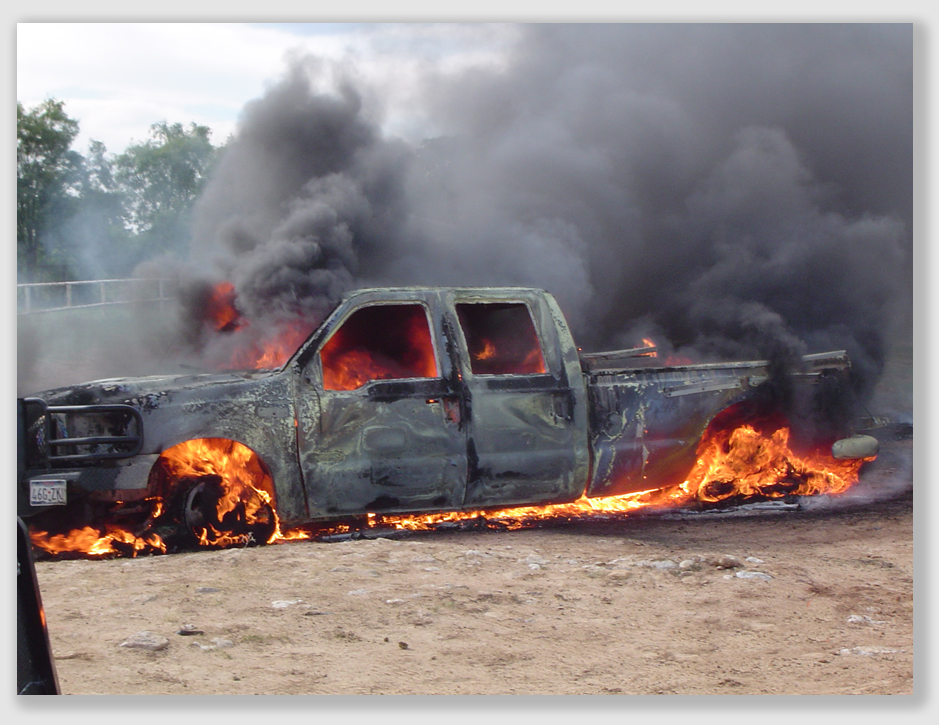
A few years ago, in beautiful Snoqualmie Pass, Washington, truck driver Tequila Isaacson stopped at a rest area to use the facilities. As she returned from the restroom, she saw a family desperately trying to rescue their child from a burning pickup truck.

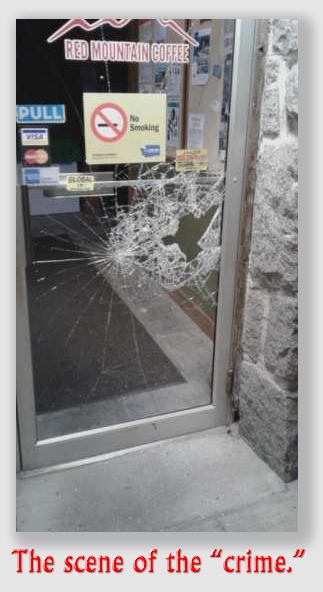
No worms in this Tequila: she leaped into action and raced over to the glass front door of a coffee shop. The café was closed, but – seeing a fire extinguisher hanging inside – Tequila smashed the glass, seized the red canister, and knocked back the fire.

The fire was extinguished, the child was saved, and Tequila was a heroine.

Then, the Washington State Police showed up. Tequila explained what she did to help save the boy and put out the fire. When she reported how she broke down the coffee shop door to grab the fire extinguisher, the Trooper said, “Oooooh, Tequila!” He told her that using the fire extinguisher without permission is theft no matter how good her intentions. The cop said, “Your choice is fix the window or, Tequila, slammer!”

Fortunately for Tequila, God and Al Gore created the Internet, and social media went wild in her defense. But the whole kerfuffle set us to wondering. Could the cop be right? Of course, Mom told us when we were young that the policeman was our friend, and that suggests that he would never mislead us. But then, we also recall law school, where a professor suggested to us that the policeman was not always our friend and certainly was not always right.

So the following day, will Tequila see the sun rise as a burglar or a hero? That depends, of course, on the law.

Is getting the kid out more important than a broken window?

If you cannot believe that the law is such an ass as to punish someone in Tequila’s position, you’re largely right. Flood waters are rising, so you take that old boat parked in the neighbor’s back yard in order to save Grandma. You commandeer a soccer mom’s SUV to get an injured kid to the hospital. You knock a tainted burrito out of the hands of a Chipotle patron before she can take a deadly bite. At common law (and in many states), you have an affirmative defense to the crimes you committed – trespass, theft, even assault – because it was necessary to serve some greater good.

But consider the standard for a necessity defense, described in the case below. Did Tequila reasonably believe that breaking the coffee shop window was necessary to avoid harm to others? The young boy at risk of becoming a krispy kiddie probably thought so. His parents undoubtedly thought so. And what’s worse, a kid burning to death or a broken window and discharged fire extinguisher? That’s not a hard one, either. Finally, did any legal alternative exist? Tequila said she looked for a fire extinguisher but found nothing besides the one behind the locked door.

If the cop had been successful in finding a prosecutor who didn’t care about keeping his or her job, maybe Tequila would have been charged. But if she had been, the jury would not even have to leave the box to acquit. The necessity defense and common sense would have carried the day.

And it apparently did, as a pro-cop website, Blue Lives Matter, reported that Tequila would not be charged. The site explained that the Washington State Trooper simply was not familiar with burglaries, being a “highway patrol agency” (we derisively call them the “misdemeanor police” where we live). The author opined that “through no fault of his own, this trooper was likely completely unfamiliar with criminal law surrounding burglaries.”

The Trooper’s ignorance, of course, did not keep him from throwing his weight around. Thanks to social media, the Washington State Patrol “will be reviewing the way this case was handled with the trooper, adding they are grateful for Isaacson’s courageous effort to help save the child.” That’s code, meaning “the Trooper is going to get his butt chewed” for his sin, which was making his employer look bad.

State v. Clark, Case No. 74934-0-I (Ct.App. Washington, Sept. 25, 2017) 2017 Wash. App. LEXIS 2196, 2017 WL 4232607. Frank and Rebecca Scott owned two dogs, Ellie and Zalo. The Scotts hired Linda Clark, who owned a dog-walking business, to walk the dogs once a day.

But within a month or two, Linda began walking the dogs several times a day of her own accord, sometimes late at night or in heavy rain. Linda let herself into the garage at all hours to check on the dogs and leave notes regarding what she believed was proper care for them. She even replaced the dogs’ collars with collars that had her own name and phone number instead of the Scotts’.

The Scotts were a little creeped out, and Frank told her that her services were no longer required. Linda did not take it well, telling Frank that he would regret firing her. The Scotts told the sheriff, and a deputy went to Linda’s place to tell her to stay away.

One day, the dogs disappeared. The crime hardly required Sherlock Holmes. After receiving a report that a local citizen had seen Linda with Ellie and Zalo that morning, a deputy went to her house. Linda denied everything, but when Clark told her that Zalo had not received his medication that day, Linda admitted she had the dogs.

The State charged Linda with second-degree burglary. Linda wanted to raise a necessity defense, on the grounds that she took the dogs because she believed the Scotts were not taking good care of them. The trial court ruled that she could request a necessity instruction if the evidence supported it.

At the end of the trial, Linda’s lawyer did not ask for the instruction because he believed it “would be a frivolous motion, frankly, at this point.” A jury convicted her.

Linda filed a motion complaining that her lawyer rendered ineffective assistance during the trial for not asking for a necessity defense instruction.

Held: Linda’s lawyer was right. The court observed that “necessity” is a common-law defense with limited application, a defense “available to a defendant when the physical forces of nature or the pressure of circumstances cause the accused to take unlawful action to avoid a harm which social policy deems greater than the harm resulting from a violation of the law.”

A defendant, however, must produce some evidence to support the defense before a court will instruct the jury. In order to sustain a necessity defense, the defendant must show by a preponderance of the evidence that (1) he or she reasonably believed the commission of the crime was necessary to avoid or minimize a harm, (2) the harm sought to be avoided was greater than the harm resulting from a violation of the law, and (3) no legal alternative existed.

All Linda had was her own opinion that the Scotts did not take proper care of Ellie and Zalo the way she would have preferred. Because she did not testify in her own defense – probably a good idea, given how rickety her case was – nothing in the record supported a necessity defense.

– Tom Root

Case of the Day – Monday, May 19, 2025

NOT A HAPPY BUNCH AT ALL

This bunch is pretty happy ... The Wongs? Not so much.

This bunch is pretty happy … The Wongs? Not so much.

The Wong family, through their company Happy Bunch, LLC, was quite happy indeed with the nice piece of property the family occupied. The Wongs especially liked the 10 trees that lined one boundary. They had planted and nurtured them for 20 years or so, and the trees had gotten big enough that eight of them actually straddled the boundary line with their neighbor.

But what a hot dog the neighbor turned out to be! Grandview North was a developer and planned a Wienerschnitzel franchise on the lot next door. The City required that Grandview add about four feet of fill to the lot, and Grandview was afraid the Wongs’ boundary trees would get in the way. Grandview had a survey done, and the company knew the trees were on the boundary line, with most of the trunks on the Happy Bunch land (two were entirely on the Happy Bunch side of the boundary). So what? After finding itself unsuccessful at getting Mr. Wong to consent to the trees being cut down, Grandview made its view grander by taking out the trees itself. Mr. Wong was done wrong …

Happy Bunch sued. The trial court ruled that Grandview owed $32,000 or so for the trespass to timber, but it refused to impose statutory treble damages, finding them not applicable to boundary trees.

The Court of Appeals, in a case of first impression, disagreed. It ruled that boundary trees in Washington State are owned by both landowners as common property, and neither may cut them down without the consent of the other. The Court ruled that damages resulting from a boundary tree being cut down are the replacement value of the tree, apportioned by the percentage of the trunk on the injured landowner’s property, a method that strikes us as rather artificial and likely to undervalue the tree to the injured property owner. What, Happy Bunch gets half a tree back? There was a little bit of justice, however: the Court of Appeals ruled that the treble damage statute for trespass to timber applied to boundary trees as well as other trees.

Happy Bunch, LLC v. Grandview North, LLC, 173 P.3d 959 (Wash.App. Div. 1, 2007). The Wong family owned land through its limited liability company, Happy Bunch LLC. Grandview was a property development company that purchased a parcel of property next door to the Happy Bunch property to build a Wienerschnitzel drive-through restaurant. The City of Mount Vernon required that four feet of fill be placed on the Grandview property as part of the planned development.

cutdownTwelve mature trees stood either on or near the boundary line between the Happy Bunch and Grandview properties. Some portion of the trunks of 10 of the trees — all originally planted by the Wongs some years before — extended from the Happy Bunch property onto the Grandview property. Grandview believed it couldn’t meet the city’s fill requirement without putting a retaining wall on the Happy Bunch/Grandview property line. Because the roots and trunks of the trees extended onto Grandview’s property, Grandview believed that they would interfere with the construction of the retaining wall and decided to move them, even though Grandview knew a survey showed the trees’ true location on the property line.

The Happy Bunch was not happy, not agreeing with the plan and finding through its own survey that the trees were either on the boundary line or entirely on the Happy Bunch land. Despite Happy Bunch’s opposition, Grandview cut down all ten trees. Happy Bunch sued, claiming that it had acquired title to the land under and around the trees by adverse possession due to the Wongs’ maintenance of the trees and surrounding area. It also sought damages for both the value of the cut trees and the estimated $15,065 cost of digging up the trees’ root systems and repairing damage to the Wongs’ driveway likely to be sustained as a result. Happy Bunch also requested that the entire award be trebled under Washington law because of Section 64.12.030 of the Revised Code of Washington, the state’s timber trespass statute. Happy Bunch was thus happy to seek a total damage award of $168,294.

Hotdogg160610The trial court ruled that Grandview committed timber trespass by cutting the trees on the Wong/Grandview property line. The trial court took the damage figure to the trees of $40,033 and multiplied it by the percentage of the cut trees that had been growing on Happy Bunch’s property, resulting in damages of $32,519.22 to Happy Bunch on its timber trespass claim, as well as $2,500 for the cost of grinding out the remainder of the stumps. The court denied the damages of $15,065 for completely removing the trees’ root systems and repairing the resulting damage. Finally, the trial court ruled that Happy Bunch was not entitled to treble damages as provided by the timber trespass statute “[b]ecause the trees that were cut straddled the common property line.”

Happy Bunch appealed.

Held: Judgment was reversed on most counts. The Court of Appeals concluded that Happy Bunch was only entitled to recover damages for injury to those portions of the trees growing on its land. However, the Court found that RCW § 64.12.030’s treble damages provision did apply.

In most jurisdictions, a tree standing on a common property line is considered the property of both landowners as tenants in common. Although Happy Bunch admitted that courts commonly calculate damages based on the value of each cut tree, apportioned according to the percentage of the tree that was located on the injured landowner’s property, it contended that the proper approach here was the one applied in the Colorado case, Rhodig v. Keck. Rhodig held that absent a showing of an agreement to the contrary, a boundary line tree belongs entirely to the party on whose land the tree was originally planted, with damages calculated accordingly.

The Court of Appeals rejected Rhodig, holding that adoption of its rule would enable Washington landowners to effect boundary line adjustments with trees, creating “an entirely new theory of adverse possession without a basis in either the statutory or common law of this state.” The Court said the Rhodig holding would mean that Happy Bunch acquired title to the land under the trees simply because had once had planted the trees. Therefore, the Court held, a tree standing directly upon the line between adjoining owners so that the line passes through it is the common property of both parties, whether marked or not; and trespass will lie if one cuts and destroys it without the consent of the other. Grandview had an interest in the trees proportionate to the percentage of their trunks growing on Grandview’s property, and thus, the trial court correctly awarded Happy Bunch only that portion of the trees’ value reflecting Happy Bunch’s property interest in them.

Happy Bunch contended that an award of treble damages was mandatory pursuant to RCW § 64.12.030, unless Grandview proved one of the mitigating factors listed in the statute. The Court agreed, holding that the trespasser must allege and prove mitigation, and absent such a showing, treble damages will be imposed. The Court rejected Grandview’s argument that it believed it had a right to remove the trees, noting that Grandview possessed a survey that indicated that the majority of the trees were predominantly located on Happy Bunch’s property, and that at least two of the trees were not located on Grandview’s property at all.

The Court said that where a person has been given notice that another has an ownership interest in trees, and the person nonetheless cuts them down, the actor will be liable for treble damages under the statute. Both the punitive and compensatory policies underlying the statute are implicated with respect to boundary line trees, the Court reasoned, and for that reason, the statute must be applied.

– Tom Root

TNLBGray140407

Case of the Day – Tuesday, April 22, 2025

THE POWER TO DESTROY

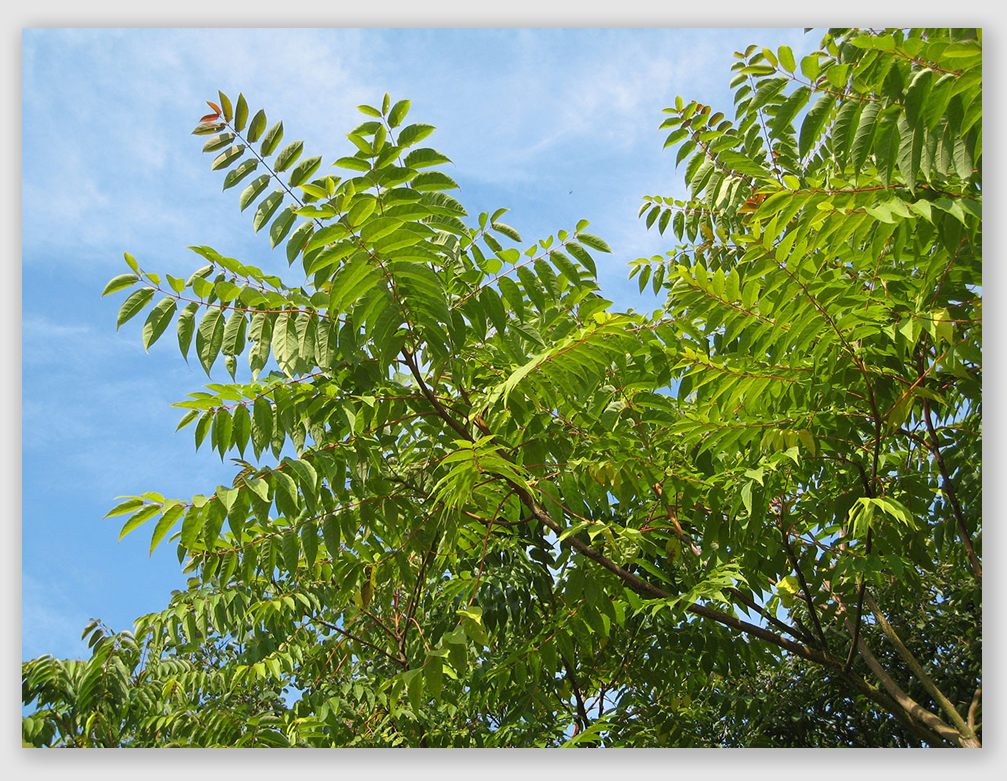
A news story a few ago piqued my interest, and I am only now getting around to writing about it. Everyone knows that the Tree of Heaven, sometimes more accurately called the “tree of hell,” is an aggressive and invasive species. Likewise, everyone knows that the spotted lanternfly is a noxious pest.

It seems Pennsylvania has declared the TOH to be a noxious plant because, in addition to all of the other excellent reasons to try to tear it out by the roots and burn it, the Tree of Heaven is a favorite host of the spotted lanternfly. Being introduced to the noxious plant list won’t be enough to require Pennsylvania landowners to eradicate the Tree of Heaven wherever it is found, but what if Pennsylvania ordered it?

The Commonwealth’s noxious plant list is a textbook example of the police power, not necessarily the guys with fast cars, flashing lights, and doughnuts, but rather the basic right of governments to enact laws and adopt regulations for the benefit of their communities. Under the system of government in the United States, only states have the right to make laws based on their police power. The lawmaking power of the federal government is limited to the specific grants of power found in the Constitution.

Need an example? Did you happen to read about a recent pandemic, and states shutting down and ordering people to wear masks and the such? That’s the police power in action.

Could Pennsylvania use its police power to force the homeowner who planted a row of trees of heaven in his front yard – if such an idiot exists – to tear them out without compensation?

Eighty some years ago, in Miller v. Schoene, the U.S. Supreme Court upheld the constitutionality of a Virginia law requiring landowners to destroy cedar trees to stop the spread of cedar rust. The rust didn’t hurt the cedar trees at all, but it was devastating to apple orchards. The Commonwealth would not pay the owners for the loss of their trees.

The Supremes held that Virginia was within its rights to issue the order. The Commonwealth was “under the necessity of making a choice between the preservation of one class of property and that of the other wherever both existed in dangerous proximity… When forced to make such a choice, a state does not exceed its constitutional powers by deciding upon the destruction of one class of property in order to save another which, in the judgment of the legislature, is of greater value to the public.”

The high court said there was a public interest in the preservation of the apple crop over the cedars. And where the public interest is involved, “preferment of that interest over the property interest of the individual, to the extent even of its destruction, is one of the distinguishing characteristics of every exercise of the police power which affects property.”

A more current application of the police power of the government to order the emergency abatement of a threat, relying on the Miller ruling, happened 20 years ago, when five beetles went on a walkabout.

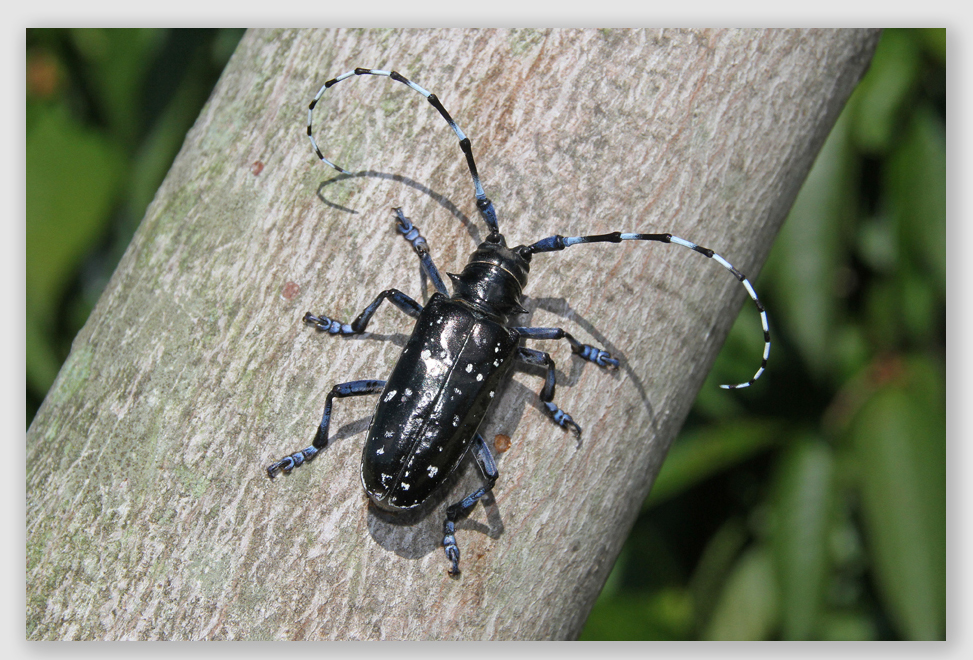
In re Property Located At 14255 53rd Ave S., Tukwila, King County, Washington, 120 Wash.App. 737, 86 P.3d 222 (Court of Appeals, Washington, March 22, 2004). Three citrus long-horned beetles were found in a Tukwila nursery in August 2001, in maple tree bonsai stock imported from Korea. One beetle was a pregnant female. Because there were eight beetle exit holes on the stock, five beetles had presumably escaped from the quarantine area. In fact, one was seen flying away from the nursery. The discovery of the accidental escape was alarming because the beetle, a major pest of citrus, also feeds on many other trees, including apple and other fruit trees as well as alder, willow, oak, and some conifers. Eventually, the beetle kills all host trees.

The Governor proclaimed an emergency in June 2002 and authorized the Department of Agriculture to implement the eradication plan. The Department immediately began to remove trees. The landowners within the one-eighth-mile radius found themselves in the predicament that, through no fault of their own, their lovely trees had become a threat to the community because of their susceptibility to being commandeered by a noxious pest. The Department established a $100,000 fund for the purchase of replacement trees and other vegetation for yards and gardens, and arranged to supply landowners with vouchers that could be used to obtain various non-host species of vegetation from participating nurseries.

These efforts to mitigate the effect of the eradication plan fell short of what several landowners regarded as fair. The landowners took the position that they were constitutionally entitled to just compensation before their trees could be destroyed. Targeted for destruction on land belonging to Sheila Malbrain and Lee Terrell were fruit trees, flowering plums, poplar trees, rose and lilac bushes, azaleas, and fir trees their arborist valued at a total of $116,262. Seven fruit trees on Carl Gorgey’s land were valued at $4,430. Six broadleaf trees on land belonging to Ralph and Thelma Kissinger were valued at $17,215.

The Department sought administrative warrants to gain entry to the respondents’ properties. The superior court found that the warrants were supported by probable cause. The court made an unchallenged finding that the beetle constituted an “extreme threat to the interests of the state” and that the Department acted reasonably in its response to this threat. The court nevertheless ruled that destruction of the trees was a compensable taking, and conditioned the issuance of the warrants upon the landowners first being compensated.

Held: The Court followed Miller v. Schoene and applied the law of necessity, holding that in meeting an emergency — such as fire, flood, or pestilence — public officials and private citizens may employ almost any available means in an endeavor to control the danger.

The Court ruled that not eradicating the trees constituted a noxious use of property — a nuisance, if you will — because of the risk that the healthy tree might become a host to the beetle. Although the landowners complainned they had to bear a disproportionate cost of the State’s response to the threat, the Court of Appeals held, as in Miller v. Schoene, that the State of Washington had to make a choice to address the threat, and “when the private sacrifices that must be made to defeat a public enemy are not evenly distributed, the Constitution will not necessarily compel an equalizing adjustment.”

Interestingly, both the Supreme Court in Miller and, seventy years later, the Washington court in Tukwila, suggested that the law of necessity was related to the law of nuisance. Both recognize the obligations of property owners to each other and to the community. The power that the State possesses to prohibit uses of property that injure health, morals, or the safety of the public is not burdened with the requirement that the State must compensate individual owners for the losses they sustain because they cannot use their property to inflict injury upon the community.

– Tom Root
TNLBGray