Case of the Day – Friday, April 4, 2025

VIRTUAL TRESPASS

More today from the annals of good neighboring. Out in Washington State, where some mighty big trees grow, the Herrings shared a boundary tree with their next-door neighbors, Jose and Blanca Pelayo.
What do we know about boundary trees, trees that grow with part of the base in each of two or more properties? First and most important, states generally hold that the trees are owned by all of the property owners as a tenancy in common. For the purpose of tree ownership, “tenancy in common” is a fancy way of saying that no one owner may do anything to the tree without the permission of all of the owners.

In 2011, the Herrings trimmed some of the branches from the boundary tree, branches that were overhanging their property. They did not ask permission of the Pelayos before they did so.

That, of course, was so wrong. But rather than suing the Herrings – the Pelayos may have considered their response restrained on this point – Jose and Blanca decided to go tit for tat. They called their own arborist to look at the tree. He told them the tree seemed unbalanced and dangerous with the branches on the Herring side removed. He suggested a few options, including cutting all of the remaining branches off. Amazingly, the Pelayos thought that sounded like a good idea.
Just as had the Herrings, the Pelayos did not discuss their plans with the neighbors. After the arborist left what was essentially a very dead telephone pole standing on the boundary line, the Herrings (with no sense of irony) sued the Pelayos for trespass to trees, asking for treble damages under state law for wrongful cutting. The trial court found the Pelayos liable, awarding $10,475 to the Herrings.

On appeal, the Pelayos argued that they could not have possibly trespassed in cutting the tree, because they had never stepped off their own property when they butchered the tree, and anyway, under the Massachusetts Rule, they had every right to trim branches that were overhanging the property. They also argued they could not be liable for treble damages, because the trial court had not made a finding that the cutting was willful.

The appeals court made short work of the Pelayos’ arguments. Yes, the court said, you can trespass on timber without necessarily trespassing on the underlying land (I guess that’s virtual trespassing). No, the Massachusetts Rule does not let you cut overhanging branches from a boundary tree in which you have an ownership interest. And no, the trial court does not have to make a willfulness finding unless you have argued that the cutting was casual and involuntary. No one contended the cutting had not been willful.

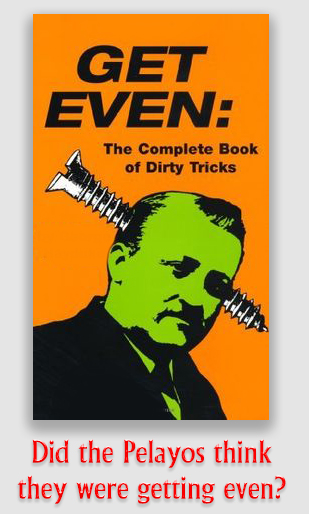
There is a certain irony that the Herrings had done exactly what the Pelayos had done, except for merely mauling the tree rather than killing it. But the Pelayos apparently figured they could get even simply by replicating the Herrings’ bad conduct. The law does not work that way.

Herring v. Pelayo, 198 Wn. App. 828, 397 P.3d 125 (Ct. App. Washington, May 2, 2017). The Herrings and Pelayos are neighbors who share a common property line. In early December 2011, the Herrings hired a tree trimmer to remove some branches from a tree located on the common property line. The Herrings did not discuss their plan to remove branches from the tree with the Pelayos. The Pelayos thought the trimming done by the Herrings unbalanced the tree, constituting a danger to their home. So four weeks later, the Pelayos’ own tree trimmer removed all of the remaining branches, without first discussing their plan with the Herrings. The tree obligingly died.

The Herrings sued the Pelayos, claiming timber trespass in violation of RCW 64.12.030 or RCW 4.24.630. At trial, Jose Pelayo admitted he knew the tree was on the common property line, he told his tree trimmer to remove all of the remaining branches from the tree, he did not discuss his plan with the Herrings, the tree was alive prior to the removal of the remaining branches, and he figured that removing the remaining branches would kill the tree.

The trial court found the Pelayos liable for timber trespass under RCW 64.12.030 and awarded treble damages.

The Pelayos appealed.

Held: The Pelayos committed timber trespass. Although the Pelayos argued the trial court never specifically found their conduct to be willful, the court noted that Jose’s testimony “was tantamount to a concession that his conduct in removing the branches was willful, and there was no other evidence presented at trial from which the trial court could infer that this conduct was casual or involuntary. Therefore, no specific finding as to willfulness was required to conclude that the Pelayos were liable under RCW 64.12.030.”

The Pelayos also argued they couldn’t be liable for trespass “because they were lawfully authorized to remove branches from the boundary tree that were overhanging their property.” The Court agreed a landowner has the authority to “engage in self-help and trim the branches and roots of a neighbor’s tree that encroach onto his or her property.” A landowner does not, however, have the right to cut down an encroaching tree.

The Court held that the right of self-help, derived from the Massachusetts Rule, does not apply where the landowner using self-help owns an interest in the tree because the portions of the tree overhanging his or her property cannot be said to be “encroaching.” You simply cannot encroach upon yourself.
What’s more, the Court said, as tenants in common, the Pelayos and Herrings were each entitled to use, maintain, and possess the boundary tree, but not in a manner that “interfered with the coequal rights of the other cotenants.” Unlike a landowner engaging in self-help to trim branches overhanging his or her property from a tree situated entirely on the property of another, a cotenant to a boundary tree has a duty not to destroy the common property and thereby interfere with the rights of the other cotenants.

The Court said, “We discern no meaningful distinction between cutting down a tree and trimming a tree in a manner intended to kill the tree.”

The Pelayos argued that because they cut the tree branches while standing on their property, they had probable cause to believe that they owned the land where such conduct took place. Their argument was based on the mistaken belief that the trebling provisions of RCW 64.12.030 don’t apply when the defendant’s conduct resulting in the destruction of a tree occurs while the defendant is on his or her own property. The Court held that even if the conduct resulting in the tree’s death occurred solely on the Pelayos’ own property, the trial court would not be required to conclude that mitigating circumstances applied to reduce the damages award. Instead, when determining whether mitigating circumstances applied, the relevant inquiry for the trial court was whether the Pelayos proved that their trespass on the common property tree was casual or involuntary.

At trial, the Pelayos did not claim, let alone prove, that the trespass upon the tree was casual or involuntary. Thus, they were liable for treble damages.

– Tom Root

TNLBGray140407

Case of the Day – Wednesday, January 29, 2025

BELLYACHING

When I was a kid, we had a magnolia in the backyard that my father would fume about at least twice annually. He called it “the mess tree.”

When I finally owned a backyard with a magnolia of my own, I understood. The tree is a thing of beauty every spring… for about 24 hours. Then the petals fall in a slimy, stinky mess. In the fall, the magnolia’s leaves turn from green straight to a uniform, blah brown, and then fall in a thick blanket that is resistant to most leaf rakes and machines of any size.

At least I bellyache about my own trees. What happens when your neighbors start to complain about your trees, which – while remaining on your property – mess their yards with leaves, twigs and general mess?

We all know at least the first prong of the Massachusetts Rule. A property owner has the right to trim back overhanging branches and encroaching roots of a tree standing on his or her neighbors’ yards, at least back to the property line. The second prong of the Rule, of course, is where all the variations arise. In Massachusetts, the neighbor cannot sue. In other places, the neighbor can. And even where nuisance actions are contemplated – think Mr. Houlton’s banyan tree in the famous case that begat the Hawaii Rule – at what point does a tree’s general messiness (leaves, pine cones, fruit, twigs and the such) cross the line from unremedied annoyance to actionable nuisance?

The Massachusetts Rule’s self-help provisions do not do a neighbor much good if the tree stands wholly on the next-door property. There is no trimming or root-hogging that will keep wind-blown twigs, leaves, fruit and other debris from raining onto your property.

Is there nothing that can be done? How many times have we noted that hard cases make bad law? Today’s case provides yet another illustration of the truth of this old saw.

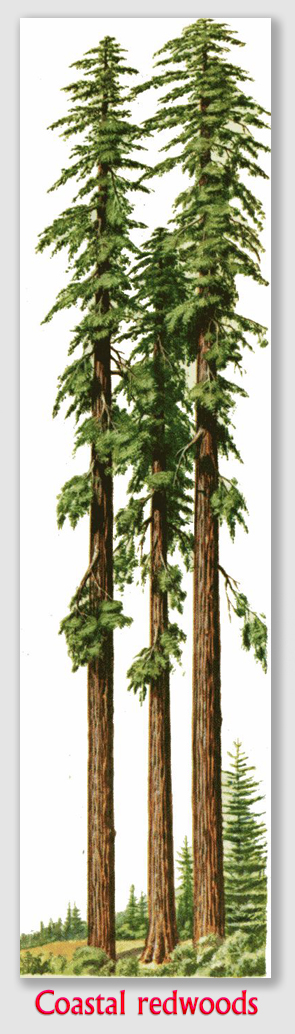
John Leech apparently took Dorothy’s mantra to heart, believing there was no place like home. So when he and his wife had the chance, they moved into John’s boyhood home. There they lived, happy and proud (especially of the majestic coastal redwood tree in the sideyard, already 80 years old or so).

John remembered the tree from when he was a boy. He nurtured it as an adult. But about 18 years after he and Brenda returned to reside in the house in which John had grown up, the Boyles moved in next door.

The Boyles never said a word to John or Brenda about the coastal redwood. But they were plenty agitated that the tree dropped pine cones and other debris on their yard, and in the process stained everything a sticky, unappealing brown. You would think that the neighbors might engage the tree’s owners in pleasant conversation, looking for a mutually acceptable solution to the problem. If so, you would be thinking wrong.

Terri and Kent Boyle might be great people, but their conduct as neighbors was as puzzling as those people who buy a house a quarter mile from the threshold of the primary runway at O’Hare and then complain about the noise. And puzzling not just to me, either. It is hard to read the Court’s opinion that John’s and Brenda’s tree was not a nuisance without concluding that the Court was a little put out that the Boyles never bothered to discuss the problem with their neighbors, but rather hired an expert and then ran for the courtroom.

Besides, there is something vaguely unjust that a couple of Johnnies-come-lately can move in, and within a couple years demand that a tree that had stood for 80 years on land inhabited by the same people for over 20 years (and more, when the lord of the manor was a mere stripling), be chopped down, all because they did not like it.

I have the sense that if the Boyles had sought a collegial solution, resorting to litigation as a last resort, their petition might have been greeted with less skepticism.

Ah well… hard cases make bad law.

Boyle v. Leech, 2019 Wash. App. LEXIS 224 (Ct.App. Washington, Jan. 28, 2019). John Leech lived at his current residence as a child in the 1950s. He and his wife, Brenda, moved back to the property in 1995 and have lived there for the past 24 years.

From the time John was a child, a large coastal redwood tree has grown on the property, about 70 feet from the boundary line the Leeches share with their neighbors Theresa and Kent Boyle. The branches of the stately tree do not come closer to the property line than about 50 feet.

The Boyles moved into their home in July 2013. Soon enough, Terri and Kent noticed that the wind was blowing debris from the Leeches’ tree onto their property. Sometimes, the debris, which contains tannic acid, causes staining. The staining does not remove easily, requiring power washing or strong cleaning products to remove.

The Boyles hired Brian Allen, a certified arborist, to inspect the coastal redwood. Brian determined that the tree “is dying slowly,” causing excessive sap and cone production. Despite this diagnosis, the tree is not currently considered high risk. On a one-to-ten health scale (one being the highest risk, with the potential for critical failure at any moment), Brian ranked the health of the tree as close to seven. Brian recommended that “due to client’s motivations, and the potential for continued and worsening damage to surrounding property, removal is recommended.”

Inexplicably, Terri and Kent never complained to the Leeches about the coastal redwood. Rather, they filed a nuisance action against the Leeches, asking for $5,000 in damages and for a court order that the Leeches abate the nuisance by cutting down the tree. When the Leeches recovered from their shock at being sued, they moved for summary judgment, arguing the Boyles failed to establish a prima facie case of nuisance. The trial court agreed, throwing out the Boyles’ lawsuit.

The Boyles appealed.

Held: The Leeches have acted reasonably by keeping the tree, which is entirely on their property, without complaint from anyone before the Boyles. The Boyles’ claim of nuisance thus fails as a matter of law.

RCW 7.48.010 defines “actionable nuisance” as including a number of specific events, such as obstructing a highway or clogging a stream with floating timber, and includes a “catch-all” provision that holds “whatever is injurious to health or indecent or offensive to the senses, or an obstruction to the free use of property, so as to essentially interfere with the comfortable enjoyment of the life and property, is a nuisance.”

In Washington, the Court said, “an unreasonable interference with another’s use and enjoyment of property” constitutes a nuisance. Thus, in nuisance cases, the trial court mainly considers whether a party reasonably uses his or her property, balancing the rights, interests, and convenience unique to the case and considering all the surrounding facts and circumstances.

Here, the Court observed, the tree was growing entirely on the Leeches’ property, without any branches overhanging roots encroaching on the Boyles’ yard. The tree is about 80 years old, or any underground Leech believes the tree has been on the property for 80 years. Aside from the Boyles, no neighbor has ever complained to John or Brenda about the tree.

The Boyles described the tree as “a dying tree shedding toxic debris,” but their expert evidence only opined that the tree was dying slowly but remained relatively healthy. The tree’s debris may have been “excessive,” but it was in no way toxic. Arborist Brian Allen only explained there was a “potential” for continued damage. He recommended the tree be cut down only because that was what his clients, the Boyles, wanted.

The Court of Appeals concluded that the Leeches did not act unreasonably with regard to the tree, especially given the redwood was located entirely on their property. Thus, there was no nuisance, and the Leeches would not be required to remove the tree to prevent staining from occurring on the Boyles’ property.

The Court admitted that no case it could find in Washington or any other state addressed a nuisance action regarding a tree situated wholly on someone else’s property. In Gostina v. Ryland, the Washington Supreme Court ruled that overhanging tree branches or encroaching roots onto a neighboring property constitute nuisances, and that the offended party was entitled to cut back any tree branches or roots that intrude onto his or her property. But in dictum, the Gostina court noted, “[t]he remainder of the trees will doubtless shed their leaves and needles upon the [plaintiff’s] premises; but this they must endure positively without remedy.” As well the Court of Appeals said, in Whitesell v. Houlton – the case that adopted the Hawaii Rule – that court was careful to exclude from the definition of nuisance a tree that only was “casting shade or dropping leaves, flowers, or fruit.”

Certainly, the Court of Appeals ruled, “If natural debris from an overhanging tree should not constitute a nuisance, neither should such debris from a tree that does not encroach onto neighboring property… Wind blowing natural debris from the Leeches’ tree causes staining on the Boyles’ property. We decide that this – debris from a tree wholly on another’s property – does not constitute a nuisance.”

– Tom Root

TNLBGray140407

Case of the Day – Thursday, September 19, 2024

RIGHT THING, WRONG REASON

The right things usually get done for the wrong reasons. The Internet, which knows all (or soon will) attributes the aphorism to James Carville, but I remember the exact line being penned by Washington columnist Drew Pearson in a political potboiler of his, The President, which I read as a lad in the summer of 1971.

Sorry, James, When it comes to credit for this particular witticism, you didn’t build that.

Today’s case is a reminder to all the states that claim the Massachusetts Rule, the Hawaii Rule, the Virginia Rule and so on that there is nothing new under the sun. Well before those rules came into being, the Washington State Supreme Court grappled with the encroachment issue and reluctantly decided an early version of the Hawaii Rule: where there is encroachment that causes “sensible harm,” the adjoining landowner may either trim back the offending growth or sue to force the tree’s owner to do it.

Ironically, settling the law (the right thing to do) probably got done for the wrong reason (bad blood between neighbors). We have seen how the Massachusetts Rule began in Michigan. Now, it seems the Hawaii Rule may have started in Washington.  Sorry, Hawaii, you didn’t build that.

Truly, there’s nothing new under the sun.

Gostina v. Ryland, 116 Wash. 228, 199 P. 298 (Supreme Ct. Wash. 1921). A.L. Ryland had owned his place for many years when new neighbors, the Gostinas, moved in next door. A.L. had a Lombardy poplar tree growing about two feet from the Gostina property and a fir tree in the rear of the property, also about two feet from the division fence. On top of that, A.L. maintained a creeping vine, growing in a rustic box on top of a large stump, a few feet from the division fence, and some raspberry bushes and a rosebush growing near the property line.

About a year after they moved in, the Gostinas had their lawyer write to A.L. to tell him the branches of his fir tree were overhanging the Gostina property and dropping needles and that A.L.’s ivy was running under the fence and onto the Gostinas’ lawn. The lawyer demanded that A.L. cut off the fir tree branches at the point where they crossed the boundary line, remove the ivy from the Gostinas’ property, and keep the tree and ivy from encroaching ever again.

A.L. was unimpressed, so the Gostinas brought a suit for abatement of a nuisance. (And we thought frivolous litigation was a recent phenomenon!) A.L. argued that the lawsuit was merely for spite and vexation, and that the Gostinas knew the tree and ivy were there when they moved in. Only after a neighborly disagreement, A.L. claimed, did the Gostinas sue.

The trial court did not care about such nonsense, holding that where branches of trees overlap adjoining property, the owner of the adjoining property has an absolute legal right to have the overhanging branches removed by a suit of this character.

The Gostinas appealed.

Held: A.L.’s tree and ivy were a nuisance, and the Gostinas’ claimed damages, although ridiculously minor, were enough to permit them to maintain a nuisance action against A.L. Ryland.

The Court agreed that under Washington law, trees and plants growing into the yard of another constituted a nuisance, “to the extent to which the branches overhang the adjoining land. To that extent they are technical nuisances, and the person over whose land they extend may cut them off, or have his action for damages, if any have been sustained therefrom, and an abatement of the nuisance against the owner or occupant of the land on which they grow; but he may not cut down the tree, neither can he cut the branches thereof beyond the extent to which they overhang his soil.”

From ancient times, the Court said, it has been a principle of law that the landowner has the exclusive right to the space above the surface of his or her property: “To whomsoever the soil belongs, he also owns to the sky and to the depths. The owner of a piece of land owns everything above it and below it to an indefinite extent.” On the same principle, the Court held that the branches of trees extending over adjoining land constitute a nuisance, at least in the sense that the owner of the land encroached upon may himself cut off the offending growth.

A property owner may not “maintain an action against another for the intrusion of roots or branches of a tree which is not poisonous or noxious in its nature. His remedy in such cases is to clip or lop off the branches or cut the roots at the line.” What it came down to, the Court held, was that “the powerful aid of a court of equity by injunction can be successfully invoked only in a strong and mischievous case of pressing necessity” and there must be “satisfactory proof of real substantial damage.”

Here, the Court said, what the Gostinas complained of was “so insignificant that respondents did not even claim them or prove any amount in damages–but simply proved that the leaves falling from the overhanging branches of the poplar tree caused them some additional work in caring for their lawn; and that the needles from the overhanging branches of the fir tree caused them some additional work in keeping their premises neat and clean, and fell upon their roof and caused some stoppage of gutters; and that sometimes, when the wind blew in the right directions, the needles blew into the house and annoyed the occupants. We cannot avoid holding, therefore, that these are actual, sensible damages, and not merely nominal, and, although insignificant, the insignificance of the injury goes to the extent of recovery, and not to the right of action.”

Since the Gostinas had the statutory right to bring an action for abatement of a nuisance and had shown some “actual and sensible damages, although insignificant,” they are entitled to go forward with the suit. “The remainder of the trees will doubtless shed their leaves and needles upon the respondents’ premises,” the Court prophesied, “but this they must endure positively without remedy.”

The Court was not really that fooled: this was a spite suit, but that alone was not disqualifying. While the Gostinas’ action against A.L. “has some appearance of being merely a vexatious suit,” the Court said, A.L. did “admit that the tree boughs do overhang respondent’s lot to some extent. There is sufficient foundation in fact to sustain a case…”

– Tom Root

TNLBGray

Case of the Day – Tuesday, September 10, 2024

WASHINGTON STATE – GREAT COFFEE, GREAT VISTAS… AND GREAT CONFUSION

I have to confess that, although I am a proud Midwesterner, I love the State of Washington. Temperate rain forests, soaring mountains, beautiful lakes, great coffee, greater beer, and Seattle in the sunlight.

OK, not so much about the sunlight. But for that, Washington is two fantastic states, the first being a lush and moist paradise west of the crest of the Cascades, and the other being a sprawling, sunny and semi-arid plain east of the mountains.

Despite my love of the place, I was unstinting in my criticism yesterday about how the Mustoe court had sanctioned an “anything goes” culture in Washington, in which a landowner could misuse the Massachusetts Rule to kill a neighbor’s tree by the indiscriminate cutting of roots and branches, regardless of effect. As long as you stay on your own property, you can trim branches and roots with a backhoe bucket, if you so choose.

Today’s case is every bit as puzzling as is Mustoe, but in quite the opposite direction. One set of neighbors hacked branches off a boundary tree to the point that the other set legitimately feared that it was so unstable it would fall. The second set of neighbors then retaliated, taking the rest of the branches off the tree. That stabilized the tree trunk but had the unfortunate side effect of killing the tree.

Neighbor One, who lacked not for chutzpah, sued Neighbor Two for timber trespass. The courts found Neighbor Two liable for treble damages under the State’s timber trespass statute, regardless of the fact that Neighbor One’s reckless trimming created a hazard tree and the need for the drastic remedy that killed the tree.

The Court, in today’s case, candidly “acknowledge[s] that under Mustoe and our holding here, it would appear that a property owner has greater rights with respect to trimming a neighboring tree than a tree standing on a common property line with a neighboring property. This outcome is the result of applying a statute to a situation that was not likely contemplated upon the statute’s drafting. Our legislature may clarify the statute’s applicability to boundary trees in future legislation.”

Of course, part of the problem may be that the lawyer for the Pelayos (Neighbor Two) failed to remember that the best defense is often a good offense. He did not file a timber trespass claim against the Herrings (Neighbor One), which would have placed their misconduct into play. To be sure, in any fair world, the Herrings’ conduct in removing all the branches overhanging their property also violated RCW 64.12.030 and should have mitigated, if not outright excused, the Pelayos’ cutting in response.

Herring v. Pelayo, 397 P.3d 125 (Wash.App. Div. 2, 2017). The Herrings and Pelayos are neighbors. In December 2011, the Herrings hired a tree trimmer to remove some branches from a tree located on the common property line. The Herrings did not discuss their plan to remove branches from the tree with the Pelayos prior to the work. When they discovered the trimming, the Pelayos believed that the work had caused the tree to become unbalanced, constituting a danger to their home. Three weeks after the Herring trimming, the Pelayos had a tree trimmer remove all the remaining branches from the boundary tree, causing the boundary tree to die. Like the Herrings, the Pelayos did not discuss their plans with the neighbors before the work was done.

The Herrings sued, claiming a timber trespass in violation of RCW 64.12.030 or, in the alternative, regular garden-variety trespass in violation of RCW 4.24.630. At trial, Jose testified that he knew the tree at issue was on the common property line, he told the tree trimmer to remove all of the remaining branches from the tree, he did not discuss his plan with the Herrings, (4) the tree was alive prior to the removal of the remaining branches, and (5) he believed that removing the remaining branches would kill the tree, which it did.

The Pelayos’ tree trimmer, Tim Jones, testified that he believed the tree was a danger to the Pelayos, and he had recommended that they remove the entire tree or, at least cut off all the remaining branches. But Tim also told the Pelayos that they could remove a top portion of the tree to balance it, and Tim admitted that he might have been able to remove some of the remaining branches to render the tree safer without killing it.

The trial court held that the Pelayos committed timber trespass under RCW 64.12.030, and their defense of mitigating circumstances, allowed by RCW 64.12.040, did not apply.

Held: The Pelayos had to pay.

Jose and Blanca Pelayo argued that the trial court failed to find that their conduct in removing the branches from the boundary tree was both (1) willful and (2) without lawful authority. Without those findings, they contended, they could not have violated RCW 64.12.030.

RCW 64.12.030 provides that “whenever any person shall cut down, girdle, or otherwise injure, or carry off any tree… on the land of another person… without lawful authority, in an action by the person… against the person committing the trespasses… any judgment for the plaintiff shall be for treble the amount of damages claimed or assessed.” Washington law is clear that there must be an element of willfulness on the part of the trespasser to support treble damages under RCW 64.12.030. In this context, the Court said, “willful” simply means that the trespass was “not casual or involuntary.” The burden of proving that a trespass was casual or involuntary is upon the defendant once the fact of trespass and the damages caused thereby have been shown by the plaintiff.

Here, the Court said, the Pelayos never argued and no evidence ever suggested that the trespass was casual or involuntary. Under those circumstances, it was not necessary for the Herrings to prove willfulness.

Jose admitted at trial that he knew the Herrings had an ownership interest in the boundary tree and that he had ordered the remaining branches to be removed from the tree knowing that such removal of branches would kill the tree. The Court said his testimony “was tantamount to a concession” that the conduct in removing the branches was willful. No other evidence would have let the trial court infer that this conduct was casual or involuntary. Therefore, no specific finding as to willfulness was required.

Next, the Pelayos argued that they were lawfully authorized to remove branches from the boundary tree that were overhanging their property. The Court made short work of that argument as well.

RCW 64.12.030 applies only to people acting without lawful authority. A landowner has the legal authority to engage in self-help and trim the branches and roots of encroaching onto his or her property. On the other hand, a landowner does not have the legal authority to cut down an encroaching tree. But here, the issue was whether a landowner may trim the branches of a tree standing on a common property line in a manner that a defendant knows will kill the tree.

The Court began by holding that trees standing directly on the property line of adjoining landowners are the common property of both landowners. The Pelayos contended that landowners had an unfettered right to trim branches that overhang their property regardless of whether the tree is situated entirely on a neighboring property or, instead, is situated on a shared property line.

Despite Washington State’s rather cavalier treatment of a tree owner’s rights vis-à-vis the neighbor in the Mustoe decision, the Court concluded that where the tree stood on a common property line, both the Pelayos and the Herrings had undivided property interests in the tree. This was consistent with the only other relevant decision on the matter, a Washington appellate decision in Happy Bunch LLC. Because the Pelayos have a property interest in the tree at issue, the Court reasoned, portions of the tree overhanging their property could not be said to be “encroaching” in the same way that the branches and roots were encroaching in Mustoe.

The Pelayos and Herrings owned the tree as tenants in common, and thus each couple was entitled to use, maintain, and possess the boundary tree, but not in a manner that “interfered with the coequal rights of the other cotenants.” Unlike a landowner engaging in self-help to trim branches overhanging his or her property from a tree situated entirely on the property of another, the Court ruled, a cotenant owning a boundary tree had a duty not to destroy the common property and thereby interfere with the rights of the other cotenants.

After all, the Court argued, if landowners had an unfettered right to cut away the portions of a common boundary tree that stand on their property, without any regard for whether such cutting would injure or destroy the tree, the timber trespass statute could become inapplicable to neighbors sharing a property interest in a boundary tree. Under the Pelayos’ argument, the Court complained, a neighbor sharing a property interest in a boundary tree could effectively destroy the tree and escape liability under the timber trespass statute if the neighbor destroys the tree in a manner that does not physically trespass on the portion of the tree situated on the neighboring property. “This result cannot withstand the plain language of RCW 64.12.030,” the Court said, “which imposes liability on ‘any person… [who] cut[s] down … or otherwise injure[s] … any tree… on the land of another person’.”

The Court observed that it also had to “give effect to language in the statute shielding from liability conduct that is taken with ‘lawful authority’… In recognition of the long-recognized lawful authority to trim overhanging vegetation, the lawful authority to use and maintain property held in common with a cotenant, and the plain language of the timber trespass statute, we hold that where a tree stands on a common property line, the common owners of the tree may lawfully trim vegetation overhanging their property but not in a manner that the common owner knows will kill the tree.”

Because the Pelayos admitted they directed the removal of the remaining branches of the boundary tree, knowing that the removal would kill the tree, they were liable under RCW 64.12.030.

The Pelayos tried to avoid being hit with treble damages under RCW 64.12.040 by arguing that mitigating circumstances applied to their conduct. They said that because they cut the tree branches while standing on their property, they had probable cause to believe that they owned the land where such conduct took place.

The Court rejected that argument, too, holding that RCW 64.12.030 violations involve direct trespass to a tree, not trespass to the land on which the tree grows. The timber trespass statute applies when a defendant commits a direct trespass that causes immediate, not collateral, injury to a plaintiff’s timber, trees, or shrubs, even if the defendant is not physically present on a plaintiff’s property.

– Tom Root

TNLBGray140407

Case of the Day – Monday, September 9, 2024

FOOTBALL IS (NOT SO) BACK!

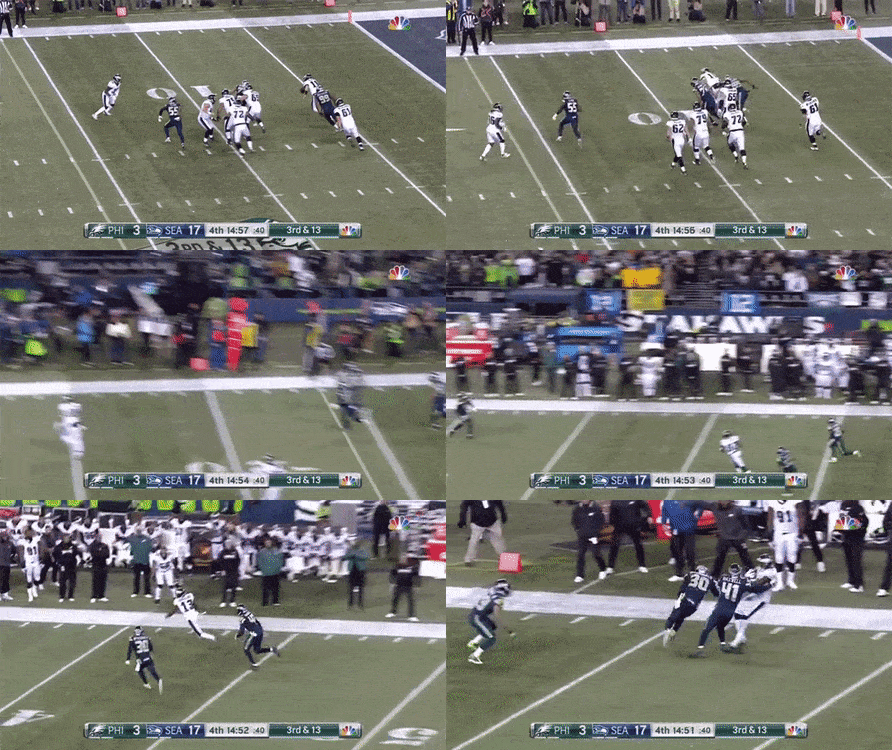
It’s supposed to be the most wonderful time of the year… high school games every Friday night, our beloved Ohio State Buckeyes (and how those Wolverines?) on Saturday, and the Super Bowl-bound Cleveland Browns on Sundays.

In honor of the gridiron season, we resort to cheap metaphors today while considering an unusual and (to us) troubling tree law case. Change the fact pattern by about three feet, and the outcome would have been the opposite of what the court ruled. That is, if Jennifer’s trees had been growing a yard or so south of where they were rooted, they would have been boundary trees. Neighbors Tony and Xiaoye couldn’t have touched them. But because the trunks and root flares of the conifers were all on Jennifer’s land, Tony got away with whacking away so much root support that Jennifer had to take the three trees down.

“Can they do that?” you ask, because you seem to remember a California case that said otherwise. Good recall, tree law fan. Unfortunately, the answer is pretty much, “Yeah, in Washington, they can do that.” But somehow it seems that the answer ought to be otherwise, that your right to Massachusetts Rule-style hacking at your neighbor’s tree should be informed by some kind of a duty not to kill the tree in the process.

Trigger warning: the outcome of this case is tragic for the trees involved, and those sensitive readers among us who cower at the sound of chainsaws might be needlessly upset.

Mustoe v. Ma, 371 P.3d 544 (Wash.App. 2016). Jennifer Mustoe had two large Douglas fir trees located entirely on her property, about three feet from the property line. Her neighbors were Anthony Jordan and Xiaoye Ma. In October 2013, Tony dug an 18-to-20-inch deep ditch on his property along the border of Jennifer’s lot. In the process, he exposed and removed the trees’ roots, leaving them to extend only 3-4 feet from the trunks, a loss of nearly half of the trees’ roots, all from the south side of the trees. The trees were thus exposed to southerly winds with no support, making the damaged trees likely to fall on Jennifer’s home.

The landscape value of the trees was estimated to be $16,418; the cost of their removal was estimated to be $3,913.

Jennifer filed suit against Xiaoye and Tony, asserting that Tony had negligently, recklessly, and intentionally excavated and damaged her trees. The trial court dismissed Jennifer’s claims, holding that Tony was entitled to remove those portions of roots that had encroached onto his and Xiaoye’s property and that in so doing, he did not owe Jennifer a duty of due care to prevent damage to the trees.

Jennifer appealed.

Held: The Court rejected Jennifer’s claims.

Jennifer started out a field goal behind, because she was compelled to acknowledge that Washington law lets an adjoining landowner engage in self-help and trim the branches and roots of a neighbor’s tree that encroach onto his or her property. Yet, Jennifer argued, the right to self-help does not extend to removing the tree itself, and the State’s common “does not immunize a landowner against liability for damage to the trimmed trees” and argues that the Court should hold that in exercising self-help, a landowner owes a duty of care to prevent damage to the trees themselves.

Jennifer thought she’d put one through the uprights and tie the score, but the Court played Lucy to her Charlie Brown. The law was clear, the Court said, that an adjoining landowner may trim only those branches or roots that encroach on his own property, but it did not hold that a landowner owes a duty to act in good faith or reasonably to prevent damage to the trees.

Jennifer also claimed that under state law, all members of society owe a broader legal duty to their fellow citizens and must not use their own property in such a way as to cause injury to others. She cited an exception to the common enemy doctrine in water trespass cases as an example of this duty. The common enemy doctrine allows landowners to dispose of unwanted surface water in any way they see fit, without liability for resulting damage to their neighbors, but a “due care” exception requires that a landowner change surface water flow in good faith and in such a way as not to cause unnecessary damage.

The Court rejected Jenn’s comparison, observing that no court had ever extended the “due care” exception beyond surface water. The Court said, “Surface water is a common enemy precisely because it is a force of nature which may indiscriminately affect any landowner. As such, each landowner may defend against it so long as he or she does not do so in a manner that unnecessarily redirects the wrath of the common enemy upon a neighbor. Unlike surface water, tree roots and branches are not a force of nature that indiscriminately wreak havoc among adjoining landowners. Instead, they are an encroachment upon the land of one’s neighbor.

Jennifer, facing second and long, argued that Booska v. Patel, a California case, found that adjoining landowners had a duty to act reasonably in trimming encroachments where neighbors’ trees were concerned. Citing a decision from the other end of the country, Jennifer argued that in Fliegman v. Rubin, a New York court – relying on Booksa – reversed the trial court’s summary dismissal of a plaintiff’s claims for damages to his trees allegedly resulting from the defendant’s severance of roots that had encroached on to his property. The Fliegman court held there was an issue as to whether severance of the trees’ roots damaged the plaintiff’s trees because “the right to self-help is limited, in that an adjoining landowner’s right to engage in self-help ‘does not extend to the destruction or injury to the main support system of the tree… .'”

Jennifer’s court was unswayed, holding that Booska and Fliegman appeared to be “outliers.” In Alvarez v. Katz, the Vermont Supreme Court rejected the holdings in Booska and Fliegman, finding that the “right to cut encroaching trees where they enter the land of another, without regard to the impact on the encroaching tree by such cutting, is well established under Vermont law.”

Here, the Court was likewise persuaded that the law in Washington was consistent with the general rule as applied in Vermont.

Pinned deep in her own territory on third down, Jennifer aired it out. She contended that her nuisance action against Tony and Xiaoye should go forward because Tony’s excavation and removal of tree roots was unreasonable in relation to the harm it caused to her trees. A nuisance is an unreasonable interference with another’s use and enjoyment of property. RCW 7.48.010 defines an actionable nuisance as “whatever is injurious to health or indecent or offensive to the senses, or an obstruction to the free use of property, so as to essentially interfere with the comfortable enjoyment of the life and property.

The fundamental question in a nuisance issue is whether the use to which land is put can be considered reasonable in relation to all the facts and circumstances. Tony argued that Jennifer had no action for nuisance because she had no legally recognized right. The Court agreed that Jennifer had not established that she had any legal cause for complaint or interference with the lawful removal of the roots on Ma’s property.

A nuisance claim will fail if it is nothing more than a negligence claim “in the garb of nuisance” unless the negligence claim has merit. Where the alleged nuisance is a result of the alleged negligent conduct, the rules of negligence are applied.

Here, Jennifer’s nuisance claim arose from Tony’s actions that damaged the trees; the nuisance is the result of his alleged breach of duty. But there was no breach of duty: because Jennifer’s negligence claim failed, her nuisance claim did, too.

On fourth down and a mile, with only a few seconds left, Jennifer threw the Hail Mary. She complained that she was entitled to damages under the timber trespass statute, RCW 64.12.030. The statute reads, “Whenever any person shall cut down, girdle, or otherwise injure, or carry off any tree… timber, or shrub on the land of another person, … without lawful authority, in an action by the person, city, or town, against the person committing the trespasses or any of them, any judgment for the plaintiff shall be for treble the amount of damages claimed or assessed.”

Alas, the ball fell short. By its own terms, the Court said, the timber trespass statute applied only to persons acting without lawful authority. Because Tony did not act unlawfully when he removed roots that encroached onto his property, the claim fails.

– Tom Root

TNLBGray140407

Case of the Day – Tuesday, August 6, 2024

DANGER TREES

It sounds like some kind of leafy superhero – you know, “look, out in the woods, it’s a fern, it’s a shrub, no, it’s … Danger Tree!!!

Alder, Hemlock and Big Leaf Maple - the "bad boys" of danger trees.

Alder, Hemlock and Big Leaf Maple – the “bad boys” of danger trees.

To arborists, a danger tree is no superhero, but rather a menace. In the non-utility context, a danger tree generally has two attributes. First, there’s something wrong with the tree – old age and decay, disease, an injury … something that adversely affects the tree’s structural integrity.

Second, the tree has to be in such a location that its falling or shedding branches is a hazard to people or property. A weakened and decayed tree in the middle of the forest might concern the fauna, but it’s like a shark in the middle of the Pacific – no cause to empty the beaches a thousand miles away.

Today’s case illustrates again – as did yesterday’s tree falling on a car – that good trial preparation trumps purity of purpose. Perhaps proving in the starkest of terms that no good deed goes unpunished, young and sharp-eyed Patrick Connelly spotted a brush fire burning next to the road. Unaware that the fire had been started after a power line was knocked downed by a poplar tree that had fallen in the wind, our hero jumped from his car to stamp out the flames. But sadly (and terminally), what he stomped on was the live power line tangled in the flaming grass.

Death lasts an eternity; litigation only seems to. Mr. Connelly’s estate sued after the 2003 accident. Nearly ten years later, the case was finally over.

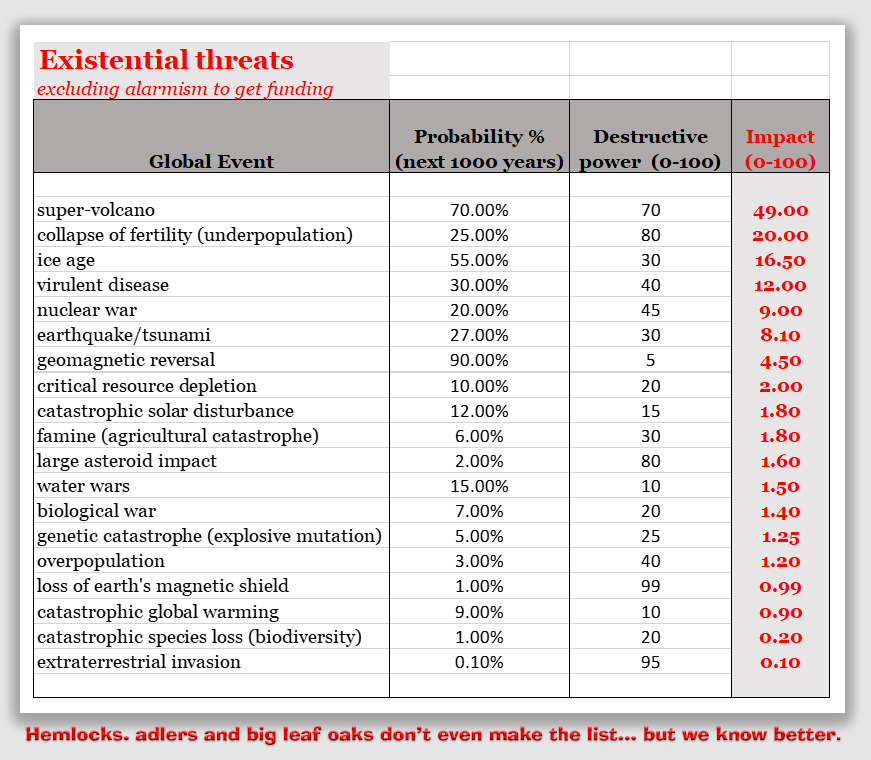
Besides the pathos, our interest is in the power utility’s own Transmission & Distribution Guidelines, which defined a “danger tree” from the electric company’s perspective. For a utility, a ‘danger tree’ might be structurally unsound, but it doesn’t have to be. Sometimes, just being too close to the wires will be enough. In fact, three trees – the hemlock, the alder and the big leaf maple – pose an existential threat, according to the T&D Guidelines.

But here, the tree in question was not even within the clearance zone under the lines, and by all reports was strong and healthy. Connelly’s executor was unable to convince the court that the utility should be held responsible for what happened beyond its 12’ clearance zone. The power company’s adherence to its own standards, as well as to national guidelines, was its salvation.

That’s the takeaway in most of these cases. Adherence to an accepted standard is enough to show that you’ve met the applicable standard of care.

Estate of Connelly v. Snohomish County Public Utility District #1, Case No. 66714-9-I, 2012 Wash. App. LEXIS 2818 (Ct.App. Wash. 2012). During a high windstorm, one of the Lombardy poplar trees located on the property owned by a local school district fell approximately 40 feet across a road onto three high-voltage electrical distribution power lines. Two of the power lines shut off, but the third broke off and landed in a ditch on the north side of the road. The energized power line started a small brush fire.

cartoon140521Michael Varnell and Patrick Connelly were driving westbound on the street when they saw the brushfire. Connelly suggested they stop and stomp out the flames. He was electrocuted when he came into contact with the downed power line.

The Connelly Estate filed a wrongful death action against the Public Utility District No. 1, charging that it negligently performed vegetation management and designed and operated the electrical distribution system. But after a trial, the court ruled that the PUD did not have a duty to inspect trees that did not obviously pose a danger, and did not breach its duty of utmost care in the design, operation, or maintenance of the distribution power line system.

The Estate appealed.

Held: The PUD was not liable.

The parties agreed the PUD owed Connelly a duty of the “utmost care.” However, they disputed whether this meant that the PUD had a duty to inspect every tree outside of the 10- to 12-foot power line “clearance zone,” and whether the protection devices the PUD used were sufficient to meet the duty to protect the public and prevent exposure from high-voltage power lines.

Connelly’s expert testified that the standard of care required the PUD to inspect every tree outside the 10- to 12-foot power line clearance zone that was tall enough to fall on a power line. Relying on prior testimony regarding the condition of the poplar tree, the expert also testified that the PUD had a duty to remove the poplar tree located on the School District property. However, on cross-examination, he admitted that he did not know when the tree would have been an imminent danger and that “I, of course, didn’t see the tree and don’t know anything — don’t know much about the trees.” Bollen also admitted the last time he oversaw a vegetation management program was from 1951-56.

dangertree151222

Now THIS is a Danger Tree.

A PUD expert examined the tree in 2007 and 2009, and reviewed photos of the fallen tree. He testified the poplar tree that fell showed signs of preexisting rot, decay, and disease. Furthermore, a PUD arborist had inspected the tree within a week of the accident, and found were no external indicators of rot or decay. He said that he would not have identified the tree as a hazard for removal or trimming.

Another PUD expert, Stephen Cieslewicz ­– a certified arborist and a national consultant on vegetation management practices for utility companies –testified that PUD’s vegetation management practices were consistent with industry standards during the period in question. Mr. Cieslewicz testified that the objective of “line clearance inspections is to review the air space between the lines and along the lines for trees or limbs.” PUD periodically inspected the trees within the 10- to 12-foot clearance zone of the power lines, and removed trees or tree limbs that posed a threat to the power lines. As well, PUD also identified “danger trees” outside the clearance zone that pose a threat to the electrical lines. Mr. Cieslewicz said that the vast majority of electrical utility companies do not routinely inspect trees outside the clearance zone simply because the trees are tall enough to fall on the line.

Powerlinetotreeclearance140521Mr. Cieslewicz also said that absent an obvious danger or notification from a property owner, the PUD had no duty to inspect every tree outside the clearance zone. In fact, such inspection would border on being impossible. He also testified that inspecting every tree outside the clearance zone in Snohomish County was impossible. Cieslewicz also testified that “[t]here likely would not be records” of the inspection of East Sunnyside School Road “if there was no work required.”

A PUD line clearance coordinator testified that he inspected the area several years before the accident. He said that he had looked down the line segment “and saw that the line was clear; that no tree was in the line.” At no time did the School District notify the PUD that any of the poplar trees located in the area posed a hazard. The evidence showed that during the five years before the accident, the poplar trees were healthy.

The trial court found the testimony of the PUD witnesses more credible than the Estate’s experts, neither of whom had inspected the trees. It held that absent obvious signs or notice that a tree posed a danger, the standard of care did not require the PUD to investigate every tree outside the 10- to 12-foot power line clearance zone. The court also concluded the PUD did not breach its duty of utmost care in the design of the electrical power distribution system.

The Court of Appeals held that in order to prevail on a negligence claim, the Estate had to establish duty, breach, causation, and damages. The standard of care for a utility in Washington is daunting: a power company must exercise “the utmost care and prudence consistent with the practical operation of its plant” to prevent injury.

Although the Estate disputed it, the Court of Appeals found that the trial court had correctly applied this “utmost care” standard. In so doing, the trial court did not improperly emphasize the practical operation of the utility; rather, such practical operation is a relevant factor in determining “whether the utility has conducted its operations under the known safety methods and the present state of the art.” The trial court was within its discretion to let PUD present testimony about whether it was practical to inspect trees outside the clearance zone that did not obviously pose a danger.

The Estate challenged a number of the trial court’s factual findings as well, but the Court of Appeals held that there was substantial evidence to support the determinations. That was all the law required. In particular, the appellate court held that “the evidence established the PUD vegetation management met the standard of care, and the PUD was only required to inspect trees outside the clearance zone if there is ‘obvious evidence of decay or rotting or threat to the power line’.”

The Estate also claimed the trial court’s findings were inconsistent with the utility’s own Transmission and Distribution Guidelines. The T&D Guidelines are evidence of the standard of care, but the state statute relied on by Connelly – RCW 64.12.035 – did not require PUD to comply with the T&D Guidelines. Instead, it only provided electric utilities with immunity for cutting or removing vegetation. The statute does not set a standard of care for the utility, and as the PUD points out, no cases have interpreted the statute as creating a duty or setting a standard of care.

PUD’s T&D Guidelines stated that a “danger tree” was

  • forked trees;
  • dead or rotten trees;
  • trees weakened by decay, disease or erosion;
  • trees visibly leaning toward the power line;
  • trees or parts of trees which may contact the line under snow, ice or wind loads;
  • trees originating from fallen decaying logs, old growth stumps or other unstable rooting positions; or
  • troublesome trees such as alder, big leaf maple and hemlock.

The T&D Guidelines did not impose a duty to inspect every tree that may come in contact with the power lines, but rather just trees within the clearance zone and obvious “danger trees.”

The power company prevailed.

– Tom Root

TNLBGray140407