Case of the Day – Wednesday, October 1, 2025

FORGIVE US OUR TRESPASSES

I found myself wondering the other day, as I mentioned an allegation of trespass in a post, whether we talk about basic garden-variety trespass often enough.  So here we are.

The United States inherited the law of trespass from medieval England.  At common law, a trespass upon land occurred when a person, acting without authority, physically invades or unlawfully enters the premises of another, and damages result (even though the damages may be insignificant).  The entry may be intentional or negligent.  Just about every entry onto the land of another that occurs happens due to negligence, because it requires remarkably little negligence to accomplish a trespass.

I watched a lot of football this past weekend, starting with high school football on Friday night, as my beloved Norwalk Truckers eked out a win against the Vermilion Sailors, 14-9. Saturday afternoon, my bride of 46 years and I watched our No. 1 Ohio State Buckeyes – we went to OSU, so we have a right to be Scarlet and Gray fans – convincingly beat the U-W Huskies. Sunday, I was shocked, shocked I tell you, to watch the Cleveland Browns lose to the Detroit Lions, 32-10. Well, disappointed maybe, but hardly shocked.  

As football weekends go, Meatloaf described it musically: two out of three ain’t bad.

But because I have football on my mind, let me liken trespass to catching a pass on the inbounds white line. If you deliberately run out of bounds and then catch the pass, the pass is no good. Call it trespass. If you catch one right on the line, and your foot accidentally steps on the white line as you catch it, the pass is no good. It’s still trespass.

If you catch a pass in bounds, and – while you’re in the air catching it – a defender wraps you up and carries you out of bounds, however, the pass is complete.  It’s not a trespass.

In other words, you can intentionally trespass. You can negligently trespass. But if your body is deposited on someone else’s land through involuntary means, it’s not a trespass.

Trespass is most commonly asserted by people who have lost trees to a misguided tree cutter taking timber on the wrong side of an unclear or misunderstood property line.  It has also been applied where people took self-help a little too far, and went onto neighboring property to aggressively trim a problem tree.  Trespass has been found where people mistakenly believed they owned the property they had occupied, where a party has negligently caused livestock or water to enter another’s land, and where someone was on the property with permission to cut down certain trees, but cut down trees he had been told to avoid.

Muir v. Ruder, 945 S.W.2d 33 (Court of Appeals of Missouri, Eastern District, 4th Div. 1997). Jim Ruder, a landscaper, agreed to buy trees on the Muirs’ property.  Ruder was to remove the trees and pay $6.00 a tree.   He also agreed to transplant 120 trees for Muir, and repair any ruts or holes created in the process.   The deal went south, as such deals sometimes do, and the Muirs sued.  They said Ruder had committed trespass by breaking the contract and then entering the property and unlawfully removing about 220 trees.  Ruder said he only took 130 trees, and the rest were stolen by persons unknown.  He admitted he didn’t pay for any trees, fill in ruts or holes, or transplant any trees.  He claimed he told the Muirs he didn’t have the right equipment to move the specific trees they wanted transplanted.

The trial court agreed that Ruder had trespassed, and awarded the Muirs $6,160 in damages.

The Court of Appeals reversed, providing some basic guidance on the law of trespass in the process.  It said the evidence failed to prove the elements of either trespass or conversion.  Common-law trespass, the Court said, is the unauthorized entry by a person upon land of another.  For damages to be awarded for trespass, a plaintiff has to show that the defendant intended to be on the property and that he directly interfered physically with that property.  Removing trees from someone else’s property may also be a statutory trespass. A person can wrongfully cut down a tree in two ways, either of which would result in trespass under § 537.340 RSMo.  He can enter the land without permission and cut down the trees. Alternatively, he can enter with the owner’s consent and then exceed the scope of the consent by cutting down trees without permission.

Here, the Court found, Muir – wisely or not – had given Ruder permission to enter his property.  Muir argued that the agreement was broken because the landscaper removed the first batch of trees, but did not transplant the trees Muir wanted moved. Ruder testified that he had already removed the first trees before he realized that the trees Muir wanted transplanted were too large for his equipment.  Ruder nevertheless returned to the property for more trees.  Muir said he “objected” when Ruder took the second load before paying for the first load, but he didn’t tell Ruder to leave or to bring the first load of trees back.  Instead, he watched Ruder take the second load and even had Ruder show him how to bag trees.  The Court said, “One who silently watches another enter upon his land, and then willingly engages him in conversation while standing on the premises, may not later complain of trespass.”

More high school football coming up tomorrow. Go, Truckers!

 – Tom Root

TNLBGray

Case of the Day – Tuesday, September 30, 2025

A RATHER SURPRISING HOLDING FROM A DELAWARE TRIAL COURT

In this tree law gig, I read a lot of cases. After a while, reading between the lines gets a lot easier.

Today’s case, which I decided was nothing special, was just about some neighbors who were over-the-top haters of the defendant. The defendant seems like a guy whose crime was that he apparently had the effrontery to move in next door and then fix up the place.

The trial court’s long opinion had flushed away most of the plaintiffs’ breathless and frantic complaint – and “flushed” is the correct verb for most of the claims the tin-foil-hatted neighbors made against the defendant– when I got to their claim that defendant Bill Collison had “damaged a maple tree near the property line by shaving the trees directly up from the property line.”

“Holy Massachusetts Rule!” I muttered to myself. Everyone knows that this claim should be summarily tossed, because the Massachusetts Rule is as universally accepted as is turkey at Thanksgiving. Assuming Bill did “shave” the tree at the property line, that’s perfectly within his rights.

Much to my shock, the Court disagreed. It held that the right of “self-help” trimming of encroaching branches is not established in Delaware, and if this court was going to do it, it would not do it on summary judgment. It became obvious to me that whatever else Judge Calvin Scott, Jr., of Newark, Delaware, reads with his morning coffee, it sure isn’t this blog.

It did not take long to find reason to question the Judge’s refusal to grant summary judgment on this issue. In the 1978 Delaware Chancery Court decision Etter v. Marone, the court ruled

At the same time, certain generally accepted principles obtain with regard to encroaching trees or hedges. Regardless of whether encroaching branches or roots constitute a nuisance, a landowner has an absolute right to remove them so long as he does not exceed or go beyond his boundary line in the process. 2 C.J.S. 51, Adjoining Landowners § 52; 1 Am.Jur.2d 775, Adjoining Landowners § 127. He may not go beyond the line and cut or destroy the whole or parts of the plant entirely on another’s land even though the growth may cause him personal inconvenience or discomfort. 2 C.J.S. 51, supra.

So the Judge seems to be wrong: Delaware is firmly in the Massachusetts Rule camp.

What with allegations of underground tanks, clogged drainpipes and extreme mental anguish contained in the messy and unsupported complaint, Judge Scott pretty clearly had his hands full. By and large, he acquitted himself masterfully in the opinion, carefully deconstructing the plaintiffs’ complaints. But I’m betting that in about nine weeks, the Judge will be sitting down to a turkey dinner with all the trimmings. When he does, he should reflect that as many of us accept the Massachusetts Rule as will be dining on the same meal that day.

Dayton v. Collison, C.A. No. N17C-08-100 CLS (Super. Ct. Del. Sept. 24, 2019), 2019 Del. Super. LEXIS 446. Margaret Dayton and Everett Jones clearly had it out for their neighbor, Bill Collison. They claimed that since 2014, Bill had removed a significant number of standing trees and about 5,000 square feet of naturally growing plants from the City of Newark’s natural buffer zone, removed a 30-year-old drainage pipe located on his property and filled the remaining pipe with rocks and debris, intentionally altered the natural grade of his property so as to interfere with the natural flow of water, and trimmed a maple tree located on Maggie and Ev’s property along the boundary line. Additionally, they claim that an underground storage tank Bill installed – apparently your garden-variety propane tank – violates Newark’s municipal ordinances.

Maggie and Ev allege Bill’s property is a public nuisance, and that they have suffered “extreme mental anguish and damages of at least a $50,000 loss in the value of their home” because of flooding caused by Bill’s alteration of the grade’ invasion of privacy due to the removal of the buffer zone, being forced to live next to a hazardous condition because of the propane tank, and “damage or potential damage” (guess they’re not sure which) to the structural integrity of their property’s foundation.

They also claim Bill trespassed on their property multiple times to “alter the natural drainage flow of water, construct a berm, cut Plaintiffs’ trees, and take pictures or otherwise spy on Plaintiffs. From this, Plaintiffs claim they have suffered and continue to suffer damages and mental anguish in a sum to be determined at trial.”

Bill moved for summary judgment, claiming that Ev and Maggie cannot bring claims based on the alleged violation of city ordinances, and showing that their claims were baseless.

Held: Summary judgment in Bill’s favor was granted on all claims except the tree-trimming claim.

The Court held that a public nuisance is one which affects the rights to which every citizen is entitled. The activity complained of must produce a tangible injury to neighboring property or persons and must be one that the court considers objectionable under the circumstances.

To have standing to sue on a public nuisance claim, an individual must be capable of recovering damages and (2) have standing to sue as a representative of the public, “as in a citizen’s action or class action.” Here, Maggie and Ev have no right to bring a claim against Bill for alleged violations of the Code and thus, no standing to sue as representatives of the public. The Newark Code creates no rights enforceable by members of the public, and thus, it presents no basis upon which the requested relief may be granted.

To determine whether an implied private right of action exists, Delaware courts ask, among other things, whether there is any indication of legislative intent to create or deny a private remedy for violation of the act. Under the Newark City Charter, the City possesses “all the powers granted to municipal corporations by the Constitution and laws of the State of Delaware, together with all the implied powers necessary to carry into execution all the powers granted..” The city manager is responsible for administering all city affairs authorized by or under the Charter and may appoint individuals to enforce specific ordinances of the Code. The Court held that these reservations showed that the City of Newark intended for it to be solely responsible for enforcing its ordinances and did not intend to create a private right of action based upon ordinance violations.

Claims that Bill’s tree cutting was creating a public nuisance on the floodplain, likewise alleged violation of City ordinances, and thus were claims that Ev and Maggie lacked any standing to bring. As well, their claim that Bill’s propane tank had been installed without a permit alleged a violation of the City Code, a claim only the City could make.

Finally, Ev and Maggie claimed Bill created a public nuisance because he allegedly removed a drainage pipe from his property and filled the remaining pipe with rocks and debris. Outside of the fact that they were able to cite no evidence that any drainpipe had ever existed on Bill’s property, only the City of Newark had jurisdiction and control over drainage.

But Ev and Maggie claimed that Bill created private nuisances, too. A private nuisance is a nontrespassory invasion of another’s interest in the private use and enjoyment of their land. There are two types of private nuisance recognized in Delaware: nuisance per se and nuisance-in-fact. A claim for nuisance per se exists in three types of cases: 1) intentional, unreasonable interference with the property rights of another; 2) interference resulting from an abnormally hazardous activity conducted on the person’s property; and 3) interference in violation of a statute intended to protect public safety. A claim for nuisance-in-fact exists when the defendant, although acting lawfully on his own property, permits acts or conditions that “become nuisances due to circumstances or location or manner of operation or performance.” Plaintiffs allege claims under both the theory of nuisance per se and the theory of nuisance-in-fact.

But saying it doesn’t make it so. The Court granted Bill’s motion for summary judgment on the private nuisance claims because Ev and Maggie did not provide sufficient evidence supporting their nuisance per se claim, and did not submit expert reports to show the necessary elements of their claims.

Ev and Maggie also argued that Bill’s destruction of certain trees on their property and his failure to respect known boundary lines also constitute a continuing nuisance. They alleged that they suffered a diminution in the value of their home, in an amount of at least $50,000, as a result of the “nuisance created and maintained by” Bill. Ev and Maggie estimated the value of their home and the loss they had suffered. They argue that, as landowners, they may offer an opinion on the value of real estate. The Court disagreed: “Although Plaintiffs might know the fair market value of their property based on what they paid for it and based on a comparison of their property to other homes in the area, Plaintiffs do not know how each of Defendant’s alleged actions changed the value of their property. To establish how each of Defendant’s actions changed the value of Plaintiffs’ property, Plaintiffs would need to identify and submit an expert report from an expert witness; Plaintiffs have not done so.”

Those tin hats really work — it’s just that THEY want you to think there’s something wrong with wearing ’em …

Ev and Maggie allege that they have suffered “extreme mental anguish” as a result of Bill’s alleged nuisances. The Court ruled that Ev and Maggie “needed to show proof of the ‘extreme mental anguish’ they allegedly suffered through a medical expert. Without expert testimony, the Court is not able to find that Plaintiffs suffered this type of harm or that Defendant’s conduct caused such harm. Plaintiffs have neither identified an expert witness to testify to this matter nor submitted an expert report regarding this matter.”

Ev and Maggie’s only victory came on their claim that Bill damaged their maple tree. They alleged that he damaged a maple tree near the property line by shaving the trees directly up from the property line. Ev and Maggie have identified and submitted a report from an arborist, Russell Carlson, detailing the manner in which the maple tree was damaged by Bill’s alleged cutting back of the branches. The report shows the damage done to the maple tree and estimates the cost of that harm.

Bill responded to their report, arguing that he has a right to engage in “self-help” to the property line. The Court held that “it remains unclear in Delaware whether a defendant has a right to engage in ‘self-help’ by cutting tree limbs that extend onto his property. The Court declines to make a determination on this issue in a motion for summary judgment. Therefore, Defendant has not shown, in the face of Mr. Carlson’s report, that he is entitled to judgment as a matter of law. Accordingly, summary judgment on this allegation is not proper.”

Ev and Maggie argued they are entitled to treble damages pursuant to 25 Del. C. § 1401, Timber Trespass. The Court may award treble damages for timber trespass when the plaintiff establishes that a trespasser “fells or causes to be cut down or felled a tree or trees growing upon the land of another”; 2) that plaintiff’s property was established and marked by permanent and visible markers or that the trespasser was on notice that the rights of the plaintiff were in jeopardy; and 3) that the trespass was willful.

Because Ev and Maggie only alleged that Bill damaged the tree, and did not cut it down altogether, they are not entitled to treble damages.

Finally, Ev and Maggie alleged that Bill intentionally trespassed on their property. The elements of a claim for intentional trespass are that the plaintiff has lawful possession of the land, the defendant entered onto the plaintiff’s land without consent or privilege, and the plaintiff shows damages. The Court held that there was a factual dispute as to whether Bill ever entered Ev’s and Maggie’s land. Thus, Bill was denied summary judgment on the trespass count.

Still, the Court pretty much savaged Ev’s and Maggie’s rather shrill and frantic claim, leaving their all-encompassing nuisance broadside a rather puny trespass and trim of a single tree.

– Tom Root
TNLBGray

Case of the Day – Tuesday, July 15, 2025

AND DON’T FORGET THE LITTLE WOMAN …

I got a call last week from a friend – I’ll call him Arnie Acme – who wanted me to look at a contract he was signing for office space. As a favor, Arnie said. “You know,” Arnie said, “just a quick read-through. After all, I know it’s OK.”

Enamored with the gravitas of a corporate structure, Arnie owns probably a dozen or more corporations or limited liability companies, all organized (I use that word very loosely) in a maze of affiliates, subsidiaries, parents, and joint ventures that would confuse a lab rat.  He forms them online, leaving the tedious work of writing bylaws, naming officers, and drafting minutes of corporate meetings until “later.” You can guess when “later” finally arrives… the day after he discovers he really needs them.

The contract he emailed me was between Office Megapark Corporation and “Acme.” I asked him which “Acme” he had in mind as the contracting party, given that he had “Acme Enterprises, Inc.,” “Acme Management, LLC,” “Acme Services Corporation,” “Acme Systems Limited Liability Company,” “Acme Interplanatery, Inc.” and a gaggle of other Acme variations of entities. He said he was not sure, and he would just put “Acme” in as the leasing party, so he could decide later which company he wanted to be the leaseholder. He planned to have his newly-hired office manager sign the lease, because her name had not yet appeared in any business records, and he could write her name and purported office into whatever corporate or LLC minutes he might need later. 

Arnie’s devil-may-care attitude toward contract and business association law reminded me of a sad fact. Small business owners sometimes (in Arnie’s case, always) skimp on the legal niceties. After all, they reason, paying out $500 to some lawyer for a bunch of forms and a vinyl corporate book doesn’t really “grow the business,” as the buzz phrase puts it. And who wants to squander money on a lawyer? Not Arnie. He just wanted a free and “quick read-through.”

Oops!

Oops! Sometimes, misteaks happen.

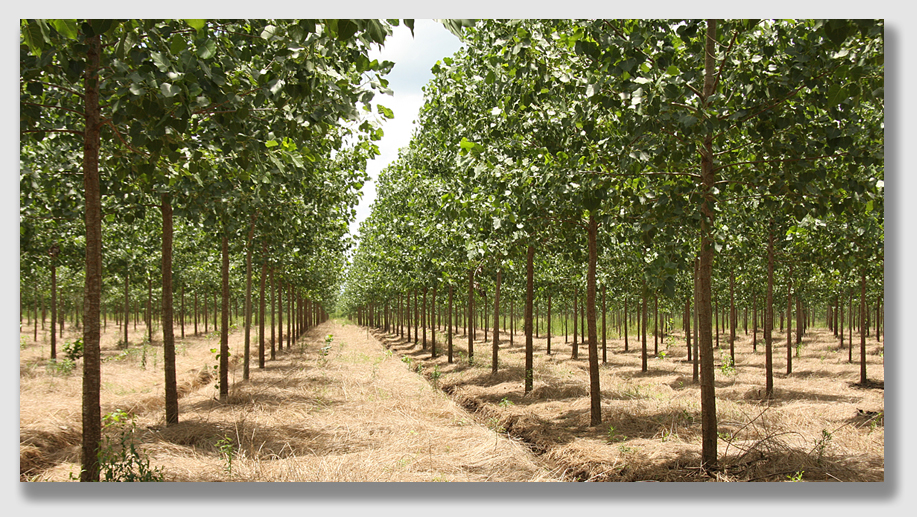
That’s rather false economy. In today’s case, a mom-and-pop timber harvesting business was hired to take down trees on one owner’s land, and — predictably enough — the chainsaws wandered onto Mr. Follender’s land, to the tune of 439 commercial-quality trees cut down and removed without permission. Follender lost trees worth $54,500. After trebling and some discounts, he ended up with a $120,000 judgment against Bert Maxim, the defendant.
Unfortunately, the timber harvester had involved his wife in the business, and she did enough of the business paperwork that she had signed the contract for the timber operation that had gone awry. Oh, if they had only incorporated, formed an LLC, done something! And if only Mrs. Maxim hadn’t signed that agreement! But hubby was out cutting down trees, and they were in a hurry …

The Court ruled that her involvement in the unincorporated business was enough to make her liable for the $120,000 judgment as well.

Sure, LegalZippy.com or Lawforms-R-Us can sell you some boilerplate-laden forms over the Internet that’ll purportedly set you right up. However, the best structure for a small business to protect its principals from liability varies from state to state. The legal niceties of the business organization — not just in the formation of the company but in day-to-day management — are best addressed by your local attorney or a specialist to whom he or she might refer you.

corporate_structureBut get the advice now. Usually, by the time you realize you should have spent the money on the legalities of business formation and protection, it’s too late.

Follender v. Maxim, 845 N.Y.S.2d 484, 44 A.D.3d 1227, 2007 WL 3101953 (N.Y.A.D., Oct. 25, 2007). Follender sued Berton Maxim and his wife for “wrongful and/or cutting down/taking of timber” from the purchased property. The Maxims, doing business as Prime Hardwood, had entered into a contract with Follender’s adjacent landowners, Valentine Riedman and Christl Riedman, to log their property. In the process, they inadvertently trespassed on Follender’s property and removed trees. Follender alleged negligence and conversion, with a request for treble damages, against the Riedmans and Maxim. They named his wife as a defendant, too, calling her “Jane Doe Maxim.”

Follender dropped the Riedmans from the suit, but the Maxims failed to answer or defend. After learning that Maxim’s wife’s name was Eileen Tine, Follender filed an amended verified complaint against them both individually and doing business as Prime Hardwood.

hook140806Again, they failed to answer or appear. After Follender got a default judgment against them, the court ordered an inquest. When the Maxims again failed to appear, Follender offered extensive proof which included, among other things, the contract between the Riedmans and Tine (signing on behalf of Prime Hardwood), an affidavit from Valentine Riedman which explained that when Maxim came to log his property, he was given a survey map which showed the Riedmans’ boundary line. Valentine Riedman was unaware that Maxim would remove timber outside of those boundaries. Michael Greason, a professional forester, testified that 439 commercial species trees were cut from Follender’s property, 386 of which had a value of $54,506.68. The Court trebled the damages and assessed damages of $120,000 against Maxim but never mentioned his wife, Eileen. Follender appealed, contending that the failure to include Eileen in the order awarding damages was a mistake.

Held: The judgment was modified, and the order of the trial court awarding treble damages of $120,000 against logger Maxim for negligence and conversion was rewritten to include the logger’s wife in the award of damages. She had signed the contract between Maxim’s business and the landowner’s adjoining property owners, in connection with which the logger had trespassed onto Follender’s property and from which he unlawfully removed trees.

Generally, appellate courts may correct any mistake, defect, or irregularity in a judgment, provided that the correction does not affect a substantial right of a party.

– Tom Root
TNLBGray140407

Case of the Day – Monday, May 19, 2025

NOT A HAPPY BUNCH AT ALL

This bunch is pretty happy ... The Wongs? Not so much.

This bunch is pretty happy … The Wongs? Not so much.

The Wong family, through their company Happy Bunch, LLC, was quite happy indeed with the nice piece of property the family occupied. The Wongs especially liked the 10 trees that lined one boundary. They had planted and nurtured them for 20 years or so, and the trees had gotten big enough that eight of them actually straddled the boundary line with their neighbor.

But what a hot dog the neighbor turned out to be! Grandview North was a developer and planned a Wienerschnitzel franchise on the lot next door. The City required that Grandview add about four feet of fill to the lot, and Grandview was afraid the Wongs’ boundary trees would get in the way. Grandview had a survey done, and the company knew the trees were on the boundary line, with most of the trunks on the Happy Bunch land (two were entirely on the Happy Bunch side of the boundary). So what? After finding itself unsuccessful at getting Mr. Wong to consent to the trees being cut down, Grandview made its view grander by taking out the trees itself. Mr. Wong was done wrong …

Happy Bunch sued. The trial court ruled that Grandview owed $32,000 or so for the trespass to timber, but it refused to impose statutory treble damages, finding them not applicable to boundary trees.

The Court of Appeals, in a case of first impression, disagreed. It ruled that boundary trees in Washington State are owned by both landowners as common property, and neither may cut them down without the consent of the other. The Court ruled that damages resulting from a boundary tree being cut down are the replacement value of the tree, apportioned by the percentage of the trunk on the injured landowner’s property, a method that strikes us as rather artificial and likely to undervalue the tree to the injured property owner. What, Happy Bunch gets half a tree back? There was a little bit of justice, however: the Court of Appeals ruled that the treble damage statute for trespass to timber applied to boundary trees as well as other trees.

Happy Bunch, LLC v. Grandview North, LLC, 173 P.3d 959 (Wash.App. Div. 1, 2007). The Wong family owned land through its limited liability company, Happy Bunch LLC. Grandview was a property development company that purchased a parcel of property next door to the Happy Bunch property to build a Wienerschnitzel drive-through restaurant. The City of Mount Vernon required that four feet of fill be placed on the Grandview property as part of the planned development.

cutdownTwelve mature trees stood either on or near the boundary line between the Happy Bunch and Grandview properties. Some portion of the trunks of 10 of the trees — all originally planted by the Wongs some years before — extended from the Happy Bunch property onto the Grandview property. Grandview believed it couldn’t meet the city’s fill requirement without putting a retaining wall on the Happy Bunch/Grandview property line. Because the roots and trunks of the trees extended onto Grandview’s property, Grandview believed that they would interfere with the construction of the retaining wall and decided to move them, even though Grandview knew a survey showed the trees’ true location on the property line.

The Happy Bunch was not happy, not agreeing with the plan and finding through its own survey that the trees were either on the boundary line or entirely on the Happy Bunch land. Despite Happy Bunch’s opposition, Grandview cut down all ten trees. Happy Bunch sued, claiming that it had acquired title to the land under and around the trees by adverse possession due to the Wongs’ maintenance of the trees and surrounding area. It also sought damages for both the value of the cut trees and the estimated $15,065 cost of digging up the trees’ root systems and repairing damage to the Wongs’ driveway likely to be sustained as a result. Happy Bunch also requested that the entire award be trebled under Washington law because of Section 64.12.030 of the Revised Code of Washington, the state’s timber trespass statute. Happy Bunch was thus happy to seek a total damage award of $168,294.

Hotdogg160610The trial court ruled that Grandview committed timber trespass by cutting the trees on the Wong/Grandview property line. The trial court took the damage figure to the trees of $40,033 and multiplied it by the percentage of the cut trees that had been growing on Happy Bunch’s property, resulting in damages of $32,519.22 to Happy Bunch on its timber trespass claim, as well as $2,500 for the cost of grinding out the remainder of the stumps. The court denied the damages of $15,065 for completely removing the trees’ root systems and repairing the resulting damage. Finally, the trial court ruled that Happy Bunch was not entitled to treble damages as provided by the timber trespass statute “[b]ecause the trees that were cut straddled the common property line.”

Happy Bunch appealed.

Held: Judgment was reversed on most counts. The Court of Appeals concluded that Happy Bunch was only entitled to recover damages for injury to those portions of the trees growing on its land. However, the Court found that RCW § 64.12.030’s treble damages provision did apply.

In most jurisdictions, a tree standing on a common property line is considered the property of both landowners as tenants in common. Although Happy Bunch admitted that courts commonly calculate damages based on the value of each cut tree, apportioned according to the percentage of the tree that was located on the injured landowner’s property, it contended that the proper approach here was the one applied in the Colorado case, Rhodig v. Keck. Rhodig held that absent a showing of an agreement to the contrary, a boundary line tree belongs entirely to the party on whose land the tree was originally planted, with damages calculated accordingly.

The Court of Appeals rejected Rhodig, holding that adoption of its rule would enable Washington landowners to effect boundary line adjustments with trees, creating “an entirely new theory of adverse possession without a basis in either the statutory or common law of this state.” The Court said the Rhodig holding would mean that Happy Bunch acquired title to the land under the trees simply because had once had planted the trees. Therefore, the Court held, a tree standing directly upon the line between adjoining owners so that the line passes through it is the common property of both parties, whether marked or not; and trespass will lie if one cuts and destroys it without the consent of the other. Grandview had an interest in the trees proportionate to the percentage of their trunks growing on Grandview’s property, and thus, the trial court correctly awarded Happy Bunch only that portion of the trees’ value reflecting Happy Bunch’s property interest in them.

Happy Bunch contended that an award of treble damages was mandatory pursuant to RCW § 64.12.030, unless Grandview proved one of the mitigating factors listed in the statute. The Court agreed, holding that the trespasser must allege and prove mitigation, and absent such a showing, treble damages will be imposed. The Court rejected Grandview’s argument that it believed it had a right to remove the trees, noting that Grandview possessed a survey that indicated that the majority of the trees were predominantly located on Happy Bunch’s property, and that at least two of the trees were not located on Grandview’s property at all.

The Court said that where a person has been given notice that another has an ownership interest in trees, and the person nonetheless cuts them down, the actor will be liable for treble damages under the statute. Both the punitive and compensatory policies underlying the statute are implicated with respect to boundary line trees, the Court reasoned, and for that reason, the statute must be applied.

– Tom Root

TNLBGray140407

Case of the Day – Thursday, January 23, 2025

THAT’S PERSONAL

Reader Paul D. sent a comment yesterday:

Figuring damages for tree loss… I don’t understand why you would use diminution of property value… Unless you were going to soon sell the property or you had a business on the property or your property generated some kind of income. But if the trees were for a personal reason, such as shade or privacy, wouldn’t the better way of proving damages be the current value of trees removed or at least restoration costs?

I think placing a diminution price on a residential property can often be very subjective and inaccurate, especially compared to having a qualified arborist make a value assessment.

Paul asks a good question. Why would anyone prefer a diminution in property value over restoration costs or stumpage value?

Here’s a prime example of someone who might: A few years ago, a tree service company sent a crew to an address in Grove City, Ohio, to remove a maple on the front lawn. Instead of going to 1553 Main Street, the crew mistakenly went to 1533 Main Street. That house, coincidentally, also had a maple tree in its front lawn, a magnificent and healthy specimen that the homeowner loved very much.

You can guess what happened. While the homeowner was obliviously toiling in his office 10 miles away, the tree cutting crew made short work of the beautiful maple. When the owner arrived home that evening, his arboreal pride and joy was nothing but a stump and some sawdust.

There was no question about liability: the tree service company goofed. But how much to pay for the tree? Stumpage value makes no sense. The homeowner wasn’t raising the tree to sell the timber. Replacement cost for the tree might be a fairer measure. However, the largest tree that could be planted for the homeowner – with costs of a few thousand dollars – will not begin to replace the lost tree.

In our homeowner’s case, the measure of damages we finally settled on was a real estate appraisal that concluded that the value of the home had been lessened by about $17,000 by the removal of the mature tree.

Today’s case considers what might happen if the removal of the trees does not diminish the value of the property. A man named Chung bought a parcel of land for a home. When he had a tree-cutting service clear the land for construction, the cutters crossed the line onto Rora Park’s land and removed about 560 trees. The decision only implies this, but it appears that the “accident” might not have been accidental at all. Rather, Chung may have steered the cutters in the wrong direction in order to improve the view from his land.

Whatever the reason, the liability was certain. The problem arose because removing 560 trees didn’t really decrease the value of Rora Park’s land at all. Hard to believe, but then, Alaska is a pretty big place. So Ms. Park demanded restoration damages and payment of the cost of restoring the property by planting new trees. That would have been about $400,000. The trial court granted damages equal to the cost of replanting 50 trees, but the Alaskan Supreme Court reversed.

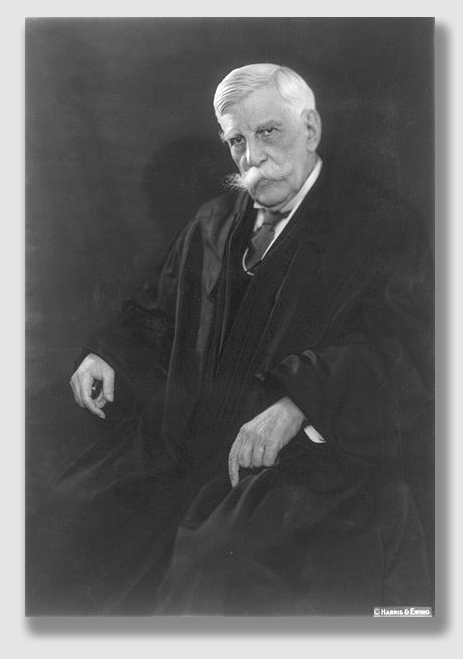
Chief Justice Oliver Wendell Holmes, Jr.

       Chief Justice Oliver Wendell Holmes, Jr.

It seems that if the wronged property owner doesn’t have a “reason personal to the land-owner for restoring the trees,” an Alaskan court won’t use that measure of damages. In this case, Ms. Park waxed eloquent about how she had once had cancer, and “this natural beauty of my yard is [a] healing spot for me, and . . . after work I come by, see my property and see the natural beauty and the trees and all that[. W]hen I [saw] that all cut out it just [made] me very – [it] just [broke] my heart, and then very angry . . .” Unfortunately for her, she later tried to downplay how often she visited the property.

The trial court wouldn’t let her have it both ways and found that she hadn’t justified restoration damages. But, apparently troubled by Ms. Parks’ neighbor getting away with a fast one, the trial court awarded her restoration damages anyway. It may have seemed like justice, but it wasn’t the law.

The Alaskan Supreme Court said that restoration damages could be awarded only if Park had a “reason personal” for restoring her property. Because she failed to prove she had such a reason, she ended up being entitled to pretty much nothing.

There’s something not right about letting a slippery character like Chung pull a fast one, cut down 50 of the neighbor’s trees for a better view, and not have to pay damages for it. But that’s the system for you. It reminds one of a quotation attributed to Oliver Wendell Holmes, Jr: “This is a court of law, young man, not a court of justice.”

Chung v. Park, 339 P.3d (Sup.Ct. Alaska, 2014). Landowner Rora Park sued her neighbor Christopher Chung for trespass, alleging that he cleared about 50 trees from her property without permission. The trial court found that the tree cutting did not diminish the property value and that there was no reason personal to the landowner for restoring the trees. But the trial judge nevertheless awarded damages equal to the cost of restoring 50 trees on the property.
Ordinarily, a landowner damaged by a trespass may recover either the loss in property value or reasonable restoration costs. But restoration costs are inappropriate if they are disproportionate to the loss in property value unless there is a reason personal to the landowner for restoring the land. We thus conclude that we must vacate this award.

Chung hired a company to build the foundation of his new house. As part of that project, the contractor agreed to clear trees and other vegetation from the lot. Aerial photographs indicate that some trees were removed from Park’s property near the border of Chung’s lot between August 2008 and the end of September 2008, and more trees were removed between 2008 and 2009. The trees appear to have been removed more or less directly behind the house built on Chung’s property. Timber debris, presumably from the cleared trees, was also discovered buried on Park’s property. An expert witness hired by Park estimated that 562 trees were cleared from about a third of an acre of Park’s property. He calculated that it would cost over $400,000 to restore the property to its former condition. But Chung’s expert witness testified that the market value of Park’s property was likely not affected by the removal of trees.

trespasstimber150126The trial court found Chung liable for the trees removed from Park’s property. Although the court acknowledged that Park had not proved that the tree cutting reduced the value of her property and found that Park had no reason personal for replacing the trees, it nevertheless concluded that “it would be reasonable both aesthetically and legally to award damages that would permit replacement of trees on that first portion of the lot that can be clearly shown to have been scraped clean as of September 27th, 2008.” The court, therefore, awarded Park the cost of replacing 50 trees, $23,500. Because the court found that Chung’s trespass was intentional, it awarded treble damages under AS 09.45.730.

Chung appealed.

Held: The Alaska Supreme Court vacated the damage award. It held that a party who is injured by an invasion of his property not totally destroying its value may choose as damages either the loss in value or reasonable restoration costs. But reasonable restoration costs are an inappropriate measure of damages when those costs are disproportionately larger than the diminution in the value of the land and there is no reason personal to the owner for restoring the land to its original condition. A reason personal is one that is “peculiar or special to the owner.” The Court said, “We require the landowner to demonstrate a reason personal because we believe it indicates circumstances where the owner holds property primarily for use rather than for sale and where the owner is likely to make repairs with the restoration costs award rather than to pocket the funds and enjoy a windfall.”

meditation160218

     Ms. Park tried to sell the court that the trees were her “personal healing spot.” New wave… or just trying to pump up her damages?

During the trial of this case, Park tried to establish a reason personal for replacing the trees that Chung had allegedly removed. She talked about having had cancer, and relying on her property as a “healing spot for me.” But later in the trial, she downplayed her visits to the property. As a result, the court found that Park had not established a reason personal for restoring her property.

According to the unrebutted testimony of Chung’s expert witness, the removal of trees from Park’s property did not appreciably affect the value of her property. The trial court accepted that testimony in its findings of fact. Therefore, the Supreme Court concluded that the damages the trial court awarded – $23,500 before trebling – were disproportionate to the diminution of the property value. The Court said that the trial court could award restoration damages only if it found that Park had a reason personal for restoring her property. Because it did not, the trial court’s award of compensatory damages that exceeded the diminution in the market value of Park’s property was not appropriate.

– Tom Root

TNLBGray140407

Case of the Day – Wednesday, January 15, 2025

THERE ARE LEGAL COSTS, AND THEN THERE ARE LEGAL COSTS

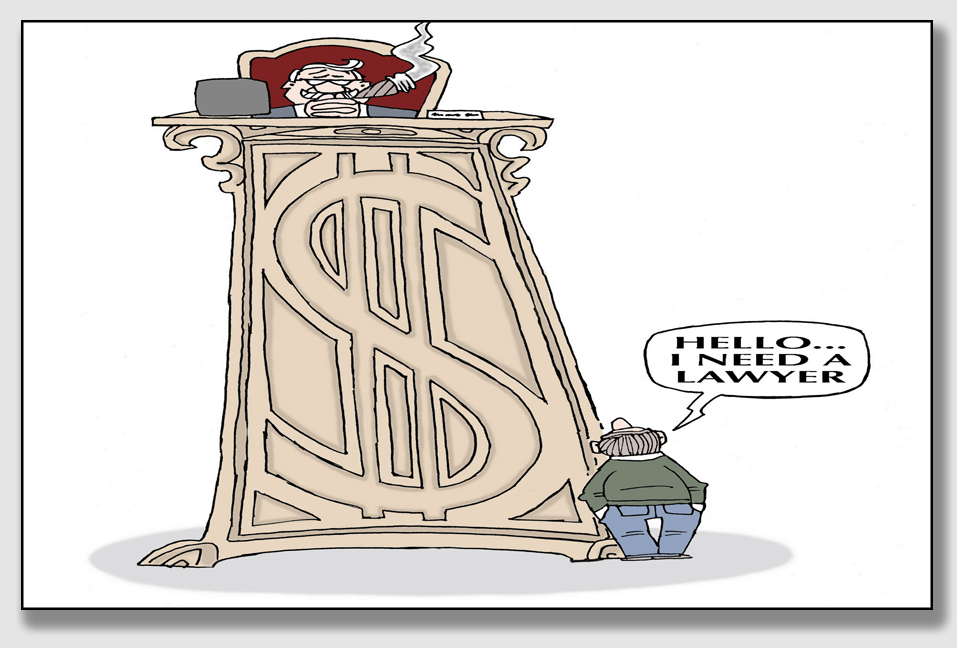
fees160104Let nothing come between a lawyer and his fee.

You might be cynical, and see today’s case as nothing more than a lawyer worried about collecting a large and unwarranted fee. But the case is much more than that.

The facts are rather prosaic. Some landowners failed to carefully mark the common boundary with their neighbor before setting a timber company loose on the property. Sure enough, the cutters harvested some of the neighbor’s trees. That much wasn’t an issue.

When Valarie Garvey sued the Chaceys for timber trespass, property damage and a collection of related causes of action, the Chaceys hired some aggressive litigators. Their lawyers knew that the best trial defense often is a good pretrial offense. They fought tooth and nail before trial, gaining their best tactical high ground when Valerie’s lawyer inexplicably didn’t identify the plaintiff’s timber expert by the pretrial deadlines.

The expert was crucial because he was going to testify as to the value of the timber that had been wrongfully cut. But once the expert established the value of the missing trees, Section 55-332 of the Virginia Code would let Valerie Garvey collect three times the value of the wrongly-cut timber, plus reforestation costs, plus other damages to the property (such as the private road the timber harvesters ripped up) plus “legal costs directly related to the trespass.” In short, it looked like a big payday for Valerie Garvey. She just had to do one thing. She had to prove the value of the stolen timber.

Alas, she screwed it up. Perhaps it would be more appropriate to say her lawyer screwed it up. Without the expert, Valerie had no way to get the value of the timber into evidence. When the jury decided the case, it was able to award her the princely sum of $15,135.00 (only a fraction of the reforestation costs she estimated to be $78,000.)

expert160104Valerie’s lawyer, trying to save a case that was going south pretty fast, successfully convinced the trial court that the “directly associated legal costs incurred by the owner of the timber as a result of the trespass” included attorneys’ fees. Valerie claimed she had spent over $135,000 in legal fees, and the trial court awarded even more than that – $165,000 – in fees.

I doubt that Valerie’s lawyer was going to get all of that pile of cash. In fact, Val had every right to be as mad as a wet hen over counsel’s missing the expert witness deadline. I suspect that the lawyer and client had made a deal to salvage something out of the case, a deal that would have counsel ending up with little more than cab fare (but no malpractice claims). Unfortunately, we’ll never know, because, on appeal, the Chaceys convinced the Virginia Supreme Court that whatever “directly associated legal costs” might be, they are not “attorneys fees.” The Supreme Court was impressed that wherever the legislature intended to authorize the award of attorneys fees – in over 200 statutes in the Code – it was able to clearly say so.

The Chaceys – not satisfied with hitting a triple – swung for the fence. They asked the Supreme Court to rule that where a plaintiff claiming timber trespass did not prove the value of the missing timber, the case should be thrown out. The Supreme Court disagreed. Proving a timber trespass does not require that one prove the value of the purloined pines. Of course, not doing so cuts the plaintiff out of a lot of damages, but the offense does not depend on proven damages. It just requires that a trespass to timber occur, whether the tree is worth anything or not.

As for Valerie’s attorney, I suspect he marched straight from the courtroom to his malpractice carrier’s office.

reforest160104Chacey v. Garvey, 295 Va. 1, 781 S.E.2d 357 (Supreme Court of Virginia, 2015). In 1995, Valerie Garvey bought 50 acres of land from Allan and Susan Chacey. The Chaceys retained ownership of adjacent property, and they reserved to themselves an easement over Garvey’s property as a means for ingress and egress to their property.

At the end of 2012, Garvey sued the Chaceys and Blue Ridge Forestry Consultants, Inc., alleging timber theft and trespass. Garvey said the Chaceys had hired a logging company a few years previously to remove some timber located on their property, and that the company had trespassed on her property and removed timber without her permission. She alleged that she was entitled to damages for timber theft at three times the value of the timber on the stump, as well as reforestation costs not to exceed $450 an acre, the costs of ascertaining the value of the timber, and her attorney’s fees. She also asked for $30,000 for damages to her property caused by the trespass, including damage to the road, fencing, and the stone bridge.

Prior to trial, Garvey attempted to designate an expert witness for the purpose of establishing the monetary value of the timber on the stump at issue in the complaint. However, she did so too late and the trial court refused to let her expert testify during the three-day jury trial.

While she was testifying at trial, Garvey was asked by her attorney whether she had incurred legal costs in connection with the trespass. The Chaceys objected, but the trial court ruled that legal costs included attorney’s fees. Garvey told the jury that she had incurred more than $135,000 in legal costs, including attorney’s fees, which she claimed were all directly associated with the trespass. She also testified that she had negotiated with Bartlett Tree Services for the restoration of the trees, and she had paid a deposit of $440 towards that work, against a total price of $78,000.

The trial court ruled that Garvey could not recover treble damages since her expert evidence regarding the value of the timber on the stump had been excluded. However, the case could still go to the jury for consideration of damages for reforestation and legal costs.

The Chaceys argued that attorneys’ fees are not recoverable by a prevailing party in an action for timber theft pursuant to the Virginia Code § 55-331. They also contended that Garvey’s timber trespass claim should not have been submitted to the jury, because she had failed to provide any evidence related to the value of the alleged damaged timber. However, the jury found for Garvey on her claims of timber theft, trespass, and property damage. On the timber theft claim, the jury awarded Garvey $135.00 in reforestation costs. The jury also awarded her legal costs. On the trespass count, the jury awarded Garvey $15,000 in damages. The trial court held that Garvey was entitled to $165,135 in “directly associated legal costs incurred by Plaintiff as a result of the trespass, including attorney’s fees, in the amount of $150,000 …”

The Chaceys appealed.

needlawyer160104Held: The Virginia Supreme Court split the ticket. It observed that although Virginia Code § 55-331 permits any victim of timber trespass to collect “directly associated legal costs incurred by the owner of the timber as a result of the trespass,” whether Garvey was entitled to attorney’s fees depends upon the meaning of “costs.” Garvey argued that her attorney’s fees are legal costs directly associated with the trespass. The Chaceys argued that Garvey is merely entitled to the costs necessary for the prosecution of her suit.

Tracing the definition of “costs” in other proceedings, the Court held that “the term ‘costs’ is limited to the costs necessary for the prosecution of a suit, and does not include attorney’s fees. The Code of Virginia contains more than 200 instances where the General Assembly has determined a successful litigant is entitled to ‘attorney’s fees and costs’ or ‘costs and attorney’s fees’ … However, the General Assembly did not include the right to recover attorney’s fees in this statute, something it has done in more than 200 other separate instances.”

The Court disagreed with the Chaceys, however, about the timber trespass claim. The Chaceys, no doubt wanting to capitalize on their pretrial success in keeping Garvey’s expert off the stand, argued that the trial court erred in permitting Garvey’s timber trespass claim to proceed to the jury because Garvey failed to provide any evidence related to the value of the alleged damaged timber. Essentially, the Chaceys were contending that evidence related to the value of the damaged timber is a prerequisite to awarding any of the additional damages provided for under Code § 55-332(B).

Virginia Code § 55-332(B) holds that any person who removes timber from the land of another without permission is liable to the rightful owner for “three times the value of the timber on the stump and shall pay to the rightful owner of the property the reforestation costs incurred not to exceed $450 per acre, the costs of ascertaining the value of the timber, and any directly associated legal costs incurred by the owner of the timber as a result of the trespass.” The Court held that there was nothing in the statute that stated that an owner is only entitled to reforestation costs, legal costs, or the costs of ascertaining the value of the timber after he or she had first established the value of the timber that was improperly taken. Instead, the Court said, the statute made clear that the person who removed the timber “shall be liable to pay” all of these damages to the owner. The fact that Garvey was unable to prove the value of the timber on the stump in this case did not preclude her from being able to recover the other damages she was entitled to under Code § 55-332(B).

– Tom Root

TNLBGray

Case of the Day – Friday, November 22, 2024

THOU SHALT NOT COVET THY NEIGHBOR’S TREES

Kee Nee Moo Sha, Inc., had a tract of wooded land on a lake, next to a Bible camp owned by the Baptist Church. What could be wrong with that? No loud music, no dancing all hours of the night, no boozing or riotous living… right?

The minister in charge of the Bible camp knew where the boundaries between the Baptists’ and the company’s lands lay. But he had a problem. How could he build more cabins for the pittance that had appeared in his collection plate? The Lord turned seven small loaves and a few fishes into a feast for 4,000 people. But the preacher, a lesser mortal, couldn’t stretch what little he had into more lodging.

And verily, he began to covet his neighbor’s trees.

The minister had a logger cut down about a hundred of Kee Nee Moo Sha’s pine trees. Surely this was manna from heaven — free timber! Except it wasn’t free, as the Baptists soon found out.

Kee Nee Moo Sha reacted much like a modern, more restrained version of the angry vineyard owner.  It sued. The Baptists failed to heed the Lord’s admonition to make peace with the plaintiff before you get to court.

Too bad, too. The court found that the minister’s trespass was willful, and in fact, it appeared to be rather irked with the fact that – once on the witness stand – the man of the cloth wasn’t very familiar with the 9th Commandment, you know, the one about bearing false witness and all.

Kee Nee Moo Sha wanted the Baptists to pay for the enhanced value of the timber — that is, the value of the timber after being milled — and the court agreed that the measure of damages is acceptable where the trespass is willful. But the court can’t guess what that value might be, and where Kee Nee Moo Sha failed to introduce any evidence of the enhanced value, it missed its opportunity.

The Baptists introduced evidence of the stumpage value of the timber, that is, the value at the point it had been cut down, but before it was hauled and milled. Stumpage value is always lower because the owner of the timber has to deliver it to the sawmill and pay for the milling before having a product to sell. Because the stumpage value was the best evidence of value in the record, the Baptists were charged for the lower figure.

The trial court assessed punitive damages against the church camp instead of the treble damages for wrongful cutting which the statute permits. The Court of Appeals noted that this was entirely permissible because sometimes trebling the damages just isn’t good enough to deter such conduct. Where the trespass is wanton but the damage only amounts to $100, $300 might just not get an errant preacher’s attention nearly so effectively as a whopping punitive award. The Court said that either trebling or punitive damages may be applied, at the trial court’s discretion.

covet150212And thus, the Baptists rendered unto Kee Nee Moo Sha …

Kee Nee Moo Sha, Inc., v. Baptist Missions of Minnesota-Plymouth Point Bible Camp, 1990 Minn. App. LEXIS 1305, 1990 WL 212222 (Minn.App. 1990). Kee Nee Moo Sha, Inc., is a family-owned corporation organized for the purpose of holding more than 100 acres of forested land near Hackensack, Minnesota, with a resort on the southern end of the property. The resort belongs to the Baptist Church.

In late 1976, in connection with the transfer of the Baptist’s church property to another church unit, a surveyor was hired to survey and mark the boundary between the Baptists’ land and the Kee Nee Moo Sha property. Shortly after the survey was completed, and while the brush was all cleared and orange flags marked the line, the surveyor walked the boundary line with one of the church’s pastors, pointing out in detail the location of the boundary.

About four years later, the pastor wanted to build more camp buildings as cheaply as possible. Looking for some do-it-yourself financing, he arranged for a local logger to cut about 100 pine trees in and near the main camp buildings. While most of the timber was cut on church property, 26 pines were cut on Kee Nee Moo Sha land. In addition, the pastor had the logger clear-cut nearly 100 birches and aspen from the same area of the Kee Nee Moo Sha property, along with 1,600 cubic yards of sand which were used in a drain field near the Baptist building project. Kee Nee Moo Sha was unamused.

A lawsuit inevitably followed. The trial court granted Kee Nee Moo Sha damages for trespass and an injunction against further trespass by the Baptists. Unhappy with the paltry damages awarded, Kee Nee Moo Sha appealed, seeking a higher measure of compensation, a more extensive permanent injunction, and costs, disbursements and attorney fees.

Held: The appellate court upheld the trial court decision.

The Court observed that there were several possible measures of damages that could be used when trespass to property involves the taking of timber. One of the oldest is the “enhanced value” of the timber after being sawed and transported to the place of sale or transfer, to be used when the trespass is willful. The presumption in trespass cases where timber is cut is that the trespass is willful, and the burden of proof falls to the trespasser to show otherwise.

Here, the trial court found it couldn’t use the “enhanced value” measure, because no evidence was introduced to permit the Court to determine the value of the processed lumber. Consequently, the trial court used the stumpage value presented by the Baptists to set compensatory damages, and awarded punitive damages, in addition, to arriving at a fair number. The trial court, passing up treble damages that were authorized but not required by statute, awarded punitive damages instead. The trial court found that “even an award of treble damages for that taking would not adequately punish [the Baptists] or compensate [Kee Nee Moo Sha] for the willful trespass which has occurred.”

The Court agreed that the trial judge’s approach was justifiable under Rector v. C.S. McCrossan, Inc., and the treble damage statute. It observed that Rector, while referring to various measures of damages, does not refer directly to punitive damages. Punitive damages may be awarded, however, when “the acts of the defendant show a willful indifference to the rights or safety of others.” The trial court found that the Baptists’ behavior was willful, and the evidence supported it.

ba150212Minnesota law provides that any award of punitive damages will be “measured by those factors which justly bear upon the purpose of punitive damages, including… the profitability of the misconduct to the defendant… the attitude and conduct of the defendant upon discovery of the misconduct… and the total effect of other punishment likely to be imposed upon the defendant as a result of the misconduct, including compensatory and punitive damage awards.” In this case, the Court didn’t think much of the Baptists’ attitude. First, the defendant cut the timber and removed the sand in order to line its own pocket, that is, to obtain cheap building materials for the camp. Second, the pastor continued to deny any willful misconduct throughout the trial, a denial that flew in the face of proof to the contrary and his own admission that he had been shown a clearly marked boundary prior to these takings. The appellate court dryly called the jury’s awarding of compensatory and punitive damages a “just” result.

Kee Nee Moo Sha argued for the use of the “replacement value” measure of damages also authorized by Rector, but the Court noted that in instances where the cost of replacement is unreasonable or excessive in relation to the damage to the land itself, the trial court may, in its discretion, allow the jury to consider more than one measure of damages in order to permit flexibility and achieve a just and reasonable result.

– Tom Root

TNLBGray