Case of the Day – Wednesday, January 15, 2025

THERE ARE LEGAL COSTS, AND THEN THERE ARE LEGAL COSTS

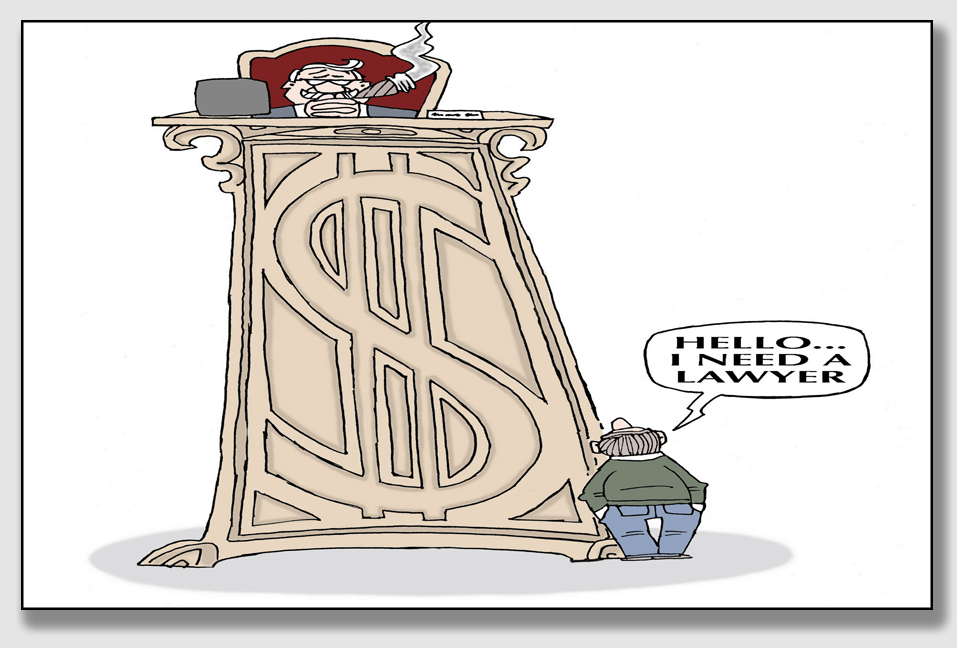
fees160104Let nothing come between a lawyer and his fee.

You might be cynical, and see today’s case as nothing more than a lawyer worried about collecting a large and unwarranted fee. But the case is much more than that.

The facts are rather prosaic. Some landowners failed to carefully mark the common boundary with their neighbor before setting a timber company loose on the property. Sure enough, the cutters harvested some of the neighbor’s trees. That much wasn’t an issue.

When Valarie Garvey sued the Chaceys for timber trespass, property damage and a collection of related causes of action, the Chaceys hired some aggressive litigators. Their lawyers knew that the best trial defense often is a good pretrial offense. They fought tooth and nail before trial, gaining their best tactical high ground when Valerie’s lawyer inexplicably didn’t identify the plaintiff’s timber expert by the pretrial deadlines.

The expert was crucial because he was going to testify as to the value of the timber that had been wrongfully cut. But once the expert established the value of the missing trees, Section 55-332 of the Virginia Code would let Valerie Garvey collect three times the value of the wrongly-cut timber, plus reforestation costs, plus other damages to the property (such as the private road the timber harvesters ripped up) plus “legal costs directly related to the trespass.” In short, it looked like a big payday for Valerie Garvey. She just had to do one thing. She had to prove the value of the stolen timber.

Alas, she screwed it up. Perhaps it would be more appropriate to say her lawyer screwed it up. Without the expert, Valerie had no way to get the value of the timber into evidence. When the jury decided the case, it was able to award her the princely sum of $15,135.00 (only a fraction of the reforestation costs she estimated to be $78,000.)

expert160104Valerie’s lawyer, trying to save a case that was going south pretty fast, successfully convinced the trial court that the “directly associated legal costs incurred by the owner of the timber as a result of the trespass” included attorneys’ fees. Valerie claimed she had spent over $135,000 in legal fees, and the trial court awarded even more than that – $165,000 – in fees.

I doubt that Valerie’s lawyer was going to get all of that pile of cash. In fact, Val had every right to be as mad as a wet hen over counsel’s missing the expert witness deadline. I suspect that the lawyer and client had made a deal to salvage something out of the case, a deal that would have counsel ending up with little more than cab fare (but no malpractice claims). Unfortunately, we’ll never know, because, on appeal, the Chaceys convinced the Virginia Supreme Court that whatever “directly associated legal costs” might be, they are not “attorneys fees.” The Supreme Court was impressed that wherever the legislature intended to authorize the award of attorneys fees – in over 200 statutes in the Code – it was able to clearly say so.

The Chaceys – not satisfied with hitting a triple – swung for the fence. They asked the Supreme Court to rule that where a plaintiff claiming timber trespass did not prove the value of the missing timber, the case should be thrown out. The Supreme Court disagreed. Proving a timber trespass does not require that one prove the value of the purloined pines. Of course, not doing so cuts the plaintiff out of a lot of damages, but the offense does not depend on proven damages. It just requires that a trespass to timber occur, whether the tree is worth anything or not.

As for Valerie’s attorney, I suspect he marched straight from the courtroom to his malpractice carrier’s office.

reforest160104Chacey v. Garvey, 295 Va. 1, 781 S.E.2d 357 (Supreme Court of Virginia, 2015). In 1995, Valerie Garvey bought 50 acres of land from Allan and Susan Chacey. The Chaceys retained ownership of adjacent property, and they reserved to themselves an easement over Garvey’s property as a means for ingress and egress to their property.

At the end of 2012, Garvey sued the Chaceys and Blue Ridge Forestry Consultants, Inc., alleging timber theft and trespass. Garvey said the Chaceys had hired a logging company a few years previously to remove some timber located on their property, and that the company had trespassed on her property and removed timber without her permission. She alleged that she was entitled to damages for timber theft at three times the value of the timber on the stump, as well as reforestation costs not to exceed $450 an acre, the costs of ascertaining the value of the timber, and her attorney’s fees. She also asked for $30,000 for damages to her property caused by the trespass, including damage to the road, fencing, and the stone bridge.

Prior to trial, Garvey attempted to designate an expert witness for the purpose of establishing the monetary value of the timber on the stump at issue in the complaint. However, she did so too late and the trial court refused to let her expert testify during the three-day jury trial.

While she was testifying at trial, Garvey was asked by her attorney whether she had incurred legal costs in connection with the trespass. The Chaceys objected, but the trial court ruled that legal costs included attorney’s fees. Garvey told the jury that she had incurred more than $135,000 in legal costs, including attorney’s fees, which she claimed were all directly associated with the trespass. She also testified that she had negotiated with Bartlett Tree Services for the restoration of the trees, and she had paid a deposit of $440 towards that work, against a total price of $78,000.

The trial court ruled that Garvey could not recover treble damages since her expert evidence regarding the value of the timber on the stump had been excluded. However, the case could still go to the jury for consideration of damages for reforestation and legal costs.

The Chaceys argued that attorneys’ fees are not recoverable by a prevailing party in an action for timber theft pursuant to the Virginia Code § 55-331. They also contended that Garvey’s timber trespass claim should not have been submitted to the jury, because she had failed to provide any evidence related to the value of the alleged damaged timber. However, the jury found for Garvey on her claims of timber theft, trespass, and property damage. On the timber theft claim, the jury awarded Garvey $135.00 in reforestation costs. The jury also awarded her legal costs. On the trespass count, the jury awarded Garvey $15,000 in damages. The trial court held that Garvey was entitled to $165,135 in “directly associated legal costs incurred by Plaintiff as a result of the trespass, including attorney’s fees, in the amount of $150,000 …”

The Chaceys appealed.

needlawyer160104Held: The Virginia Supreme Court split the ticket. It observed that although Virginia Code § 55-331 permits any victim of timber trespass to collect “directly associated legal costs incurred by the owner of the timber as a result of the trespass,” whether Garvey was entitled to attorney’s fees depends upon the meaning of “costs.” Garvey argued that her attorney’s fees are legal costs directly associated with the trespass. The Chaceys argued that Garvey is merely entitled to the costs necessary for the prosecution of her suit.

Tracing the definition of “costs” in other proceedings, the Court held that “the term ‘costs’ is limited to the costs necessary for the prosecution of a suit, and does not include attorney’s fees. The Code of Virginia contains more than 200 instances where the General Assembly has determined a successful litigant is entitled to ‘attorney’s fees and costs’ or ‘costs and attorney’s fees’ … However, the General Assembly did not include the right to recover attorney’s fees in this statute, something it has done in more than 200 other separate instances.”

The Court disagreed with the Chaceys, however, about the timber trespass claim. The Chaceys, no doubt wanting to capitalize on their pretrial success in keeping Garvey’s expert off the stand, argued that the trial court erred in permitting Garvey’s timber trespass claim to proceed to the jury because Garvey failed to provide any evidence related to the value of the alleged damaged timber. Essentially, the Chaceys were contending that evidence related to the value of the damaged timber is a prerequisite to awarding any of the additional damages provided for under Code § 55-332(B).

Virginia Code § 55-332(B) holds that any person who removes timber from the land of another without permission is liable to the rightful owner for “three times the value of the timber on the stump and shall pay to the rightful owner of the property the reforestation costs incurred not to exceed $450 per acre, the costs of ascertaining the value of the timber, and any directly associated legal costs incurred by the owner of the timber as a result of the trespass.” The Court held that there was nothing in the statute that stated that an owner is only entitled to reforestation costs, legal costs, or the costs of ascertaining the value of the timber after he or she had first established the value of the timber that was improperly taken. Instead, the Court said, the statute made clear that the person who removed the timber “shall be liable to pay” all of these damages to the owner. The fact that Garvey was unable to prove the value of the timber on the stump in this case did not preclude her from being able to recover the other damages she was entitled to under Code § 55-332(B).

– Tom Root

TNLBGray

Case of the Day – Friday, November 22, 2024

THOU SHALT NOT COVET THY NEIGHBOR’S TREES

Kee Nee Moo Sha, Inc., had a tract of wooded land on a lake, next to a Bible camp owned by the Baptist Church. What could be wrong with that? No loud music, no dancing all hours of the night, no boozing or riotous living… right?

The minister in charge of the Bible camp knew where the boundaries between the Baptists’ and the company’s lands lay. But he had a problem. How could he build more cabins for the pittance that had appeared in his collection plate? The Lord turned seven small loaves and a few fishes into a feast for 4,000 people. But the preacher, a lesser mortal, couldn’t stretch what little he had into more lodging.

And verily, he began to covet his neighbor’s trees.

The minister had a logger cut down about a hundred of Kee Nee Moo Sha’s pine trees. Surely this was manna from heaven — free timber! Except it wasn’t free, as the Baptists soon found out.

Kee Nee Moo Sha reacted much like a modern, more restrained version of the angry vineyard owner.  It sued. The Baptists failed to heed the Lord’s admonition to make peace with the plaintiff before you get to court.

Too bad, too. The court found that the minister’s trespass was willful, and in fact, it appeared to be rather irked with the fact that – once on the witness stand – the man of the cloth wasn’t very familiar with the 9th Commandment, you know, the one about bearing false witness and all.

Kee Nee Moo Sha wanted the Baptists to pay for the enhanced value of the timber — that is, the value of the timber after being milled — and the court agreed that the measure of damages is acceptable where the trespass is willful. But the court can’t guess what that value might be, and where Kee Nee Moo Sha failed to introduce any evidence of the enhanced value, it missed its opportunity.

The Baptists introduced evidence of the stumpage value of the timber, that is, the value at the point it had been cut down, but before it was hauled and milled. Stumpage value is always lower because the owner of the timber has to deliver it to the sawmill and pay for the milling before having a product to sell. Because the stumpage value was the best evidence of value in the record, the Baptists were charged for the lower figure.

The trial court assessed punitive damages against the church camp instead of the treble damages for wrongful cutting which the statute permits. The Court of Appeals noted that this was entirely permissible because sometimes trebling the damages just isn’t good enough to deter such conduct. Where the trespass is wanton but the damage only amounts to $100, $300 might just not get an errant preacher’s attention nearly so effectively as a whopping punitive award. The Court said that either trebling or punitive damages may be applied, at the trial court’s discretion.

covet150212And thus, the Baptists rendered unto Kee Nee Moo Sha …

Kee Nee Moo Sha, Inc., v. Baptist Missions of Minnesota-Plymouth Point Bible Camp, 1990 Minn. App. LEXIS 1305, 1990 WL 212222 (Minn.App. 1990). Kee Nee Moo Sha, Inc., is a family-owned corporation organized for the purpose of holding more than 100 acres of forested land near Hackensack, Minnesota, with a resort on the southern end of the property. The resort belongs to the Baptist Church.

In late 1976, in connection with the transfer of the Baptist’s church property to another church unit, a surveyor was hired to survey and mark the boundary between the Baptists’ land and the Kee Nee Moo Sha property. Shortly after the survey was completed, and while the brush was all cleared and orange flags marked the line, the surveyor walked the boundary line with one of the church’s pastors, pointing out in detail the location of the boundary.

About four years later, the pastor wanted to build more camp buildings as cheaply as possible. Looking for some do-it-yourself financing, he arranged for a local logger to cut about 100 pine trees in and near the main camp buildings. While most of the timber was cut on church property, 26 pines were cut on Kee Nee Moo Sha land. In addition, the pastor had the logger clear-cut nearly 100 birches and aspen from the same area of the Kee Nee Moo Sha property, along with 1,600 cubic yards of sand which were used in a drain field near the Baptist building project. Kee Nee Moo Sha was unamused.

A lawsuit inevitably followed. The trial court granted Kee Nee Moo Sha damages for trespass and an injunction against further trespass by the Baptists. Unhappy with the paltry damages awarded, Kee Nee Moo Sha appealed, seeking a higher measure of compensation, a more extensive permanent injunction, and costs, disbursements and attorney fees.

Held: The appellate court upheld the trial court decision.

The Court observed that there were several possible measures of damages that could be used when trespass to property involves the taking of timber. One of the oldest is the “enhanced value” of the timber after being sawed and transported to the place of sale or transfer, to be used when the trespass is willful. The presumption in trespass cases where timber is cut is that the trespass is willful, and the burden of proof falls to the trespasser to show otherwise.

Here, the trial court found it couldn’t use the “enhanced value” measure, because no evidence was introduced to permit the Court to determine the value of the processed lumber. Consequently, the trial court used the stumpage value presented by the Baptists to set compensatory damages, and awarded punitive damages, in addition, to arriving at a fair number. The trial court, passing up treble damages that were authorized but not required by statute, awarded punitive damages instead. The trial court found that “even an award of treble damages for that taking would not adequately punish [the Baptists] or compensate [Kee Nee Moo Sha] for the willful trespass which has occurred.”

The Court agreed that the trial judge’s approach was justifiable under Rector v. C.S. McCrossan, Inc., and the treble damage statute. It observed that Rector, while referring to various measures of damages, does not refer directly to punitive damages. Punitive damages may be awarded, however, when “the acts of the defendant show a willful indifference to the rights or safety of others.” The trial court found that the Baptists’ behavior was willful, and the evidence supported it.

ba150212Minnesota law provides that any award of punitive damages will be “measured by those factors which justly bear upon the purpose of punitive damages, including… the profitability of the misconduct to the defendant… the attitude and conduct of the defendant upon discovery of the misconduct… and the total effect of other punishment likely to be imposed upon the defendant as a result of the misconduct, including compensatory and punitive damage awards.” In this case, the Court didn’t think much of the Baptists’ attitude. First, the defendant cut the timber and removed the sand in order to line its own pocket, that is, to obtain cheap building materials for the camp. Second, the pastor continued to deny any willful misconduct throughout the trial, a denial that flew in the face of proof to the contrary and his own admission that he had been shown a clearly marked boundary prior to these takings. The appellate court dryly called the jury’s awarding of compensatory and punitive damages a “just” result.

Kee Nee Moo Sha argued for the use of the “replacement value” measure of damages also authorized by Rector, but the Court noted that in instances where the cost of replacement is unreasonable or excessive in relation to the damage to the land itself, the trial court may, in its discretion, allow the jury to consider more than one measure of damages in order to permit flexibility and achieve a just and reasonable result.

– Tom Root

TNLBGray

Case of the Day – Monday, November 4, 2024

ERR IN HASTE … 

truck160211“Haste makes waste,” the old saw goes, and did it ever for the Warrens of Iron County, Missouri.

They finally realized their dream, buying land they had rented for years as cattle pasture for their dream home. First, logically enough, they wanted to mark the boundaries of the land. The Warrens asked their neighbors, the Hales, to pay for half of the survey, but the Hales declined. Why should they pay? They knew where their boundaries lay.

So the Warrens went ahead on their own. Their surveyor couldn’t find the section corner marker, which had been described in some 19th century surveys as laying certain distances on certain radials from streams and trees that weren’t there anymore. So he made his best guess, but didn’t use the technique provided for in Missouri law.

Hard to believe, but the surveyor blew it big time, marking a boundary that was way off the traditional boundaries used by the parties. In fact, his boundary included big chunks of the Hales’ land, such as their entire driveway, landscaping and front lawn and nearly their house. The day after the surveyor placed his little pink flags, Mrs. Hale complained to the Warrens that their surveyor was nuts, and she’d get another surveyor to straighten it all out. She even showed them some old 19th century abstracts, which clearly showed her ancestors had owned some of the land the Warrens now thought was theirs.

Even cousin Pug on the bulldozer had to wonder whether the surveyor's lines weren't just a little too optimistic ...

      Even cousin Pug on the bulldozer had to wonder whether the surveyor’s lines weren’t just a little too optimistic …

Here’s where the Warrens blundered. Mrs. Hale might have been wrong, but her complaints, her intention to get another surveyor, and the Hales’ historical use and occupancy of the land the Warrens now thought was theirs was enough information to give a reasonable person some pause — at least for a few days while the issues were sorted out. But the Warrens weren’t the waitin’ type. They had a family member show up the next day with his bulldozer and start tearing up the Hales’ front yard and landscaping.

The Hales got an injunction, litigation ensued and another surveyor took a whack at the boundary. Oops. The Warrens’ surveyor screwed it up, the court said, failing to use the prescribed method for finding a corner where the original corner was lost. The disputed land really belonged to the Hales, and the Warrens — who had torn up things too quickly — were socked with treble damages under a Missouri statute applying where one destroyed trees or landscaping of another without probable cause to believe the land was his. The unseemly haste of the Warrens to bulldoze the disputed tract, where there seemed to be no need for such fast-track excavation, evidently played a role in the Court’s determination.

Act in haste, repent in leisure.

hurry160211Hale v. Warren, 236 S.W.3d 687 (Mo.App. 2007). The Warrens bought 64 acres in Iron County, Missouri, that they had rented for the previous nine years, intending to build a home on the land and to continue to graze their cattle there. The Hales owned 80 acres or so next to the Warrens, land that had been in that family for over 150 years.

After buying the property, the Warrens wanted to have their property surveyed before beginning on the house, so they asked the Hales to share the cost of a survey. When the Hales refused, the Warrens went ahead on their own. Their surveyor determined that part of the Hales’ yard and their entire driveway lay on the Warrens’ property, as well as other areas. The surveyor marked the boundary with pink flags.

The next day, Mrs. Hale contacted Mrs. Warren about the pink flags, telling her that she disagreed with the survey, especially with one of the section corners from which measurements were taken. Nevertheless, the Warrens began bulldozing and clearing the land the next day, including right in front of the Hales’ home and along the western border of their property, within the area set out by the pink flags. By the next day, the Hales had obtained a temporary restraining order against the Warrens, barring them from “further bulldozing or other acts of destruction and possession …” The Hales then hired their own surveyor, who found that a section corner used in old surveys had been lost and — applying Missouri law — calculated a starting point by a procedure known as “double proportional measurement.” At the same time, they sued the Warrens to quiet title and for trespass.

The trial court found that the Hales owned Tracts 1, 2, and 3 by adverse possession, and that the Warrens’ survey was “not accurate and correct” but that the Hales’ survey was. The trial court entered a permanent injunction against the Warrens, prohibiting them from entering onto the land in question and assessing treble damages in favor of Hales under V.M.S.A. § 537.340 for $6,300.00. The Warrens appealed.

Held: The trial court was upheld. Much of the decision related to the appropriate use of the “double proportional measurement” system under Missouri law, an interesting if technical discussion. However, the Court’s treatment of the treble damages award in favor of Hales is relevant to arboriculture law. The Court agreed with the trial court that the Warrens lacked probable cause to believe that the property being bulldozed was their own.

Section 537.340 of the Missouri Code imposes treble damages for the wrongful cutting down of trees, without any showing of negligence or intent required. The Court observed that §537.340 “is a penal statute which must be strictly construed.” It is tempered by § 537.360, which holds that if defendant had probable cause to believe land was his own, plaintiff shall receive only single damages, with costs.”

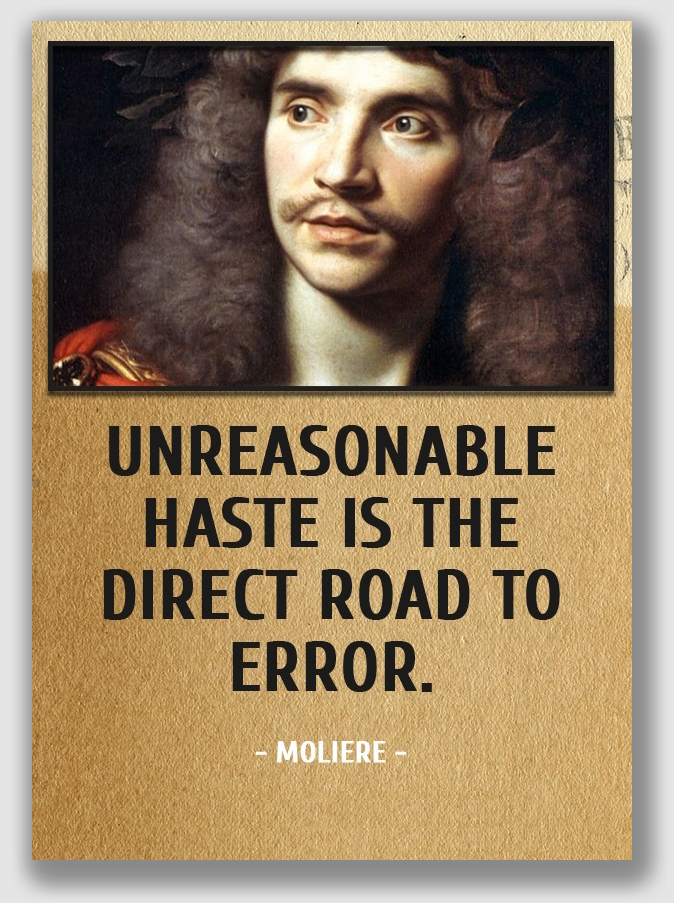
Too bad the Warrens hadn't read a lot of Moliere. He makes a good point.

Too bad the Warrens hadn’t read a lot of Moliere. He makes a good point.

A party would have ‘probable cause’ under the statute if there was such cause as would induce a reasonable person to believe he had the right to remove trees from another’s land. Here, the evidence showed the Hales’ driveway had always been at its present location and that the Hales had maintained the area since 1966 as part of their yard, planting trees and shrubbery in that area as well. The tracts had been owned by the Hales and their predecessors since 1855, and fencing had marked the boundary until the Warrens wrongfully removed it. The Hales had harvested timber and cut firewood on the disputed land since they purchased the property from their family in 1966.

After the pink flags were placed by the Warrens’ surveyor, Mrs. Hale showed Mr. Warren a land abstract in which her grandfather had deeded off a portion of the disputed land for a school building. She showed him the abstract to “show them that obviously this had been in our possession since the 1880’s. This particular tract of land that’s in dispute.” She told the Warrens that she disputed their survey and that she would speak to a surveyor herself.

The Court found there was sufficient evidence to rebut the Warrens’ assertions they removed the trees and landscaping at issue because they had probable cause to believe they owned the property. First, for all the years the Warrens had possessed the land as owners or renters, the Court said, it was only reasonable to conclude they should have become familiar with Hales’ general use of their property. Richard Warren admitted that when they purchased his property, he was aware that the Hales stored cars and maintained a large scrap metal pile on the land. Further, when they purchased the property, the Warrens were aware of the location of Hales’ driveway and yard and their generalized use of the land. Second, the Hales disputed the Warrens’ survey as soon as it was surveyed. Mrs. Hale informed the Warrens that she was contacting Smith & Company about the survey because she believed it was incorrect, and she showed them an old abstract relating to the prior use of the property. When the Warrens began bulldozing right away after their survey was done, it was clear that the Warrens knew of the Hales’ open and actual possession and use of the property, and knew that the Hales had issues with the survey lines at the time the bulldozing began.

The Court said it was “difficult… to believe that ‘a reasonable person’ would ‘believe he had the right to remove trees from another’s land,’ where he was faced with: a mowed yard and maintained driveway; areas that were clearly used by the landowner for storing scrap metal and other items; open protests and disputes by the landowner; and a survey which obviously did not comport with historically used property lines.” The Warrens did not meet their burden of proving they had probable cause to believe they owned the land in question at the time they bulldozed the trees and shrubs at issue.

 – Tom Root

 TNLBGray140407

Case of the Day – Thursday, October 31, 2024

YOU SNOOZE, YOU LOSE

This past weekend was sunny, brisk and glorious, one that called for enjoying the fall splendor. Outside of a Halloween fright for the first three quarters of Ohio State-Nebraska football (before my beloved Buckeyes awakened from their gridiron snooze to eke out a four-point win in a game where the Buckeyes were three-touchdown favorites – and, by the way, I should say “well fought, Nebraska”), I spent the weekend raking up the fall splendor. A lot of it. By 7 o’clock Sunday night, I was nodding off to sleep.

I used to have the same problem many decades ago in Property Law, a required course for first-year law students. All of those terms I had happily lived 22 years without knowing: fee simple absolute, livery of seizen, life estates, enfeeoffment, trespass quare clausum fregit… Contract law made great sense, civil procedure had a certain elegance,  but property…

More often than they should have, my eyes glazed over, my head slumped, and I slumbered while Professor Prosser droned. Even without first raking leaves. Ah, how education is wasted on the young.

Speaking of slumber, the defendant in today’s blast from the past did just that. Like your author, he paid too little attention to Byzantine concepts like life estates. When the owner of a life estate gave him permission to harvest timber on her land, Hempy slept on his rights. The owner of the life estate died, whereupon Hempy awoke from his slumber and figured maybe he had better get those trees cut.

Too little, too late. A life estate lasts only as long as the person holding the life estate does. While the holder lives, the life estate can create real mischief, but once the life expires, so does the estate. And so do any rights the estate holder may have granted.

But the reason the timber cutting was a trespass is not terribly relevant to today’s case. Instead, it is only the setup for the real issue, which is how to value the damages.

Koonz v. Hempy, 120 N.W. 976 (Supreme Court, Iowa, 1909). Koonz sued Hempy for cutting timber on property in which he had recently obtained an interest following the death of his mother. Apparently, Koonz’s mother, who had held a life estate in the property granted by her deceased husband, had contracted with Hempy to remove timber on the property. However, Hempy did not harvest the timber until after the mother had died. The trial court ruled that mom’s demise meant that Hempy had lost his right to cut the timber, because the life estate was extinguished with her passing, and Koonz was now in possession. The court awarded damages to Koonz, and both parties appealed.

Held: Hempy was liable to pay the value of the harvested timber to Koonz. However, Hempy argued that if he was liable at all, it was only for the reduction in the value of the property after he removed the timber. The Court disagreed, ruling that “where the thing destroyed or removed from real property, although it is part of the realty, has a value which can be accurately measured … without reference to the soil on which it stands, the recovery may be of the value of thing thus destroyed or removed, and not for the difference in the value of the land.”

Applying this rule, the Court held that the trial court had properly measured damages in terms of the value of the timber alone. Throwing a bone to Hempy, the Court ruled that the trial court properly denied treble damages, because Hempy’s actions failed to demonstrate the requisite willfulness to warrant such an award.

– Tom Root

Case of the Day – Tuesday, October 22, 2024

WHEN ARM’S LENGTH ISN’T QUITE FAR ENOUGH

When I was a mere first-grader, I had an uncle – a Wharton School grad – who taught me a business aphorism he had learned in B-school. Everyone thought that it was cute to hear a 6-year-old try to say, “infamous machinations,” sort of the same way that the Teddy Ruxpin creator picked the bear’s name because he figured so many children would mispronounce it so cutely.

But six decades later, I remember what Uncle Harl taught me through his omnipresent swirls of cigar smoke: “Always deal with your business associate at arm’s length. For if he be an honest man, he will respect your caution…”

Apropos of our regular discussions about independent contractors, you, Harry and Harriet Homeowner, may figure that you are being prudent by hiring your vendors and service providers as such. After all, we all know that the homeowners are not liable for the negligence of independent contractors.

Certainly, our neighbors will respect our caution.

In today’s case, however, the Svensons discovered, to their chagrin, that trespass ain’t negligence. As a result, they got no respect. When the independent contractor tree service hired by their independent contractor architect – making the tree service something akin to an independent contractor once removed – cut down a pair of boundary trees, the Svensons were sued along with the architect and the tree service. They figured they were insulated. It was the contractors’ fault, after all, not theirs.

But one can be dinged for trespass, or for causing someone else to trespass. The fact that the party that has been caused to trespass may be liable, like an eight-ball going into a side pocket, does not absolve the person who directed the trespass. Like the cue ball that put the eight ball into motion, the party who caused the trespass was indispensable to the tort. And regardless of the relationship between the director and the directee, both may share liability.

Oh, and one other thing, Svensons… if you have a good argument to make on appeal, make sure you make the same argument before the trial court. Like l’esprit de l’escalier, thinking of a great argument for the first time on appeal is about 10 minutes too late.

Swegan v. Svenson, 960 N.Y.S.2d 768,104 A.D.3d 1131(Sup.Ct.A.D., 2013). The Svensons were doing some remodeling around their place. They did it right. They hired an architect to design the project and manage the contractor. The architect hired a tree service to remove two trees. The tree service did exactly as it was instructed.

But the trees were boundary trees, partly in the Svensons’ yard and partly in the touchy neighbors’ yard. It didn’t take a New York minute for the neighbors to sue everybody involved for conversion and trespass.

The Svensons moved for summary judgment based on the novel argument that they could not be held liable for the trespass because the architect was not their agent but rather an independent contractor, and tree service certainly was not their agent but instead was an independent contractor as well. The trial court denied their motion.

The Svensons appealed.

Held: The Svensons were not entitled to summary judgment. The court held that regardless of the architect’s status as an independent contractor, the Svensons may be held liable for the trespass and ensuing conversion if they “directed the trespass or such trespass was necessary to complete the contract” between Svensons and the architect. Here, the Swegans had raised an issue of fact whether the Svensons “directed the trespass or whether such trespass was necessary to complete the contract.”

For the first time on appeal, the Svensons floated the argument that they had the right as joint owners to remove the trees because they were structurally unsafe and created a safety hazard or private nuisance. At any rate, they claimed, they should not be assessed treble damages under RPAPL 861 because there is no evidence that they acted recklessly, willfully or wantonly. The court did not consider either contention, because neither had been raised in the trial court.

– Tom Root

TNLBGray

Case of the Day – Thursday, October 17, 2024

EXPERT TESTIMONY

expert150115

I spent the better part of last week trying to line up a couple of expert witnesses for a Virginia case. The eye-glazing episode left me contemplating Mark Twain’s aphorism that “an expert is just somebody from out of town.”

As I was reminded in my quest for some experts in rather arcane disciplines, it’s a little more complicated than what Twain may have thought. But not that much: certified arborists, operators of tree trimming services, even just guys from out of town – just about anyone can be qualified by courts as expert witnesses.

And what good is an expert witness? Primarily, experts testify not to facts, but rather to opinions. Juries like opinions. Opinions sway juries.

In today’s case from Arkansas, a frolicking bulldozer operator wiped out a bunch of a neighbor’s trees. Clearly, she was entitled to damages. But how much would the damages be? She hired the county extension agent to testify as to the value of the trees that had been cut down. The defendant complained that the expert relied on timber sales reports written by others, but the Court of Appeals accepted his opinion and, in the process, explained what type of research process it wanted to see as a basis for an expert opinion.

Of course, the state’s treble damages statute, which multiplied the value of the lost timber by threefold, made the expert’s opinion all that more important to both sides. Incidentally, the defendant tried to argue that there was no proof that the bulldozer operator was his agent, but that was a mere sideshow: the evidence was overwhelming on that point.

Expert150116Jackson v. Pitts, 93 Ark.App. 466, 220 S.W.3d 265 (Ct.App. Ark. 2005). Richard Jackson owns land just north of Nora Pitts’s property. Pitts claimed that Jackson or people acting for him bulldozed trees on her land where it borders Jackson’s.

Lloyd Pitts, Nora’s son, saw John Moore operating a bulldozer in the area of the destroyed timber, which was located on Pitts’s property line with Jackson’s land. Lloyd said he walked along his mother’s land shortly afterward and saw holes where trees had been removed from the bulldozed ground. Another witness saw the bulldozer activity on Pitts’ property and said that the bulldozer operator told him that he had been directed by Jackson to perform the work. The trial court found that Jackson and Moore trespassed on Pitts’ land and destroyed marketable timber, setting the value of the destroyed timber at $1,157.20. Treble damages allowed under §18-60-102 of the Arkansas Code increased the judgment to $3,471.60. Jackson appealed.

Held: The trial court judgment was upheld. Jackson claimed that treble damages were unjustified, but the Court disagreed. The imposition of treble damages in a trespass action for trees damaged, broken, destroyed, or carried away requires a showing of intentional wrongdoing, although intent may be inferred from the carelessness, recklessness, or negligence of the offending party.

Here, the Court said, the evidence was sufficient to support a finding that an agency relationship existed between Jackson and the bulldozer operator such that Jackson was liable for the operator’s damage to Pitts’ timber. Lloyd Pitts saw the bulldozer on his mother’s property operating in the area of the damaged timber and saw Moore operating it. Another witness said Moore said he was working for Jackson. Jackson admitted he had hired Moore to work on his property with a bulldozer, and that if any trees had been removed from Pitts’ property, it would have been done by Moore.

Mark Twain says there are none of these ...

Mark Twain says there are none of these …

As for the amount of damages, the Court said, the evidence in each trespass case determines what measure of damages should to be used to value trees damaged, broken, destroyed, or carried away. Timber is generally valued according to its “stumpage value,” which is the value of the timber standing in the tree. Here, Pitts’ expert witness gave testimony of the estimated number of trees destroyed by Moore, and their market value at the time. The evidence was admissible, the Court said, even though the opinion relied in part on hearsay. The expert described the methodology he used to compute timber value within a specified area, which included diameter measurements of randomly selected trees, an estimate of the timber volume multiplied by the number of trees within a specified area, and the use of a university timber market report to obtain an estimated market value.

What’s more, the Court observed that the expert testified he personally walked the area to conduct his measurements and testified he walked off the area that was bulldozed and then went into the woods next to that area to measure a similar amount of land and counted the trees within it. The Court said an expert witness may base an opinion on facts or data otherwise inadmissible, as long as the facts or data are of the type reasonably relied on by experts in that particular field.

– Tom Root

TNLBGray

Case of the Day – Monday, October 7, 2024

HE SAID, SHE SAID…

This is probably the right time, what with Presidential campaign drama being played out in Washington and across the country, to run with our own “he said, she said” case, a peculiar turn-of-the-last-century trespass to timber case from New Jersey.

The defendant farmer was accused of trespassing onto the plaintiff’s land without permission and cutting down 32 trees. He said he only cut 13 trees, and anyway, he had permission from the plaintiff’s father (the plaintiff being a fair damsel who, back then, couldn’t be worrying her pretty little head about real property management).

The plaintiff’s dad, unsurprisingly, denied giving permission.

It seemed pretty clear that the jury bought the plaintiff’s version of events. The damages awarded could not have been for just 13 trees, implying the jury must have believed that Farmer Ruddy had taken all 32. The fact that the jury found a trespass meant that it necessarily disbelieved Farmer Ruddy’s story about looking at the trees with the plaintiff’s father and making a deal.

After the obligatory denial that it was not second-guessing the jury, the court of appeals held that punitive damages were not proper where the case was nothing more than “an honest dispute as to permission for the act found to be a trespass…” Sure, and Bonnie and Clyde thought they had permission to take money that wasn’t theirs from the bank. So their offense was really just “an honest dispute as to permission for the act” found to be a robbery accompanied by lots of gunfire.

If Farmer Ruddy did not have permission (as the jury found he did not), then his entire story about walking the boundary with Ms. Hollister’s father was a woof story. And necessarily, Farmer Ruddy’s conduct in trespassing and taking the trees was wanton and malicious.

The court of appeals was simply substituting its own conclusions for those of the jury, rewriting the verdict as best it could by reducing the damages by about half.

This is not only an old decision, it’s an awful one. The Court may have been swayed by George Ruddy’s motive, to remove the shade from his field and thereby make it more productive. It may have preferred George’s detailed testimony over getting permission from plaintiff Minnie Hollister’s dad, whose hot denials may have sounded hollow. It may have figured that some woods belonging to a mere girl should not be favored over a field owned by a man.

Who knows (but the Court)? The point is that those conclusions are factual, and in this country, findings of fact are made by the jury, not an appeals court. This is raw judicial encroachment on the jury function, 19th-century style.

And some think that judicial activism is a recent phenomenon.

Hollister v. Ruddy, 66 N.J.L. 68 (N.J. 1901). Farmer George Ruddy had a problem. Minnie Hollister’s trees that stood along the boundary with his field threw so much shade that a healthy part of the cropland was not healthy at all. George cut down some trees, the exact number being an issue, some of which were boundary trees.

Minnie claimed that George had no permission to remove any trees at all. George testified that he had obtained permission from Minnie’s father, who had the authority to approve tree removal. George gave convincing testimony that he had driven the elder Hollister from town to the field, that they discussed the trees and shade problems they caused, that the trees were only fit for firewood, and that George even offered to sell the wood and give all of the proceeds to Minnie (because his only interest was in making the field more productive). Farmer Ruddy said he had cut only 13 trees on the boundary, not the 32 trees Minnie claimed were gone.

No matter. The jury believed Minnie Hollister and found that George had trespassed. Miss Minnie recovered $400.00 in damages to the trees and punitive damages of $350. George appealed.

Held: Minnie was not due any punitive damages.

The trial court had instructed the jury that after it figured out the value of the timber that was improperly taken, “if you believe that the action of this defendant, in entering upon the plaintiff’s land and cutting the trees, was wanton, willful and malicious, and that he meant to take property that he knew was not his own, and cut down the trees maliciously and carried them away without the plaintiff’s knowledge or consent, you may add such damages as you think is proper punishment for a man who willfully does an illegal act of trespass of that character.”

The court of appeals agreed with the jury instruction, but it found that the clear weight of the evidence showed that Farmer Ruddy had not cut or authorized the cutting of more than the 13 trees that stood on or near the boundary line and that the trees he cut were fit only to be cut for cordwood. Their value, based on the trial court testimony, was about $20.00. But even if the jury thought that George Ruddy had cut all 32 trees, the most they could have been worth was about $400.00. So plainly, the appellate court concluded, the jury must have allowed punitive damages.

The Court ruled that the right to award punitive damages rests primarily upon a single ground – wrongful motive. But here, the Court said, there was no competent evidence that George had authorized the cutting of anything more than the trees on or along the boundary line, and he claimed that his reason for cutting those was that they shaded his field so as to prevent the raising of full crops. He also claimed that he had procured permission from the elder Hollister, who was in charge of the property, for the cutting of those trees, although Mr. Hollister hotly denied this.

The Court conceded that “the verdict determined that permission was not given, and on that point alone we would not disturb it; but it seems to us quite plain that the jury was not justified in finding the defendant’s conduct wanton or malicious. Without conceding that for a mere trespass on lands and the cutting of trees that have no special value in themselves, and the cutting of which inflicts no peculiar injury on the landowner, punitive damages can ever be properly awarded, we see no ground for their allowance on the testimony above cited.”

The Court characterized the trespass case as “an honest dispute as to permission for the act found to be a trespass. It is true that some of the trees cut were exactly on the boundary line, and it is argued that that fact gave them a peculiar value. No such value was contended for or submitted to the jury. The line was not obliterated, for the stumps of the trees remained in the earth, and the line itself was shown by a post and wire fence, which, though considerably fallen into decay, still left the boundary line between the parties clearly discernible. There was no peculiar injury or any indignity inflicted on the plaintiff. It will be enough if she gets just compensation, which, of course, may include the value, if any, of any of the trees as line trees.”

– Tom Root

TNLBGray