Case of the Day – Friday, April 20, 2026

I NEED THE MONEY, MAN

The old fence marked something ... just not the boundary.

The old fence marked something … just not the boundary.

Poor (and we mean that quite literally) Mr. Hartshorne. He and next-door neighbor Coldsnow had had some disagreements about the property boundary about 25 years ago or so, and it’s fair to conclude that the Hartshornes probably don’t ask the Coldsnows over for tea and crumpets all that often.

In the late 90s, Mrs. Hartshorne went to her reward. Her death left Mr. Hartshorne saddled with debts, and he sold some of his timber to pay for it. He probably should have had his property surveyed (which would have cut into the timber profits, meager though those might be). Instead, Widower Hartshorne just told the logger that he could log to the old fence, which the Hartshornes had always thought was the property boundary.

It wasn’t. You know how these things go.

Sadly, had the timber sale been enough to cover Mr. Hartshorne’s debts, no one would ever have discovered that some of the trees he sold had actually belonged to his neighbor. But the proceeds were a little light. Thus, Mr. Hartshorne divided his property in order to sell some of it off.

When you divide property, you have to line up a surveyor to measure things out. The survey showed Mr. Hartshorne that the old fencerow was not the boundary after all.

His neighbor, Coldsnow (perhaps aptly named for all the sympathy he showed a poor widower), found out the same and realized that this meant that some of the trees Hartshorne’s logger had cut were on his land. Coldsnow sued for trespass, seeking treble damages under the Ohio treble-damages-for-timber-trespass statute. The jury agreed with Coldsnow that the cost to restore or replace the timber was $11,500.00 and that Hartshorne was reckless. The damage award trebled to $34,500.

Hartshorne complained that the proper measure of damages should have been the decrease in value of Coldsnow’s land, and anyway, he wasn’t reckless. He had just made a mistake, and regular negligence did not support treble damages under the statute.

The Court of Appeals didn’t buy it. Coldsnow’s successful conflation of a few isolated border skirmishes over an eight-year period into a boundary war convinced the Court that Hartshorne — knowing of Coldsnow’s prior aggressiveness in enforcing the boundary — should have gotten a survey. Frankly, we suspect that Mr. Hartshorne must not have cleaned up very well for court, because there’s very little in the written decision that supports a conclusion that he acted recklessly, and thus, no other reason the Court should have oppressed him so.

work_for_freeWe don’t think much of this decision. The Court is saying, in essence, that the more unreasonable your neighbor is, the more careful you’re required to be. It certainly makes it hard to define a community-wide standard of care. Because I live next to a sweet old lady who would let me sell her front door if I wanted to, I should be held to a lower standard of reasonableness? That simply does not make sense.

Knowing that your neighbor is a curmudgeon is hardly a basis for saying that your failure to take his cantankerousness into account is reckless conduct.

Coldsnow v. Hartshorne, 2003-Ohio-1233, 2003 WL 1194099, 2003 Ohio App. LEXIS 1163 (Ct. App. Columbiana Co., Ohio, March 10, 2003). Coldsnow sued Hartshorne for cutting down some of the trees on Coldsnow’s property. Hartshorne began cutting down some trees in 1991, one of which was near the fence line between his and Coldsnow’s property. At the time, Coldsnow complained to Hartshorne about cutting down that tree, and Hartshorne stopped cutting down trees near the fence line. In 1995, Hartshorne had problems with people trespassing on his land to hunt. In response, Hartshorne bought some “no trespassing” signs and placed them all around his property. He also spray-painted orange circles on trees near the signs to bring them to people’s attention. Some of the trees he spray-painted were on Coldsnow’s property. Coldsnow complained about the signs and the spray paint to the Hartshornes. In 1997, Hartshorne’s wife died, and to pay the bills from her illness, Hartshorne decided to log and sell some of the trees on his property. He hired a forester, to do the logging and agreed to evenly split the profits with the forester.

Lawyers always advise their clients to dress well for court. Maybe Mr. Hartshorne ignored his attorney's advice. What else would account for this whacked decision?

Lawyers always warn their clients to dress well for court. Maybe Mr. Hartshorne ignored his attorney’s advice. What else would account for this whacked decision?

Hartshorne asked the forester to selectively harvest the forest in order to thin out the canopy to allow smaller trees to grow more quickly. He also showed the forester the property lines and asked him to only log trees more than 15-20 feet away from those lines. He did not have his property surveyed before hiring the forester, instead just showing him an old fence line which Hartshorne believed was the property line. Coldsnow became aware of the tree harvesting when Hartshorne’s property was being surveyed, so a portion of it could be sold as another means of paying off his wife’s debt. Coldsnow hired a surveyor, who found that some of the stumps from harvested trees were on Coldsnow’s property. Coldsnow sued, claiming trespass and a violation of §901.51 of the Ohio Revised Code, and Hartshorne claimed adverse possession, a claim that was dismissed before the end of the trial. The jury returned a verdict in favor of Coldsnow in the amount of $11,500 as the cost of restoration or replacement and found Hartshorne had acted recklessly. Accordingly, the trial court granted judgment in the amount of $34,500. Hartshorne appealed.

Held: The jury verdict was upheld. The Court found the jury’s damages award was reasonable. Hartshorne argued that the proper measure of damages was the diminution of the value of the real estate because of the logging. But in a case involving a violation of O.R.C. § 901.51, the Court said, the restoration/replacement cost of the trees is a proper measure of damages when the injured party intended to use the property for residential and/or recreational purposes, according to their personal tastes and wishes. As Coldsnow used his property in this way, the Court held, he did not first need to show a diminution in the value of the land before receiving restoration damages.

The Court also found that the jury’s conclusion that Hartshorne acted recklessly was not against the manifest weight of the evidence, because the evidence showed that Hartshorne had a history of ignoring the boundary line between the properties.

– Tom Root

TNLBGray140407

Case of the Day – Friday, April 17, 2026

CRUISIN’

cruiseE151026Huey Lewis and Gwinneth Paltrow covered Smokey Robinson’s 1979 hit, Cruisin’, in a duet recorded in 2000. For most of you, that’s ancient history. But people like me, however, remember what we were doing when Smokey’s version first made the charts. Seems that ’79 was a pretty good year…

But we’re not cruisin’ down Memory Lane here. Instead, the cruisin’ we’re talking about today is all about trees. You’re surprised? You shouldn’t be – that’s what we do.

An interesting decision from the United States District Court for the Southern District of Illinois contains a trove of judicial findings of fact and application of law in a timber trespass case, including an explanation of timber cruising. The Court presided over a trial of an overzealous timber harvester, whose timbering activities went beyond the owner’s property and took 231 of Uncle Sam’s trees formerly attached to the Shawnee National Forest.

Now you’d think that 231 trees would be a trifling to a government that can approve multi-trillion One Big Beautiful Bills without reading the fine print, and then spend it all within about three weeks. But nothing’s too petty to escape the eagle eye of the United States Attorney.

cruiseB151026The case is interesting not so much because the Court wisely slapped down the tree cutter’s claim that the Government had to show he intended the trespass (read our discussion a few days ago of Stukes v. Bachmeyer on that subject) — but because the Court carefully describes the technique of timber cruising and differentiates between stumpage value and timber value. You should read the full case: the Court finds tree cutter Kosydor liable through a carefully constructed wall of direct and circumstantial evidence, it finds against the Government on unjust enrichment, and it gives a shaky analysis of why the suit against Kosydor was filed within the statute of limitations.

And if you’re of a mind to read more, the U.S. Forest Service has a detailed handbook on tree cruising available for downloading, as well as some pretty slick software.

United States v. Kosydor, 2007 U.S. Dist. LEXIS 61621, 2007 WL 2409557 (S.D.Ill., Aug. 21, 2007). Larry Griffin, a conservation officer for the Illinois Department of Natural Resources, went to Terry Foster’s property to investigate a deer hunting complaint. He noticed timber cut from what appeared to be the Shawnee National Forest. At the time, the boundary line between Foster’s property and the Shawnee was not marked, and no survey had ever been conducted to establish it.

cruiseD151026After Griffin reported matters to the U.S. Forest Service, the agency conducted a survey to establish the actual boundary line between Foster’s property and the Shawnee. Once the boundary was marked, the Forest Service initiated a timber cruise.

Timber cruising includes identifying tree species, taking stump diameter measurements, taking measurements from the stump to the top of the tree left on the ground, taking measurements of any logs left on the ground, and recording measurements on a tally sheet. A total of 231 tree stumps were counted on the Shawnee property in the area adjacent to Foster’s property. Information regarding each stump was recorded, including its species, its diameter, and the distance from the stump to the corresponding treetop left in the woods.

Kosydor owned and operated a timber logging business. He contracted with Foster to harvest timber from Foster’s land. His agreement provided for a 50/50 split of proceeds generally, with a 70/30 split on walnut veneer in favor of Foster. Although Kosydor, who was aware that Foster’s property bordered the Shawnee, denied cutting any trees in the National Forest, one of his employees testified emphatically that he had cut trees from the Shawnee National Forest under Kosydor’s direction.

As for the owner, Mr. Foster was unaware of anyone else other than Kosydor doing logging off of those areas during the period of time that he has lived there. The only reasonably available route for accessing and removing the wrongfully cut timber passes over Foster’s property and within very close proximity to his residence.

cruiseA151026Held: Kosydor was liable to the government under the Illinois Wrongful Tree Cutting Act. The Court found that Kosydor had voluntarily assumed responsibility for determining the boundary line between Foster’s property and the Shawnee, despite a provision in their contract that Foster would be responsible for doing so, and that he was responsible for the entire logging operation. The Court noted that to prevail on the WTCA claim, the government had to prove that Kosydor intentionally cut or knowingly caused to be cut trees belonging to the United States, which he did not have the full legal right to cut.

Kosydor argued that the government had to prove he intended to trespass on National Forest land, but the Court disagreed. All the United States had to do, it held, was to prove he intended to cut the trees that happened to belong to the Government. Kosydor’s allegedly innocent mistake as to the location of the boundary line, the Court said, was not a defense to the WTCA claim. The Court observed that it is rational that the burden of establishing boundaries be placed on a defendant who orders wood to be cut. Otherwise, it would be advantageous for a defendant to cut now and worry about tree boundary lines later, since the maximum financial burden he would face would be the stumpage value of the severed trees.

One purpose of the WTCA is to discourage timber cutters from cutting trees without thoroughly checking out the boundary lines. The Act is meant to discourage not only the malevolent timbermen but also errant timbermen.

cruiseC151026Under the WTCA, stumpage value is used to determine the timber’s underlying value. Stumpage value and timber value estimates, the Court said, both depend upon timber volume estimates, which in turn are based upon the raw data collected in the field by timber cruisers. Put another way, estimating the value of timber taken in a trespass involves a three-step process. First, a timber cruise is conducted, and measurements are taken in the field. Second, the collected measurements are then converted into volume estimates using established mathematical formulas. Third, those volume estimates are then converted into value estimates.

The distinction between timber value and stumpage value only comes into play during the third step of the process. Stumpage value is the value of standing trees or what one might pay for the right to cut and remove trees. Timber value is the value paid by mills for cut logs. In this case, the Court held, the stumpage value was about $12,500, reduced from the Government’s estimate by 10% to give Kosydor the “benefit of the doubt.” Because the trebling of stumpage value is mandatory under the Illinois WTCA, the total loss was about $37,500.

The Government had already reached a separate peace with Foster, who paid $18,000 to make his problem go away. This was deducted from the judgment, and Kosydor was ordered to pay about $19,500.00.

– Tom Root

TNLBGray140407

Case of the Day – Wednesday, February 4, 2026

INTENTIONAL GROUNDING


intent160205Intentional grounding? You can bet that was the call after Mr. and Mrs. Peters bought a lot next to the Kriegs.

The Peters didn’t know where the lot lines were. Their real estate agent didn’t, either. Ah, details, details … That didn’t stop them from hacking down trees on the property as soon as the ink was dry on the deed, in order to build their dream house. You probably know where this is going. Harry Peters, acting as his own tree service, goofed and cut down 29 trees on the Kriegs’ land.

The Peters admitted their honest error. OK, they intended to ground the trees. They just didn’t know that the trees they grounded were the Kriegs’. They were willing to pay for the mistake. But what they were not willing to do was pay the treble damages authorized in the law for wrongful timber cutting.

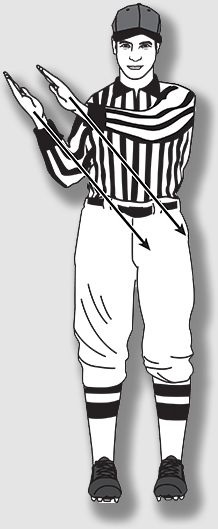
It was sort of like the intentional grounding foul in football. It’s one thing to get assessed a 10-yard penalty. But on top of that, the team loses the down. Sort of like the double whammy (or triple, if you like) of the statutory multiplier for wrongfully cutting trees.

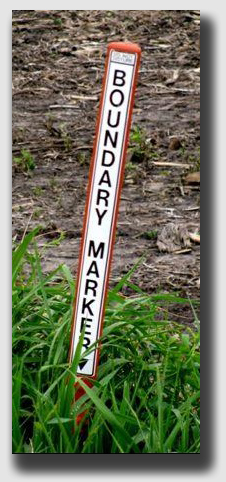
BMarker140130 C’mon, the Peterses said, there wasn’t any evidence they knew they were cutting Kriegs’ trees. The Court pointed out that the state of the evidence was precisely the problem. It was up to the Peterses to prove that they thought the land was theirs. The wife’s testimony was all they had offered, and it didn’t help: she explained they didn’t really know where the boundaries were, and never bothered to find out. But the biggest problem was what Mr. Peters testified to: nothing. He was the one who cut the trees down, and the Court seemed to expect that he would have material testimony to offer. But he didn’t testify.

Ch 1 Art.xlsThere’s a well-known principle in evidence known generally as the “missing witness instruction.” As the legendary Professor Wigmore put it, the principle holds that “the nonproduction of evidence that would naturally have been produced by an honest and therefore fearless claimant permits the inference that its tenor is unfavorable to the party’s cause.” In other words, if you have particular control of evidence, and you do not bring it forward, a court is allowed to assume it would have been harmful to your cause if you had done so.

The Court didn’t say it here, but it strongly implied that the absence of testimony from Harry Peters led it to conclude that if he had taken the stand, he wouldn’t have helped his cause any.

Krieg v. Peters, 46 A.D.3d 1190, 850 N.Y.S.2d 211 (N.Y.A.D. 3 Dept., 2007). In May 2004, the parties became adjoining property owners when the Peters family purchased the vacant lot next to the Kriegs. The Peterses intended to construct a house on their property, so Mr. Peters began clearing land without consulting the map referenced in their deed or having a survey conducted. He removed 29 trees from Krieg’s property. Following a jury trial, the Kriegs were awarded damages, including treble damages under New York statute for the removal of this timber. On appeal, the Peterses only contest the treble damages award.

Held: The treble damages were upheld. Under RPAPL §861[2], the New York treble damage statute, in order to avoid treble damages, the Peterses had the burden of proving by clear and convincing evidence that when they removed the trees from the Kriegs’ property, they “had cause to believe the land was [their] own.” Their proof in this regard was woefully inadequate. Mrs. Peters was the only defense witness to testify on this critical issue, and the appellate court found that her testimony had been more damning than helpful in sustaining their burden. She said that, before she and her husband purchased the property, she walked it on one occasion with their realtor. At that time, she specifically asked about the boundary lines but the realtor couldn’t answer her question with any certainty. She said she told her husband of the realtor’s uncertainty when they later walked the property together. She also candidly admitted that no steps were taken to obtain a survey or consult the map referenced in their deed before clearing the land. The Court found it significant that, although he had logged the property, Mr. Peters never testified. It found plenty of evidence that the defendants had no cause to know whether the land Mr. Peters was logging belonged to them or not.

The Peterses also argued that the legislature never intended for RPAPL §861 to apply to individuals such as themselves who make “honest” mistakes about boundary lines. The Court disagreed, holding that on its face, the statutory scheme clearly applied to the facts and circumstances of the case and, in the absence of sufficient proof on the defendants’ part to avoid treble damages, it didn’t find the treble damage award to be inconsistent with the law’s purpose or intent.

– Tom Root
TNLBGray140407

Case of the Day – Monday, December 15, 2025

GOOD FENCES MAKE GOOD NEIGHBORS…

Don’t you believe it …

… or so one of my favorite poets, Bobby Frost, said. The flinty old New Englander wrote a lot of good, straightforward stuff (my favorite being The Pasture), but you need to know that this particular line about fences was written as a wry observation. Frost didn’t believe it, and he intended for his readers to question it, too.

Today’s neighbors are living proof of that. Lyle and Kate Batton had lived next to Dan and Kathy Bylander for 13 years, and the factual recitation in the case makes it pretty clear that they were good neighbors. There was a property line between their homes. Of course. There always is. But it wasn’t very important to them.

Instead, the friendly neighbors freely used each other’s properties, even giving each further permission to plant trees on the other’s properties. In fact, they did not really know for sure where one property ended and the other began. It seems that the Bylanders and the Battons had differing ideas about who owned what, but they were good neighbors. The technicalities of ownership were not that important.

But at last, the Bylanders moved out, and the Hawks moved in. The Hawks felt the need for a fence to separate themselves from the Battons, and that’s when the neighbors ceased to be good.

As Frost observed, “Something there is that doesn’t love a wall.” That something apparently was Lyle Batton. And who can blame him? For 13 years, Lyle and Kathy lived in unfenced harmony with Dan and Kate. At any rate, at some point after the fence was installed, tempers frayed, and Lyle exchanged sharp words with new neighbor Terry Hawk. And that’s when everything changed.

The Hawks demanded every inch of the land their surveyor said was theirs. The Battons demanded damages and asked the court to declare that their occupation of some of the disputed land over the years made it theirs.

The lawyers profited, and the neighbors – both sets – lost.

Batton v. Hawk, 2019 Minn. App. Unpub. LEXIS 1133 (Ct. App. Minn. Dec. 9, 2019). Lyle and Katherine Batton bought land in Thief River Falls 19 years ago. At the time, they shared their southern boundary line with Daniel and Kathy Bylander.

During the time that the Battons and Bylanders were neighbors, neither knew where the exact boundary line fell between their properties, but they did not much care – they were friends as well as neighbors. The Bylanders planted evergreen trees on what they believed was their property on the western side of their northern boundary line, which they thought was about eight to ten feet north of the line of evergreen trees. They mowed the area like it was theirs… because they figured it was.

At the same time, the Battons planted various trees along what they believed was their southern boundary line in the eastern part of the land, up to the edge of the Thief River. A second tree line, made up of about 12 spruce trees, sat north of the Bylanders’ home on the west side of the adjoining properties and acted as a windbreaker for their house. The Battons gave the Bylanders permission to plant more trees along the line.

Then disaster struck. After 13 years, the Bylanders sold their property to Terry and Dawn Hawk. The next year, the Hawks wanted to build a fence along the northern line of their property. The Hawks talked to the Battons about the property line, and the Battons explained that they believed it was along the tree line.

Trust but verify. The Hawks hired Houston Engineering to survey the boundary line. Houston found the Battons’ understanding of the boundary line was wrong, as the boundary line went through, or was very close to, the southeast corner of the Battons’ house.

Lyle Batton and Terry Hawk then met with a Houston Engineering surveyor to discuss establishing a new boundary line. The new boundary line ran 13½ feet north of the original boundary line, increasing the size of the Hawks’ property. The surveyor labeled this “Tract A.” Tract A included the wind-breaking tree line that sat north of the Hawks’ home. On the east end of the properties, the new boundary line was 25 feet south of the original boundary line and would become the Battons’ property. The surveyor labeled this “Tract B,” which included an area south of the Battons’ home. Tract A is .021 acres, and Tract B is .326 acres. The parties agreed that Tract A would become the Hawks’ land and Tract B would become the Battons’ land. After the meeting, surveyors from Houston Engineering placed markers along the new boundary line.

So the Hawks began to build a fence near the markers placed bysurveyors’ markes’ request, the Hawks built the fence directly on the new boundary line and gave the Hawks permission to enter their land to maintain the fence. According to the Battons, when Terry was finishing the eastern part of the fence, they realized that the markers placed by the surveyors were not in the correct spots and that the Hawks’ fence was “maybe a few inches up to many feet” north of what the Battons believed was the new boundary line.

The Battons also complained that the Hawks cut down four of their spruce trees on the western side of their property in order to build the fence. The Hawks countered that when they were bu, while building the fence, several trees fell duringlowing a hostile confrontation between Lyle and Terry in July 2016, the Battons sued the Hawks, asking the district court to order the parties to exchange deeds to Tract A and Tract B, to determine the practical boundary line of the property, and to rule that the Battons had adversely possessed some of the Hawks’ property, and therefore owned it. But the Battons’ complaint had a typographical error and, instead of requesting that the district court determine they had adversely possessed Tract B, they requested Tract A, which was already part of their property by deed.

The Hawks answered that the parties had discussed exchanging deeds to the tracts of land, but that they had never come to an agreement to exchange the deeds. The Hawks counterclaimed that the Battons had trespassed on their land and had damaged their property by removing the survey markers, and also that had relied on the B attons’ promise to grant them an easement.

The district court held a bench trial. At the end of the trial, the Battons amended their complaint to indicate that they adversely possessed Tract B, not Tract A, and they also moved to amend further to state that they adversely possessed the land that extended from Tract B to the middle of the tree line.

The district court held that the Battons failed to establish their claim for adverse possession because they did not show that they openly and continuously possessed the rest of the land that they claimed north of the tree line, failed to establish a claim for boundary by practical location, and did not show that the four removed trees belonged to the Battons.

The Battons appealed.

Held: The Battons did not acquire any land by adverse possession, nor did they obtain a declaration that the old supposed boundaries governed.

A party can become the titleholder of land by adverse possession. To show adverse possession, plaintiffs must show, by clear and convincing evidence, that their possession was actual, open, continuous, exclusive, and hostile for 15 years. Evidence presented in support of adverse possession must be strictly construed, with every presumption or inference to be taken against the party claiming adverse possession.

The district court found that the Battons had not established open, hostile, and continuous use of all of the land. Such use must give “unequivocal notice to the true owner that someone is in possession in hostility to his title.” There is sufficient evidence when “visible and notorious acts of ownership have been continuously exercised over the land for the time limited by the statute.”

The Battons and the Hawks had different understandings of where the boundary line fell. The Battons treated the tree line as the boundary, while the Hawks (and the Bylanders before them) treated the boundary line as 8-10 feet north of the tree line. Before the Hawks moved in, the Bylanders mowed up to that line, and, when the Hawks moved in, the Bylanders instructed them to continue to mow up to that line. While the Battons and the Hawks testified that they used the land for other purposes, there is no dispute that the Bylanders and the Hawks mowed part of the disputed land. “For that reason alone,” the Court ruled, “we cannot conclude that the Battons gave the Hawks unequivocal notice of their hostile possession of all of the disputed land.”

The Battons also testified that they used the disputed land for fishing, playing Frisbee and soccer with their kids, planting a garden and trees, and placing birdhouses and bird feeders. They said that they treated the disputed land as their own because they planted a garden, but neither of them could remember how long it had been there. Lyle testified that he placed birdhouses and bird feeders on the disputed land, but all had been removed several years before the trial. Because the evidence supporting adverse possession must be strictly construed, the Court said, “The district court’s finding that the Battons’ use of the land was simply occasional is not clearly erroneous.”

The Battons also argued that they had proven a boundary line by practical location. A boundary by practical location may be established in one of three ways: (1) by acquiescing in the boundary for a sufficient period of time to bar a right of entry under the statute of limitations; (2) by expressly agreeing with the other party on the boundary and then by acquiescing to that agreement; or (3) by estoppel.

The Battons argued that they established a boundary by practical location by acquiescence. If a party acquiesces to a boundary for a sufficient length of time to bar a right of entry under the statute of limitations (15 years in Minnesota), a court may establish the boundary by practical location.

The district court did not expressly address whether they had established a boundary by acquiescence. But the judge did note that there must be acquiescence to a boundary line for the statutorily required 15 years to be established by practical location. Because the Hawks had not lived in the home long enough to meet the 15-year requirement, the Court looked to their predecessors, the Bylanders.

But the Battons and Bylanders treated the boundary line differently. While the Bylanders believed the boundary was eight to ten feet north of the tree line, the Battons believed the boundary was along the tree line. The disputed 8-10 feet showed that the parties did not acquiesce to a boundary line. Instead, they apparently agreed to disagree, maintaining the peace despite their disagreement.

Thus, the Court said, the Battons failed to establish a boundary by acquiescence.

Finally, the Court observed that the district court had concluded that it could not determine if the four trees were on the Battons’ land. Based on this inability, the district court did not award them treble damages for trespassing and felling under Minn. Stat. § 561.04. Lyle testified that the Hawks cut down four trees that were on the Battons’ land in order to erect their fence. The Hawks, on the other hand, said that during the summer of 2015, a storm downed some trees, and the Hawks removed them from the property. Terry denied cutting down any trees north of the fence line.

Because the district court sits in the best position to weigh the credibility of witnesses, the Court of Appeals ruled, “we are not left with the firm conviction that, based on the conflicting testimony, the district court made a clear error.”

– Tom Root

TNLBGray140407

Case of the Day – Monday, December 8, 2025

THE LAW, SIR, IS AN ASS

In the 1970s (and undoubtedly even more so now), parking around The Ohio State University College of Law was awful. Everything was either reserved for faculty and staff (the parking lots) or metered with devices that would have made Einstein proud: while time crawled as we sat in property law, it was accelerated by the meter so that the hours (and the quarters) flew by.

The result, predictably, was that as a law student, I collected more than my fair share of parking tickets. When I didn’t pay them (chiefly because my student budget did not include a big chunk for the City of Columbus), dunning notices would be sent to my legal residence, which, of course, was my ancestral home. My mother would see them, shake her head in deep disappointment at her eldest son, and say, “I would think that law school would teach you to respect the law.”

Well, it did not, Ma, I am sorry to say. Or maybe not so sorry. After all, today’s case is Exhibit A in my argument that while Aretha may be entitled to a little respect, the law is not.

Ken and Sally Eyer were senior citizens who were forced to sell off timber to pay Sally’s chemotherapy bills. They owned the land: a big timber company contracted to cut the trees. Ken Eyer showed the company the boundary line, but the timber company – which, being in the business, should have known better – crossed onto neighboring land and committed a trespass to timber. The neighbors sued the Eyers, the Eyers brought in the timber company, and then what appears to have been a straightforward case went to hell.

Chief Justice Jim Jones, since retired, concurred in the judgment very reluctantly:

“I concur in the judgment because it correctly applies the law, even though the outcome is most unfortunate for the Eyers. It appears to me that the legal system catastrophically failed Kenneth and Sally Eyer. 

This case started out as a $1,600 timber trespass. Under Idaho Code section 6-202, the Eyers were obligated to their neighbors, Russell and Laura Stevens, for treble damages. The Stevens filed suit, seeking a whopping $268,770 in damages. Eventually the case was settled upon the Eyers’ agreement to pay $50,000, plus interest, out of the estate of the last of them to die (they were octogenarians). Trial testimony indicated that $15,000 of the settlement was for damages and $35,000 for the Stevens’ attorney fees incurred in the suit. The Eyers had incurred their own attorney fees and costs in the sum of $37,934 by the time of the settlement. The Eyers’ third-party claim against Idaho Forest Group then went to trial and the Eyers lost. The district court granted Idaho Forest Group attorney fees and costs in the amount of $97,821.30. Thus, excluding attorney fees incurred by the Eyers in pursuing their third-party complaint and this Court’s award to Idaho Forest Group of its fees on appeal, the Eyers are out a minimum of $185,755.30 on a $1,600 timber trespass… 

It is not clear from the record how the Eyers ended up in this position but it is a tragedy and does not speak well for the legal system. It is imperative that court procedures be reformed to expedite the process and reduce the cost of litigation to avert a repeat of this unfortunate story.”

So no, Ma, in the ensuing 49-odd years since law school, I have not learned to respect the law. If anything, I’m headed the other way.

I do, however, respect Ken and Sally Eyer. Sadly, Sally died of cancer shortly after the Idaho Supreme Court stripped her of her life savings. Ken passed away in April 2020. After all of that miserable litigation, his obituary nonetheless said, “his life was adventurous, full of humor and endless learning.”

He and Sally are worthy of all of the respect I have failed to give the law. (Chief Justice Jim Jones, too… he retired from the Idaho Supreme Court in 2017, and is now “actively educating and recruiting community to help refugees to establish in Idaho“).

Stevens v. Eyer, 161 Idaho 407, 387 P.3d 75 (Supreme Ct. Idaho, 2016). Ken and Sally Eyer entered into a log purchase agreement with Idaho Forest Group, Inc., because the couple – both in their 80s – needed money to pay medical bills. IFG sent an agent to the Eyers’ property before logging to assist them in locating property lines. “I told them not to cut anything I could see from my deck,” Ken told the Spokane, Washington, Spokesman-Review.

But when the logging occurred, IFG mistakenly cut timber located on neighboring land belonging to Russ and Laura Stevens. The Stevenses promptly sued the Eyers for timber trespass. The Eyers brought a third-party action against IFG, which essentially said that if the Eyers were liable to the Stevenses, then IFG was liable to the Eyers for the same amount. The Eyers claimed IFG breached its duty to properly mark the property lines.

The Stevenses, who sued for over $250,000 for $1,600 worth of mistakenly-cut trees, settled with the Eyers for $50,000, to be paid from the estate of the latter Eyer spouse to die.

At trial, the Eyers alleged that IFG assumed a duty to locate the property boundary between the Eyers and Stevenses’ properties. The jury found that IFG had not assumed this duty.

Afterward, IFG moved for an award of $95,600 in attorney fees under Idaho Code section 12-120(3), which permits the award of such fees in a commercial transaction. The Eyers argued that there was no commercial transaction because they were going to pay medical bills with the proceeds of the timber sale. The district court nevertheless awarded IFG the full amount of the company’s requested attorney fees.

On appeal, the Eyers contended Idaho Code section 12-120(3) does not apply.

Held: The Eyers owed the legal fees.

The commercial transaction ground in Idaho Code Ann. § 12-120(3) neither prohibits a fee award for a commercial transaction involving tortious conduct nor requires a contract. Instead, the rule is based upon the second paragraph of § 12-120(3), which mandates an award of reasonable attorney fees to the prevailing party in any commercial transaction.

The Court said that whether a party can recover attorney fees under the statute depends on whether the “gravamen of a claim” is a commercial transaction. A “gravamen” is the material or significant part of a grievance or complaint. Courts analyze the gravamen claim by claim. To determine whether the significant part of a claim is a commercial transaction, the court must examine whether a commercial transaction (1) is integral to the claim and (2) constitutes the basis of the party’s theory of recovery on that claim. For a transaction to be commercial, each party to the transaction must enter the transaction for a commercial purpose.

The Court noted it had previously characterized transactions as commercial when the purpose for entering into the transaction was to generate income. Earning income, the Court said, is the quintessential act of engaging in commerce.

To be sure, the Eyers had purely personal purposes in mind for the revenue they would realize from the sale of timber to IFP. Most employed people use their income for “personal or household purposes,” such as paying for lodging, food, utilities, and entertainment. Nevertheless, the Court said, by virtue of their employment, they are engaged in commerce. For that reason, actions brought for breach of an employment contract are considered commercial transactions under Idaho Code Ann. § 12-120(3).

– Tom Root

TNLBGray140407

Case of the day – Monday, November 10, 2025

GOOD DRAFTING DOESN’T ALWAYS PREVENT LITIGATION

A little more today on independent contractors:  I have often noted that inexact lawyering can lead to needless litigation. That’s not to say that good draftsmanship will necessarily avoid litigation, but — as we see in today’s case — it always helps.

Dogger got the logs - Worley was left with the stumps

Dugger got the logs – Worley was left with the stumps

Mrs. Dugger hired a Kentucky-certified master logger, Tommy Thomas, to log her land. She signed a contract with him which specified, among other things, that ol’ Tom-Tom was an independent contractor. Well, master logger or not, Tommy Boy wasn’t a master listener. Although Mrs. Dugger told him she didn’t own the land across the crick and he shouldn’t log it.

Of course, he logged it anyway. Predictably, the woman who owned the land on the other side of the watercourse sued, naming both Tommy T. and Mrs. Dugger as defendants.

Mrs. Dugger’s lawyer had her dismissed from the lawsuit on summary judgment, because Kentucky law was clear that an owner wasn’t liable for the errors of an independent contractor, and Tommy Thomas was clearly an independent contractor. The written agreement between the two of them was a great help in establishing this, as well as proving that Mrs. Dugger had told her contractor where her property boundaries lay.

The appeals court agreed, holding that Thomas’s master logger certification meant he should have known better. The contract helped demonstrate that the parties consistently intended for him to be an independent contractor, and he, in fact, controlled the manner of the work and how it was accomplished. Mrs. Dugger might have been liable anyway if the cutting was “work involving a special danger.” But in Kentucky, the Court said, it’s not.

She had a good lawyer - but it didn't keep her out of the courtroom

She had a good lawyer – but it didn’t keep her out of the courtroom

Worley v. Dugger, Not Reported in S.W.3d, 2007 WL 4373120 (Ky.App., Dec. 14, 2007). Mrs. Dugger entered into a logging contract in May 2003 with Tommy Thomas to cut timber from part of her property. During Thomas’ cutting, he crossed onto Worley’s land and took trees valued at over $1,300. Worley sued Thomas and Dugger, seeking damages for the wrongful taking of timber pursuant to KRS § 364.130.

Just prior to trial, Mrs. Dugger won summary judgment on the basis that Thomas was acting as an independent contractor at the time he wrongfully took timber from Worley’s property. Later, a default judgment was entered against Thomas on the issue of liability. Worley moved to vacate the summary judgment and reinstate Mrs. Dugger in the lawsuit. When the court refused to vacate, Worley appealed.

Held: Summary judgment in favor of Mrs. Dugger was appropriate. The trial court found Thomas was acting as an independent contractor at the time when he wrongfully took timber from the plaintiff. Thomas was told not to log beyond the borders of Dugger’s property, something he admitted under oath. What’s more, Mrs. Dugger was not vicariously liable for Thomas’s wrongful timber harvest because she failed to adequately instruct him. Although landowners had been found liable in other cases where independent contractors had cut trees from neighboring land, that was because the landowners had allowed their contractors to cut trees without knowing the exact location of the boundary lines.

Here, the Court said, Mrs. Dugger explicitly instructed Thomas to not exceed the boundaries of her property beyond the creek. Thomas, on his own initiative and contrary to Mrs. Dugger’s instructions, crossed the creek onto Worley’s land. Thomas was a “Kentucky Certified Master Logger,” and the Court held that this certification meant that Thomas should have been familiar with his duty to observe boundary lines to avoid the possibility of liability.

Lucky thing Mrs. Dugger had it in writing

Lucky thing Mrs. Dugger had it in writing …

Plus, Thomas’s contract with Mrs. Dugger clearly identified him as a “contractor.” In Kentucky, as a general rule, employers are not vicariously liable for the acts of independent contractors. The right to control the work and the methods of its performance is determinative on the question of whether one is a servant or an independent contractor. If the employer retains the right to control the work and the manner in which it is done, those doing the work are servants. On the other hand, if an employee has the right to control the manner of work and the right to determine the means by which results are accomplished, he is deemed an independent contractor and the employer is not responsible for his negligence.

The exception to the general rule is that if the work to be performed is either a nuisance or is inherently dangerous, the employer will not be absolved from liability. The Court ruled that tree cutting is not “work involving a special danger” as contemplated by the law. Here, the Court held, Thomas was an independent contractor because he controlled the manner of the timber cutting as well as the means he would use to complete the job.

Under the facts of this case, the work of cutting timber upon Mrs. Dugger’s land was neither a nuisance nor inherently dangerous. Thus, Mrs. Dugger could not be held liable for Thomas’s negligent work.

– Tom Root

TNLBGray

Case of the Day – Tuesday, October 28, 2025

HE’S A CAD, NOT A TRESPASSER

It does not take very many years in the general practice of law for an attorney to see people at their worst. There’s nothing like watching a loving family, united in grief over the death of a loved one, get torn apart by greed and jealousy when the time comes to probate the will. A close second, however, has to be divorce.

Early on in my career, I witnessed a wife who threw her husband’s expensive shotgun collection into a swamp and refused – even on pain of jail for contempt of court – to tell anyone where she had bogged the prized Purdeys. Then there was the husband who hid all the money over a three-month period before announcing, “Surprise, I’m divorcing you!” His wife had been diagnosed with inoperable cancer, and he could not understand why he should spend all of their money on her healthcare when she was just going to die anyway.

One of my favorites was the couple who had agreed to an amicable divorce. They owed about $10,000 on credit cards, so they agreed to jointly borrow the money from the bank to pay off the high-interest debt with a loan that they would share in paying down. The day before the final divorce hearing, the husband called the bank and convinced the loan officer that his soon-to-be ex had asked him to pick up the check. He did, and then forged his wife’s name on the back, took the $10,000, and fled for Florida.

Shortly after he got to the Sunshine State, his mother died and left him $500,000. Using some of the money to get drunk and high, the still-the-husband ran his Harley into a bridge abutment at 95 mph. Since he had never gone through with the divorce, he was still married. Of course, the knucklehead had no will, so his brother – next in line for the money – got nothing, while my client, the wife (who had been furious at being stuck with the $10,000 loan obligation), got it all. She went to Florida, picked up his new $40,000 truck, all sorts of expensive tools, and the remainder of the money he had inherited (about $420,000). It took two cops to go with her to dead hubby’s family compound to pick up the property from the enraged family.

Karma is a bitch, sayeth… someone, I’m sure.

So why the family law lesson? Because, as we will see in today’s case, trying to screw your ex is never a very good idea. A moment’s visceral pleasure, followed by years (or a lifetime) of regret. Still, the ex-husband, whose in-your-face ripoff of the ex-wife even went to the extent of having her share paid to the new girlfriend, got off easy. When he sold 400,000 board feet of jointly-owned timber – cheating the ex out of $52,600, the former wife originally got her share plus treble damages under Louisiana’s timber trespass statute (and another $63,000 in legal fees). But the Cajunland Supreme Court ruled that whatever the ex-husband might otherwise be, he was not a trespasser to whom the treble damage statute applied.

Sullivan v. Wallace, 51 So.3d 702 (Supreme Ct. Louisiana, 2010). During their marriage, defendant Bruce Sullivan and plaintiff Janice Sullivan bought a 120-acre tract of land in Claiborne Parish. The couple divorced in 1990, but they retained the community tract in co-ownership and listed it as an asset in the divorce proceeding. The divorce judgment prohibited the parties from doing anything to sell or diminish the value of community property.

In 1994 and 1995, however, Bruce cut, stacked and sold some of the timber on the property. The checks for the 1994 timber he sold were payable to Priscilla Wallace, the defendant’s girlfriend at the time (now his wife). The checks for the 1995 timber were made payable to Bruce. In all, Bruce sold over 254,000 board feet, worth over $105,000.

In 1995, Janice learned that Bruce had been cutting and selling timber from their jointly-owned tract. She advised the timber buyer that the property was in litigation, and the buyer immediately ceased removing timber from the property. When Bruce told the buyer there was another 40,000 board feet of timber awaiting pickup, the buyer declined to have anything to do with it.

Janice sued Bruce, his girlfriend Priscilla and the timber buyer, claiming trespass, negligence, and conversion, and seeking treble damages and attorney fees under La. Rev. Stats. 3:4278.1 and 3:4278.2. At trial, Bruce argued the timber had come from his separately owned but adjoining tract, and that the timber had been damaged by an ice storm and had to be cut. The trial court, noting that the sale receipts predated the ice storm, didn’t believe him. Imagine that.

Instead, the Court ruled for Janice, finding that her share of the cut timber was about $52,600.00. To that figure trial court applied La. Rev. Stat. 3:4278.1 to award treble damages, or about $157,800.00, and to award attorney fees in the amount of 40% of the treble damage award, about $63,000.00.

The court of appeal affirmed that Janice was entitled to damages, but it reversed as to the treble damages and attorney fees. The appellate court agreed with Bruce that the timber trespass statute does not apply to co-owners of property, holding that the co-ownership articles of the Louisiana Civil Code provide adequate recourse among co-owners of real property. The appellate court cut Janice’s award to $52,600.00, representing one-half of the value of the lost timber, and vacated the portion of the judgment awarding attorney fees.

Janice petitioned the Louisiana Supreme Court for review.

Held: The treble damage statute for trespass to timber does not apply to co-owners who cut timber without the consent of the other owners.

The Court observed that the fundamental question in cases of statutory interpretation such as this one is legislative intent and determining the reasons that prompted the legislature to enact the law. The starting point in statutory interpretation is the language of the statute itself. When a law is clear and unambiguous and its application does not lead to absurd consequences, the Court said, the law is to be applied as written.

When the language is susceptible to more than one meaning, however, the Court held, it must be interpreted as having the meaning that best conforms to the purpose of the law, and the words of the law must be given their generally prevailing meaning. When the words of a law are ambiguous, their meaning must be sought by examining the context in which they occur and the text of the law as a whole, and laws on the same subject matter must be interpreted in reference to each other.

La.Rev.Stat. 3:4278.1, commonly referred to as the “timber trespass” or “timber piracy” statute, provides that it “shall be unlawful for any person to cut, fell, destroy, remove, or to divert for sale or use, any trees, or to authorize or direct his agent or employee to cut, fell, destroy, remove, or to divert for sale or use, any trees, growing or lying on the land of another, without the consent of, or in accordance with the direction of, the owner or legal possessor, or in accordance with specific terms of a legal contract or agreement.” Although the statute is directed to “any person” who cuts, fells, destroys, removes, or diverts for sale or use any trees, the Court said, the statute is facially ambiguous with regard to co-owners of the timberland, neither expressly including nor excluding these persons from its provisions.

When viewed strictly, the statute is violated only when “any person” acts with respect to trees growing or lying “on the land of another” and when this action is taken without “the consent of … the owner or legal possessor.” The timber trespasser owes the penalty to “the owner or legal possessor of the trees,” a phrase the Court said more logically describes a person other than the wrongdoer as described in the statute. What’s more, the timber trespass statute is found within the title of the Revised Statutes entitled “Agriculture and Forestry,” the chapter entitled “Forests and Forestry” and the part entitled “Protection and Reforestation.” Given this context, the Court held that the legislative purpose behind La. Rev. Stat. 3:4278.1 is to protect those with an interest in trees from loggers who enter their property without permission to harvest timber illegally. Thus, with the proper construction in mind, the Court said, “The focus of the statute is on an actor other than an owner.”

The Court said the fact that La.Rev.Stat. 3:4278.1 is not directed to co-owners who act without the permission of their co-owners was further supported by considering it in context with La. Rev. Stat. 3:4278.2, the 80% rule, which allows a timber buyer to cut standing timber when the buyer has the consent of co-owners holding 80% or more of the ownership interest. If 3:4278.1 applies to co-owners, then one co-owner who holds more than 80% of the ownership interest and permits timber to be cut in accordance with La. Rev. Stat. 3:4278.2 would nevertheless be liable to the other co-owners for treble damages under 3:4278.1 despite the fact the timber “buyer” would escape the penalty because of La. Rev. Stat. 3:4278.2(B). “Such a contradiction.” The Court reasoned, “cannot be what the legislature intended in enacting these statutes.”

Therefore, Janice was entitled only to her share of the cut timber.

– Tom Root

TNLBGray140407