Case of the Day – Friday, March 7, 2025

THE TROUBLE WITH TREBLES

No .. our troubles are with "trebles."

No .. our troubles are with “trebles.”

Most states have statutes on the books that increase the damages due for the wrongful cutting of trees when that cutting is intentional. As we have seen in Johnson v. Tyler, statutory treble damages are intended to be applied instead of punitive damages. The treble damages are meant to punish a wrongdoer and deter misconduct.

But rare is the case where Charlie Chainsaw runs amok in your backyard, cutting down trees just for the thrill of watching them fall on your house. Now that would be “willful.” Usually, things are not – forgive the pun – that clear-cut.

That’s the trouble with “treble.” The statute seems so limited in its coverage. Fortunately (that is, unless you’re the malefactor), courts have defined “willful” expansively. You might think that “willful” means “intentional.” But you would be wrong. While “willful” is certainly more than mere “inadvertence,” probably more than just “negligent,” it certainly encompasses “reckless.”

Whew! The whole concept’s kind of squishy. Listen to the Court of Appeals in today’s case: It said “willfulness” under Iowa’s treble damage statute is “under conditions that may be said to indicate something more than mere carelessness or recklessness. Of course, there was no personal malice against the owner. But there was a loose disregard for the rights of others… Certainly, there was something more than mere inadvertence.”

Got it?  Good for you, because we don’t.  More than “mere inadvertence” could be “gross negligence.” But what is “loose disregard for the rights of others?”  Generally, the law follows a continuum from strict liability – that is, liability without any fault at all – through negligence, gross negligence, recklessness, and intentional misconduct. “Loose disregard” is nowhere on the list.

We’re tempted to suspect that the Court of Appeals found Lionberger’s and Norton’s conduct sufficiently outrageous that it was unwilling to let them off for a mere $1,500.00. Perhaps it believed the legislature intended that even negligence in the identification of boundaries should give rise to punitive damages. Whatever the Court’s rationale, it provided guidance to the definition of “willful” that shows a “loose disregard” for precision.

reckless150310Drew v. Lionberger, 508 N.W.2d 83 (Iowa App. 1993). Drew owned land that was surrounded by property owned by Lionberger. Codefendant Norton Lumber Company is in the logging business. In the fall of 1989, Lionberger hired Norton to log some trees on his land. Lionberger helped Norton in determining the boundaries of his land, but Lionberger never contacted Drew about the proper boundaries between the respective properties. As a result of improperly marked boundaries, Norton logged twenty-eight trees from Drew’s land. The trees were mature, some of them being as old as 150 years.

During trial, Drew testified that he and his family used the land for hunting and hiking. He also produced testimony from an arborist that the trees were worth $17,053. Lionberger said the trees were worth between $535 and $1,500. The defendant’s expert based these figures on the market value of the lumber cut from the trees.

The trial court determined that Lionberger and Norton were jointly and severally liable for the market value of the lumber produced from the trees in the amount of $1,473.

Drew appealed, claiming the trial court erred by using the market value of the lumber produced from the trees to measure damages, by not awarding treble damages for the willful cutting of the trees, and by failing to find that codefendant Norton Lumber Company trespassed on Drew’s land and wrongfully logged trees.

Held:  The district court was correct that the current market value of the lumber produced from the trees is the correct measure of damages. However, the trial court was wrong to conclude that treble damages were not warranted.

The Court of Appeals, relying on Laube v. Thomas, held that because Drew’s trees had no special use, the measure of damages was the commercial market value of the trees at the time of taking. The Court of Appeals held that the district court’s finding that Drew was entitled to the market value of the trees – a princely sum of $1,473 – was right.

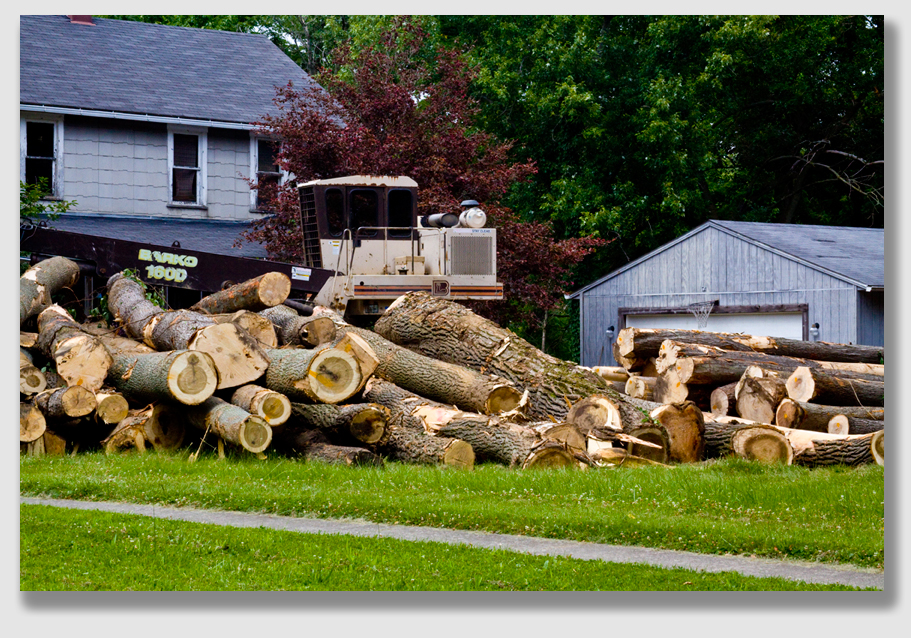
If you're dropping trees this close to the neighbor's house, you just may be in lines for paying some treble damages.

If you’re dropping trees this close to the neighbor’s house, you just may have a bill for treble damages in your future.

Drew also argued that Iowa Code § 658.4, which addresses treble damages, should have been applied. That statute provides that “[f]or willfully injuring any timber, tree, or shrub on the land of another, or in the street or highway in front of another’s cultivated ground, yard, or city lot, or on the public grounds of any city, or any land held by the state for any purpose whatever, the perpetrator shall pay treble damages at the suit of any person entitled to protect or enjoy the property.”

The Court of Appeals agreed. It found no substantial evidence to support the district court’s conclusion that Lionberger’s and Norton’s actions were not willful. The Court held that the trees were cut and removed “under conditions that may be said to indicate something more than mere carelessness or recklessness. Of course, there was no personal malice against the owner. But there was a loose disregard for the rights of others … Certainly, there was something more than mere inadvertence.”

Lionberger and Norton, on their own, had measured and marked what they thought was the Drew property. Because no boundary markers existed at the time the measurements were taken, they knew a question existed as to the boundaries of Drew’s property. Despite knowing this, the defendants never contacted Drew to determine whether or not the boundaries they measured were acceptable to him. Furthermore, neither Lionberger nor Norton communicated any intention to cut trees from the area in question to Drew prior to logging the trees.

Their failure to contact Drew or to obtain his input as to the existing boundaries before logging the trees, the Court concluded, was “clearly intentional. This conclusion is further supported by the fact that the defendants did their own measuring and then proceeded to cut the biggest and oldest trees from the area in question. Because we find the cutting of Drew’s trees to be willful in accordance with § 658.4, we conclude Drew is entitled to treble damages under the statute.”

Drew’s damage award thus went up from $1,473 to $4,418.

– Tom Root

TNLBGray140407

Case of the Day – Wednesday, February 26, 2025

SHOWING UP

Denise Pevarnek’s agent chopped down her neighbors’ trees so she’d have a better view of the river. The neighbors complained (surprisingly enough), but Denise steadfastly ignored their remonstrances. The neighbors then sued, but Denise ignored the summons. She finally decided to start paying attention after a default was entered against her and the trial court intended to assess treble damages against her in the amount of $77,000.

YouSnoozeYouLoseDenise tried futilely to undo the consequences of her earlier indolence. Alas, a stitch in time saves nine. The Court ruled that she had had plenty of notice, but her decision to ignore the lawsuit was her problem, and undoing the default she so richly deserved would have turned her problem into her neighbors’ problem. And they were already smarting from the loss of their trees.

Of interest in the case — one argument Denise included in her scattershot but untimely defense — was her contention that the cost to replace the trees wasn’t the right measure of damages and that the trial court was wrong to rely on an affidavit of an arborist that didn’t explain in detail how he had arrived at the damage costs. The Court rejected this, saying that in the case of trespass, the measure of damages is either the reduction in the value of the property or — where the property can be repaired — the cost to fix things. The goal of the damage award, according to the Court, is to come as close as possible to compensating the owner for the damages, and trial courts have a lot of latitude to choose the method that seemed more reasonably calculated to do so.

The affidavit, the Court noted, laid out the expert’s education and experience, showed that he had inspected the damaged real estate, and proposed a reasonable strategy for repairing the harm. The arborist listed what had to be done and how much he’d charge to do it. It might not be perfect, but perfection is often the enemy of “good enough.” The affidavit, the Court ruled, was “good enough.”

Stitch2The Court reminded the defendant that if she really had found the damage showing to be flawed and superficial, she could have come to the hearing and contested it. Snooze and lose, indeed.

Bologna v. Pevarnek, 2007 Mich. App. LEXIS 2689, 2007 WL 4207801 (Mich.App., Nov. 29, 2007). Denise Pevarnek hired Chester Damiani to clean up her property. He was zealous to a fault, deciding to improve the view of the Detroit River from her adjacent lot by cutting down trees belonging to her neighbors, the Bolognas. Believing that Denise and Chester’s conduct was baloney, the Bolognas sued for trespass, alleging that the destruction reduced the value of their property and exposed a view to Pevarnek’s unsightly neighboring property and asking for $28,000, trebled by Michigan’s wrongful cutting statute to $84,000.

Denise Pevarnek was served with the lawsuit, but she didn’t answer. As is customary when that happens, the Bolognas got a default judgment. Thereafter, they presented the affidavit of a certified arborist who opined that the cost of landscape restoration was $24,050. At this point, Denise took notice, and began taking action to defend, seeking to have the default undone. The trial court refused, and it entered judgment against her for $77,730. Pevarnek appealed.

Held: The judgment was upheld. Much of the case revolves around whether Denise should be relieved from her default judgment. The Court of Appeals ruled, in essence, that she knew about the suit and did nothing. In other words, “you snooze, you lose.” But of interest in the area of tree law was Denise’s claim that the trial court was wrong in using the cost of replacing the trees as a measure of the damages the Bolognas suffered. The Court of Appeals said where the wrong consists of a trespass to property resulting in an injury to the land that is permanent and irreparable, the general measure of damages is the diminution in value of the property. If the injury is reparable or temporary, however, the measure of damages is the cost of restoration of the property to its original condition (if less than the value of the property before the injury).

perfectThe rule is, however, flexible in its application. The ultimate goal is compensation for the harm or damage done. Thus, a court may apply whatever method is most appropriate to compensate a plaintiff for his or her loss. Here, the Court said, given the fact that the Bolognas’ trees could be restored, it was proper for the trial court to use the cost-of-restoration method.

Pevarnek argued that the trial court erred by adopting without question the assertion of alleged damages without sufficient foundation. The plaintiff had filed an affidavit of arborist Steve McCollum, who swore that – in order to return the property to its pre-trespass condition, that is, with no view of Pevarnek’s property – 12 new trees had to be planted, some existing trees had to be replanted, the over-pruned trees had to be removed, and the lawn had to be repaired. He stated that the total cost of this work was $24,050. The trial court awarded plaintiffs damages of $77,730, equal to three times the sum of the cost of work proposed by McCollum and $1,860 for the cost of a privacy fence. Although McCollum’s affidavit didn’t explain how he calculated the damages, he stated his qualifications and education, he said he had personally inspected the Bologna property, assessed their needs, specifically listed the work to be done, and listed the cost for his business was to complete it. The Court said the expert affidavit put forth a reasonable basis for the damage computation, and that was enough.

– Tom Root
TNLBGray

Case of the Day – Tuesday, February 25, 2025

THIS ONE IS FOR MY WONDERFUL WIFE

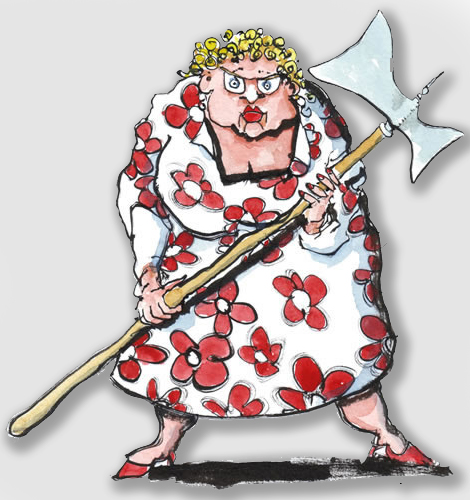
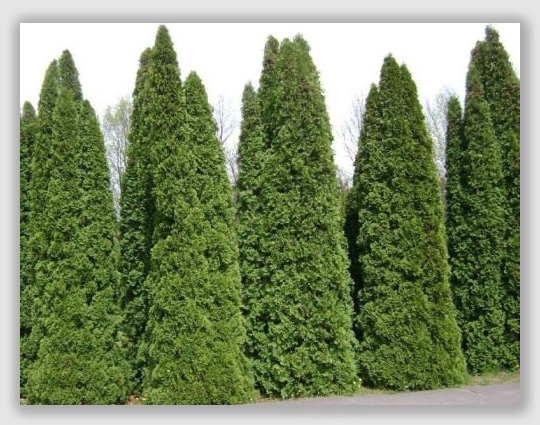
Years ago, our neighbor Olwen – who, if she had not passed away (meaning, of course, that we cannot speak ill of her), we would have described as a battleaxe – surrounded two sides of her property with 2-3’ arborvitae. It didn’t really look that bad, but… well, they grew.

And grew, and grew and grew. Our neighbor never trimmed them before she departed this mortal coil. And the two families who lived there subsequently never trimmed the trees/shrubs/whatever-the-hell-they-are, either.

Consequently, the arborvitae are 25 feet tall and still growing. We finally had to move our vegetable garden about 20 yards to the west because of the shade they were throwing. Exercising our Massachusetts Rule rights last fall, we hacked about ten of them back to the property line in order to install a new shed. We then built a fence to try to keep the monsters in check.

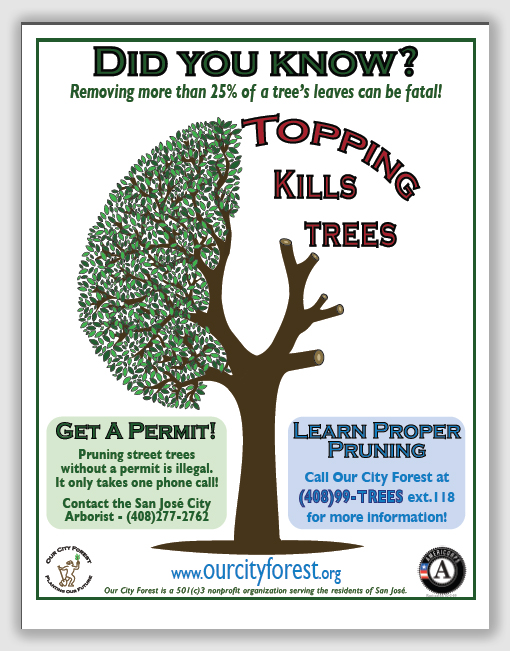
My wife mutters about the arborvitae daily. I have no problem understanding Nancy – the protagonist in today’s case – who must have loved neighbor Pnita’s arborvitae as much as my wife loves Olwen’s. But while my wife just glowers at the arborvitae, Nancy – a woman of action – did something. She brought in a trimming crew and topped the neighbor’s trees.

She didn’t kill them, just sort of knee-capped them. Who knew that so much visceral pleasure could end up being so expensive?

So this post is for my wife, a cautionary tale lest she decides to take matters into her own hands on the next-door arborvitae. Take a deep breath, honey…

Joseph v. Nathanson, 87 Mass. App. Ct. 1102, 23 N.E.3d 151, 2015 Mass. App. Unpub. LEXIS 37 (Ct.App. Mass. Jan. 16, 2015). Pnina Joseph and Nancy Ellen Nathanson owned abutting properties and shared a property line. Pnina planted thirty-five arborvitae trees on her property close to the property line to serve as a privacy screen. In October 2012, Nancy directed her landscaper to go onto Pnina’s property and “prune” the trees. The landscaper “topped” the trees by cutting about five to six feet from the tops.

Pnina sued under Massachusett’s tree-cutting statute, G. L. c. 242, § 7, and a jury returned a verdict in Pnina’s favor, awarding her $35,000. The award was trebled under the statute. Nancy appealed, arguing that her actions did not violate the tree statute because the trees were not “cut down” or “destroyed” as required by the statute.

Held: “Topping” the trees so that they would no longer grow any higher justified application of the Massachusetts wrongful-cutting statute.

General Law c. 242, § 7 provides for liability on the part of anyone who “without license willfully cuts down, carries away, girdles or otherwise destroys trees.” Nancy asserts that under the tree statute, Pnina’s trees had to be completely destroyed or cut down in order for the plaintiff to recover. She argues that the evidence showed that the trees were alive, growing, and healthy after the topping of the trees and, therefore, could not possibly have been “destroyed.”

The Court said it would interpret a statute to give effect “to all its provisions, so that no part will be inoperative or superfluous.” The statute here requires that the trees be “cut down, carried away, girdled or otherwise destroyed.” G. L. c. 242, § 7. “The phrase “otherwise destroyed” includes,” the Court said, “but is not limited to, the preceding phrases including ‘cut down’.” In other words, “cut down, carried away,” and “girdled” are examples of how a tree may be destroyed; they are not exclusive.

The judge instructed the jury that the word “destroy” has a commonly understood meaning, which includes “to ruin completely, to ruin the structure, organic existence or condition of a thing, to demolish, to injure or mutilate beyond the possibility of use.” The Court held that this definition given to the jury correctly provided a broader meaning to the term destroy than the examples in the statute.

Pnina’s expert testified that the “topping” of the trees meant that they would never grow vertically again and were no longer functional as a privacy screen. The jury was entitled to credit that testimony, to agree with Pnina that the trees were “mutilated beyond the possibility of use” as a privacy screen, and therefore to find in Pnina’s favor.

– Tom Root

TNLBGray

Case of the Day – Monday, February 10, 2025

HERE WE CUT DOWN THE MULBERRY BUSH…
When Mamie’s lights went out, she called the electric company to fix them. The linemen tracked down the problem and fixed it while Mamie was off at Wal-Mart. But while they were there and Mamie wasn’t, the electric workers saw an excellent opportunity to saw… and to get rid of some trees in the utility’s easement across Mamie’s yard that they thought were in the way of the distribution line to Mamie’s house.

Mamie returned, shopping bags in hand, to find her mulberry tree had been cut down and cherry tree topped. Naturally, she sued. After all, her trees had not caused the power outage. Nevertheless, the electric company said the tree could have caused the power loss, but for the grace of God, and it relied on its easement to support its right to remove the one tree and permanently stunt the other out of concern that someday they might pose a hazard.

I would have bet a new chainsaw that the electric company was going to win this one, and I can only conclude that it may have been “homered” by the local judge. After all, Mamie was a neighbor, and the big, bad electric co-op was just some faceless out-of-towner. I know of no other way (than possibly an inability to read precedent and engage in reasoned thought) to justify a holding that while the utility had an easement, as well as the duty to maintain the reliability of its lines, it nonetheless could not merely be liable for overzealous trimming but even be socked with treble damages.

Treble damages are only appropriate in Missouri if the malefactor lacks probable cause to believe it owned the land the tree stood on. That test should have been modified to comport with the facts. Consolidated had an easement for the electric lines to cross Mamie’s property, and whether its decision to trim or remove the trees near its lines was correct or not, the decision should have been accorded deference.

Tomorrow, we’ll look at a subsequent Missouri electric company case, where we will see the utility get clobbered despite its desperate reliance on today’s holding.

Segraves v. Consolidated Elec. Coop., 891 S.W.2d 168 (Ct.App. Missouri, 1995). Mamie Segraves sued Consolidated Electric Co-op – her electricity provider – after one of its linemen cut down her mulberry tree and “topped off” her cherry tree.

One summer day, Mamie awoke to find that her electricity was off. She left to go shopping at 9 a.m., and when she returned two hours later, the lights were back on. However, the mulberry and cherry trees in her front yard had been cut down and one branch of her elm tree had been cut off.

Mamie testified these trees had never interfered with her electrical service before. In the past, Consolidated had asked to trim the trees around her electric lines, and she had always agreed, but it had not done so in the past six years. Mamie estimated the value of the mulberry tree was $2,000.00, and the value of the cherry tree was $500.00.

Mitch Hurt, a senior lineman with Consolidated, testified he was called to handle an electrical outage. He tracked the outage to a problem with one of the lines near Mamie’s home, but he could not pinpoint the problem. He had to drive down the road and look at the individual lines to try to find the problem. When he passed the line leading up to her house, he could not see the transformer pole. He stopped and went to inspect her service. He noticed her mulberry tree was very close to the transformer, and so he cut it down “to get it away from the transformer pole.” He also cut off the entire top of a nearby cherry tree because its branches had all grown towards the line. He felt these branches presented a safety hazard because children could easily climb them and reach the power lines. Mitch admitted it may not have been necessary to cut down either of these trees to reinstate electrical service.

Bob Pogue, Jr., Mitch’s boss, testified he told Mitch to trim as much of the trees as he thought was necessary. Bob Jahn, Consolidated’s general manager, testified Mamie knew about the location of the electric lines when she bought the place.

The trial court found in Mamie’s favor and assessed treble damages. Consolidated appealed.

Held: The Co-op had no right to cut the trees, and treble damages were proper.

The trial court did not find Consolidated to be a trespasser because it had the right to enter onto Mamie’s premises to maintain the electric lines. The right to remove limbs that have fallen onto the lines, however, “does not extend to cutting down trees or ‘topping’ trees that are not presently interfering with electrical service without prior consultation with the property owner.” While the mulberry and the cherry trees probably needed to be trimmed, the trial court said, there was no evidence that the mulberry “needed to be cut to a stump and that the cherry needed to be cut back to its major trunks, eliminating all of the fruit-bearing branches.”

Section 537.340 of the Revised Statutes of Missouri allowing for treble damages for the destruction of trees, does not require that a party wrongfully enter upon the property. In fact, the Court of Appeals said, Mamie can recover for wrongfully cutting down trees if she can establish either that Consolidated wrongfully entered her land and cut down the trees, or Consolidated entered her land with consent but exceeded the scope of the consent by cutting down the trees without permission.

While it is true, as Consolidated argued, that a license may be converted into an easement by estoppel if the license holder can establish it spends a great deal of time and money to secure enjoyment of its use, the scope of such an easement nevertheless will be determined by the meaning and intent that the parties give to it. The Court found no history between the parties of cutting down trees, and nothing from which such a right to cut down trees can be implied. Thus, even if Consolidated did acquire an easement by estoppel, it exceeded the scope of the easement by cutting down Mamie’s mulberry and cherry trees.

The utility also argued it was required by law to trim or remove the trees to ensure safety. Under the National Electrical Safety Code, Consolidated argued, it was required to trim or remove trees that may interfere with ungrounded supply conductors should be trimmed or removed, and where that was not practical, the conductor should be separated from the tree with proper materials to avoid damage by abrasion and grounding of the circuit through the tree. Consolidated maintained it had the authority to remove Mamie’s trees according to the Code because there was substantial evidence showing limbs of both trees had been burned by electricity, the mulberry tree was blocking the transformer pole, and the children living nearby could have easily climbed either tree and reached the live electric wires.

The Court rejected that, holding that Consolidated failed to show that the Code applied here because it failed to present evidence that the electrical wires leading to Mamie’s home were “ungrounded supply conductors.” Further, even if the Code applied, it gives electric companies two options, to trim or to remove the trees. The trial court found it was unnecessary to remove the trees in this case.

Not to be deterred, Consolidated also argued it was obligated to remove the trees because it had a non-delegable duty to maintain a safe clearance around its electrical lines. “Although Consolidated was required to exercise the highest degree of care in maintaining its electrical wires,” the Court said, “it was not required to remove the trees surrounding them, and it exceeded its authority by doing so.”

Section 537.340 of Missouri Revised Statutes holds that if any person shall cut down, injure, or destroy or carry away any tree placed or growing for use, shade, or ornament, or any timber, rails, or wood standing, being or growing on the land of any other person, the person so offending shall pay to the party injured treble the value of the things so injured, broken, destroyed, or carried away, with costs.

The Court noted that a person can only fell trees wrongfully in one of two ways: he can enter the land wrongfully and fell the trees, or he can enter with the landowner’s consent and then exceed the scope of that consent by felling trees without permission. While the statute limits damages recoverable to single damages in certain cases, such as where it appears the defendant has probable cause to believe that the land on which the trespass is alleged to be committed, or that the thing so taken, carried away, injured, or destroyed, is his own. It was up to Consolidated to prove it had such probable cause.

The determination of whether the defendant proved probable cause existed rests with the trial judge. Here, the Court said, “the trial judge did not abuse his discretion in finding Consolidated did not have probable cause” to believe it had the right to cut down Mamie’s trees.

– Tom Root

TNLBGray140407

Case of the Day – Wednesday, January 15, 2025

THERE ARE LEGAL COSTS, AND THEN THERE ARE LEGAL COSTS

fees160104Let nothing come between a lawyer and his fee.

You might be cynical, and see today’s case as nothing more than a lawyer worried about collecting a large and unwarranted fee. But the case is much more than that.

The facts are rather prosaic. Some landowners failed to carefully mark the common boundary with their neighbor before setting a timber company loose on the property. Sure enough, the cutters harvested some of the neighbor’s trees. That much wasn’t an issue.

When Valarie Garvey sued the Chaceys for timber trespass, property damage and a collection of related causes of action, the Chaceys hired some aggressive litigators. Their lawyers knew that the best trial defense often is a good pretrial offense. They fought tooth and nail before trial, gaining their best tactical high ground when Valerie’s lawyer inexplicably didn’t identify the plaintiff’s timber expert by the pretrial deadlines.

The expert was crucial because he was going to testify as to the value of the timber that had been wrongfully cut. But once the expert established the value of the missing trees, Section 55-332 of the Virginia Code would let Valerie Garvey collect three times the value of the wrongly-cut timber, plus reforestation costs, plus other damages to the property (such as the private road the timber harvesters ripped up) plus “legal costs directly related to the trespass.” In short, it looked like a big payday for Valerie Garvey. She just had to do one thing. She had to prove the value of the stolen timber.

Alas, she screwed it up. Perhaps it would be more appropriate to say her lawyer screwed it up. Without the expert, Valerie had no way to get the value of the timber into evidence. When the jury decided the case, it was able to award her the princely sum of $15,135.00 (only a fraction of the reforestation costs she estimated to be $78,000.)

expert160104Valerie’s lawyer, trying to save a case that was going south pretty fast, successfully convinced the trial court that the “directly associated legal costs incurred by the owner of the timber as a result of the trespass” included attorneys’ fees. Valerie claimed she had spent over $135,000 in legal fees, and the trial court awarded even more than that – $165,000 – in fees.

I doubt that Valerie’s lawyer was going to get all of that pile of cash. In fact, Val had every right to be as mad as a wet hen over counsel’s missing the expert witness deadline. I suspect that the lawyer and client had made a deal to salvage something out of the case, a deal that would have counsel ending up with little more than cab fare (but no malpractice claims). Unfortunately, we’ll never know, because, on appeal, the Chaceys convinced the Virginia Supreme Court that whatever “directly associated legal costs” might be, they are not “attorneys fees.” The Supreme Court was impressed that wherever the legislature intended to authorize the award of attorneys fees – in over 200 statutes in the Code – it was able to clearly say so.

The Chaceys – not satisfied with hitting a triple – swung for the fence. They asked the Supreme Court to rule that where a plaintiff claiming timber trespass did not prove the value of the missing timber, the case should be thrown out. The Supreme Court disagreed. Proving a timber trespass does not require that one prove the value of the purloined pines. Of course, not doing so cuts the plaintiff out of a lot of damages, but the offense does not depend on proven damages. It just requires that a trespass to timber occur, whether the tree is worth anything or not.

As for Valerie’s attorney, I suspect he marched straight from the courtroom to his malpractice carrier’s office.

reforest160104Chacey v. Garvey, 295 Va. 1, 781 S.E.2d 357 (Supreme Court of Virginia, 2015). In 1995, Valerie Garvey bought 50 acres of land from Allan and Susan Chacey. The Chaceys retained ownership of adjacent property, and they reserved to themselves an easement over Garvey’s property as a means for ingress and egress to their property.

At the end of 2012, Garvey sued the Chaceys and Blue Ridge Forestry Consultants, Inc., alleging timber theft and trespass. Garvey said the Chaceys had hired a logging company a few years previously to remove some timber located on their property, and that the company had trespassed on her property and removed timber without her permission. She alleged that she was entitled to damages for timber theft at three times the value of the timber on the stump, as well as reforestation costs not to exceed $450 an acre, the costs of ascertaining the value of the timber, and her attorney’s fees. She also asked for $30,000 for damages to her property caused by the trespass, including damage to the road, fencing, and the stone bridge.

Prior to trial, Garvey attempted to designate an expert witness for the purpose of establishing the monetary value of the timber on the stump at issue in the complaint. However, she did so too late and the trial court refused to let her expert testify during the three-day jury trial.

While she was testifying at trial, Garvey was asked by her attorney whether she had incurred legal costs in connection with the trespass. The Chaceys objected, but the trial court ruled that legal costs included attorney’s fees. Garvey told the jury that she had incurred more than $135,000 in legal costs, including attorney’s fees, which she claimed were all directly associated with the trespass. She also testified that she had negotiated with Bartlett Tree Services for the restoration of the trees, and she had paid a deposit of $440 towards that work, against a total price of $78,000.

The trial court ruled that Garvey could not recover treble damages since her expert evidence regarding the value of the timber on the stump had been excluded. However, the case could still go to the jury for consideration of damages for reforestation and legal costs.

The Chaceys argued that attorneys’ fees are not recoverable by a prevailing party in an action for timber theft pursuant to the Virginia Code § 55-331. They also contended that Garvey’s timber trespass claim should not have been submitted to the jury, because she had failed to provide any evidence related to the value of the alleged damaged timber. However, the jury found for Garvey on her claims of timber theft, trespass, and property damage. On the timber theft claim, the jury awarded Garvey $135.00 in reforestation costs. The jury also awarded her legal costs. On the trespass count, the jury awarded Garvey $15,000 in damages. The trial court held that Garvey was entitled to $165,135 in “directly associated legal costs incurred by Plaintiff as a result of the trespass, including attorney’s fees, in the amount of $150,000 …”

The Chaceys appealed.

needlawyer160104Held: The Virginia Supreme Court split the ticket. It observed that although Virginia Code § 55-331 permits any victim of timber trespass to collect “directly associated legal costs incurred by the owner of the timber as a result of the trespass,” whether Garvey was entitled to attorney’s fees depends upon the meaning of “costs.” Garvey argued that her attorney’s fees are legal costs directly associated with the trespass. The Chaceys argued that Garvey is merely entitled to the costs necessary for the prosecution of her suit.

Tracing the definition of “costs” in other proceedings, the Court held that “the term ‘costs’ is limited to the costs necessary for the prosecution of a suit, and does not include attorney’s fees. The Code of Virginia contains more than 200 instances where the General Assembly has determined a successful litigant is entitled to ‘attorney’s fees and costs’ or ‘costs and attorney’s fees’ … However, the General Assembly did not include the right to recover attorney’s fees in this statute, something it has done in more than 200 other separate instances.”

The Court disagreed with the Chaceys, however, about the timber trespass claim. The Chaceys, no doubt wanting to capitalize on their pretrial success in keeping Garvey’s expert off the stand, argued that the trial court erred in permitting Garvey’s timber trespass claim to proceed to the jury because Garvey failed to provide any evidence related to the value of the alleged damaged timber. Essentially, the Chaceys were contending that evidence related to the value of the damaged timber is a prerequisite to awarding any of the additional damages provided for under Code § 55-332(B).

Virginia Code § 55-332(B) holds that any person who removes timber from the land of another without permission is liable to the rightful owner for “three times the value of the timber on the stump and shall pay to the rightful owner of the property the reforestation costs incurred not to exceed $450 per acre, the costs of ascertaining the value of the timber, and any directly associated legal costs incurred by the owner of the timber as a result of the trespass.” The Court held that there was nothing in the statute that stated that an owner is only entitled to reforestation costs, legal costs, or the costs of ascertaining the value of the timber after he or she had first established the value of the timber that was improperly taken. Instead, the Court said, the statute made clear that the person who removed the timber “shall be liable to pay” all of these damages to the owner. The fact that Garvey was unable to prove the value of the timber on the stump in this case did not preclude her from being able to recover the other damages she was entitled to under Code § 55-332(B).

– Tom Root

TNLBGray

Case of the Day – Friday, January 10, 2025

TRESPASS 101

There are a few basic peculiarities of trespass that I have written about repeatedly, but which do not seem to sink in. C’mon, people!

A few years ago, I was working on a case in which a utility company delivered a standard form easement to a homeowner. The owner found the document stuck in his door with a dollar bill attached. He read the easement, tore it in half, and thought nothing more of it until the utility crews – figuring he must have signed it – tore up his side yard.

The homeowner bided his time, suing many years later (but within the 21-year statute of limitations). The electric company was a Goliath and brought in a big law firm from the big city to defend it. The lawyers were derisive in their answer, contending that the trespass complaint failed because – among other reasons – the utility workers believed in good faith they had an easement to be on the land, and, at any rate, the homeowner could not prove he had been damaged by the trespass.

I well recall the utility’s lawyers’ incredulity when I suggested that at common law, their good faith and five bucks could buy a cup of coffee at Starbucks.  (Well, maybe not anymore). Speaking of five bucks, the very fact of their trespass was the only damage the homeowner had to show. Where there is trespass, there are always damages. “You can go look it up,” I suggested.

They did. And the utility settled.

Today’s case – nearly as old as I am – is one where one homeowner let her pet dinosaur wander on the property of another… No, not really, but sometimes I feel that old. Instead, the case is one where a property owner thought some cedar trees were hers, not her neighbors. She hired a tree service to top them. Topping is never a good idea, but that’s a topic for another time. When the trespassing owner got sued, her defense was that she did not know the trees belonged to her neighbor, and anyway, the trespass did not cause any damage.

Those two concepts – intent is irrelevant and damages are presumed – are the bedrock of trespass.

Longenecker v. Zimmerman, 175 Kan. 719, 267 P.2d 543 (Supreme Court of Kansas, 1954). Alice Longenecker owned a piece of real estate. Kay Zimmerman, without her permission, directed the Arborfield Tree Surgery Company to enter Alice’s property and top off, injure and effectively destroy three cedar trees worth $150 each, which both provided shade and were ornamental. Alice argued she was entitled under the provisions of G.S.1949, 21-2435, to recover treble damages.

Alice and Kay owned adjoining residences and were neighbors for about five years. On September 8, 1950, Kay hired a tree surgery company to go onto Alice’s property to top three cedar trees. The trees were located some two or three feet north of Alice’s south boundary line. The trees, before being topped, were 20 to 25 feet high and were trimmed as Alice wanted them to be.

They did not meet with Kay’s approval, however. She had the tree surgeons cut about  10 feet off the tops of the trees. The topping meant the trees would never grow any higher.

Alice didn’t want the trees to stop growing. Cedars are not pruned from the top but are feathered and shaped, not cropped. Alice argued that the trees were, in effect, destroyed by improper pruning. She attached a sentimental value to them as they stood; they served a special purpose as both shade and ornamental trees.

Kay told a different story. She said the trees, prior to the time they were topped, seemed to be dying out at the top and they also contained bagworms; that two or three feet were taken out of the top of one tree and about a foot or so out of the other two; that the work she had done was beneficial to the trees and that they were not injured. The work consisted of cutting out dead branches and cleaning out bagworms.

One of Kay’s expert witnesses testified that the cutting away of dead wood would not have injured the physical condition of the tree. However, he admitted that if the top is taken out, the trunk is no longer going to grow in height. Kay said she was mistaken as to the boundary line and had believed the trees were on her property.

The trial court found for Kay, and Alice won nothing. She appealed.

Held: The trial court gave the wrong instruction on trespass, and its decision was reversed.

The determinative question on appeal was whether the trial court erred in refusing Alice’s requested instruction to the effect that because Kay had admitted the trespass on Alice’s property by topping the three cedar trees, she was liable to Alice in damages. But instead of Alice’s requested instruction, the court told the jury that because Kay had

admitted that she had plaintiff’s trees topped and therefore she has admitted the trespass and is liable in damages for such sum, if any, as you find from a preponderance of the evidence plaintiff has sustained. In arriving at the value of said trees you may, if you find from a preponderance of the evidence they have been damaged, injured or destroyed, and should take into consideration the cost of replacement and also the sentimental and utility value of the trees.

The Court held that this instruction was just plain wrong. From every trespass, that is, the “direct invasion of the person or property of another, the law infers some damage, without proof of actual injury. In an action of trespass, the plaintiff is always entitled to at least nominal damages, even though he was actually benefited by the act of the defendant.” Nominal damages are recoverable even though no substantial damages result and none are proved.”

The trial court was wrong to include a suggestion that Kay could have trespassed without causing any damage to Alice. A trespass always causes damage, even though that damage may be nominal. The trial court submitted the question to the jury whether Alice had suffered any damage by reason of the unlawful trespass, when in fact the jury should have been instructed that damages, in some amount, resulted as a matter of law.

It cannot be said that the erroneous instruction given by the trial court did not prejudice Alice.

– Tom Root

TNLBGray140407

Case of the Day – Friday, November 22, 2024

THOU SHALT NOT COVET THY NEIGHBOR’S TREES

Kee Nee Moo Sha, Inc., had a tract of wooded land on a lake, next to a Bible camp owned by the Baptist Church. What could be wrong with that? No loud music, no dancing all hours of the night, no boozing or riotous living… right?

The minister in charge of the Bible camp knew where the boundaries between the Baptists’ and the company’s lands lay. But he had a problem. How could he build more cabins for the pittance that had appeared in his collection plate? The Lord turned seven small loaves and a few fishes into a feast for 4,000 people. But the preacher, a lesser mortal, couldn’t stretch what little he had into more lodging.

And verily, he began to covet his neighbor’s trees.

The minister had a logger cut down about a hundred of Kee Nee Moo Sha’s pine trees. Surely this was manna from heaven — free timber! Except it wasn’t free, as the Baptists soon found out.

Kee Nee Moo Sha reacted much like a modern, more restrained version of the angry vineyard owner.  It sued. The Baptists failed to heed the Lord’s admonition to make peace with the plaintiff before you get to court.

Too bad, too. The court found that the minister’s trespass was willful, and in fact, it appeared to be rather irked with the fact that – once on the witness stand – the man of the cloth wasn’t very familiar with the 9th Commandment, you know, the one about bearing false witness and all.

Kee Nee Moo Sha wanted the Baptists to pay for the enhanced value of the timber — that is, the value of the timber after being milled — and the court agreed that the measure of damages is acceptable where the trespass is willful. But the court can’t guess what that value might be, and where Kee Nee Moo Sha failed to introduce any evidence of the enhanced value, it missed its opportunity.

The Baptists introduced evidence of the stumpage value of the timber, that is, the value at the point it had been cut down, but before it was hauled and milled. Stumpage value is always lower because the owner of the timber has to deliver it to the sawmill and pay for the milling before having a product to sell. Because the stumpage value was the best evidence of value in the record, the Baptists were charged for the lower figure.

The trial court assessed punitive damages against the church camp instead of the treble damages for wrongful cutting which the statute permits. The Court of Appeals noted that this was entirely permissible because sometimes trebling the damages just isn’t good enough to deter such conduct. Where the trespass is wanton but the damage only amounts to $100, $300 might just not get an errant preacher’s attention nearly so effectively as a whopping punitive award. The Court said that either trebling or punitive damages may be applied, at the trial court’s discretion.

covet150212And thus, the Baptists rendered unto Kee Nee Moo Sha …

Kee Nee Moo Sha, Inc., v. Baptist Missions of Minnesota-Plymouth Point Bible Camp, 1990 Minn. App. LEXIS 1305, 1990 WL 212222 (Minn.App. 1990). Kee Nee Moo Sha, Inc., is a family-owned corporation organized for the purpose of holding more than 100 acres of forested land near Hackensack, Minnesota, with a resort on the southern end of the property. The resort belongs to the Baptist Church.

In late 1976, in connection with the transfer of the Baptist’s church property to another church unit, a surveyor was hired to survey and mark the boundary between the Baptists’ land and the Kee Nee Moo Sha property. Shortly after the survey was completed, and while the brush was all cleared and orange flags marked the line, the surveyor walked the boundary line with one of the church’s pastors, pointing out in detail the location of the boundary.

About four years later, the pastor wanted to build more camp buildings as cheaply as possible. Looking for some do-it-yourself financing, he arranged for a local logger to cut about 100 pine trees in and near the main camp buildings. While most of the timber was cut on church property, 26 pines were cut on Kee Nee Moo Sha land. In addition, the pastor had the logger clear-cut nearly 100 birches and aspen from the same area of the Kee Nee Moo Sha property, along with 1,600 cubic yards of sand which were used in a drain field near the Baptist building project. Kee Nee Moo Sha was unamused.

A lawsuit inevitably followed. The trial court granted Kee Nee Moo Sha damages for trespass and an injunction against further trespass by the Baptists. Unhappy with the paltry damages awarded, Kee Nee Moo Sha appealed, seeking a higher measure of compensation, a more extensive permanent injunction, and costs, disbursements and attorney fees.

Held: The appellate court upheld the trial court decision.

The Court observed that there were several possible measures of damages that could be used when trespass to property involves the taking of timber. One of the oldest is the “enhanced value” of the timber after being sawed and transported to the place of sale or transfer, to be used when the trespass is willful. The presumption in trespass cases where timber is cut is that the trespass is willful, and the burden of proof falls to the trespasser to show otherwise.

Here, the trial court found it couldn’t use the “enhanced value” measure, because no evidence was introduced to permit the Court to determine the value of the processed lumber. Consequently, the trial court used the stumpage value presented by the Baptists to set compensatory damages, and awarded punitive damages, in addition, to arriving at a fair number. The trial court, passing up treble damages that were authorized but not required by statute, awarded punitive damages instead. The trial court found that “even an award of treble damages for that taking would not adequately punish [the Baptists] or compensate [Kee Nee Moo Sha] for the willful trespass which has occurred.”

The Court agreed that the trial judge’s approach was justifiable under Rector v. C.S. McCrossan, Inc., and the treble damage statute. It observed that Rector, while referring to various measures of damages, does not refer directly to punitive damages. Punitive damages may be awarded, however, when “the acts of the defendant show a willful indifference to the rights or safety of others.” The trial court found that the Baptists’ behavior was willful, and the evidence supported it.

ba150212Minnesota law provides that any award of punitive damages will be “measured by those factors which justly bear upon the purpose of punitive damages, including… the profitability of the misconduct to the defendant… the attitude and conduct of the defendant upon discovery of the misconduct… and the total effect of other punishment likely to be imposed upon the defendant as a result of the misconduct, including compensatory and punitive damage awards.” In this case, the Court didn’t think much of the Baptists’ attitude. First, the defendant cut the timber and removed the sand in order to line its own pocket, that is, to obtain cheap building materials for the camp. Second, the pastor continued to deny any willful misconduct throughout the trial, a denial that flew in the face of proof to the contrary and his own admission that he had been shown a clearly marked boundary prior to these takings. The appellate court dryly called the jury’s awarding of compensatory and punitive damages a “just” result.

Kee Nee Moo Sha argued for the use of the “replacement value” measure of damages also authorized by Rector, but the Court noted that in instances where the cost of replacement is unreasonable or excessive in relation to the damage to the land itself, the trial court may, in its discretion, allow the jury to consider more than one measure of damages in order to permit flexibility and achieve a just and reasonable result.

– Tom Root

TNLBGray