Case of the Day – Monday, September 22, 2025

“THE BEST GAME OF MY LIFE”
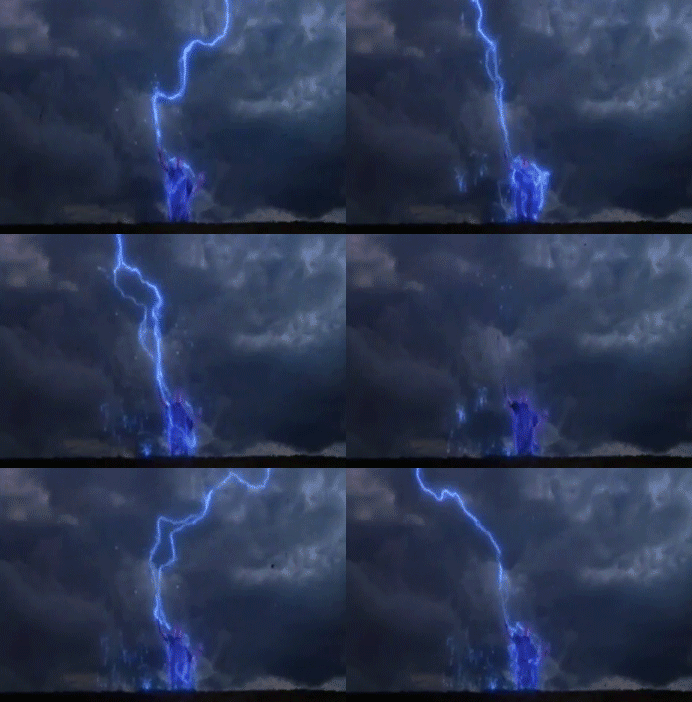
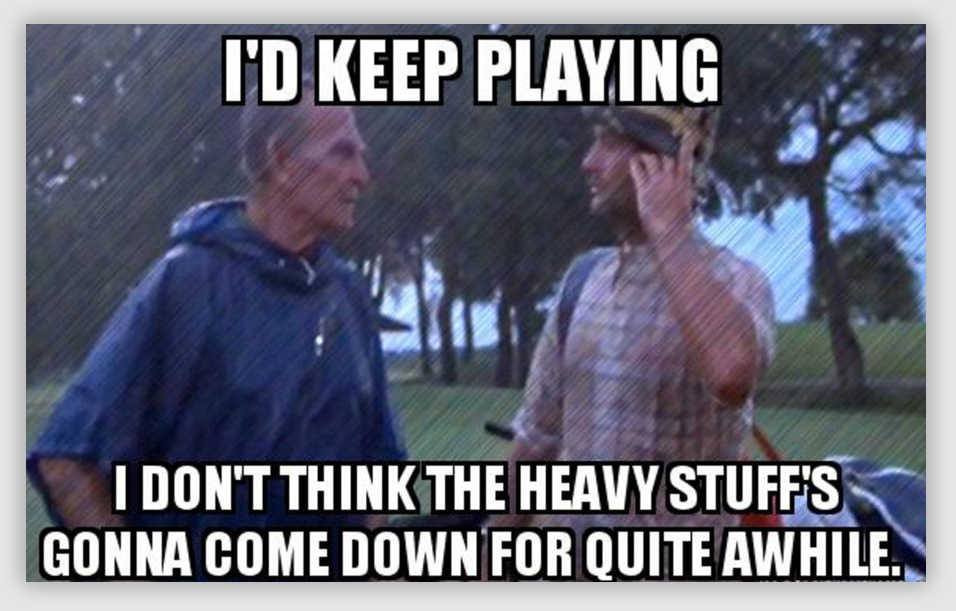
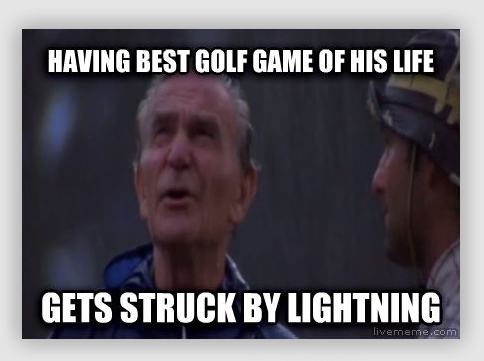
In Caddyshack – arguably the greatest movie ever made (besides Gone With the Wind and Attack of the Killer Tomatoes) – there is a memorable scene in which Assistant Greenskeeper Carl Spangler (played by Bill Murray) – impressed into caddying for The Bishop (played by Henry Wilcoxon) – convinces him into continuing a solo 18-hole game into the teeth of a worsening gale.

Life sort of imitated art one September day 15 years ago. A 12-year-old golfer named Ryan Korengel and his friends kept playing in worsening conditions. Of course, they did – they were 12-year-old boys… would you expect anything less? A tree branch fell on Ryan, injuring him severely.

Ryan’s parents promptly sued everyone who had touched a golf club that day, including the Hamilton County, Ohio (Cincinnati) Park District. Of course they did – they were 21st-century American parents… would you expect anything less?

The interesting note is that, after a 2019 decision on summary judgment, this case was finally set for trial some 11 years after the event being litigated. Young Ryan can now legally swill a beer while he plays the front nine. He’s still playing golf (now with an MBA and a new bride), although the tree injury left him partially disabled. His story has been told on the Golf Channel, and it’s sort of inspiring.

But part of the tragedy for Ryan and the defendants and everyone involved (except the lawyers, of course) is that the case took more than a decade to resolve. The only thing longer and more tedious than watching 18 holes of golf is watching the American justice system.
Korengel v. Little Miami Golf Ctr., 2019 Ohio App. LEXIS 3787 (Ct.App. Hamilton County, September 13, 2019). Twelve-year-old Ryan Korengel and three other boys paid to play golf on the nine-hole, par-three golf course at the Golf Center, which was owned by the Hamilton County Park District. The Golf Center advertises to golfers that it will “attempt to notify them of potentially severe weather conditions” by sounding a siren, communicating the recommendation to seek shelter or vacate the course.

When the boys teed off at about 1 p.m. one September day, the weather was warm, sunny, and breezy. As they progressed from hole to hole, the wind increased. The golf course play coordinator told the boys to pick up their pace near the fourth green, but he never warned them about the approaching storm.

As the boys teed off on the sixth hole, the winds became stronger. On the seventh hole, the boys began to hear tree limbs cracking and saw tree limbs breaking and falling from trees in the woods adjacent to the course. By the time the boys teed off on the eighth hole, they could see trees swaying and heard more cracking of limbs. At around 2:30 p.m., Ryan was preparing to putt on the eighth green when tree limbs from a nearby silver maple tree fell towards him. One struck him in the head, resulting in serious and permanent injury.

Before Ryan’s injury, no one from the Golf Center activated the clubhouse siren. Everyone agreed the wind caused the branch failure. In fact, the winds that day caused a lot of damage in the Greater Cincinnati area, including at the Golf Center.
The Korengels sued the Park District (and several other defendants, not relevant here) alleging negligence and recklessness. The Park District moved for judgment on the grounds of political-subdivision immunity. The trial court denied the motion in its entirety. Appellants then appealed the denial of the motion to this court.

Held: Summary judgment before trial should not be granted to the Park District. The District established entitlement to the general grant of immunity under R.C. 2744.02(A)(1), where issues of material fact exist as to whether the injury, which occurred on the grounds of a building used in connection with a government function, was caused at least in part by the negligence of the park district employees in failing to maintain the tree limb and/or failing to manually activate a storm siren, and was due to a physical defect—an unmaintained tree limb—on those grounds, as required for the physical-defect exception to immunity set forth in R.C. 2744.02(B)(4).

Likewise, the Park District was entitled to summary judgment due to the immunity defense under R.C. 2744.03(A)(5) for a claim of reckless supervision in the failure to warn a 12-year-old golfer of impending weather, because the record contains no facts demonstrating that other potential golfers were turned away due to the weather.

The District argued that the open-and-obvious doctrine and the “act of God” defense barred the claims. In the alternative, they argue that, if there is evidence upon which reasonable minds could differ with respect to whether the physical-defect exception applied, the Park District’s immunity is reinstated under R.C. 2744.03(A)(3) or (5). But whether the danger from a defective tree is open and obvious to a 12-year-old is not governed by the same standard that governs the determination of whether the District’s landscapers and arborists had constructive notice of the defect.

To establish the physical-defect exception, a plaintiff must show that the injury, death, or loss (1) resulted from employee negligence, (2) occurred within or on the grounds of buildings used in connection with a governmental function, and (3) resulted from a physical defect within or on the grounds of buildings used in connection with a governmental function.

“Physical defect” is not defined in Ohio law, but the court has previously defined the term as “‘a perceivable imperfection that diminishes the worth or utility of the object at issue. Here, the Korengels allege in the complaint that the condition of the tree limb and the storm siren constituted physical defects. Thus, when moving for summary judgment, the District presented evidence that the storm siren and tree limb were not defective, and therefore, summary judgment was warranted.

With respect to the storm siren, the District submitted evidence showing that the siren as functioning as intended on the day of the storm. It could be manually activated, but no one attempted to turn it on before Ryan’s injury. There was no evidence to support the Korengels’ allegation that the condition of the storm siren was a physical defect that day.
Admittedly, the Court held, no tree can ever be absolutely safe and immune from branch failure. The mere fact that a tree limb fell does not mean the limb had “a perceivable imperfection that diminished the worth or utility of the limb, a requirement for a physical-defect finding.” The United States Forest Service describes “a ‘hazard tree’ [a]s a tree that has a structural defect that makes it likely to fail in whole or in part.” Consistent with this description, the Court ruled, “we conclude that, where a tree has a perceivable structural defect that makes the tree likely to fail, a falling branch from the tree may be a physical defect for the physical-defect exception to immunity set forth in R.C. 2744.02(B)(4).”

The District submitted a report from the staff arborist, Alan Bunker, who, ten days after the windstorm, examined the tree in question, as well as photographs of the fallen limbs, including the one that had struck Ryan, taken right after the storm. Arborist Alan was not able to inspect the fallen limbs because the Golf Center had removed them along with other storm debris to clear the eighth green for play two days after the incident. Based on what he could review, however, Alan testified that the tree exhibited good health and structure and the broken branches and remaining stubs, which were large in diameter, did not display any decayed wood or malformed branch attachments. Alan believed that the high winds on September 14th caused the broken branches, not any condition of the tree. Other District employees testified that the tree had been maintained, subjected to regular inspections, and appeared healthy before the storm.

The Korengels presented a report from their expert arborist Mark Duntemann. Mark concluded that the tree from which the limb fell had failed because of conditions, clear to a visual inspection, that showed the tree was diseased and a safety hazard. Mark cited, an “excessive” lean, an improper crown – which was “lion-tailed” and comprised of unhealthy sucker growth – and discolored leaves. In his opinion, the lean of the subject tree guaranteed a higher likelihood of a branch failure falling into the high-use area of the green apron where Ryan was located at the time of the injury. Although Mark admitted that wind contributed to the failure, he contended that the tree’s weakened condition also was material to the failure, noting that other trees at the Golf Center did not fail that day.

The Korengels pointed out that the District’s evidence contained no document “specifically” indicating that any inspection or maintenance work was performed on the subject tree, and no one with specialized training said that any such act had been performed.
Ultimately, at the summary judgment stage, the Court said, it must construe the evidence in the light most favorable to the nonmoving party—the Korengels—and may not make credibility determinations. Where, as here, several material facts are in dispute and the expert witnesses for the parties have presented conflicting opinions, the issue of whether the tree limb constituted a physical defect cannot be resolved by summary judgment.

The District argued the Korengels could not show the requisite causation between any alleged defect in the tree limb and Ryan’s injury because of the high winds at the time of the accident. The Court rejected this argument, citing concurrent causation. The relevant portion of the statutory physical-defect exception to liability requires only that the injury “is due to physical defects,” the Court held. This requirement could be met if a trier of fact were to conclude that a physical defect in the tree limb was a concurrent, proximate cause of Ryan’s injuries. To what extent the weaknesses found by the Korengels’ tree expert contributed to Ryan’s injuries is unclear, but the expert’s testimony “creates factual disputes on whether the tree limb was a physical defect and whether it materially contributed to Ryan’s injuries.”

The Korengels must also show the injury was caused by Park District negligence. To establish negligence, the Korengels must show a duty owed, a breach of that duty, and an injury proximately caused by that breach. There is no doubt the Park District employees owed Ryan the duty of care owed a business invitee. An owner of premises owes business invitees a duty of ordinary care in maintaining the premises in a reasonably safe condition so its customers are not unnecessarily and unreasonably exposed to danger. This includes an affirmative duty to protect invitees against known dangers and those dangers that might be discovered through the exercise of reasonable care. That duty was heightened because Ryan was only 12 years old. Children have a special status in tort law and the duties of care owed to children are different from duties owed to adults. The Park District was required to exercise care commensurate with the foreseeable danger so as to avoid injury to 12-year-old Ryan.

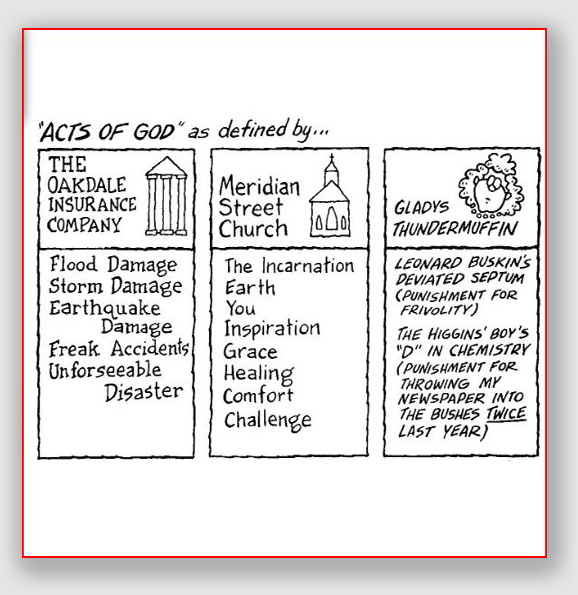
However, an owner or occupier of land is not an insurer of safety. There is no liability for harm resulting from conditions from which no unreasonable risk was to be anticipated or from those that the owner did not know about nor could have discovered with reasonable care. Id. The Korengels argued that the Park District employees failed to exercise due care in  permitting a hazardous tree to lean directly over the golf course where it was likely to fall on someone and cause serious injury or death. Second, the employees failed to exercise due care in the use of the siren, leaving Ryan without warning of the danger from the approaching storm and the negligently maintained tree on the eighth green.
Generally, where premise-liability negligence revolves around the existence of a hazard or defect, a defendant will not be liable for negligence unless its agents or officers actively created the faulty condition, or that it was otherwise caused and the defendant had actual or constructive notice of its existence. Here, the Court said, the record lacks any evidence of a breach of the duty of care related to maintenance of the tree. The Park District properly maintained the tree, as demonstrated by the deposition testimony of several employees and Alan’s expert report that the tree was in good health, growing normally, and had no defects that might have caused the limb that struck Ryan to break on September 14. Furthermore, the Park District never received any prior complaints about the tree, which had been routinely inspected. Thus, the District maintains the evidence in support of summary judgment shows that no Park District employee breached a duty of reasonable care with respect to the tree.

The Korengels argued that there are numerous questions of material fact raised by both fact and expert witnesses making summary judgment inappropriate on this issue, pointing to the same evidence creating a genuine issue of material fact as to whether the tree limb was a physical defect. This includes evidence undermining or contradicting the District’s evidence that the tree had been maintained and inspected by a qualified arborist, as well as Mark’s opinion that the Park District’s employees’ failure to maintain the tree fell below the standard of care owed a golf patron, when the condition of the tree was so patently bad, and for such a long time, that employees should have discovered it and removed the tree.

The Court concluded the evidence creates a genuine issue regarding whether the Park District employees fell below the required standard of care in this case. Ultimately, the credibility of and the weight to be given this conflicting evidence, the Court held, is for trial.

In its final Hail Mary, the District argued that if the tree was a hazard that should have been discovered before the storm, the hazardous condition was open and obvious, Ryan should have protected himself against it, and they owed no duty to Ryan with regard to the tree as a matter of law. In Ohio, if “a danger is open and obvious, a property owner owes no duty of care to individuals lawfully on the premises.” The issue of whether a risk was open and obvious may be decided by the court as a matter of law when one any only conclusion can be drawn from the established facts.

The Korengels argued that the open-and-obvious doctrine would not apply because Ryan was injured by a flying object, not a static condition. The Court rejected this argument: “The Korengels’ position is essentially that the tree was a hazard in its static condition because it was foreseeable that a limb would break and land on the green on the eighth hole of the golf course and strike a player at any time. The ensuing wind that impacted the tree at the time of Ryan’s injury was not caused by any negligence of the Park District’s employees, and the facts show that the increasingly windy conditions and the resulting effect on the trees in the area could be observed by the golfers on the course long before the limb broke and injured Ryan. Because of these distinguishing facts, we reject the Korengels’ argument that the open-and-obvious doctrine cannot apply in this case because Ryan was struck by a flying object.”

In this case, the facts are in dispute as to whether the Park District employees were negligent in the maintenance of a tree, allegedly obviously defective in its static condition because it was likely to fail, resulting in a branch striking a golfer. Further, the instrumentality that caused movement in the limb of the tree was unquestionably not a human—it was the wind. Thus, the Korengels’ position is wrong.

Still, the Court ruled, “We cannot agree that the facts supporting a determination that the Park District had constructive notice of a defective tree on a golf course would also require a finding as a matter of law that the Park District owed no duty to protect Ryan from the allegedly hazardous tree. The legal standard governing when a golf course has constructive notice of a defective tree on the course is not the same as the standard governing what is an open and obvious danger to layperson 12 year-olds who lack the same discernment and foresight in discovering defects and dangers as older, and more experienced golf course landscapers and arborists.”

As a result, the Court ordered that the case go to trial.

– Tom Root

TNLBGray140407

Case of the Day – Thursday, September 4, 2025

MRS. PALSGRAF GOES TO THE CITY BY THE BAY

We all remember Mrs. Palsgraf, the unfortunate matron injured at the Long Island railroad station.  Mrs. Palsgraf was waiting for a train, standing some distance from the platform. On the platform, an overzealous passenger tried to jump aboard a moving train. He lost his balance but was kept from falling by two platform guards, one of whom grabbed his arm while the other pushed him from behind.

The passenger was carrying an unlabeled box under his arm. The box fell to the tracks, some fireworks inside the unmarked box detonated, and the loud noise, somehow (no one ever really explained how), caused a set of scales standing by the station to fall on Mrs. Palsgraf.

Quick, who gets sued? Why, Long Island Railroad, of course. Not because of some obscure legal theory, but rather for the best reason of all: the LIRR had a lot of money. The guards and the passenger did not.

Every law student knows what happened. Mrs. P won $6,000 at trial, which was upheld on appeal. But then the case reached the New York Court of Appeals (the highest court in the Empire State). Renowned jurist Benjamin Cardozo wrote a 4–3 opinion that remains a staple of tort law, taught to law students nearly a century later. Cardozo ruled that the LIRR guards were not negligent because, in helping the man board, they had no duty of care to Mrs. Palsgraf because injury to her was not a foreseeable harm that could flow from aiding a man with a package. Thus, the conception that tort liability can only occur when a defendant breaches a duty of care the defendant owes to a plaintiff was born.

Palsgraf’s an amusing case, but then it’s all fun and games until someone gets hurt.  And someone sure did in today’s case, handed down by the U.S. Court of Appeals for the Ninth Circuit.

In what the Court called the events a “Rube Goldbergesque system of fortuitous linkages,” the life of a young woman was snuffed out in San Francisco by the denouement of a string of events that started with a Bureau of Land Management ranger being reassigned from the Mexican border to Montana.

Steinle v. United States, 11 F.4th 744 (9th Cir., August 24, 2021).  John Woychowski worked as a ranger for the Bureau of Land Management, part of the United States Department of the Interior, assigned to El Centro, California. While traveling to Montana by private car, John and his family stopped to enjoy a warm San Francisco night in June 2015. John parked on the street along the Embarcadero, a waterfront tourist mecca, and the family walked to a restaurant.

When they returned, they discovered that in San Francisco, “BMW” means “break my window.” The tailgate window was broken and some property was gone.

Unfortunately, the property included a nondescript backpack that contained John’s government-issued service weapon, a holstered Sig Sauer P239. The pistol did not have the BLM-issued trigger lock on it.

Four days later, a homeless undocumented immigrant named Juan Lopez-Sancherz found the handgun about a half mile from the break-in, wrapped in rags and sitting on a bench. He picked it up and fired it. The bullet ricocheted off the ground, striking and killing Kathryn Steinle. 

The political universe had a field day, Juan was an illegal immigrant, having been deported five times and with seven prior felony convictions. Not a nice guy. The kind of guy President Trump likes to talk about. The gun control people went nuts, the anti-immigrant people really went nuts, and Juan was painted as criminal excrement for whom the death penalty was too merciful a fate. When the dust settled and common sense prevailed, a jury acquitted Juan in 2019 of murder, manslaughter, and assault, and his conviction for being a felon in possession of a firearm was overturned soon after. Juan’s crime, it turned out, was gross stupidity, something that is not yet a felony.

No one knows who stole the pistol, how many people possessed it in the four days between June 27 and July 1, who took the pistol out of the holster and wrapped it in a shirt or rag (or why they did so), or how the pistol came to be left near the bench where Juan found it. But Kate’s family had to sue someone (and I won’t judge them for that, as they struggled with a horrific and unexpected loss), so they sued everyone. They sued Juan, they sued San Francisco (for being a sanctuary city that had let Juan wander free), and – of course – sued the federal government under the Federal Tort Claims Act.

The Steinles alleged that John was negligent in failing to secure his firearm properly and in leaving it, loaded, in an unattended vehicle in an urban location where the firearm could be easily stolen. The federal district court entered summary judgment in favor of the United States, ruling that John owed no duty to Kate under California law and that his actions were not a proximate cause of her death.

Kate’s family appealed.

Held, the government was not liable because John was not negligent.

Under the FTCA, the United States may be held liable for “personal injury or death caused by the negligent or wrongful act or omission of any employee of the Government… under circumstances where the United States, if a private person, would be liable to the claimant in accordance with the law of the place where the act or omission occurred.” 28 U.S.C. § 1346(b)(1).

So far, so good. But in California, to prove negligence, a plaintiff in a negligence suit must demonstrate that the defendant had a legal duty to use due care, a breach of such legal duty, and the breach as the proximate or legal cause of the resulting injury.

Legal causation has two components: cause in fact and proximate cause. Because the factual causes of an event may be traced far into the past, the Court ruled, the law imposes additional limitations on liability. Those additional limitations relate not only to the degree of connection between the conduct and the injury, but also to public policy. The doctrine can bar liability even when the defendant’s conduct is a factual cause of harm, depending on the manner in which the injury occurred or the extent to which the ultimate harm is attenuated from the breach of duty alleged.

Here, the connection between John’s storage of the pistol in his vehicle and Kate’s death “is so remote that, as a matter of law, his acts were not the proximate or legal cause of the fatal incident,” the Court held. “Several events—many of which remain unknown—intervened after John left the loaded pistol in his vehicle: (1) someone broke into the locked vehicle; (2) someone stole a seemingly innocuous backpack; (3) someone found a pistol in that backpack; (4) someone removed the pistol from its holster, then wrapped it in a cloth and abandoned or lost it a half-mile away; (5) Lopez-Sanchez picked up the firearm, four days later, and fired it, apparently aimlessly; and (6) the bullet ricocheted off the ground and struck Kate.”

There were no winners in this one. Kate is dead, her parents grieve, and Juan served five years before being acquitted and deported yet again.

No winners. Except for the United States government, which did not have to pay. And BLM Ranger John Woychowski. He got promoted.

– Tom Root

Case of the Day – Wednesday, September 3, 2025

REALITY BITES

Sure, you can get your land contract out of a box, and save a few bucks. Just ask Mr. Jackson how that's likely to work out for you ...

Sure, you can get your land contract out of a box, and save a few bucks. Just ask Mr. Jackson how that’s likely to work out for you …

Sometimes, reality bites. Not just the movie, but real life. Ask Nestle’s former CEO Laurent Freixe. Or Rudy Giuliani. Or even the Coldplay couple. It especially bites when the very steps a prudent man takes to protect himself become the evidence on which a court relies to put him in the jeopardy he sought to avoid.

So it was with Mr. Jackson. Mr. J simply sold some land by land installment contract (also known as “contract for deed” or installment sale agreement) to Mr. Smith. Pay attention, because land contracts have become much more popular. A land installment contract lets a property owner safely sell land with seller financing. The buyer puts down a small (sometimes no) down payment, with an agreement to make monthly payments for a period of time until the purchase price has been paid. At that time, the seller (sometimes called the “vendor”) transfers the land to the buyer (called the “vendee”).

Once in a blue moon (still nine months away), a land installment contract is necessary for the completion of a real estate deal between two parties of equal bargaining power and sophistication. We recall handling one like that once in our legal career. But only once. Land installment contracts are almost always not very good deals – not just because the terms are oppressive or one-sided (although they often are) – but because the contracts represent transactions that are only financing of last resort. The vendees are often scarcely able to handle the payments, let alone able to manage the rigors of home ownership. In our experience, many if not most land installment contracts fail, resulting in evictions or foreclosure (depending on the state laws).

Perhaps because of the likelihood that the property will fall into disrepair or the vendee will default, many vendors want land contract documents that provide them with as much control over their properties as possible. This is understandable. What is less understandable is that sometimes, the more control a vendor reserves for herself, the less safe she becomes.

In today’s case, the vendor understandably required the vendee to buy insurance on the place that named the vendor as a named insured. That made sense. After all, the vendee only had paid about 17% of the purchase price, meaning he didn’t have a very big stake in the place. But the vendor wanted to be sure the vendee did what he was supposed to, so the vendor drove by the place on a nearly daily basis, and he bought insurance for the place himself. The vendee reimbursed him, but the arrangement was at odds with what the contract required. Partly because the vendee knew how closely the vendor was watching the place, he checked with the vendor about alterations and modifications before he undertook them.

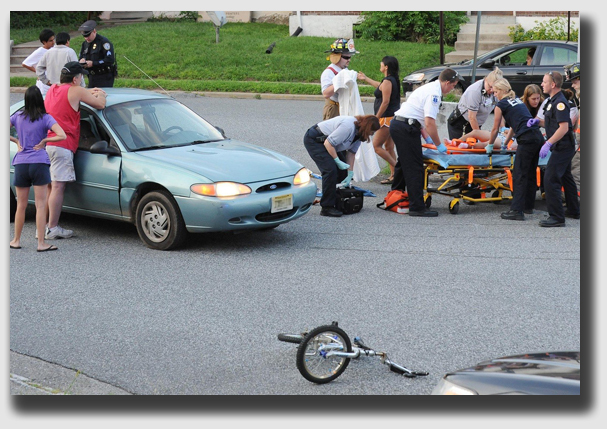
When a 10-year-old boy riding a bike was struck and killed, the boy’s mother blamed obstruction in sight lines caused by untrimmed trees on the property. After a suitable period of mourning, she sued. She went after not only vendee Smith but after Mr. Jackson, too. He was the guy who really controlled the property, she claimed. The trial court disagreed and dismissed Jackson from the suit.

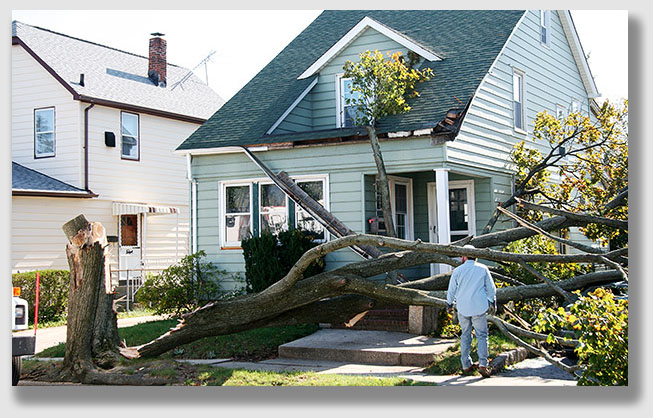
The Court of Appeals reversed. The facts that the vendee had paid so little and Mr. Jackson had cared so much about the condition of the property — especially because he had gotten his own insurance even though the agreement dictated that Smith would do so — suggested to the Court that there was a real question of fact as to whether Mr. Jackson had control of the premises. He just might be to blame, the Court suggested, for the tree that had never been trimmed and which had allegedly obscured the young boy’s view of oncoming traffic. The Court returned the case to the trial court for a jury’s consideration.

Poor Mr. Jackson. Normally, vendors aren’t liable for the conditions of premises they have conveyed pursuant to land installment contracts. But vendors want the best of both worlds, to have control over their property until they’re paid, while not being liable for anything that goes wrong. Mr. Jackson was like that. He probably thought he was being very prudent in approving changes, in making sure insurance was in place, and in driving by like a stalker in Hollywood Hills. Instead, his caution only made the Court suspect that he had retained a lot more control than the typical vendor.

There’s a lesson here. If you sell pursuant to a land contract, get a good lawyer to write as strong a contract as is prudent. Then, enforce the contract. Stick to the deal. If you want to deviate from its terms, sign a written amendment. Don’t start “rewriting” the deal by your conduct.

There's no making light of the sad fact that a 10-year old boy died, the tragedy that set this lawsuit in motion.

There’s no making light of the sad fact that a 10-year- old boy died, the tragedy that set this lawsuit in motion.

Scheible v. Jackson, 881 N.E.2d 1052 (Ct.App. Ind. 2008). Jackson sold a parcel to Smith under a land installment contract. Smith lived on the premises. In early 2005, Jackson received a certified notice from the City of Columbus about saplings growing on the property that had to be removed. Jackson gave the notice to Smith, who took care of the problem.

However, a mature tree on the property hung over the sidewalk, the tree lawn and a part of 7th Street’s westbound lane. Branches of the tree drooped quite low, touching or almost touching the grass. One summer day, Mrs. Scheible’s ten-year-old son, Travis, was riding his bicycle on the sidewalk along the north side of 7th Street. Just west of the tree, Travis started to cross the street. The leaves and branches of the tree obstructed his view. A motorist struck Travis’ bicycle, killing the boy.

Travis’ mother sued Jackson and Smith. She alleged Jackson and Smith both exercised control of the property and that they owed a duty to the traveling public to maintain the property in a reasonably safe condition. Jackson moved for summary judgment, arguing that he owed no duty of care to Travis. The trial court agreed. Mrs. Scheible appealed.

Held: The Court reversed. Noting that young Travis was not on the property when he was struck, the Court conceded that as an initial matter, it appeared that a vendor is not liable for physical harm caused to others outside of the land by a natural condition of the land. However, the law was clear that a possessor of land in an urban area is subject to liability to persons using a public highway for physical harm resulting from his failure to exercise reasonable care to prevent a risk of harm arising from the condition of trees on the land near the highway.

The Court focused much more on control than it did on mere possession. The evidence, taken in a light most favorable to Mrs. Scheible (which it must be when summary judgment is being considered), suggested that Jackson retained substantial control. Smith, who lived on the land and was buying it under a land contract, had paid only a small portion — about 17% — of the total price. He testified he consulted with Jackson on major alterations and discussed removal of the tree that allegedly obstructed Travis’ view before the tree was cut down, after the accident. The Court said it wasn’t clear whether Smith just advised Jackson or actually had to obtain his approval for alterations. To be sure, Jackson maintained a substantial interest in the property as well as a financial stake: he testified he drove by the property often.

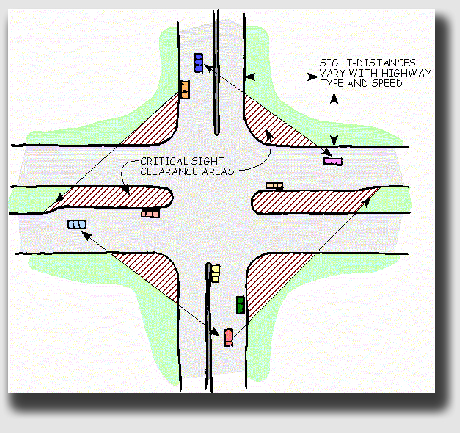
Standards for sightlines at intersections are well established. As a general rule, landowners do well to be aware of them.

Standards for sightlines at intersections are well established. As a general rule, landowners do well to be aware of them.

What’s more, the fact that Jackson and Smith deviated from the precise terms of the contract bothered the Court. The contract terms provided Smith would carry insurance on the property, with the Jacksons and Smith being named as insureds. However, Jackson kept his existing insurance policies on the property in place. He paid the premiums and Smith reimbursed him. The Court held that this meant that Jackson’s use of the property was insured, but Smith — the person Jackson asserted to have been the only one with control of the property — had no coverage at all. The Court found it ironic that Jackson sought to avoid responsibility for the condition of the property, yet maintained two insurance policies on which he was the sole insured. Along with other elements of the case, the Court held, that Jackson insured himself to the exclusion of his vendee, Smith, supported the reasonable inference that Jackson controlled the property.

The Court held that where an entity retains control of property, regardless of the contents of the land installment contract, liability may still attach. The Court said that “[o]ne who assumes the control and management of property cannot escape liability for injuries by showing a want of title in himself.” The fact that a land-sale contract exists, the Court said, is not itself dispositive of the question of the vendor’s non-liability.

Summary judgment was reversed and the case was sent to trial.

– Tom Root
TNLBGray140407

Case of the Day – Thursday, August 28, 2025

SURVIVOR – LAWSUIT ISLAND

Life (and law practice) sometimes imitates art. It may be a stretch to label the long-in-the-tooth CBS series, Survivor, as art, but any number of great artists, authors and composers were unappreciated during their day, just as the Survivor writers who once complained that they are unappreciated. Maybe someday, Survivor – which in the recent seasons was on the edge of extinction – will be studied by college students as a paradigm of our day. Scary, isn’t it?

Arthur C. Clarke once predicted just such a thing

But our point – just like contestants are voted off the island in Survivor – weak cases are many times voted off the docket, so to speak, by summary judgment. Summary judgment is a mechanism for a judge to decide cases where the pleadings, affidavits and any other proof submitted show that there is no genuine issue as to any material fact and that the moving party is entitled to judgment as a matter of law.

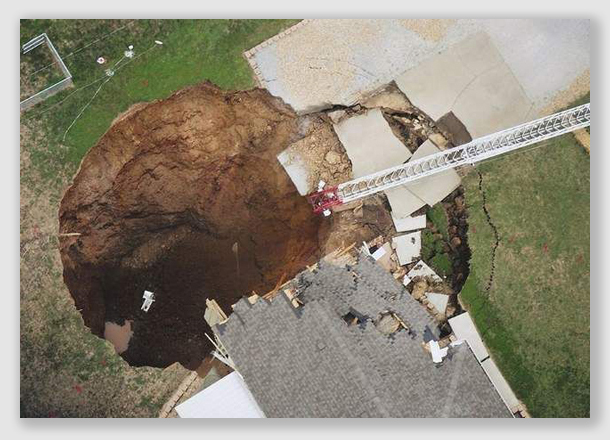
Stack said it was a big hole…

In today’s case, Stack was trimming Hernandez’s trees at Hernandez’s invitation. While working on a lawn with spotty and bumpy grass, Stack tripped on a small depression and broke his leg. He sued, of course – who wouldn’t? His suit alleged that Hernandez should have been aware of the depression and should have warned him of it. He didn’t have any proof that Hernandez was aware of the depression, and the Court very nearly granted summary judgment for Hernandez. But it concluded that a reasonable juror conceivably could — after hearing witnesses and cross-examination — conclude that Hernandez should have known about the depression, and should have either warned Stack or filled it in himself.

So after the summary judgment challenge, Stack remained a “survivor” — leaving it to a jury to vote his case off the island later.

Stack v. Hernandez, Conn. Super. LEXIS 1487, 2007 WL 1893617 (Conn.Super.Ct., June 12, 2007). Stack was trimming trees at the defendant’s property at the invitation and permission of the defendant. While doing so, he stepped into a depression in the front lawn and broke his leg.

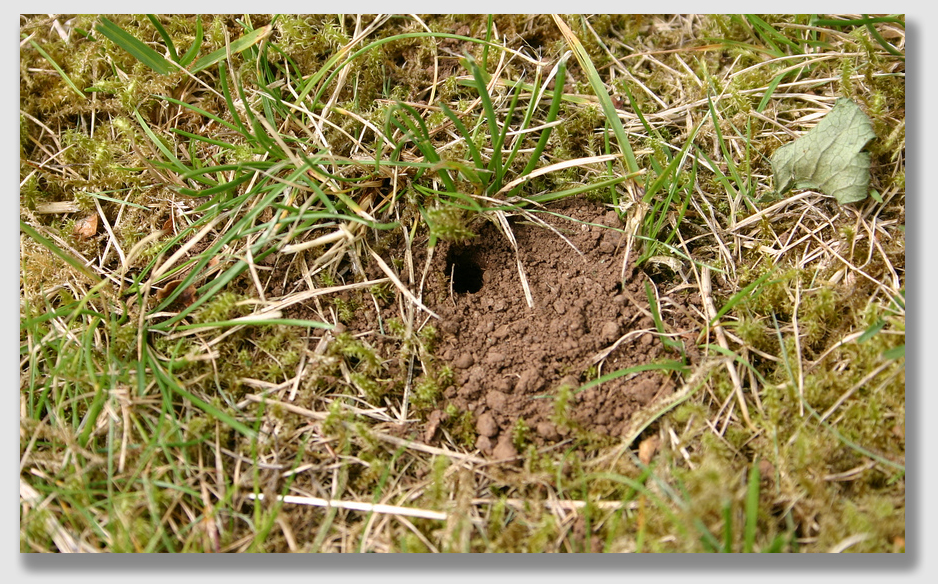
... but Stack recalled it was somewhat small. This is known in the law as "a genuine issue of material fact."

… but Hernandez recalled it was somewhat small. This is known in the law as “a genuine issue of material fact.”

The depression was about 4 inches wide and 3 or 4 inches deep. Stack’s right toe went into the depression and stopped. The lawn was bumpy and had yellow patches in it. Stack did not see the depression before he stepped into it. Hernandez had no actual knowledge of the depression. He performed normal maintenance on the lawn himself but had never noticed the hole.

Stack sued Hernandez for negligence, alleging that Hernandez failed to remedy the depression in the lawn or to warn him of it, even though he knew or should have known of its presence. Hernandez filed for summary judgment on the grounds that there was no genuine issue of material fact on the issue of notice.

Held: Summary judgment was denied. The Court observed that summary judgment is not well adapted to negligence cases, where, as here, the ultimate issue in contention involved a mixed question of fact and law.

The Court said Mr. Stack's case barely stacked up ... but enough to get the matter to trial.

The Court said Mr. Stack’s case barely stacked up … but enough to get the matter to trial.

The conclusion that a defendant was negligent is necessarily one of fact. A possessor of land has a duty to an invitee to reasonably inspect and maintain the premises in order to render them reasonably safe. In addition, the possessor of land must warn an invitee of dangers that the invitee could not reasonably be expected to discover.

The existence of actual or constructive notice is a question of fact. Although Hernandez argued there was no evidence from which a judge or jury could conclude that he had actual or constructive notice of the depression or that it was a danger of which Stack was entitled to be warned, the Court found Stack’s allegation strong enough to survive a summary judgment motion.

The Court characterized Stack’s claim as weak but conceded that a reasonable person could conclude that the depression in the lawn was a “danger”which Hernandez should have discovered and remedied with a reasonable inspection. The Court observed that a party has the same right to submit a weak case as he has to submit a strong one, and it gave him his day in court to submit it.

– Tom Root
TNLBGray140407

Case of the Day – Wednesday, August 20, 2023

WE GOT YOU COVERED

Ich bin in Berliner? The denizens of the western half of the city were irate over the Wall. Just a bit.

Ich bin ein Berliner? The denizens of the western half of the city were irate over the Wall. Just a bit.

California homeowner Shelly Albert lived next to grumpy Henri Baccouche. How do we know he was grumpy? You’d be grumpy, too, if your neighbor built a fence over the parties’ common driveway easement, enclosing a grove of nine mature olive trees that stood on your land.

Imagine how the Berliners felt when they awakened on the morning of August 13, 1961, to find that their neighbors on the east side of town had built a fence enclosing the Brandenburg Gate, Karl Marx Strasse, and some of the nicer parts of town. Or how those Mexicans must have felt when they awoke from a siesta to find a big wall between them and Texas, and a rock with the bill wrapped around it lying in their front lawn? That’s sort of how Mr. Baccouche felt.

To make matters worse, Henri fumed, the nine olive trees had been badly damaged by Shelly’s contractors. The workers’ “actions in hacking, cutting and pruning the trees reduced them to a pitiable state.” The contractors had damaged other trees as well, thereby diminishing “the aesthetic and monetary value of those trees… ” Henri demanded treble damages under Civil Code §§ 733 and 3346, but later expanded his claims to include the alternative claim that Shelly and her people were negligent.

Shelly didn’t bat an eye. She had an insurance policy from Mid-Century Insurance that covered negligence like this. When Henri served his civil action on Shelly, she forwarded a copy to the insurance company. She explained to her insurer that she didn’t believe that any of her fencing encompassed Mr. Baccouche’s property. Plus, she said, the trees that her workers trimmed were “boundary trees,” straddling the property line between the properties. Plus, she explained, she has been notified by the Los Angeles Fire Department to clear the area where the trees were located, as it was within 200 feet of her residence. She had trimmed these same trees year after year, and Mr. Baccouche never told her not to, or that the trees belonged to him. Shelly told her agent that she believed in good faith that the trees were hers and that she was required to trim them.

If she didn't work for Disney (and if she weren't a cartoon character), Elsa could be a field rep for Mid-Century.

If she didn’t work for Disney (and if she weren’t a cartoon character), Elsa could be a field rep for Mid-Century. Except their hearts are much colder…

Ah, Shelly … your Pollyannish optimism is amusing! But not to the cold-hearted field claims manager, who denied your claim. The insurance company concluded that the claim was barred by the exemption for intentional acts set out in the policy. Insurance policies typically cover losses from negligent acts (you accidentally run over the neighbor’s cat) but not intentional acts (you kick the neighbor’s cat into the next county).

cat150724However, maybe Henri left her an out. In his amended complaint, he claimed that if Shelly didn’t trespass and hack up his trees on purpose, she did so negligently. Shelly reported the amended claims to her insurance carrier. She argued that because she believed that the trees were owned by both parties, they “constitute[] property covered under my policy. Accordingly, [defendant] has an obligation under my policy of insurance to tender a defense on my behalf.”

The insurer did not budge. The company contended that because Shelly admitted she purposefully erected the fence and had intentionally cut Mr. Baccouche’s trees, the conduct giving rise to Henri’s claims was intentional, and thus not an accident or occurrence within the meaning of the insurance policy. The insurer said its coverage determination had considered the possibility that the trees were solely owned by Shelly, solely by Henri, or were jointly owned. The carrier determined that who owned the trees was irrelevant to the coverage determination because the damage occurred from nonaccidental conduct.

In response to the insurer’s July letter, Shelly took issue with some minor factual assertions in the document but did not otherwise claim that the damage to the trees had arisen from any sort of accident within the meaning of the policy. The insurer replied that Shelly had not provided any facts addressing its position that the incident was not an “accident” or “occurrence” within the meaning of the policy.

unforeseen150724Shelly sued the insurance company. The trial court concluded that she failed to show “a potential for coverage,” which is what she had to prove in order to get Mid-Century to pay for her legal defense. The judge decided that Shelly’s conduct alleged in Henri’s lawsuit was nonaccidental and intentional. To the extent the amended complaint alleged “negligent” conduct, Shelly had admitted to the carrier what she had done, and Shelly’s argument that she somehow “negligently supervised” the workers was not supported by Henri’s claims.

The Court of Appeals agreed with the trial court. An insurer owes its insured a broad duty to defend against claims creating a potential for indemnity. This duty to defend is broader than the duty to indemnify and may exist even if there is doubt about coverage. However, the insurer has no duty to defend where the potential for liability is tenuous and far-fetched. The ultimate question is whether the facts alleged in the lawsuit against the insured fairly apprise the insurer that the suit is upon a covered claim.

Shelly’s policy covered property damage resulting from an occurrence, and the policy defines an occurrence as an accident. An intentional act is not an ‘accident’ within the plain meaning of the word. The term “accident” refers to the nature of an insured’s conduct, and not to the unintended consequences of the conduct. An accident does not happen when an insured commits a deliberate act unless some additional, unexpected, independent, and unforeseen happening occurs that produces the damage.

Shelly intended the acts that resulted in damage to Henri’s trees. Her conduct did not become an accident just because she didn’t know the trees belonged to Henri. Her intent was irrelevant; the act was not. Shelly told her workers to trim the trees that had been trimmed. Her mistake was in thinking the trees were hers. Her insurance didn’t cover that.

There’s a lesson here for the Henris of the world, too. Your lawyer can sometimes get the bit in his or her teeth, writing enraged and cutting complaints against defendants. In this case, it would have been a lot better for Henri’s lawyer to have accused Shelly of gross negligence or even recklessness. That way, the insurer gets involved. Insurance companies tend to be economic, rational creatures, who are willing to settle when settlement is reasonable… and always have the ability to write a check that’s good.

Albert v. Mid-Century Ins. Co., 236 Cal.App.4th 1281 (California Court of Appeals, Second District, Eighth Division, April 28, 2015). Plaintiff Shelly Albert bought a homeowners’ insurance policy from Mid-Century in January 2008. The policy was in force in January 2011, when Albert was sued by her neighbor, Henri Baccouche, for damages she caused to his property when she erected an encroaching fence and pruned nine of Mr. Baccouche’s mature olive trees. Albert asked Mid-Century to defend the suit, and when the insurance company refused, she sued it.

The insuring clause of the plaintiff’s policy stated: “We will pay those damages which an insured becomes legally obligated to pay because of … property damage resulting from an occurrence. At our expense and with attorneys of our choice, we will defend an insured against any suit seeking damages covered under [this section] . . . We do not have any duty to defend or settle any suit involving actual, alleged, threatened or declared . . . property damage not covered under this liability insurance.” The policy defines an “occurrence” as “an accident, including exposure to conditions, which occurs during the policy period, and which results in . . . property damage . . . during the policy period. Repeated or continuous exposure to the same general conditions is considered to be one occurrence.” The policy also set forth a number of exclusions, including one for “intentional acts,” which the policy defined as “property damage . . . which is caused by, arises out of or is the result of an intentional act by or at the direction of the insured.” By way of example, this includes but is not limited to any intentional act or intentional failure to act by an insured, whether a criminal act or otherwise, where resulting injury or damage would be objectively expected to a high degree of likelihood, even if not subjectively intended or expected.”

denied150724Mr. Baccouche’s complaint alleged that he and Shelley Albert, his neighbor, owned adjacent parcels of land which were subject to a reciprocal roadway easement providing both parcels access to the main public road. He said Albert erected a permanent fence over a portion of the roadway easement, which also intruded onto his parcel. The fence enclosed a 644 square-foot portion of Mr. Baccouche’s land, which included a grove of nine mature olive trees. He claimed Albert and her contractors “willfully and maliciously damaged [the] nine mature olive trees . . . by severely hacking, cutting, and pruning those trees so as to greatly reduce their canopies, foliage, limbs, etc., without permission.” The complaint sought treble damages under Civil Code §§ 733 and 3346.

Mr. Baccouche later amended his complaint, alleging a cause of action for negligent damage to his trees.

The insurance company investigated the claims. Albert asserted that the fence she erected was within her property line and said she did not believe any of her fencing encompassed Baccouche’s property. As to the trees at issue in Mr. Baccouche’s complaint, Albert asserted that the trees were “boundary trees” and that the trunks of the trees essentially straddled the property line between Mr. Baccouche’s and her properties. She told the insurance company that since she purchased her lot, she has been notified by the Los Angeles Fire Department to clear the area where the trees were located, as it was within 200 feet of her residence. She trimmed these same trees year after year, without complaint from Mr. Baccouche.

The carrier denied coverage, concluding that the conduct complained of by Baccouche was intentional conduct by Albert. Albert argued that because she had the trees trimmed in the good faith belief she owned them, “ … no intentional tort will lie.” Albert then sent Mid-Century a “demand for tender of defense,” which the carrier denied. Albert took issue with the insurer’s position but did not otherwise claim that the damage to the trees had arisen from any sort of accident within the meaning of the policy.

Albert then sued Mid-Century. The trial court granted the carrier’s motion to deny coverage. The court ruled that Albert had failed to demonstrate a potential for coverage, as the conduct at issue in Baccouche’s lawsuit was nonaccidental, intentional conduct. The trial court also concluded that to the extent Mr. Baccouche’s complaint alleged “negligent” conduct by the plaintiff, there was no evidence whatsoever that the trees were injured in some accident, “e.g. by inadvertently striking a tree with a motor vehicle.” The trial court also concluded that Mr. Baccouche’s pleadings did not support his “negligent supervision” theory.

Albert appealed.

If you intentionally cut down one of your own trees, but it unintentionally falls on the house, you're still covered. We're pretty sure. But read the fine print.

If you intentionally cut down one of your own trees, but it unintentionally falls on the house, you’re still covered. We’re pretty sure. But read the fine print – preferably before you fire up your chainsaw.

Held: Mid-Century was not obligated to defend Albert. The Court observed that an insurer owes its insured a broad duty to defend against claims that may result in indemnity. While the duty to defend is broader than the duty to indemnify and may exist even if there is doubt about coverage, the proper focus is on the facts alleged in the complaint, rather than the alleged theories for recovery. The ultimate question is whether the facts alleged ‘fairly apprise’ the insurer that the suit is upon a covered claim.”

Here, the policy covers property damage resulting from an occurrence, and the policy defines an occurrence as an accident. Under California law, the word ‘accident’ in the coverage clause of a liability policy refers to the conduct of the insured for which liability is sought to be imposed on the insured. The Court held that an intentional act is not an ‘accident’ within the plain meaning of the word.” It said, rather, that in the context of liability insurance, an accident is “an unexpected, unforeseen, or undesigned happening or consequence from either a known or an unknown cause.”

“Accident” refers to the nature of the insured’s conduct, and not to its unintended consequences. It is not an “accident” when the insured performs a deliberate act unless some additional, unexpected, independent, and unforeseen happening occurs that produces the damage. When an insured intends the acts resulting in the injury or damage, it is not an accident “merely because the insured did not intend to cause injury. The insured’s subjective intent is irrelevant.”

Nevertheless, the Court said, coverage is not always precluded when the insured’s intentional acts result in injury or damage. An accident may exist “when any aspect in the causal series of events leading to the injury or damage was unintended by the insured and a matter of fortuity.” When a driver intentionally speeds and, as a result, negligently hits another car, the speeding would be an intentional act. However, the act directly responsible for the injury – hitting the other car – was not intended by the driver and was fortuitous. In that case, the occurrence resulting in injury would be deemed an accident. On the other hand, where the driver was speeding and deliberately hit the other car, the act directly responsible for the injury – hitting the other car – would be intentional and any resulting injury would be directly caused by the driver’s intentional act.”

Albert argued that although she deliberately hired a contractor to trim the trees, the excessive cutting was not an intended consequence and should be deemed an accident. However, it is completely irrelevant that Albert did not intend to damage the trees because she intended for them to be pruned. Moreover, it is undisputed that the contractor intended to cut the trees, and absolutely no facts exist in the complaint or otherwise indicating that some unforeseen accident (such as a slip of the chainsaw) caused damage to the trees. In fact, it was always Albert’s position that the trees had not been damaged or pruned excessively (and therefore were not subject to an accident) and that they had been cut in accordance with the City’s brush clearance ordinance. An insured may not trigger the duty to defend by speculating about extraneous ‘facts’ regarding potential liability or ways in which the third party claimant might amend its complaint at some future date.”

Also, the Court said, no facts supported Albert’s theory that her negligent supervision of the contractors brought the complaint within the terms of the policy. Negligent supervision requires (1) an employer to supervise an employee; (2) who is incompetent or unfit; (3) the employer had reason to believe undue risk of harm would exist because of the employment; and (4) harm occurs. There are simply no facts, in the complaint or otherwise, supporting the elements of this claim.

Under any view of the facts, the Court ruled, the trimming of the trees was no accident. Albert failed to carry her burden to show that any of Mr. Baccouche’s claims may fall within the scope of the policy.

– Tom Root

TNLBGray140407

Case of the Day – Tuesday, August 19, 2025

YOU’LL POKE YOUR EYE OUT

poke160829Every adult can recite the many and varied warnings and admonitions we heard from parents when we were kids. Among them were “you’ll catch your death of cold,” “clean up your plate, because there are starving kids in India/China/Africa.” We imagine Momma Trump telling a young Donald to “always tell the truth.” Good advice that can save you headaches later. 

And, of course, there’s that Christmas Story classic, “you’ll shoot your eye out.”

Today’s case is about Peter Robles, a kid who didn’t shoot out his eye but did poke it out. Petey, an impetuous 3-year-old, ran straight into a very sharp palm frond while playing in the Severyn family’s yard next door to his house.

We remember when the neighbor kid climbed our magnolia tree once while it was raining. (We, or maybe our mother, had enough sense that we were kept indoors, out of the rain). The neighbor kid lost his footing on a slippery bough, fell, and whacked his chin on the branch as he passed on the way to the ground. Even then, the law of gravity was in force.

obey160829The neighbor boy showed up the next day with stitches and haughtily told us that his parents were going to sue our parents. Not really understanding the law, we had visions of losing outr house, car and toys, and being reduced to panhandling on the village square. Had we really appreciated the law, we would not have been scared. We would have been petrified.

In today’s case, the toddler’s parents really did sue, complaining that the palm trees were a “hidden peril” in the neighbor’s property and that he had thus breached his duty to little Peter. The Robles said the little boy was an “invited guest,” and thus the Severyns had a duty to warn the kid about the hidden dangers of sharp palm fronds.

The Court of Appeals disagreed, patiently explaining to a lawyer who may well have slept through the first year of law school how the status of the person on the landowner’s property determines the duty of care the owner owes. The Court quite reasonably found that the palm trees were anything but “hidden.” Even if the Severyns had been sloppy in trimming the palm tree – something that had not been established – the negligent trimming did not make the trees appear deceptively safe. Even Petey’s dad had told the boy to be careful when playing at the Severyns (as if we didn’t have that warning go in one ear and out the other countless times during our youth).

oneear160829Sure the boy was only three years old, the Court said, but even taking his tender age into account, the Severyns did not owe him a duty greater than the one they discharged toward him.

We have railed about it before, the American perception that once a victim has been injured, a jury is duty-bound to look around the courtroom for someone who should be made to pay for it. There’s no discounting the sadness of seeing someone accidentally killed or maimed for life, but as the late President Jimmy Carter pointed out, life is often unfair

Robles v. Severyn, 504 P.2d 1284, 19 Ariz. App. 61 (Ct.App. Ariz. 1973). Peter Robles, a 3-½ year old, was playing at a neighbor’s house with permission when he somehow impaled his left eye with a sharp palm frond. No one saw the accident, but the boys had been playing among the trees when it happened. The palms were in a row alongside a fence at the border of the Severyns’ property, with short, squat trunks and narrow, long fan leaves.

Peter’s parents sued the Severyns to recover for injuries Peter suffered as a result of a “sharp palm frond penetrating his left eye” while he was playing on the Severyn property as an “invited guest.” The complaint alleged that the palm trees “had a misleading, hidden, and dangerous defect to a child of tender years, which danger defendants had specific knowledge of,” and that it “constituted a hidden trap to children playing in the area.”

The Severyns got the case thrown out by the trial court on summary judgment. The single question on appeal was whether the trial court erred in doing so.

Held: Dismissal was proper. A landowner’s duty to a person on his property is determined by that person’s status. The evidence shows that young Peter was a social guest. In Arizona, a social guest is not an invitee but merely a licensee despite the fact that he is on the premises pursuant to an invitation from one in possession. The general rule is that one who goes upon another’s property as a gratuitous licensee must take it in the condition he finds it and must assume all risks incidental to such condition. This rule applies to children as well as adults, and to natural as well as artificial conditions. The owners of the premises owe no duty to a guest other than to refrain from knowingly letting him or her run upon a hidden peril, or wantonly or willfully causing the guest harm. However, the rule is that a host who knows of a concealed danger upon the premises is guilty of negligence if he permits the guest, unwarned of the peril, to come into contact with that danger, and he may be held liable to the guest for an injury thus sustained.

Palm trees can provide the unsuspecting with an unpleasant time.

Palm trees can provide the unsuspecting with an unpleasant time.

The Court held that the “hidden peril” doctrine did not apply. The trees were neither hidden nor did they have a deceptive quality. The accident occurred during daylight hours and the trees were clearly visible. Peter had been cautioned by his father before to be careful playing. The Court said that even if it assumed that the Severyns were negligent in failing to trim the branches, such a failure did not give the trees a deceptive or innocent appearance. If a dangerous condition existed, the Court held, it was an obvious one, and the Severyns thus had no duty to warn. The Robles stressed Peter’s age, arguing that a 3-year-old child could not have realized that these trees were dangerous. While the Court admitted that it was true, it did not believe that “all circumstances giving rise to a possible danger to a child create a factual question as to whether a ‘hidden danger’ exists. One would have to ‘childproof’ his property if such were the case.”

The Court ruled that while the care to be taken by the owner or occupant must be commensurate with the danger to, and with the immaturity and inexperience of, the child to be protected, any requirement in this respect must not be so onerous as to make the ownership or possession of property burdensome instead of enjoyable. The use of property should not be burdened with the need to take precautions against every conceivable danger to which an irrepressible spirit of adventure may lead a child. There is no duty to take precautions where to do so would be impracticable, unreasonable, or intolerable.

– Tom Root

 TNLBGray140407

Case of the Day – Friday, August 15, 2025

THANK YOU, CAPT. OBVIOUS

My five grandkids (and their six parents, but with cute grandkid, who cares about the parents?) vacationed with us again this summer.

We had a great time, and now recall why young adults in their 20s and 30s have young children, and not older adults in their 60s and 70s. But I kept up with the kids, despite several mishaps/

One day, I fell into a hole between two rocks while negotiating a trail that followed a mountain stream. I was carrying my older granddaughter, Mabel, at the time, but I set her down safely as I fell. Besides a barked shin, I was unhurt (just embarrassed).

We got to the trail by boat, and on the way back, I hit a submerged rock with the outboard motor. Afterward, I bumped my head on a floating swimming dock as I swam toward it, doing a backstroke.

It was a great (if somewhat misfortune-studded) vacation. (Still, I did not have to go to the emergency room this year, an improvement over our vacation three years ago – but that’s another story). Nevertheless, my mishaps reminded me of a “well, duh,” doctrine in tort law known as the “open and obvious danger” rule. That hole between the rocks? It was rather open and obvious. The swimming dock? Since I was deliberately swimming to it, it was pretty clearly open and obvious. The submerged rock? Not so much.

The “open and obvious danger” rule provides that a possessor of land is not liable to invitees for physical harm caused to them by any activity or condition on the land whose danger is known or obvious to them unless the possessor should anticipate they might be harmed despite such knowledge or obviousness. If the open and obvious danger rule applies, then the land possessor owes no duty to invitees with respect to the open and obvious danger, and he or she therefore cannot be held liable for any injury caused thereby.

The hole between the rocks was so open and obvious that the Dept. of Environmental Conservation could not reasonably anticipate that anyone would step into it while carrying a 3-year-old granddaughter. The submerged rock was out near the middle of the lake and was unmarked and in what appeared to be deep water. The swim raft? Well, you couldn’t miss it.

Let’s say I had followed the trail but, just before the rock, had come to two construction barrels with that bright-orange plastic netting construction crews use stretched between them. And, being kind of obtuse, I stepped over the netting (still carrying my granddaughter) and tripped on it, falling. It is fairly open and obvious that the netting was open and obvious, and I had gotten my just desserts trying to cross it.

Ah, but that did not deter Julie Coburn. When she and her husband set off along a trail in the Kays Creek Parkway that was festooned with signs warning that the trail was closed, they thought, “Nah, it can’t mean it’s closed to us.” Later, when they happened upon two orange construction barrels with netting stretched between them, they remained clueless. Julie stepped over the netting, snagged her foot in the plastic, and fell.

Normally, someone pulling such a boneheaded stunt would slink away to the urgent-care facility, chastened and injured and (I hope) a little bit wiser. But this is America, people! We don’t do that here. And Julie didn’t, either. Instead, she sued the construction company for placing the netting across the closed trail.

Happily, common sense prevailed.

Coburn v. Whitaker Construction Co., 2019 UT 24, 445 P.3d 446 (Supreme Ct. Utah, 2019): Whitaker was hired to install a water pipeline in the Kays Creek Parkway, a recreational area in Layton, Utah. The Kays Creek Parkway contains a number of walking trails that are designated for public use, one of which leads to the pipeline construction site. Whitaker placed a “Trail Closed Ahead” sign at the trailhead, indicating that portions of the trail were closed for construction, and strung orange netting across the trail to deter people from walking to the construction site. Despite the warning sign and the orange netting, people consistently ignored the sign and would take down the orange netting.

In the summer of 2018, Julie Coburn and her husband went for a hike at Kays Creek. Despite seeing the “Trail Closed Ahead” sign at the trailhead, the Coburns assumed the trail was open and continued on. A short distance into the trail, they encountered two barrels on either side of the trail with orange netting strung between them, but both had fallen down and were lying across the trail. Julie admitted the orange netting was a hazard, but she stepped over it anyway. She tripped and fell, hurting her arm and shoulder.

Julie sued Whitaker seeking damages for her injuries. Whitaker argued it did not owe Julie a duty of care under the “open and obvious danger rule” found in the Restatement (Second) of Torts, which Utah has adopted.

The district court and court of appeals agreed with the construction company.

Julie appealed.

Held: The Supreme Court held that the “open and obvious danger” rule kept Julie from recovering a dime.

The open and obvious danger rule provides that a possessor of land is not liable to his invitees for physical harm caused to them by any activity or condition on the land whose danger is known or obvious to them unless the possessor should anticipate the harm despite such knowledge or obviousness. In determining whether the possessor should anticipate harm from a known or obvious danger, the fact that the invitee is entitled to use public land indicates that the harm should be anticipated. There is a special reason for the possessor to anticipate harm when the possessor maintains land upon which the public is invited and entitled to enter as a matter of public right.

This is so because defendants may reasonably expect the public, in the course of the entry and use to which they are entitled, to proceed to encounter some known or obvious dangers which are not unduly extreme, rather than to forego the right. However, even these defendants may reasonably assume that members of the public will not be harmed by known or obvious dangers that are not extreme and that any reasonable person exercising ordinary attention, perception, and intelligence could be expected to avoid. And this is true particularly when a reasonable alternative way is open to the visitor, known or obvious to him, and safe.

Here, Julie chose to ignore a “trail closed” sign and the orange construction netting barrier. What’s more, she recognized that one could easily fall crossing the netting, but did so anyway. The “open and obvious danger” rule was easily applied, and saved Whitaker from any liability.

– Tom Root

TNLBGray140407