Case of the Day – Wednesday, December 24, 2025

Missed you

We’re out until Friday, December 26th, watching early and inconsequential bowl games.

tag

turkey161223

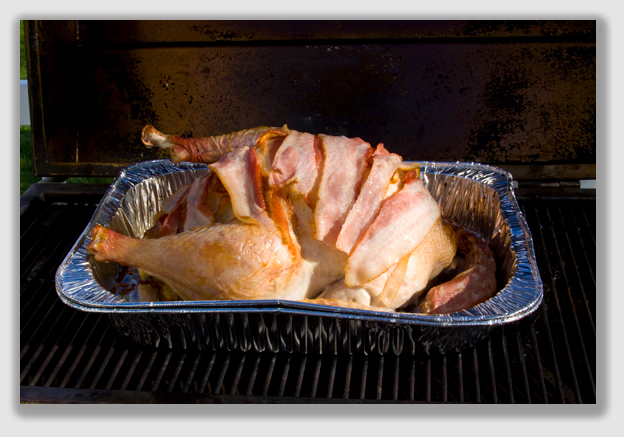
Our turkey, covered with bacon, is being cooked on the grill again this year. Tradition tastes so good…

No heavy lifting for today (unless perhaps a really big present, maybe a new chainsaw or something). We’re being overrun by our three grandsons (ages 7, 3 and a year old). Our two granddaughters are wisely staying in sunny and warm Minnesota. Meanwhile, we’re hunkered down awaiting the jolly old Elf. I’ll see you back on Frieday, December 26th. 

For now, I have an arboriculture law present for you from me.

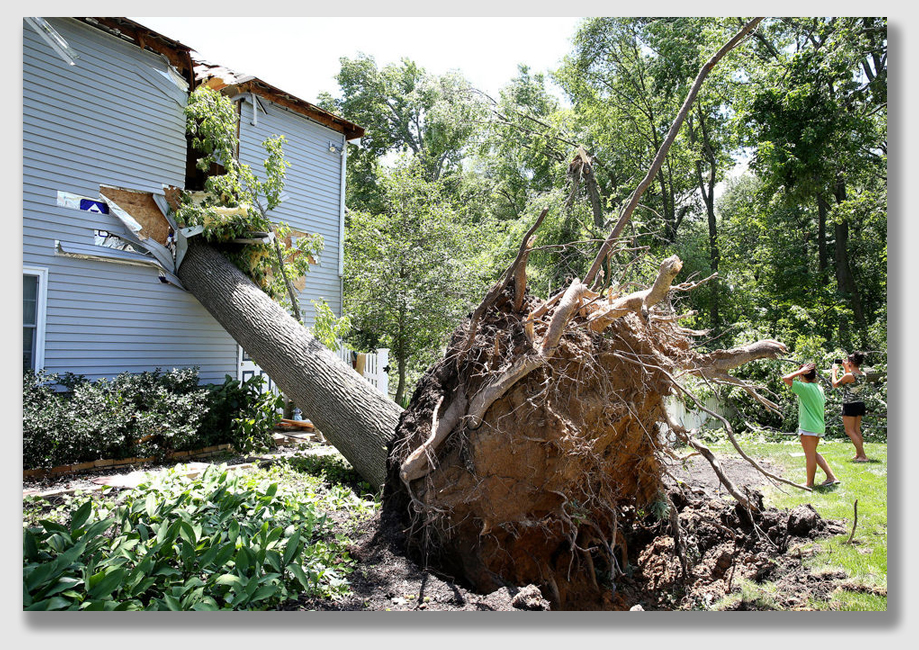
I really do, a little literary gem, a simple case from That State Up North (Michigan, for you non-Ohioans out there) in which the property owner sued a driver who careered off the road and ran into the landowner’s beloved oak tree. The tree was badly damaged, the plaintiff said, and would need special care for the remainder of its days.

The driver defended on jurisdictional grounds, arguing that Michigan’s “no-fault” insurance law meant that the court could not assess property damages against him for the mishap.

The Court denied the landowner’s case, but it did so in verse (with apologies owed to Joyce Kilmer):

We thought that we would never see
A suit to compensate a tree…
A suit whose claim in tort is prest
Upon a mangled tree’s behest;
A tree whose battered trunk was prest
Against a Chevy’s crumpled crest;
A tree that faces each new day
With bark and limb in disarray;
A tree that may forever bear
A lasting need for tender care.
Flora lovers though we three,
We must uphold the court’s decree.

Doggerel? I don’t think so. Perhaps “poetic justice” instead. Whatever it might be, it makes for more interesting reading, and no doubt amused everyone except the plaintiff, who was left uncompensated for the damage to the oak tree.

May your trees remain healthy, happy, properly trimmed by a professional arborist, and clear of easements, rights-of-way, neighbors, and passers-by for this season and all of 2026.

Merry Christmas to all!

Buffer

Fisher v. Lowe, 333 N.W.2d 67, 122 Mich.App. 418 (Ct.App. Mich., 1983).

The facts:

“A wayward Chevy struck a tree,
Whose owner sued defendants three.
He sued car’s owner, driver too,
And insurer for what was due
For his oak tree that now may bear
A lasting need for tender care.
The Oakland County Circuit Court,
John N. O’Brien, J., set forth
The judgment that defendants sought
And quickly an appeal was brought.”

Held:

“Court of Appeals, J.H. Gillis, J.,
Gave thought and then had this to say:
(1) There is no liability
Since No-Fault grants immunity;
2) No jurisdiction can be found
Where process service is unsound;
And thus the judgment, as it’s termed,
Is due to be, and is,
Affirmed.”

– Tom Root


TNLBGray

Case of the Day – Tuesday, December 23, 2025

IMPEACHMENT IN WASHINGTON, D.C.

Just for something different, I thought I’d write about impeachment and Washington, D.C. You know, of course, what I mean, and her name doesn’t rhyme with Epstein… but some intend that it will.

The District of Columbia – the motto of which is “taxation without representation” – argues that it should have voting representation in Congress like the rest of us. As a voter, I would just as soon not be held responsible for the cretins who cast ballots on Capitol Hill. Being responsible for one level of incompetent boobs managing the city I lived in seems to be plenty.

Am I unfair to D.C. municipal employees? Not according to John Katkish, who accused the Dept. of Public Works Tree and Land Division (“TLD”) of incompetence. He said that when he noticed a tree leaning in on his house, he called the TLD. Nothing happened, and a week later, the tree fell on his residence.

John’s lawyer got flummoxed by the rules of negligence, which require, right out of the gate, you show that there is a recognized standard of care and that the defendant failed to meet it. John’s two experts did not testify as to what the national standard of care might be when a resident calls to say a tree is suddenly leaning toward his house and looking like it’s going to fall. (If you figure that the standard is pretty obvious, you can be forgiven for that burst of common sense… but you’ll never be a lawyer).

John’s second problem was that he insisted he had accurately conveyed the emergent nature of the situation to the TLD guy he talked to on the phone. But when the trial dust settled, the TLD had not put the man – whose name was Alvin – on the stand.

There is a great evidentiary claymore a party can wield on its foes in such instances, called themissing witness instruction.” Where a witness is peculiarly within the control of one party, has particularly first-hand evidence on some element of the case, and yet is not called by the controlling party, the other party is entitled to have the judge tell the jury members that they may infer from the witness’s non-production that had he appeared to testify, his testimony would have been harmful to – that is, would have impeached – the controlling party’s case. Here, had the instruction been given, the jury could have surmised that Alvin would have testified that John screamed into the phone, “The tree is falling! The tree is falling!,” and thus made the emergency nature of the situation clear.

Alas, John missed out on getting a missing witness instruction, because although Alvin worked for TLD, there was no evidence that John’s lawyer could not have called him for a deposition, an interview, or even a cup of coffee.

In the final analysis, it seemed John called the TLD once and then figured that a single call should be enough. As it turns out, “one swallow does not a summer make,” nor does one call define an emergency.

Katkish v. District of Columbia, 763 A.2d 703 (Ct.App.D.C. 2000). When John Katkish, a resident of our nation’s capital, noticed a large tree leaning toward his house, he did what anyone would do in such circumstances: He called the District of Columbia Dept. of Public Works, Tree and Land Division (“TLD”), to complain.

Fat lot of good that did. A week later, the leaning tree fell on his house. That’s when John did a second thing that anyone would have done in such circumstances.  He sued the District of Columbia for negligence.

At trial, John called two expert witnesses. The first, arborist James Biller testified that a 60-foot tall oak tree leaning toward a house with a lifting curb would warrant immediate inspection and possible abatement. The trial court rejected Arborist Biller’s opinion because he failed to define a national standard of care for the maintenance of leaning trees or the response time to notification of that condition. In addition, the trial court complained, Mr. Biller based his opinion on what Virginia municipalities do and lacked familiarity with the District of Columbia’s horticultural situation and how it compared to that in Virginia.

John also called Thomas Mayer, an expert in utility arboriculture. The trial court rejected Mr. Mayer’s testimony because he also did not specify a national standard or one relating to comparable municipalities.

On the first day of trial, Sandra Hill, a TLD employee, testified that Alvin Baltimore was the clerk who took John’s call on May 20. After the close of the evidence, John asked the trial court for an adverse inference against the District under the missing-witness presumption, because the District had offered no explanation as to why it had not called Alvin to testify. The trial court questioned whether Alvin was available to the District but not to John, and ultimately refused to draw an adverse inference from the District’s failure to call Alvin as a witness.

Unsurprisingly, the trial court found that John did not convey the emergency nature of the situation to the TLD when he called on May 20th, and thus held that the government was not negligent.

Equally unsurprisingly, John appealed.

Held: The trial court’s decision was upheld because John failed to present sufficient expert testimony to establish the standard of care the TLD needed to meet in order for it to avoid being found negligent. As for the missing witness Alvin, the trial court did not abuse its discretion by declining to draw an adverse inference regarding the worker who took the report of the leaning tree that the appellant phoned in.

While expert testimony regarding the appropriate standard of care isn’t necessary for acts within the realm of common knowledge and everyday experience, the appellate court ruled, a plaintiff must put on expert testimony to establish the standard of care when the issue in question is so distinctly related to some science, profession or occupation as to be beyond the ken of the average layperson. The expert’s testimony must clearly relate the standard of care to the practices in fact generally followed by other comparable governmental units, or to some standard nationally recognized by such units.

In this case, the Court found, “an average lay person is not capable of discerning when a leaning tree may create a dangerous situation requiring an emergency response and whether the likelihood of the tree falling is related to the condition of the tree, the street, or other circumstances.” Thus, the trial court was not wrong to rule that the standard of reasonable care and maintenance of a dead and leaning tree by a municipality – at least in the non-emergency situation presented in this case – was “beyond the ken of the average person.”

Based on the trial court’s finding that John told the District only that there was a “dead” and “leaning” tree in front of his house, the appellate court agreed that expert testimony was needed to determine the standard of care the District of Columbia had to meet to abate the situation.

The requirements for a missing witness inference are that the party proposing such inference must show the missing witness is (a) able to testify about the transaction such that he might be expected to be called as a witness, and (b) is peculiarly available to the party against whom the inference of unfavorable testimony is made. A trial court must exercise discretion in making its decision whether to give an instruction on the missing witness inference and be “constantly mindful of the dangers inherent in creating evidence from nonevidence.”

Here, John did not show that the trial court abused its discretion in refusing to draw a missing witness inference. John had plenty of chance to take Alvin’s deposition, meaning that Alvin was hardly just available to the Dept. of Public Works. Given the principle that the missing witness inference “need not be applied broadly or rigidly,” the court of appeals wrote, “we cannot conclude that the trial court erred as fact finder in refusing to draw the inference.”

Thus, John could not use Alvin’s absence to ask the jury to infer that he would have impeached D.C.’s defense.

The Court noted that there was plenty of evidence to support the trial court’s conclusions in the case. The record showed John made no follow-up contacts by phone or in writing to anyone in the D.C. government after the May 20th call, despite the fact he testified that he believed the tree was going to fall. In fact, John saw a TLD crew outside his house after he had noticed the leaning tree but before it fell, yet did not contact the crew to have them look at the tree. Therefore, the trial court’s ruling was supported by the evidence.

– Tom Root

TNLBGray140407

Case of the Day – Tuesday, December 16, 2025

LET’S NOT PREJUDGE ANYTHING

My favorite daughter, who holds a Ph.D. in demographics from Cal Berkeley (forgive the proud papa boast), earned her undergraduate degree in linguistics a decade or more ago at an ivy-covered campus some 2,611 miles east of San Francisco Bay.

Her B.A. in linguistics (magna cum laude) came after 20 years of listening to her mother and me complain that the English language is going to hell.

You know, to be perfectly honest, at the end of the day, I could literally die at the debasement of the King’s English. A prime example, IMHO, is the ubiquitous airline expression “preboarding.” Since when does one “preboard” by boarding? And the credit card come-on I got the other day, telling me I was “pre-qualified?” Just what is that? Am I qualified? Or not qualified? To me, “qualified” seems rather binary – you are or you aren’t.

But my Ivy League-educated daughter just rolls her eyes and tells me that “language is dynamic.” In other words, 2023 English is not 1923 English, which was not 1823 English, and so on. “Get used to it, Dad,” she counsels me.

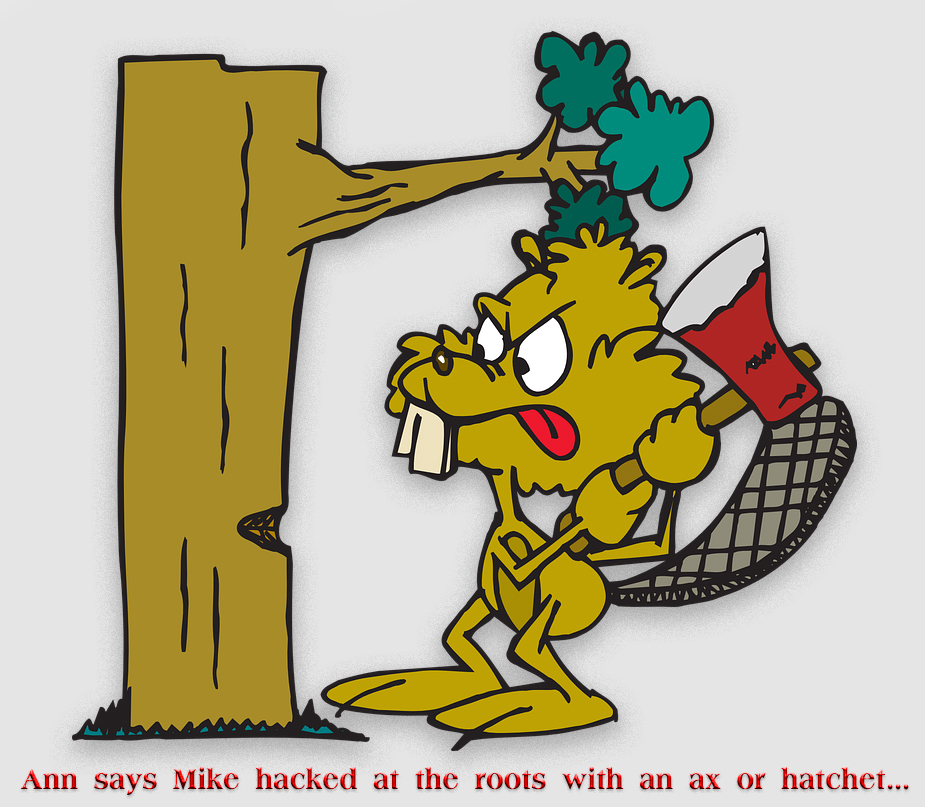
This brings me to today’s case. Ann sued her neighbor, Mike, because after she gave him permission to perform “limited trimming” of her Norway maple tree, the branches of which were overhanging his property, she says he over-trimmed, hacked away at the tree roots, and smeared a foreign substance on the root he did not hack. Her expert said the Norway maple was worth $96,000.

C’mon, man. Ninety-six large for a tree considered to be an invasive species? Surely you jest.

Surely she did not. The whole case sounds sketchy. Apparently, Mike performed all of his depredations of the branches and roots from the comfort of his own property. Regular readers of this blog should, at this point, express shock. That sounds like the Massachusetts Rule, especially because Mike argued that her tree had encroached and damaged his property. Why did Mike even require permission to trim overhanging branches and encroaching roots? 

But that’s a question for another day. What the Connecticut trial court was deciding in this opinion was whether Ann was entitled to a prejudgment remedy. “Prejudgment” here is judgment in the same sense that “preboarding” is judgment. If Ann gets her remedy, she gets to attach Mike’s property (bank account, gold bullion, beach house, dogecoins, whatever) up to the amount of the judgment to which she is likely entitled. To do so, she has to show “probable cause” to believe that Mike is liable (that he trespassed, was negligent, whatever) and that she was damaged to a likely amount.

“Prejudgment” sounds a lot like judgment to me, especially because she pleads her claim, he opposes it, and the court decides. Far be it from me to ask how a criminal law concept like “probable cause” found its way into the civil sphere, but the fact that Ann can force a paper trial before the trial, and thereby lock up Mike’s assets (thus restricting his ability to freely use his own property), makes little sense. A canny plaintiff can use the prejudgment remedy route to oppress the defendant and run up litigation costs, thus forcing a settlement that looks a lot like the defendant folding. The fact that the court was able to find probable cause to believe that Mike had trespassed by trimming on his side of the property line suggests that the legal theories are less than perfectly thought out.

It’s one thing to permit a prejudgment remedy where probable cause is present, and there is reason to believe the defendant will run off with his assets in order to make himself judgment-proof. But in Connecticut, you don’t have to show a defendant will cut and run, just that prejudgment, there is probable cause to believe you are likely to get a judgment.

Ann ultimately failed to lock up Mike’s assets because her expert testimony was pretty sloppy. Nevertheless, the whole notion of a prejudgment judgment seems like an erosion of the King’s English, let alone civil procedure.
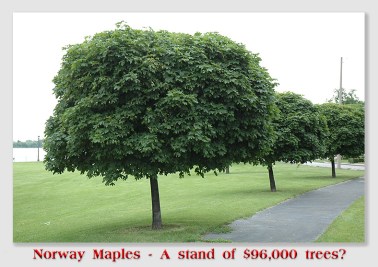
Greco v. Gallo, 2019 Conn. Super. LEXIS 2963 (Superior Ct. Conn., Nov. 21, 2019). Ann Greco owned a beach house next to a beach house belonging to Michael Gallo. A 40-year-old Norway Maple tree stood on her property near the boundary between the two parcels. Ann claimed that on April 1, 2017, Mike requested permission to prune one of her trees that was overhanging his property. She said she granted limited permission, but Mike pruned well beyond what she had authorized. Ann alleged that Mike damaged the roots of the tree with an ax and that he applied some substance to the tree’s roots, thereby harming and perhaps destroying the tree.

Ann sued for compensatory damages, double or treble damages under C.G.S. § 52-560, and punitive damages. Her complaint alleged that Mike was individually liable for her losses under the following legal theories: (1) liability for violation of Connecticut’s tree statute, C.G.S. § 52-560, and (2) liability for common-law negligence.

Ann claimed that Mike performed arboriculture on the tree without a valid license and applied a foreign substance to the tree’s root structure. She further alleges that he or his agents caused the tree to die, and she was harmed through the loss of the tree, its valuable shade, and the cost of the tree’s removal and replacement. She also claimed Mike was negligent, in that he failed to follow her limited pruning instructions and thus breached a duty of responsible conduct and care to her tree when he performed arboriculture without a license. Ann further claimed his negligence caused the death of the tree.

Mike denied everything and argued in addition that § 52-560 does not apply to this case because Mike never entered Ann’s property, and the remaining defendant had no role in the pruning of the tree.

Not to be outdone, Mike counterclaimed against Ann, alleging damages to his real and personal property caused by her negligence for failing to keep her tree from overgrowing and encroaching on his property. He alleges that for a long time before April 2017, Ann’s tree was growing excessively on his property, causing damage to his septic system and roof and requiring demolition and rebuilding of his garage.

Not content with litigating the case to the end, Ann sought to attach some of Mike’s property even before judgment, preventing either from selling it until the case was resolved. Outside of Connecticut, prejudgment attachment normally is intended to ensure that a defendant does not render himself judgment-proof before a case is tried. But in the Nutmeg State, prejudgment attachment does not require a showing that the defendant is likely to hide assets. Instead, it appears to be a civil bludgeon with which a well-heeled plaintiff can beat a defendant into submission by making it impossible for him to do business (or even survive) for as long as a trial goes on.

Held: Ann was not entitled to truss up Mike to the tune of $30,000 pending litigation over one dead tree.

A prejudgment remedy is available upon a finding by the court that “there is probable cause that a judgment in the amount of the prejudgment remedy sought, or in an amount greater than the amount of the prejudgment remedy sought, taking into account any defenses, counterclaims or setoffs, will be rendered in the matter in favor of the plaintiff.” C.G.S. § 52-278d(a)(1). In order to grant prejudgment attachment, a court must determine whether or not there is probable cause to sustain the validity of the applicant’s claim. The plaintiff does not have to establish that she will prevail, only that there is probable cause to sustain the validity of the claim. “The court’s role in such a hearing is to determine probable success by weighing probabilities.

The Court said Ann proposed suing Mike in two counts alleging liability under C.G.S. § 52-560 and liability in common-law negligence.

C.G.S. 52-560 provides that

Any person who cuts, destroys or carries away any trees, timber or shrubbery, standing or lying on the land of another or on public land, except on land subject to the provisions of section 52-560a, without license of the owner, and any person who aids therein, shall pay to the party injured five times the reasonable value of any tree intended for sale or use as a Christmas tree and three times the reasonable value of any other tree, timber or shrubbery; but, when the court is satisfied that the defendant was guilty through mistake and believed that the tree, timber or shrubbery was growing on this land, or on the land of the person for whom he cut the tree, timber or shrubbery, it shall render judgment for no more than its reasonable value.

Section 52-560 embodies the long-standing common law that predated its passage and includes the legal concepts of trespass and damages. The elements of an action for trespass are (1) ownership or possessory interest in land by the plaintiff; (2) invasion, intrusion, or entry by the defendant affecting the plaintiff’s exclusive possessory interest; (3) done intentionally; and (4) causing direct injury.” A trespass can exist without personal entry onto the land of another. Anything a person does that appropriates adjoining land or substantially deprives an adjoining owner of the reasonable enjoyment of his or her property is an unlawful use of one’s property.

Section 52-560 does not give a new and independent cause of action, the Court said, but instead prescribes the measure of damages in cases where compensatory damages would, in the absence of the statute, be recoverable.” An action under § 52-560, therefore, is an action in trespass with a specifically prescribed measure of recovery of damages. As with trespass, the plaintiff cannot recover if the defendant had the “license,” or permission of, among others, the owner. Failure to prove the elements of the underlying trespass, the Court held, dooms an action under § 52-560.

Here, the Court held, Ann claims the evidence supports liability against Mike for violating C.G.S. 52-560, in that he admittedly pruned the tree, used an ax or hatchet on the roots of the tree, and placed some substance around the root region of the tree so as to harm it permanently. Although Mike’s actions all occurred from his neighboring property, Ann claims the trespass is established through his unauthorized actions on the tree from his property. Mike’s testimony supports that he did do such pruning from his property on her tree, but Ann alleges he went too far and was much too aggressive in that pruning process. And even further, the evidence showed he never asked permission to take an ax to the tree roots on his property, nor to put any foreign substances at or near the tree roots. This conduct beyond the permission given by Ann, the Court said, supported the probable cause finding on the trespass issue.

Ann also claimed, in addition to the § 52-560 count, that Mike was negligent. Such a common-law cause of action is permitted in tree damage cases, in addition to the statutory count. The essential elements of a cause of action in negligence are duty, breach of that duty, causation, and actual injury. Here, the Court said, the evidence permitted the court to find that Mike owed a duty to Ann once he asked her for permission to prune the tree, to exercise that permission reasonably and within the scope of permission she gave him.

The testimony and the photographs offered at the hearing supported the claim that Mike may not have been reasonable in how he conducted himself after Ann gave him limited permission to prune. Taking an ax or hatchet to the roots and placing foreign substances at the root areas, the Court held, may be a sufficient basis to find that he breached that duty and sustain the validity of Ann’s negligence claim. Thus, there is probable cause to sustain the validity of the negligence claim against Mike.

However, before the court could grant Ann’s application for prejudgment attachment, the court had to also find that the damages she claimed were supported by the requisite probable cause.

Section 52-560 is very clear as to what is or is not the measure of damages in tree damage cases, the Court ruled. Ann could seek damages for the trespass itself, for the value of the trees removed, considered separately from the land, or for the recovery of damages to the land resulting from the special value of the trees as shade or ornamental trees while standing on the land. For a mere unlawful entry upon land, nominal damages only would be awarded. If the purpose of the action is only to recover the value of the trees as chattels, after severance from the soil, the rule of damages is the market value of the trees for timber or fuel.

For the injury resulting to the land from the destruction of trees which, as a part of the land, have a peculiar value as shade or ornamental trees, a different rule of damages obtains, namely, the reduction in the pecuniary value of the land occasioned by the act complained of.

The proper measure of damages is either “the market value of the tree, once it is severed from the soil, or the diminution in the market value of the… real property caused by the cutting.”

Ann overreached. She sought an attachment of $30,000 each over the real and personal property of all three defendants and was “rather unclear as to the exact basis for the alleged damages related to the Norway Maple in question. And, there is contradictory evidence provided by each alleged expert arboriculturist on this topic.”

Expert testimony from Ann’s and Mike’s experts set the “reasonable value” of the tree at $98,000. The Court noted drily that

it is unclear if these sums are replacement cost figures for said tree or if they are values of the tree as timber once cut. Neither expert offered opinions with any reasonable degree of arboricultural probability in their written reports nor in their testimony at trial, and neither expert provided sufficient scientific methodology or reasoning for how they each arrived at the dollar amounts testified to. In fact, both witnesses had never testified in court before, and both had limited prior experience in placing a valuation on trees in question, such as the case at bar. Their testimony did not provide clear evidence on the replacement cost of the tree versus the cost of the tree once cut for potential lumber, as required by the statute and case law for the measure of damages under §52-560.

The Court noted that “trial judges are afforded wide discretion to serve as gatekeepers for scientific evidence because a relevance standard of admissibility inherently involves an assessment of the validity of the proffered evidence. More specifically, if scientific evidence has no grounding in scientific fact but instead is based on conjecture and speculation, it cannot in any meaningful way be relevant to resolving a disputed issue.”

Therefore, while the Court found probable cause for believing Mike would be liable, it could not find sufficient probable cause as to the amount of damages Ann claimed to justify the placement of a monetary attachment on Mike’s property.

– Tom Root

TNLBGray140407

Case of the Day – Friday, December 12, 2025

GARBAGE IN, GARBAGE OUT

Originally a phrase used in the computer programming world, “garbage in, garbage out” was just too useful an aphorism to stay in Silicon Valley.

Today’s case illustrates the aphorism. One sanitation worker was backing up a garbage truck while the other, the son of a spelling-challenged mother named Kert Seymour, was holding onto a platform on the back. The truck veered too close to a tree growing along the boulevard, and strap-hanger Kert bashed his hand between the truck and the tree trunk.

If you have not studied the law (having instead favored more useful pursuits), you might think that garbageman Kert had only himself to blame for not moving his hand as the tree trunk approached. Or maybe blame the driver, who should have kept the truck farther from the tree. That’s much too logical.

There are two problems with your thinking. First, Kert couldn’t very well sue himself. There was no money there. Likewise, he could not collect much from his co-worker driver, who, if he had a lot of money, probably would not be driving a garbage truck. The employer, who owned the truck, was immune from liability to sanitation worker Kert except for whatever amount workers’ compensation would pay. Which clearly wasn’t enough to satisfy Kert.

So what to do? The answer is obvious. You sue the homeowner’s association that owned the private road on which the accident happened, arguing that if it had not planted the tree where it did, the accident could have been avoided.

If you’re a plaintiff’s lawyer, this is how you follow the money. There’s just one problem: how do you convince a jury to overlook the fool who didn’t pay attention, or the driver who couldn’t back straight, in favor of the association that owned the tree?

The three essential elements of negligence are (1) the negligent party must owe a duty to the injured party; (2) the negligent party must have breached its duty; and (3) as a direct result of that breach, the injured party must have been actually damaged.

Before negligence can be determined, the extent of the defendant’s duty to the injured has to be defined. That was the issue in this case.

Alleging that the defendant breached a duty to sanitation worker Kert by letting a tree grow was “garbage in.” Unsurprisingly, Kert got “garbage out.” You’d think he would have known that’s how garbage works.

Seymour v. Lakewood Hills Association, 927 S.W.2d 405 (Court of Appeals of Missouri, Eastern District, Third Division, 1996). Kert Seymour (whose spelling skills obviously landed him in his chosen occupation) was a sanitation worker. Kert was riding on the back of a garbage truck when his co-worker, who was backing the truck down a private residential street, hit a tree standing in the boulevard. Kert’s hand was crushed between the truck and the tree.

The road was owned and maintained by the Lakewood Hills Association, so, naturally, Kert sued the Association for planting the tree where his co-worker could dash his hand against it. After all, while its connection to the accident seemed tenuous, the Association did have something no other likely defendant had: money.

The trial court said Kert’s position was garbage, and granted summary judgment for the Association. Kert appealed.

Held: The Court of Appeals held the Association owed Kert nothing.

Under Missouri law, if a condition on the property is so open and obvious that an invitee should reasonably be expected to discover it and realize the danger, the landowner does not breach its standard of care unless it should anticipate the potential harm despite such knowledge or obviousness. The failure to protect an invitee like Kert against conditions that are open and obvious as a matter of law does not fall below the applicable standard of care.

Lakewood Hills argued the tree in the center of the road was so open and obvious that a person should reasonably be expected to see it and recognize the danger posed. Both Kert and his co-worker admitted that they knew the tree was there. Kert stated that he had seen it many times when collecting trash. The tree being clearly visible from the end of the street, common sense dictates that a reasonable person would have appreciated the harm likely to occur should a vehicle strike the tree.

The Court held that “as a matter of law, that the dangerous condition presented by the tree was open and obvious.” In other words, Kert, if you remain vigilant while the truck is moving, you might Seymour.  

The Court consigned Kert’s lawsuit to the dustbin of litigation. Which Kert probably emptied. One-handed.

– Tom Root

TNLBGray140407

Case of the Day – Wednesday, December 10, 2025

SUMMARY JUDGMENT

If the extent of your formal law schooling was gleaned from prime-time television (not that there’s anything wrong with that), then you already know that all lawsuits end up in trial, every trial is a cliffhanger, someone usually falls apart on the witness stand under withering cross-examination, and the winners typically go to a nice place for dinner afterward. With the client picking up the tab.

Congratulations. You are a lawyer.

Real life, unsurprisingly, seldom imitates art. And there is hardly ever a good meal at a white-tablecloth beanery after the win.

In reality, about 97% of civil cases never make it to trial. One party or the other files motions to dismiss for various reasons or seeks summary judgment, or simply gets out a wallet and settles. In fact, motions and summary judgment practice and settlement go hand in hand. It is usually a court’s action on a dismissal motion or summary judgment motion that throws cold water on one or both parties, causing them to remember that old-but-true legal maxim that “a bad settlement is better than a good lawsuit.”

A motion to dismiss is filed in a case where the defendant argues essentially that even if everything the plaintiff says in the complaint is true, he or she cannot win because of lack of jurisdiction, because he or she filed beyond the statute of limitations, because the statute does not confer on a plaintiff the right of a private cause of action… there are a bunch of great arguments for dismissal.

Summary judgment is a little more complex. It is usually filed after most of the pretrial discovery is complete. Summary judgment depends on one side or the other proving that the evidence shows there is no genuine issue of fact to be decided, only application of the law to the unrebutted facts. For example, I t-bone you in an intersection. You have affidavits from five witnesses that I ran a red light. Your lawyer takes my deposition, and I complain that I don’t know whether the light was red because I was watching a TikTok video on my phone, and you should have been alert for distracted drivers like me.

In that case, who needs a trial? I can’t prove I didn’t run a red light because while you have witnesses who say I did, I have no witnesses (including me) who can say I did not.

When a party moves for summary judgment, losing does not mean he or she cannot prove the case. It just means that there is a question of fact – whether the jury believes your busload of nuns who say I ran a stoplight or whether it believes the guy who had just staggered out of a bar and says I did not.

Summary judgment is an excellent shortcut for cases in which a party cannot prove its case or defend itself (depending on whether the party moving for summary judgment is the plaintiff or the defendant). It saves a lot of court resources and legal fees. But as today’s case demonstrates, summary judgment is not for everyone. Where there is disputed evidence, even if the dispute is lopsided, a trial must result.

Johnson St. Properties, LLC v. Clure, 302 Ga. 51, 805 S.E.2d 60 (Supreme Ct. Ga., 2017). Cynthia Clure was a tenant of an apartment complex owned by Johnson Street Properties. JSP was owned and managed by Dan and Elaine Cartwright and their two sons, Chris and James.

In early 2013, a limb fell onto JSP’s property from a tree located on a neighboring lot. Other tree limbs had fallen onto the property during prior storms, including some from the adjacent property. The Cartwrights took action to remove those branches when such instances occurred. This time, a limb fell during a storm and became suspended between the gutter of one of JSP’s apartment buildings and some brush. Everyone agreed the suspended limb was an open and obvious condition, yet the length of time the limb remained suspended is unclear, ranging anywhere from a few days to a few months, according to who is telling the story. Cindy and her neighbors knew the limb was dangling from the gutter, and Cindy had even warned other tenants to stay away from the limb because it was dangerous and could fall. Cindy said she left voicemails with the Cartwrights, notifying them of the suspended limb, but they denied ever receiving any such voicemails.

On the day of the accident, Cindy discussed the limb with Steve Wilburn, a fellow tenant who sometimes worked as a JSP maintenance man. Steve and Cindy walked over to the hazard area, at which time he threw a rope over the limb. Cindy testified that she heard the gutter tear and told Wilburn to stop so she could warn the tenant inside the apartment about the loud noise. As she walked out of the apartment, Cindy told Steve, “Hold on. If you’re going to do anything, just wait.” But he did not, pulling on the rope. The limb swung down from its perch and struck Cindy.

Cindy sued JSP, arguing the company failed to maintain safe premises for its invitees. JSP moved for summary judgment, alleging that no genuine issue of material fact existed regarding its negligence.

The trial court denied JSP’s summary judgment motion, finding that genuine issues of material fact existed regarding its negligence.

Both parties appealed.

Held: Issues of fact existed requiring JSP to face a trial on negligence.

JSP argued that it had no knowledge of the dangling tree branch, that Steve – the guy who removed the limb – was not its agent or employee acting within the course and scope of his employment at the time of the incident; and because Cindy had superior knowledge of the hazard, she failed to exercise ordinary care for her own safety and assumed the risk by getting too close to a known hazard.

First, JSP contends that it had no knowledge of the hazard before the incident at issue. But, the Court said, Georgia law places an owner/occupier on constructive notice of what a reasonable inspection conducted in the exercise of ordinary care would have revealed, provided that “one is not chargeable with negligence in failing to discover and remedy a danger in the property which he could not have discovered by the exercise of ordinary care, or which has not existed for a sufficient time to charge him with the duty of discovering it.”

Construing the evidence in favor of Cindy, as it was obliged to when judging a motion for summary judgment, the Court found there was a genuine issue of material fact as to whether Steve acted as JSP’s agent when removing the limb. If he did, any knowledge about the hazard posed by the limb and its removal that Steve possessed could be imputed to JSP. What’s more, the Court said, there was a question of fact as to whether JSP knew about the limb even aside from Steve’s knowledge, because Cindy testified she left a message with JSP about it. While there was evidence that the owners conducted inspections of the property after major storms, there was a dispute as to whether a reasonable inspection was conducted between the time the limb in question became suspended (which may have occurred after a major storm) and Cindy’s injuries; and whether a sufficient amount of time had passed for JSP to discover the hazard prior to Cindy’s injuries. “Indeed,” the Court said, “the record is filled with contradictory sworn testimony from the parties and lay witnesses concerning these matters, raising credibility issues which cannot be resolved on summary judgment.”

JSP also argued the trial court erred in denying summary judgment because Steve was not its employee acting within the course and scope of his employment at the time he decided to remove the tree limb from the gutter. For that reason, JSP contended, Steve’s actions could not be imputed to JSP under the doctrine of respondeat superior.

But, the Court said, questions of the existence and extent of an agent’s authority are generally for the triers of fact. Here, a question of fact remained as to whether Steve was an employee working within the course and scope of his employment at the time of the incident. It is undisputed that he had an on-again-off-again working relationship with JSP as the maintenance man for the property. In fact, Jim Cartwright admitted that during 2013, JSP would have Steve perform tasks around the property “as needed.” Plus, there was some evidence that Steve held himself out as the apartment complex’s maintenance man to other tenants as late as March 2013. During that same period, Elaine Cartwright instructed at least one tenant that she could “go to Cynthia or Steve” if she had any issues with her apartment.

As to whether Steve was working within the course and scope of his employment, he testified that he would perform odd jobs around the property and would not always ask permission from the owners before beginning a maintenance task if he determined that task was within his job description. Additionally, Cindy testified that she witnessed Wilburn removing tree limbs from the parking lot before this incident. While there was some evidence to the contrary, “such contradictions simply underline the existence of genuine issues of material fact that are for a jury to decide, “ the Court said.

Finally, JSP argued that Cindy’s knowledge of the hazard created by the suspended tree limb was equal to or greater than that of JSP’s, and that such knowledge precluded her from recovering on her negligence claims. Cindy was clearly aware of the tree limb and testified that she understood the dangers it posed, given that it was suspended in the air. “But it is a plaintiff’s knowledge of the specific hazard which precipitates the injury which is determinative,” the Court said, “not merely her knowledge of the generally prevailing hazardous conditions or of the hazardous conditions which she observes and avoids.” In other words, Cindy was not injured by the random falling of the suspended tree limb — a possibility of which she was aware; instead, she was injured when the limb swung off the gutter while Wilburn was attempting to remove it. Steve had superior knowledge of his own plans and actions concerning removing the limb and the danger posed by such removal, knowledge that would be imputed to JSP if Steve were its agent. Thus, the Court held, although the record shows Cindy had some knowledge of the general hazard, “we cannot conclude as a matter of law that her knowledge of the “specific hazard” was equal to or greater than JSP’s; consequently, a jury question remains as to this issue.”

JSP said Cindy was contributorily negligent. The Court thought that it could be so, but “taking into account all the circumstances existing at the time and place of Clure’s injuries, and construing the evidence in favor of Clure, we cannot say that the evidence of Clure’s alleged contributory negligence is plain, palpable and undisputed.” Cindy’s proximity to Steve and the tree limb when he was attempting to remove the hazard was unclear from competing evidence. Cindy said she was walking away from the hazard when it fell. Steve wasn’t sure that Cindy had enough time to see it fall, raising a question as to whether she could have avoided the falling limb in the first place.

Finally, JSP argued that Cindy assumed the risks associated with the limb removal by entering “the danger zone” as Steve was removing the limb. Assumption of the risk bars a plaintiff’s recovery when a defendant establishes that a plaintiff, “without coercion of circumstances,” chooses a course of action with full knowledge of its danger and while exercising a free choice as to whether to engage in the act or not.’ To successfully assert this affirmative defense, the defendant “must establish that the plaintiff (1) had actual knowledge of the danger; (2) understood and appreciated the risks associated with such danger; and (3) voluntarily exposed herself to those risks.” Put simply, the Court said, “assumption of the risk means that the plaintiff, in advance, has given his consent to relieve the defendant of an obligation of conduct toward him, and to take his chances of injury from a known risk arising from what the defendant is to do or leave undone.”

Because there are disputes in the evidence as to what occurred immediately preceding the limb’s fall — namely, Steve’s actions, Cindy’s location at the time in question, and whether she could have seen the limb fall from the gutter — the Court ruled that summary judgment was not appropriate as to whether Cindy assumed the risk.

– Tom Root

TNLBGray140407

Case of the Day – Tuesday, December 2, 2025

IN THE VAST WORLD OF LAW…

… there’s plenty of half-vast lawyering going on.

I found myself thinking that in connection with a case I was reviewing yesterday, one that had nothing to do with trees (but a lot to do with plants, those being Cannabis sativa, and involving trucks and conspiracies and the pesky Controlled Substances Act).

Potheads or not, I thought, the defendants deserved better lawyering than they got. There’s a lot of that substandard, just-barely-enough-to-prevent-a-malpractice-suit representation, not only in the criminal courts but in civil practice as well.

Today’s case is an excellent example of phone-it-in representation on both sides of the courtroom. The plaintiff’s lawyer seems to simply have loaded a civil action blunderbuss and fired away. It was evident that the defendant’s tree roots were destroying the boundary wall by pushing against it from the defendant’s side of the edifice. Therefore, the roots were located on the defendant’s property. So why would the lawyer include a trespass count? Any first-year law student could tell you that the roots were not on his client’s land, and being on someone else’s land without permission is the sine qua non of trespass.

And before the defendant starts to feel smug about the plaintiff’s pleading miscue, she should look at her counsel’s performance. That lawyer spent the defendant’s money on a couple of experts, who may or may not have rendered solid, helpful opinions. We’ll never know – because the defendant’s lawyer did not bother to put the expert’s opinions in affidavit form – a pure rookie mistake.

The defendant might have walked away from this lawsuit relatively inexpensively by getting the plaintiff’s entire complaint dismissed. But she never had a chance to make her substantive argument because her lawyer overlooked something everyone knows – that statements by experts and witnesses must be in affidavit form.

Half-vast lawyering all around…

1212 Ocean Ave. Housing Development Corp. v. Brunatti, 50 A.D.3d 1110, 857 N.Y.S.2d 649 (Sup.Ct.N.Y. 2008). 1212 Ocean Avenue Housing Development Corp., a soulless, faceless corporation, if ever there was one, owned property next to Debbie Brunatti’s place. The two properties are separated by a 10-foot-high retaining wall built in 1924 when an apartment building was constructed on 1212’s premises. The heartless corporate suits alleged that an elm tree planted on Debbie’s property more than 40 years ago grew over time so that its trunk came to rest atop the retaining wall. The roots of this tree also damaged the retaining wall, causing it to crack and curve. In December 2004, the New York City Department of Buildings issued a summons to 1212, requiring it to fix the defective retaining wall. Shortly later, 1212 sued Debbie to recover damages for nuisance, trespass, and negligence.

Debbie had the tree removed about four months after being sued. She argued, among other things, that the defective condition of the retaining wall had not been caused by tree roots, and that 1212 could not maintain an action for damages because it had not engaged in self-help to remedy the situation. The trial court denied Debbie’s motion.

Debbie appealed.

Held: The trial court properly denied Debbie’s motion to dismiss for nuisance and negligence.

The unsworn reports from two engineers she submitted in support of her application were insufficient to establish, as a matter of law, that the tree roots did not damage 1212’s retaining wall. “Furthermore,” the court said, “while it has been recognized that a property owner may resort to self-help to remove tree roots encroaching upon his or her property and that this may constitute a sufficient remedy in some circumstances, the defendant failed to demonstrate that self-help would have been practicable here, where it is undisputed that the tree roots rested entirely on her property.”

However, the Court said, the trial judge should have granted that part of Debbie’s application for summary judgment on the trespass count. Since the tree roots rested entirely upon Debbie’s property, there was no intentional intrusion or entry onto the 1212’s property, which could constitute trespass.

– Tom Root

TNLBGray140407

Case of the Day – Friday, November 21, 2025

YOU HAVE ONLY YOURSELF TO BLAME

I just got back from a week in London. The primary reason for the trip was so we could see our granddaughters. They live in London these days (with our son and daughter-in-law, but once the grandkids arrive, your children become an afterthought).

While there, I rented a car and tried English driving for the first time. That is my segue into today’s topic, the very English common-law tort of negligence.

Negligence is a tort law concept borrowed from the English and a living, breathing description of my adventures in a four-door, manual-shift Skoda. To prove negligence, one either needs a photo of me in the driver’s seat navigating a roundabout, or one must prove three essential elements The negligent party must owe a duty to the injured party, the negligent party must have breached its duty, and as a direct result of that breach, the injured party must have been actually damaged. Surprisingly, most of the litigation on tree-related negligence results from questions of the extent of the duty owed to the injured party.

The bulk of negligence actions related to trees result from trees or branches falling on people and property. The states are nearly uniform in holding that a property owner who has actual or constructive notice of a defect in his or her trees has a duty to the owners of adjoining property and the public who may be passing by to ensure that the tree does not injure persons or property.

Actual notice is fairly self-explanatory. A landowner who has been told that a tree is defective has actual notice. However, constructive notice is much more nuanced. Visual evidence of decay, a history of falling branches, advice of an arborist or tree professional that a tree poses a hazard – all of these may be enough for a court to find that a property owner was on constructive notice of a defect. Some cases have suggested that if a tree professional installs cabling or bracing to support a tree, that fact alone is constructive notice to the landowner of a serious defect in a tree.

Even if evidence of decay or distress is not clear from the ground, some courts have held that landowners have a general duty to regularly inspect trees on their property that may cause damage or injury if they fall. Most states recognize two levels of landowner duty. A rural property owner, because the size of the land holdings is generally larger than in urban areas and because there is a lesser concentration of people and property to be injured, has a duty to inspect that is significantly lesser in scope than the duty of a urban landowner. An urban landowner usually has fewer trees, and those have a greater likelihood of causing injury or damage if they fall. Thus, what is an adequate inspection program for a rural landowner may not be enough for an urban property holder.

Generally, before negligence can be determined, the extent of the defendant’s duty to the injured has to be defined. The great illustration can be taken from today’s case:

Sellens v. Christman, 418 S.W.2d 6 (Sup. Ct. Missouri, 1967). Elvin Christman had invited Jim Sellens to go out with him to try out his new chainsaw. They tacked some trees in the woods, and promptly dropped the first one into a notch on a second one. Jim concluded the lodged tree was safe, and was cutting a second tree near it when the whole thing gave way. The lodged tree collapsed on Jim, causing the loss of a leg. Elvin was nowhere nearby at the time.

Nevertheless, Jim sued Elvin.

The trial court held that Jim had not established that Elvin was at fault for the accident. In fact, there was no evidence that anyone other than Jim was at fault for the accident. But Jim tried to get a leg up by appealing. The case found its way to the Missouri Supreme Court.

Held: Jim didn’t have a leg to stand on.

The Supreme Court upheld the dismissal but focused more on the duty that Elvin owed to Jim. It held that Jim was an invitee, meaning that Elvin had a duty to take ordinary care to prevent injury to Jim, more care than if Jim were a mere trespasser.

Although Jim’s status was an invitee, the Court said there was no breach of any duty by Elvin to make the premises safe for Jim or to warn him of the danger. “The duty to keep premises safe for invitees applies only to defects or conditions which are in the nature of hidden dangers, traps, snares, pitfalls, and the like,” the Court reasoned, “in that they are not known to the invitee, and would not be observed by him in the exercise of ordinary care. The invitee assumes all normal, obvious, or ordinary risks attendant on the use of the premises, and the owner or occupant is under no duty to reconstruct or alter the premises so as to obviate known and obvious dangers.”

You have only yourself to blame, Jim.

– Tom Root

TNLBGray140407