Case of the Day – Friday, April 3, 2026

CORNER WITH A VIEW

We’re watching the spring wheat green up along country roads. It’s still doggone cold – we had snow on the ground last weekend – but it is spring. It won’t be long until everything is growing, including at Ohio agricultural affliction, “corn to the corners.”

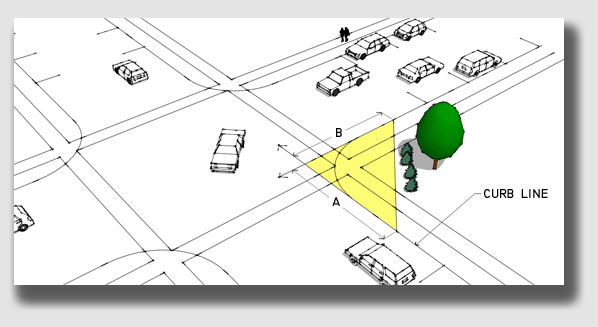
Corn to the corners – and no clear sightline.

We saw a great example of it at a crossroads last fall, the practice of planting right up to the edge of a field. We can hardly blame the farmer, who has to maximize the land’s yield in order to stay in business (and to cover the payments on a $200,000 tractor). But corn to the corners – like planting trees and shrubs near the road – can play havoc with sightlines and pose a real hazard to motorists.

When an accident does happen, lawyers scramble to find as many defendants as possible because each defendant usually has his or her own insurance policy. As one old lawyer we practiced across from years ago used to say, you have to “get the money flowing.” Nothing makes it flow like a whole passel of deep-pocket insurance companies lined up on the defendants’ side of the room.

But what duty does a landowner have to people traveling by? After Margaret Sheley was killed when her automobile collided with Kimberly Cross’s vehicle at an intersection, her family decided to test those limits. They sued Cross, the County and Buryl and Hazel Grossman, who owned the land by the intersection. The Sheley family argued that the Grossmans negligently planted crops on their land such that a motorist’s view of oncoming traffic at this intersection was impaired. The trial court ruled for the Grossmans, holding that they owed no duty to Margaret Sheley.

The Court of Appeals agreed, drawing a distinction between a landowner who creates hazardous conditions on the roadway as opposed to conditions – hazardous or not – wholly contained on the landowner’s property. Like corn to the corners, or perhaps big, bushy trees.

sightline140613Sheley v. Cross, 680 N.E.2d 10 (Indiana Ct. of Appeals, 1997). On October 15, 1992, Margaret Sheley was killed when her car ran into Kimberly Cross’s vehicle at an intersection. Margaret’s survivors sued Kimberly Cross, the County, and Buryl and Hazel Grossman, the farmer who owned the land next to the intersection. The Sheley family argued that Grossmans, as owners of the land next to the intersection, negligently planted crops on their land such that a motorist’s view of oncoming traffic was impaired. The trial court granted summary judgment in favor of the Grossmans, finding that they owed no duty to Margaret. The family appealed.

Held: The Grossmans owed no duty to Margaret Sheley. Admittedly, the planting of vegetation is considered to create an artificial rather than a natural condition. A “natural” condition is limited to land unchanged by humans. The difference is significant since there are differing duties for natural versus artificial conditions.

Nevertheless, to recover under a theory of negligence, a plaintiff must first establish that the defendant had a duty to conform his or her conduct to a standard of care arising from a relationship with the plaintiff. Absent a duty, there can be no breach and, therefore, no recovery in negligence

care161129The Court said that an occupier of land abutting on or adjacent to a public highway owes a duty to the traveling public to exercise reasonable care to prevent injury to travelers from any unreasonable risks created by such an occupier. The landowner has no right to use the property to interrupt or interfere with the exercise of the traveling public’s right by creating or maintaining a condition that is unnecessarily dangerous.

The issue, the Court said, is whether the scope of this duty extends to refraining from creating conditions wholly on a landowner’s property that may impair a traveler’s vision of oncoming traffic at an intersection. The Court ruled that the landowner does, but “that duty is limited to refraining from creating hazardous conditions that visit themselves upon the roadway. Where an activity is wholly contained on a landowner’s property, there is no duty to the traveling public.”

The corn may have extended to the corners, but those corners remained on the Grossmans’ property. Thus, the Sheley family got nothing from the Grossmans.

– Tom Root

TNLBGray140407

Case of the Day – Monday, March 30, 2026

CECIDERIT LIGNUM IDEO DEBITUM

Emily Bernges, my sainted high school Latin teacher, would have been proud. We all recall René Descartes and his famous “Cogito ergo sum,” the philosophical proposition “I think, therefore I am.” For today’s case, I have coined a new maxim: “Ceciderit lignum ideo debitum.”

Today’s case, a fairly pedestrian fallen-tree situation, features a plaintiff that everyone will love to hate: an insurance company. When a tree fell on the neighbor’s garage, the victims, alliteratively named Robert and Roberta, called their local insurance agent. The insurance company paid off. Under the agreement (hidden in everyone’s policy) that gives the insurer the right to step into the insured’s shoes – called subrogation – the insurance company sued the neighbor whose tree fell.

One has to wonder why the insurance company even bothered. It agreed before trial that the neighbor had no idea – nor should he have had – that there was anything wrong with the hackberry tree.

Descartes was arguably right when he said, “Cogito ergo sum.” ‘I think, therefore I am.’ But Mrs. Bernges would have translated the Latin maxim, “Ceciderit lignum ideo debitum,” as, “A tree falls, therefore, I pay.” That’s not so catchy, and, as we will see, it’s just plain wrong.

Not so, but sometimes they’re rather obtuse…

American Family Insurance v. Anderson, 107 P.3d 1262 (Kan.App. 2005). Dean Anderson owned property next door to a place belonging to Robert and Roberta Stenfors. One summer evening, a hackberry tree on Dean’s property blew over onto Bob and Bobette’s garage. The Bobs called their insurance carrier, American Family Insurance, which paid to remove the tree and fix the garage. Repair cost: $24,837.47.

American Family then sued Dean, claiming he had been negligent in letting the tree fall on the Bobs’ garage. Dean moved to have the claim thrown out, and the trial court obliged.

American appealed.

Held: Dean owed nothing for the fallen hackberry. A directed verdict is appropriate where no evidence is presented on an issue or where the evidence is undisputed and is such that the minds of reasonable persons may not draw differing inferences or arrive at opposing conclusions.

In this case, American Family had to establish that Dean had a duty to the Bobs, that he breached the duty, and that the breach caused the damage to the garage. The Court said that in order for Dean to have had a duty to remove the hackberry tree before it fell, he first had to have actual knowledge that the tree was defective, or there had to be evidence that any reasonable person would have understood meant the tree was defective (which is known as “constructive knowledge”).

Before the trial ever began, American Family stipulated that Dean lacked actual or constructive knowledge that the tree was defective. But American Family urged the appeals court to look at the evidence presented at trial. Bob and Bobette, joined by Roy, the guy they hired to remove the fallen hackberry, recalled an incident a decade before in which Roy told Dean he should remove the hackberry along with an adjacent rotten tree. Roy admitted, however, that the hackberry seemed to have gotten healthier in the ensuing 10 years. Roy testified he saw no outward signs of disease or decay on the tree and did not believe that the average non-tree person could have seen any indications of internal rotting. The appeals court concluded that based on this record, the testimony presented at trial also failed to establish that Dean had actual or constructive knowledge of the tree’s defects.

American Family also argued the tree was a nuisance. Under Kansas law, “[a] person is liable in damages for the creation or maintenance of anything that unreasonably interferes with the rights of another, whether in person, or property, and thereby causes [him or her] harm, inconvenience, or damage.” The court of appeals said a nuisance is not a separate type of tortious conduct. Rather, in this case, American Family’s nuisance claim was a “sub-variant” of its negligence claim.

A hackberry tree.

The trial court threw out American Family’s nuisance claim because the insurance carrier did not prove Dean had knowledge of the tree’s defective nature. The tree appeared healthy and showed no outward signs of decay or disease. Further, the trial court noted the tree had withstood 90-mile-per-hour wind gusts two months before it fell. A reasonable person, the trial court concluded, would not, under these circumstances, have removed the tree.

The appellate court held that American Family’s failure to prevail on its negligence claim doomed its ability to establish that the tree was a nuisance. Knowledge that the tree presented a danger to Bob and Bobette’s property was crucial, and American Family did not show that Dean knew or should have known of the tree’s defective condition.

American Family’s ‘Hail Mary’ argument was that the fallen tree presented a strict liability situation. The appellate court made short work of the claim, noting that the insurance company never raised strict liability at trial, and it could not do so for the first time on appeal.

– Tom Root


TNLBGray140407

Case of the Day – Wednesday, March 25, 2026

CRY ME A RIVER

leakybucket151016Law students learn in first-year civil procedure that it’s entirely proper to file utterly inconsistent pleadings. For example, if a complaint is that the defendant borrowed the plaintiff’s bucket and broke it, the defendant can answer that (1) he never borrowed it; (2) when he returned it, it wasn’t broken; and (3) it was broken when he borrowed it. And lawyers wonder why there are so many attorney jokes

But there are limits, and complaints in civil actions should not be completely mindless in their allegations. In today’s case, landowner Fischer changed the slope of his land, rebuilt a driveway and installed a retaining wall. His neighbor, Christiana, complained that the effect of his neighbor’s construction project was to send unwanted drainage onto his property. Fischer was unimpressed. “Cry me a river,” you can imagine him saying. Christiana’s lawyer – who perhaps was charging his client by the word – obliged, tearfully filing a four-count complaint claiming negligence, recklessness, nuisance and trespass.

crymeariver140326Fischer filed a motion to strike the recklessness and trespass counts. He argued that the complaint — even assuming everything Christiana has alleged was true — simply didn’t state a claim. Christiana depended on pretty much the same facts for recklessness as he did for negligence, except in the recklessness count, he charged that, on top of everything else, Fischer hadn’t gotten permits from the town for the project. Well, maybe that was a little sloppy, at least as far as paperwork goes, but the Court held that Fischer’s lack of a few permits didn’t constitute recklessness towards Christiana. The recklessness count was bounced.

Fischer argued that the trespass count should be dismissed because there was no allegation that he intended for the water to flow onto Christiana’s land. The Court disagreed with Fisher’s novel interpretation of trespass, holding that Fischer didn’t have to intend that the water trespass on Fischer’s land, just intend the act – that is, the diversion of the water – that resulted in the trespass. The distinction is subtle but crucial.

Thus, the trespass count remained, an important holding: the Court said, in essence, that without ever setting foot on Christiana’s property, Fischer could have trespassed just by being negligent in the way he altered water flow.

Christiana was upset because Fischer's retaining wall left his place a little soggier than it had been before ,,,

Christiana was upset because Fischer’s retaining wall left his place a little soggier than it had been before …

Christiana v. Fischer, 2007 Conn. Super. LEXIS 2660, 2007 WL 3173949 (Conn. Super.Ct., Oct. 17, 2007). Christiana sued Fischer after Fischer altered the slope of his land and built a retaining wall. Christiana sued for negligence, recklessness, nuisance, and trespass. Fischer moved to strike the recklessness and trespass counts as insufficient to state a cause of action.

Held: The Court split its holding, striking the count for recklessness but not the trespass count. Recklessness is a state of consciousness with reference to the consequences of someone’s acts, more than negligence, more than gross negligence. While the actor’s state of mind amounting to recklessness may be inferred from conduct, there must be something more than a failure to exercise a reasonable degree of watchfulness to avoid danger to others or to take reasonable precautions to avoid injury to them. Reckless conduct takes on the aspect of highly unreasonable conduct involving an extreme departure from ordinary care in a situation where a high degree of danger is apparent.

In Count 2, Christiana repeated his allegations of negligence and additionally alleged that Fischer rebuilt a driveway without a building permit and in violation of the town’s zoning regulations. Christiana, however, made no allegation that Fischer was made aware prior to completion of the alteration and construction work of any problems that he was causing that would drain water onto Christiana’s property. The Court found that the allegations failed to support a cause of action for recklessness.

As for the trespass count, Fischer argued that Christiana failed to allege any intentional conduct essential to state a cause of action for trespass, pointing out that there was no allegation that the defendants intended to direct water or other debris onto the plaintiffs’ property or that they acted knowing to a substantial certainty that the water or other debris would enter the plaintiffs’ property. But the Court held that to make out a trespass, a plaintiff had to have ownership or possessory interest in the land; there had to be an invasion, intrusion or entry by the defendant affecting the plaintiff’s exclusive possessory interest; the act had to be done intentionally; and the act had to cause direct injury.

In his complaint, Christiana alleged that he had notified Fischer on several occasions of severe drainage problems resulting from the land alteration and construction and that Fischer failed to take corrective action. The Court found that Christiana’s allegations were sufficient to establish a cause of action for trespass.

– Tom Root
TNLBGray140407

Case of the Day – Monday, March 23, 2026

MY DAD’S GONNA SUE YOUR DAD

We had some great trees in our back yard when I was a kid. My parents let each of the four of us children “claim” one of the trees as our own, although I must now confess that the utility of doing so is no longer obvious to me. My sister staked out the sugar maple on the north side of the house, my brothers had a box elder and a red maple, respectively, and I got a magnolia that stood outside the kitchen window.

It’s not like we children had any responsibilities for our trees, either trimming them or raking up their leaves or even pulling suckers off their trunks. We had ownership but no responsibility, which is a great segue into today’s classic case from New Jersey.

I bring up our “claimed” trees because of the young rascal Rick, an ornery kid who lived next door. One warm rainy day in the spring, when intelligent people were inside to avoid getting wet (and you can see what that implies), young Rick was outside playing in the downpour. He somehow decided that conditions were perfect for climbing my magnolia. However, when his foot slipped on a wet branch, gravity ensued. Rick was treated to what would have been a jarring but harmless fall, except for his chin making rather sharp contact with the branch on the way down.

We were blissfully unaware of the life-and-death drama occurring beyond our kitchen window until the next day, when Rick – with his chin stitched and bandaged – told my siblings and me what had happened. He matter-of-factly announced that because of the accident, “My Dad’s gonna sue your Dad!”

I recall being shocked that an injury so directly resulting from Rick’s own knuckleheadedness could somehow strip us of all possessions and leave us living in a cardboard refrigerator carton in the back lot of Brown & Miller’s Hardware. Of course, Rick’s appreciation for the finer points of tort law matched his understanding of gravity, and no suit ever resulted. But I found the idea alarming that merely owning a tree (and letting it be a tree) could make us liable for injury to others.

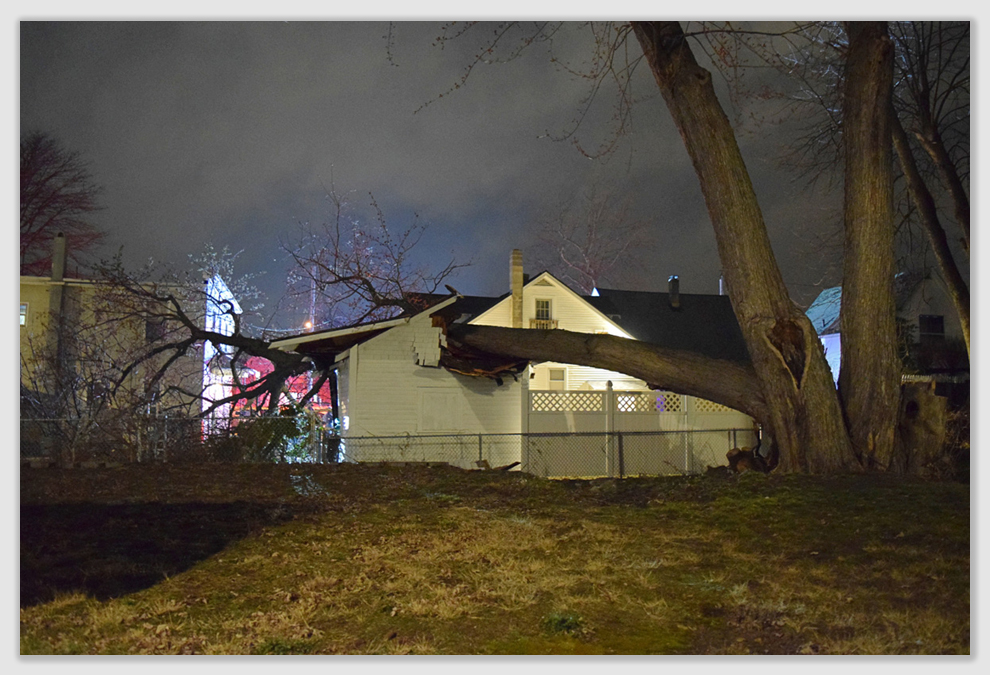
But the notion is not so ridiculous that people aren’t still trying to sell it to trial courts. Today’s case resulted from a perfectly healthy tree falling from one property onto a garage on another property. The aggrieved property owner argued that the tree was a nuisance because it fell (for whatever reason), and because it was a nuisance, the tree’s owner was liable. When I read the case, I felt that same alarm young Rick engendered in me all over again. Fortunately, the appellate court was not so cowed by the premise that it could not make short work of such a foolish claim.

So, what is the standard to be applied to determine the liability of a landowner for a tree that falls from his property onto his neighbor’s property for no apparent reason?

Burke v. Briggs, 571 A2d 296 (N.J. Super.Ct. 1990). Robert Briggs and the Burkes owned adjoining properties. One June evening, a large white oak tree growing on Bob’s property suddenly fell over onto the Burkes’ property, crushing their garage. The tree appeared to be perfectly healthy, and no one could assign a reason for its falling.

That hardly stopped the Burkes, who sued Bob for negligence but later added a count citing the elements of a nuisance. The Burkes argued Bob was “strictly liable” for the damages caused by the fallen tree because it amounted to a nuisance. Bob countered that liability should be determined on the basis of traditional negligence principles of tort liability. The trial judge agreed with the Burkes, reasoning that the fallen tree constituted a “nuisance” because Bob had failed to use his property in a manner that did “not damage or unreasonably interfere with the use of an adjacent land owner’s property.” The judge said that a private nuisance “imposes a strict liability” on the responsible party, and summarily found for the Burkes without the need for a trial.

Bob appealed.

Held: A nuisance can only be created by unreasonable use of land, meaning that the trial court must look at the circumstances of the case to decide whether Bob was unreasonable in permitting the tree to grow as it did. Thus, the lower court was wrong to decide the matter without a trial.

The appellate court noted the distinction that had arisen in tree law over the years between conditions of land artificially created and those that arise naturally. Historically, if Bob’s tree had been growing there on its own, he would not have been liable for any damage it caused, but if he had planted it or nurtured it, he would be accountable. The appellate panel concluded that the natural-artificial distinction makes little sense in modern life.

The appellate court admitted that “there is perhaps no more impenetrable jungle in the entire law than that which surrounds the word ‘nuisance’,” but it nonetheless held that the law was clear enough that a private nuisance must be based on the defendant’s interference with another’s use and enjoyment of his or her own land. The superior court fell back on the Restatement, Torts 2d, for the general rule that

One is subject to liability for a private nuisance if, but only if, his conduct is a legal cause of an invasion of another’s interest in the private use and enjoyment of land, and the invasion is either

(a) intentional and unreasonable, or

(b) unintentional and otherwise actionable under the rules controlling liability for negligent or reckless conduct, or for abnormally dangerous conditions or activities.

The appellate court held that liability without fault should not be imposed “whether that activity be classified as a nuisance or a trespass, absent intentional or hazardous activity requiring a higher standard of care or, as a result of some compelling policy reason.”

In other words, the appellate court said, regardless of whether the falling tree was a nuisance, trespass or negligence, “the issue here should logically depend on whether the offending landowner somehow has made a negligent or unreasonable use of his land when compared with the rights of the party injured on the adjoining lands.”

So, the court concluded that the focus of the case should be on whether Bob was negligent in some way. To figure this out, the trial court should have considered the nature of the incident, the danger presented by the presence of the tree, whether Bob could or should have known of the tree’s condition by making inspections, and what steps Bob could have taken to prevent it from falling onto the Burkes’ garage.

Tom Root

TNLBGray140407

Case of the Day – Wednesday, March 11, 2026

POUND ON THE TABLE

The sun setting in the east?

The sun setting in the east?

Will Mark and Elizabeth Heil be having their neighbors Stewart and Christina Hines over to enjoy margaritas and the sun set over the ocean? Don’t bet on it for two reasons, neither of which is more likely than the other: First, the Heils and Hines are neighbors on beautiful Hilton Head Island, South Carolina, and thus, it’s physically impossible for them to watch the sun set in the east over the Atlantic. The second reason is that they’re pretty clearly NILOs (neighbors in location only). They may have homes next to each other, but there’s no love lost between them.

The Heils had a vacation home on the Island, next to a house owned by the Hines (who, being more frugal, perhaps, rented it out to tourists). One November, the Heils visited their Shangri-La, only to notice branches from one of the Hines’ healthy oak trees overhanging the house’s roof. They observed no roof damage and saw nothing to suggest the tree was diseased or failing. Nevertheless, the Heils asked the Hines to do something about it.

The Hines were good neighbors, albeit thrifty ones. They asked the Heils to get some bids from tree services, and the Heils complied with bids in the thousands. The Hines found Sam’s Tree Service, a guy with no insurance, an undocumented worker (guess ICE hadn’t gotten to him yet), and probably a beat-up truck, too, for all we know. But he was properly licensed and had no record of complaints. More importantly for the Hines, Sam did the job for a mere $500.00.

hole161117

Just a little hole…

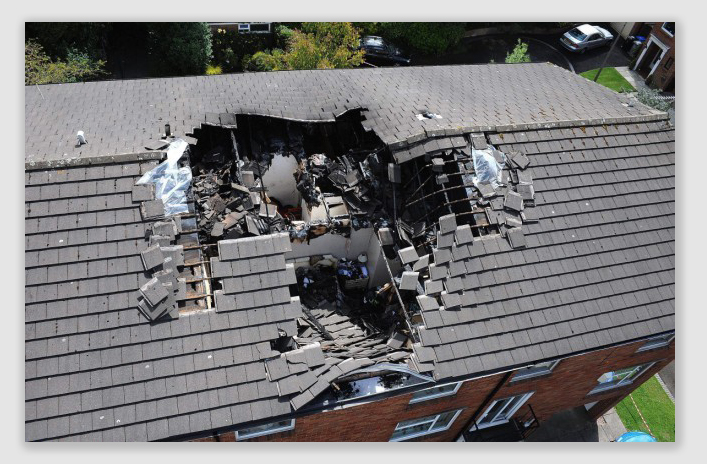
Many months later, when the Heils next visited their house, they found a hole in the roof and water damage everywhere. Their insurance carrier denied coverage because inspectors determined that the Hines’ tree had rubbed against the roof, causing the hole. (That alone is worth a whole blog, but we’ll pass on that issue). The Heils demanded that the Hines and Sam pay for the damage, but both declined.

Sam said his climber performed the limb removal while he supervised from the ground, and never stood on the roof. Instead, he was suspended above the roof on a safety harness. The encroaching limbs were tied off, cut and lowered down to the ground. While performing the trimming, Sam’s man noticed only a dented shingle, nothing that would affect the roof’s integrity, so he did not pass on the information about the shingle.

The Heils, of course, sued. They fired a negligence blunderbuss at the Hines, saying they were negligent for not inspecting the tree, for hiring Sam, for paying so little to have the work done, and even for letting an undocumented worker do the trimming. The trial court found no evidence that the Hines had breached any duty to the Heils by failing to inspect and maintain their tree, or by negligently hiring Sam’s Tree Service.

The court gave Heils short shrift, upholding the standard that homeowners have no duty to repair damage caused by their healthy trees. The Hines hired a tree service within a month of being asked to do so, and no evidence explained why – let alone showed that – Sam’s low price, lack of insurance, or undocumented worker status led to the hole that the Heils found in their roof.

The real problem here was that the Heils, apparently unaware of the Massachusetts Rule or too chary to care, left it to well-meaning neighbors to remedy a problem that belonged to them. The Hines’ principal mistake was in not telling the Heils to pound sand to begin with, and to trim the branch themselves.

Sure, you say, but how about the Hawaii Rule? Fancher v. Fagella? To that we say, even if the Heils could have shown that the tree was a nuisance – which, on verdant Hilton Head Island (where the vegetation grows prodigiously), might be a real stretch – the costs borne by both parties probably would have been less. The branch was healthy, the cost of remediation was slight, and the Heils were consenting adults who should look after the integrity of their own house.

broketable161117There’s an old legal aphorism that when your case is weak on the law, pound on the facts. When your case is weak on the facts, pound on the law. When your case is weak on both the law and the facts, pound on the table.

The Heils broke the table.

Heil v. Hines, Case No. 2015-001988 (Court of Appeals of South Carolina, Nov. 9, 2016).  Mark and Elizabeth Heil had a vacation home on Hilton Head Island, next to a rental house owned by the Stewart and Christina Hines. One fall, the Heils observed branches from a healthy oak tree owned by the Hines overhanging their house roof. They saw no roof damage, and no disease or decay on the tree. The Heils asked the Hines to trim the tree.

At the Hines’s request, the Heils provided bids from tree services, but the Heils hired a local company, Sam’s Tree Service. Sam’s was licensed but not insured, and he had used a worker who was (horrors of horrors!) an illegal alien. Sam’s charged $500.00 to trim the tree.

The following spring, the Heils found substantial water damage in their home from a hole in the roof. Their insurance company denied them coverage because inspectors found the damage was from a roof hole caused by the Hines’ tree.

blunderbuss161117

   The blunderbuss – a crude but destructive weapon. Likewise, the blunderbuss complaint… Sam’s was negligent because its trimmer lacked a green card? Really?

The Heils sued, contending that the Hines were negligent for not inspecting the tree and for hiring Sam’s, who must have caused the damage and was too cheap, too uninsured and too willing to hire people who were in the country illegally). The trial court granted summary judgment to the Hines, finding that the Heils lacked evidence either that the Hines had neglected their healthy tree or that Sam’s removed the branch in a negligent manner.

The Heils, of course, appealed.

Held: The Court of Appeals ruled that the Heils “produced no evidence from which an inference could be made that [the Hines] breached their duty of care.” The Court held that to make out a claim for negligence, the Heils had to allege facts showed (1) a duty of care owed by the defendant; (2) a breach of the duty by a negligent act or omission; and (3) damage proximately caused by the breach.

Here, the Court said, the oak tree was a live, healthy tree, and the Heils – who didn’t see any roof damage themselves – presented no evidence that the Hines “could have observed, by reasonable inspection, the damage possibly caused by the tree limb.” Note the word “possibly” – the plain fact was that the Heils had no evidence that the tree limb caused the hole, or even when the hole was formed.

What’s more, the Court said, when the Hines were notified the tree needed to be trimmed because it was encroaching on the Heils’ roof, the Hines hired Sam’s Tree Service and the work was completed within a month of notice. The Heils had no explanation – let alone evidence – for their claim that Sam’s Tree Service’s use of an undocumented worker and its low fee somehow constituted a breach of the Hines’ duty to the Heils.

The Heils had no proof that Sam’s Tree Service performed its work in a negligent way or that “another tree service company would have known or communicated that a single dented shingle was cause for structural concern – if the dented shingle was the cause of the damage.”

– Tom Root

TNLBGray140407

Case of the Day – Tuesday, March 3, 2026

TOLD YOU SO

Perhaps we should use Mr. Peabody's Wayback Machine ...

Perhaps we should use Mr. Peabody’s Wayback Machine …

Travel back in time with me… back, back, back to July 10, 2025, when we solved the poor Mazda owner’s problem by determining that maybe, just maybe, his landlord was liable for injuries to the unhappy sports car enthusiast’s set of wheels. As in all cases, liability depends on the specific facts. That’s why there’s no substitute for a good local attorney.

While considering the RX-8 owner’s dilemma, I came across today’s case. A hospital was built back in the early 1970s. A landscape architect suggested sweetgum trees on the grounds. When the trees were planted, they seemed like a nice touch, an architectural exclamation point to the building. The sweetgum is a good-looking tree but rather prolific in its production of sweetgum balls.

Times changed, more people were getting sick (what with coronavirus and all), and the hospital grew. So did the trees. When a parking garage was added in the 1980s, the designer told the hospital the trees should be removed because they dropped sweet gum balls that got everywhere and were a nuisance. The hospital refused.

Ten years later, a hospital visitor slipped on a sweetgum ball in the parking lot and fell, breaking her wrist. Lucky for her there was a hospital nearby. She didn’t feel lucky, however … rather, she felt aggrieved. So she sued the hospital for negligence. What else does an aggrieved person do?

The Court applied the reasonable care standard to the case and found the hospital was negligent. Crucial to the decision was the fact that the parking lot designer had told the hospital years before that the trees were a nuisance, for the precise reason that led to Ms. Henderson’s injury. The hospital didn’t necessarily have to cut down the trees, the Court said, but it could have at least instituted a regular clean-up program to stay on top of the sweet-gum ball problem

Sweetgum's aborted seeds are rich in shikimic acid.Henderson v. St. Francis Community Hospital, 303 S.C. 177, 399 S.E.2d 767 (Sup.Ct. S.C. 1990). Florence Henderson (probably not her real name) visited a friend who was a patient at St. Francis Hospital. As she was walking in the hospital parking lot to her car, she stepped on an accumulation of sweet gum balls, turned her foot and fell, breaking her wrist. The balls had fallen from a sweet gum tree planted in the parking lot. She fractured her wrist and sustained various bruises and abrasions.

The original parking lot of St. Francis was designed by CRS Sirrine, Inc. in 1969. The sweet gum trees were planted soon after that. In about 1982, Snoddy & McCulloch Associates, Inc. designed an addition to the parking lot, which had several levels or tiers. Snoddy & McCulloch recommended that the sweet gum trees be removed because they produced debris that would accumulate and become a nuisance. St. Francis refused to remove the trees, instead building a stairway next to one of them.

Sweetgum tree ... star of Fancher v. Fagella, making an encore appearance here.

   The sweetgum tree … star of Fancher v. Fagellamakes an encore appearance in the St. Francis parking lot.

Henderson sued St. Francis, Sirrine and Snoddy & McCulloch, alleging negligent maintenance and negligent design of the parking lot. The jury returned a verdict against St. Francis and Sirrine, but the trial court reversed the jury, entering judgment n.o.v. in favor of the defendants. The Court of Appeals affirmed, and Ms. Henderson took the matter to the South Carolina Supreme Court.

Held: The Court reversed the judgment. It held that the Hospital was negligent, but not the parking lot designer or the landscape architects. The Court held that the evidence supported the finding that the Hospital had been advised to remove sweet gum trees because the trees produced debris which created nuisance and maintenance problems. It didn’t and thus was negligent in failing to provide reasonably safe conditions for its visitors and patients by not removing the trees or employing an adequate maintenance program. The Court said that although the operator of a parking lot is not an insurer of the safety of those who use it, it must nevertheless use reasonable care to keep the premises used by invitees in a reasonably safe condition.

The idea is hardly novel – the New York court said it over a century ago in Gibson v. Denton – if you’re aware of the risk, you had better do something about it. Here, the Hospital had been warned that the trees required removal or regular care. Neither happened.

The degree of care to be exercised by a property owner must be commensurate with particular circumstances involved, including considerations like the age and capacity of the invitees who will be using the premises. For purposes of measuring whether the Hospital discharged its duty, the “invitees” are the people who visit patients in the hospital and use the parking lot.

– Tom Root

TNLBGray140407

Case of the Day – Wednesday, February 25, 2026

NO GOOD DEED…

Regular readers of treeandneighborlawblog.com know that many benefits usually flow to Harry and Harriet Homeowner from hiring an independent contractor to remove a tree. Primary among those advantages is that if (or maybe “when”) things go south on you – such as the tree falls on somebody’s house or a tree service employee takes a header from 100 feet up – you, the homeowner, aren’t liable.

Alas, this isn’t always true. If Harry and Harriet have superior knowledge of the particular latent danger that causes an injury to the contractor, they may be liable. Likewise, if Harry can’t keep his nose out of things and starts participating in the tree removal, he may be liable for injuries resulting from injecting himself into the contractor’s work. Generally (and reasonably), however, the law protects people who hire the experts and then leave them alone to do their jobs.

So what was Tony Cox’s problem? First, he was a tightwad, not wanting to drop a grand on removing a hazardous tree. So instead of hiring the experts, he decided to cut it down himself. After all, he had a saw and gravity to assist him. What could go wrong?

Then, there was Tony’s acrophobia. To solve this problem, he recruited his neighbor Dick Strayer. Dick wasn’t afraid of heights. He climbed radio towers for a living (usually using a safety rig that attached to the towers). Plus, he cut down trees on the side.

Hey, Dick, Oscar Wilde (or maybe Clare Booth Luce, who knows for sure?) said no good deed goes unpunished. What do you suppose he meant by that?

Dick and Tony began cutting. Dick was in the tree because, as we mentioned, Tony was afraid of heights. Dick was sawing away on a limb when something happened. No one really saw the accident, but everyone saw Dick, as well as the decayed limb he had been sawing, on the ground.

Of course, a lawsuit ensued because otherwise, we would not be writing about this tragedy-in-a-teapot to begin with. Dick claimed Tony was liable for his injuries because Tony did not tell him the limb was rotten, and Tony was actively participating in the tree-removal job. Lucky for Tony, the court was convinced that Dick’s experience with trees and his position astraddle the rotten branch made the hazard open and obvious to Dick. What’s more, the court held, Tony did not owe Dick any duty under the participation exception to a property owner’s general lack of duty to an independent contractor, because while Tony was on the crew, he did not “actively participate” by directing the activity that resulted in Dick’s injury.

Strayer v. Cox, 38 N.E.3d 1162 (Ohio Ct. App. Miami Co., 2015). Richard Strayer was injured while attempting to cut down a tree located on the property owned by his neighbor, Anthony Cox. Dick Strayer had some qualifications for the job: he had been involved in various types of residential and commercial construction and had been employed climbing cell phone towers. Prior to the accident, he had climbed trees 20 to 25 times to cut them down.

At some point, Tony decided that he wanted to remove a 25’ tall tree in his front yard. Tony presumed that the tree was dead, and he balked at the $1,000 estimate from several tree services to remove it. So he told Dick he wanted to take the tree down, and asked Dick to help because he was afraid of heights.

Dick first inspected the tree and thought it looked “okay,” although he later admitted no one short of a tree expert could have told that any of the branches were rotting, and Tony would have had no way to determine if there was rotting or damage to any of the limbs.

At one point, Dick’s feet were on the base of the tree (where a branch met the trunk), and he was standing in the middle of a series of big limbs about 12 feet up. Dick began cutting a branch with his chainsaw. The next thing he knew, he had fallen to the ground, riding the rotted-out branch all the way down. As a result of the fall, Dick hurt his left ankle, which required surgery.

Dick sued, but the trial court granted summary judgment in favor of Tony and his insurance carrier. Dick appealed.

Held: Dick’s lawsuit was thrown out. The appellate court ruled that the trial court did not err in rendering summary judgment in Tony’s favor. The court held that the undisputed facts showed Tony had no duty to protect Dick from an open-and-obvious hazard on Tony’s property. Furthermore, Tony did not owe Dick any duty under an exception to a property owner’s general lack of duty to an independent contractor’s employee. Tony did not “actively participate” as required for the application of this exception by directing the activity that resulted in Dick’s injury, by giving or denying permission for the critical acts that led to Dick’s injury, or by exercising sole exclusive control over a critical variable in the working environment.

The Court said, “It is fundamental that in order to establish a cause of action for negligence the plaintiff must show the existence of a duty, a breach of that duty, and an injury proximately resulting therefrom. The status of the person who enters upon the land of another ( i.e., trespasser, licensee, or invitee) defines the scope of the legal duty that the landowner owes the entrant.” Here, Dick was an invitee, someone who rightfully came onto Tony’s property by invitation, express or implied, for a purpose beneficial to Tony, to wit, the removal of the tree.

An owner owes business invitees a duty of ordinary care in maintaining the premises in a reasonably safe condition so that invitees are not unnecessarily and unreasonably exposed to danger. However, the Court observed, the owner does not act as an insurer of an invitee’s safety and owes no duty to protect invitees from open and obvious dangers on the property. Open and obvious hazards are those hazards that are neither hidden nor concealed from view and are discoverable by ordinary inspection. The question is always whether an invitee exercising ordinary care under the circumstances would have seen and been able to guard himself against the condition.

“Liability only attaches when an owner has ‘superior knowledge of the particular danger which caused the injury’,” the Court wrote, “as an ‘invitee may not reasonably be expected to protect himself from a risk he cannot fully appreciate.’ The open-and-obvious doctrine is determinative of the threshold issue: the landowner’s duty. In the absence of duty, there is no negligence to compare.”

Dick was barred from recovery because the deteriorating tree was an open and obvious hazard that he freely ascended. He was in a better position to assess the safety of standing on the branch. Naturally, the Court held, Tony had no duty to warn Dick about dangers of which Tony was unaware, such as that the limb Dick was cutting was deteriorating from the inside, decay that was not observable from the outside. In addition, the court observed that Dick had significant experience with cutting trees and that the risk of encountering deteriorating branches was open and obvious.

Dick also argued that Tony should have contacted a certified arborist prior to removal to conduct a risk assessment of the tree. He claimed Tony’s failure to have a risk assessment conducted violated American National Standards Institute (ANSI) sections Z133 and A300, part 1 and 9, which require that any tree being worked on “undergo a tree risk assessment for tree worker safety.” However, the court ruled that homeowners like Tony are not subject to ANSI requirements, even if the standards were not voluntary (which they are).

Even if the ANSI standards were somehow to apply to a Harry-Homeowner-tree-removal job, the court ruled, “Ohio courts have held that summary judgment may be granted in cases where building code violations are open and obvious ‘because the open-and-obvious nature of the defect obviates the premises owner’s duty to warn.” The hazard of climbing on a limb of a tree with dead branches was open and obvious.

Finally, Tony’s participation in the job did not make him liable to Dick. One who engages the services of an independent contractor and who actually participates in the job operation performed by such contractor and thereby fails to eliminate a hazard which he, in the exercise of ordinary care, could have eliminated can be held responsible for the injury or death of an employee of the independent contractor. Here, the parties’ testimony indicated that if anyone would have been directing the activities that day, it was Dick, who was the individual experienced in cutting down trees and using chainsaws. The record was devoid of any indication that Tony directed Dick to do anything on the day of the accident or even that Tony had any prior experience with chainsaws or with cutting down trees.

Dick “directed the activity which resulted in the injury or gave or denied permission for the critical acts that led to the… injury.” The cause of Dick’s injury, in his own words, was that the limb on which he stood fell, taking him down with it, because the limb “was rotted.” Tony had no role in the injury, and thus no liability.

– Tom Root
TNLBGray