Case of the Day – Monday, October 27, 2025

STUPID LAWSUITS, TREE-TRIMMING DIVISION

The Internet, repository of wisdom that it is, features several videos of people leaning a ladder against a tree branch, climbing the ladder, and then cutting off the branch against which the ladder was leaning.

It is this kind of advance planning (along with every cellphone serving double duty as a video camera) that assures that America’s Funniest Videos will never run out of new material.

The Keystone Cops could not have done it better than the mook named Mook in today’s case. After being told not to trim his friend’s tree, he does it anyway, with a Rube Goldberg ladder, wearing dress shoes and sawing off the branch against which his ladder was leaning. Later, he told the paramedics he had no idea what had happened. That’s not surprising… it appears that his brain wasn’t functioning well even before the accident.

Kun Mook (Kun being his last name) did, however, have the presence of mind to hire a lawyer who was unafraid to bring such a nothingburger of a case. And, amazingly enough, it sort of paid off. Mook sued the landowner, Young Rok Lee, and his minister, Pastor Jang (who was a confederate in the tree-trimming misadventure). The Pastor had insurance, which paid the $100,000 policy limit as a settlement before Rok walked away with the win.

So who was the real mook, Mook or the lawyer who advised the insurance company to part with 100-large?
Kun Mook Lee v. Young Rok Lee, Case No. 2-18-0923 (Ct.App. Ill., Sept. 3, 2019), 2019 IL App (2d) 180923; 2019 Ill.App. LEXIS 732. Kun Mook and Young Rok were members of the same church, pastored by Rev. Jang. One day, Kun Mook and Pastor Jang showed up at Young Rok’s house, despite Rok’s request that they not come. Rok did not provide, maintain, or otherwise supply any of the equipment used in the subsequent tree-trimming efforts.

Upon looking at the tree limb, Mook said the work should be left to professionals because it was too large and too high, and the work would be dangerous. Not taking his own good advice, Mook and Pastor Jang unloaded their gear and attached two ladders with wire to reach the required height. Rok, who had been mowing his lawn in the back, came to the front yard and saw what Pastor Jang and Mook were up to, he immediately told the men to stop their efforts, because it was too high and too dangerous. The two men ignored Rok and continued to try to cut the limb off the tree. Rok eventually gave in and assisted them in their efforts.

Mook thought that the tree limb might damage the roof when it fell after being cut, so Rok tied one end of a rope around the limb being cut and the other end to another limb. The wired-together ladders were placed against the limb to be cut. Mook volunteered to climb the wired-up ladders to a height of 25 feet while wearing dress shoes and carrying an electric chainsaw. He sawed through the limb with predictable effect. The limb swung free, the ladder fell, and Mook was seriously injured.

Mook sued Rok and Pastor Jang for negligence, arguing that Rok failed to provide appropriate tools, safe instruction, a safe place to perform the work, and appropriate safety equipment, and failed to adequately supervise the work and secure the debris. Mook then filed a motion for a good-faith finding, noting that Pastor Jang had insurance coverage for the incident under his homeowner’s insurance policy and that the insurance company had tendered the limits of Pastor Jang’s policy, $100,000, to Mook. The trial court confirmed the settlement between Mook and Pastor Jang.

Rok stood as firm as his granite namesake, arguing Mook was more than 50% comparatively negligent and that, even if he had not been, Rok was not liable under the open-and-obvious rule. Specifically, Rok alleged that, at the time Mook fell, he had a duty to exercise ordinary care for his own safety, including the duty to avoid open and obvious dangers. Despite this, Rok argued, Mook “breached his duty by carelessly and negligently failing to appreciate and avoid a danger so open and obvious, specifically, two ladders affixed together reaching considerable heights leaned against a tree limb to be cut with an electric chainsaw, that any person would reasonably be expected to see it.”

Held: Mook would collect nothing from Rok.

A plaintiff alleging negligence must show that the defendant owed a duty to the plaintiff, that the duty was breached, and that the breach proximately caused the injuries that the plaintiff sustained. Relationship-induced duty can be inferred if the plaintiff can show that the injury is reasonably foreseeable, the injury is likely, the burden on the defendant of guarding the plaintiff against the injury is slight, and the consequences of placing that burden on the defendant.

A possessor of land is subject to liability for physical harm caused to his invitees by a condition on the land, the Court ruled, if but he knows or should know of the condition and should realize that it involves an unreasonable risk of harm to his invitees, and should expect that they either will not realize the danger or will fail to protect themselves against it. If he knows that or reasonably should be expected to know that, and he yet fails to exercise reasonable care to protect them against the danger, he is liable.

However, a possessor of land is not liable to his invitees for physical harm they suffer due to any activity or condition on the land whose danger is known or obvious to them unless the possessor should anticipate the harm despite such knowledge or obviousness. This is known as the “open-and-obvious” rule.

Here, the Court said, Rok, as a landowner, has a general duty to protect an invitee like Mook, his invitee, from dangerous conditions on his property. Nevertheless, the open-and-obvious rule applies, providing an exception to that duty. This is so, the Court said, because “we fail to understand how any reasonable person could not have appreciated the open-and-obvious danger of tying two ladders together and placing those ladders against a tree limb 20 to 25 feet above the ground, the very limb that he was attempting to cut down. We also find that no exception to the open-and-obvious rule applies here. Kun Mook was certainly not distracted from noticing that he was climbing the two ladders with a chainsaw in his hand. We also find that the deliberate-encounter exception does not apply. No reasonable person would expect that Kun Mook would climb the ladders and cut down the limb — with the top ladder leaning against the limb to be cut — because the advantage of getting rid of the limb outweighed the incredible risk of doing so.”

Besides, the Court said, Mook’s injuries were not foreseeable. “An injury is not reasonably foreseeable,” the Court ruled, “when it results from freakish, bizarre, or fantastic circumstances… The conduct that Kun Mook engaged in here—tying two ladders together, placing the top ladder against the very limb that was to be cut, climbing the ladders with dress shoes on and a chainsaw in his hand, and, finally, cutting the limb that led to his fall constitute, as a matter of law, freakish, bizarre, and fantastic circumstances.”

After initially looking at the tree limb, the Court found, Mook said that the work should be left to professionals because the tree limb was too large and too high and the work would be dangerous. “Nevertheless, he marched on in the face of that danger, climbing the ladders while wearing dress shoes and carrying a chainsaw. Then he proceeded to cut the limb, against which the top ladder was leaning. As a matter of law, we find that these actions go well beyond a showing of more than 50% liability.”

– Tom Root

tnlbgray140407

Case of the Day – Tuesday, October 21, 2025

A MATTER OF LAW

Relatively few lawsuits ever make it to trial. Most often, they are resolved by motions to dismiss – the plaintiff has made some wacky claim that, even if fully believed, would not lead to a judgment – or the undisputed evidence shows that the plaintiff cannot possibly win.

Example 1: My neighbor to the southwest has some very tall oak trees. I sue her because the leaves are falling and the wind is carrying some of them (it seems like all of them) into my yard. She would file a motion to dismiss, arguing that even if everything I say in the lawsuit is true, I am entitled to no damages, because the law does not make her liable for where the wind may carry her falling leaves.

Example 2: I sue my neighbor, claiming that she has used her Turboblast 3000 blower to push all of her leaves into my yard. If that is true, the law would call it a trespass and I could recover the cost of hauling the leaves away. But she provides affidavits of various nosy neighbors and members of her garden club, who state they watched her pile her leaves in the street (where the city wants them put), and the wind later blew the piles into my yard. All I have is my assertion that she owns a Turboblast 3000 blower, and the leaves are in my yard. In that case, the court would grant her summary judgment because no reasonable jury could find any evidence that she, and not the wind, was the culprit.

As Mark Twain was reputed to have once said, nothing spoils a good story like the arrival of an eyewitness.

When no reasonable jury could find evidence enough to believe one side of a lawsuit, we say the other side is entitled to judgment in its favor “as a matter of law.”

In today’s case, the federal district court has to pick through a motion for partial summary judgment – where the plaintiff asks for judgment that resolves some (but not everything) of what it would have to prove at trial. The court splits the baby down the middle, finding the tree trimming company had a duty to little Jimmy, who was burned by a live wire while he was playing on a swing set, but leaving for a jury the question of whether the duty was breached.

Marland v. Asplundh Tree Expert Co., Case No. 1:14-cv-40 (D.Utah, Dec. 14, 2016), 2016 U.S. Dist. LEXIS 173156, 2016 WL 7240139. Since 1997, Asplundh Tree Expert Co. has contracted with Bountiful City Light and Power to provide power line clearance services. Under that contract, Asplundh’s responsibility is limited to providing line clearance so as to prevent interruption of service by trees or tree limbs coming into contact with the lines or other electrical equipment.”

Under the agreement, Asplundh had the right and duty to remove dead, defective or fast-growing trees located so as to be a hazard to BCLP’s lines whenever “practical and permissible.” Any removal required written permission from the property owner and BCLP. Under the agreement, BCLP would provide Asplundh with an area in which to work, called a feeder. Asplundh was then responsible for clearing the lines along that feeder. This would include determining what trees needed to be trimmed or removed, obtaining the necessary approvals, then doing the actual trimming or removing.

On an early fall day in 2005, Asplundh trimmed a large Siberian Elm at Lyle Henderson’s home in Bountiful. Asplundh trimmed the tree but did not remove it and did not recommend to BCLP that it be removed. About 21 months later, a limb from the tree fell onto a power line, knocking the line into a neighboring backyard and onto a swing set where a child, Jimmy Marland (not his real name) was playing. Jimmy was seriously burned. After that mishap, BCLP got Lyle’s permission to remove the tree.

Jimmy’s parents sued on the child’s behalf, claiming Asplundh was negligent in not removing the tree. They asked for summary judgment in their favor on the issues of whether Asplundh owed Jimmy a duty, and whether he breached the duty.

Held: Scott and Jennifer were granted summary judgment on whether the duty, but not on the breach.

Summary judgment is appropriate if there is no genuine dispute as to any material fact and the party asking for summary judgment is entitled to judgment as a matter of law. In considering whether a genuine dispute of material fact exists, a court must determine whether a reasonable jury could return a verdict for the nonmoving party in the face of all the evidence presented.

To establish a claim of negligence, the Marlands had to show that Asplundh owed Jimmy a duty, (2) that Asplundh breached that duty, (3) that the breach of duty was the proximate cause of Jimmy’s injury, and (4) that Jimmy in fact suffered injuries. Here, the Marlands sought partial summary judgment, focused on the first two elements only, duty and breach.

Whether Asplundh owed Jimmy a duty of care is a legal issue for the court to decide, but if there is a duty, whether Asplundh breached it is a question of fact for the jury to decide. “Accordingly,” the court said, “summary judgment is inappropriate unless the applicable standard of care is fixed by law and reasonable minds could reach but one conclusion as to the defendant’s negligence under the circumstances.”

The Marlands argued that Asplundh’s duty arose under the Restatement (Second) of Torts § 324A, which had been adopted by the Utah Supreme Court. Section 324A holds that when someone agrees to render services for someone else, and when he or she should recognize the service is necessary for the protection of a third person, he or she is liable to the third person for physical harm resulting from his failure to exercise reasonable care in performing the service, if (a) his or her failure to exercise reasonable care increases the risk of such harm, or (b) he or she has agreed to perform a duty owed to the third person, or (c) the harm is suffered because of reliance of the other party or the third person upon the services being performed.

Here, the Court held, there was evidence that Asplundh has agreed to provide services to BCLP which Asplundh should have recognized was necessary to protect third parties like Jimmy. Utah law imposes on utility companies like BCLP the highest degree of care to prevent people from coming in contact with high-voltage electricity. Line clearance is necessary, not only to prevent interruption of service but also to prevent injuries that might result if tree limbs come into contact with electrical wires. Therefore, the court said, Asplundh would be liable to Jimmy for physical harm resulting from its failure to exercise reasonable care if at least one of three subsections in the Restatement are met:

The Court found evidence that subsections (b) and (c) applied. BCLP had a duty to prevent harm to others from its power lines and it delegated part of that duty — line clearance — to Asplundh. Because Asplundh was performing line clearance on the particular feeder, BCLP did not do so itself. Therefore, BCLP relied upon Asplundh to conduct line maintenance so it would not have to. Based upon these facts, the Court said, “There is evidence that Asplundh owed Plaintiffs a duty of care.”

The Marlands argued that “Asplundh breached its duty of care by not removing or recommending to have removed the subject tree in 2005.” Their expert witness provided an affidavit contending that Asplundh had a duty to suggest the removal of the Siberian Elm if the tree was accessible and posed a hazard based on its type, size, and proximity to the power lines. The court agreed that the affidavit stated an applicable standard of care, but even so, summary judgment was not appropriate.

The problem was that before Asplundh could remove a tree, it was required to seek BCLP’s and the homeowner’s permission. The Court agreed that the undisputed evidence showed that BCLP would have given permission to remove the tree because BCLP always gave permission when removal was recommended. But while Lyle Henderson, the homeowner, testified that on other occasions he gave “carte blanche permission” to the utility to trim the tree, there was evidence that he had refused permission to remove or even trim the subject tree in the past and was reluctant to remove the tree even after this accident. Based upon these disputed facts, the court said, the Marlands could not show, “as a matter of law, that removal of the tree would have been permitted by Mr. Henderson.”

Based on the conflicting evidence, the court said, the Marlands had failed to show “as a matter of law” that Asplundh would have received permission from the homeowner to remove the tree “and, therefore, have failed to demonstrate as a matter of law that Asplundh breached its duty of care.” Additionally, the court hints without elaboration, “even if Plaintiffs could demonstrate permissibility, various disputes exist concerning whether removal was required under the relevant standard of care.”

Note: The case went to trial. On February 21, 2017, a jury found Asplundh at fault and awarded Jimmy $3.4 million in damages.

– Tom Root

TNLBGray

Case of the Day – Monday, October 20, 2025

CHOICE VERSUS DISCRETION

It is inevitable in the exciting world of statutory construction that defendants and plaintiffs alike will vigorously overreach in applying exceptions that are written into the law until, as judges are wont to say, “the exception swallows the rule.

I have written before about sovereign immunity and the exceptions to it that must be written into the law in order for people to seek compensation for the negligent misadventures of government employees. The king of those statutes is the Federal Tort Claims Act.

The FTCA permits people to sue the government when its countless officers, agents, departments, bureaus, commissions and assorted employees commit acts of negligence. But there are exceptions, lots of exceptions. The one most often encountered is the discretionary function exception.

An example: If a government employee T-bones you in an intersection because she ignores a red light, obviously you (or your next of kin) want to sue not only her, but also Uncle Sam. You know, respondeat superior, and all of that. Plus, Uncle Sam’s pocket is as deep as pockets get, when it comes time to pay damages.

After all, there’s nothing discretionary about her conduct. Government employee or not, she does not have the discretion to ignore a stop light. The FTCA applies. Pretty slam dunk.

But what if the government agency was in the process of deciding, for example, not to inspect trees because of the cost? A tree falls on your car as you pass through the intersection, a tree that was rotten to the core, but which the agency had done nothing about because its policy was not to inspect its trees? There, the decision not to inspect was a discretionary one, a matter of government policy. In that case, the FTCA would consider you to be out of luck.

But, going back to the first example, let’s say the government employee was on her way to a meeting to decide whether to adopt the no-inspection policy. You sue for damages due to the accident, but the government argues that the agency’s decision to not inspect its trees is a discretionary act, and thus, having a meeting to reach the decision on the tree inspection policy is likewise a discretionary act, as is the decision to include the government employee-lousy driver in the meeting. But for the meeting, she would not have been driving through that traffic light at that moment. Where and when to hold the meeting, who should be invited, and so on… All discretionary acts.

Voila! Like that, the blown traffic light becomes a discretionary act, and you recover nothing. The discretionary function encompasses absolutely everything the agency does, and exception has successfully swallowed the rule.

In today’s case, the government was well on its way to doing just that, denying the parents of a dead teenager any compensation for the collapse of a tree limb by turning a failed tree inspection into a discretionary function. Fortunately for the parents, the U.S. Court of Appeals for the Ninth Circuit said, “Not so fast!”

Just because there may be a choice, the Court held in so many words, does not mean that there has been a discretionary function.

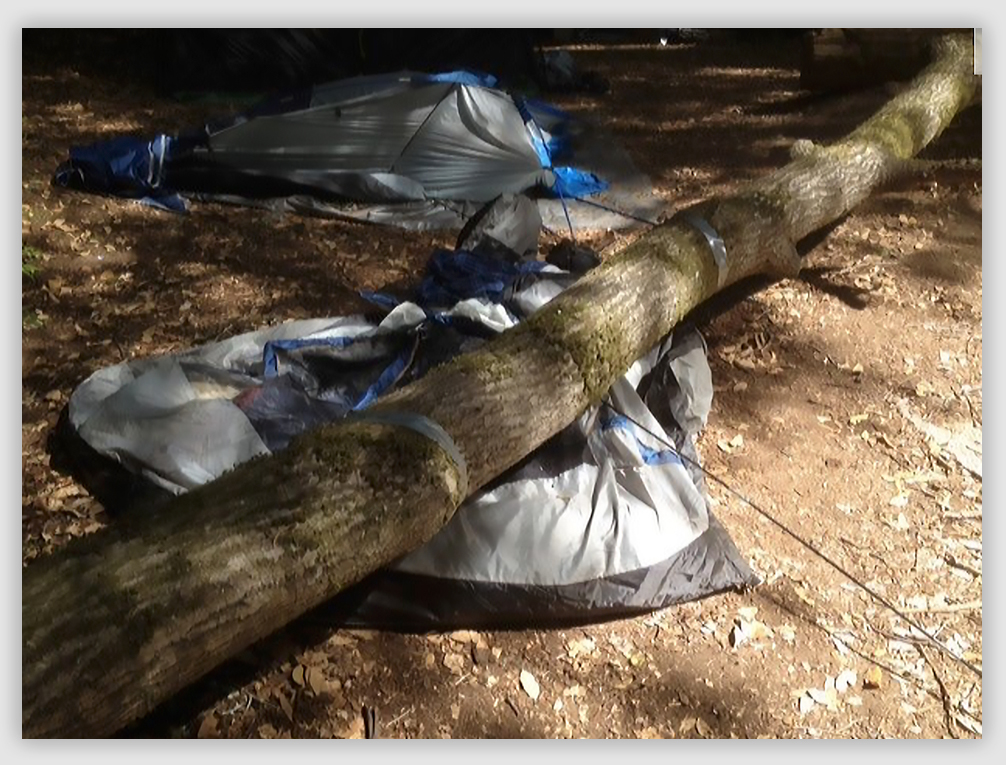
Kim v. United States, 940 F.3d 484 (9th Cir. October 10, 2019). One August night in 2015, Daniel and Grace Kim, their daughter Hannah, their teenage son Dragon, and their son’s friend Justin Lee were camping in the Upper Pines Campground in Yosemite National Park. Before dawn, a limb from a large oak tree overhanging the campsite broke and fell on the tent where the two boys were sleeping, killing them.

The Kims and Justin Lee’s parents sued under the Federal Tort Claims Act, alleging that National Park Service officials were responsible for the accident. The families raised wrongful death and negligent infliction of emotional distress claims.

The complaint also alleged that Park officials fraudulently concealed information about the danger posed by the tree so that campers would continue to patronize the campground.

The Park Service moved to dismiss the lawsuit, arguing that the FTCA did not apply because of the discretionary function exception, which bars tort claims against the United States based upon the exercise or failure to exercise a discretionary function or duty. After reviewing the Park Service’s local policies regarding tree maintenance, the district court found that decisions regarding “how to evaluate and respond to tree hazards” were subject to the discretion of Park officials. The court dismissed the complaint.

The families appealed to the U.S. Court of Appeals for the Ninth Circuit.

Held: The Court affirmed the district court’s dismissal of the plaintiffs’ claim for fraudulent concealment, but it reversed the dismissal of the negligence-based claims.

The FTCA is the only means of suing the United States, its agencies or employees for actions or omissions that constitute a tort. It is limited as to the kind of tort that he asserted, strict in the filing deadlines it imposes on plaintiffs, and fraught with pitfalls as to whether the tort – even if a permitted action and even if timely brought – can apply to the conduct in question.

Specifically, the FTCA’s discretionary function exception bars claims based upon the federal officials’ “exercise or performance or the failure to exercise or perform a discretionary function or duty.” The point of the exception is to prevent judicial second-guessing of legislative and administrative decisions grounded in social, economic, and political policy. The government bears the burden of proving the negligence related to discretionary functions, but plaintiffs usually bear the brunt of the broadly applied exception.

Determining whether the complained-of negligence relates to a mandatory or a discretionary duty is difficult. Courts evaluate the FTCA discretionary function exception in two steps. First, the court must determine whether the challenged actions involve an element of judgment or choice. Second, if the actions do involve an element of judgment, the court must determine whether that judgment is of the kind that the discretionary function exception was designed to shield, namely, only governmental actions and decisions based on considerations of public policy. The relevant choice must be susceptible to some consideration of social, economic, or political policy.

Generally, the design of a course of governmental action is shielded by the discretionary function exception, but the implementation of that course of action is not… unless the implementation itself implicates policy concerns.

Here, the government argued that whether the Park Service inspected the trees was a discretionary function, so the failure to identify the oak as a hazard did not subject the Park Service to liability. The evidence, however, showed that the Park Service did inspect the campsite trees every two years. The Court said that where the Park Service decided to inspect the trees, the argument that a decision on whether to inspect was discretionary was irrelevant.

Once the Park Service actually inspected the trees in the campground, the Court said, Park officials were required to do so in accordance with their established policies. Yosemite Park Directive No. 25 set forth the Park’s “Hazard Tree Management” program and, among other things, it specifies how Park officials are to evaluate the risk posed by trees they inspect. Yosemite used the “‘Seven-Point’ (Mills and Russel 1980) system, a professionally recognized, documented and quantified hazard tree rating system.” The system includes a “Total Hazard Rating” (ranging from two to seven) that combines a “Defect Rating” based on the tree’s potential for physical failure and a “Target Rating” based on the potential impact in the event of a failure. The system provides specific criteria for how to rate each component based on the tree’s visible features and the nature of the surrounding area. Trees with a total rating of five or higher are considered “high” risks and, according to the Park Service plan, “will require some type of abatement/mitigation.”

Once the Park officials used their discretion to adopt the Seven-Point system instead of some other method for evaluating trees, there was no discretion whether the Seven-Point system had to be properly followed. But the Park Service had a final “Hail Mary” to throw. It claimed that its implementation of the rating system is shielded by the discretionary function exception because the system itself requires officials to consider questions of public policy.

The Court rejected this argument, too. “The government appears to conflate policy considerations with technical considerations,” the Court said. “Matters of scientific and professional judgment — particularly judgments concerning safety — are rarely considered to be susceptible to social, economic, or political policy.” And scientific and professional judgment, the Court ruled, “is all the Park’s rating system requires. The system directs officials to assign certain hazard ratings based on a tree’s structural defects and its likelihood of damaging various Park features… Certainly, the system requires the careful — perhaps even difficult — application of specialized knowledge… The mere fact that experts might reach different conclusions when conducting a technical analysis does not mean that the analysis somehow turns on questions of public policy. Even if the Seven-Point system requires officials to make difficult choices, it still does not ask them to make policy choices and it does not afford them an opportunity to rate a tree based on their social, economic, or political views.”

However, the Court ruled, the fraudulent misrepresentation claim had to be rejected. Under the FTCA’s exception for claims arising out of misrepresentation or deceit, claims against the United States for fraud or misrepresentation by a federal officer are absolutely barred. “It goes without saying,” the Court found it necessary to say anyway, “that a fraudulent concealment claim sounds in fraud or misrepresentation.”

– Tom Root

TNLBGray140407

Case of the Day – Thursday, October 16, 2025

SELF-HELP CONDEMNATION

Condemnation is the process by which a public entity takes private property. The 5th Amendment requires that due process be followed, in that the taking not be arbitrary and be the result of necessity, that the owner is fairly compensated for the property that has been taken, and, of course, that the owner has a chance to challenge the taking in court.

Occasionally, the government may take a piece of property by conduct. A good example would be the passage of a state law to preserve wilderness, the effect of which would be to close roads through state forests that cut off access to private property for lumbering. Then, the proceeding is called inverse or reverse condemnation, a suit against a government to recover the fair market value of property that has, in effect, been taken and appropriated by the government’s activities, when no eminent domain proceedings are used.

None of this seems to have much to do with trees, especially your rights to compensation if state employees come onto your land and cut down a tree because they’re geographical klutzes. After all, the state has to intend to take your property (and take specific steps to do so) in a condemnation action. Even where the condemnation is a reverse one, the state has to deliberately do whatever it does to cause your property to lose value.

That’s why I was surprised and a little troubled by the Commonwealth of Kentucky’s response to its highway department employees’ goof in cutting down a boundary line tree without the approval of the private landowner. If the trespassers had been Joe’s Tree Service, we know how it would have turned out: a trespass action, with damages for the trespass and tree removal. But because the employees worked for the state, poor Gini Grace found out much after the fact that what had occurred was not a trespass, but a reverse condemnation.

To be fair, Gini’s lawyer might have saved the action as a negligence case and not a reverse condemnation had the complaint alleged negligence-type damages beyond the loss of the tree. But to me, that note in the opinion seemed to be a make-weight. Had her complaint alleged a torn-up lawn, driven-over shrubs, and Moon Pie wrappers littered about, I suspect the court would just have found a different way to get to its reverse-condemnation conclusion.

Not only did the rules get rewritten when the state trespassed on Gini’s place, but they were rewritten after the fact. Gini, don’t ever play poker with the Commonwealth of Kentucky, lest you learn too late that a pair of twos really does beat a royal flush.

Grace v. Commonwealth, Case No. 2018-CA-001488-MR (Ct.App Ky. Oct. 11, 2019) 2019 Ky. App. Unpub. LEXIS 727.

The Kentucky Department of Highways (“KYTC”) is responsible for maintaining state highways, including the elimination of hazards. In March 2012, KYTC removed a tree that KYTC believed to be located, at least partly, on the right-of-way and encroaching the highway. Gini Grace filed a complaint with the Kentucky Claims Commission, alleging that KYTC negligently trespassed and cut down her tree. KYTC moved to dismiss the claim.

The Commission found that two-thirds of the tree was on the state right-of-way and the remaining portion was on Gini’s land. It found KYTC negligent for failing “to conduct a reasonable inquiry and ascertain where the property lines were before they cut the tree,” and awarded Grace $11,666.66 plus the cost of removing the stump.

The McCracken Circuit Court reversed the order of the Commission and dismissed Gini’s claim, concluding it was a claim for reverse condemnation, rather than negligence. And, because the Commission only has jurisdiction over “negligence claims for the negligent performance of ministerial acts against the Commonwealth,” the Court ruled that it lacked subject matter jurisdiction over Gini’s claim. Gini appealed.

Held: The Commission lacked jurisdiction over Gini’s claim, and the claim thus had to be dismissed.

The Kentucky Claims Commission has “primary and exclusive jurisdiction over all negligence claims for the negligent performance of ministerial acts against the Commonwealth, any of its cabinets, departments, bureaus, or agencies, or any officers, agents, or employees thereof while acting within the scope of their employment.”

Reverse condemnation is a suit against a government to recover the fair market value of property that has, in effect, been taken and appropriated by the activities of the government when no eminent domain proceedings are used. Gini Grace’s claim form filed with the Commission alleged that a “tree, 3ft in diameter was cut down by the Highway Dept. without my permission.” This was the only injury asserted. Gini did not allege any additional damage to her property arising from KYTC’s negligence. Therefore, the Court ruled, Gini’s claim to recover the value of the tree “is in the nature of a claim for reverse condemnation.”

Gini argued that she claimed negligence because her claim form indicated KYTC “negligently trespassed” onto her property to remove the tree. The Court admitted that a trespass was necessary to cut the tree, but ruled that the damages Gini claimed do not emanate from the trespass, but from the taking.

KYTC was negligent in failing to determine whether the tree was on the state right-of-way, but Kentucky law holds that where an entity possessing the power of eminent domain prematurely enters upon private premises, the exclusive remedy of the landowners is based on Kentucky Constitution, Section 242, which provides that ‘just compensation for property taken’ shall be made. This rule preempts claims asserting negligent trespass that result in a taking.

Because Grace’s injury arose from KYTC’s premature entry onto her property and removal of the tree, her sole remedy lies in an action for inverse condemnation. Therefore, the Commission lacked subject-matter jurisdiction over her claim.

– Tom Root

Case of the Day – Friday, October 3, 2025

DO YOU HAVE A POINT?

More than one reader wondered where I was headed yesterday when I wrote about the New Hampshire law of animals ferae naturae. Other than showing you a picture of my dog – always a worthwhile goal, in my book – the blog may not have seemed all that relevant. After all, neighbors, especially urban neighbors, are seldom overrun with wild animals intent on committing mayhem in your backyard.

But, yes, I had a point. As that great philosopher Elvis once said, “I said all that to say all this…” The law of animals ferae naturae translates a bit into “plants ferae naturae.”

In today’s case, the afflicted neighbor, Linda Pesaturo, claimed that her neighbor’s trees were overhanging her property, making her driveway unusable, and collapsing her fence. The trees, she complained, were a private nuisance.

The New Hampshire Supreme Court nixed the claim. It pointed out that just as the law of animals ferae naturae required human interference with the animal before making a property owner liable for a resulting nuisance, it was not enough that Linda said the trees caused damage. Unless she could somehow show that neighbor Robbin had somehow interfered with nature in the planting or growth of the pine and maple, the lush and fecund trees.

Tree’s gonna tree.

Pesaturo v. Kinne, 161 N.H. 550, 20 A.3d 284 (Supreme Ct. N.H., 2011). Linda Pesaturo brought a small claims action against her neighbor, Robbin Kinne, seeking more than $2,000 in damages because two of Robbin’s trees overhung her property; one limited Linda’s use of her driveway, while the other one damaged her fence.

Robbin moved to have the claim dismissed, arguing that Linda failed to state a claim upon which relief could be granted. The trial court agreed, dismissing Linda’s negligence and nuisance claims.

Linda appealed.

Held: Linda had adequately raised a claim for negligence with respect to one tree, but she failed on the other. Her claim of private nuisance was properly rejected.

It is the common law rule that a landowner is under no affirmative duty to remedy conditions of purely natural origin on his or her land, even though they are dangerous or inconvenient to his neighbors. In order to create a legal nuisance, a human act must have contributed to its existence, just as under the law of animals ferae naturae, as held in Belhumeur, a landowner cannot be held liable for the acts of wild animals occurring on his property unless the landowner has actually reduced indigenous wild animals to possession or control, or introduced non-indigenous animals into the area.

But ferae naturae does not apply to plants, such as trees. Instead, the Court ruled, a duty exists on the part of a landowner when it is foreseeable that an injury might occur as a result of the landowner’s actions or inactions. A landowner’s liability may extend beyond the borders of his or her property, and a duty may be present if the landowner’s acts or omissions create a sufficiently foreseeable risk of harm in such a case, where it can be found that the landowner did not use reasonable care in the maintenance and operation of his or her property.

Because there is a foreseeable risk of injury when a tree is decayed or defective, a landowner who knows or should know that his tree is decayed or defective has a duty to maintain the tree to eliminate this dangerous condition. Thus, a landowner who knows or should know that his tree is decayed or defective and fails to maintain the tree reasonably is liable for injuries proximately caused by the tree, even when the harm occurs outside of his property lines. However, a landowner does not have a duty to consistently and constantly check all trees for non-visible decay. Rather, the manifestation of the tree’s decay must be readily observable in order to require a landowner to take reasonable steps to prevent harm.

To recover for negligence, a plaintiff must demonstrate that the defendant has a duty, that he or she breached that duty, and that the breach proximately caused injury to the plaintiff. In this case, Linda’s complaint failed to allege a cause of action for negligence because she had not alleged that Robbin’s trees were decayed or defective, or that Robbin knew that the trees were in such a condition but failed to eliminate the danger to Linda.

But when Linda amended her complaint, which she did after Robbin filed his defense of failure to state a claim, she sufficiently alleged that Robbin knew her oak tree had “swinging, dead limbs” and, thus, that the tree was decayed or defective, thereby imposing a duty upon him to eliminate the condition. The amended complaint also sufficiently alleged that Robbin breached his duty by failing to act and that this breach caused Linda injury by denying her use of her driveway.

But Linda’s claim that Robbin’s pine tree damaged her fence was insufficient. She claimed the tree failed because of “rain, wind, ice and snow,” and because of Robbin’s “insufficient management” of his pine tree, and that limbs broke off and damaged her fence. Her claim was insufficient to establish that the tree was decayed or defective.

– Tom Root

TNLBGray

Case of the Day – Thursday, October 2, 2025

WHAT’S THE BUZZ?

I dimly remember my first-year property law professor teaching us about ferae naturae (wild animals). The cases we studied then had to do with ownership. You shoot a deer bounding over the fields, and it falls for the final time in Farmer Brown’s corn. Who owns the deer?

But what if the deer was not a deer, but a family of fat old woodchucks? As we Midwesterners know, woodchucks don’t get fat by accident. Rather, they do it by ravaging someone’s field. So what if a woodchuck family lived under Farmer Brown’s cornfield year-round, eating tender shoots of corn, timothy hay, and Mrs. Brown’s buttercups and vegetable garden? And when the pickings got slim, the chucks invaded your soybeans (the roots of which they love)?

Farmer Brown knew the furry little woodchucks – diligent destroyers that they are – were ravaging the crops. Shouldn’t he have removed the pests himself, you know, shot them, poisoned them, blown them out of the earth, run them down with a tractor, borrowed a rodent-hating dog like my own stone-cold groundhog slayer, Winnipeg Rocket Riley Root? (And, by the way, yesterday was Winnie’s special day – National Black Dog Day. Enjoy the celebration!)

Back to the topic. The ‘chucks are ferae naturae, wild animals who answer to no one. Still, you might think Farmer Brown had a duty not to let his field be a staging area for rodent terrorism. (America invaded Afghanistan for much the same sin).

That question bedeviled Denny and Shirley Belhumeur, who were stung by what the trial court incorrectly called a “bee’s nest.” C’mon, people, it’s a hive!

Belhumeur v. Zilm, 157 N.H. 233, 949 A.2d 162 (Supreme Ct. N.H., 2008). Dennis and Shirley Belhumeur lived next door to Jason and Jessica Zilm. One day, Dennis got stung several times by some aggressive bees that had swarmed into Denny’s property from their hive in a tree on Jason’s property. Denny sued, claiming that Jason had actual or constructive knowledge of the bees’ existence and aggressive behavior and was negligent in not removing the hive. Additionally, Denny claimed that the bees constituted a private nuisance.

The trial court granted summary judgment in favor of Jason. Dennis, feeling like he’d been stung again, appealed.

Held: Jason was not liable for wild animals living as a natural occurrence on his property.

The Court held that the buzz is that a landowner is under no affirmative duty to remedy conditions of purely natural origin upon his land, even where the conditions are dangerous or inconvenient to his neighbors. In other words, in order to constitute a nuisance as a matter of law, human action must have contributed to the condition’s existence.

Under the doctrine of animals ferae naturae, the Court said, wild animals are presumed to be owned by no one specifically, but rather by the people generally. This doctrine has spawned a rule of law that a landowner cannot be held liable for the acts of indigenous wild animals occurring on his or her property unless the landowner has actually reduced the wild animals to possession or control, or introduced a non-indigenous animal into the area. New Hampshire does not, as a matter of judicial policy, impose absolute liability for damage by wild animals.

The doctrine of ferae naturae is actually based upon a reality not appreciably altered by the passage of time; namely, the unpredictability and uncontrollability of wild animals. The doctrine of animals ferae naturae reasonably balances the interests of landowners and the interests of those who may be harmed by the actions of wild animals found on or emanating from the landowners’ property. Here, the bees were wild, and neither Jason nor Jessica had the ability or duty to control them.

Claims for negligence rest primarily upon a violation of some duty owed by the actor to an injured party. Absent a duty, there is no negligence. Duty, the Court said, “is an exceedingly artificial concept, therefore, when charged with determining whether a duty exists in a particular case, courts necessarily encounter the broader, more fundamental question of whether a plaintiff’s interests are entitled to legal protection against the defendant’s conduct.” The decision to impose liability ultimately rests on a judicial determination that the social importance of protecting the plaintiff’s interest outweighs the importance of immunizing the defendant from extended liability. 

It is a sad fact of life that dogs bite and bees sting. There is no social utility in demanding that Jason and Jessica be liable for when it happens.

Denny complained that Jason had actually gotten estimates from tree removal companies, and in so doing, assumed a duty to Denny that he otherwise would not have had. The Court said that while Jason was the bee’s knees for doing so, that did not impose a duty on him to carry through with the job. “In determining how much action is sufficient to create a duty on the part of a person volunteering services, it is necessary to know if the conduct has gone forward to such a stage that inaction would commonly result, not negatively merely in withholding a benefit, but positively or actively in working an injury.”

– Tom Root

TNLBGray

Case of the Day – Tuesday, September 23, 2025

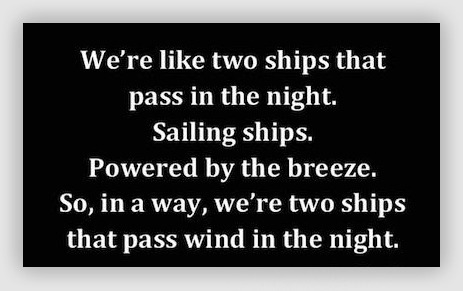
SHIPS PASSING IN THE NIGHT

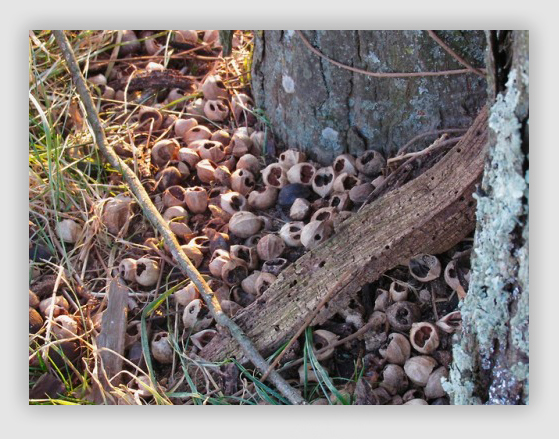
When Al Mattikow finally tripped and fell on a walkway outside of his rented townhouse, all because of a hickory tree that dropped twigs, nuts, leaves, and sap all over the common area, he sued the condo association for negligence and for maintaining a nuisance.

The condo folks defended themselves, showing that they had maintained the tree carefully, using the services of an arborist, to prevent it from becoming a hazard. Because they were so dutiful, the condo folks argued, they could not possibly be negligent. And that meant that the tree couldn’t be a nuisance, either.

“Whoa,” you’re thinking, “that’s so-o-o wrong!” And you are right. The defendant condo association’s arguments and Al’s complaint were like ships passing in the night. It’s laudable that the condo folks took care of the hickory so that it didn’t fall on Al’s pad some dark and stormy midnight. But that was hardly Al’s point. It wasn’t the tree’s falling that bothered Al. It was the falling leaves, twigs, nuts, and sap that covered the walkways, making Al’s perambulation difficult.

Negligence and nuisance both start with “n,” but they’re not synonyms. You can be negligent without creating a nuisance, and you can create and harbor a nuisance without ever being negligent. The condo association conflated the two terms, as well as conflating “safe tree” with “well-behaved tree.”

Viva la difference!

Mattikow v. West Lyon Farm Condominium Association, 2019 Conn. Super. LEXIS 2296; 2019 WL 4344368 (Superior Ct of Connecticut, Aug. 20, 2019). Al and Nina Mattikow rented a condominium unit in which they had lived for a number of years. They had complained to West Lyon Farm Condominium Association, the condominium association that managed the common areas of the property and enforced the regulations, about the extent to which leaves, hickory nuts, pollen, and sap continually fell onto the surface of the common deck near their unit, making walking hazardous. The Mattikows contended that their complaints explained that Al walked with a cane, making him more vulnerable to the conditions of the surface upon which he was walking.

Eventually, Al fell because of the droppings, he claimed, seriously injuring his ankle.

The Mattikows sued, alleging negligence and nuisance. The Association argued that pursuant to the bylaws and rules of the association, to which the Mattikows were bound by their lease agreement, the deck was considered to be a “limited common element.” A “limited common element” benefited one condo unit over the others, due to its location, and the condo unit that most benefited was responsible for maintenance, including clearing leaves and other debris. The Association claimed that under the bylaws, it had no duty to maintain the surface of the deck.

The Association moved for summary judgment, claiming there was no issue of fact – it simply had no duty to maintain the premises upon which Al fell, and conversely, Al had the obligation to maintain the deck surfaces himself.

Held: The Association’s motion for summary judgment was denied.

In addition to claiming negligence, Al claimed that the Association is liable under a theory of nuisance. The Association was dismissive of the claim, arguing that it is derivative of the negligence claim such that if the Association wins on the negligence count, it will necessarily win on nuisance as well. But that ain’t necessarily so.

The Court noted that “the elements of nuisance are different—otherwise it wouldn’t be a distinct cause of action. Simplistically, private nuisance is based on a theory of invasion of property rights rather than a breach of the duty to use reasonable care to avoid causing harm to others. Thus, even if there were no duty to maintain the deck on the part of the defendant, as the defendant vigorously argues, the lack of any duty of maintenance or control over the deck would have no automatic consequence for the nuisance claim… Generally speaking, a duty of maintenance or right of control over the affected premises is irrelevant to a claim of nuisance, which focuses on the conduct of a party external to the affected property and the effect of that conduct on the use of the affected property.”

The Court noted that there were at least a few allegations of negligence that focused on the tree depositing debris, rather than a claimed duty to clear the debris. The main focus, however, is the common area owner’s responsibility, including the hickory tree, for the debris constantly being rained down on the deck. The Association, the Court complained, paid more attention to the clearer issue of lack of duty to maintain and less attention to possible liability emanating from the claimed negligence relating to the tree, for which the defendant was responsible.

Factually, the Court said, the evidence showed the Mattikows had lodged numerous complaints about the tree. The Association called in a licensed arborist, and he had inspected the tree on a number of occasions, repeatedly giving the tree a clean bill of health as long as it was properly pruned and had sufficient cables to ensure stability. The focus of the inspections by the arborist was on whether the tree was likely to fail. He also focused on the tree’s stability, given the apparent shallowness of the root system. The Association did not ask the arborist to evaluate the extent to which nuts, leaves, sap, and branch detritus were being deposited on the deck of the Mattikows’ condominium unit or whether anything could or should be done in that regard.

The Mattikow complaint claimed the Association was negligent “[i]n that it failed to trim, remove or maintain the hickory tree or to prevent the deposit of materials on the subject deck in that it failed to remedy the condition of the deck as described in paragraph four in the deck although it or should have known that such a condition(s) existed.” In turn, the condition described in paragraph four is that there was “an accumulation of materials, including but not limited to sap, mold, liquids and acorns from a large hickory tree, whose branches and limbs hung directly over said deck.”

The Association argued that it had undertaken to trim and maintain the hickory tree. Specifically, the arborist had been called in 2013, and his recommendations had been promptly followed. He was again called to inspect the tree in 2015, and his recommendations were implemented promptly. He came again in 2018, at which time his assessment was that as long as the Association “continued to prune and monitor the tree, the tree posed no hazard.”

And there was the problem, the Court said. The Association focused on whether the tree was a “hazard,” that is, not viable and likely to fall. But, the Court said, these conditions “are irrelevant to the claims being made” by Al and Nina.

The Court noted that the Association’s evidence said nothing about whether the tree should have been removed, for reasons unrelated to its viability or likelihood of toppling or shedding large branches, despite the fact that removal was the Mattikows’ stated goal. The Association did not address the issue of the existence or nonexistence of a duty to “prevent the deposit of materials on the subject deck.”

The Court compared the situation to Connecticut General Statute § 13a-149. In the absence of an ordinance enacted pursuant to General Statutes § 7-163a (and limited to snow/ice conditions), a municipality is liable for the maintenance of sidewalks and the abutting property owner cannot be held responsible for any injuries caused by a failure to maintain the sidewalk, even if there is an ordinance directing the abutting property owner to maintain the sidewalk. However, if a property owner is responsible for creating the condition on the sidewalk — and that often is a result of depositing snow on the sidewalk or having a drain/downspout releasing water onto the sidewalk which subsequently freezes — then despite the absence of any legal duty to maintain the sidewalk, an abutting property owner may be held responsible for injuries resulting from a condition causally related to the conduct of that owner of the abutting property.

The Association is in a similar role here, the Court said. “It is in control of the common areas abutting the condominium unit for which the occupant of the condominium unit has primary responsibility of maintenance. It is a situation on property over which the defendant had no control [that emanates] from property within the control of the defendant, with an ability of control implicating the condition causing an injury to the plaintiff.”

Returning to the nuisance claim, the Association rather perfunctorily asserted that if it is right with respect to the claim of negligence, then necessarily the nuisance claim must also be a matter for which the defendant is entitled to judgment as a matter of law. This is wrong. To succeed under a nuisance theory, a plaintiff need not establish the predicate for a negligence claim. An invasion of a person’s interest in the private use and enjoyment of land by any type of liability-forming conduct is a private nuisance. The invasion that subjects a person to liability may be either intentional or unintentional.

The generation of malodorous smells offensive to neighbors can form the basis for a private nuisance, and the location of the odor-generating activity is an appropriate factor to be considered. The odors do not have to be formed negligently. “The benchmark,” the Court said, “is the reasonableness or unreasonableness of the interference with the ability of another (the plaintiff) to enjoy his/her property.”

The Court ruled that it could not grant summary judgment in favor of the Association on the nuisance claim, particularly given the court’s focus on the negligence claims that did not implicate possession and control over the deck, but rather control over the tree on the property, which was within the defendant’s control. Those claims, the Court said, were closely aligned with the possible existence of a private nuisance.

– Tom Root

TNLBGray140407