Case of the Day – Friday, February 7, 2024

ONE STATE’S TREE IS ANOTHER STATE’S PEST

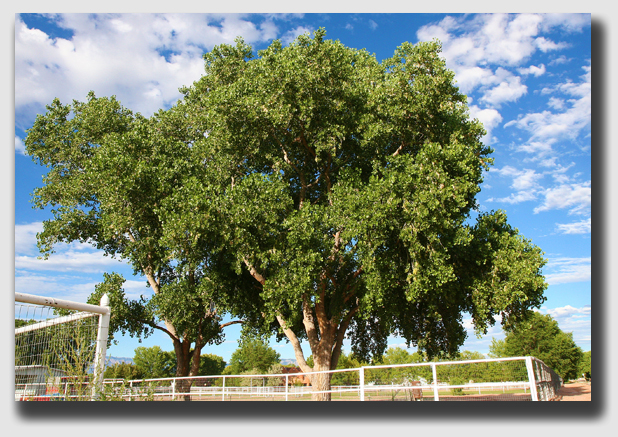
Fast growing ... and messy as a 3-year old ...

Fast growing … and messy as a 3-year-old child …

Long before the Virginia Supreme Court’s decision in Fancher v. Fagella, a little-noticed New Mexico decision grappled with the problems caused by cottonwood trees. Cottonwoods can be majestic, and they were welcome enough to the tired and thirsty pioneers that the cottonwood became the state tree of Kansas. But at the same time, there are some arborists (and more than a few homeowners) who label them as dangerous, messy and a tree that should “be removed from most residential property.

Mr. Fox had a cottonwood tree he loved dearly. His neighbors didn’t fall into the same category, however. They hated the constantly shedding tree with the invasive and prolific root system. Like the banyan tree in Whitesell v. Houlton, there was a lot about Mr. Fox’s cottonwood not to like.

I have often mentioned the time-honored legal maxim that “hard cases make bad law.” It bears repeating here. Like the Whitesell v. Houlton banyan tree, Mr. Fox’s cottonwood generated sufficient horror stories in the trial transcript to explain the trial court’s decision that Mr. Fox’s tree had to go. A more level-headed weighing of the competing property and societal interests was undertaken by the Court of Appeals.

It's beginning to look a lot like Christmas ...except it's June, and the cottonwood is shedding cotton like a plantation in a tornado.

It’s beginning to look a lot like Christmas … except it’s June, and the cottonwood is shedding cotton like a plantation in a tornado.

None of that changed the outcome for Mr. Fox. He had to pay damages, and Abbinetts were free to hack away at the tree’s root system to the full extent of the Massachusetts Rule. But for those of us who admire the process, the Court of Appeals’ thoughtful opinion was a breath of fresh air.

Abbinett v. Fox, 103 N.M. 80, 703 P.2d 177 (Ct.App. N.M. 1985). The Abbinetts and Fox formerly owned adjoining residences in Albuquerque. The Abbinetts sued, alleging that while Fox owned his place, roots from a large cottonwood tree on his property encroached onto their land and damaged a patio slab, cracked the sides of a swimming pool, broke a block wall and a portion of the foundation of their house, and clogged a sprinkler system.

The Abbinetts asked for an injunction against Fox. The trial court found against Fox for $2,500.00 but denied injunctive relief to force Fox to remove the tree roots. Instead, the Court entered an order authorizing the Abbinetts to utilize self-help to destroy or block the roots of the cottonwood trees from encroaching on their land. The Foxes appealed the decision.

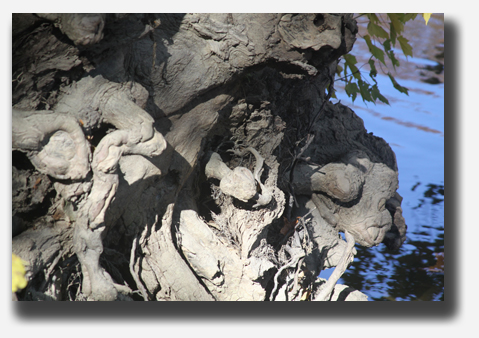
Cottonwoods are known for their intricate and aggressive root systems

Cottonwoods have intricate and aggressive root systems …

Held: The New Mexico Court of Appeals grappled for the first time with the Massachusetts Rule, the Hawaii Rule and the Smith v. Holt-era Virginia Rule. Instead, it adopted a modification of all of these, finding that when overhanging branches or protruding roots of plants actually cause – or there is imminent danger of them causing – “sensible harm” to property other than plant life, the damaged or endangered neighbor may require the owner of the tree to pay for damages and to cut back the endangering branches or roots. Such “sensible harm” has to be something more than merely casting shade or dropping leaves, flowers or fruit. In so doing, the New Mexico Court anticipated the Virginia Supreme Court’s Fancher v. Fagella holding by about 22 years.

The New Mexico Court also opined that it is the duty of a landowner to use his property in a reasonable manner so as not to cause injury to adjoining property. This is the Hawaii Rule. And the landowner who suffers encroachment from the tree of another may — but is not required to — “abate it without resort to legal proceedings provided he can do so without causing [a] breach of [the] peace.” This, of course, is the heart of the Massachusetts Rule. The New Mexico Court called all of these holdings a “modified Virginia Rule,” as indeed it was.

The Court held that a trial court may grant both damages for already incurred injuries and injunctive relief to prevent future harm where there is a showing of irreparable injury for which there is no adequate remedy at law.

– Tom Root

TNLBGray140407

Case of the Day – Thursday, February 6, 2025

ENCROACHMENT, NUISANCE … AND THE MARCH OF TIME

camelhorse140429Encroachment – not the football kind, the tree kind. Encroachment governs the rights of adjoining property owners when the trees on one of the properties encroach on the property of the other. Overhanging branches, invasive root systems, falling debris … those kinds of problems.

Monday, we explored one of the two different approaches to encroachment under American law, the “Massachusetts Rule” that landowners are limited to self-help – but not lawsuits – to stop encroaching trees and roots. Yesterday, we looked at the other end of these 50 United States, and the “Hawaii Rule,” a holding that a landowner could sue for damages and injunctive relief when a neighbor’s tree was causing actual harm or was an imminent danger to his or her property.

Between the two competing rules, Virginia found herself firmly straddling the line. The fair Commonwealth may be for lovers but it is also for equivocators. The landmark Old Dominion case on the issue, Smith v. Holt, hailed from the 1930s, holding that the Massachusetts Rule applied unless the tree in question was (1) causing actual harm or was an imminent danger; and (2) “noxious.” This holding brings to mind the maxim, “A camel looks like a horse designed by a committee.” Frankly, Smith v. Holt had “committee’ written all over it. It seemed to hold that the Massachusetts Rule applied except where it didn’t. And what did “noxious” have to do with anything?
hoist140715The Virginia Supreme Court finally addressed the confusing situation in Fancher v. Fagella. There the Court found itself hoisted on its own “noxious” petard. Everyone could agree that poison ivy was noxious, and most people could agree kudzu was noxious. But how about a cute little shade tree? Shade trees are definitely not in the same league with poisonous or entangling pests, but yet, a cute little shade tree can come out of the ground harder and do more damage than poison ivy or kudzu ever could.

Take the tree in Fancher. It was a sweet gum, a favored landscaping tree as well as a valuable hardwood. But for poor Mr. Fancher, it was Hydra covered in bark. Only halfway grown, Fagella’s sweet gum’s roots were already knocking over a retaining wall, kicking up patio stones, breaking up a house foundation and growing into sewers and even the house’s electrical system. Fancher sued for an injunction, but the trial court felt obligated to follow Smith v. Holt. There was just no way that a sweet gum tree could be noxious, the local court held, and thus, it would not help the frustrated Mr. Fancher. But the Virginia Supreme Court, wisely seeing that the “noxious” standard was of no help in these cases, abandoned the hybrid rule of Smith v. Holt, an unwieldy compromise that had already become known as the “Virginia Rule.” The Court – noting that the “Massachusetts Rule” was a relic of a more rural, bucolic age – decided that the “Hawaii Rule” was the better fit for modern, crowded, helter-skelter suburban life. It sent the case back to the trial court, instructing the judge that the court should consider whether an injunction should issue.

This decision fits neatly into what we have been considering for the past week on negligence and nuisance. Here, the tree had become a nuisance, possibly because Fagella had not cared for the tree before it began damaging the neighbor’s property. All the tree had ever done is what trees do – it grew. And grew and grew. It was healthy, perhaps amazingly so, but Fagella was ordered to shoulder the cost of damages caused not because it was dangerous or dead or anything other than an inconvenience.

Like the decision or hate it, you could see this coming. From an age in which trees grew and lived and died, and effects of the life cycle were not chargeable against the landowner, we may be arriving at a point where trees aren’t much more than big, woody pets, with their owners responsible for whatever the tree may naturally do.

Fancher v. Fagella, 650 S.E.2d 519, 274 Va. 549 (2007). Fancher and Fagella were the owners of adjoining townhouses in Fairfax County, Virginia (a largely urban or suburban county west of Washington, D.C., and part of the Washington metropolitan area). Fagella’s property is higher in elevation than Fancher’s, and a masonry retaining wall runs along the property line to support the grade separation. Fancher has a sunken patio behind his home, covered by masonry pavers.
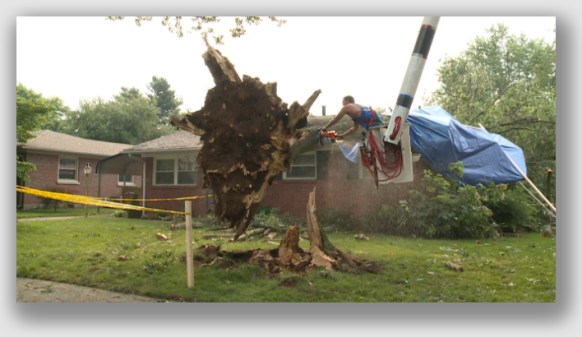
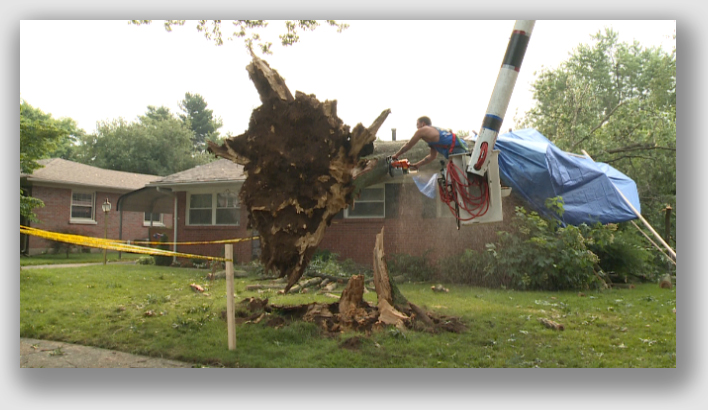
treeonhouse160322Fagella had a sweet gum tree located a few feet from the retaining wall, about 60 feet high with a 2-foot diameter trunk at its base. Sweet gums are native to the area and grow to 120 to 140 feet in height at maturity, with a trunk diameter of 4 to 6 feet. The tree was deciduous, dropping spiky gumballs and having a heavy pollen load. It also has an invasive root system and a high demand for water.

In the case of Fagella’s tree, the root system had displaced the retaining wall between the properties, displaced the pavers on Fancher’s patio, caused blockage of his sewer and water pipes and had begun to buckle the foundation of his house. The tree’s overhanging branches grew onto his roof, depositing leaves and other debris in his rain gutters. Fancher attempted self-help, trying to repair the damage to the retaining wall and the rear foundation himself, and cutting back the overhanging branches, but he was ineffective in the face of the continuing expansion of the root system and branches. Fancher’s arborist believed the sweet gum tree was only at mid-maturity, that it would continue to grow, and that “[n]o amount of concrete would hold the root system back.” The arborist labeled the tree “noxious” because of its location, and said that the only way to stop the continuing damage being done by the root system was to remove the tree entirely.

Fancher sued for an injunction compelling Fagella to remove the tree and its invading root system entirely and asked for damages to cover the cost of restoring the property to its former condition. Fagella moved to strike the prayer for injunctive relief. The trial court, relying on Virginia law set down in Smith v. Holt, denied injunctive relief. Fancher appealed.

Held: The Supreme Court abandoned the “Virginia Rule,” adopting instead the “Hawaii Rule” that while trees and plants are ordinarily not nuisances, they can become so when they cause actual harm or pose an imminent danger of actual harm to adjoining property. Then, injunctive relief and damages will lie. The Court traced the history of the encroachment rule from the “Massachusetts Rule” — which holds that a landowner’s right to protect his property from the encroaching boughs and roots of a neighbor’s tree is limited to self-help, i.e., cutting off the branches and roots at the point they invade his property — through the modern “Hawaii Rule.” The Court noted that Virginia had tried to strike a compromise between the two positions with the “Virginia Rule” set out in Smith v. Holt, which held that the intrusion of roots and branches from a neighbor’s plantings which were “not noxious in [their] nature” and had caused no “sensible injury” was not actionable at law, the plaintiff being limited to his right of self-help.
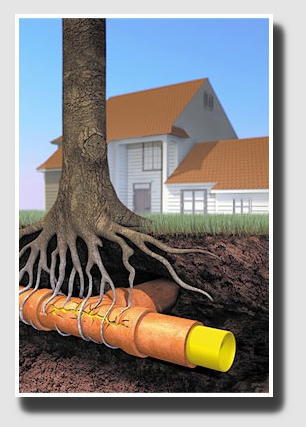
Invasive_rootsThe Court found the “Massachusetts Rule” rather unsuited to modern urban and suburban life, although it may still work well in many rural conditions. It admitted that the “Virginia Rule” was justly criticized because the classification of a plant as “noxious” depends upon the viewpoint of the beholder. Just about everyone would agree that poison ivy is noxious. Many would agree that kudzu is, too, because of its tendency toward rampant growth, smothering other vegetation. But few would declare healthy shade trees to be noxious, although they may cause more damage and be more expensive to remove, than poison ivy or kudzu. The Court decided that continued reliance on the distinction between plants that are noxious and those that are not imposed an unworkable and futile standard for determining the rights of neighboring landowners.

Therefore, the Court overruled Smith v. Holt, insofar as it conditions a right of action upon the “noxious” nature of a plant that sends forth invading roots or branches into a neighbor’s property. Instead, it adopted the Hawaii Rule, finding that encroaching trees and plants are not nuisances merely because they cast shade, drop leaves, flowers, or fruit, or just because they happen to encroach upon adjoining property either above or below the ground. However, encroaching trees and plants may be regarded as a nuisance when they cause actual harm or pose an imminent danger of actual harm to adjoining property. If so, the owner of the tree or plant may be held responsible for harm caused to adjoining property, and may also be required to cut back the encroaching branches or roots, assuming the encroaching vegetation constitutes a nuisance. The Court was careful to note that it wasn’t altering existing law that the adjoining landowner may, at his own expense, cut away the encroaching vegetation to the property line whether or not the encroaching vegetation constitutes a nuisance or is otherwise causing harm or possible harm to the adjoining property.

The Court warned that not every case of nuisance or continuing trespass may be enjoined, but it could be considered here. The decision whether to grant an injunction, the Court held, always rests in the sound discretion of the chancellor and depends on the relative benefit an injunction would confer upon the plaintiff in contrast to the injury it would impose on the defendant. In weighing the equities in a case of this kind, the chancellor must necessarily first consider whether the conditions existing on the adjoining lands are such that it is reasonable to impose a duty on the owner of a tree to protect a neighbor’s land from damage caused by its intruding branches and roots. In the absence of such a duty, the traditional right of self-help is an adequate remedy. It would be clearly unreasonable to impose such a duty upon the owner of historically forested or agricultural land, but entirely appropriate to do so in the case of parties, like those in the present case, who dwell on adjoining residential lots.

– Tom Root
TNLBGray140407

Case of the Day – Wednesday, February 5, 2025

YESTERDAY CHOCOLATE, TODAY VANILLA

chocolate160325The law of encroaching trees runs a continuum from total self-help to the exclusion of any judicial remedy (theMassachusetts Rule,” which we discussed yesterday) – to tree owner liability (the “Hawaii Rule”), with many variations in between. If the law of encroachment were administered by Baskin Robbins, the Massachusetts Rule would be chocolate ice cream, and the Hawaii Rule would be vanilla.

In Whitesell v. Houlton, a Hawaiian appellate court first adopted what is generally known as the “Hawaii Rule,” which held that when there is imminent danger of overhanging branches causing “sensible” harm to property other than plant life, the tree owner is liable for the cost of trimming the branches as well as for the damage caused.

Maybe the court’s holding that the Whitesell v. Houlton tree was a nuisance arose from the hard facts of that case: the tree was a massive banyan tree, with a 12-foot trunk and 90-foot height.

There is an old legal maxim that “hard cases make bad law,” and the banyan tree in this case was pretty clearly monster flora, sort of the kudzu of trees. Perhaps it is that the laid-back political and cultural nature of the Sandwich Islands is too far removed from the flintier New Englanders and the type of self-reliance embraced by the “Massachusetts Rule.

banyan160325For whatever reason, if a branch from a healthy tree in Massachusetts is in danger of falling into a neighbor’s yard, that neighbor may trim it at his or her own expense … but that’s it. In Hawaii, overhanging branches or protruding roots constitute a nuisance when they actually cause, or there is imminent danger of them causing, sensible harm to property other than plant life, in ways other than by casting shade or dropping leaves, flowers, or fruit. Then, the damaged or imminently endangered neighbor may either use self-help to cut back on the encroaching tree or may require the owner of the offending tree to pay for damages and to cut back endangering branches or roots. If such is not done within a reasonable time, the neighbor may even have the trimming done at the tree owner’s expense.

As we said, nothing in this ruling prevents a landowner — at his or her own expense — from cutting any part of an adjoining owner’s trees or other plant life up to his property. It’s just that the Massachusetts Rule says that’s all a landowner may do. Hawaii thinks differently. Tomorrow, we’ll see that Hawaii may be on the right side of history in this debate.

Whitesell v. Houlton, 632 P.2d 1077 (App. Ct. Hawaii, 1981). The Whitesells and Mr. Houlton lived next to each other. Mr. Houlton owned a 90-foot-tall banyan tree with foliage extending 100 to 110 feet from the trunk. The tree overhung the Whitesells’ property. and the two-lane street fronting both properties. The Whitesells asked Mr. Houlton repeatedly over a two-year period to trim the tree, and they took it upon themselves to do so at various times. Their VW microbus – probably chartreuse – was damaged by low-hanging branches, their garage roof was damaged by some intruding branches from the tree, and they identified storm-damaged branches that were in danger of falling.

Despite their entreaties, Mr. Houlton did nothing. Finally, the Whitesells hired a professional tree trimmer who cut the banyan’s branches back to Houlton’s property line and then sued Mr. Houlton to get him to pay.

The trial court sided with the Whitesells and ruled that Mr. Houlton had to pay. He appealed.

Held: Mr. Houlton had to pay. The court surveyed different approaches taken by other states, identifying the “Massachusetts Rule” holding that Mr. Houlton had no duty to the Whitesells or the “Virginia Rule” that said Mr. Houlton had a duty to prevent his tree from causing sensible damage to his neighbor’s property.

nuisance160325The Court agreed with Mr. Houlton that “the Massachusetts Rule is ‘simple and certain’. However, we question whether it is realistic and fair. Because the owner of the tree’s trunk is the owner of the tree, we think he bears some responsibility for the rest of the tree. It has long been the rule in Hawaii that if the owner knows or should know that his tree constitutes a danger, he is liable if it causes personal injury or property damage on or off of his property… Such being the case, we think he is duty bound to take action to remove the danger before damage or further damage occurs.” This is especially so, the Court said, where the tree in question was a banyan tree in the tropics.

Thus, the Court adopted what it called “a modified Virginia rule.” It held that “overhanging branches which merely cast shade or drop leaves, flowers, or fruit are not nuisances; that roots which interfere only with other plant life are not nuisances; that overhanging branches or protruding roots constitute a nuisance only when they actually cause, or there is imminent danger of them causing, sensible harm to property other than plant life, in ways other than by casting shade or dropping leaves, flowers, or fruit; that when overhanging branches or protruding roots actually cause, or there is imminent danger of them causing, sensible harm to property other than plant life, in ways other than by casting shade or dropping leaves, flowers, or fruit, the damaged or imminently endangered neighbor may require the owner of the tree to pay for the damages and to cut back the endangering branches or roots and, if such is not done within a reasonable time, the damaged or imminently endangered neighbor may cause the cutback to be done at the tree owner’s expense.”

The Court pointed out that this rule did not strip a landowner of the right, at his or her expense, to trim a neighbor’s overhanging tree or subterranean tree roots up to the property line. It’s just where the Massachusetts Rule limits you to helping yourself, the Hawaii Rule lets you enlist the courts to do the heavy lifting.

– Tom Root

 TNLBGray140407

Case of the Day – Tuesday, February 4, 2025

ENCROACHMENT – MASSACHUSETTS STYLE

The tree crew we hired seemed sort of smallish, but they had really cool trucks ...

The tree crew our neighbor hired seemed sort of smallish, but they were always smiling and had these really cool trucks …

We’ve got some new neighbors, nice folks who bought a house that, while substantial, has been badly neglected. Since moving in a few months ago, they’ve been working like beavers to fix the place up.

During the warm snap that followed last week’s frigid temps, they had a tree service cut down a number of trees, large and small. We have a couple of big pine trees – which I love but my wife doesn’t – that have branches overhanging the new neighbors’ back yard.

Our neighbor came over to inquire whether we minded that he trim some of the long, spindly branches encroaching over the stockade fence into his yard. We were surprised to be asked.

“But surely you know the Massachusetts Rule,” we said. “You don’t need permission to trim the oak branch back to the property line. That’s well-settled law!” Our neighbor was pleased if a little skeptical. He was sure he couldn’t touch the branch – even though it extended well into his property – without our OK.

To assuage our neighbors’ concern (and that of their tree service), we provided the foreman with the web address of the most comprehensive tree law site in the entire solar system – this one. We confidently predicted that the site just happened to plan to cover encroachment issues the very next day.

Are we ever prescient! As it happens, today we are going to talk about encroachment… not the series of four neutral-zone penalties that nearly cost the Commanders an awarded score in their loss to the Eagles. That’s for football season, now a single game away from an interminable six-month hiatus. The encroachment we care about is different.

Beginning140714Encroachment is what happens when your neighbor’s tree roots break into your sewer system, when leaves and nuts are dumped into your gutters, or when the branches rain down on your car or lawn. The law that governs rights and responsibilities when a neighbor’s tree encroaches on your property only developed in the last 80 years. Before that time, a simpler time perhaps, people didn’t resort to the courts quite so much.

In the beginning, there was the “Massachusetts Rule.” That Rule, something we talk about so much you’d think everyone would have heard of it by now, arose in Michalson v. Nutting, 275 Mass. 232, 175 N.E. 490 (Sup.Jud.Ct. Mass. 1931). This is the granddaddy of all encroachment cases, the Queen Mother. The Massachusetts Rule is the self-help mantra of neighbors everywhere.

In Michalson, roots from a poplar growing on the Nuttings’ land had penetrated and damaged sewer and drain pipes at Michalson’s place. As well, the roots had grown under Michalson’s concrete cellar, causing cracking and threatening serious injury to the foundation. Michalson wanted the Nuttings to cut down the tree and remove the roots. They said, “Nutting doing.”

Encroaching tree roots can sometimes be unsightly

Encroaching tree roots can sometimes be unsightly…

Michalson sued, asking the court to permanently enjoin the Nuttings from allowing the roots to encroach on his land. Besides an order that the Nuttings essentially stop the tree from growing, Michalson wanted money, too, to ease the pain of leaf raking and root cutting. The trial judge found the Nuttings were not liable merely because their tree was growing. He threw Michalson’s lawsuit out, and Michalson appealed.

Held: In what has become known as the “Massachusetts Rule,” the Supreme Judicial Court of Massachusetts held that a property owner’s remedies are limited to “self-help.” In other words, a suffering property owner may cut off boughs and roots of a neighbor’s trees that intrude into another person’s land. But the law will not permit a plaintiff to recover damages for invasion of his property by roots of trees belonging to the adjoining landowner. And a plaintiff cannot obtain equitable relief — that is, an injunction — to compel an adjoining landowner to remove tree roots invading the plaintiff’s property or to restrain such encroachment.

Our takeaway today, therefore, would be the two concepts embodied in the Massachusetts Rule. The first is that you, the neighbor, need no permission from the tree owner to trim away roots and branches that overhang your property. That rule survives to this day just about everywhere. The second – which has been questioned to a much greater extent – is that you can’t sue your neighbor for the effects of encroachment by one of his or her trees.

Hold those concepts close, because tomorrow, we’ll see how things work on the other end of the country – Hawaii – where the law developed somewhat differently. Some say that size matters. We’ll see how true that is when the tree is a little too much for the court to ignore.

– Tom Root

TNLBGray140407

Case of the Day – Thursday, January 16, 2025

SITTING ON YOUR RIGHTS

Equity is a beautiful thing.

There was a time, back in merry olde England, went the courts of law had gotten so hidebound and formalistic that your average aggrieved peasant couldn’t catch a break. So people who needed something more than what the law could provide would petition the Lord Chancellor.

Thus began the courts of chancery, known more commonly as courts of equity. A court of equity is authorized to apply principles of equity, as opposed to those of law, to cases brought before it.

Equity courts hear lawsuits and petitions requesting remedies other than damages, such as writs, injunctions, and specific performance. Most equity courts were eventually merged with courts of law, but some American states, including Delaware, Mississippi, New Jersey, South Carolina, and Tennessee, preserve the distinctions between law and equity and between courts of law and courts of equity.

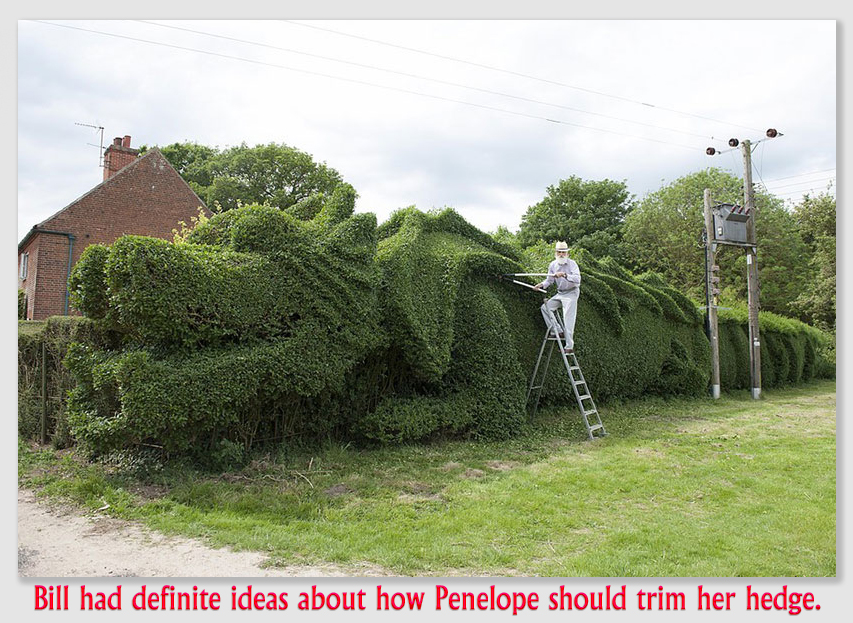
Today’s case, being from Tennessee, started with a Chancellor (something like this fellow), because what the plaintiffs really wanted was an injunction, a court order that the owner of the hedge trim it. But it ended up in the Tennessee Supreme Court.

At its root, equity is nothing more than fairness. Note how equity creeps into this case, not only in the application of the Massachusetts Rule – and how much a creature of equity is that? – but in the observation at the end of the decision that laches should prevent Bill Granberry from getting any relief from his claim.

Bill sat on his rights. If he had sued Penelope when the hedge was still short and young, the outcome might have been different.

Granberry v. Jones, 188 Tenn. 51, 216 S.W.2d 721 (Supreme Ct. Tenn. 1949): Bill Granberry and Penelope Jones each owned a residence on adjoining lots in Tullahoma. Due to the narrow frontage, Bill’s residence is a little less than five feet from the boundary line between the properties.

Penny planted an evergreen shrubbery hedge entirely on her side and within a few inches of the boundary line. The hedge has grown to a height of about twenty feet and its branches and foliage have grown over the boundary line and over Bill’s property to the extent that they rub the side of his house and enter his open windows.

Bill sued for an injunction that would require Penny to trim the hedge back to the boundary line. For good measure, he also asked for a decree requiring her to move the hedge entirely or at least to cut it down to a height of not more than 24 inches and to keep it that way, and for damages.

Penny demurred (which is legalese for saying to the court, “Even if everything he says is true, Bill’s got nothing coming). Penny argued that she had the legal right to grow the shrubbery on her own property to any height she desired, and if any of the branches or foliage protruded onto Bill’s land, his remedy was only to cut the hedge to the extent of the protrusion. The trial court overruled her demurrer, and Penny appealed.

Held: Penny’s demurrer was correct: Bill’s remedy was limited to self-help.

The court reversed the lower court’s decree which had overruled the defendants’ demurrer to the complainant’s bill, seeking inter alia to enjoin the defendants from permitting their hedge to extend onto his land. The court dismissed the bill.

Noting that it could “find no Tennessee case where resort to a Court of equity has been attempted on the facts alleged by this bill,” the Supremes ruled that every owner of land has dominion of the soil, and above and below to any extent he or she may choose to occupy it. As against adjoining property owners, the owner of a lot may plant shade trees or cover the grounds with a thick forest, and the injury done to them by the mere shade of the trees is damnum absque injuria.

No landowner has a cause of action from the mere fact that the branches of an innocuous tree belonging to an adjoining landowner overhang his or her premises. The afflicted owner’s right to cut off the overhanging branches back to the property line is considered a sufficient remedy, the Court said, citing the Massachusetts Rule.

The principle, the Court said, is that an owner of land is at liberty to use his land, and all of it, to grow trees. Their growth naturally and reasonably will be accompanied by the extension of boughs and the penetration of roots over and into the adjoining property of others.

Bill argued that the overhanging branches and foliage had caused the outside wall of his home to rot and decay, and the sills and woodwork have been caused to rot to such an extent that they will have to be replaced by reason of the constant leaning against them of the hedge.

The Court was a mite troubled that it obviously had taken many years for the hedge had grown to its current size. Bill could have taken action when the hedge was much smaller, and the damage to him and burden to Penny – were she to be required to cut the hedge – would have been much less. “The long acquiescence and laches upon the part of [Bill] without any notice to [Penny] and with no attempt to aid himself,” the Court wrote, “is clearly the cause of the damage for which he seeks equitable relief. Of course, the Courts are open to [Bill] if, in legally aiding himself, he is improperly interfered with by [Penny] or her brother. Our conclusion, also, is without prejudice to whatever rights, if any, [Bill] may have for recovery of the expense to which he may be put now or hereafter in cutting the overhanging branches or foliage.”

– Tom Root

TNLBGray

Case of the Day – Tuesday, January 14, 2025

MISSION CREEP

It pretty much stands to reason that landowners whose trees and shrubs overgrow signs along the road, thus endangering motorists, might have a duty to trim their trees.

That’s the law in Florida. But what happens when the vegetation merely creeps up over an extended period of time? That happened on a country road in Dade County, where pine tree roots over 50-70 years submarined a roadway and turned the pavement into corduroy. Of course, it did not help that, at some point, the County widened the road, so that trees that were once well away from the road ended up uncomfortably close to the shoulder.

I once had a dapper contracts law professor – an adjunct with an alternative life as a litigation partner in a downtown law firm – who explained to us well-scrubbed first-year students that the law was a seamless web. We would never, he explained, have a case that was exactly like a case that had already been decided. Instead, our fact patterns and legal issues would fall somewhere in between cases and legal principles that had been settled by courts and lawyers who had gone before. Our job as attorneys, he said, was to convince the judge that our clients’ cases fell closest to the legal principle that best served our client’s interest.

That’s what the lawyer for injured passenger Mary Sharon Sullivan tried to do when he sought to convince a Florida appellate court that if a landowner can be dinged because its trees overgrow a stop sign, it certainly ought to be liable when roots from the landowner’s trees grow beneath a public street, breaking up the pavement.

Silver Palm Properties, Inc. v. Sullivan, 541 So.2d 624 (Ct.App. Florida, 1988). Bob Stevens was driving with a passenger, Mary Sullivan, on a two-lane county paved road in an agricultural section of Dade County. Bob’s car hit a series of bumps submerged in rainwater, and he lost control, swerved to the left and crashed into a tree several hundred feet away. Both Bob and Mary were injured.

Mary sued Silver Palm, the owner of the property next to the accident site, complaining that the company had a duty to maintain the trees on its property so that “subterranean growth” would not cause dangerous bumps, cracks, and protrusions in the road. She argued Silver Palm was negligent in allowing the trees to grow in such a manner as to damage the road, and in failing to inspect, discover, or repair the area. She said Silver Palm knew or should have known of the condition of the road “and therefore had a duty to take action reasonably calculated to correct the dangerous conditions created by its actions or inactions.”

Since 1974, Silver Palm has owned the avocado grove adjacent to the road where the accident occurred. About 50 to 70 years earlier, a prior owner planted Australian pine trees alongside the grove as windbreaks to reduce wind damage to the avocados. Silver Palm had never trimmed or pruned the trees. The trees were not originally located right next to the road, but when the county widened the highway in 1974, they ended up much closer than they had been before.

Mary’s expert witness, a mechanical engineer, said that about three and one-half to four feet of pavement had been uprooted and broken up to a height of five or six inches because of the pine tree roots. Another expert witness corroborated the engineer’s testimony. The expert explained that four methods were generally employed to prevent the growth and spread of tree roots. Two of the methods would kill the tree outright. In a third method – topping – limbs are cut away to reduce the height of the pine tree from about 30 feet to six feet. In a fourth method, root trenching, a trench is dug parallel to the roadway, severing the roots.

The horticulturist admitted that locally, he never seen had any owner other than Dade County perform root trenching, and he had never known of any company, individual, or landowner who had done root work on pine trees within 15 feet of a roadway. No one testified as to when in the past the topping method would have had to have been performed in order to retard the root growth enough to prevent the pavement from buckling and cracking.

The horticulturist also testified that when the County widened the road in 1974, its workers merely scraped over the tops of the existing roots instead of root trenching, which would have been the proper means of controlling the root problem. Had the county root-trenched in 1974, he testified, the trenching would have retarded root growth for about ten years, well beyond the date of the accident.

Dade County admitted it had prior knowledge of the condition of the road, and it admitted it had had the responsibility to maintain and repair it. It settled for $50,000 just after the jury had retired for deliberation.

Silver Palm did not, and the jury found it 22.5% negligent; Dade County, 15% negligent; and Bob (the driver) 62.5% negligent. The trial court entered a final judgment against Silver Palm and its insurer for $200,000.

Silver Palm appealed.

Held: Silver Palm was not liable to Mary.

Florida law holds that users of a public right-of-way have a right to expect that the roadway will not be unreasonably obstructed. Thus, a landowner may incur liability for damages caused by something which grows on private property but which obstructs the public right-of-way.

The Court distinguished the situation from other cases where obvious conditions created hazards, such as vegetation obscuring traffic signs. In those cases, “common sense required that a duty be imposed upon the landowner to remove landscaping which obstructed critical traffic signage. Vegetation that overhangs and blocks out a traffic control device constitutes an obvious condition and presents an imminent danger of uncontrolled traffic. The offending branch, moreover, need only be clipped away, a straightforward remedy.”

In this case, however, “the offending vegetation was anything but obvious. The root growth was slow and subterranean; the defect in the right-of-way became noticeable only after a considerable passage of time; and the remedy was known only to horticulturists and practiced only by a governmental entity.” Everyone agreed that Dade County, not Silver Palm, owned and maintained the roadway shoulder and surface in the area of the accident. Silver Palm had no right, the Court observed, to repair or alter the surface of the roadway.

To hold a landowner liable for failing to clip back vegetation that has overgrown a traffic control device is reasonable. To impose upon a landowner a duty to undertake root trenching or tree topping purely in anticipation that subterranean growth may alter the surface of a public right-of-way at some indeterminate time in the future is both burdensome and unreasonable.

– Tom Root

TNLBGray140407

Case of the Day – Tuesday, January 7, 2025

MASSACHUSETTS RULE – THE OLD IS NEW AGAIN

Yeah, we talk about the Massachusetts Rule all the time, but really, how relevant is it to our modern, digitized, frenetic world?

Ask Pete Kirk and Bryan Johnson. These unhappy landowners did not think much of an affordable housing development going in next to their parcels. Their stated complaint was that drainage would be altered and eight Norway maples on or near the boundary lines might be harmed.

I have no reason to suspect that Pete and Bryan objected to the nature of the development, or what all of those people needing “affordable housing” might do to their property value. But they were mightily unhappy that regrading or excavation could to their trees, and they sought to get the zoning board’s approval withdrawn.

Sorry, the court said to Pete and Bryan. This being Massachusetts, the Massachusetts Rule reigns supreme. The developer had the right to do with his property as he wished, even if it cut or affected tree roots that had encroached on his land. Strangely, the Court seems to have engrafted a specific intent requirement on the developer. He could cut roots or change the grade (which would bury the roots too deep in the soil), even if he knew it would kill the trees. The only limitation is that he could not do so with the intent to kill the trees.

Come again? I have read Michalson v. Nutting repeatedly without being able to find scienter anywhere in the ruling. Is the Court saying that what you do as a landowner to exercise your self-help rights under the Massachusetts Rule is somehow regulated by the purity of your motives? Outside of the obvious difficulty in proving what the landowner intended to accomplish in any given act on his or her property, what does motive have to do with the reasonableness of an act?

Forgive me for thinking of the Tin Man in a yoga class.

Kirk v. Li, 2019 Mass. LCR LEXIS 2 (Mass. Land Ct., Jan. 7, 2019).  Developer 269 North Ave, LLC got a comprehensive permit from the Weston Zoning Board of Appeals (Board) for a 16-unit housing project on a one-and-a-half-acre parcel. The property, severely sloped in the rear, presented tough challenges to satisfying the requirement that the project not result in an increase in stormwater runoff, because all of the stormwater from 16 acres surrounding the site accumulates on the property. Because of the particularly porous soils on the property, all of this stormwater recharged into the ground, with none of it running off. Construction of the project would increase the impermeable surfaces on the property, such as buildings and parking lots, which meant a decrease in open land available to recharge stormwater.

To satisfy stormwater regulations, the developer designed a system to collect and discharge all stormwater into the ground. The Board was satisfied and issued the comprehensive permit.

Peter Kirk and Bryan Johnson owned land that abutted the developer’s property on the south and north respectively. They complained to the Board that the developer’s stormwater system would not handle the stormwater flow onto its property, resulting in flooding on their land. Additionally, Pete and Bryan argued that the housing development would harm or even kill trees that straddle the boundary or are on their properties. When the Board disagreed, they sued.

Held: The Court held that Board did not act unreasonably or arbitrarily or capriciously in accepting the developer’s stormwater management plan or its measures for protecting the trees.

This review focused only on Pete and Bryan’s complaints about their trees. Pete identified three trees on his property or on the common boundary line with the developer’s property, and Bryan cited five trees on his land or on the common boundary line they asserted would be adversely affected by the project. Their experts testified that the root systems of the eight trees, all Norway maples, would be harmed by the roots being cut or by adding more than one to three inches of soil above the existing surface grade. The cutting and grading would all take place on the developer’s property, but would – according to Pete and Bryan – harm or even kill the trees.

The Court admitted there was “no bright line delineating what unilateral actions regarding a shared tree are or are not permitted.” To be sure, a property owner cannot act to intentionally destroy a shared tree without the consent of the others who share an ownership interest therein. Yet, the growth of roots and branches into a neighbor’s land, the Court said, “no matter how essential to a tree’s survival, cannot vest in the tree’s owner some indomitable nonpossessory interest in the space the tree occupies.”

Here, the developer did not want to remove the trees. As a matter of law, the Court ruled, the developer would be entirely within his rights to pursue the project even if it has the effect of harming some of the trees’ roots. With respect to trees situated entirely on Pete’s or Bryan’s property, the Massachusetts Rule provides that the developer has an unfettered right to cut the roots and branches of such trees back to the property line. With respect to the trees situated on shared property lines, the Court held, the developer similarly has the right to cut roots and branches situated on the developer’s property. The only limitation is that the developer may not do so with the intent of killing those trees.

The Court found that the expert testimony made it clear that some level of activity within the area immediately surrounding the trunks of the trees could have the effect of killing them. “However,” the Court noted, “the testimony does not speak to where the roots of the… trees are actually located or what harms to the trees are certain or even reasonably certain… Here, where the applicable law makes it doubtful that [Pete and Bryan] have a claim to demand any protections for [their] trees, the level of speculation in the resulting harms renders these risks too remote to bear on whether the Board’s Decision was improper.

– Tom Root

TNLBGray140407