Case of the Day – Thursday, November 21, 2024

EVERY RULE HAS AN EXCEPTION

It’s a great old saw, but as logicians like to point out, “every rule has an exception” is a logical fallacy. As if anyone could possibly know every rule, so that he or she could be sure that every rule had an exception (sort of like the people who claim no two snowflakes are alike: how could they possibly know that?).

But beyond that, if every rule has an exception, then the rule that every rule has an exception itself has no exception, in which case every rule does not have an exception. It’s enough to make your head throb.

But all we care about here are rules in tree law. If there is any rule that seems immutable, it is the rule that a boundary tree belongs to the owners of both properties on which it is growing. No owner can do anything to trim or kill the tree without the permission of the other owner. Boundary Tree Law 101 right?

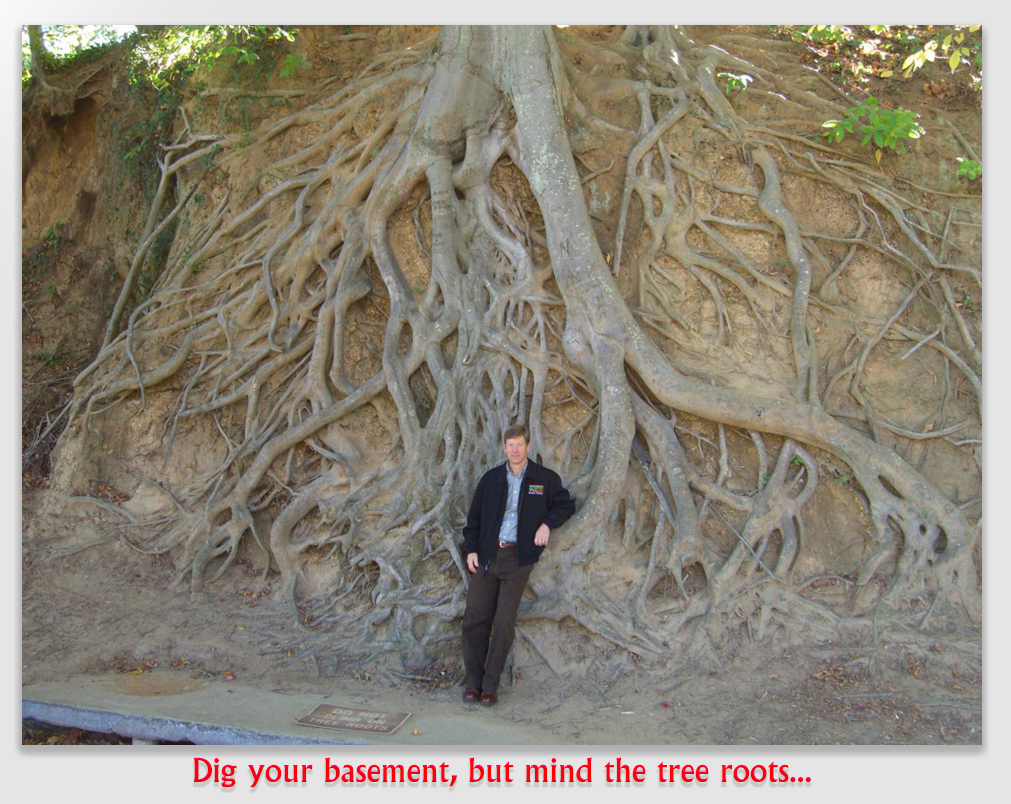
Well, yes, but for the exception. In today’s case, one property owner ignores the warnings of the other, and excavates for a basement, only to sever the roots of the big, beautiful boundary oak tree. The court agreed with the aggrieved plaintiffs all the way, except at the end, where the Supreme Court said, “Sure, that’s the rule… but there’s an exception.”

The exception is that if an owner harms or kills the tree while using his property in a reasonable way, the other owner is without recourse.

Does that tiny little exception look big enough to drive a truck through?

Amazingly enough, this decision remains good law in Oklahoma.

Higdon v. Henderson, 304 P.2d 1001 (Supreme Ct. Okla, 1956). The Higdons filed their petition seeking damages for the destruction of a shade tree they said was located on the lot line between their property and that of John Henderson. They said it had been a large towering oak tree which was a valuable shade tree for both lots. They claimed John had been building his house when, over their objections, he excavated a basement, cutting the tree’s roots and killing it.

John argued the Higdons could not recover, because their complaint did not say to whom the tree belonged, and at any rate, they did not state a claim on which they could collect. The trial court agreed, and the case ended up in the Oklahoma Supreme Court.

Held: Identifying the tree as a boundary tree was good enough, but the Higdons could not collect for Henderson’s killing of the tree.

The Court acknowledged the general proposition that “trees whose trunks stand partly on the land of two or more coterminous owners belong to them in common.” The Higdons’ complaint referred to the tree as a boundary tree, and that was quite adequate to identify common ownership of it by John and the Higdons. The Court acknowledged the general proposition that “trees whose trunks stand partly on the land of two or more coterminous owners belong to them in common.” The complaint referred to the tree as a boundary tree, and that was quite adequate to identify common ownership of it by John and the Higdons.

The Supreme Court also agreed with the Higdons that because the tree was standing on the boundary line, it was the common property of both owners, so neither had the right to damage or destroy the tree without the consent or permission of the other. But, the Court said, that rule is “qualified by the right of an abutting owner to use his property in a reasonable way and conversely, not in an unreasonable way.”

Here, the Higdons complained that John was building a house. This is not an unreasonable use of the property, the Court ruled. Therefore, the resulting incidental injury to the tree did not give the Higdons a right to recover damages.

– Tom Root

TNLBGray140407

Case of the Day – Tuesday, October 22, 2024

WHEN ARM’S LENGTH ISN’T QUITE FAR ENOUGH

When I was a mere first-grader, I had an uncle – a Wharton School grad – who taught me a business aphorism he had learned in B-school. Everyone thought that it was cute to hear a 6-year-old try to say, “infamous machinations,” sort of the same way that the Teddy Ruxpin creator picked the bear’s name because he figured so many children would mispronounce it so cutely.

But six decades later, I remember what Uncle Harl taught me through his omnipresent swirls of cigar smoke: “Always deal with your business associate at arm’s length. For if he be an honest man, he will respect your caution…”

Apropos of our regular discussions about independent contractors, you, Harry and Harriet Homeowner, may figure that you are being prudent by hiring your vendors and service providers as such. After all, we all know that the homeowners are not liable for the negligence of independent contractors.

Certainly, our neighbors will respect our caution.

In today’s case, however, the Svensons discovered, to their chagrin, that trespass ain’t negligence. As a result, they got no respect. When the independent contractor tree service hired by their independent contractor architect – making the tree service something akin to an independent contractor once removed – cut down a pair of boundary trees, the Svensons were sued along with the architect and the tree service. They figured they were insulated. It was the contractors’ fault, after all, not theirs.

But one can be dinged for trespass, or for causing someone else to trespass. The fact that the party that has been caused to trespass may be liable, like an eight-ball going into a side pocket, does not absolve the person who directed the trespass. Like the cue ball that put the eight ball into motion, the party who caused the trespass was indispensable to the tort. And regardless of the relationship between the director and the directee, both may share liability.

Oh, and one other thing, Svensons… if you have a good argument to make on appeal, make sure you make the same argument before the trial court. Like l’esprit de l’escalier, thinking of a great argument for the first time on appeal is about 10 minutes too late.

Swegan v. Svenson, 960 N.Y.S.2d 768,104 A.D.3d 1131(Sup.Ct.A.D., 2013). The Svensons were doing some remodeling around their place. They did it right. They hired an architect to design the project and manage the contractor. The architect hired a tree service to remove two trees. The tree service did exactly as it was instructed.

But the trees were boundary trees, partly in the Svensons’ yard and partly in the touchy neighbors’ yard. It didn’t take a New York minute for the neighbors to sue everybody involved for conversion and trespass.

The Svensons moved for summary judgment based on the novel argument that they could not be held liable for the trespass because the architect was not their agent but rather an independent contractor, and tree service certainly was not their agent but instead was an independent contractor as well. The trial court denied their motion.

The Svensons appealed.

Held: The Svensons were not entitled to summary judgment. The court held that regardless of the architect’s status as an independent contractor, the Svensons may be held liable for the trespass and ensuing conversion if they “directed the trespass or such trespass was necessary to complete the contract” between Svensons and the architect. Here, the Swegans had raised an issue of fact whether the Svensons “directed the trespass or whether such trespass was necessary to complete the contract.”

For the first time on appeal, the Svensons floated the argument that they had the right as joint owners to remove the trees because they were structurally unsafe and created a safety hazard or private nuisance. At any rate, they claimed, they should not be assessed treble damages under RPAPL 861 because there is no evidence that they acted recklessly, willfully or wantonly. The court did not consider either contention, because neither had been raised in the trial court.

– Tom Root

TNLBGray

Case of the Day – Tuesday, September 17, 2024

YOU PAYS YOUR MONEY AND YOU TAKES YOUR CHANCE

Over the past few days, we have seen several divergent views on boundary tree ownership: the Colorado view that ownership depends on the intent of the property owner; the Illinois view that ownership is determined simply by where the tree is growing; and the Connecticut view that both owners can hack at the branches and roots of a boundary tree with abandon.

Today, a Georgia court adds to the mayhem. In its view, a boundary tree is not the common, undivided property of either owner. Instead, it is owned in “severalty,” a term only a lawyer could love. “Severalty” means that Owner A is the exclusive owner of the parts of the tree on her property. Owner B is the exclusive owner of the parts of the tree on his property, and – in addition (and this is a big “in addition”) – each owner is deemed to have granted an “easement of support” to the other, meaning neither owner can do anything to his or her side of the tree that would kill the other side.

This sounds a lot like the Connecticut rule, except that the owners could mess a little with the trunk, as long as it does not make a mess of things on the other side. What is really interesting is that the case focuses on each owner’s obligation to not let the tree become dangerous to the other. That’s an aspect of boundary tree ownership we haven’t contemplated before.

Just maybe Georgia has something here. We would be more amenable if it could be described without employing the term “severalty.”

But what does this suggest if you’re in a state other than Connecticut, Minnesota, Georgia, Illinois or Colorado? Well, in that case, you pay your money and take your chance.

Willis v. Maloof, 184 Ga.App. 349 (Ga.App. 1987). Mike Maloof was severely injured when a tree fell on him. Throughout the over thirty years he and defendant Bill Willis had lived as next-door neighbors, Mike had always assumed the tree belonged to Bill. It turned out that Mike was wrong: the tree actually grew on the boundary between their properties. Mike claimed the tree was diseased and that Bill should be liable for negligently failing to remove or remedy the hazard created by the tree. The jury could not reach a verdict, and the trial court denied Bill a directed verdict.

Bill appealed.

Held: Adjoining landowners of a boundary tree do not own the tree as tenants in common, but instead, each owner holds an interest “in severalty” on the part of the tree that rests on his or her side of the line, with an easement of support from the other. Thus, the Court said, Bill is entitled to a directed verdict in his favor, and owes Mike nothing.

The Court admitted that the issue of ownership and control over a boundary tree was one that had never been decided in Georgia. The Court analogized the issue to the rule applicable to party walls. By owning the part of the tree on his or her property, each of the landowners “has an interest in that tree, a property in it, equal in the first instance to, or perhaps rather identical with, the part which is upon his land; and in the next place embracing the right to demand that the owner of the other portion shall so use his part as not unreasonably to injure or destroy the whole.”

Like with a party wall, the parties owning a boundary tree have a duty to maintain it and take reasonable steps to guard against any hazardous condition it may pose.

In this case, the Court said, Mike had presented no evidence that Bill had breached his duty to maintain the tree. The owner of a tree is liable for injuries from a falling tree only if he knew or reasonably should have known the tree was diseased, decayed or otherwise constituted a dangerous condition. He or she has no duty to “constantly check all… trees for non-visible rot as the manifestation of decay must be visible, apparent, and patent so that one could be aware that high winds might combine with visible rot and cause damage.” Bill worked around the base of the tree often as he cultivated a vegetable garden in his yard near the tree, year after year. He denied any knowledge that the tree was diseased and denied seeing any evidence which would lead him to suspect the tree was unhealthy.

Mike’s expert, who inspected the tree after it fell, testified that at least three visible conditions told him the tree was diseased and posed a hazard. The bark at the base of the tree curved under instead of outward, indicating to the expert that the tree was virtually devoid of roots. A cavity or hollow in the side of the tree and fungus growing on the bark indicated to the expert that the tree was decaying. The expert said that in his opinion the average person’s “attention would have been drawn” to these conditions.

The Court didn’t bite. “Even assuming defendant should have noticed these conditions, the appellate panel found, “no evidence was presented from which a jury could find that defendant should reasonably have known the tree was diseased. The expert witness presented testimony from which a jury could find that the tree was in fact diseased. However, the testimony of the expert witness did not establish that a layman should have reasonably known the tree was diseased.”

Even though each owner had an exclusive right to the part of the tree on his side of the boundary, the distinction was not relevant regarding the duty to maintain a single, indivisible tree. The disease in this tree was systemic and not confined to one side of some imaginary line. Therefore, the duty to maintain the tree could not be apportioned on some pro-rata basis depending upon the percentage of the girth of the tree which grew on either side of the property line.

Bill’s only duty was that of the reasonable man. The law did not charge him with an expert’s understanding of the inspection, care and maintenance of trees. Even Mike admitted he did not think the tree in question was dangerous or defective. Several other neighbors also testified the tree was bearing green leaves at the time it fell and did not appear to be diseased. Because Mike failed to present any evidence that Bill was or should have been aware that the tree was hazardous, Bill was entitled to a directed verdict, and one should have been granted.

– Tom Root

TNLBGray

Case of the Day – Thursday, September 12, 2024

FISTS, NOSES AND TREES

punch50720Everyone’s heard the old canard that “the right to swing my fist ends where your nose begins.” Imagine your nose is a 65-foot tall maple tree, and my fist is a backhoe. Good luck with that – most imaginations aren’t quite that agile.

Here’s the problem we’ve been looking at the past several days. We all know about “self-help,” the venerable old Massachusetts Rule that limits a landowner to trimming away encroaching branches and roots from a neighbor’s tree up to the property line. Michaelson v. Nutting – and virtually every encroachment case decided in the eight decades since that decision – has given a property owner the right to trim back a neighbor’s tree to the boundary without any limitation.

At the same time, we all know about boundary trees, those trees whose trunks enter the earth smack on the property line, so that tree is attached to the ground in both properties. Boundary trees are special, and the general rule is that neither property owner may trim the tree without the consent of the other.

But what happens when a neighbor’s tree is not on the boundary, but so encroaches on a landowner’s property – both above ground and below ground – that the practical effect of the landowner’s Massachusetts Rule self-help will be to kill the tree?  Well, like many things in life, that depends… In Washington State, the tree’s death is just so much collateral damage and tough luck to the tree’s owner. In California and New York, on the other hand, it’s Mr. Rogers’ Neighborhood: the Massachusetts Rule yields to the imperative that the tree not be harmed.

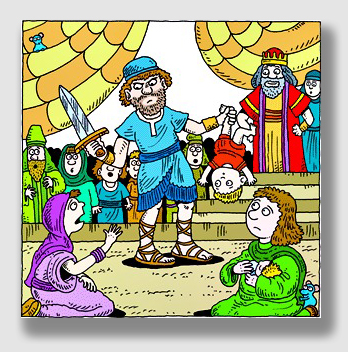
Remember King Solomon? When two women appeared in front of him arguing over who was the mother of a baby, the King proposed to settle it by cutting the baby in half so that each woman would get 50 percent of the child. That threat was enough to smoke out the imposter. In today’s case, dividing the tree in half would have had the same effect as cutting up the infant (albeit with less blood).

The Alvarezes own a nice place in Vermont, complete with a view of Lake Champlain. They have a 65-year-old maple tree next to the property line of their neighbors, the Katzes. It was close, but the b                                                                                                                                                                                                                                         ase of the tree was completely on Alvarez’s property, so this was no boundary tree the parties were dealing with.

The tree had been standing for almost seven decades. In fact, when the Alvarezes bought the property 20 years ago, the maple had already sent roots and branches across the boundary between the two parcels.

The Katzes, who also enjoy a view of Lake Champlain, have planned for a number of years to add on to their house, essentially doubling its size with a two-story addition. The only problem – or at least, the only problem we care about – was the maple tree. To add on, the Katzes would have to cut away about half of the maple tree’s branches and roots, in all likelihood killing the tree.

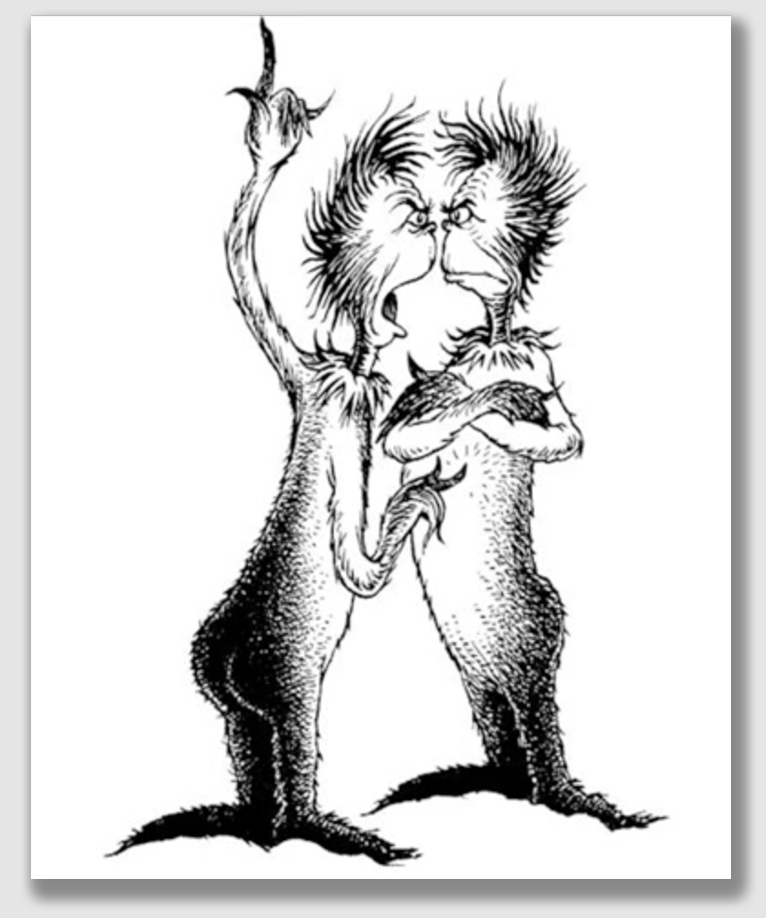
The Alvarezes and Katzes tried to resolve the problem amicably, but – just as happened with the women in front of King Solomon – there really wasn’t any middle ground. Either the Katzes would get their way, building onto their house and killing the tree, or the Alvarezes would have it their way. Like Dr. Seuss’s north-going and south-going Zax, neither neighbor would budge.

But then Katz somehow learned all about the Massachusetts Rule. It dawned on him that he could cut back the offending maple tree to the property line, both roots and branches. Sure, the tree might die, but the Massachusetts Rule said nothing about what happened to the tree after a neighbor used “self-cutting” trimming on it.

The Alvarezes ran to court and obtained an injunction against Katz. The trial court found that trimming the tree as Katz proposed would probably kill it. The injunction prohibited cutting away only about 25 percent of the tree, about half of what the Katzes needed for their ambitious plans.

The Katzes appealed, and the Vermont Supreme Court threw out the injunction. It held that the Massachusetts Rule was a blunt object, and had always been one. A landowner owns everything above and below ground level, and that owner can cut anything he or she wants to cut, without regard for the effect of the cutting. The Court said that was the law in Vermont and just about everywhere else.

The Supreme Court seemed a little uncomfortable with its decision, but it ruled, in essence, that the law is the law, and that’s the way Vermont had always done it. It noted, in a hint that was as subtle as an anvil, that in cases where Massachusetts-style self-help had been limited – such as in Booksa v. Patel – the theory that had been advanced was that of nuisance. In other words, the Alvarezes could have argued that Katz’s proposed trimming would so endanger the tree that it would interfere with their enjoyment of their property. Recall in Booksa, the court ordered the defendant to trim the encroaching tree reasonably. The Vermont Supreme Court telegraphed that it would probably have done the same if the Alvarezes’ lawyer had only thought to make the argument. Oops.

Alvarez v. Katz, 124 A.3d 839, 199 Vt. 510 (Supreme Court of Vermont, 2015). The Katzes own property in South Burlington in the Shelburne Bay area. The Alvarezes own the adjoining lot just to the north of the Katzes. The Alvarezes have a 65-ft. tall maple tree, the trunk of which is located entirely on their property. About half of the branches and roots from the tree cross the property boundary and encroach onto the Katz lot. Some roots extend under the Katzes’ existing deck.

For several years the Katzes have sought to expand their home by adding a two-story addition on the rear. The plans for the construction of the addition would require cutting the roots and branches that are encroaching onto their property. This could encompass up to half of the tree’s roots and branches.

The Alvarezes and the Katzes have been unable to amicably resolve the problem of the maple tree. In 2013, when the Katzes considered taking unilateral action to trim the tree’s roots and branches, the Alvarezes filed for an injunction. The superior court found it more likely than not that removal of 50% of the tree’s roots and branches would result in the premature death of the tree, perhaps within five years and probably within ten from the time of cutting. The court employed what it called the “urban-tree rule,” under which trimming the roots or branches of an encroaching tree may be proscribed if the trimming will destroy the tree. The injunction barred the trimming of more than 25% of the roots and branches of the tree.

The Katzes appealed.

The Zaxes wouldn’t budge, either …

Held: The injunction was vacated. The Supreme Court reaffirmed “Vermont’s long-standing right of a property owner to trim branches and roots from an encroaching tree without regard to the impact that such trimming may have on the health of the tree.”

Vermont has long recognized ownership of property to include the ownership of that which is below the ground and that which is attached overhead. The right has been clear for almost 100 years, since Cobb v. Western Union Telegraph Co., (a 1916 decision that stated the Massachusetts Rule before there ever was a Massachusetts Rule). Cobb held that “it is a sound principle that where a tree stands wholly on the ground of one and so is his tree, any part of it which overhangs the land of an adjoining owner may be cut off by the latter at the division line.” The Supreme Court criticized the trial court for conjuring up an “urban-tree rule” that would be an exception to Cobb. The trial court had considered this case to be one of first impression in Vermont because of the anticipated adverse – and likely fatal – effect the root-and-branch cutting would have had on the encroaching tree. The Supreme Court held that any attempt to “distinguish” Cobb, that is, to find that the Cobb case was somehow different just because the Cobb tree was located in a rural setting, was wrong.

Further, the Supreme Court said, the “urban-tree rule” does not enjoy the support attributed to it by the trial court. Outside of two cases, the California decision in Booksa and one obscure New York decision, the Massachusetts Rule (which maybe we should have called the “Vermont Rule”) enjoys extremely widespread support. What’s more, the Court reasoned, the Vermont legislature has had 99 years to modify the Cobb holding by statute, and it has not bothered to do so. The Supreme Court concluded that the “right to cut encroaching trees where they enter the land of another, without regard to the impact on the encroaching tree by such cutting, is well-established under Vermont law.”

The Supreme Court noted that at common law, the right to cut encroaching boughs and roots historically counterbalanced a landowner’s right to grow shade trees on his land, regardless of the impact those trees may have in casting shade or encroaching upon the neighboring property. Common law provided no claim for damages caused by encroaching roots or branches. Instead, the remedy was one of self-help, allowing the cutting of roots and branches to the extent of encroachment.

Where other jurisdictions have departed from the common-law rule and allowed actions for damages as a result of encroaching roots or branches, they have generally relied upon nuisance principles. Even where such actions have been permitted, those jurisdictions continue to recognize the right to self-help. In this case, the Alverezes did not raise a nuisance claim, so “the issue of whether a nuisance claim might exist for the encroachment of roots and branches from the Alvarezes’ tree is not presently before the Court.”

The Supreme Court subtly suggested that the proper way for the Alvarozes to address the problem would be through the law of nuisance ...

The Supreme Court subtly suggested that the proper way for the Alvarezes to address the problem would be through the law of nuisance …

The Supreme Court defined the conundrum as follows: “[T]his case presents the competing interests of neighboring property owners. On the one hand, [the Katzes] have an interest in using their land, which they have purchased and upon which they pay taxes, as they see fit, within permissible regulations, free from limitations imposed by encroaching roots and branches from the neighbors’ tree, which they did not invite and for which they receive no benefit. The Alvarezes seek to restrict the use of the Katz property by preventing the removal of branches and roots on land that is not theirs and for which they have given nothing of benefit to [the Katzes] for suffering the encroachment. On the other hand, the Alvarezes wish to continue to enjoy their tree, which has been there for many years, without placing its viability in peril due to the construction that [the Katzes] wish to undertake.”

The Court observed that if the Alvarezes had the right to have their tree encroach onto the neighboring property, the obvious next question would be to what extent the encroached-upon property owner must suffer such an encroachment. The Supreme Court admitted that on some occasions the “exercise of self-help may result in the immediate or eventual loss of an encroaching tree, given the long-recognized rule in Vermont and its widespread support elsewhere, we decline to depart from the common-law rule in favor of the approach adopted by the superior court.”

– Tom Root

TNLBGray140407

Case of the Day – Tuesday, September 10, 2024

WASHINGTON STATE – GREAT COFFEE, GREAT VISTAS… AND GREAT CONFUSION

I have to confess that, although I am a proud Midwesterner, I love the State of Washington. Temperate rain forests, soaring mountains, beautiful lakes, great coffee, greater beer, and Seattle in the sunlight.

OK, not so much about the sunlight. But for that, Washington is two fantastic states, the first being a lush and moist paradise west of the crest of the Cascades, and the other being a sprawling, sunny and semi-arid plain east of the mountains.

Despite my love of the place, I was unstinting in my criticism yesterday about how the Mustoe court had sanctioned an “anything goes” culture in Washington, in which a landowner could misuse the Massachusetts Rule to kill a neighbor’s tree by the indiscriminate cutting of roots and branches, regardless of effect. As long as you stay on your own property, you can trim branches and roots with a backhoe bucket, if you so choose.

Today’s case is every bit as puzzling as is Mustoe, but in quite the opposite direction. One set of neighbors hacked branches off a boundary tree to the point that the other set legitimately feared that it was so unstable it would fall. The second set of neighbors then retaliated, taking the rest of the branches off the tree. That stabilized the tree trunk but had the unfortunate side effect of killing the tree.

Neighbor One, who lacked not for chutzpah, sued Neighbor Two for timber trespass. The courts found Neighbor Two liable for treble damages under the State’s timber trespass statute, regardless of the fact that Neighbor One’s reckless trimming created a hazard tree and the need for the drastic remedy that killed the tree.

The Court, in today’s case, candidly “acknowledge[s] that under Mustoe and our holding here, it would appear that a property owner has greater rights with respect to trimming a neighboring tree than a tree standing on a common property line with a neighboring property. This outcome is the result of applying a statute to a situation that was not likely contemplated upon the statute’s drafting. Our legislature may clarify the statute’s applicability to boundary trees in future legislation.”

Of course, part of the problem may be that the lawyer for the Pelayos (Neighbor Two) failed to remember that the best defense is often a good offense. He did not file a timber trespass claim against the Herrings (Neighbor One), which would have placed their misconduct into play. To be sure, in any fair world, the Herrings’ conduct in removing all the branches overhanging their property also violated RCW 64.12.030 and should have mitigated, if not outright excused, the Pelayos’ cutting in response.

Herring v. Pelayo, 397 P.3d 125 (Wash.App. Div. 2, 2017). The Herrings and Pelayos are neighbors. In December 2011, the Herrings hired a tree trimmer to remove some branches from a tree located on the common property line. The Herrings did not discuss their plan to remove branches from the tree with the Pelayos prior to the work. When they discovered the trimming, the Pelayos believed that the work had caused the tree to become unbalanced, constituting a danger to their home. Three weeks after the Herring trimming, the Pelayos had a tree trimmer remove all the remaining branches from the boundary tree, causing the boundary tree to die. Like the Herrings, the Pelayos did not discuss their plans with the neighbors before the work was done.

The Herrings sued, claiming a timber trespass in violation of RCW 64.12.030 or, in the alternative, regular garden-variety trespass in violation of RCW 4.24.630. At trial, Jose testified that he knew the tree at issue was on the common property line, he told the tree trimmer to remove all of the remaining branches from the tree, he did not discuss his plan with the Herrings, (4) the tree was alive prior to the removal of the remaining branches, and (5) he believed that removing the remaining branches would kill the tree, which it did.

The Pelayos’ tree trimmer, Tim Jones, testified that he believed the tree was a danger to the Pelayos, and he had recommended that they remove the entire tree or, at least cut off all the remaining branches. But Tim also told the Pelayos that they could remove a top portion of the tree to balance it, and Tim admitted that he might have been able to remove some of the remaining branches to render the tree safer without killing it.

The trial court held that the Pelayos committed timber trespass under RCW 64.12.030, and their defense of mitigating circumstances, allowed by RCW 64.12.040, did not apply.

Held: The Pelayos had to pay.

Jose and Blanca Pelayo argued that the trial court failed to find that their conduct in removing the branches from the boundary tree was both (1) willful and (2) without lawful authority. Without those findings, they contended, they could not have violated RCW 64.12.030.

RCW 64.12.030 provides that “whenever any person shall cut down, girdle, or otherwise injure, or carry off any tree… on the land of another person… without lawful authority, in an action by the person… against the person committing the trespasses… any judgment for the plaintiff shall be for treble the amount of damages claimed or assessed.” Washington law is clear that there must be an element of willfulness on the part of the trespasser to support treble damages under RCW 64.12.030. In this context, the Court said, “willful” simply means that the trespass was “not casual or involuntary.” The burden of proving that a trespass was casual or involuntary is upon the defendant once the fact of trespass and the damages caused thereby have been shown by the plaintiff.

Here, the Court said, the Pelayos never argued and no evidence ever suggested that the trespass was casual or involuntary. Under those circumstances, it was not necessary for the Herrings to prove willfulness.

Jose admitted at trial that he knew the Herrings had an ownership interest in the boundary tree and that he had ordered the remaining branches to be removed from the tree knowing that such removal of branches would kill the tree. The Court said his testimony “was tantamount to a concession” that the conduct in removing the branches was willful. No other evidence would have let the trial court infer that this conduct was casual or involuntary. Therefore, no specific finding as to willfulness was required.

Next, the Pelayos argued that they were lawfully authorized to remove branches from the boundary tree that were overhanging their property. The Court made short work of that argument as well.

RCW 64.12.030 applies only to people acting without lawful authority. A landowner has the legal authority to engage in self-help and trim the branches and roots of encroaching onto his or her property. On the other hand, a landowner does not have the legal authority to cut down an encroaching tree. But here, the issue was whether a landowner may trim the branches of a tree standing on a common property line in a manner that a defendant knows will kill the tree.

The Court began by holding that trees standing directly on the property line of adjoining landowners are the common property of both landowners. The Pelayos contended that landowners had an unfettered right to trim branches that overhang their property regardless of whether the tree is situated entirely on a neighboring property or, instead, is situated on a shared property line.

Despite Washington State’s rather cavalier treatment of a tree owner’s rights vis-à-vis the neighbor in the Mustoe decision, the Court concluded that where the tree stood on a common property line, both the Pelayos and the Herrings had undivided property interests in the tree. This was consistent with the only other relevant decision on the matter, a Washington appellate decision in Happy Bunch LLC. Because the Pelayos have a property interest in the tree at issue, the Court reasoned, portions of the tree overhanging their property could not be said to be “encroaching” in the same way that the branches and roots were encroaching in Mustoe.

The Pelayos and Herrings owned the tree as tenants in common, and thus each couple was entitled to use, maintain, and possess the boundary tree, but not in a manner that “interfered with the coequal rights of the other cotenants.” Unlike a landowner engaging in self-help to trim branches overhanging his or her property from a tree situated entirely on the property of another, the Court ruled, a cotenant owning a boundary tree had a duty not to destroy the common property and thereby interfere with the rights of the other cotenants.

After all, the Court argued, if landowners had an unfettered right to cut away the portions of a common boundary tree that stand on their property, without any regard for whether such cutting would injure or destroy the tree, the timber trespass statute could become inapplicable to neighbors sharing a property interest in a boundary tree. Under the Pelayos’ argument, the Court complained, a neighbor sharing a property interest in a boundary tree could effectively destroy the tree and escape liability under the timber trespass statute if the neighbor destroys the tree in a manner that does not physically trespass on the portion of the tree situated on the neighboring property. “This result cannot withstand the plain language of RCW 64.12.030,” the Court said, “which imposes liability on ‘any person… [who] cut[s] down … or otherwise injure[s] … any tree… on the land of another person’.”

The Court observed that it also had to “give effect to language in the statute shielding from liability conduct that is taken with ‘lawful authority’… In recognition of the long-recognized lawful authority to trim overhanging vegetation, the lawful authority to use and maintain property held in common with a cotenant, and the plain language of the timber trespass statute, we hold that where a tree stands on a common property line, the common owners of the tree may lawfully trim vegetation overhanging their property but not in a manner that the common owner knows will kill the tree.”

Because the Pelayos admitted they directed the removal of the remaining branches of the boundary tree, knowing that the removal would kill the tree, they were liable under RCW 64.12.030.

The Pelayos tried to avoid being hit with treble damages under RCW 64.12.040 by arguing that mitigating circumstances applied to their conduct. They said that because they cut the tree branches while standing on their property, they had probable cause to believe that they owned the land where such conduct took place.

The Court rejected that argument, too, holding that RCW 64.12.030 violations involve direct trespass to a tree, not trespass to the land on which the tree grows. The timber trespass statute applies when a defendant commits a direct trespass that causes immediate, not collateral, injury to a plaintiff’s timber, trees, or shrubs, even if the defendant is not physically present on a plaintiff’s property.

– Tom Root

TNLBGray140407

Case of the Day – Monday, September 9, 2024

FOOTBALL IS (NOT SO) BACK!

It’s supposed to be the most wonderful time of the year… high school games every Friday night, our beloved Ohio State Buckeyes (and how those Wolverines?) on Saturday, and the Super Bowl-bound Cleveland Browns on Sundays.

In honor of the gridiron season, we resort to cheap metaphors today while considering an unusual and (to us) troubling tree law case. Change the fact pattern by about three feet, and the outcome would have been the opposite of what the court ruled. That is, if Jennifer’s trees had been growing a yard or so south of where they were rooted, they would have been boundary trees. Neighbors Tony and Xiaoye couldn’t have touched them. But because the trunks and root flares of the conifers were all on Jennifer’s land, Tony got away with whacking away so much root support that Jennifer had to take the three trees down.

“Can they do that?” you ask, because you seem to remember a California case that said otherwise. Good recall, tree law fan. Unfortunately, the answer is pretty much, “Yeah, in Washington, they can do that.” But somehow it seems that the answer ought to be otherwise, that your right to Massachusetts Rule-style hacking at your neighbor’s tree should be informed by some kind of a duty not to kill the tree in the process.

Trigger warning: the outcome of this case is tragic for the trees involved, and those sensitive readers among us who cower at the sound of chainsaws might be needlessly upset.

Mustoe v. Ma, 371 P.3d 544 (Wash.App. 2016). Jennifer Mustoe had two large Douglas fir trees located entirely on her property, about three feet from the property line. Her neighbors were Anthony Jordan and Xiaoye Ma. In October 2013, Tony dug an 18-to-20-inch deep ditch on his property along the border of Jennifer’s lot. In the process, he exposed and removed the trees’ roots, leaving them to extend only 3-4 feet from the trunks, a loss of nearly half of the trees’ roots, all from the south side of the trees. The trees were thus exposed to southerly winds with no support, making the damaged trees likely to fall on Jennifer’s home.

The landscape value of the trees was estimated to be $16,418; the cost of their removal was estimated to be $3,913.

Jennifer filed suit against Xiaoye and Tony, asserting that Tony had negligently, recklessly, and intentionally excavated and damaged her trees. The trial court dismissed Jennifer’s claims, holding that Tony was entitled to remove those portions of roots that had encroached onto his and Xiaoye’s property and that in so doing, he did not owe Jennifer a duty of due care to prevent damage to the trees.

Jennifer appealed.

Held: The Court rejected Jennifer’s claims.

Jennifer started out a field goal behind, because she was compelled to acknowledge that Washington law lets an adjoining landowner engage in self-help and trim the branches and roots of a neighbor’s tree that encroach onto his or her property. Yet, Jennifer argued, the right to self-help does not extend to removing the tree itself, and the State’s common “does not immunize a landowner against liability for damage to the trimmed trees” and argues that the Court should hold that in exercising self-help, a landowner owes a duty of care to prevent damage to the trees themselves.

Jennifer thought she’d put one through the uprights and tie the score, but the Court played Lucy to her Charlie Brown. The law was clear, the Court said, that an adjoining landowner may trim only those branches or roots that encroach on his own property, but it did not hold that a landowner owes a duty to act in good faith or reasonably to prevent damage to the trees.

Jennifer also claimed that under state law, all members of society owe a broader legal duty to their fellow citizens and must not use their own property in such a way as to cause injury to others. She cited an exception to the common enemy doctrine in water trespass cases as an example of this duty. The common enemy doctrine allows landowners to dispose of unwanted surface water in any way they see fit, without liability for resulting damage to their neighbors, but a “due care” exception requires that a landowner change surface water flow in good faith and in such a way as not to cause unnecessary damage.

The Court rejected Jenn’s comparison, observing that no court had ever extended the “due care” exception beyond surface water. The Court said, “Surface water is a common enemy precisely because it is a force of nature which may indiscriminately affect any landowner. As such, each landowner may defend against it so long as he or she does not do so in a manner that unnecessarily redirects the wrath of the common enemy upon a neighbor. Unlike surface water, tree roots and branches are not a force of nature that indiscriminately wreak havoc among adjoining landowners. Instead, they are an encroachment upon the land of one’s neighbor.

Jennifer, facing second and long, argued that Booska v. Patel, a California case, found that adjoining landowners had a duty to act reasonably in trimming encroachments where neighbors’ trees were concerned. Citing a decision from the other end of the country, Jennifer argued that in Fliegman v. Rubin, a New York court – relying on Booksa – reversed the trial court’s summary dismissal of a plaintiff’s claims for damages to his trees allegedly resulting from the defendant’s severance of roots that had encroached on to his property. The Fliegman court held there was an issue as to whether severance of the trees’ roots damaged the plaintiff’s trees because “the right to self-help is limited, in that an adjoining landowner’s right to engage in self-help ‘does not extend to the destruction or injury to the main support system of the tree… .'”

Jennifer’s court was unswayed, holding that Booska and Fliegman appeared to be “outliers.” In Alvarez v. Katz, the Vermont Supreme Court rejected the holdings in Booska and Fliegman, finding that the “right to cut encroaching trees where they enter the land of another, without regard to the impact on the encroaching tree by such cutting, is well established under Vermont law.”

Here, the Court was likewise persuaded that the law in Washington was consistent with the general rule as applied in Vermont.

Pinned deep in her own territory on third down, Jennifer aired it out. She contended that her nuisance action against Tony and Xiaoye should go forward because Tony’s excavation and removal of tree roots was unreasonable in relation to the harm it caused to her trees. A nuisance is an unreasonable interference with another’s use and enjoyment of property. RCW 7.48.010 defines an actionable nuisance as “whatever is injurious to health or indecent or offensive to the senses, or an obstruction to the free use of property, so as to essentially interfere with the comfortable enjoyment of the life and property.

The fundamental question in a nuisance issue is whether the use to which land is put can be considered reasonable in relation to all the facts and circumstances. Tony argued that Jennifer had no action for nuisance because she had no legally recognized right. The Court agreed that Jennifer had not established that she had any legal cause for complaint or interference with the lawful removal of the roots on Ma’s property.

A nuisance claim will fail if it is nothing more than a negligence claim “in the garb of nuisance” unless the negligence claim has merit. Where the alleged nuisance is a result of the alleged negligent conduct, the rules of negligence are applied.

Here, Jennifer’s nuisance claim arose from Tony’s actions that damaged the trees; the nuisance is the result of his alleged breach of duty. But there was no breach of duty: because Jennifer’s negligence claim failed, her nuisance claim did, too.

On fourth down and a mile, with only a few seconds left, Jennifer threw the Hail Mary. She complained that she was entitled to damages under the timber trespass statute, RCW 64.12.030. The statute reads, “Whenever any person shall cut down, girdle, or otherwise injure, or carry off any tree… timber, or shrub on the land of another person, … without lawful authority, in an action by the person, city, or town, against the person committing the trespasses or any of them, any judgment for the plaintiff shall be for treble the amount of damages claimed or assessed.”

Alas, the ball fell short. By its own terms, the Court said, the timber trespass statute applied only to persons acting without lawful authority. Because Tony did not act unlawfully when he removed roots that encroached onto his property, the claim fails.

– Tom Root

TNLBGray140407

Case of the Day – Friday, September 6, 2024

ALL YOUR TREE ARE BELONG TO US

If you were not following Internet culture (as oxymoronic as that phrase may be) twenty some years ago or so, you might not recognize the badly-mangled taunt “All your base are belong to us,” derived from the poorly-translated Japanese video game, Zero Wing. It became a cult classic in 2001, and the melodious strains of the techno dance hit Invasion of the Gabber Robots can be heard in some of the goofier corners of the ‘Net – and there are plenty of those – to this very day.

allyourbaseOver the past week, we have examined Colorado’s unusual and needlessly complex approach to boundary trees. Yesterday and today, we are examining another approach, one that is simple, clean and efficient.

In today’s case, an elm tree stood on the boundary line between the Ridges and the Blahas. One can almost imagine Mr. Blaha — who was tired of the mess the elm made every fall — announcing to the tree, “you are on the way to destruction!” But the problem was that, contrary to Mr. Blaha’s belief, all the tree’s base did not belong to him, at least not just to him. Rather, the base of the tree straddled the property line between the Blaha homestead and the Ridges’ house.

Unlike the Colorado decision of Rhodig v. Keck, which we discussed in our review of Love v. Klosky last week, the Illinois court did not require that the plaintiff show who had planted or cared for the tree. Instead, its analysis was simple: the tree grew in both yards, and thus, the Ridges had an interest in the tree, as did the Blahas. This made the landowners “tenants in common,” and prohibited either from damaging the tree without permission of the other.

The Illinois view, exemplified here and in yesterday’s discussion of Holmberg v. Bergin, is the more common approach than Colorado’s “husbandry” test, and it prevails in the United States. Here, the Court issued an injunction against Mr. Blaha prohibiting him from cutting down the tree. For great justice.forgreatjustice

Ridge v. Blaha, 166 Ill.App.3d 662, 520 N.E.2d 980 (Ct.App. Ill. 1988). The Ridges sought an injunction against the Blahas to prevent them from damaging an elm tree growing on the boundary line between their respective properties. After living with the elm for many years, the Blahas tired of the tree’s unwanted effects and decided to remove it with the help of an arborist. The Ridges were not consulted, however, and when arborist Berquist came to remove the tree, plaintiffs objected that the tree belonged to them and that they did not want it destroyed.

Growing_TreeThe evidence showed that the base of the tree extended about 5 inches onto the Ridges’ property, but that the tree trunk narrowed as it rose so that at a height of 1.25 feet, the trunk is entirely on Blahas’ side of the line. Photographs were also introduced which showed the tree interrupting the boundary line fence. The trial court found that no substantial portion of the elm’s trunk extended onto the Ridges’ property and that, as such, they did not have a protectable ownership interest in the tree. The Ridges appealed.

Held: The Ridges had a protectable interest. The Court held that the fact that a tree’s roots across the boundary line, acting alone, is insufficient to create common ownership, even though a tree thereby drives part of its nourishment from both parcels. However, where a portion of the trunk extends over the boundary line, a landowner into whose land the tree trunk extends had a protectable interest even though a greater portion of the trunk lay on the adjoining landowners’ side of the boundary. That interest makes the two landowners tenants in common and is sufficient to permit the grant of an injunction against the adjoining landowner from removing the tree.

Move Zig.

– Tom Root

TNLBGray140407