Case of the Day – Thursday, May 21, 2026

ALL EYES ARE ON IOWA

A loyal reader from the home of the second greatest state fair in the land — and we need more of such readers, not just from Des Moines — wrote to ask some incisive questions about a rather boorish neighbor. Her questions had to do with the neighbor’s plans to bulldoze a driveway along a steep grade right next to our interrogator’s land. She feared that the bulldozing would destroy the root systems of her trees — many a century or more old — and so badly destabilize the slope that it would cause landslides that carried away his land.

We love the Iowa State Fair, but we’re still getting over the passing four years ago of Virginia Barksdale, Iowa’s Countess of Cookies, the matriarch of the famous Barksdale State Fair Cookie. But to the question of the day, or really four questions, not just one, posed in our reader’s letter. The first question: what about trees right on the boundary line? The second question: what about trees on our reader’s land, but with roots extending into the neighbor’s land? The third question: what if the neighbor’s bulldozing causes the steep slope to collapse, bringing some of our reader’s land down as well? And last, if our reader has some rights here, can she get an injunction to stop the harm before it starts, or is her only option to collect money damages later?

All good questions. Today we’ll answer the question about those boundary trees. Boundary trees are trees growing on the legal boundary between properties. In Iowa, the case governing boundary trees is Musch v. Burkhart. Musch valued the cottonwood trees growing along the boundary of his land and the adjacent property belonging to Burkhart; his neighbor, however, thought the cottonwoods were a pain in the neck. Musch had cut some of them down—after all, there were about 500 yards of tree line—leading Burkhart to conclude that he, too, could cut some down, in fact, cut down as many as he wanted.

The court’s analysis was interesting, in that whatever agreement the prior owners of the two parcels—who had apparently agreed to some arrangement on ownership, care and use of the tree line—may have made had been lost to history. The court said that absent some evidence to the contrary, it would assume that trees growing on a boundary line were owned by the two owners as tenants in common because they grew on both properties and “drew sustenance” from both properties. It almost suggests that trees that are provably drawing sustenance from root systems spread pretty much equally from two properties must be owned by both owners as tenants in common.

The importance is that ownership of the tree by both property owners as tenants in common establishes what essentially is a 50-50 partnership with each partner given a veto. As tenants in common, both must agree before anything happens to the tree.

The other important holding in this case is that the court found that damage to trees is, for all legal purposes, irreparable harm. Nothing is irreparable in a geologic time sense. Trees that are destroyed can be replaced, and the seedlings will become just as majestic in 50 or 100 years. The Musch decision takes a much shorter view, however, suggesting that if it will require a half-century to heal, it’s irreparable harm.

That’s significant. A showing of irreparable harm is necessary to obtain injunctions to stop tree cutting. Musch, like the rest of us, would rather keep the tree now than get a few bucks later, after a century tree is gone. Maybe not gone forever, but to almost all of humanity, ‘gone for a century’ might as well be ‘gone forever.’

So, to answer our reader’s first question, if the trees are boundary trees, an Iowa plaintiff has the right to get an injunction to save them.

Tomorrow: what if the trees aren’t on the boundary?

It seems there is a lot of drama going on in Iowa, beyond whether the mass-produced Barksdale State Fair Cookies measure up to Virginia’s original.

Musch v. Burkhart, 12 L.R.A. 484, 83 Iowa 301, 48 N.W. 1025, 32 Am.St.Rep. 305 (S.Ct. Iowa, 1891). Musch lived next to Burkhart in rural Black Hawk County. His house, barn, and other buildings are on the northwest corner of his property. Burkhart’s south boundary line is the north boundary line of Musch’s place.

About 20 years before, Jeffers—who owned the land before Musch—planted a line of cottonwood trees for about 500 yards along the north boundary of his land. The trees had grown to a height of from 30 to 60 feet, and their trunks had diameters of from 1 to 2 feet. The average space between them is about three feet. Musch attached barbed wires to the north side of the trees, making a wire fence. Musch used the fence to contain his cattle and relied on the trees as protection from storm and winter winds to his buildings and stock.

Burkhart threatened to cut the trees down. He claimed he and Musch had an agreement to maintain a common fence, but that the trees had thrown out roots extending for many feet into his land; that by reason of such roots, and the shade of the trees, a strip of his land 50-65 feet wide, immediately north of the trees, was unproductive. Burkhart argued the trees were of no value to Musch and that he had a right to remove them. What’s more, Burkhart argued that Musch had cut down some of the trees originally planted there, and he should have a right to do the same.

The trial court found that the trees had value to Musch, but that their roots had damaged Burkhart. Clearly, they stood on the common boundary line. The trees were planted before Burkhart bought his land. The trial court wasn’t able to discern the nature of the agreement between the prior owners of the two tracts of land, but it nevertheless found for Musch, and enjoined Burkhart from cutting down the trees.

Burkhart appealed.

boundary151111Held: Musch was entitled to have the trees protected. The Court found that because the trees stood on and drew sustenance from both tracts of land, in the absence of a showing to the contrary, they were considered to be owned by the parties as tenants in common.

When one tenant in common destroys the subject of the tenancy, he is liable to the co-tenant for the damages he thereby sustains. A court, by injunction, may restrain one tenant in common from doing a serious injury to the common estate. While an injunction will not be allowed to restrain a trespass where damages are an adequate remedy, where the injury will be irreparable, an injunction is appropriate.

The Iowa Supreme Court held that the destruction of trees and shrubbery growing upon premises occupied by Musch would be, “in a legal sense,” an irreparable injury to him. The trees served to shelter and protect Musch’s buildings, and thus Burkhart could be enjoined from cutting them down despite the fact that their presence caused damage to his land.

– Tom Root

TNLBGray

Case of the Day – Thursday, December 18, 2025

VIVE LA DIFFERENCE

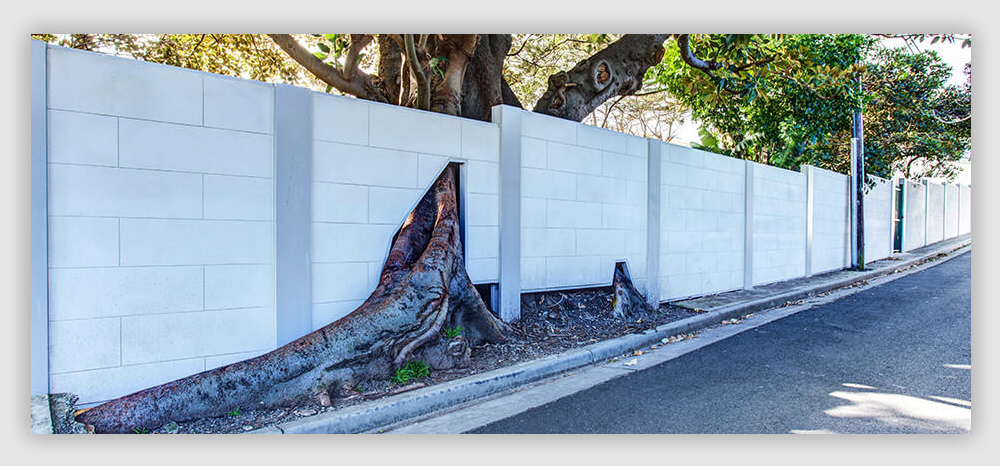
The general rule in this country as to boundary trees – those trees located partly on parcels belonging to more than one owner – is that the landowners have rights to the tree as tenants in common. This means that no owner can do anything to the tree without permission of the other.

There’s a good reason I suggest that owners get good advice from a local attorney. This blog is not legal advice. You pay for legal advice. What I write here is free. You get what you pay for.

What’s more, there are nearly always variations, however slight, among the states. Today’s case is a perfect example. The tree was clearly a boundary tree, but one of the owners, who did not believe he was an owner, had a tree-trimming service sever some roots and branches on his side of the property line. He sued the other owner for the cost of the tree service, alleging that the other guy owned the tree.

Of course, the other guy only owned it to the same extent the aggrieved owner did.  But in New York –unlike elsewhere – a tenant-in-common may trim on his or her side of the property line, a form of self-help that is consistent with the Massachusetts Rule but inconsistent with what everyone else says a tenant-in-common may do.

Vive la difference!

Ahmed v Zoghby, 63 Misc. 3d 866, 98 N.Y.S.3d 391 (City Ct. Middletown, NY, 2019). A large tree straddled the property line separating Shafi Ahmed’s property from that of Allen Zoghby. Allen complained that the tree’s roots were extending under and pushing through a portion of his driveway. Additionally, branches of the tree overhung his property and dropped leaves and other debris onto his roof.

Shafi produced evidence that the tree straddled the property line, that his insurance company had ordered him to fix the heaved concrete, and that leaves and twigs fell on his roof. He also produced estimates from two companies to repave the driveway, including severing the tree’s roots. Shafi eventually hired a third contractor, Max Landscape LLC, for $2,950.00 to do the work.

Allen testified that he had the entire tree (including the overhanging branches) trimmed 8-10 years before. He did not know if the tree was on his property or Shafi’s property, but he believed it straddled the property line between the two properties. Allen showed that he, too, had cracked driveway pavement.

Shafi bought his residence in December 2004. Allen bought his place in October 2002 and sold it in 2018.

Shafi sued Allen for maintaining a private nuisance, seeking damages and an order that the tree be removed.

Held: It is the long-standing rule in New York that a tree is wholly the property of him upon whose land the trunk stands. However, if a tree straddles the line between two properties, the owners of each property own the tree as tenants in common. Accordingly, the Court held that Shafi could not sue Allen for a private nuisance. Even if he could, Shafi had not proven any real, sensible damage; his action in removing the branches was a self-help action as a co-owner of the tree and was not subject to reimbursement by his neighbor. Finally, a property owner who owned a tree as a tenant in common with his neighbor could not recover damages resulting from the tree’s root system because both parties would be liable for the damage.

The Court noted that a tree is the property of the person upon whose land the trunk stands. But if the tree straddles the boundary line between two properties, the owners of each property own the tree as tenants in common. Where damages are caused by roots from a tree owned by neighbors as tenants in common, neither owner may recover from the other property owner. Rather, each is limited to self-help remedies to cure any such damage on that owner’s property caused by the tree’s roots, so long as that action does not injure the main trunk of the tree.

Overhanging branches, accumulated fallen leaves, branches, and or buds, or cosmetic damage to a garage, or branches and leaves blocking the sun, without proof of actual injury to a person or that person’s property (injury known as “sensible damage”) is not enough to sustain a claim of private nuisance. In a private nuisance context, just as it has been established that a property owner may resort to self-help in the first instance to remove tree roots adversely affecting his land, so it has been held with the removal of overhanging tree branches. Where the parties own as tenants in common, each party is entitled to conduct ordinary clipping or pruning, so long as this does not injure the tree’s main trunk.

Even if this were not so, under CPLR 214(4), actions to recover damages for injury to property must be commenced within three years of the property damage. Shafi paid a contractor to trim the tree in 2013, but did not sue until 2018. Therefore, even if he were entitled to sue, he would be too late.

Beyond that, the Court said, “overhanging branches, accumulated fallen leaves, branches, and or buds, or cosmetic damage to a garage, or branches and leaves blocking the sun, without proof of actual injury to a person or that person’s property is not enough to sustain a claim of private nuisance.” The remedy in such a case, the Court said, is self-help: “Summary abatement by self-help under these circumstances is a sufficient remedy. Just as it has been established that a property owner may resort to self-help in the first instance to remove tree roots adversely affecting his land, so it has been held with the removal of overhanging tree branches… Shafi, in essence, resorted to self-help in 2013 by hiring a contractor to remove the branches and leaves, and that self-help was appropriate in this case because of the lack of “sensible damage” from the falling and accumulating leaves.”

Third, even if the branches and leaves caused “sensible damage,” Shafi would not have a right to require Allen to reimburse him for $1,000.00 of expense, because Shafi owned the tree as a tenant in common with Allen. Shafi’s remedy, as a co-owner of the tree as a tenant in common with Allen, would be self-help by trimming the branches, so long as that action does not injure the main trunk of the tree.

– Tom Root

TNLBGray140407

Case of the Day – Friday, December 5, 2025

NO GOOD DEED GOES UNPUNISHED

Have you ever wondered why this blog is named “tree AND neighbor law?” Primarily, it’s because when I set it up, someone had already taken “Google” and “Amazon.” I had to settle for what Internet domains were left.

All right, not really. But you may have noticed by now that there are many tree cases that never would have been brought but for the fact that neighbors were involved, or maybe just N-I-N-Os, “neighbors in name only.”

Today’s case is one of those cases. Reading between the lines, the Fleeces and Kankeys appeared to be congenial next-door neighbors. They had agreed on their property boundary, marked as it was by a common fence. When the fence deteriorated, they agreed to share the cost of replacement.

But when the Kankeys bulldozed the old fence and put in a sparkling new edifice, everything went south. It seems that some scrubby trees along the old fence were destroyed in the process. Suddenly, the Fleeces became the aggrieved parties, and not only did not want to contribute to the fence project, but demanded $17,500 to replace trees that lacked any market value. They apparently were anxious to try out Arkansas’s double and treble damage statutes as well.

The trial court made short work of the Fleeces’ attempted fleece, but the court of appeals grudgingly admitted that yes, replacement value counted (even for trees that lacked any market value). The appeals judges seemed to suggest that it would be (or should be) pretty hard to prove the intent needed for an application of the multiple damage statutes.

Nevertheless, the court seemed to say that no matter Bill Kankey’s good intentions in moving the project along, some of those trees – we don’t know how many – appear to have been boundary trees. Thus, the Fleeces and the Kankeys owned those trees as tenants in common. Neither owner had the right to destroy the tree without the consent of the other.

Fleece v. Kankey, 77 Ark. App. 88, 72 S.W.3d 879 (Ct. App. Ark. 2002). Harlan and Nancy Fleece were Bill and Charlotte Kankey’s neighbors. For some time, they had agreed that an old fence was the boundary line between them. When the fence began falling down, they agreed to share the cost of replacing the fence. Bill and Char bulldozed the old fence separating the properties, along with some trees that stood alongside it.

That’s when the deal fell apart. Harlan and Nancy sued Bill and Char for trespass and for destruction of the trees. The trial court found that, except for two posts that needed to be moved south two feet, the new fence was located in the same position as the old fence. The court held that Harlan and Nancy suffered no loss over the destroyed trees because the trees had no market value.

Harlan and Nancy appealed, arguing that they should have been awarded damages for the replacement value of the destroyed trees. Bill and Char replied that because they had no market value and because the removal of the trees and installation of the new fence actually improved the area, Harlan and Nancy had nothing coming.

Held: The case was reversed and sent back to the trial court for consideration of Harlan and Nancy’s damages due to the trees’ loss.

Arkansas Code Annotated § 18-60-102(a) provides, in part, that “if any person shall cut down, injure, destroy, or carry away any tree placed or growing for use or shade… on the land of another person… the person so trespassing shall pay the party injured treble the value of the thing so damaged, broken, destroyed, or carried away, with costs.” The treble-damages remedy requires a showing of intentional wrongdoing, although intent may be inferred from the carelessness, recklessness, or negligence of the offending party. Less-than-intentional conduct may support double damages under Ark. Code Ann. § 20-22-304, but must be pled in order to give a defendant adequate notice of the remedy he would be confronting.

Harlan and Nancy argued that the statute did not require that a tree have a market value in order for a landowner to be entitled to replacement value damages. Larry Morris, a registered forester, gave expert testimony that 35 trees had been bulldozed on the east/west side and 25 more on the north/south side. He explained that the destroyed trees included Post Oak, Black Oak, and Black Jack Oak. He calculated that the replacement value of the trees was $ 17,531.00.

The trial court dismissed Morris’s testimony because it focused on replacement value, not market value. The trial court held that “in view of the rural nature of this area, and the location of the lane over which the Fleeces travel, it seems absurd to award damages on a replacement estimate because the removal of the old fence and the installation of the new fence has actually improved the area.”

The appellate court found this ruling clearly erroneous, one that suggested that the trial judge failed to consider the number of trees cut down and their replacement value. The appellate court said that the Arkansas rule is that when ornamental or shade trees are injured, the use made of the land should be considered, and the owner compensated by the damages representing the cost of replacement of the trees.

Damages awarded for the loss of a shade tree cannot include both replacement costs and consequential damages, but clearly, replacement costs are a proper measure of damages.

“Because the trial court appears to have relied entirely on the question of market value,” the appeals court said, “we are unable to determine whether the court considered other factors besides the market value in assessing appellants’ damages, including replacement value and the number of trees lost. Therefore, we reverse and remand.”

The appeals court included a final observation, “that it appears uncontroverted that many of the trees were located in the boundary line. Other jurisdictions have held that owners of boundary line trees are considered tenants in common, and neither tenant possesses the right to destroy the commonly held property without consent of the other.”

– Tom Root

TNLBGray140407

Case of the Day – Wednesday, October 15, 2025

MULLIGAN SEASON


I may slip over the border (the border between the U.S.A. and our neighbor to the north) to enjoy turkey and all the fixings. My favorite holiday of the year is Thanksgiving, and thanks to a cultural quirk, our Canadian cousins celebrate it way before we do. Monday may have been Indigenous Columbus Day in the United States, but it’s turkey day in the provinces. Well, turkey and Jiggs’ Dinner and butter tarts.

And then, we get a mulligan, a do-over, on Thanksgiving in 45 days. Life is good. And after that, we’ll get Thanksgiving Day over, and over and over until the leftovers are either eaten or spoil.  As Yogi Berra might have said, today’s case and Thanksgiving dinner will both be déjà vu all over again.

It seems there was trouble in Randolph County, Alabama, up near the Georgia line. The Ledfords had purchased a nice vacation home on a lake, next to a place owned by the Youngs. While the Youngs appreciated the natural setting, the Ledfords were more concerned that nature’s bounty – specifically one large pine tree on the boundary between the Ledford’s land and the Young property – was going to fall on their house. They wanted the tree cut down. The Youngs refused. The matter ended up in court.

Of course, regular treeandneighborlawblog readers know how that should have turned out: if the tree really sits on the boundary line, both landowners have to agree before it can be cut down. The trial court reasoned otherwise. Under the Massachusetts Rule, a landowner can trim parts of a tree that overhang or grow under his or her property, all the way from the center of the earth to the sky. So that meant the Ledfords could cut out half of the tree, the court mused. That would kill the tree, but the court interpreted the Massachusetts Rule to mean that since you’re allowed to hack at the roots and branches of a tree without regard to the damage you cause, then you can take down the whole boundary tree if you like. The trial court gave the Ledfords the go-ahead to take down the tree.

The Youngs appealed, and common sense prevailed. The Court of Appeals explained the proper boundary tree rule, reversing the trial court’s errant ruling. But in so doing, a few judges on the appeal panel wondered aloud (or at least, in the written opinion) why the Ledfords hadn’t argued that they had the right to cut down the pine tree because it was a nuisance. Remember Fancher v. Fagella? One judge went so far as to say that if the record held evidence of nuisance, he would have upheld the trial court, wrong though its reasoning was.

Do we have to spell it out? The trial court was just plain wrong.

Do we have to spell it out? The trial court was plain wrong.

Well, the Ledfords could take a hint. When the case went back to the trial court “for proceedings consistent with this opinion,” as appellate decisions like to say, they asked for a do-over, a second hearing, this one on nuisance. ‘Hold the phone!’ the Youngs cried. ‘The Court of Appeals said the Ledfords lost. The tree stays standing. Game over.’

The trial court gave the Ledfords their mulligan. It ordered a second hearing and afterward found the pine tree to be a nuisance. The Ledfords were told they could cut it down. Again.

The Youngs went back to the Court of Appeals for a writ of mandamus, essentially a request that the Court issue an order telling the trial court that it couldn’t hold the second hearing. The appellate court refused to do so. Applying an obscure rule called the “law of the case” doctrine, the appellate court held that while the trial court was required to apply the ruling the court of appeals had issued, that ruling was just that the Ledfords could not cut down a boundary tree without the agreement of their neighbors. The court of appeals did not say the tree had to remain – just that if it was to be cut down, it couldn’t be on the basis originally articulated by the trial court.

The lessons here? The Ledfords’ attorney should have argued nuisance to begin with. It should have been clear that arguing that his clients could cut down a boundary tree was a loser. Besides, in civil litigation, you argue as many alternative theories as possible to get your clients where they want to end up. Who knows which one will be a winner?

Of course, the Ledfords ended up winning, and the pine tree lost. But as an old judge once cautioned us, you should never dig up more snakes than you can kill. Why buy a second trip to a court of appeals by leaving out an argument, and asking for a mulligan later?

A few too many snakes? The Ledford's lawyer courted procedural trouble.

A few too many snakes dug up here? The Ledfords’ lawyer courted procedural trouble.

Ex parte Young, 79 So.3d 656 (Ala.Civ.App. 2011): The Ledfords owned a vacation house with a pine tree located slightly over 10 feet from Ledford’s house, on the boundary between their property and that of the Youngs. Fearing that [a] strong wind against the tree could cause it to fall on the home and could cause damage to the [house] as well as serious injury to any occupants,’ the Ledfords wanted a court order that they could cut it down.

The Youngs argued that the pine tree was ‘a true boundary line tree’ and contended that it could not be cut down by either property owner without permission of the other. After a hearing in which the Ledfords, the Youngs, and a forester hired by the Youngs all gave testimony, the trial court held that Ledford and her husband could remove the tree at their convenience, taking steps to minimize damage to the Youngs’ lot. The trial court held that because Alabama law let a landowner remove any trees on his or her property up to the property line, and that the right extended to the center of the earth and into the sky, the Ledfords were free to hack into the pine tree up to the property line and then cut from that point down to hell and up to heaven. The Court said that “[s]ince [the Ledfords] unquestionably has the right to remove any portion of the tree that is located on [their] side of the property line and since doing so would likely kill the tree, the Court is of the opinion that [they] should be allowed to completely remove the tree to ensure” that the property and the health of anyone there are protected.

When the case got to the Court of Appeals the first time, it was promptly reversed. Rejecting the trial court’s tortured “center of the earth to the sky” analysis, the appellate court ruled that “[i]n the special case of a boundary-line tree, … each adjacent landowner has ownership rights that cannot be trumped by the other’s desires in the manner suggested by the trial court’s judgment” and that the Ledfords – contrary to the trial court’s judgment – could not properly “‘cut into the tree to the property line and then cut from that point to the center of the earth and into the sky'” without incurring liability to the Youngs.

But the appellate court went a little further. In a concurring opinion, two of the judges on the appellate panel observed that the action had been argued on the basis of the Ledfords’ contention that they were entitled to remove the boundary-line tree at issue merely because its trunk was located in part on their property. The judges noted that whether the “boundary-line tree at issue in this case constituted a nuisance for which an exception to the general rule set forth in the main opinion might apply” had not been litigated. A third judge on the panel said that had the record contained evidence indicating that the tree at issue posed a danger to the Ledfords’ house,” he would have voted to affirm the judgment instead of reverse it.

After the appellate judgment issued, the Ledfords asked the trial court for another hearing to consider whether the pine tree was a nuisance. The Youngs argued that the appeals court had decided in their favor, and the case should be closed. But the trial court had another hearing, and afterward it decided that the tree was a nuisance and that the Ledfords could remove it on that basis.

The Youngs filed a petition for a writ of mandamus, asking the appeals court to order the trial court to enter judgment for them and end the proceeding.

Held: The Ledfords could cut down the tree. A court will issue a writ of mandamus only when the petitioner has a clear legal right to the order sought; the respondent has an imperative duty to perform, accompanied by a refusal to do so; there is no other adequate remedy at law; and the court has jurisdiction of the court.

Mulligan140206Here, the Court of Appeals said, the only real question was whether the trial court had the right to hold a second trial in this matter. The Youngs contended that the prior appellate court’s decision was final as to all matters before it and that the trial court, after that initial appeal, was not allowed to hold another hearing and take additional testimony without permission of the appellate court to do so. The court of appeals agreed with that statement of the law but said that only the particular issue that had formed the basis of the trial court’s judgment – whether Ledfords could unilaterally remove the boundary-line tree simply because the majority of it was located on their side of the common boundary – was addressed. Based upon that conclusion, the court of appeals had reversed the trial court’s judgment letting the Ledfords unilaterally remove the tree,” and remanded the cause “for further proceedings consistent with [that] opinion.”

Because of the limited scope of the trial court’s previous judgment, no one had ruled on whether the boundary-line tree posed a danger to Ledford’s home or amounted to a nuisance. While the prior decision was thelaw of the case,” nothing in the prior opinion limited the trial court from ruling on the nuisance question, which the court of appeals admitted remained open for decision. Deciding to examine the nuisance question did not put the trial court in the position of doing something contrary to what the court of appeals had ordered.

– Tom Root

TNLBGray140407

Case of the Day – Tuesday, September 9, 2025

YOU DON’T KNOW, JACK

Louisiana alone among the fifty states has a diverse (some might say muddled) legal history. Due to its heritage of French ownership for 81 years, then Spanish ownership for 38 years, and finally French for a few more (until Thomas Jefferson bought the place), Louisiana law between private parties, principally contracts and torts, is based on French and Spanish codes and ultimately Roman law, with only a few common law influences.

Rather than relying on stare decisis and law by accretion – that is – judicial decisions on real conflicts following prior cases and in some cases expanding on the principles that controlled the resolution of the conflicts, Louisiana has a comprehensive civil code, sort of like a binding version of Restatement of Torts and Restatement of Contracts.

Not everything is different, however. Louisiana’s laws, like those of other states, occasionally establish legal presumptions. All a presumption does is tilt the scales one way or the other, depending on the public convenience or good. And presumptions are doggone useful: For instance, a child born of a husband and wife living together is presumed to be the natural child of the husband. A person who has disappeared and not been heard from for seven years is presumed to be dead. And the one we all know from TV, an accused person in a criminal proceeding is presumed innocent until proven guilty.

Presumptions can also be useful in tree law. If a tree is growing on the boundary between your property and your neighbor’s, it can be pesky and difficult to prove who planted it, when it was planted, and what arrangements the people then owning the properties may have made regarding the sapling. Some states resolve this issue simply: if it straddles the boundary, it is commonly considered to be owned by both landowners, and neither can interfere with it without the other’s consent. Others make it more difficult: whether the tree is commonly owned depends on whether the neighbors claiming part ownership can jump through hoops to prove they (or their predecessors-in-interest) helped plant or nurture the tree, or treated it as the boundary line.

Louisiana splits the difference: it presumes that if the tree is on the boundary, it is commonly owned. However, either neighbor may rebut that presumption by offering evidence that the tree is not commonly owned.

In today’s case, the plaintiffs – Mark and Catina Jack – were unable to prove that the tree was not commonly owned. They could not show who planted it, when it was planted, or what arrangements had been made. The court declared the presumption to control the case, saying that as far as any evidence to the contrary went, “You don’t know, Jack.”

Jack v. Successions of Albert, 2019 La.App. LEXIS 1512 (La.App. 1 Cir. Sept. 4, 2019):  The Jacks and the Alberts are neighbors. A large oak tree stands on the boundary between their properties. The Jacks complained that the roots of the tree were heaving the concrete in their driveway. The Jacks alleged that the Alberts owned the tree, and demanded that they pay to remove the tree and fix the driveway.

Louisiana Civil Code article 688 gives a landowner the right to demand that the branches or roots of a neighbor’s trees that extend over or into the landowner’s property be trimmed at the neighbor’s expense, provided that the roots or branches interfere with the enjoyment of the landowner’s property. The Jacks sought to recover the costs and expenses to repair the driveway, as well as damages for inconvenience and mental anguish.

At trial, the Jacks offered evidence of the extent of the damage to the driveway. The Alberts, on the other hand, offered the testimony of a surveyor who testified that the tree is located on the boundary between the Jacks’ and the Alberts’ properties. The Alberts argued that under Civil Code article 687, trees on the boundary are commonly owned unless there is proof to the contrary. Article 687 gives an adjoining landowner the right to demand the removal of a tree on the boundary that interferes with the enjoyment of his or her estate, but that owner must bear the expense of the tree’s removal. Based on these articles, the Alberts argued that the oak, located on the boundary of the two properties, is presumed to be the common property of the parties. Because the Jacks offered no evidence to rebut the presumption of common ownership, the Alberts contended, the Jacks must pay to remove the tree and fix their own driveway.

The trial court found for the Jacks, expressing its belief that the tree started growing on the Alberts’ property. The court ruled that the absence of evidence regarding how the tree arrived was irrelevant. Instead, it found that the Jacks’ photographs showed that most of the tree was on the Alberts’ property. The trial judge said he would be “hard-pressed” to find the tree was a boundary tree commonly owned by the Jacks and the Alberts.

Concluding that the oak was originally the Alberts’ tree, the court awarded $8,500.00 damages to the Jacks.

The Alberts appealed.

Held: The trial court holding was reversed because the Civil Code’s presumption that the boundary tree was commonly owned carried the day.

The record showed the tree was already on the boundary when the Jacks bought their property in 2003. The Alberts called Charles St. Romain, a civil engineer, whose testimony was less than stellar. He testified that the tree was “smack dab” on that line, but admitted on cross-examination that it was not really “smack dab” in the middle, and when it was a small tree, it probably was not a boundary tree at all.

But shaky testimony is better than no testimony at all. Under Louisiana law, trees belong to the owner of the soil on which they stand, regardless of their proximity to the property line. A landowner has the right to demand that the branches or roots of a neighbor’s trees, bushes, or plants that extend over or into his property be trimmed at the expense of the neighbor. An adjoining owner has the right to demand the removal of boundary trees, bushes, or plants that interfere with the enjoyment of his estate, but he or she must bear the expense of the removal.

Under Louisiana Civil Code article 687, trees, bushes, and plants on the boundary are presumed to be common unless there is proof to the contrary. Here, the Court of Appeals said, everyone agreed the oak tree is located on the boundary between the Jack and Albert properties. And everyone agreed that the oak tree’s roots had encroached under the Jacks’ driveway, causing damage and thus interfering with their enjoyment of their property. If Civil Code article 688 applied, the Alberts had to pay for the Jacks’ driveway and tree removal. If Civil Code article 687 applied, the Jacks would have to bear their own costs and damages.

The appeals court held that the correct interpretation of the Civil Code 688 assigned the Jacks the burden to prove that the offending tree was located on a neighbor’s property. However, Civil Code article 687 establishes a presumption that a tree located on the boundary between two properties is commonly owned. The section permits the presumption of commonness to be overcome by proof to the contrary, but that placed on the Jacks the burden to convince the trial court that their proposed conclusion is more correct than the presumed one. The presumption does not have any probative value in and of itself, but it does provide the factfinder with a conclusion in the absence of proof to the contrary.

If there is no proof to the contrary and the presumption of commonness stands, an adjoining landowner may have a common tree removed from the property but must do so at his or her own expense. The location of the oak tree on the boundary between the Albert and the Jack properties triggered Civil Code article 687′s presumption that the tree is a common one. “The Jacks,” the Court said, “who are claiming that the tree on the boundary is not common but is in fact owned by the Alberts, bore the burden of offering proof sufficient to overcome the presumption that the tree is commonly owned.”

The trial judge was wrong. The absence of evidence as to how the tree got there was very relevant. There is no evidence, the appeals court ruled, as to who planted the oak or when it was planted. While a photograph shows that years ago, a young tree may have been solely on the Alberts’ property, “the photograph is not conclusive since there is no expert testimony presented by the Jacks as to the exact location of the property line in said photograph. The only established fact is that the tree in question is located on the property line. Therefore, it is presumed to be common under Civil Code article 687.

The Jacks had an opportunity at trial to present proof that the tree is not a common one, but they failed to do so. Because the tree is presumed to be common, and the presumption of commonness was not rebutted by the Jacks, the Jacks and the Alberts are deemed to be co-owners of the tree.

– Tom Root

TNLBGray140407

Case of the Day – Thursday, May 15, 2025

ALL YOUR TREE ARE BELONG TO US

If you were not following Internet culture (as oxymoronic as that phrase may be) back in 2001, you might not recognize the badly-mangled taunt “All your base are belong to us,” derived from the poorly-translated Japanese video game, Zero Wing. It became a cult classic in 2001 (and still endures). The minor-key melodious strains of the techno dance hit Invasion of the Gabber Robots can be heard in some of the goofier corners of the ‘Net – and there are plenty of those – to this very day.

allyourbaseIn today’s case, an elm tree stood on the boundary line between the Ridges and the Blahas. One can almost imagine Mr. Blaha — who was tired of the mess the elm made every fall — announcing to the tree “you are on the way to destruction!” But the problem was that, contrary to Mr. Blaha’s belief, all the tree’s base did not belong to him, at least not just to him. Rather, the base of the tree straddled the property line between the Blaha homestead and the Ridges’ house.

Unlike the Colorado decision of Rhodig v. Keck, the Illinois court did not require that the plaintiff show who had planted or cared for the tree. Instead, its analysis was simple: the tree grew in both yards and thus, the Ridges had an interest in the tree, as did the Blahas. This made the landowners “tenants in common,” and prohibited either from damaging the tree without permission of the other.

The Illinois view, which is the more common approach than Colorado’s “husbandry” test, is the prevailing view in the United States. In this case, the Court issued an injunction against Mr. Blaha prohibiting him from cutting down the tree. For great justice.forgreatjustice

Ridge v. Blaha, 166 Ill.App.3d 662, 520 N.E.2d 980 (Ct.App. Ill. 1988). The Ridges sought an injunction against the Blahas to prevent them from damaging an elm tree growing on the boundary line between their respective properties. After living with the elm for many years, the Blahas tired of the tree’s unwanted effects and decided to remove it with the help of an arborist. The Ridges were not consulted, however, and when arborist Berquist came to remove the tree, plaintiffs objected that the tree belonged to them and that they did not want it destroyed.

Growing_TreeThe evidence showed that the base of the tree extended about 5 inches onto the Ridges’ property, but that the tree trunk narrows as it rises so that at a height of 1.25 feet, the trunk is entirely on Blahas’ side of the line. Photographs were also introduced which showed the tree interrupting the boundary line fence. The trial court found that no substantial portion of the elm’s trunk extended onto the Ridges’ property and that, as such, they did not have a protectable ownership interest in the tree. The Ridges appealed.

Held: The Ridges had a protectable interest. The Court held that the fact that a tree’s roots across the boundary line, acting alone, is insufficient to create common ownership, even though a tree thereby drives part of its nourishment from both parcels. However, where a portion of the trunk extends over the boundary line, a landowner into whose land the tree trunk extends had a protectable interest even though the greater portion of the trunk lay on the adjoining landowners’ side of the boundary. That interest makes the two landowners tenants in common and is sufficient to permit the grant of an injunction against the adjoining landowner from removing the tree.

Move Zig.

– Tom Root

TNLBGray140407

Case of the Day – Thursday, January 9, 2025

THE HORSE HAS BOLTED

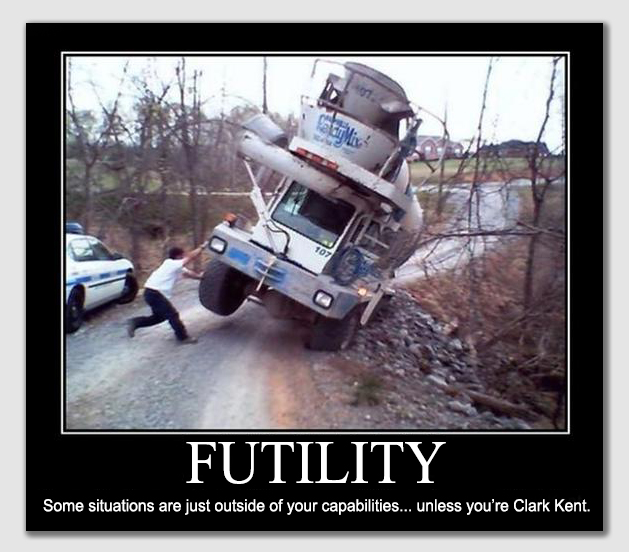
Anyone wanting to witness an exercise in futility only has to examine some of the laws passed by Congress, largely meaningless gestures intended to prevent something that has already happened.

I give you TSA for example. To be sure that no one takes a utility knife (the uninitiated call them “box cutters”) onto a  plane again after 9/11, TSA makes grannies remove their shoes and uses machines that reveal your bodily imperfections to the world. This is little more than “security theater,” intended to make us feel safer despite the government’s own evidence that TSA checkpoints are weapons sieves.

In the tree world, after the Emerald Ash Borer was already hopping amok across North America, states responded with roadside signs warning people against transporting firewood.

The Emerald Ash Borers, of course, being illiterate insects, did not read the signs. Rather, the little green destroyers continued their march unimpeded.

Sure stopped those Emerald Ash Borer critters…

When Frances Levine’s neighbor Ida decided to hack down a boundary tree, Frances got a restraining order stopping the butchery. By then, the tree was pretty much done for. The trial court, recognizing that the tree was much too far gone, declined to issue a permanent injunction against further tree removal. The tree was already beyond repair: issuing an injunction against killing it now would be futile.

Frances would not take ‘no’ for an answer… until she heard it two more times from two higher courts.

What Ida did was not right, and could get Frances some damages. But the act was done, and an order prohibiting the act would not unring the bell.

Levine v. Black, 312 Mass. 242, 44 N.E.2d 774 (Supreme Ct. Mass. 1942): A large tree was located on the property line between Frances Levine’s lot and a parcel owned by Ida Black. The boundary line ran just about through its center, which was only about two feet from Frances’ southerly wall. It was from 50 to 60 feet high and in “a reasonably healthy condition” before Ida began chopping the branches.

Ida was looking to build a new repair shop extending to the northerly boundary of their land, and finding the tree in her way, began to cut it down without Frances’ consent. Ida intended to remove the entire tree. She cut and carried away branches and limbs, some of which extended over Frances’ residence.

When Frances yelled at Ida about the arboreal butchery, Ida stopped, and thereafter a court issued a restraining order. The trunk of the tree is still standing, but the upper part has been reduced to two denuded limbs, the highest point of which is about forty feet from the ground. , “and there is an entire absence of branches and foliage.” On the south side of the trunk, there is a large scar resulting from the removal of the bark by chopping it with an axe.

Frances sued, but the trial court dismissed the action. She appealed. The appellate court ruled that both parties equally owned the tree, but Ida had damaged the tree so badly that an injunction would have served neither party. The court held that the tree would never grow back, and therefore it would have been more beneficial to both parties to have the tree chopped down. Thus, the court of appeals affirmed the trial court decree dismissing  Frances’ action for a permanent injunction to prevent Ida from cutting down a tree.

Frances appealed to the Supreme Court of Massachusetts.

Held: The court of appeals was right. The damage had been done, and an injunction should not issue.

The Court observed that where the trunk of a tree stands wholly on the land of one property owner, he is deemed the owner of the entire tree. This is true despite the fact that the Massachusetts Rule gives his or her neighbor the right to cut off limbs and roots which invade his premises. But where, as in the present case, the trunk stands across the boundary line, it has generally been said that under these circumstances both parties own the whole tree as tenants in common.

In other cases, the Court admitted, it has been held that each party has title to only that part of the tree on his side of the line but has a right to prevent his neighbor from so dealing with his part as unreasonably to injure or destroy the whole. But here, resolving inconsistencies in the two approaches is not necessary. Under either view, “it is difficult to see why either owner should have any less right to cut off branches and roots than he would have if the trunk stood entirely upon the other’s land.”

But this case, the Court ruled, it is unnecessary to determine whether “the value of a tree to one owner is to be weighed against the detriment to the other owner of being unable to use all of his land for building purposes.” That is because the overarching principle applicable here is that relief by injunction will not be granted where the granting of it would be but a futile gesture and would serve no useful purpose in protecting any substantial right or interest of the party applying for it.

Before this suit was brought, the Court said, “the tree had been reduced to a condition in which it could be of no benefit to the plaintiff from the viewpoint either of beauty or of utility. It was and still is a bare skeleton consisting of a trunk and two limbs, with no other branches or foliage whatever. There is nothing to show that the lapse of any reasonable period of time will restore it to attractiveness or value. Its removal would now appear to be advantageous to both parties and harmful to neither.”

The Court did not intend to reward Ida’s trespass, Rather, it simply recognized reality, that to deny a permanent injunction under these circumstances “is merely, in dealing solely with the question of injunctive relief, to take a practical view of an existing situation for which an injunction can afford no genuine remedy.”

– Tom Root

TNLBGray140407