BAMBOO-ZLED
The common-law rules governing rules on matters like encroachment can, of course, be modified by meddling legislatures. For example, we all know that if your neighbor’s tree encroaches above or below the soil onto your yard, you have the right of self-help and no more. You do not have the right to force your neighbor to correct things unless the encroachment causes “sensible harm,” and indeed becomes a nuisance.
 The law recognizes negligence per se, which is essentially presumed negligence because you broke the law. Likewise, the law can declare that some things constitute nuisances for no better reason than the law says they are.
In Connecticut, where the state has yet to meet a tax or regulation it doesn’t like, there is a statute that declares running bamboo a nuisance. It falls on the homeowner to prevent his or her running bamboo from running into someone else’s yard, whether the encroachment causes harm or not. If you fail to control your running bamboo in accordance with the statute, you are negligent per se, and the bamboo constitutes a statutory nuisance.
Whoever imagined that running bamboo was such a problem in temperate Connecticut? Well, the legislature for one. Generally, it seems to be a common enough problem, with running bamboo making kudzu propagation look like a bonsai tree by comparison.
Whatever the reason Connecticut may have had for enacting a law directed specifically at running bamboo, it seemed to come in handy for Jean Walden when a neighbor’s running bamboo ran into her backyard. She sued, seeking an order requiring her neighbor to remove it.
The neighbor, Nationstar, a mortgage company, filed a motion seeking to apportion the damages between it and Jean. Jean was not much interested in talking about whether she was negligent: as far as the statute and Jean were both concerned, Nationstar let the bamboo encroach, and it was solely liable. Apportionment is premised on the notion that it takes two to tango, an approach that Jean, who considered herself blameless, was not interested in at all.
 What ensued was an “angels-on-the-head-of-a-pin” kind of thing, where the court wrestled with whether a negligence action could be found anywhere within Jean’s complex complaint. A negligence claim would justify apportionment. A claim that did not sound in negligence would not.
Walden v. Nationstar Mortgage, LLC, Case No. KNLCV176030465S (Superior Ct. Connecticut, November 27, 2017) 2017 Conn. Super. LEXIS 4963. Nationstar controlled property which contained a colony of running bamboo that had grown beyond the property line into the Walden Property. Jean Waldon had warned Nationstar on a number of occasions to control the bamboo colony so that it would not invade her yard. Nevertheless, Nationstar’s uncontrolled colony of bamboo has crossed onto the Walden Property and started to take over the yard.
Jean hired a lawyer who knew how to plead a complaint. Her suit claimed Nationstar was negligent because it had a duty not to allow the bamboo to encroach onto Jean’s land, but failed to control the bamboo. She also claimed the bamboo colony physically invaded her property without her permission, she had asked Nationstar to do something, but it had not. She complained its failure to act was intentional. Jean also included two counts claiming Nationstar violated Connecticut General Statutes § 22a-16 and § 22a-381e (part of the “Connecticut Environmental Policy Act,” or “CEPA”), creating “an unreasonable harm and future threat of harm to the public trust in the natural resources of the state.” Finally, she alleged that the migration of the bamboo colony unreasonably interfered with the peaceable use and enjoyment of her property.
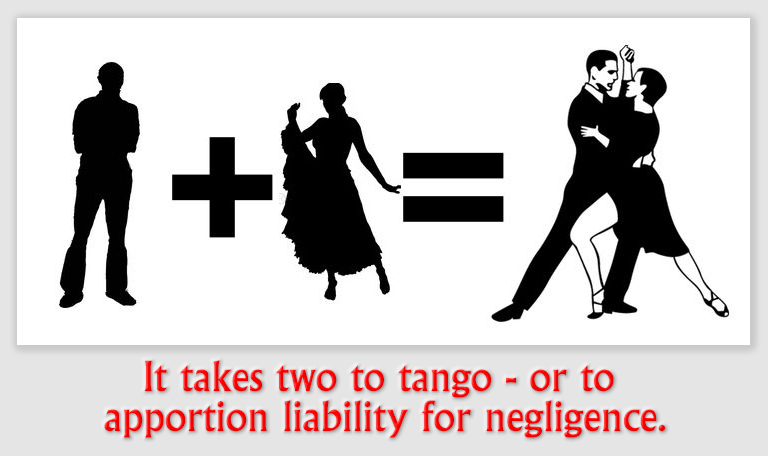 Nationstar filed a complaint for apportionment, asking that responsibility for the negligence be apportioned between itself and Jean. as the parties responsible for negligence, under General Statutes § 52-572h. Jean quickly amended any mention of “negligence” out of the complaint, and then opposed the apportionment request on the grounds that Nationstar was maintaining a nuisance and that she should not share in any blame for it. Apportionment, she argued, was improper.
Held: Nationstar is entitled to its claim for apportionment and to responsibility for the damage apportioned between it and Jean.
Jean argued that General Statutes § 52-572h – the apportionment statute – does not apply to a violation of the CEPA because such a violation is not based on negligence, and the apportionment complaint cannot rest on any basis other than negligence. The statutory cause of action of the running bamboo, Jean said, is based on nuisance and not negligence. Nationstar retorted that a defendant found liable under CEPA will be deemed negligent by virtue of the violation because such a violation is negligence per se.
General Statutes § 22a-16 provides that “any person… may maintain an action in the superior court… for declaratory and equitable relief against… any person, partnership, corporation, association, organization or other legal entity, acting alone, or in combination with others, for the protection of the public trust in the air, water and other natural resources of the state from unreasonable pollution, impairment or destruction…”
That is what Jean is doing, the Court said. She was enforcing General Statute § 22a-381e(b), which provides in relevant part that “[n]o person who… allows running bamboo to be planted on his or her property shall permit such bamboo to grow beyond the boundaries of his or her property.” General Statutes § 22a-381e(c) provides in relevant part that “no person shall… allow running bamboo to be planted on his or her property at a location that is forty feet or less from any abutting property…”
 Negligence per se, the Court said, “serves to superimpose a legislatively prescribed standard of care on the general standard of care… A violation of the statute or regulation thus establishes a breach of duty when (1) the plaintiff is within the class of persons intended to be protected by the statute, and (2) the injury is the type of harm that the statute was intended to prevent.” Connecticut courts treat a statutory violation as negligence per se in situations in which the statutes… at issue have been enacted for the purpose of ensuring the health and safety of members of the general public.”
The CEPA was enacted to enable people to seek redress in court when someone is polluting the environment, the Court said. Plus, the Appellate Court has held that “§ 22a-16 imposes on the defendants a standard of care, the violation of which constitutes negligence per se.” The two-pronged test applied to establish negligence per se is: (1) that the plaintiff was within the class of persons protected by the statute; and (2) that the injury suffered is of the type that the statute was intended to prevent.”
Here, Jean alleges damage to her property caused by bamboo. She is within the class of persons protected by the anti-bamboo statute. Furthermore, the Court said, the alleged injury suffered by the plaintiff is of the type that CEPA intended to prevent – in this case, the continued violations of the running bamboo going beyond Nationstar’s property and onto Jean’s abutting property.
Jean also argued that the apportionment statute, General Statutes § 52-572h, applies exclusively in negligence cases. Her claim, she said, for nuisance, alleging common-law nuisance and statutory nuisance under General Statutes § 22a-318e(f). Nationstar said that a cause of action for nuisance may be based upon a defendant’s negligent misconduct, and thus, apportionment was permissible.
The Court disagreed with Jean’s alleged statutory nuisance. General Statutes § 22a-318e(f) provides that allowing running bamboo to grow beyond the boundaries of a parcel of property “shall be deemed to be a nuisance,” but Jean just argued in the complaint that the bamboo colony “unreasonably interferes with the peaceable use and enjoyment by the plaintiff of the Walden Property.” That, the Court said, sounds like common law nuisance.
 A common-law nuisance claim has four elements: (1) the condition complained of had a natural tendency to create danger and inflict injury upon person or property; (2) the danger created was a continuing one; (3) the use of the land was unreasonable or unlawful; [and] (4) the existence of the nuisance was the proximate cause of the [plaintiff’s] injuries and damages. While there are some similarities between a public and a private nuisance, the two causes of action are distinct. Public nuisance law relates to the interference with a public right, such as public health and safety. Private nuisance law, on the other hand, concerns conduct that interferes with an individual’s private right to the use and enjoyment of his or her land.
Jean was alleging that the bamboo colony unreasonably interfered with the peaceable use and enjoyment of her land; she does not allege interference with a public right. Therefore, the Court said, the nuisance she alleged is a common-law private nuisance. A common-law private nuisance cause of action must show that the defendant’s conduct was the proximate cause of an unreasonable interference with the plaintiff’s use and enjoyment of his or her property. The interference may be either intentional or the result of the defendant’s negligence.
Thus, a common-law private nuisance can be based on negligence, and Nationstar’s complaint to apportion the liability can go forward.
– Tom Root