Case of the Day – Friday, September 5, 2025

DESPITE THE SPITE, IT’S THE WRONG HEIGHT

Over the next few days (with time off for the weekend), we’re going to talk about “spite fences,” structures one neighbor erects because he or she does not like the other neighbor. Often creative, always ugly, spite fences are traditionally not prohibited by common law (the court-made rules of conduct that have evolved over the centuries). For that reason, just about all states have statutes that address the problem.

The law in the 49 common-law states (sorry, Louisiana, not you) disfavors statutes that are contrary to common law. Anyone who has ever watched a state legislature in action may understand the origin of this common-sense presumption. Flowing from the presumption is the general rule that when a statute is contrary to common law, it must be interpreted strictly and literally.

In today’s case, one neighbor accuses another of anti-Semitism, general nastiness, and such animus that the neighbors have teamed up with the homeowners’ association to run the plaintiff neighbor out of town. No one knows whether the plaintiff’s neighbor’s allegations are correct: in fact, if seven decades have taught me anything, it has taught me to look very skeptically at such broad-brush allegations. Usually, the more outrageous the alleged conduct, the less credible the allegation.

At this point in the lawsuit, the Court assumes that the plaintiffs’ allegations are entirely correct and provable. It asks, in deciding the defendants’ motions to dismiss, whether the complaints, if true, state a claim that would justify granting the plaintiffs the relief they seek.

Here, most of the plaintiffs’ complaints didn’t hold water. We’re going to focus on only one of those beefs, the count on spite fences.

Small v. Anchorage Homeowners Ass’n, LLC, Case No. 1:18-cv-01605 (S.D.Ind. March 21, 2019), 2019 U.S. Dist. LEXIS 47842; 2019 WL 1317636. Art and Lynette Small bought a condo in a development overseen by the Anchorage Homeowners Association. They bought the condo through a limited liability company they had set up, Executives LLC. Their neighbors were Trudy and Brad Johnson.

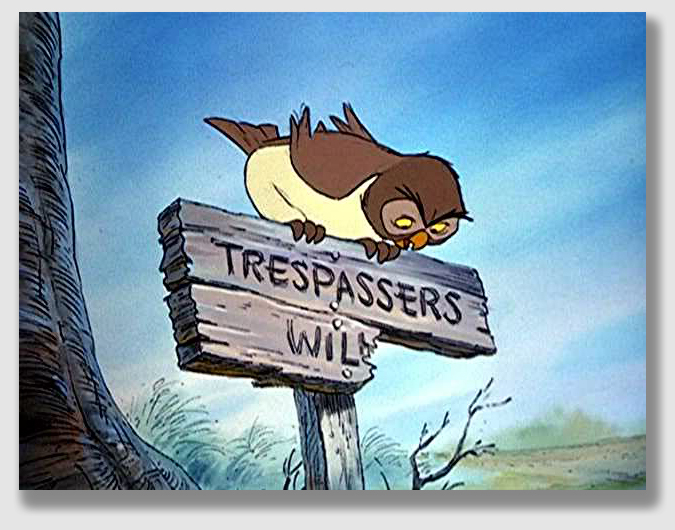
The Smalls’ overarching complaint was that Trudy and Brad embarked on a campaign to force the Smalls out because the Johnsons thought (1) the Smalls were Jewish; and (2) the Smalls were renters, not owners. It must be a doozy of a complaint, alleging as it does all manner of slights, humiliations and vigilantism, all intended to run the Smalls out of the development. But the count we’re focusing on today is the allegation that the Johnsons erected a “spite fence.”

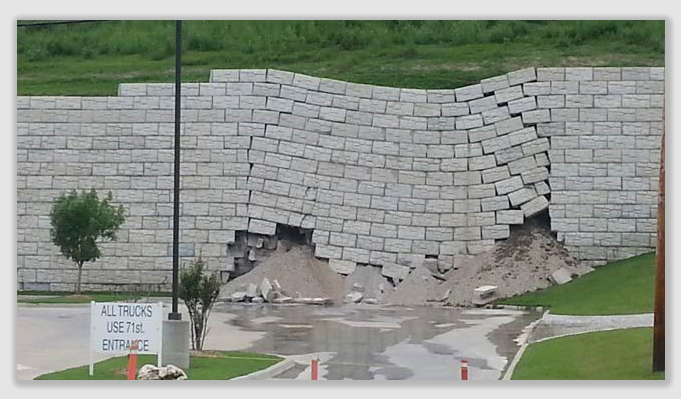
The Smalls sued the Johnsons and the Homeowners Association in federal court, alleging a number of federal claims. In such a case, under what is known as “pendant jurisdiction,” a federal court may also hear state claims arising from the same facts. One such state claim brought by the Smalls was that in May 2016, Trudy accused Art “of being a racist, of engaging in Fair Housing Act violations, and repeatedly called him an extremely offensive anti-Semitic slur” – specifically, “Jew Face” – in front of his friends and potential clients. A few days later, the Smalls alleged, the Johnsons installed a “large wooden wall” which obstructed the Smalls’ view and interfered with their enjoyment of their property. The Smalls claimed the Homeowners Association approved the wall despite the fact that it did not comply with the Homeowners Association and Hamilton County restrictions.

The Johnsons and the Homeowners Association both moved to dismiss the count.

Held: The claim that the Johnsons built a “spite fence” was dismissed.

Under Indiana Code 32-26-10-1 – the state’s “spite fence” provision – a “structure in the nature of a fence unnecessarily exceeding six (6) feet in height, maliciously: (1) erected; or (2) maintained; for the purpose of annoying the owners or occupants of adjoining property, is considered a nuisance.” An owner or occupant who is injured in their comfort or enjoyment of their property that adjoins such nuisance may bring an action for: “(1) damages in compensation for the nuisance; (2) the abatement of the nuisance; and (3) all other remedies for the prevention of a nuisance.” Indiana Code 32-26-10-2.

Common law recognizes no such right, and thus, the statute, which is “in derogation of the common law… [must] be strictly construed.” If the fence in question does not meet the strict requirements of the statute, the Court held, it is merely subject to the common law of nuisance, under which a fence is only a nuisance if it encroaches on the adjoining landowner’s property.

The necessary elements of a claim under the spite fence statute are that: 1) the fence must exceed six feet, 2) the excessive height must be unnecessary, and 3) the fence must have been maliciously erected to annoy adjoining property owners or occupants. No matter how malicious or excessive a fence is, the Court said, it does not violate the statute if it is six feet or less in height. On the other hand, a maliciously erected fence that is more than six feet tall is not cured by a local permit because state law trumps municipal ordinances and regulations.

Here, the Court ruled, the Smalls’ complaint is facially deficient because it fails to allege the wall exceeds six feet. In fact, the complaint does not include any height allegation, only that the wall comes to roughly 13 feet from the Smalls’ front porch.

“Thus,” the Court held, “the allegations fail to meet the statutory height requirement or the encroachment requirement of common law nuisance. For this reason, [the Smalls’] claim is dismissed.”

– Tom Root

TNLBGray140407

Case of the Day – Thursday, September 4, 2025

MRS. PALSGRAF GOES TO THE CITY BY THE BAY

We all remember Mrs. Palsgraf, the unfortunate matron injured at the Long Island railroad station.  Mrs. Palsgraf was waiting for a train, standing some distance from the platform. On the platform, an overzealous passenger tried to jump aboard a moving train. He lost his balance but was kept from falling by two platform guards, one of whom grabbed his arm while the other pushed him from behind.

The passenger was carrying an unlabeled box under his arm. The box fell to the tracks, some fireworks inside the unmarked box detonated, and the loud noise, somehow (no one ever really explained how), caused a set of scales standing by the station to fall on Mrs. Palsgraf.

Quick, who gets sued? Why, Long Island Railroad, of course. Not because of some obscure legal theory, but rather for the best reason of all: the LIRR had a lot of money. The guards and the passenger did not.

Every law student knows what happened. Mrs. P won $6,000 at trial, which was upheld on appeal. But then the case reached the New York Court of Appeals (the highest court in the Empire State). Renowned jurist Benjamin Cardozo wrote a 4–3 opinion that remains a staple of tort law, taught to law students nearly a century later. Cardozo ruled that the LIRR guards were not negligent because, in helping the man board, they had no duty of care to Mrs. Palsgraf because injury to her was not a foreseeable harm that could flow from aiding a man with a package. Thus, the conception that tort liability can only occur when a defendant breaches a duty of care the defendant owes to a plaintiff was born.

Palsgraf’s an amusing case, but then it’s all fun and games until someone gets hurt.  And someone sure did in today’s case, handed down by the U.S. Court of Appeals for the Ninth Circuit.

In what the Court called the events a “Rube Goldbergesque system of fortuitous linkages,” the life of a young woman was snuffed out in San Francisco by the denouement of a string of events that started with a Bureau of Land Management ranger being reassigned from the Mexican border to Montana.

Steinle v. United States, 11 F.4th 744 (9th Cir., August 24, 2021).  John Woychowski worked as a ranger for the Bureau of Land Management, part of the United States Department of the Interior, assigned to El Centro, California. While traveling to Montana by private car, John and his family stopped to enjoy a warm San Francisco night in June 2015. John parked on the street along the Embarcadero, a waterfront tourist mecca, and the family walked to a restaurant.

When they returned, they discovered that in San Francisco, “BMW” means “break my window.” The tailgate window was broken and some property was gone.

Unfortunately, the property included a nondescript backpack that contained John’s government-issued service weapon, a holstered Sig Sauer P239. The pistol did not have the BLM-issued trigger lock on it.

Four days later, a homeless undocumented immigrant named Juan Lopez-Sancherz found the handgun about a half mile from the break-in, wrapped in rags and sitting on a bench. He picked it up and fired it. The bullet ricocheted off the ground, striking and killing Kathryn Steinle. 

The political universe had a field day, Juan was an illegal immigrant, having been deported five times and with seven prior felony convictions. Not a nice guy. The kind of guy President Trump likes to talk about. The gun control people went nuts, the anti-immigrant people really went nuts, and Juan was painted as criminal excrement for whom the death penalty was too merciful a fate. When the dust settled and common sense prevailed, a jury acquitted Juan in 2019 of murder, manslaughter, and assault, and his conviction for being a felon in possession of a firearm was overturned soon after. Juan’s crime, it turned out, was gross stupidity, something that is not yet a felony.

No one knows who stole the pistol, how many people possessed it in the four days between June 27 and July 1, who took the pistol out of the holster and wrapped it in a shirt or rag (or why they did so), or how the pistol came to be left near the bench where Juan found it. But Kate’s family had to sue someone (and I won’t judge them for that, as they struggled with a horrific and unexpected loss), so they sued everyone. They sued Juan, they sued San Francisco (for being a sanctuary city that had let Juan wander free), and – of course – sued the federal government under the Federal Tort Claims Act.

The Steinles alleged that John was negligent in failing to secure his firearm properly and in leaving it, loaded, in an unattended vehicle in an urban location where the firearm could be easily stolen. The federal district court entered summary judgment in favor of the United States, ruling that John owed no duty to Kate under California law and that his actions were not a proximate cause of her death.

Kate’s family appealed.

Held, the government was not liable because John was not negligent.

Under the FTCA, the United States may be held liable for “personal injury or death caused by the negligent or wrongful act or omission of any employee of the Government… under circumstances where the United States, if a private person, would be liable to the claimant in accordance with the law of the place where the act or omission occurred.” 28 U.S.C. § 1346(b)(1).

So far, so good. But in California, to prove negligence, a plaintiff in a negligence suit must demonstrate that the defendant had a legal duty to use due care, a breach of such legal duty, and the breach as the proximate or legal cause of the resulting injury.

Legal causation has two components: cause in fact and proximate cause. Because the factual causes of an event may be traced far into the past, the Court ruled, the law imposes additional limitations on liability. Those additional limitations relate not only to the degree of connection between the conduct and the injury, but also to public policy. The doctrine can bar liability even when the defendant’s conduct is a factual cause of harm, depending on the manner in which the injury occurred or the extent to which the ultimate harm is attenuated from the breach of duty alleged.

Here, the connection between John’s storage of the pistol in his vehicle and Kate’s death “is so remote that, as a matter of law, his acts were not the proximate or legal cause of the fatal incident,” the Court held. “Several events—many of which remain unknown—intervened after John left the loaded pistol in his vehicle: (1) someone broke into the locked vehicle; (2) someone stole a seemingly innocuous backpack; (3) someone found a pistol in that backpack; (4) someone removed the pistol from its holster, then wrapped it in a cloth and abandoned or lost it a half-mile away; (5) Lopez-Sanchez picked up the firearm, four days later, and fired it, apparently aimlessly; and (6) the bullet ricocheted off the ground and struck Kate.”

There were no winners in this one. Kate is dead, her parents grieve, and Juan served five years before being acquitted and deported yet again.

No winners. Except for the United States government, which did not have to pay. And BLM Ranger John Woychowski. He got promoted.

– Tom Root

Case of the Day – Wednesday, September 3, 2025

REALITY BITES

Sure, you can get your land contract out of a box, and save a few bucks. Just ask Mr. Jackson how that's likely to work out for you ...

Sure, you can get your land contract out of a box, and save a few bucks. Just ask Mr. Jackson how that’s likely to work out for you …

Sometimes, reality bites. Not just the movie, but real life. Ask Nestle’s former CEO Laurent Freixe. Or Rudy Giuliani. Or even the Coldplay couple. It especially bites when the very steps a prudent man takes to protect himself become the evidence on which a court relies to put him in the jeopardy he sought to avoid.

So it was with Mr. Jackson. Mr. J simply sold some land by land installment contract (also known as “contract for deed” or installment sale agreement) to Mr. Smith. Pay attention, because land contracts have become much more popular. A land installment contract lets a property owner safely sell land with seller financing. The buyer puts down a small (sometimes no) down payment, with an agreement to make monthly payments for a period of time until the purchase price has been paid. At that time, the seller (sometimes called the “vendor”) transfers the land to the buyer (called the “vendee”).

Once in a blue moon (still nine months away), a land installment contract is necessary for the completion of a real estate deal between two parties of equal bargaining power and sophistication. We recall handling one like that once in our legal career. But only once. Land installment contracts are almost always not very good deals – not just because the terms are oppressive or one-sided (although they often are) – but because the contracts represent transactions that are only financing of last resort. The vendees are often scarcely able to handle the payments, let alone able to manage the rigors of home ownership. In our experience, many if not most land installment contracts fail, resulting in evictions or foreclosure (depending on the state laws).

Perhaps because of the likelihood that the property will fall into disrepair or the vendee will default, many vendors want land contract documents that provide them with as much control over their properties as possible. This is understandable. What is less understandable is that sometimes, the more control a vendor reserves for herself, the less safe she becomes.

In today’s case, the vendor understandably required the vendee to buy insurance on the place that named the vendor as a named insured. That made sense. After all, the vendee only had paid about 17% of the purchase price, meaning he didn’t have a very big stake in the place. But the vendor wanted to be sure the vendee did what he was supposed to, so the vendor drove by the place on a nearly daily basis, and he bought insurance for the place himself. The vendee reimbursed him, but the arrangement was at odds with what the contract required. Partly because the vendee knew how closely the vendor was watching the place, he checked with the vendor about alterations and modifications before he undertook them.

When a 10-year-old boy riding a bike was struck and killed, the boy’s mother blamed obstruction in sight lines caused by untrimmed trees on the property. After a suitable period of mourning, she sued. She went after not only vendee Smith but after Mr. Jackson, too. He was the guy who really controlled the property, she claimed. The trial court disagreed and dismissed Jackson from the suit.

The Court of Appeals reversed. The facts that the vendee had paid so little and Mr. Jackson had cared so much about the condition of the property — especially because he had gotten his own insurance even though the agreement dictated that Smith would do so — suggested to the Court that there was a real question of fact as to whether Mr. Jackson had control of the premises. He just might be to blame, the Court suggested, for the tree that had never been trimmed and which had allegedly obscured the young boy’s view of oncoming traffic. The Court returned the case to the trial court for a jury’s consideration.

Poor Mr. Jackson. Normally, vendors aren’t liable for the conditions of premises they have conveyed pursuant to land installment contracts. But vendors want the best of both worlds, to have control over their property until they’re paid, while not being liable for anything that goes wrong. Mr. Jackson was like that. He probably thought he was being very prudent in approving changes, in making sure insurance was in place, and in driving by like a stalker in Hollywood Hills. Instead, his caution only made the Court suspect that he had retained a lot more control than the typical vendor.

There’s a lesson here. If you sell pursuant to a land contract, get a good lawyer to write as strong a contract as is prudent. Then, enforce the contract. Stick to the deal. If you want to deviate from its terms, sign a written amendment. Don’t start “rewriting” the deal by your conduct.

There's no making light of the sad fact that a 10-year old boy died, the tragedy that set this lawsuit in motion.

There’s no making light of the sad fact that a 10-year- old boy died, the tragedy that set this lawsuit in motion.

Scheible v. Jackson, 881 N.E.2d 1052 (Ct.App. Ind. 2008). Jackson sold a parcel to Smith under a land installment contract. Smith lived on the premises. In early 2005, Jackson received a certified notice from the City of Columbus about saplings growing on the property that had to be removed. Jackson gave the notice to Smith, who took care of the problem.

However, a mature tree on the property hung over the sidewalk, the tree lawn and a part of 7th Street’s westbound lane. Branches of the tree drooped quite low, touching or almost touching the grass. One summer day, Mrs. Scheible’s ten-year-old son, Travis, was riding his bicycle on the sidewalk along the north side of 7th Street. Just west of the tree, Travis started to cross the street. The leaves and branches of the tree obstructed his view. A motorist struck Travis’ bicycle, killing the boy.

Travis’ mother sued Jackson and Smith. She alleged Jackson and Smith both exercised control of the property and that they owed a duty to the traveling public to maintain the property in a reasonably safe condition. Jackson moved for summary judgment, arguing that he owed no duty of care to Travis. The trial court agreed. Mrs. Scheible appealed.

Held: The Court reversed. Noting that young Travis was not on the property when he was struck, the Court conceded that as an initial matter, it appeared that a vendor is not liable for physical harm caused to others outside of the land by a natural condition of the land. However, the law was clear that a possessor of land in an urban area is subject to liability to persons using a public highway for physical harm resulting from his failure to exercise reasonable care to prevent a risk of harm arising from the condition of trees on the land near the highway.

The Court focused much more on control than it did on mere possession. The evidence, taken in a light most favorable to Mrs. Scheible (which it must be when summary judgment is being considered), suggested that Jackson retained substantial control. Smith, who lived on the land and was buying it under a land contract, had paid only a small portion — about 17% — of the total price. He testified he consulted with Jackson on major alterations and discussed removal of the tree that allegedly obstructed Travis’ view before the tree was cut down, after the accident. The Court said it wasn’t clear whether Smith just advised Jackson or actually had to obtain his approval for alterations. To be sure, Jackson maintained a substantial interest in the property as well as a financial stake: he testified he drove by the property often.

Standards for sightlines at intersections are well established. As a general rule, landowners do well to be aware of them.

Standards for sightlines at intersections are well established. As a general rule, landowners do well to be aware of them.

What’s more, the fact that Jackson and Smith deviated from the precise terms of the contract bothered the Court. The contract terms provided Smith would carry insurance on the property, with the Jacksons and Smith being named as insureds. However, Jackson kept his existing insurance policies on the property in place. He paid the premiums and Smith reimbursed him. The Court held that this meant that Jackson’s use of the property was insured, but Smith — the person Jackson asserted to have been the only one with control of the property — had no coverage at all. The Court found it ironic that Jackson sought to avoid responsibility for the condition of the property, yet maintained two insurance policies on which he was the sole insured. Along with other elements of the case, the Court held, that Jackson insured himself to the exclusion of his vendee, Smith, supported the reasonable inference that Jackson controlled the property.

The Court held that where an entity retains control of property, regardless of the contents of the land installment contract, liability may still attach. The Court said that “[o]ne who assumes the control and management of property cannot escape liability for injuries by showing a want of title in himself.” The fact that a land-sale contract exists, the Court said, is not itself dispositive of the question of the vendor’s non-liability.

Summary judgment was reversed and the case was sent to trial.

– Tom Root

TNLBGray140407

Case of the Day – Tuesday, September 2, 2025

BAMBOO-ZLED

In the Noxious Tree Hall of Infamy, you’ll find Osage Oranges that make a mess, Callary Pears that smell like an outhouse, and the execrable and ill-named Tree of Heaven. But Number One may be running bamboo. It’s so bad, it’s in the Hall of Infamy and it’s not even a tree, strictly speaking.

Yet there are online tributes to the beauty of running bamboo, right alongside YouTube videos on how to kill the stuff. Lest you wonder how to come down on this debate, be aware that laws banning the growing or even maintenance of existing stands of running bamboo are everywhere. That should give you a hint.

I’ve written about it before, and I don’t doubt that I will again. But today’s decision caught my eye, and – while long – it is a classic, both for the ingenuity of the defendants in suggesting that their bamboo invasion of the neighbors gave them a prescriptive easement to keep invading (because everyone knew the bamboo would invade), and for the court’s strenuous efforts to pound the defendants on every cause of action.

I mean, really, the defendants trespassed on the plaintiffs’ property because roots from bamboo they planted in the 1990s encroached on their neighbors in 2017? That’s fairly contrary to the rule that growth from natural things that invade the neighbors, even if a nuisance, is not a trespass.

Sultan v. King, 2021 N.Y. Misc. LEXIS 4575, 2021 NY Slip Op 21227 (County Ct. Suffolk Co., August 19, 2021). The Sultans and the Kings owned vacation homes on Shelter Island, New York. About 30 years ago, the Kings planted a grove of running bamboo on their property to serve as privacy screening between their place and the Sultans’.

When they planted the bamboo, it was still legal to do so. Although New York outlawed running bamboo in 2015, existing stands of bamboo were grandfathered in, so the Kings were able to keep and maintain their stand of the noxious stuff.

The Court noted that “[t]here is no dispute that running bamboo is an invasive species of plant that can be expected to spread in all directions. The invasive nature of running bamboo has spurred legislative action in many jurisdictions. As noted, in New York State, it is unlawful to plant running bamboo due to its noxious nature. Many local jurisdictions on Long Island have adopted laws that either prohibit the maintenance of running bamboo or impose regulations on properties where running bamboo is located, in order to prevent its spread to neighboring properties. The regulations vary from outright prohibition of growing or maintaining running bamboo, requiring the removal of existing bamboo, to prohibiting the spread to neighboring properties or within a certain distance of property lines. Some also require remediation of encroachments of running bamboo onto neighboring properties.

But Shelter Island was not such a town.

The Kings kept a landscaper busy controlling their bamboo in the yard, but they did nothing to prevent it from spreading to other yards, including that of the Sultans. Mrs. Sultan testified that she and her husband have consistently employed a gardener who regularly mows the lawn and maintains the landscaping on their property. The Sultans even paid him extra to clean bamboo leaves and debris that had fallen onto their property from overhanging bamboo.

By 2017, the running bamboo – an invasive species that tends to grow in all directions – was spreading into the Sultans’ yard.  The Sultans testified that they first became aware of the spread of the running bamboo onto their property in the spring of 2017. The Kings said the Sultans complained in 2017 about the spread, which was relevant to the Kings’ statute of limitations defense that the Sultans did not sue within the time permitted by law.

Even if that were not so, the Kings argued, everyone knows running bamboo runs, which means that the Kings acquired a prescriptive easement over the Sultans’ property to let their bamboo grow and grow and grow… Finally, they argued, the Sultans could control the bamboo by mowing down the young shoots, so it could not possibly be a nuisance.

Held, the Sultans could proceed with their suitmand recover damages for nuisance and trespass.

Initially, the court held, it was immaterial when the Sultans first learned about the spread of bamboo onto their property from the defendants’ property because the trespass was continuing. Every day was a new affront and renewed any claim the Sultans had.

As for the negligence cause of action, it accrues at the time when the damages become apparent. The Sultans testified that they first became aware of the encroachment of bamboo onto their property in the spring of 2017. Since the underground spread of the bamboo system, according to the experts for both sides, preceded the sprouting of bamboo above the soil line, the encroachment of the bamboo must have occurred at an earlier time. However, the court found the Sultans’ testimony that they first became aware of the bamboo encroachment onto their property in 2017 to be credible, and thus started the statute of limitations running from that time.

The court made quick work of the Kings’ claim to a prescriptive easement. To establish a prescriptive easement, a party must prove by clear and convincing evidence that the use of another’s real property was open, notorious and continuous for a period of at least ten years. Here, the court ruled, “Defendants have utterly failed to prove any of the elements of a prescriptive easement, much less by clear and convincing evidence. There is no evidence that any of the parties were aware of the encroachment of the defendants’ bamboo onto the plaintiffs’ property, with particular reference to the side of the house abutting the defendants’ property and the front yard, prior to 2017. Further, encroachment of bamboo roots underground not visible hardly amounts to a ‘use’ of real property or ‘open and notorious’.”

Even though the bamboo was legal, the Kings were still liable for private nuisance if their conduct was “a legal cause of the invasion of the interest in the private use and enjoyment of land and such invasion is (1) intentional and unreasonable, (2) negligent or reckless, or (3) actionable under the rules governing liability for abnormally dangerous conditions or activities.  The invasion is intentional when the party at fault acts for the purpose of causing it or knows that it is resulting or is substantially certain to result from his conduct.”

Here, the evidence showed that the Kings’ bamboo spread onto the Sultans’ property was a “substantial, intentional, unreasonable interference with plaintiffs’ right to use and enjoy their property and that it was caused by the failure of defendants to act to prevent the migration of the bamboo from their property onto plaintiffs’ property.” Although the Kings argued that running bamboo can be contained by regularly mowing and clipping of sprouts before they grow into stalks, that only controls the bamboo, but does not eradicate it. The Sultans’ expert admitted that the bamboo growth and roots that had spread underneath their deck would have to be excavated to stop the spread and growth of the bamboo. The Kings’ expert witness admitted he had used barriers dug into the ground to contain his own bamboo field decades ago. The court held that the only effective means to eradicate and contain the bamboo is to excavate and remove the existing bamboo growth and to install a barrier.

The Court also observed that the Kings’ argument “that mowing and clipping is an effective means to prevent the spread of bamboo is belied by the determination in 2015 to make it unlawful to plant running bamboo in the State of New York. Also, the many local jurisdictions that have gone further to regular existing bamboo fields to require setbacks from neighbor’s property and to require the removal of bamboo that had spread to other properties is further evidence that the containment method offered by the defendants is not, in fact, an effective means to stop the spread of running bamboo and to eradicate the underground root systems.”

The court concluded that the running bamboo was a private nuisance.

The elements of trespass are an intentional entry onto the land of another without justification or permission.  The court said the Kings intentionally planted the bamboo on their property. “While not necessarily ‘immediate’,” the court said, “there is no question that the intrusion upon plaintiffs’ property was inevitable given the fact that defendants did nothing to prevent the spread of the bamboo. The nature of running bamboo is to spread in all directions unless action is taken to contain it, as testified by the experts for both sides. Accordingly, the court finds that the bamboo encroachment onto plaintiffs’ property constitutes a trespass, plaintiffs having proven the elements of trespass by a preponderance of the evidence.”

Finally, the court found that there was no question that the Kings failed to exercise reasonable care in maintaining their property by not taking action to prevent the spread of the bamboo, and thus they were negligent.

The court held that the Kings owed the Sultans $57,149.38.

– Tom Root

Case of the Day – Friday, August 29, 2025

THEY DO THINGS FUNNY IN LOUISIANA

The bridge was down ... something like this ...

The bridge was down … something like this …

This might not be the best day to point out that things are different in Louisiana, what with everyone buzzing about the 20th anniversary of Hurricane Katrina. But, hurricanes or not, Louisiana marches to a different drummer.

It’s the only state in America without a legal system based on English common law. Counties are parishes, county commissioners are “police juries,” and when a party loses in court, it may file a devolutive appeal.

But Louisiana has a lot of trees and thus generates a substantial amount of neighbor and tree law. Today’s case is a little different, a case of a large farm seeking to get a county (parish) road – long closed due to a bridge being down – declared abandoned so that ownership could revert to the farm. The evidence was all over the map, including minutes of the parish government showing an intent — albeit a desultory one — to get the bridge fixed and the road reopened, recall of the people who lived around and near the road as to when it was closed, and even a tree expert, who dated a tree growing up through the roadbed of the abandoned stretch of highway.

The trial court weighed all the conflicting evidence and concluded that the weight of it supported a finding that the parish had abandoned the road more than 10 years prior, meaning that ownership had reverted to Richland. The appellate court didn’t necessarily agree, but appellate courts review lower court decisions deferentially. Here, the standard was whether the trial judge’s findings were reasonable, based on the record, and the court of appeals said they were.

Louisiana law is different ...

Louisiana law is different … (Dramatic re-enactment of actual Bayou State courtroom proceeding).

Richland Plantation, Inc. v. East Feliciana Parish, 973 So.2d 179 (La.App. 1 Cir. 2007). The Parish of East Feliciana maintained a public road running north from Richland Creek to Louisiana Highway 422 through property owned by Richland Plantation, Inc. In 2005, Richland sued, maintaining that the Parish had abandoned the road. Richland alleged that public use and maintenance had been terminated for more than ten years, and therefore, the road was abandoned, and full ownership of the property reverted to it.

The Parish claimed the road was temporarily closed in December 1996 because the bridge across Richland Creek was unsafe. In September 2001, the Parish filed a petition for expropriation of some of Richland’s land for the bridge, and a judgment was rendered in its favor in March 2005, but was later reversed. The Parish said the expropriation suit established that it did not have any intention of abandoning the road.

Trial witnesses had varying recollections of when the road was closed. Photographs of the gravel road south of the bridge, where it was still open and maintained, were compared with photographs of the closed area of the road, which was overgrown with plants and seriously eroded. The bridge railings were twisted and bent, and the wooden planks were rotted and broken. A forester testified on behalf of Richland that one of the trees in the roadbed had been growing there for eleven years; a cross-section of the trunk, showing its growth rings, was submitted into evidence. In addition to the witnesses’ testimony, the record included some bridge inspection reports, as well as the minutes from Parish meetings, which showed when and why the road had been closed and when the expropriation process to rebuild the bridge was approved. The trial court agreed with Richland, and the Parish filed a devolutive appeal.

Held: The road was declared to have reverted to Richland. The Court said that under Louisiana law, the public may own the land on which the road is built or merely have the right to use it. The courts have held that maintenance of a road by a Parish for three continuous years gives rise to a “tacit dedication” of the road to public use by its owner. Abandonment of a public road must be evidenced by (1) a formal act of revocation in accordance with Louisiana statute, (2) relocation of the public road by the governing body, or (3) clear and well-established proof of intent by the governing body to abandon. Nonuse of a strip of land as a public road or street for a period in excess of ten years may also result in termination of public use.

The road abandoned, maybe? Bayou law would bring a tear of joy to Robert Frost's eye ...

The road abandoned, maybe? Bayou law would bring a tear of joy to Robert Frost’s eye …

Because the Parish didn’t execute any formal act of revocation and its meeting minutes showed its intent was to rebuild the bridge and reopen the road, the Court concluded there was no proof of any intent to abandon this roadway. Thus, the only means by which the Parish’s servitude of public use of the roadway could be terminated was by factual non-use for more than ten years. Within that period, even occasional use or use by only one person constituted public use.

Reviewing the record to determine whether a reasonable factual basis for the trial court’s findings, the Court held that while there were obviously some conflicting stories about exactly when and how the northern portion of Ellis Road was closed, there was reasonable factual basis in the record for the trial court’s finding that the road had not been used for over ten years and was, therefore, abandoned by the Parish.

Richland’s licensed forester testified about the age of a tree located in the roadbed of the old road and used dendrochronology to determine how long the tree had been there. He determined that the tree growing in the roadbed was 11 years old when it was cut in June 2006, thus dating the abandonment of the road at over 10 years.

– Tom Root

TNLBGray140407

Case of the Day – Thursday, August 28, 2025

SURVIVOR – LAWSUIT ISLAND

Life (and law practice) sometimes imitates art. It may be a stretch to label the long-in-the-tooth CBS series, Survivor, as art, but any number of great artists, authors and composers were unappreciated during their day, just as the Survivor writers who once complained that they are unappreciated. Maybe someday, Survivor – which in the recent seasons was on the edge of extinction – will be studied by college students as a paradigm of our day. Scary, isn’t it?

Arthur C. Clarke once predicted just such a thing

But our point – just like contestants are voted off the island in Survivor – weak cases are many times voted off the docket, so to speak, by summary judgment. Summary judgment is a mechanism for a judge to decide cases where the pleadings, affidavits and any other proof submitted show that there is no genuine issue as to any material fact and that the moving party is entitled to judgment as a matter of law.

Stack said it was a big hole…

In today’s case, Stack was trimming Hernandez’s trees at Hernandez’s invitation. While working on a lawn with spotty and bumpy grass, Stack tripped on a small depression and broke his leg. He sued, of course – who wouldn’t? His suit alleged that Hernandez should have been aware of the depression and should have warned him of it. He didn’t have any proof that Hernandez was aware of the depression, and the Court very nearly granted summary judgment for Hernandez. But it concluded that a reasonable juror conceivably could — after hearing witnesses and cross-examination — conclude that Hernandez should have known about the depression, and should have either warned Stack or filled it in himself.

So after the summary judgment challenge, Stack remained a “survivor” — leaving it to a jury to vote his case off the island later.

Stack v. Hernandez, Conn. Super. LEXIS 1487, 2007 WL 1893617 (Conn.Super.Ct., June 12, 2007). Stack was trimming trees at the defendant’s property at the invitation and permission of the defendant. While doing so, he stepped into a depression in the front lawn and broke his leg.

... but Stack recalled it was somewhat small. This is known in the law as "a genuine issue of material fact."

… but Hernandez recalled it was somewhat small. This is known in the law as “a genuine issue of material fact.”

The depression was about 4 inches wide and 3 or 4 inches deep. Stack’s right toe went into the depression and stopped. The lawn was bumpy and had yellow patches in it. Stack did not see the depression before he stepped into it. Hernandez had no actual knowledge of the depression. He performed normal maintenance on the lawn himself but had never noticed the hole.

Stack sued Hernandez for negligence, alleging that Hernandez failed to remedy the depression in the lawn or to warn him of it, even though he knew or should have known of its presence. Hernandez filed for summary judgment on the grounds that there was no genuine issue of material fact on the issue of notice.

Held: Summary judgment was denied. The Court observed that summary judgment is not well adapted to negligence cases, where, as here, the ultimate issue in contention involved a mixed question of fact and law.

The Court said Mr. Stack's case barely stacked up ... but enough to get the matter to trial.

The Court said Mr. Stack’s case barely stacked up … but enough to get the matter to trial.

The conclusion that a defendant was negligent is necessarily one of fact. A possessor of land has a duty to an invitee to reasonably inspect and maintain the premises in order to render them reasonably safe. In addition, the possessor of land must warn an invitee of dangers that the invitee could not reasonably be expected to discover.

The existence of actual or constructive notice is a question of fact. Although Hernandez argued there was no evidence from which a judge or jury could conclude that he had actual or constructive notice of the depression or that it was a danger of which Stack was entitled to be warned, the Court found Stack’s allegation strong enough to survive a summary judgment motion.

The Court characterized Stack’s claim as weak but conceded that a reasonable person could conclude that the depression in the lawn was a “danger”which Hernandez should have discovered and remedied with a reasonable inspection. The Court observed that a party has the same right to submit a weak case as he has to submit a strong one, and it gave him his day in court to submit it.

– Tom Root
TNLBGray140407