Case of the Day – Thursday, June 5, 2025

SIGNS? WE DON’T NEED NO STINKIN’ SIGNS

truck141121The Andersons were livin’ large in the (very) flatlands of far north Minnesota … at least until the swampland next to theirs got sold to the State.

The Minnesota DNR built the Halma Swampland Wildlife Management Area for tourists from down south. You know, just a place to watch birds, hunt deer and bear, and be drilled by mosquitoes the size of floatplanes.

If that wasn’t bad enough, the State then put up signs to stop visitors, including the neighboring Andersons, from racing their ATVs, cars, and pickups up and down the wildlife trails. A year later, the State fenced off the boundaries, right across one of the trails.

Sadly, the Andersons’ raison d’être – a Minnesota term meaning “it’s what we live for” – for living next to the swamp was to race their ATVs, cars, and pickups up and down the wildlife trails. So they hired one of them fancy-pants city slickers with an armful of lawbooks. He told the Anderson clan that they had a prescriptive easement, that is, a right to run their pickups and cars up and down the WMA trails, because they had done it for so long.

The State unsurprisingly took a dim view of the Andersons’ activities, arguing that the recreational use statutes — not to mention Minnesota’s policy of encouraging private recreational use of land (but probably not pickup trucks being driven up and down trails) — meant that no one could acquire a prescriptive easement on recreational lands.

There are only 78 people in Halma - so if you don't drive your pickup through the swamp muck, there's not a lot to do.

There are only 78 people in Halma – so if you don’t drive your pickup through the swamp muck, there’s not a lot to do.

The Court had to balance competing interests here. Although one might expect that the judiciary would bend over backward in favor of a state-run recreational area, it played the case right down the middle. The Andersons won their prescriptive easements, but the court held the easements were not transferable, and they would expire on the deaths of the particular Andersons named in the suit.

Anderson v. State, 2007 Minn. App. Unpub. LEXIS 911, 2007 WL 2472359 (Minn. App. Sept. 4, 2007). Since the 1930s, the Andersons had owned a piece of land next to property now owned by the State of Minnesota. The state bought its parcel from a private owner in 1989 and created the Halma Swamp Wildlife Management Area. The WMA is managed by the Department of Natural Resources.

The DNR put up signs prohibiting motorized vehicles on the property and installed fences across a trail where it entered the WMA. Because the Andersons had used the trails on what was now state land for more than 60 years, often driving cars, pick-up trucks, and all-terrain vehicles on them, they sued the state, claiming a prescriptive easement. The trial court found the Andersons had a prescriptive easement by motor vehicle over five trail segments in a section of the WMA. The court held that the right is not assignable and will terminate with the lives of the named Andersons. The state appealed.

solomonic141121Held: The Andersons had a right to the prescriptive easement. The Court described an easement as an interest in land in the possession of another which entitles the easement owner to a limited use or use of the land in which the interest exists. Whether a prescriptive easement exists is determined in a manner similar to title by adverse possession.

A prescriptive easement may be found if the person claiming the easement has acted in a manner “hostile and under a claim of right, actual, open, continuous, and exclusive.” Adverse possession may be maintained by “tacking,” when the current adverse possessor obtained the property through transfer or descent from a prior adverse possessor. The state argued that the trial court erred by granting an easement to the Andersons when Minnesota law encouraged landowners to permit public recreation on their land and purported to protect landowners from claims arising from such recreational use. The trial court was not unsympathetic to the argument, but because the recreational-use statute was passed in 1994, it applied only to causes of action arising on or after that time.

The Court of Appeals agreed, noting that while Minnesota encouraged public use of lands and waters for beneficial recreational purposes since 1961, only in 1994 was the law changed to prohibit the creation of adverse easements on private recreational lands. The Andersons had used the property and trails beginning in the 1930s, and use continued uninterrupted until 2002, when the DNR installed signs, and 2003, when the DNR erected a fence across a trail. The evidence showed that the Andersons’ adverse use of the trails extended for 15 or more years before the state’s ownership of the land.

goodtimes141121The state argued, however, that the trial court erred by concluding that the Andersons had established a prescriptive easement because, since recreational use is encouraged by Minnesota law, the element of hostility could not be shown. What’s more, the state contended, the district court erred by determining that respondents’ adverse use of the WMA was visible.

The Court held there was ample evidence that the Andersons developed and used the trails, and it has long been recognized in Minnesota that a person who purchases land with the knowledge or with actual, constructive, or implied notice that it is burdened with an easement in favor of other property ordinarily takes the estate subject to the easement. There is no dispute that there were existing trails when the state bought the land in 1989. That fact was sufficient to sustain the trial court’s findings.

A dissenting judge said the Andersons’ use of the land was permitted by statute and state policy, and was neither inconsistent with the rights of the property owners nor hostile. Because the Andersons’ use was not hostile, he reasoned, they had not obtained a prescriptive easement. As we all know, the dissenting opinion is the losing jurist’s lament (if not whine), and – while sometimes interesting and often scathing – doesn’t really count.

– Tom Root

TNLBGray140407

Case of the Day – Wednesday, June 4, 2025

ONE BIG HAPPY FAMILY

We dimly recall those halcyon days of first-year law school, when our minds were exposed to all of the many ways people could own the land. There were divided interests, undivided interests, partitions, fee tails, tortious fees, tenancies in common… We also recall there was a bar across the street from the law school, and often we would flee the property law classroom for the comfort of a tall, cold one.

That was not always such a good idea. Had we retreated instead to the library, we might have appreciated some of the nuances of real estate ownership better than we did. Had logger Richard Lessard’s attorney appreciated those finer points, his client might have been saved becoming one of the actors in today’s case.

Duane Henry owned 40 acres in Winneshiek County, Iowa. He also co-owned another 120 acres with his four adult kids, with Dad owning 60% and the four children each having an undivided 10% interest. The arrangement may have been some lawyer’s idea of estate planning, or even a protection against the state forcing a sale if senior citizen Richard needed Medicaid for long-term nursing home care.

Whether the ownership would have shielded the land from a Medicaid claim is beyond our ken, and when the questions have come up in our parents’ affairs, we willingly hired lawyers who do nothing but elder law. We do know, however, that whatever its merit as an estate planning tool, this kind of ownership – a cotenancy – plays havoc with getting anything done with the land.

When Dad Duane needed money for a nursing home, he signed a deal with logger Richard Lessard to cut enough timber to pay the bill. Richard knew about the cotenancy, but he thought that Duane could sign the contract.

Richard started to work, but within a day was thrown off the property by one of Duane’s kids. The kids apparently didn’t much like the deal Dad had made from his nursing home bed. They later took bids on timbering the land, and all of the owners – the kids and Dad – signed a deal with another company.

Richard’s problem was this: in a cotenancy, all of owners may have interests, but none of them is automatically an agent for the others. A contract for timber has to be ratified by all of the owners, even that third cousin once removed who lives in Jerkwater, West Dakota, that no one has seen for a decade.

If you’re cutting timber, buying an easement, or making some other deal to materially affect the value of the property, be sure that you know who the owners are and that you have signatures from everyone who needs to sign. Your lawyer can advise you, and the bill will be a lot lower than the costs of being wrong.

Lessard v. Henry, 804 N.W.2d 315 (Ct.App., Iowa, 2011). Duane Henry co-owned 120 acres with his four adult children. Duane owned an undivided 60% of the acreage, and each child owned an undivided 10% interest.

Duane hired Richard Lessard, a logger, to cut timber on Duane’s own 40 acres and on the 120 acres he owned with his children. Richard Lessard knew that the 120 acres were owned in the 60-10-10-10-10 cotenancy. The contract Duane and Richard signed specified that Lessard Logging would cut down mature trees on Richard’s 40 acres and the 120-acre cotenancy. Duane would receive 60% of the profits, and Lessard 40%. The agreement also provided that Duane’s children would each receive 5% of Duane’s share. Duane was in a nursing home at the time they entered into the agreement and wanted the money to help pay nursing home bills.

One or two days after the contract was signed, Richard moved a skidder to the property. Duane’s son, David, told him to remove the skidder, which he promptly did. Soon after that, Richard learned that Duane and his children were taking bids for logging on their property. Eventually, another person entered into a contract with Duane and his children to cut 345 trees on the property.

Richard sued, but he lost in the trial court because Duane’s children, as cotenants of the property, had not authorized or ratified the contract. The court found the children “had given their father no authority to enter into any kind of a logging agreement with the Plaintiff as to the parcels of land in which they have an ownership interest.”

Richard appealed.

Held: Richard’s contract was no good. The appeals court said that the existence of a cotenancy does not imply an agency relationship between the cotenants. One cotenant owner cannot ordinarily bind cotenants by contracts with third persons or transfer or dispose of the interest of another cotenant in such a manner as to be binding, unless authorized to do so or unless his act is thereafter ratified by other cotenants.

Richard had no evidence that Duane was authorized by his kids to enter into the timber contract, and there was no proof they had ever ratified the contract after the fact. “Where there has not been authorization or ratification,” the Court of Appeals said, “any dealing on the part of one cotenant in relation to the common property is a nullity insofar as their interests are concerned.”

Richard also argued for the first time in the court of appeals that logging contracts do not require cotenants’ assent. He maintained that Duane could agree to sell 60% of the timber – his share of it – without the kids’ OK. The Court noted that this had once been the law, but the courts now hold that a cotenant may not sever timber from the land without the consent of the other cotenants. But since Richard had not raised the argument in the trial court, the Court of Appeals refused to reach the issue.

– Tom Root

TNLBGray140407

Case of the Day – Tuesday, June 3, 2025

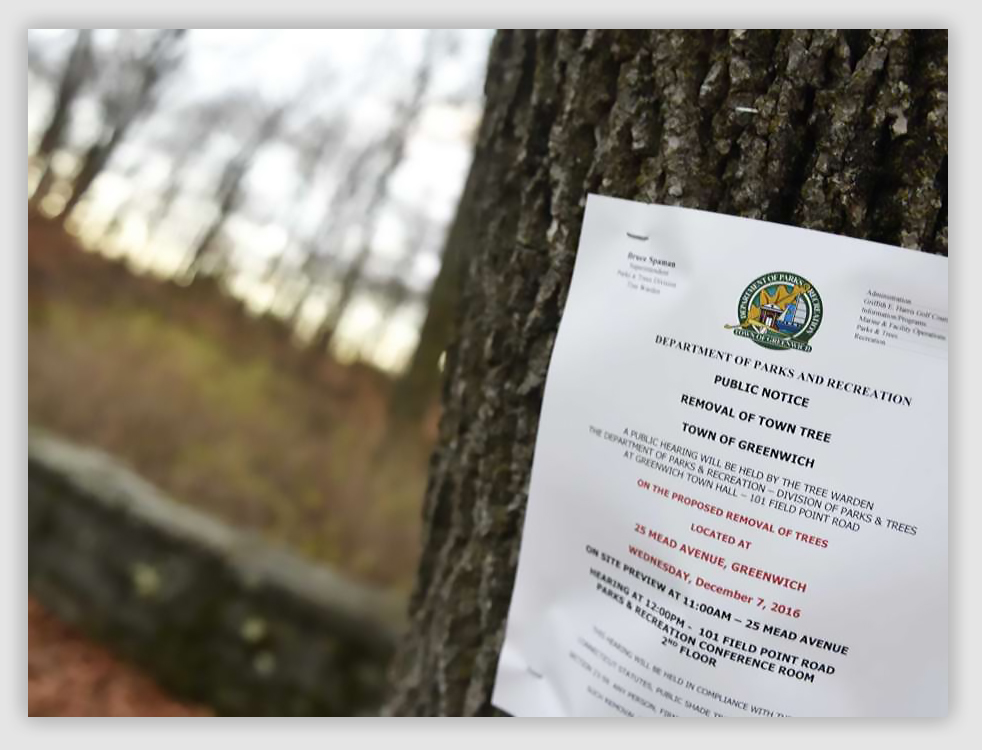
TRIGGER ALERT – SLEEP-INDUCING LEGAL TOPIC AHEAD

Snooze141120The whole issue of “conflict of laws” is about as dry as toast, at least until someone’s injury will go uncompensated because the wrongdoer is immune from liability.

In today’s case, Mr. Cain — a Mississippian — worked for a Mississippi tree-trimming company. The company signed on with a Louisiana public utility to trim trees along a right-of-way in Louisiana. Mr. Cain was hurt when his bucket truck came into contact with an electric line, and he collected on workers’ comp from the Mississippi company. But he sued the electric utility for his injuries, too.

We have no basis for saying that the utility was or was not negligent, and thereby whether it was or was not liable for his injuries. What we do know is that the utility company and Cain’s employer had entered into an agreement that made Cain a “statutory employee” of the utility while he was working on the job, although he really remained an employee of the tree-trimming service.

Whether someone is a “statutory employee” – like beauty – is in the eye of the beholder. Someone who is a statutory employee for IRS purposes may or may not be a statutory employee under state law. Under Louisiana law, the utility was immune from Cain’s suit, because as a statutory employee, his remedies were limited to what he could collect from workers’ comp. But under Mississippi law, companies couldn’t use the “statutory employee” dodge to avoid liability. The trial court said that Louisiana law applied because the accident happened there. Pretty logical, huh? The U.S. Court of Appeals for the Fifth Circuit in New Orleans didn’t think so.

The Court said that while normally that would be the case, Louisiana state law provided an exception, that it would not apply where there was a conflict with another state’s law, and the other state’s policies would be seriously harmed by applying Louisiana law. Mississippi had a strong policy in favor of protecting the subcontractor’s worker — and that policy carried the day. The lesson here for companies working across state lines — or hiring out-of-state companies to work in their home states — is to check carefully beforehand to be sure that protective measures like “statutory employees” really will work. What goes on in Vegas stays in Vegas … but what goes on at home sometimes doesn’t really travel well.

Does this make conflict of laws clear to you? We thought so ...

Does this make conflict of laws clear to you? We thought so …

Cain v. Altec Industries, Inc., 236 Fed.Appx. 965 (5th Cir.,  2007). Francis Cain, a Mississippi resident, worked for Carson Line Service, Inc., a Mississippi corporation. Carson signed a contract with Washington – St. Tammany Electrical Co-operative (“WST”), a Louisiana corporation, under which Carson agreed to clear rights-of-way for WST’s power lines.

Working on this project, Cain was trimming trees along a power line in St. Tammany Parish, Louisiana, when his aerial truck boom came into contact with an energized WST power line. Cain was badly hurt.

Cain got workers’ compensation benefits under Mississippi’s workers’ compensation law through Carson’s insurance carrier, but that wasn’t enough. He and his wife decided to raise cain with WST, too, so they sued.

WST filed a third-party claim against Carson for defense and indemnity. WST filed a motion for summary judgment claiming tort immunity based on the “statutory employer doctrine” in Louisiana’s workers’ compensation law. That law lets contractors agree that a subcontractor’s employees are “statutory employees,” which makes the contractor immune from liability to them. Cain argued that their case was an “exceptional case,” pursuant to La. Civil Code Article 3547. Mississippi law — under which no “statutory employee” exception existed for the companies to hide behind – should govern the claim, he argued. The trial court granted WST’s motion, concluding that Louisiana law applied.

The Cains appealed.

Held: Mississippi law, not Louisiana law, governed. The Court of Appeals first determined that the laws of Louisiana and Mississippi conflicted. It then found that under Louisiana law, a written contract between a principal and contractor recognizing the principal as the statutory employer of the contractor’s employees was valid and enforceable, making WST immune from civil tort liability. Mississippi law, on the other hand, didn’t recognize and wouldn’t enforce contracts giving tort immunity to a principal sued by a contractor’s employees unless the principal has the legal obligation under the Mississippi Workers’ Compensation Act to secure compensation for that contractor’s employees.

Why all this legal hair-splitting? An injured worker thought workers' comp was;'t enough ... and was looking for a deep pocket.

Why all this legal hair-splitting? An injured worker thought workers’ comp wasn’t quite enough… and was looking for a deep pocket.

WST had no obligation under the Act. Thus, there was a substantive difference between Louisiana and Mississippi law, requiring a choice-of-laws determination. The Court said that the issue of whether WST was immune from tort liability was an issue of loss distribution and financial protection governed by La. Civ. Code article 3544. Under its mechanical rule, Louisiana law would apply because, at the time of the injury, Cain, who lived in Mississippi, and WST, a Louisiana corporation, were domiciled in different states, and both the injury and the conduct that caused it occurred in one of those states, that is, in Louisiana. Thus, the Court said, WST would be entitled to the statutory employer tort immunity afforded it under Louisiana law.

However (and this was the big “however”), article 3547 also holds that where “from the totality of the circumstances of an exceptional case, it is clearly evident under the principles of Article 3542, that the policies of another state would be more seriously impaired if its law were not applied to the particular issue …” the law of the other state will apply. The Court ruled, after comparing the policies and interests of both Louisiana and Mississippi, that it was clear the policies of Mississippi would be more seriously impaired if Louisiana law were applied to this dispute than would Louisiana’s if Mississippi law were applied.

Consequently, the Court said, it would apply Mississippi law to this dispute. Thus, WST was not immune from suit.

– Thomas L. Root
TNLBGray140407

Case of the Day – Monday, June 2, 2025

HEIDI AND THE TERRIBLE, HORRIBLE, NO GOOD,
VERY BAD (WATCH OUT FOR THAT TREE!) DAY

Remember Alexander? He didn't have anything on Heidi ...

Remember Alexander? He had nothing on Heidi …

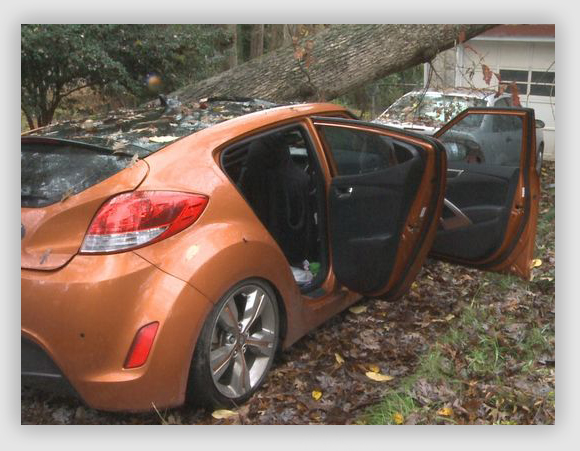
Ever have one of those days? Heidi Cordeiro knows how you feel. Heidi had a terrible, horrible, no good, very bad day once. First, she heard a crash in her driveway and looked out to see that a tree belonging to the hospital next door had fallen, crushing her car. Then, she hurried out to assess the damage, only to fall over the branches of the downed tree, spraining her ankle. At least she didn’t have to hobble far to the emergency room.

She of course sued the hospital — who doesn’t like suing hospitals? — for the damage to her car and her ankle. Her case essentially was that the tree fell, so of course, the hospital was negligent. Unfortunately, that just set her up for another bad day.

The Superior Court made short work of Heidi’s suggestion that landowners were strictly liable for falling trees. It correctly pointed out that in Connecticut, a plaintiff must plead (and of course later prove) that the landowner knew or should have known that the tree was diseased, decayed, or otherwise dangerous.

Heidi couldn’t do that, and her case was dismissed. We’ll never know whether liability would have extended to paying for Heidi not being careful where she stepped.

She had a bad day.

Cordeiro v. Rockville General Hospital, Inc., 44 Conn.L.Rptr. 58 (Conn.Super., Aug. 21, 2007). A tree belonging to the Rockville General Hospital fell into the yard and driveway of the premises Heidi Cordeiro was renting, damaging her car. When she went out to look at the damage, Heidi tripped and fell on the branches of the tree. She sued her landlord and the Hospital, alleging negligence and asking for damages for her personal injury and for damage to her car. Rockville Hospital moved to strike the count against it arguing that the plaintiff has failed to state a claim.

Held: Rockville Hospital was dismissed as a plaintiff. The Hospital argued the facts alleged in Heidi’s complaint did not give rise to any duty owed by the Hospital to the plaintiff, the falling tree was caused by an “act of God” for which the Hospital was not liable, and the falling tree was an open and obvious defect that the plaintiff should have avoided.

Fallen_treeThe Court observed that the essential elements of a negligence action were duty, breach of duty, causation, and actual injury. Here, Heidi Cordeiro alleged that “a tree … belonging to the defendant … fell upon the yard and driveway area of the premises where the [plaintiff] resided [as a tenant], and when the plaintiff went out to look at the damage to the vehicle parked in her driveway, she was caused to trip and fall over the branches of said tree, causing her to sustain … injuries.”

In early times, there was generally no liability for trees falling on neighboring lands, an obvious practical necessity when land holdings were very large and in a primitive state, but the rule made little sense in urban settings. In urban areas like the City of Rockville, there is generally found to be a “duty of reasonable care, including inspection to make sure that the tree is safe.” It is now generally recognized, particularly in urban areas, that a tree owner has a duty to an adjoining landowner to exercise reasonable care to prevent an unreasonable risk of harm presented by an overhanging dead branch in a residential area. Thus, an invitee of commercial premises may recover for injuries sustained from the fall of a defective or unsound tree growing on adjoining premises, including trees of a purely natural origin.

George of the Jungle could have been Heidi's doppelgänger.

George of the Jungle – Heidi’s doppelgänger?

However, the owner of a tree is liable for injuries from a falling tree only if he knew or reasonably should have known the tree was diseased, decayed, or otherwise constituted a dangerous condition. A landowner who knows that a tree on his property is decayed and may fall and damage the property of an adjoining landowner is under a duty to eliminate the danger. However, a landowner does not have a duty to consistently and constantly check all trees on his property for non-visible rot. Instead, the manifestation of decay must be visible and apparent. In   Connecticut, if the tree condition is one of which the defendant would become aware through reasonable exercise of its faculties, the defendant is chargeable with notice.

In this case, Ms. Cordeiro had to plead and prove facts showing that the Hospital knew or reasonably should have known the tree was diseased, decayed, or otherwise constituted a dangerous condition, or other such proof of actual or constructive notice, to state a claim. But she made no such allegation here. Instead, she only alleged that the Hospital “was responsible for the proper maintenance of its trees and was responsible to assure that its trees did not fall into adjoining properties, causing injury.” The law does not require landowners to continuously examine their trees for invisible decay to ensure they do not fall. Instead, it requires them to take action when there is actual or constructive notice of a dangerous natural condition.

– Tom Root

TNLBGray140407

Case of the Day – Friday, May 30, 2025

A TRAGEDY WITHOUT COMPENSATION

Nickel Plate Beach on a warm but windy Memorial Day.

Nickel Plate Beach on a hot but windy summer day.

We hear the opening gun of summer this weekend (not the astronomical kind, but the vacation-from-school and lazy-days kinds). I plan to some time on Sunday for a visit to Nickel Plate Beach in Huron, Ohio. Nickel Plate (named for a great railroad of the same name) is a substantial extent of sand on the south shore of Lake Erie. Usually, it’s sunny and peaceful there. But sometimes, when the wind is out of the northwest, the deceptively tranquil beach develops a serious undertow.

The story is repeated often enough that lifeguards hear it in training as a cautionary tale. Someone is drowning, and a rescuer tries to help, only to die as well. On a stormy summer day in 2002, a woman was trapped in the undertow at Nickel Plate Beach. She was rescued, but not before four young men perished when they entered the troubled water to save her.

Afterward, families of the men sued the City of Huron, arguing that despite Ohio’s recreational user statute, the City was not immune from liability for the men’s deaths. The trial court disagreed and dismissed the suit. An appellate court agreed. The City ran the beach, but there was no evidence that it controlled or tried to control the waters of Lake Erie, which belonged to the State of Ohio. The men drowned in Lake Erie, the Court held, not on the grounds of the city park. Thus, even if Lake Erie constituted a nuisance, it wasn’t the City’s nuisance, but rather the State’s.

hand150525Smith v. Huron2007-Ohio-6370, 2007 Ohio App. LEXIS 5589, 2007 WL 4216133 (Ohio App. Erie Co., Nov. 30, 2007). Four people died at Nickel Plate Beach on July 10, 2002, when another person screamed for help from the water. The four entered the water to save her, but although she survived, the four would-be rescuers drowned in the windswept waters of Lake Erie.

Their survivors sued the City of Huron, seeking recovery for the drowning deaths from the city and entities that controlled the beach. They claimed that the city failed to maintain the swimming area it owned in a safe manner and failed to warn the general public of hazardous defects on the premises. The complaint also alleged the city maintained or abetted the creation of a nuisance at the beach and in the water; that the deceased men had reasonably relied upon representations that the beach and waters were safe and that the city voluntarily assumed a duty of controlling and maintaining the waters adjacent to the beach.

The City of Huron filed for summary judgment arguing that it was entitled to immunity as a political subdivision under O.R.C. Chapter 2744, that it was not liable because it had satisfied the requirements of Ohio’s recreational user statute, that the men engaged in recreational pursuits prior to their deaths, and that the decedents assumed the risk by voluntarily exposing themselves to the waters of Lake Erie even though they were warned of the dangerous conditions. The trial court granted the City summary judgment. The survivors appealed.

Held: The City of Huron was immune from liability. The survivors claimed that O.R.C. §2744, Ohio’s Political Subdivision Tort Liability Act, did not confer immunity on Huron. Indeed, under O.R.C. 2744.02(B), in some situations, a political subdivision can be held liable for damages in a civil suit arising from injury, death, or loss to persons or property allegedly caused by any act or omission of the political subdivision or its employees in connection with a governmental or proprietary function.

The survivors claimed the City was liable under the exception that a political subdivision can be held liable for damages in a civil suit arising from injury, death, or loss to persons or property caused by its failure to keep the public grounds within their political subdivision open, in repair and free from nuisance. They argued that Nickel Plate Beach and the waters of Lake Erie adjacent to the shoreline are public grounds within the city of Huron.

The Court of Appeals ruled that the city didn’t maintain any actual control over Lake Erie itself by placing buoys in the lake or at times posting “no swimming” signs on the beach. The city didn’t actively keep swimmers from going beyond the buoys or boaters from going inside the marked area; nor did the city take overt actions to prevent swimmers from going in the water when the beach was “closed” due to rough conditions. More importantly, the Court said, the title to Lake Erie clearly belongs to the State of Ohio, which holds it in trust for the benefit of the people of Ohio.

The victims in this case drowned in Lake Erie, not on grounds within Nickel Plate Beach or Huron. The City didn’t maintain any actual control of Lake Erie. Based on that, the Court found that the trial court correctly granted summary judgment in favor of the City of Huron.

– Tom Root

TNLBGray140407

Case of the Day – Thursday, May 29, 2025

YOU’RE ON YOUR OWN, PAL

From the hatcheck to the parking lot to the dry cleaner to the amusement park, we grant pre-injury waivers of liability all the time. And we’re helpless to stop it. Don’t believe us? Try negotiating that fine print on the back of your parking lot ticket next time you leave your Bugatti Tourbilon in the hands of some teenager named “Kent Steerwell.” You’ll be handed your keys, probably with a suggestion of where to put them (and it won’t involve inserting them in the ignition, either).

With the first meteorological day of summer still a few days away away, it’s a nice escape to think about skiing.  Fact is, there are still a few places in the continental United States where you could be skiing today. So here goes: When expert Alpine skiing enthusiast Bill Rothstein parted with his hard-earned cash for a couple of souped-up passes to the Snowbird resort (your basic pass and a special one that let him skip lines and not have to mingle with the great unwashed), he signed the waivers without a second thought. You know, the ones that said the resort wasn’t liable for a ding-dong thing in case he got hurt.

031-downhill-skiingWhile skiing the “Fluffy Bunny” run (hardly sounds like a double-diamond course, does it?) Bill ran into a poorly-marked retaining wall and messed himself up but good. Fortunately, his favored hand wasn’t injured, so he quickly signed off on a lawsuit against the ski operator. But the trial court was impressed by the breadth of the release Rothstein had signed — as tall as the Wasatch and as wide as the Bonneville Salt Flats — and it threw the case out.

The Utah Supreme Court saved Rothstein’s bacon. It held that, no matter what the pre-injury waivers said, Utah public policy required that ski resorts take responsibility for the results of their negligence. A state statute, the Inherent Risks of Skiing Act, exempted ski resorts from certain risks that are inherent in skiing — such as broken legs, frostbite, and fashion faux pas — so that the operators could buy insurance against actual negligence. The Court held that inasmuch as the legislature exempted ski resorts from certain types of risks so that they could afford insurance to cover the remaining ones, it was contrary to public policy for a ski resort to try to exempt itself from liability for any negligence whatsoever. The Romans had some words for it: expressio unius est exclusio alterius, which means “the expression of one excludes all others.” This means that because the law expressly carved out certain acts from liability – such as the effects of the relentless pull of gravity – it specifically intended not to carve out other unlisted acts: like failing to adequately mark a retaining wall.

Now available - expressio unius coffee mugs!

Now available – expressio unius coffee mugs!

The waiver was void, and Rothstein was free to sue… if not to ski the “Fluffy Bunny.”

Rothstein v. Snowbird Corp., 175 P.3d 560 (S.Ct. Utah, 2007). “Fast Billy” Rothstein, an expert skier collided with a retaining wall while skiing at Snowbird Ski Resort. The retaining wall was unmarked and no measures had been taken to alert skiers to its presence. Although Snowbird had placed a rope line with orange flagging near the wall, there was a large gap between the end of the rope and a tree, which Mr. Rothstein incorrectly understood indicated an entrance to the Fluffy Bunny run.

No - not this kind of

No – not this kind of “law suit”

Rothstein sued Snowbird for negligence. Snowbird defended itself by asserting that Mr. Rothstein had waived his ability to sue Snowbird for its ordinary negligence when he purchased two resort passes that released the resort from liability for its ordinary negligence.

Rothstein’s super passes — which let him have faster access to the slopes than mere mortals — required him to sign an agreement that said:

I hereby waive all of my claims, including claims for personal injury, death and property damage, against Alta and Snowbird, their agents and employees. I agree to assume all risks of personal injury, death or property damage associated with skiing… or resulting from the fault of Alta or Snowbird, their agents or employees. I agree to hold harmless and indemnify Alta and Snowbird… from all of my claims, including those caused by the negligence or other fault of Alta or Snowbird, their agents and employees…

If that wasn’t enough, a second agreement he signed said:

In consideration of my use of the Snowbird Corporation (Snowbird) ski area and facilities, I agree to assume and accept all risks of injury to myself and my guests, including the inherent risk of skiing, the risks associated with the operation of the ski area and risks caused by the negligence of Snowbird, its employees, or agents. I release and agree to indemnify Snowbird, all landowners of the ski area, and their employees and agents from all claims for injury or damage arising out of the operation of the ski area or my activities at Snowbird, whether such injury or damage arises from the risks of skiing or from any other cause including the negligence of Snowbird, its employees and agents.

Read the fine print

Read the fine print – if your eyes are up to the challenge

The trial court thought these agreements were pretty comprehensive, not to mention dispositive. It granted summary judgment in favor of Snowbird. Quicker than you could say, “Fluffy Bunny,” Rothstein appealed.

Held: The trial court was reversed, and Rothstein was allowed to sue the ski resort. The Court held that releases that offend public policy are unenforceable. Under Utah’s Inherent Risks of Skiing Act, certain hazards inherent in skiing are defined. Resorts aren’t liable for those risks — like breaking a leg on a downhill run — thus clarifying the hazards sufficiently to enable the ski operators to buy insurance against those risks that aren’t excluded.

The Court said that by expressly designating a ski area operator’s ability to acquire insurance at reasonable rates as the sole reason for bringing the Inherent Risks of Skiing Act into being, the Utah legislature “authoritatively put to rest the question of whether ski area operators are at liberty to use pre-injury releases to significantly pare back or even eliminate their need to purchase the very liability insurance the Act was designed to make affordable. They are not.” The premise underlying the passage of a law to make insurance accessible to ski area operators is that once the Act made liability insurance affordable, ski areas would buy it to blunt the economic effects brought on by standing accountable for their negligent acts. The Court said, “The bargain struck by the Act is both simple and obvious from its public policy provision: ski area operators would be freed from liability for inherent risks of skiing so that they could continue to shoulder responsibility for noninherent risks by purchasing insurance.”

Inasmuch as the legislature had determined that resorts should insure themselves against risks not inherent in the sport of skiing, the Court held that it was contrary to public policy to permit an operator to duck liability for negligence that could have been avoided by requiring its patrons to waive claims for negligence as a condition of use.

– Tom Root

TNLBGray140407

Case of the Day – Wednesday, May 28, 2025

WE DON’T KNOW NUTHIN’

fallentree141117When the Santiagos parked on a side street in Vineland, New Jersey, to attend the christening of their god-daughter, they had no idea that Mrs. Santiago was about to get christened with a 60-foot tall maple tree.

It seems that the tree’s roots had girdled — which is what happens when the roots grow back around themselves and essentially strangle the tree. Girdling is a problem with city trees, the roots of which may grow in confined places. When it happens, trees have no subsurface support and often fall in conditions that wouldn’t affect normal trees.

That’s what happened to the tree that struck Mrs. Santiago, and her lawyer and expert witness arborist did an excellent job of explaining the problem to the court. But the City won on summary judgment anyway. It seems that the city workers responsible for the trees all testified that they were nothing more than glorified leaf-rakers — one of them, when asked what he knew about trees, responded “[t]rees have leaves, that’s about it” — and none of them knew how to inspect a tree to determine whether it might have girdled roots.

The city workers involved were not the sharpest bulbs on the tree --- or something like that.

The city workers involved were not the sharpest bulbs on the tree — or something like that.

Now you’d think that the fact that the city owned the urban tree and its tree people had no idea how to care for them ought to make this case a dunker for the injured Mrs. Santiago. But in New Jersey, the Tort Claims Act requires that a plaintiff show that the city’s failure to act was “palpably unreasonable.” The fact that the city’s tree workers couldn’t find the business end of a chainsaw turned out to be a fact that favored the city. The Court of Appeals agreed that the city’s decision not to devote its resources to a program for the regular inspection and maintenance of trees throughout the municipality was not “palpably unreasonable.”

Compare this decision to holdings in other jurisdictions where an urban owner has a heightened duty to inspect his or her trees (see Conine v. County of Snohomish, a Washington State decision, for example). Seems if you’re a New Jersey city worker, the less you know, the better off you are. We don’t know much about girdling, but we know nonsense when we read it.

Santiago v. City of Vineland, 2007 N.J. Super. Unpub. LEXIS 1551, 2007 WL 2935035 (N.J.Super. A.D., Oct. 10, 2007). The Santiagos drove to 8th Street to attend the christening of their god-daughter. As they crossed the street, a 60-foot maple tree fell and struck Mrs. Santiago. She sued the City, claiming it was responsible for the care and maintenance of trees on its property and was negligent, careless, and reckless in permitting a dangerous condition to exist.

girdling141117Mrs. Santiago submitted a report prepared by Russell E. Carlson, a master arborist, saying that the tree broke at its base, a few inches below the surface of the ground, because it lacked a root system sufficient to support the tree. He found that girdling roots had effectively strangled the tree, resulting in the decay of the base of the trunk and inadequate development of the root system. Girdling roots form when a root grows in a direction that crosses the trunk of the tree. Ordinarily, roots will grow away from the trunk of the tree but when a root meets an obstruction, it will change direction and may grow around the edges of the planting pit.

Carlson said that eventually, circling roots will come in contact with the growing tree trunk. The cells of the bark of both trunk and root are compressed. Symptoms of this are a thinning of foliage and reduction of twig growth in the crown, followed by twig and branch dieback. The tree may eventually die above the area of contact. When this girdling condition persists for many years, the roots that normally extend away from the tree may atrophy and eventually decay. While healthy trees usually withstand winds over 70 mph, trees that have lost their structural support at the base can topple in much lower winds, and in some cases when there is no wind at all.

Even when the roots are underground, the expert said there are signs that girdling roots may be present. The trunk of the tree goes straight into the ground, without the normal flare from trunk to roots. Carlson stated that excavation of the soil at the base of the tree is “sometimes necessary” to determine the extent of the girdling. This process could take a few minutes, or several hours, depending on the size of the tree, soil conditions, and the extent and depth of the girdling roots.

Only one of three city employees whose depositions were taken knew anything about trees, and even he had no experience identifying diseased or dying trees. The general supervisor of streets and roads for the City said it would be a hardship both economically and logistically for the City’s Department of Public Works to inspect every tree within the City’s borders, or even within the City’s right of way and on City property, for the multitude of diseases that are capable of causing damage to any or all of the varieties of trees within the City’s borders.

The City moved for summary judgment, arguing that Santiago had not presented sufficient evidence to support a claim under the Tort Claims Act because she did not establish that the City had actual or constructive notice of a dangerous condition. The judge concluded that the City’s actions respecting the tree were not palpably unreasonable. Santiago appealed.

Held: The suit was properly dismissed. The New Jersey Tort Claims Act provides that a public entity may be liable for an injury caused by a condition of its property if a plaintiff establishes (1) that the property was in a dangerous condition at the time of the injury, (2) that the injury was proximately caused by the dangerous condition, (3) that the dangerous condition created a reasonably foreseeable risk of the kind of injury which was incurred, and (4) that either (a) a negligent or wrongful act or omission of an employee of the public entity within the scope of his employment created the dangerous condition; or (b) a public entity had actual or constructive notice of the dangerous condition a sufficient time prior to the injury to have taken measures to protect against the dangerous condition.

The workers in question should have gone to shcool ...

The workers in question should have gone to shcool …

A public entity is deemed to have “actual notice of a dangerous condition” when it had “actual knowledge of the existence of the condition and knew or should have known of its dangerous character.” In addition, a public entity is deemed to have “constructive notice” of a dangerous condition if a plaintiff establishes that the condition had existed for such a period of time and was of such an obvious nature that the public entity, in the exercise of due care, should have discovered the condition and its dangerous character.

Here, Mrs. Santiago had the burden of showing that the City’s action or failure to act was palpably unreasonable. Although the term “palpably unreasonable” is not defined in the TCA, it has been interpreted to mean “more than ordinary negligence, and imposes a steep burden on a plaintiff.” For a public entity to have acted or failed to act in a manner that is palpably unreasonable, it must be obvious that no prudent person would approve of its course of action or inaction. The trial judge correctly determined that the Santiagos had not presented sufficient evidence to raise a genuine issue of material fact as to whether the City’s actions in this matter were palpably unreasonable. The City’s public works employees were not trained to identify girdling roots or whether a tree was in danger of imminent failure as a result of such a condition. The judge also pointed out that the City had not retained an arborist to “go around and inspect trees for girdling roots and perhaps a myriad of other types of similar problems, which would make a tree unsafe.” Based on the evidence, the judge correctly found that a jury could not find that the City’s failure to have such an inspection program was “patently unacceptable under any given circumstance.”

The evidence showed it is obvious that a regular program to inspect the City’s trees for imminent failure due to girdling roots would require additional manpower and resources. In this case, the City elected not to devote its resources to a program for the regular inspection and maintenance of trees throughout the municipality. Such a determination, the Court said, was not palpably unreasonable.

– Tom Root
TNLBGray140407