Case of the Day – Thursday, January 8, 2026

IT’S A JUNGLE OUT THERE

The balmy weather last week (25º with high wind and blowing snow) made me long for the warm days of August when I could bask in the pool at the local pool.

Maryann Dunlap does not share this fond memory of hot fun in the summertime.

No question, Maryann enjoyed her time bobbing in the pool at the Ridley Park Swim Club. But as she crossed the parking lot to leave, a tree in the tangled thicket on an undeveloped lot next door fell on her, writing a quick finis to her pleasant day.

The case that ensued raised interesting questions of when a party needs an expert to establish whether a defendant had a duty to inspect trees, as well as the extent of the duty when the property on which the tree stands is (as the trial court put it) an undeveloped “jungle” but is next to property that is not.

There has long been a distinction made between the nature and extent of the duty to inspect trees on urban property (where the risk of harm from hazard trees is much greater) and rural property (where, if the tree falls in the forest, it may not even make a noise if no one is around to hear it). Today’s case hones that duty a bit finer, relying on the same policy considerations – the risk from falling timber – but implicitly rejecting the rather coarse distinctions of urban versus rural.

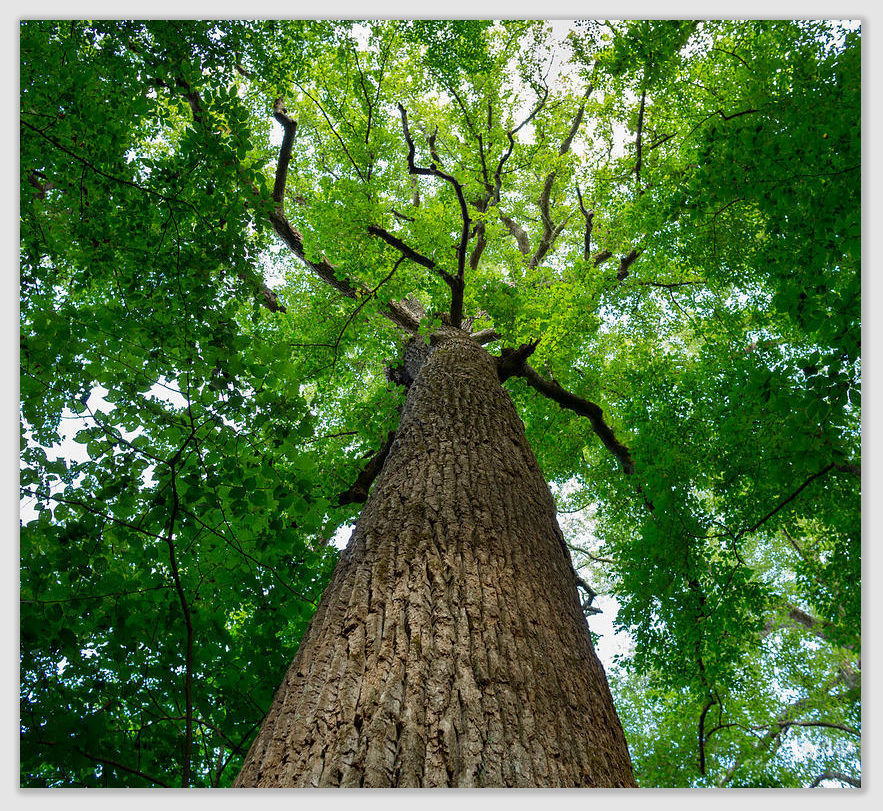
Decay is not always this obvious.

Dunlap v. Ridley Park Swim Club, 133 A.3d 64 (Pa. Superior Ct., 2015): One hot summer day in 2009, Maryann Dunlap was swimming at Ridley Park’s pool. While she was walking through the parking lot to leave, a tree located on property owned by Harper Associates – about 25 feet from the property line – fell on her. No part of the tree overhung Ridley Park’s property. The tree was dead and decaying, and it had enough vines growing on it to warm Tarzan’s heart.

Harper Associates did not examine the tree or take any other action to ascertain whether the tree posed a hazard to persons on its land or on Ridley Park’s property.

Dunlap sued Ridley Park and Harper Associates. Ridley Park argued that Harper Associates was negligent and thus liable for Maryann’s injuries. Maryann’s expert witnesses provided reports concluding the same.

Nevertheless, the trial court granted summary judgment to Harper Associates, finding that Ridley Park could not prove its case against codefendant Harper Associates because it did not call an expert witness to testify as to Harper Associates’ negligence. The trial court also concluded that the area in question was a “jungle” and, therefore, there was no legal duty for Harper Associates to inspect the tree. Thus, the case was thrown out without a jury ever hearing it.

Ridley Park appealed.

Held: The Superior Court held that Ridley Park was entitled to a trial on its claims.

Negligence is established by proving (1) a duty or obligation recognized by law; (2) a breach of that duty; (3) a causal connection between the conduct and the resulting injury; and (4) actual damages. Expert testimony is required when the subject matter of the negligence is outside the skill and knowledge of an ordinary person.

The Court held that Harper Associates had a duty to visually inspect the tree, and Ridley Park Swim Club did not need an expert to prove it. In Pennsylvania, a possessor of land in or next to a developed or residential area is liable for harm caused to others outside of the land by a defect in a tree on the property if, in the exercise of reasonable care, the possessor would have discovered the defect and the risk it caused, and could have made it reasonably safe by taking action.

The reasonable care standard, the Court said, includes at least “a duty to make a visual inspection. Under some circumstances, it may encompass more. Suppose the possessor of land in or adjacent to a developed area knows, or should know, through inspection or otherwise, that a defect in one of his trees poses an unreasonable danger to others outside of the land. In that case, he is under a duty to eliminate that danger.”

Bad things can happen in the jungle.

It did not matter, either, that the area in which the tree was growing was a “jungle.” The focus is on the adjacent land. A tree, the Court noted, “once growing in the midst of a forest, is no longer the same ‘natural object’ when a city grows around it or residential areas are developed in proximity to it.”

Because Ridley Park Swim Club’s parking lot, where Maryann was hurt, was developed land, Harper Associates had a duty to visually inspect the subject tree.

Even if expert testimony had been needed, the Court said (and it was not), Maryann’s experts testified that the fallen tree was one that needed “to be regularly observed. It’s on a boundary between two properties. Both owners would have a responsibility to see what’s going on at that location. And when you have a situation where grapevines are beginning to load up the plants then there becomes a real responsibility to care for the trees in a way that they’re not being – people have to circulate on the site.” And if expert testimony is needed, the Court held, it does not have to come from witnesses presented by the party with the burden of proof. Any competent expert will do.

At trial, one of Harper Associates’ principals testified that no one had ever visually inspected the subject tree. From that testimony alone, the Court held, a jury could have determined that Harper Associates breached its duty to inspect. But as to whether the failure to inspect was the proximate cause of the tree falling (and Maryann being clobbered), the Court agreed that expert testimony was required. “It requires specialized knowledge and training to determine if the tree, when it fell, was in such condition that visual inspection alone should have revealed a problem.”

Maryann’s expert admitted that “if a non-professional looked at the tree, the tree itself might have looked alive. But you have to take it in context with the whole site. And if you look at photograph 90 where it shows that the vines are already pulling down another part of the tree, I think even to a layperson that does not look normal.” Although a Ridley Park’s witness said he believed that the tree looked like a “live, healthy tree with tree branches and green leaves all over the parking lot” and a Harper Associates’ principal contended he inspected the jungle monthly, the Court held that “the jury could have reasonably found, that even if Harper Associates visually inspected the subject tree it would not have noticed the tree was a danger to individuals on Ridley Park’s property. The conflict in the testimony, however, was a factual question that must be decided by the jury… Thus, Ridley Park is entitled to a new trial.”

– Tom Root

TNLBGray140407

Case of the Day – Wednesday, January 7, 2026

TREES GONE WILD

Emily Dickinson had something to say about today’s case. The Belle of Amherst wrote,

The Wind does not require the Grass
To answer Wherefore when He pass
She cannot keep Her place.

Today’s problem was slow to develop, but like a winter storm undergoing bombogenesis, it just got bigger and bigger. Marie’s property was separated from her charming neighbor Ed’s by a 100-foot-long cinder block retaining wall. In about 2004, “a mulberry tree and some shrubs began growing” – note the passive voice, as though the growth was mere happenstance, not brought on by anyone’s actions – in Marie’s property near the retaining wall.

Everyone agreed that Marie had nothing to do with the mulberry tree. She didn’t plant it, mulch it, stake it, or fertilize it. It just grew. And grew. And grew. About eight years later, its roots began toppling Ed’s beautiful wall.

To be sure, Marie diligently trimmed the mulberry branches every year, but unsurprisingly, she did not excavate around it to trim the tree’s roots. Who does that? When the wall began showing damage in 2012, Ed wrote Marie a letter (evidence enough that their relationship must have been too frosty for him just to mosey on over and say something), expressing concern about the damage. Marie, ever the good neighbor, hired some guys to trim back the trees and bushes. That wasn’t good enough for Ed, who then sent Marie a certified letter complaining that her tree was tipping over his wall but warning that she better not let any of her workers step on his property in an attempt to fix it unless they were insured and had permits.

At this point, Marie’s interest in jumping through Ed’s hoops appeared to have waned. She did nothing more, and Ed sued.

He accused Marie of carelessness, negligence, and gross negligence, complaining that the “maintenance of her property” – which is to say, suffering the tree to grow – caused the damage to the retaining wall. Of course, he wanted money.

At trial, Marie said Ed’s wall had been installed by morons and thus was falling down of its own accord. Ed said that Marie should have taken care of the tree to ensure that it did not crumble his wall. The court, it turns out, did not care about either argument: instead, it held that a tree growing near the wall is a naturally occurring condition. As such, Marie is not liable for what the tree does.

We are constrained to note that this is not the law everywhere. The Hawaii Rule, as brought up to date by decisions such as Fancher v. Fagella, holds that when a naturally occurring tree becomes too much of a nuisance, the owner can be forced to do something, regardless of how the tree got there or how little the owner’s role in nurturing it. But not in New Jersey.

Like Emily’s grass, Marie’s mulberry could not keep its place. And the court, like Emily’s wind, did not require Marie to answer for the tree’s peripatetic roots. Oh, the poetry of it…

Scannavino v. Walsh, 445 N.J. Super. 162 (Superior Ct. N.J., 2016). Marie’s naturally growing mulberry tree got big enough that its roots started causing her neighbor’s retaining wall to tilt and collapse. Neighbor Ed sued her for damages the tree caused to the wall, but the trial court held she was not responsible for the naturally occurring growth of a tree she had not planted.

Ed appealed.

Held:  The Superior Court sided with Marie. It held that a cause of action for private nuisance derives from the defendant’s “unreasonable interference with the use and enjoyment of the plaintiff’s property.” Under the Restatement (Second) of Torts, “neither a possessor of land, nor a vendor, lessor, or other transferor, is liable for physical harm caused to others outside of the land by a natural condition of the land,” which includes the natural growth of trees, weeds, and other vegetation “upon land not artificially made receptive to them.” Similarly, “a possessor of land is not liable to persons outside the land for a nuisance resulting solely from a natural condition of the land,” including “trees, weeds, and other vegetation on land that has not been made artificially receptive to it by act of man.”

New Jersey courts have held that injury to an adjoining property caused by the roots of a planted tree can be actionable as a nuisance. The rationale for the property owner’s liability in that case was not because of the natural process of the growth of the tree roots, but instead due to the affirmative act of the property owner in planting the tree that caused the damage. But here, Marie did not plant the tree, and while she trimmed it from time to time, she engaged in no positive acts like fertilizing or maintenance to encourage growth. Had she done so, that might have converted a naturally growing tree into one for which the landowner was liable. However, the Court said, “simply cut[ting] back the trees above the ground” was not a positive act to encourage growth.

The record contained no evidence that Marie’s trimming had improved the tree’s health or accelerated the growth of the roots. As well, the trial court found that Ed had failed “to demonstrate that any actions undertaken by [Marie] or her agent caused the damage to the wall.” Finally, even Ed himself told the Court he was not asking the judges to infer that cutting back the trees had increased root growth.

Instead, all that Ed argued was that by cutting back the trees, Marie became liable for the damage caused by the roots. That is contrary to the law, the Court said, and seeks unfairly to “impose liability upon a property owner for hazardous conditions of his land which he did nothing to bring about just because he happens to live there.” Because Marie’s cutting back of the tree did nothing to “bring about” the root growth, neither the trees nor the damage was “brought about” or “precipitated by the property owner’s affirmative act.”

The Court observed that Ed’s argument would lead “to the anomaly of imposing liability upon one who cuts back wild growth while precluding liability of an adjacent landowner who allows the natural condition of his property to ‘run wild’.” What’s more, some of Marie’s trimming was in response to Ed’s belly-aching, and the Court was not about to sandbag Marie because she tried to be a good neighbor.

Ed suggested that if Marie was not held to be liable, then landowners like Ed might have to use self-help and trespass on her land to cut down the tree himself. The Court dismissed the argument. Ed’s own letter suggested he could abate the nuisance from his side of the property line, which is consistent with the Massachusetts Rule (which fully applies in New Jersey). At any rate, the Restatement (Second) of Torts provides that “entry onto a neighboring property to abate a private nuisance is permissible under certain circumstances.”

Notably, the Restatement (Third) of Torts might have held Marie liable if she failed to exercise reasonable care by allowing the tree’s roots to damage the retaining wall. But the Supreme Court of New Jersey has directed that the Restatement (Second) of Torts is the law, and until that changes, Marie’s tree is on its own.

– Tom Root

TNLBGray140407

Case of the Day – Tuesday, January 6, 2026

RESTRICTIVE COVENANTS ARE CHILD’S PLAY

I have previously reported harrowing tales of homeowner woe at the hands of a homeowners’ association. You remember the kind of officious, annoying kid in junior high school who was on student council? Well, he grew up and is on the HOA board.

In today’s case, two well-heeled homeowners bought the house next door, planning to demolish it and turn the property into a playground for their kids. And to think you couldn’t find a Barbie Dreamhouse left in the store for your offspring this Christmas…

But the property manager for the HOA that oversaw the development – seeking to enforce a deed restriction that required prior approval before “changes or alterations” – got a court to issue an injunction.

Injunctions aren’t easy to come by. The biggest hurdle is that the HOA had to convince the court that it was likely to prevail in the case. Homeowners Bob and Kathy Guzzetta argued that “change and alteration” was different from “demolition.” They had not changed anything that existed. Instead, they had simply taken away something, leaving nothing.

The grant of the injunction suggested to us that the court found their argument to be a “dead-bang loser.” It seemed like game, set, and match for the HOA – well before the first day of trial.

But trials have a way of turning losers into winners. The Guzzettas, undeterred by the pall of imminent defeat a preliminary injunction cast over their case, put their evidence on anyway. And they won.

The court, it seems, was no fan of restrictive covenants. Such covenants, the court rightly observed, “implicate contractual rights, such as the right of a buyer and seller to enter into a binding contract, but they also implicate property rights, such as one’s right to the free use of her land. In situations where these two rights conflict, the law favors the free use of land.”

Applying that standard, the court said, the analysis was simple. “Changes and alterations” required prior consent, but the Guzzettas were right: taking something away was not the same thing as changing or altering. After all, nothing else in the covenants required that a house even be on the lot. It was just that if there was a house on the lot, the HOA had to approve it. Requiring prior approval of something did not imply that prior approval of nothing was required as well.

Just a little something for the kiddies…

Service Corp. of Westover Hills v. Guzzetta, 2009 Del. Ch. LEXIS 221 (Del.Ch., 2009). The Guzzettas had been homeowners in Westover Hills for 11 years when they bought the property next to theirs. The adjoining property included a 1943 colonial-style house and mature maple and oak trees. The Guzzettas intended to raze the house to expand their backyard for their children.

However, properties in Westover Hills are subject to deed restrictions that bind all owners within the development. One of the restrictions provides that “no building, fence, wall or other structure shall be commenced, erected, or maintained, nor shall any addition to or change or alteration therein be made, until the plans and specifications, showing the nature, kind, shape, height, materials, floor plans, color scheme, location and frontage on the lot and approximate cost of such structure shall have been submitted to and approved in writing by” Service Corp., the property manager.

Service Corp. had the right to refuse to approve any such plans or specifications that it found not suitable or desirable for aesthetic or other reasons. Since 2004, Service Corp. has used an Architectural Review Committee to initially review proposals, request additional information as necessary, and make recommendations to the Service Corp. board. Service Corp. had approved demolitions before, as well as landscape plans.

The Guzzettas proceeded with their plans without obtaining approval, and Service Corp. sought an injunction prohibiting the demolition of the home and landscaping. The trial court granted a preliminary injunction until a trial on the merits could be held, but at trial it reversed course, finding in favor of the Guzzettas. 

Held: The Guzzettas didn’t need HOA approval to demolish the house next door. The restrictive covenant at issue held that “no building, fence, or wall or other structure shall be commenced, erected or maintained, nor shall any addition to or change or alteration therein be made” until the plans and specifications were approved by the HOA. Service Corp. argued that the Guzzettas’ planned demolition was a “change” within the plain meaning of that word. But the court, resorting to the dictionary, concluded that an “alteration” to a structure might encompass a new paint scheme. At the same time, a “change” was more radical, such as the gutting of a house followed by a complete refurbishment. While either of these terms might conceivably include a demolition, that interpretation made no sense when read with the requirement in the same covenant that the HOA must approve “the plans and specifications, showing the nature, kind, shape, height, materials, floor plans, color scheme, location and frontage on the lot and approximate cost of such structure…”

The court held that “the complete demolition of a structure so that it is replaced only by a grassy field would result, by necessity, in a change that has no ‘height, shape, materials, floor plans, color scheme, location or frontage’.” After all, how can the HOA approve plans for a grassy field? The third clause, the court held, “narrows the broad coverage of the second clause. Read together, the second and third clauses apply only to ‘changes’ to an existing structure, where some structure will remain afterward. Accordingly, because the Guzzettas do not propose to leave any structure on the Property following demolition, the second and third clauses of Article V do not require them to submit their plans for the complete demolition of the adjacent house to Service Corporation for approval.”

Service Corp. argued that the drafters obviously intended to prevent homeowners from making such a radical change to a property as the Guzzettas proposed without the consent of the organization representing the community. But the Court held that the restrictive covenants did not require that a structure be erected on every plot, but only that the plans be approved if a building were constructed. “Presumably,” the Court drily observed, “vacant lots could thus exist in Westover Hills.” In fact, one of the covenants provided that “free or open spaces shall be left on every plot built upon, on both sides of every residence erected thereon, which free spaces shall extend the full depth of the plot.” 

The lesson here is that because restrictive covenants tie a property owner’s hands, limiting what he or she can do with property that has been bought and paid for, a court is likely to construe such covenants strictly against the organization that imposed them. It’s a fair bet that if the writers of the covenants had ever imagined that homeowners like the Guzzettas would tear down a house in favor of – horrors! – green open space, the restrictive covenants would have required the hobnail boots of the HOA to march over the plans ahead of time. But no one imagined such a matter would arise, and the court was not about to rewrite the covenant to pull the HOA’s chestnuts out of the fire.

The game may have gone to the HOA. But the set and match belonged to the Guzzettas.

– Tom Root

TNLBGray140407

Case of the Day – Monday, January 5, 2026

RECKLESS ABANDON

Blink-182 – You have any daughters? Look what they could bring home ...

     Blink-182 – What fine-looking lads!  You have a teenage daughter? Speaking of recklessness, look what she could bring home …

On and on, reckless abandon, something’s wrong, this is gonna shock them …” The velvet tones of Blink-182, so reminiscent of the Kingston Trio!

OK, not velvet tones, just some teenage angst and a little toilet humor. But today’s protagonist might have had the punk rockers blaring on Spotify while he was wielding his chainsaw with… well, with reckless abandon.

One day last winter, complains loyal reader Jeff Phylum of Maple Falls, Ohio, he went to work as usual. In the middle of the day, his neighbor called him to report that some tree cutters had cut the top 60 feet off his prize 75-foot-tall silver maple tree. His neighbor, the kind of nice old lady who every kid in the ‘hood can’t stand, had carefully noted the name of the tree trimming service in a little spiral notebook. She gave the name to Jeff, and Jeff called the service.

“Ha, ha,” the owner exclaimed, “what a gaffe! Boy, is our face red! We had an order to cut down a silver maple, and we went to the wrong house! Isn’t that just the funniest thing?”

Jeff didn’t think so. The owner sent a representative over to look at the forlorn 15-foot trunk still standing, admitted the crew had come to the wrong address, and offered $1,000 to forget the whole thing. But Jeff loved that tree, which shaded the house, provided nesting for squirrels and birds, and offered a canopy for family picnics. Jeff’s arborist figured that replacement of the tree with the most comparable silver maple available would cost somewhere around $25,000.

Section 901.51 of the Ohio Revised Code lets an injured party collect treble damages from a party who “recklessly cut down, girdle, or otherwise injure a vine, bush, shrub, sapling, tree or crop growing on the land of another.” Jeff wondered whether the tree trimming service had been reckless and whether his $25,000 might be tripled to $75,000. If it did, he might even afford a fill-up.

The tree service owner was red-faced ... somehow, that didn't make Jeff feel much better.

The tree service owner was red-faced … but somehow, that didn’t make Jeff feel much better.

A person acts recklessly when, with heedless indifference to the consequences, he perversely disregards a known risk that his conduct is likely to cause a certain result or is likely to be of a certain nature. A person is reckless with respect to circumstances when, with heedless indifference to the consequences, he perversely disregards a known risk that such circumstances are likely to exist.

In Collins v. Messer, a woman hired a tree trimmer to clear some of her land. She told the trimmer to only clear to a fencerow, which she later said she believed was the property line. It was not, and the other property owner was unhappy. Mrs. Messer tried to settle with him, but things broke down and led to a lawsuit.

The trial court found Mrs. Messer’s testimony about her mistaken belief that the fence marked the boundaries credible, as well as her statement that she told the trimmers not to go beyond the fence. Based upon those findings, the trial court determined that Messer’s actions were not reckless and she was not liable for treble damages under the statute. In assessing damages for the trespass, the court held that the measure of damage is the cost of reasonable restoration of property to the pre-existing condition or to a condition as close as reasonably feasible without requiring grossly disproportionate expenditures and with allowance for the natural processes of regeneration within a reasonable period of time.

What does this mean for Jeff? Whether the tree trimmer was reckless depends on what led him to the wrong house, and what steps he might have taken to verify the address. Cutting down a healthy 75-foot-tall hardwood shade tree is a pretty final act. The industry standard directs the tree-trimming employee who performed the estimate and pre-work inspection to be on-site when the work begins. The irrevocability of cutting down a large tree on a residential lot in the city is such that the trimming company is presumed to have understood the known risk that if the work was performed at the wrong house, the consequences would not be pretty.

One might think that the tree-trimming company would want to settle this one for the cost of restoration rather than roll the dice on whether it will have to pay triple that amount. It is pretty clearly liable for the blunder. When its best hope is to convince a jury that the blunder was just negligence, there isn’t much upside in litigation. As Ronald Reagan once said, “If you’re explaining, you’re losing.”

Collins v. Messer, 2004-Ohio-3007 (Ct.App. Butler Co., June 14, 2004) 2004 Ohio App. LEXIS 2666, 2004 WL 1301393 – Collins sued his neighbor, Messer, for having trees and vegetation removed from Collins’ residential property.

The rear of Collins’ home abuts the rear of Messer’s property in a residential subdivision. Mrs. Messer hired Wilson Garden Center to clear vegetation up to an old farm fence, which she thought was the property line. She was not present when the Garden Center employees cleared the vegetation. Mrs. Messer had never met Mr. Collins, and she didn’t speak to him before the Garden Center performed the work. The vegetation, with the exception of a few trees, was cleared up to and beyond the farm fence at a time when neither party was at home. It turned out that Messer’s property line did not extend to the old farm fence and that most of the vegetation cleared was on Collins’ property. Mr. Collins testified that he was “devastated” when he learned of the destruction of the vegetation.

Collins and Messer split the $1,647.91 cost of hiring a landscaper to plant some pine trees in the area between the properties, but the relationship between the parties deteriorated during the year that followed. Finally, Collins sued Messer in trespass, seeking treble damages under O.R.C. §901.51.

Treble damages ... when

Treble damages … when “uh-oh” just isn’t good enough.

Held: The Court found that the evidence was sufficient to support the finding that Mrs. Messer’s actions were not reckless, and thus Mr. Collins was not entitled to treble damages. She testified that she was mistaken in thinking the fence constituted the boundary, and that she never told the Garden Center workers to go beyond it. Mr. Collins had no evidence to rebut Messer’s claim of mistake, and the trial court may have been swayed by Mrs. Messer’s willingness to share the cost of the mistake before things deteriorated into a lawsuit.

Also, because the parties had already agreed on splitting the costs of planting replacement trees, Mr. Collins wasn’t entitled to additional trespass damages for loss of vegetation. In assessing damages for the trespass, the trial court held that the measure of damage is the cost of reasonable restoration of property to the pre-existing condition or to a condition as close as reasonably feasible without requiring grossly disproportionate expenditures and with allowance for the natural processes of regeneration within a reasonable period of time.

The appeals court agreed with the trial court that Mrs. Messer compensated Mr. Collins for his damages by paying $823.00 for the pines planted on Mr. Collins’ land.

– Tom Root
TNLBGray

Case of the Day – Friday, January 2, 2026

A “READILY APPARENT” THUMP

journeyends140312A great philosopher perhaps put it best: a very long journey can sometimes end suddenly… and rather badly.

Howie Conine should have had the Despair, Inc. “Ambition” poster on his wall, where he could have contemplated its message. He surely could empathize with the hapless salmon. He and his wife had their journey end one rainy day on Washington State Route 524 – suddenly and very, very badly. A redwood tree on County of Snohomish land – the hazardousness of which was “readily apparent” – fell on their car with a readily apparent thump.

The law of the jungle gives the poor king salmon no right of appeal, no habeas corpus, no forum for damages suffered when her trip upstream ends so precipitously in the jaws of an ursus arctus horribilis. Fortunately for the Conines, the law of Washington State was more hospitable after the tree fell onto their passing car (with them in it). If anything, it was a perfect storm for them: they possessed evidence that the dangerous condition of the tree was “readily apparent,” they were in a notoriously friendly plaintiff-friendly, and they had two defendants to choose from, both of which were governments and thus “deep pockets.”

But from whom to collect? The State of Washington, the government that, the Conines argued, had a duty to keep the highways safe from falling trees? Or perhaps the County of Snohomish, the government that, the Conines averred, had a duty to protect passers-by from dangers arising from trees on its land?

This is America – land of the free and home of the litigious! Why not sue both?

That is precisely what the Conines did.

angryjudge140312Unfortunately, they ran into an uncooperative trial court, one which held that neither Washington State nor Snohomish County had any obligation to inspect the trees along the road, even one with “this readily apparent hazard.” The trial judge threw the Conines out of court. They had more luck with the Court of Appeals, which reversed the trial court’s decision and remanded the matter for trial on the merits. There was enough evidence – chiefly from the Conines’ hired-gun expert – that the tree was obviously dangerous to let the case go to trial.

The lesson: when you need a good expert, there’s just nothing else that will do.

Conine v. County of Snohomish, 2007 Wash. App. LEXIS 1102, 2007 WL 1398846 (Ct.App. Wash., May 14, 2007). Howard and Karen Conine were driving on State Route 524 when a red alder tree standing on an embankment on the west side of the road fell on their car. The tree had been located about 10 feet outside the State’s right-of-way on land owned by Snohomish County. The Conines sued the State of Washington for failure to maintain the state highways in a safe condition and the County for failure to remove an obvious hazard from its property.

The Conines’ arborist testified that during the 6-12 months immediately preceding the tree’s failure, the tree’s appearance should have put anyone looking at it on notice that it was dead and decaying. The arborist said the tree was probably leaning 10 to 15 degrees downhill toward the road and would have been in the highest-risk category due to its condition and proximity to a public right-of-way. The DOT’s maintenance technician who removed the tree after the accident said the tree’s “root ball had come loose from the soil owing to the very wet conditions we had in January 2003.”

The trial court held that neither the State nor the County had a “duty to look for this readily apparent hazard” and granted summary judgment to the State. The Conines appealed.

Held: The summary judgment was reversed. The State’s liability to users of a road is predicated upon its having notice, either actual or constructive, of the dangerous condition that caused injury unless the danger was one it should have foreseen and guarded against.

The Conines conceded that the State did not have actual notice, but they argued that the tree’s visibly dangerous condition created constructive notice. The Court found that the question to be answered was whether, for constructive notice, the State had a duty to look for a readily apparent hazard. Although the Washington Supreme Court had held in another case that where the tree was on a remote, mountainous, sporadically traveled road, a high threshold for constructive notice of danger was needed to trigger a duty to inspect and remove a dangerous tree. But here, the road was a state highway in a populated area, and the risk to the traveling public shifted the risk analysis. What’s more, in the other case, the Supreme Court found that the tree that fell was no more dangerous than any one of the thousands of trees that lined mountain roads. By contrast, the Conines’ expert testified that the tree that fell was obviously a hazard. The differences, the Court said, precluded a finding that the State lacked constructive notice as a matter of law. Constructive notice that a tree was dangerous gives rise to a duty to inspect. Thus, summary judgment was improperly granted on the basis of no duty to inspect.

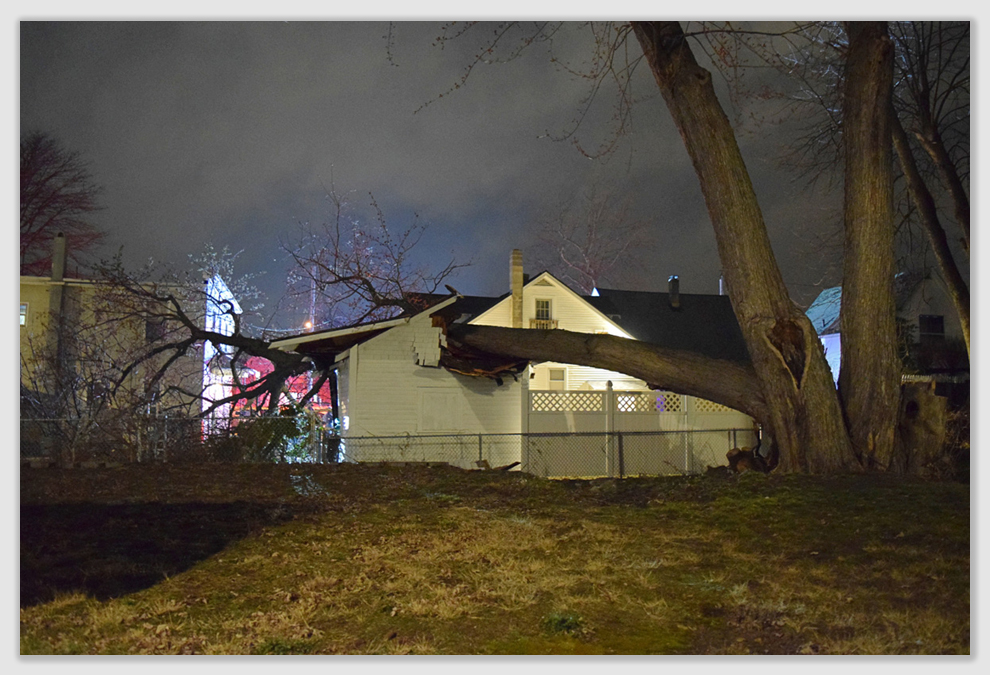
treefalloncar140212The Conines also contended that Snohomish County faced liability as the landowner of the property upon which the tree stood because the owner of land located in or adjacent to an urban or residential area has a duty of reasonable care to prevent defective trees from posing a hazard to others on the adjacent land. The County argued that it had no such duty because the tree was a “natural condition of the land.”

The Court held that when the land is located in or adjacent to an urban or residential area and when the landowner has actual or constructive knowledge of defects affecting his trees, he has a duty to take corrective action. The area in question was next to the City of Lynnwood and zoned urban residential. Thus, it was urban in character. The Conines produced expert evidence that the subject tree was obviously dead or dying and leaning for two years, that it looked like a forked snag and lacked fine or scaffold branches. This evidence, the Court said, created an issue of material fact as to whether the tree was in a defective condition and the condition was of sufficient visibility and duration to give the County constructive notice of a potential hazard.

– Tom Root

TNLBGray

Case of the Day – Wednesday, December 31, 2025

DOING NOTHING MAY BE A VERY GOOD OPTION

Yesterday, we considered whether my friend, Kirk Piper, was on a slippery slope in letting the sledding public have the run of Logan’s Hill. This peculiarly good winter coasting venue happened to come with the property on which he lived. Being a guy who is comfortable wearing both a belt and suspenders, Kirk had a deal with the City pursuant to which if he permitted recreational use of the hill next to his house, City liability insurance would cover such use of the hill. But, he wondered, what would happen if liability exceeded the insurance limits, or the City dropped coverage, or the Finance Director forgot to mail the premium, or some other calamity led to his being in the defendant’s dock as a result of what happened to the sledders using the hill?

Between cups of mulled wine at Kirk’s Christmas party last week, I told him about the wonders of Ohio’s recreational use statute. Sledding seemed to me to be the type of recreational activity that should be covered by § 1533.181 of the Ohio Revised Code. Naturally, my interest was piqued, and unsurprisingly, I found that the question had already been asked and answered in court.

But, as I noted yesterday, there is an important limiting factor. Land used for recreational purposes often is undisturbed, full of groundhog holes, dead trees, unmarked bogs, crocodile dens, and the like. In fact, the land’s undisturbed nature is often what makes it attractive for recreational use to begin with. For that reason, the recreational use statute exempts guys like Kirk from liability for the condition of the land on which the public may take its recreation.

Hogan’s Hill, for example, has a water hazard, a creek that is easily reached by the faster sleds. Many kids have had to bail out just before sleds topple over the bank into the thin ice and cold water. Suppose Hogan’s Hill was an amusement park attraction, with the creek being a feature rather than a bug. In that case, you can be sure that liability for damaged sleds and injured kids resulting from crashing into the creek would attach to the park operator. But because it is a natural feature of Hogan’s Hill, users are the captains of their own ship.

But what if Kirk, in a well-intentioned effort to improve Hogan’s Hill for the public, decided to bulldoze a few moguls or reroute the creek through some concrete culverts? And halfway through the work on a winter’s day. he parks his bulldozer at the bottom of the hill to go inside for a cup of that mulled wine? And while he’s gone, little Johnny and Judy race down the hill on a toboggan and collide with the dozer’s blade?

Or say Kirk used the dozer to dig a 10-foot deep pit just before the creek to stop sleds before reaching the water, and Johnny and Judy run their toboggan into the hole?

In a case like that, the liability issue is murkier. When it comes to the hill, doing nothing to alter or repair its natural conditions – even if the alteration makes perfect sense – might not just be an option, but even perhaps a better option.

Combs v. Ohio Dep’t of Natural Resources (2016), 146 Ohio St. 3d 271. Richard Combs was celebrating his birthday at Indian Lake State Park, which is open to the public without an admission charge. He spent the night fishing and early the next morning walked to Pew Island, where the fishing is better. As Rich walked across the causeway to Pew Island, Jerry Leeth, an ODNR employee, was using a boom mower to cut weeds and brush along the lakeshore. One of the mower blades threw a rock that struck Rich in the eye and face, and caused serious injuries.

Rich sued ODNR in the Court of Claims, alleging that Jerry negligently operated the boom mower and caused his injury. The Court of Claims granted ODNR’s motion for summary judgment, holding that because Rich was a recreational user, ODNR had no duty to keep the park safe for his entry or use, and his negligence claim was thus barred as a matter of law.

The court of appeals reversed the decision, holding that although the recreational user statute abolished a property owner’s duty to keep its premises safe for use by recreational users, it provides immunity only for injuries caused by the defective condition of the premises. The appellate court held that because Rich claimed that he was hurt by an ODNR worker’s negligence and not by a defect in the premises, the recreational user statute did not apply.

Richard appealed to the Ohio Supreme Court.

Held: ODNR was not entitled to immunity under the recreational user statute ORC § 1533.181, because Rich’s injuries did not arise from a defective condition of the premises, but rather from negligent mowing by an ODNR employee, and, as such, ORC § 1533.181 did not apply.

The Court noted that ORC § 1533.181, the recreational user statute, provides that no landowner owes any duty to a recreational user to keep the premises safe for entry or use or extends any assurance in that regard. Under the statute, a landowner is not liable to a recreational user for injuries caused by the defective condition of a recreational premises.

At common law, a landowner owed a duty to those who entered the premises, depending on whether the people were invitees, licensees, or trespassers. A landowner owed an invitee – someone the landowner had invited onto the property – the duty to exercise ordinary care to render the premises reasonably safe. The landowner owed no duty, however, to a trespasser or licensee upon the land except to refrain from wanton, willful, or reckless misconduct which is likely to injure him.

The common law also recognizes that a landowner, being aware of the presence of a licensee, or even a trespasser, is required to use ordinary care to avoid injury to him arising from the active negligence of such owner or his servants. The duty to exercise such reasonable care arises after the landowner knows or should know that a licensee or trespasser is on the land.

The recreational user statute amends the common law rule. Instead of common law distinctions based on the status of the person on the land, the duty owed depends solely on whether the person using the property qualifies as a recreational user. The statute limits landowner liability for injuries to recreational users in three ways: (1) no landowner owes any duty to a recreational user to keep the premises safe for entry or use; (2) granting permission to enter the property is not an assurance that the premises are safe; and (3) a landowner is not liable for injuries caused by the act of a recreational user.

But the statute has its limits. The Court observed that the legislature could have excused a landowner from any duty whatsoever to any recreational user, “but tellingly, it did not do so.” Instead, the statute does not abrogate a landowner’s common law duty to exercise reasonable care to avoid negligently injuring those on the premises, and – in the absence of language clearly showing the intention to supersede the common law – the existing common law continues in full force.

Accordingly, the Court ruled, the recreational user statute does not limit a landowner’s liability for a negligently inflicted injury that does not arise from the condition of the premises. In this case, Rich’s injuries did not arise from a defective condition of the premises but rather from Jerry’s alleged negligent operation of the mower. ORC § 1533.181 simply does not apply in these circumstances.

– Tom Root

TNLBGray