Case of the Day – Thursday, October 16, 2025

SELF-HELP CONDEMNATION

Condemnation is the process by which a public entity takes private property. The 5th Amendment requires that due process be followed, in that the taking not be arbitrary and be the result of necessity, that the owner is fairly compensated for the property that has been taken, and, of course, that the owner has a chance to challenge the taking in court.

Occasionally, the government may take a piece of property by conduct. A good example would be the passage of a state law to preserve wilderness, the effect of which would be to close roads through state forests that cut off access to private property for lumbering. Then, the proceeding is called inverse or reverse condemnation, a suit against a government to recover the fair market value of property that has, in effect, been taken and appropriated by the government’s activities, when no eminent domain proceedings are used.

None of this seems to have much to do with trees, especially your rights to compensation if state employees come onto your land and cut down a tree because they’re geographical klutzes. After all, the state has to intend to take your property (and take specific steps to do so) in a condemnation action. Even where the condemnation is a reverse one, the state has to deliberately do whatever it does to cause your property to lose value.

That’s why I was surprised and a little troubled by the Commonwealth of Kentucky’s response to its highway department employees’ goof in cutting down a boundary line tree without the approval of the private landowner. If the trespassers had been Joe’s Tree Service, we know how it would have turned out: a trespass action, with damages for the trespass and tree removal. But because the employees worked for the state, poor Gini Grace found out much after the fact that what had occurred was not a trespass, but a reverse condemnation.

To be fair, Gini’s lawyer might have saved the action as a negligence case and not a reverse condemnation had the complaint alleged negligence-type damages beyond the loss of the tree. But to me, that note in the opinion seemed to be a make-weight. Had her complaint alleged a torn-up lawn, driven-over shrubs, and Moon Pie wrappers littered about, I suspect the court would just have found a different way to get to its reverse-condemnation conclusion.

Not only did the rules get rewritten when the state trespassed on Gini’s place, but they were rewritten after the fact. Gini, don’t ever play poker with the Commonwealth of Kentucky, lest you learn too late that a pair of twos really does beat a royal flush.

Grace v. Commonwealth, Case No. 2018-CA-001488-MR (Ct.App Ky. Oct. 11, 2019) 2019 Ky. App. Unpub. LEXIS 727.

The Kentucky Department of Highways (“KYTC”) is responsible for maintaining state highways, including the elimination of hazards. In March 2012, KYTC removed a tree that KYTC believed to be located, at least partly, on the right-of-way and encroaching the highway. Gini Grace filed a complaint with the Kentucky Claims Commission, alleging that KYTC negligently trespassed and cut down her tree. KYTC moved to dismiss the claim.

The Commission found that two-thirds of the tree was on the state right-of-way and the remaining portion was on Gini’s land. It found KYTC negligent for failing “to conduct a reasonable inquiry and ascertain where the property lines were before they cut the tree,” and awarded Grace $11,666.66 plus the cost of removing the stump.

The McCracken Circuit Court reversed the order of the Commission and dismissed Gini’s claim, concluding it was a claim for reverse condemnation, rather than negligence. And, because the Commission only has jurisdiction over “negligence claims for the negligent performance of ministerial acts against the Commonwealth,” the Court ruled that it lacked subject matter jurisdiction over Gini’s claim. Gini appealed.

Held: The Commission lacked jurisdiction over Gini’s claim, and the claim thus had to be dismissed.

The Kentucky Claims Commission has “primary and exclusive jurisdiction over all negligence claims for the negligent performance of ministerial acts against the Commonwealth, any of its cabinets, departments, bureaus, or agencies, or any officers, agents, or employees thereof while acting within the scope of their employment.”

Reverse condemnation is a suit against a government to recover the fair market value of property that has, in effect, been taken and appropriated by the activities of the government when no eminent domain proceedings are used. Gini Grace’s claim form filed with the Commission alleged that a “tree, 3ft in diameter was cut down by the Highway Dept. without my permission.” This was the only injury asserted. Gini did not allege any additional damage to her property arising from KYTC’s negligence. Therefore, the Court ruled, Gini’s claim to recover the value of the tree “is in the nature of a claim for reverse condemnation.”

Gini argued that she claimed negligence because her claim form indicated KYTC “negligently trespassed” onto her property to remove the tree. The Court admitted that a trespass was necessary to cut the tree, but ruled that the damages Gini claimed do not emanate from the trespass, but from the taking.

KYTC was negligent in failing to determine whether the tree was on the state right-of-way, but Kentucky law holds that where an entity possessing the power of eminent domain prematurely enters upon private premises, the exclusive remedy of the landowners is based on Kentucky Constitution, Section 242, which provides that ‘just compensation for property taken’ shall be made. This rule preempts claims asserting negligent trespass that result in a taking.

Because Grace’s injury arose from KYTC’s premature entry onto her property and removal of the tree, her sole remedy lies in an action for inverse condemnation. Therefore, the Commission lacked subject-matter jurisdiction over her claim.

– Tom Root

Case of the Day – Friday, October 10, 2025

BROWN GETS A MULLIGAN

doover160921It’s been a while, a long while, since we were young pups in law school. But we still seem to recall that when a plaintiff complains that she’s been damaged by a trespass, she has to put on some sort of evidence as to the amount of the damage. If the trial record closes and the plaintiff hasn’t done so, thereb was a time when she would be out of luck. No do-overs, no mulligans. One and done, as the sports guys say.

Well, apparently that’s no longer true in Mississippi. When Martha Murrell decided to build a fence in front of her house without checking her subdivision restrictions first, her neighbor Jeanette Brown took exception. It seems the restrictions prohibited building anything within 25 feet of the property boundary, and Martha crowded that a little – by about 23 feet. In fact, she put the fence so close to the property line that she had to hack off a few branches from one of Jeanette’s trees in order to finish the project.

Jeanette sued Martha, asking the trial court to order her to remove the fence and to give her $30,000 in damages because she had hindered Jeanette’s enjoyment of her property. Admittedly, we enjoy our property, too, especially sitting on the deck with an appropriate legal beverage, but $30,000? That’s a lot of hindrance being compensated.

The trial court granted the injunction because the fence violation was pretty clear. Martha must have figured that showing the trial court her snapshots of the “mutilated” tree was good enough. The trial court must have found the pictures compelling, although not $30,000 worth of compelling. It awarded Jeanette $5,000.

mulligan160921The Court of Appeals was made of more skeptical stuff. It ruled that while the picture was good enough to show that Martha or her minions had trespassed onto Jeanette’s land, and had hacked up her tree, it was not good enough to show how much damage Jeanette had suffered. Despite a strenuous dissent from a judge who thought Jeanette had had ample opportunity to prove the amount of damages, the Court sent the case back to the trial court to give Jeanette a second bite of the apple.

Murrell v. Brown, 202 So.3d 287 (Ct.App. Mississippi, 2016). Jeanette Brown filed a complaint against their next-door neighbor, Martha Murrell, for constructing a fence in violation of their subdivision’s protective covenants. The North Colony subdivision covenants state that “[n]o fence shall be constructed nor any other structure be constructed within 25 feet of [the] front property line.” Brown complained that Murrell built a fence within a few feet of the front property line in violation of this covenant, thereby diminishing the value of Brown’s property and “hindering her use and enjoyment of her property.” Brown wanted the fence taken out and damages of $30,000.

After a hearing, the trial court found Murrell in violation of the subdivision’s covenants and ordered her to remove the fence. The court further held that because Murrell or her agents mutilated Brown’s tree and came onto Brown’s property to do so, Brown was entitled to $5,000 in damages.

Murrell appealed.

butchered160921

Jeanette made out her damaged tree to look something like this, but while a picture’s worth a thousand words, it’s not worth five thousand bucks.

Held: The damage award was reversed. The Court of Appeals said that in awarding Brown $5,000, the trial court reasoned that Murrell or someone on her behalf “mutilated [Brown’s tree] by chopping off these limbs in such a way that I don’t know what it would look like when it grows back. And [the person] came several feet over onto [Brown’s] property to do it.”

Murrell asserted that the trial court abused its discretion in awarding damages for the tree because Brown never mentioned the tree damage in her complaint. The Court, however, noted that while the complaint did not reference the tree damage, pictures of the tree were entered into evidence at the hearing, showing that the tree’s branches had been cut at the fence line, and Brown’s lawyer had written to Murrell about the damage before the case was filed.

Murrell also claimed that Brown failed to prove that Murrell or her agent caused the damage to the tree. Brown asserted at the hearing that Murrell “took a power saw and cut [her] tree to build the fence,” but Brown conceded that she did not personally witness Murrell, or anyone acting on her behalf, cut the tree. She simply testified that she “was informed [Murrell’s] father had cut the tree.” The appeals court, however, was satisfied that the trial judge, “as the fact-finder, clearly determined that Murrell or her agent cut Brown’s tree.” Circumstantial evidence, after all – such as limbs cut at the fence line – supported the trial court’s finding that someone acting on Murrell’s behalf cut the limbs during the construction of the fence. That was good enough.

The heart of Murrell’s appeal was that the award of $5,000 “for the mutilation of the tree” did not address the fair market value of the tree before and after the cutting. After all, the tree in question was not a fruit-bearing tree “and the cost of complete life maturity is no more [than] two hundred and fifty dollars.”

The appellate court held that while the trial court properly found Brown’s tree suffered some damage, and Murrell (or her agent) likely trespassed on Brown’s property to cut the tree, the award of $5,000 for the tree damage was excessive and not supported by substantial evidence. “Brown’s tree was not cut down,” the Court observed, but rather “the tree’s branches were merely cut back at the fence line. While the pruning was unsightly, there was no evidence presented that the tree was permanently damaged.”

apple160921Proof of actual damages must be shown in order to recover more than nominal damages, and Brown made little in the way of such a showing. The Court, however, held that Brown showed photos of a “mutilated” tree and those photos were enough to let the judge ascertain damages. Once a judge is “presented clear evidence that [the plaintiff] owned the property and that the trees had been cut without [her] consent, the [judge] was obliged under the circumstances to award damages in some form.” So something is to be paid, but there has to be some evidence of what.

A dissenting judge complained that “Brown did not even establish what kind of tree is at issue in this appeal. It was Brown’s burden to prove her damages, and having failed to present any evidence of actual damages, she should not be given another opportunity to do so. “A litigant is entitled to but one bite at the damages apple…,” he wrote.

– Tom Root

TNLBGray140407

Case of the Day – Monday, August 25, 2025

CONTEMPTUOUS NEIGHBORS

contempt150729Contempt of court is the mechanism by which a court enforces compliance with its orders. Punishment can range from a reprimand to jail time. Regardless of whether the contempt is civil or criminal, it’s something that litigants and lawyers would agree is best avoided.

Some people, like George Reece and Gerry Smith, just can’t help themselves. The neighbors squabbled for years over boundaries and an old hemlock tree. Finally, in 2005, they buried the hatchet, agreeing to a settlement where Reece gave Smith some property, and Smith gave Reece some property. The settlement specifically provided that Reece got property next to a pond that included his beloved hemlock tree.

So much for congeniality. It wasn’t long before they were back at it. Smith accused Reece of trespassing, harassing him, assaulting him, and diverting rainwater to flood Smith’s land. Reece countered that Smith had cut down his beautiful hemlock and destroyed a custom wrought-iron gate. The court threw up its hands, found them both in contempt and sent them off to jail for 20 days – presumably not as cellmates – to contemplate their misdeeds.

Reece and Smith could have been the inspiration for Mad Magazine's famous warring spies.

Reece and Smith could have been the inspiration for the late Mad Magazine’s famous warring spies.

Both of them appealed. The Court of Appeals sided with Smith for procedural reasons, holding that the act of asking that the other party be held in contempt was a motion, not a new civil action. That being the case, Reece wasn’t entitled to counterclaim for contempt himself. If he felt strongly enough about the destroyed gate and hemlock tree, Reece could file his own motion for contempt, or start a separate lawsuit for trespass to trees.

It’s a cinch that Reece probably felt strongly about it after 20 days in jail, and it seems to us rather hyper-technical of the court not to consider Reese’s misstyled counterclaim to be a motion for show cause to hold Smith in contempt. To do so would have been more efficient, as well as a triumph of substance over form.

Reece v. Smith, 292 Ga.App. 875, 665 S.E.2d 918 (Ga.App. 2008). This case was the last in a series of appeals resulting from several years of litigation between Gerry Smith and George Reece, who live next door to each other (but obviously not in harmony).

Smith and Reece repeatedly petitioned the court to intervene in a property-line dispute. In 2005, they entered into a settlement agreement in which they agreed to get an accurate survey of the disputed property and, based upon the survey, to convey portions of their property to each other in settlement of the long-running dispute. Smith specifically agreed that certain property next to a pond would belong to Reece and that this property included a tall hemlock tree. The court entered a final order approving the settlement agreement, ordering the parties to comply with it “in every respect.”

Two years later, Smith asked the court to hold Reece in contempt of the agreement. Smith said Reece had trespassed on his property several times, had threatened and hit him, and had caused rainwater to flow onto his property. Reece denied it and asked the court to hold Smith in contempt, saying that Smith cut down the hemlock tree, destroyed a wrought iron gate Reece had erected across his driveway, interfered with the surveyors, removed pins marking the property lines, blocked the access roads to his property, and stalked and harassed him and his guests. Reece asked for damages for the destruction of the hemlock tree and the gate.

The trial court found that each of them had committed some of the acts alleged and ordered them to serve 20 days in jail and pay a fine. The court also ordered Smith to pay Reece $5,000 in damages for cutting the hemlock tree, but it denied Reece’s claim for damage to the gate, ruling that he hadn’t presented sufficient evidence on the value of the gate.

Both parties appealed.

Held: The Court upheld the jail sentence against Reece but reversed his counterclaim. In order to find criminal contempt, there must be a showing of willful disregard or disobedience of the order or command of the court. The sentences and fines should be affirmed if there is sufficient evidence to find that a party committed at least one of the contumacious acts listed in the court’s order.

box150729Smith’s testimony that an adjoining owner had constructed his driveway in such a manner that it caused rainwater to dump onto Smith’s property, had trespassed and threatened him, and drove into a sand pile in Smith’s front yard was sufficient to support the court’s finding that Reece was in contempt of the court’s previous order relating to the settlement.

The contempt remedy is part of the judiciary’s inherent power to enforce its orders. As such, an action for contempt is ancillary to the primary action and is characterized as a motion and not a pleading. Because it is not a complaint, an application for contempt may not, standing alone, serve to commence a civil action for damages.

Therefore, Reece could not file a counterclaim for contempt or obtain an order requiring Smith to pay $5,000 in damages for cutting the hemlock tree. However, he could file a separate suit in superior court for damages resulting from the destruction of the hemlock tree and wrought iron gate.

– Tom Root

TNLBGray140407

Case of the Day – Wednesday, August 20, 2023

WE GOT YOU COVERED

Ich bin in Berliner? The denizens of the western half of the city were irate over the Wall. Just a bit.

Ich bin ein Berliner? The denizens of the western half of the city were irate over the Wall. Just a bit.

California homeowner Shelly Albert lived next to grumpy Henri Baccouche. How do we know he was grumpy? You’d be grumpy, too, if your neighbor built a fence over the parties’ common driveway easement, enclosing a grove of nine mature olive trees that stood on your land.

Imagine how the Berliners felt when they awakened on the morning of August 13, 1961, to find that their neighbors on the east side of town had built a fence enclosing the Brandenburg Gate, Karl Marx Strasse, and some of the nicer parts of town. Or how those Mexicans must have felt when they awoke from a siesta to find a big wall between them and Texas, and a rock with the bill wrapped around it lying in their front lawn? That’s sort of how Mr. Baccouche felt.

To make matters worse, Henri fumed, the nine olive trees had been badly damaged by Shelly’s contractors. The workers’ “actions in hacking, cutting and pruning the trees reduced them to a pitiable state.” The contractors had damaged other trees as well, thereby diminishing “the aesthetic and monetary value of those trees… ” Henri demanded treble damages under Civil Code §§ 733 and 3346, but later expanded his claims to include the alternative claim that Shelly and her people were negligent.

Shelly didn’t bat an eye. She had an insurance policy from Mid-Century Insurance that covered negligence like this. When Henri served his civil action on Shelly, she forwarded a copy to the insurance company. She explained to her insurer that she didn’t believe that any of her fencing encompassed Mr. Baccouche’s property. Plus, she said, the trees that her workers trimmed were “boundary trees,” straddling the property line between the properties. Plus, she explained, she has been notified by the Los Angeles Fire Department to clear the area where the trees were located, as it was within 200 feet of her residence. She had trimmed these same trees year after year, and Mr. Baccouche never told her not to, or that the trees belonged to him. Shelly told her agent that she believed in good faith that the trees were hers and that she was required to trim them.

If she didn't work for Disney (and if she weren't a cartoon character), Elsa could be a field rep for Mid-Century.

If she didn’t work for Disney (and if she weren’t a cartoon character), Elsa could be a field rep for Mid-Century. Except their hearts are much colder…

Ah, Shelly … your Pollyannish optimism is amusing! But not to the cold-hearted field claims manager, who denied your claim. The insurance company concluded that the claim was barred by the exemption for intentional acts set out in the policy. Insurance policies typically cover losses from negligent acts (you accidentally run over the neighbor’s cat) but not intentional acts (you kick the neighbor’s cat into the next county).

cat150724However, maybe Henri left her an out. In his amended complaint, he claimed that if Shelly didn’t trespass and hack up his trees on purpose, she did so negligently. Shelly reported the amended claims to her insurance carrier. She argued that because she believed that the trees were owned by both parties, they “constitute[] property covered under my policy. Accordingly, [defendant] has an obligation under my policy of insurance to tender a defense on my behalf.”

The insurer did not budge. The company contended that because Shelly admitted she purposefully erected the fence and had intentionally cut Mr. Baccouche’s trees, the conduct giving rise to Henri’s claims was intentional, and thus not an accident or occurrence within the meaning of the insurance policy. The insurer said its coverage determination had considered the possibility that the trees were solely owned by Shelly, solely by Henri, or were jointly owned. The carrier determined that who owned the trees was irrelevant to the coverage determination because the damage occurred from nonaccidental conduct.

In response to the insurer’s July letter, Shelly took issue with some minor factual assertions in the document but did not otherwise claim that the damage to the trees had arisen from any sort of accident within the meaning of the policy. The insurer replied that Shelly had not provided any facts addressing its position that the incident was not an “accident” or “occurrence” within the meaning of the policy.
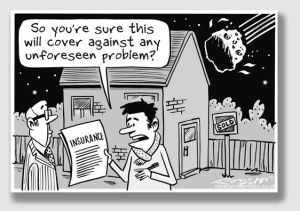
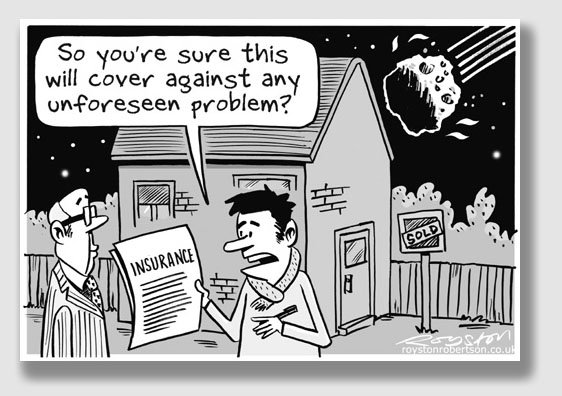
unforeseen150724Shelly sued the insurance company. The trial court concluded that she failed to show “a potential for coverage,” which is what she had to prove in order to get Mid-Century to pay for her legal defense. The judge decided that Shelly’s conduct alleged in Henri’s lawsuit was nonaccidental and intentional. To the extent the amended complaint alleged “negligent” conduct, Shelly had admitted to the carrier what she had done, and Shelly’s argument that she somehow “negligently supervised” the workers was not supported by Henri’s claims.

The Court of Appeals agreed with the trial court. An insurer owes its insured a broad duty to defend against claims creating a potential for indemnity. This duty to defend is broader than the duty to indemnify and may exist even if there is doubt about coverage. However, the insurer has no duty to defend where the potential for liability is tenuous and far-fetched. The ultimate question is whether the facts alleged in the lawsuit against the insured fairly apprise the insurer that the suit is upon a covered claim.

Shelly’s policy covered property damage resulting from an occurrence, and the policy defines an occurrence as an accident. An intentional act is not an ‘accident’ within the plain meaning of the word. The term “accident” refers to the nature of an insured’s conduct, and not to the unintended consequences of the conduct. An accident does not happen when an insured commits a deliberate act unless some additional, unexpected, independent, and unforeseen happening occurs that produces the damage.

Shelly intended the acts that resulted in damage to Henri’s trees. Her conduct did not become an accident just because she didn’t know the trees belonged to Henri. Her intent was irrelevant; the act was not. Shelly told her workers to trim the trees that had been trimmed. Her mistake was in thinking the trees were hers. Her insurance didn’t cover that.

There’s a lesson here for the Henris of the world, too. Your lawyer can sometimes get the bit in his or her teeth, writing enraged and cutting complaints against defendants. In this case, it would have been a lot better for Henri’s lawyer to have accused Shelly of gross negligence or even recklessness. That way, the insurer gets involved. Insurance companies tend to be economic, rational creatures, who are willing to settle when settlement is reasonable… and always have the ability to write a check that’s good.

Albert v. Mid-Century Ins. Co., 236 Cal.App.4th 1281 (California Court of Appeals, Second District, Eighth Division, April 28, 2015). Plaintiff Shelly Albert bought a homeowners’ insurance policy from Mid-Century in January 2008. The policy was in force in January 2011, when Albert was sued by her neighbor, Henri Baccouche, for damages she caused to his property when she erected an encroaching fence and pruned nine of Mr. Baccouche’s mature olive trees. Albert asked Mid-Century to defend the suit, and when the insurance company refused, she sued it.

The insuring clause of the plaintiff’s policy stated: “We will pay those damages which an insured becomes legally obligated to pay because of … property damage resulting from an occurrence. At our expense and with attorneys of our choice, we will defend an insured against any suit seeking damages covered under [this section] . . . We do not have any duty to defend or settle any suit involving actual, alleged, threatened or declared . . . property damage not covered under this liability insurance.” The policy defines an “occurrence” as “an accident, including exposure to conditions, which occurs during the policy period, and which results in . . . property damage . . . during the policy period. Repeated or continuous exposure to the same general conditions is considered to be one occurrence.” The policy also set forth a number of exclusions, including one for “intentional acts,” which the policy defined as “property damage . . . which is caused by, arises out of or is the result of an intentional act by or at the direction of the insured.” By way of example, this includes but is not limited to any intentional act or intentional failure to act by an insured, whether a criminal act or otherwise, where resulting injury or damage would be objectively expected to a high degree of likelihood, even if not subjectively intended or expected.”

denied150724Mr. Baccouche’s complaint alleged that he and Shelley Albert, his neighbor, owned adjacent parcels of land which were subject to a reciprocal roadway easement providing both parcels access to the main public road. He said Albert erected a permanent fence over a portion of the roadway easement, which also intruded onto his parcel. The fence enclosed a 644 square-foot portion of Mr. Baccouche’s land, which included a grove of nine mature olive trees. He claimed Albert and her contractors “willfully and maliciously damaged [the] nine mature olive trees . . . by severely hacking, cutting, and pruning those trees so as to greatly reduce their canopies, foliage, limbs, etc., without permission.” The complaint sought treble damages under Civil Code §§ 733 and 3346.

Mr. Baccouche later amended his complaint, alleging a cause of action for negligent damage to his trees.

The insurance company investigated the claims. Albert asserted that the fence she erected was within her property line and said she did not believe any of her fencing encompassed Baccouche’s property. As to the trees at issue in Mr. Baccouche’s complaint, Albert asserted that the trees were “boundary trees” and that the trunks of the trees essentially straddled the property line between Mr. Baccouche’s and her properties. She told the insurance company that since she purchased her lot, she has been notified by the Los Angeles Fire Department to clear the area where the trees were located, as it was within 200 feet of her residence. She trimmed these same trees year after year, without complaint from Mr. Baccouche.

The carrier denied coverage, concluding that the conduct complained of by Baccouche was intentional conduct by Albert. Albert argued that because she had the trees trimmed in the good faith belief she owned them, “ … no intentional tort will lie.” Albert then sent Mid-Century a “demand for tender of defense,” which the carrier denied. Albert took issue with the insurer’s position but did not otherwise claim that the damage to the trees had arisen from any sort of accident within the meaning of the policy.

Albert then sued Mid-Century. The trial court granted the carrier’s motion to deny coverage. The court ruled that Albert had failed to demonstrate a potential for coverage, as the conduct at issue in Baccouche’s lawsuit was nonaccidental, intentional conduct. The trial court also concluded that to the extent Mr. Baccouche’s complaint alleged “negligent” conduct by the plaintiff, there was no evidence whatsoever that the trees were injured in some accident, “e.g. by inadvertently striking a tree with a motor vehicle.” The trial court also concluded that Mr. Baccouche’s pleadings did not support his “negligent supervision” theory.

Albert appealed.
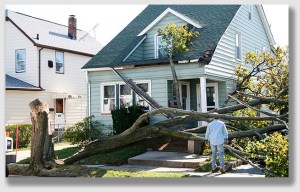
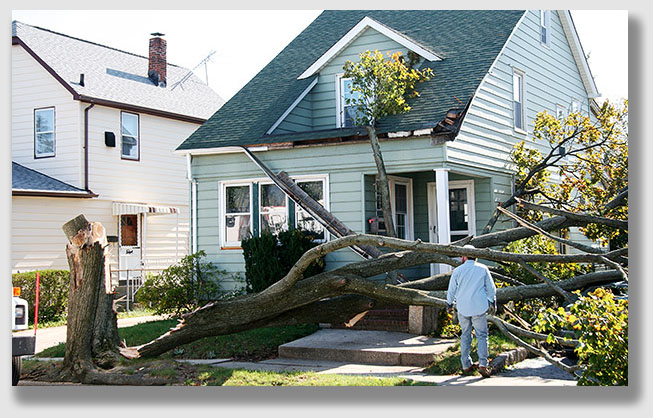
If you intentionally cut down one of your own trees, but it unintentionally falls on the house, you're still covered. We're pretty sure. But read the fine print.

If you intentionally cut down one of your own trees, but it unintentionally falls on the house, you’re still covered. We’re pretty sure. But read the fine print – preferably before you fire up your chainsaw.

Held: Mid-Century was not obligated to defend Albert. The Court observed that an insurer owes its insured a broad duty to defend against claims that may result in indemnity. While the duty to defend is broader than the duty to indemnify and may exist even if there is doubt about coverage, the proper focus is on the facts alleged in the complaint, rather than the alleged theories for recovery. The ultimate question is whether the facts alleged ‘fairly apprise’ the insurer that the suit is upon a covered claim.”

Here, the policy covers property damage resulting from an occurrence, and the policy defines an occurrence as an accident. Under California law, the word ‘accident’ in the coverage clause of a liability policy refers to the conduct of the insured for which liability is sought to be imposed on the insured. The Court held that an intentional act is not an ‘accident’ within the plain meaning of the word.” It said, rather, that in the context of liability insurance, an accident is “an unexpected, unforeseen, or undesigned happening or consequence from either a known or an unknown cause.”

“Accident” refers to the nature of the insured’s conduct, and not to its unintended consequences. It is not an “accident” when the insured performs a deliberate act unless some additional, unexpected, independent, and unforeseen happening occurs that produces the damage. When an insured intends the acts resulting in the injury or damage, it is not an accident “merely because the insured did not intend to cause injury. The insured’s subjective intent is irrelevant.”

Nevertheless, the Court said, coverage is not always precluded when the insured’s intentional acts result in injury or damage. An accident may exist “when any aspect in the causal series of events leading to the injury or damage was unintended by the insured and a matter of fortuity.” When a driver intentionally speeds and, as a result, negligently hits another car, the speeding would be an intentional act. However, the act directly responsible for the injury – hitting the other car – was not intended by the driver and was fortuitous. In that case, the occurrence resulting in injury would be deemed an accident. On the other hand, where the driver was speeding and deliberately hit the other car, the act directly responsible for the injury – hitting the other car – would be intentional and any resulting injury would be directly caused by the driver’s intentional act.”

Albert argued that although she deliberately hired a contractor to trim the trees, the excessive cutting was not an intended consequence and should be deemed an accident. However, it is completely irrelevant that Albert did not intend to damage the trees because she intended for them to be pruned. Moreover, it is undisputed that the contractor intended to cut the trees, and absolutely no facts exist in the complaint or otherwise indicating that some unforeseen accident (such as a slip of the chainsaw) caused damage to the trees. In fact, it was always Albert’s position that the trees had not been damaged or pruned excessively (and therefore were not subject to an accident) and that they had been cut in accordance with the City’s brush clearance ordinance. An insured may not trigger the duty to defend by speculating about extraneous ‘facts’ regarding potential liability or ways in which the third party claimant might amend its complaint at some future date.”

Also, the Court said, no facts supported Albert’s theory that her negligent supervision of the contractors brought the complaint within the terms of the policy. Negligent supervision requires (1) an employer to supervise an employee; (2) who is incompetent or unfit; (3) the employer had reason to believe undue risk of harm would exist because of the employment; and (4) harm occurs. There are simply no facts, in the complaint or otherwise, supporting the elements of this claim.

Under any view of the facts, the Court ruled, the trimming of the trees was no accident. Albert failed to carry her burden to show that any of Mr. Baccouche’s claims may fall within the scope of the policy.

– Tom Root

TNLBGray140407

Case of the Day – Wednesday, June 18, 2025

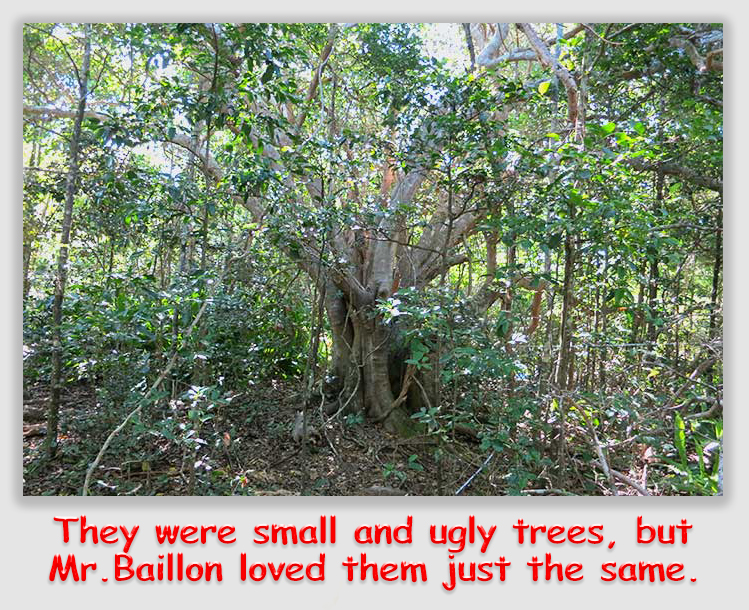
YEAH, WELL, THEY WERE UGLY TREES…

When the contractor building an interstate highway interchange needed some space to park bulldozers, the state highway department asked Mr. Baillon for an easement.  Being justly proud of his scrubby little trees and stunted bushes, he refused.

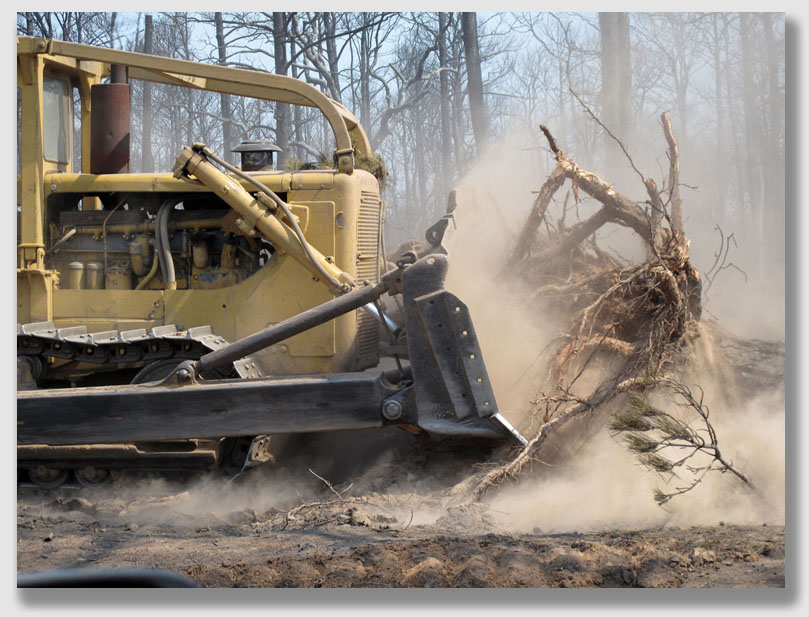
A couple of volunteer oak trees and some forsythia bushes are no match for a Caterpillar D10, so the contractor, Carl Bolander & Sons Co., went ahead and used Mr. Baillon’s land anyway.  But it turns out a Caterpillar D10 is no match for a Minnesota trial court.  Mr. Baillon sued and won.

But he won what?  The trial court judged his damages by the diminution in value of his land.  That is, how much less is the scrawny strip of real estate worth with the scrub trees gone?  Not much, the Court said, giving Mr. Baillon just $500.00.

Mr. Baillon appealed.  He argued he had wanted the trees and bushes as a sound barrier between himself and the road.  Also, he should have gotten treble damages because of the intentional trespass.

The appeals court sort of agreed.  It held that the measure of damages for the loss of trees — because they weren’t particularly desirable as shade trees or ornamental trees — was the reduction value of the real estate.  Clearly, however, treble damages should be assessed under Minnesota Statute 561.04, Minnesota’s wrongful cutting statute, because the trespass was anything but casual.

This type of damage calculation, well known to contract law students who read Peevyhouse v. Garland Coal Co., is intended to avoid economic waste.  The thinking is that the courts won’t order restoration of the property if the cost exceeds the reduction in value caused by the conduct.  But at what price to freedom?  Mr. Baillon didn’t want to sell his property; he wanted his trees, pathetic though they might be.  The fact that the marketplace might not share his desires shouldn’t matter all that much: it was his land, and he should be able — within broad parameters — to keep it as he likes.  Letting the bulldozer operator off the hook for the intentional trespass by not requiring that the land be restored to what it looked like before the trespass, even if that cost ten times the difference in real property value, seems to us to not accord Mr. Baillon’s rights the respect they deserved.

Baillon v. Carl Bolander & Sons Co., 306 Minn. 155, 235 N.W.2d 613 (Sup.Ct. Minn. 1975).  The Highway Department tried to get Baillon to grant a temporary construction permit, giving the state an easement to go on his property adjacent to where Bolander was constructing I-35.  Although Baillon wouldn’t grant the easement, Bollander’s workers trespassed on the land and destroyed a number of trees and shrubs. Baillon wanted the particular trees, in order to preserve a natural and wild appearance, to abate noise from the highway, and to preserve the beauty of the premises.  The trial court found that Baillon was damaged by the Bolander company’s intentional acts in the sum of $500.00.  

Arguing that the trial court should have applied as a measure of damages the replacement cost of the trees and not, as the trial court held, the diminution in value of the real estate, and that he was entitled to treble damages, Baillon appealed.

Held: The award of damages was upheld in part.  The Supreme Court held that the proper measure of damages for the destruction of trees which, for the most part, were quite small, ill-formed and not particularly desirable as shade trees or ornamental trees, but which served to prevent erosion and acted as a sound barrier, was the diminution in value of the real estate rather than the replacement cost of trees (even though the trespass was willful).

However, treble damages should be awarded. The Court held that where the highway contractor — in the course of building the freeway — intentionally cut the trees, which did not protrude over the highway. The trespass was not necessary for the contractor’s purposes and was not “casual.”  It was clearly the duty of the trial court to order treble damages unless Bolander’s activities came within one of the exceptions specified in the statute, and those activities clearly did not.

– Tom Root

TNLBGray140407

Case of the Day – Thursday, May 22, 2025

DOUBLE DIPPING, KENTUCKY STYLE

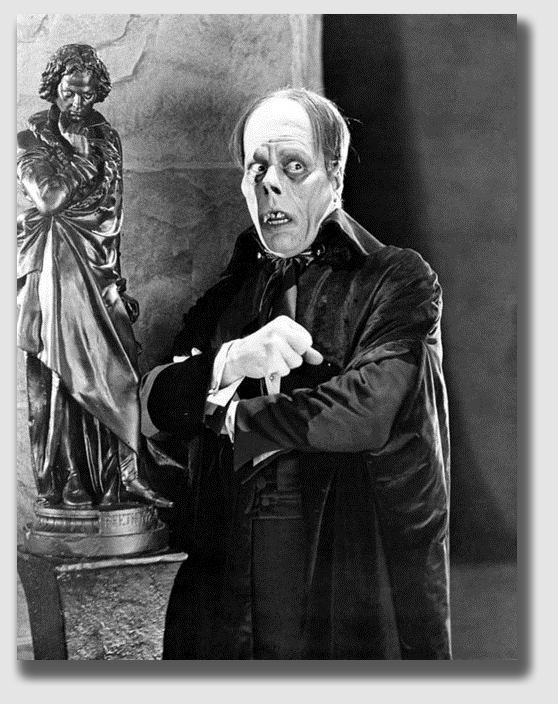
Lon Chaney was not a part of this lawsuit.

Lon Chaney was not a part of this lawsuit.

It’s hard to feel too much sympathy for Mr. Chaney (Dave Chaney, not Lon Chaney) in today’s case. He and his wife lived in a hollow on the Ohio River, downhill from the Wilsons.

When the Chaney homestead filled up with mud because of a landslide, the Chaneys saw green where most homeowners would just see brown. They sued the hilltop Wilsons, complaining that their neighbors had trespassed and cut down some 400 trees, many of them belonging to the Chaneys. The Chaneys alleged that the removal of the trees — insulting enough on its own — led to the hillside ending up in the Chaneys’ living room.

The trial court got the two sides to agree that their surveyors would decide on the proper boundary. The surveyors did so and concluded that Mr. Wilson had cut down his own trees, not Chaney’s trees. Meanwhile, the Chaneys lost or fired their attorney — we’re unclear what happened, but regardless, it came at a bad time — and proceeded to lose on summary judgment. They then appealed, arguing for the first time that they hadn’t agreed to have their surveyor work with the other side’s surveyor.

The Court of Appeals ruled against the Chaneys, holding that their allegation was too little, too late. Because it hadn’t been raised in the trial court (where it could have been corrected), the argument could not be raised on appeal. Besides, the Chaneys’ lawyer had agreed to the two-surveyor mechanism, and that agreement was binding on the parties.

There may have been more to the Court’s repudiation of the Chaneys’ position. The trial judge was clearly a little put off that the Chaneys had told their insurance company that the landslide was caused by rain, thus collecting a cool $200,000 for the damage (the Chaneys must have had quite a living room). Now, the Chaneys were saying that the mudslide resulted from the Wilsons’ alleged tree cutting. The shifting story didn’t especially smack of sincerity.

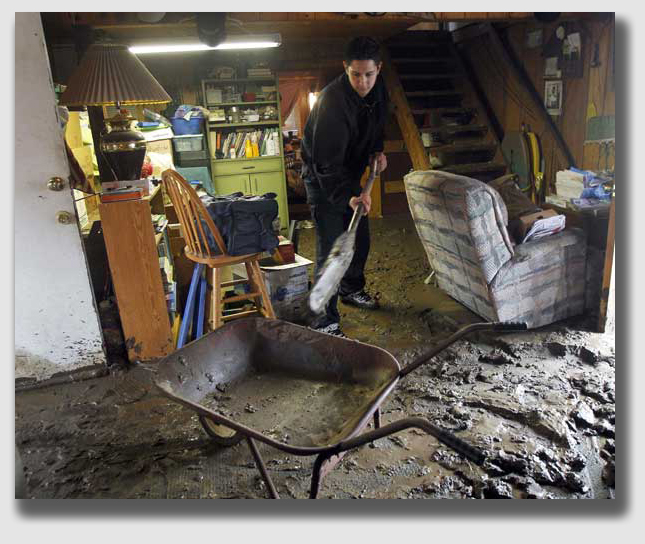
Most people see a mudslide as a disaster ... the Chaneys saw it as a ticket to Easy Street.

Most people see a mudslide as a disaster … the Chaneys saw it as a ticket to Easy Street.

It is considered poor form to try to collect twice.

Chaney v. Wilson, 2007 Ky. App. Unpub. LEXIS 307, 2007 WL 2019673 (Ct.App. Ky., July 13, 2007). Philip and Michaelynn Wilson owned property adjacent to David Chaney’s property in Maysville, Kentucky. The Chaneys lived at the bottom of a steep hill near the banks of the Ohio River. The Wilsons lived at the top of the hill, overlooking the river.

The Chaneys charged that the Wilsons caused timber to be cut and removed from the Chaneys’ property and that such actions caused the removal of lateral and subjacent support, either causing or aggravating a landslide that damaged their property. At the behest of the trial court, two surveyors surveyed and agreed on the boundary line between the parcels. The surveyors also concluded that any trees that had been cut were in fact on the Wilsons’ property.

The Chaneys may have been perfectly honest with the insurance company ... but if they were, it meant they were trying to snooker the court.

The Chaneys may have been perfectly honest with the insurance company … but if they were, it meant they were trying to snooker the court.

The trial court entered a final order, incorporating by reference the surveyors’ agreed description as the disputed boundary line and granting the Wilsons’ motion for summary judgment. Regarding the Chaneys’ claim that some 400 trees had been cut, the trial court found that the physical evidence on the site did not support the allegation, and, “based upon the boundary line as agreed and established by the parties two independent surveyors, any minimal cutting of trees occurred on the defendant’s side of the established boundary line, effectively negating any claims of improper ‘cutting of timber’ as alleged in the Complaint.”

The court also took judicial notice of a separate legal proceeding filed by the Chaneys against their insurance company in which they also alleged that their home was damaged by a landslide in March 1997 – nine months before the Wilsons cut down any trees –which had been triggered by heavy rains. The Chaneys had received a settlement of $200,000 from their insurer for the landslide damage.

The trial court dismissed the Chaneys’ complaint. An appeal followed.

Held: The summary judgment was upheld. On appeal, the Chaneys — who had lost their attorney during the proceedings — only made one argument, that they did not authorize counsel to agree to the surveyors’ collaborating on the legal description of the disputed boundary line. But the Court held that while an attorney cannot substantively settle a case without his client’s express authority, a party is nonetheless bound by the procedural agreements and stipulations of its attorney in the conduct of the litigation for which that attorney was hired. The agreement entered to have the surveyors conduct a joint survey was such a procedural agreement and was within the attorney’s authority.

What’s more, the Chaneys never complained in the trial court that their attorney lacked the authority to make the agreement. The Court noted that an issue not timely presented to the trial court may not be considered for the first time on appeal.

Tom Root
TNLBGray140407

Case of the Day – Wednesday, February 26, 2025

SHOWING UP

Denise Pevarnek’s agent chopped down her neighbors’ trees so she’d have a better view of the river. The neighbors complained (surprisingly enough), but Denise steadfastly ignored their remonstrances. The neighbors then sued, but Denise ignored the summons. She finally decided to start paying attention after a default was entered against her and the trial court intended to assess treble damages against her in the amount of $77,000.

YouSnoozeYouLoseDenise tried futilely to undo the consequences of her earlier indolence. Alas, a stitch in time saves nine. The Court ruled that she had had plenty of notice, but her decision to ignore the lawsuit was her problem, and undoing the default she so richly deserved would have turned her problem into her neighbors’ problem. And they were already smarting from the loss of their trees.

Of interest in the case — one argument Denise included in her scattershot but untimely defense — was her contention that the cost to replace the trees wasn’t the right measure of damages and that the trial court was wrong to rely on an affidavit of an arborist that didn’t explain in detail how he had arrived at the damage costs. The Court rejected this, saying that in the case of trespass, the measure of damages is either the reduction in the value of the property or — where the property can be repaired — the cost to fix things. The goal of the damage award, according to the Court, is to come as close as possible to compensating the owner for the damages, and trial courts have a lot of latitude to choose the method that seemed more reasonably calculated to do so.

The affidavit, the Court noted, laid out the expert’s education and experience, showed that he had inspected the damaged real estate, and proposed a reasonable strategy for repairing the harm. The arborist listed what had to be done and how much he’d charge to do it. It might not be perfect, but perfection is often the enemy of “good enough.” The affidavit, the Court ruled, was “good enough.”

Stitch2The Court reminded the defendant that if she really had found the damage showing to be flawed and superficial, she could have come to the hearing and contested it. Snooze and lose, indeed.

Bologna v. Pevarnek, 2007 Mich. App. LEXIS 2689, 2007 WL 4207801 (Mich.App., Nov. 29, 2007). Denise Pevarnek hired Chester Damiani to clean up her property. He was zealous to a fault, deciding to improve the view of the Detroit River from her adjacent lot by cutting down trees belonging to her neighbors, the Bolognas. Believing that Denise and Chester’s conduct was baloney, the Bolognas sued for trespass, alleging that the destruction reduced the value of their property and exposed a view to Pevarnek’s unsightly neighboring property and asking for $28,000, trebled by Michigan’s wrongful cutting statute to $84,000.

Denise Pevarnek was served with the lawsuit, but she didn’t answer. As is customary when that happens, the Bolognas got a default judgment. Thereafter, they presented the affidavit of a certified arborist who opined that the cost of landscape restoration was $24,050. At this point, Denise took notice, and began taking action to defend, seeking to have the default undone. The trial court refused, and it entered judgment against her for $77,730. Pevarnek appealed.

Held: The judgment was upheld. Much of the case revolves around whether Denise should be relieved from her default judgment. The Court of Appeals ruled, in essence, that she knew about the suit and did nothing. In other words, “you snooze, you lose.” But of interest in the area of tree law was Denise’s claim that the trial court was wrong in using the cost of replacing the trees as a measure of the damages the Bolognas suffered. The Court of Appeals said where the wrong consists of a trespass to property resulting in an injury to the land that is permanent and irreparable, the general measure of damages is the diminution in value of the property. If the injury is reparable or temporary, however, the measure of damages is the cost of restoration of the property to its original condition (if less than the value of the property before the injury).

perfectThe rule is, however, flexible in its application. The ultimate goal is compensation for the harm or damage done. Thus, a court may apply whatever method is most appropriate to compensate a plaintiff for his or her loss. Here, the Court said, given the fact that the Bolognas’ trees could be restored, it was proper for the trial court to use the cost-of-restoration method.

Pevarnek argued that the trial court erred by adopting without question the assertion of alleged damages without sufficient foundation. The plaintiff had filed an affidavit of arborist Steve McCollum, who swore that – in order to return the property to its pre-trespass condition, that is, with no view of Pevarnek’s property – 12 new trees had to be planted, some existing trees had to be replanted, the over-pruned trees had to be removed, and the lawn had to be repaired. He stated that the total cost of this work was $24,050. The trial court awarded plaintiffs damages of $77,730, equal to three times the sum of the cost of work proposed by McCollum and $1,860 for the cost of a privacy fence. Although McCollum’s affidavit didn’t explain how he calculated the damages, he stated his qualifications and education, he said he had personally inspected the Bologna property, assessed their needs, specifically listed the work to be done, and listed the cost for his business was to complete it. The Court said the expert affidavit put forth a reasonable basis for the damage computation, and that was enough.

– Tom Root
TNLBGray