Case of the Day – Monday, November 4, 2024

ERR IN HASTE … 

truck160211“Haste makes waste,” the old saw goes, and did it ever for the Warrens of Iron County, Missouri.

They finally realized their dream, buying land they had rented for years as cattle pasture for their dream home. First, logically enough, they wanted to mark the boundaries of the land. The Warrens asked their neighbors, the Hales, to pay for half of the survey, but the Hales declined. Why should they pay? They knew where their boundaries lay.

So the Warrens went ahead on their own. Their surveyor couldn’t find the section corner marker, which had been described in some 19th century surveys as laying certain distances on certain radials from streams and trees that weren’t there anymore. So he made his best guess, but didn’t use the technique provided for in Missouri law.

Hard to believe, but the surveyor blew it big time, marking a boundary that was way off the traditional boundaries used by the parties. In fact, his boundary included big chunks of the Hales’ land, such as their entire driveway, landscaping and front lawn and nearly their house. The day after the surveyor placed his little pink flags, Mrs. Hale complained to the Warrens that their surveyor was nuts, and she’d get another surveyor to straighten it all out. She even showed them some old 19th century abstracts, which clearly showed her ancestors had owned some of the land the Warrens now thought was theirs.

Even cousin Pug on the bulldozer had to wonder whether the surveyor's lines weren't just a little too optimistic ...

      Even cousin Pug on the bulldozer had to wonder whether the surveyor’s lines weren’t just a little too optimistic …

Here’s where the Warrens blundered. Mrs. Hale might have been wrong, but her complaints, her intention to get another surveyor, and the Hales’ historical use and occupancy of the land the Warrens now thought was theirs was enough information to give a reasonable person some pause — at least for a few days while the issues were sorted out. But the Warrens weren’t the waitin’ type. They had a family member show up the next day with his bulldozer and start tearing up the Hales’ front yard and landscaping.

The Hales got an injunction, litigation ensued and another surveyor took a whack at the boundary. Oops. The Warrens’ surveyor screwed it up, the court said, failing to use the prescribed method for finding a corner where the original corner was lost. The disputed land really belonged to the Hales, and the Warrens — who had torn up things too quickly — were socked with treble damages under a Missouri statute applying where one destroyed trees or landscaping of another without probable cause to believe the land was his. The unseemly haste of the Warrens to bulldoze the disputed tract, where there seemed to be no need for such fast-track excavation, evidently played a role in the Court’s determination.

Act in haste, repent in leisure.

hurry160211Hale v. Warren, 236 S.W.3d 687 (Mo.App. 2007). The Warrens bought 64 acres in Iron County, Missouri, that they had rented for the previous nine years, intending to build a home on the land and to continue to graze their cattle there. The Hales owned 80 acres or so next to the Warrens, land that had been in that family for over 150 years.

After buying the property, the Warrens wanted to have their property surveyed before beginning on the house, so they asked the Hales to share the cost of a survey. When the Hales refused, the Warrens went ahead on their own. Their surveyor determined that part of the Hales’ yard and their entire driveway lay on the Warrens’ property, as well as other areas. The surveyor marked the boundary with pink flags.

The next day, Mrs. Hale contacted Mrs. Warren about the pink flags, telling her that she disagreed with the survey, especially with one of the section corners from which measurements were taken. Nevertheless, the Warrens began bulldozing and clearing the land the next day, including right in front of the Hales’ home and along the western border of their property, within the area set out by the pink flags. By the next day, the Hales had obtained a temporary restraining order against the Warrens, barring them from “further bulldozing or other acts of destruction and possession …” The Hales then hired their own surveyor, who found that a section corner used in old surveys had been lost and — applying Missouri law — calculated a starting point by a procedure known as “double proportional measurement.” At the same time, they sued the Warrens to quiet title and for trespass.

The trial court found that the Hales owned Tracts 1, 2, and 3 by adverse possession, and that the Warrens’ survey was “not accurate and correct” but that the Hales’ survey was. The trial court entered a permanent injunction against the Warrens, prohibiting them from entering onto the land in question and assessing treble damages in favor of Hales under V.M.S.A. § 537.340 for $6,300.00. The Warrens appealed.

Held: The trial court was upheld. Much of the decision related to the appropriate use of the “double proportional measurement” system under Missouri law, an interesting if technical discussion. However, the Court’s treatment of the treble damages award in favor of Hales is relevant to arboriculture law. The Court agreed with the trial court that the Warrens lacked probable cause to believe that the property being bulldozed was their own.

Section 537.340 of the Missouri Code imposes treble damages for the wrongful cutting down of trees, without any showing of negligence or intent required. The Court observed that §537.340 “is a penal statute which must be strictly construed.” It is tempered by § 537.360, which holds that if defendant had probable cause to believe land was his own, plaintiff shall receive only single damages, with costs.”
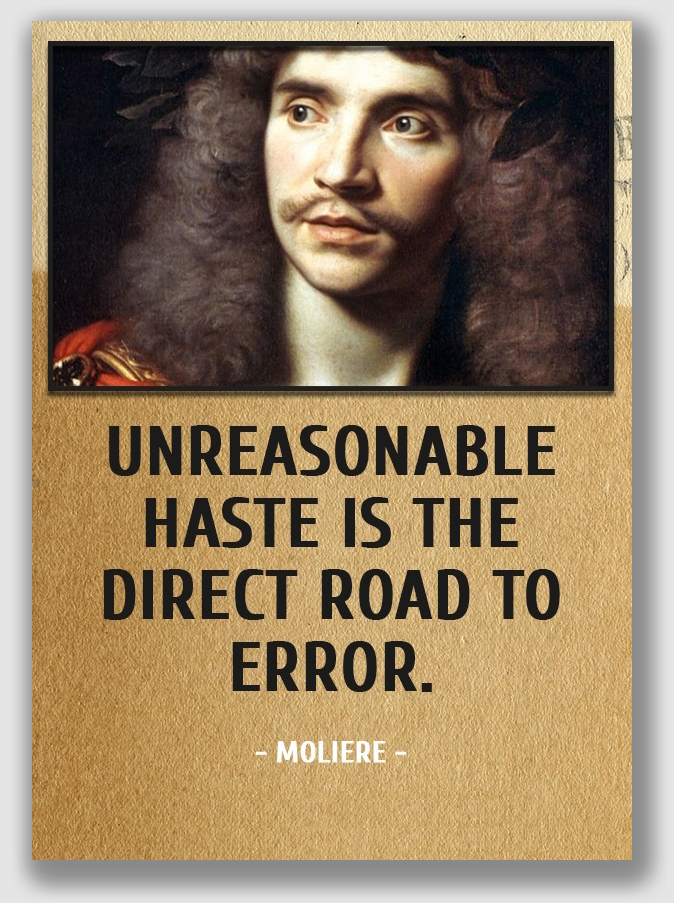
Too bad the Warrens hadn't read a lot of Moliere. He makes a good point.

Too bad the Warrens hadn’t read a lot of Moliere. He makes a good point.

A party would have ‘probable cause’ under the statute if there was such cause as would induce a reasonable person to believe he had the right to remove trees from another’s land. Here, the evidence showed the Hales’ driveway had always been at its present location and that the Hales had maintained the area since 1966 as part of their yard, planting trees and shrubbery in that area as well. The tracts had been owned by the Hales and their predecessors since 1855, and fencing had marked the boundary until the Warrens wrongfully removed it. The Hales had harvested timber and cut firewood on the disputed land since they purchased the property from their family in 1966.

After the pink flags were placed by the Warrens’ surveyor, Mrs. Hale showed Mr. Warren a land abstract in which her grandfather had deeded off a portion of the disputed land for a school building. She showed him the abstract to “show them that obviously this had been in our possession since the 1880’s. This particular tract of land that’s in dispute.” She told the Warrens that she disputed their survey and that she would speak to a surveyor herself.

The Court found there was sufficient evidence to rebut the Warrens’ assertions they removed the trees and landscaping at issue because they had probable cause to believe they owned the property. First, for all the years the Warrens had possessed the land as owners or renters, the Court said, it was only reasonable to conclude they should have become familiar with Hales’ general use of their property. Richard Warren admitted that when they purchased his property, he was aware that the Hales stored cars and maintained a large scrap metal pile on the land. Further, when they purchased the property, the Warrens were aware of the location of Hales’ driveway and yard and their generalized use of the land. Second, the Hales disputed the Warrens’ survey as soon as it was surveyed. Mrs. Hale informed the Warrens that she was contacting Smith & Company about the survey because she believed it was incorrect, and she showed them an old abstract relating to the prior use of the property. When the Warrens began bulldozing right away after their survey was done, it was clear that the Warrens knew of the Hales’ open and actual possession and use of the property, and knew that the Hales had issues with the survey lines at the time the bulldozing began.

The Court said it was “difficult… to believe that ‘a reasonable person’ would ‘believe he had the right to remove trees from another’s land,’ where he was faced with: a mowed yard and maintained driveway; areas that were clearly used by the landowner for storing scrap metal and other items; open protests and disputes by the landowner; and a survey which obviously did not comport with historically used property lines.” The Warrens did not meet their burden of proving they had probable cause to believe they owned the land in question at the time they bulldozed the trees and shrubs at issue.

 – Tom Root

 TNLBGray140407

Case of the Day – Thursday, October 31, 2024

YOU SNOOZE, YOU LOSE

This past weekend was sunny, brisk and glorious, one that called for enjoying the fall splendor. Outside of a Halloween fright for the first three quarters of Ohio State-Nebraska football (before my beloved Buckeyes awakened from their gridiron snooze to eke out a four-point win in a game where the Buckeyes were three-touchdown favorites – and, by the way, I should say “well fought, Nebraska”), I spent the weekend raking up the fall splendor. A lot of it. By 7 o’clock Sunday night, I was nodding off to sleep.

I used to have the same problem many decades ago in Property Law, a required course for first-year law students. All of those terms I had happily lived 22 years without knowing: fee simple absolute, livery of seizen, life estates, enfeeoffment, trespass quare clausum fregit… Contract law made great sense, civil procedure had a certain elegance,  but property…

More often than they should have, my eyes glazed over, my head slumped, and I slumbered while Professor Prosser droned. Even without first raking leaves. Ah, how education is wasted on the young.

Speaking of slumber, the defendant in today’s blast from the past did just that. Like your author, he paid too little attention to Byzantine concepts like life estates. When the owner of a life estate gave him permission to harvest timber on her land, Hempy slept on his rights. The owner of the life estate died, whereupon Hempy awoke from his slumber and figured maybe he had better get those trees cut.

Too little, too late. A life estate lasts only as long as the person holding the life estate does. While the holder lives, the life estate can create real mischief, but once the life expires, so does the estate. And so do any rights the estate holder may have granted.

But the reason the timber cutting was a trespass is not terribly relevant to today’s case. Instead, it is only the setup for the real issue, which is how to value the damages.

Koonz v. Hempy, 120 N.W. 976 (Supreme Court, Iowa, 1909). Koonz sued Hempy for cutting timber on property in which he had recently obtained an interest following the death of his mother. Apparently, Koonz’s mother, who had held a life estate in the property granted by her deceased husband, had contracted with Hempy to remove timber on the property. However, Hempy did not harvest the timber until after the mother had died. The trial court ruled that mom’s demise meant that Hempy had lost his right to cut the timber, because the life estate was extinguished with her passing, and Koonz was now in possession. The court awarded damages to Koonz, and both parties appealed.

Held: Hempy was liable to pay the value of the harvested timber to Koonz. However, Hempy argued that if he was liable at all, it was only for the reduction in the value of the property after he removed the timber. The Court disagreed, ruling that “where the thing destroyed or removed from real property, although it is part of the realty, has a value which can be accurately measured … without reference to the soil on which it stands, the recovery may be of the value of thing thus destroyed or removed, and not for the difference in the value of the land.”

Applying this rule, the Court held that the trial court had properly measured damages in terms of the value of the timber alone. Throwing a bone to Hempy, the Court ruled that the trial court properly denied treble damages, because Hempy’s actions failed to demonstrate the requisite willfulness to warrant such an award.

– Tom Root

Case of the Day – Tuesday, October 22, 2024

WHEN ARM’S LENGTH ISN’T QUITE FAR ENOUGH

When I was a mere first-grader, I had an uncle – a Wharton School grad – who taught me a business aphorism he had learned in B-school. Everyone thought that it was cute to hear a 6-year-old try to say, “infamous machinations,” sort of the same way that the Teddy Ruxpin creator picked the bear’s name because he figured so many children would mispronounce it so cutely.

But six decades later, I remember what Uncle Harl taught me through his omnipresent swirls of cigar smoke: “Always deal with your business associate at arm’s length. For if he be an honest man, he will respect your caution…”

Apropos of our regular discussions about independent contractors, you, Harry and Harriet Homeowner, may figure that you are being prudent by hiring your vendors and service providers as such. After all, we all know that the homeowners are not liable for the negligence of independent contractors.

Certainly, our neighbors will respect our caution.

In today’s case, however, the Svensons discovered, to their chagrin, that trespass ain’t negligence. As a result, they got no respect. When the independent contractor tree service hired by their independent contractor architect – making the tree service something akin to an independent contractor once removed – cut down a pair of boundary trees, the Svensons were sued along with the architect and the tree service. They figured they were insulated. It was the contractors’ fault, after all, not theirs.

But one can be dinged for trespass, or for causing someone else to trespass. The fact that the party that has been caused to trespass may be liable, like an eight-ball going into a side pocket, does not absolve the person who directed the trespass. Like the cue ball that put the eight ball into motion, the party who caused the trespass was indispensable to the tort. And regardless of the relationship between the director and the directee, both may share liability.

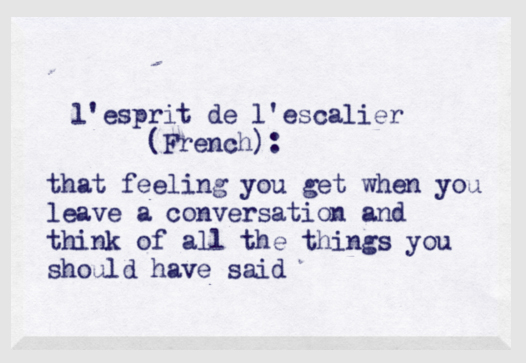
Oh, and one other thing, Svensons… if you have a good argument to make on appeal, make sure you make the same argument before the trial court. Like l’esprit de l’escalier, thinking of a great argument for the first time on appeal is about 10 minutes too late.

Swegan v. Svenson, 960 N.Y.S.2d 768,104 A.D.3d 1131(Sup.Ct.A.D., 2013). The Svensons were doing some remodeling around their place. They did it right. They hired an architect to design the project and manage the contractor. The architect hired a tree service to remove two trees. The tree service did exactly as it was instructed.

But the trees were boundary trees, partly in the Svensons’ yard and partly in the touchy neighbors’ yard. It didn’t take a New York minute for the neighbors to sue everybody involved for conversion and trespass.

The Svensons moved for summary judgment based on the novel argument that they could not be held liable for the trespass because the architect was not their agent but rather an independent contractor, and tree service certainly was not their agent but instead was an independent contractor as well. The trial court denied their motion.

The Svensons appealed.

Held: The Svensons were not entitled to summary judgment. The court held that regardless of the architect’s status as an independent contractor, the Svensons may be held liable for the trespass and ensuing conversion if they “directed the trespass or such trespass was necessary to complete the contract” between Svensons and the architect. Here, the Swegans had raised an issue of fact whether the Svensons “directed the trespass or whether such trespass was necessary to complete the contract.”

For the first time on appeal, the Svensons floated the argument that they had the right as joint owners to remove the trees because they were structurally unsafe and created a safety hazard or private nuisance. At any rate, they claimed, they should not be assessed treble damages under RPAPL 861 because there is no evidence that they acted recklessly, willfully or wantonly. The court did not consider either contention, because neither had been raised in the trial court.

– Tom Root

TNLBGray

Case of the Day – Thursday, October 17, 2024

EXPERT TESTIMONY

expert150115

I spent the better part of last week trying to line up a couple of expert witnesses for a Virginia case. The eye-glazing episode left me contemplating Mark Twain’s aphorism that “an expert is just somebody from out of town.”

As I was reminded in my quest for some experts in rather arcane disciplines, it’s a little more complicated than what Twain may have thought. But not that much: certified arborists, operators of tree trimming services, even just guys from out of town – just about anyone can be qualified by courts as expert witnesses.

And what good is an expert witness? Primarily, experts testify not to facts, but rather to opinions. Juries like opinions. Opinions sway juries.

In today’s case from Arkansas, a frolicking bulldozer operator wiped out a bunch of a neighbor’s trees. Clearly, she was entitled to damages. But how much would the damages be? She hired the county extension agent to testify as to the value of the trees that had been cut down. The defendant complained that the expert relied on timber sales reports written by others, but the Court of Appeals accepted his opinion and, in the process, explained what type of research process it wanted to see as a basis for an expert opinion.

Of course, the state’s treble damages statute, which multiplied the value of the lost timber by threefold, made the expert’s opinion all that more important to both sides. Incidentally, the defendant tried to argue that there was no proof that the bulldozer operator was his agent, but that was a mere sideshow: the evidence was overwhelming on that point.

Expert150116Jackson v. Pitts, 93 Ark.App. 466, 220 S.W.3d 265 (Ct.App. Ark. 2005). Richard Jackson owns land just north of Nora Pitts’s property. Pitts claimed that Jackson or people acting for him bulldozed trees on her land where it borders Jackson’s.

Lloyd Pitts, Nora’s son, saw John Moore operating a bulldozer in the area of the destroyed timber, which was located on Pitts’s property line with Jackson’s land. Lloyd said he walked along his mother’s land shortly afterward and saw holes where trees had been removed from the bulldozed ground. Another witness saw the bulldozer activity on Pitts’ property and said that the bulldozer operator told him that he had been directed by Jackson to perform the work. The trial court found that Jackson and Moore trespassed on Pitts’ land and destroyed marketable timber, setting the value of the destroyed timber at $1,157.20. Treble damages allowed under §18-60-102 of the Arkansas Code increased the judgment to $3,471.60. Jackson appealed.

Held: The trial court judgment was upheld. Jackson claimed that treble damages were unjustified, but the Court disagreed. The imposition of treble damages in a trespass action for trees damaged, broken, destroyed, or carried away requires a showing of intentional wrongdoing, although intent may be inferred from the carelessness, recklessness, or negligence of the offending party.

Here, the Court said, the evidence was sufficient to support a finding that an agency relationship existed between Jackson and the bulldozer operator such that Jackson was liable for the operator’s damage to Pitts’ timber. Lloyd Pitts saw the bulldozer on his mother’s property operating in the area of the damaged timber and saw Moore operating it. Another witness said Moore said he was working for Jackson. Jackson admitted he had hired Moore to work on his property with a bulldozer, and that if any trees had been removed from Pitts’ property, it would have been done by Moore.

Mark Twain says there are none of these ...

Mark Twain says there are none of these …

As for the amount of damages, the Court said, the evidence in each trespass case determines what measure of damages should to be used to value trees damaged, broken, destroyed, or carried away. Timber is generally valued according to its “stumpage value,” which is the value of the timber standing in the tree. Here, Pitts’ expert witness gave testimony of the estimated number of trees destroyed by Moore, and their market value at the time. The evidence was admissible, the Court said, even though the opinion relied in part on hearsay. The expert described the methodology he used to compute timber value within a specified area, which included diameter measurements of randomly selected trees, an estimate of the timber volume multiplied by the number of trees within a specified area, and the use of a university timber market report to obtain an estimated market value.

What’s more, the Court observed that the expert testified he personally walked the area to conduct his measurements and testified he walked off the area that was bulldozed and then went into the woods next to that area to measure a similar amount of land and counted the trees within it. The Court said an expert witness may base an opinion on facts or data otherwise inadmissible, as long as the facts or data are of the type reasonably relied on by experts in that particular field.

– Tom Root

TNLBGray

Case of the Day – Monday, October 7, 2024

HE SAID, SHE SAID…

This is probably the right time, what with Presidential campaign drama being played out in Washington and across the country, to run with our own “he said, she said” case, a peculiar turn-of-the-last-century trespass to timber case from New Jersey.

The defendant farmer was accused of trespassing onto the plaintiff’s land without permission and cutting down 32 trees. He said he only cut 13 trees, and anyway, he had permission from the plaintiff’s father (the plaintiff being a fair damsel who, back then, couldn’t be worrying her pretty little head about real property management).

The plaintiff’s dad, unsurprisingly, denied giving permission.

It seemed pretty clear that the jury bought the plaintiff’s version of events. The damages awarded could not have been for just 13 trees, implying the jury must have believed that Farmer Ruddy had taken all 32. The fact that the jury found a trespass meant that it necessarily disbelieved Farmer Ruddy’s story about looking at the trees with the plaintiff’s father and making a deal.

After the obligatory denial that it was not second-guessing the jury, the court of appeals held that punitive damages were not proper where the case was nothing more than “an honest dispute as to permission for the act found to be a trespass…” Sure, and Bonnie and Clyde thought they had permission to take money that wasn’t theirs from the bank. So their offense was really just “an honest dispute as to permission for the act” found to be a robbery accompanied by lots of gunfire.

If Farmer Ruddy did not have permission (as the jury found he did not), then his entire story about walking the boundary with Ms. Hollister’s father was a woof story. And necessarily, Farmer Ruddy’s conduct in trespassing and taking the trees was wanton and malicious.

The court of appeals was simply substituting its own conclusions for those of the jury, rewriting the verdict as best it could by reducing the damages by about half.

This is not only an old decision, it’s an awful one. The Court may have been swayed by George Ruddy’s motive, to remove the shade from his field and thereby make it more productive. It may have preferred George’s detailed testimony over getting permission from plaintiff Minnie Hollister’s dad, whose hot denials may have sounded hollow. It may have figured that some woods belonging to a mere girl should not be favored over a field owned by a man.

Who knows (but the Court)? The point is that those conclusions are factual, and in this country, findings of fact are made by the jury, not an appeals court. This is raw judicial encroachment on the jury function, 19th-century style.

And some think that judicial activism is a recent phenomenon.

Hollister v. Ruddy, 66 N.J.L. 68 (N.J. 1901). Farmer George Ruddy had a problem. Minnie Hollister’s trees that stood along the boundary with his field threw so much shade that a healthy part of the cropland was not healthy at all. George cut down some trees, the exact number being an issue, some of which were boundary trees.

Minnie claimed that George had no permission to remove any trees at all. George testified that he had obtained permission from Minnie’s father, who had the authority to approve tree removal. George gave convincing testimony that he had driven the elder Hollister from town to the field, that they discussed the trees and shade problems they caused, that the trees were only fit for firewood, and that George even offered to sell the wood and give all of the proceeds to Minnie (because his only interest was in making the field more productive). Farmer Ruddy said he had cut only 13 trees on the boundary, not the 32 trees Minnie claimed were gone.

No matter. The jury believed Minnie Hollister and found that George had trespassed. Miss Minnie recovered $400.00 in damages to the trees and punitive damages of $350. George appealed.

Held: Minnie was not due any punitive damages.

The trial court had instructed the jury that after it figured out the value of the timber that was improperly taken, “if you believe that the action of this defendant, in entering upon the plaintiff’s land and cutting the trees, was wanton, willful and malicious, and that he meant to take property that he knew was not his own, and cut down the trees maliciously and carried them away without the plaintiff’s knowledge or consent, you may add such damages as you think is proper punishment for a man who willfully does an illegal act of trespass of that character.”

The court of appeals agreed with the jury instruction, but it found that the clear weight of the evidence showed that Farmer Ruddy had not cut or authorized the cutting of more than the 13 trees that stood on or near the boundary line and that the trees he cut were fit only to be cut for cordwood. Their value, based on the trial court testimony, was about $20.00. But even if the jury thought that George Ruddy had cut all 32 trees, the most they could have been worth was about $400.00. So plainly, the appellate court concluded, the jury must have allowed punitive damages.

The Court ruled that the right to award punitive damages rests primarily upon a single ground – wrongful motive. But here, the Court said, there was no competent evidence that George had authorized the cutting of anything more than the trees on or along the boundary line, and he claimed that his reason for cutting those was that they shaded his field so as to prevent the raising of full crops. He also claimed that he had procured permission from the elder Hollister, who was in charge of the property, for the cutting of those trees, although Mr. Hollister hotly denied this.

The Court conceded that “the verdict determined that permission was not given, and on that point alone we would not disturb it; but it seems to us quite plain that the jury was not justified in finding the defendant’s conduct wanton or malicious. Without conceding that for a mere trespass on lands and the cutting of trees that have no special value in themselves, and the cutting of which inflicts no peculiar injury on the landowner, punitive damages can ever be properly awarded, we see no ground for their allowance on the testimony above cited.”

The Court characterized the trespass case as “an honest dispute as to permission for the act found to be a trespass. It is true that some of the trees cut were exactly on the boundary line, and it is argued that that fact gave them a peculiar value. No such value was contended for or submitted to the jury. The line was not obliterated, for the stumps of the trees remained in the earth, and the line itself was shown by a post and wire fence, which, though considerably fallen into decay, still left the boundary line between the parties clearly discernible. There was no peculiar injury or any indignity inflicted on the plaintiff. It will be enough if she gets just compensation, which, of course, may include the value, if any, of any of the trees as line trees.”

– Tom Root

TNLBGray

Case of the Day – Wednesday, October 2, 2024

HANK YANKED, JOHNSONS CRANKED, SUPREME COURT TANKED

It’s hard to muster up a lot of sympathy for hard-nosed businessman Henry Tyler. When he wanted to build a commercial building, but his neighbors rightly refused to let him cut down some of their trees, Hank just yanked the trees anyway.

But the neighbors, the Johnsons, were not a couple of patsies who would roll over and play dead. They got a lawyer, who cranked on Hank big time. By the time the dust settled, Hank owed the Johnsons for the trees he had cut down, for additional damages his trespass had caused, for treble damages under the statute, and for punitive damages. The $1,400 worth of Johnson trees that Hank butchered ended up costing him over $11,500.

But there’s truth to the maxim that little pigs go back to the trough, but big pigs get slaughtered. (Mark Cuban is credited with the most common variation on this old saw, but I recall my wonderful securities law professor, the late Morgan Shipman, using the line often back in the 70s. Like Abraham Lincoln famously said, you just can’t trust the Internet).

Treble damages are intended to punish the malefactor by providing a simple statutory punitive remedy for a wronged party. Common-law punitive damages likewise are intended to punish the malefactor but without a set formula (thereby permitting a jury to make a symbolic gesture or run wild, as it wishes).

In today’s case, the plaintiffs’ silver-tongued lawyer talked the jury into awarding both treble damages and common-law punitive damages. When the trial judge wisely struck one, reasoning that a defendant could be punished once but not twice, the plaintiffs – who were big piggies by this time – appealed.

The Johnsons should have accepted the court’s offer when it first made it. The Iowa Supreme Court tanked their punitive damage award and sent the whole case back to be retried.

Johnson v. Tyler, 277 N.W.2d 617 (Supreme Court, Iowa, 1979). The Johnsons, who bought their home in 1952, planted trees and shrubs around the premises, particularly along the west line of their property. Genco Distributors, Inc., bought the property next to the Johnsons’ land to the west, intending to put a commercial building there. Genco’s president, Henry E. Tyler, asked the Johnsons for permission to remove the trees along the west boundary in preparation for the construction work. They refused. Hank nevertheless instructed the contractor to bulldoze the trees.

The Johnsons sued under Iowa Code § 658.4 for damages resulting from Hank’s deliberate and willful removal of a number of trees and shrubs from their property. The jury found for the Johnsons, fixing the value of the destroyed trees and shrubs at $1,400.00, which were trebled to $4,200.00, adding other sundry damages of $2,100.00, and assessing punitive damages of $5,250.00. That was too much for the trial court, which set aside the verdict for punitive damages.

The Johnsons refused their adjusted judgment of $6,300.00, which still was more than double the total amount of damage they suffered. They appealed the trial court’s striking of punitive damages, and the case ended up in the Iowa Supreme Court.

Held:  Punitive damages cannot be assessed.

The Supreme Court said that the paramount issue here was the question of whether the Johnsons could have both treble damages under the statute and punitive damages at common law.

The relevant statute provides that “[f]or willfully injuring any timber, tree, or shrub on the land of another… the perpetrator shall pay treble damages at the suit of any person entitled to protect or enjoy the property.” The Court held that by bringing the action under Iowa Code § 658.4, the Johnsons chose the remedy afforded by that statute, which is itself punitive.

The Johnsons argued that the statute did not abrogate their right to punitive damages, but instead just provided an additional statutory remedy. The Court disagreed, holding that letting a plaintiff have both treble damages under the statute and punitive damages under common law “would violate the basic prohibition against double recovery.” The Supreme Court ordered that the case be retried, with the jury being instructed that it should only find compensatory damages.

Not all the news was bad for the Johnsons, however. The Supreme Court clarified one question, whether “loss of enjoyment resulting from destruction of the trees and shrubs” was part of the damages that could be tripled under the statute. The trial court said they were not.

The Supreme Court held that the treble damage statute “allows treble damages for loss resulting from willfully injuring any timber, trees, or shrubs. It does not limit recovery to damage to the trees or shrubs themselves. Loss of enjoyment resulting from such conduct is an element of damage. If properly proved, this item, too, comes within the treble damage provision of § 658.4.

Tom Root

TNLBGray

Case of the Day – Friday, September 13, 2024

TREE TRESPASS LOTTERY

There are a lot of moving parts to today’s case. First, we have the classic setup for treble damages. A neighbor is told repeatedly that his beliefs as to his property boundaries were wrong, but he pigheadedly ignores the news he does not want to hear. After the inevitable trespass results in the butchering of hundreds of trees, the unhappy victims – who don’t want justice as much as a pound of flesh – decide to pile on with multiple experts, each describing the loss a little differently. Finally, we have a plaintiff’s lawyer who screws up on a minor and rather technical rule of pleading, costing his clients some money in the process.

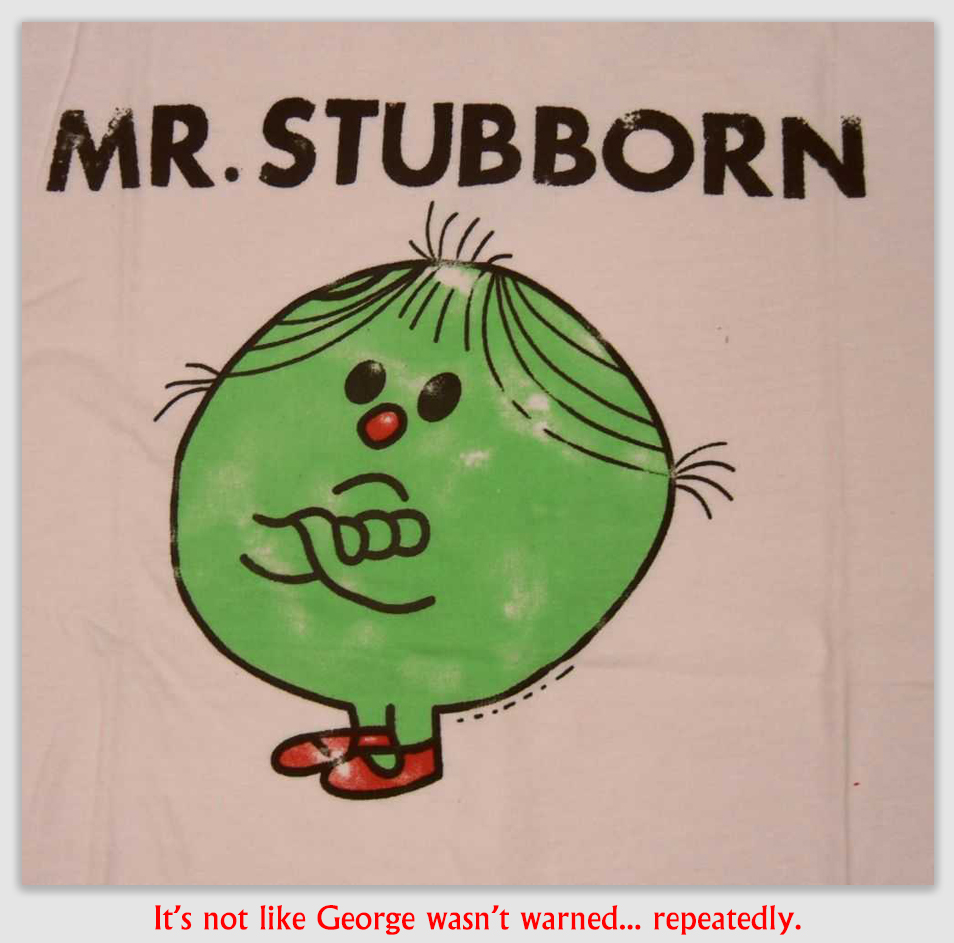
In any fair contest, the Linebargers should have gotten treble damages from their neighbor George. How many times do you have to be put on notice that your purported property lines place you at risk of committing a whopper of a timber trespass before you check your figures, just to be safe?

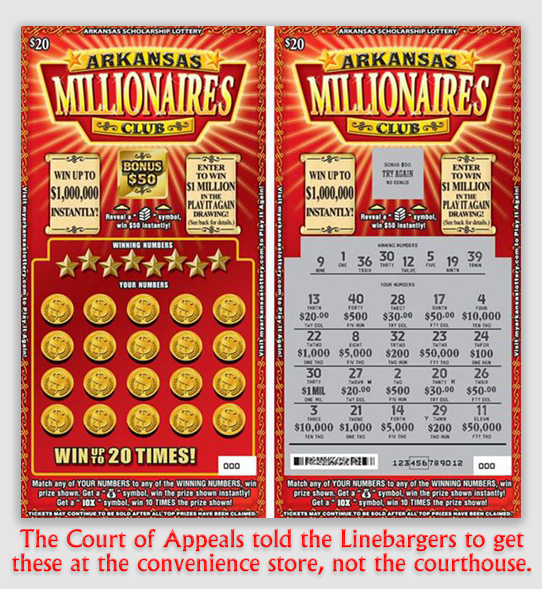
Still, the punishment ought to fit the crime. Like the Alaska case we considered a few months ago, compensation for loss is one thing. But a lottery ticket that would score you two-thirds of the fair market value of your 30-acre spread for the loss of 4 acres of trees just seems wrong.

No one should quibble with the Linebargers getting treble damages. Pigheaded George had it coming. But their lawyer somehow forgot to ask for treble damages in his complaint, or even at trial. A basic tenet of procedural due process is that a defendant should get notice of what the plaintiff wants to stick him or her with, and an opportunity to put on as good a defense as the defendant can muster and the law allows.

In today’s litigious world, the Linebargers would have gone after their lawyer’s malpractice policy the day after the appeals court ruled.

Linebarger v. Owenby, 79 Ark.App. 61, 83 S.W.3d 435 (Ark.App. 2002). George Owenby’s property lies south of a heavily wooded, 30-acre tract owned by Jerry and Margaret Linebarger. The Linebargers bought the northern 20 acres of their property in 1976, where they built a weekend cabin. They bought the southern 10 acres in 1993 to serve as a buffer between their cabin and neighboring lands.

In 1998, George sold the timber on his tract to Canal Wood Corporation. Canal Wood began cutting in the fall of 1998 and, in the process, cut 329 trees from the southern 10 acres of the Linebargers’ land. Jerry complained that he had tried to tell George for years that a 1987 survey George used to establish his boundary was wrong, and that there was a more recent survey available.

As late as December 1997, when George told Jerry he was thinking of selling his timber, Jerry reminded George of the boundary problem and asked George to call him before proceeding. Heedless of this good advice, George made his deal with Canal, and, when Canal noticed some evidence of a boundary different than the one George had indicated, George provided Canal with the 1987 survey. In reliance on the wrong survey, Canal marked the acreage in such a manner that some of the Linebargers’ trees were cut.

Jerry and Marge finally got George’s attention by suing him and Canal for trespass and destruction of trees “that had been used for shade and beauty.” They asked for damages that would allow them to replace the lost trees, for attorney fees and costs, and for anything else to which they might be entitled. At trial, the Linebargers offered the testimony of three experts as to the amount of damages they had suffered. One expert, Bill Kelly, said the stumpage value of the cut trees was $1,081.60 and that it would cost $643.50 to prepare the site for re-planting. Another expert, real estate appraiser Wayne Coates, testified the market value of appellants’ property was $68,000 before the cutting and $62,000 afterward (which included $3,000 in clean-up costs). A third expert, Al Einert, placed a value on every tree that had been cut and determined the total value of the trees to be $44,702. Naturally, the Linebargers liked Al’s number the best.

The trial judge found that Canal had failed to obtain a survey prior to cutting the trees and had trespassed on the Linebarger’s land as the result of George’s intentional failure to disclose the correct survey. However, the judge found that the $44,702 damage figure testified to by Al was disproportionate in relation to the fair market value of the land. He awarded the Linebargers $5,000 for the reduction in value of their land, based on Wayne Coates’s testimony, plus $1,081.60 stumpage value and $643.50 in clean-up costs, based on Bill Kelly’s testimony.

The Linebargers appealed.

Held: The replacement value of the trees was grossly disproportionate to the diminution of the land value, and would be a windfall for the Linebargers.

The Linebargers complained that the trial court should have awarded them the $44,702 replacement value of the trees. Arkansas courts have recognized that when ornamental or shade trees are injured, the use made of the land should be considered, and the owner should be compensated for the cost of replacing the trees. However, fact situations may arise in which recovery of the replacement cost of trees would yield a result grossly disproportionate to the fair market value of the land and thus would be an inappropriate measure of damages. The evidence in each case determines what measure of damages is to be used.

Here, the trial judge acknowledged the Linebargers had used their trees for screening and shade, and he gave due consideration to the replacement measure of damages. However, he found that most of the trees cut were behind and over the crest of a hill from Jerry and Marge’s cabin, which tended to reduce the harm they suffered. After all, you can’t derive shade from trees you can’t see. He also found that the replacement cost of the trees would be disproportionate in relation to the fair market value of the land.

The Court of Appeals agreed. “We cannot say that the trial judge abused his discretion in making the damage award,” the Court wrote. “Although he recognized that an award of replacement value might be possible, he declined to use that measure of damages because 1) the cut trees were behind and over a crest from the cabin, and 2) the replacement value would be disproportionate to the land value. The location of the cut trees in relation to the cabin is a legitimate factor to consider. The trees provided only minimal shade, ornamental, or landscaping value to the appellants’ residence.”

It was obviously meaningful to the appellate court that if George paid the Linebargers the full replacement value of $44,702 for trees cut on 4.29 acres, Jerry and Marge would have received 67% of the value of the entire 30 acres as a whole (including the cabin). Such an award would exceed the stumpage value of the cut trees by over $43,000.

The Linebargers cited Ark. Code Ann. § 18-60-102 (a), which provides that if a person cuts down another’s tree, he may be liable for treble damages. Here, the Court replied, the trial judge found that the wrongful cutting in this case occurred through George’s intentional conduct. In cases of intentional wrongdoing involving the cutting of trees, the victim may recover treble damages. But despite his finding of intentional conduct, the judge declined to award treble damages in this case, based on the idea that a court of equity cannot award treble damages.

The judge was right, the appellate court said, but for the wrong reason. Jerry and Marge did not include a request for treble damages in their pleading, nor does the record reveal that they notified George and Canal at trial that they would be seeking exemplary (punitive) damages. A defendant is entitled to be given adequate notice of the remedy he or she will be confronting. An award of treble damages would have been inappropriate in the absence of the Linebargers pleading for them or the issue being tried with the express or implied consent of the parties.

– Tom Root

TNLBGray140407