Case of the Day – Tuesday, May 19, 2026

MOVING THE CHEESE

There’s a great old adage in the law that goes something like “When your case is weak on the law, pound on the facts. When your case is weak on the facts, pound on the law. When your case is weak on the law and the facts, pound on the table.” Today’s case is one in which an inventive lawyer tried just that, albeit with little success.

We’ve worked a lot with the old Restatement rule, now on its way out, that a landowner is not liable for physical harm caused to others outside of the land by a natural condition of the land. That rule, when it was a rule, came with a proviso. If the person possessing the land was in an urban area, he or she was liable for physical harm resulting from failure to exercise reasonable care to prevent an unreasonable risk of harm arising from the condition of trees on the land near the highway.

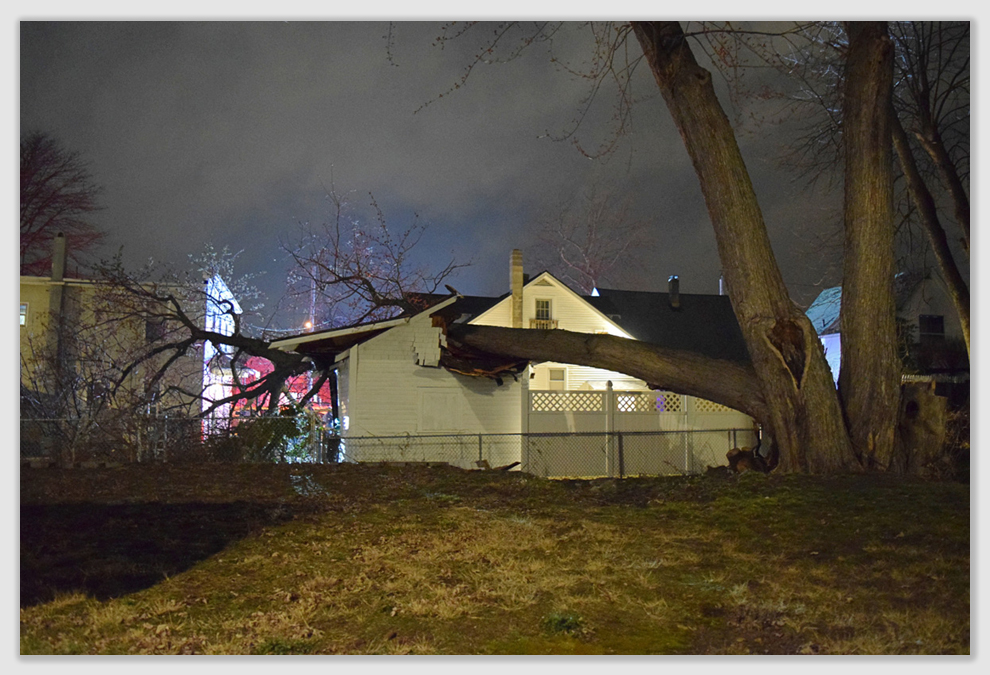
In today’s case, a tree in the lush tropical paradise fell onto a road and crushed a ’77 Mercedes – a pretty nice ride – leaving the plaintiff’s lawyer with a problem. The evidence showed the collapsed tree was rotten, all right, but that none of the decay was visible from the exterior. So arguing that the tree’s owner should have inspected the tree was a loser, because even if he had, he would not have seen the decay or recognized the danger.

The plaintiff’s lawyer recognized that to win this one, he’d have to move the cheese on the defendant. So he quickly rolled out a second argument: Even if the common law (and more specifically here, the Restatement on Torts) did not impose liability without fault (that is, strict liability), the court should impose it here simply as a matter of public policy. “Public policy” is a fancy way of saying something should or should not be done because… well, because it is just common sense. So, the argument went, it did not matter if tree owner Al Gerard followed the rules as they existed now because the rules needed to be changed retroactively, all the way back to the day the tree fell.

It’s sound public policy, the plaintiff’s lawyer argued, that is, good common sense.

“Common sense?” the Court asked incredulously. If urban owners are strictly liable for any tree that falls, it responded, then their reaction to the rule will simply be to cut down all of their trees. And where would be then? Sorry about the Mercedes, the Court said, but we’d be even sorrier about the trees.

Marrero v. Gerard, Civil No. 249/1989 (Terr.Ct. V.I., Dec. 12, 1989) 24 V.I. 275. Vic Marrero was driving his Mercedes along the East End Road in Estate St. Peters, Virgin Islands. Suddenly, a tree standing on property owned by Al Gerard fell on Vic’s car. Vic claimed the car was damaged (not hard to believe), as was his psyche (harder to believe).

Norm Nielsen, who was Al’s neighbor and worked with Vic, was first on the scene. The base of the tree was inside Al’s fence, but the rest was on the road. Norm said the tree was “dry” where it broke off, “kind of rotten but green on top.” The evidence, which included photos taken by the traumatized Vic, failed to establish that a visual inspection of the tree would have disclosed that it was rotten at its base and in danger of toppling.

Held: The Court held that the facts did not show Al to be negligent, because he appeared to have no reason to know that the tree was unstable and would fall.

Vic, however, argued that even if Al was not negligent, he should be held strictly liable for any damage the tree caused. Vic cited the Restatement of Torts (Second), which provided in section 363 that:

(1) except as stated in Subsection (2), neither a possessor of land, nor a vendor, lessor, or other transferor, is liable for physical harm caused to others outside of the land by a natural condition of the land.

(2) A possessor of land in an urban area is subject to liability to persons using a public highway for physical harm resulting from his failure to exercise reasonable care to prevent an unreasonable risk of harm arising from the condition of trees on the land near the highway.

Vic relied on subsection 2, arguing that Al, who owned trees in an urban setting, had a duty to inspect them. The Court ruled that whether the property on which the tree stood was urban or rural might be debatable but was ultimately irrelevant. Even if the urban standard applied, the Court said, and even if Al had adhered to the standard, “the weakened condition of the tree was not apparent upon a visual inspection, so that it matters not whether the area was urban or rural. Perhaps a core sampling of the tree would have disclosed the problem, but such an effort, particularly when weighed against the likely risk, is far too onerous a burden to place upon a landowner.”

The Court held that the Restatement did not impose strict liability, that is, liability without fault, in circumstances like these. All § 362(2) does is apply a more specific standard of care to an urban landowner, but it still operates within the realm of negligence.

Unfazed, Vic argued that the Court should apply its own strict-liability standard to this case as a matter of public policy. The Court demurred, saying that in its view, sound public policy was reflected in the Restatement’s standard. The Court said that a landowner should have the duty to inspect for, discover and remedy patently hazardous natural conditions on his or her property that may cause harm to others outside the land. But where the decay is internal, and therefore not discoverable upon reasonable inspection, to “impose a rule of strict liability would be to declare, in effect, that any tree which is large enough to fall over the boundary of one’s land will subject its owner to liability in the event that a hidden weakness causes it to topple and cause damages off the land.” That would just lead prudent landowners to cut down their trees, the Court concluded, “thereby accelerating the already lamentable deforestation of the territory.”

The Court agreed that the community should be protected from reasonably foreseeable dangers, but the community – both local and worldwide – “also has a compelling interest in the protection and preservation of the environment. The same concern and sensitivity that we are just beginning to bring to the massive problem of the destruction of the Amazon rainforest, for example, should also apply to the relatively minute and particular circumstances of this case. No reasonable gain would be derived from adopting a rule of strict liability here, particularly when weighed against the potential ecological and aesthetic implications of such a decision.”

– Tom Root

TNLBGray140407

Case of the Day – Wednesday, April 22, 2026

DOG BITES MAN

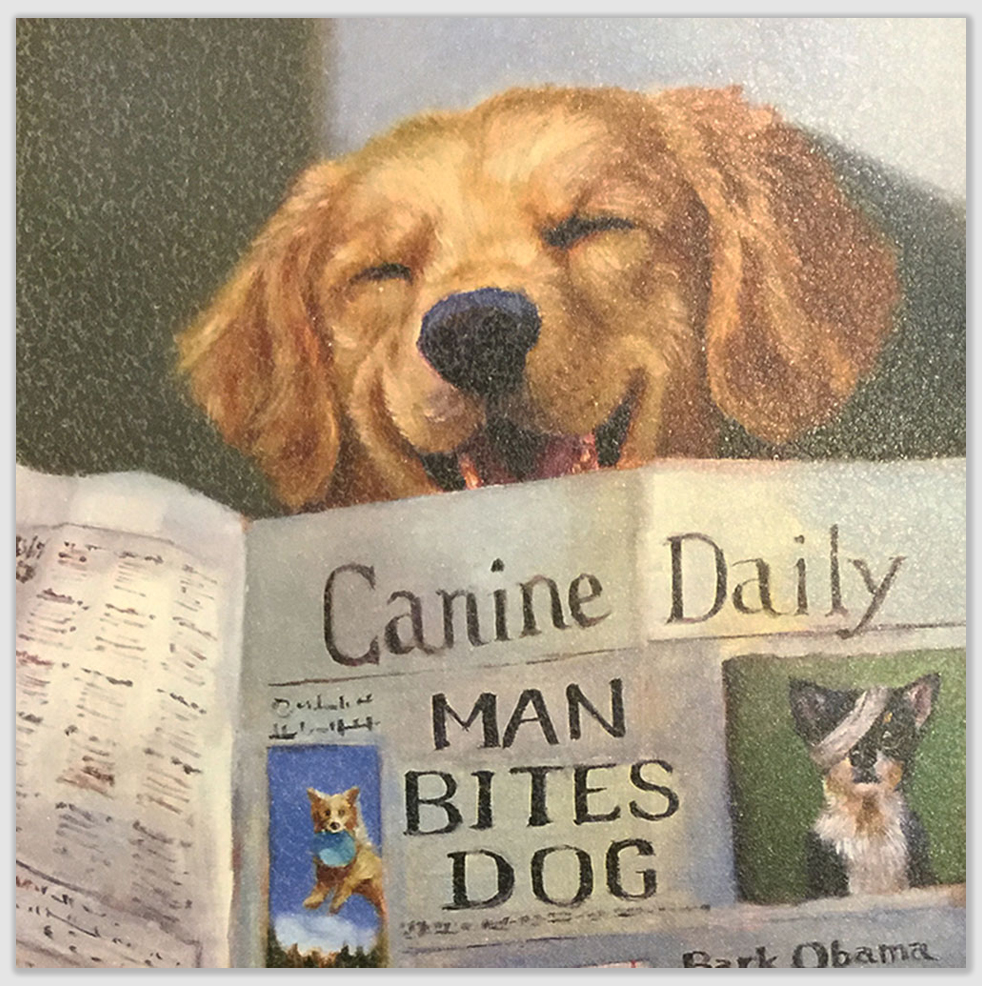
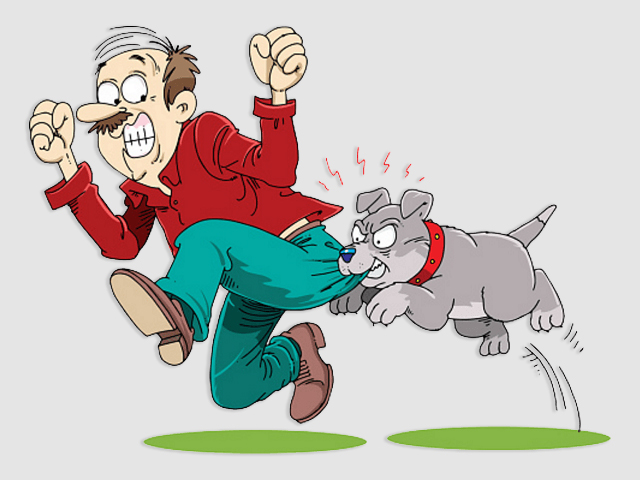
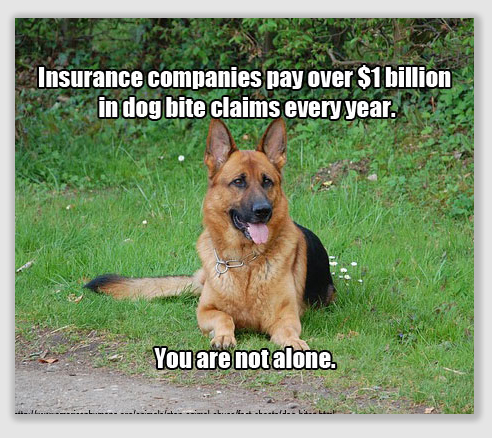
A little neighbor law today: Dog bites are big business in the United States. They happen all the time, which is why “Dog Bites Man” and its obverse are the archetypical predictable or unpredictable newspaper headlines. Man’s best friend sinks canine fretwork into a human over 3.5 million times a year. Insurance payouts for dog bites exceed $1 billion a year (or, by comparison, 10 million barrels of oil at $100 a barrel).  Some dog attacks can be fatal. Many more are just plain ugly.

Today’s case is one of those ugly ones, a sweet little 3-year-old girl attacked without provocation by her cousin’s pit bull.   Our focus today is on the denouement, as the Delaware court apportions the financial blame for the accident.  Not that it matters much – the defendants didn’t bother to put on a case, which suggests that neither little Destiny nor her mother will ever collect a dime. 

Still, it’s a reminder that (1) just about every state regulates the liability a dog owner has for the bites inflicted by Fido, and most of those statutes impose liability without any proof of negligence; (2) permitting a default judgment to be entered against you is a very bad idea; and (3) the concept of “joint and several” liability means that a plaintiff can collect it equally from several defendants, or all from one and none from the other. 

Campbell v. Robinson, 2007 Del. Super. LEXIS 563, 2007 WL 1765558 (Del.Super.Ct., June 19, 2007). Young Destiny Campbell was attacked by a dog kept by Frances and Turquoise Robinson. The attack caused severe injuries, including the removal of Destiny’s right ear and a significant portion of her scalp, and created long-term physical and mental health consequences. Her mother, Alicia Campbell, experienced emotional distress after witnessing the attack. 

Alicia sued on behalf of her daughter, alleging that, as the dog’s owner, Turquoise was liable under Del. Code Ann. Title 16, § 3053F, which imposes liability upon owners for injuries caused by their dogs. Additionally, she claimed that Turquoise was negligent in maintaining a dog she knew to be vicious and in failing to warn those on the premises of the dog’s vicious nature and that Frances Robinson was liable for housing and maintaining a dog known to be vicious and dangerous, for failure to warn, and for failure to protect those who entered the premises.

The Robinsons apparently decided to let sleeping dogs lie, and thus they failed to answer the complaint.  The trial court granted default judgment against both defendants and set a hearing to consider damages.  The Robinsons showed up for that one but did not testify.  That probably wasn’t such a good idea, because the trial court entered a judgment of $750,000 for compensatory damages against Turquoise Robinson, an award that no doubt left Turquoise feeling blue.

Based on the fact that the plaintiff alleged a violation of the dog bite statute, the trial court reasoned that Frances Robinson could not be liable to Destiny Campbell because she didn’t own the dog.  The trial court apportioned $20,000 damages apiece against Turquoise and Frances for emotional distress caused to Alicia Campbell. 

Alicia appealed, complaining that the trial court should also have held Frances liable for $750,000.

Held:   The Court agreed that the $750,000 must be apportioned equally between the Robinsons.  Delaware has long recognized that “when the negligent acts of two or more persons concur in producing a single indivisible injury, such persons are jointly and severally liable, though there was no common duty, common design, or concerted action.”  The joint and several liability of two codefendants, the Court said, entitled a plaintiff to seek recovery from either or both of the defendants, provided that total recovery does not exceed the full amount of damages. At the election of the plaintiff, either defendant may be held individually liable for the entire judgment. 

A default judgment constitutes a final judgment that provides a determination of the merits of a case, and — the Court noted — a defaulting party admits all of the allegations contained in a complaint.  Here, the Court said, its entry of default judgment established that both Robinsons were joint tortfeasors and were jointly and severally liable for all damages arising from both of the claims contained in the Plaintiffs’ complaint.  The allegations in the complaint supported joint and several liability, charging wanton and negligent acts by the Robinsons that, together, proximately caused harm to Destiny and her mother in a manner not “divisible” or separately attributable to either defendant. 

The Court held that the fact that Count I of the complaint was labeled “Count I-Violation of 16 Del.C. §3053F” does not permit Frances to evade joint and several liability to Destiny Campbell.  While she was not the dog’s owner and was not liable under the dog-bite statute, Count I nevertheless established negligent and wanton conduct unrelated to the dog-bite statute and made Frances equally liable.

– Tom Root

TNLBGray140407

Case of the Day – Monday, March 30, 2026

CECIDERIT LIGNUM IDEO DEBITUM

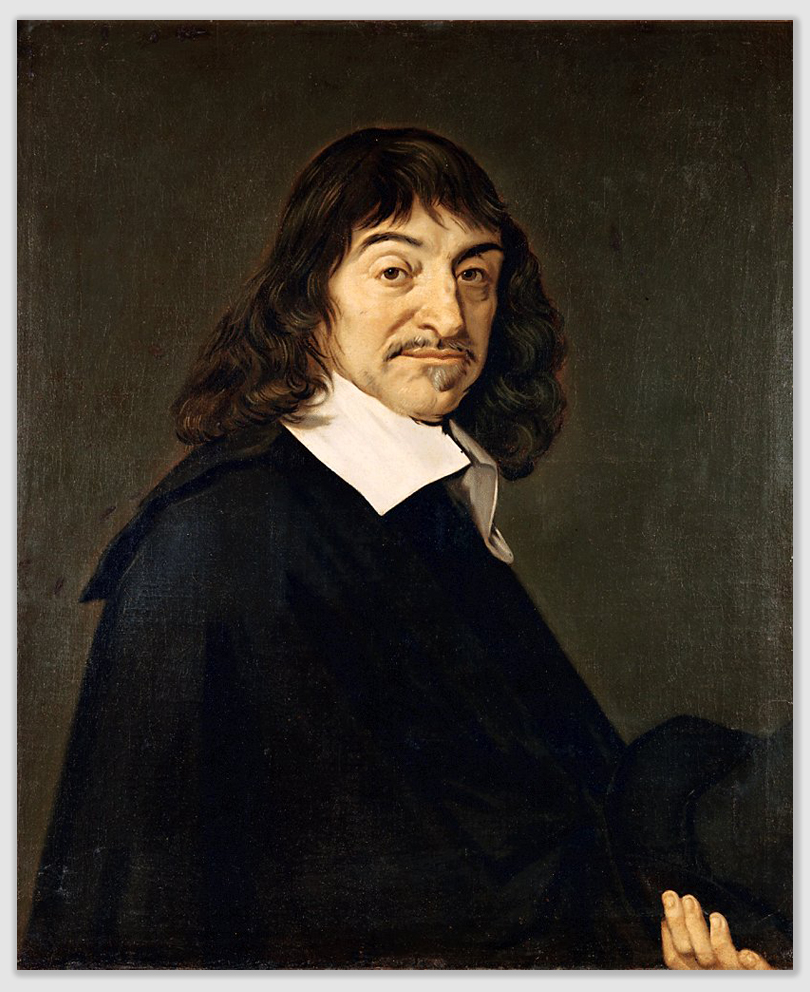
Emily Bernges, my sainted high school Latin teacher, would have been proud. We all recall René Descartes and his famous “Cogito ergo sum,” the philosophical proposition “I think, therefore I am.” For today’s case, I have coined a new maxim: “Ceciderit lignum ideo debitum.”

Today’s case, a fairly pedestrian fallen-tree situation, features a plaintiff that everyone will love to hate: an insurance company. When a tree fell on the neighbor’s garage, the victims, alliteratively named Robert and Roberta, called their local insurance agent. The insurance company paid off. Under the agreement (hidden in everyone’s policy) that gives the insurer the right to step into the insured’s shoes – called subrogation – the insurance company sued the neighbor whose tree fell.

One has to wonder why the insurance company even bothered. It agreed before trial that the neighbor had no idea – nor should he have had – that there was anything wrong with the hackberry tree.

Descartes was arguably right when he said, “Cogito ergo sum.” ‘I think, therefore I am.’ But Mrs. Bernges would have translated the Latin maxim, “Ceciderit lignum ideo debitum,” as, “A tree falls, therefore, I pay.” That’s not so catchy, and, as we will see, it’s just plain wrong.

Not so, but sometimes they’re rather obtuse…

American Family Insurance v. Anderson, 107 P.3d 1262 (Kan.App. 2005). Dean Anderson owned property next door to a place belonging to Robert and Roberta Stenfors. One summer evening, a hackberry tree on Dean’s property blew over onto Bob and Bobette’s garage. The Bobs called their insurance carrier, American Family Insurance, which paid to remove the tree and fix the garage. Repair cost: $24,837.47.

American Family then sued Dean, claiming he had been negligent in letting the tree fall on the Bobs’ garage. Dean moved to have the claim thrown out, and the trial court obliged.

American appealed.

Held: Dean owed nothing for the fallen hackberry. A directed verdict is appropriate where no evidence is presented on an issue or where the evidence is undisputed and is such that the minds of reasonable persons may not draw differing inferences or arrive at opposing conclusions.

In this case, American Family had to establish that Dean had a duty to the Bobs, that he breached the duty, and that the breach caused the damage to the garage. The Court said that in order for Dean to have had a duty to remove the hackberry tree before it fell, he first had to have actual knowledge that the tree was defective, or there had to be evidence that any reasonable person would have understood meant the tree was defective (which is known as “constructive knowledge”).

Before the trial ever began, American Family stipulated that Dean lacked actual or constructive knowledge that the tree was defective. But American Family urged the appeals court to look at the evidence presented at trial. Bob and Bobette, joined by Roy, the guy they hired to remove the fallen hackberry, recalled an incident a decade before in which Roy told Dean he should remove the hackberry along with an adjacent rotten tree. Roy admitted, however, that the hackberry seemed to have gotten healthier in the ensuing 10 years. Roy testified he saw no outward signs of disease or decay on the tree and did not believe that the average non-tree person could have seen any indications of internal rotting. The appeals court concluded that based on this record, the testimony presented at trial also failed to establish that Dean had actual or constructive knowledge of the tree’s defects.

American Family also argued the tree was a nuisance. Under Kansas law, “[a] person is liable in damages for the creation or maintenance of anything that unreasonably interferes with the rights of another, whether in person, or property, and thereby causes [him or her] harm, inconvenience, or damage.” The court of appeals said a nuisance is not a separate type of tortious conduct. Rather, in this case, American Family’s nuisance claim was a “sub-variant” of its negligence claim.

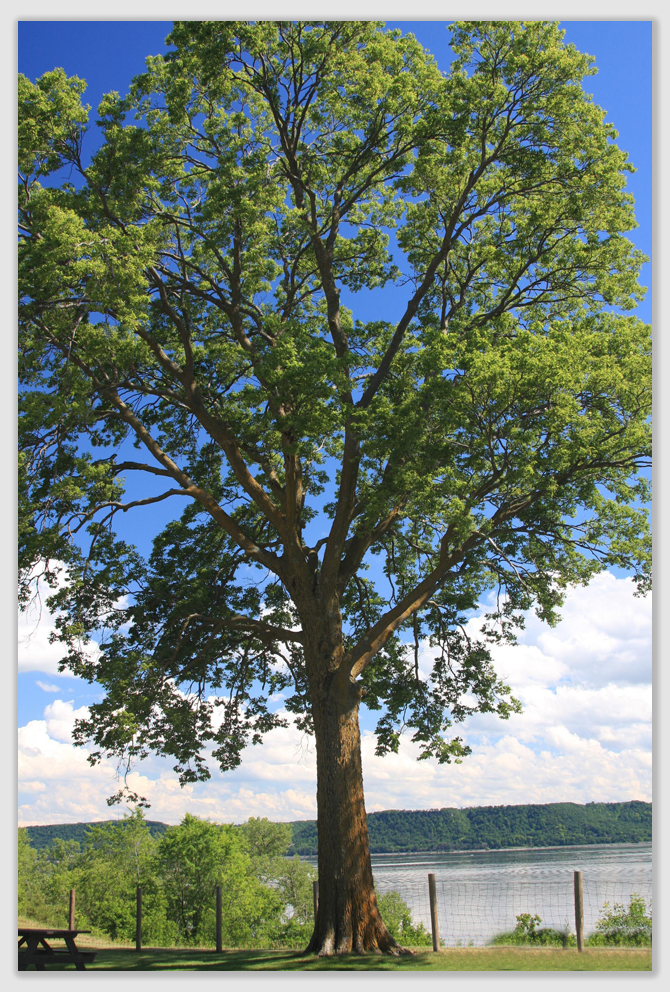
A hackberry tree.

The trial court threw out American Family’s nuisance claim because the insurance carrier did not prove Dean had knowledge of the tree’s defective nature. The tree appeared healthy and showed no outward signs of decay or disease. Further, the trial court noted the tree had withstood 90-mile-per-hour wind gusts two months before it fell. A reasonable person, the trial court concluded, would not, under these circumstances, have removed the tree.

The appellate court held that American Family’s failure to prevail on its negligence claim doomed its ability to establish that the tree was a nuisance. Knowledge that the tree presented a danger to Bob and Bobette’s property was crucial, and American Family did not show that Dean knew or should have known of the tree’s defective condition.

American Family’s ‘Hail Mary’ argument was that the fallen tree presented a strict liability situation. The appellate court made short work of the claim, noting that the insurance company never raised strict liability at trial, and it could not do so for the first time on appeal.

– Tom Root


TNLBGray140407

Case of the Day – Monday, March 23, 2026

MY DAD’S GONNA SUE YOUR DAD

We had some great trees in our back yard when I was a kid. My parents let each of the four of us children “claim” one of the trees as our own, although I must now confess that the utility of doing so is no longer obvious to me. My sister staked out the sugar maple on the north side of the house, my brothers had a box elder and a red maple, respectively, and I got a magnolia that stood outside the kitchen window.

It’s not like we children had any responsibilities for our trees, either trimming them or raking up their leaves or even pulling suckers off their trunks. We had ownership but no responsibility, which is a great segue into today’s classic case from New Jersey.

I bring up our “claimed” trees because of the young rascal Rick, an ornery kid who lived next door. One warm rainy day in the spring, when intelligent people were inside to avoid getting wet (and you can see what that implies), young Rick was outside playing in the downpour. He somehow decided that conditions were perfect for climbing my magnolia. However, when his foot slipped on a wet branch, gravity ensued. Rick was treated to what would have been a jarring but harmless fall, except for his chin making rather sharp contact with the branch on the way down.

We were blissfully unaware of the life-and-death drama occurring beyond our kitchen window until the next day, when Rick – with his chin stitched and bandaged – told my siblings and me what had happened. He matter-of-factly announced that because of the accident, “My Dad’s gonna sue your Dad!”

I recall being shocked that an injury so directly resulting from Rick’s own knuckleheadedness could somehow strip us of all possessions and leave us living in a cardboard refrigerator carton in the back lot of Brown & Miller’s Hardware. Of course, Rick’s appreciation for the finer points of tort law matched his understanding of gravity, and no suit ever resulted. But I found the idea alarming that merely owning a tree (and letting it be a tree) could make us liable for injury to others.

But the notion is not so ridiculous that people aren’t still trying to sell it to trial courts. Today’s case resulted from a perfectly healthy tree falling from one property onto a garage on another property. The aggrieved property owner argued that the tree was a nuisance because it fell (for whatever reason), and because it was a nuisance, the tree’s owner was liable. When I read the case, I felt that same alarm young Rick engendered in me all over again. Fortunately, the appellate court was not so cowed by the premise that it could not make short work of such a foolish claim.

So, what is the standard to be applied to determine the liability of a landowner for a tree that falls from his property onto his neighbor’s property for no apparent reason?

Burke v. Briggs, 571 A2d 296 (N.J. Super.Ct. 1990). Robert Briggs and the Burkes owned adjoining properties. One June evening, a large white oak tree growing on Bob’s property suddenly fell over onto the Burkes’ property, crushing their garage. The tree appeared to be perfectly healthy, and no one could assign a reason for its falling.

That hardly stopped the Burkes, who sued Bob for negligence but later added a count citing the elements of a nuisance. The Burkes argued Bob was “strictly liable” for the damages caused by the fallen tree because it amounted to a nuisance. Bob countered that liability should be determined on the basis of traditional negligence principles of tort liability. The trial judge agreed with the Burkes, reasoning that the fallen tree constituted a “nuisance” because Bob had failed to use his property in a manner that did “not damage or unreasonably interfere with the use of an adjacent land owner’s property.” The judge said that a private nuisance “imposes a strict liability” on the responsible party, and summarily found for the Burkes without the need for a trial.

Bob appealed.

Held: A nuisance can only be created by unreasonable use of land, meaning that the trial court must look at the circumstances of the case to decide whether Bob was unreasonable in permitting the tree to grow as it did. Thus, the lower court was wrong to decide the matter without a trial.

The appellate court noted the distinction that had arisen in tree law over the years between conditions of land artificially created and those that arise naturally. Historically, if Bob’s tree had been growing there on its own, he would not have been liable for any damage it caused, but if he had planted it or nurtured it, he would be accountable. The appellate panel concluded that the natural-artificial distinction makes little sense in modern life.

The appellate court admitted that “there is perhaps no more impenetrable jungle in the entire law than that which surrounds the word ‘nuisance’,” but it nonetheless held that the law was clear enough that a private nuisance must be based on the defendant’s interference with another’s use and enjoyment of his or her own land. The superior court fell back on the Restatement, Torts 2d, for the general rule that

One is subject to liability for a private nuisance if, but only if, his conduct is a legal cause of an invasion of another’s interest in the private use and enjoyment of land, and the invasion is either

(a) intentional and unreasonable, or

(b) unintentional and otherwise actionable under the rules controlling liability for negligent or reckless conduct, or for abnormally dangerous conditions or activities.

The appellate court held that liability without fault should not be imposed “whether that activity be classified as a nuisance or a trespass, absent intentional or hazardous activity requiring a higher standard of care or, as a result of some compelling policy reason.”

In other words, the appellate court said, regardless of whether the falling tree was a nuisance, trespass or negligence, “the issue here should logically depend on whether the offending landowner somehow has made a negligent or unreasonable use of his land when compared with the rights of the party injured on the adjoining lands.”

So, the court concluded that the focus of the case should be on whether Bob was negligent in some way. To figure this out, the trial court should have considered the nature of the incident, the danger presented by the presence of the tree, whether Bob could or should have known of the tree’s condition by making inspections, and what steps Bob could have taken to prevent it from falling onto the Burkes’ garage.

– Tom Root

TNLBGray140407

Case of the Day – Tuesday, March 10, 2026

IT’S A DOG’S LIFE

Dogs have been man’s best friend for something over 10,000 years, but that doesn’t mean the law does not have a healthy respect for the mischief our canine brothers and sisters can cause. Usually, the mischief results from a dog just being a dog. Like Cricket the dog. Who was Cricket? Well, Kristi Noem was Cricket’s dog mom. Where’s Cricket? Don’t ask.

Occasionally, other doggy-type tragedy strikes, and dogs aren’t the only ones to get shot. Like the story about a man shooting his neighbor over dog droppings.

Common law was rather comme ci, comme ça about the hounds. The “one bite” rule ruled the day throughout the 19th century, holding that an owner or keeper of a dog would be held legally liable for damages caused by the animal only if it could be shown that the animal had a propensity to do something harmful which was unusual for the animal’s class (such as biting people, scratching them or knocking them down) and the owner or keeper knew about the dangerous propensity prior to the incident in question.

As society became more urban and orderly, a number of states imposed strict liability on dog owners. If Fido bit, you were hit. In so doing, states treated domestic animals the same as inherently dangerous situations for which res ipse loquitur applied.

Res ipse loquitur is a great doctrine. Meaning literally “the thing speaks for itself,” res ipse loquitur acknowledged that some conditions – like keeping a wild animal, storing explosives in a residence in town, or cutting down a tall tree in the middle of a neighborhood – were so inherently dangerous that any damage that resulted from the act was assumed to be the fault of the person engaged in the act no matter how careful he or she was. Typically, res ipse loquitur requires a showing that the accident is of a kind that doesn’t normally occur unless someone has acted negligently; the evidence rules out the possibility that the actions of the plaintiff or a third party caused the injury; and the type of negligence in question falls within the scope of the defendant’s duty to the plaintiff.

Dog bite laws are actually even worse for the owner than the classic res ipse loquitur situation. After all, you might get bitten only because you pulled a gun on the dog, or kicked the mutt, or something like that. No matter: strict liability says that the dog and his or her owner are at fault.

Today’s case is an excellent example of what usually happens. Latasha Maupin was squirrel hunting with her boyfriend out in the woods when she cut across Roland Tankersley’s land, on a path she had long used with the Tankersley clan’s permission.

The Tankersleys were cool with it, but their dogs were not. Latisha was badly mauled by a pack of Tankersley mutts.

A Samaritan motorcyclist riding on a nearby road saw the attack and dragged Latisha to safety. She recovered enough to sue Roland Tankersley, relying on state law. Roland said she had to prove he either knew Latisha would be cutting across his land or be aware that the mutts were dangerous. Latisha, taking the modern view, argued that Roland owned the dogs, and that was enough.

The jury found that Roland was the owner of the dogs, but he had had no idea that Latisha would be near his dogs that day or that he had failed to exercise ordinary care in controlling his dogs for the safety of others. The core legal issue – whether strict liability was the state of the modern law – ended up in the Kentucky Supreme Court.

Maupin v. Tankersley, Case No. 2016-SC-000572-DG (Sup. Ct. Kentucky, Feb. 18, 2018). Latasha Maupin was squirrel hunting with her boyfriend on heavily wooded property owned by his family. She decided to go home early and cut across Roland Tankersley’s 42-acre tract, using a path she and her family had used with permission for years. Near where the path met the road, a pack of Roland’s dogs attacked her, causing substantial injury. Latisha sued Roland for her injuries, relying on KRS 258.235(4).

The trial court, however, instructed the jury that Latisha had to show that Roland knew that Latisha was likely to be crossing his land and to come into contact with his dogs, or failed to exercise ordinary care to control his dogs for the safety of others. Latisha howled that this was wrong, and the mere fact that the dogs belonged to Roland was enough to make him pay.

Latisha lost the appeal as well, but she was dogged in her determination. The case ended up at the state Supreme Court.

Held: The General Assembly’s intent in passing the dog bite statute was clear: to mandate that dog owners are strictly responsible for injuries caused by their dogs.

The statute simply held that “any owner whose dog is found to have caused damage to a person, livestock, or other property shall be responsible for that damage.” The Court interpreted the statute by giving its words “common and ordinary meaning, unless they are technical terms,” and it “liberally construe[s] our reading of a statute with the goal of achieving the legislative intent of the General Assembly regarding the statute’s purpose.” Here, the Court said, under the rules of statutory construction, “shall” is mandatory language and there is “no legal distinction between the words ‘liable’ and ‘responsible.’

The Court observed that a major concern driving the General Assembly to adopt the dog bite law was the protection of both livestock and people. The historical emphasis has been on the agrarian interest in protecting farm animals.

But Latisha was not the only lucky dog in the case. While Roland was liable to her simply by dint of ownership, the Court said that Latisha’s comparative negligence “may be considered in measuring the damages awarded to her.” Kentucky’s comparative fault statute requires the trier of fact in “all tort actions” to “consider both the nature of the conduct of each party at fault and the extent of the causal relation between the conduct and the damages claimed” when determining the percentage of the total fault properly attributed to the parties.

Thus, the Court said, “it is appropriate for the jury, during the calculation of damages phase, to lessen the liable owner’s monetary responsibility for the victim’s injuries if the facts demonstrate that the victim’s own negligent or intentional acts contributed to the dog attack’s occurrence.” Citing the agrarian concerns that underlay the adoption of the law, the Court observed that “it would be incredulous to believe that the General Assembly intended for the owner of trespassing cattle, who break out of a neighboring pasture and enter the dog owner’s land, to be fully compensated for damages inflicted by the homestanding dog upon the intruding livestock.”

– Tom Root

TNLBGray140407

Case of the Day – Monday, June 2, 2025

HEIDI AND THE TERRIBLE, HORRIBLE, NO GOOD,
VERY BAD (WATCH OUT FOR THAT TREE!) DAY

Remember Alexander? He didn't have anything on Heidi ...

Remember Alexander? He had nothing on Heidi …

Ever have one of those days? Heidi Cordeiro knows how you feel. Heidi had a terrible, horrible, no good, very bad day once. First, she heard a crash in her driveway and looked out to see that a tree belonging to the hospital next door had fallen, crushing her car. Then, she hurried out to assess the damage, only to fall over the branches of the downed tree, spraining her ankle. At least she didn’t have to hobble far to the emergency room.

She of course sued the hospital — who doesn’t like suing hospitals? — for the damage to her car and her ankle. Her case essentially was that the tree fell, so of course, the hospital was negligent. Unfortunately, that just set her up for another bad day.

The Superior Court made short work of Heidi’s suggestion that landowners were strictly liable for falling trees. It correctly pointed out that in Connecticut, a plaintiff must plead (and of course later prove) that the landowner knew or should have known that the tree was diseased, decayed, or otherwise dangerous.

Heidi couldn’t do that, and her case was dismissed. We’ll never know whether liability would have extended to paying for Heidi not being careful where she stepped.

She had a bad day.

Cordeiro v. Rockville General Hospital, Inc., 44 Conn.L.Rptr. 58 (Conn.Super., Aug. 21, 2007). A tree belonging to the Rockville General Hospital fell into the yard and driveway of the premises Heidi Cordeiro was renting, damaging her car. When she went out to look at the damage, Heidi tripped and fell on the branches of the tree. She sued her landlord and the Hospital, alleging negligence and asking for damages for her personal injury and for damage to her car. Rockville Hospital moved to strike the count against it arguing that the plaintiff has failed to state a claim.

Held: Rockville Hospital was dismissed as a plaintiff. The Hospital argued the facts alleged in Heidi’s complaint did not give rise to any duty owed by the Hospital to the plaintiff, the falling tree was caused by an “act of God” for which the Hospital was not liable, and the falling tree was an open and obvious defect that the plaintiff should have avoided.

Fallen_treeThe Court observed that the essential elements of a negligence action were duty, breach of duty, causation, and actual injury. Here, Heidi Cordeiro alleged that “a tree … belonging to the defendant … fell upon the yard and driveway area of the premises where the [plaintiff] resided [as a tenant], and when the plaintiff went out to look at the damage to the vehicle parked in her driveway, she was caused to trip and fall over the branches of said tree, causing her to sustain … injuries.”

In early times, there was generally no liability for trees falling on neighboring lands, an obvious practical necessity when land holdings were very large and in a primitive state, but the rule made little sense in urban settings. In urban areas like the City of Rockville, there is generally found to be a “duty of reasonable care, including inspection to make sure that the tree is safe.” It is now generally recognized, particularly in urban areas, that a tree owner has a duty to an adjoining landowner to exercise reasonable care to prevent an unreasonable risk of harm presented by an overhanging dead branch in a residential area. Thus, an invitee of commercial premises may recover for injuries sustained from the fall of a defective or unsound tree growing on adjoining premises, including trees of a purely natural origin.

George of the Jungle could have been Heidi's doppelgänger.

George of the Jungle – Heidi’s doppelgänger?

However, the owner of a tree is liable for injuries from a falling tree only if he knew or reasonably should have known the tree was diseased, decayed, or otherwise constituted a dangerous condition. A landowner who knows that a tree on his property is decayed and may fall and damage the property of an adjoining landowner is under a duty to eliminate the danger. However, a landowner does not have a duty to consistently and constantly check all trees on his property for non-visible rot. Instead, the manifestation of decay must be visible and apparent. In   Connecticut, if the tree condition is one of which the defendant would become aware through reasonable exercise of its faculties, the defendant is chargeable with notice.

In this case, Ms. Cordeiro had to plead and prove facts showing that the Hospital knew or reasonably should have known the tree was diseased, decayed, or otherwise constituted a dangerous condition, or other such proof of actual or constructive notice, to state a claim. But she made no such allegation here. Instead, she only alleged that the Hospital “was responsible for the proper maintenance of its trees and was responsible to assure that its trees did not fall into adjoining properties, causing injury.” The law does not require landowners to continuously examine their trees for invisible decay to ensure they do not fall. Instead, it requires them to take action when there is actual or constructive notice of a dangerous natural condition.

– Tom Root

TNLBGray140407

Case of the Day – Monday, April 7, 2025

STAKING A CLAIM

We’re rather hesitant to wander into the political morass.  But back when President Trump was merely Candidate Trump, he told CNBC that he was the “king of debt.”   “I love debt,” he said.   “I love playing with it.”

He sure proved that. The debt went up 40% in four years, from $19.9 to $27.6 trillion. And in four years, President Biden increased it by another $7.4 trillion. Lucky that the government loves debt, because there sure is plenty of it to love.

But we’re not here to criticize any President. Instead, we merely wonder what do you do when you play with debt?  If you’re the government, “playing” means spending it.   Indeed, the wisdom and prescience of the government are so awe-inspiring that we should be giving all of our extra money to our needy Washington, D.C., uncle, to our cousins in the state capital, or even the folks downtown. 

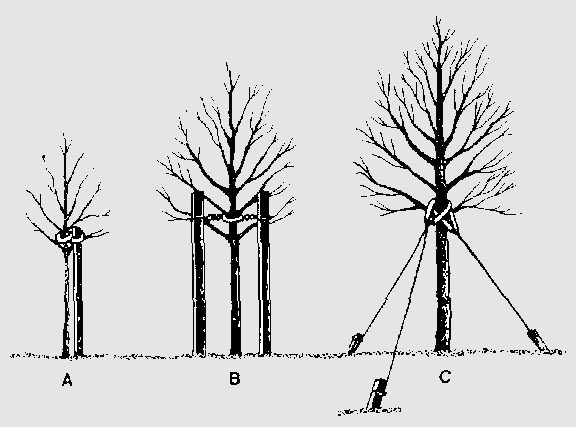
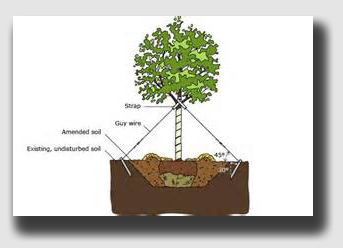
What? You question whether the government spends our dollars wisely? “Like what thoughtful investments will the government make? Well, how about all those spindly trees that cities and towns plant by the hundreds, pathetic things supported by one or more posts and guy wires, standing on tree lawns and in medians with not much more than a pathetic possibility that they might someday be majestic shade trees?  We bet the Donald could make a great deal on buying some of those (if they’re grown in America, of course).

Guyedtrees

Well, maybe those aren’t the best investment. Take what happened in Kenner, Louisiana, one day. One of these staked and wired sentinels fell in high winds, and the City of Kenner, Louisiana, sent one of its crews to repair it. They replanted it in the same hole and rewired it with the same guy wires — hardly a prescription for a tree with a future. But what a prudent use of existing resources!

Maybe not this time. As it turned out, the tree’s future after replanting could have been measured on a stopwatch. Within hours, it fell again in some more high winds, this time squarely onto Mrs. Sampedro’s car.

You’d think the Sampedros would have cheered the frugality of the City. They did not. Instead, the Sampedros sued, claiming that the City had negligently placed guy wires on the tree, and that anyway, the City should be strictly liable whenever one of its trees falls. The trial court granted summary judgment for the City.

Strict liability is a great thing for a plaintiff. He or she is generally relieved from proving any more than that something injured him or her, and that the defendant owned or controlled it. Negligence is irrelevant. But in 1995, the Louisiana legislature gutted strict liability where a municipality was a defendant. Even in strict liability cases, the lawmakers said, the plaintiff had to prove that the municipality had notice of the defect.

The Court here ruled that it didn’t matter that the Sampedros had an expert who testified that the guy wires should have been placed differently. There were no published guidelines on how to guy a tree, and anyway, the City had planted hundreds of trees in the year before the accident, with only about a dozen of them falling. That’s about a 4% failure rate for those math whizzes among us. Not bad: imagine if the airline industry only had 2,000 crashes per day out of its 49,000 flights.

But the numbers seemed right to the Court. High winds had knocked over the tree, it said, not bad guy wires. Of course, this begs the question of why guy wires were there to begin with, if not to keep trees from falling in high winds. But Mrs. Sampedro had to repair her own car. The City was not liable.

Sampedro v. City of Kenner, 989 So.2d 111 (La.App. 5 Cir., 2008). Rosa Sampedro was driving past the intersection of Williams Boulevard and Granada Street when a tall, slender oak tree fell into the path of her vehicle. Mrs. Sampedro, who was wearing her seat belt, braked quickly and struck her knees on the dashboard of her vehicle. The tree damaged her vehicle but no other vehicles were involved. A police officer said he thought that high winds caused the tree to fall. The Sampedros sued the City of Kenner and its insurer.

Stake1

Trial testimony showed that the day before the accident, a driver lost control of his pickup truck at the same intersection and knocked down the oak tree in question. The next day, a maintenance crew from Kenner’s Department of Public Works re-planted the tree, securing it with guy wires on three sides as it had been prior to the accident. The Public Works crew used the same guy wires attached to the tree and placed them close to the base so as not to interfere with the mowing of the grass on the median. A witness from the city admitted the alternative would have been to put the guy wires farther out and instruct the mowers to be careful. The Public Works Department had planted 200 to 300 trees in Kenner in the prior year, and the department had received about a dozen complaints of leaning or fallen trees since that time. It had never received a complaint regarding the tree in question.

The court found for the City, concluding it did not have notice of a defect before the accident so it was not strictly liable for Mrs. Sampedro’s damages. Even if it had been put on notice, the City was not negligent under for the placement of the tree in question. The Sampedros appealed.

Held: The City was not liable. Louisiana law provided two theories under which the City might be held liable for damages: negligence under Louisiana Civil Code § 2315 and strict liability under Civil Code § 2317. Under strict liability, a plaintiff was relieved of proving that the owner of a thing that caused damage knew or should have known of the risk involved. In 1985, however, the Louisiana Legislature eviscerated this distinction in claims against public entities by requiring proof of actual notice of the defect that causes damage, thus making the burden of proof the same under either theory.

The Sampedros argued the City of Kenner was negligent because of its “want of skill” in replanting the tree that had been struck by a car the previous night. They claimed the City was negligent because the Public Works Department improperly erected the tree by placing the guy wires too near the base of the tree and too low on the trunk of the tree. They presented an affidavit from a horticulturist stating that the City “improperly tied the guy wires too low on the trunk to provide adequate stability.” The record, however, contained no guidelines for guy-wire placement that were not followed by the City of Kenner or procedures that were lacking in its installation of trees. By 2003, the City had planted between 200 and 300 trees since 2000 in the same manner as the tree in question under the direction of a landscape architect and had received only a dozen complaints of leaning or falling trees.

Sometimes, the trees fall even when they're staked and guyed in place ... like this poor thing, which toppled after a careering drunk hit it.

Sometimes, the trees fall even when they’re staked and guyed in place … like this poor thing, which toppled after a careering drunk in a pickup truck drove over it.

The Court ruled that the Sampedros had not met their burden by merely arguing that the placement of the guy wires was improper, causing the tree to fall over in high winds.

As for the Sampedros’ claim that the City was strictly liable for their damages because it knew of the defective guy wires and failed to correct the defect, the Court ruled that the complaint was foreclosed by law. Under the 1995 amendment to Louisiana’s Civil Code, “no person shall have a cause of action against the public entity for damages caused by a condition under its control absent a showing of actual or constructive notice of the particular condition and a reasonable opportunity to remedy the defective condition.”

The Sampedros had to establish that the thing that caused the damage was in the custody of the defendant, that it was defective, and that the defendant had actual or constructive notice of the defect and failed to take corrective measures within a reasonable time. The law defines constructive notice as the “existence of facts which infer actual knowledge.”- The Sampedros contended that the City of Kenner was aware that the tree had been knocked down the night before this accident so it was aware that “the defective guy wire locations … had failed the night before the accident.” The Court didn’t buy it. The record supported the theory that the tree fell because of high winds the night before. The fact that a tree was knocked down and then re-planted “securely” did not constitute constructive notice of a defect in the guy wire or the tree’s placement.

– Tom Root

TNLBGray140407