Case of the Day – Monday, June 2, 2025

HEIDI AND THE TERRIBLE, HORRIBLE, NO GOOD,
VERY BAD (WATCH OUT FOR THAT TREE!) DAY

Remember Alexander? He didn't have anything on Heidi ...

Remember Alexander? He had nothing on Heidi …

Ever have one of those days? Heidi Cordeiro knows how you feel. Heidi had a terrible, horrible, no good, very bad day once. First, she heard a crash in her driveway and looked out to see that a tree belonging to the hospital next door had fallen, crushing her car. Then, she hurried out to assess the damage, only to fall over the branches of the downed tree, spraining her ankle. At least she didn’t have to hobble far to the emergency room.

She of course sued the hospital — who doesn’t like suing hospitals? — for the damage to her car and her ankle. Her case essentially was that the tree fell, so of course, the hospital was negligent. Unfortunately, that just set her up for another bad day.

The Superior Court made short work of Heidi’s suggestion that landowners were strictly liable for falling trees. It correctly pointed out that in Connecticut, a plaintiff must plead (and of course later prove) that the landowner knew or should have known that the tree was diseased, decayed, or otherwise dangerous.

Heidi couldn’t do that, and her case was dismissed. We’ll never know whether liability would have extended to paying for Heidi not being careful where she stepped.

She had a bad day.

Cordeiro v. Rockville General Hospital, Inc., 44 Conn.L.Rptr. 58 (Conn.Super., Aug. 21, 2007). A tree belonging to the Rockville General Hospital fell into the yard and driveway of the premises Heidi Cordeiro was renting, damaging her car. When she went out to look at the damage, Heidi tripped and fell on the branches of the tree. She sued her landlord and the Hospital, alleging negligence and asking for damages for her personal injury and for damage to her car. Rockville Hospital moved to strike the count against it arguing that the plaintiff has failed to state a claim.

Held: Rockville Hospital was dismissed as a plaintiff. The Hospital argued the facts alleged in Heidi’s complaint did not give rise to any duty owed by the Hospital to the plaintiff, the falling tree was caused by an “act of God” for which the Hospital was not liable, and the falling tree was an open and obvious defect that the plaintiff should have avoided.

Fallen_treeThe Court observed that the essential elements of a negligence action were duty, breach of duty, causation, and actual injury. Here, Heidi Cordeiro alleged that “a tree … belonging to the defendant … fell upon the yard and driveway area of the premises where the [plaintiff] resided [as a tenant], and when the plaintiff went out to look at the damage to the vehicle parked in her driveway, she was caused to trip and fall over the branches of said tree, causing her to sustain … injuries.”

In early times, there was generally no liability for trees falling on neighboring lands, an obvious practical necessity when land holdings were very large and in a primitive state, but the rule made little sense in urban settings. In urban areas like the City of Rockville, there is generally found to be a “duty of reasonable care, including inspection to make sure that the tree is safe.” It is now generally recognized, particularly in urban areas, that a tree owner has a duty to an adjoining landowner to exercise reasonable care to prevent an unreasonable risk of harm presented by an overhanging dead branch in a residential area. Thus, an invitee of commercial premises may recover for injuries sustained from the fall of a defective or unsound tree growing on adjoining premises, including trees of a purely natural origin.

George of the Jungle could have been Heidi's doppelgänger.

George of the Jungle – Heidi’s doppelgänger?

However, the owner of a tree is liable for injuries from a falling tree only if he knew or reasonably should have known the tree was diseased, decayed, or otherwise constituted a dangerous condition. A landowner who knows that a tree on his property is decayed and may fall and damage the property of an adjoining landowner is under a duty to eliminate the danger. However, a landowner does not have a duty to consistently and constantly check all trees on his property for non-visible rot. Instead, the manifestation of decay must be visible and apparent. In   Connecticut, if the tree condition is one of which the defendant would become aware through reasonable exercise of its faculties, the defendant is chargeable with notice.

In this case, Ms. Cordeiro had to plead and prove facts showing that the Hospital knew or reasonably should have known the tree was diseased, decayed, or otherwise constituted a dangerous condition, or other such proof of actual or constructive notice, to state a claim. But she made no such allegation here. Instead, she only alleged that the Hospital “was responsible for the proper maintenance of its trees and was responsible to assure that its trees did not fall into adjoining properties, causing injury.” The law does not require landowners to continuously examine their trees for invisible decay to ensure they do not fall. Instead, it requires them to take action when there is actual or constructive notice of a dangerous natural condition.

– Tom Root

TNLBGray140407

Case of the Day – Wednesday, May 21, 2025

HAPPY TRAILS TO YOU

It’s easy enough to imagine the liability headaches that a political subdivision might face in the operation of parks. There are so many ways to get into trouble in a park: There are ponds to drown in, gopher holes to step in, cliffs to fall over, and the occasional falling tree.

Most states have recreational use statutes that limit public and private liability for the noncommercial use of land in its natural state. Before one can sue a sovereign – not just a king, but the federal government, state government, or a political subdivision – the government about to be sued must give permission to sue. These days, such permission is given in the form of federal and state tort claims acts.

In California, for instance, an injured park user must show that a dangerous condition of public property existed. This is not your average gopher hole: instead Government Code § 830(a) says it “means a condition of property that creates a substantial (as distinguished from a minor, trivial or insignificant) risk of injury when such property or adjacent property is used with due care in a manner in which it is reasonably foreseeable that it will be used.” To win money from the State of California, which (despite the legislature’s best efforts, may still have a little left), one must show 1) a dangerous condition of public property; (2) a foreseeable risk arising from the dangerous condition of the kind of injury the victim suffered; (3) either negligence on the part of a public employee in creating the danger or failure by the political subdivision to correct it after notice of its existence and dangerousness; (4) a causal relationship between the dangerous condition and the victim’s injuries; and (5) actual injury suffered by the victim.

That’s a pretty tall order for a victim to fill. And if that were not enough, the State has granted itself “trail immunity.” Section 831.4 of the Government Code holds that a political subdivision “is not liable for an injury caused by a condition of… [a]ny unpaved road which provides access to fishing, hunting, camping, hiking, riding, including animal and all types of vehicular riding, water sports, recreational or scenic areas… [and] any trail used for the above purposes.”

You may see where this is headed. A 10-foot-long eucalyptus branch split off from a tree in July 2013 and fell on Lorin Toeppe while she was walking with her boyfriend. Lorin, a physical therapist, suffered a crushed leg, fractured spine and lacerations to her face.

She sued the City, alleging its workers negligently maintained a eucalyptus tree that dropped its branch on her. The City countered that she was walking on a park trail when it happened, so the City had “trail immunity.”

Lorin appealed, and – even in the face of dire predictions that parks would close – the court held that things were not quite as cut and dried as the City argued they were.

Toeppe v. City of San Diego, 13 Cal. App. 5th 921, 220 Cal. Rptr. 3d 608 (Ct.App. 4th Dist. 2017). While Lorin Toeppe was walking through Mission Bay Park with her boyfriend, a branch fell off a eucalyptus tree and struck her. She was badly hurt.

Lorin sued, claiming the tree constituted a dangerous condition of public property under Gov. Code 830(a). The City moved for summary judgment, arguing it was immune from liability under Gov. Code § 831.4, because Lorin was on a trail when she was injured. The trial court agreed, holding that “[t]he evidence shows the injuries to Toeppe were caused when she was walking on the trail. Although it is disputed whether she was actually on the paved trail or just off of it, Toeppe’s contention is that the trail immunity does not apply to the other condition (failure to adequately maintain a tree next to the trail). Even if… the tree’s condition was a dangerous condition – and… substantially contributed to the accident, it does not create liability to fulfill its purpose, the immunity should apply to the tree (and its condition) because of the location of the tree to the trail.”

Lorin appealed.

Held: The City’s tree maintenance is not immune from negligence claims just because the trees are near a trail.

Lorin argued that between 2004 and 2013, a City employee negligently trimmed the eucalyptus tree. She claimed the City created and was aware of the dangerous condition of the tree, and as such, the City is liable for the harm caused by the falling branch.

The Court noted that trail immunity “is afforded ‘to encourage public entities to open their property for public recreational use because the burden and expense of putting such property in a safe condition and the expense of defending claims for injuries would probably cause many public entities to close such areas to public use.

     That’s what the City thought… but the Court saw it differently.

Lorin argued that trail immunity applied to the condition of the trail, not to the fact that she may have been on the trail when she was hurt. She claimed that the negligently maintained eucalyptus tree was the dangerous condition that gave rise to the City’s liability and her damages, not the trail. The City countered that Lorin was on the trail when she was struck by the branch, and the dangerous condition at issue here was thus connected to the trail.

In short, the Court said, “This is not a case about trails. It is about trees. Trees that were planted and maintained by the City. Trees that were not naturally occurring in Mission Bay Park. This is not a case where Toeppe was injured walking on a City trail in a naturally occurring forest. This is not a case where Toeppe had to walk on a trail to reach a dangerous condition or a dangerous condition was part of the design of the trail. Instead, Toeppe was injured when a tree branch struck her. She maintains the branch fell on her because the City was negligent in maintaining the eucalyptus trees in the park. There are no allegations that she was harmed based on a condition of the trail. There are no allegations that she was injured because of the location or design of the trail. On the record before us, we find no basis on which to apply trail immunity.”

The Court was not persuaded by the City’s argument that finding trail immunity does not apply here could result in the closing of City parks in which trees exist. “Although it might be prudent for the City to evaluate its maintenance of trees in its parks,” the Court said, “we do not foresee several park closures based on this opinion. Here, we merely conclude trail immunity is not applicable based on Toeppe’s allegations and the evidence submitted in support of and in opposition to the City’s motion for summary judgment.”

– Tom RootTNLBGray

Case of the Day – Tuesday, May 6, 2025

YOU SHOULDA WORN A HAT

Everyone has probably experienced it. Something goes terribly wrong, and the numbskull responsible for the mishap refuses to step up. Instead, he or she points at you and finds a reason it’s all your fault.

It’s a Lucy Van Pelt moment. In one memorable Peanuts strip, Lucy was reprimanded for fighting with her little brother, the blanket-toting philosopher-kindergartner Linus. In response, she pointed at him and argued, “It’s his fault. He hit me back first.”

Juries can be swayed by convincing variations of this theme, where the plaintiff is denigrated as somehow as liable or more liable for the accident than is the defendant. Sometimes it is true. But often it is not. It falls to the trial judge to regulate the flow of evidence to let the relevant stuff in while prohibiting material that might “inflame the passions” of the jury into reaching a verdict that is stupid.

Indiana’s approach is common. There, for example, the law prohibits a defendant from introducing evidence that an injured plaintiff was not using safety equipment, unless the failure to use the equipment somehow contributed to causing the injury.

Today’s case is from the U.S. Court of Appeals for the 7th Circuit, because the negligence action was brought in federal district court. It was what is called a diversity case, allowed in federal court because the plaintiff was a resident of one state while the defendant was a Hoosier. In diversity cases, the federal courts are bound to apply state law, which is how three judges in Chicago can be so focused on Indiana law.

Webber v. Butner, 923 F.3d 479 (7th Cir. 2019): Johnny Webber was helping his friend Roger Butner cut down trees on Butner’s property. Johnny was not a professional logger, and he was not wearing a hard hat while cutting down the trees. The duo agreed that Johnny would operate the chainsaw while Roger would assist by watching out for hazards. While Johnny was cutting into one of the trees, a dead branch fell on his head, causing severe injuries.

Johnny sued Roger, arguing that he had a duty to take reasonable steps to protect Johnny’s noggin, both because he was the landowner and because, while he had agreed to look out for hazards, he failed to warn Johnny of the falling branch. Johnny said his injuries were a proximate result of Roger’s breaches of duty.

The case was tried to a jury. Before opening arguments, Johnny moved to exclude evidence that he had not been wearing a hard hat while he was cutting down the trees. The district court turned him down, ruling that the evidence could be introduced “to show assumption of risk, comparative fault, and whether Johnny Webber acted as a reasonably careful person.” In his closing argument, Roger’s counsel employed the Lucy defense, reminding the jury that Johnny was to blame because he cut the trees “without wearing any safety helmets, any safety equipment,” and that “you can consider that testimony that he didn’t wear a hardhat, so he basically — he assumed the risk of that danger.”

The court instructed the jury: “Evidence relating to the use of a hard hat is offered to show assumption of risk, comparative fault, and whether Johnny Webber acted as a reasonably careful person. You may not consider it to show whether it would have prevented or altered the extent of Johnny Webber’s injuries.”

The jury did not bother to parse things that finely, apportioning 51% of the fault to Johnny and 49% of the fault to Roger. Under Indiana law, this meant Johnny got nothing.

Johnny appealed, challenging the trial court’s admission of evidence that he was not wearing a hard hat and the jury instruction on what it could use that evidence for.

Held: Johnny was entitled to a new trial, because the evidence he was not wearing a hard hat should never have come in and the results were so close that the erroneous admission of the hard hat evidence probably affected the outcome.

The Indiana comparative fault statute, Ind. Code §§ 34-51-2-7(b)(2) and 34-51-2-6, is a type of modified 50% comparative fault law. The Act replaced the common law rule of contributory negligence, under which a plaintiff who was even slightly negligent was barred from any recovery. Instead, the Act allocates fault proportionally, ensuring that each person whose fault contributed to causing injury bears his or her proportionate share of the total fault contributing to the injury.

However, the “modified” part of the Comparative Fault Act is this: If a claimant is deemed to be more than 50% at fault, he or she is barred from recovery. In determining fault, Indiana law also prohibits admission of evidence that an injured plaintiff was not using safety equipment unless the failure to use the equipment contributed to causing the injury. Ind. Code §§ 34-51-2-7(b)(1) and 34-51-2-3.

To prove that Roger was at fault for his injury, Johnny would have to show (1) Roger owed him a duty; (2) Roger breached his duty by allowing his conduct to fall below the applicable standard of care; and (3) Johnny was injured by Roger’s breach of duty.

In the Act, “fault” is defined to include any act or omission that is negligent, willful, wanton, reckless, or intentional toward the person or property of others. The term also includes unreasonable assumption of risk not constituting an enforceable express consent, incurred risk, and unreasonable failure to avoid an injury or to mitigate damages. The phrase “unreasonable failure to avoid an injury or to mitigate damages” applies only to a plaintiff’s conduct before an accident or initial injury. A plaintiff’s post-accident conduct, even if it constitutes an unreasonable failure to mitigate damages, is not to be considered in the assessment of fault.

A broad range of conduct initially may be considered by the jury, but it may allocate comparative fault only to those people whose fault was a proximate cause of the claimed injury.

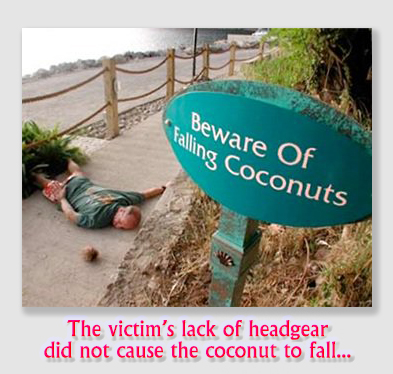
Johnny probably should have worn a hard hat, although it is unlikely that the hard hat would have lessened his injuries much, if at all. But it is clear that Johnny’s failure to wear his hat did not cause the branch to fall, or cause Roger not to be vigilant in seeing the danger. That being the case, the court should not have let in the evidence that Johnny was bare-headed.

Roger’s margin of victory was razor-thin. Two percent the other way, and Roger would have been liable for 51¢ of every dollar of damage to Johnny. As the Court of Appeals put it, “Admitting this evidence and submitting an instruction to the jury that allowed them to consider it in apportioning fault were legal errors. The jury’s apportionment of fault between the parties was so close that we cannot treat the errors as harmless.”

– Tom Root

TNLBGray

Case of the Day – Monday, April 7, 2025

STAKING A CLAIM

We’re rather hesitant to wander into the political morass.  But back when President Trump was merely Candidate Trump, he told CNBC that he was the “king of debt.”   “I love debt,” he said.   “I love playing with it.”

He sure proved that. The debt went up 40% in four years, from $19.9 to $27.6 trillion. And in four years, President Biden increased it by another $7.4 trillion. Lucky that the government loves debt, because there sure is plenty of it to love.

But we’re not here to criticize any President. Instead, we merely wonder what do you do when you play with debt?  If you’re the government, “playing” means spending it.   Indeed, the wisdom and prescience of the government are so awe-inspiring that we should be giving all of our extra money to our needy Washington, D.C., uncle, to our cousins in the state capital, or even the folks downtown

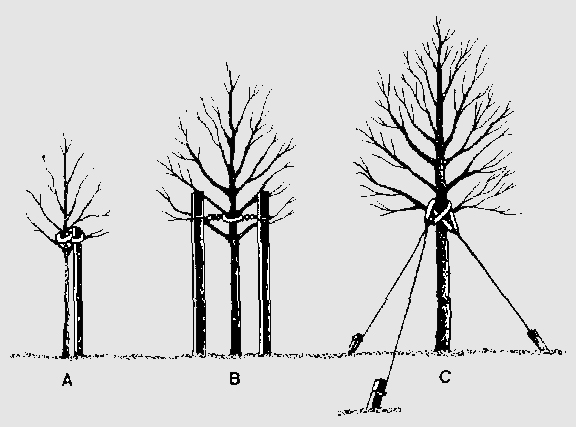
What? You question whether the government spends our dollars wisely? “Like what thoughtful investments will the government make? Well, how about all those spindly trees that cities and towns plant by the hundreds, pathetic things supported by one or more posts and guy wires, standing on tree lawns and in medians with not much more than a pathetic possibility that they might someday be majestic shade trees?  We bet the Donald could make a great deal on buying some of those (if they’re grown in America, of course).

Guyedtrees

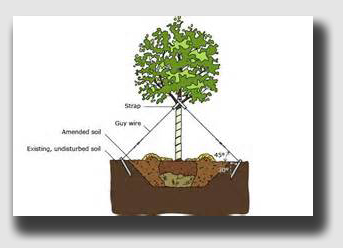
Well, maybe those aren’t the best investment. Take what happened in Kenner, Louisiana, one day. One of these staked and wired sentinels fell in high winds, and the City of Kenner, Louisiana, sent one of its crews to repair it. They replanted it in the same hole and rewired it with the same guy wires — hardly a prescription for a tree with a future. But what a prudent use of existing resources!

Maybe not this time. As it turned out, the tree’s future after replanting could have been measured on a stopwatch. Within hours, it fell again in some more high winds, this time squarely onto Mrs. Sampedro’s car.

You’d think the Sampedros would have cheered the frugality of the City. They did not. Instead, the Sampedros sued, claiming that the City had negligently placed guy wires on the tree, and that anyway, the City should be strictly liable whenever one of its trees falls. The trial court granted summary judgment for the City.

Strict liability is a great thing for a plaintiff. He or she is generally relieved from proving any more than that something injured him or her, and that the defendant owned or controlled it. Negligence is irrelevant. But in 1995, the Louisiana legislature gutted strict liability where a municipality was a defendant. Even in strict liability cases, the lawmakers said, the plaintiff had to prove that the municipality had notice of the defect.

The Court here ruled that it didn’t matter that the Sampedros had an expert who testified that the guy wires should have been placed differently. There were no published guidelines on how to guy a tree, and anyway, the City had planted hundreds of trees in the year before the accident, with only about a dozen of them falling. That’s about a 4% failure rate for those math whizzes among us. Not bad: imagine if the airline industry only had 2,000 crashes per day out of its 49,000 flights.

But the numbers seemed right to the Court. High winds had knocked over the tree, it said, not bad guy wires. Of course, this begs the question of why guy wires were there to begin with, if not to keep trees from falling in high winds. But Mrs. Sampedro had to repair her own car. The City was not liable.

Sampedro v. City of Kenner, 989 So.2d 111 (La.App. 5 Cir., 2008). Rosa Sampedro was driving past the intersection of Williams Boulevard and Granada Street when a tall, slender oak tree fell into the path of her vehicle. Mrs. Sampedro, who was wearing her seat belt, braked quickly and struck her knees on the dashboard of her vehicle. The tree damaged her vehicle but no other vehicles were involved. A police officer said he thought that high winds caused the tree to fall. The Sampedros sued the City of Kenner and its insurer.

Stake1

Trial testimony showed that the day before the accident, a driver lost control of his pickup truck at the same intersection and knocked down the oak tree in question. The next day, a maintenance crew from Kenner’s Department of Public Works re-planted the tree, securing it with guy wires on three sides as it had been prior to the accident. The Public Works crew used the same guy wires attached to the tree and placed them close to the base so as not to interfere with the mowing of the grass on the median. A witness from the city admitted the alternative would have been to put the guy wires farther out and instruct the mowers to be careful. The Public Works Department had planted 200 to 300 trees in Kenner in the prior year, and the department had received about a dozen complaints of leaning or fallen trees since that time. It had never received a complaint regarding the tree in question.

The court found for the City, concluding it did not have notice of a defect before the accident so it was not strictly liable for Mrs. Sampedro’s damages. Even if it had been put on notice, the City was not negligent under for the placement of the tree in question. The Sampedros appealed.

Held: The City was not liable. Louisiana law provided two theories under which the City might be held liable for damages: negligence under Louisiana Civil Code § 2315 and strict liability under Civil Code § 2317. Under strict liability, a plaintiff was relieved of proving that the owner of a thing that caused damage knew or should have known of the risk involved. In 1985, however, the Louisiana Legislature eviscerated this distinction in claims against public entities by requiring proof of actual notice of the defect that causes damage, thus making the burden of proof the same under either theory.

The Sampedros argued the City of Kenner was negligent because of its “want of skill” in replanting the tree that had been struck by a car the previous night. They claimed the City was negligent because the Public Works Department improperly erected the tree by placing the guy wires too near the base of the tree and too low on the trunk of the tree. They presented an affidavit from a horticulturist stating that the City “improperly tied the guy wires too low on the trunk to provide adequate stability.” The record, however, contained no guidelines for guy-wire placement that were not followed by the City of Kenner or procedures that were lacking in its installation of trees. By 2003, the City had planted between 200 and 300 trees since 2000 in the same manner as the tree in question under the direction of a landscape architect and had received only a dozen complaints of leaning or falling trees.

Sometimes, the trees fall even when they're staked and guyed in place ... like this poor thing, which toppled after a careering drunk hit it.

Sometimes, the trees fall even when they’re staked and guyed in place … like this poor thing, which toppled after a careering drunk in a pickup truck drove over it.

The Court ruled that the Sampedros had not met their burden by merely arguing that the placement of the guy wires was improper, causing the tree to fall over in high winds.

As for the Sampedros’ claim that the City was strictly liable for their damages because it knew of the defective guy wires and failed to correct the defect, the Court ruled that the complaint was foreclosed by law. Under the 1995 amendment to Louisiana’s Civil Code, “no person shall have a cause of action against the public entity for damages caused by a condition under its control absent a showing of actual or constructive notice of the particular condition and a reasonable opportunity to remedy the defective condition.”

The Sampedros had to establish that the thing that caused the damage was in the custody of the defendant, that it was defective, and that the defendant had actual or constructive notice of the defect and failed to take corrective measures within a reasonable time. The law defines constructive notice as the “existence of facts which infer actual knowledge.”- The Sampedros contended that the City of Kenner was aware that the tree had been knocked down the night before this accident so it was aware that “the defective guy wire locations … had failed the night before the accident.” The Court didn’t buy it. The record supported the theory that the tree fell because of high winds the night before. The fact that a tree was knocked down and then re-planted “securely” did not constitute constructive notice of a defect in the guy wire or the tree’s placement.

– Tom Root

TNLBGray140407

Case of the Day – Monday, March 24, 2025

IF A TREE FALLS ON A CAR, AND THERE’S NOBODY TO SUE, DOES IT STILL MAKE A NOISE?

After the Virginia Supreme Court decided in Fancher v. Fagella that Linda Landowner has a duty to ensure her trees don’t become a nuisance to her neighbor Arnie Adjacency, you could be forgiven for reasoning that she also has a duty to be sure that her trees don’t fall on Mortimer and Mildred Motorist. After all, a duty to protect others from physical harm ought to rank higher on the hierarchy of social good than keeping Arnie’s retaining wall from collapsing.
Retain_wall

One of the beauties of the law, however, is that it often does not make sense. The Virginia Supreme Court had an opportunity to underscore that unsurprising phenomenon when it ruled that Fancher’s departure from the old Virginia Rule of Smith v. Holt didn’t extend to a landowner’s duty to the passing public. When a tree in the front yard dies, decays, and falls on the road, let the driver beware …

Cline v. Dunlora South, LLC, 726 S.E.2d 14 (Supreme Ct. Virginia, 2012). Cline was driving on a public road when a tree fell and crushed the roof of his car. Cline suffered severe and permanent injuries, including fractures of his cervical spine.

The tree was located about 16 feet from the edge of the road, on land owned by Dunlora South. At the time of the mishap, the road was traveled by about 25,000 vehicles per day. The tree, about 25 inches wide, was “dying, dead, and/or rotten” at the time it fell. It had been in this condition for “many years,” the Court said, “and exhibited visible signs of decay, which were open, visible and/or obvious.” According to Cline, the tree’s condition was or should have been known by Dunlora, just as the company should have been aware of the hazards presented by trees being next to the public highway. Cline sued, but the trial court held that Virginia law did not provide for recovery of personal injury damages caused by a private tree falling on a public highway. Cline appealed, and the case reached the Virginia Supreme Court.

Another Latin phrase ... this one more familiar ...

Another Latin phrase … this one more familiar ...

Held: The Court held that, even after Fancher v. Fagella, a private landowner was not responsible for damages to a person using a public highway, when that damage was caused by a tree located on the landowner’s property. At common lawthat is, the law imposed and changed incrementally by judicial decisions handed down over the years – a landowner owed no duty to those outside the land with respect to natural conditions existing on the land, regardless of the danger posed by such dangerous conditions. Although Virginia courts had never recognized that principles of ordinary negligence apply to natural conditions on land, in Smith v. Holt, an adjoining landowner was held to have a nuisance cause of action if an injury was inflicted by the protrusion of roots from a noxious tree or plant on the property of such adjoining landowner. The Court observed that the duty it recognized in Smith v. Holt was “in accord with the broad common law maxim: ‘sic utere tuo ut alienum non laedas’ – one must so use his own rights as not to infringe upon the rights of another … The principle of sic utere precludes use of land so as to injure the property of another.”

It was this principle that gave birth to the “Virginia Rule,” a splitting of the difference between the Massachusetts Rule and the Hawaii Rule.

Fancher changed a lot, the Court admitted. It modified Smith’sVirginia rule” by discarding the subjective requirement of “noxious” nature and imposing a limited duty on owners of adjoining residential lots to protect against actual or imminent injury to property caused by intruding branches and roots. Fancher established a rule allowing relief where trees encroaching onto the land of another begin to constitute a nuisance, that is, when they encroach upon the property of another such that they cause actual harm or the imminent danger of actual harm. Fancher recognized that a trial court must determine whether circumstances are sufficient to impose a duty on the owner of a tree to protect a neighbor’s land from damage caused by its intruding branches and roots.

We bet the driver heard this one ...

We bet the driver heard this one …

The Court held here that the Fancher rule imposing a duty on a tree owner to protect a neighbor’s land from damage caused by the tree, only “addresses a narrow category of actions arising from nuisance caused by the encroachment of vegetation onto adjoining improved lands.” The Fancher and Smith duties are dramatically different than imposing a duty on a landowner to monitor the natural decline of his or her trees adjacent to a roadway. Fancher does not impose a duty on a landowner to inspect and cut down sickly trees that have the possibility of falling on a public roadway and inflicting injury.

Instead, the duty owed by adjoining property owners is to not do anything to make the highway more dangerous than it would be in its natural state. In this case, no one suggested that Dunlora engaged in any affirmative act that made its property adjoining the highway different than it had been in its natural state. Cline’s complaint was that Dunlora failed to act, and Virginia common law tort principles do not hold that a landowner owes a duty to take affirmative acts to protect travelers on an adjoining public roadway from natural conditions on his or her land.

– Tom Root


TNLBGray140407

Case of the Day – Thursday, March 20, 2025

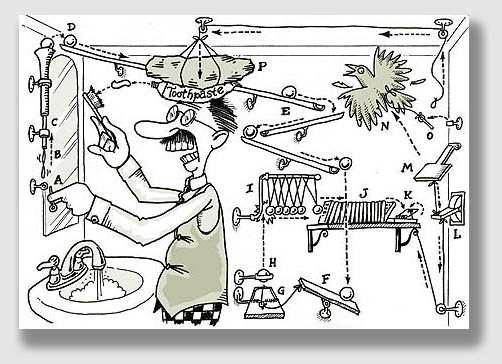
RUBE GOLDBERG GOES TO COURT
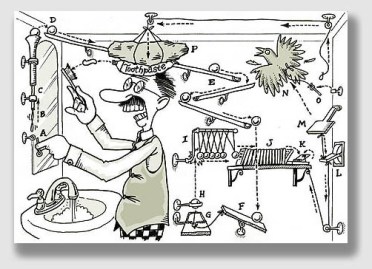
rube150402In my years in the business, I have seen negligence claims that run from the ridiculous to the absurd: such as, the corrections officer who sued cellphone carriers because inmates made calls using the carriers’ system during which they conspired to shoot him, or the victim of a falling limb who sued an electric utility because its tree trimmer should have noticed that a tree that the company had no right to trim was dangerous.

The case we’re looking at today features a tortuous and complex argument that would make Rube Goldberg envious. A tree branch fell in a storm and knocked out power to a subdivision. Matthew Phillips and his father decided to fire up their standby generator and plug it into the house system, a few hours of darkness being too big an inconvenience for them to bear.

Something happened. No one’s sure what. But, if you believe the Phillips’ lawsuit, the downed branch crossed some wires, which fed power past and around a transformer, bypassing several obvious shorts it could have taken to ground, then into the house, into the power lines, bypassing yet other ground circuits, into and through meter boxes, into the ground line of the home but not safely to ground, but rather into the power line leading to the generator, where the electricity finally leaped into Matthew, seriously injuring him.
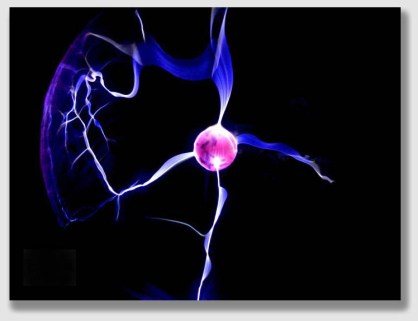
ball150402Of course, it’s unlikely that Matt or his Dad did anything stupid, like failing to disconnect the master switch connecting the house to the power grid. Much more likely that electricity defied several laws of physics, and that the blame must rest with the tree trimming company for not having pruned back the branches that fell in the storm. Or maybe it was ball lightning. Or Zeus throwing lightning bolts.

The problem was a practical one: Matt’s family didn’t have the wherewithal to pay the medical expenses. Neither did Zeus. But the electrical utility and its vegetation management contractor did. Thus, the inevitable lawsuit followed.

Fortunately for all of us, common sense prevailed. The courts pointed out that Asplundh, the tree trimming company, had a contract with AEP, and that the contract did not create a duty between Asplundh and Matt. The contract only let Asplundh cut where the utility told it to cut. The Court very reasonably pointed out that if Asplundh had done what Matt said it should have done – that is, to trim trees on the Phillips property – it would have been a trespasser and subject to treble damages.

Where the claim is nonfeasance – that is, where the defendant is alleged to have wronged the plaintiff by not doing something it should have done – the law demands that the duty the defendant owes the plaintiff must be very clear. Where the contract does not permit the tree trimmer to do anything other than what the utility tells it to, the trimmer lacks the ability to exercise any independent authority. In that case, the fact that it did not do that which it was not allowed to do doesn’t make the trimmer wrong. Instead, it makes it prudent.

Sadly, in this litigious society, it doesn’t make it lawsuit-proof.

Phillips v. American Electrical Power, 2011 Ohio 6731 (Court of Appeals, Jefferson County, 2011). An early March thunderstorm rolled through Wintersville, Ohio. During the storm, the power went out when a tree branch fell across an Ohio Power electrical distribution line. Matt and his father tried to power their house with a portable electric generator. In the process of trying to operate the portable generator, Matthew received an electrical shock and suffered very severe injuries, including permanent brain damage.

Matt sued American Electric Power Company, Inc. and a laundry list of affiliates and subsidiaries, as well as Asplundh (which had a tree maintenance contract with AEP) for negligence. His reasoning, as far as the courts were able to surmise, was that one or more rotten trees were blown down in the storm, which caused the power to go out, which caused the Phillips men to try to connect their portable generator to power the house wiring. Matt claimed that the power line wires had become coupled due to the fallen branches, creating a completed electrical circuit, which sent electricity around the electrical transformer on the pole outside the Phillips residence – bypassing the grounding wires located at the pole – and down the service line to the house, through the meter box into their breaker box (somehow bypassing the grounding line at the breaker box), into the ground circuit wiring of the house, then around an electrical generator transfer switch the Phillips had installed, then through the grounding line to a secondary electrical outlet box, where it connected to the box’s metal chassis. Matt posited a variety of theories as to how the electricity passed through him via the outlet box, the portable generator, or from the ground.
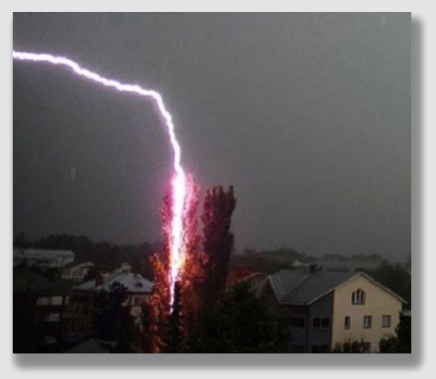
No one knows exactly what happened, but it was a cinch that Asplundh wasn't to blame.

No one knows exactly what happened, but it was a cinch that Asplundh Tree Service wasn’t to blame.

At some point, the Phillips settled with everyone except Asplundh. The tree service then filed a motion for summary judgment, arguing it owed no duty of care to Matthew because AEP determined the locations where Asplundh was assigned to work, and because AEP never assigned Asplundh to inspect or service the area at issue in this case. The trial court granted summary judgment, finding no evidence that AEP assigned “Asplundh to work on the portion of the electrical circuit in the area of the tree which allegedly caused the injuries to the Plaintiff. Nor have the Plaintiffs produced evidence that it was the responsibility, or duty, of … Asplundh to determine which parts of the AEP distribution circuit were to be trimmed. Rather the evidence establishes that… AEP… determined what trimming was to be done and then would assign that work to… Asplundh.” Finally, the trial court said, no evidence showed that Asplundh created a condition that caused the tree to fall or failed to trim the tree after being put on notice of the need to do so.

Matthew appealed.

Held: Asplundh was not liable for Matt’s injuries.

Matt’s lawyers fired a blunderbuss of claims against Asplundh: ordinary negligence, failure to maintain AEP’s easement, failure to remove foreseeable safety hazards, and failure to fulfill its contractual duties to inspect and manage vegetation for AEP. Matt claimed he was subjected to an ultra-hazardous danger by Asplundh’s recklessness, and that Asplundh breached a duty imposed by safety statutes and regulations regarding electrical and hazardous substances and vegetation management. He also claimed Asplundh failed to warn, prevent or remedy unnamed defects, and that Asplundh caused them to be exposed to hazardous or toxic substances.

The Court of Appeals noted that Matt’s allegations against Asplundh “are intrinsically connected to the contract to perform right of way maintenance. Thus, the overall claim is for negligent or reckless performance of a contract,” and every issue on appeal boiled down to one question: did Asplundh owe a duty of care to Matthew in light of the contract that Asplundh entered into with AEP.

The Court noted that the existence of a duty of care is fundamental to a negligence claim: “It is rudimentary that in order to establish actionable negligence, one must show the existence of a duty, a breach of the duty, and an injury resulting proximately therefrom. The existence of a duty depends on the foreseeability of the injury.” Matthew contended that Asplundh owed him a duty of care, despite the absence of anything specific in the Asplundh contract that would have required the removal of the tree that apparently fell in the Phillips’ yard. Matt argued that Asplundh should have inspected the area near the Phillips home because there had been many prior electrical outages in that general area. He maintained that Asplundh was involved in the decision-making process to select which of AEP’s circuit areas were to be trimmed each year, despite the evidence showing that only AEP made the final decisions about where Asplundh would do its vegetation maintenance and trimming. Essentially, Matt contended that Asplundh’s authority to make suggestions at its annual meeting with AEP to determine vegetation maintenance was enough to give rise to a duty to protect Matt from the Rube Goldberg chain of events that began with a dangerous tree. In other words, Matt said that Asplundh’s failure to convince AEP to conduct tree maintenance on or near the Phillips place was itself a form of negligence.
The Court of Appeals disagreed, holding that none of Matt’s claims were supported by the record. In a case of nonfeasance, it said, the existence of a legal duty is critical and, unless a duty is established, Asplundh’s failure to act cannot create liability. In this case, AEP personnel testified that Asplundh had never been directed to trim trees in the area where the Phillips lived. Asplundh was permitted by its contract to patrol for danger trees only where AEP told it to do so. AEP picked those areas according to its own internal data, devoting attention to the 8% of circuits with the worst performance in the previous year. There simply was no independent decision-making or freelancing involved on Asplundh’s part. While some of Asplundh’s employees may have made suggestions at the annual planning meetings, the record reflected that the final decision was made by AEP, and there is no evidence to contradict this conclusion.

The Court of Appeals agreed with Asplundh that it could not have a duty to trim a tree in the Phillips yard unless it first had a right to do so, and there are very specific statutes that prohibit a person from cutting, removing, or injuring trees on private property. If Asplundh had no contractual authority to act as AEP’s agent and enter the area where the tree was located, the Court said, it would have been trespassing had its personnel entered the property and would have been committing a fourth-degree misdemeanor crime and setting itself up for treble damages under O.R.C. § 901.51.

Matt argued that his injury was so foreseeable that the foreseeability of the injury alone created a duty for Asplundh to remove the dangerous trees. The Court rejected this argument, holding that foreseeability alone is not always sufficient to establish the existence of a duty, especially in nonfeasance situations in which the injured party is alleging that the defendant failed to affirmatively act to come to the aid of a person in danger or failed to prevent a third party from harming another. In such situations, a duty arises only if the defendant shares a “special relation” with the injured party that justifies the imposition of the duty. Here, the Court said, the alleged relationship between Asplundh and Matt “only exists by virtue of the tree-trimming contract between Asplundh and AEP. No amount of foreseeability can create a contractual duty where none otherwise exists.”

The appellate court concluded that Asplundh was under no contractual obligation to investigate or perform tree maintenance services in the area of the Phillips residence where the accident occurred: “Because there is no proof in this record that a duty existed,” the Court of Appeals held, “the trial court was correct in its judgment.

– Tom Root
TNLBGray140407

Case of the Day – Wednesday, March 19, 2025

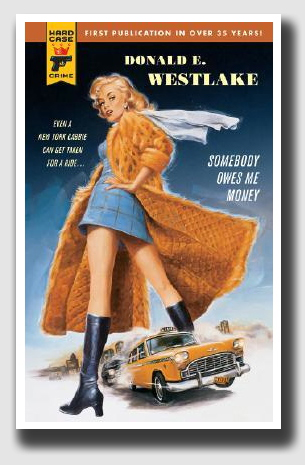
SOMEBODY OWES ME MONEY

Donald Westlake could have used Lisa Huff for the dust cover model...

Donald Westlake could have used Lisa Huff for the dust cover model…

Recall the recent creative lawsuit we covered, in which Corrections Officer Johnson went after area cellphone carriers for having recklessly built towers close to a prison. Some of the inmates obtained contraband cell phones. The towers ensured they had excellent 4G service. Of course, the towers also ensured excellent coverage to the motorists on I-20, only a half-mile from the prison. The Court’s tallest order was addressing all the ways that Mr. Johnson’s lame attempt to find someone with a deep pocket was simply vibrating nonsense.

“OK,” you say, “but that was just some ambulance chaser’s attempt to shake down a phone company (an attempt most of us applaud once a month when the cell bill arrives). But that cannot happen in the staid world of arboriculture law.”

In response to that sentiment, we give you the Huffs. After a tree broke off in a storm and hit Lisa Huff on the noggin, she had little to go on other than the abiding sense that someone owed her money. But who? Sure she could sue the property owner. Any regular reader of this blog knows that. But the Huffs needed a deep pocket. After all, Lisa had been injured. Someone had to pay.

That was when some canny lawyer noticed that the tree was located near power lines. Sweet! Power lines suggested the electric company, and everyone knows that the electric company has lots of money. Just look at how much we send them every month.

Problem: the tree wasn’t exactly inside the Ohio Edison easement. But that was a mere technicality to the Huffs, who argued that Ohio Edison hired Asplundh Tree Service to keep the trees trimmed away from the power lines and that both the power company and the tree service must have known the tree that fell on Lisa was dangerous. This was the tort claim, and it might have merit if Lisa could prove they had actual or constructive notice of the tree.

But never stop with just alleging a tort, where you can pile on other legal theories as well. The Huffs’ attorney suggested a contract count, too. The Huffs, so the legal theory went, were the intended third-party beneficiaries of the contract between Ohio Ed and Asplundh. A third-party beneficiary can sue for a contract breach just as if she had signed the document herself. Asplundh had a contractual obligation to inspect and trim the trees so as to keep the public safe, the Huffs argued, and that included the passing public, which included the walking public, which included Lisa. Anything to get Ohio Edison and Asplundh to open their checkbooks!

deeppocket140507It was a novel theory, but the Ohio Supreme Court shot it down. The Ohio Edison – Asplundh agreement was intended to secure services that would keep the power lines clear. While the agreement did require that Asplundh perform the trimming in a safe manner so as not to hurt anyone while it was doing it, that requirement only lasted as long as Asplundh was trimming. The Court wasn’t about to interpret the contract so broadly as to grant contract causes of action to millions of people who were never intended by the signatories to gain party status to a contract. You think the courts are busy now (and insurance premiums are high)? Just wait …

The takeaway here is a passing observation by the Court that parties to a contract can avoid the litigation spawned here by the Huffs simply by stating clearly that their contract is intended to benefit no one but each other. Including such a provision is a cheap preventative to the kind of nonsense lawsuit decided here.

If you think this case is on the outer fringes of causation – like the suit against the cellphone towers – just wait…

Huff v. FirstEnergy Corp., (2011), 130 Ohio St.3d 196 (Supreme Court of Ohio). During a heavy thunderstorm, a large sugar maple tree split about 25 feet above the ground. A large limb from the tree hit Lisa Huff, who was walking along a country road, causing serious and permanent injuries. Lisa G. Huff was injured during a walk along a country road.

Ohio Edison maintained an easement near the tree, but the tree was outside the easement. The tree did not present a hazard or threat to the power lines owned by the utility. Ohio Edison had hired Asplundh Tree Expert Company to inspect trees and vegetation along its power lines in this area and to remedy any situation in which trees or vegetation might affect the lines. Ohio Edison and its contractors carry out this work to ensure that adequate clearance is maintained around electric lines. Generally, Ohio Edison deferred to Asplundh’s decisions regarding tree and vegetation maintenance and would perform an overview inspection only to determine whether any vegetation was growing into the electrical wires or equipment. Asplundh had last been in the area where Huff’s injury occurred three years before.

Huff sued Ohio Edison and Asplundh, as well as Ohio Edison’s parent company, FirstEnergy, and the people who owned the land on which the tree was located. She alleged that Ohio Edison and Asplundh were liable for her injuries based upon their failure to inspect, maintain, and remove the tree or to warn the landowner and the public of the danger raised by the tree.

Ohio Edison and Asplundh filed motions for summary judgment. Ohio Edison argued that it didn’t know that the tree was dangerous, that it owed and assumed no duty to Huff regarding the tree, and that it was not negligent and did not proximately cause or contribute to Huff’s injuries. Asplundh argued that it owed no duty to Huff and that its activities did not proximately cause the injury to Huff.

The Huffs argued that Ohio Edison had contracted with Asplundh to inspect and maintain trees within the easement and that Asplundh failed to recognize that the tree in question was diseased and a hazard, and failed to remove the tree when it was on site in May 2001. The Huffs also argued that Ohio Edison was responsible for maintaining trees within and around its easement, that Ohio Edison was aware of the tree, based on its location within an inspection zone, and that Ohio Edison had a duty to remove the diseased tree.

The trial court found that while the tree leaned about ten degrees away from the power lines, “there is absolutely no credible evidence about when the tree began to lean or if it was leaning because of the way it grew.” It also noted that the Huffs admitted that no one knew when the tree became a hazard. With no proof that Ohio Edison or Asplundh actually inspected the tree or removed any branches, the court held that the Huffs failed to show that either company ever had actual or constructive notice of any decay of the tree. Due to the tree’s location – leaning away from the power lines with no limbs near the power lines – Ohio Edison and Asplundh owed no duty to the Huffs.

After examining the contract between Ohio Edison and Asplundh, it concluded that the Huffs were not third-party beneficiaries under the contract. It accordingly granted summary judgment to Ohio Edison and Asplundh.

The Court of Appeals cited the portion of the contract providing that “[Asplundh] shall plan and conduct the work to adequately safeguard all persons and property from injury” could be read in two ways: (1) a narrow reading that provides Asplundh must protect all persons from injury while Asplundh works on the site or (2) a broad reading that requires Asplundh to protect all persons from injury at all times, regardless of when the work is done. The court found the contract to be ambiguous and reversed the trial grant of summary judgment to Ohio Edison and Asplundh.

The companies appealed to the Ohio Supreme Court.

Held: Summary judgment was granted.

The Court found that the contract between Ohio Edison and Asplundh did not create any duty to the Huffs as third-party beneficiaries. The Court employed an “intent to benefit” test. Under this analysis, if the promisee intends that a third party should benefit from the contract, then that third party is an “intended beneficiary” who has enforceable rights under the contract. If the promisee has no intent to benefit a third party, then any third-party beneficiary to the contract is merely an “incidental beneficiary,” who has no enforceable rights under the contract.

The law generally presumes that a contract’s intent resides in the language the parties chose to use in the agreement. Only when the language of a contract is unclear or ambiguous, or when the circumstances surrounding the agreement invest the language of the contract with a special meaning will extrinsic evidence be considered in an effort to give effect to the parties’ intentions. For a third party to be an intended beneficiary under a contract, there must be evidence that the contract was intended to directly benefit that third party. Generally, the parties’ intention to benefit a third party will be found in the language of the agreement.

dwntree140507In this case, the Court ruled that nothing in the agreement between Ohio Edison and Asplundh showed any intent to benefit the Huffs. The Huffs pointed to a part of the contract that they argue shows such an intent: an attachment to the agreement entitled “FirstEnergy Vegetation Management Specifications” that provided  the “Contractor shall plan and conduct the work to adequately safeguard all persons and property from injury.” The Huffs contended that this statement assigns to both Ohio Edison and Asplundh clearly defined duties – to safeguard the public – for the Huffs’ benefit.

The Court held, however, that the contract wasn’t entered into for the general benefit of the public walking on public roads, but instead was designed to support Ohio Edison’s electrical service. The purpose of the contract is to ensure that Ohio Edison’s equipment and lines are kept free of interference from trees and vegetation. The remainder of the contract sets forth how this work is to be carried out, including the standards by which Asplundh is to perform its work, the limits on liability for the performance of the work, and the necessary qualifications for the Asplundh employees who were to perform the work. The contract contains no language establishing an ongoing duty to the general public on behalf of either Ohio Edison or Asplundh.

The vegetation management provision incorporated into the contract provides that “[t]he objective of all work covered by these documents is to maintain reliable and economical electric service, through effective line clearance and satisfactory public relations.” The Court observed that working near electrical lines has its inherent hazards, and it was thus “clear that this portion of the agreement establishes safety guidelines designed to protect persons and property from injury while the contractor performs its work. This period is finite: until the work has been completed … [T]he agreement cannot be plausibly read to require Ohio Edison or Asplundh to safeguard all persons from injury at all times, regardless of when the work is completed.”

The Supreme Court concluded that the Huffs thus failed to qualify as intended third-party beneficiaries of the Ohio Edison ­– Asplundh agreement.

– Tom Root

TNLBGray140407