Case of the Day – Tuesday, April 30, 2024

TRADITION!

Teyve the milkman has nothing on the law when it comes to the reverence afforded tradition. That’s chiefly because development of the common law is based on the doctrine of stare decisis, shorthand for stare decisis et non quieta movere, meaning “to stand by decisions and not disturb the undisturbed.”

In common law legal systems, precedent – prior authority – is a principle established in one or more prior cases that is either binding on or persuasive authority for a court when deciding subsequent cases with similar issues or facts. Common law legal systems value deciding cases according to consistent rules, so that similar facts will yield similar and predictable outcomes, and people can fairly be said to understand what the law requires of them. Observance of precedent is the mechanism by which those goals are attained.

As Justice Brandeis famously wrote, however, “The rule of stare decisis, though one tending to consistency and uniformity of decision, is not inflexible… Stare decisis is usually the wise policy, because, in most matters, it is more important that the applicable rule of law be settled than that it be settled right.”
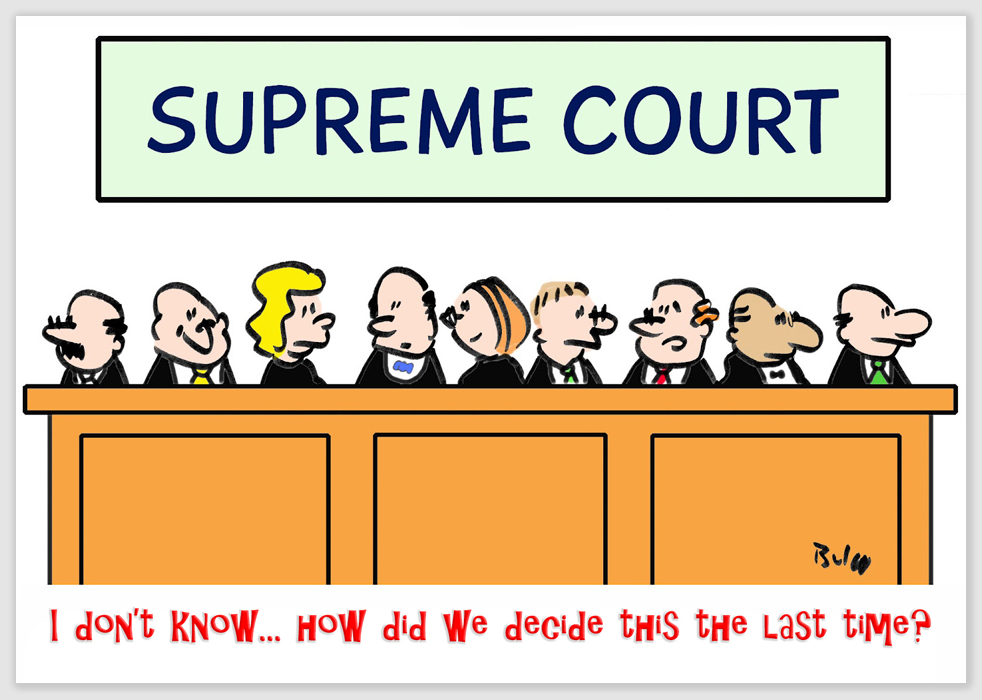
When courts are seen to be messing with stare decisis, a lot of people can get their knickers in a bunch. Look at the kerfuffle over the Supreme Court decision in Dobbs v. Jackson Women’s Health Organization that struck down Roe v. Wade and the constitutional protection for abortion. 

As a concept, stare decisis is hardly shocking. But sometimes being right becomes more important than being consistent. Were that not so, Plessy v. Ferguson and “separate but equal” would still be the law of the land, and laws limiting the number of hours in a work week would still be unconstitutional. Sometimes, rules with roots that are ancient and run deep get overturned. Times change, and with them, rules change, too.

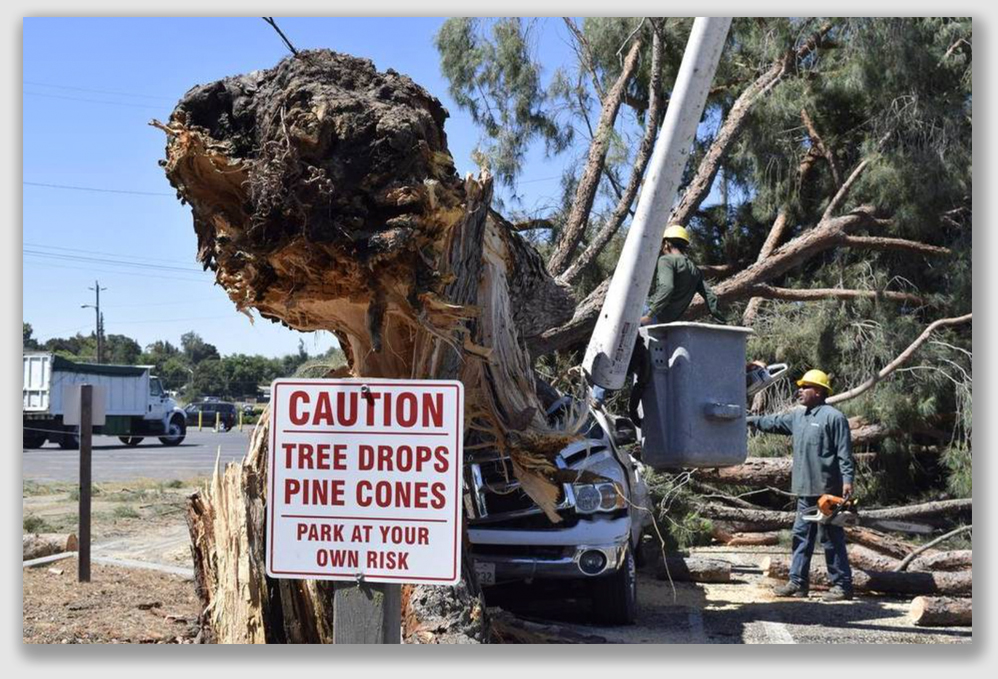
Such was the case in California, which was among the first to completely and soundly reject the quaint common law notion that a landowner was responsible for artificial conditions of his property, but not the natural conditions. As the country became more settled, early tree liability cases began to nibble at the doctrine, perhaps because courts were offended that a property owner could let a tree rot and decay until it fell on a neighbor’s house (or worse yet, the neighbor), and yet not be liable because the tree was a “natural condition.” As the nation became less rural, the rule made less and less sense, until a California landslide swept it away.

Sprecher v. Adamson Companies, 30 Cal. 3d 358, 636 P.2d 1121 (1981). South Winter Mesa Associates, a joint venture between Adamson Companies and Century-Malibu, owns a 90-acre parcel of land in Malibu, California. The parcel is bounded on the north by the Pacific Coast Highway and on the south by Malibu Road.  Across Malibu Road and opposite the parcel are a number of beachfront homes, including one owned by Peter Sprecher.

South Winter’s land contained part of an active landslide that extended seaward from the parcel for 1,700 feet along Malibu Road and beyond the boundaries of the property. Pete’s house sat within the toe of this slide. The landslide, which has been evident since the area was first developed in the early 1900s, was a natural condition of the land that has not been affected by any of South Winter’s activities on the 90-acre parcel.

In March 1978, heavy spring rains triggered a major movement of the slide which caused Pete’s home to spin up against the home of his neighbor, Gwendolyn Sexton.  As a result, Gwen sued Pete, seeking to enjoin the encroachment of his home upon hers. Pete then sued Gwen, the County of Los Angeles and South Winter, seeking damages for the harm done to his house by the landslide. He complained that South Winter had not done anything to correct or control the landslide condition.

South Winter moved for summary judgment, arguing primarily that a possessor of land has no duty to remedy a natural condition to prevent harm to property outside his premises. Pete countered that the common law rule of nonliability for a natural condition should be jettisoned because the rule is neither premised upon sound public policy nor in accord with modern principles of tort liability.

The trial court held that South Winter was not liable, and Pete appealed. Eventually, the issue reached the California Supreme Court.

Held: Rejecting the distinction between artificial and natural conditions, the California Supreme Court held that a possessor of land is liable to others when he is negligent in preventing a natural condition of his land from causing harm.

Under the common law, the major important limitation upon the responsibility of a possessor of land to those outside his premises concerned the natural condition of the land.  While the possessor’s liability for harm caused by artificial conditions was determined in accord with ordinary principles of negligence, the common law gave the landowner an absolute immunity from liability for harm caused by conditions considered natural in origin. No matter how great the harm threatened to his neighbor, or to one passing by, and no matter how small the effort needed to eliminate it, a possessor of land had no duty to remedy conditions that were natural in origin.
The Court observed that over the 20th century, a progression of the law mirrored a general trend toward rejecting the common law distinction between natural and artificial conditions.  Instead, the courts increasingly used ordinary negligence principles to determine a possessor’s liability for harm caused by a condition of the land.  The earliest case to do so was a tree case in 1896, in which a New York court held a possessor of land was liable for damage caused when a decayed tree on her premises fell on her neighbor’s house during a storm.  After observing that the defendant clearly would be liable for the fall of a dilapidated building, the court observed that it could “see no good reason why she should not be responsible for the fall of a decayed tree, which she allowed to remain on her premises… The tree was on her lot, and was her property. It was as much under her control as a pole or building in the same position would have been… A defendant had no more right to keep, maintain, or suffer to remain on her premises an unsound tree… than she would have had to keep a dilapidated and unsafe building in the same position.”

In more recent years, the California Supreme Court noted that thirteen states and the District of Columbia have begun applying ordinary negligence principles in determining a possessor’s liability for harm caused by a natural condition. All of the cases involved injury caused by fallen trees. However, the California Supreme Court said, the principle is not limited to trees: a possessor of land has a “duty of common prudence in maintaining his property, including trees thereon, in such a way as to prevent injury to his neighbor’s property.”

The California Supreme Court concluded that the national trend was moving toward jettisoning the common law rule in its entirety and replacing it with a single duty of reasonable care in the maintenance of property.  Even the Restatement Second of Torts recognizes that a possessor of land may be subject to liability for harm caused not just by trees but by any natural condition of the land, drawing no distinction between landowners located in urban areas and the rural countryside. While some cases have held rural landowners have a lesser duty of inspection than do urban dwellers, others do not, while a compromise position taken by a few states holds that the rural or urban nature of the land is only one of several factors to be considered.
Historically, the consideration most frequently invoked to support the rule of nonliability for natural conditions simply embodied the principle that one should not be obligated to undertake affirmative conduct to aid or protect others. A natural condition of the land was by definition–some argued–one which no human being had played a part in creating. Therefore, no basis for liability existed because a duty to exercise reasonable care could not arise out of possession alone.

Whatever the rule may once have been, the California Supremes said, it is now clear that a duty to exercise due care can arise out of possession alone.  The duty to take affirmative action for the protection of individuals coming upon the land is grounded in the possession of the premises and the attendant right to control and manage the premises.

The historical justification for the rule of nonliability for natural conditions, the Court concluded,

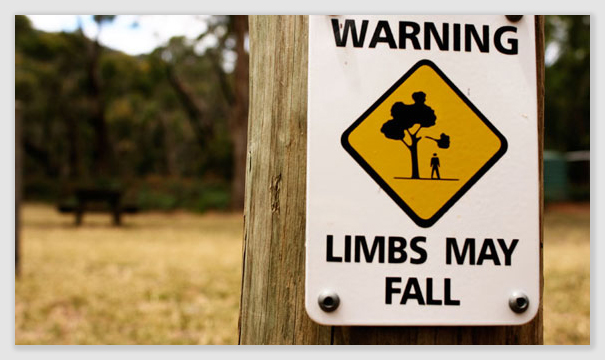
has lost whatever validity it may once have had. In addition, adherence to the rule in California would produce an anomalous result. A possessor of land would owe a duty of care to protect trespassers, invitees and licensees, but not his neighbor, from harms threatened by a natural condition of the land… It is difficult to see why this court should support a rule which would allow a trespasser to bring an action in negligence that would be denied a neighbor, where both were standing on either side of the possessor’s boundary line and were both struck by a dead limb from his tree.

The distinction between artificial and natural conditions and the immunity from liability predicated on that distinction, the Court concluded, bore scant relationship to the factors that should determine whether immunity should be afforded a landowner for harm done by a natural condition of the land. “The foreseeability of harm to the plaintiff, the degree of certainty that the plaintiff suffered injury, the closeness of the connection between the defendant’s conduct and the injury suffered, the moral blame attached to the defendant’s conduct, the policy of preventing future harm, and the extent of the burden to the defendant and the consequence to the community of imposing a duty to exercise care have little, if any, relationship to the natural, as opposed to artificial, origin of the condition causing harm.”

– Tom Root

TNLBGray140407

Case of the Day – Monday, April 29, 2024

IF I OWE HIM, YOU OWE ME, AND SOMEONE ELSE PROBABLY OWES YOU…

One of the beauties of American tort law (if we’re even allowed to use that phrase, which is doubtful) is that if you’re a defendant, you often can daisy-chain as many other people or entities to share your pain as your creative lawyer can find.

The tragic death of young but substantial teenager Tyre Sampson at a cut-rate Florida amusement park provides a case in point. Tyre, only 14 years old but already a sought-after football lineman (at 6’2″ and 300 lbs) fell to his death from a “Free Fall” ride, billed as the world’s tallest free-standing drop tower. When the tower braked, Tyre – who exceeded the maximum size for the ride – slipped out of his seat and fell 100 feet.

Tyre’s parents sued the park, who in turn will no doubt sue the owners of the ride (who lease the contraption to the park).  They will sue the ride’s installers, who will sue the ride’s builders, who will sue the designers.  At some point, Sir Isaac Newton may become a third-party defendant: if not for him, there’d be no gravity. It’s a tort lawyer’s dream: a daisy chain of defendants, all with deep pockets.

Another example arose several years ago when a mid-air explosion of a Southwest Airlines 737 engine killed one passenger and – but for some serious flying by an unflappable Navy fighter pilot turned airline captain – could have killed hundreds. Let’s say Joe Doaks, a passenger on board who had the scare of his life, sues Southwest for negligence in maintaining the airplane. Southwest could be both the defendant and a third-party plaintiff, in turn suing the maintenance company that inspected the engine last without finding a crack in a turbine blade. The maintenance company could then bring in the engine maker for selling a defective engine, and the engine maker could sue the company that made the blade for defective manufacture, and the blade maker could sue the metal supply company for selling a nickel-based high-performance alloy that did not meet specifications, and the metal supply company can, in turn, sue the company making the test equipment that gave faulty readings that the metal was within limits… Before you know it, Joe Doaks has a chain of six defendants, each one pointing the finger at the next guy, and claiming that any liability it may have is shared among all of them.

This is generally a good thing for the plaintiff, because the more defendants, the deeper the collective pocket from which to collect. But the daisy-chained defendant has to have a duty to the injured party before it is liable, and the lure of finding someone else with a checkbook to stand in the defendant’s dock with you can lead to some fairly strained interpretations of “duty.”.

In today’s case, a landlord’s tree dropped a limb onto the heads of two of his tenants. They sued, complaining the landlord company failed in its duty to them to maintain the tree. No argument there – of course it did. But the landlord, looking for someone to share its pain, went after the electric company. Dominion Virginia Power had an easement across the property, the landlord argued, and the defective tree stood in its easement. The power people, the landlord claimed,  had a duty to keep the trees in the easement trimmed, and thus shared any liability the landlord had to the injured tenants.

Well, yes, the court said, there is a duty there, but there is also some fine print as to the extent of the duty. And, as the lawyers like to say, the details are where the devil resides

Vaughan v. S.L. Nusbaum Realty Co., Case No. CL15-5895-00/012016 (Virginia Circuit Ct., Nov. 30, 2016), Va. Cir. LEXIS 183. Travis Vaughan and Alexander Goldenberg were injured when the “wind picked up” and they were struck by a falling limb from a tree located at an apartment complex owned and managed by S.L. Nusbaum Realty Co. Travis and Alex sued Nusbaum, who in turn sued Dominion Virginia Power, the electric company. It seems the tree that dropped the limb was located on a utility easement held by Dominion, and Nusbaum argued Dominion had a duty to maintain the tree.

The easement granted Dominion “the right, privilege and easement of right of way, to construct, operate and maintain a pole line for the transmission and distribution of electricity,” and, with respect to the issue before the Court, “the right to trim, cut and keep clear all trees, limbs and undergrowth and other obstructions along the lines or adjacent thereto that may in any way endanger or interfere with the proper and efficient operation of the same.” Nusbaum argued that as holder of the easement, Dominion had the same rights and responsibilities that Nusbaum did, and had “the duty to maintain the easement, including by maintaining any trees growing on the easement.”

Dominion argued it owed no contractual duty to Travis and Alexander to maintain trees located within the easement.

Held: The Court held that Dominion had no duty toward Travis and Alex.

The trial court said the relevant question was whether the duty to maintain the easement right of way imposes a concomitant duty upon Dominion — as the owner of the dominant estate—to maintain all aspects of the tree.

The right to use an easement comes a duty to maintain the easement in a manner consistent with the use allowed. Although Virginia courts apparently have not articulated the extent of a power company’s duty pursuant to an easement, at least one other jurisdiction has. In a case stemming from a property owner’s personal injury when his heel struck a metal shield on a guy wire supporting a pole bearing equipment of defendants, a New Jersey court held that, as owners of the dominant estate, “defendants were under an affirmative duty to make reasonable inspections of their easement upon plaintiff’s property and to use due care to keep the guy wires and metal shield in good repair.”

Here, the trial court said, the easement does not impose an affirmative duty on Dominion, as owner of the dominant estate, to tend to the tree beyond those actions necessary to maintain the easement in a manner consistent with the use allowed. Dominion has the duty to inspect the easement and make repairs as necessary, including trimming, cutting, and clearing trees, but only to the extent that such trees, or parts thereof, “endanger or interfere with the proper and efficient operation” of the “wires, poles, attachments, equipment and accessories.”

The court said Dominion nevertheless could be liable if Travis’s and Alex’s injuries were caused by its improper maintenance of the easement consistent with its use by, for example, failing to clear portions of the tree from the vicinity of power lines when necessary, trimming the tree in a way that the public was placed in danger, or compromising the health of the tree through improper trimming. Stated differently, the court said, Dominion “must take necessary actions to properly maintain the pole line and its accessories and, if Dominion exercises its right to ‘trim, cut and keep clear all trees, limbs and undergrowth and other obstructions along said lines or adjacent thereto that may in any way endanger or interfere with the proper and efficient operation of the same’ [which is what the easement specified], it must exercise reasonable care in doing so.”

The duty arises from the easement, so facts must be alleged in the complaint to support a breach of such duty. It was not enough for the landlord to say the tree was on the easement and a limb fell, to justify bringing the electric company into the lawsuit.

– Tom Root

TNLBGray140407

Case of the Day – Friday, April 26, 2024

THE LOG WAS TOO BIG

The first rule of plaintiffs advocacy ... look for the deep pockets.

The first rule of plaintiff advocacy … look for the deep pockets.

Pete Spano was a municipal employee, detailed to haul away debris left by a tree trimming company the village government had hired to trim trees along a street. A fellow municipal employee–using a village front-end loader–dropped a log on Spano, injuring him.

Quick, legal scholars–whose fault was it Spano was hurt? Could it be the village worker whose ham-handed running of the loader had caused the log to fall on Spano? Could it be the village manager, who had let an unqualified worker operate some dangerous heavy equipment? Perhaps the Village itself, for not budgeting enough to buy a decent front-end loader or staff up the Street Department so that Spano had more help?

C’mon, you would-be lawyers! We need to be creative here. The real culpable party, according to Spano’s lawyers, was none of these. Instead, it was the tree-trimming company. Of course! It had cut the logs too large, so large that the front-end loader could not handle them easily.

This notion may seem puzzling to many… but not to a good plaintiff’s attorney. The back story here, of course, is that a patchwork of well-intended New York laws (and may God save us from well-intended laws) made it impossible for Spano to successfully sue his employer or, for that matter, his fellow workers. It wasn’t so much that anyone entertained the notion that the private tree trimmer, Northwood Tree Service, was negligent. No one really thought that. However, Northwood was the sole party at the scene that wasn’t immune to a lawsuit. Thus, it wasn’t just the deepest pocket, it was the only pocket.

Of course, Spano could also have sued the front-end loader manufacturer for making a machine that couldn’t safely pick up a big log, the chainsaw manufacturer for negligently making chainsaws that cut big pieces instead of small pieces, or even Starbucks for putting too much caffeine in the front-end loader operator’s latte. With lawyers this creative, the list could be endless.

lawyer-cartoon140402The court thought so, too. It held that Northwood owed no duty to Mr. Spano simply because it had a contract with the Town. Even if it did, it was hired to cut down a tree, and that’s what it did. Spano’s attorney could see where the case was heading and tried to amend his way out of it, but the Court said where the complaint was palpably meritless and the amendment insufficient to fix the problem, pulling the plug on the whole case was the only humane thing to do.

Spano v. Northwood Tree Care, Inc., 852 N.Y.S.2d 289, 48 A.D.3d 667 (N.Y.A.D. 2 Dept., 2008). Spano was injured while performing tree debris removal for his employer, the Town of Mount Pleasant, which contracted with Northwood Tree Care to cut down a tree. The Town provided its own employees to haul the logs away. When one of Spano’s coworkers attempted to pick up a particular log with a front-end loader, the log — which was too big for the bucket — fell on Spano’s ankle.

And how big was the log?

And how big was the log?

Spano said Northwood Tree Care’s employees negligently created unreasonably large and unmanageable logs for Town employees to haul away. He sued Northwood Tree Care, seeking to recover damages for injuries suffered as a result of the accident. The trial court granted summary judgment for Northwood Tree Care, and Spano appealed.

Held: The suit was properly dismissed. Northwood Tree Care established that it did not owe a duty of care to Spano by virtue of its contract with the Town, and in any event, the Town properly performed its obligations. The trial court also correctly denied Spano’s cross-motion for leave to amend the complaint. While leave to amend a complaint shall be freely given under the rules, the Court said leave may be denied where, as here, the proposed amendment was palpably insufficient or patently devoid of merit.

– Tom Root

TNLBGray140407

Case of the Day – Wednesday, April 24, 2024

DIVING INTO THE SHALLOW END

diving140330The last snows of winter should have melted by now, which does not explain the snowflakes that drifted past my kitchen window and covered the car. Still, the first mowing of the grass (and the second and the third) are under my belt. Can Memorial Day and the official start of the summer swim season be far behind?

The advent of the swim season got me thinking about – what else? – liability. Nationally, there are about 800 spinal cord injuries a year from swimmers — mostly young people — diving into shallow water. The idea that you ought to check the depth of the water before diving in is as pellucid as Bahamian waters. Yet diving accident victims and their families often litigate the issue anyway. Today’s case is an interesting application of the “open and obvious” doctrine.

The Koops, who were lakeside property owners, weren’t recreational users because their property was open only to invited guests, not the public. So they had no immunity under Ohio’s recreational user statute. As invitees, their guests were owed ordinary care by the Koops – which included a warning of any dangers that weren’t open and obvious. When one guest ran across the dock and dove into 18-inch water — rendering himself a quadriplegic — he sued the Koops for negligence. The Court ruled that the danger was open and obvious.

Not to be deterred, Galinari argued on appeal that he had been distracted by “attendant circumstances.” Not a bad argument: “attendant circumstances” can defeat the “open and obvious” doctrine. But such circumstances must divert the attention of the injured party, significantly enhance the danger of the defect, contribute to the injury, and be beyond the control of injured party. Attendant circumstances in the past have included such circumstances as time of day, lack of familiarity with the route taken, lighting conditions, and accumulation of ice. But here, the best the plaintiff could muster was that the water was inviting, other people were swimming in the lake, and there were no posted warnings. Not enough, the Court ruled, to excuse the young man from the simple precaution of checking water depth first.

Not all shallow water is so well labeled ...

Not all shallow water is so well labeled …

Galinari v. Koop, 2007-Ohio-4540, 2007 Ohio App. LEXIS 4509, 2007 WL 2482673 (Ct.App. Clermont Co., Ohio, Sept. 4, 2007). In a tragic July 4th accident, 21-year-old Nick Galinari dove off a dock into a shallow lake owned by Koop, severely injuring his spinal cord and rendering him a quadriplegic. Galinari was invited by his girlfriend, Kristin Bounds, to attend a family party hosted by Koops on their property.

The property included a small, man-made lake on which guests are permitted to swim, canoe, fish, and generally use for recreational purposes. On the shore of the lake, there was a ramp connected to a floating dock, all of which extended about 28 feet into the water. The water near the shoreline is quite shallow, fluctuating between approximately ankle-deep and knee-deep. Galinari and his girlfriend pitched a tent and then mingled with guests at the party for about 45 minutes. Galinari, Kristin, and Kristin’s sister then decided to go swimming. Kristin went into the lake while Galinari changed clothes. He then headed down the stairs to the ramp and floating dock to enter the water. He saw Kristin in the water near the end of the dock, but could not recall later if she was standing or swimming. Without stopping to check the depth of the water at the end of the dock, Galinari jogged to the end of the dock and attempted a “shallow dive” to the right of Kristin. The water where he dove was about 18 inches deep. He struck the bottom of the lake, severely injuring his spinal cord. There was no sign on the property, nor did anyone give any verbal warnings, about diving off of the dock due to the depth of the water.

Galinari sued the property owners for negligence for failure to warn him about a dangerous condition on their property. The owners moved for summary judgment, arguing that they were under no duty to warn Galinari of something as open and obvious as the shallow lake. The trial court granted the Koops summary judgment, agreeing that the shallow water was an open and obvious condition and that they, therefore, had no duty to warn Galinari about a danger that he could have discovered through ordinary inspection. Galinari appealed.

Held: Galinari lost. He contended that despite the known dangers involved in diving, the question of the Koops’ negligence in failing to warn him of the shallow water required jury evaluation. He argued that he was a social guest on Koops’ property and that they breached a duty of care in failing to warn him of the dangers of diving off of the dock into their lake.

No-DivingThe Court disagreed, holding that in order to establish a cause of action for negligence, Galinari had to first show the existence of a duty. A social host owes his invited guest the duty to exercise ordinary care not to cause injury to his guest by any act of the host or by any activities carried on by the host while the guest is on the premises. This includes warning the guest of any condition of the premises known to the host and which a person of ordinary prudence and foresight in the position of the host should reasonably consider dangerous if the host has reason to believe that the guest does not know and will not discover the dangerous condition.

However, a property owner owes no duty to warn invitees of dangers that are open and obvious. The rationale for this “open and obvious” doctrine is that the nature of the hazard serves as its own warning, and invitees then have a corresponding duty to take reasonable precautions to avoid dangers that are patent or obvious. In determining whether a condition is open and obvious, the determinative question is whether the condition is discoverable or discernible by one who is acting with ordinary care under the circumstances. This determination is an objective one: a dangerous condition does not actually have to be observed by the claimant to be an open-and-obvious condition under the law.

Here, the Court held, it is clear that the depth of water at the end of the Koops’ dock was a discoverable condition. Kristin was standing in the water near the end of the dock when Galinari dove in. The water on that day was at or below her knees. The lake bottom was clearly visible from the floating dock where Galinari dove. Galinari presented no evidence justifying any reason to believe that the water may have been deeper where he dove. He hadn’t been told he could dive from the dock and he hadn’t seen anyone dive from that dock before him. Kristin was the only person he recalled seeing in the water as he jogged forward along the ramp and dove off of the dock. Based on this evidence, the Court said, the water was a discoverable condition by someone exercising reasonable care under the circumstances. Sadly, the Court said, if Galinari had merely looked at the water at the end of the dock, or stepped into the water to determine its depth, he would have easily determined that the lake was too shallow for diving. However, he took no precautionary measures prior to diving into the lake.

fall161214But Galinari argued that despite the open and obvious danger created by the shallow water, the doctrine of attendant circumstances precluded summary judgment. Attendant circumstances are an exception to the open and obvious doctrine and refer to distractions that contribute to an injury by diverting the attention of the injured party, thus reducing the degree of care an ordinary person would exercise at the time. An attendant circumstance must divert the attention of the injured party, significantly enhance the danger of the defect, contribute to the injury, and be beyond the control of the injured party. The phrase refers to all facts relating to the event, including such circumstances as time of day, lack of familiarity with the route taken, lighting conditions, and accumulation of ice. Galinari argued the “inviting nature of the water,” “other water activity” and the “lack of warnings” were circumstances contributing to his belief that the water was safe for diving.

The Court noted that while the nature of the cool water may have been inviting on a hot Fourth of July, it would not consider that to be an “attendant circumstance” distracting Galinari from exercising ordinary care. Certainly, the Court said, inviting water did not prevent Galinari from being able to discover its depth. Nor did the existence of other docks and slides, the length of the dock from which he dove, and the presence of people and canoes in the water create a visual appearance that diving from the end of the dock was safe. It was clear from this testimony that the “attendant circumstances” that Galinari asserted were not distracting him from exercising due care because he did not even notice them. These circumstances in no way prevented him from exercising the ordinary amount of care or led him to believe that the water was safe for diving.

– Tom Root

TNLBGray140407

Case of the Day – Monday, April 15, 2024

TRIVIAL PURSUIT

Anyone who follows the law (or, for that matter, reads this blog) must from time to time read about a case that seems… well, just so trivial.

What can we say? Lawyers have to eat, too, and some of our brethren and sistren in the bar will take some ridiculous cases, just because the monied defendant will pay nuisance value to make the case go away.

Sometimes, hard to believe, a case is too trivial even for the court. In today’s case, we review one of three fact patterns from three separate apparently trivial cases that were wrapped into a single New York Court of Appeals decision (the Court of Appeals being New York’s highest court). If you’re a glutton for punishment, you can go right to the decision and read about the other two cases included in the decision, both of which involved falling on staircases. The fact pattern we’re focusing on is sufficient to provide an excellent illustration of  the trivial defect doctrine.

As the Court puts it in the decision’s preface, “it is usually more difficult to define what is trivial than what is significant.” The trivial defect doctrine differs from the ancient legal maxim “de minimis non curat lex,” which – as my beloved high school Latin teacher, Emily Bernges, would have explained – translates as “the law does not concern itself with trifling matters.” Usually, “de minimis non curat lex” applies when the injury is insignificant, i.e., a hotel guest asked for a king-size bed and got a queen-size bed instead. The trivial defect doctrine, on the other hand, applies where the injury is quite real, as in victim-plaintiff Lennie Hutchinson’s trip and painful fall over a small protrusion in the sidewalk. No one doubted that Lennie was good and truly hurt. Instead, the question was whether the defect he tripped over was trivial. Thus, the “de minimis non curat lex” situation attends where the defect is real but the injury is trifling. The trivial defect doctrine applies when the obverse is the case.

Certainly, at first blush it seems easy enough to dismiss Lennie Hutchinson’s complaint that he tripped over something a fraction of an inch wide and another fraction high. But as we’ll see, invoking the Trivial Defect Doctrine is not always easily done.

Hutchinson v. Sheridan Hill House Corp., 26 N.Y.3d 66, 19 N.Y.S.3d 802 (Ct.App. N.Y. 2015). Leonard Hutchinson was walking on a concrete sidewalk in the Bronx when his right foot “caught” on a metal object protruding from the sidewalk and he fell, sustaining injuries. Hutchinson sued Sheridan Hill House Corp., the owner of a building abutting the site of Leonard’s fall. Under New York City Administrative Code Sheridan was responsible for maintaining the sidewalk in a reasonably safe condition.

Leonard described the metal object as being “screwed on in the concrete” and gave rough estimates of its dimensions. Sheridan’s attorney had the sidewalk inspected, and found the object, cylindrical in shape, projected “between one eighth of an inch… and one quarter of an inch” above the sidewalk and was about five-eighths of an inch wide.

The trial court granted Sheridan summary judgment on the ground that it lacked notice of the defect. The appellate court affirmed, holding additionally that the metal object’s “minor height differential alone is insufficient to establish the existence of a dangerous or defective condition.”

Leonard took the case to New York State’s highest court, the Court of Appeals.

Held: The defect Leonard complained of was trivial as a matter of law, and thus not actionable.

The Court said a defect alleged to have caused injury to a pedestrian may be trivial as a matter of law, but such a finding must be based on all the specific facts and circumstances of the case, not size alone. Indeed, a small difference in height or other physically insignificant defect is actionable if its intrinsic characteristics or the surrounding circumstances magnify the dangers it poses, so that it “unreasonably imperils the safety of” a pedestrian.

Liability does not turn on whether the hole or depression that causes a pedestrian to fall constitutes a trap. Many factors may render a physically small defect actionable, including a jagged edge, a rough, irregular surface, the presence of other defects in the vicinity, poor lighting or a location – such as a parking lot, premises entrance/exit, or heavily traveled walkway – where pedestrians are naturally distracted from looking down at their feet.

Liability from physically small defects are “actionable when their surrounding circumstances or intrinsic characteristics make them difficult for a pedestrian to see or to identify as hazards or difficult to traverse safely on foot,” the Court said. “Attention to the specific circumstances is always required.”

Finally, the Court said, under the trivial defect doctrine, a defendant seeking dismissal on the basis that the alleged defect is trivial must first show that the defect is, under the circumstances, physically insignificant and that the characteristics of the defect or the surrounding circumstances do not increase the risks it poses. Only then does the burden shift to the plaintiff to establish an issue of fact.

Sheridan met its burden by producing measurements indicating the metal protrusion was only about a quarter inch high and 5/8ths inch wide, together with evidence of the surrounding circumstances. Hutchinson tried to show features of the defect that would magnify the hazard it presented, arguing it had a sharp edge, was irregular in shape, and was firmly embedded in the sidewalk, so that “it could snag a passerby’s shoe.” Hutchinson argued he should not be required to look at his feet while walking on the sidewalk.

The Court was unimpressed. It said the characteristics Hutchinson identified were common to sidewalks. Instead, the Court said, the “relevant questions are whether the defect was difficult for a pedestrian to see or to identify as a hazard or difficult to pass over safely on foot in light of the surrounding circumstances.”

Here, the metal object protruding only slightly from the sidewalk, was in a well-lit location in the middle in the middle of the walk in a place where a pedestrian “would not be obliged by crowds or physical surroundings to look only ahead.” The object stood was not hidden or covered in any way so as to make it difficult to see. Its edge was not jagged and the surrounding surface was not uneven. Taking into account all the facts and circumstances presented, “including but not limited to the dimensions of the metal object,” the Court said, “we conclude that the defect was trivial as a matter of law.”

– Tom Root

TNLBGray140407

Case of the Day – Friday, April 12, 2024

LIGHTNING AND LIGHTNING BUGS

furball151002I was talking to my son in Texas (OK, texting, because he’s a 30-something, and texting instead of talking – sort of using the telegraph instead of the telephone – is what people under 40 do) about the standing water in the flat land that constitutes his extended back yard. It reminded me of Texas’s flat land that seems to this Midwesterner to go on forever – and that Texas is a place where a husband can shoot his wife’s lover, and the wife’s the one who gets charged.

That makes me a little gratified when what could have devolved into a gunfight ends up with the misbehaving defendants coming up on the short end of a jury verdict instead, and at the same time, a little pleased to bring you a Texas case.

This case — a perfect illustration of the problem we’ve talked about before with verbal contracts — shows the horrors that result when complex deals aren’t written down. Bachmeyer and the Stukeses made an oral deal: Bachmeyer could graze his herd on their land if he would expend his time and money fixing their place up. He did, to the tune of about $8,186.00, but clearly, some event must have intervened to sour the deal because the Stukeses refused to let Bachmeyer’s longhorns graze. “Be that way,” Bachmeyer may have replied, “but give me back the $8,186.00 I spent.” Strangely, they refused to even do that.

The other side in today’s hearing reminds us of the Stukeses, but that’s another story.

Bachmeyer sued, and the Stukeses obligingly counterclaimed, raising a host of complaints against him about trespass, shoddy fence-building, cutting down too many trees… the works. The trial thus turned into a regular furball, made more complicated by the lack of a written agreement that would have settled a number of issues.

Things got even messier because it turned out the Stukeses didn’t do much better choosing lawyers than they did writing contracts. Their attorney let the trial court give a whacked-out jury instruction on the meaning of “trespass,” one which essentially required the jury to find that Bachmeyer intended or negligently trespassed, instead of merely intending the act that led to the trespass.

lightning151002Mark Twain once observed that “[t]he difference between the almost right word and the right word is really a large matter — it’s the difference between lightning and a lightning bug.” And was he ever right! At law, one has trespassed if he or she intends or negligently enters onto the real property of another. That is, if you step off a public sidewalk onto my lawn in order to let a group of nuns pass, you have trespassed. You intended to take the step that you took and intended to end up on my grass. It matters not that you were being polite, or that it was for a good reason, or that the Pope would have wanted you to do so. It’s trespass.

If however, you remained on the sidewalk, but the nuns grabbed you and threw you bodily onto my lawn, you did not trespass – not that nuns would ever do such a thing.

The instruction the court gave let the jury think that Bachmeyer had to intend that his incursion on the property was a trespass. If turned trespass into a “state of mind” offense that it has never been. The upshot of the wrong instruction — just the almost right words in almost right places — as well as the Stukeses’ lawyer being asleep at the switch, was a judgment against the defendants. The Stukeses were told to cover Bachmeyer’s $8,186.00 and, for good measure, to pay Bachmeyer’s legal fees in the amount of $17,500.00.

The Court of Appeals wasn’t terribly sympathetic… except on the fee award, which it sent back for reduction and recalculation. Speaking of fees, we bet that the Stukeses’ lawyer had some trouble collecting his.

Stukes v. Bachmeyer, 249 S.W.3d 461 (Tex.App., 2007). Bachmeyer and the Stukeses owned neighboring properties. They entered into an oral agreement to allow Bachmeyer to use the Stukeses’ property to graze cattle in exchange for Bachmeyer‘s agreement to replace the fence separating the two properties, to remove brush, and to otherwise improve the Stukeses’ property. The total value of Bachmeyer’s material and labor was $8,186.00.

When the Stukeses didn’t pay him, he sued. The Stukeses counterclaimed breach of contract, negligence, trespass, promissory estoppel, and a declaratory judgment. They claimed Bachmeyer failed to perform his services in a workmanlike manner because portions of the property had been flooded unnecessarily, requiring repairs to roadways and replanting of pasture; Bachmeyer removed trees that he wasn’t authorized to remove; Bachmeyer removed vegetation in a manner that left the property uneven and unsuitable for pasture; Bachmeyer failed to fertilize and to control weeds, or he did so in an improper manner; Bachmeyer installed fencing unevenly so that it encroached on the boundaries of the property; Bachmeyer damaged the Stukeses’ tractor; and Bachmeyer altered the natural terrain of the property in a manner that directed excess water runoff onto the Stukeses’ property.

The case was tried to a jury that found in Bachmeyer’s favor on all claims. The trial court entered a judgment ordering that the Stukeses take nothing by their counterclaims, that Bachmeyer recover actual damages from the Stukeses in the amount of $8,186.00 plus interest, and that Bachmeyer recover attorney’s fees in the amount of $17,500.00 for trial and $4,000.00 more if the Stukeses appealed.

trespass151002The Stukeses promptly did appeal, claiming that the evidence was legally and factually insufficient to support the jury’s negative findings on trespass and negligence claims and that the evidence was legally insufficient to support the jury’s finding on Bachmeyer’s attorney’s fees.

Held: The verdict on trespass and negligence was upheld. It turned out that the trial court gave the jury a bad instruction on trespass. Trespass to real property occurs when a person enters another’s land without consent. To recover trespass damages, a plaintiff must prove that (1) it owns or has a lawful right to possess real property, (2) the defendant physically, intentionally and voluntarily entered the land, and (3) the defendant’s trespass caused damage.

But the trial court gave the jury a bum instruction. It told the jury that “[o]ne who intentionally trespasses upon land in possession of another is subject to liability whether or not the actor causes harm to the other. A trespass may also be committed through negligence.” The jury paid attention and found that Bachmeyer did not intentionally commit a trespass and that he did not negligently commit a trespass.

The problem was that negligence is not a required element of a trespass cause of action. What’s more, while a plaintiff has to prove that the defendant intentionally committed the act that constituted a trespass, the plaintiff doesn’t have to show that the defendant intended a trespass. If Bachmeyer had tripped on a tree root and fallen over the boundary, the act would not have been a trespass. But if he walked over the boundary — even if he didn’t know the boundary was there — he would be trespassing, because he intended the action, walking, that resulted in the invasion of the property. The jury charge, however, required the jury to find that Bachmeyer either intentionally or negligently committed a trespass.

The Stukeses did not object to these instructions. They were, therefore, required to show more than simple trespass, and the Court of Appeals was duty-bound to assume that the charge correctly stated the law. As for alleged overflow of water onto their land from Bachmeyer’s land, the Court ruled the Stukeses were heist by their own petard: they were unable to prove that Bachmeyer had negligently or intentionally trespassed with the water onto their land. As for the wandering fence, the Stukeses argued it encroached on their property in places. Bachmeyer testified he and the Stukeses had agreed on the encroachments. The Court held that the mere fact that the fence encroached on the Stukeses’ property was insufficient to establish that Bachmeyer intentionally or negligently trespassed. The jury was free to believe or disbelieve Bachmeyer’s testimony that the parties agreed to place the new fence as closely as possible to the old fence and that he did so. The Court deferred to the jury’s resolution of this credibility issue.

The Stukeses also argue that Bachmeyer trespassed because he unnecessarily cut down trees on their property. A landowner who intends to have timber cut on his property owes a duty to adjoining landowners to ascertain the property line of adjoining land with diligence and care. Here, the Court said, the Stukeses and Bachmeyer agreed that to replace the old fence, some of the trees would have to be removed. Bachmeyer testified that he told the Stukeses that he would have to remove some of the trees to put up a straight-line fence and that the Stukeses agreed to the removal of the trees. It is undisputed that Bachmeyer had the right to remove trees on the Stukeses’ property to construct the new fence. Whether he negligently or intentionally exceeded that right, the Court said, was inherently a fact question. The jury had factually and legally sufficient evidence to conclude that he did not.

– Tom Root
TNLBGray140407

Case of the Day – Monday, April 8, 2024

WORKERS COMP TRUMPS CREATIVITY

cash151021Whenever an accident results in permanent disability, it is understandable that the injured party and his family looks for as many deep pockets as they can find.

A million bucks sounds like a lot of money (unless you’re Congress), at least until you deduct a third for the lawyers, and spend the rest on a lifetime of care and support for a paraplegic. The facts of today’s case are rather prosaic: workers from a landscaping service were trimming a tree. Something may have slipped — or maybe it was just one of those things — but a tree limb fell and struck José Garza, who was on the ladder, knocking him off and causing spinal cord injury.

Missouri workers’ comp awarded José $1 million. But he nevertheless sued his employer and the other workers who present that day, alleging negligence. The Missouri trial court quickly threw out the claim against the employer — after all, this kind of litigation was just what workers’ comp was supposed to avoid. But the Court struggled with the claims against his jobsite supervisor and two fellow landscapers.

noway161205The move was creative.  After all, José argued, the statute just protected the employer from liability, not anyone else who happened to be there (like co-workers, who – face it – can sometimes be dim bulbs). Why shouldn’t other employees, especially supervisors, be liable for negligence?

The Court of Appeals said, “No way, José.” In order to take the co-workers outside the protection of the statute, José would have to show some they had engaged in some sort of purposeful, affirmatively dangerous conduct, much more than the garden-variety negligence he alleged had occurred that day. To rule otherwise would completely undermine the policies underlying workers’ comp, and at the same time make it just about impossible to recruit and afford to keep employees (who would demand insurance coverage as a condition of employment).

Thus, the courts never reached the question of whether anyone had been negligent that day, because even if everything José alleged were true, it would just not be enough.

falloff151021Garza v. Valley Crest Landscape Maintenance, Inc., 224 S.W.3d 61 (Ct.App.Mo. 2007). José Garza worked for Valley Crest Landscape Maintenance, Inc., as a landscaper. One day, he was told to report to a home to provide landscaping services. Brad Mason, a supervisor, directed which trees to trim. Garza’s crew leader, Rafael Moya, instructed Garza to climb a ladder and cut a specified limb. Moya placed the ladder against the tree, held the ladder, and rigged ropes to the limb to be cut. Javier González held the rope which Moya had rigged, while Garza climbed the ladder. While Garza was on the ladder, the limb knocked him to the ground, causing a permanent spinal cord injury.

Garza filed a worker’s compensation claim and collected over $1 million on the claim. He then filed a complaint in state court against Valley Crest, Mason, Moya and González, alleging negligence. The Defendants moved to dismiss on lack of subject matter jurisdiction, claiming that worker’s compensation was the sole remedy available to Garza.

The trial court agreed. Garza appealed.

negligence151021Held: The dismissals were affirmed. Normally, workers compensation is intended to be a worker’s only remedy for injuries on the job, even where those injuries are the result of the negligence of the employer. Generally, co-employees enjoy the same protection under the exclusive remedy provision of the workers compensation statute as the employer, absent a showing of something more. That “something more” is a determined on a case-by-case basis and includes any affirmative act, taken while the supervisor is acting outside the scope of the employer’s duty to provide a reasonably safe environment, that breaches a personal duty of care the supervisor owes to a fellow employee.

Allegations by Garza against his co-workers that they failed to securely hold a ladder, failed to properly rig ropes to the branch being cut, failed to create a proper support with the rope, and failed to use reasonable care in holding the rope did not amount to the purposeful, affirmatively dangerous conduct that was required to move the co-workers outside the protection of the statute’s exclusive remedy provisions.

The Court held that mere allegations of negligence are “not the kind of purposeful, affirmatively dangerous conduct that Missouri courts have recognized as moving a fellow employee outside the protection of the Workers’ Compensation Law’s exclusive remedy provisions.

– Tom Root

TNLBGray140407