Case of the Day – Friday, May 31, 2024

PLEASE RELEASE ME

It’s not what you know, it’s who you know… That’s what the people looking for a break were saying in the late days of the Trump Administration these days. Paul Manafort and Michael Cohen got released from federal prison early because of COVID-19. Previously, we’ve seen Rod Blagojevich, Michael Milken, Eddie DeBartolo, and, of course, Sheriff JoeSholom Rubashkin, an obscure sailor whose offense of being sloppy with secret material was seen as less serious than Hillary’s,  a dead boxer, and a right-wing writer who was prosecuted by Presidential enemy Preet Bharara for campaign law violations. The late-term clemency beneficiaries included Presidential once-and-future buddies like Steve Bannon, Michael Flynn, Roger Stone, and Lil Wayne.

It’s no wonder the current White House resident has decided to keep a light thumb on the clemency button for now.

Word has it that the former White House resident could use some clemency of the state variety right now, too.

This might be a good time to talk about releases… not the Presidential kind, but rather the kinds of prospective releases or liability waivers that are a part of our lives, from amusement parks and ski resorts to pools to dry cleaners to parking lots and hat checks. We get little tickets that have fine print on the back stating that by using whatever service we’re using, we agree that we can’t hold the vendor liable if anything goes wrong. Our fedora’s missing from the hatcheck? Too bad. Our pants have a hole burned in them from being pressed? Maybe we can cut them off and make shorts. The roller coaster collapses and crushes us to death? Sorry, pal, guess this just ain’t your day, and tomorrow doesn’t look very good, either.

Certainly, such releases serve an important purpose, being crucial grease on the cogs of commerce. You can find websites that let you “roll your own” liability waiver form for whatever event you have planned with just a few clicks. But the proliferation of such releases has left us wondering. First, are all these liability waivers enforceable? Second, can we use prospective waivers in the arboriculture industry — such as “by hiring me to trim your tree, you release me of liability if I make it fall on your Yugo” — to absolve ourselves from liability?

A California court grappled with such a release when a developmentally disabled child drowned at a city-run camp for such children. The girl’s mother had signed a release from liability – parents sign those forms all the time, and whoever reads them? – but the trial court and the court of appeals held the release would not release the City from liability for gross negligence. The Supreme Court of California agreed, holding that an agreement to release future liability for negligence in recreational activities could not, as a matter of law, release the City or the employee from liability for gross negligence.

The case includes a detailed review of the history of such releases and a rationale for determining which types of releases are enforceable and which are not. Generally, a prospective release may not relieve a grantee of any obligation to meet even a rudimentary standard of care. If Santa Barbara had written its release to relieve it of liability for simple negligence, the release probably would have been valid. But it wrote it too broadly, to release it from any negligence, even gross negligence or recklessness. That was too much for the Court.

Big pigs get slaughtered ... The takeaway - write your release to be reasonable, or a court may ignore all of it.

Big pigs get slaughtered… The takeaway – write your release to be reasonable, or a court may ignore it.

In other words, little piggies go back to the trough, but big piggies get slaughtered.

City of Santa Barbara v. Superior Court, 62 Cal.Rptr.3d 527, 41 Cal.4th 747, 161 P.3d 1095 (S.Ct.Cal., 2007). The City of Santa Barbara provided extensive summer recreational facilities and activities for children, including a camp for children with developmental disabilities called Adventure Camp. Katie Janeway, who suffered from cerebral palsy and epilepsy participated in the camp. Swimming activities were held on two of five camp days each week in a City swimming pool.

The application form for Adventure Camp included a release of all claims against the City and its employees from liability, including liability based upon negligence, arising from camp activities.

Katie’s mother signed the release in 2002, as she had in prior years. She also told the City about Katie’s disabilities, specifically that the girl was prone to seizures in the water, and that Katie needed supervision while swimming. The City knew the child had suffered such seizures in the past, and camp administrators took special precautions during the Adventure Camp swimming activities in 2002, assigning a special, trained counselor to keep Katie under close observation during the camp’s swimming sessions.

Pants came back from the cleaners with a hole? read the fine print on your claim ticket. There's probably a waiver there.

Pants came back from the cleaners with a hole? Read the fine print on your claim ticket. There’s probably a waiver in there somewhere.

Katie participated in the first swimming day at the 2002 Adventure Camp without incident. On the second swimming day, she drowned. About an hour before drowning, Katie had suffered a mild seizure that lasted a few seconds. Her counselor observed the seizure and sent another counselor to report the incident to a supervisor. The supervisor said that the report never was received. Katie’s counselor watched her for 45 minutes following the mild seizure, and then — receiving no word from her supervisor — let Katie go ahead with swimming. Malong concluded that the seizure had run its course and that it was safe for Katie to swim. As Katie dove into the water for the second time that day, the counselor momentarily turned her attention away from Katie. When she looked back no more than 15 seconds later, Katie had disappeared. After the counselor and others looked for Katie for between two and five minutes, an air horn blew and the pool was evacuated. Lifeguards pulled Katie from the bottom of the pool, and she died the next day.

Katie’s parents filed a wrongful death action alleging the accident was caused by the negligence of the City. Relying upon the release, the City moved unsuccessfully for summary judgment. Failing in this, the City appealed, and the appellate court denied the petition, holding the agreement was effective and enforceable insofar as it concerned liability for future ordinary negligence but concluding that a release of liability for future gross negligence is generally unenforceable. Thus, the release form did not validly release any liability.

The Supreme Court granted review.

Held: The City’s release was invalid to the extent it purported to apply to future gross negligence. The Court observed that “ordinary negligence,” an unintentional tort, consists of a failure to exercise the degree of care in a given situation that a reasonable person under similar circumstances would employ to protect others from harm. “Gross negligence,” on the other hand, is a want of even scant care or an extreme departure from the ordinary standard of conduct. A signed release absolving the City and its employees from liability for “any negligent act” in its operation of a recreational program for disabled children violated public policy and was thus unenforceable, to the extent it purported to release liability for future gross negligence. Therefore, the Janeways were not precluded from pursuing wrongful death action.
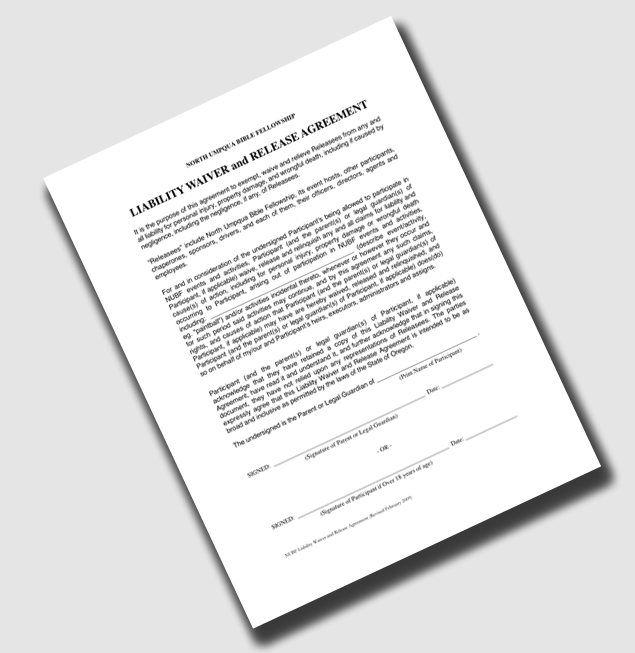
Sure you can impose your waiver in the fine print ... but it's not just boilerplate. Use care in drafting it, or - better yet - spend a little money to have a lawyer do it for you.

Sure you can impose your waiver in the fine print … but it’s not just boilerplate. Use care in drafting it, or – better yet – spend a little money to have a lawyer do it for you Some things are too important for D-I-Y.

The Court said that public policy generally precludes enforcement of agreements that would remove the obligation to adhere to even a minimal standard of care. Courts may, in appropriate circumstances, void contracts on the basis of public policy, the determination of which resides first with the people as expressed in the California Constitution and second with the state legislature. The power of the courts to declare a contract void for being in contravention of sound public policy is a very delicate and undefined power and should be exercised only in cases free from doubt. Nevertheless, the Court said, courts are authorized to distinguish ordinary negligence from gross negligence, even absent express legislative authorization.

The Court grudgingly seemed to accept that waivers of liability for future ordinary negligence – at least in recreational or sports contexts – would be enforceable. However,  California does not permit a waiver of liability for future aggravated negligence. For that matter, neither do an overwhelming number of other states.

Whether this holding might have applicability before recreational and sports activities, such as in “inherently dangerous” activities such as tree removal, is up in the air. While this shouldn’t dissuade an arborist or tree removal company from including a carefully drawn and limited waiver in the contract, neither should the professional bank on the waiver being enforced.

  – Tom Root

TNLBGray140407

Case of the Day – Thursday, May 30, 2024

ARTIFICIAL DISTINCTIONS

rottentree140408When a tragedy occurs, it’s all too common to look for someone to pay for it. In today’s case, a young man was left a quadriplegic when a healthy-looking tree standing alongside a public highway fell without warning and struck his car. The trial judge was obviously moved by the sad story and felt it was his duty to open the state’s wallet.

The trial judge denied the Louisiana Department of Transportation and Development a free pass. The judge recognized that a prior holding relieved the state from the duty to inspect all sides of a tree. But he reasoned that the rule had been adopted in a case where a construction crew’s negligence had weakened the tree on the side away from the road. The trial court here reasoned that this case was different: it was natural rot, and natural rot did require DOTD to inspect all sides of a tree.

Truly a distinction without a difference! Step back and consider the implications of this holding. Besides the fact that why the tree was weakened is really not relevant to the danger it poses, the trial court’s ruling would mandate incredibly costly and time-consuming inspections. A state — even Louisiana — has a lot of highways to inspect. In Louisiana’s case, it amounts to nearly 17,000 miles of road, and a lot of trees. The costs to the taxpayers of a tree-by-tree inspection would be staggering.

A perfect illustration of a distinction without a difference.

A perfect illustration of a distinction without a difference …

The Court of Appeals made short work of the trial judge’s higher “duty.” It held that the law was clear. Where the tree appears healthy — like the one that fell on the victim — the state’s duty could be discharged in a drive-by inspection… no matter why the tree was rotten.

Walker v. State Dept. of Transp. and Development, 976 So.2d 806 (La.App. 2 Cir., 2008). Nathaniel Walker was a passenger in a vehicle being driven by Dannie Evans on Louisiana Highway 71, when a large oak tree fell on the car. Nathaniel was left a quadriplegic, albeit one with a good lawyer. He sued Dannie, Allstate Insurance and the State of Louisiana Department of Transportation and Development.

Among other things, Walker alleged the oak tree that fell on the vehicle was on the highway right-of-way in violation of highway safety regulations, that DOTD had prior knowledge that the tree needed to be removed and that DOTD failed to inspect the right of way. DOTD moved for summary judgment, arguing that Nathaniel couldn’t show any facts in support of his allegation that DOTD had prior knowledge that the tree needed to be removed. DOTD supported this claim with an affidavit from one of its maintenance superintendents who had conducted an inspection of the area in question two weeks before the mishap. The state agency argued that under the law, it owed no duty to motorists traveling on state highways to check for damage on all sides of trees that abut state roadways. The trial court denied summary judgment to DOTD because the damage to the tree was a result of natural rot as opposed to third-party-operated construction equipment. The trial court stated that despite the holding in a prior case – Caskey v. Merrick Const. Co. – the distinction as to how the tree was injured imposed a greater duty to inspect on DOTD.

DOTD appealed.

Held: DOTD won, and Walker’s case was dismissed. The appellate court said in order to recover damages from DOTD, Walker had to prove that the state had ownership or control of the tree that caused the damage; the tree was defective (that is, it created an unreasonable risk of harm); the state had actual or constructive knowledge of the defect and failed to take remedial procedures within a reasonable amount of time, and the state’s failings led to the injuries Walker suffered.

Now this is a distinction without a difference ...

… as is this.

No one contested that DOTD had control over the rotten oak tree, that the rotten oak tree was defective, and that the rotten oak tree caused Walker’s injuries. Instead, the Court held that the primary issue was whether DOTD had actual or constructive knowledge that the tree was rotten. The condition that caused the oak tree in question to fall was visible only on the backside of the tree, out of sight of DOTD inspectors who passed by on the road. There was no genuine issue as to the location of the rotten area in question, or whether the rotten area in question was observable from the roadway. Additionally, the photographs taken at the accident scene revealed that the oak tree was otherwise healthy, containing a full canopy of green leaves.

The Court said that DOTD’s duty to protect against the risk of a tree falling onto a highway required it to inspect for dead trees and remove them within a reasonable time. The state was not required, however, to inspect every tree that conceivably could fall on the road or to remove trees simply because they had the potential to fall onto the road.

In Caskey, the court held that DOTD inspectors had no duty to walk around all sides of the tree and check for damage, particularly when the tree was otherwise green and healthy. The trial court in this case imposed a greater duty on the state than the law required. The Court of Appeals ruled that the trial court’s incorrect determination – that a different duty exists when the defect results from natural causes as opposed to artificial causes – was a contradiction of the law, a distinction without a legal difference.

– Tom Root

TNLBGray

Case of the Day – Wednesday, May 29, 2024

EXPERIENCE MATTERS

Ask a Cleveland Browns fan (if there are any left, that is):  Experience really does matter. Grabbing the hottest college quarterback (Charlie Frye, Brady Quinn, Colt McCoy, Johnny Manziel, Deshawn Kiser,) with zero NFL experience has not been Jimmy Haslam’s ticket to the Super Bowl.  And then, we got Baker Mayfield. He lasted longer than most, but he ended up as yet another college QB standout, sent to Cleveland to die.  At least he’s got a second act in Tampa.

Finally, the very expensive quarterback Deshaun Watson will be in the backfield for a full season. He’s an experienced fighter… unfortunately, many say, the fighting so far has been with women, not opposing teams

To borrow Samuel Johnson’s description of a second marriage, it’s the triumph of hope over experience.

Experience does make a difference. That’s a lesson we can take away from today’s case.

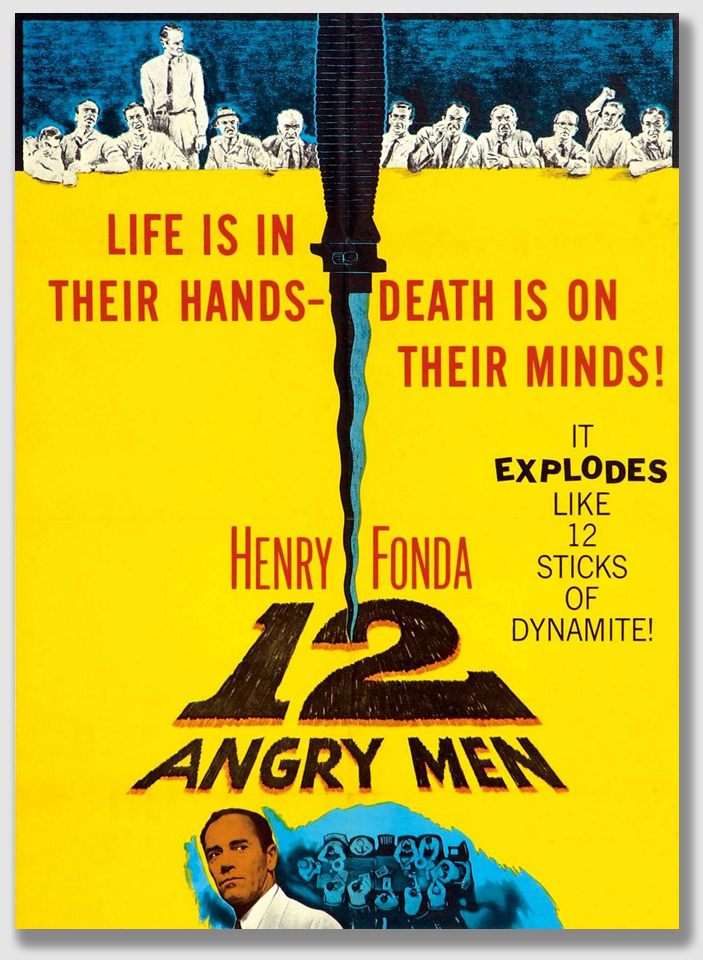
There’s another lesson, too, illustrated by the old criminal law adage that no defendant should ever trust his freedom to 12 people who are too stupid to know how to get out of jury duty. Part of that maxim is based in reality: despite the Constitutional promise of a “jury of your peers,” most trial attorneys know that the jury generally ends up overpopulated with government workers (who get time off with pay for jury duty), such as county workers and schoolteachers, or retirees. Professionals, business owners and managerial types – to name a few – usually finagle their way out of the jury dock.

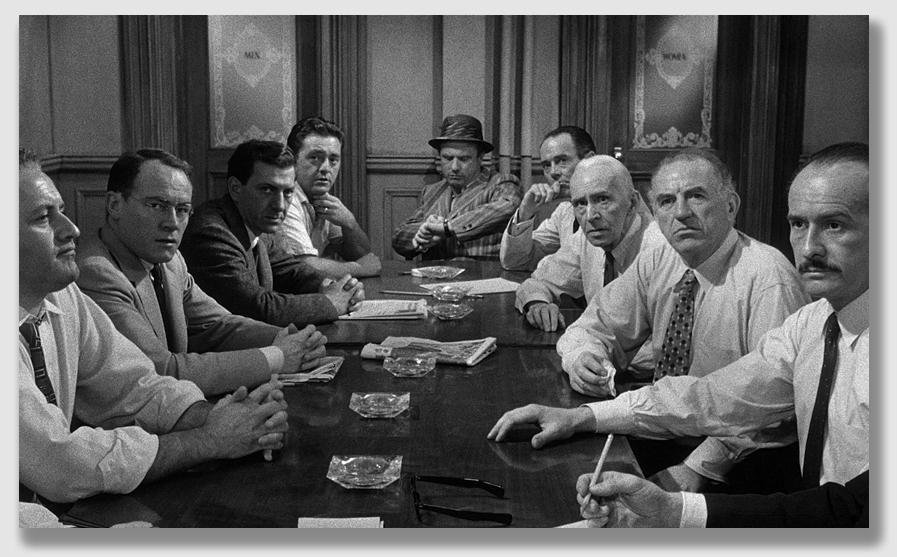
You're much more likely to get 12 confused jurors than you are to get angry ones ...

You’re much more likely to get 12 confused jurors than you are to get angry ones …

Historically, the facts found by the jury are virtually bulletproof. This is partly because tradition and the Constitution have sanctified the community judging concept represented by juries, and partly because the legal system has to have some method of deciding facts with some finality.

Nevertheless, social scientists tell us that there is wisdom in the crowd. Donald Trump is about to find out whether the jury is right more than it’s wrong. Perhaps it isn’t. Because the law accords such respect to the secrecy of jury deliberations, we may never know.

Today’s case illustrates how carefully appellate courts parse jury findings. It’s quite common for the trial-court loser to complain on appeal that the jury findings were wrong. As the Maine Supreme Court makes clear to us, it’s quite uncommon for the appellate court to agree.

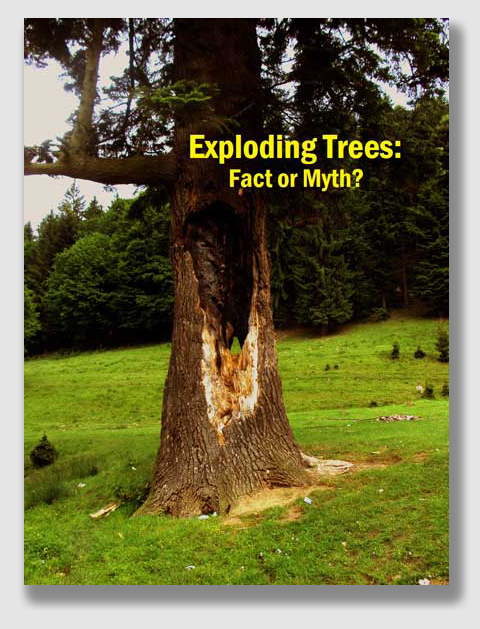
Back in the spring of 2011, Keith Anthony asked his neighbor, Paul Gagnon, to help him cut down a rotten tree. Both Keith and Paul were accomplished tree professionals. Paul used a chainsaw on the 30-inch trunk while Keith pushed on it with a Bobcat. Suddenly, the tree “exploded.” A falling limb knocked Paul unconscious and seriously injured him. (Despite the fact that Paul subsequently died during the litigation, he did not succumb to injuries from the tree).

Paul sued Keith for negligence, arguing that Keith should have warned him that the tree could explode and that he shouldn’t have been pushing on the tree with the skid-steer. In his answer to Paul’s complaint, Anthony argued that Paul was negligent, too, raising what’s known as the affirmative defense of comparative negligence. The trial court jury found that both Keith and Paul were negligent and that Paul was at least as negligent as Keith in causing his own injuries.

explo151116The appellate courts do everything possible to tip the scales in favor of the jury. Its standard of review – the deference the courts of appeal will give the jury’s decision – is to uphold a jury’s verdict if, when viewed in the light most favorable to the winning party, there is any credible evidence in the record to support the verdict. This means that if five witnesses said Keith drove the Bobcat over Paul’s foot, but one witness said that Paul deliberately stuck his foot under the wheels, the jury’s decision to go with the one witness and reject the observations of the other five will be upheld. Appellate litigation can be like watching those hapless Browns get outscored 30-0 by the Ravens for the first 59:30 minutes of the game, only to have Cleveland score a single field goal in the final thirty seconds and win.

Here, the Court decided that no one expected the tree to explode. Shortly after the accident, Paul admitted that he didn’t think Keith was doing anything with the skid-steer that contributed to the tree breaking or falling too soon. Keith corroborated the accidental nature of the event, testifying that the tree “just dropped suddenly without warning or anything.”

The Court went out of its way to note that both Paul and Keith “had substantial experience cutting trees and working in the woods, and both were aware of the rotted condition of the tree they were working on.” A Maine arborist testified that using the Bobcat to try to bulldoze the tree over while someone else sawed at it was, charitably put, a stupid idea. Under the circumstances, the Court said, both Paul and Keith should have known better than to try to use a skid-steer to push the tree over.

As for the jury, the Court reasoned that from the evidence, a jury could have concluded that Keith was negligent in operating the Bobcat; (2) either Keith or Paul or both were negligent because they should have known that the way they were cutting down the tree was dangerous; or (3) no one was negligent, and the tree “explosion” was just one of those things. Because the jury could have gone any of several ways on the verdict, its conclusion that both of the guys were knuckleheads was supported by the record.

In other words, there was enough evidence in the record for everyone. When that’s the case, the jury’s decision as to which version to credit stands.

And if you’re experienced enough to know better, a jury is going to hold you to your experience.

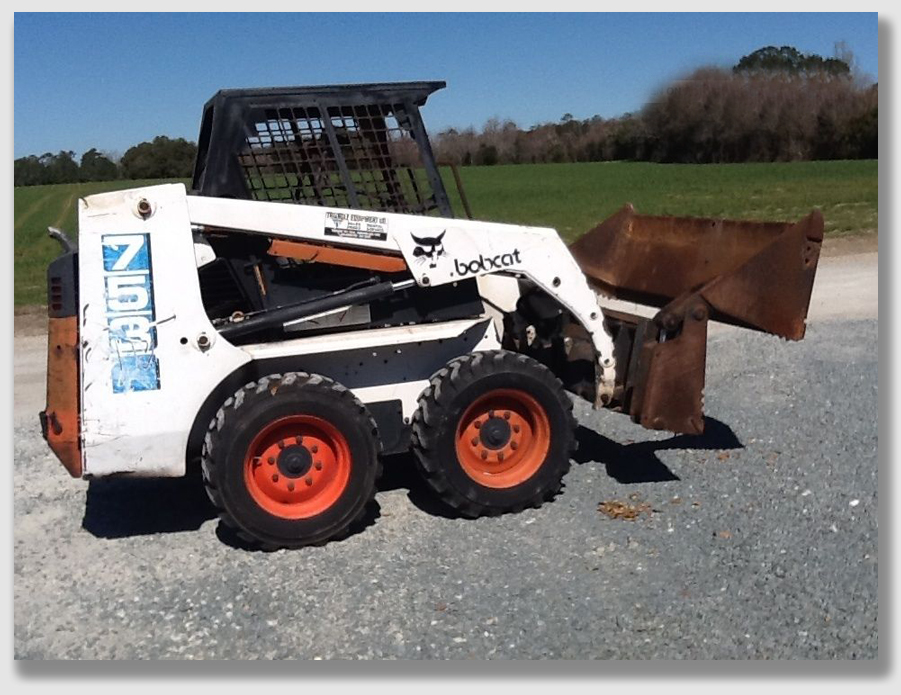
A Bobcat of the type that Keith misused ...

A Bobcat of the type that Keith misused …

Estate of Gagnon v. Anthony, 126 A.3d 1142 (Supreme Court of Maine, 2015). Keith Anthony asked his neighbor, Paul Gagnon, to help cut down a rotted tree at Anthony’s place. Both men were experienced woodcutters. The tree to be felled was about thirty inches wide with a large limb growing out of it. Gagnon used a chainsaw to make a wedge cut in the tree below the limb while Anthony used the bucket of his Bobcat skid-steer loader to push the limb away from the house and a nearby sapling. As they performed their respective tasks, the tree “exploded” and the limb fell on Gagnon, injuring him. Gagnon sued Anthony, alleging that Anthony failed to warn him about the possibility that the limb could snap because of the rotted condition of the tree, and also alleging that Anthony was negligent in his operation of the Bobcat. Anthony raised an affirmative defense of comparative negligence under 14 M.R.S. § 156 (2014).

A trial jury found that both Anthony and Gagnon were negligent and that Gagnon was at least as negligent as Anthony in causing his own injuries. The Estate’s motion for a new trial was denied, and this appeal followed.

Held: The jury’s verdict was upheld. The Court said it would uphold a jury verdict if, when viewed in the light most favorable to the prevailing party, there is any credible evidence in the record to support the verdict. Gagnon, as the movant, was required to show that the jury verdict was so manifestly or clearly wrong that it is apparent that the conclusion of the jury was the result of prejudice, bias, passion, or a mistake of law or fact.

jury151116The Maine Supreme Court said it was clear from the record that neither man expected the tree to “explode” as it had. In a recorded statement that was admitted in evidence, Gagnon explained that the tree “broke way too soon, it should have never broke at that point.” In his statement, Gagnon placed no blame on Anthony, stating that he did not believe that Anthony was doing anything with the skid-steer that contributed to the tree breaking or falling too soon. Anthony corroborated the accidental nature of the event, testifying that the tree “just dropped suddenly without warning or anything.” Furthermore, the evidence showed that both Gagnon and Anthony had substantial experience cutting trees and working in the woods, and both were aware of the rotted condition of the tree they were working on. The Court dryly observed that “it would not be unreasonable to infer from this circumstance that both men knew, or should have known, the risks associated with cutting the rotted tree, and both should have known that the plan to use the Bobcat to fell that tree was ill-advised.”

The Court said that the evidence was sufficient for the jury to decide any of three ways. The jury could have found that (1) Anthony was negligent in his operation of the Bobcat; (2) either Anthony or Gagnon or both were negligent because the dangerousness of the method they undertook to fell the rotted tree should have been obvious to each; or (3) neither of them was negligent, and the limb falling onto Gagnon was simply an unexpected accident. Where the causal fault of both parties is in dispute, the Court said, “it is the sole prerogative of the jury to determine the comparative degrees of fault of each of the parties to a negligence action.”

Although the record did contain evidence that Anthony accepted some responsibility for Gagnon’s injuries, and although a licensed Maine arborist testified that pushing a tree with a skid-steer is “not the proper way to do it,” the Court ruled that there was sufficient credible evidence in the record to support the jury’s finding that Gagnon was at least as negligent as Anthony.

Thus, the trial court didn’t abuse its discretion in denying Gagnon’s motion for a new trial.

  – Tom Root

TNLBGray

Case of the Day – Friday, May 28, 2024

TOO CUTE BY HALF

Years ago, I often crossed swords with a crusty old lawyer who favored flannel shirts and corduroys, as well as awful-smelling stogies that fogged up a deposition room like a sunny day in Beijing. When I would explore the state of any pending litigation with him, he always complained that my client needed to “get the money flowing,” by which he meant ‘start the settlement talks.’

A lot of personal injury lawyers live and die by that mantra, sometimes litigating a dog of a case because they are confident that before they have to face a summary judgment motion or, God forbid, an actual trial, the defendant will open a checkbook and pay their clients to go away.

That’s what happened in today’s case. To be sure, the deaths of two young men when a tree fell on their car was a tragedy. But somewhere along the way, the families of the decedents lost their way and decided – when an expert told them frankly that they had no case – that they could fake it, shucking and jiving until the defendant’s insurance company paid up.

Sadly for the plaintiffs in today’s case, the defendant – a nonagenarian – passed away before trial, leaving a tough-minded executor who wasn’t going to play footsie with some oily out-of-town lawyers. Also passing away before the trial was the defendant’s insurance carrier: the company went bankrupt, so the liability coverage that might have otherwise paid a settlement went away, too. The plaintiffs, perhaps because the estate had money, perhaps because – like fighters in a 15th-round clinch – they were too exhausted to do anything else, played fast and loose with the discovery rules, not answering interrogatories, delaying trial in hopes of a settlement, even hiding the first expert’s report.  But, as sometimes (but not often enough) happens from time to time, the truth was found out.

The result was a vindication for a blameless old lady (who, although dead, nevertheless faced post-mortem indignity at the plaintiffs’ hands) and a well-deserved spanking for some lawyers who were about too cute by half.

Wade v. Howard, 232 Ga.App. 55 (Ga.App. 1998). Chris Wade and Ed Barnsley were driving along Briarcliff Road in unincorporated DeKalb County immediately after a thunderstorm. As they passed Grace Nesbitt’s 8-acre tract of property, they were killed when their car was struck by a large tree that fell across the road. At the time, Grace was 90 years old and quite ill. Thus, she had not lived on her property for three years before the accident. No matter. The families of the deceased young men nevertheless sued Grace for wrongful death.

During the 1980s, Grace had had trees removed from her property from time to time. In October 1987, she hired a man to remove two trees that were dying because they had been struck by lightning. At the same time, she asked a friend who was caring for her and seeing to her affairs to inspect her property for any other dead or diseased trees, He did so and found no other trees that needed cutting. This caretaker also testified that he looked at the trees along the roadway “many times” on later occasions as he walked Grace’s property at her request.

As for the tree that fell, he saw nothing about the tree that appeared unusual. The base of the tree was over 20 feet from the roadway, behind a fence and across a gully in a heavily overgrown area. Before it fell, the tree’s base was covered with heavy overgrowth and vines. The tree grew towards the sun over the roadway like other trees along the road. The caretaker observed the fallen tree while it was being cut up and saw no dead limbs on it; it was “just healthy on the outside, and this is what baffled everybody, you know.” He said that nothing visible on the tree indicated it was dangerous.

No one ever notified Grace or the caretaker of any problem with the particular tree.

The plaintiffs initially hired an expert who inspected the stump of the fallen tree within six months of the accident. He said the tree was severely decayed and hollow at the base, but that “this internal defect would not have been readily apparent [to] an untrained casual observer.” While the tree leaned over the road, predisposing it to fall in that direction, the expert explained it leaned and had more branches on one side because it was an “edge tree” seeking sunlight over the roadway, doing what all edge trees do. He stated that all edge trees behave like this. The plaintiffs didn’t much like his opinion, and fired him along with the lawyer who had hired him. Three years later, they hired a second expert, who filed an opinion based on looking at pictures of the accident scene. He never authenticated the photos in his report, however, and the trial court, therefore, rejected his opinion. The Plaintiffs also obtained an affidavit from a neighbor who testified she believed the tree was dangerous because it leaned over Briarcliff Road. She admitted she had never told Grace or the caretaker of her opinion.

Grace died before trial and her estate was substituted as a defendant. The trial court granted summary judgment in favor of Grace’s estate. The plaintiffs appealed.

Held: Grace was not liable for the fallen tree.

The Court said that Georgia law governing a landowner’s responsibility for trees is well established. The prevailing rule distinguishes between rural landowners and urban landowners (who are held to a standard of reasonable care in inspecting trees to ensure safety). Rural landowners are liable only where one of their trees has “patent visible decay and not the normal usual latent micro-non-visible accumulative decay.” In other words, rural landowners have no duty to consistently and constantly check all trees for non-visible rot, as the manifestation of decay “must be visible, apparent, and patent so that one could be aware that high winds might combine with visible rot and cause damage.”

Just as the owner of a tree has no duty to check it constantly for non-visible rot, a city has no duty to check limbs overhanging a public road for non-visible rot. The Court held that while Grace’s land was unimproved, she did not live on it, and she was old and infirm, it nonetheless would assume for the sake of the case that it was urban land, because it was located in the Atlanta metropolitan area. Even under the urban landowner standard, however, the Court ruled that the plaintiff families had not shown that there was any question of fact that Grace had breached her duty to inspect. The Court said the Plaintiffs

failed to demonstrate patent visible decay in the tree before its fall. Their own expert witness testified that the decay would have been invisible to a layperson on inspection of the tree. Moreover, plaintiffs have not demonstrated that the decay would have been visible, apparent, or patent before the fall of the tree because of its inaccessible location and the heavy undergrowth and vines surrounding the tree’s base.

The Court of Appeals was not very happy with the Plaintiffs. It noted they had fired their expert and first lawyer when they received an opinion that did not match their belief that they should make some money in this case. They “shopped” the case through a number of law firms before they found an attorney from out of town, who then proceeded to hide the first expert’s report from the defense until it was accidentally revealed. The plaintiffs did not respond to discovery requests, filed an expert’s opinion without authenticating photos, and sued everyone – Grace, the County, county employees, and even automobile insurers – in a “shotgun” approach that forced a number of blameless defendants to spend money defending themselves. Plaintiffs filed the day before the statute of limitations expired, and used every procedural trick in the book to delay the day of reckoning.

“Throughout the lengthy course of this action,” the Court complained, “plaintiffs have avoided stating a legal basis for their claims or the supporting facts until faced with an imminent ruling against them. While plaintiffs as laypersons may not have been informed of the controlling law or the substantial delay that occurred as a result of their counsel’s conduct, it is clear that counsel was well aware from the inception of this litigation that these claims have no merit.”

The Court thus socked the plaintiffs’ lawyer with a $1,000 fine.

– Tom Root

TNLBGray

Case of the Day – Monday, May 20, 2024

MOVING THE CHEESE

There’s a great old adage in the law that goes something like “When your case is weak on the law, pound on the facts. When your case is weak on the facts, pound on the law. When your case is weak on the law and the facts, pound on the table.” Today’s case is one in which an inventive lawyer tried just that, albeit without much result.

We’ve worked a lot with the old Restatement rule, now on its way out, that a landowner is not liable for physical harm caused to others outside of the land by a natural condition of the land. That rule, when it was a rule, came with a proviso. If the person possessing the land was in an urban area, he or she was liable for physical harm resulting from failure to exercise reasonable care to prevent an unreasonable risk of harm arising from the condition of trees on the land near the highway.

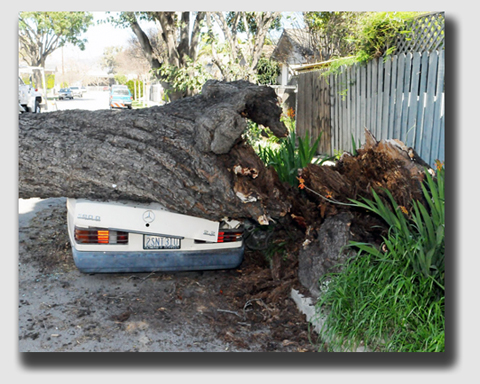
In today’s case, a tree in the lush tropical paradise fell onto a road and crushed a ’77 Mercedes – a pretty nice ride – leaving the plaintiff’s lawyer with a problem. The evidence showed the collapsed tree was rotten, all right, but that none of the decay was visible from the exterior. So arguing that the tree’s owner should have inspected the tree was a loser because even if he had done so, the owner would not have seen the decay and recognized the danger.

The plaintiff’s lawyer recognized that to win this one, he’d have to move the cheese on the defendant. So he quickly rolled out a second argument: Even if the common law (and more specifically here, the Restatement on Torts) did not impose liability without fault (that is, strict liability), the court should impose it here simply as a matter of public policy. “Public policy” is a fancy way of saying something should or should not be done because… well, because it is just common sense. So, the argument went, it did not matter if tree owner Al Gerard followed the rules as they existed now because the rules needed to be changed retroactively, all the way back to the day the tree fell.

It’s sound public policy, the plaintiff’s lawyer argued, that is, good common sense.

“Common sense?” the Court asked incredulously. If urban owners are strictly liable for any tree that falls, it responded, then their reaction to the rule will simply be to cut down all of their trees. And where would be then? Sorry about the Mercedes, the Court said, but we’d be even sorrier about the trees.

Marrero v. Gerard, Civil No. 249/1989 (Terr.Ct. V.I., Dec. 12, 1989) 24 V.I. 275. Vic Marrero was driving his Mercedes along the East End Road in Estate St. Peters, Virgin Islands. Suddenly a tree stood on property owned by Al Gerard fell on Vic’s car. Vic claimed the car was damaged (not hard to believe) as was his psyche (harder to believe).

Norm Nielsen, who was Al’s neighbor and worked with Vic, was first on the scene. The base of the tree was inside Al’s fence, but the rest was on the road. Norm said the tree was “dry” where it broke off, “kind of rotten but green on top.” The evidence, which included photos taken by the traumatized Vic, failed to establish that a visual inspection of the tree would have disclosed that it was rotten at its base and in danger of toppling.

Held: The Court held that the facts did not show Al to be negligent, because he appeared to have no reason to know that the tree was unstable and would fall.

Vic, however, argued that even if Al was not negligent, he should be held strictly liable for any damage the tree caused. Vic cited the Restatement of Torts (Second), which provided in section 363 that:

(1) except as stated in Subsection (2), neither a possessor of land, nor a vendor, lessor, or other transferor, is liable for physical harm caused to others outside of the land by a natural condition of the land.

(2) A possessor of land in an urban area is subject to liability to persons using a public highway for physical harm resulting from his failure to exercise reasonable care to prevent an unreasonable risk of harm arising from the condition of trees on the land near the highway.

Vic relied on subsection 2, arguing that Al – owning trees in an urban setting – had a duty to Vic to inspect the trees. The Court ruled that whether the property on which the tree was located was urban or rural might be debatable but ultimately was irrelevant. Even if the urban standard applied, the Court said, and even if Al had adhered to the standard, “the weakened condition of the tree was not apparent upon a visual inspection, so that it matters not whether the area was urban or rural. Perhaps a core sampling of the tree would have disclosed the problem, but such an effort, particularly when weighed against the likely risk, is far too onerous a burden to place upon a landowner.”

The Court held that the Restatement did not impose strict liability, that is, liability without fault, in circumstances like these. All § 362(2) does is to apply a more specific standard of care to an urban landowner, but still within a negligence realm.

Unfazed, Vic argued that the Court should apply its own strict liability standard to this case, as a matter of public policy. The Court demurred, saying that in its view, sound public policy was reflected in the Restatement’s standard. The Court said that a landowner should have the duty to inspect for, discover and remedy patently hazardous natural conditions on his or her property that may cause harm to others outside the land. But where the decay is internal, and therefore not discoverable upon reasonable inspection, to “impose a rule of strict liability would be to declare, in effect, that any tree which is large enough to fall over the boundary of one’s land will subject its owner to liability in the event that a hidden weakness causes it to topple and cause damages off the land.” That would just lead prudent landowners to cut down their trees, the Court concluded, “thereby accelerating the already lamentable deforestation of the territory.”

The Court agreed that the community should be protected from reasonably foreseeable dangers, but the community – both local and worldwide – “also has a compelling interest in the protection and preservation of the environment. The same concern and sensitivity that we are just beginning to bring to the massive problem of the destruction of the Amazon rainforest, for example, should also apply to the relatively minute and particular circumstances of this case. No reasonable gain would be derived from adopting a rule of strict liability here, particularly when weighed against the potential ecological and aesthetic implications of such a decision.”

– Tom Root

TNLBGray140407

Case of the Day – Wednesday, May 15, 2024

MR. NATURAL

Do you remember the 60s? If so, you weren’t really there. Still, you may know someone whose brain was not so addled by the Summer of Love that he or she has forgotten Robert Crumb’s famous counter-culture cartoon character, Mr. Natural. Mr. N. was a bearded mystic guru who spouted aphorisms on the evils of the modern world, his most famously puzzling one probably being “Keep on Truckin’.”

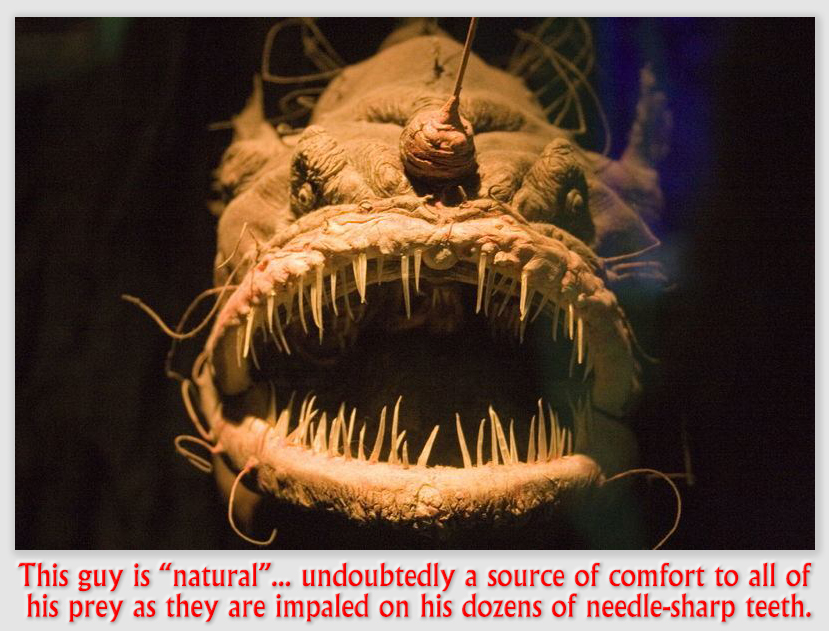
Contrary to the cachet that Mr. Natural gave the notion, there was never that much virtue in being natural. That certainly has been true in the development of modern arboriculture law. There was a time when the common law made a substantial distinction between the natural and the, dare we say, artificial. If you had a tree on your land that had sprouted and was nurtured without your help, like the dozens of volunteer maple tree sprouts we yank out of our daylilies every year, the tree could do as it wished – grow, shed branches, attack the neighbor’s sewer lines with its roots, even decay and fall on the neighbor’s car – while you were exonerated of any responsibility. On the other hand, if your great-grandpa had planted the elm tree out back a century ago on returning home from the Great War, and it has become diseased and rotted (as trees are wont to do), the common law made you responsible for whatever damage its decay may cause.

You can imagine the furball this rule has caused. Who could tell whether your great grandfather planted that tree before catching influenza and cashing in? And for that matter, what possible should the agency by which the seed got into the ground have on whether a property owner ought to shoulder some duty to third parties for the condition of his or her property?

As society changed and the population shifted to urban and suburban living, courts have had the opportunity to question the rationale for the natural/artificial dichotomy more often than ever. Today’s case is an excellent example of how appellate courts grappled with the issue.

One note: Despite the fact that the overwhelming reason for the damage to the Rowes’ house was that the McGees shirked their responsibility for the diseased tree, the Court found that the victims themselves had a very small role in the overall negligence. Under the old tort law doctrine of contributory negligence, if a defendant were 99% negligent, a plaintiff was only 1% negligent – contributorily negligent, we used to say – the plaintiff collected nothing. Zero. Nada. Zip. Bupkis.

The pernicious “contributory negligence” doctrine gave way in the late 20th century to “comparative negligence,” a much more sensible approach in which the percentage of negligence is weighed by the jury. If a defendant is 70% negligent and the plaintiff 30% negligent for the plaintiff’s injuries, the damage award is cut by 30%. Much more rational.

Rowe v. McGee, 5 N.C.App. 60, 168 S.E.2d 77 (N.C.App. 1969). Noah and Jeanette McGee sold a tract of land to Chuck, who built a house on it and promptly sold it to Ed and Josie Rowe. The McGees held on to a second tract of land which adjoined the Rowes’ new premises.

An oak tree stood on the McGees’ land, a towering old thing that was hollow, partially rotten and leaning in a manner that suggested sooner or later it would fall. The tree was completely natural: no evidence suggested any landowner had planted or nurtured it. The oak was in this decrepit condition when Chuck bought the neighboring plot. Part of the McGees’ deal with Chuck was that he would remove the tree, but he did not. Instead, he completed the house and sold it to the Rowes, with the tree still leaning toward the new house.

The Rowes found it hard to enjoy their spanking-new, thoroughly modern luxury home with this next-door Sword of Damocles looming outside their living room window, so they demanded that the McGees eliminate the hazard. The McGees told the Rowes they wanted the great oak reduced to sawdust; they would have to do it themselves. The Rowes agreed to take it down.

Sadly, as of the night of April 22, 1967, they had not yet done so. That night, Mother Nature resolved the problem, blowing the decayed oak right onto the Rowes’ living room sofa and new RCA color TV.

The Rowes sued the McGees for damages. The trial court agreed the McGees had a duty to remove the tree and were responsible to the Rowes for damages. However, because the Rowes told the McGees they would remove the tree and did not, they were found to be contributorily negligent, so they were awarded nothing. The Rowes appealed.

Held: Because the McGees knew that their oak tree was decayed and liable to fall and damage Ed and Josie’s house, the McGees had a duty to eliminate the danger, and could not with impunity place the burden to remove the tree on the Rowes.

The Court of Appeals admitted that there were no North Carolina cases on the precise issue, and the state of the law – as reflected in The Restatement of the Law of Torts – was that “where a natural condition of land causes an invasion of another’s interest in the use and enjoyment of other land, the possessor of the land containing the natural condition is not liable for such invasion.” Thus, the Court said, at least historically, the law relieved the McGees of any obligation for mischief caused by the old oak.

The term “’natural condition’ comprehends trees which are the result of a natural condition,” the Court said, “not trees which have been planted by man.” But, as the Court conceded, it often was difficult to determine whether the tree’s origin was natural or artificial.

Ironically, in concluding that the natural-artificial distinction no longer mattered, the Court found direction in a case from Massachusetts, that flinty home of the self-reliant Massachusetts Rule. It cited a Bay State case in which a defendant owned a vacant lot with a large, dead elm tree. When a branch from the tree fell across the property line and hit a neighbor, the Massachusetts Court held that keeping such a tree near a property line constituted a private nuisance, observing that

public policy in a civilized community requires that there be someone to be held responsible for a private nuisance on each piece of real estate, and, particularly in an urban area, that there be no oases of nonliability where a private nuisance may be maintained with impunity.

In the Rowes’ row with the McGees, our North Carolina Court concluded that the greater probability of injury to other people or their property imposes a higher degree of care upon the owner of the tree or structure. In this case, the Court said, “Where the defendants knew that the tree on their property was decayed and liable to fall and to damage the property of Edward and Josephine, we think and hold that the defendants were under a duty to eliminate the danger and could not with impunity place such burden to remove the tree on Edward and Josephine.”

But the Court said the trial judge was right to give the contributory negligence instruction because the Rowes told the McGees that they would remove the tree but did not, so the Rowes still took nothing.

– Tom Root

TNLBGray

Case of the Day – Thursday, May 2, 2024

DOUBLE, DOUBLE DOIL, AND TROUBLE

My apologies to Bill Shakespeare, despite the fact he and the three witches of MacBeth probably are not regular readers of this blog. Today we meet Aynne Doil, a hapless landowner who gets slapped with double damages under an unusual Maine law requiring the marking of property boundaries, but who dodges much greater liability for the misfeasance of her independent contractor, Matt McCourt.

Aynne is the Doil. And, pretty clearly, Matt is the trouble.

This is not the first time, and it won’t be the last, that I emphasize the importance of written agreements, and (for you homeowners especially), the importance of ensuring that your timber harvesters, tree trimmers and arborists are and remain independent contractors.

At trial (where Aynne’s timber harvester and co-defendant, Matt McCourt, proved himself to be “Matt SkipCourt” and did not bother to show up), the court bonked Aynne over the head with about $120,000 in damages for the mess Matt had made in denuding the Stocklys’ 20 acres of woodland. Lucky for Aynne she had signed a written agreement with Matt that was sufficient under Maines’ Bonk v. McPherson factors to make him an independent contractor.

The Maine Supreme Court unbonked Aynne, because – as we all know – a landowner is only responsible for the intentional or negligent acts of his or her independent contractor if the landowner reserved the right to control the manner of the contractor’s performance. Aynne knew from nothing about timber, a fact pretty evident from her rather simple negotiation of the agreement. But for its failings, the contract was good enough in the end to make Matt an independent contractor, Aynne was not responsible for the $119,000 in damages, but rather only for about $14,000 for failing to mark her property, which was doubled by statute to $28,000.

Matt promised in the contract to indemnify Aynne from any liability, which should have protected her from even the $28,000 in damages, but we’ll leave it to you to imagine how reliable a promised indemnity might be from a guy who did not even show up in court to defend himself.

Some time I’ll talk about performance bonds, people. For now, we’ll call Aynne “Double Doil,” but concede that she nevertheless may have avoided $119,000 worth of real trouble.

Stockly v. Doil, 870 A.2d 1208 (Me. 2005). The Stocklys owned 20 acres of undeveloped land in Falmouth. Aynne Doil’s 30 acres of land abutted the Stockly property. Neither Aynne nor the Stocklys cleared their properties, which were naturally forested with a mix of mature hardwoods and softwoods, prior to Spring 2001.

It was then that Aynne hired Matt McCourt to selectively harvest timber on her property. Matt did the paperwork with the State and helped Aynne get a copy of the tax map of her property. Aynne, who was not especially cartographically inclined, understood that Matt would determine the boundary of the property from the tax map, an impossible task.

No matter, because Matt told Aynne he would indemnify her in the event that he trespassed on any land she did not own. The indemnification provision in the agreement was to protect Aynne, who didn’t want to be liable for “anything that might… happen.”

Stone walls marked the boundary between the western and southern edge of the Stockly property and the eastern edge of Aynne’s land. The eastern, northern, and southern edges of the Stockly property, which abutted the Doil property, had previously been surveyed and flagged, but no other markers indicated the boundary between the two properties. Aynne knew Matt had identified the stone wall boundaries on at least one edge of the property, and she thought he had all the information he needed to determine the boundary of her property. Unfortunately for Aynne, she didn’t know Maine law required her to mark her boundaries, something that Matt – being the pro here – should have told her. At trial, she conceded liability under 14 MRSA § 7552-A, which requires the owner of 10 acres or more being cut to mark the property lines or pay double damages for any resulting injury to another property.

Pretty complete clearcut: Matt did a complete job, but it wasn’t pretty.

During the spring and summer of 2001, Matt “selectively” cut trees on 30 acres of Aynne’s property and on all 20 acres of the Stockly property, much the same way the locusts “selectively” descended on Egypt. The Stocklys lost about 725 trees to Matt’s saw, mostly large hardwoods and softwoods (the good stuff). The Stocklys obviously did not authorize the cutting and were not aware of it until after it occurred. Matt paid Aynne $18,000 for the trees he cut.

The trees cut on the Stockly property had a fair market or “stumpage value” of $14,127.00. The forfeiture value of the trees, pursuant to Maine’s unlawful cutting statute, 17 MRSA § 2510(2), was $59,525.00. The cost to clean up the debris and slash left behind from the timber harvesting was $35,750. To restore the property would have cost about $370,000. The cutting, however, did not have a significant impact on the fair market value of the Stockly property, but the Stocklys understandably contended that their property was 95% clear-cut and was of little or no value to them, as they could no longer use it for recreational purposes.

The Stocklys sued Aynne and Matt, seeking damages for (1) breach of statutory duties pursuant to 14 MRSA §§ 7552 and 7552-A; (2) negligence; (3) nuisance; and (4) negligent infliction of emotional distress. Aynne filed a cross-claim seeking indemnification from Matt. Matt failed to appear, and a default judgment was entered against him. The Superior Court found Aynne responsible for damages of $28,254.60 (double the stumpage value) under § 7552-A, for failing to mark her property line; and (2) finding Aynne and Matt responsible for damages of $119,050 (double the forfeiture value of the trees), pursuant to 14 MRSA § 7552, for negligently cutting, destroying, damaging, and carrying away trees from land without the property owner’s permission, but reduced Aynne’s share to $35,750 pursuant to 14 MRSA § 7552(3)(B). To add insult to injury, the Stocklys got $45,000 in attorney fees and $1,537.00 in other costs pursuant to § 7552(5).

Aynne and the Stocklys both appealed.

Held: Aynne was not liable for Matt’s trespass. The Maine Supreme Court examined 14 MRSA 7552, and found that it “simply provides that “a person” may not “cut down” someone else’s trees and that “a person” who violates this prohibition is liable to the owner of those trees. “Nothing in this statute indicates that the language ‘a person’ and ‘cut down’ was intended to also include one who engages an independent contractor to cut down someone’s trees,” the Court held, “especially because 14 MRSA § 7552-A already creates such liability.”

The Court said the statute’s history supported its interpretation. In legislative history accompanying a 1977 amendment, the legislature said that the “new draft clarifies the purpose of the original bill. It increases the damages for which the trespasser himself is liable, in section 1 of the new draft. Section 2 of the new draft clarifies the law with regard to the landowner who authorizes cutting, but fails to mark his property lines, with the result that timber is cut on the abutting owner’s land.”

In 1992, the Supreme Court considered a case, Bonk v. McPherson, 605 A.2d 74, 79 (Me.1992), that applied 14 MRSA § 7552 in a case where a landowner hired an independent contractor. There, the Court held that the statute was ordinarily applicable only to the actual trespasser and that liability may extend back to an employer for the trespass of his independent contractor only under very narrow circumstances:

a party can be held liable for the trespass of an otherwise independent contractor if the trespass was [1] authorized as part of the contract, [2] or was the natural result of the work contracted to be done, [3] or the trespass was somehow directed or part of a common purpose, or [4] the trespass was ratified.

Here, Aynne’s contract with Matt provided that Matt would “assume all responsibility for the cutting of wood on adjacent properties and shall indemnify and hold the Seller harmless from all claims of trespass and damage and further shall be responsible for complying with all applicable governmental regulations.”

The Court noted that the trespass was not authorized under the contract and was not the natural result of the riskiness of the work contracted to be done. Aynne did not direct Matt to enter the Stocklys’ property and cut down their trees, and she did not subsequently ratify the trespass. Aynne’s acceptance of Matt’s payment could ratify his acts only if she was aware of all the material facts relating to the trespass. Here, there was no evidence in the record that suggests Aynne knew at the time she accepted payment that Matt had cut Stockly trees. “Common sense,” the Court said, “suggests the opposite.”

Aynne was liable for the damages caused by her own failure to mark her boundaries. “However,” the Court ruled, “it only makes sense to hold her responsible for the intentional or negligent act of Matt if she reserved the right to control the manner of his performance somehow. Because Matt was an independent contractor, the only opportunity Aynne had to exert control over the manner of his performance was during the formation of the contract when she was deciding what exactly it was that she wanted him to perform. Consequently, that is the point in time that we look to.” An independent contractor’s employer has a say-so only about whether the end product is acceptable, not about the exact manner or means used to achieve it.

Meanwhile, the Stocklys complained that the trial court erred by awarding them damages pursuant to 14 MRSA § 7552-A based only on the value of the severed trees, or the “stumpage value.” In Maine, an owner can claim the diminution in value of the land or treat the timber as personal property and claim the value of the severed trees as his damage. However, nothing prevented the trial court from considering the cleanup costs, which Aynne and the Stocklys agreed totaled $35,750, “to remove the debris left by” the cutting. “Those cleanup costs,” the Court said, “which may be necessary to reduce risks of fire, erosion and sedimentation of streams, and to restore use of trails and roads on the property, are recoverable as an element of damages pursuant to section 7552-A.” The issue was sent back to the trial court.

Because Aynne is no longer liable for the $119,050 in trespass to tree damages, the attorneys’ fees awarded to the Stocklys were mooted.

– Tom Root

TNLBGray140407