Case of the Day – Monday, June 24, 2024

UNDER A SPREADING CHESTNUT TREE

newspaper140421You think you got it bad, 2024ers? You dumped your Nvidia stock to invest in Fisker? You went long on Trump Media & Technology stock figuring he’d get acquitted in New York? Nest egg starting to smell a little rotten?

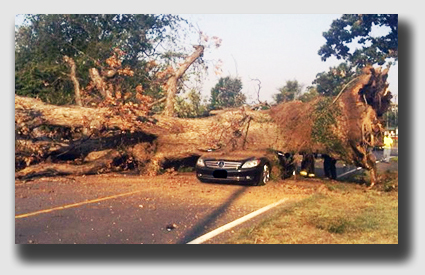
The year 1929 was bad for a lot of people, too, with the stock market crash wiping out millions. It started just as badly for one Lou Cotillo (not to be confused with Lou Costello) when a chestnut tree on suburban land being developed by a real estate firm crashed onto the road. Under the spreading chestnut tree was Mr. Cotillo’s car, which, unfortunately enough, contained him and a passenger.

It turned out the chestnut in question, a rather big specimen, had been dead for a few years. However, the Court noted, “beyond its deadness, [it] bore no exterior evidence of decay.”

Deadness? Is that even a word?

Maybe not, but the jury had little trouble determining that the tree’s obvious “deadness” made the real estate developer liable for the accident. Brandywine appealed, arguing that the trial court should have taken the case away from the jury and thrown it out. It argued that, as a matter of law, it wasn’t liable for the results of a tree’s natural condition (that is, it’s “deadness”).

Applying what little Delaware law the United States Court of Appeals for the Third Circuit could find, the appellate panel upheld the jury verdict. The Court held that responsibility for an owner’s property is one of the burdens of ownership, and, as a landowner has the right to enjoy his property unhampered by the actions of his neighbor, his neighbor – ­whether a landowner or a highway traveler ­– is similarly entitled. The trial court told the jury that Brandywine had a duty to keep its property from being a source of danger to the travelers on the highway “to the extent that reasonable care can guard against” the danger. The jury decided that Brandywine had breached its duty. Game, set and match.

This case was an early decision in the general trend of imposing a duty of reasonable care on non-rural landowners. The issue in negligence cases such as this one is always the nature of the duty owed by the defendant. Defendants such as Brandywine Hundred Realty (in this case) want the duty to be as minimal as possible, while plaintiffs want the jury charge to describe a duty of the first water. From the “trees will be trees” laissez-faire approach of the 19th century, where owners generally had no duty whatsoever to protect passers-by from hazardous trees to a modern view that while not guarantors of their trees, property owners had a duty to correct problems of which they had actual or constructive knowledge.

chestnutdown140421

Brandywine Hundred Realty v. Cotillo, 55 F.2d 231 (3rd Cir. 1931). On a dark winter night in January 1929, Mr. Cotillo and a passenger were driving forested suburban land owned by Brandywine Hundred Realty, Inc. A chestnut tree, standing about 10 feet from the road, fell suddenly, crushing Mr. Cotillo’s car and killing his passenger. The tree had been dead for four years, but “beyond its deadness, bore no exterior evidence of decay.”

Cotillo sued, and the case went to trial. The real estate company asked the judge to take the case from the jury and find in its favor as a matter of law, because the natural condition of the tree caused the accident, and it had no duty to Mr. Cotillo. The judge disagreed and instead told the jury that Brandywine had a duty to exercise reasonable care in the use of its property, so as not to harm neighboring landowners or motorists. The jury found for Mr. Cotillo.

Brandywine appealed, arguing that the trial court had misdefined its duty.

Held: The trial court was correct in its definition of Brandywine’s duty. The appellate court said that “[a]fter all is said and done, this case turns on the application of the time-honored principle of law, ‘sic utere tuo ut alienum non laedas’–so use your own as not to injure another.” It held that Mr. Cotillo had a right to use the highway and that Brandywine had the duty “to so use his property on his own land that it shall not cumber the highway and endanger the safety of those using it …” It agreed with the trial court’s charge to the jury that “ the owner of property abutting on a public highway is under a duty to keep it from being a source of danger to the public or to the travelers on such highway to the extent that reasonable care on his part can guard against.”

‘Cumber’? Is that even a word?

Negligencedef140421The Court of Appeals also concurred that the fact the tree had died of natural causes, rather than because of Brandywine’s conduct, had no effect on the realty company’s duty. Regardless of how the tree ended up in a condition of “deadness,” if its deadness was known by Brandywine or could have been known “by the exercise of ordinary case … then it became the duty of the defendant to exercise reasonable care and diligence to prevent the tree from falling and injuring those who might have occasion to use the public highway.”

Thus, the question of Brandywine’s alleged negligence was for the jury to pass upon. It did so, and found negligence. The Court found no basis for disturbing that finding.

As for “deadness” and “cumber” being actual words – the dictionaries give the Court a pass on both of them (although it admits “cumber” is obsolete). But as far as I’m concerned, the jury’s still out on those two…

The dismissal of this ridiculous suit was upheld.

– Tom Root

TNLBGray140407

Case of the Day – Thursday, June 20, 2024

IT WAS A DARK AND STORMY NIGHT …

Snoopy made the opening line of Paul Clifford one of the most famous in the history of pedestrian writing.

Snoopy made the opening line of Paul Clifford one of the most famous in the history of pedestrian writing.

Or so begins Edward George Bulwer-Lytton’s 1830 novel, Paul Cliffordthe opening line now famous thanks to Snoopy in the comic strip Peanuts and the fiction contest that bears the author’s name. It’s a bit ironic:  we are enjoying as much light today as any time this year (the solstice arrived at 4:50 pm EDT, the earliest since George Washington was president).

Yet today, we’re going to look back on a really dark and stormy night when the aptly-named farmer Hay drove his truck through the Ohio countryside, past the golf course owned by a local lodge of the Benevolent and Protective Order of Elks.

On this particular dark and stormy summer night, an oak tree by the side of the road, weakened and decayed after a lightning strike several years before, fell on Farmer Hay, bringing to a sudden end his time on this mortal coil. Subsequently, his estate sued the Elks, claiming the Lodge had been negligent in failing to do anything about the hazardous tree, despite the fact that its decrepit state was well known to the duffers.

Relying on rather a thin precedent, the trial court threw out the Hay descendants’ claim, holding that a rural landowner had no duty to protect travelers on the highway from the natural condition of trees on his or her property. The matter reached the Ohio Supreme Court in 1951.

The Supreme Court began with the observation that the law permitted every landowner to make such use of the person’s property as he or she wishes, provided it is used in such a manner as not to invade the rights of others. It then added flesh to that general rule, holding that while a rural landowner has no duty to inspect trees adjacent to a highway, when he or she has knowledge – actual or constructive – of a patently defective condition of a tree which may injure a traveler, the landowner must exercise reasonable care to prevent harm to people lawfully using the highway.

While there was little precedent in other states for the duty to act defined by the Hay court, the decision hardly came as a surprise. The American Law Institute’s Restatement of the Law of Torts had previously held that while “[n]either a possessor of land, nor a lessor, vendor or other transferor thereof, is subject to liability for bodily harm caused to others outside the land by a natural condition of the land other than trees growing near a highway.” But it contained an important caveat. The Restatement – which is written with a goal of identifying trends in the law – noted that its drafters expressed “no opinion as to whether a possessor of land who permits trees not planted by himself or his predecessors to remain on a part of the land near a public highway is or is not under a duty to exercise reasonable care to prevent their condition becoming such as to involve a grave risk of causing serious bodily harm to those who use the highway and the burden of making them safe is not excessive as compared to the risk involved in their dangerous condition.”

The ALI presciently foresaw evolution of the duty defined in Hay and cases in other jurisdictions that followed it. The Hay rule has since become a standard of care imposed by virtually all states.

These things happen ... but the landowner may be liable, depending on what he or she knew and when he or she knew it.

These things happen … but the landowner may be liable, depending on what he knew and when he knew it.

Hay v. Norwalk Lodge No. 730, B.P.O.E, 92 Ohio App. 14, 109 N.E.2d 481 (Court of Appeals, 6th Dist., 1951). Farmer Hay was driving his truck on New State Road when a large limb or limbs fell from a tree located on land owned by the local chapter of the Benevolent and Protective Order of Elks. The limb struck the top of the cab, injuring Mr. Hay so that he lost control of the truck, crashed into a tree, and died as a result of his injuries.

Mr. Hay’s estate sued, alleging that the tree had been struck by lightning several years before, and was extensively damaged and weakened as a result. The complaint said the damage to the tree was visible and apparent for several years, and that after the tree was struck by lightning, apparent natural processes of decay set in and further weakened the tree and its branches, which extended over and above the traveled portion of the road. Finally, the complaint averred that the Elks knew that portions of the tree extended over the road, that it had been struck by lightning, and the tree was  weakened. The complaint concluded that the Elks had neglected to remove or to brace the damaged portions or to do anything to make the tree secure, and failed and neglected to give notice to motorists of the danger.

The trial court held that the Elks had no duty to Mr. Hay to alert him as to the danger tree, or to remove or trim it. It threw out the complaint. The matter ended up before the Ohio Supreme Court:

Held: The Supreme Court reversed, and sent the case back for trial. It held that every person may make such use as he or she will of real property, provided he or she uses it in such a manner as not to invade the rights of others. But in the case of rural landowners, this means that although there is no duty imposed upon the owner of property abutting a rural highway to inspect trees or to ascertain defects that may result in injury to motorists, an owner having actual or constructive knowledge of a patently defective condition of a tree which may result in injury to motorists must exercise reasonable care to prevent harm to people lawfully using the highway.

The Court noted that the only Ohio holding even close to its conclusion in this case was one in which the owner of property upon which a tree was situated was held to have the duty to exercise ordinary care for the safety of pedestrians using the sidewalk. However, the American Law Institute had noted in Restatement of the Law of Torts that its members were split, and thus had no opinion on “whether a possessor of land who permits trees not planted by himself or his predecessors to remain on a part of the land near a public highway is or is not under a duty to exercise reasonable care to prevent their condition becoming such as to involve a grave risk of causing serious bodily harm to those who use the highway and the burden of making them safe is not excessive as compared to the risk involved in their dangerous condition.”

Public policy opposes burdening rural landowners with the duty of inspecting their property for hazard trees ... but if the landowner knows there's a problem, he or she should attend to it.

      Public policy opposes burdening rural landowners with the duty of inspecting their property for hazard trees … but if the landowners know of a problem, they should attend to it.

The Ohio Supreme Court observed that the law imposes upon every member of society the duty to refrain from conduct of a character likely to injure a person with whom he comes in contact and to use his own property in such a manner as not to injure that of another. The justices reviewed cases from other states, which led the Court to the “conclusion that in the absence of knowledge of a defective condition of a branch of a tree which in the course of natural events is likely to fall and injure a person in the highway, no liability attaches to the owner of the tree. On the other hand, where the owner has knowledge of the dangerous condition of the tree or its branches, it is his duty to exercise reasonable care to prevent the fall of the tree or its branches into the highway.” The Court agreed with a Minnesota case that held that it was unreasonable to require the owner of rural land to inspect his property with regard to naturally arising defects, because of the burden thereby imposed upon the owner of large and unsettled tracts of land. However, the Court rejected the Minnesota case’s conclusion that the owner was not liable even if he had actual knowledge.

The Ohio Supreme Court instead followed dictum from a Federal court decision that “an owner of property abutting a highway has an obligation to use reasonable care to keep his premises in such condition as not to endanger travelers in their lawful use of the highway. If he fails to do so and thereby renders the way unsafe for travel, he should be liable therefor. It is, therefore, concluded that, although there is no duty imposed upon the owner of property abutting a rural highway to inspect growing trees adjacent thereto to ascertain defects that may result in injury to a traveler on the highway, an owner having knowledge of a patently defective condition of a tree which may result in injury to a traveler on a highway must exercise reasonable care to prevent harm from the falling of such tree or its branches on a person lawfully using the highway. If the danger is apparent, which a person can see with his own eyes, and he fails to do so with the result that injury results to a traveler on the way, the owner is responsible because in the management of his property, he has not acted as a reasonably prudent landowner would act.”

Because the Hay Estate’s filing alleged the Elks had actual knowledge of the decayed tree, the complaint made out a claim that – if proven – would entitle the Estate to recover. The case was reinstated and sent back to the trial court.

– Tom Root

TNLBGray140407

Case of the Day – Tuesday, June 18, 2024

ASSUMPTION OF RISK

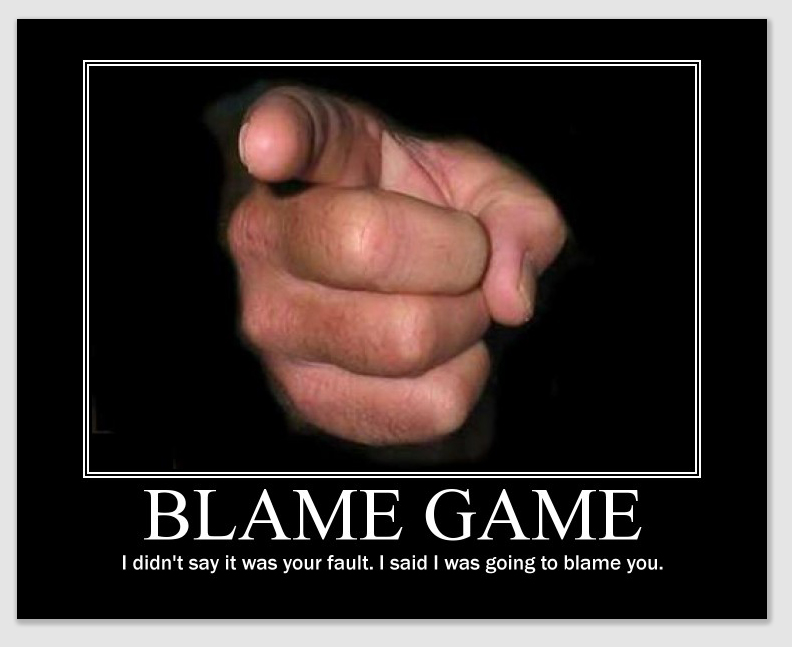
blamagame170112Today we have yet another cautionary tale from the annals of “I got hurt, so I need someone to sue.”

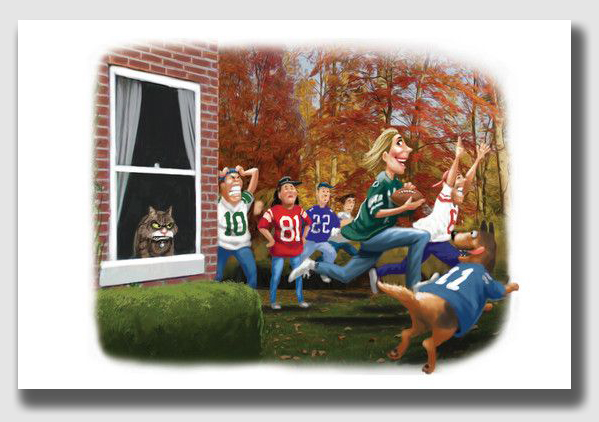
Dan was a healthy, 26-year old recreational-football-league kind of guy. He was playing flag football with some buddies in the Dome Football League, using an indoor facility owned by the Town of Tonawanda. Of course, you need to mark the boundaries of the football field, and — necessity being the mother of invention — someone used a softball glove as a marker.

Dan stepped on the glove during a moment of football derring-do, and he was injured. So of course, he threw a yellow hankie at the Football League and the Town. The Town and League threw their own red flags, asking the booth, that is to say, the trial court, to review and throw out the case. The trial court refused to do so.

The appellate court, however, penalized Dan 15 yards and loss of down. When someone engages in an injury-prone event, like flag football, he or she (usually “he” in the case of football, but there are exceptions), consents to the reasonably foreseeable consequences of the activity. There are always sideline markers, the Court observed, and Dan didn’t show that using a softball mitt had created a danger any greater than using the usual cones or plastic flags employed by the League.

So what does this have to do with trees? When people engage in outdoor activities in which they come in contact with trees, roots, stumps and holes in the ground, it’s always a fair question whether they assumed the risk when they elected to ski, mountain bike, run a 5k or whatever they were doing at the time.

If you’re a Dan (or a Danielle), be prepared to prove that the hazard you confronted was something over and above what you could reasonably expect to encounter in the activity. If you’re playing football, expect to be hurt. You’ll rarely be disappointed.

tfootball141126Gardner v. Town Of Tonawanda, 850 N.Y.S.2d 730 (N.Y.A.D. 4 Dept., 2008). Dan Gardner, a 26-year-old flag football enthusiast, slipped and fell on a baseball glove that he and his buddies were using as a sideline marker during a recreational indoor flag football game organized by the Dome Football League and played in a facility owned by the Town of Tonawanda. Dan was experienced in playing recreational flag football games on the indoor artificial turf field and he knew the sidelines of the field were marked with orange plastic cones and that the referee had the discretion to use other types of markers on the sidelines as well. Dan said he was unaware that a baseball glove was being used as a sideline marker, but he didn’t have any evidence supporting his contention that the risk of slipping on the baseball glove was greater than the risk of slipping or tripping on the cones or plastic flags usually used as sideline markers. But that didn’t stop him from suing the Football League and the Town. The defendants moved for summary judgment, but the trial court denied it.

crayon170112

Maybe so, but the big crayon assumed the risk.

Held: Summary judgment was granted to the Town, and the case was dismissed. The Court concluded that Dan assumed the risk of the injuries that he sustained because the use of the baseball glove as a sideline marker didn’t create a dangerous condition over and above the usual dangers that are inherent in recreational flag football.

The doctrine of primary assumption of the risk generally constitutes a complete defense to an action to recover damages for personal injuries and applies to voluntary participation in sporting activities. As a general rule, the Court said, participants properly may be held to have consented by their participation to those injury-causing events which are known, apparent or reasonably foreseeable consequences of their participation. Such injury-causing events include the risks that are inherent in and arise out of the nature of the sport generally and flow from such participation.

– Tom Root

TNLBGray140407

Case of the Day – Thursday, June 13, 2024

THE DEVIL MADE ME DO IT

You know the guy I’m talking about. Nothing is ever his fault. (No, I did not suggest a certain former inhabitant of the White House or the current inhabitant, either – we stay above politics around here).

But… that guy. The blame always lies with someone else. Think of John Belushi in the Blues Brothers, groveling at the feet of an assault rifle-toting Carrie Fisher, explaining all the reasons he had left her standing at the altar and ending with the plaintive wail, “It’s not my fault!”

Today’s defendants have something in common with the pathetic Jake Blue. For reasons unexplained (but I suspect, given this occurred on breathtaking Kodiak Island, Alaska, that it was intended to enhance their view), Joel and Darlene wanted to remove some trees on the downslope of the hill they lived on, out to about 400 feet. Most of the trees – beautiful 100-foot plus Sitka spruces – were not on their property. A minor detail.

Darlene called her neighbor, Lisa, and asked whether she and her husband could cut down a few trees on Lisa’s land, you know, just trees that might pose a hazard if they were to fall in a windstorm across the property line and strike Joel and Darlene’s cabin. Lisa was at work when Darlene called her, and she didn’t really have a well-formed idea of what her neighbors had in mind. This was understandable, given that Darlene misled Lisa into believing they were talking about a few sickly boundary trees. Lisa, thinking that thinning the woods there would probably let more light in and spur growth, said that she did not mind at all.

When Lisa got home that evening, she discovered a denuded hill, with trees clear-cut from the boundary line toward her cabin for almost 400 feet. Hyperion itself couldn’t have fallen from that point and hit Joel and Darlene’s. Lisa was furious and called Darlene (who had the good sense not to answer the phone). Lisa told Darlene’s voicemail that there would be no more tree cutting.

Now for the fly in the ointment: Lisa had always thought that her land extended all the way from her cabin to Joel and Darlene’s property line. But it did not. Her brother, Paul, who had subdivided a larger parcel years before and sold Lisa one of the plots – the one with his old cabin on it – had reserved for himself a plot between Lisa’s and Joel and Darlene’s place. After selling in 1992, Paul had left for an extended sojourn (well over a decade) in Washington state and Hawaii. When he finally came home from wandering the Lower 48, some two years after the tree-cutting incident, he was not pleased. Paul demanded Lisa tell him who had cut all of his trees. That was when Lisa found out that much of the property between her cabin and the land up to Joel and Darlene’s property line belonged to Paul.

Naturally, Paul went after Joel and Darlene. Who wouldn’t? But they sniveled, “It’s not our fault! Lisa told us we could cut your trees!” Well, they did not exactly snivel, not audibly, but they promptly brought Lisa into the lawsuit as a third-party defendant. They maintained that because Lisa gave them permission to cut some trees without telling them that some of the intermediate land between their property and her cabin was Paul’s (and that they could not cut his trees), she was negligent. Joel and Darlene whined that if Paul had been damaged, Lisa owed Paul some of those damages. They argued Lisa had breached her duty to inform them, that she had made misrepresentations to them, and that she had breached her duty to Paul as well as a general duty she had to her neighbors.

The Alaska Supreme Court cut through Joel and Darlene’s arguments like a hot knife through butter. Lisa got nothing out of the tree-cutting episode, and she thus owed nobody nuthin’. Joel and Darlene had no right to rely on Lisa’s permission without checking the boundaries themselves. The Court’s finding might have been a blessing for the defendants, too, because it avoided the sticky question of whether – given Darlene’s obvious fraudulent misrepresentation to Lisa as to their tree-cutting – Lisa could possibly be liable at all. After all, if Darlene asked Lisa, “Hey, mind if we clear-cut 400 feet in the direction of your shanty so that we can improve our magnificent view?”, we suspect Lisa would not have been so forthcoming with permission.

Clearing up the issue of Lisa’s liability let the Alaska Supreme Court get to the meat of the case, which was the amount of damages owed to Paul. We’ll take up that part of the holding tomorrow.

Wiersum v. Harder, 316 P.3d 557 (Supreme Court of Alaska, 2013). Paul Harder owned a pretty nice piece of Alaskan wilderness near Kodiak. He built a cabin on it and lived happily for quite a stretch. But when wanderlust set in back in 1992, he subdivided the land, sold the plot with the cabin on it to his sister Lisa and kept one for himself, and set off for parts unknown.

Not completely unknown, however. Paul spent the next 15 years living in Washington state and Hawaii, but he returned every so often to visit his plot of land and enjoy the hunting, fishing and recreation opportunities it afforded. It was, after all, overlooking Monashka Bay on Kodiak Island – it would be hard to stay away from home when it was as beautiful and wild as that.

About nine years after Paul went south, Joel and Darlene Wiersum bought some land at the top of a hill adjacent to the Harder tracts. Looking down the hill, they could see Lisa’s cabin several hundred yards below, and they assumed she owned everything between their home and hers. One day, Darlene called Lisa at work, and asked whether they could cut down some trees on Lisa’s property that Darlene thought might “come down with the wind” and fall on their land, damaging their home. Lisa readily gave them permission, because she thought the removal of some trees might “let a little more light in.”

Darlene was not being exactly straight with Lisa. She and Joel never intended to thin out some hazard trees. Instead, they intended to clear-cut the entire hill, out to more than 300 feet beyond their property line. When Lisa returned home from work later that day, the deed had been done; she discovered that bare naked hillside. Upset by the number of trees that had been cut, Lisa immediately called the Wiersums and left a message instructing them not to cut any more trees.

Paul did not return to the Last Frontier for about two years. When he did, he discovered the clear-cut hillside. Paul asked Lisa who had cut the trees, and then explained to her that the trees had been on his plot, not hers. After that, he promptly sued the Wiersums for timber trespass.

The Wiersums, apparently a couple not lacking chutzpah (just look at the clear-cutting escapade), filed a third-party complaint blaming Lisa for the trespass. They sought to apportion fault onto Lisa, claiming that she had negligently misrepresented that she owned the property where the trees were cut when she gave them permission to remove trees from her property. The trial court granted Lisa’s summary judgment motion and dismissed the claim against her. The Wiersums and Paul went to trial, and a jury awarded Paul $161,000 in compensatory restoration damages along with statutory treble damages.

Held: Lisa was not liable for the Wiersums’ trespass, but the case had to be sent back to the trial court, because the damages were excessive. Today, we’ll talk about Lisa’s “duty” to the Wiersums and her own brother.

The Wiersums contended that fault must be apportioned to Lisa because she was negligent when she failed to disclose to Darlene that she did not know exactly where her property lines were and that Harder also owned property in the area. In essence, their negligence claim was based on the theory that Lisa had negligently misrepresented or failed to disclose information to the Wiersums, and her negligence thus caused them to trespass on Paul’s property and remove his trees.

However, the Court held, negligent misrepresentation requires a showing that a party made a misrepresentation in the course of her business, profession, or employment, or in any other transaction in which she has a pecuniary interest.” Likewise, a person is liable for failure to disclose information when there is an affirmative duty to do when someone “fails to disclose to another a fact that he knows may justifiably induce the other to act or refrain from acting in a business transaction.” Lisa had no financial interest in what the Wiersums did with their land and thus owed them no duty under a theory of negligent misrepresentation or failure to disclose information when she had an affirmative duty to do so.

But did Lisa owe a duty to Paul? The Wiersums argued that Lisa owed a broad duty of care to her neighbors – both themselves and Harder – and was liable for any unreasonable risk of harm to them that stemmed from her own conduct. They supported this assertion with references to the Restatement (Second) of Torts § 158 and § 165, and they cited decisions from other states in support of the rule that a “landowner who intends to have timber cut on his land owes a duty to an adjoining landowner to ascertain the boundary line of the adjoining land with diligence and care.”

None of these arguments carried the day. The Court held that sections 158 and 165 of the Restatement (Second) of Torts were inapplicable because they applied only where the person intentionally causes a third person to enter the property, that is, “commands or requests” a third person to enter the land of another. Lisa never commanded the Wiersums to do anything. Section 165 similarly provided no support for the Wiersums’ position but rather imposes liability where someone recklessly or negligently enters land in possession of another or causes “a thing or third person so to enter,” and thereby harms the land. Comment (a) to this section indicated that the rule applies where “the conduct of the actor either… involve[s] an unreasonable risk of invading the possessor’s interest in his exclusive possession of the land, or… [is] caused by an abnormally dangerous activity carried on by the actor.” Lisa’s act of giving the Wiersums permission to cut trees on her own land did not present an unreasonable risk that the Wiersums would enter Paul’s land and cut his trees.

The Wiersums also argued that a Texas case held that landowners who intended to cut timber on their own land owed a duty to adjoining landowners to ascertain the boundary lines of the adjoining land. But Lisa did not seek out the Wiersums to remove trees from her land, nor did she affirmatively offer inaccurate information about her property boundaries. The Wiersums did not ask her for this information and because this was not a business transaction, she was under no legal obligation to provide it. Thus, the Court said, she did not assume a duty to give accurate information to the Wiersums when they asked permission to remove her trees.

Finally, the Wiersums relied on Prosser and Keeton’s treatise on tort law for the rule that a landowner owes a broad duty “to cause no unreasonable risks of harm to others in the vicinity.” The Court was unimpressed. “Our prior decisions recognize that landowners have a duty to use due care to guard against unreasonable risks created by dangerous conditions existing on their property. We have also held that a landowner must act as a reasonable person in maintaining his property in a reasonably safe condition in view of all the circumstances. But we have never previously gone so far as to hold that a landowner has a broad duty to prevent the unreasonable risk of harm to her neighbors caused by third parties.”

Foreseeability of harm is the most important factor in whether Lisa had a duty to Paul, the Court said, and “there can be no duty where the harm is unforeseeable, but foreseeability alone is insufficient to establish a duty if the burden of taking care or the effect on society is too harsh.”

The foreseeability of harm to Paul resulting from Lisa’s conduct was low. Lisa made no active representation to the Wiersums to imply that the trees on the hillside near their property were hers and not Paul’s. She merely gave the Wiersums permission to cut trees on her own land. It was thus foreseeable that the Wiersums would cut trees on Lisa’s property, but it was not foreseeable that they would remove 70 large trees from Paul’s hillside – some of which were located between 300 and 400 feet from their own land – “without conducting proper due diligence to identify the true property owner and then seeking that person’s permission. No person,” the Court said, “can be expected to guard against harm from events which are not reasonably to be anticipated at all, or are so unlikely to occur that the risk, although recognizable, would commonly be disregarded.”

– Tom Root
TNLBGray

Case of the Day – Tuesday, June 11, 2024

WHEN LESS CAN BE MORE …

Horrific crashes. They happen everywhere. Someone blasts through a stop sign late at night and slams into another car. One driver dies. A lawsuit ensues.

It’s an all-too-frequent tragedy. In today’s case, however, the inevitable lawsuit by the next-of-kin has an unusual twist. The surviving driver wasn’t the only one named as a defendant. Included in the lawsuit was the owner of the corner property, who was accused of contributing to the accident by letting overgrown trees and shrubs obscure the stop sign.

The investigating highway patrol officer testified that the sight lines were not so obscured that the offending driver couldn’t have seen the traffic sign. But the Court of Appeals decided that it wasn’t necessary to sort that out, because Georgia law resolved the issue.

It turns out that a state statute made it unlawful for a property owner to place any unauthorized device or structure in such a location as to obscure traffic signs. Over the years, the courts had defined the statute to include trees and shrubs planted by the owner as among the prohibited devices. But the catch is that the owner himself or herself must have planted the trees and shrubs: if the overgrowth was natural, it could be a rainforest for all Georgia law cared.

The sign's obscured by a rainforest? That's fine with Georgia, as long as you didn't plant it ...

The sign’s obscured by a rainforest? That’s fine with Georgia, as long as you didn’t plant it …

The Court held that because there was no proof the landowner had planted the overgrown vegetation, it didn’t matter how bushy he had let it become. The landowner couldn’t be liable. The lesson seemed to be that the less you do to take care of your place, the better off you are. Truly, less can be more…

Estate of Rachels v. Thompson, 658 S.E.2d 890, 290 Ga.App. 115 (Ga.App. 2008). Around midnight on July 4, 2003, young Winston Rachels was driving his truck northbound on Kent Rock Road, approaching Emmitt Steel Road. There is a stop sign on Kent Rock Road at its intersection with Emmitt Steel Road, but no stop sign on Emmitt Steel Road. Around this same time, Ashley Grant was traveling westbound on Emmitt Steel Road in a Jeep. Ashley did not see Winston’s truck until immediately prior to the accident. The truck and Jeep collided.

The sign, it turned out, was covered with kudzu ...

The sign, it turned out, was covered with kudzu …

Winston’s estate sued Walter Thompson, the property owner adjacent to the road, on the grounds that the property was overgrown, thus hindering visibility. The Estate’s negligence claim was premised upon Walt having violated O.C.G.A. § 32-6-51, which provides that “[i]t shall be unlawful for any person to erect, place, or maintain in a place or position visible from any public road any unauthorized sign, signal, device, or other structure which: … (3) Obstructs a clear view from any public road to any other portion of such public road, to intersecting or adjoining public roads, or to property abutting such public road in such a manner as to constitute a hazard to traffic on such roads[.]” The lower court dismissed the case, and the Estate appealed.

Held: The case was dismissed.

The Court noted that O.C.G.A. § 32-6-51 has been interpreted to include purposely planted trees and other vegetation, including an allegedly vision-obstructing row of trees planted by the defendant. But here, there was no evidence that Walt had planted the foliage at issue. The photos placed into the record by the Estate in opposition to the motion show a lot overgrown with kudzu.

In his response to the Estate’s interrogatories, Walt said that “[t]here are no improvements on the property[,]” and [s]ince there were no improvements on the property, no maintenance was required.”

The Court held that the Estate had failed to show Walt breached any duty to trim vegetation that he purportedly owed Winston, and summary judgment was correctly granted to Walt.

– Tom Root

TNLBGray140407

Case of the Day – Wednesday, June 5, 2024

WE OWN IT ALL

Over the years, these august blogs have pretty much settled the question of a landowner’s right to trim his or her neighbor’s trees to the property line – the Massachusetts Rule – whether the trimming is above the ground (branches) or below the ground (the roots). But what if the trimming kills the tree or – as in today’s case – makes it fall down?

The answer can be found in the ancient Latin maxim “cujus est solum ejus est usque ad coelum et ad inferos.” I recognize that every time I trot out any Latin, I fondly recall Mrs. Emily Bernges, my sainted Latin teacher from high school days (and those days were many days ago). I recall her again today because not only was she a crackerjack instructor and a gifted disciplinarian (in an all-male school with only two female teachers, she could calcitrare asinus when juvenile male asinus needed calcitraring), but she was able to instill in my young hormone-soaked teenage brain a love for writings of Marcus Tullius Cicero and Gaius Julius Caesar that remains with me several years later (try “57” as a good approximation).

So what would Emily tell us about today’s case? She would ring the hotel desk bell she kept next to her jar of pencils, say, “Class, attention!” and then explain that cujus est solum ejus est usque ad coelum et ad inferos translates as “to whomsoever the soil belongs, he owns also to the sky and to the depths.” We would protest that such can hardly be the state of legal affairs because that would mean that every satellite transiting the sky would be committing countless trespasses as it crossed the continent.

It is true, Emily would tell us (it seemed to me she knew everything, so her being versed in some medieval common law would hardly have surprised me), that the cujus est solum doctrine – a relic of the Middle Ages – has been somewhat abrogated by aviation. The Supreme Court severely curtailed the “to the sky” part of the rule during World War II, ruling in United States v. Causby that the amount of sky a landowner owned was paltry. However, the part of the cujus est solum doctrine addressing ownership of the depths is still pretty good law.

In today’s case, the excavation at the neighbor cancer center (a place that, unfortunately, is near and dear to my heart) pretty clearly caused the neighbor’s oak to fall, because a major part of the tree’s root system – that had grown onto cancer center property – was severed. The Alabama Supreme Court held that in excavating one’s property, a landowner should not negligently cut the roots of a neighbor’s tree. However,  the Court said, as long as the cutting was non-negligent, if the neighbor’s tree fell as a result, well, cujus est solum ejus est usque ad coelum et ad inferos to you, unlucky neighbor. 

That “negligent” versus “non-negligent” severing part of the ruling is puzzling. I’m not sure of the difference between negligent and non-negligent cutting, or for that matter, whether there even is a difference. If you own ad inferos (and the Court says you do own to the depths), and remove any roots you find while excavating your inferos, that appears to be your right… no matter whether you sever them with a backhoe, hire hungry beavers or even detonate a small nuclear device. It is the fact the roots were severed that caused the tree to fall, not how the roots were severed.

Harding v. Bethesda Regional Cancer Treatment Center, 551 So.2d 299 (Supreme Court, Alabama, 1989): Bethesda Regional Cancer Treatment Center hired general contractor GBB to build a concrete containment facility for a radiotherapy linear accelerator, part of Bethesda’s cancer treatment facility. The concrete containment facility was located along the property line separating BRCT land from the rear of the Hardings’ property.

A few weeks after GBB completed the excavation needed for site preparation, a large tree located on the Hardings’ property fell during a wind storm, damaging their home. The Hardings claimed trespass, contending that the excavation work had been conducted across their property line. They also sued in negligence, claiming that the root system of their tree was cut and the tree undermined during the excavation on Bethesda Regional’s property.

The trial court entered summary judgment in favor of BRCT and GBB. The Hardings appealed.

Held: BRCT and the contractor, GBB, were not liable to the Hardings.

Intrusion upon land without the consent of the possessor is an essential element of trespass quare clausum fregit. BRCT and GBB offered affidavits of the excavators that at no time did they encroach on the Hardings’ property, as designated by boundary line markers. The Court held that the affidavits shifted the burden to the Hardings to produce some evidence of encroachment. Dr. Harding’s affidavit averred that the “excavation and digging was done on what appeared to me to be my property… Mr. Lynn [a surveyor] advised me that in fact excavation work had been performed on my property.” But that affidavit was hearsay and speculation, the Court said, not admissible evidence.

The Court held that BRCT and GBB showed that the excavation work was done in a skillful, prudent, and workmanlike manner. Under Alabama law, a landowner has a right to excavate on his own property for a lawful purpose, close to the boundary line, as long as he does not endanger the lateral support of the adjoining property. The Hardings made no claim involving lateral support, but instead only complained that their tree roots, which intruded onto the BRCT property, were cut.

An adjoining landowner has a right to remove limbs that hang over his property. Given that right (enshrined in the Massachusetts Rule), the Court said, “An analogy can certainly be made regarding a property owner’s right to remove roots extending onto his property. This is especially true in light of the landowner’s right to excavate on his own land. To deny such a right would create an oppressive restriction on the use of one’s own land.”

The doctrine of cujus est solum ejus est usque ad coelum et ad inferos (“to whomsoever the soil belongs, he owns also to the sky and to the depths”) may have been qualified insofar as air flight and oil and gas law is concerned, the Court observed, but “it still extends to air space that can be occupied by limbs of trees, and, we hold today, to the depths that can be occupied by roots of trees.”

The owner of property has no duty to refrain from the non-negligent cutting roots of a tree that intrude upon his property. Here, the Court found, a civil engineer and land surveyor indicated in his affidavit that the survey of the lot showed “the location of a large hardwood tree which evidently blew over in a recent wind storm. The tree was on the property line and had been excavated underneath for construction of the adjoining parking lot… [O]ur opinion is that the wind blew the tree over because its root system had been cut and exposed.” An agricultural extension agent said in his affidavit that the “excavation [that cut the roots] made this tree highly susceptible to wind damage.” While these affidavits provided evidence that the tree roots had been cut and that the tree became more susceptible to wind damage because of the exposed root system, the Court said, they did not set forth any facts to establish negligent excavation.

– Tom Root

TNLBGray140407

Case of the Day – Tuesday, June 4, 2024

TRIP, STUMBLE AND FALL

coffeespill140410Mrs. Taubenfeld should have listened to the Mamas and Papas… they predicted that this might happen to her. It seems Mrs. T was walking past a Starbucks when she stepped into one of those tree wells cut into the sidewalk. She fell over an exposed tree root and hit the ground. She immediately hobbled off to her lawyer’s office. A lawsuit against Starbucks and the strip mall owner soon followed.

She argued that the lease between the strip mall owner and Starbucks required the mall owner to maintain the sidewalk. The Court disagreed, saying that the lease didn’t matter because a contract between parties could not create a duty to the public where one didn’t otherwise exist.

Tree well – is it a threat or simply a menace?

Tree well – is it a threat or simply a menace?

And no such duty existed here. A village ordinance required that property owners and lessees keep their sidewalks clear of obstructions, but that law didn’t create a right for a private person to sue. If Starbucks had failed to keep up the sidewalk, it might have to answer to the city government, but not to Mrs. Taubenfeld.

Statutes commonly make people or entities liable to the government (in the form of fines or penalties) for noncompliance. Usually, where the obligation is to clear natural problems, such as snowfall, high grass or exposed tree roots – conditions which the owner did not create ­– the statutes do not give the general public the right to sue for damages arising from noncompliance.

Taubenfeld v. Starbucks Corp., 48 A.D.3d 310, 851 N.Y.S.2d 512 (N.Y.A.D. 1 Dept., Feb. 21, 2008). Florence Taubenfeld fell over a tree root. The root was growing in a tree well cut into a public sidewalk in front of premises owned by Park Plaza and leased to Starbucks. Faster than you can say sugar-free hazelnut latte made with nonfat milk, Mrs. Taubenfeld sued, claiming negligence. The trial court granted Park Plaza’s motion for summary judgment but denied Starbucks’ motion. Starbucks appealed.

Held: Starbucks won and the suit was thrown out. While the lease between Park Plaza and Starbucks required Park Place to maintain the sidewalk and landscaping, even assuming that the tree well into which Taubenfeld tripped and fell is part of the sidewalk or landscape, the lease could not create a duty to the public that did not otherwise exist. The Court held that neither Park Plaza nor Starbucks owed a duty to the public to repair the protruding root since neither created the root or caused it to exist by reason of some special use of the sidewalk or tree well, or were obligated to maintain the sidewalk or tree well under some statute or ordinance.

In this case, the lease imposed on Starbucks no more than a duty to maintain those portions of the sidewalk that the coffee shop made special use of, for the purpose of providing outdoor seating for its customers. As to the remainder of the sidewalk beyond Starbucks’ outdoor seating, Park Plaza’s duty was limited by a Larchmont village ordinance that directed property owners to keep the sidewalk in front of their premises in good repair and safe condition for public use. That ordinance, however, did not specifically create tort liability.

While Starbucks made special use of a portion of the sidewalk by putting out two tables with two chairs each, the special use did not extend beyond the tables and chairs to the tree well where Taubenfeld fell, or to the people on the crowded sidewalk. Some of those people were walking and others were standing around the Starbucks tables chatting. Taubenfeld complained that she had had to walk around them, diverting her path into the tree well. Even if this were true, that fact made neither Starbucks nor Park Plaza liable to her.

– Tom Root

TNLBGray140407