Case of the Day – Tuesday, July 16, 2024

YOU CAN ALWAYS BE SAFER

The archetype of a safe man ... he wears both a belt and suspenders.

The archetype of a prudent man … he wears both a belt and suspenders.

No matter how safe you try to be, there is always something else you could have done to be safer. We all make compromises when the utility of what we are doing to be safer becomes more burdensome than the incremental increase in safety our act attains. On one hand, it’s safer to wear seat belts than not to wear them, and the cost of wearing them is exceedingly slight compared to the benefit derived. On the other hand, while it would be a lot safer for all traffic not to exceed 15 mph, the cost of such an act far outweighs the benefits derived from enforcing such a rule.

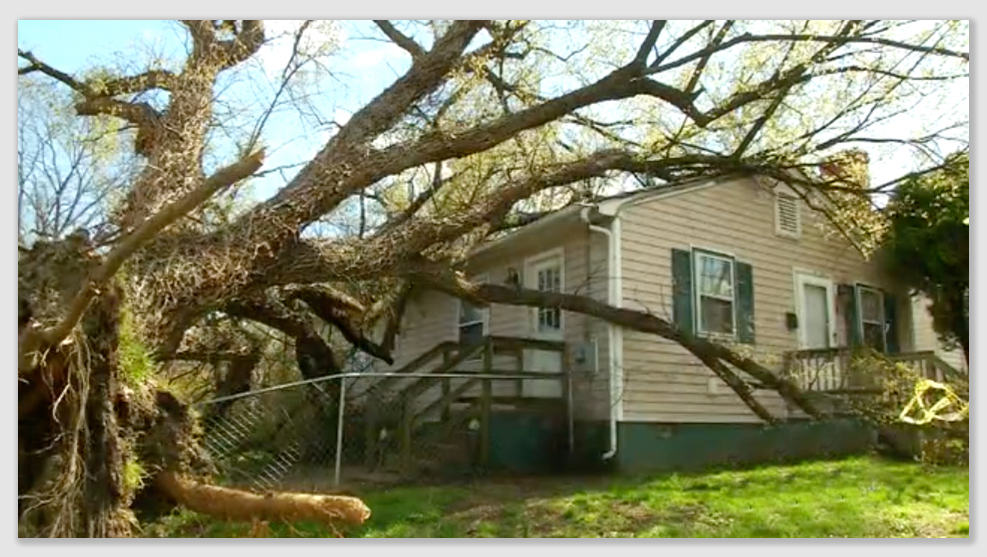
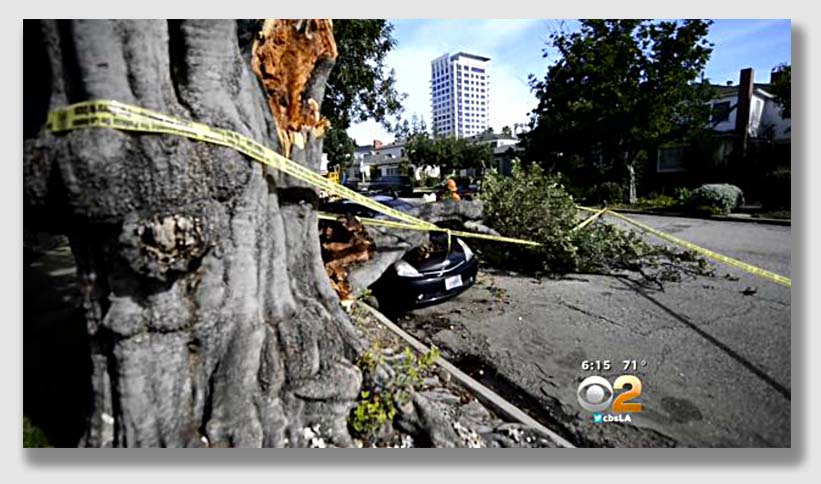
A similar situation applied in this landmark municipal liability case from Omaha. During a windstorm, a motorist pulled over because he couldn’t see to drive. A tree belonging to the City fell, hitting his car and paralyzing him. The tree, a silver maple, was badly decayed. The motorist sued the City, arguing that for a tree owner to permit a danger tree to stand violated the City’s own ordinances. At trial, the disabled plaintiff was awarded $5 million.

On appeal, however, the Supreme Court of Nebraska was more persuaded by the City’s argument that if every person in its arborist crew spent an entire work year inspecting silver maple trees, each tree would only receive a 12-minute inspection. The City had a tree inspection program in place, and the Court found it reasonably conceived and discharged. Could the City have done more? Certainly. Had it done so, would the damaged tree have been found? No one could say.

The City’s tree inspection program was reasonable, and that was all that was required. The verdict was reversed.

treecar140425McGinn v. City of Omaha, 217 Neb. 579, 352 N.W.2d 545 (S.Ct. Neb., 1984). Mr. McGinn was driving in the City of Omaha on a rainy, blustery afternoon when the inclement weather made him pull over to park. As he was doing so, a silver maple tree fell in front of him, and a branch struck his car, rendering him a quadriplegic.

Photographs taken after the accident revealed that the trunk of the tree was extensively decayed. McGinn sued the City, arguing it was negligent in failing to inspect the tree for disease, decay, and structural defects, and in violating a city ordinance making it unlawful for a landowner to permit a dangerous tree to stand. The City countered that McGinn was contributorily negligent and that the storm, which could not have been reasonably anticipated, caused the tree to fall. The trial court rendered judgment in favor of McGinn and awarded $5 million in damages.

The City appealed.

Held: The judgment was reversed. The Nebraska Supreme Court held that city was not negligent for having failed to remove the tree where there was no evidence that the inspection program conducted by the city was negligently designed or carried out, or that the tree had been found to be hazardous as a result of any inspection made by the city.

Normally, governmental units are liable under ordinary negligence principles for injuries or damages which result from a tree falling onto a public road from land in possession of a governmental unit. In this case, while McGinn was correct that the City had violated an ordinance rendering it unlawful for any property owner to permit a diseased or structurally weak tree to stand on his property, the violation was at most evidence of negligence and did not impose strict liability upon the City. Rather, negligence must be measured against a particular set of facts and circumstances present in each case, and the utility of the City’s conduct has to be measured against the magnitude of the risk.
Here, the City had established an annual inspection program to check for hazardous trees. The program was neither negligently designed nor negligently carried out. Alternatives might have reduced the risk, such as cutting down any silver maple older than a certain age or conducting lengthy, individual tree inspections, but these remedies were expensive and unreasonable. There was no indication that the tree which fell on McGinn’s car during the severe storm had been found to be hazardous during any inspection made by the city.

Thus, the Court said, the city was not negligent in not having had the tree removed, and thus was not liable for personal injuries sustained by McGinn.

The takeaway here is that in a proper weighing of the reasonableness of a defendant’s actions, courts traditionally weigh the magnitude of the task. A homeowner with ten trees cannot reasonably fail to ascertain the condition of his or her trees. A municipality with 10,000 trees can get away with failing to ascertain the condition of any particular one of those trees if it has an inspection program that is a reasonable balance of cost and efficacy.

– Tom Root

TNLBGray140407

Case of the Day – Monday, July 15, 2024

THE RESTATEMENT RULE FALLS AWAY, CHIP BY CHIP

In the development of liability law for danger trees, the “every-dog-for-himself” school of thought has reigned supreme for 150 years. The authoritative Restatement of Torts (2nd) rule says that “a possessor of land is not liable for physical harm caused to others outside of the land by a natural condition of the land, except in an urban area, where the possessor is liable to people using a public highway for physical harm resulting from his or her failure to exercise reasonable care to prevent an unreasonable risk of harm arising from the condition of his or her trees.”

A real mouthful, the Rule said in so many words, “If you live in the country, you owe nobody anything. If you live in the city, you owe a duty to someone on the highway, but no one else.”

The Restatement – which ideally states the law as it generally exists in the 50 states – has instead become the driver. The rule is followed almost everywhere, with the Restatement being cited as the authority. So instead of summarizing what the various state courts have held, the Restatement has made the law in many places. 

But times change, populations shift, and what was a workable (or at least an acceptable) rule suddenly makes little sense. That happened in today’s case from the Hoosier State, in which a neighboring landlord neglected a danger tree. After all, he was a landlord, and what landlord will spend a dime that won’t increase his return?

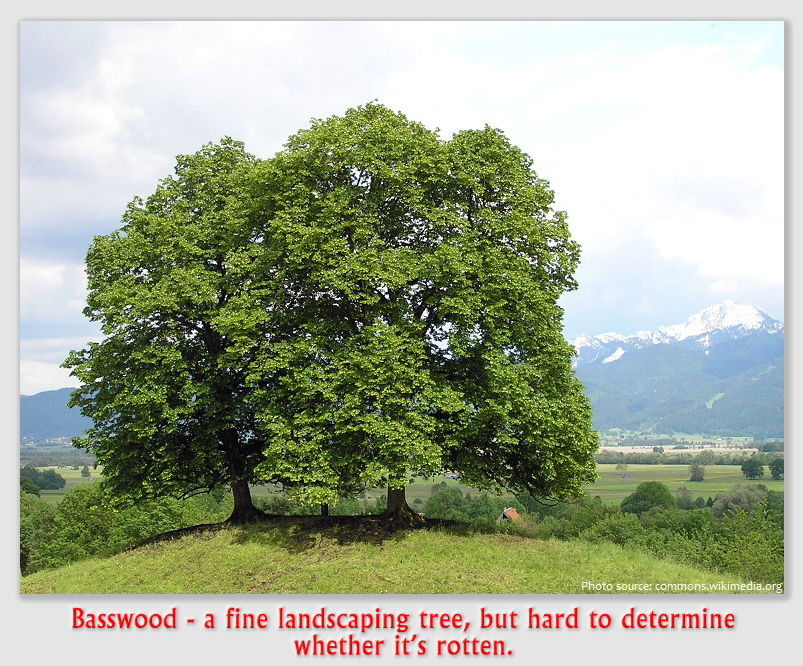
So the neighbor pointed out the decaying tree, the City pointed out the decaying tree, and all the chattering passersby pointed out the decaying tree. And then, the landlord found a drive-by arborist who eyeballed the tree (without even being able to identify the species as a Basswood from his quick “look-see”), and pronounced it fit as a fiddle. A Basswood fiddle.

Except it was not so fit. When the tree fell on the neighbor’s house, her insurance paid for repairs and then (justifiably) came after the landlord. He said, “Tough luck. The Restatement rule says I’m only liable to people on the public street.”

That was what the rule said. So the Court changed the rule. And that, boys and girls, is how the law evolves.

Marshall v. Erie Insurance Exchange, 923 N.E.2d 18 (Ind.App. 2010). John and Marjorie Marshall owned many rental properties, which John supervised. One was a vacant lot next to Cindy Cain’s home.

A tree stood on Marjorie’s lot near the boundary of the two parcels. From the time Cindy purchased the home, she worried about the tree’s health and the danger it might pose. Cindy talked to her neighbor about the tree but got nowhere. She talked to a City code enforcement officer about the tree. The officer told Marjorie’s property manager the tree had to come down. He also spoke to John, who said he would have the tree checked. Cindy told a guy who worked for the Marshalls’ maintenance worker and a woman who claimed her husband was the Marshalls’ new maintenance worker about the hazard tree. The man Cindy spoke to agreed that the tree should be taken down and said he would speak to John about it.

On New Year’s Eve, the tree fell onto Cindy’s house, knocking over her chimney and causing damage to the roof and frame. Cindy filed an insurance claim with Erie, which held her homeowner’s insurance policy. Erie reimbursed her for the necessary repairs to her home (minus her deductible, of course). Then, Erie sued the Marshalls for damages stemming from their negligent maintenance of the tree.

Jake Denlinger, a professional arborist, testified that before the tree fell, he had looked at the tree at John’s request. Jake inspected the tree but did not take any samples of the tree’s core. He testified he did not see enough evidence of decay in the tree to warrant removing the tree. His cross-examination must have been withering because Jake – filled with doubt –  Jake returned to the vacant lot after his testimony to look at the tree stump to determine what type of tree had fallen on Cindy’s house. He found it was a Basswood tree, and returned to testify that it is difficult to judge a Basswood’s health without internal sampling because the trees do not show many exterior signs of decay.

The trial court found for Erie, and the Marshalls appealed.

Held: The trial court’s decision in favor of Erie Insurance was upheld.

The Court said that to recover in negligence, a plaintiff must establish a duty on the part of the defendant to conform his conduct to a standard of care arising from his relationship with the plaintiff; a failure on the part of the defendant to conform his conduct to the standard of care; and (3) an injury to the plaintiff proximately caused by the breach.

Absent a duty, there can be no breach and, therefore, no recovery in negligence.

In Valinet v. Eskew, the Indiana Supreme Court adopted the rule in Restatement (Second) of Torts section 363, that a possessor of land is not liable for physical harm caused to others outside of the land by a natural condition of the land, except in an urban area, where the possessor is liable to people using a public highway for physical harm resulting from his or her failure to exercise reasonable care to prevent an unreasonable risk of harm arising from the condition of his or her trees.

The Court of Appeals observed that the Valinet rule seemed to foreclose the issue of whether the Marshalls owed a duty to protect Cindy from the fallen tree. The Court, however, was unwilling to “leave urban or residential landowners essentially powerless in the face of a neighbor who refused to remove or secure an obviously decayed and dangerous tree simply because it was a natural condition of the land.”

The Court concluded that it should depart from “the strict application of the Restatement rule in the context of urban or residential property.” That Rule was adopted when the land was mostly unsettled and uncultivated. In urban or residential areas, however, the Court held, it should not be an undue burden for a landowner to inspect his or her property and take reasonable precautions against dangerous natural conditions. “Living in close quarters with one’s neighbors in an urban or residential setting substantially increases the risk that a falling tree will cause damage to property or injury to persons, and, similar to the problem relating to a highway, the reduced size of property lots in an urban or residential setting makes the burden of time and money to inspect and secure trees on one’s property relatively minor, especially as compared to the potential damage that could result from the tree’s fall.”

Thus, the Court said, an urban or residential landowner has a duty to exercise reasonable care to prevent an unreasonable risk of harm to neighboring landowners, arising from the condition of trees on his or her property. Whether the land in question is of sufficient population density to invoke the rule is a factual question for the fact finder. In addition, in determining whether the landowner exercised the requisite reasonable care, the fact finder must weigh the seriousness of the danger against the ease with which it may have been prevented. In some circumstances, fulfilling this duty may require a landowner to conduct periodic inspections of his or her property.

In this case, the Court said, the trial court applied a duty of reasonable care to the Marshalls with respect to preventing the damage caused by the fallen tree. The trial court heard evidence that the code enforcement officer contacted the Marshalls to inform them of the dangerous tree and the need to remove it, and several witnesses testified to the physical state of the tree. True, the Marshalls provided some evidence they contacted a tree specialist, but he only performed a superficial examination of the tree and recommended its removal. Because reasonable minds could draw different conclusions from the facts in evidence, it was for the trial court to determine whether the Marshalls’ conduct breached the duty of reasonable care. Sufficient evidence supported the trial court’s judgment that the Marshalls did so, and that Cindy’s home was damaged as a result.

– Tom Root

TNLBGray140407

Case of the Day – Friday, July 12, 2024

WHAT DID THE GOVERNMENT KNOW, AND WHEN DID IT KNOW IT?

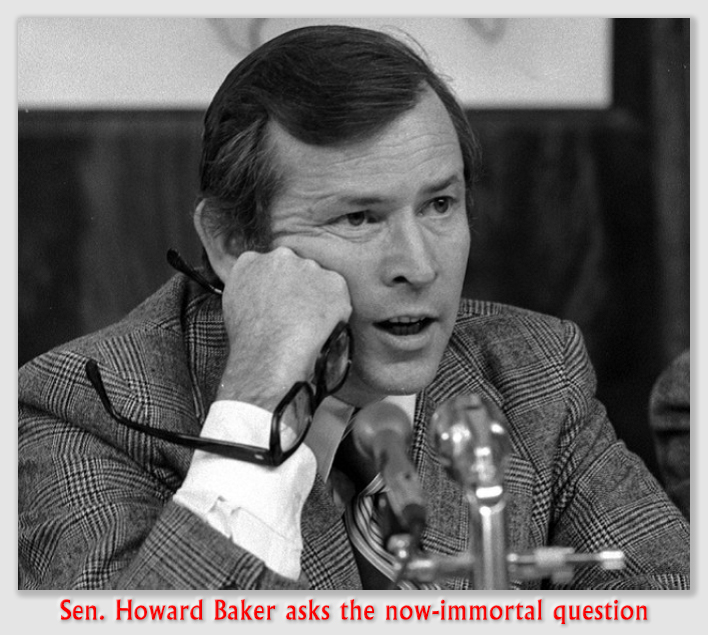
One of the enduring lines from the endless (or so it seemed at the time) Watergate investigation was Howard Baker’s famous question, “What did the president know and when did he know it?” On the answer to that question turned the culpability of the President for the high crimes and misdemeanors of his minions. It still does, despite the fact that we now know that the Watergate investigation timetable was a rocket ship compared to Whitewater-Lewinsky, Valerie Plame, BenghaziFast and FuriousIRS, January 6th, E. Jean Carroll, Stormy Daniels, and (now) Joe Biden’s health.

It’s a great question. Many plaintiffs have discovered that possessing or lacking the answer to it often is the difference between winning and losing a tort action.

We talked about strict liability yesterday, but that’s not generally the way we do things. Were it otherwise, commerce and society would screech to a halt, because any act — regardless of how responsibly it was performed — could lead to liability and financial ruin.

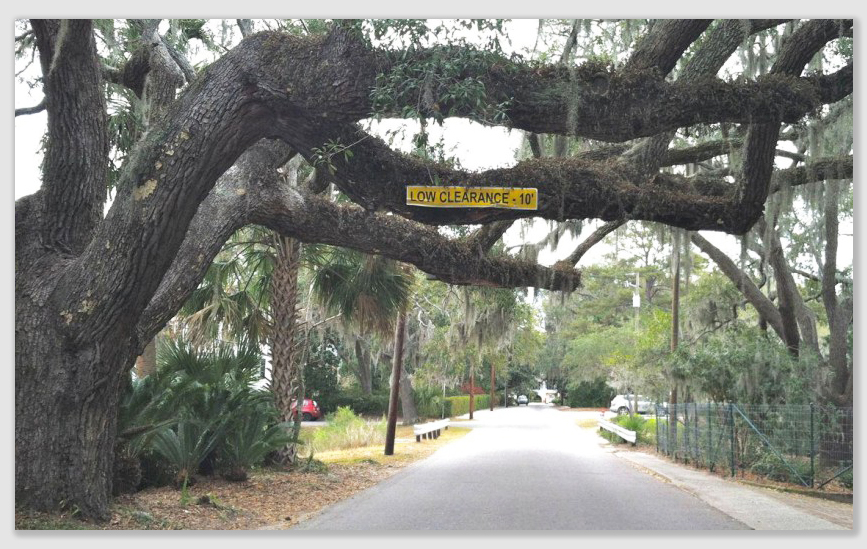
Consider today’s case. A tree branch cracked and settled so far down the tree that it dangled dangerously low over a road. Linda hit it, damaging her car. No one would disagree that the branch should not have been there. Nevertheless, the harm it caused did not mean Linda could pick the State of Ohio’s pocket for repairs itself unless the State had a duty to the motoring public which it failed to discharge.

Shouldn’t the Ohio Department of Transportation have known about the danger? Should it not have corrected the defect before Linda happened along? Shouldn’t those highway workers do something to justify their paychecks? That all depends on the State’s knowledge of the defect. Or, as the late Sen. Howard Baker might have put it, “What did ODOT know, and when did it know it?”

Coleman v. Ohio DOT, 2009-Ohio-6887 (Ct. Claims, Aug, 25, 2009), 2009 Ohio Misc. LEXIS 3. One February day, Linda Coleman was driving along a state highway a half mile outside of the village of Westville, Ohio, when her 2004 Honda Accord hit a very low tree branch overhanging the road. The impact broke the windshield and damaged the right side of her car.

Linda sued ODOT, theorizing that the damage to her car was proximately caused by ODOT’s negligence in failing to maintain the roadway free of hazardous conditions. She sought a paltry $745.01, the cost of fixing her Honda.

ODOT denied liability, contending that none of its employees or agents had any knowledge of the hazardous overhanging tree limb prior to Linda’s collision with it. ODOT denied receiving any reports about the limb prior to the accident from anyone. ODOT did receive a report after Linda struck the tree, and responded by dispatching two ODOT workers to remove the tree limb the same day Linda hit it. ODOT argued that the facts suggested that “it is likely the tree limb existed for only a short time before the incident.”

ODOT related that its manager for that county inspected all state roadways n the county at least twice a month. Apparently, no overhanging tree condition was discovered at Milepost 2.50 on State Route 560 the last time that section of the roadway was inspected.

Held: ODOT had no liability to Linda.

To be sure, ODOT has the duty to maintain its highways in a reasonably safe condition for the motoring public. However, the state agency is not an insurer of the safety of its highways. In order to prove a breach of ODOT’s duty to maintain the highways, Linda would have had to prove that ODOT had actual or constructive notice of the precise condition or defect alleged to have caused the accident. ODOT would only be liable for a roadway condition of which it had notice but failed to take reasonable steps to correct.

In order to recover on a claim of this type, the Court said, Linda had to show either that ODOT had actual or constructive notice of the low-hanging tree limb and failed to respond in a reasonable time or responded in a negligent manner, or that ODOT in a general sense maintains its highways negligently. For constructive notice to be proven, Linda would have had to show that sufficient time had passed after the dangerous nature of the tree limb came into being so that, under the circumstances, ODOT should have learned of its existence.

The court hearing the case may not infer that ODOT knew, unless Linda presented evidence of when the defective limb first appeared to be too low over the roadway. Here, Linda had no proof that ODOT had any notice, either actual or constructive, of the damage-causing tree limb.

Generally, to prove negligence, a plaintiff must prove that a defendant owed her a duty, that it breached that duty, and that the breach proximately caused her injuries. She must also show she suffered a loss, and that this loss was proximately caused by the defendant’s negligence.

Linda had no evidence that her injury was proximately caused by ODOT’s negligence because she could not show when the dangerous condition came into being. Therefore, she was unable to show that the damage-causing object was connected to any conduct under ODOT’s control, or to any ODOT negligence.

– Tom Root

TNLBGray140407

Case of the Day – Wednesday, July 10, 2024

WERE WE ALARMISTS?

Yesterday, I noted the incremental creep of the law toward imposing an affirmative duty to inspect trees. The Turner v. Ridley court suggested that it was no longer enough that an owner lacked actual or constructive knowledge of a defective tree. In some cases, he had a duty to inspect, and in the absence of having done so, he was charged with knowing that his trees were dangerous.

Which one is Tilford E. Dudley?

Which one is Tilford E. Dudley?

Was I wrong in predicting that Turner portended the judicial application of a duty to inspect? Today’s case was decided only a few years after Turner by the same court, the District of Columbia Court of Appeals. In this case, a tree standing next to an apartment house fell across an alley onto Tilford E. Dudley’s place. Dudley’s name itself is classic – evocative of a titled cousin come to visit the Granthams at Downton Abbey.

Tilford sued the apartment owner, Meadowbrook, Inc. At trial, (land)lord Dudley showed that the tree, although quite alive at the time it fell, had a five-foot-long concrete patch on one side and was decayed from the inside out. It hadn’t been shedding branches, but due to the proximity of the apartments, soil had been banked several feet high around the tree and a “well” had been dug at its base for the trunk.

The trial court threw out the suit after Tilford Dudley finished his direct case, holding that the defendants won as a matter of law because there was no evidence they were on notice that the tree was defective.

A concrete patch in a tree.

A concrete patch in a tree.

The Court of Appeals was apparently rather impressed that the tree had been patched with enough concrete to rebuild the 14th Street Bridge. Concrete plugs in trees were a common enough treatment to fend off decay years ago, but – like physicians’ blood-letting as a cure for illness – it has fallen into disfavor recently. But in this case, the Court said, such a big concrete patch – as well as, possibly, the banked soil and apartment building only four feet from the truck ­– ought to have caused the owner’s manager to do something to inspect the tree or, importantly, hire an arborist to inspect the tree. There may have been evidence she did so, but the Court of Appeals said that Meadowbrook couldn’t hide behind a general lack of obligation to inspect.

The Court thus nudged the standard a bit further along. If something in the tree’s history – and the concrete patch apparently was over 10 years old – might suggest that it was diseased or injured at one time, the Court seemed to say, an owner might have an affirmative duty to inspect, or even to hire an expert to inspect, her trees.

Of course, there’s no telling what condition might trigger such an affirmative obligation. Decayed trunk? Dead limbs? Bracing or cabling installed by a tree service? A surfeit of twigs shed by the tree? Insects clinging to the bark? No one can say, but you can be sure that a court will be more willing to Monday morning quarterback a defect that results in collapse, holding that the property owner should have been inspecting for that.

Dudley v. Meadowbrook, Inc., 166 A.2d 743 (C.A.D.C. 1961). A large tree on Meadowbrook’s property fell across an alley and onto Dudley’s premises, damaging his garage and other property. Dudley sued for his damages. At the end of Dud’s case, the trial court found for Meadowbrook, ruling that it was unnecessary for the defense to put on any answering evidence.

Dudley appealed.

Held: The holding was vacated, and the vase returned to the trial court.

The tree, which had been growing since before 1942, fell at a time when no strong wind was blowing. When an apartment house was built there, the soil had been banked 2 or 3 feet deep on two sides of the tree, and a concrete well was built around the tree trunk. The apartment building was about 4 feet from the tree well and a paved parking area was about a foot away. Dudley testified that the tree was about 75 feet tall and 2.5 feet wide at the base. Where it broke off at ground level there were indentations extending about 6 inches below the ground and into the base of the tree trunk, and an area of about 2 feet inside the trunk appeared to be “spongy, decayed and soft,” although no decay showed on the outside of the trunk. Dudley said the tree was in full foliage with no dead branches but that on one side of the trunk, there was a strip of concrete extending from near the base to a height of about 5 feet. The cement had been there for at least 12 years before the tree fell.

No longer part of an arborist's bag of remedies ...

No longer part of an arborist’s bag of remedies …

The Court admitted that the law was muddled, but held that “the sound and practical rule is that liability in such cases is to be determined by the test of negligence and that a landowner should be held to the duty of common prudence in maintaining his property, including trees thereon, in such a way as to prevent injury to his neighbor’s property.” It then opined that “[a] healthy tree does not ordinarily fall of its own weight without some exterior force being directed against it. Though some evidence indicated that the tree looked sound, it was, in fact, full of decay. At least 13 years earlier it had been subjected to surgery and a large area filled with concrete. We think it cannot be said as a matter of law that during all the intervening years the owners were under no duty to inspect it or have it examined by an expert to see whether it required further attention and whether it was safe to let it remain standing.”

Without any evidence other than its own sense that something didn’t seem right that the tree had fallen without any apparent external factor and that it had once had surgery, the court substituted its judgment for the evidence in the record. Some of its holding can be ascribed to as courts’ natural bias in favor of letting a jury decide rather than having the case taken from the factfinder by a trial judge. But if evidence of surgery more than 13 years prior is sufficient to “require … [the owners] to produce evidence as to what they knew about it or what examinations they made during the many years since the tree was last treated,” then a generalized rule that requires urban owners to inspect their trees cannot be far behind.

Here, the case was sent back for a new trial.

– Tom Root
TNLBGray140407

Case of the Day – Monday, July 8, 2024

IT DOESN’T TAKE THAT MUCH TO BE RECKLESS

Today, my bride of 45 years and I are climbing up an ash-covered glacier (in Iceland, where else?), doing things with an ice axe and crampons that seem kind of reckless for grandparents of 4.66 grandchildren to be doing. It’s a great segue into today’s topic.

We all have some sense of what kind of conduct is reckless. At least, to channel the late Justice Potter Stewart, we’re pretty good at knowing it when we see it. Riding a motorcycle into a wall at 100 mph while drunk? Yeah, probably reckless. Standing on a ledge at the top of a skyscraper for a selfie? You bet. Lying between railroad tracks while a train passes? We’ll give you that one, too.

But when the law uses the term “reckless,” in fact when the law adopts any standard, the term has to have a specific definition. If not, laws punishing conduct that did not meet the standard would be arbitrary (as well as falling short of their goal of causing people not to be reckless in the conduct of their affairs).

I’m sorry, Justice Stewart. ” Knowing it when [you] see it” is trenchant, but it’s not a good way to regulate conduct.

In today’s case, a Buckeye State classic, a car repair business trespassed on a neighboring business’s land to hack away at some spruce trees. The car repair manager thought the trees belonged to his company, but his belief – which flew in the face of the facts – was so heedless of the consequences that the court found him reckless.

We have seen worse cases that were considered to be  mere negligence, and we cannot discount that the trial court in this case was influenced by the extent of the damage to the “visual barrier” between the professional building (populated with the offices of lawyers, doctors and engineers) and the seamy oil-change-and-lube joint next door.

“Recklessness” let the trial court grant treble damages under Ohio law to the office building owner. Unsurprisingly, recklessness is what the trial court found. Maybe cynicism is creeping into our analyses as we age (we prefer the expression “as we get wiser”), but if the real estate owner had made the same unsupported surmise about the grease monkey’s trees, we suspect his misfeasance would be found to fall somewhere short of “reckless.”  Just sayin’.

ALH Properties, P.L.L. v. Procare Automotive Service Solutions, LLC, Case No. 20991, 2002-Ohio-4246 (Ct.App. Summit Co., Aug. 21, 2002) 2002 Ohio App. LEXIS 4412. ProCare and ALH were adjoining landowners. ALH had an office building on its property, and ProCare operated an auto repair facility. Between the two properties stood a row of large Norway spruce trees, providing a visual buffer between the two businesses. The trees are on ALH’s property, although some of the branches extend over ProCare’s property. ProCare cut branches off of the lower ten feet of the spruce trees, destroying the visual buffer. The branches will not grow back.

ALH sued, alleging reckless injuring of the trees under Ohio Revised Code 901.51. The trial court entered judgment against ProCare for $34,200.

ProCare appealed.

Held: ProCare was liable to ALH.

Do you see any recklessness here?

Section 901.51 of the Ohio Revised Code provides that “[n]o person, without privilege to do so, shall recklessly cut down, destroy, girdle, or otherwise injure a vine, bush, shrub, sapling, tree, or crop standing or growing on the land of another… “In addition to a criminal, the statutes subject a violator to treble damages for the injury caused.”

The Court held that as used in the statute, the term “recklessly” has the same meaning in a civil claim for treble damages as it does in a criminal proceeding for violation of the statute. A person acts recklessly when, with heedless indifference to the consequences, he perversely disregards a known risk that his conduct is likely to cause a certain result or is likely to be of a certain nature. A person is reckless with respect to circumstances when, with heedless indifference to the consequences, he perversely disregards a known risk that such circumstances are likely to exist.

The Court acknowledged that a privilege exists at common law for a landowner to cut off branches of an adjoining landowner’s tree that encroached on his land. But here, ProCare trimmed not just branches of the trees that faced its property, but also branches facing ALH’s property as well. ALH’s president testified he had not given anyone permission to trim the trees, and that he had previously trimmed branches that hung over his parking area and had removed one of the trees entirely because it died.

ALH offered a videotape its president had made on the day ProCare trimmed the trees, which included his running commentary on the damage done to the Norways.  All the while, the property line marker – a large post – was clearly visible. Pictures taken both before and after ProCare trimmed the branches were admitted into evidence. ProCare stores old tires, oil cans, and a dumpster in the area near the trees, and the photos showed how the trees had created a visual buffer from ProCare’s property and alleviated some traffic noise.

Martin Long, a ProCare manager, testified he thought the spruce trees were on ProCare’s property and that he assumed the trees were ProCare’s because “nobody ever took care of them.” He said he trimmed other branches hanging over ProCare’s property on two previous occasions with no negative consequences. He admitted that on one occasion, one of the Norways — which was dying — had been removed by someone other than a ProCare worker. However, he pointed out, in the spring ProCare would mulch the trees, and no one ever told him that the trees were not on ProCare’s property.

Long believed that only limbs that faced a direction other than toward ALH’s property were cut off. He said that when Myers approached him about ProCare trimming the trees, it was the first indication he had that the trees were not on ProCare’s property. Long admitted that when the spruce that was dying was removed, he did not know who removed it, but he did know that he, personally, had not directed anyone to remove it, nor did he have to pay for its removal. He stated that he thought ALH had removed it because of the risk it posed to ALH’s buildings.

The trial court found that the removal of the tree branches was reckless because Long had reason to know facts that would lead a reasonable person to question whether the trees belonged to ProCare. The trial court held that the complete removal of a large spruce tree in this row of trees at no expense or trouble to ProCare was an indication that ProCare did not own the trees nor was it responsible for maintaining them. The trial court also noted that Long’s testimony that the only branches cut were those that overhung ProCare’s property was disputed by the videotape and photographs, which clearly showed other branches were cut that did not overhang ProCare’s property.

The Court of Appeals found that the trial court’s conclusion that ProCare was reckless was not against the weight of the evidence. The Court held adequate evidence showed ProCare disregarded a known risk with heedless indifference to the consequences when it trimmed branches of trees that were clearly on ALH’s property.

ProCare also argued the trial court’s calculation of damages is against the manifest weight of the evidence.

ALH’s president testified that soon after ProCare trimmed the trees, he contacted two landscaping companies to install arborvitae to replace the barrier. A landscaper submitted a quote for $3,850 to plant 35 arborvitae, although he said planting arborvitae was inadvisable. He also said it was impractical to replace the spruce trees with ones of a similar size, given their 60-foot height. The landscaper provided a separate quote of $18,923 to remove the spruce trees, grind the remaining stumps, and plant a row of Colorado spruce.

A different landscape contractor testified for ProCare and said $3,750 to plant a row of arborvitae was appropriate, and that the shrubs would provide an adequate screening between the properties. He quoted $12,200 to remove the Norway spruce, grind the stumps, and plant Colorado spruce. He thought, however, that Colorado spruce would not provide an adequate barrier because they cannot be pruned properly. He recommended planting White Pine instead because White Pine can be pruned and trimmed more easily than spruce. His estimate to plant a row of White Pine was $11,400.

The trial court found that the best solution to replace the visual screening between the two properties was to replant trees, but that planting Colorado spruce was a disproportionate expense. It ruled that White Pine was a reasonable tree type for restoration, and awarded damages of $11,400. The amount was trebled pursuant to O.R.C. 901.51, for a total award of $ 34,200.

The court of appeals held that the trial court’s decision was reasonable.

– Tom Root

TNLBGray140407

Case of the Day -Tuesday, July 2, 2024

NOW LOOK WHAT YOU’VE DONE!

Rarely (as in “I don’t recall when I’ve ever said this before”) do I caution that the prevailing law in any particular state is wrong, and likely to be cruisin’ for a bruisin’ the next time an appellate court has to think about it. But I feel comfortable issuing that warning about today’s case.

From Ohio (home of rock ‘n roll, pro football, the first guy to walk on the moon, the brothers who turned a bicycle into the first airplane, and a ton of other cool things), comes a case that pretty much runs smack into Fancher, Herring, the Hawaii Rule, and a raft of other cases reflecting the modern view that a homeowner whose tree is wreaking havoc on the neighbor’s property may be ordered by a court to fix the damage at his expense.

To be fair, this case may be proof of the old legal aphorism that “hard cases make bad law.” Even the most cursory reading of the facts suggests that Dave Rababy may well have been a horse’s ass, hounding his neighbor because a tree dropped leaves and twigs on his property. Speaking as a guy who owns all of my five southerly neighbors’ leaves every fall – and these things are the size of dinner plates – I understand how it can be irritating to have other peoples’ leave on your lawn. But I would never sue them over it. I don’t think I would…

Dave had no such compunction, and his emesis of woe delivered to the court made him the boy who cried wolf. He howled so loudly about leaves and twigs and that his trimming crew was not allowed to trespass on Roy’s property and hack away at the offending tree, and minutiae of a similar nature, that his real complaint – his driveway was being heaved and foundations dislodged by the roots – got lost in the underbrush. In Fancher, Whitesell and even Iny, such damage was enough to get the neighbor’s tree declared a nuisance. If Dave had exercised a little plaintiff self-control, he might have gotten there, too.

We are too urban and too suburban, and our properties are too developed for the Massachusetts Rule to be the exclusive remedy for genuine harm done by a neighbor’s tree. That is the way the law is trending throughout the civilized world, and it is bound to reach Ohio sooner or later.

Rababy v. Metter, 30 N.E.3d 1018 (Ct.App. Cuyahoga Co., 2015). David Rababy and Roy Metter were next-door neighbors. Dave’s driveway abutted Roy’s property in certain places and nearly abuts in others. A fence separated the properties, and a stand of mature trees ran along the fence on Roy’s side of the boundary line.

Dave sued Roy for negligence, nuisance, trespass, and interference with a business contract. Dave asserted that trees at the edge of Roy’s property extended over his own property, and dropped leaves, needles, sap, and branches onto his car and home, and that some of the trees were rotten. He said the trees cast shadows over his property and cause mold growth on his roof, as well as damaged his driveway and foundation.

Dave complained he had a company to trim the overhanging branches, but Roy’s daughter prevented the unnamed landscape service company from properly performing this work. The complaint alleged the trees constituted an ongoing nuisance and trespass and that Roy negligently maintained the trees. Dave asked for $52,500: $37,000 for future tree trimming services and $15,000 in compensatory damages.

Both parties filed motions for summary judgment. Dave argued that on “an ongoing basis, Roy’s trees encroach onto my property, specifically over my home and driveway. His trees deposit leaves, debris, and sap onto my property, causing damage.” Dave also repeated the claim about Roy’s daughter running off the tree trimmers.

Roy argued that he owed no duty to Dave to trim otherwise healthy trees on his property. He claimed the trees were mature and preexisted either party’s ownership of the property. He said that a year before, Dave hired Cartwright Tree Service to trim the row of pine trees that ran along the driveway. He said no one complained when Cartwright trimmed the overhanging branches from Dave’s property free, but when Cartwright began trimming branches and trees back further than the property line, Roy’s daughter objected. Roy said that he has no objection to Dave trimming the overhanging branches back to the property line.

Dave replied with new allegations that the trees in question were decaying or dead. Attached to the reply was a new affidavit that averred that the trees were decaying and dangerous and that one had fallen on his property. He included a picture of a tree that appears to have fallen across a driveway. However, the affidavit was neither signed nor notarized.

The trial court granted Roy’s motion for summary judgment and denied Dave’s. Dave appealed.

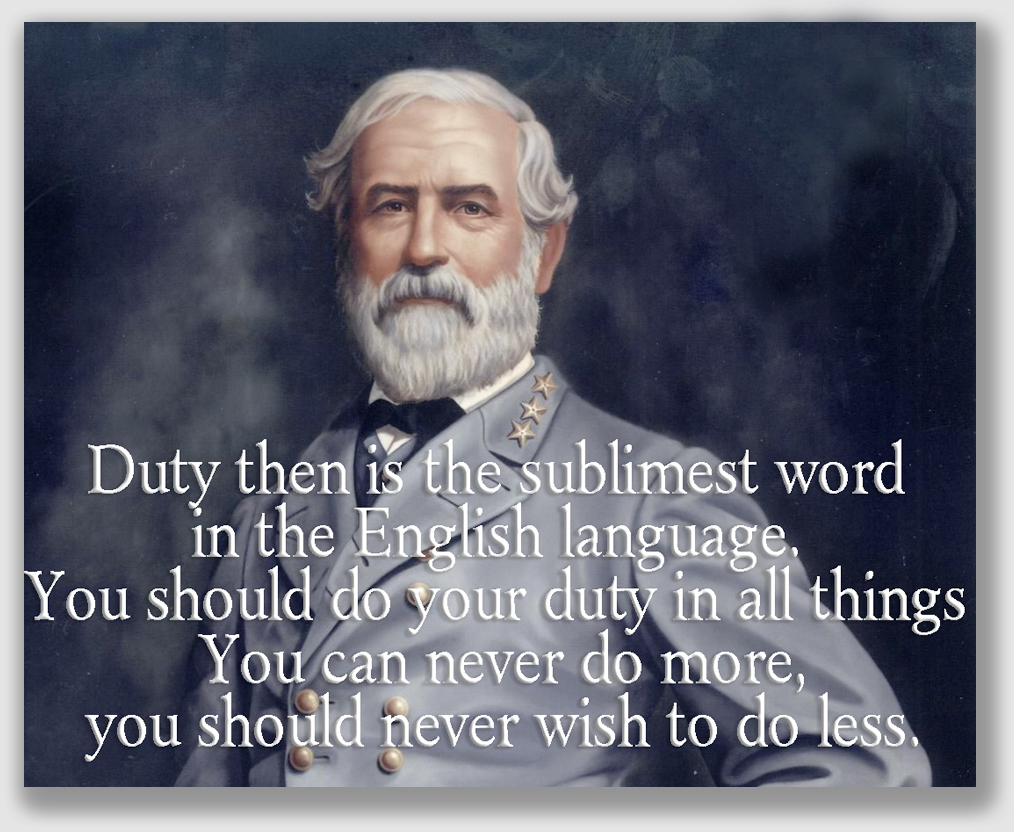
Gen. Robert E. Lee – a man rapidly being consigned to the ash head of history – knew something about duty … and even he couldn’t have found that Roy owed one to Dave.

Held: Roy owed Dave no duty, so the trial court’s dismissal of the case was upheld.

In order to succeed in a negligence action, the Court said, Dave must demonstrate that Roy owed him a duty, that Roy breached the duty, and that he suffered damages that proximately resulted from Roy’s breach. Here, Dave offered evidence that falling pine needles, leaves, sap, and sticks had damaged his car, driveway, and roof. He also alleges, without evidentiary support, that encroaching tree roots damaged his driveway and home.

While he showed damage, Dave was unable to show that Roy owed him any duty. A landowner is generally not responsible for the losses caused by the natural condition of the land. Instead, the Court observed, states generally allow one impacted by such growth the remedy of self-help. A privilege existed at common law, such that a landowner could cut off, sever, destroy, mutilate, or otherwise eliminate branches of an adjoining landowner’s tree that encroached on his land. But, the Court said, whether a separate remedy exists is an open question.

The Massachusetts Rule provides that in almost all circumstances, the sole remedy for damages resulting from the natural dropping of leaves and other ordinary debris from trees is the common law remedy of self-help. The rule does provide a limited exception for dead trees, just as Ohio has established a duty for urban landowners of reasonable care relative to the tree [hat overhangs a public street, including inspection to make sure that it is safe.” Where constructive or actual knowledge of an unreasonably dangerous condition exists on the land of an urban landowner, such as a dead tree, the duty prong of a negligence claim may be satisfied.

The reasoning set forth in support of the Massachusetts Rule, the Court said, is apt to the facts of this case: “[T]o grant a landowner a cause of action every time tree branches, leaves, vines, shrubs, etc., encroach upon or fall on his property from his neighbor’s property, might well spawn innumerable and vexatious lawsuits.” The Court thus adopted the Massachusetts Rule as the law of this jurisdiction.

But Dave also argued that in Ohio a “landowner in an urban area has a duty to exercise reasonable care to prevent an unreasonable risk of harm to others from decaying, defective or unsound trees of which such landowner has actual or constructive notice.” Dave contended Roy’s trees were in such a defective condition and thus constituted a nuisance. Dave also argued that Roy, an urban landowner, had a duty to inspect his trees and protect others from a dangerous condition created by any unsound trees. Even if such a duty existed, the Court said, it only is breached when the owner has actual or constructive notice of a dangerous condition.

Leaves – often a pain in the arse, but seldom a nuisance

The Court held that Dave put forth no evidence that any of the trees constituted a dangerous condition of which Roy was aware or should have been aware. He presented no any evidence that the trees are dead, decaying, or unsound, and cited no case holding that “the normal yearly life-cycle of a tree and the natural shedding of leaves, twigs, and sap constituted a nuisance. Thus, he provided no compelling justification for a court to hold that Roy’s trees case constituted a nuisance or a dangerous condition. The problems Dave had experienced with the trees “are the natural consequence of living in an area beautified by trees. Dave’s remedy is to trim tree limbs that overhang his property back to the property line, to which Roy averred he has no objection.”

The trees at issue in this case do not constitute a nuisance, and Roy is not negligent in regard to them.

Dave also asserted that the trees on Roy’s property constituted a trespass. But the elements of a successful trespass claim include an unauthorized intentional act, and entry upon land in the possession of another. Here, there is no intentional act. Dave claimed that Roy’s actions of not removing or trimming the trees constitute an intentional act. But, the Court said, as it explained, Dave’s remedy for intrusion by vegetation is to trim it back to the property line.

In sum, Dave’s claims that detritus falling from trees from the neighboring property constituted a trespass, a nuisance, and negligence were simply not actionable. The Court cited a Maryland case that “it is undesirable to categorize living trees, plants, roots, or vines as ‘nuisances’ to be abated. Consequently, we decline to impose liability upon an adjoining landowner for the ‘natural processes and cycles’ of trees, plants, roots, and vines.”

– Tom Root

TNLBGray140407

Case of the Day – Friday, June 28, 2024

LET’S BE CAREFUL OUT THERE


crazy160718Summer has just begun, astronomically speaking, although it seems like it’s been here since the first 90-degree day in early May. Not that I’m complaining. Swimming, biking, hiking… summer can hang around as long as it likes.

Yesterday, my bride and I wandered through Vermilion, Ohio, for some ice cream at Dairy Dock (premium-quality soft-serve, with prices to match). Vermilion seems like summer the way summer used to be and always should be. Tourists everywhere, the cottages along the Lake Erie shore full of vacationers, boats cruising in and out of the marinas… Hot fun in the summertime, as Sly puts it.

Just for a moment, I felt that summertime twinge that the days are already running through my fingers like the sands of an hourglass. Oh for the mythical endless summers we almost believed were possible when we were kids!  

To all those folks who complained in April about the cold weather… I hope you’re happy now. It’s hot and muggy and bright… perfect for stopping by the old swimming hole, a place where my friends and I have had a lot of fun. And, sadly, a place where tragic things can happen.

We must make an extra effort to be caerfull careful. With July 4th upon in less than a week, this might be a good time to consider due care, that is, our duty of care to others.

In a negligence action, a plaintiff generally has to show that (1) the defendant had a duty of care in relation to the plaintiff, (2) the defendant failed to conform its conduct to the requisite standard of care; and (3) an injury to the plaintiff was proximately caused by the failure.

Do you really want to be eating food that's staring back at you?

That’s what “fisheye” is all about: Do you really want to be eating food that’s staring back at you?

The duty of care is a moving target, depending to a large extent on the relationship of a defendant to the plaintiff. If someone delivering your double-anchovy pizza and atomic wings falls into an open hole in your front yard, the law treats your liability a whole lot differently than if, say, a thief sneaking around at night trying to steal your garden troll statue falls into the same hole. (But even if the law doesn’t wonder, we’re puzzled that you’d order a double-anchovy pizza).

No-DivingIn today’s case, a young man was paralyzed for life when he dove into the lake at his parents’ house. He had made the same dive countless times before, but the defendant in the case — the non-profit corporation that owned the lake — had recently installed a dredge pipe underwater near the shore. The pipe apparently was just below the surface of the lake.

The lake’s owner argued that the young man was merely a licensee, not an invitee. The difference was crucial, because a licensee pretty much takes the property in the condition he or she finds it. The trial court agreed that the plaintiff was much more than that, and after a jury trial, the young man was awarded $1 million.

The appellate court looked at the corporate purpose of the non-profit lake owner, as well as the terms under which it acquired the lake from the public utility that had owned it previously. Both required that the lake be maintained for public purposes, despite being ringed with private homes, and that evidence convinced the Court of Appeals that the young man wasn’t just someone who was using the lake with the permission of the defendant non-profit corporation. Instead, he was an invitee, someone to whom an invitation had been extended to enter or remain on land for a purpose for which the land was being held open to the public. As such, the landowner had a much higher duty of care to the young swimmer, a duty it violated by not being more careful in installing and marking the dredge pipe.

Not all shallow water is so well labeled.

Not all shallow water is so well labeled.

Shafer & Freeman Lakes Environmental Conservation Corp. v. Stichnoth, 877 N.E.2d 475 (Ct.App. Indiana, 2007). Twenty-six-year-old Justin Stichnoth was visiting his parents at their house located on Lake Shafer. During a conversation that day, Justin’s father, Kerry, told Justin about a dredge pipe that Shafer & Freeman had installed in the channel near their dock. Kerry explained that recently he had gotten his boat “hung up” on the dredge pipe. Shortly thereafter, Justin took a running dive off of his parents’ dock into the channel, something he had done often over the years. Justin struck his head on the dredge pipe, which was located on the channel floor about 17 feet from the dock. Justin was left a paraplegic. He sued Shafer & Freeman, alleging that the firm’s negligence caused his injuries because it didn’t warn that there was a pipe underwater, it didn’t mark the pipe so that it would be visible to users of the lake, and it didn’t use reasonable care in dredging the lake.

Shafer & Freeman denied the allegations of negligence. Later, it filed a motion for summary judgment on the issue of whether Justin was a licensee of Shafer & Freeman. The trial court denied it, and a jury found it liable to Justin, awarding $1 million to the injured plaintiff. Shafer & Freeman appealed.

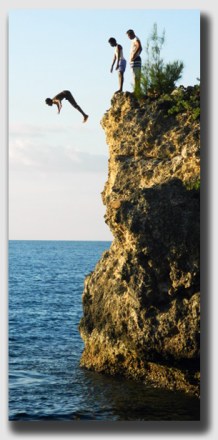
Be careful when diving into unfamiliar water.

Be careful when diving into unfamiliar water.

Held: Justin was an invitee. Indiana law holds that a person entering upon the land of another comes upon the land either as an invitee, licensee or trespasser. The person’s status on the land defines the nature of the duty owed by the landowner to the visitor. Licensees have a license to use the land and are privileged to enter or remain on the land by virtue of the permission of the owner or occupier, but they take the premises as they find them. Invitees, on the other hand, are owed a much higher duty of care. The decisive factor with regard to whether a landowner has extended an “invitation” or “permission” is the interpretation that a reasonable man would put upon the owner’s words and actions, given all of the surrounding circumstances. Here, the Court found, the lake was held open to the public, even though it was surrounded by private property, and thus Justin — who dove off a dock and struck his head on a dredge pipe located on the channel floor — was an invitee rather than a licensee for purposes of personal injury action. The Court held that the articles of incorporation of Shafer & Freeman, the non-profit corporation that owned the lake, provided that the corporation would protect and enhance the water quality of the lake in order to facilitate public recreational use and ensure continued public access.

What’s more, the Court said, the agreement by which Shafer & Freeman acquired the title from the electrical utility, provided that Shafer & Freeman would hold the lake for public, charitable, recreational, conservation and environmental purposes. It is not enough, to hold land open to the public, that the public at large is permitted to enter at will upon the land for their own purposes. As in other instances of invitation, the Court said, there must be (1) some inducement or encouragement to enter, (2) some conduct indicating that the premises are provided and intended for public entry and use, and (3) some expectation that the public will not merely be tolerated, but is invited and desired to come.

When a landowner lets local boys play basketball on his vacant lot they are licensees only. If he installs playground equipment and posts a sign saying that the lot is open free to all children, there is then a public invitation, and those who enter in response to it are invitees. So it was with the lake.

– Tom Root
TNLBGray140407