Case of the Day – Friday, August 9, 2024


UNSNARLING DUTIES

negligence-overviewWhen negligence rears its ugly head, compensation usually depends on the extent of the duty owed the victim by the party whose pocket the injured plaintiff seeks to pick. Take Tim Jones, an experienced cable television installer. One cold day in the bleak midwinter, he climbed an Indiana Bell pole to work on a cable installation. On the way down, he grabbed a phone line instead of a ladder rung. Not being intended as a support structure, the line gave way, and down Mr. Jones went.

Having no evidence that Indiana Bell knew the line was defective and likely to fall away from the pole, Mr. Jones did the only thing he could do – he sued anyway. Finding a defendant with money – always the aim of a negligence action – was a little daunting, because the only target with money was Indiana Bell, the owner of the pole, hadn’t ever hired Mr. Jones. Instead, I-Bell just rented pole space to the cable company, which in turn hired the company that employed Jones. So what duty did the telephone company owe Jones in this totem-pole relationship?

Not that much of one, as it turned out. Mr. Jones lost his case, but the Court of Appeals took the opportunity to clarify the duty an easement holder has to invitees on the easement. The lesson is one that a utility holding an easement for, say, power lines, might owe to the employee of a tree-trimming service brought in to keep the easement clear of vegetation.

Jones v. Indiana Bell Telephone Co., 854 N.E.2d 1125 (Ind.App., 2007). Timothy Jones was performing a cable equipment upgrade for Sentry Cable, a cable TV provider. Jones – who had been doing this type of work for about 20 years and knew the associated dangers of the occupation – was working as a subcontractor on this project. He was wearing the appropriate safety equipment.

The plucky old Field Marshal might have been Jones' lawyer here ... but the attack failed nonetheless.

The plucky old Field Marshal might have been Jones’ lawyer in this case … but the legal attack on the easement holder failed nonetheless.

Jones climbed a telephone pole owned by Indiana Bell, in order to access the cable TV line, which was located about a foot above the telephone line. On his way down, he grabbed the telephone line like it was a ladder rung. It wasn’t. It broke free, and Jones fell 20 feet to the ground, breaking his ankle. Jones sued the phone company for negligence.

At trial, Jones admitted he hadn’t observed any problems with either the telephone line or the clamp assembly. He also admitted he had no evidence that Indiana Bell knew that there was anything wrong with the pole, telephone line, or clamp assembly. Indiana Bell moved for judgment “based upon the … absence of any evidence of a breach of duty as the duty is established in Indiana law.” The trial court found Indiana Bell had no duty to Jones and granted judgment to the phone company.

Jones appealed.

Held: Indiana Bell owed Jones nothing.

The Court observed that to prevail on a theory of negligence, Jones had to show Indiana Bell owed him a duty, it breached the duty, and his injuries were caused by the breach. Whether a defendant owes a duty of care to a plaintiff is a question of law for the court to decide. Whether an act or omission is a breach of one’s duty is generally a question of fact for the jury, but it can be a question of law where the facts are undisputed and only a single inference can be drawn from those facts.

The parties and the Court focused on the Indiana Supreme Court’s opinion in Sowers v. Tri-County Telephone Co., which involved a telephone utility, the employee of an independent contractor, and a discussion of both duty and breach. In Sowers, the telephone company hired Covered Bridge Tree Service to trim trees located near its telephone lines and clear a right of way in order to ease the work of crews mounting cable television lines on the same poles. While trimming trees, a Covered Bridge employee fell into an abandoned manhole.

manhangfromtelephonepole140603The phone company did not own the land on which the manhole was located, but it had a prescriptive easement on the land. Sowers sued Tri-County for negligence, and the trial court granted summary judgment in favor of Tri-County. The Sowers court held that a landowner or occupier is under a duty to exercise reasonable care for the protection of business invitees and that the employees of independent contractors are business invitees. The court held that Tri-County did not have a duty to inspect and warn and that the boundaries of Tri-County’s duty of reasonable care to its business invitees “must be defined from the utility’s own use of the easement.”

But here, the Court said, the facts of Sowers were distinguishable (which means that they make the case different, not that there was anything especially celebratory about them). There, the telephone utility itself hired the tree service company, whose employee was then injured while on the telephone utility’s easement. In this case, however, Indiana Bell just rented space on its telephone poles to the cable company, whose subcontractor was then injured on Indiana Bell’s telephone pole. Still, the Court said, the policy reasons articulated in Sowers apply to this case, making the duties owed the same. Sowers first acknowledged that a telephone utility is a special breed in that it is not a traditional landowner or occupier. In addition, it acknowledged that a telephone utility does not often access its property except for the occasional necessity to effect repairs. Because of these facts, Sowers concluded that a great burden would be placed on a telephone utility if it were required to conduct regular inspections of its property for the sole purpose of discovering possible hazards.

Applying Sowers here, the Court concluded that Indiana Bell owed a duty of reasonable care to its invitees – including Jones – but the duty did not include the duty to inspect and warn. However, to the extent that Indiana Bell learned of dangerous conditions on its poles, it had a duty to warn its invitees. The evidence did not show Indiana Bell had any actual knowledge of the dangerous condition, meaning that the trial court properly entered judgment on the evidence in favor of Indiana Bell.

– Tom Root

Case of the Day – Wednesday, August 7, 2024

SO WHAT’S THE DAMN PROBLEM?

reptiles151223Poor Capital One. First, the bank wore us out with Alec Baldwin — fresh from beating the rap for shooting and killing a cinematographer on the Rust movie set — and his band of pillaging Vikings, all hawking Capital One credit cards with the annoying tagline, “What’s in your wallet?”

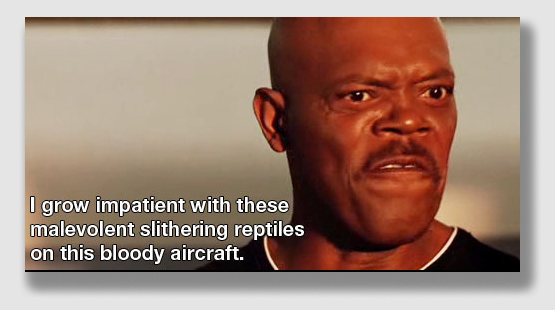
Then it was Samuel L. Jackson, who lectures us in a mildly imperious way about how he is not amused by some credit card offers, like we care whether he’s amused or not. Initially, he promised credit card rewards “every damn day,” and you’d think the republic was collapsing. Wasn’t this the guy who spoke so colorfully about snakes on a plane? No matter – angry customers threatened to close their accounts over his use of the word “damn.” Capital One promptly folded like a cheap suit and edited the offensive word out of the ad.

It sort of makes you long for the Viking horde. Or for Jennifer Garner. We definitely prefer perky Jennifer Garner, especially when she’s paired with her father. Certainly, we can play on the Capital One question and ask ‘what’s in your file cabinet?’ That may be a lot more important than whether you have an American Express Centurion card, a Capital One VISA, or even just a SNAP card in your wallet. There are probably people who have all three in their wallets, anyway.

All of that brings us to today’s case, where a conspiracy buff ran headlong into a City of Omaha tree-trimming crew. It seems that Ms. Richter didn’t think much of the City trimming her trees. She approached the crew to lodge her protest, only to find no love. In fact, one of the workers told her (in colorful language, perhaps) to step away from the truck. She did so, tripping on a hole in her tree lawn.

consp140523A “grassy knoll” fan, Ms. Richter claimed that the hole obviously had been created by the City’s removal of a street sign, which was mysteriously replaced sometime soon after the accident. It didn’t help the case that the City had a habit of destroying work orders on sign replacement several years after the work was done, and so couldn’t completely rebut her claims.

Lucky for Omaha (home to famous steaks and once known for its mention in quarterback cadences), the Nebraska Supreme Court was little impressed by Ms. Richter’s “I-believe-it-so-that-proves-it” approach to the case. It held that the City’s normal-course-of-business document destruction wasn’t an effort to hide the “truth” Ms. Richter so badly wanted to be. Omaha prevailed.

Still, there’s a lesson here for businesses — sometimes, when it comes to document preservation, what’s in your file cabinet had better be more rather than less.

And a note to Alec Baldwin – consider limiting your roles to rom-coms.

Richter v. City of Omaha, 729 N.W.2d 67, 273 Neb. 281 (Sup. Ct. Neb., 2007). A city work crew was trimming overhanging branches from a tree located in front of Ms. Richter’s home. Ms. Richter walked outside and asked the workers to stop trimming the trees. The workers refused and told her to back away from them and their truck. As Richter backed away, she stepped into a hole with her right foot and fell to the ground, injuring her ankle and twisting her knee.

The Nebraska Supreme Court did not tell Ms. Richter to "chive on."

The Nebraska Supreme Court did not tell Ms. Richter to “chive on.”

The hole in which Ms. Richter fell was located in a grassy area between the street and the sidewalk in front of her residence. Although this section of land is a public right-of-way, Richter was responsible for maintaining the area. She claimed the City had removed a sign sometime prior to the accident, thus creating the hole, but replaced it sometime thereafter. City records — while nonexistent for periods of time prior to the accident — showed no change in signage at the location during the relevant period.

Not to be detained by the facts, Ms. Richter sued under the Political Subdivisions Tort Claims Act. She alleged that the City was negligent in failing to warn the public of a dangerous condition, failing to provide safe passage of a right-of-way, and failing to exercise due care in the operation of its business. The trial court found in favor of the City, holding that the evidence was insufficient as to how the hole came to be, when it came to be a hole, and whether the City knew of this hole prior to Ms. Richter’s injury. There was insufficient evidence that the City caused the hole or that it knew it was there so it could be repaired in a timely manner.

Richter appealed.

Held: The City was not liable.

Ms. Richter said the evidence was "spoliated," not "spoiled." Either way, the Court said her argument stank.

Ms. Richter said the evidence was “spoliated,” not “spoiled.” Either way, the Court said her argument stank.

Ms. Richter argued that Omaha had destroyed old work orders from years prior to the accident, and this conduct indicated fraud and a desire to suppress the truth. The Court disagreed, holding that she was not entitled to the adverse inference allowed under the rule of spoliation because the record indicated that the work orders were destroyed in the ordinary course of the city’s business. The Court said that the intentional spoliation or destruction of evidence relevant to a case raises a presumption, or, more properly, an inference, that this evidence would have been unfavorable to the case of the spoliator; however, such a presumption or inference arises only where the spoliation or destruction was intentional and indicates fraud and a desire to suppress the truth, and it does not arise where the destruction was a matter of routine with no fraudulent intent.

In order to be successful in her negligence claim, Ms. Richter had to establish, among other things, that the city created the condition, knew of the condition, or by the exercise of reasonable care, should have discovered or known of the condition. Other than her belief that this was so, she had no evidence to support her contention.

Sorry, Ms. Richter … you’re entitled to your own opinion, but not your own facts.

– Tom Root

TNLBGray

Case of the Day – Monday, August 5, 2024

THE ONLY THING THAT STINKS IS THE PLAINTIFF’S CASE

P.J. had a live-in girlfriend named Callie. As near as anyone could tell, she did not pay to live there, at least not with remuneration to P.J. that would be reportable to the IRS. But when P.J.’s condo suffered damage from intruding tree roots, Callie recognized an opportunity.

P.J. first convinced the condo association, which owned the offending tree, to cut it down. After that, he sued for the damages the roots had caused to his sewer system and basement. But right in the middle of his lawsuit, girlfriend Callie figured that she was really sort of P.J.’s tenant, and her careful legal research – probably Renting Out Your Property For Dummies – she decided that she had been grievously injured by the obnoxious smell in the guest bathroom, which she was certain was from the offending tree roots.

And, this being America, what do we do when we think we have been grievously injured? We sue.

We’ve smelled some pretty malodorous bathrooms before, but tree roots never appeared to be the cause. Still, Callie jumped headlong into her own lawsuit against the condo association and its management company because — after all — she complained that she had been embarrassed when guests used her bathroom.

The trial and appellate courts made short work of Callie’s complaint. A tenant, they said, cannot sue because of damage to the property being rented. Instead, a tenant has to allege some injury to the tenancy, that is, the tenant’s right to use the property.

Callie’s lawyer (we assume she had one, although not much of one) failed to allege that Callie had suffered any concrete injury because of the smell. What’s worse, the lawyer forgot to produce any evidence that the tree roots had anything to do with the smell at all (if there was a smell).

P.J., the property owner, competently handled his lawsuit and won some damages from the condo association. His putative tenant and honeybunny did not.

Larsen v. Snow Property Services, 2017 Ariz. App. Unpub. LEXIS 241, 2017 WL 899881 (Ct. App. Arizona, Mar. 7, 2017): Callie Larsen and a guy named P.J. are a couple. (The opinion never mentions P.J.’s surname, but we imagine that it was not “Funnybunny“). P.J. owned a condo in a development controlled by Wind Drift Master Community Association and managed by Snow Property Services. Although she was P.J.’s squeeze, Callie decided she was really his tenant. This epiphany occurred about the time she figured out she could score some money damages from a couple of deep-pocketed defendants.

In 2012, P.J. complained to Snow about damage to the basement walls of his condo caused by the roots of a tree located on Wind Drift’s adjoining property. Snow removed the tree within about two months.

Callie was not satisfied. She claimed the removal of the tree did not resolve the damage, and an unpleasant smell remained in the guest bathroom. In March 2013, P.J. sued Wind Drift, and after a jury trial in 2016, he got a judgment for the damage the tree roots caused his condo.

Meanwhile, Callie was a busy little tenant (if a tenant she was). She sued Snow and Wind Drift herself in late 2014, alleging negligence, breach of contract, and trespass to her interests as a tenant. The defendants moved for summary judgment, arguing Callie had no proof her tenancy interest (assuming there was one) had been injured or damaged. The superior court agreed and threw Callie’s case out.

Callie appealed.

Held: Callie had shown no damages that would let her recover.

Callie complained that the trial court incorrectly determined that, as a tenant, she was not entitled to recover damages for physical damage done to the property that constituted her “tenancy.”

But that was not quite the case. Her trial court held that claims for property damage caused by tree roots are not hers to bring. The court held that these claims (if they exist) belong to the property owner, not the tenant. If the tenant has suffered damage to her tenancy, the trial court said, (that is, her right to possess and enjoy the property), then her remedy is against her landlord under the terms of her rental agreement (which, conveniently, was not in writing). The trial court did not find any admissible evidence of damages to Callie’s tenancy caused by the now-removed toxic tree. Thus, the trial court’s ruling was not based on Callie’s lacking standing, but rather on a lack of admissible that her tenancy was injured by recoverable damages.

Callie contended there is a “universal rule that tenants may recover for damage to rental property.” Even if that is so, the Court of Appeals said, the tenant still must produce some evidence from which a reasonable jury could find in favor of the plaintiff. Callie claimed negligence, breach of contract, and trespass against Snow and Wind. But each of those, the Court said, requires proof of damages.

Such is always true for negligence or breach of contract. But at common law, trespass required no showing of damage. Callie’s trespass claim, however, was special: she did not claim that Snow or Wind had trespassed, but rather the roots of a tree Wind owned and Snow managed had trespassed. Most states do not recognize the theory that a tree can trespass on behalf of its owner. Not so in Arizona. Even so, Arizona law holds that a “landowner upon whom a sensible injury has been inflicted by the protrusion of the roots of a noxious tree or plant has the right to an action at law in trespass,” but “where there is no injury or damages “no action may be had.”

Contrary to Callie’s claim, the Court of Appeals said, the trial court did not base its ruling on Callie’s lacking standing to sue, but rather on Callie’s utter lack of admissible proof of recoverable damages as a tenant. Callie’s “tenancy” consisted of the “use and occupancy” of P.J.’s property pursuant to whatever terms their purported oral rental agreement may have contained (or as long as he wanted her, whichever came first). Arizona law defines a tenant as “a person entitled under a rental agreement to occupy a dwelling unit to the exclusion of others.” A.R.S. § 33-1310(16). Thus, the Court said, in order to support her claims against Snow and Wind, Callie had to present admissible evidence supporting her claim of injury to herself or her tenancy, not damage to property she did not own.

Callie asserted a “loss of quiet enjoyment of property she rented.” The record showed, however, that at all times she was able to occupy, use, and exclude others from the property in a manner consistent with the terms of her purported oral rental agreement. During her deposition, Callie complained about an embarrassing smell in her guest bathroom, but she admitted she continued to use it. She speculated that the odor resulted from one or more pipes cracked by the tree roots, but she did not submit any admissible evidence linking the tree roots to the smell. She claimed there were times she could not park in the driveway due to the root protrusion, but she did not establish any exclusion from use, damage to her vehicle, or costs incurred for alternate parking.

In a last-minute Hail Mary, Callie submitted a report from a real estate broker saying the rental value of the property was diminished by about $800.00 a month as a result of the damage attributed to the intruding tree roots. The Court observed that even if the report were competent evidence of damage, its defects were legion: (1) the real estate associate broker was not shown to be an expert, (2) the report contained the disclaimer that it was “not an appraisal,” (3) the report assumed the smells in the condo were caused by the tree roots without any evidence that was so, and (4) the report was not supported by an affidavit.

The Court said that as for harm to Callie herself, while she asserted she had been harmed by the smelly bathroom, she could not identify any injury other than embarrassment about the smell when guests used the bathroom. She never claimed specifically that the reek harmed her physically or emotionally. More significantly, the Court said, “she has not presented admissible evidence establishing the source of the odor or that the cause of that source of odor is attributable to Defendants. Stated simply, the evidence offered by [Callie] does not rise above allegation and speculation.”

– Tom Root

TNLBGray140407

Case of the Day – Wednesday, July 31, 2024

TRAGEDY AND CLEVER LAWYERING

treefall140516When a late summer storm blew up in Minneapolis, Chauncey Moua and his wife decided to retreat to the safety of their home to await its passing. They pulled up at home to take shelter. That’s when Mr. Moua decided to park in front of the neighbors’ house, because the neighbors’ tree, the branches of which were overhanging the Moua homestead, was swaying dangerously in the high winds. As he parked the car, a branch fell, killing him.

What do you do after the funeral? After a suitable period of mourning – maybe a few hours or so – you could hire a really dedicated lawyer. Like maybe Doug Crawford. According to the California Court of Appeals, Mr. Crawford appeared at a deposition with pepper spray and a stun gun. Before the questioning began, Crawford held the can of pepper spray about 3 feet from the face of the opposing lawyer, Walter Traver, and warned him: “I will pepper-spray you if you get out of hand.”

Way to be an advocate, Doug! We’ve sat through countless droning hours of depositions ourselves, and we can fairly predict that we’d have paid cash money to see Doug yell, “Objection!” and fry his learned opponent’s butt. Any plaintiff wants a lawyer who won’t mess around.

Objection! Counsel is tasing the witness.

Objection! Counsel is tasing the witness.

Mrs. Moua couldn’t line up barrister Crawford, but she found herself a shark nonetheless. Her attorney sued her neighbors, the Hastings, for negligence. That was hardly a surprise, but the count for trespass he added on Mrs. Moua’s behalf made the case somewhat unusual. The claim was novel: the complaint alleged that branches from the Hastings’ tree fell on the Moua property, creating a trespass. The damage from the trespass, Mrs. Moua claimed, was the death of Mr. Moua.

Credit her lawyer with a creative argument, but the Court of Appeals said “no cigar.” Mr. Moua had pulled up in front of the neighbors’ house and was standing in the street next to his car when he was struck. In other words, the tree branch that caused the damage – that is, struck Mr. Moua – was not trespassing on Moua property. As for the claim that the trespassing branches on Moua property forced Mr. Moua to move his car elsewhere, and while doing so he was killed, the Court found the injury to Mr. Moua was too remote to the trespass for a causal link to have been shown. Shades of Mrs. Palsgraf!

The original "reasonable foreseeability" negligence action ... a Rube Goldberg tort.

The original “reasonable foreseeability” negligence action … a Rube Goldberg tort if ever there was one.

What, you might wonder, was to be gained from adding a trespass count to the lawsuit? Mrs. Moua had already claimed the neighbors were negligent in not taking care of their tree. The answer lies in fault finding. To win a negligence count, Mrs. Moua had to show the neighbors had actual or constructive notice that the tree was dangerous. Trespass is much simpler. All Mrs. Moua had to show there was that the branches fell onto the Moua property. A trespass cause of action would make collecting big bucks from the Hastings much easier.

The Court left for another day the interesting question of whether a falling branch belonging to another that strikes a landowner on his land might be a trespass.

Moua v. Hastings, 2008 Minn. App. Unpub. LEXIS 465, 2008 WL 933422 (Minn.App., April 8, 2008). Blia Moua and her husband, Chauncey Moua, left their home in Minneapolis to pick up their daughter from work. After driving a few blocks, they noticed that the weather suddenly worsened. Moua and her husband became fearful and decided to return home after they saw tree branches falling due to the heavy rain and wind. When they got there, they stopped their vehicle in front of their own home, but Chauncey decided to move the car because he was worried that the storm would blow branches of trees belonging to their neighbors, the Hastings, onto the car. The Hastings lived next door to the Mouas, and some branches of a tree in their front yard hung over the Mouas’ yard. Mr. Moua parked the vehicle in front of the Hastings’ home — where he parked often — and got out of the car when a branch fell from a tree, killing him.

Mrs. Moua admitted that she saw the Hastings’ trees on a daily basis and had never noticed any dead branches. Neither she nor her husband had ever asked the Hastings to trim the trees.

After the Mouas sued for trespass and negligence, the Hastings moved for summary judgment. As for Mrs. Moua’s claim that the branches that had fallen were a trespass on her land by the Hastings, the trial court held that Mrs. Moua had not established how the branches interfered with her use and enjoyment of her property, and the only danger caused by the tree’s branches was due to a severe storm that was noted as one of the worst in several years. Mrs. Moua appealed.

Mrs. Moua's lawyer was pretty sharp - just a little ahead of his or her time.

Mrs. Moua’s lawyer was pretty sharp – just a little ahead of the wave.

Held: Summary judgment was affirmed. The Court of Appeals held that in Minnesota, a cause of action for wrongful death is purely a legislative remedy. A cause of action for wrongful death exists when death is caused by the wrongful act or omission of any person. Although causation is generally a question of fact for the jury, where reasonable minds can arrive at only one conclusion, causation becomes a question of law, and it may be disposed of by summary judgment. Trespass encompasses any unlawful interference with one’s person, property, or rights, and requires only two essential elements: a right of possession in the plaintiff and unlawful entry upon such possession by the defendant.

Here, the Court said, the trial judge correctly concluded that even if there had been a trespass, there was no causal link between that trespass and the injury that occurred. The undisputed facts showed that the injury to Mr. Moua occurred on the public street in front of Hastings’ house. Even looking at the evidence in the light most favorable to Mrs. Moua, the Court said, as a matter of law she failed to present a causal link between the alleged trespass by the Hastings’ tree branches and Mr. Moua’s death in the street.

The Court thus concluded that summary judgment in favor of the Hastings on the wrongful death claim was proper.

– Tom Root

TNLBGray140407

Case of the Day – Friday, July 26, 2024

IF A TREE FALLS …

keystone140514This Louisiana case is another in our continuing series of “someone got badly hurt, so obviously, someone else has gotta pay.”

Today, a couple lived in a house leased from their physician daughter (so we already know who in this saga has money). The couple wanted to have a dangerously leaning tree taken down. They hired a landscaper, who in turn hired someone who represented himself as a guy who could take down a tree.

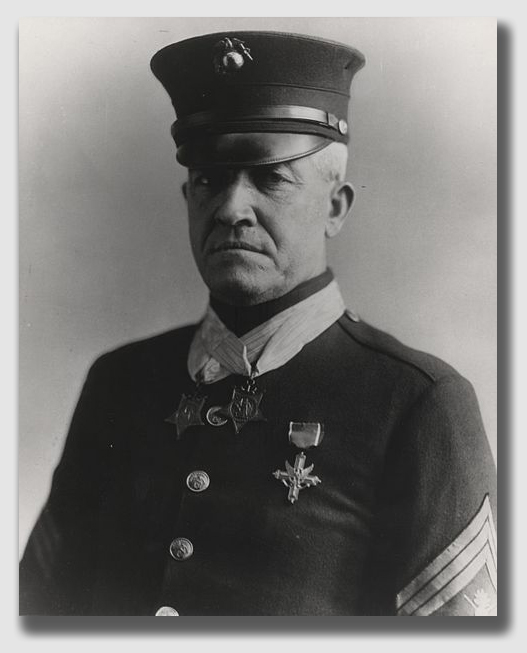
Gunnery Sergeant Daniel Daly, one of only two men to ever win two Medals of Honor, exhorted his fellow Marines to charge the Germans at the Battle of Belleau Wood, shouting, "C'mon! Do you want to live forever?" A brave sentiment in battle; a pretty foolhardy sentiment when removing trees.

Gunnery Sergeant Daniel Daly, one of only two men to ever win two Medals of Honor, exhorted his fellow Marines to charge the Germans at the World War I Battle of Belleau Wood, shouting, “C’mon! Do you want to live forever?” A brave sentiment during battle, but a pretty foolhardy one when removing trees.

The tree cutter had all the safety equipment, but he didn’t use it. After all, it was just a tree. Safety is for wimps! After all, do you want to live forever?

The tree cutter obviously didn’t care to do so. He directed the landscaper, who was helping him, to harness the tree to his pickup truck. During their Keystone Cops antics, the landscaper’s truck pulled down part of the tree. Sadly, the tree cutter was attached to it at the time.

The tree cutter sued the landowner and the tenants. But of course! He argued that the doctor-daughter and her parents (and, of course, their insurance company) should pay because they didn’t warn him. Warn him to do what? To use his safety equipment? That the law of gravity was in force? That God may protect fools, but not for very long?

Fortunately, common sense prevailed …

Frazier v. Bryant, 954 So.2d 349 (La.App. 2 Cir. Apr. 4, 2007). The Bryants lived on a property owned by their daughter, Dr. Garrett, a tenancy based on a verbal lease. Mr. Bryant wanted to have a large tree removed because it was leaning toward the house and several of the limbs of the tree were near the roof. He contacted Ron’s Lawn Care to take down the tree.

Mr. Hughes, the owner of Ron’s, hired Mr. Frazier, who had previously approached Mr. Hughes offering his services in tree removal. Mr. Frazier climbed up to the top of the tree and started to cut away the top limbs. He wore a climbing harness and was attached to a climbing rope that was strung over the top of the tree, but he hadn’t connected a lanyard rope that would have secured him to the tree. Mr. Hughes was using his pickup truck to direct portions of the tree away from the house. At some point, Mr. Hughes pulled with his pickup truck and the entire top of the tree came down. Mr. Frazier, still attached to the climbing rope, came down with the tree. He was badly injured.

Mr. Frazier sued Ron’s Lawn Care, the Bryants and Dr. Garrett for negligence. All three filed for summary judgment, and the trial court granted it. Plaintiff Frazier appealed.

Tree vs. truck - who wins? Certainly not the people taking down the tree ...

Tree vs. truck – who wins? Certainly not the people taking down the tree …

Held: The tree cutter falls again. Under Louisiana law, most negligence cases are resolved by employing a duty/risk analysis with elements: (1) whether the defendant had a duty to conform his conduct to a specific standard (the duty element); (2) whether the defendant’s conduct failed to conform to the appropriate standard (the breach element); (3) whether the defendant’s substandard conduct was a cause-in-fact of the plaintiff’s injures (the cause-in-fact element); (4) whether the defendant’s substandard conduct was a legal cause of the plaintiff’s injuries (the scope of liability or scope of protection element); and (5) whether the plaintiff was damaged (the damages element). Here, the Court said, Mr. Hughes was pulling on the tree because he was told to do so by plaintiff Frazier. No other defendant exercised such control over the operation as to be liable for the accident.

Mr. Frazier argued that the Bryants were liable for failing to warn him of the defective condition of the tree. The Court said that the owner or custodian of a thing is liable for damage only upon a showing that (1) he or she knew or should have known of the defect that caused the damage, (2) that he or she knew or should have known that the damage could have been prevented by the exercise of reasonable care, and (3) that he or she failed to exercise such reasonable care. Here, the Court said, no evidence showed that any defect in the tree existed. At most, the evidence suggested that the tree was leaning due to erosion at the base of the tree, the Court held, and nothing indicates that this condition caused Mr. Frazier’s fall.

– Tom Root

TNLBGray140407

Case of the Day – Thursday, July 18, 2024

I WOULD WALK 500 MILES …

proclaimers140502The Kentucky Department of Highways has a lot to do. Besides keeping up the state’s highways, the DOH has the duty to inspect roadside trees. And there are a lot of trees in Kentucky.

So many, in fact, that – like its habit with parking spaces (see yesterday’s decision) – the DOH favored drive-by inspections. You can see a lot of trees from the passenger seat of a Silverado. There are Proclaimers who would say it was better than walking 500 miles, and then walking 500 more, just to see the back sides of some right-of-way trees.

Ioseb Besarionis Dze Jugashvili – you might have known him as “Papa Joe” Stalin – is reputed to have had a favorite saying, “Quantity has a quality all its own.” All right, he probably didn’t say it … after all, he spoke Russian with a strong Georgian accent, and “quality” and “quantity” probably are not especially alliterative in that tongue. But when it came to the Kentucky DOH, the fact that its inspectors could inspect miles of trees every hour didn’t necessarily mean that they were getting it right.

After old Cecil Callebs came up on the bottom side of a sycamore tree that fell on his car during a windstorm, his widow sued the Department of Highways, arguing that if its inspectors had only gotten out of the car and walked a little, they would have known that the tree was rotten and a threat to passing motorists.

The case went to a state Board of Claims first. No one suggested that the DOH knew that the tree was decayed, but the widow Callebs argued that its employees would have known if they had only gotten out of the truck to inspect the tree. The Board disagreed, but when she appealed to a trial court, it sided with her. The DOH, it held, should have done a “walkaround.”

Whenever the analysis is focused on whether someone should have known something, rather than whether he or she actually knew it, the courts employ a balancing test (whether they call it that or not). The test considers how critical to its duty discovering the particular information was, and then weighs that against how difficult discovering the fact would have been.

Here, the omission was a slight one, although the late Mr. Callebs might have disagreed. The tree had plenty of green leaves, and no defect was obvious from the highway. The DOH had a generalized duty to inspect and maintain trees along the highway. It missed one of the millions in its charge, but the error wasn’t an obvious one.

treeoncar140502The Court of Appeals agreed that a “walk-around” would probably have discovered the defect. But such a “walk-around” would have been infeasible. Even if the DOH had the personnel to conduct such inspections, it probably would have had to get permission from private landowners to enter onto their property to see the back sides of the trees. Multiply the permission process by thousands of trees, and the unreasonableness of expecting walking inspections is obvious.

Commonwealth v. Callebs, 381 S.W.2d 623 (Ky. 1964). Cecil Callebs was killed when a large sycamore tree, standing on the edge of the right-of-way some 12 feet from the edge of the pavement, fell across the highway and hit his car. Callebs’s estate filed a claim with the Commonwealth’s Board of Claims, alleging the Kentucky Department of Highways was negligent and seeking damages for wrongful death. The Board, after hearing evidence, found no negligence on the part of the DOH. The circuit court reversed, holding the DOH negligent. The DOH appealed.

Held: The Department of Highways was not negligent.

The Court of Appeals agreed that DOH lacked actual notice of the tree’s defective condition. The issue in the case, rather, was whether the department had constructive notice of the defective condition, or, stated another way, whether a reasonable inspection would have disclosed the condition. This involved, the Court said, “the question of how close an inspection was reasonably required.”

californiasycamore140502The leaves on the sycamore tree were green, and the defective condition of the trunk was on the side away from the highway. The defect could have “been discovered only by walking around behind the tree, which perhaps would have involved an entry upon private land abutting the highway.” The Court of Appeals observed that “[i]n order to affirm the circuit court judgment … we would be required to hold that as a matter of law the Department of Highways had a duty to make a ‘walk-around’ inspection of the tree, involving perhaps an entry on private lands. We do not believe that such is the law.”

The Court considered it important that the area around the tree was rural, and that the burden “of a walk-around inspection of each tree near the highway (perhaps requiring the obtaining of entry permission from the abutting landowners)” would be unreasonable in comparison with the risk. Note again, in this case, the distinction drawn by the Court between in-town and countryside. The Court concluded that highway authorities “under conditions such as existed in the instant case” do not have a duty as a matter of law to make the kind of inspection that would have been required here in order to keep the tree away from Mr. Callebs.

The Court reversed the trial court’s judgment, and let DOH off the hook.

– Tom Root

TNLBGray140407

Case of the Day – Wednesday, July 17, 2024

DUTY

lee140501Robert E. Lee (if we are still allowed to write favorably about him in this #metoo, woke and BLM era) adjured us all to “do your duty in all things. You cannot do more, you should never wish to do less.” Today’s case is about duty, which as far as we’re concerned is more the basis for determining legal liability than a moral concept.

In Kentucky, the Commonwealth (that’s what they call themselves, and who are we to dispute it?) is liable when it has notice of a defect in a highway. The defect in this case was a hole in the pavement, located at the curb end of a parking space. The Department of Highways people inspected that stretch of urban street regularly, but always by driving by. That area of town was teeming with commerce, so the parking spaces were always full and the hole went unseen.

When Mary Maiden fell by stepping in the hole, she sued. The Board of Claims, Kentucky’s tribunal for hearing claims against the Commonwealth, figured that the DOH employees had done all they could do to inspect the street. Thus, it found that DOH wasn’t on notice of the hole.

But the Court of Appeals reversed. In a two-to-one decision, it decided that a drive-by inspection that couldn’t see the whole street wasn’t a reasonable inspection. The case is interesting to us because the Court contrasted this situation to the decision in Commonwealth v. Callebs, a case we’ll look at tomorrow. There, when a tree in the right-of-way fell on a driver, the court found that requiring a “walkaround” inspection was unreasonable.

princess151210

A maiden … but not Ms. Maiden

But Ms. Maiden’s Court said that Callebs was different: it placed an unreasonable demand on the DOH to require it to inspect every tree in a rural setting. Besides, to have seen the defect in the tree that fell on Mr. Callebs, the DOH workers would have to go behind the tree onto private property in order to see the defect.

This case — and the one we’ll consider next — together illustrate the “touchy-feely” nature of some determinations of what is and is not “reasonable.”

Commonwealth v. Maiden, 411 S.W.2d 312 (Ct.App. Ky. 1966). Mary Maiden fell and was hurt when she stepped into a hole in Cumberland Avenue in Middlesboro. This being America, she sued.

Unfortunately for the Commonwealth, not every hole in the street is this obvious.

Unfortunately for the Commonwealth, not every hole in the street is quite this obvious.

The Kentucky Department of Highways had agreed to maintain the street as a part of the state road system. The block in which the accident occurred is in a busy commercial area with diagonal parking on both sides of the street which is usually full during business hours. The hole was about 24 inches long, 9 inches wide and 3 inches deep and was located almost entirely at the back end of a parking space, substantially concealed from view when a car occupied the space. It had been there for some six months.

The DOH had the statutory duty to inspect all state-maintained roads. A foreman inspected Cumberland Avenue at least every two weeks by driving along the street in a pick-up truck during business hours. It would have been impossible to see the hole in question if a car had been parked there, and no DOH employee had ever made a ‘walk-around’ inspection, looking under the parked cars along the street.

The Board of Claims rejected Ms. Maiden’s claim, but the trial court reversed the decision, entering judgment for Mrs. Maiden. The DOH appealed.

Held: The judgment for Ms. Maiden was upheld.

The Court said the law in Kentucky is that if a defect in a highway existed for such a period of time that the authorities, by the exercise of ordinary care and diligence, should have discovered it, notice will be imputed. A “drive-along” inspection of a busy city street during business hours when parking areas normally were fully occupied – so that defects in the parking spaces cannot be seen – is not a reasonable inspection. Thus, the law assumed that the Department knew of the defect which caused her fall.

Kentucky, of course, is famous for unexpected holes, like the one that swallowed eight vintage Corvettes at a Bowling Green museum earlier this year.

Kentucky, of course, is famous for unexpected holes, like the one that swallowed eight vintage Corvettes at a Bowling Green museum in early 2014.

The Court acknowledged that while the burden of inspection may be a serious problem to the DOH, it was not too great a burden to require an inspection of streets in commercial areas to be made in ‘off’ hours when the parking spaces are not occupied. The Court distinguished the facts from the Callebs case (which we’ll look at tomorrow). In Callebs, the Court had held that DOH did not have a duty to make a ‘walk-around’ inspection of trees along the edge of the right of way. That defect, however, was not in the street itself but rather in the side of the road, and the area was a rural one with light travel rather than an urban one with heavy traffic. Besides, the Court observed, an effective inspection of the trees would have required the use of a considerable amount of time, whereas in this case, an effective inspection would not have involved more time but only the selection of a different hour in which to make it.

One judge dissented, arguing that there was really no distinction between this case and the Callebs case. A lone dissent, however, is an interesting footnote and little more.

You can ask the ghosts of Robert E. Lee and the leaders of the Confederacy about being mere footnotes.

– Tom Root

TNLBGray140407