Case of the Day – Thursday, March 9, 2023

THE JURY IS INSTRUCTED TO DISREGARD THE SMELL

Once the skunk lands in the jury box, the smell tends to follow ... no matter what the judge may say.

Once the skunk lands in the jury box, the smell tends to follow… no matter what the judge may say.

Trial courts often must give juries instructions to disregard certain evidence they have heard in reaching their verdicts. But that’s not an easy thing for juries to do. As a court once described it, “if you throw a skunk into the jury box, you can’t instruct the jury not to smell it.

Today’s case starts out to be pure California… a landslide, a muddy pool, and emotional distress because of a dirty carpet. Oh, the humanity! The injured Ms. Rahmanian claimed that her neighbor, Nelson, had suffered a water leak, and the leak damaged her property. The extent of the damage was grievous, Ms. Rahmanian pled, well over $200,000. Her house was a mess, carpets ruined, pool filled with mud … she demanded justice!

But it turns out that Ms. Rahmanian had already gotten twenty grand from her insurance company, and she hadn’t used a penny of it to dry out carpets, clean walls, empty the pool — the usual cleanup performed to keep a bad mess from becoming worse. The defendant managed to sneak that piece of evidence into the record, and as a result, the plaintiff only collected about $110,000, just about half of what she wanted. How could she ever clean the drapes on that?

People damaged by the negligence of others have a duty to mitigate. That means that they are expected to take reasonable steps to minimize the damage. It only stands to reason. The courts will try to put the innocent injured back in the position they occupied before the damage. But the innocent aren’t expected to sit on their hands, either… or spend money intended to clean up the damage on mimosas at the Beverly Wilshire.

Ms. Rahmanian complained on appeal that the jury shouldn’t have heard about the insurance money. She was literally correct. Who got what from their insurers is irrelevant to whether a party was negligent and whether that negligence caused damage. But the Court of Appeals clearly lacked sympathy for her. It held that — while the evidence about the insurance money shouldn’t have come in — Ms. Rahmanian didn’t suffer for it because the trial court told the jury to disregard it.

Never mind that it might be hard for the jurors to ignore the fact that a poor pool-deprived supplicant like Ms. Rahmanian already had collected some dough from her insurance company and spent it on… well, pedicures, poodles in purses, whatever Californians fritter money away on when they don’t mitigate. The Court did some rough justice here, something that happens more often than you might think.
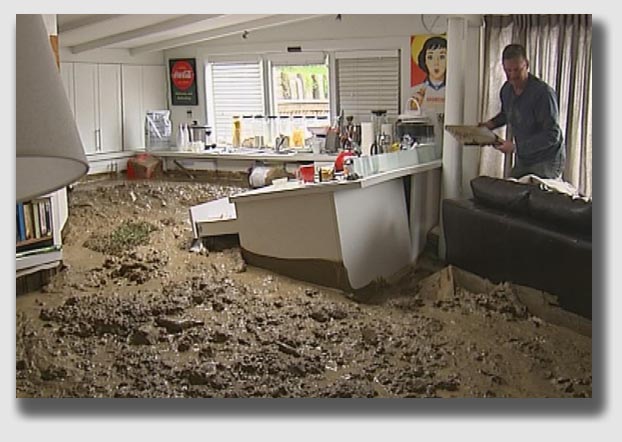
To hear Ms. Rahmanian tell it, her bungalow was fouled beyond salvation.

To hear Ms. Rahmanian tell it, her bungalow was fouled beyond salvation.

Rahmanian v. Nelson, 2007 WL 1123983, 2007 Cal. App. Unpub. LEXIS 3060 (Cal.App. 2 Dist., Apr. 17, 2007). Nelson’s house is located above the house owned by Sharon Rahmanian. A water leak on Nelson’s property caused the slope located at the back of Sharon’s land to collapse, leading to a mudslide that covered her pool and patio area. Sharon sued Nelson for negligence and trespass.

Nelson did not dispute liability. The primary issue at trial was the amount of damages. Rahmanian’s witnesses testified that the mudslide caused damage to the pool and patio and to the French doors at the back of the house. In addition, mud or muddy water entered the house, causing damage to everything located near the doors, including carpets and drapes. Rahmanian’s expert testified that repairing the slope would cost about $75,000, plus $24,440 to re-landscape the slope. The cost to repair the pool and house would add another $134,000, and she lost use of the pool to the tune of $1,153 a month. For good measure, she complained of damages from physical symptoms and mental suffering she had experienced since the mudslide.

Nelson’s witnesses said the mudslide could not have caused much damage to the patio or pool. They also questioned whether water or mud caused any damage to the interior of the house. Nelson’s experts estimated it would cost $89,371 for repairs and re-landscaping. During the trial, there were three references to $20,000 Rahmanian had already received from her insurance carrier but had not used to repair any damage.

The jury awarded Rahmanian $80,000 for slope repair; $21,000 for other property damage; $5,000 for loss of use; and $4,000 for emotional distress. Not satisfied with this amount, Rahmanian moved for a new trial, which the court refused. She appealed.

Held: The trial court shouldn’t have let testimony about the $20,000 in insurance money in, but that wasn’t enough to give Ms. Rahmanian a new trial. Under California’s collateral source rule, if an injured party receives some compensation for his injuries from a source wholly independent of the tortfeasor, such payment should not be deducted from the damages that the plaintiff would otherwise collect from the tortfeasor.

Too many mimosas, too little cleanup.

Too many mimosas, too little cleanup.

In order to permit such evidence to be introduced, the trial court must first weigh the relevance and probative value of evidence of the plaintiff’s receipt of collateral benefits against the inevitable prejudicial impact such evidence is likely to have on the jury’s deliberations. Here, that advance weighing was not done. But, the Court said, Rahmanian was not prejudiced. The jury asked the court for guidance on the impact of the $20,000 during deliberations, and the court instructed the jury to ignore what it had heard repeatedly. Ms. Rahmanian did not object to the language of the court’s instruction: in fact, her counsel supplied the key wording used by the court, so she was not allowed later to raise an objection concerning its clarity.

Because the court, with the assistance of counsel, was able to intervene during deliberations to prevent the jury from acting on the misleading information it received concerning the $20,000, the jury’s verdict could not have represented an improperly discounted award. Thus, the appellate court said, no miscarriage of justice occurred.

The trial court also gave an instruction to the jury that Ms. Rahmanian had a duty to mitigate the damage, that is, to take immediate steps after the landslide to minimize the long-term effects. Ms. Rahmanian maintained that the only evidence to support the instruction was the improperly admitted evidence of the $20,000 insurance money. The Court said that because the trial court had given a curative instruction about the insurance money, the appellate court presumed the jury followed the court’s final directive to “not consider” the $20,000 in calculating damages.

– Tom Root

TNLBGray140407

Case of the Day – Thursday, March 6, 2025

A DUTY TO HECTOR?

nag150327Today, we continue our consideration of the problem posed by Tracy from Pinebark, New York.

You recall Tracy’s problem from yesterday: the neighbor’s arguably dead tree fell on her car, crushing it. She and her husband are tenants, and her landlady’s insurance carrier won’t cover the damage because it says the tree was dead. The neighbors’ insurance company won’t cover the damage because it says the tree was alive. Tracy’s arborist agrees with her landlady that the tree was quite dead, and the neighbors appear to have had actual knowledge (from work done by a previous arborist they had hired) that the tree was a hazard.

Yesterday, we discussed why Tracy’s local lawyer should argue that the neighbors are liable no matter what their skinflint insurance carrier may say. But Tracy, who understandably is looking for as many deep pockets as she can find, has asked whether her landlady is liable as well because she knew the neighbor’s tree was a hazard, but she never informed the neighbor of that fact. And that raises a very interesting (and rather creative) question.

Once again, we warn Tracy that we are not New York lawyers, and we are not rendering legal advice. She should see her local attorney for that. That being said, there’s not much guidance in New York law for her problem. A landlord who holds her land open to the public is under a legal duty to exercise reasonable care under the circumstances to maintain the premises in a reasonably safe condition. This duty is usually discussed in the context of landlords who don’t keep their premises secure against reasonably foreseeable criminal acts by third parties (locked doors, security cameras, and the like). The duty “imposes a minimum level of care on landlords who ‘know or have reason to know that there is a likelihood that third parties may endanger the safety of those lawfully on the premises’.”

sign150327A landlord must anticipate the risk of harmful acts of third persons, adopting the duty of care set out in the Restatement (Second) of Torts § 344. That is, a landlord must exercise reasonable care to discover that such harmful acts are being done or are likely to be done, give an adequate warning, or otherwise protect the visitors against it.

Most of these principles address the landlord’s duty to warn tenants and invitees of harmful conditions. Even if this created a duty on the part of the landlord to warn Tracy and her husband that the neighbor’s tree might fall, it doesn’t necessarily mean that the landlady had a duty to Tracy that required her to tell the neighbors that they had a dangerous tree on their hands. We just can’t find any holdings that create such a duty.

One part of the reason might be the futility of it. Telling the neighbor that he has a “danger tree” on his land that might someday injure the landlord’s tenant doesn’t really get anyone anywhere because the landlord is without any power to remove or trim the tree herself (it was well within the neighbor’s property boundaries). The landlord might have sued the neighbor for maintaining a private nuisance and might even have won a judgment against the neighbor — especially after limbs fell from other trees last summer, causing damage to the landlord and the tenant — but the likelihood that the suit would have been successful is problematic.

Another part of the reason might be Palsgrafian causation. Just like Mrs. Palsgraf in the famous Long Island Railroad case, the causation link — the landlady’s failure to warn the neighbors led to the tree falling and the injury — is pretty tenuous.

A third problem lies in Tracy’s analysis of her status as a tenant. As a tenant, she has the exclusive right to possession of the property. If the landlady had a duty to tell the neighbor about a “danger tree” on the neighbor’s property, we would be very surprised if Tracy didn’t have as much of a right and duty as did the landlady to tell the neighbor about the tree. Likewise, we would be surprised if Tracy herself couldn’t have maintained the private nuisance action against the neighbor to force removal of the tree. Generally speaking, having the right of possession of a piece of real estate is a powerful club, one which lets the possessor wield nearly as much power as does the titleholder. In this case, we suspect that Tracy herself had the power to do what she complains her landlady didn’t. And clearly, she had as much knowledge of the tree’s condition as her landlady did.

And that brings us to the final point. Tracy makes a compelling case that the neighbors knew all about the condition of the dead tree. Their agent, the tree surgeon, certainly knew as well because he had removed a diseased bough, and that knowledge is imputed to the neighbors. If the neighbors had gotten a report from the arborist on which they refused to act, it’s pretty hard to argue convincingly that things would have changed if the landlady or Tracy had also told the neighbors what they already knew: the tree was dangerous and should be removed.

Causation and foreseeability are often wrapped in the same package. In a New York case we’ll consider today, Mr. Fleury knew that his big ol’ apple tree was pretty close to the power line running to his house. Well, nature’s bounty — a really good apple crop — caused the tree to fall over partially, and the tree touched the wires. Mr. Fleury called the power company and said, “You need to fix this!” The power company said, “Nope, it’s your wiring from the transformer to the house. You fix it.” Mr. Fleury didn’t, and within about 10 days, the tree on the wires caused a short circuit.

appletree150327But, electricity being the capricious thing it is, it didn’t hurt Mr. Fleury. Instead, a “backfeed” went through the transformer and down his neighbor’s lines, setting fire to the neighbor’s place 165 yards away. Should Mr. Fleury be liable? He would have been if it had burned down his own house. The Court said it all depended on whether Mr. Fleury could reasonably foresee that his procrastination at getting the tree trimmed might have the effect it had.

How likely is it that a court would find that the landlady’s failure to hector her neighbor about a tree the neighbor already knew was a hazard would foreseeably lead to Tracy’s car being crushed? Probably not very. Such a holding would open the floodgates, making homeowners everywhere liable to their invitees if they were deemed not to have nagged their neighbors sufficiently over conditions that the homeowner had no power to correct. For example, we live on a side street where a neighbor has a testosterone-driven teenage son. He recklessly speeds his old junker of a car up and down the street. If our houseguest gets run down by the lad, would we be liable on a claim that we had been negligent because we never complained to the boy’s mother about the kid’s speed? It seems an awful lot like “blame the victim.”

Certainly, Tracy should ask her local lawyer about her claim against the landlady. But we think it’s a stretch the courts won’t buy.

Allstate Ins. Co. v. Fleury, Case No. 5:99-CV-1261, 2007 U.S. Dist. LEXIS 29354, 2007 WL 1200137 (N.D.N.Y. Apr. 20, 2007). A fire caused substantial damage to the Thaddeus Jastrzab residence. Allstate Insurance paid the Jastrzab claim and then sued Niagara Mohawk Power Corporation and Jim Fleury, the next-door neighbor. It seems the fire started at the Jastrzab home, but it was caused by a “backfeed” from the NiMo transformer that fed both the Jastrzab and Fleury homes.

Fleury had an apple tree that had grown near the lines for years without trimming. About 10 days before the fire, a large apple crop on the tree partially uprooted it and caused a limb to contact the electric wires feeding Fleury’s house. Fleury asked NiMo to fix it, but NiMo said Fleury owned the electric wires and was responsible for their upkeep. Fleury said he was concerned that the tree limbs touching the wires might cause a fire, but he did nothing more after NiMo passed the buck.

fire150327After the Jastrzab fire, an investigation found that the backfeed was caused by a tree limb that touched the old-style two-wire system, forcing the wires into mutual contact. The contact energized the neutral line owned by NiMo, which dumped excess current through its transformer and down the electric lines supplying the Jastrzab home. The electricity caused the grounding wire to overheat and arc onto Jastrzab’s roof. The fire was intensified by the fact that Jim Fleury’s home was not adequately grounded at the time, sending the electricity to look for a ground at the Jastrzab’s place. The trial court found that neither Fleury nor NiMo liable for the damages caused by the Jastrzab fire. Allstate moved for reconsideration.

Held: Allstate loses. Allstate complained that the Court inaccurately applied the law of negligence and foreseeability to the facts in this case. It argued that the Court was wrong when it found that the fire at the Jastrzab residence was not a reasonably foreseeable consequence of Fleury’s failure to remove the apple tree limb from his power lines. Allstate argued that the “precise occurrence” did not have to be foreseeable in order for liability to be imposed on Fleury. Fleury would have been liable if the fire had started at his house, Allstate said, and therefore, liability should be imposed for the fire that started 165 yards away.

The Court disagreed. The proper focus of the inquiry is on the foreseeability of the risk. This is an essential element of a fault-based negligence cause of action because the community deems a person at fault only when the injury-producing occurrence is one that could reasonably have been anticipated. Although virtually every untoward consequence can theoretically be foreseen “with the wisdom born of the event,” the Court said, the law draws a line between remote possibilities. No person can be expected to guard against harm from events that are so unlikely to occur that the risk would commonly be disregarded.

The precise manner in which the harm occurred need not be foreseeable, but still, the Court held, liability does not attach unless the harm is within the class of reasonably foreseeable hazards that the duty requires one to try to prevent. Here, no fire took place on the Fleury property. Instead, it started 165 yards away. No one reasonably foresaw that happening.

The law draws a line between remote possibilities and those that are reasonably foreseeable. Here, the likelihood that Defendant Fleury could have foreseen the chain of events – that the tree limb touching his power lines might create an electric backfeed fire that damaged the Jastrzab residence – was too tenuous and remote to permit recovery under a negligence cause of action.

– Tom Root

TNLBGray140407

Case of the Day – Wednesday, March 5, 2025

SOMEBODY HERE OWES ME MONEY

Mailbag140924We go to the mailbag!

Today we consider an interesting problem, this one submitted by alert reader Tracy of Pinebark, New York. Tracy reports that “our neighbor’s old dead tree came down across our parking area, totaling both our cars. Their insurance company denied the claim, saying that no one notified them and that it was a live tree. My landlady’s insurance company denied the claim, saying it wasn’t her tree, so she wasn’t responsible. She knew about the problem trees on their property and didn’t notify them. I need to get some sound legal advice and the NY state statutes to show first that the neighbor should have done something and that my landlady should have notified them that they should do something. Help!! Thanks so much.”

So, someone owes Tracy money.  But who?

Now this guy played a New York lawyer on TV - but Tracy needs to get one who, while not so photogenic, has a real New York license hanging on the wall.

Now this guy played a New York lawyer on TV – but Tracy needs to get one who, while not so photogenic, has a real New York license hanging on the wall.

First, our obligatory disclaimer, Tracy. We’re not New York lawyers, and for that matter, we don’t even play them on TV. For sound New York legal advice, you should consult a local attorney. Not Sam Waterston, either. But right now, get out your yellow pad and take down a few concepts to pass on to your solicitor.

There are two problems to contemplate here. First, what responsibility do the neighbors have? And second, what liability does your landlady have?

First, the neighbors: You reported that in the past year, a branch from the tree crushed your gazebo tent and another took out part of your landlady’s shed. You also said your landlady’s insurance company adjuster said it wasn’t her responsibility because the neighbors’ tree was dead. You told us that you agree with the dead tree analysis because you had an arborist inspect the tree and arrive at the same conclusion. In fact, you reported, the neighbors have had work done on the tree before, so they had certainly had constructive notice of its precarious condition. But you say the neighbors’ insurance company asserts the tree was alive, so the neighbors aren’t liable. You think the insurers may be dissembling.

An insurance adjuster lie? Horrors!

An insurance adjuster tell a lie? Horrors!

We are shocked, shocked we say, by the suggestion that insurance companies would prevaricate! Let’s consider New York law with respect to the neighbors. In Ivancic v. Olmstead, the Ivancic boy was hurt when a branch fell from the Olmsteads’ tree. The Court held that a property owner has no duty to consistently and constantly check all trees for nonvisible decay. Rather, the decay must be readily observable in order to require a landowner to take reasonable steps to prevent harm. If visible evidence of decay is present, the failure to inspect won’t be a defense.

We don’t think you’re quite correct in your mention of “constructive notice.” “Constructive notice” means the neighbors reasonably should have known. It’s much like if you’re sitting in your windowless cube at the office, and you see 10 co-workers get off the elevator, shaking water off umbrellas and removing water-spotted raincoats. You don’t have actual notice that it’s raining, but any reasonable person should be aware it’s probably raining just based on what you’ve observed. That’s constructive notice.

She's walking down the hall carrying a wet umbrella. Might it be raining outside?

She’s walking down the hall carrying a wet umbrella. Might it be raining outside?

Your neighbors, on the other hand, probably had actual notice, which you would have if you wandered into the corner office and saw the rain falling outside the window. Because the neighbors’ tree experts had removed one side of a “y” prior to the tree falling, they undoubtedly saw the decay and heard the arborists’ report. They didn’t have to know that the tree was dead — just that it was decaying in such a manner as to create a foreseeable risk.

If we were cynical, we’d suggest the neighbors’ insurance company is “gaming” you. Perhaps the adjusters figure that if it denies ten claims, some of the claimants – say four or so – will give up.  Six will press on.  By denying everything initially, the insurance company has cut its exposure from 10 claims to six. No claims examiner gets promoted for paying claims; we might suggest if we were cynics. Which we’re not.

Your local lawyer might want to collect a good, written report with photos from your certified arborist, add to it observations that the neighbors were on notice of the tree’s condition, and write to the neighbors’ insurance company. It would be good not to feed your lawyer before he or she contacts the carrier, so he or she is especially grumpy. If that doesn’t work, your avenue for relief is going to court. We would strongly urge you to use legal counsel rather than trying to represent yourself in small claims court. It’s not that we get a commission from referring you to counsel. If we did, we’d send you to our Uncle Fred (who’s a pretty good mouthpiece). But you hired an arborist, so you already know the value of hiring people who know what they’re doing. You shouldn’t stop now.

You also asked about going after your landlady for not telling the neighbors they had a problem. That’s a fascinating question, one we’ll take up tomorrow.

Ivancic v. Olmstead, 66 N.Y.2d 349, 488 N.E.2d 72 (1985). Ivancic was working on his truck in the driveway of his parents’ home in Fultonville. Since 1970, Olmstead had owned and lived next door. A large maple tree stood near the border of the two properties, and its branches extended over the Ivancic land. During a heavy windstorm, an overhanging limb from the tree fell and struck Ivancic, causing him serious injuries. He sued, maintaining that the branches hanging over his parents’ property constituted trespass and that the Olmsteads were negligent. The trial court refused to instruct on the trespass claim, but the jury found against the Olmsteads on negligence. The Olmsteads appealed.

Held:   The verdict against the Olmsteads was reversed. The Court held that no liability attaches to a landowner whose tree falls outside of his premises and injures another unless there exists actual or constructive knowledge of the defective condition of the tree. Ivancic made no claim that the Olmsteads had actual knowledge of the defective nature of the tree and presented no evidence that the Olmsteads had constructive notice of the alleged defective condition of the tree. None of the witnesses who had observed the tree prior to the fall of the limb saw so much as a withering or dead leaf, barren branch, discoloration, or any of the other indicia of disease which would alert an observer to the possibility that the tree or one of its branches was decayed or defective.

Tracy - watch the insurance adjuster's nose carefully while he or she explains that the tree was healthy.

Tracy – watch the insurance adjuster’s nose carefully while he or she explains that the tree was healthy.

The Court held that as to adjoining landowners, a property owner has no duty to consistently and constantly check all trees for nonvisible decay. Rather, the decay must be readily observable in order to require a landowner to take reasonable steps to prevent harm. Ivancic’s expert surmised that water invaded the tree through a “limb hole” in the tree, thus causing decay and a crack occurring below. But he admitted that the limb hole was about 8 feet high and located in the crotch of the tree, which would have made it difficult, if not impossible, to see upon reasonable inspection. Although, the Court said, there may have been evidence that would have alerted an expert that the tree was diseased, there was no evidence that would put a reasonable landowner on notice of any defective condition of the tree.

Thus, the fact that Mrs. Olmstead testified that she did not inspect the tree for over 10 years was irrelevant. On the evidence presented, even if she were to have inspected the tree, there was no indication of decay or disease to put her on notice of a defective condition so as to trigger her duty as a landowner to take reasonable steps to prevent the potential harm.

As for the trespass, the Court held that the Olmsteads didn’t plant the tree, and the mere fact that they allowed what appeared to be a healthy tree to grow naturally and cross over into the Ivancic parents’ property airspace could not be viewed as an intentional act so as to constitute trespass.

– Tom Root

TNLBGray140407

Case of the Day – Friday, February 28, 2025

Toga, Toga!!

AnimalHouse150306So you heard about the sweethearts of Sigma Chi? The story broke about eight years ago about how the Sigma Chi frat brothers at Southern Methodist University – who lived off-campus in an upscale place called Maison des Animauxharassed the O’Connells, their next-door neighbors, for sport. Oh, the high jinx of these fun-loving rascals! Among other pranks, they liked to urinate on the O’Connells’ fence, write obscenities in the snow in their yard, spit on the O’Connell house, and throw raw meat onto the patio (prime cuts of beef, we hope).

It all started with a noise complaint, something to do with the brothers’ 24/7 partying. As the Grinch might have said, “The noise, noise, noise, noise, noise!” Mr. O’Connell said he “brought it to their attention and said ‘you can’t do that.’ They told me they pay rent and they can do whatever they want. It’s their right.”

The O’Connells now, after a year of abuse, had the media worked into a righteous froth. So that should take care of that. But were the brothers right? Can they do whatever they want until you’re finally able to get a crew from Action News to show up with cameras and a scowling investigative reporter?

Consider the poor aggrieved neighbors, the Rileys, in today’s case. They didn’t have an Eyewitness News crew. But they did have a lawyer. The house next door to the Rileys was owned by a landlord who rented it to some dopers. But not just any dopers. This wasn’t just boom boxes blasting the Grateful Dead and the wafting smell of freshly decriminalized marijuana. Nope, the neighbors here were good capitalists, appearing to run a brisk retail operation, with traffic at all hours of the night and unsavory customers. Imagine a 24-hour McDonald’s drive-thru window, but handing out nickel bags instead of Big Macs and Eggs McMuffin. [Editor’s note – we had a lively debate over how to pluralize McDonald’s famous breakfast sandwich. The Editor won.]

The traffic was accompanied by the screeching of tires, the occasional and casual vandalism toward the Rileys’ property, cursing and shouting, and the discharge of firearms. Someone even shot the Rileys’ dog.

Now we’ll put up with a lot, but we won’t put up with that. You shouldn’t shoot a dog. (See this post for more details). The Rileys felt the same. They complained in winter 1999, but nothing changed. The police raided the place, but all they found was some personal-use marijuana. The Rileys complained to landlord Richard Whybrew again. The Attorney General complained to Mr. Whybrew. Nothing happened. Mr. Whybrew said the tenants were paying their rent, so he wasn’t going to do anything. Apparently, he believed that money talks but neighbors walk.

Riley v. Whybrew, 185 S.W.3d 393 (Ct.App.Tenn. 2005). The Rileys lived in a house in a subdivision next to a house Richard Whybrew leased to the Parkers. Problems ensued.

Shortly after the Parkers moved in, the Rileys began experiencing problems with their tenant neighbors. A high number of unknown persons would come to the Parkers’ house at all hours of the day and night, honking horns, squealing tires, and shouting people. They would drive up, engage in a brief conversation or transaction with a resident at the Parkers’ home, and leave after a few minutes. The Rileys overheard many conversations about the sale of drugs, as well as frequent profane and abusive language. On several occasions, firearms were discharged at the Parkers’ residence at various times during the day and night. Some activities were directed toward the Rileys: chemicals were put in their gas tanks, a laser pointer was aimed at Timothy Riley, personal property was stolen from the Rileys’ home, and when the Rileys were seen by the Parkers or their visitors, they were taunted, cursed at, or stared at menacingly. The Rileys’ dog was even shot by a visitor to the Parkers’ home.

Of course, sometimes your neighbor’s harassment is a little more subtle …

A month later, the police conducted a raid on the Parkers’ residence, and Marina Parker was arrested for possession of marijuana. Despite the arrest, the disturbing activities at the Parkers’ home continued. As a result, the Rileys employed an attorney to notify Whybrew of the problems. In February 2000, the attorney sent Whybrew a letter informing him that his rental property was “being used for illegal activities, in violation of the housing and zoning codes, and probably in violation of the terms of [the] lease.” Later that month, Whybrew received a letter from the director of the Narcotics Prosecution Unit of the Office of the Shelby County Attorney General about the drug trafficking. The letter noted that the amount of controlled substance found at the Parkers’ home was not enough to compel Whybrew to evict the Parkers, but stated that Carter wanted Whybrew to be aware of the situation. A year later, the Rileys again complained to Whybrew, who said the Parkers had a lease and paid their rent on time, and he did not plan to take action against them.

The Rileys sued Whybrew, the Parkers, and ten “John or Jane Doe” defendants, seeking damages for infliction of emotional distress and asking for abatement of the nuisance. Whybrew asserted that the other defendants were the sole cause of any injuries suffered by the Rileys. Whybrew maintained that the Rileys failed to state a claim upon which relief could be granted and asked the trial court to dismiss the complaint. The trial court granted summary judgment to Whybrew.

Held: The case was reinstated, and the Rileys were entitled to a trial. The Court of Appeals found that a material question of fact existed as to whether Whybrew negligently allowed the tenants’ illegal behavior to continue, and that issue precluded summary judgment against the Rileys on their nuisance claim. The Court agreed that even if Whybrew had had knowledge of his tenants’ illegal activities – including drug use, discharging firearms, and harassment – his failure to stop the Parkers’ activities could only be characterized as negligence. Thus, as a matter of law, it could not constitute the intentional infliction of emotional distress.

However, the claim of negligent infliction of emotional distress was related to the claim of negligence for landlord’s failure to abate the nuisance caused by the Parkers’ illegal activities, and as such, the Rileys’ claim for damages for emotional distress was not a stand-alone claim, and could be heard even absent expert medical testimony as to their damages. Most importantly, the Court ruled, while Whybrew argued that there was no breach of any duty to the Rileys because there was no proof that he was aware of the Parkers’ illegal activities until February 2000 (and the Parkers moved from the residence after being served with this lawsuit two months later), it disagreed and held that the Rileys had established a genuine issue of material fact on the claims of maintaining a nuisance and negligent infliction of emotional distress, sufficient to withstand a motion for summary judgment.

The case went back to trial.

– Tom Root

TNLBGray140407

Case of the Day – Tuesday, February 11, 2025

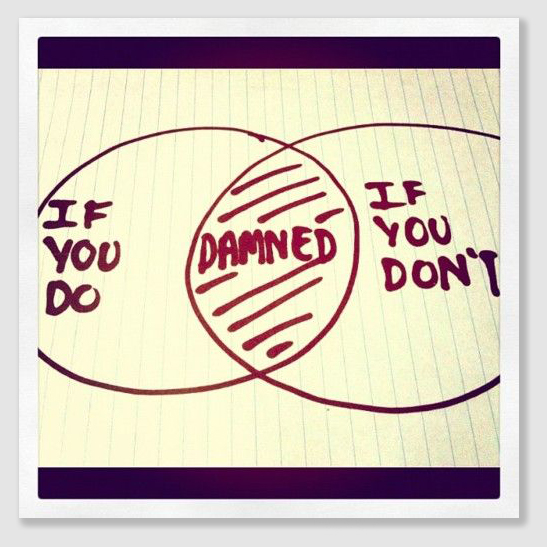
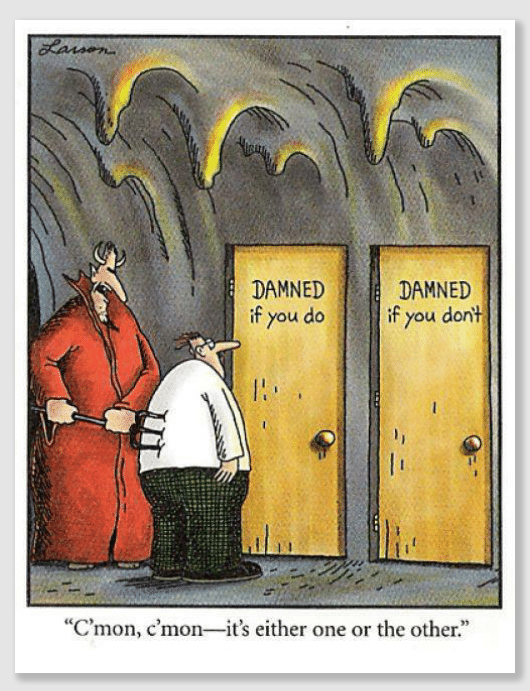
DAMNED IF YOU DO…

Yesterday, we read about Mamie Segraves, who successfully sued an electric utility because its workers determined that trees within its easement posed a risk to the distribution lines and that one should be removed and the other topped.

Segraves taught us that in Missouri, a utility company’s judgment that a tree needs to be removed does not mean much if the homeowner wants it preserved. Today, from the Damned If You Do, Damned If You Don’t Department comes another Missouri decision, in which a utility is held liable because the landowner wanted a tree in the easement area removed, but the utility did not see the need.

When Greg Fenlon noticed a hazard tree he believed threatened his local power grid, he called the electric company. Its crews, unfortunately, were uninterested in taking direction from Greg and, to make matters worse, they did not perform their duties much to Greg’s liking. He wanted the hazard tree removed. They demurred.

After the crew headed off for coffee and doughnuts, Greg hired a crew that would take direction from him (because he was paying them). Greg’s crew removed the tree, and Greg sent the bill to Union Electric. Union sent it back.

Greg was as serious about litigation as he was about tree removal. He sued Union Electric for the cost of his tree-cutting crew. And he got further than you might think.

Fenlon v. Union Electric Co., 266 S.W.3d 852 (Court of Appeals of Missouri, Eastern District, 2008). Greg Fenlon was not a guy to let a job go undone. When he noticed a dangerous tree interfering with Union Electric wires, he contacted the utility to report it. Union Electric sent a couple of men in a truck, who trimmed back a few branches but refused Greg’s demand that they cut down the hazardous tree (despite the fact it was inside the utility’s easement). So Greg did the job himself, hiring a contractor to cut down the tree. He then sued the utility for the cost of the removal.

The trial court dismissed Greg’s claim, and he appealed.

Held: Greg’s suit was reinstated.

The Court observed that suppliers of electricity must exercise the highest degree of care to maintain their wires in such condition as to prevent injury, citing the Missouri Supreme Court’s Gladden case. However, the Court said, “Nothing in Gladden limits the exercise of the highest degree of care solely to the trimming of branches that are either touching or close to wires. Rather, the focus in Gladden is on the likelihood of injury and prevention thereof.”

The key issue here, the Court said, was whether the hazard tree created an unreasonable risk of injury, and that was a question of fact. If it did, then Greg’s self-help in the Union Electric easement should be paid by the utility.

The trial court was in error when it effectively determined a question of fact question on a motion to dismiss. Greg’s pleadings were adequate to state a cause of action, so the matter had to go back to trial.

– Tom Root

TNLBGray140407

Case of the Day – Friday, January 31, 2025

IT’S GOOD TO BE KING

One good thing about being king – you can’t be sued.

Anyone with kids of a certain age (or kids with access to Disney+) will remember the strutting, youthful Simba in The Lion King, singing about how he’d be “free to run around all day… free to do it all my way…

The stripling cub might have been singing about the wonder of sovereign immunity, that quaint concept that no one may sue the government. Of course, people do sue the government – this is the U.S. of A., after all, where people sue everyone, sometimes even suing themselves – but in order to do so, the government must grant permission first.

Such a notion may seem peculiar, that the government would give private citizens the right to sue. But the government has done so implicitly and explicitly. The explicit permission of interest to readers of this blog is the Federal Tort Claims Act.

The FTCA allows people to sue the officers and employees of the federal government for negligence. There are strings attached: generally, a rather inflexible administrative exhaustion procedure must be followed first, the statute of limitations is brutally short, and the types of conduct that may justify a suit are limited.

A federal employee runs into you with a dump truck? You may sue. But, as we’ll see today, if your injury results from something more esoteric, you may be foreclosed by the “discretionary function” doctrine.

Monday, we’ll look at how the FTCA applies to the duty to inspect trees (of which the US Forest Service owns a few).

Gonzalez v. United States, Case No. 16-60062 (5th Cir., Mar. 22, 2017). Teresa Gonzalez and her friend were riding mountain bikes on some trails in the De Soto National Forest of Mississippi. Teresa did not bother to check the bulletin board at the head of the trails. If she had, she would have seen the sign warning that the Couch Loop Trail was closed.

The U.S. Forest Service had some problems with the Couch Loop Trail. A local bicycle club liked to build dangerous structures on the trail to enhance their fun. Most recently, Park employees found an unauthorized bridge on the trail and closed the route to remove the offending span.

Ramp-jumping: not for amateurs…

Teresa and her friend careered down the trail. At some point, they took an “alternate route” to the left of the main trail. On their ersatz path, they found a teeter-totter and a ramp. Wisely, they did not try to ride over the teeter-totter. Unwisely, they did decide to jump the ramp.

Neither had ever tried riding over a ramp before. You can see where this is going. Teresa experienced what the kids call an epic fail, and suffered serious injuries.

De Soto National Forest, about 600 square miles in size, had two technicians charged with maintaining the bike trails. Their work included identifying hazards, such as trees, and performing repair work. The worker would “bush hog the trail pretty much every year,” which includes clearing and cleaning the trail, but they were not sure it had been done in 2012.

Teresa filed an FTCA action, alleging that the United States failed to keep its premises safe, failed to perform inspections, and failed to warn of a dangerous condition. The District Court found that the discretionary function exception to the FTCA waiver of sovereign immunity applied., and threw out the lawsuit. She appealed.

Held: The “discretionary function exception,” prevented Theresa’s suit. That function “preserves the federal government’s immunity . . . when an employee’s acts involve the exercise of judgment or choice.” The exception covers only acts that “involve an element of judgment or choice.” It is the nature of the conduct, rather than the status of the actor, that governs whether the exception applies.

The Circuit Court said a two-prong test determines whether the exception applies: (1) “the conduct must be a matter of choice for the acting employee, and (2) the “judgment must be of the kind that the discretionary function exception was designed to shield.”

With respect to the first prong of the test, “if a statute, regulation, or policy leaves it to a federal agency to determine when and how to take action, the agency is not bound to act in a particular manner and the exercise of its authority is discretionary.” Regarding the second prong, a court considers “whether the actions taken are susceptible to policy analysis.” Whether the employee actually did any policy analysis when reaching his or her decision doesn’t matter: it’s whether he or she could have done so that matters. The question of whether the government was negligent or not is irrelevant.”

In this case, the USFS handbook contemplated an “element of choice as to how USFS employees inspect and maintain the trails.” The manual instructed employees to “manage each trail to meet the trail management objectives identified for that trail, based on applicable land management plan direction, travel management decisions, trail-specific decisions, and other related direction, as well as management priorities and available resources.” The Court said the language ordered employees to “meet” the identified objectives, but gave them room for choice based on the evaluation of various factors. Although the objectives listed specific goals, the Court held they did “not prescribe a certain course employees must take to reach those goals. In this way, the provisions… contain generalized, precatory, or aspirational language that is too general to prescribe a specific course of action for an agency or employee to follow.”

So whether the technicians were negligent by not doing a better job of marking the trail as closed, removing the ramp, or not putting training wheels on Theresa’s bike, she had nothing coming.

– Tom Root

TNLBGray140407

Case of the Day – Thursday, January 30, 2025

AN ADOPTION GONE BAD

You’ve seen the “adopt a highway” signs along local roads, where some company or organization undertakes to take care of a strip of the road. Governments have figured out that the adoption program was a sweet deal. The government gets free labor to maintain a public asset. A local group gets its name attached to a do-gooder project.

Some places have gone beyond the stretch-of-road adoption program in favor of entire enclaves. The City of Fort Worth, Texas, had such a program, one in which groups could adopt a whole park.

The last time we checked the geography, Fort Worth was pretty flat. That did not prevent the City from having a mountain bike park, or for that matter, a band of dedicated mountain bike riders ready to adopt it. What a perfect arrangement – synergy on knobby tires – at least until Norm DeLamar, a mountain biker, got clotheslined by a dead tree.

Adopted kids have parents who are obligated to take care of them. Norm figured that it worked for kids and parents, it must work for parks and adopt-a-park groups. Like most injured parties who know how to find the courthouse, Norm figured that because he was hurt, someone was obligated to pay him money. After all, this is America.

But the adoption turned out to be symbolic more than real. The mountain bike group was allowed to pick up litter, but the most it could do for dangers from hazard trees was to call the City Forester and cajole him or her to send a guy with a chainsaw. So the adopting parent really lacked any decision-making power when it came to park maintenance. But that hardly mattered to Norm and his lawyers.

Like the old poem so sagely observed:

It’s not my place to run the train, the whistle I can’t blow.
    It’s not my place to say how far the train’s allowed to go.
It’s not my place to shoot off steam or even clang the bell.
    But let the damn thing jump the track and see who catches hell.

DeLamar v. Fort Worth Mt. Biker’s Ass’n, 2019 Tex. App. LEXIS 466 (Ct.App. Texas Jan. 24, 2019). Norm was riding his mountain bike one summer day on a trail in Gateway – a park owned by the City of Fort Worth – when he came upon a downed tree blocking the trail at head level. Although Norm was reputed to be a “really good rider,” he apparently was not that good. Norm did not have time to stop or avoid the tree, and as a result, he was “clotheslined.” His head and neck stopped when they hit the tree; the rest of him did not. Norm was knocked from his bicycle and was injured.

Norm sued the City, claiming ordinary and gross negligence. The City filed an answer and identified the Fort Worth Mountain Biker’s Association as a responsible third party because of an “Adopt-A-Park Agreement” between the City and the Association. Under the contract, the Ft. Worth Mountain Bikers were “responsible for constructing and maintaining the bike trail in question.” Norm added the Association as a defendant, arguing premises liability, claiming the Association owed “a duty to protect the general public from dangerous conditions such as falling trees.” Norm claimed the Association had breached this duty by failing to ensure the trees alongside the bicycle trail were not a danger to cyclists, and consciously disregarding the health of the trees and the danger that they pose.

The Adopt-A-Park Agreement provides the Association “shall perform all work and services hereunder as an independent contractor… [and] shall have exclusive control of, and the exclusive right to control the details of the work…” The Association is obligated to maintain the park at its sole cost and expense, and it defines “trail maintenance” as including but not being limited to, “pruning of trees; [and] removal of brush[.]”

The Contract prohibits the Association from “trimming and pruning until written approval is obtained from the Director [of the Parks and Community Services Department],” and from “remov[ing] any tree without prior written permission from the City Forester.” Finally, the Contract expressly provides that the City “does not relinquish the right to control the management of the Parks, or the right to enforce all necessary and proper rules for the management and operation of the same.”

The Association answered that there was no evidence that it was negligent, as it owed neither Norman nor anyone else a duty with respect to the condition of the premises, or to keep the premises in a reasonably safe condition, to inspect or discover any defects, or to repair any defect or give an adequate warning of any dangers.

Norm filed a response and attached a short affidavit and an expert report from an arborist, Matthew Clemons. In his response, Norman appeared to adopt the Association’s characterization of his claim as one for premises liability and – in doing so – focused on his status, arguing that he was an invitee. The Association filed a reply and objected to the expert report.

The trial court granted the Association’s motion and threw out the suit.

Norm appealed.

Held: Norm failed to establish that the Association owed him a legal duty to protect him from the tree that the Association did not cause to fall, that may have fallen only hours, but no later than a day or two, before the biker struck, and that the Association was not authorized to unilaterally remove under its agreement with the City to maintain the trail.

To prevail on a premises liability claim, Norm had to prove the Association had actual or constructive knowledge of some condition on the premises; that the condition posed an unreasonable risk of harm; that the owner did not exercise reasonable care to reduce or eliminate the risk; and that the owner’s failure to use such care proximately caused Norm’s injuries. For a general negligence claim, he had to prove the Association owed him a legal duty; that it breached the duty, and as a result of the breach, he was damaged.

While, theoretically, Norm could maintain causes of action for both general negligence and premises liability, the Court said, a general negligence theory of recovery must be based not upon an injury resulting from the condition of the property, but upon the Association’s contemporaneous activity. If the injury is caused by a premises defect, rather than by the Association’s contemporaneous activity, Norm could not circumvent the true nature of the premises defect claim by pleading it as one for general negligence.

Because the lines between negligent activity and premises liability are “sometimes unclear,” the Court said, determining whether a claim is one for a premises defect or general negligence “can be tricky.” Negligence encompasses a malfeasance theory based on affirmative, contemporaneous misconduct that causes an injury. Premises liability, on the other hand, encompasses a nonfeasance theory based on the owner’s failure to take measures to make the property safe.

But regardless of which horse Norm chose to ride, premises liability or general negligence, the sine qua non of his claim was the existence of a legal duty. It is a “multifaceted issue” requiring courts to balance a number of factors such as the risk and foreseeability of injury, the social utility of the actor’s conduct, the consequences of imposing the burden on the actor, and any other relevant competing individual and social interests implicated by the facts of the case.

Three categories of factors have emerged, the Court held. First, a court must consider the relationship between the parties. Then, a court examines the reasonable foreseeability of harm to the person injured. Finally, a court considers any public policy considerations.

Here, Norm argued the Association contractually assumed “responsibility for maintenance, construction and safety of the trails,” and as such, owed a duty to “protect the general public from dangerous conditions[.]” The record showed the Association members regularly worked on the trials, but had to identify problem trees to City employees who “were the only ones that [could] operate the chainsaws.”

Norm admitted he had ridden the same trail “no more [than] two days” earlier and that he had not seen the downed tree, so it was possible that the tree had fallen only a day or two before his crash. Indeed, he conceded that it was possible that the tree could have actually fallen only a few hours before his crash. What is more, the Agreement expressly prohibited the Association from pruning trees without the Director’s prior written approval and expressly prohibited the Association from removing any tree without prior written permission from the Forester. Norm cited nothing in the Agreement showing that the Association had agreed to assume a legal duty to maintain the safety of the trails for the general public.

The Court was not persuaded to create a legal duty regarding the downed tree and trail safety based on public policy considerations. Indeed, it said, public policy considerations weigh heavily against imposing such a legal duty on what is essentially a group of volunteer mountain bike enthusiasts who have been granted such limited oversight over the safety of the bike trails if any.

Thus, the Court said, Norm had failed to establish that the Association owed him a legal duty to protect him from the downed tree across the trail that the Association did not cause to fall, that may have fallen only hours—but no later than a day or two—before Norm struck it, and that the Association was not even authorized to unilaterally remove.

– Tom Root

TNLBGray140407