Case of the Day – Tuesday, March 31, 2026

THE CURE IS TOO MUCH BETTER THAN THE DISEASE

I had a call recently from a North Dakota lawyer, who was involved in a tree case where the standard for measuring damages being considered was the “cost to cure.” He wondered whether I was familiar with the concept.

In losses due to wrongful cutting of trees, we traditionally see damages being applied as diminution of value of the property (noncommercial trespass), the value of the timber (in commercial trespass cases), and, occasionally, restoration value (the cost to restore that which was lost). The ultimate goal, as we once noted, “is compensation for the harm or damage done. Thus, a court may apply whatever method is most appropriate to compensate a plaintiff for his or her loss.”

The question posed by our attorney friend from the Flickertail State left me scratching my head, (not a good idea, because it dislodged some of the little hair I have remaining): it sounded to me that “cost-to-cure” was being used in the case as a fancier name for restoration costs (sometimes called replacement costs). The only place I had seen the term “cost to cure” used was in condemnation cases. A Texas appellate decision in such a case defined the “cost-to-cure” approach as “an appraisal technique used to arrive at the taken property’s market value and the diminished market value of the remainder, which included the cost to replace improvements taken, damaged, or destroyed after they have been appropriately depreciated.

The attorney asked me whether I could verify “that the Cost of Cure Method has been accepted by the Courts.” Not really. My problem is that “cost of cure” has been accepted by the courts in condemnation cases, where the government decides to take your property for some more-or-less debatable public “good.” But I have never seen it called “cost of cure” in a tree damage case, where “cost of restoration” is the term applied when that measure of damage is called for.

Nevertheless, I found a condemnation case from Michigan that tangentially involves trees (and thus meets my exacting standards for this blog). So, as a consolation prize, let’s see how a fruit farmer tried to jack up the value of the loss of 20% of his acreage with a “cost to cure” analysis, and how the court – quite appropriately channeling Publilius Syrus – told him the cure couldn’t be better than the disease.

Dept. of Transportation v. Sherburn, 196 Mich.App. 301, 492 N.W.2d 517 (Mich.App. 1992). Loris Sherburn was a fruit farmer along Lake Michigan. When the Michigan Dept. of Transportation decided to extend U.S. 31 in Berrien County, it took 28 acres of Loris’ 124-acre farm. A court battle ensued, as it often does, over the value of the property taken. The State argued the value of the 28 acres was $47,200. Farmer Sherburn argued the property carved off his farm was worth closer to $183,000, claiming that this was the cost to cure the loss caused by the loss of the acreage.

The trial court found Loris was entitled to $56,600 for the condemnation of 28 acres of the farm.

Loris appealed.

Held: Loris was only entitled to $56,600. The Court of Appeals acknowledged that in a condemnation case like this one when only part of a larger parcel is taken, the owner is entitled to recover not only for the property taken but also for any loss in the value to his or her remaining property. The measure of compensation is the difference between the market value of the entire parcel before taking and the market value of what is left of the parcel after the taking.

Loris’ expert witness used the “cost to cure” method of calculating damages. The appellate court agreed that the cost-to-cure method is a measure of damages that may be considered by the jury, provided the cost to cure does not exceed that difference between the market value of the entire parcel before the taking and the market value of what is left of the parcel after the taking.

MDOT’s expert witness, an independent real estate appraiser, calculated the value per acre of the farm, which made the place worth $122,800 for all 124 acres. Using the same method, he found the 96-acre parcel remaining after condemnation to be worth $75,600. Thus, he concluded that Loris Sherburn’s damages were $47,200, the difference between the value of the entire parcel and the value of the remaining parcel after condemnation.

Farmer Sherburn had different ideas. His first expert witness, a real estate appraiser, using a comparable sales method, testified that the market value of the farm before condemnation was $215,000. He also estimated it would cost the farmer about $183,000 to replace the mature vineyards, peach and apple trees, and buildings lost in the condemnation. The witness contended that Loris, in addition to retaining possession of the remaining 96 acres, should recover the $183,000 cost-to-cure damages.

Loris’ second witness, an independent fee appraiser, testified that using the market data approach, the market value of the defendants’ farm before the taking was $345,000, while the market value of the remaining 96-acre parcel after the taking was $139,000, leaving a difference of $206,000.

The Court of Appeals agreed with Loris that where a partial taking occurs, it is possible for the property not taken to suffer damages attributable to the taking. “These damages have been described as ‘severance damages’,” the Court held, “which may be measured by calculating the difference between the market value of the property not taken before and after the taking. Where severance damages have occurred, it may be possible for the property owner to take steps to rectify the injuries in whole or in part, thus decreasing the amount of severance damages and correspondingly increasing the parcel’s market value.” These actions constitute a “curing” of the defects, according to the Court of Appeals, and the financial expenditures necessary to do so constitute the condemnee’s cost to cure.

However, the Court held that the cost-to-cure damages in a given case are not unlimited. Where the market value of the property taken, the value of the property remaining, and cost-to-cure expenses exceed the market value of the land before condemnation, cost-to-cure damages will not be awarded. “An owner is not to be enriched because of the condemnation,” the Court said.

This leaves “cost-to-cure” damages as a valid measure of damages “only when it is no greater in amount than the decrease in the market value of the [remainder] property if left as it stood.” Thus, the Court concluded, “where there is no claim of severance damages, the maximum damages recoverable equal (the market value of the entire parcel before the taking) minus (the market value of the remainder after the taking). Where severance damages are claimed, the maximum damages recoverable equal (the market value of the parcel taken) plus (the market value of the remainder after the taking) plus (the cost-to-cure expenses); however, the total damages awarded may not exceed the fair market value of the whole parcel before the taking.”

For Farmer Sherburn, the trial court correctly concluded that cost-to-cure damages are not recoverable to the extent that they exceed the market value of the entire property before the taking.

– Tom Root

TNLBGray140407

Case of the Day – Friday, February 20, 2026

THE DOMINATRIX

Hardly anything can sow discord among neighbors like an easement. Rarely described with much specificity or limited as to use by a detailed statement of purpose, easements cause problems for the holder. Or the grantor. Or often, both.

Where the easement is for the benefit of an adjacent property owner, we talk about the dominant estate – the property being benefited – and the subservient estate, which is the property (or property owner) burdened by the easement.

In today’s case, the Dzingles bought a landlocked parcel of land about 60 years ago, and – in order to get back and forth from the road – bought an ingress easement from their neighbor. As the name implies, the easement, 25 feet wide and containing a “trail,” was intended to let the Dzingles get to and from their property. The property was held by the Marilyn Dzingle Trust, making her sort of the Dominatrix.

The mind is fallible (just ask Joe Biden… or even Donald Trump).  Especially where the owner of the subservient estate (cool term, right?) sells the property to someone else, someone like Jim Platt. Jim knew what he was buying, and he wasn’t the kind of guy to spend a lot of time poring over deeds and those appurtenances, principal places of beginning, heirs and assigns, and all of the legal mumbo jumbo. He knew the Dzingles had a driveway going over his land, and who needed to know any more than that?

Jimbo, that’s who. When Dzingle cleared vegetation from either side of his drive (but within the 25’ limit of the easement), Platt objected that the Dzingles had diminished the value of his property. When Platt dropped a dumpster next to the driveway, crowding the use of the road, the Dzingles objected right back. Platt said, “Sure, I’m encroaching on the easement, but you still have enough room to get by.”

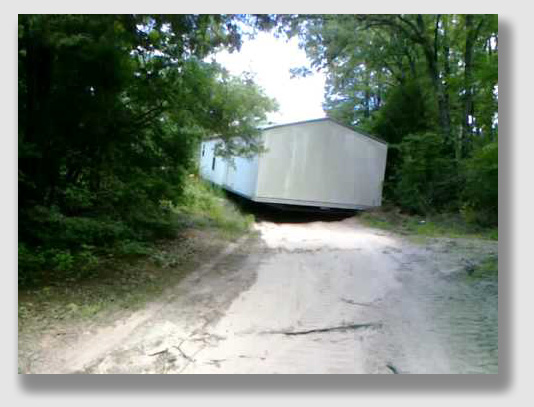
Well, enough was finally enough. When the Dzingles wanted to build a modular house, they needed 22 feet of clearance to haul the pieces in. Those of us who are good at math can figure that this should be fine, with 1½ feet of clearance on each side. Well, yeah, except for Jimmy’s dumpster, and he would not move it.

So the Dzingles took Jimmy Platt to school, this class being held in a courtroom. And by the time class was over, Jimmy Platt figured out what all that fine print on the deed really meant.

Dzingle Trust v. Platt, Case No. 330614 (Ct.App. Mich., Feb. 14, 2017) 2017 Mich.App. LEXIS 227. The Dzingles had contentedly enjoyed their landlocked 59 acres for nigh on 50 years, partly because they had had the foresight to buy a 25-foot ingress easement from their neighbor. But time passed, and after Jim Platt bought the subservient estate, the parties began feuding over what rights the dominant estate had over the easement.

The deed granting the easement stated that it was “an easement for ingress and egress over a parcel of land 25 feet wide…” and referred to an attached survey for the exact location of the easement. The survey clearly identified the location of the easement and indicated that the “existing trail lies entirely within easement.”

The Dzingles placed gravel in the easement and cleared vegetation to use it for ingress and egress and to improve his attached residential property with a water well and pond, which required large trucks to use the easement. They planned to build a modular home on the property, but delivering the modules would require 22 feet of clearance, just within the easement’s 25-foot width. Jim complained that the Dzingle’s vegetation cutting within the easement “unreasonably burdened my property and eliminated my use of the property.” For their part, the Dzingles complained that Jim Platt’s placement of a dumpster in the easement did not let them use the full 25 feet for ingress and egress. That may be so, Jim said, but it did not keep the Dzingles from ingress or egress.

The Dzingles sued for a declaratory judgment regarding their rights to remove obstructions to bring the modular home onto the property and asked the trial court to order Platt to remove his dumpster and any other obstacles from the easement. The trial court granted summary judgment to the Dzingles, holding they were entitled to the full 25-foot easement, and clearing brush from the easement was not an addition or improvement to the easement. The trial court rejected Jim Platt’s argument that the Dzingles’ proposed use of the easement would materially increase the burden on his estate because their rights as the dominant estate to ingress and egress on the easement were paramount to Platt’s rights to wildlife and natural beauty. Finally, the trial court ruled that Platt must remove his dumpster from the easement because it was inconsistent with the Dzingles’ rights to ingress and egress.

Jim Platt appealed.

Held: The Dzingles’ rights extended to the whole 25 feet of the easement, and those rights included trimming vegetation so that the easement was usable for its intended purpose. It’s a rough lesson for a subservient estate holder to learn, but the dominant estate holder’s “rights are paramount to the rights of the soil owner to the extent stated in the easement grant.” The language of the instrument that granted the easement determines the scope of the easement holder’s rights.

In this case, the deed grants the Dzingles an easement for “ingress and egress.” The deed does not define ingress and egress, so the Court referred to a dictionary to determine the common meaning of the terms. “Ingress” is the “right or ability to enter; access,” and “egress” is defined as the “right or ability to leave; a way of exit.” Thus, an “ingress-and-egress easement” is an easement that grants the right to “use land to enter and leave another’s property.” Thus, the Court concluded the deed expressly granted the Dzingles the right to enter and leave their property, and the right to do so is paramount to Jim Platt’s rights in the same property.

What’s more, the easement gives the dominant estate “all such rights as are incident or necessary to the reasonable and proper enjoyment of the easement.” While the dominant estate’s exercise of the easement must place as little burden as possible on the subservient estate, still “the making of repairs and improvements necessary to the effective enjoyment of an easement… is incidental to and part of the easement.”

A repair maintains an easement in the condition it was in when the easement was made. Improvements, on the other hand, are alterations to an easement, and alterations are not permitted unless necessary for the effective use of the easement, provided they unreasonably burden the servient tenement. Here, the Dzingles offered evidence that clearing vegetation, placing gravel in the easement, and using the easement to allow large trucks to improve the Dzingle acreage were consistent with the use of the easement since the easement was granted. Thus, the Court said, the Dzingles “presented evidence that removing vegetation and leveling would maintain the easement in the condition and uses it was in when the easement was granted. Platt presented no contrary evidence that clearing or leveling were outside the easement’s scope or changed the easement’s character.”

Finally, the Court said, any rights in the grant of an easement must be reasonably construed. The Dzingles have a right to reasonable ingress and egress, but they are not entitled to an unobstructed right-of-way. However, the Court said, the evidence showed that Jim’s dumpster intruded into the easement, and the Dzingles showed they needed at least 22 feet of the 25-foot easement for clearance to move the modular home pieces onto the property. Jim Platt may use the easement as long as his use does not interfere with the Dzingles’ right of ingress and egress. However, the Court said, because the Dzingles need the vast majority of the easement for ingress clearance and the dumpster intrudes into the easement, Jim Platt must move the dumpster.

– Tom Root

TNLBGray140407

Case of the Day – Friday, January 23, 2026

ILLEGAL SUBSTITUTION

It’s late January, and you’re fired up to watch New England play the Broncos (who the smart money says are done because they lost Bo Nix to a broken ankle)?  I saw this happen in college football, late 2014. A top-ranked team wins big rivalry game,but the star QB is lost to a broken ankle. Third-stringer called up, learns a handful of plays, and leads the team to a national championship. Cinderella story.

Hey, Denver. It can happen.

And how about the 49ers’ last-second win over the Seahawks? Just kidding.

It's a trick play! Interesting in football, less so in the courtroom.

It’s a trick play! Interesting in football, less so in the courtroom.

There were only four games to watch this past weekend, but we need to start brushing up now on football’s finer points. Such as the ref having to touch the ball between plays. And illegal substitution.

Trials aren’t supposed to be conducted by trickeration. Parties have a full chance to engage in discovery — seeing the other party’s documents, taking depositions of witnesses under oath, that sort of thing — well before trial.

In today’s case, a woman was killed when a tree branch broke free in a storm and struck her. Her husband sued, naming the owner of the tree and the power company that had an easement where the tree stood, among others, as defendants. He claimed that the tree hadn’t been trimmed properly and that negligence had led to his wife’s death.

At trial, the defendant called a witness to authenticate the location of the tree relative to the road. The plaintiff threw the red flag because the witness hadn’t been listed on the defendant’s expert witness list. An illegal substitution, he complained. The trial court didn’t think so but offered to adjourn the trial so that the plaintiff could take the witness’s deposition. A solution neater than Pete Carroll’s hair, you say? One might think, but the plaintiff wasn’t interested.

During the witness’s testimony, it developed that he hadn’t done the survey himself but instead was only vouching for someone else’s survey. The defendant announced it would call the two men who had taken the survey, and the plaintiff cried foul again. The trial court noted that the location of the tree was critical, and let them testify anyway. The defendant won by a touchdown.

steelers150128Was it a blown call? The plaintiff decried it as uglier than a Pittsburgh Steelers retro uniform. The Court of Appeals — sitting up in the review booth — typically gives substantial deference to trial procedure decisions made by the trial court. It held that letting the witnesses testify was well within the trial court’s discretion. It noted that Slater could have taken the adjournment offered, and inasmuch as he didn’t, he was hard-pressed to argue he was hurt by the trial court’s decision.

C’mon, Patriots! Go Broncos! And Seahawks and Rams! Keep us interested between the commercials.

Slater v. Charter Communications, Inc., 2007 Mich. App. LEXIS 2821, 2007 WL 4462396 (Mich.App., Dec. 20, 2007). The Slaters were driving on West Torch Lake Drive in Rapid City when they came upon tree branches that had fallen from a tree and were obstructing the roadway. The weather was rainy and windy. As the Slaters returned to their car after clearing the roadway, a large limb from the same tree broke off, fell onto a power line and then struck Mrs. Slater in the head. She died the following day from her injuries.

Her husband sued everyone, including bringing a negligence action against Consumers Power Company and a premises liability claim against defendant Charter Communications. Mr. Slater alleged that the tree was in Consumers’ easement and that Consumers breached its duty by failing to remove the dangerous limb from the tree. He also alleged that the tree was on Charter’s property and that Charter breached its duty to maintain the property in a safe condition by failing to remove the dangerous limb from the tree.

shell160203

The identity of the expert witness became a shell game …

Consumers moved for the case to be thrown out, asserting that the facts showed that it wasn’t responsible for trimming the tree from which the limb fell. Slater admitted that he lacked any evidence that Consumers was responsible for the tree, and in light of this, the trial court granted Consumer’s motion. At trial, Charter announced that it would call John Korr, the survey department development manager for Gosling Czubak Engineering Sciences, Inc., to authenticate a tree location survey that had been submitted to the court about one year earlier. Charter argued that the tree was not on its property but rather within the road right-of-way. Slater moved to strike Korr as a witness because Korr was not listed on the expert witness list. After the trial court indicated that it would allow Korr to testify, the court offered an adjournment to allow plaintiff to obtain an independent survey and depose Korr, but he declined.

After interviewing Korr on the third day of trial, Slater informed the trial court that he had just learned that Korr neither took the measurements nor prepared the survey. He had just verified it . The trial court then allowed Charter to call Simmerson and Anderson, the individuals who had taken the measurements and actually written the survey, to testify. Following the trial, the jury found that the tree was located in the road right of way and, therefore, judgment was entered in favor of Charter. Slater appealed.

Held: Judgment for Charter was upheld. The Court of Appeals held that the trial court properly dismissed Consumers Power from the suit, because with Slater’s admission that he had no evidence that Consumers had trimmed the tree, there was no genuine issue of fact.

The Court also ruled that the trial court had not abused its discretion by allowing Korr, Simmerson, and Anderson to testify. The decision whether to allow the late endorsement of an expert witness is reviewed for an abuse of discretion. Generally, the rule is that justice is best served where an unlisted witness can be permitted to testify, as long as the opposing party’s interests are adequately protected. Here, the trial court acknowledged that Slater had not gotten to take Korr’s deposition but noted that whether the tree was located on the plaintiff’s property rather than in the road’s right-of-way was a critical factual dispute, and the existence of the survey had been known to Slater for about a year before the trial commenced. The court offered Slater an adjournment to obtain an independent survey and to depose Korr, which he declined.

That was enough, the Court of Appeals ruled. Consequently, it held that the trial court had not abused its discretion.

– Tom Root

TNLBGray140407

Case of the Day – Monday, January 12, 2026

NOT EVERYTHING IS SOMEONE ELSE’S FAULT

One fall day a few years ago, a 9-year-old boy named Julian Terry – who was busy being a 9-year-old boy – decided to climb a utility pole. Why did he want to do this? He was a 9-year-old boy… What more reason did he need?

The utility pole was one of those older styles with metal footpegs that began more than seven feet up the pole, high enough that trespassers (such as young boys) could not reach them. Unfortunately, the utility company did not reckon with Julian Terry’s determination. The intrepid young man climbed a tree next to the pole until he was high enough to reach the iron pegs, then climbed using the pegs and the tree branches together.

Alas, it was an accident looking for a place to happen. Julian’s foot slipped off a peg. He grabbed a tree branch, which broke beneath him. Julian seriously injured his arm on the iron rod that stopped his fall.

Julian’s mom wasted little time suing the electric company and two phone companies, all of which were using the pole. She argued the utilities created a dangerous condition by allowing a tree to grow near the utility pole, because the tree made it possible for little urchins like Julian to climb 8 feet up to the iron pegs.

Come on, man… There’s a reason the law requires that defendants actually have a duty to the plaintiff before they have to pull out their checkbooks. As we all learned back in law school when we read Palsgraf v. Long Island Railroad, “the risk reasonably to be perceived defines the duty to be obeyed, and risk imports relation; it is risk to another or to others within the range of apprehension.” (Regular readers know how I love Palsgraf).

And so it is here. If the tree was too close to the utility pole and fell in the wind, causing a short that set a house afire, the homeowner would have a point. Risks to the power grid from a tree too close to the utility pole are reasonably perceived, and the utilities had a duty to maintain the lines by keeping the easement clear.

I recall going down the basement once to discover that my then 8-year-old son and his cousin had coated the concrete floor with WD-40 and were gleefully sliding around the room on pieces of cardboard. Should I have sued The WD-40 Company?

There was a lesson there for me, just as there was for Mrs. Terry. No adult has sufficient capacity for imagination to reasonably foresee what kids might do.

Terry v. Consumers Energy Company, 2016 Mich. App. LEXIS 303 (Ct. App. Michigan, 2016). Nine-year-old Julian was injured after he fell while climbing a tree next to a utility pole. His goal was to climb high enough to reach the iron climbing pegs on the pole, which started at over 7 feet off the ground, precisely to keep curious kids from using them to climb the pole.

Julian’s foot slipped from a metal peg, so he grabbed a tree branch to break his fall. The branch broke instead, and Julian seriously injured his arm on an iron peg on the way down. His mother sued, alleging the defendant power company and telephone carriers using the pole had created a dangerous condition when they allowed a tree to grow nearby. The defendants moved for summary judgment, arguing that they had acted reasonably in placing the pegs on the pole. Mrs. Terry responded that the defendants had a duty to reasonably inspect the pole and trim the tree to prevent the hazard.

The trial court granted summary judgment, holding that, “Quite frankly, I cannot find a duty that would have been owed to this young man that would have been breached.”

Mrs. Terry appealed.

Held: The defendant utility companies owed no duty to curious Julian. To prove negligence, a plaintiff must show that the defendant owed the plaintiff a duty of care, the defendant breached that duty, the plaintiff was injured, and the defendant’s breach caused the plaintiff’s injury. Generally, a plaintiff proves a defendant breached the duty of care by establishing that the defendant’s actions fell below the general standard of care to act reasonably to prevent harm to others.

Here, no one disputed that the climbing pegs on the pole were over 7 feet off the ground and that nothing about the pole itself was unreasonably dangerous. In fact, the Court said, the Defendants exercised reasonable care when they placed the pegs higher than even an adult could reach.

Mrs. Terry, however, claimed the defendants had a duty to inspect the nearby trees to ensure that they did not provide access to the power line. This case is different from one where a defect in the pole or wires caused the electrocution of someone holding a ladder nearby. There, the power company had “an obligation to reasonably inspect and repair wires and other instrumentalities in order to discover and remedy hazards and defects.”

Here, by contrast, Mrs. Terry sought to hold the defendants liable “for a condition of land aris[ing] solely from a defendant’s status as an owner, possessor, or occupier of the land.” She offered no evidence that the utilities owned or controlled the tree that Julian used to circumvent their safety precautions. The Court said, “Defendants are no more responsible for the tree that Julian used to circumvent that precaution than they would be had Julian used a ladder to reach the rods.”

We have to admit that we’re a bit confused by the holding’s failure to consider the location of the tree. Presumably, if it was close enough to the pole for young Julian to use it to gain access to the climbing pegs, it was within the utilities’ easement (and was probably too close to the wires). We question whether the utilities did not “control” the tree. But, as crusty old Judge Miller used to lecture us when we were young lawyers (a long time ago), ‘you dance with the girl who brung you.’ If Mrs. Terry offered no evidence about an easement that permitted the utilities to trim (or even remove) trees, the trial court was not free to imagine it.

– Tom Root

TNLBGray140407

Case of the Day – Wednesday, December 24, 2025

Missed you

We’re out until Friday, December 26th, watching early and inconsequential bowl games.

tag

turkey161223

Our turkey, covered with bacon, is being cooked on the grill again this year. Tradition tastes so good…

No heavy lifting for today (unless perhaps a really big present, maybe a new chainsaw or something). We’re being overrun by our three grandsons (ages 7, 3 and a year old). Our two granddaughters are wisely staying in sunny and warm Minnesota. Meanwhile, we’re hunkered down awaiting the jolly old Elf. I’ll see you back on Frieday, December 26th. 

For now, I have an arboriculture law present for you from me.

I really do, a little literary gem, a simple case from That State Up North (Michigan, for you non-Ohioans out there) in which the property owner sued a driver who careered off the road and ran into the landowner’s beloved oak tree. The tree was badly damaged, the plaintiff said, and would need special care for the remainder of its days.

The driver defended on jurisdictional grounds, arguing that Michigan’s “no-fault” insurance law meant that the court could not assess property damages against him for the mishap.

The Court denied the landowner’s case, but it did so in verse (with apologies owed to Joyce Kilmer):

We thought that we would never see
A suit to compensate a tree…
A suit whose claim in tort is prest
Upon a mangled tree’s behest;
A tree whose battered trunk was prest
Against a Chevy’s crumpled crest;
A tree that faces each new day
With bark and limb in disarray;
A tree that may forever bear
A lasting need for tender care.
Flora lovers though we three,
We must uphold the court’s decree.

Doggerel? I don’t think so. Perhaps “poetic justice” instead. Whatever it might be, it makes for more interesting reading, and no doubt amused everyone except the plaintiff, who was left uncompensated for the damage to the oak tree.

May your trees remain healthy, happy, properly trimmed by a professional arborist, and clear of easements, rights-of-way, neighbors, and passers-by for this season and all of 2026.

Merry Christmas to all!

Buffer

Fisher v. Lowe, 333 N.W.2d 67, 122 Mich.App. 418 (Ct.App. Mich., 1983).

The facts:

“A wayward Chevy struck a tree,
Whose owner sued defendants three.
He sued car’s owner, driver too,
And insurer for what was due
For his oak tree that now may bear
A lasting need for tender care.
The Oakland County Circuit Court,
John N. O’Brien, J., set forth
The judgment that defendants sought
And quickly an appeal was brought.”

Held:

“Court of Appeals, J.H. Gillis, J.,
Gave thought and then had this to say:
(1) There is no liability
Since No-Fault grants immunity;
2) No jurisdiction can be found
Where process service is unsound;
And thus the judgment, as it’s termed,
Is due to be, and is,
Affirmed.”

– Tom Root


TNLBGray

Case of the Day – Wednesday, August 27, 2025

THE DEMOCRATIC PEOPLE’S REPUBLIC OF HOWELL, MICHIGAN

The Mayor of Howell?

The Mayor of Howell?

Like many American cities, the City of Howell, Michigan requires its property owners to keep their lawns mowed below a certain height. Violators of the ordinance are charged a fine as well as a fee for the costs associated with hiring a private contractor to mow or otherwise maintain the property. Such an ordinance, of course, occupies the same moral plane as laws that feed subordinates to hungry piranhas or shooting up 11 musicians with helicopter gunships (that last might be justifiable, depending on the musicians).

Or so David Shoemaker, a Howell homeowner, would have you believe. He complains that such an ordinance “makes the City look like North Korea rather than an American city.” Kim Jong Eun would be amused … or, if he was not, he’d have David shot to pieces with an anti-aircraft gun.

It seems that Shoemaker and his daughter planted a maple tree in their tree lawn, that strip of grass between the sidewalk and the street. The maple flourished for a few years until the City came along to widen the curb. City workers hacked down the tree, and – when Shoemaker complained – they imperiously told him there was nothing he could do about it because the City owned the tree lawn. Later, the same workers planted nine saplings in the tree lawn and guy-wired them to a fare-thee-well.

Shoemaker was incensed, and he figured to get even. If the tree lawn was the City’s property, he reasoned, then city workers could just jolly well cut the grass on the tree lawn. He wasn’t going to do it. So Shoemaker stopped mowing the strip between the sidewalk and the street.

In North Korea, it’s illegal to name a baby “Kim Jong-Eun” (like anyone would want to). According to Shoemaker, Howell has an equally irrational and stupid ordinance, one that prohibits the owner or occupant of any lot in the City from “maintain[ing] on any such lot … any growth of weeds, grass or other rank vegetation to a greater height than eight inches.” The ordinance explicitly applies to any land “along the sidewalk, street or alley adjacent to the same between the property line and the curb.” Shoemaker’s act of civil disobedience promptly ran into a city inspector, who cited him under the ordinance when the grass in the tree lawn grew high enough to harvest.

If you're looking to get even, tread very carefully. It may cost you more than it's worth.

If you’re looking to get even, tread very carefully. It may cost you more than it’s worth.

No doubt the city inspector wanted to throw Shoemaker and his daughter into the gulag. But he was limited to fining Shoemaker and charging him for the cost of mowing the lawn. After several infractions and city-sponsored mowings, Shoemaker was billed for $600.00 by the City.

Shoemaker filed suit against the City in federal court, asserting that Howell had violated both his procedural and substantive due process rights. Amazingly (to us), the district court granted summary judgment for Shoemaker on both claims.

But down at the U.S. Court of Appeals for the Sixth Circuit, cooler heads prevailed.

Shoemaker argued that the City ordinance requiring him to mow the tree lawn violated his procedural and substantive due process rights. The Court held that while the citation for violating the ordinance didn’t expressly state appeal rights, the imposition on a property owner was so slight that a property owner was given a chance to avoid the fine by cutting the grass after the citation was served, and the standards of the ordinance – grass in excess of 8 inches high – were pretty straightforward. Anything you can settle with a yardstick isn’t very complex. The Court was not about to turn the fairly simple citation into a procedural due process violation.

Shoemaker also claimed the statute violated his substantive due process rights. For those of you who had constitutional law right after lunch, and consequently fell asleep in a warm classroom with a full stomach, “substantive due process” is the doctrine that governmental deprivations of life, liberty or property are subject to limitations regardless of the adequacy of the procedures employed.” Which deprivations? Well, it “depends on the nature of the right being deprived.” Specifically, “[g]overnment actions that do not affect fundamental rights … will be upheld if they are rationally related to a legitimate state interest.”

There… that’s clear. If you had stayed awake in Constitutional Law and taken good notes, you might be nonetheless be forgiven for thinking that “fundamental rights” are what Justice Potter Stewart was thinking of when quipped about pornography in Jacobellis v. Ohio: “I shall not today attempt further to define the kinds of material I understand to be embraced within that shorthand description; and perhaps I could never succeed in intelligibly doing so. But I know it when I see it …”

What interested us about this decision was Shoemaker’s insistence that the tree lawn was owned by the City of Howell and not by him. He said a city worker had told him that, and thus the matter was settled. The Sixth Circuit, not a court to take a litigant’s word for it, examined Michigan law on the topic.

The district court had granted summary judgment in favor of Shoemaker because the City owned the tree lawn in front of Shoemaker’s house, and “the right not to be forced by a government to maintain municipal property” is a fundamental one. The ordinance infringed on that basic right.

Nonsense, the Court of Appeals said. While Michigan cities possess “nominal” title to land designated for public use, the private property owners retain the usual rights of the proprietor. This relationship, the Court said, “reflects the reality that homeowners like Shoemaker have a special interest in the curb strips adjacent to their houses because these strips of land are, for all practical purposes, simply extensions of the homeowners’ lawns. The curb strips also provide a traffic and safety buffer between the street and the rest of the property. In other words, despite the City’s right of way over the curb strip for public use, Shoemaker retained both his property interest in and de facto use of the land in question.’

As for Shoemaker’s hyperbolic comparison of Howell’s lawn-cutting ordinance to Korea, the Court dryly observed that the notion “should come as a surprise to the citizens of both nations. On the one hand, North Korea is a totalitarian regime that notoriously tortures criminal defendants, uses nerve toxin on political opponents, executes non-violent offenders, and sends those accused of political offenses to forced labor camps. On the other hand, laws like Howell’s lawn-trimming ordinance “are ubiquitous from coast to coast.”

Shoemaker v. City of Howell, 795 F.3d 553 (6th Cir., July 28, 2015). Shoemaker and his minor daughter lived on East Sibley Street in Howell, Michigan, for 9 years. Early on, they planted a maple tree in the tree lawn, that strip of grass between the sidewalk and street.

During this time, the City undertook a citywide project to refurbish and landscape its streets. East Sibley Street, next to the Shoemaker residence, was among the areas where work was done. The City removed the Shoemakers’ maple tree and replaced it with nine saplings. Shoemaker claims that when he protested the tree’s removal, City workers told him, “That’s not your property, you have no say on what goes in or out of there.” Upset by the City’s unilateral remodeling of the curb strip, Shoemaker chose to protest the City’s actions via civil disobedience: he stopped mowing the curb strip.

The City received a complaint about Shoemaker’s uncut tree lawn. Based on the complaint, City Code Inspector Donahue visited the residence and left a door-hanger notice informing Shoemaker that his lawn was in violation of City Code § 622.02, which requires property owners and occupants to maintain the vegetation on their land. The Ordinance prohibits the owner or occupant of any lot in the City from “maintain[ing] on any such lot.., any growth of weeds, grass or other rank vegetation to a greater height than eight inches,” and applies to any land “along the sidewalk, street or alley adjacent to the same between the property line and the curb.” A violation of the Ordinance subjects the responsible party to fines.

The prisoner's last words: "I should have mowed my whole lawn."

The prisoner’s last words: “I should have mowed my whole lawn.”

On August 4, 2011, Donahue noticed vegetation that was taller than eight inches on the curb strip in front of Shoemaker’s house. As before, Donahue left a door-hanger notice informing Shoemaker of the violation and mailed another Notice of Ordinance Violation. He returned to the property on the next day to find that, although the lawn had been freshly mowed, the grass on the curb strip remained in excess of the Ordinance’s limitation.

Shoemaker told Donahue that he would not mow the curb strip because he had been told by City employees that the area was the City’s property and not his own. Donahue insisted that the property did in fact belong to Shoemaker. Shoemaker asked to be ticketed for the violation in order to challenge the Ordinance in court. Shoemaker was charged a total of $600 for his violations of the Ordinance, including $300 in grass-cutting services and $300 in fines.

Shoemaker filed suit against the City, asserting violations of his procedural and substantive due process rights. The district court granted summary judgment in favor of Shoemaker, finding that the City owned the curb strip in front of Shoemaker’s house, that “the right not to be forced by a municipal government to maintain municipal property” is a fundamental one, and the Ordinance “unconstitutionally infringes” on that right.

The City of Howell appealed.

Held: The City did not violate Shoemaker’s procedural due process rights because it provided him with ample notice of the violation and an adequate opportunity to be heard. The City did not violate his substantive due process right, because Shoemaker continued to own the tree lawn, subject only to certain rights the City had to use the area for permissible purposes.

The Court weighed several factors in deciding exactly how much procedural process was due Shoemaker, including whether a private interest is affected by the official action, the risk of an erroneous deprivation of rights, the probable value, if any, of additional procedural safeguards, and the Government’s interest, including the function involved and the fiscal and administrative burdens that the additional or substitute procedural requirement would entail.

Clearly, a private interest was affected by the Ordinance, although it was a slight one. The constitution does not require strict adherence to the City’s Ordinances. What it does demand – that the notice as given be reasonably calculated to alert Shoemaker of the charges against him and any avenues available for challenging those charges – was accomplished by the notices distributed by the City, which explained what he had to do to avoid a fine.

There was little risk of erroneous deprivation under the Ordinance If the vegetation on the land in question is allowed to grow beyond eight inches tall, then the owner or occupier of that land has violated the Ordinance. Due to this objective, readily ascertainable standard, there is little chance of a wrongful application of the law. The ample means of challenging an alleged violation under the laws of the City and the state of Michigan further counsel against the need for additional procedures. Finally, the burden of added process here would be significant, and the potential burden “militates against yet more process.”

The Court said that Howell did not violate Shoemaker’s substantive due process rights because Shoemaker had a shared ownership interest in and the de facto use of the curb strip. Under Michigan law, Shoemaker technically owned the property at all relevant times, and the City simply possessed a right of way for public use. The erroneous reasoning of the district court relied entirely on the inaccurate determination that the City is the sole owner of the curb strip. Given Shoemaker’s shared ownership interest in the curb strip as well as his de facto use thereof, no substantive due process violation occurred.

Substantive due process holds that governmental deprivations of life, liberty or property are subject to limitations regardless of the adequacy of the procedures employed. The limitations the Constitution imposes on such a governmental deprivation depend on the nature of the right being deprived. Government actions that do not affect fundamental rights will be upheld if they are rationally related to a legitimate state interest.

The district court acknowledged that the Supreme Court has always been reluctant to expand the concept of substantive due process because guideposts for responsible decision-making in this unchartered area are scarce and open-ended. Despite this, the district court expanded the concept by identifying a new fundamental right: the right not to be forced by a municipal government to maintain municipal property.

The Howell ordinance - yet another reason for Colin Kaepernick to not stand up for the National Anthem?

The Howell ordinance – yet another reason for Colin Kaepernick to not stand up for the National Anthem?

The Court of Appeals observed that this “right” was predicated on the finding that the City owned the tree lawn, and that was wrong. Through a conveyance by a platting statute, the government does not acquire title in the nature of private ownership; it acquires no beneficial ownership of the land and has no voice concerning the use; and it does not possess the usual rights of a proprietor, but rather takes title only to the extent that it could preclude questions which might arise respecting the public uses, other than those of mere passage. “Simply put,” the Court of Appeals said, “the law vests the governmental entity with nominal title. We pause at this word ‘nominal’ to emphasize the obvious, i.e., that the property interest conveyed by these early platting statutes is a fee in name only.”

The reality, the Court ruled, is that homeowners have a special interest in the curb strips adjacent to their houses because these strips of land are, for all practical purposes, simply extensions of the homeowners’ lawns. The curb strips also provide a traffic and safety buffer between the street and the rest of the property. In other words, despite the City’s right of way over the curb strip for public use, Shoemaker retained both his property interest in and de facto use of the land in question.

Shoemaker suggested that the Ordinance was somehow “un-American.” The Court didn’t sit still for the argument. It said, “Shoemaker’s argument, like the district court’s opinion, relies on the erroneous assumption that the City is the sole owner of the curb strip. Shoemaker specifically compares the requirement that he maintain the curb strip associated with his property to draconian mandatory public-labor measures adopted by regimes in troubled nations such as the Republic of the Congo, Uzbekistan, and Burma/Myanmar. These analogies are almost too outlandish to address. But even more hyperbolically, Shoemaker argues that the Ordinance ‘makes the City look like North Korea rather than an American city’. This final comparison should come as a surprise to the citizens of both nations.”

Indeed it does.

– Tom Root

TNLBGray140407

Case of the Day – Wednesday, April 9, 2025

YOU MAY (ALREADY) BE A CRIMINAL

There was a time when the expression “don’t make a federal case of it” actually had meaning, when only the serious stuff – like stopping mobsters with tax evasion cases and busting big trusts – became a federal offense. No more.

Now, the feds go after people about 60,000 times a year for any of over 4,000 different criminal offenses, a number that does not even include federal rules that themselves have been criminalized, like the one in today’s case. These days, the current inhabitants of the J. Edgar Hoover Building want to make the keying of a Tesla into domestic terrorism.

Today’s example is a textbook case of what I mean. Roy P. Hinkson is a 69-year-old Purple Heart recipient who never faced any criminal charges in his life. That changed on November 15, 2014, when the U.S. Forest Service charged Roy with the misdemeanor crime of building a camp on National Forest System land without a permit, in violation of 36 CFR § 261.10(a), a misdemeanor punishable by a $500.00 fine and six months in jail.

It used to be easy. You’d don a mask and a gun, rob a bank, and make off with the loot. You enjoyed the thrill of knowing you had been really, really bad. Roy missed out on that.

A number of commentators – including Alex Kozinski, a judge on the 9th Circuit Court of Appeals (until he was driven off by political correctness run amok) – have complained about the overcriminalization of America. With so many thousands of statutes and thousands more rules that have been criminalized, just about everyone can commit three felonies a day without breaking a sweat.

Roy found out just how much living a clean life got him, and how little his government appreciated his taking a bullet in Vietnam.

United States v. Hinkson, 2017 U.S. Dist. LEXIS 90409, 2017 WL 2544195 (W.D.Mich. June 13, 2017). Roy Hinkson owned a small hunting cabin, which was built in the 1950s by Al Repp. By mistake, Al had built the camp about 200 feet or so across the line in Hiawatha National Forest rather than on the 40 acres of land that Al owned. Roy’s parents had no ownership interest in the land or the cabin, but they were family friends. In fact, when Roy returned from the Vietnam War, he used the cabin for deer hunting.

In 1976, a fire destroyed the original hunting cabin. A lot of folks, including Roy and at least one U.S. Forest Service worker, helped clean up the mess. During the clean-up, a few of the USFS people asked Al to rebuild it about 25 feet east of the original site, just to be sure the cabin was on private property. Al was an accommodating fellow, so when he rebuilt the place two years later, he did as the Forest Service people asked.

That’s where things stood for 46 years. The owner passed on, and Roy inherited the cabin. Roy enjoyed occasional use of the camp when he hunted. To get to it, he used an access road, also on USFS land, that was blocked by a locked gate. Roy provided a key to the Forest Service, which kept it on a key rack at the Manistique Ranger District office.

In 2014, a Forest Officer playing with Google Earth on his computer noticed Roy’s cabin appeared to be on National Forest System land. A week later, he investigated the cabin with a GPS tracker, confirming it was on USFS land.

Instead of notifying Roy by leaving a note or sending a letter, the Forest Service – as militarized as any other federal agency – set up a sting-like operation for the opening day of deer hunting season. Despite the utter foolishness of raiding a camp full of men armed with high-powered rifles, officers from USFS and the Michigan Department of Natural Resources swarmed the deer hunting blinds on the first day of hunting season and arrested the hunters, fortunately without incident.

The USFS officer leading the raid said the hunters had committed at least 30 different violations. However, he only issued three tickets – Roy was issued two, and his son was issued a third for having a permanent deer blind on federal property. One of Roy’s tickets charged him with “Camp Constructed on NFSL: in violation of 36 CFR § 261.10(a). The next day, Roy removed most of the temporary structures, but the cabin remained.

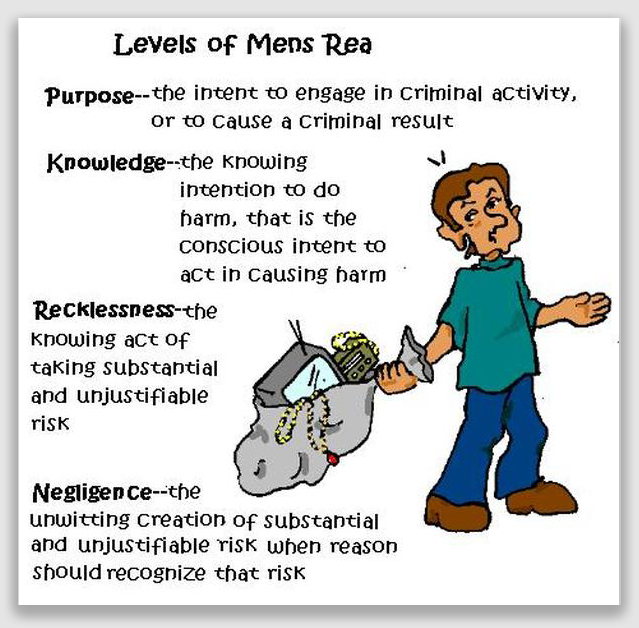
Held: When Roy appeared in court, the magistrate judge dismissed the charges. The government said all it had to do was prove beyond a reasonable doubt that (1) Roy constructed, placed, or maintained the camp, (2) the camp was located on National Forest System lands, and (3) there was no special-use authorization, contract, or approved operating plan if such authorization was required. Roy on the other hand, argued that the court had to imply a mens rea requirement in the regulation.

The traditional rule is that proof of a guilty mind, the mens rea, is required to convict a person of a crime. The Supreme Court has said that offenses requiring no mens rea generally are disfavored, and has “suggested that some indication of congressional intent, express or implied, is required to dispense with mens rea as an element of a crime.” However, the courts have found statutes or regulations do not require a mens rea element when they are considered public welfare offenses.

The Court differentiated Roy’s offense from one in which someone, for example, cuts timber from a national forest without permission. Timber cutting in a national forest is a strict liability offense because cutting timber “causes irreparable harm to our national forests. On the other hand, a mere occupier of land… does not seriously threaten the community’s health or safety.”

Here, the court said, the charges are not a public welfare offense. The offense at issue here differs substantially from “public welfare offenses” previously recognized. “In most previous instances, Congress has rendered criminal a type of conduct that a reasonable person should know is subject to stringent public regulation and may seriously threaten the community’s health or safety.” Nothing puts a reasonable person on notice that having a cabin on national forest land does the same.

What’s more, the court said, even statutes creating public welfare offenses generally require proof that the defendant had knowledge of sufficient facts to alert him to the probability of regulation of his potentially dangerous conduct.

The Court held that the facts of the case cannot support a conviction for the offense charged. There is no suggestion that Roy had any reason to believe that he was in violation of the regulation. In fact, the evidence suggests that the U.S. Forest Service had given him reason to believe that he was in full compliance with the regulation, as it was Forest Service employees who suggested where the cabin should be built. To convict Roy of the offense charged “without any scienter requirement smacks of unfairness.”

The Court noted that Roy “has been attempting to work out an arrangement with the U.S. Forest Service so he does not have to destroy the camp. He has offered to buy the land or trade some of his land with the U.S. Forest Service. As of today, the parties have not reached an agreement… Why this matter cannot be resolved amicably remains a mystery that contradicts logic.”

– Tom Root

TNLBGray140407