Case of the Day – Thursday, January 15, 2026

DANGER TREES AND PIXIE DUST

pixie150916Yesterday, we took up the question of trees on tree lawns, an issue that arose because Jim Busek, once a Norwalk, Ohio Reflector columnist, was up in arms over that city’s plans to cut down 62 boulevard trees that were interfering with the sidewalks.

Instead of removing the trees, Jim proposed that the offending roots be chopped out and the trees then be encouraged not to grow any to replace them. While Jim was busy whispering to trees, we were wondering whether he might be liable if a dead ash tree standing on his tree lawn fell onto a passing motorist. Now, mind you, we don’t know whether Jim even has any trees on his tree lawn, but you know how it is when you hold yourself to the public as a famous columnist. You become a lightning rod. Sorry, Jim… you’re fair game.

In our discussion of Wertz v. Cooper, we delivered the bad news that Jim, as owner of the strip of grass between the public sidewalk and street, may well be liable. As an urban property owner, he has a duty to inspect and remove trees that may reasonably pose a danger to third parties passing on public streets. So Jim’s hanging out there a country mile (or maybe a city mile, because he is an urban landowner, and Wertz tells us they’re different).

But is he hanging out there alone? Although Jim owns the tree lawn, it lies within the 60-foot-wide right-of-way of the street. The Ohio Supreme Court has pointedly said that the “roadway, the space immediately above the roadway, the shoulder, the berm, and the right-of-way are all under the control of the political subdivision … [which] has a duty to keep the areas within its control free from nuisance, i.e., conditions that directly jeopardize the safety of traffic on the highway. Where the [subdivision] fails in its duty, it may be liable for injuries proximately caused by the nuisance.” Manufacturer’s Nat’l Bank of Detroit v. Erie County Road Comm (1992), 63 Ohio St.3d 318, 322-23.

So the City has Jim’s back (or is on the hook, depending on your viewpoint) in case the pixie dust doesn’t work on the tree roots. Of course, the City has to have actual or constructive notice of the defect, just like the landowner in yesterday’s case. However, the City has already noted that 62 trees should be removed, and – if the homeowners balk enough to convince the City otherwise – the City’s previous decision that the trees should go will cut against any denial by the powers-that-be that they were blissfully unaware.

All of which brings us to today’s case. This lawsuit relates to an unfortunate man killed when a dead tree fell onto his car one stormy November night. The tree was on private property out in the country, but it had been dead so long that the landowner may have had liability. We can’t tell, because this case — in the Ohio Court of Claims — was solely against the Department of Transportation. The Court held that ODOT would be liable even though the tree was on private land – if it had breached its duty to inspect the tree.

If "Lance" happens to ride a bike, he might be at risk from the decayed tree, too ...

If Jim happens to ride a bike, he might be at risk from the decayed tree, too …

ODOT had a “drive-by” inspection program, reminiscent of one we considered recently in Commonwealth of Kentucky v. Maiden. The victim’s heirs argued that if ODOT employees had gone around behind the tree (away from the road), they would have seen the decay. Well, yes, the Court said, but that’s beside the point. ODOT has over 40,000 miles of road to inspect, and to inspect every tree in the manner suggested by the plaintiff would be economically infeasible.

Still, the principle we take away from this decision is that the City of Norwalk would not get off the hook just because the tree is on private land. That doesn’t mean that Jim’s going to feel that much better in the defendant’s dock if the mayor has to stand next to him.

Our sad conclusion: Jim may not be the only one liable here. He knows the City has identified the trees as a hazard, and that alone places him on actual notice. If his 98-cent remedy of cutting some roots and hoping for the best doesn’t work, both his homeowners’ insurance and the City’s pocketbook could get a workout.

What a pain in the ash that would turn out to be!

Blausey v. Ohio Dept. of Transportation, 2005-Ohio-1807, 2005 Ohio Misc LEXIS 134, 2005 WL 894878 (Ohio Ct.Cl., 2005).  Dale Blausey was killed during a windstorm when the car he was driving was struck by a falling Norway spruce tree on a U.S. highway in Erie County, Ohio. The tree had been growing on a roadside right-of-way obtained by the defendant on land that was owned by Joe Henry but occupied by a tenant. The primary proximate cause of the fall was the severe deterioration of the roots on the east side of the tree and the high wind that blew the tree onto the highway. The tree had been struck by lightning in 1973, and the damage from that strike led to interior rotting and an infestation of carpenter ants, the combination of which destroyed much of the root system. The deterioration had existed for as long as ten years, gradually weakening the tree to the extent that it became a hazard.

Before it fell, the east side of the tree that faced the highway showed little, if any, evidence of decay. Dead limbs were not clearly visible from the road. Limbs had been removed from the lower part of the tree, which was not uncommon as landowners sought to mow, decorate, or otherwise use the land. Additionally, the lower part of the tree was obscured by bushes and vegetation. The upper growth of both the healthy and the diseased spruce trees was green and quite similar, although, on close inspection, the growth on the healthy spruce appeared to be slightly denser. Cone growth was normal on both trees. Although the 1973 lightning strike had caused the tree to lose its “Christmas tree” shape at the top, the loss was not very noticeable. However, an inspection of the west side of the tree would have revealed evidence of deterioration and of a potential hazard. The State had not inspected the tree except from the highway, and that inspection did not reveal any defect.

Blausey’s executor sued the State for negligence in not identifying and removing the danger tree before the accident and accused it of maintaining a nuisance.

Held: The State was not negligent. To prevail upon a claim of negligence, a plaintiff must prove by a preponderance of the evidence that the defendant owed the plaintiff a duty, that it breached the duty, and that the breach proximately caused the injury. The State has a duty to maintain its highways in a reasonably safe condition for the motoring public, but it doesn’t have to become an insurer of the safety of state highways.

treedown140513To constitute a nuisance, the thing or act complained of must either cause injury to the property of another, obstruct the reasonable use or enjoyment of such property, or cause physical discomfort to such person. In a suit for nuisance, the action for damages is predicated upon carelessly or negligently allowing such a condition to exist. But for liability to attach to a defendant for damages caused by hazards upon the roadway, a plaintiff must show the defendant had actual or constructive notice of the existence of such hazard. The distinction between actual and constructive notice is in the manner in which notice is obtained or assumed to have been obtained rather than in the amount of information obtained. Wherever the trier of fact is entitled to hold as a conclusion of fact and not as a presumption of law that information was personally communicated to or received by a party, the notice is actual. Constructive notice is what the law regards as sufficient to give notice and is regarded as a substitute for actual notice. To establish that the defendant had constructive notice of a nuisance or defect in the highway, the hazard “must have existed for such length of time as to impute knowledge or notice.

The court found insufficient discernible evidence available to the defendant’s inspectors to warrant further investigation of the damaged tree or to determine that it was hazardous before the accident. While a close inspection of the tree would have revealed that it was a hazard, the deteriorated condition of the tree was not apparent through the Department’s routine visual inspections made from the roadway, and with over 40,000 miles of road to inspect, the Department was not — as a matter of social and economic policy —expected to individually inspect the trees.

– Tom Root

TNLBGray140407

Case of the Day – Wednesday, January 14, 2026

SOMEONE’S GOTTA DO SOMETHING ABOUT ALL THESE ASH HOLES


busek150915We read a lot of newspapers. Mostly online these days. Some are truly excellent. Some are pretty good. A few are so-so.

Then there’s the Norwalk, Ohio, Reflector, which we read for reasons too complex to explore here. Suffice it to say, if you have a parakeet, the Reflector is all the newspaper you’ll ever need. 

A few years ago, then-Reflector columnist Jim Busek complained about the city’s plan to ax 62 trees that are accused of wreaking havoc with sidewalks. Jim bemoaned the fact the City had removed a number of ash trees 10 years ago (which he admitted was a “smart ash policy”). Jim was pleading for the 62 targeted trees, publicly and plaintively asking the Norwalk Safety Director whether there wasn’t an alternative to cutting down these old trees. Surely, Jim hypothesized, these at-risk trees are so mature that if the offending roots were cut, no new ones would dare grow, and the sidewalks would thus remain in place. Right?

Maybe if we cut the trees' roots, but ask it real nicely, it won't grow any new ones ...

Maybe if we cut the trees’ roots, but ask them real nicely not to grow any new ones, our problems will be solved …

Sure thing, Jim. While Norwalk arborists are busy looking for the pixie dust that Jim figures will prevent new root growth, let’s consider the strange legal limbo in which property owners find themselves when tussling with municipalities over trees located on tree lawns.

It turns out that Norwalk – known as the Maple City – didn’t rid itself of all of its ash trees. A few still stand on city streets, and ash borers haven’t overlooked them. So who’s responsible for those dead trees? Ironically, we’ve seen the issue arise before, as cities – operating under tight budgets – lean on homeowners to pay for the removal of tree lawn trees (that is, trees between the sidewalk and street, standing inside the city’s right-of-way.

So exactly whose problem is it?

An interesting question… actually, two questions, and we’ll pick on Jim in order to answer them. Let’s say, for example, that the dead ash on Jim Busek’s tree lawn falls on a motorist. Is Jim’s ash in a sling? And might the Maple City be liable as well?

So someone’s gotta do something about the tree. But who – Jim or the Mayor?

The infestation on this ash is pretty obvious.

The infestation on this ash is pretty obvious.

Let’s consider Jim’s liability. There’s no doubt that the tree lawn is Jim’s property, despite the fact that it is subject to the City’s highway dedication. There’s a lot an owner can’t do with a tree lawn because of the City’s highway rights, but it’s still his or her property. Generally, the owner can plant and take down trees. The fact that an owner has the right to add or remove trees suggests that just maybe he or she has a duty to as well.

And what is that duty? In Wertz v. Cooper, one of Cooper’s trees fell onto Wertz’s fence during a storm. When Wertz sued her, she countered that she had no idea the tree was diseased and that the tree’s falling over was an act of God. The Court agreed. It held that in order for a landowner to have a duty, the evidence must establish that he or she had actual or constructive notice of a patent danger that the tree would fall.

There is an exception. Where the tree overhangs the street in an urban area, an owner may be held liable on general negligence principles for injuries or damages resulting from the tree or a limb falling onto the highway. Generally, an urban owner has a duty of reasonable care regarding their trees, including inspecting them to ensure they are safe.

This dying ash stands on a tree lawn in Norwalk. The signature tracks of the ash borer are evident.

This dying ash stands on a tree lawn in Norwalk. The signature tracks of the ash borer are evident.

So Jim may have a problem, beyond the fact that he’ll find no tree-root pixie dust at the nearby Home Depot. The duty to inspect isn’t an issue here. If Jim owns that dead ash tree, he is already on notice that the tree’s dead. The bare branches in mid-summer, the sloughing bark, and the borer tracks looking like spaghetti done in bas relief, are more than enough constructive notice than anyone would ever need. Whether the City does something about the dead tree or not, Jim would do well to hire an arborist to inspect the tree. If the tree should go for safety’s sake, Jim shouldn’t wait for the City to do it.

Would the same apply if tree roots damaged the sidewalk, making pedestrian passage dangerous? Absent any municipal code relieving property owners of liability for the condition of the sidewalks, it would hardly be a stretch for an unfortunate passerby to sue under the law of nuisance. Need an illustration? Look no further than Fancher v. Fagella.

Our next question: Would the Maple City be liable to remove the tree, independent of Jim’s obligation as a landowner?

Wertz v. Cooper2006-Ohio-6844, 2006 Ohio App. LEXIS 6755 (Ct.App. Scioto Co., Dec. 13, 2006). Following heavy rains, a tree that sat on Cooper’s property tore loose from its roots and leaned into Wertz’s fence and into a Shriner Colorado Blue Spruce tree that sat upon Wertz’s property. Wertz sued Cooper, alleging that Cooper failed to remove her tree in a timely manner. Wertz sought damages, including the cost of removing the fallen tree, the expenses to replace the damaged Blue Spruce, and other incidental damages.

Cooper argued that she had no knowledge of a defective condition of the tree, that she could not have been negligent in failing to maintain the tree, and that she could not be liable for the damage when an “act of God” caused the tree to uproot. The trial court agreed that there was no evidence that the tree was deteriorating and that Cooper was not liable for an Act of God.

Wertz appealed.

If the dead tree falls n a car, watch the scramble to avoid liability begin ...

If the dead ash tree falls on a car, watch the scramble to avoid liability begin …

Held: Judgment for Cooper was upheld. A negligence action in Ohio requires a plaintiff to establish that (1) the defendant owed the plaintiff a duty of care; (2) the defendant breached the duty of care; and (3) as a direct and proximate result of the defendant’s breach, the plaintiff suffered an injury. In order for a plaintiff to establish the duty element in a negligence action arising from a fallen tree, the evidence must establish that the landowner had actual or constructive notice of a patent danger that the tree would fall.

There is an exception to the general rule, however, concerning the duty of a property owner relating to growing trees with limbs overhanging a public street or highway. An owner of land abutting a highway may be held liable on negligence principles under certain circumstances for injuries or damages resulting from a tree or limb falling onto the highway from such property. In addition, there appears to have developed a distinction throughout the United States that a lesser standard of care applies to rural, farm, timber, or little-used land than to strictly urban property. Generally, an urban owner has a duty of reasonable care regarding a tree, including inspecting it to ensure it is safe. The duty placed upon the urban landowner, who has only a few trees, is not a heavy burden. This is in contrast to the rural landowner who may have a forest full of trees, which would impose a duty of immense proportions and constitute an onerous burden on the owner.

Despite the heightened standard to be applied to an urban tree, Wertz had no evidence in this record to establish that Cooper had either actual or constructive notice of a defective condition of the tree. While Wertz advanced her belief that the tree was dead or dying, her allegation was conclusory. She presented no evidence to support her claim. What’s more, even if Wertz were right that she believed that the tree was dead or dying hardly establishes that Cooper knew or should have known that the tree was dead or dying.

– Tom Root

TNLBGray140407

Case of the Day – Friday, January 2, 2026

A “READILY APPARENT” THUMP

journeyends140312A great philosopher perhaps put it best: a very long journey can sometimes end suddenly… and rather badly.

Howie Conine should have had the Despair, Inc. “Ambition” poster on his wall, where he could have contemplated its message. He surely could empathize with the hapless salmon. He and his wife had their journey end one rainy day on Washington State Route 524 – suddenly and very, very badly. A redwood tree on County of Snohomish land – the hazardousness of which was “readily apparent” – fell on their car with a readily apparent thump.

The law of the jungle gives the poor king salmon no right of appeal, no habeas corpus, no forum for damages suffered when her trip upstream ends so precipitously in the jaws of an ursus arctus horribilis. Fortunately for the Conines, the law of Washington State was more hospitable after the tree fell onto their passing car (with them in it). If anything, it was a perfect storm for them: they possessed evidence that the dangerous condition of the tree was “readily apparent,” they were in a notoriously friendly plaintiff-friendly, and they had two defendants to choose from, both of which were governments and thus “deep pockets.”

But from whom to collect? The State of Washington, the government that, the Conines argued, had a duty to keep the highways safe from falling trees? Or perhaps the County of Snohomish, the government that, the Conines averred, had a duty to protect passers-by from dangers arising from trees on its land?

This is America – land of the free and home of the litigious! Why not sue both?

That is precisely what the Conines did.

angryjudge140312Unfortunately, they ran into an uncooperative trial court, one which held that neither Washington State nor Snohomish County had any obligation to inspect the trees along the road, even one with “this readily apparent hazard.” The trial judge threw the Conines out of court. They had more luck with the Court of Appeals, which reversed the trial court’s decision and remanded the matter for trial on the merits. There was enough evidence – chiefly from the Conines’ hired-gun expert – that the tree was obviously dangerous to let the case go to trial.

The lesson: when you need a good expert, there’s just nothing else that will do.

Conine v. County of Snohomish, 2007 Wash. App. LEXIS 1102, 2007 WL 1398846 (Ct.App. Wash., May 14, 2007). Howard and Karen Conine were driving on State Route 524 when a red alder tree standing on an embankment on the west side of the road fell on their car. The tree had been located about 10 feet outside the State’s right-of-way on land owned by Snohomish County. The Conines sued the State of Washington for failure to maintain the state highways in a safe condition and the County for failure to remove an obvious hazard from its property.

The Conines’ arborist testified that during the 6-12 months immediately preceding the tree’s failure, the tree’s appearance should have put anyone looking at it on notice that it was dead and decaying. The arborist said the tree was probably leaning 10 to 15 degrees downhill toward the road and would have been in the highest-risk category due to its condition and proximity to a public right-of-way. The DOT’s maintenance technician who removed the tree after the accident said the tree’s “root ball had come loose from the soil owing to the very wet conditions we had in January 2003.”

The trial court held that neither the State nor the County had a “duty to look for this readily apparent hazard” and granted summary judgment to the State. The Conines appealed.

Held: The summary judgment was reversed. The State’s liability to users of a road is predicated upon its having notice, either actual or constructive, of the dangerous condition that caused injury unless the danger was one it should have foreseen and guarded against.

The Conines conceded that the State did not have actual notice, but they argued that the tree’s visibly dangerous condition created constructive notice. The Court found that the question to be answered was whether, for constructive notice, the State had a duty to look for a readily apparent hazard. Although the Washington Supreme Court had held in another case that where the tree was on a remote, mountainous, sporadically traveled road, a high threshold for constructive notice of danger was needed to trigger a duty to inspect and remove a dangerous tree. But here, the road was a state highway in a populated area, and the risk to the traveling public shifted the risk analysis. What’s more, in the other case, the Supreme Court found that the tree that fell was no more dangerous than any one of the thousands of trees that lined mountain roads. By contrast, the Conines’ expert testified that the tree that fell was obviously a hazard. The differences, the Court said, precluded a finding that the State lacked constructive notice as a matter of law. Constructive notice that a tree was dangerous gives rise to a duty to inspect. Thus, summary judgment was improperly granted on the basis of no duty to inspect.

treefalloncar140212The Conines also contended that Snohomish County faced liability as the landowner of the property upon which the tree stood because the owner of land located in or adjacent to an urban or residential area has a duty of reasonable care to prevent defective trees from posing a hazard to others on the adjacent land. The County argued that it had no such duty because the tree was a “natural condition of the land.”

The Court held that when the land is located in or adjacent to an urban or residential area and when the landowner has actual or constructive knowledge of defects affecting his trees, he has a duty to take corrective action. The area in question was next to the City of Lynnwood and zoned urban residential. Thus, it was urban in character. The Conines produced expert evidence that the subject tree was obviously dead or dying and leaning for two years, that it looked like a forked snag and lacked fine or scaffold branches. This evidence, the Court said, created an issue of material fact as to whether the tree was in a defective condition and the condition was of sufficient visibility and duration to give the County constructive notice of a potential hazard.

– Tom Root

TNLBGray

Case of the Day – Friday, November 21, 2025

YOU HAVE ONLY YOURSELF TO BLAME

I just got back from a week in London. The primary reason for the trip was so we could see our granddaughters. They live in London these days (with our son and daughter-in-law, but once the grandkids arrive, your children become an afterthought).

While there, I rented a car and tried English driving for the first time. That is my segue into today’s topic, the very English common-law tort of negligence.

Negligence is a tort law concept borrowed from the English and a living, breathing description of my adventures in a four-door, manual-shift Skoda. To prove negligence, one either needs a photo of me in the driver’s seat navigating a roundabout, or one must prove three essential elements The negligent party must owe a duty to the injured party, the negligent party must have breached its duty, and as a direct result of that breach, the injured party must have been actually damaged. Surprisingly, most of the litigation on tree-related negligence results from questions of the extent of the duty owed to the injured party.

The bulk of negligence actions related to trees result from trees or branches falling on people and property. The states are nearly uniform in holding that a property owner who has actual or constructive notice of a defect in his or her trees has a duty to the owners of adjoining property and the public who may be passing by to ensure that the tree does not injure persons or property.

Actual notice is fairly self-explanatory. A landowner who has been told that a tree is defective has actual notice. However, constructive notice is much more nuanced. Visual evidence of decay, a history of falling branches, advice of an arborist or tree professional that a tree poses a hazard – all of these may be enough for a court to find that a property owner was on constructive notice of a defect. Some cases have suggested that if a tree professional installs cabling or bracing to support a tree, that fact alone is constructive notice to the landowner of a serious defect in a tree.

Even if evidence of decay or distress is not clear from the ground, some courts have held that landowners have a general duty to regularly inspect trees on their property that may cause damage or injury if they fall. Most states recognize two levels of landowner duty. A rural property owner, because the size of the land holdings is generally larger than in urban areas and because there is a lesser concentration of people and property to be injured, has a duty to inspect that is significantly lesser in scope than the duty of a urban landowner. An urban landowner usually has fewer trees, and those have a greater likelihood of causing injury or damage if they fall. Thus, what is an adequate inspection program for a rural landowner may not be enough for an urban property holder.

Generally, before negligence can be determined, the extent of the defendant’s duty to the injured has to be defined. The great illustration can be taken from today’s case:

Sellens v. Christman, 418 S.W.2d 6 (Sup. Ct. Missouri, 1967). Elvin Christman had invited Jim Sellens to go out with him to try out his new chainsaw. They tacked some trees in the woods, and promptly dropped the first one into a notch on a second one. Jim concluded the lodged tree was safe, and was cutting a second tree near it when the whole thing gave way. The lodged tree collapsed on Jim, causing the loss of a leg. Elvin was nowhere nearby at the time.

Nevertheless, Jim sued Elvin.

The trial court held that Jim had not established that Elvin was at fault for the accident. In fact, there was no evidence that anyone other than Jim was at fault for the accident. But Jim tried to get a leg up by appealing. The case found its way to the Missouri Supreme Court.

Held: Jim didn’t have a leg to stand on.

The Supreme Court upheld the dismissal but focused more on the duty that Elvin owed to Jim. It held that Jim was an invitee, meaning that Elvin had a duty to take ordinary care to prevent injury to Jim, more care than if Jim were a mere trespasser.

Although Jim’s status was an invitee, the Court said there was no breach of any duty by Elvin to make the premises safe for Jim or to warn him of the danger. “The duty to keep premises safe for invitees applies only to defects or conditions which are in the nature of hidden dangers, traps, snares, pitfalls, and the like,” the Court reasoned, “in that they are not known to the invitee, and would not be observed by him in the exercise of ordinary care. The invitee assumes all normal, obvious, or ordinary risks attendant on the use of the premises, and the owner or occupant is under no duty to reconstruct or alter the premises so as to obviate known and obvious dangers.”

You have only yourself to blame, Jim.

– Tom Root

TNLBGray140407

Case of the Day – Monday, September 29, 2025

DON’T BET AGAINST THE HOUSE

As I have noted many times before, the ancient doctrine of sovereign immunity (you can’t sue the king) remains alive and well in this country. You cannot sue the federal government, a state government, or even a city or county, unless the same government you intend to sue has passed a law saying you may do so.

And face it, who is daft enough to give you advance permission to sue them?

That’s why tort claim statutes are written so narrowly. Many of the rights they purport to give are illusory. Today’s case is a great example.

At first blush, the Tennessee Governmental Tort Liability Act seems expansive, letting a private party sue the government for negligence, or even – without negligence – where the roadway is controlled by the government and is dangerous, provided the government has notice of the dangerous condition.

Ah, but the proof of the pudding is in the tasting. Today’s case recites a lot of facts necessary to establish the mood. The facts seem to me (and, I bet, to most fair-minded people) to easily push the plaintiffs over the finish line, making the County liable. However, in the end, the court decided that the evidence was insufficient to even reach a jury.

Getting a court to declare the very government of which it is likely a part to be liable to pay out big bucks is like asking the casino house to even up the odds – not very likely to happen.

Graham v. Bradley County, 2013 Tenn. App. LEXIS 611, 2013 WL 5234240 (Ct. Appeals Tenn. 2013). On July 21, 2008, Ronald Graham, M.D., and his wife, Winifred, were driving their VW convertible past property owned by Henry and Gayle Evans on Tunnel Hill Road. The top portion of a sugar maple tree fell onto the car, seriously injuring them.

It turned out that 25 years before, the tree had been damaged so badly that it had decayed, losing about 85% percent of its strength. Believing that the tree was defective, unsafe and dangerous, the Grahams sued the Evanses and Bradley County. The County asserted that it was immune from suit pursuant to the Tennessee Governmental Tort Liability Act. The Grahams argued that TGTLA immunity should be denied because the County had actual or constructive notice of the tree’s condition. The Grahams eventually settled with the Evanses, but after they did, the County amended its answer to allege comparative fault of the Evanses.

At trial, the County’s road superintendent admitted the County was specifically responsible for maintaining the road and was required to inspect and repair any unsafe conditions. He agreed that the County had taken action to remove other hazards that were above the roads. He said that when conditions on private property affected the roads, he either asked the property owner to remedy the condition or obtained an entrance permit to enter the property and remedy the condition. If the condition presented an emergency situation, the County did not wait for permission. The county did not hire professionals to ascertain whether trees posed an emergent situation, but the employees notified the road superintendent of dangerous conditions. County paved the road, patched potholes, mowed county property near the road, removed litter, and trimmed trees, brush, and bushes near the road.

The road superintendent acknowledged that the tree was visible from the road and that county workers had likely passed by the tree as they responded to complaints and performed general maintenance nearby. He admitted that the tree had been trimmed in 2006 but did not have any record of whether the County trimmed that particular tree even though the County was trimming other trees in the area.

The County was responsible for maintaining about 750 miles of county roads, with “countless” trees alongside the roadways. The County had neither a budget nor the manpower to inspect each tree to determine whether it was in a weakened condition.

The road on which the accident occurred, Tunnel Hill Road, was about 7.4 miles long, passing through pastures and wooded areas. The road superintendent said the County did not touch the trees unless a specific tree posed a hazard. He claimed that he had neither noticed nor received a specific complaint about the tree in question. There had been no other falling-tree accidents along Tunnel Hill Road, but on the day of the accident, the County experienced a severe storm, and the superintendent received about ten reports concerning fallen trees or tree limbs.

Mr. Evans, the owner of the tree, acknowledged that an oak tree had fallen onto the tree. He and his son had once attempted to remove the oak tree but were unsuccessful. He said that anyone walking on the roadway would have noticed the Tree’s limb that extended over the roadway, that the Tree and its limbs appeared to be alive, and that the Tree was as “green as every other tree down there.” He did not notice that the tree had decayed and did not believe it posed a danger. He claimed that there had been a severe thunderstorm the night of the accident, with thunder, lightning, and strong winds. Mr. Evans acknowledged that the tree appeared to have been trimmed at some point but asserted that he had never trimmed the tree.

A board-certified master arborist found that an older oak tree had fallen onto the tree and split the tree, causing one portion to lean over the road. He explained that a casual observer might think that two trees were simply growing side by side. He stated that in reality, the tree had lost about 85% of its strength and had suffered extensive decay. He said that the portion of the tree that was “leaning over the road was damaged” and “badly decayed.” He believed that the tree’s defects were visible from the road. He said that the top of the tree was “too heavy” for the “decayed trunk to support” and that it fell onto the car from a height of about 25 feet. He believed that the wind from the thunderstorm was the “final straw” that caused the tree to fall but asserted that a healthy tree would not have been affected by the storm.

The arborist conceded that despite the tree’s defective state, it yielded green foliage and was positioned among other trees. He asserted that the tree was the largest one in the row and was noticeable because of its size and because of the position of the oak tree. He admitted that one would have to be “looking up in the trees” to see the scar caused by the oak tree. He acknowledged that someone simply walking alongside the road would not notice the tree’s defects, and that even if an untrained observer did notice the defects, they would probably not realize that the tree needed to be removed.

Another decayed limb from the tree had been trimmed in the summer of 2006. The arborist testified that the limb was at a height of 20 to 25 feet and that he had to use a lift to inspect it. He observed no reason for any entity other than the County to have trimmed the tree, and that the person who cut the limb would have had to see the tree’s defects. He believed that county workers performing maintenance on the road would have viewed the tree’s condition and would have been prompted to investigate the condition of the tree if they had been exercising reasonable diligence. If he had been asked, the arborist would have recommended that it “either be pruned or removed.”

Based on all the evidence, the trial court held that the County was immune from liability. The court found no proof that the roadway was unsafe as a result of the presence of the tree, or that the County had constructive or actual notice concerning the tree’s condition.

The Grahams appealed.

Held: The County is immune from liability.

In 1973, the General Assembly enacted the TGTLA (Tenn. Code Ann. § 29-20-201(a)) to codify the general common law rule that all governmental entities shall be immune from suit for any which may result from the activities of such governmental entities.

Passage of the TGTLA constituted “an act of grace through which the legislature provided general immunity to governmental entities from tort liability but removed it in certain limited and specified instances.” The Grahams maintained their claim skirted municipal immunity, based on a simple negligence claim for failure to maintain the county roadways and Tennessee Code Annotated § 29-20-203.

The elements of a negligence claim include (1) a duty of care owed by the defendant to the plaintiff; (2) conduct by the defendant falling below the standard of care amounting to a breach of that duty; (3) an injury or loss; (4) causation in fact; and (5) proximate or legal cause. Tennessee Code Annotated § 29-20-205 removes governmental immunity for injuries caused by negligent acts or omissions of county employees. The legislature provided in § 29-20-205(4) that governmental immunity shall not be removed for failure to inspect property not owned by the County.

All parties admit, however, that immunity may be waived for the negligent failure to maintain county roadways. The Grahams argued that the County’s duty to maintain its roadways included a duty to inspect for unsafe conditions that may exist along the roadway and that extend beyond the roadway. The County denied having such a duty.

Here, the County had a duty to maintain its roadways and that the duty likely extended to maintaining obstructions located above the roadway. Duty is defined as “the legal obligation owed by the defendant to the plaintiff to conform to a reasonable person standard of care for the protection against unreasonable risks of harm,” and a duty exists “if the defendant’s conduct poses an unreasonable and foreseeable risk of harm.” A risk is unreasonable where the foreseeable probability and gravity of harm posed by the defendant’s conduct outweigh the burden upon the defendant to engage in alternative conduct that would have prevented the harm. The question of whether a duty exists requires consideration of whether ‘such a relation exists between the parties that the community will impose a legal obligation upon one for the benefit of others — or, more simply, whether the interest of the plaintiff which has suffered invasion was entitled to legal protection at the hands of the defendant.

Here, the Court refused to impose upon the County a duty to inspect every tree that “leaned” over the roadway. Imposing such a duty, the Court ruled, would place an insurmountable burden upon the County and detract from its ability to maintain the roadways. The County maintained its roadways by trimming trees that posed obvious issues and by responding to complaints concerning specific trees, brush, and bushes. The evidence reflects that the tree in question continued to sprout green leaves, was located among other healthy trees, and did not appear to be decayed or damaged to the extent that was discovered after the accident. The County had never received a specific complaint about the tree, and the only evidence offered concerning the County’s interaction with the tree was conjecture at best.

The Grahams also based their claim on Tenn. Code Ann. § 29-20-203(a), which removed “immunity from suit of a governmental entity… for any injury caused by a defective, unsafe, or dangerous condition of any street, alley, sidewalk or highway, owned and controlled by such governmental entity.”

Suits brought pursuant to § 29-20-203 must show three elements: “The local government must own and control the location or instrumentality alleged to have caused the injury;” The location or instrumentality must be “defective, unsafe, or dangerous;” and the local government entity must have “constructive and/or actual notice” of the condition.

The Tennessee Supreme Court has defined actual notice as “knowledge of facts and circumstances sufficiently pertinent in character to enable reasonably cautious and prudent persons to investigate and ascertain as to the ultimate facts.” “Constructive notice” is defined as information or knowledge of a fact imputed by law to a person (although he may not actually have it) because he could have discovered the fact by proper diligence, and his situation was such as to cause upon him the duty of inquiring into it.

Here, the Court said, the County never received a specific complaint about the tree. While the tree had been trimmed in 2006, and the Grahams argued that the County was the only entity that would have had reason to trim the tree, there was no actual evidence that it was the County that did so. Based on the witnesses’ testimony that the tree did not appear to be damaged or decayed, and the arborist’s testimony that one would have to look up into the trees to see the damage caused by the oak tree, the Court concluded that the County did not have sufficient knowledge of facts that would have required it to investigate the tree’s condition.

– Tom Root

TNLBGray

Case of the Day – Monday, April 7, 2025

STAKING A CLAIM

We’re rather hesitant to wander into the political morass.  But back when President Trump was merely Candidate Trump, he told CNBC that he was the “king of debt.”   “I love debt,” he said.   “I love playing with it.”

He sure proved that. The debt went up 40% in four years, from $19.9 to $27.6 trillion. And in four years, President Biden increased it by another $7.4 trillion. Lucky that the government loves debt, because there sure is plenty of it to love.

But we’re not here to criticize any President. Instead, we merely wonder what do you do when you play with debt?  If you’re the government, “playing” means spending it.   Indeed, the wisdom and prescience of the government are so awe-inspiring that we should be giving all of our extra money to our needy Washington, D.C., uncle, to our cousins in the state capital, or even the folks downtown

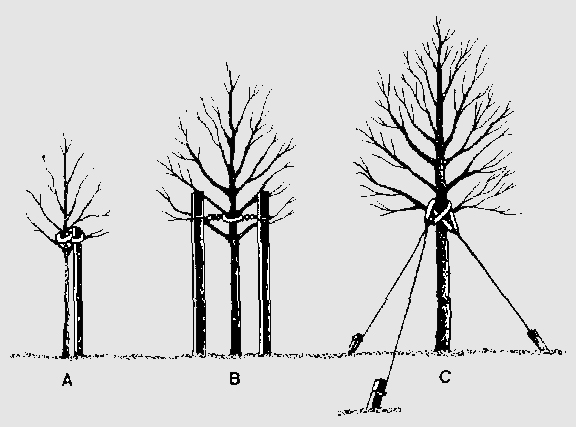
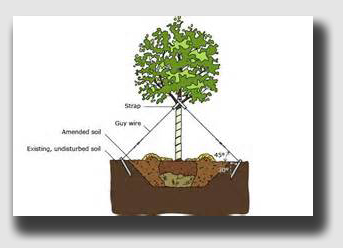
What? You question whether the government spends our dollars wisely? “Like what thoughtful investments will the government make? Well, how about all those spindly trees that cities and towns plant by the hundreds, pathetic things supported by one or more posts and guy wires, standing on tree lawns and in medians with not much more than a pathetic possibility that they might someday be majestic shade trees?  We bet the Donald could make a great deal on buying some of those (if they’re grown in America, of course).

Guyedtrees

Well, maybe those aren’t the best investment. Take what happened in Kenner, Louisiana, one day. One of these staked and wired sentinels fell in high winds, and the City of Kenner, Louisiana, sent one of its crews to repair it. They replanted it in the same hole and rewired it with the same guy wires — hardly a prescription for a tree with a future. But what a prudent use of existing resources!

Maybe not this time. As it turned out, the tree’s future after replanting could have been measured on a stopwatch. Within hours, it fell again in some more high winds, this time squarely onto Mrs. Sampedro’s car.

You’d think the Sampedros would have cheered the frugality of the City. They did not. Instead, the Sampedros sued, claiming that the City had negligently placed guy wires on the tree, and that anyway, the City should be strictly liable whenever one of its trees falls. The trial court granted summary judgment for the City.

Strict liability is a great thing for a plaintiff. He or she is generally relieved from proving any more than that something injured him or her, and that the defendant owned or controlled it. Negligence is irrelevant. But in 1995, the Louisiana legislature gutted strict liability where a municipality was a defendant. Even in strict liability cases, the lawmakers said, the plaintiff had to prove that the municipality had notice of the defect.

The Court here ruled that it didn’t matter that the Sampedros had an expert who testified that the guy wires should have been placed differently. There were no published guidelines on how to guy a tree, and anyway, the City had planted hundreds of trees in the year before the accident, with only about a dozen of them falling. That’s about a 4% failure rate for those math whizzes among us. Not bad: imagine if the airline industry only had 2,000 crashes per day out of its 49,000 flights.

But the numbers seemed right to the Court. High winds had knocked over the tree, it said, not bad guy wires. Of course, this begs the question of why guy wires were there to begin with, if not to keep trees from falling in high winds. But Mrs. Sampedro had to repair her own car. The City was not liable.

Sampedro v. City of Kenner, 989 So.2d 111 (La.App. 5 Cir., 2008). Rosa Sampedro was driving past the intersection of Williams Boulevard and Granada Street when a tall, slender oak tree fell into the path of her vehicle. Mrs. Sampedro, who was wearing her seat belt, braked quickly and struck her knees on the dashboard of her vehicle. The tree damaged her vehicle but no other vehicles were involved. A police officer said he thought that high winds caused the tree to fall. The Sampedros sued the City of Kenner and its insurer.

Stake1

Trial testimony showed that the day before the accident, a driver lost control of his pickup truck at the same intersection and knocked down the oak tree in question. The next day, a maintenance crew from Kenner’s Department of Public Works re-planted the tree, securing it with guy wires on three sides as it had been prior to the accident. The Public Works crew used the same guy wires attached to the tree and placed them close to the base so as not to interfere with the mowing of the grass on the median. A witness from the city admitted the alternative would have been to put the guy wires farther out and instruct the mowers to be careful. The Public Works Department had planted 200 to 300 trees in Kenner in the prior year, and the department had received about a dozen complaints of leaning or fallen trees since that time. It had never received a complaint regarding the tree in question.

The court found for the City, concluding it did not have notice of a defect before the accident so it was not strictly liable for Mrs. Sampedro’s damages. Even if it had been put on notice, the City was not negligent under for the placement of the tree in question. The Sampedros appealed.

Held: The City was not liable. Louisiana law provided two theories under which the City might be held liable for damages: negligence under Louisiana Civil Code § 2315 and strict liability under Civil Code § 2317. Under strict liability, a plaintiff was relieved of proving that the owner of a thing that caused damage knew or should have known of the risk involved. In 1985, however, the Louisiana Legislature eviscerated this distinction in claims against public entities by requiring proof of actual notice of the defect that causes damage, thus making the burden of proof the same under either theory.

The Sampedros argued the City of Kenner was negligent because of its “want of skill” in replanting the tree that had been struck by a car the previous night. They claimed the City was negligent because the Public Works Department improperly erected the tree by placing the guy wires too near the base of the tree and too low on the trunk of the tree. They presented an affidavit from a horticulturist stating that the City “improperly tied the guy wires too low on the trunk to provide adequate stability.” The record, however, contained no guidelines for guy-wire placement that were not followed by the City of Kenner or procedures that were lacking in its installation of trees. By 2003, the City had planted between 200 and 300 trees since 2000 in the same manner as the tree in question under the direction of a landscape architect and had received only a dozen complaints of leaning or falling trees.

Sometimes, the trees fall even when they're staked and guyed in place ... like this poor thing, which toppled after a careering drunk hit it.

Sometimes, the trees fall even when they’re staked and guyed in place … like this poor thing, which toppled after a careering drunk in a pickup truck drove over it.

The Court ruled that the Sampedros had not met their burden by merely arguing that the placement of the guy wires was improper, causing the tree to fall over in high winds.

As for the Sampedros’ claim that the City was strictly liable for their damages because it knew of the defective guy wires and failed to correct the defect, the Court ruled that the complaint was foreclosed by law. Under the 1995 amendment to Louisiana’s Civil Code, “no person shall have a cause of action against the public entity for damages caused by a condition under its control absent a showing of actual or constructive notice of the particular condition and a reasonable opportunity to remedy the defective condition.”

The Sampedros had to establish that the thing that caused the damage was in the custody of the defendant, that it was defective, and that the defendant had actual or constructive notice of the defect and failed to take corrective measures within a reasonable time. The law defines constructive notice as the “existence of facts which infer actual knowledge.”- The Sampedros contended that the City of Kenner was aware that the tree had been knocked down the night before this accident so it was aware that “the defective guy wire locations … had failed the night before the accident.” The Court didn’t buy it. The record supported the theory that the tree fell because of high winds the night before. The fact that a tree was knocked down and then re-planted “securely” did not constitute constructive notice of a defect in the guy wire or the tree’s placement.

– Tom Root

TNLBGray140407

Case of the Day – Friday, March 21, 2025

BRANCHING OUT

Crunch. And after the tree falls, the insurance company adds insult to injury.

Crunch. After the tree falls, the insurance company adds insult to injury.

An unhappy homeowner from urban Cincinnati, Ohio – we’ll call her Sylvia Glade – wrote to us about her neighbor’s oak tree. It seems that one of the oak’s branches was overhanging Sylvia’s home. The branch constantly dropped sticks, and the tree itself has been shedding branches regularly. As far back as the late 1990s, Sylvia thought the tree was dangerous and began asking her neighbor, whom we’ll call Elouise, to do something about it. A tree expert whom Sylvia hired five years ago to inspect her own trees agreed, saying the big oak should go.

The elderly Elouise was unmoved. She gave Sylvia permission to cut down the tree (as long as Sylvia paid for it), but then denied her the right to enter the property to do so. With the property line hard up against Sylvia’s house, Sylvia couldn’t even get a ladder under the branch to cut it away without Elouise’s cooperation (which, it is obvious by now, was not to be forthcoming).

But there’s good news: Sylvia doesn’t have to worry about that branch anymore. Sadly, there’s bad news, too: the branch is no longer a hazard because it fell on a windy day, crushing two floors of Sylvia’s house. Her neighbor’s insurance carrier said, “Oops, looks like an act of God! Not our responsibility.” Sylvia thinks God should be left out of things because the branch — which broke right at the trunk — looked very decayed.

Elouise’s insurance company says Elouise had no idea the tree wasn’t healthy. “She didn’t know, so we don’t owe,” the company’s mantra seems to be. Sylvia complains she told the neighbor on many occasions, and even the neighbor admits she saw decayed branches that had fallen from the tree. Once, Elouise even hired Sylvia’s son to haul away some large branches that the old oak shed in a windstorm. Sylvia asked us what duty of care Elouise owed her under Ohio law.

We start with the evolution of the Massachusetts Rule. Originally, the Rule held that a homeowner usually had no remedy against overhanging branches, other than his or her right to trim the branch back to the boundary line. That Rule has been limited in the last score of years or so, notably in the Virginia Supreme Court case of Fancher v. Faglia (2007) and the North Dakota Supreme Court holding in Herring v. Lisbon Partners Credit Fund, Ltd. (2012). Both of those courts ruled that while a property owner might be limited to self-help where an encroaching tree was only doing what trees do – that is, dropping leaves, nuts, berries, seedpods and twigs – where a tree becomes a nuisance, the owner of the tree is liable for removing it.

The relevant Ohio case is Nationwide Insurance Co. v. Jordan. In that case, Mrs. Jordan’s big maple tree fell, damaging the neighbors’ place. They sued Mrs. Jordan, claiming the tree trespassed.

No dice, the Court said. The trespass claim would only work if the tree were an absolute nuisance, and that isn’t the case. Mrs. Jordan would be liable, the Court held, if she actually knew the tree was dangerous or if she reasonably should have known the tree was dangerous. The Court decided Mrs. Jordan had neither kind of knowledge. The neighbor, although vociferous in her condemnation of the tree to anyone else in earshot, admitted that she never complained to Mrs. Jordan about it.

In Sylvia’s case, the insurance company is wrong. It’s not enough that the neighbor says she didn’t know the branch was dangerous. The other half of the question is this “should have known” business. Was Elouise on constructive notice that the tree was dangerous, that is, should she reasonably have known the decay was making the tree unsafe? If Sylvia is right, the evidence will show the neighbor was told many times the tree was a hazard. Elouise had witnessed the tree drop a number of large branches in the previous years. She had to hire Sylvia’s brawny son to clean up the mess. And Sylvia told her about the danger, even agreeing to pay for the removal of the tree herself.

Several Ohio cases (such as Wertz v. Cooper) suggest that neighbor Elouise – being an urban dweller – has a greater duty to inspect her trees than would a country squire. The evidence suggests Elouise had every reason to be concerned about the tree, and thus had a duty to inspect it to be sure it wasn’t about to collapse Sylvia’s house.

claim140414Elouise’s insurance company may want to rethink its position… and start looking for its checkbook.

Nationwide Insurance Company, et al. v. Jordan, 639 N.E.2d 536 (1994). This action arose between adjoining landowners as a result of the falling of a mammoth maple tree. The insurance company, which had paid the damages to its insured’s place, sued for trespass and negligence. The defendant tree owner testified that she had no notice the tree was susceptible to falling. Her tenant likewise testified that she had no notice of the tree’s danger. The defendant’s tree service manager testified that he worked on the property’s trees every two years and that the tree in question was not unsafe less than two years before it fell. The only person to testify to notice that the tree was rotten and likely to fall was the plaintiff’s insured.

The trespass claim arose because the plaintiff maintained that the falling tree trespassed on the insured’s property. The trial court made short work of this, holding that the only way liability could be imposed on Mrs. Jordan without proof of fault would be if the tree were an absolute nuisance. Healthy trees growing on real property, even urban real property, are not absolute nuisances, the trial judge said. Thus, the insurance company had to prove that Mrs. Jordan either knew or had constructive knowledge that the tree was likely to fall. The insurance company couldn’t prove that, so the trial court found for Mrs. Jordan. The insurance company appealed.

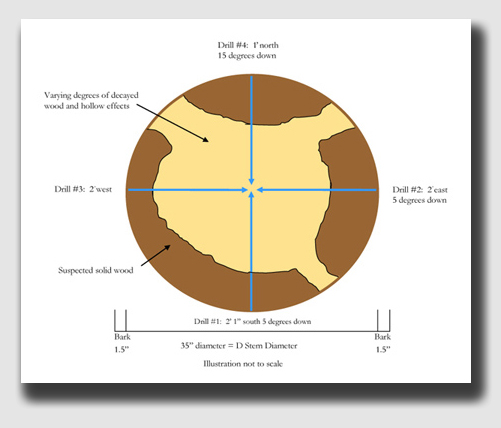
A diagram of one modern method of measuring a tree's decay. Elouise had any number of options - some cheap, some costly, some old school, some high-tech - for verifying the health of her big old oak.

A diagram of one modern method of measuring a tree’s decay. Elouise had any number of options – some cheap, some costly, some old school, some high-tech – for verifying the health of her big old oak.

Held: Mrs. Jordan was not liable. The Court said that there was no evidence that Mrs. Jordan actually knew or had any reason to know that the maple tree was in danger of falling. The neighbor complained that the tree’s propensity to fall was obvious to her, but she admitted he never told Mrs. Jordan. The Court observed that “[h]ad the plaintiff conveyed this knowledge to her neighboring landowner, the danger might well have been obviated, or, alternatively, the plaintiff’s hands would be clean and the defendant would have been on notice and resultantly liable for the fall.”

The Court further held that a tree on an owner’s property was not an “absolute nuisance,” and thus the adjoining landowner could not proceed merely upon strict liability against the owner. Instead, the neighbor was required to prove negligence. To recover on a theory of negligence arising out of a falling tree, a plaintiff’s evidence must establish that the defendant had actual or constructive notice of patent danger that the tree would fall. Here, Mrs. Jordan had neither actual notice nor constructive notice of the tree’s dangerous condition. Both Mrs. Jordan and her tenant testified that they had no notice of the tree’s danger, Mrs. Jordan’s regular tree trimming contractor worked on the property’s trees every two years and found that the tree in question was not unsafe not more than 24 months before it fell.

The Court ruled in favor of Mrs. Jordan.

– Tom Root

TNLBGray140407