Case of the Day – Wednesday, March 5, 2025

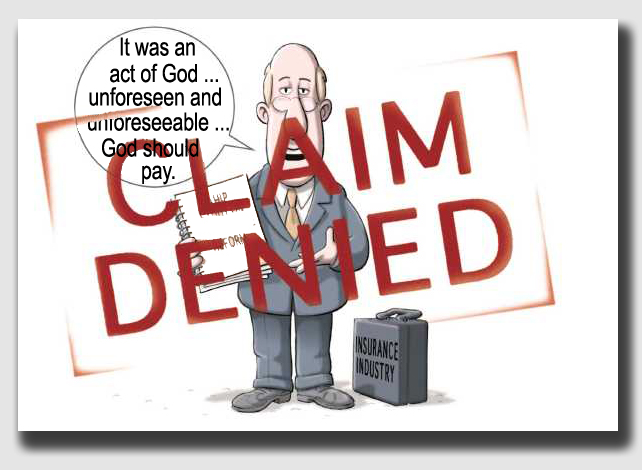
SOMEBODY HERE OWES ME MONEY

Mailbag140924We go to the mailbag!

Today we consider an interesting problem, this one submitted by alert reader Tracy of Pinebark, New York. Tracy reports that “our neighbor’s old dead tree came down across our parking area, totaling both our cars. Their insurance company denied the claim, saying that no one notified them and that it was a live tree. My landlady’s insurance company denied the claim, saying it wasn’t her tree, so she wasn’t responsible. She knew about the problem trees on their property and didn’t notify them. I need to get some sound legal advice and the NY state statutes to show first that the neighbor should have done something and that my landlady should have notified them that they should do something. Help!! Thanks so much.”

So, someone owes Tracy money.  But who?

Now this guy played a New York lawyer on TV - but Tracy needs to get one who, while not so photogenic, has a real New York license hanging on the wall.

Now this guy played a New York lawyer on TV – but Tracy needs to get one who, while not so photogenic, has a real New York license hanging on the wall.

First, our obligatory disclaimer, Tracy. We’re not New York lawyers, and for that matter, we don’t even play them on TV. For sound New York legal advice, you should consult a local attorney. Not Sam Waterston, either. But right now, get out your yellow pad and take down a few concepts to pass on to your solicitor.

There are two problems to contemplate here. First, what responsibility do the neighbors have? And second, what liability does your landlady have?

First, the neighbors: You reported that in the past year, a branch from the tree crushed your gazebo tent and another took out part of your landlady’s shed. You also said your landlady’s insurance company adjuster said it wasn’t her responsibility because the neighbors’ tree was dead. You told us that you agree with the dead tree analysis because you had an arborist inspect the tree and arrive at the same conclusion. In fact, you reported, the neighbors have had work done on the tree before, so they had certainly had constructive notice of its precarious condition. But you say the neighbors’ insurance company asserts the tree was alive, so the neighbors aren’t liable. You think the insurers may be dissembling.

An insurance adjuster lie? Horrors!

An insurance adjuster tell a lie? Horrors!

We are shocked, shocked we say, by the suggestion that insurance companies would prevaricate! Let’s consider New York law with respect to the neighbors. In Ivancic v. Olmstead, the Ivancic boy was hurt when a branch fell from the Olmsteads’ tree. The Court held that a property owner has no duty to consistently and constantly check all trees for nonvisible decay. Rather, the decay must be readily observable in order to require a landowner to take reasonable steps to prevent harm. If visible evidence of decay is present, the failure to inspect won’t be a defense.

We don’t think you’re quite correct in your mention of “constructive notice.” “Constructive notice” means the neighbors reasonably should have known. It’s much like if you’re sitting in your windowless cube at the office, and you see 10 co-workers get off the elevator, shaking water off umbrellas and removing water-spotted raincoats. You don’t have actual notice that it’s raining, but any reasonable person should be aware it’s probably raining just based on what you’ve observed. That’s constructive notice.

She's walking down the hall carrying a wet umbrella. Might it be raining outside?

She’s walking down the hall carrying a wet umbrella. Might it be raining outside?

Your neighbors, on the other hand, probably had actual notice, which you would have if you wandered into the corner office and saw the rain falling outside the window. Because the neighbors’ tree experts had removed one side of a “y” prior to the tree falling, they undoubtedly saw the decay and heard the arborists’ report. They didn’t have to know that the tree was dead — just that it was decaying in such a manner as to create a foreseeable risk.

If we were cynical, we’d suggest the neighbors’ insurance company is “gaming” you. Perhaps the adjusters figure that if it denies ten claims, some of the claimants – say four or so – will give up.  Six will press on.  By denying everything initially, the insurance company has cut its exposure from 10 claims to six. No claims examiner gets promoted for paying claims; we might suggest if we were cynics. Which we’re not.

Your local lawyer might want to collect a good, written report with photos from your certified arborist, add to it observations that the neighbors were on notice of the tree’s condition, and write to the neighbors’ insurance company. It would be good not to feed your lawyer before he or she contacts the carrier, so he or she is especially grumpy. If that doesn’t work, your avenue for relief is going to court. We would strongly urge you to use legal counsel rather than trying to represent yourself in small claims court. It’s not that we get a commission from referring you to counsel. If we did, we’d send you to our Uncle Fred (who’s a pretty good mouthpiece). But you hired an arborist, so you already know the value of hiring people who know what they’re doing. You shouldn’t stop now.

You also asked about going after your landlady for not telling the neighbors they had a problem. That’s a fascinating question, one we’ll take up tomorrow.

Ivancic v. Olmstead, 66 N.Y.2d 349, 488 N.E.2d 72 (1985). Ivancic was working on his truck in the driveway of his parents’ home in Fultonville. Since 1970, Olmstead had owned and lived next door. A large maple tree stood near the border of the two properties, and its branches extended over the Ivancic land. During a heavy windstorm, an overhanging limb from the tree fell and struck Ivancic, causing him serious injuries. He sued, maintaining that the branches hanging over his parents’ property constituted trespass and that the Olmsteads were negligent. The trial court refused to instruct on the trespass claim, but the jury found against the Olmsteads on negligence. The Olmsteads appealed.

Held:   The verdict against the Olmsteads was reversed. The Court held that no liability attaches to a landowner whose tree falls outside of his premises and injures another unless there exists actual or constructive knowledge of the defective condition of the tree. Ivancic made no claim that the Olmsteads had actual knowledge of the defective nature of the tree and presented no evidence that the Olmsteads had constructive notice of the alleged defective condition of the tree. None of the witnesses who had observed the tree prior to the fall of the limb saw so much as a withering or dead leaf, barren branch, discoloration, or any of the other indicia of disease which would alert an observer to the possibility that the tree or one of its branches was decayed or defective.

Tracy - watch the insurance adjuster's nose carefully while he or she explains that the tree was healthy.

Tracy – watch the insurance adjuster’s nose carefully while he or she explains that the tree was healthy.

The Court held that as to adjoining landowners, a property owner has no duty to consistently and constantly check all trees for nonvisible decay. Rather, the decay must be readily observable in order to require a landowner to take reasonable steps to prevent harm. Ivancic’s expert surmised that water invaded the tree through a “limb hole” in the tree, thus causing decay and a crack occurring below. But he admitted that the limb hole was about 8 feet high and located in the crotch of the tree, which would have made it difficult, if not impossible, to see upon reasonable inspection. Although, the Court said, there may have been evidence that would have alerted an expert that the tree was diseased, there was no evidence that would put a reasonable landowner on notice of any defective condition of the tree.

Thus, the fact that Mrs. Olmstead testified that she did not inspect the tree for over 10 years was irrelevant. On the evidence presented, even if she were to have inspected the tree, there was no indication of decay or disease to put her on notice of a defective condition so as to trigger her duty as a landowner to take reasonable steps to prevent the potential harm.

As for the trespass, the Court held that the Olmsteads didn’t plant the tree, and the mere fact that they allowed what appeared to be a healthy tree to grow naturally and cross over into the Ivancic parents’ property airspace could not be viewed as an intentional act so as to constitute trespass.

– Tom Root

TNLBGray140407

Case of the Day – Thursday, December 26, 2024

IT WAS SMALL WHEN I PLANTED IT

       It was such a safe vehicle … so it must have been the tree’s fault.

Times change and trees grow. That’s the lesson in today’s case.

Mr. Paredes was driving along I-805 in the driving rain, transporting his daughters in a superannuated Volkswagen with bald tires. He lost control of the VW and it slid down a bank, colliding with a eucalyptus tree located about 25 feet from an on-ramp. His 6- and 9-year-old daughters died in the accident, and he was badly hurt.

Normally, one would shake his or her head and observe that Mr. Paredes maybe was going too fast, or driving a junker in weather that was too bad, or perhaps engaging in risky conduct by relying on bald tires. But this being America, it had to be someone else’s fault.

Mr. Paredes blamed Caltrans, the California Department of Transportation. It was the agency’s fault because the trees were closer to the on-ramp than should be permitted by Caltrans standards, and in fact, shouldn’t have been there at all. Only problem was when the trees were planted, they complied with all standards. Even today, they were more than 30 feet from the road and 25 feet from the on-ramp. In other words, Caltrans may have set in motion the factors that caused the damage, but it didn’t create it negligently: the construction complied with all standards when built.

Under the law, the agency had to have actual or constructive knowledge of the dangerous condition. Splitting hairs, the Court found that Caltrans knew that the trees were planted where they were planted: after all, Caltrans had planted them. But, the Court said, Caltrans didn’t have knowledge that the trees, located as they were, were dangerous.

It strikes me as maybe parsing things a little too finely. But as has been said before, hard cases make bad law. Here, the jury may have gone off on a frolic, and — notwithstanding all of the expert testimony — figured that Mr. Paredes was a little too much at fault to be entitled to much. The Court of Appeals, which is legally disposed to defend a jury verdict anyway, may have agreed.

Driving 60 mph in a beater of a car with bald tires through heavy rain? So exactly who was negligent here? Some workers who planted a tree 15 years ago or the idiot who jeopardized his most precious possession — two little girls — in his haste to get somewhere?

Mr. Paredes claimed the trees were too close to the road ...

Mr. Paredes claimed the trees were too close to the road …

Paredes v. State, 2008 WL 384636, 2008 Cal. App. Unpub. LEXIS 1262 (Cal.App. Feb. 14, 2008). Marco Paredes was injured and his two daughters killed when Paredes lost control of his vehicle in heavy rain, after which the vehicle slid down an embankment and struck a eucalyptus tree. Paredes claimed that California Department of Transportation (Caltrans) employees created the dangerous condition by creating the slope and planting eucalyptus trees within 30 feet of the on-ramp without protecting them with guardrails, demonstrating negligence per se as well as placing Caldrons on notice of the defect.

The jury disagreed. It found that the property was in a dangerous condition at the time of the accident and was a substantial cause of Paredes’s injury and the death of his children, but it nonetheless concluded that the State did not have actual or constructive notice of the condition in sufficient time before the incident to protect against it. The jury also found the dangerous condition was not caused by a negligent or wrongful act or omission of a State employee acting within the scope of employment.

Paredes appealed.

Held: The verdict against Paredes was upheld. The Court of Appeals observed that California law held that except as provided by statute, a public entity is liable for injury caused by a dangerous condition of its property if the plaintiff establishes that the property was in a dangerous condition at the time of the injury, that the injury was proximately caused by the dangerous condition, that the dangerous condition created a reasonably foreseeable risk of the kind of injury which was incurred, and either a negligent or wrongful act or omission of an employee of the public entity within the scope of his employment created the dangerous condition, or the public entity had actual or constructive notice of the dangerous condition a sufficient time prior to the injury to have taken measures to protect against the dangerous condition.

The law, the Court said, plainly requires a finding that a public entity’s negligent or wrongful acts created a dangerous condition. It does not impose liability for the mere creation of a dangerous condition. In this case, the jury was instructed that the plaintiffs had to establish that negligent or wrongful conduct by a State employee acting within the scope of employment created the dangerous condition. The Court concluded that substantial evidence from State’s expert, as well as Paredes’ own experts, supported the jury’s finding that State did not act negligently or wrongfully in planting the accident trees on the slope along the accident site.

The State’s expert explained that the standard applicable at the time of the planting was Caltrans’s “clear zone principle,” which required only that trees be planted 30 feet beyond the traveled way of the I-805 mainline and 20 feet from the on-ramp. For that matter, Paredes’ expert agreed the accident tree was over 31 feet from the edge of the traveled way of the I-805, and 25 feet from the edge of the traveled way of the nearby on-ramp. Another expert explained that a fixed immovable object under the Caltrans clear zone standard was a tree having a trunk with eight-inch diameters or greater. The State’s expert testified that a guardrail would not have been required at the site of the accident tree applying standards prevalent at the time of trial.

The testimony of a single witness may be sufficient to establish substantial evidence, the Court said, and here, the jury as the exclusive judge of credibility was entitled to believe the defendant’s witnesses.

Someone should have told Mr. Paredes this ...

Someone should have told Mr. Paredes this …

The Court also concluded that substantial evidence supported the jury’s finding that the State did not have actual or constructive notice of the dangerous condition. A public entity has actual notice of a dangerous condition if it had actual knowledge of the existence of the condition and knew or should have known of its dangerous character. A public entity has constructive notice of a dangerous condition only if the plaintiff establishes that the condition had existed for such a period of time and was of such an obvious nature that the public entity, in the exercise of due care, should have discovered the condition and its dangerous character.

Here, State employees planted the accident tree as well as other trees on the embankment. But the Court refused to fault the jury’s finding that the public property was in a dangerous condition at the time of the accident required it to also find the State had notice of that condition. On the evidence here, the jury could have concluded that the planting of the young eucalyptus tree on the embankment was not dangerous in 1979 or 1980 when that project was completed but became dangerous only when its trunk grew to a larger diameter. Thus, while State may have had notice of the physical condition it had created — the presence of trees on the slope — the jury was entitled to conclude it did not have notice that the condition was dangerous. Substantial evidence supported such a conclusion, the Court held.

– Tom Root

TNLBGray140407

Case of the Day – Friday, August 16, 2024

BUILDING A CASE

Trees falling on vehicles never work out well for the vehicle.

Trees falling on vehicles never work out well for the vehicle.

A family’s Christmas – and for that matter, its future – was ruined on a rural Ohio one dark December night. 

Mike and Traci Reed were driving their two kids home from a Christmas celebration, Traci and her 5-year-old son were in her car, following her husband and their daughter in his, because they had picked up her vehicle at her office, where she had left it earlier. When Mike and daughter Samantha got home, Traci – who had been following them – was no longer behind them. Mike backtracked to find her car crushed by a tree. An EMS worker at the scene told him that his wife was dead and his son was in critical condition.

The wheels of justice ground slowly after the accident. Four years after the accident, the Ohio Court of Claims – which decides questions of the State’s liability – finally decided the question of the Ohio Department of Transportation’s liability. The case is of interest not just because of the dry reduction of human tragedy into the dispassionate allocation of responsibility (although it is interesting for that, too). The findings of fact and conclusions of law handed down by the magistrate (who is kind of an assistant judge) illustrate a well-structured case presented by the plaintiff and a poor rebuttal by ODOT.

One wonders why the State of Ohio didn’t just settle the case if it was going to make such a poor showing. Its own employees made the plaintiff’s case, and its expert pretty much just “phoned it in.” But from the plaintiff’s perspective, the case is a veritable “how to” try a claim of liability against a state agency in a “danger tree” case.

Reed v. Ohio Dept. of Transportation, 2012-Ohio-1244 (Ct.Cl., Mar. 23, 2012). Traci Reed and her young son, Conner, were driving northward through the hilly eastern Ohio countryside when a tree fell on their car. Traci was killed and her son was badly injured.

The tree that fell on Traci had shown as “substantial ‘lean’” in the year prior to the accident, and other trees on the same embankment had fallen during that time. Traci’s husband had observed this, but he had never complained to the Ohio Department of Transportation himself. Rather, he assumed that ODOT knew about the condition because road crews maintained the area throughout the years.

Phoneitin140520

The Court noted that ODOT had a general duty to maintain its highways in a reasonably safe condition for the traveling public, but it is not an insurer of the safety of its highways. ODOT may be held liable for damage caused by defects or dangerous conditions on state highways where it has notice of the condition, either actual or constructive. Actual notice exists where, from competent evidence, the trier of fact can conclude the pertinent information was personally communicated to or received by the party. Constructive notice is that notice that the law regards as sufficient to give notice and is regarded as a substitute for actual notice. Under Ohio law, in order for there to be constructive notice of a nuisance or defect in the highway, that nuisance or defect must have existed for such length of time as to impute knowledge or notice.

The plaintiff (who was the husband of the deceased wife and mother) presented several ODOT employees responsible for vegetation management and hazard abatement along the road in question. He established that some of the employees knew of the tree and believed it to be dangerous, and others – while not recalling the tree ­ – agreed when studying the accident photos that it was dangerous. Plaintiff called a surveyor to establish that the tree had fallen within the state’s right-of-way on the highway and put people on the stand who had lived close to the accident site and who testified that they had seen the tree and thought it was a hazard.

Additionally, the plaintiff produced an urban forestry consultant who was certified by the International Society of Arboriculture as an arborist. The forester prepared for his testimony by reviewing court documents, and photographs, visiting the accident site and examining cut-up tree remnants. He testified that the tree was a 50-year-old red oak and that it contained “reaction wood,” which forms to counter a leaning of the tree. He observed that the pith, the biological center of the tree, was off-center and that the tree’s roots in the embankment showed mild to moderate decay. He concluded that the tree was “hazardous” (as defined by the International Society of Arboriculture Hazard Rating System). His conclusion was based on the tree’s potential to fail and the potential to hit a target, because of its significant lean, its location in a sloped embankment with exposed roots, and the visually obvious deadwood in the crown of the tree. He testified that once a tree is “off vertical” with unstable soil, each progressive year increases the risk of failure. The tree was located on a steep slope, which compromised its stability.

The expert concluded that ODOT failed in its duty to remove a hazardous tree that had several significant defects readily observable from the roadway. He said it was “not a question of if, but a question of when” the tree would fall onto the highway.

ODOT presented the testimony of one of its employees who said he had removed the tree from the road after it fell, and he had been familiar with it prior to that time. He said he had never seen any condition that concerned him, and if he had, he would have reported it. ODOT also presented its own expert, who prepared his testimony in the same manner as did the plaintiff’s expert. He said that the tree has a “classic natural lean,” due to the fact that the tree was on the edge of the woods and it grew toward the sunlight. According to ODOT’s expert, the center of the tree was asymmetric, but there was no indication that the tree was dead or distressed. The State’s expert opined that the tree falling was “natural, it was not predictable.” However, on cross-examination, he conceded that the tree’s center of gravity was “probably not over the roots” and that a tree does not have to be dead, decayed, or diseased in order to be a hazard.

The finder of fact – in this case, a magistrate who heard the evidence for the court ­– found the Reeds’ expert to be more persuasive. The evidence about the tree’s shifted center of gravity carried the day; the court concluded that the red oak tree that fell on Traci Reed’s vehicle was a hazard to the motoring public. As for notice, although ODOT said it had received no complaints from either its staff or the public regarding the tree, two of its employees acknowledged that they were aware that the canopy of the tree extended over the roadway. The court found that ODOT had actual knowledge of the hazardous condition, which had existed for more than a year prior to the accident and which was within the State’s right-of-way.

Actofgod140520

An “Act of God?”

ODOT argued that the property owner where the tree was located was liable for the tree, but ODOT presented no evidence showing that the landowner had actual or constructive notice. As well, it argued that the tree fell due to an act of God. The court rejected that argument. The evidence showed that there was no weather that night that was sufficiently “unusual and overwhelming as to do damage by its own power” to make the falling tree an Act of God. Even if there had been an adverse weather condition on the night of the accident, the Court said, “it has also been the rule of law that, ‘[i]f proper care and diligence [on a defendant’s part] would have avoided the act, it is not excusable as the act of God.'” ODOT’s failure to exercise proper diligence resulted in the tree falling, the Court said, not an act of God.

ODOT was held liable for the falling tree and Traci Reed’s death.

And after considering the damages showing? The Court awarded the family $4 million.

– Tom Root

TNLBGray140407

Case of the Day – Thursday, April 25, 2024

THE WORTH OF A HUMAN LIFE

Tip O’Neill famously said that “all politics is local.” And he was right. We spent 15 years in the Washington, D.C., metro area, where what happens on Capitol Hill makes the local news. But the Nation’s Capital and all of its intrigue doesn’t begin to match the politics in a small town smack in the center of a small county in the Corn Belt.

When we would no longer

When we would no longer “pay any price,” we beat feet out of town.

We had a municipal election here not too long ago. The incumbent mayor and his challenger debated during the campaign, and the wannabe, a fresh face in politics, embarked on his usual riff about crime (which is not an especially serious problem around here). The local paper reported that the challenger asserted that

“there should be no limits when it comes to achieving a safe city. ‘I’m not worried about budgets,’ he said, regarding the way he would address the drug epidemic.”

Our hometown’s mayoral challenger is way too young to remember John Kennedy’s inaugural address in January 1961. JFK intoned that “we shall pay any price, bear any burden, meet any hardship, support any friend, oppose any foe, in order to assure the survival and the success of liberty.”

JFK wasn’t around to see the end game in Saigon when the North Vietnamese tanks rolled into town. Come to think of it, no Americans were around for it either, as they all had hightailed it out of town on the last chopper. Uncle Ho drove a stake into the Kennedy Doctrine’s heart that day. It turned out that no matter what the late President had said, we wouldn’t pay any price, wouldn’t meet any hardship, and so on. Guess what? There are limits to how much we’re willing to pay for anything.

Certainly not our hometown’s young mayoral hopeful. He doesn’t know that everything has a price point. He’ll give $10,000 extra to the police if that gets ten more drug dealers arrested. In fact, that sounds like a bargain. So how about $100,000 for 15 more? Or $1 million for 20 more? Or $10 million for 30 more? You get the idea – there comes a point when the price you’re paying for an incremental increase in city safety is just too much to justify for the benefit your extra money buys you. The neophyte’s inexperience shows: there are limits to what we town dwellers will pay for a safe city. There are always limits.

Is your PBJ sandwich worth the risk to some peanut-adverse kid somewhere? C'mon ... let's be socially responsible.

Is your PBJ sandwich worth the risk to some peanut-adverse kid somewhere? C’mon … let’s be socially responsible. Eat Vegemite instead.

All of which leads us to today’s case. A tree-related case may seem rather a prosaic illustration of this limiting principle, but the hard fact is that a dollar value on safety is set every day. People are always making demands on government or industry that are objectively unreasonable, but that they believe with all their hearts are absolutely necessary because of our own experiences.

It’s the old “cost of a human life” argument, as in, “How can you place a price tag on a human life?” We do, of course, all the time. If we didn’t balance lives against costs to society, we’d have no cars, airplanes, or even peanut butter. Think of the lives that would be saved! Without cars, over 34,000 lives would be saved annually in the U.S. alone. Hundreds of people a year die in aviation-related mishaps. And how about peanut butter? Is your guilty pleasure of peanut butter-banana sandwiches before bedtime worth the horrendous risk to countless children with peanut allergies? Tough policy questions, to be sure…

We have no better illustration of this than the  COVID-19 lockdown. Some predicted 2.2 million people would die unless we “flattened the curve.” If we take that figure, then subtract the 1 million who actually died, we may have saved 1.2 million people (more or less). The total cost of the coronavirus shutdown alone – not including healthcare – was $7.6 trillion. Also a “more or less” figure. And just like that, we have paid $6.33 million (more or less) for every obese diabetic couch-potato life saved. But who can put a price on human life?

In today’s case, Mrs. Lacasto didn’t lose her life, but she was a mite inconvenienced (and a bit injured) in her run-in with gravity in beautiful Santa Barbara, California. A piece of city-owned sidewalk had been pushed up by the roots of a city-owned ficus tree. Mrs. Lacasto tripped on the 1-inch rise and injured herself.

In the inevitable lawsuit — this was California, after all — she argued that the City’s tree maintenance program was deficient, and if it hadn’t been so defective she wouldn’t have fallen. The deficient maintenance program meant that the City had “constructive notice” of the damaged sidewalk, and it thus owed her a lot of money for her fall. The defect? Why, she argued, Santa Barbara only inspected trees once every five years! Horrors! If it had inspected them more often, she complained, the defective sidewalk caused by the ficus tree would have been discovered.

The numbers tell the story: the City employed four tree trimmers, who had responsibility for maintaining some 32,000 city trees along some 500 miles of sidewalks. The trimmers trimmed 5,500 trees a year and tried to get to each tree in town once every five years. The Court didn’t use a calculator, but it reckoned that the cost of inspecting sidewalks and trees every two years, as Mrs. Lacasto thought would be prudent, would have been “an onerous burden” on the City.

What’s more, the Court wisely observed, even if the ficus tree had been inspected every two years, it was sheer speculation that sidewalk rise would have been found to be a dangerous condition two years before Mrs. Lacasto’s fall.

Of course, the City could just replace the 500 miles of concrete sidewalk with rubber. The taxpayers clearly wouldn’t mind shouldering the cost: after all, who can put a price on Mrs. Lacasto’s shins?

cracked_sidewalk140401Lacasto v. City of Santa Barbara, Case No. 1188148, 2007 Cal. App. Unpub. LEXIS 8909, 2007 WL 3203036 (Cal.App., Nov. 1, 2007). On a sunny morning in September 2005, Mrs. Lacasto tripped on a rise in a sidewalk maintained by the City. The one-and-a-quarter-inch rise occurred at the expansion joint between two adjoining concrete panels. One foot to the south of the maximum rise, the elevation diminished to one inch. Mrs. Lacasto tripped at a point between the one-and-a-quarter-inch rise and the one-inch rise. Her toe caught on the sidewalk rise and she fell, breaking her left hip.

A search of the records of the City Division of Public Works showed that, before Lacasto’s trip and fall, the division had never received any complaints or information regarding the condition of the area of sidewalk in question. A search of the records of the City Risk Management Division also failed to disclose any reports, but the City’s Street Maintenance Manager said the sidewalk defect was a hazard and should have been repaired. Near the rise in the sidewalk, a ficus tree had been planted, and a city expert opined that the rise was caused by the tree root lifting the sidewalk. The lifting had also caused a crack in the sidewalk that ran perpendicular to the rise. Mrs. Lacasto’s expert said that ‘[r]aising of hardscape does not happen overnight but over a period of time …” The City admitted it “would have taken several years” for the tree root to grow to the point where it would cause a one and a quarter-inch rise in the sidewalk.

The only sidewalk inspection the City had was to charge all City employees to be on the lookout for hazards. No City employees were responsible for inspecting sidewalks for defects. The only way the City would know about a sidewalk hazard would be for a citizen or City employee to report it to the City. The City has over 500 miles of sidewalk area. About five years before Mrs. Lacasto’s fall, City tree trimmers performed maintenance on the ficus tree in question. The City employed four tree trimmers to maintain over 5,500 of the 32,000 City trees. The City’s current system for pruning trees was based on elapsed time, with every City street and park tree receiving some type of maintenance over five years. Mrs. Lacasto’s expert said the City’s trees should have been inspected at least every two years. The trial court found for the City on summary judgment. Mrs. Lacasto appealed.

Held: Mrs. Lacasto’s case was thrown out. She had based her complaint on the California Tort Claims Act, which provided that a public entity is liable for injury caused by a dangerous condition on its property if the entity had actual or constructive notice of the dangerous condition a sufficient time prior to the injury to have taken measures to protect against the dangerous condition. A public entity had constructive notice of a dangerous condition only if the plaintiff established that the condition had existed for such a period of time and was of such an obvious nature that the public entity, in the exercise of due care, should have discovered the condition and its dangerous character.

scalelife140401Mrs. Lacasto conceded that there was no evidence that the City had actual notice of the defective condition. Therefore, the City’s liability had to be predicated on constructive notice, which would be found to exist only that have existed for such a length of time and are of such a conspicuous character that a reasonable inspection would have disclosed them. In order to charge the city with constructive notice, Mrs. Lacasto had to show some element of notoriety to put the city authorities on notice as to the existence of the defect or condition and its dangerous character. An inch-and-a-half rise in the sidewalk, the Court said, simply wasn’t sufficiently conspicuous to put the city on constructive notice of the defect.

In view of the City’s more than five hundred miles of sidewalks and approximately 32,000 street and park trees, the Court said it would not have been reasonably practicable to impose such an onerous burden upon the City. Even if the ficus tree had been inspected every two years, as recommended by Mrs. Lacasto’s expert, the Court said it would be speculative whether the sidewalk rise constituted a dangerous condition two years before Mrs. Lacasto’s fall.

– Tom Root

TNLBGray140407