Case of the Day – Thursday, July 17, 2025

SUDOKU, ANYONE?

sudoku150624The story’s not new, but it’s new to us … four jurors playing sudoku during a drug conspiracy trial in Sydney, Australia, caused a mistrial to be declared after three months and 100 witnesses. We feel for them – a lot of what goes on in the courtroom is deadly dull, and occasionally, rather foolish as well.

This is one of those cases that makes our point. The Wisemans had an access easement along the boundary of their property and their neighbor, Mr. Greenfield. They sold some land to a developer, and part of the deal was that the developer would install a driveway. The developer hired a company to do it. After the job was done — and the driveway was indeed properly within the access easement — Mr. Greenfield said that some branches had been cut from a pine tree of his that stood along the drive.

This being America, he sued his new neighbors.

Mr. Greenfield had no witness that his neighbor-or anyone else, for that matter—had cut off the branches. He had no evidence that the tree’s value had been lessened (except for his own claim that his property was worth $25,000 less, pretty steep for a couple of pine boughs). But the lack of evidence didn’t bother him that much.

It did, however, bother the Court. First, the Court noted, the fact that the branches were missing didn’t mean the Wisemans had cut them. Second, the subcontractor for the developer wasn’t the Wisemans’ agent, even if he had cut the branches (and Greenfield had no evidence he had done so). Third, there was no unbiased evidence as to the extent of damage, and the Court wasn’t going to sit still to hear Mr. Greenfield speculate as to how much he ought to get in damages.

Most important for us students of the Massachusetts and Hawaii rules, the Court said even if the Wisemans had trimmed the branches back to the limits of the easement, they had the right to do so, and any damages Greenfield could recover were only for any extra branch that might have been taken beyond the property line.

This action was truly a waste of everyone’s time… Ready for a hand of Old Maid?

Sometimes, trimming trees next to driveways is a darn good idea ...

Sometimes, trimming trees next to driveways is a darn good idea …

Greenfield v. Wiseman, 2008 Conn. Super. LEXIS 198, 2008 WL 344606 (Conn.Super., Jan. 17, 2008). David Greenfield owned property next to that belonging to Carter and Eileen Wiseman. The Wisemans had access to a portion of their land only by means of a 20-foot-wide corridor running across the Greenfield land. When the Wisemans sold some of their land to a development company, part of the deal was that the developer would build a gravel driveway along the access corridor. The company hired a subcontractor to perform the task.

Shortly after the driveway was built, Greenfield sued, claiming breach of covenants and trespass. He abandoned all claims except the trespass claim, arguing that the development company and the Wisemans trespassed while the driveway was being built, by cutting some limbs off a large pine tree on the corner of his land. No one witnessed the actual cutting of the trees, nor was any testimony presented from those who actually cut the limbs. The uncontradicted testimony was that neither of Wisemans personally cut any of the branches or witnessed the actions of those responsible. Nevertheless, Greenfield claimed damages under a Connecticut treble damage statute.

Held: Greenfield’s case was thrown out. The Court observed that the essential elements which must be proven to sustain an action for trespass were ownership or possession of an interest in land by the plaintiff, an invasion, intrusion or entry by the defendant affecting the plaintiff’s exclusive possessory interest, done intentionally, and causing direct injury. Here, the Court said, the evidence failed to show any intentional intrusion or invasion of Greenfield’s possessory interest by either of the Wisemans. The treble damage statute does not provide a new or independent cause of action. Instead, it merely provides a measure of damages applicable in situations where compensatory damages, absent the statute, would be recoverable.

This was just a stupid case to bring in the first place ...

This was just a stupid case to bring in the first place … That’s why Greenfield lost. Because he was a knucklehead, and his lawyer wasn’t any better …

But Greenfield said that the Wisemans were liable because the subcontractor was their agent. In order to demonstrate the existence of an agency relationship between the defendants and the unknown individual or individuals who cut the limbs from the plaintiff’s pine tree, the Court held, the evidence must establish a manifest action by the principal that the agent will act for him, an acceptance by the agent of the undertaking, and an understanding between the parties that the principal will be in control of the undertaking. Here, neither of the Wisemans controlled the means by which the driveway would be installed, and both were unaware of the name of the person or entity engaged by the development company to perform the actual installation work. There was no agency relationship.

Finally, Greenfield produced no evidence concerning the value of the cut branches, and all of the photographs revealed a healthy pine tree that did not have to be cut down as a result of the branches being removed. Besides, the Court said, the Wisemans or anyone acting as their agent would be fully justified in cutting any portion of the branches which extended beyond the stake onto their property.

– Tom Root
TNLBGray140407

Case of the Day – Monday, June 2, 2025

HEIDI AND THE TERRIBLE, HORRIBLE, NO GOOD,
VERY BAD (WATCH OUT FOR THAT TREE!) DAY

Remember Alexander? He didn't have anything on Heidi ...

Remember Alexander? He had nothing on Heidi …

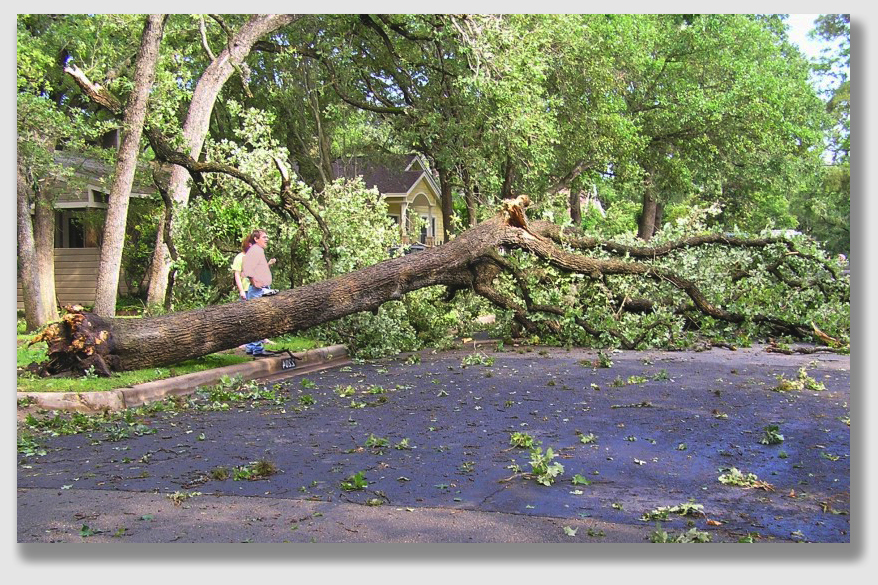
Ever have one of those days? Heidi Cordeiro knows how you feel. Heidi had a terrible, horrible, no good, very bad day once. First, she heard a crash in her driveway and looked out to see that a tree belonging to the hospital next door had fallen, crushing her car. Then, she hurried out to assess the damage, only to fall over the branches of the downed tree, spraining her ankle. At least she didn’t have to hobble far to the emergency room.

She of course sued the hospital — who doesn’t like suing hospitals? — for the damage to her car and her ankle. Her case essentially was that the tree fell, so of course, the hospital was negligent. Unfortunately, that just set her up for another bad day.

The Superior Court made short work of Heidi’s suggestion that landowners were strictly liable for falling trees. It correctly pointed out that in Connecticut, a plaintiff must plead (and of course later prove) that the landowner knew or should have known that the tree was diseased, decayed, or otherwise dangerous.

Heidi couldn’t do that, and her case was dismissed. We’ll never know whether liability would have extended to paying for Heidi not being careful where she stepped.

She had a bad day.

Cordeiro v. Rockville General Hospital, Inc., 44 Conn.L.Rptr. 58 (Conn.Super., Aug. 21, 2007). A tree belonging to the Rockville General Hospital fell into the yard and driveway of the premises Heidi Cordeiro was renting, damaging her car. When she went out to look at the damage, Heidi tripped and fell on the branches of the tree. She sued her landlord and the Hospital, alleging negligence and asking for damages for her personal injury and for damage to her car. Rockville Hospital moved to strike the count against it arguing that the plaintiff has failed to state a claim.

Held: Rockville Hospital was dismissed as a plaintiff. The Hospital argued the facts alleged in Heidi’s complaint did not give rise to any duty owed by the Hospital to the plaintiff, the falling tree was caused by an “act of God” for which the Hospital was not liable, and the falling tree was an open and obvious defect that the plaintiff should have avoided.

Fallen_treeThe Court observed that the essential elements of a negligence action were duty, breach of duty, causation, and actual injury. Here, Heidi Cordeiro alleged that “a tree … belonging to the defendant … fell upon the yard and driveway area of the premises where the [plaintiff] resided [as a tenant], and when the plaintiff went out to look at the damage to the vehicle parked in her driveway, she was caused to trip and fall over the branches of said tree, causing her to sustain … injuries.”

In early times, there was generally no liability for trees falling on neighboring lands, an obvious practical necessity when land holdings were very large and in a primitive state, but the rule made little sense in urban settings. In urban areas like the City of Rockville, there is generally found to be a “duty of reasonable care, including inspection to make sure that the tree is safe.” It is now generally recognized, particularly in urban areas, that a tree owner has a duty to an adjoining landowner to exercise reasonable care to prevent an unreasonable risk of harm presented by an overhanging dead branch in a residential area. Thus, an invitee of commercial premises may recover for injuries sustained from the fall of a defective or unsound tree growing on adjoining premises, including trees of a purely natural origin.

George of the Jungle could have been Heidi's doppelgänger.

George of the Jungle – Heidi’s doppelgänger?

However, the owner of a tree is liable for injuries from a falling tree only if he knew or reasonably should have known the tree was diseased, decayed, or otherwise constituted a dangerous condition. A landowner who knows that a tree on his property is decayed and may fall and damage the property of an adjoining landowner is under a duty to eliminate the danger. However, a landowner does not have a duty to consistently and constantly check all trees on his property for non-visible rot. Instead, the manifestation of decay must be visible and apparent. In   Connecticut, if the tree condition is one of which the defendant would become aware through reasonable exercise of its faculties, the defendant is chargeable with notice.

In this case, Ms. Cordeiro had to plead and prove facts showing that the Hospital knew or reasonably should have known the tree was diseased, decayed, or otherwise constituted a dangerous condition, or other such proof of actual or constructive notice, to state a claim. But she made no such allegation here. Instead, she only alleged that the Hospital “was responsible for the proper maintenance of its trees and was responsible to assure that its trees did not fall into adjoining properties, causing injury.” The law does not require landowners to continuously examine their trees for invisible decay to ensure they do not fall. Instead, it requires them to take action when there is actual or constructive notice of a dangerous natural condition.

– Tom Root

TNLBGray140407

Case of the Day – Monday, December 2, 2024

STAYIN’ ALIVE

Last Friday, pro se plaintiff Caryn Rickel survived the arguments advanced by the slick lawyers representing her bamboo-lovin’ neighbors, the Komaromis. The trial court held that her complaint about the Komaromis’ invading bamboo was a claim on which she could get relief.

But subsequently, the trial court bought the Komaromis’ argument that because Caryn admitted that they planted the bamboo in 1997 and Caryn sustained damage in 2005, she had at most until 2008 to sue for trespass and nuisance.

The reason, of course, is the statute setting limitations, that is, deadlines by which certain legal complaints have to be brought. The Komaromis’ lawyer probably shouted “a-ha!” when he found that Caryn had admitted she was damaged five years before she sued. Certainly, the trial court shouted it when it agreed with the Komaromis and dismissed Caryn’s lawsuit as untimely.

But for a novice, Caryn was pretty sharp. She took an appeal, arguing that every day the kudzu-like bamboo grew was a whole new affront to her property, and thus the trespass was continuing. The appeals court agreed, although not without a lot of confusing differentiation between continuing trespasses and continuing nuisances, on the one hand, and permanent trespasses and permanent nuisances on the other.
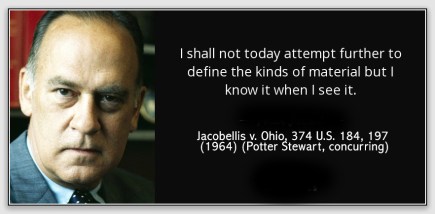
I’m not sure I see the distinction myself. It may be that the confusing definitions won’t help, leaving it like obscenity: we can’t describe it, but we know it when we see it.

For now, Caryn survives a second near-dismissal experience, and she stays alive to fight the bamboo fight.

Rickel v. Komaromi, 144 Conn. App. 775, 73 A.3d 851 (Ct.App. Conn. 2013). After plaintiff Caryn Rickel won the right to go forward on her claim that the Komaromis’ bamboo had invaded her property, the Komaromis won summary judgment against her in the trial court. Caryn claimed nuisance and trespass. The trial court ruled that because the bamboo began its inexorable crawl across Caryn’s backyard in 2005, her suit filed in 2010 was well beyond the three-year statute of limitations for such actions.

Caryn appealed, arguing that the repeated bamboo encroachment from the Komaromis’ property to her property constituted a continuing nuisance and a continuing trespass, and thus the statute of limitations did not start running.

The Komaromis lived next to Caryn Rickel. In July 1997, the Komaromis planted phyllostachys aureosulcata, a type of invasive running bamboo, along their corner property line, but they did not put up any barrier to contain it. The bamboo encroached upon Caryn’s property. In 2005, during the installation of a patio at the corner of Caryn’s property, a landscaper used a backhoe and dump truck in order to eradicate the bamboo, and then installed steel sheathing along this corner property line in order to protect the patio. Despite the steel sheathing, the bamboo had reentered the area by July 2010.
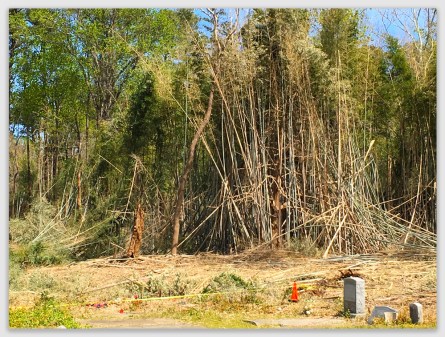
Caryn sued the Komaromis four months later, bringing claims of nuisance, trespass and negligence. She alleged in her complaint that the bamboo “further and repeatedly encroached” on her property and continued to do so. The Komaromis raised a statute of limitations defense on all of the claims against them.

The trial court granted the Komaromis’ motion, concluding that the applicable statutes of limitations had provided Caryn with a maximum of three years from “the date of the act or omission complained of” to bring suit. Because there was no dispute that the Komaromis planted the bamboo in 1997 or that Caryn “discovered the actionable harm in 2005…” Because Caryn did not commence her action against the Komaromis until 2010, the court held that each count of the action was time-barred as a matter of law.

On appeal, Caryn claimed that the trial court failed to address the factual question of whether a nuisance or trespass is continuing or permanent requires the denial of a summary judgment motion made solely on statute of limitations grounds. She claims that this is because, for statute of limitations purposes, each instance of nuisance or trespass in a continuing nuisance or trespass creates a new cause of action, while a permanent nuisance or trespass involves a discrete occurrence of nuisance or trespass from which the applicable statute of limitations begins to run.

Held: The Komaromis’ bamboo was engaged in a continuing trespass, and thus Caryn’s lawsuit was timely.

Caryn’s complaint alleged that the Komaromis’ bamboo repeatedly has encroached on her property, resulting in a continuing nuisance and a continuing trespass. For example, in her nuisance count, she alleged the Komaromis “have planted this nonnative invasive bamboo with no containment of any kind. They have continued to cultivate it and freely allow it to aggressively spread to… adjacent properties… This has been continual nuisance to my use and enjoyment of my land.”

Similarly, Caryn complained the Komaromis “have allowed this nonnative invasive bamboo to aggressively spread from their original planting which was directly on my property line to all three of the [neighboring] properties. The infestation is massive… and has continuously been aggressively invading my land.” Caryn’s continuing nuisance and trespass allegations, the Court said, therefore factor into the question of whether the court correctly concluded that the defendants met their summary judgment burden with respect to the plaintiff’s nuisance and trespass claims, as framed by her complaint.

The Court noted that recent cases treat trespass as involving acts that interfere with a plaintiff’s exclusive possession of real property and nuisance cases as involving acts interfering with a plaintiff’s use and enjoyment of real property. The essentials of an action for trespass are (1) ownership or possessory interest in land by the plaintiff; (2) invasion, intrusion or entry by the defendant affecting the plaintiff’s exclusive possessory interest; (3) done intentionally; and (4) causing direct injury…” Because it is the right of the owner to exclusive possession that is protected by an action for trespass, usually the intrusion of the property must be physical. Thus, the Court said, in order to be liable for trespass, one must intentionally cause some substance or thing to enter upon another’s land.”

The statute of limitations for trespass actions in Connecticut is General Statutes § 52-577, which provides: “No action founded upon a tort shall be brought but within three years from the date of the act or omission complained of.” The only facts material to the trial court’s decision on a motion for summary judgment must be the date of the wrongful conduct alleged in the complaint and the date the action was filed.

A “private nuisance,” on the other hand, “is a nontrespassory invasion of another’s interest in the private use and enjoyment of land… The law of private nuisance springs from the general principle that it is the duty of every person to make reasonable use of his own property so as to occasion no unnecessary damage or annoyance to his neighbor… In order to recover damages in a common-law private nuisance cause of action, a plaintiff must show that the defendant’s conduct was the proximate cause of an unreasonable interference with the plaintiff’s use and enjoyment of his or her property. The interference may be either intentional… or the result of the defendant’s negligence.” A permanent nuisance is one that inflicts a permanent injury upon real estate, while a temporary nuisance is one where there is but temporary interference with the use and enjoyment of property. Whether a nuisance is temporary or permanent is ordinarily a question of fact.”

The statute of limitations for a nuisance claim based on alleged negligent conduct is General Statutes § 52-584: “No action to recover damages for injury to real property, caused by negligence, or by reckless or wanton misconduct shall be brought but within two years from the date when the injury is first sustained or discovered or in the exercise of reasonable care should have been discovered, and except that no such action may be brought more than three years from the date of the act or omission complained of…” An injury occurs when a party suffers some form of actionable harm.

Nuisance and negligence may share the same statute of limitations, depending on the factual basis for the nuisance claim, but otherwise, they are completely distinct torts, different in their nature and in their consequences. A claim for nuisance is more than a claim of negligence, and negligent acts do not, in themselves, constitute a nuisance; rather, negligence is merely one type of conduct upon which liability for nuisance may be based. “Nuisance,” the Court said, “is a word often very loosely used; it has been not inaptly described as a catch-all of ill-defined rights. There is perhaps no more impenetrable jungle in the entire law than that which surrounds the word nuisance… There is general agreement that it is incapable of any exact or comprehensive definition.”

In applying these principles to the plaintiff’s claims, the Court said, “summary judgment may be granted where the claim is barred by the statute of limitations… as long as there are no material facts concerning the statute of limitations in dispute.” But here, the date of the act or omission and the date when Caryn first sustained or discovered injury depend on whether the alleged nuisance and trespass are continuing or permanent. Caryn argued that this is because, for statute of limitations purposes, each instance of nuisance or trespass in a continuing nuisance or trespass situation creates a new cause of action, whereas a permanent nuisance or trespass situation involves a discrete occurrence of nuisance or trespass from which the applicable statute of limitations begins to run.

The applicable statute of limitations runs differently for a continuing nuisance or trespass than it does for a permanent nuisance or trespass. For limitations purposes, the Court ruled, a permanent nuisance claim accrues when the injury first occurs or is discovered while a temporary nuisance claim accrues anew upon each injury. Therefore, in the case of a continuing trespass, the statute of limitations does not begin to run from the date of the original wrong but rather gives rise to successive causes of action each time there is an interference with a person’s property. If there are multiple acts of trespass, then there are multiple causes of action, and the statute of limitations begins to run anew with each act.

On the other hand, the Court said, if a trespass is characterized as permanent, the statute of limitations begins to run from the time the trespass is created, and the trespass may not be challenged once the limitation period has run.” Whether a nuisance is deemed to be continuing or permanent in nature determines the manner in which the statute of limitations will be applied. If a nuisance is not able to be abated, it is permanent, and a plaintiff is allowed only one cause of action to recover damages for past and future harm. A nuisance is deemed not abatable, even if possible to abate, if it is one whose character is such that, from its nature and under the circumstances of its existence, it will probably continue indefinitely.

A nuisance is not considered permanent if it is one that can and should be abated. In this situation, every continuance of the nuisance is a fresh nuisance for which a fresh action will lie, and the statute of limitation will begin to run at the time of each continuance of the harm.

Similarly, with trespass, the typical trespass is complete when it is committed; the cause of action accrues, and the statute of limitations begins to run at that time. However, when the defendant erects a structure or places something on or underneath a plaintiff’s land, the invasion continues if the defendant fails to remove the harmful condition. In such a case, there is a continuing tort so long as the offending object remains and continues to cause the plaintiff harm. Each day a trespass of this type continues, a new cause of action arises.”
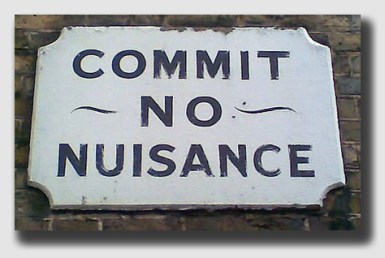
Here, Caryn alleged facts to support her claims that the Komaromis’ conduct in planting the bamboo and then failing to control its growth resulted in a continuing nuisance and a continuing trespass. In seeking summary judgment, however, the Komaromis referred only to three dates to establish the untimeliness of Caryn’s claims — the 1997 planting of the bamboo, the 2005 installation of the patio, and the 2010 commencement of the action – ignoring Caryn’s other allegations.

By conducting its summary judgment analysis only on the basis of the 1997, 2005 and 2010 dates, the trial court did not address the allegations of the Komaromis’ failure to control the underground spread of the bamboo rhizomes and the above-ground spread of the bamboo on Caryn’s property. This continuing underground and above-ground activity on Caryn’s property created a genuine issue of material fact about whether the statutes of limitations were a bar to all of her claims encompassed in her trespass and nuisance counts.

Whether the alleged nuisance and trespass by the rhizomes and bamboo were continuing or permanent presents a genuine issue of material fact with respect to the plaintiff’s trespass and nuisance counts. The trial court erred in rendering summary judgment without addressing the plaintiff’s continuing nuisance and continuing trespass allegations, because, by doing so, the court overlooked genuine issues of material fact about whether the alleged nuisance and trespass were continuing or permanent, and thus whether the applicable statutes of limitations had run on the plaintiff’s nuisance and trespass claims.

– Tom Root

TNLBGray140407

Case of the Day – Friday, November 29, 2024

BEHIND THE BAMBOO CURTAIN

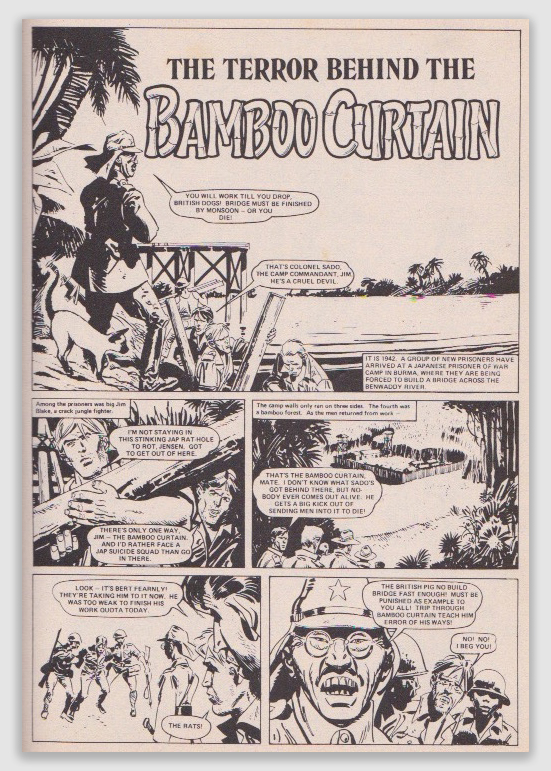
I admit to being old enough to remember the Bamboo Curtain, the Cold War political demarcation between the Communist states of East Asia – particularly the People’s Republic of China – and the capitalist and non-Communist states of East, South and Southeast Asia.

It seemed for a while that the Iron Curtain, Cactus Curtain, Bamboo Curtain and others of that ilk were now relics of unpleasant history. But we still have nine-dash lines, 38th parallels, Crimea, the Donbas, and other examples of countries acting badly, so we’re hardly out of the woods yet. Let’s not get started on Russia and Ukraine

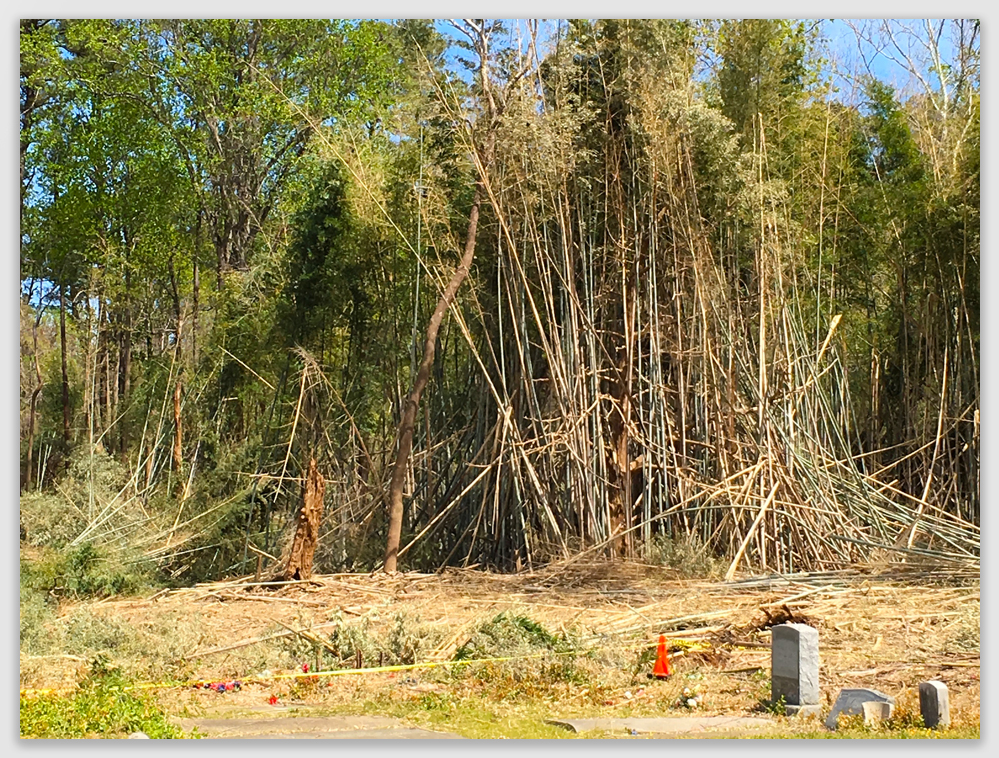
But “bamboo curtains,” literally enough, are still with us. Every so often, I am reminded of that when I come across a case involving a stand of bamboo, encroachment that usually started when some well-meaning homeowner (who maybe anticipates an attack of hungry pandas) plants a little stand of bamboo in his backyard.

The problem is that the owner has a “little stand of bamboo” only for a minute or so. The stuff is pernicious and fecund. Bamboo, which is a giant grass and not a tree, has fairly been called one of the world’s most invasive plants. Once established, it is next to impossible to control. The sprouts that shoot up from the ground each spring can grow 12 inches a day. The underground roots of common running “fishpole” bamboo, which can easily reach 15 feet tall, can travel as far as 20 feet or more from the original clump. The experts suggest you control it by digging a two-foot deep trench and lining it with aluminum. Or lead. Or titanium. Or concrete. But whatever you use, leave a portion of it sticking up above ground, because bamboo roots can jump barriers like Superman leaps buildings.

Bamboo: the Asian carp of grasses. As one homeowner site puts it: When you need a concrete bunker to contain a plant, you know you’re in trouble.

Bamboo is not a very good idea. Unless, of course, you’re like Mike and Roberta Komaromi, who simply did not give a rip that their bamboo stand was galloping across neighbor Caryn Rickel’s lot. Usually, we complain about people foolish enough to represent themselves, but here, we grudgingly admit that pro se litigant Caryn was holding her own.

The Komaromis were smug, arguing that they had no duty to corral the bamboo. Well, as is usually the case when hard facts collide with justice, courts find a way to recompense the victim. So it did here, ruling (and right on the Bay State’s south border, too) that the Massachusetts Rule cut no ice in Connecticut.

Rickel v. Komaromi, 2011 Conn. Super. LEXIS 5254 (Superior Ct. Conn., July 13, 2011): Caryn Rickel, bringing her case without a lawyer, complained that her neighbors Mike and Roberta Komaromi planted bamboo in their yard without any plan for containment. As a result, her backyard has been overrun by invasive bamboo.

Mike and Bobbi, who did hire a lawyer, filed a motion to strike the complaint as legally insufficient. That is to say, they claimed that if everything Caryn said in the complaint was true, she still was entitled to no relief.

Mike and Bobbi complained that Caryn had not alleged they had any legal duty to her.

Held: Connecticut would follow the Hawaii Rule, and under that Rule, Caryn had adequately claimed her neighbors had a duty to her which they violated with the bamboo. “The essential elements of a cause of action in negligence are well established,” the Court said, “duty; breach of that duty; causation; and actual injury.” There can be no negligence without there first being a cognizable duty of care.

The test for the existence of a legal duty of care, the Court said, entails (1) a determination of whether an ordinary person in the defendant’s position, knowing what the defendant knew or should have known, would anticipate that harm of the general nature of that suffered was likely to result, and (2) a determination, on the basis of public policy analysis, of whether the defendant’s responsibility for its negligent conduct should extend to the particular consequences or particular plaintiff in the case.” (Internal quotation marks omitted.

So, how did Caryn do? First, she alleged the Komaromis planted bamboo without any plan for containment and watched while the non-native plant fully invaded Caryn’s backyard. She also alleged the Komaromis failed to take action to alleviate the situation even though the bamboo growth was readily visible. This, the Court ruled, sufficiently alleged that the damage to Caryn’s property was reasonably foreseeable to the Komaromis.

Second, the Court held, the Komaromis’ responsibility for their negligent conduct should extend to Caryn on public policy grounds. The Court looked at (1) the normal expectations of the participants in the activity under review; (2) the public policy of encouraging participation in the activity, while weighing the safety of the participants; (3) the avoidance of increased litigation; and (4) the decisions of other jurisdictions. Considering these four factors, the Court said, “supports the conclusion that the court should impose a duty on a property owner to refrain from planting bamboo without a containment plan in order to avoid harming an adjacent property.”

First, property owners are normally expected to refrain from engaging in conduct that would cause damage to an adjacent property. Although landowners may reasonably expect some level of discomfort from having adjacent property owners, it does not mean that property owners should reasonably expect bamboo belonging to an adjacent landowner to fully invade their property.

For the second factor, as a matter of public policy, it is desirable to promote property ownership, and the ability to live free of the concern of encroaching vegetation from adjacent properties directly impacts this goal. Allowing a landowner to cultivate his or her land “should be fairly balanced against the rights of adjacent landowners, and imposing a duty on the cultivating landowner whose vegetation harmfully invades another’s property would be in accord with public policy.”

Turning to the third factor, it is true that imposing a duty like this one could encourage other property owners suffering from the same problem to bring similar actions. On the other hand, however, establishing such an affirmative duty may deter potential defendants from engaging in this type of activity.

Finally, the Court rejected the Massachusetts Rule. That rule provides that a defendant has no duty to prevent his trees from causing damage to his or her neighbor’s property and that “a landowner’s right to protect his property from the encroaching boughs and roots of a neighbor’s tree is limited to self-help, i.e., cutting off the branches and roots at the point they invade his property.” The Hawaii Rule, by contrast, grants the landowner a remedy for damages caused by the encroaching vegetation of an adjacent property owner.

The Court adopted the Hawaii Rule, it said, for two main reasons. First, the Rule serves as a gatekeeping mechanism in that it imposes a requirement of actual harm to the property, discouraging trivial suits while simultaneously providing a cause of action for deserving plaintiffs. The Massachusetts Rule, by comparison, “deprives deserving plaintiffs of any meaningful redress when their property is damaged.” Second, the Massachusetts Rule is not “realistic and fair… Because the owner of the tree’s trunk is the owner of the tree,” the Court opined, “we think he bears some responsibility for the rest of the tree. It has long been the rule in Hawaii that if the owner knows or should know that his tree constitutes a danger, he is liable if it causes personal injury or property damage on or off of his property… Such being the case, we think he is duty bound to take action to remove the danger before damage or further damage occurs.”

In addition, the Court said, Caryn had linked the breach of the Komaromis’ duty, the damages she suffered and the causation between the breach and the damages suffered. She alleged that the Komaromis planted the bamboo and that their subsequent inaction as to the bamboo growth “directly caused the harmful condition and continual damage” to her property. Accordingly, the Court said, Caryn has successfully set forth a cause of action in negligence.

So does Caryn win an injunction to get the bamboo eradicated? Stay tuned Monday…

– Tom Root

TNLBGray140407

Case of the Day – Friday, September 27, 2024

CHUTZPAH, CONNECTICUT STYLE

So you like your wild mountain property, with its clean, sparkling streams and majestic trees? You like to think that it will always look as pristine and undeveloped as it does right now. So when you finally sell it, you place some restrictions on the deed, so that there won’t be any double-wide trailers, pre-fab A-frame chalets or tar paper shanties erected smack in the middle of heaven-on-earth.

Seems reasonable, doesn’t it? But eventually, the people you sold the land to sell it to someone else, and the someone else has a really good lawyer. “This is Connecticut!” the solicitor tells his client. “We can beat this restriction!”

And lo and behold, that’s just what he does. It seems in Connecticut, the terms on which you were originally willing to sell your land don’t much matter. In today’s case, the heirs of the original nature-lovin’ owner suffered a lot of angst when they finally sold off most of the lake property. But the buyer won them over, even agreeing to a development restriction on part of the land, in order to preserve its natural character. A few years later, that buyer sold the land to the Williams, who had been convinced by their lawyer that the restriction wasn’t enforceable. The new owners promptly sued for a declaratory judgment that the restriction was void.

The Connecticut court agreed that it was. It fell outside of the three traditional categories of restrictions that ran with the land. Even so, the Court said, it could be enforced under equitable principles. But it wouldn’t do that, the Court said, because it would be so unfair to the buyers of the land. After all, the Court said, it wasn’t clear who the beneficiary of the restriction was or who could enforce it. Therefore, the Court held it would be unfair to the buyers because — and we’re not making this up — they “bought the property because they thought the restriction was unenforceable. If the restriction is found enforceable, the property could only be developed for recreational purposes and would be far less valuable. Devaluing property without a clear beneficiary is not reasonable.”

The decision certainly turns common sense on its head. Where a seller is unwilling to sell unless a restriction is placed on the land, it’s hard to argue that the continuing restriction harms marketability. It’s more marketable than if the seller doesn’t sell at all. And for that matter, should it be the law’s business to promote marketability over a seller’s free will?

It seems safe to imagine that as conservation — and especially forest preservation because of “climate change” concerns — is of increased public policy importance, the notion of “marketability” and the free right to develop may become less of a holy grail. As it probably should.

Williams v. Almquist2007 Conn. Super. LEXIS 2841, 2007 WL 3380299 (Conn. Super., Oct. 30, 2007). Robert Bonynge bought a 150-acre tract of land at Lake Waramaug in 1898, which he later conveyed away in several parcels. Although some of the original tracts were sold in the 1930s, and some of the heirs owned certain parcels outright, a 105-acre tract was eventually sold to Lee and Cynthia Vance by the Bonynge heirs in 2001. The negotiations for that sale were a difficult and emotional process, with the primary concern of the heirs to conserve the natural condition of the property. The Vances agreed to give some of the land and a conservation easement to the Weantinoge Heritage Land Trust. Also, they agreed to a restriction on 8.9 acres of the property: “There shall be no construction or placing of any residential or commercial buildings upon this property provided that non-residential structures of less than 400 square feet may be constructed for recreational or other non-residential purposes and further provided that the property may be used for passive activities such as the installation of septic and water installations, the construction of tennis courts, swimming pools and the construction of facilities for other recreational uses.”

David and Kelly Williams bought part of the 8.9-acre tract in 2005 from the Vances, still subject to the restriction agreed upon in February 2002. Shortly thereafter, the Williams entered into an agreement with the Vances in which the Vances waived their right to enforce the restriction. The Williams then sued for declaratory judgment against the Bonynge heirs, asking the court to declare the restriction in their deed void and unenforceable.

Held: The restriction on the Williams’ land is unenforceable. The Court noted that restrictive covenants generally fall into one of three categories: (1) mutual covenants in deeds exchanged by adjoining landowners; (2) uniform covenants contained in deeds executed by the owner of a property who is dividing his property into building lots under a general development scheme; and (3) covenants exacted by a grantor from his grantee presumptively or actually for his benefit and protection of his adjoining land which he retains. Here, the restrictive covenant did not fall under the first category because it originally arose from the sale of the Bonynge heirs’ land to the Vances, not from an exchange of covenants between adjoining landowners. Likewise, the second category did not apply. Rather, that category applies under a general developmental scheme, where the owner of property divides it into building lots to be sold by deeds containing substantially uniform restrictions, any grantee may enforce the restrictions against any other grantee. But in this case, the Court ruled, the evidence suggested that a common plan or scheme did not exist.

conservThe restrictive covenant did not fall under the third category either. Where the owner of two adjacent parcels conveys one with a restrictive covenant and retains the other, whether the grantor’s successor in title can enforce, or release, the covenant depends on whether the covenant was made for the benefit of the land retained by the grantor in the deed containing the covenant, and the answer to that question is to be sought in the intention of the parties to the covenant expressed therein, read in light of the circumstances attending the transaction and the object of the grant. The question of intent is determined pursuant to the broader principle that a right to enforce a restriction of this kind will not be inferred to be personal when it can fairly be construed to be appurtenant to the land. In that case, it will generally be construed to have been intended for the benefit of the land since, in most cases, it could obviously have no other purpose. The benefit to the grantor is usually a benefit to him or her as an owner of the land, so if the adjoining land retained by the grantor is benefitted by the restriction, it will be presumed that it was so intended.

Here, three of the Bonynge heirs retained property near the 105-acre tract but did not own property directly adjoining or overlooking the restricted tract. As such, the Court said, there was no presumption that the restriction was meant to benefit their land. The deed didn’t say as much: in fact, the deed didn’t indicate that the restriction was meant to benefit anyone at all. With no mention of beneficiaries in the deed and no testimony regarding the intent of the retaining landowners, the Court held that the restriction could not fall under the third category.

The trial court said it could properly consider equitable principles in rendering its judgment, consistent with Connecticut’s position favoring liberal construction of the declaratory judgment statute in order to effectuate its sound social purpose.

Although courts before have approved restrictive covenants where they benefited a discernable third party, the Court here found that the restriction was not reasonable because it had no clear beneficiary and limited the marketability of the property. The possible beneficiaries were the Bonynge heirs, only those heirs who retained property in the Lake Waramaug area, the other residents in the Lake Waramaug area, the Vances, or simply nature itself. Without a discernable beneficiary, the Court ruled, it was difficult to determine who could enforce the restriction and for how long.

The restriction also unreasonably limited the marketability of the property. Although restrictions are often disfavored by the law and limited in their implication, restrictive covenants arose in equity as a means to protect the value of property. Here, no identifiable property was being protected by the restriction. The plaintiffs bought the property because they thought the restriction was unenforceable. If the restriction is found enforceable, the property could only be developed for recreational purposes and would be far less valuable. Devaluing property without a clear beneficiary, the Court said, was not reasonable.

– Tom Root

TNLBGray

Case of the Day – Wednesday, September 4, 2024

THE MORE BOUNDARY TREE YOU OWN, THE FEWER RIGHTS YOU HAVE

The rule regarding ownership of boundary line trees is a strange and malleable one. We often call it a tenancy in common, but it really is something different. In a tenancy in common, one of the owners can partition the property, taking a piece of it and leaving other pieces for the others. The owner can force a sale of the property.

An owner of an undivided piece of the tree can’t partition the tree, cannot sell the tree, and cannot destroy the tree. In fact, under the generally-accepted boundary tree rule, neither landowner can do anything to the tree without permission of the other.

Thus, a tree growing on Landowner A’s property, but with branches overhanging Landowner B’s property can have its branches trimmed, hacked and cut by Landowner B back to the property line. But the day the tree’s trunk crosses the property line, suddenly Landowner B can’t take the puniest bough with the permission of the other.

A landowner has more right to trim an encroaching tree when the trunk is entirely in someone else’s yard than she does when a part of the trunk is in her own yard. In other words, the more of the tree you own, the fewer rights you have with respect to the tree.

That does not make sense.

Strangely enough, about the only place that recognizes how nonsensical that result can be is Connecticut, a state where a lot of what goes on is illegal, such as selling pickles that don’t bounce, disposing of used razor blades, or crossing a street while walking on one’s hands. In a case that is now over 110 years old, the Connecticut Supreme Court held that where a tree is commonly owned – and the Court did not want to call it a tenancy-in-common – each owner retains Massachusetts Rule-type right to trim overhanging branches. It is only the trunk that is sacred.

Robinson v. Clapp, 32 A. 94, 65 Conn. 365 (Supreme Court Connecticut, 1895). Through a convoluted chain of purchases, sales, partitions and events, the boundary line dividing two urban residential properties in turn-of-the-century New Haven, Connecticut, belonging to John Robinson and John Clapp bisected a 40-year-old maple tree.

The tree was valuable to Mr. Robinson as an ornamental tree that also served to shade a part of his premises. Mr. Clapp intended to build a house to extend down along the boundary line for a distance of 58 feet from a point about 6 feet from said Bradley Street, which would require removing the part of the maple tree in his yard. The proposed tree cutting would kill the tree.

At the time both men bought their respective properties, there was no fence or other visible sign of demarcation marking the boundary line. However, Mr. Clapp had previously lived within 100 feet of the premises and was fully acquainted with the boundaries.

The trial court granted Mr. Robinson an injunction preventing Mr. Clapp “from such interference with the tree mentioned in the complaint as will destroy or injure the same…”

Mr. Clapp appealed.

Held: Mr. Clapp could be enjoined from cutting any of the trunk, but he was free to trim all limbs that overhung his property.

The Court held that trees that stand wholly within the boundary line of one’s land belong to him, although their roots and branches may extend into the adjacent owner’s land. However, the adjacent owner may lop off the branches or roots of such trees up to the line of his land.

However, if the tree straddles the boundary line, the Court observed, prior law held that “the same is the property in common of the landowners. And neither of them is at liberty to cut the tree without the consent of the other, nor to cut away the part which extends into his land if he thereby injures the common property in the tree.”

The Court thought this was balderdash. “It must be apparent that the very nature of things differentiates such a so-called common interest in a tree from an ordinary tenancy in common, either of real or of personal property. In the case of a tree like the one in question, yielding no fruit, of trifling value for wood, if cut, of no value while standing, except for ornament or shade, what relief by any remedy, legal or equitable, provided for ordinary tenants in common, can a part owner of such tree, to whom its continued existence is of no advantage but an injury, obtain? Can he call upon the other part owner to account for the benefit which he has derived from such ornament or shade? Could he, in this state, procure a partition of the growing tree as real estate, under Gen. St. § 1304? And if he did, would not the lines of his own and the adjacent land divide the tree as they did before, leaving the rights of the parties identical in effect with what they were before? Could he obtain a sale of the tree under section 1307, either as real estate or personal property, that would carry the right to have it destroyed or removed? If it be conceded, as it must be, that he could do none of these, it will be evident, we think, that the tenancy in common in a tree is of a peculiar nature, if there be such a tenancy at all.”

Rather, the Court concluded that each of the landowners upon whose land any part of a trunk of a tree stands has an interest in that tree equal to the part of the tree which is upon his land. Each owner retained the right to demand that the owner of the other portion use his part as not unreasonably to injure or destroy the whole.

The Court decided that this right did not include any hacking away at the trunk. Instead, the Court ruled that “where the branches of a tree extend over an adjacent owner’s land, he may lop them off up to the line, even though that was practically to the trunk of the tree.” Thus, “the injunction should not extend further than to restrain the defendant from cutting any portion of the trunk and any further cutting of the branches or of the roots than he might lawfully have done had the trunk stood wholly upon the plaintiff’s land, but reaching to the defendant’s line.”

– Tom Root

Case of the Day – Friday, June 21, 2024

DUMB ADULT STUNTS

bikefall140418All right, we’re going to use the summer to get into shape. One-two-one-two. Time to blow out the mental cobwebs that form from hot days, warm nights, cool beer and cold ice cream. Time for a little sober reality.

We’ll start with a simple warm-up – considering two dumb adult stunts. The first stunt was Tom Alexson’s ill-advised decision, when he saw a tree branch laying on his bike path, to ride by and smoothly push it out of the way with his hand as he passed. Kids, please don’t attempt this at home! Of course, it didn’t work, and he crashed into and over the limb, hurting himself badly.

The second dumb adult trick was Tom’s unwillingness to accept the blame for his own stupidity. He didn’t, of course. Who does, these days? Instead, he sued the White Memorial Foundation, which owned the land and museum that stood on it.

The Foundation defended under the Connecticut Recreational Use Act, asking that the case be dismissed because no fee was charged for use of the Foundation property, and Tom was on the land for a recreational purpose. Tom’s crafty mouthpiece argued that the Foundation didn’t qualify because it charged a fee to enter the museum. But the Court ruled that the Foundation didn’t charge Tom to ride his bike around the grounds, and that was good enough. After all, he didn’t fall in the museum attic.

Aha140418A-ha, the lawyer cried, riding a bike isn’t listed as a specific recreational activity in the statute. Horse hockey, the Court said. The statute clearly doesn’t limit recreational activities to the one listed. Lance Armstrong, after all, thinks bike riding is very recreational (and for years thought that taking banned drugs was not doping).

Yeah, argued Tom’s lawyer, but the Foundation’s failure to warn Tom of the danger was willful or malicious. Prove it, the Court said, with something more than Tom’s rather slanted opinion that it was so.

The case was tossed, as it should have been. Dumb adult stunts, indeed.

.Alexson v. White Memorial Foundation, Inc, 2008 Conn. Super. LEXIS 567, 2008 WL 803423 (Conn.Super.Ct., Mar. 5, 2008). Workmen for the White Memorial Foundation were notified that a tree had fallen across a roadway on Foundation property. The workmen began to cut up the fallen tree, but failed to complete the task before Tom Alexson – who was riding his bicycle on the White property – saw a part of the tree still blocking the roadway and decided that he could push the obstruction aside as he passed. Instead, he collided and badly hurt himself.

Tom sued, alleging that the Foundation was careless and negligent in only partially removing the branch from a portion of the roadway and that the Foundation’s failure to warn or guard against the obstruction was willful and intentional. The Foundation moved for summary judgment on the ground that General Statutes §52-557g, known as the recreational land use statute, made the Foundation immune.

Held: The Foundation was protected by the Connecticut Recreational Use Act. The Act provides that a landowner is immune from liability for simple negligence where: (1) the defendant is the owner of the land in question; (2) the defendant has made all or part of the land where the plaintiff was injured available for use to the public free of charge; and (3) the plaintiff, at the time that he was injured, was using the land for a recreational purpose.

Tom argued that there was a genuine issue of material fact as to whether the Foundation made the land available to the public free of charge. In addition, Tom alleged that there was a genuine issue of material fact as to whether the exception to the recreational land use immunity statute, codified in §52-557h, applied to the defendant because, as alleged by the plaintiff, the defendant willfully and maliciously failed to warn against a dangerous and defective condition.

The Foundation said the land on which Tom was injured was always available for recreational use to the public without charge. Tom admitted that on the day he was injured, he was not charged by the Foundation and conceded that he had been charged a fee only when he went inside the museum. The Court found that there was thus no genuine issue of material fact that the defendant Foundation made the part of the property on which Tom was injured available, free of charge, to the public.

biketree140418The final prong of the statute required that the land be available for recreational purposes. Section 52-557f(4)(a) provides a list of activities that constitute a “recreational purpose,” and the list doesn’t include bicycle riding. The Court observed, however, that, the statute clearly stated that “[r]ecreational purpose includes, but is not limited to, any of the following …” It was evident, the Court held, that the enumerated activities set forth in the statute were not exclusive.

Riding a bicycle, the Court said, fell within the penumbra of activities considered “recreational” for the purpose of the statute. Therefore the Foundation satisfied the third prong of the statute. Thus, the defendant is entitled to statutory immunity unless Tom could show the Foundation had engaged in a willful or malicious failure to guard or warn against a dangerous condition, use, structure or activity. The Court said the phrase “willful or malicious” meant conduct that must encompass both the physical act proscribed by the statute and its injurious consequences.

Willful misconduct has been defined as intentional conduct designed to injure for which there is no just cause or excuse. Its characteristic element is the design to injure either actually entertained by the defendant or implied from the conduct and circumstances. Alexson’s conclusory statements in his complaint, coupled with the conclusory statements in his affidavit (the admissibility of which the Court found to be dubious at best) did not raise a genuine issue of material fact. The Court said the complaint was “bereft of the factual predicate necessary to lead a reasonable person to infer that the workmen intended to injure passersby, and this plaintiff in particular, by their actions.”

The dismissal of this ridiculous suit was upheld.

– Tom Root

TNLBGray140407