Case of the Day – Tuesday, October 14, 2025

BEING THERE

The governmental immunity doctrine, which exempts governments and their employees from liability when negligent acts occur during the performance of a discretionary government act, is pernicious.

The strictures seem rather artificial. If a tree is rotten and the municipal employees ignore it, the municipality may be immune from liability when the tree falls on some poor woman’s car (see case below). But if the employees come out to cut it down, and a branch falls on the same woman’s car, the municipality is liable. It would seem that the prudent municipal employee would wisely choose to do nothing except collect a paycheck.

What? You say that’s what most of them do anyway? Shame on you. Go to any DMV office, and you will see how mistaken you are.

But even the governmental immunity doctrine has its exceptions, fortunately enough. In Connecticut, if the employees can foresee that the victim is “an identifiable person” who would face “imminent harm” if they perform a discretionary act negligently, or negligently fail to perform a discretionary act, then the victim is able to defeat immunity and collect.

But what is an “identifiable person?” Ah, the devil’s in the details.

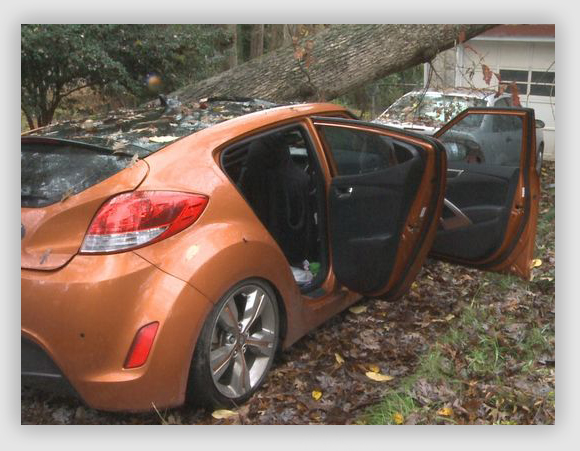
DeConti v. McGlone, 88 Conn. App. 270, 869 A.2d 271 (Ct.App. Conn. 2005). Maria DeConti was driving down Maple Street in New Britain when a rotted tree fell on her car, crushing it. The tree was located in front of 281 Maple Street, about five houses from Maria’s residence, on property controlled by the City of New Britain.

Maria sued Bob McGlone, the superintendent of parks for the city, and the Parks and Recreation Commission. The defendants filed a motion to strike on the ground that their actions were insulated by governmental immunity. The court granted their motion.

Maria appealed.

Held: Bob and the Commission enjoyed governmental immunity.

Generally, a municipal employee is liable for the negligent performance of ministerial acts but has a qualified immunity in the performance of governmental acts. Governmental acts are performed wholly for the direct benefit of the public and are supervisory or discretionary in nature. In contrast, ministerial refers to a duty that is to be performed in a prescribed manner without the exercise of judgment or discretion.

A municipal employee’s immunity for the performance of discretionary governmental acts is, however, qualified by three recognized exceptions: (1) where the circumstances make it apparent to the public officer that his or her failure to act would be likely to subject an identifiable person to imminent harm; (2) where a statute specifically provides for a cause of action against a municipality or municipal official for failure to enforce certain laws; or (3) where the alleged acts involve malice, wantonness or intent to injure, rather than negligence.

The first exception has been expanded to apply not only to identifiable individuals but also to narrowly defined identified classes of foreseeable victims. However, the Court ruled, a person driving a vehicle who is struck by a falling tree limb is not an identifiable victim for the purpose of governmental immunity. It would be different, the Court ruled, if the tree had fallen on Maria’s house rather than on her car. But Connecticut law is clear that “would not be [an] identifiable person[], or an identifiable class of foreseeable victim[], if [she] were either [an] unfortunate person driving in a vehicle or pedestrian walking along a sidewalk who happened to be struck by a falling tree limb.”

Maria argued her case was different because she was required to drive on Maple Street as a result of the location of her house and, as such, she was an identifiable victim. But Connecticut courts have consistently denied relief absent a requirement that the plaintiff be present at the location where the injury occurred. Thus, a parent watching a son play at a high school football game was held not to be required to be at the game and a parent injured while visiting her child’s school voluntarily was not required to be there.

“Accepting as true all facts alleged in the amended complaint,” the Court said, “the plaintiff has failed to show that she is an identifiable victim or a member of a narrowly defined identified class of victims as required to fit within the first exception to the governmental immunity doctrine. Because that is the only applicable exception, the plaintiff’s amended complaint was legally insufficient, and the motion to strike properly was granted.”

– Tom Root

TNLBGray140407

Case of the Day – Wednesday, October 8, 2025

GREAT EXPECTATIONS

Yes, my dear, 2-1/2 baths, cathedral ceilings throughout, and a three-car garage!

“Yes, my dear, 2-1/2 baths, cathedral ceilings throughout, and a three-car garage!”

Great expectations? What the Dickens might those be?

This week, being the first week of the new Supreme Court term (appropriately named “October Term 2025”), perhaps we expect great decisions from that august body. Perhaps, this being the eighth business day of Fiscal Year 2026 for our dear Uncle Sam (and the eighth day of the shutdown), we expect great bipartisan progress on reopening the government, infrastructure and tax reform, the debt ceiling and prudent spending. Of course, if we expect those things, we would be wishing as well that marijuana be made legal in all 50 states, because we’d have to be on dope to really think any of that is going to happen in Washington, D.C.

No, the “great expectations” we’re talking about are the great expectations that new homebuyers so often harbor. After all, what are developers selling if not dreams? Real estate people don’t even pretend that they’re doing anything but. Look at the housing bubble. The last one, not this one.

Well, it’s gone on ever since the dawn of our great nation. Today’s case is an illustration of what can happen in the fallout of a dream. A subdivision planned in Meriden, Connecticut, in the 1930s, included a number of beautiful streets that were never built. Nevertheless, the Doucettes and their predecessors had always used what would have been a street to get access to the garage at the back of their narrow lot… at least until their neighbor announced he was going to build a motorcycle gang hangout where the driveway lay, and it would have to go.

The Doucettes didn’t think much of this idea. Matters ended up in court, where the Doucettes were held to have an implied easement which was roughly the size of the proposed street (to the extent handy for their ingress and egress). The neighbor complained that the Doucettes could have built a driveway from the front of the house, but the Court said that didn’t matter. Because buyers are buying the dream, they have a legitimate expectation that streets are going to be built. It’s enough that the original maps as recorded in the land records showed the street and the Doucettes found it “reasonably necessary for the use and normal enjoyment” of their land.

The Doucettes had a serviceable driveway.

The Doucettes had a serviceable driveway.

Doucette v. Burnham, 2007 Conn. Super. LEXIS 1937, 2007 WL 2363856 (Superior Ct. Conn., Aug. 2, 2007). The Doucettes owned a house on a narrow lot, so narrow that the garage behind the house was sited sideways, with the garage doors facing the property of their neighbor to the east, Mr. Burnham. The lots were on a development that had been laid out in the 1930s, and which planned a street behind the homes to be known as Francis Street. Francis Street was never built, let alone dedicated to public use, but ever since the homes were built, a driveway located along what would have been Francis Street connected the Doucette’s garage to the public thoroughfare, Carl Street. This driveway lay on the part of Burnham’s land that would have been Francis Street (if there had been a Francis Street).

Prior to the dispute, Jeffrey Doucette took care of the portion of Burnham’s land that would have been Francis Street, trimming the trees, removing leaves, seeding, fertilizing and mowing the lawn, plowing the snow, and adding processed stone to the already existing driveway. Over many years, Burnham’s would-be Francis Street land had been used by the Doucettes and others in the neighborhood for parking cars and as an area to walk, play, and ride bicycles.

Burnham, however, wanted to build a clubhouse ... you know, just to have a few friends over every now and then.

Burnham, however, wanted to build a clubhouse … you know, just to have a few friends over every now and then.

Friction began when Burnham bought a large neighboring lot and made plans to develop it commercially. He told the Doucettes he planned to build a clubhouse for a motorcycle gang right where their driveway presently lay, a proposal that did not meet with approbation. Burnham proceeded to tear out the wide drive that had been there, straightening it along the centerline of the unbuilt Francis Street (which put a sharp 90-degree turn in the drive) and narrowing it to 8 feet in width with a berm on either side. The Doucettes could have installed a driveway down one side of their home (where there was about 9 feet between the house and the boundary), but they would have had to take out three mature trees to do so, and the drive would have been quite narrow.

The Doucettes sued Burnham, seeking an injunction and a ruling held they had an easement implied by the original plat maps to use the right-of-way that would have been Francis Street.

Held: The Doucettes were entitled to an injunction. The Court held that the issue of whether a map creates an easement by implication is a question of law. Under an equitable estoppel theory, an implied easement exists when the owner reasonably anticipated the use of the streets disclosed on the map that would prove beneficial to him. Also, a lot owner may acquire an implied easement by virtue of a map under an implied covenant theory, if the anticipated use of the street served as an inducement to the purchase of the lot. Under either theory, the owner doesn’t have to show that such an easement is necessary in order for the implication of its existence to arise, but rather only must show that the easement is highly convenient and beneficial for the enjoyment of the portion granted.

The reason that absolute necessity is not essential, the Court held, is because fundamentally such a grant by implication depends on the intention of the parties as shown by the instrument. It is not strictly the necessity for a right of way that creates it. Thus, the Court said, in determining whether an easement by implication has arisen, the Court examines (1) the intention of the parties, and (2) whether the easement is reasonably necessary for the use and normal enjoyment of the dominant estate.

Here, the Court said, although the Doucettes could have had access to their garage over their own property by removing three trees and repositioning or restructuring the building, access over the Francis Street route is highly convenient and beneficial to the Doucettes for the normal enjoyment of their land. Based upon a review of the maps and deeds entered into evidence, as well as the circumstances giving rise to the easement in this case, the Court found that the Doucettes had an implied easement for ingress and egress to their garage over Burnham’s land on Francis Street. The rule in Connecticut is that while some benefit to the dominant estate must be shown to establish the right to an easement implied from a map, generally, the easement itself is not limited to such as is reasonably or materially beneficial to the grantee. The court must consider any language on a map or other instrument as a matter of law and consider that legal language in light of the surrounding circumstances involving the facts of the case.

meant150630The implied easement in this case arose from documents recorded in the land records. Therefore, the Court held, it must follow the intentions of the grantor of the implied easement at the time it was granted, even though the circumstances have changed significantly since 1939 when the original map was recorded. Based upon the maps, deeds and circumstances that existed at the time Map 388 was created in 1939, the Court said, Francis Street was clearly intended to provide ingress and egress to the Doucettes’ garage, as though it was a public highway. The physical scope of the easement for ingress and egress was clearly established by the description of Francis Street on the map and recorded in the land records. Therefore, to the extent that the Doucettes had used Burnham’s land on Francis Street in the past to access their garage, they had not overburdened their right to do so as the owners of the dominant estate.

However, the Court said, because the original purpose of the easement over Francis Street was to provide ingress and egress to the Doucettes’ garage, the scope of their use of the easement must be limited to the normal and natural activities that may be conducted on a residential roadway, including parking and for ingress and egress to the Doucette property by foot or bicycle. But roadways, the Court held, are not intended to be used as a playground or for conducting other social activities. Therefore, the easement was not intended to provide the Doucettes with access to a park or to open space, for their general use without limitation, so kids could not be playing on it.

Tom Root
TNLBGray140407

Case of the Day – Tuesday, September 23, 2025

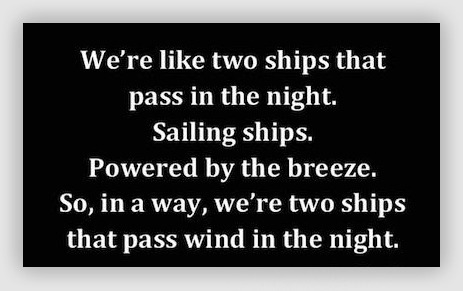
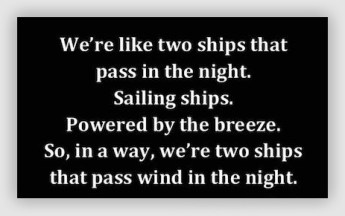
SHIPS PASSING IN THE NIGHT

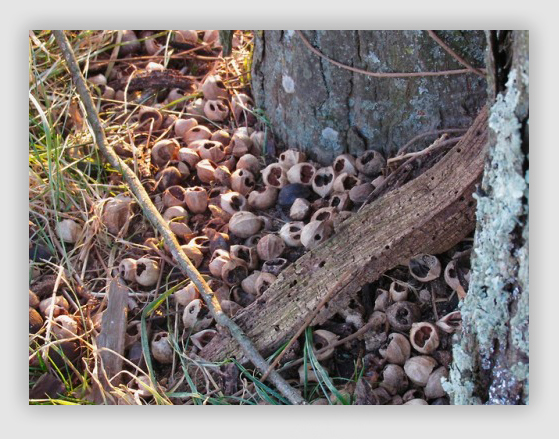
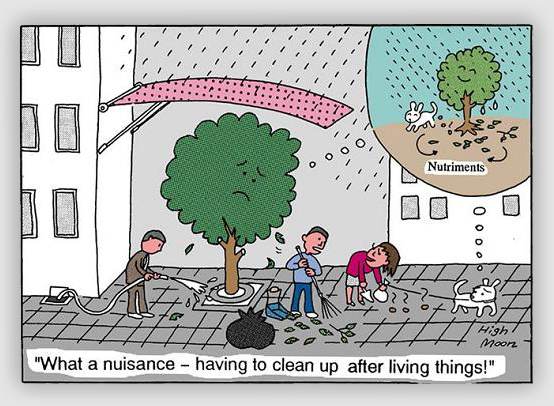
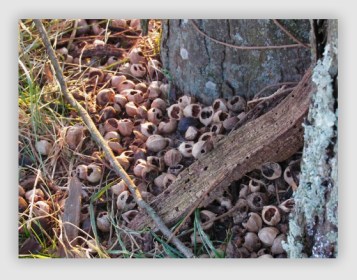
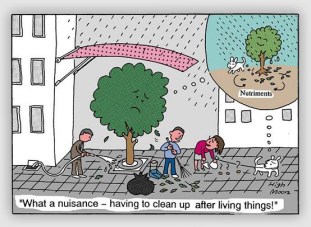
When Al Mattikow finally tripped and fell on a walkway outside of his rented townhouse, all because of a hickory tree that dropped twigs, nuts, leaves, and sap all over the common area, he sued the condo association for negligence and for maintaining a nuisance.

The condo folks defended themselves, showing that they had maintained the tree carefully, using the services of an arborist, to prevent it from becoming a hazard. Because they were so dutiful, the condo folks argued, they could not possibly be negligent. And that meant that the tree couldn’t be a nuisance, either.

“Whoa,” you’re thinking, “that’s so-o-o wrong!” And you are right. The defendant condo association’s arguments and Al’s complaint were like ships passing in the night. It’s laudable that the condo folks took care of the hickory so that it didn’t fall on Al’s pad some dark and stormy midnight. But that was hardly Al’s point. It wasn’t the tree’s falling that bothered Al. It was the falling leaves, twigs, nuts, and sap that covered the walkways, making Al’s perambulation difficult.

Negligence and nuisance both start with “n,” but they’re not synonyms. You can be negligent without creating a nuisance, and you can create and harbor a nuisance without ever being negligent. The condo association conflated the two terms, as well as conflating “safe tree” with “well-behaved tree.”

Viva la difference!

Mattikow v. West Lyon Farm Condominium Association, 2019 Conn. Super. LEXIS 2296; 2019 WL 4344368 (Superior Ct of Connecticut, Aug. 20, 2019). Al and Nina Mattikow rented a condominium unit in which they had lived for a number of years. They had complained to West Lyon Farm Condominium Association, the condominium association that managed the common areas of the property and enforced the regulations, about the extent to which leaves, hickory nuts, pollen, and sap continually fell onto the surface of the common deck near their unit, making walking hazardous. The Mattikows contended that their complaints explained that Al walked with a cane, making him more vulnerable to the conditions of the surface upon which he was walking.

Eventually, Al fell because of the droppings, he claimed, seriously injuring his ankle.
The Mattikows sued, alleging negligence and nuisance. The Association argued that pursuant to the bylaws and rules of the association, to which the Mattikows were bound by their lease agreement, the deck was considered to be a “limited common element.” A “limited common element” benefited one condo unit over the others, due to its location, and the condo unit that most benefited was responsible for maintenance, including clearing leaves and other debris. The Association claimed that under the bylaws, it had no duty to maintain the surface of the deck.

The Association moved for summary judgment, claiming there was no issue of fact – it simply had no duty to maintain the premises upon which Al fell, and conversely, Al had the obligation to maintain the deck surfaces himself.

Held: The Association’s motion for summary judgment was denied.

In addition to claiming negligence, Al claimed that the Association is liable under a theory of nuisance. The Association was dismissive of the claim, arguing that it is derivative of the negligence claim such that if the Association wins on the negligence count, it will necessarily win on nuisance as well. But that ain’t necessarily so.

The Court noted that “the elements of nuisance are different—otherwise it wouldn’t be a distinct cause of action. Simplistically, private nuisance is based on a theory of invasion of property rights rather than a breach of the duty to use reasonable care to avoid causing harm to others. Thus, even if there were no duty to maintain the deck on the part of the defendant, as the defendant vigorously argues, the lack of any duty of maintenance or control over the deck would have no automatic consequence for the nuisance claim… Generally speaking, a duty of maintenance or right of control over the affected premises is irrelevant to a claim of nuisance, which focuses on the conduct of a party external to the affected property and the effect of that conduct on the use of the affected property.”
The Court noted that there were at least a few allegations of negligence that focused on the tree depositing debris, rather than a claimed duty to clear the debris. The main focus, however, is the common area owner’s responsibility, including the hickory tree, for the debris constantly being rained down on the deck. The Association, the Court complained, paid more attention to the clearer issue of lack of duty to maintain and less attention to possible liability emanating from the claimed negligence relating to the tree, for which the defendant was responsible.

Factually, the Court said, the evidence showed the Mattikows had lodged numerous complaints about the tree. The Association called in a licensed arborist, and he had inspected the tree on a number of occasions, repeatedly giving the tree a clean bill of health as long as it was properly pruned and had sufficient cables to ensure stability. The focus of the inspections by the arborist was on whether the tree was likely to fail. He also focused on the tree’s stability, given the apparent shallowness of the root system. The Association did not ask the arborist to evaluate the extent to which nuts, leaves, sap, and branch detritus were being deposited on the deck of the Mattikows’ condominium unit or whether anything could or should be done in that regard.

The Mattikow complaint claimed the Association was negligent “[i]n that it failed to trim, remove or maintain the hickory tree or to prevent the deposit of materials on the subject deck in that it failed to remedy the condition of the deck as described in paragraph four in the deck although it or should have known that such a condition(s) existed.” In turn, the condition described in paragraph four is that there was “an accumulation of materials, including but not limited to sap, mold, liquids and acorns from a large hickory tree, whose branches and limbs hung directly over said deck.”
The Association argued that it had undertaken to trim and maintain the hickory tree. Specifically, the arborist had been called in 2013, and his recommendations had been promptly followed. He was again called to inspect the tree in 2015, and his recommendations were implemented promptly. He came again in 2018, at which time his assessment was that as long as the Association “continued to prune and monitor the tree, the tree posed no hazard.”

And there was the problem, the Court said. The Association focused on whether the tree was a “hazard,” that is, not viable and likely to fall. But, the Court said, these conditions “are irrelevant to the claims being made” by Al and Nina.

The Court noted that the Association’s evidence said nothing about whether the tree should have been removed, for reasons unrelated to its viability or likelihood of toppling or shedding large branches, despite the fact that removal was the Mattikows’ stated goal. The Association did not address the issue of the existence or nonexistence of a duty to “prevent the deposit of materials on the subject deck.”

The Court compared the situation to Connecticut General Statute § 13a-149. In the absence of an ordinance enacted pursuant to General Statutes § 7-163a (and limited to snow/ice conditions), a municipality is liable for the maintenance of sidewalks and the abutting property owner cannot be held responsible for any injuries caused by a failure to maintain the sidewalk, even if there is an ordinance directing the abutting property owner to maintain the sidewalk. However, if a property owner is responsible for creating the condition on the sidewalk — and that often is a result of depositing snow on the sidewalk or having a drain/downspout releasing water onto the sidewalk which subsequently freezes — then despite the absence of any legal duty to maintain the sidewalk, an abutting property owner may be held responsible for injuries resulting from a condition causally related to the conduct of that owner of the abutting property.

The Association is in a similar role here, the Court said. “It is in control of the common areas abutting the condominium unit for which the occupant of the condominium unit has primary responsibility of maintenance. It is a situation on property over which the defendant had no control [that emanates] from property within the control of the defendant, with an ability of control implicating the condition causing an injury to the plaintiff.”
Returning to the nuisance claim, the Association rather perfunctorily asserted that if it is right with respect to the claim of negligence, then necessarily the nuisance claim must also be a matter for which the defendant is entitled to judgment as a matter of law. This is wrong. To succeed under a nuisance theory, a plaintiff need not establish the predicate for a negligence claim. An invasion of a person’s interest in the private use and enjoyment of land by any type of liability-forming conduct is a private nuisance. The invasion that subjects a person to liability may be either intentional or unintentional.

The generation of malodorous smells offensive to neighbors can form the basis for a private nuisance, and the location of the odor-generating activity is an appropriate factor to be considered. The odors do not have to be formed negligently. “The benchmark,” the Court said, “is the reasonableness or unreasonableness of the interference with the ability of another (the plaintiff) to enjoy his/her property.”

The Court ruled that it could not grant summary judgment in favor of the Association on the nuisance claim, particularly given the court’s focus on the negligence claims that did not implicate possession and control over the deck, but rather control over the tree on the property, which was within the defendant’s control. Those claims, the Court said, were closely aligned with the possible existence of a private nuisance.

– Tom Root

TNLBGray140407

Case of the Day – Tuesday, September 16, 2025

YOU HAD ONE JOB

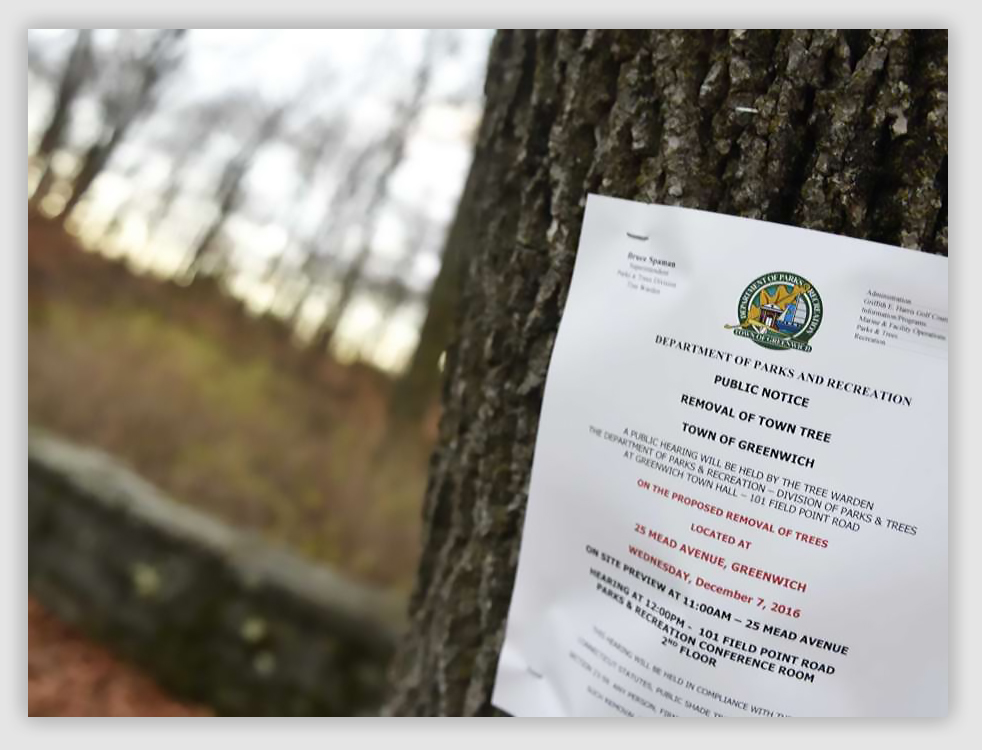
The municipal position of tree warden in this country is unique to a few New England states. In Massachusetts and Connecticut, for example, state law requires that each town appoint one. A tree warden is a person in charge of shade trees on public town lands. The word “warden” was a common title for natural resource officials in the late 1800s. Being a warden signified a unique legal responsibility: to guard public resources against destructive forces that might include persons, insects, or diseases.

A tree warden may be either or appointed. In either case, the responsibility is the same – to oversee the care, maintenance, or removal of all public shade trees. As both manager and advocate, the tree warden must protect the trees and, where necessary, protect the public from the trees.

Massachusetts describes the tree warden’s functions as being “broad and includ[ing] responsibility for all community trees – on streets and town commons as well as in parks, schoolyards, and town forests. The position of tree warden requires qualified training in arboriculture, the science of tree care. A tree warden should also have good communication skills for dealing with the public, municipal department heads, and local politicians.”

Connecticut says that “Tree wardens are appointed public officials responsible for trees alongside public roads and in public spaces, other than those on state property or under the jurisdiction of a park commission. Each municipality is required to have a tree warden. The tree warden’s responsibilities include approving the planting, pruning or removal of trees under his or her authority. Public safety is among the chief concerns of the tree warden.”

Fans of the many “you had one job” posts online (and even on ESPN, back in the day) can appreciate the “fail” in today’s case. A Connecticut town tree warden ignores his duty to check on a tree that a concerned resident reports on several occasions as dangerous and decayed. The woman even had her own arborist inspect it, but since the tree was on town property, it was the town’s responsibility to care for it. And that meant it was up to the tree warden.

He ignored it for nearly a year. Sure enough, it fell… right across the road and onto a passing car. When the motorist and his wife sued the town and the tree warden, the defendants claimed immunity. It turns out there is plenty of immunity for a government official acting according to his or her discretion. But immunity for failing to drive out to check on a reported danger tree?

C’mon, man. You had one job…

Wisniewski v. Town of Darien, 135 Conn. App. 364, 42 A.3d 436 (Ct.App. Conn. 2012). Mieczyslaw (let’s call him “Bud”) and Jolanta Wisniewski were injured when a tree within the street right-of-way toppled onto his car in front of 35 Rings End Road, inside the Darien, Connecticut, city limits. This should not have surprised the Town, which had been notified several times by property owner Kristen Doble that her arborist had determined that five trees located near the roadway “need attention.”

On one occasion, Kris told the Town that limbs had fallen from trees near the roadway. On another occasion, she asked that the Town send someone to examine a “hollow” tree located near her front gate, next to the roadway, that had lost a leader (which is “a primary or terminal shoot of a plant (as a main branch of an apple tree or the terminal shoot of a spruce tree… the upper portion of the primary axis of a tree especially when extending beyond the rest of the head and forming the apex…” leader.

At the time Kristen complained and later, when the tree fell on Bud and Jolanta’s car, Mike Cotta was the Town’s tree warden. Pursuant to General Statutes § 23-59, he was responsible for the care and maintenance of trees located along certain rights-of-way within Darian’s geographic limits. There were no other express town charter provisions, rules or ordinances directing Mike’s duties as tree warden.

Bud and Jolanta sued the Town and Mike Cotta, claiming negligence against Mike and seeking indemnification against the Town pursuant to General Statutes §§ 7-465 and 7-101a. In addition, the complaint contained claims for liability pursuant to General Statutes §§ 52-557n and 13a-149 against the town.

The Town and Mike argued that Bud and Jolanta’s lawsuit was barred by the doctrine of governmental immunity. That motion failed. The Town and Mike moved for summary judgment, arguing, in part, that governmental immunity barred the Wisniewskis’ claims. The court denied the motion for summary judgment, and the case proceeded to a jury trial.

The jury found for Bud and Jolanta, holding that he had established Mike’s and the Town’s negligence under § 52-557n. Although the defendants established that their duty to maintain the subject tree was public in nature, they failed to establish that their duty to inspect, maintain and remove the tree was discretionary. Jolanta Wisniewski got $200,000, and Bud Wisniewski was awarded $1.5 million.

Mike and the Town appealed.

Held: Mike and the Town of Darian were liable for negligence.

As a general rule, a municipality is immune from liability for negligence unless the legislature has enacted a statute abrogating that immunity. In this case, Gen. Stat. § 52-557n abandons the common-law principle of municipal sovereign immunity and lists circumstances in which a municipality may be liable for damages. One is a negligent act or omission of a municipal officer acting within the scope of official duties. Section § 52-557n(a)(2)(B) explicitly shields a municipality from liability for damages to person or property caused by the negligent acts or omissions that require the exercise of judgment or discretion as an official function of the authority expressly or impliedly granted by law. Municipal officers are not immune from liability, however, for negligence arising out of ministerial acts. Ministerial acts are defined as acts to be performed in a prescribed manner without the exercise of judgment or discretion.

The language of Conn. Gen. Stat. § 23-59 provides that many, but not all, of the duties of a tree warden involve the exercise of discretion, and thus are immune.

The determination of whether official acts or omissions are ministerial or discretionary for liability purposes is normally a question of fact for the fact finder. Generally, evidence of a ministerial duty is provided by an explicit statutory provision, town charter, rule, ordinance or some other written directive. Testimony of a municipal official, however, may provide an evidentiary basis from which a jury could find the existence of a specific duty or administrative directive.

A municipal employee, and, by extension, the municipality, may be liable for the misperformance of ministerial acts, but are entitled to immunity in the performance of governmental acts, including acts that are discretionary in nature.

Although Darian maintains no written policies directing the conduct of its tree warden, the town’s assistant director of public works, Darren Oustafine, testified at trial that the general direction provided to Mike Cotta upon receipt of a complaint “is always the same, look at the tree, make a determination. Is it a safety concern? Is it a priority?” Moreover, Cotta himself testified that upon receipt of a complaint regarding a potentially hazardous tree, he has a nondiscretionary duty to perform an inspection. “In light of the evidence adduced,” the Court said, “including Cotta’s own statements, which were couched in mandatory language, it was appropriate for the court to decline to direct or to set aside the verdicts on the basis that the defendants’ actions as a whole were discretionary as a matter of law.”

The evidence in the record was enough to let the jury reasonably find that some of Mike’s duties, including the duty to inspect upon receipt of a complaint concerning a potentially hazardous tree, were ministerial. This was especially so given that Mike testified that upon receipt of a complaint regarding a potentially hazardous tree, he had a nondiscretionary duty to perform an inspection. The evidence showed a total absence of any documentation in the town’s work order records concerning Mike having inspected the trees. Although Mike testified at trial that he had performed a quick visual inspection, he admitted that performing a quick visual inspection is “not the same thing as saying you inspected it at all…” In addition, in a pretrial deposition, Mike admitted that he had not inspected the trees for decay or, for that matter, “for any reason.”

Furthermore, while Mike testified at trial that he had gone to the property and pruned the hazard tree in 2004, Bud and Jolanta introduced a deposition transcript in which Mike testified that he had not returned to the property between March 14, 2003, and July 11, 2006. Thus, the Court said, “numerous issues were raised concerning Cotta’s credibility, and the jury was free to decide that Cotta was not credible and to resolve the claim in favor of the plaintiffs that he failed to respond to any of the complaints by going to the property to inspect the trees.” Bud and Jolanta’s expert “opined that the subject tree would have exhibited signs of decay in 2002 and 2003, when Doble lodged her with the town. Accordingly, the jury could infer that a reasonable tree warden, had he performed an inspection, would have determined that the subject tree was a hazard.”

– Tom Root

TNLBGray140407

Case of the Day – Thursday, August 28, 2025

SURVIVOR – LAWSUIT ISLAND

Life (and law practice) sometimes imitates art. It may be a stretch to label the long-in-the-tooth CBS series, Survivor, as art, but any number of great artists, authors and composers were unappreciated during their day, just as the Survivor writers who once complained that they are unappreciated. Maybe someday, Survivor – which in the recent seasons was on the edge of extinction – will be studied by college students as a paradigm of our day. Scary, isn’t it?

Arthur C. Clarke once predicted just such a thing

But our point – just like contestants are voted off the island in Survivor – weak cases are many times voted off the docket, so to speak, by summary judgment. Summary judgment is a mechanism for a judge to decide cases where the pleadings, affidavits and any other proof submitted show that there is no genuine issue as to any material fact and that the moving party is entitled to judgment as a matter of law.

Stack said it was a big hole…

In today’s case, Stack was trimming Hernandez’s trees at Hernandez’s invitation. While working on a lawn with spotty and bumpy grass, Stack tripped on a small depression and broke his leg. He sued, of course – who wouldn’t? His suit alleged that Hernandez should have been aware of the depression and should have warned him of it. He didn’t have any proof that Hernandez was aware of the depression, and the Court very nearly granted summary judgment for Hernandez. But it concluded that a reasonable juror conceivably could — after hearing witnesses and cross-examination — conclude that Hernandez should have known about the depression, and should have either warned Stack or filled it in himself.

So after the summary judgment challenge, Stack remained a “survivor” — leaving it to a jury to vote his case off the island later.

Stack v. Hernandez, Conn. Super. LEXIS 1487, 2007 WL 1893617 (Conn.Super.Ct., June 12, 2007). Stack was trimming trees at the defendant’s property at the invitation and permission of the defendant. While doing so, he stepped into a depression in the front lawn and broke his leg.

... but Stack recalled it was somewhat small. This is known in the law as "a genuine issue of material fact."

… but Hernandez recalled it was somewhat small. This is known in the law as “a genuine issue of material fact.”

The depression was about 4 inches wide and 3 or 4 inches deep. Stack’s right toe went into the depression and stopped. The lawn was bumpy and had yellow patches in it. Stack did not see the depression before he stepped into it. Hernandez had no actual knowledge of the depression. He performed normal maintenance on the lawn himself but had never noticed the hole.

Stack sued Hernandez for negligence, alleging that Hernandez failed to remedy the depression in the lawn or to warn him of it, even though he knew or should have known of its presence. Hernandez filed for summary judgment on the grounds that there was no genuine issue of material fact on the issue of notice.

Held: Summary judgment was denied. The Court observed that summary judgment is not well adapted to negligence cases, where, as here, the ultimate issue in contention involved a mixed question of fact and law.

The Court said Mr. Stack's case barely stacked up ... but enough to get the matter to trial.

The Court said Mr. Stack’s case barely stacked up … but enough to get the matter to trial.

The conclusion that a defendant was negligent is necessarily one of fact. A possessor of land has a duty to an invitee to reasonably inspect and maintain the premises in order to render them reasonably safe. In addition, the possessor of land must warn an invitee of dangers that the invitee could not reasonably be expected to discover.

The existence of actual or constructive notice is a question of fact. Although Hernandez argued there was no evidence from which a judge or jury could conclude that he had actual or constructive notice of the depression or that it was a danger of which Stack was entitled to be warned, the Court found Stack’s allegation strong enough to survive a summary judgment motion.

The Court characterized Stack’s claim as weak but conceded that a reasonable person could conclude that the depression in the lawn was a “danger”which Hernandez should have discovered and remedied with a reasonable inspection. The Court observed that a party has the same right to submit a weak case as he has to submit a strong one, and it gave him his day in court to submit it.

– Tom Root
TNLBGray140407

Case of the Day – Wednesday, August 13, 2025

PEOPLE BEHAVING VERY BADLY

The late Jeffrey Epstein, Ye, Vladimir Putin, Yahya Sinwar, George Santos, Robert Menendez, even President Trump (whose increasingly shrill insults blast people who are (or were) supporters)… we’ve had a belly full of people behaving badly irecently.

Like we need this, here are a few more:

Welcome to the neighborhood ...

Welcome to the neighborhood …

Meet the Cooleys, neighbors who were so bad as to drive the Court to write a plaintive plea that everyone should try to get along. How bad, you ask? Well, Mrs. Cooley tried to run down her neighbor with her car. She built a chicken-wire spite fence. Her son threatened to beat up his elderly neighbor (who had just had a heart transplant). Yes, that bad…

This case is one of those rare fact-driven trial court decisions worth reading just to get the flavor of the Court’s incredulity that people could carry on like this. At one point, the judge observes that “[o]ne could almost use that well-worn lawyer’s expression ‘I rest my case’ after merely viewing Mrs. Cooley’s Exhibit 12, which in gruesome detail sets out the ‘this is my property’ syndrome.” The court finally issues a 15-point injunction ordering the Cooleys to stop doing 12 acts of malice, and the Quarantas to refrain from three others. It found application for a seldom-used Connecticut statute prohibiting structures built out of malice, banning a chicken-wire monstrosity erected by the Cooleys as a “spite fence.” Finally, it found the often-alleged but seldom-proven “intentional infliction of emotional distress” tort to have been shown here and ordered the Cooleys to pay the Quarantas’ legal fees.

At the end of its opinion, the Court ordered each party to read his final words out loud. Those were a plea by the Court for these people to rewind the clock to the beginning and try to get along. The Court’s frustration and sense that no matter what the law said, nothing would stop the bickering, is evident in the opinion. Not great moments in the development of the law … just a neighbor law tale worth reading.

There was even a

There was even a “spite fence” in the story …

Quaranta v. Cooley, 2007 Conn. Super. LEXIS 3199, 2007 WL 4577942 (Conn.Super. 2007). People behaving very badly. You know how the opinion’s going to go when the Court begins by quoting an old Supreme Court opinion that “… it is the bickerings, spite, and hatred arising from neighborhood quarrels; it is difficult for any legislation to remedy such evil.”

The Quarantas were senior citizens who had lived in the same home for 26 years. Mr. Quaranta was on a life support system and eventually had a heart transplant. The Cooleys were younger than the Quarantas, but had a 25-year-old son and health considerations of their own. When the original landowner subdivided his property into the lots which became the homes of the Cooleys and Quarantas, there was an existing paved driveway to the Quarantas’ home from the street, bordered with a split rail fence and a grassy area on each side. The landowner created by deed two 25’ easement roads (for a total width of 50 feet) over the same area on which his driveway existed. Each lot owned 25’ of the road, and each owner had the right to pass over the 25 feet owned by the other. The practical effect of these easements is to allow all three parcels of land to share access to the public street with one common driveway. Although the neighbors couldn’t see each others’ homes, they ended up in a continuing vitriolic spat in which each side accused the other of using the “F” word, raising the middle finger on numerous occasions, and other immature and harassing behavior, such as the noisy racing of vehicles, the blowing of car horns and trash placement fights.

ass150721The Court held that the Cooleys, who were New York City dwellers unused to suburban life, utterly lacked credibility on the stand. It found that the battle began with Mrs. Cooley delivering a letter to the Quarantas within 30 days of her having moved in, in which she told them their lampposts and driveway sat on the Cooley property. Then, the Cooley son began throwing keg parties at the Cooley home, with noisy partygoers parking all along the right-of-way. The parties were noisy and annoying, and afterward, the Quarantas found themselves cleaning up empty bottles and cigarette butts. The parties were held about four times a month. The Quarantas complained without effect. The grand finale was the Cooley Halloween Party in 2005. When Mrs. Quaranta went out in her nightgown to ask for peace and quiet, the partygoers cursed her – one exposing himself to her – and urinated toward her. After this, Mrs. Cooley and her daughter, took to riding at high speed over the grassy area, even leaving deep tire tracks. Although the Cooleys’ trash pickup was on Friday, they would put their trash out all week long, at a spot where it was viewable only from the Quarantas property. Animals got to the trash during the week, and the Quarantas did the cleanup. Mrs. Cooley would drive fast down the mutual passage raising dust and her middle finger while blowing her horn the entire distance. She overdosed her own lawn with weedkiller, killing all of the grass ostensibly so she wouldn’t have to mow. Her lawn, of course, fronted on the Quarantas’ lush and meticulous yard.

badneighbora140204There were countless verbal confrontations as well. The Cooley son yelled at Mr. Quaranta, a man past 65 with a heart transplant, “Hit me! I’ll wipe the ground up with you.” Previously, another judge had ordered the parties to refrain from intimidating, threatening, harassing, stalking, assaulting, or attacking each other, and to refrain from entering the property of the other, until the dispute was tried and resolved on the merits. After that, the Cooleys built an ugly chicken wire fence on the side of the passage that fronts the Quarantas’ house only. The trial court was called upon to mediate the dispute.

Held: The Court found for the plaintiffs, the Quarantas. It held that Mrs. Cooley’s testimony was so bad that it noted that “[o]ne could almost use that well-worn lawyer’s expression ‘I rest my case’ after merely viewing Mrs. Cooley’s Exhibit 12, which in gruesome detail sets out the “this is my property” syndrome. The court found it unsurprising that she took an axe to – and threatened to destroy – anything, even things of beauty, found on her property. These items included a lamppost, (that provided her light with the Quarantas paying for the electricity), fences (that enhanced the entrance to both their properties), a beautiful birch tree (with no professional evidence that it had to be cut down), a ceramic nameplate, (which her son admitted smashing) and even shrubbery. “Such warmth!” the Court said. “And it shows in the fifty-plus exhibits.”

The Court held that the chicken wire fence was maliciously erected, based on its character, its location, and the obvious state of mind and motive of the defendant. It ordered the fence removal pursuant to §52-480 of the Connecticut Statutes. It found that the Cooleys had exceeded the use of the right of way in a vindictive and malicious manner so as to harm the Quarantas, rather than just for ingress and egress. It held that a number of the Cooleys’ activities on this simple right-of-way were, “in layman’s terms, ludicrous, and in legal terms harmful, unnecessary, illegal and unreasonable.” It issued a detailed injunction spelling out 12 acts in which the Cooleys were not to engage, and 3 acts in which the Quarantas were not to engage.

A happy ending? Not with these folks ...

A happy ending? Not with these folks …

Based upon the totality of the evidence, the Court held that the Cooleys directly and indirectly negligently and intentionally caused severe emotional distress to the Quarantas, and knew or should have known that their acts would result in severe emotional distress to the plaintiffs. In the case of Mr. Quaranta, the distress was found to be life-threatening. The Cooleys evidenced a reckless indifference to the Quarantas’ rights and showed an intentional and wanton violation of these rights. The injury was inflicted maliciously, with evil motive and violence. The Court awarded the Quarantas their legal fees as damages.

The Court took the unusual step of ordering a final statement to be personally read by the parties. It begged both parties to “go back to the day the Cooleys moved in and put everything back the way it was. Let us dig a hole and bury all of the ill feelings and hatreds that are all consuming.” The Court, writing this on Thanksgiving Eve, ended by noting that “[t]he person whom many people honor in this Holiday Season forgave everyone. Isn’t it time that the Quarantas and the Cooleys caught the spirit of the Season?”

Postscript: They did not. Rather, they were back in court repeatedly between 2007 and 2013, arguing over contempt motions filed against each other. Oh, the humanity …

– Tom Root

TNLBGray140407

Case of the Day – Thursday, August 7, 20253

CHIA JERK

Should I be talking about Chia Pets? Sure. With Labor Day falling in fewer than four weeks, the Christmas shopping season is just around the corner. And what gift says “Happy Festivus” more than a Chia Pet? There are Chia pigs, Chia cats, Chia aliens, Chia emojis, Chia Care Bears®, even a Chia Donald J. Trump. Of course, there’s also a Chia Joe Biden, but Chia Trump claims his hair is much thicker and greener, and anyway, Chia Joe forgets he’s supposed to grow hair…

And Chia Donny’s orange, too, a lifelike pallor, indeed.

Alas, the CHIA we’re discussing here isn’t a ceramic figurine smeared with seeds. Instead, it’s the Connecticut Home Improvement Act. And the “jerk” is not our Commander-in-Chief (at least not in today’s column), but rather a slick lawyer who tried to use CHIA to cheat a local tree trimmer. I’ve told you about this case before, but this sad little cautionary tale bears repeating. 

The takeaway here for the aspiring arborist should be entitled, “make sure all your oral contracts are in writing.” That rule goes double when you’re messing with a homeowner who happens to be a slick lawyer. Don made a deal with Ronnie “The Mouthpiece” LoRicco to cut the lawyer’s grass. The contract was verbal. After all, it’s a lawn, for heaven’s sake. Who needs a lot of printed mumbo-jumbo for a lousy lawn?

I think you know the answer to that one. Don started with cutting the grass, but one thing led to another. The mowing became some grass seeding became some stone moving became some grading and some tree trimming and retaining wall construction. When Don, tuckered out after all of that hard work, went to collect for his labors, slick Ronnie yelled “Gotcha!” Well, perhaps not literally, but he might as well have, because he refused to pay the $2,277 bill, claiming he didn’t owe the arborist a farthing.

Don sued. The lawyer-defendant argued that under the Connecticut Home Improvement Act, Don should have given Ronnie a written agreement. Because Don didn’t, Ronnie said, he didn’t owe anything for all the work. Shades of Henry B. Swap tricking the hapless but industrious Mike Mulligan! But like the classic story about the plucky steam shovel Mary Anne, today’s case has a happy ending.

Mulligan-swap When Ronnie moved for summary judgment on the grounds that Don violated the CHIA, the trial court showed the solicitor that it could get just as hyper-technical as he could. The work Don did, according to the court, seemed more like “maintenance services” than home improvements. That argument might be a hard sell where lawn planting and wall building are concerned, but what we have here is a court doing a little distributive justice. Plus, the court said, Don was asserting that Ronnie had raised the CHIA defense in bad faith, invoking the Act not because he was a sheep-like homeowner fleeced by an unscrupulous contractor, but instead because Ronnie had never intended to pay Don to begin with.

Don believed he was the one getting sheared, and the court — apparently thinking the same thing — intended to give Don a chance to prove it. But what a cautionary tale! Simple projects all too often become complex projects, and the fifty states have a patchwork of consumer protection laws that serve as a snare for the unwary arborist. Support your local lawyer! Spend a few bucks to be sure that the slick Ronnies of the world don’t try to shear you.

Don’s Landscaping and Tree Service v. LoRicco, 2007 Conn. Super. LEXIS 248, 2007 WL 2938602 (Conn.Super. Sept. 20, 2007). Don’s Landscaping entered into a verbal agreement with LoRicco for lawn cutting services, which over time mushroomed into the installation of a lawn, grading, removal of stones, seeding, moving of trees, planting and building walls. When LoRicco decided not to pay, Don’s Landscaping sued for the amount due, $2,277.00. LoRicco denied owing Don’s any money and moved for summary judgment on the grounds that the landscaper’s suit was barred under the Connecticut Home Improvement Act because Don’s didn’t give LoRicco a written contract. Don’s complained that LoRicco was an experienced attorney familiar with Connecticut law looking to beat Don’s out of payment, using the CHIA in bad faith.

shyster150717Held: Summary judgment was denied to the lawyer-defendant. The trial court noted that for LoRicco to satisfy his burden, he had to make a showing that it is quite clear what the truth is, and that excludes any real doubt as to the existence of any genuine issue of material fact. That evidence had to be viewed in a light most favorable to the opponent. In this case, although the Home Improvement Act refers to landscaping, there was a real question of fact whether the services provided by Don’s were governed by the Act. They appeared to be maintenance services, and not “home improvements.” What’s more, the Court credited Don’s allegations, finding they raised questions of fact of whether LoRicco’s reliance on the Act was a bad-faith dodge (of course it was). For those reasons, summary judgment was denied.

So Don got his day in court, but it was a day that shouldn’t have ever arrived. There is a thicket of local, state and (sometimes) Federal law out there – in addition to a substantial body of common law – just waiting to prove a snare to unwary but well-meaning people like Don. And you. A stitch in time saves nine. Here, a little piece of paper would have saved Don a lot of aggravation and legal costs.

– Tom Root
TNLBGray140407