Case of the Day – Monday, April 13, 2026

THE BORING BUT CONSEQUENTIAL WORLD OF CIVIL PROCEDURE

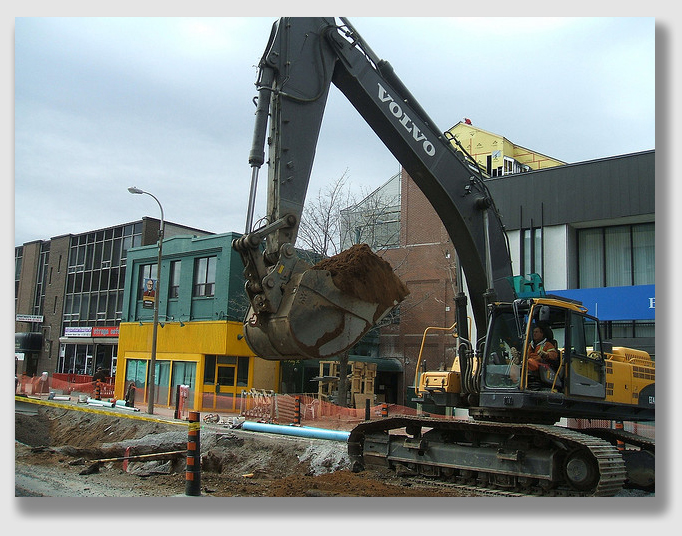
nimby151023The Croneys of Bigelow, Arkansas, bought a place on Taylor Loop Road, and — apparently being NIMBY enthusiasts — immediately sued the city to keep it from making their residential road any bigger or better. The court told them they had to name all the other landowners as parties to the suit. They did not, and the court threw the case out.

That was back in 1998, and the Croneys thereafter probably got busy with Y2K or the dot-com bubble or maybe just going to see There’s Something About Mary. Whatever the reason, they didn’t pursue it. But when the City started to bury new utilities under the road in 2005, the Croneys sued again.

This time, the City complained that the suit was barred by res judicita, a doctrine that prevents parties from litigating the same issues over and over, sort of a “one bite of apple” doctrine. After all, the City complained, the Croneys tried this lawsuit once before and got thrown out. What’s more, when the Croneys added some neighbors to the suit, the neighbors were dismissed as defendants and the Croneys were told to pay their legal fees. The trial court agreed.

The Court of Appeals reversed and remanded the case. It concluded that when your case gets thrown out for failure to join necessary parties, you’ve not had a fair chance to litigate the issue. The heart of res judicata is that the plaintiff gets one bite of the apple before the apple’s taken away. Here, the apple was snatched away before the Croneys got their first chomp.

apple151023Also, the Court of Appeals was a bit miffed that the trial court said the Croneys’ claims against the few neighbors they did include as defendants to the suit were meritless. The trial court could hardly complain on one hand that the Croneys had no claims against the neighbors and complain on the other that the neighbors were necessary to be included as defendants in the case.

This may seem to be a dry-as-toast civil procedure issue, but on such technicalities, serious neighbor law issues may founder.

Croney v. Lane, 99 Ark.App. 346, 260 S.W.3d 316 (Ark.App., 2007). In 1998, the Croneys bought property on Taylor Loop Road. They sued to enjoin the City of Bigelow and Perry County from improving Taylor Loop Road. The trial court ordered them to clearly specify the relief sought and to join in the lawsuit “all landowners that may use the subject road to access their property.” They didn’t, so the trial court dismissed their complaint.

In July 2004, the Croneys again sued to quiet title to their property, subject to a public easement by prescription across Taylor Loop Road, and to enjoin the City from installing utility lines under the roadway. In response, the City argued that the Croneys’ lawsuit was barred by the doctrine of res judicata.

toast151023The Croneys amended their petition to allege that neighbor Buddy Lane destroyed their trees and was continuing to trespass on their property and to allege that other neighbors, the Hootens, owned the land. The trial focused primarily on the width of Taylor Loop Road and the uses to which the City has made of it, but there was also testimony regarding the lack of records in the clerk’s office indicating how the road has been used, about the ever-increasing width of the road, and about the City’s placement of culverts and water lines under the road. At the close of the testimony, both defendant Lane and the Hootens moved for directed verdicts. The motions were granted.

The court entered an order dismissing Croneys’ complaint for failing to join all of the landowners on Taylor Loop Road, and because the action was barred by res judicata because appellants had previously filed suit against the City on the same issues and the previous suit had been dismissed with prejudice. Finally, the court declared Taylor Loop Road a public road.

Croneys appealed, arguing the trial court erred in summarily dismissing their complaint on the basis of res judicata, that the City had no right to bury utilities under, or to widen, Taylor Loop Road, that the Croneys were entitled to a decree describing the City’s easement with specificity, and that the trial court erred in dismissing Croneys’ petition to quiet title.

Held: The trial court’s decision was reversed, and the case was remanded. The Court said that the purpose of the res judicata doctrine is to put an end to litigation by preventing the re-litigation of a matter when a party has had one fair trial on the matter. The test to determine whether res judicata applies is whether matters raised in a subsequent action were necessarily within the issues of the former suit and might have been litigated there.

The key question is whether the party against whom the earlier decision is being asserted had a full and fair opportunity to litigate the issue in question. Here, the Court said, the Croneys did not have a full and fair opportunity to litigate their case, because it was involuntarily dismissed pursuant to the rules of civil procedure for failure to add necessary parties and to clearly specify the relief sought. The fact that the trial court specified that the dismissal was “with prejudice” didn’t matter because the trial court had had the option to dismiss without prejudice, and when the rules preclude declaring a case to be dismissed with prejudice, the doctrine of res judicata should not apply.
The Croneys liked their street the way it was ...

The Croneys liked their street the way it was …

The Court of Appeals said that dismissal of the case for failure to join indispensable parties was improper because nothing in the record showed that the nonjoined property owners could not be joined to the lawsuit. As a predicate to dismissing a case pursuant for nonjoinder, a trial court must determine that the indispensable, nonjoined parties cannot be made parties to the litigation. Consequently, before dismissing the appellants’ case, the trial court was required to determine that the nonjoined parties who relied on Taylor Loop Road to access their properties were not amenable to process. Here, the Court said, nothing in the record indicated that these other parties could not be joined.

The trial court had dismissed Lane and the Hootens as defendants because the Croneys presented no evidence establishing that Lane had destroyed their trees or was continuing to trespass on their property. The trial court awarded Lane and the Hootens fees after concluding that the actions against them were “totally lacking a justiciable issue of law or fact, as permitted by Ark.Code.Ann. §16-22-309(a)(1). This offended the Court of Appeals, which complained that the trial court erred, on one hand, in finding that Croneys were required to join all of the adjacent property owners in the suit while, on the other hand, finding that their claim against the only adjacent property owners who had been added was lacking merit.

Although the arguments made against the Hootens were weak, the Court said, the Hootens were nonetheless indispensable parties whom appellants were required to join for a complete adjudication of the road issues. Consequently, the trial court erred in awarding attorney’s fees to the Hootens. As for Lane, he was not an indispensable party, and Croneys presented no evidence establishing the merit of their claims against him. The trial court was permitted to assess fees against the Croneys for Mr. Lane. 

– Tom Root

TNLBGray140407

Case of the Day – Wednesday, March 4, 2026

SOME LATE-SEASON SNOW

The valentine cards are in the trash. That can only mean one thing: St. Patrick’s Day is right around the corner. We wandered into a Family Dollar the other morning for some pork rinds and red pop, only to be assaulted by not just shamrocks, but Easter bunnies, IRS forms and even Mother’s Day cards. Halloween is just around the corner.

We’ll launch our First Meteorological Day of Spring festivities a few days late (it was last Sunday) with some late-season Snows. And as you’ll see, Snow is a distinct possibility.

The Snows we consider today were a couple, one party in a convoluted adverse possession case. The surveyor began the problems in 1969 by taking the landowner’s word that a rock marked the corner of the 40-acre tract. It was the wrong marker by about 40 feet, and so everything he did from there was wrong, too. Garbage in, garbage out.

But no one knew about the error. The landowners used the faulty centerline to give an easement to neighbors, and the neighbors put a driveway on it. That was off-center as well. To compound problems, there was a decrepit barbed wire fence off-center from the off-center centerline that Mr. and Mrs. Snow — who had bought land a year after the faulty survey — believed to be the real centerline.

When the owner next to the Snows sold in the mid-1990s, he knew they claimed the 1.5 acres between the easement and the old fence as theirs, so he sold 8.5 of his 10 acres by warranty deed but conveyed the disputed 1.5 acres  by quit-claim deed (which meant that the seller wouldn’t help out the buyer in any legal battle arising with the Snows).

And the battle inevitably came. The Snows argued that the old fence enclosed the land, and they had exercised control over the disputed acreage by cutting a firebreak and harvesting cedar. But landowner Camp said the land was so densely wooded, no one could see what – if anything – that the Snows had done. The trial court held that the Snows hadn’t exercised continuous control over the land and that the old fallen-down fence didn’t demark or enclose anything. And there was no evidence that Camp or his predecessor had acquiesced in the old fence being the boundary. If he had, he wouldn’t have conveyed the disputed area, even by quit-claim deed.

(By the way, contrary to popular belief, the deed is not called a “quick claim” deed.)

Snow v. Camp, 2007 Ark. App. LEXIS 631, 2007 WL 2782825 (Ark.App., 2007). When the Snows purchased a 40-acre tract in Baxter County in 1967, an old barbed-wire fence crossed the property. It seems that at the time the surveyor, John Ed Isbell, set the boundary between the Snows’ lands and that now owned by the Camps in 1969, he used a stone shown to him by the property owners as the corner of the 40 acres, and then goofed, laying out lines that were about 80 feet short of a true forty acres. Then, in 1970, the Snows, the purchasers of another tract, and the grantor signed a right-of-way easement agreement. The legal description for the 50-foot easement agreement used the 1969 survey’s centerline as the midpoint of the easement. The Snows built a 15-foot gravel driveway that was mostly within – but was not in the center of – the 50-foot easement.

Twenty-five years later, the Williamses bought the tract now owned by the Camps. During his 18 months of ownership, Williams learned that the Snows claimed the 1.5-acre portion lying south of the old fence line and north of their actual boundary line. When he sold 10 acres in 1997 to Camp, Williams knew there was an issue about the area, so he conveyed 8.5 acres north of the old fence by warranty deed and the 1.5-acre area at issue by quitclaim deed.

In May 2000, the Snows sued the Camps for adverse possession of the 1.5-acre tract and for an injunction preventing the Camps from interfering with the easement. They argued that the boundary line between the parties’ properties was established by acquiescence along the fence line. As a result of the error in the survey on which the easement’s legal description was based, the Snows sought reformation of the easement to reflect their actual use.

It’s “public” with an “l”. Likewise, it’s “quitclaim” and not “quickclaim.”

At trial, Isbell admitted that his survey was wrong. Ramona McDonald, who was a party to the easement agreement, said that they had intended for the road to be in the middle of the easement. The Snows had exercised control of the 1.5-acre tract by cutting cedar up to the fence line and mowing for a firebreak. When they bought the property, the land was so heavily wooded that the area in question could only be accessed on foot. Williams said he had understood that he owned property north and south of the fence; that he maintained his yard to the fence line; and that on the other side of the fence were dense woods, which he was unaware had been mowed. He said that, once, when he had discovered some men hired by the Snows cutting sprouts close to the easement, he told them that it was his land. He said the fence was completely down on the ground for about twenty feet in at least two places, that it did not surround the Snows’ property and that no one kept animals on either side of the fence. He knew that the Snows claimed the land. He said that neither he nor the Snows had used the area, which he called “just a vacant, barren strip of woods.” Michael Camp admitted that Williams had informed him, after giving him the two separate deeds, that the Snows claimed the 1.5-acre tract. He said he had never considered the old fence to represent the boundary line.

barbwire151005The trial court ruled that the Snows failed to establish adverse possession of the area in dispute, which it found to be unenclosed because they did not continuously occupy or use the property for more than seven years and they never excluded any record owner from it. The Snows appealed.

Held: The Snows didn’t prove their adverse possession. The Snows argued the trial court should have considered the significance of the surveyor’s incorrect centerline in deciding the claim for adverse possession, although the old fence line to which they claim adverse possession is considerably north of that Line. They argued they had shown control of the 1.5-acre tract since 1969 by clearing a fire break around and making repairs to the fence, cutting trees and bushes, harvesting rocks, mowing, parking equipment, and feeding forest animals there. However, the appeals court held that due deference had to be given to the trial court’s superior position to determine the credibility of the witnesses, and the trial court had found some testimony more compelling than others.

In order to prove the common-law elements of adverse possession, the Snows had to show that they had been in possession of the property continuously for more than seven years and that their possession had been visible, notorious, distinct, exclusive, hostile, and with the intent to hold against the true owner. It is ordinarily enough proof of adverse possession that a claimant’s acts of ownership are of such a nature as one would exercise over his own property and would not exercise over the land of another. For possession to be adverse, it must be hostile only in the sense that it is under a claim of right, title, or ownership as distinguished from possession in conformity with, recognition of, or subservience to the superior right of the holder of title to the land.

There is every presumption that possession of land is subordinate to the holder of the legal title. The intention to hold adversely must be clear, distinct, and unequivocal. What’s more, the General Assembly added a requirement for adverse possession in 1995, that the claimant prove color of title and payment of taxes on the disputed property or a contiguous piece of land for seven years. Fencing the disputed area is an act of ownership evidencing adverse possession, and the fact that the fence may have deteriorated does not necessarily mean that the property is not enclosed. Instead, the question is whether the enclosure is sufficient to put the record title owner on notice that his land is held under an adverse claim of ownership. In this case, the Court ruled, the evidence easily supported the trial court’s decision. The Snows’ use of the disputed land was sporadic and inconsequential, and in no way exclusive.

The Court rejected the Snows’ argument that the parties acquiesced to the fence line as the boundary. Whenever adjoining landowners tacitly accept a fence line or other monument as the visible evidence of their dividing line and apparently consent to that line, it becomes a boundary by acquiescence. A boundary line by acquiescence may be inferred from the landowners’ conduct over many years so as to imply the existence of an agreement about the location of the boundary line. All the Snows had here was a dispute and no evidence of a tacit recognition by the Camps or their predecessors in title that the old fence line was the boundary.

– Tom Root

TNLBGray140407

Case of the Day – Friday, December 5, 2025

NO GOOD DEED GOES UNPUNISHED

Have you ever wondered why this blog is named “tree AND neighbor law?” Primarily, it’s because when I set it up, someone had already taken “Google” and “Amazon.” I had to settle for what Internet domains were left.

All right, not really. But you may have noticed by now that there are many tree cases that never would have been brought but for the fact that neighbors were involved, or maybe just N-I-N-Os, “neighbors in name only.”

Today’s case is one of those cases. Reading between the lines, the Fleeces and Kankeys appeared to be congenial next-door neighbors. They had agreed on their property boundary, marked as it was by a common fence. When the fence deteriorated, they agreed to share the cost of replacement.

But when the Kankeys bulldozed the old fence and put in a sparkling new edifice, everything went south. It seems that some scrubby trees along the old fence were destroyed in the process. Suddenly, the Fleeces became the aggrieved parties, and not only did not want to contribute to the fence project, but demanded $17,500 to replace trees that lacked any market value. They apparently were anxious to try out Arkansas’s double and treble damage statutes as well.

The trial court made short work of the Fleeces’ attempted fleece, but the court of appeals grudgingly admitted that yes, replacement value counted (even for trees that lacked any market value). The appeals judges seemed to suggest that it would be (or should be) pretty hard to prove the intent needed for an application of the multiple damage statutes.

Nevertheless, the court seemed to say that no matter Bill Kankey’s good intentions in moving the project along, some of those trees – we don’t know how many – appear to have been boundary trees. Thus, the Fleeces and the Kankeys owned those trees as tenants in common. Neither owner had the right to destroy the tree without the consent of the other.

Fleece v. Kankey, 77 Ark. App. 88, 72 S.W.3d 879 (Ct. App. Ark. 2002). Harlan and Nancy Fleece were Bill and Charlotte Kankey’s neighbors. For some time, they had agreed that an old fence was the boundary line between them. When the fence began falling down, they agreed to share the cost of replacing the fence. Bill and Char bulldozed the old fence separating the properties, along with some trees that stood alongside it.

That’s when the deal fell apart. Harlan and Nancy sued Bill and Char for trespass and for destruction of the trees. The trial court found that, except for two posts that needed to be moved south two feet, the new fence was located in the same position as the old fence. The court held that Harlan and Nancy suffered no loss over the destroyed trees because the trees had no market value.

Harlan and Nancy appealed, arguing that they should have been awarded damages for the replacement value of the destroyed trees. Bill and Char replied that because they had no market value and because the removal of the trees and installation of the new fence actually improved the area, Harlan and Nancy had nothing coming.

Held: The case was reversed and sent back to the trial court for consideration of Harlan and Nancy’s damages due to the trees’ loss.

Arkansas Code Annotated § 18-60-102(a) provides, in part, that “if any person shall cut down, injure, destroy, or carry away any tree placed or growing for use or shade… on the land of another person… the person so trespassing shall pay the party injured treble the value of the thing so damaged, broken, destroyed, or carried away, with costs.” The treble-damages remedy requires a showing of intentional wrongdoing, although intent may be inferred from the carelessness, recklessness, or negligence of the offending party. Less-than-intentional conduct may support double damages under Ark. Code Ann. § 20-22-304, but must be pled in order to give a defendant adequate notice of the remedy he would be confronting.

Harlan and Nancy argued that the statute did not require that a tree have a market value in order for a landowner to be entitled to replacement value damages. Larry Morris, a registered forester, gave expert testimony that 35 trees had been bulldozed on the east/west side and 25 more on the north/south side. He explained that the destroyed trees included Post Oak, Black Oak, and Black Jack Oak. He calculated that the replacement value of the trees was $ 17,531.00.

The trial court dismissed Morris’s testimony because it focused on replacement value, not market value. The trial court held that “in view of the rural nature of this area, and the location of the lane over which the Fleeces travel, it seems absurd to award damages on a replacement estimate because the removal of the old fence and the installation of the new fence has actually improved the area.”

The appellate court found this ruling clearly erroneous, one that suggested that the trial judge failed to consider the number of trees cut down and their replacement value. The appellate court said that the Arkansas rule is that when ornamental or shade trees are injured, the use made of the land should be considered, and the owner compensated by the damages representing the cost of replacement of the trees.

Damages awarded for the loss of a shade tree cannot include both replacement costs and consequential damages, but clearly, replacement costs are a proper measure of damages.

“Because the trial court appears to have relied entirely on the question of market value,” the appeals court said, “we are unable to determine whether the court considered other factors besides the market value in assessing appellants’ damages, including replacement value and the number of trees lost. Therefore, we reverse and remand.”

The appeals court included a final observation, “that it appears uncontroverted that many of the trees were located in the boundary line. Other jurisdictions have held that owners of boundary line trees are considered tenants in common, and neither tenant possesses the right to destroy the commonly held property without consent of the other.”

– Tom Root

TNLBGray140407

Case of the Day – Tuesday, August 26, 2025

SHUT MY MOUTH!

When the Harrises moved in back about 1956, they thought their land extended back well beyond where it actually did. They tended to their land – including the part they thought was theirs but wasn’t – planting flowers, mowing the lawn, and finally nurturing a beautiful break of pine trees along what they thought was the property line.

doghouse150730

The Harrises eventually sold the land to their granddaughter, Melissa Watts-Sanders. She likewise believed that the land went back to the trees, and she maintained it as though she owned (which she thought she did). Making her own improvements, she installed a dog pen on the disputed property.

Or perhaps we should we say “soon-to-be disputed property.” Because it seems she had a new neighbor, Mindy Chambliss. Ms. Chambliss did things right. Among those right things was her hiring of a surveyor. The surveyor unsurprisingly found that the land with the dog pen on it really belonged to Mindy.

Ms. Chambliss was not a lawyer (or much of a speller, which is a rapidly-dying art in this day and age). However, she knew some impressive-sounding legal terms – “cease and desist” being among them – so she wrote Ms. Watts-Sanders a missive demanding that she “cease and desist” with the dog pen, and claiming the property she believed to be rightfully hers. In the letter, Ms. Chambliss officiously explained that her survey “does superscede [sic] the fact that the property was maintained for 49 years.”

Badspelling140909Maybe it was the spelling. Whatever the reason, Ms. Watts-Sanders was not suitably cowed by the letter, so Ms. Chambliss sued. When she did, Ms. Watts-Sanders defended by arguing that a new boundary line had been established over the years by acquiescence. Nonsense, said Ms. Chambliss. Pine trees did not a boundary make, and none of Ms. Watts-Sanders’ predecessors had ever expressed an intention to occupy the land. And, Ms. Chambliss said, proudly showing her “cease and desist” letter to the Court, she had told Ms. Watts-Sanders about the surveyor’s findings.

‘Say what?’ the court asked, looking at the letter. ‘You mean Ms. Watts-Sanders and her people had maintained the property for 49 years?’ Well, the Court said – notwithstanding Ms. Chambliss’s opinion – that really did “superscede” something. In fact, given that Watts-Sanders and her predecessors’ people maintained and used the land for half a century without any complaint from Chambliss’s predecessors, the case was pretty compelling that someone had acquiesced to the pine tree boundary.

The lesson here? Clients, let your lawyers be your mouthpiece. Ms. Chambliss’s smug “explanation” of what trumped what turned out to be an admission against her own interests, and ended up being a pretty costly law lecture.

There's a reason lawyers are called 'mouthpieces' ...

There’s a reason lawyers are called ‘mouthpieces’ …

Chambliss v. Watts-Sanders, 2008-AR-0131.003, 2008 Ark. App. LEXIS 85, 2008 WL 241288 (Ark.App., Jan. 30, 2008). Mindy Chambliss and Melissa Watts-Sanders share a common backyard boundary. The dispute began after Ms. Chambliss ordered a survey which showed that Ms. Watts-Sanders had built a dog pen on Ms. Chambliss’s land. Ms. Watts-Sanders claimed property up to a row of pine trees planted on the disputed tract, but those trees were 23 feet east of the surveyed boundary line. Ms. Chambliss demanded that Ms. Watts-Sanders remove the dog pen, claiming to Ms. Watts-Sanders in writing that her survey superseded the fact that Watts-Sanders maintained the property for 49 years.

The property formerly belonged to Watts-Sanders’ grandparents, Vivian and Loren Harris. The Harrises bought the property in 1956 and built a house there. They later planted the pine trees and developed the flower bed toward the rear of the property. Mr. Harris cut the grass between the flower bed and the pine trees, and he treated the pine trees as the boundary between the two properties. No one except the Harrises had used the disputed area since 1956. Ms. Watts-Sanders received the deed to the property from her grandmother in 2004. She noted that the pine trees were planted as close to the line as possible and that the trees marked the boundary line between the properties.

Ms. Chambliss simply said too much. Never write paragraph where a sentence will do.

Ms. Chambliss simply said too much. Never write a paragraph where a sentence will do.

Ms. Chambliss purchased her property in 2003, and thought her land went to the concrete edging of the flowerbed. She was unaware that Ms. Watts-Sanders claimed possession of the disputed property until she placed the dog pen. Ms. Chambliss claimed that she had maintained the disputed property since purchasing it in 2003 and that she never saw Watts-Sanders on the property. The trial court found that Watts-Sanders had established the row of trees as the boundary by acquiescence and quieted title to the disputed property in her name. It also awarded her $250 in damages for the cost of rebuilding the dog pen. Ms. Chambliss appealed.

Held: The decision in favor of Ms. Watts-Sanders was upheld. Ms. Chambliss argued that the tree line was not a physical and permanent boundary, there was no evidence that Watts-Sanders’ predecessors occupied the disputed property, and there was no proof that any of Watts-Sanders’s predecessors-in-interest took any actions to indicate that the disputed land belonged to them.

The Court noted that the mere existence of a fence or some other line, without evidence of mutual recognition, cannot sustain a finding of boundary by acquiescence. However, silent acquiescence is sufficient, and the boundary line usually can be inferred from the parties’ conduct over so many years. A party trying to prove that a boundary line has been established by acquiescence needs only to show that both parties at least tacitly accepted the non-surveyed line as the true boundary line.

The takeaway for today? Remember this ...

The takeaway for today is this …

Here, the Court said, the law merely required the boundary line to be some monument tacitly accepted as visible evidence of a dividing line, and the row of pine trees sufficed. The evidence was sufficient to show that Ms. Watts-Sanders and the Harrises occupied the disputed area, including evidence that Mr. Harris planted the pine trees and Ms. Chambliss’s own ill-advised admission that Ms. Watts-Sanders and the Harrises had maintained the disputed tract for forty-nine years.

Finally, evidence showed that only Ms. Watts-Sanders and her predecessors used the disputed tract. A boundary by acquiescence exists in cases where one party has used land belonging to another, and the true landowner did nothing to assert his interest. Here, Ms. Watts-Sanders’ family’s use of the property remained undisturbed for almost 50 years. No one objected when her mother had one of the trees removed. Acquiescence can result from the silent conduct of the parties, and the fact that none of appellant’s predecessors used the property east of the tree line could be seen as tacit acceptance of the tree line as the boundary between the two properties.

– Tom Root
TNLBGray140407

Case of the Day – Monday, July 21, 2025

SKIN OF HER TEETH

skin150629I’ve seen several mutual acquiescence cases recently, for no apparent reason. “Mutual acquiescence” is the term for a mistake agreed to by the affected parties: a driveway wanders over a property line, a fence gets built a few feet over from where it should be, the parties agree that a couple trees mark the boundary line when they really don’t, but it’s more convenient than looking for buried iron rods or PK nails. Over the years, memories fade… and what usually began as a mistake or a matter of convenience — such as when two parties build a fence that’s not right on the proper boundary line, but decide to let it go — becomes the de facto boundary line.

In today’s case, Ms. Shoemake (she seems to be missing an “r”, doesn’t she?) established that a broken-down fence had become her property’s boundary by mutual acquiescence, but only by the skin of her teeth. The evidence that one of the former neighbors had agreed to the fence as the boundary was remembered only by Ms. Shoemake. The former neighbor remembered the conversation, but not the crucial concession.

The Court of Appeals wasn’t all that sure, but under the relaxed standard of review that appellate courts give the fact-finding by trial courts, it decided by a 2-1 margin that Mrs. Shoemake had shown the fence line to be a boundary by acquiescence. But a plaintiff shouldn’t try too many times to win on such a tissue-thin showing.

There’s always the chance that someone else might remember it differently. And then, the trial devolves into a “swearing contest.”

gvtwork150629Boyster v. Shoemake, 272 S.W.3d 139, 101 Ark.App. 148 (Ark.App. 2008). Teresa Shoemake owned land next to James Boyster. A boundary-line dispute arose in the summer of 2005 when several of Teresa’s hunting dogs went missing on her property. When she went to the disputed area on her four-wheeler to find the dogs, Ms. Shoemake saw that an old fence that had stood there for about 65 years had been cut, rocks had been picked up, and trees had been cut down.

Mrs. Boyster told Teresa that the Boysters had surveyed the property and discovered that the fence line was not on the boundary. Shoemake described the fence as an old, rusty structure that had grown into the trees. She said the fence had been on the property her entire life. Her grandmother acquired the property in 1942.

Ms. Shoemake recalled visiting the property often, and she said that in the 1960s, the property on the other side of the fence was used as pasture. She never saw anyone other than her family use the property south of the fence. Her family’s side of the fence included trees, which had not been used for anything other than Christmas trees and recreation.

This would have been good advice for Ms.Shoemake and her neighbor ...

This would have been good advice for Ms.Shoemake and her neighbor…

Ms. Shoemake said that Bryan Tatum, the Boysters’ immediate predecessor-in-interest, acknowledged the fence line as the boundary line in a conversation with her, and asked if he could dig across her property and install a water line. Others testified that they had always believed the fence line was the boundary. The trial court found that Ms. Shoemake established a boundary line by acquiescence and quieted title to the disputed tract in her name. Boyster appealed.

Held: Ms. Shoemake had proven that the fence line was a boundary by mutual acquiescence. The Court said that the mere existence of a fence or some other line, without evidence of mutual recognition, cannot sustain a finding of boundary by acquiescence. However, silent acquiescence is sufficient, as the boundary line is usually inferred from the parties’ conduct over so many years. A boundary by acquiescence may be established without the necessity of a prior dispute or adverse use up to the line. For a party to prove that a boundary line has been established by acquiescence, that party must show that both parties at least tacitly accepted the non-surveyed line as the true boundary line. The mere subjective belief that a fence is the boundary line is insufficient to establish a boundary between two properties.

Not the kind of "self-serving" the court had in mind ...

Not the kind of “self-serving” the court had in mind …

Here, Boyster complained that Shoemake failed to present any evidence that Boyster or any of his predecessors in interest considered the fence line to be the boundary. But the Court noted Shoemake’s claim that Tatum had acknowledged the fence as the boundary line. While this was rather “self-serving” testimony, it was within the province of the trial court to find whether Teresa’s evidence was credible. Besides, other testimony from Shoemake and her witnesses established that no one north of the fence used the property south of the fence and that property north of the fence was pasture, while property south of the fence was woods. The Court concluded that Ms. Shoemake had presented sufficient evidence – just barely enough – to establish that Boyster and his predecessors in interest recognized the fence line as the boundary between the two properties.

Tom Root

TNLBGray140407

Case of the Day – Tuesday, May 13, 2025

ALL FOR ONE AND ONE FOR ALL

Family reunions at the Halcumb homestead must have been rather awkward after sister Patsy sued her brother Ken for a hundred grand in cut timber.

Ken lived on land pursuant to a life estate, with Patsy holding the reversionary interest. Ken and his buddy Troy Denton decided to harvest the timber and sell it, thereby committing waste on the property. Sister Patsy sued brother Ken and collected $32,000. Only half a loaf, it turns out – Patsy had demanded treble damages under Arkansas’ wrongful cutting law – a statute similar to one in many states, which punishes wrongful taking of timber by tripling the damages to be paid by the wrongdoer. The trial court had denied treble damages, much to Patsy’s dismay.

She didn’t bother to appeal. Instead, right after Ken paid her off, she turned around and sued Troy, asking for the treble damages.

history140528Remember your mother warning you, “Don’t make me repeat myself?” Well, maybe you remember George Santayana.

Courts don’t like to repeat themselves, either. When a court has spoken definitively on an issue, that judgment binds those parties who had a fair chance to litigate it. This, in its various flavors, is res judicata (where the claim cannot be relitigated) or collateral estoppal (where only one or more points cannot be relitigated). Either is a defense to be raised against a claim.

Troy did just that, asking the trial court to dismiss the claim under the doctrine of res judicata, literally meaning “the thing has been adjudicated.” Patsy tried the novel argument that because her brother had the right to get contribution from Troy for the money he had to cough up to big Sis, she had the right to sue Troy as well. After all, Troy was a joint tortfeasor.

But the court said that begged the question. If her brother wasn’t liable for the treble damages, his partner-in-tort hardly could be. And that was the problem. Patsy had had a fair shot at the tree harvesters in the first trial. The law guarantees everyone one fair shot, but not two. Where the second case is based on the same events as the first, the Court said, it is precluded by issue preclusion, the concept that encompasses collateral estoppel, res judicata, and claims preclusion.

That just makes good sense — both from the standpoint of judicial economy and everyone’s interest in seeing litigation have some reasonable and final endpoint.

succeed

White v. Denton, 2007 Ark. App. LEXIS 824, 2007 WL 4181557 (Ark.App., Nov. 28, 2007). Patsy White owned timberland in Polk County, subject to a life estate in the property held by her brother, Ken Halcumb. In the summer of 2004, Halcumb contracted with Denton to cut and remove timber from the property. White sued her brother for conversion of the timber and for damage to the property, alleging the land sustained damage in excess of $100,000 plus more than $25,000 in cleanup and replanting costs. She asked for treble damages for the value of the converted timber.

White won a $31,202.80 judgment in 2005. In that judgment, the trial court denied White’s prayer for treble damages, finding that Arkansas law on treble damages for wrongful cutting of timber did not apply. The Court also refused to award damages for clean-up or replanting of the timber. She did not appeal, and her brother paid. A month later, she sued Denton for trespass and conversion of her timber, again asking for treble damages. Denton asked for summary judgment, asserting that White’s complaint was barred by the doctrine of res judicata, having been by the judgment she got against her brother. The trial court agreed and dismissed White’s complaint. While appealed.

Held: Denton wass off the hook. White argued that the recovery of a judgment against one joint tortfeasor did not discharge the other joint tortfeasor. She said that Denton acted “jointly” with her brother to commit the torts of trespass and conversion of her timber, but contended that Denton is “independently liable” for those acts. She argued that her cause of action against Denton is not barred by res judicata because she hadn’t had a full opportunity to pursue Denton as a joint tortfeasor. She acknowledged that she received in damages the same amount of money that Halcumb sought to collect from the timber, but she contended that the judgment did not include the remaining damages that she claimed.

The Three Musketeers -

The Three Musketeers – “All for one and one for all?” Or were they merely joint tortfeasors?

The Court said that res judicata encompassed both issue and claim preclusion. When a case is based on the same events as the subject matter of a previous lawsuit, res judicata will apply even if the subsequent lawsuit raises new legal issues and seeks additional remedies. The key question regarding the application of res judicata is whether the party against whom the earlier decision is being asserted had a full and fair opportunity to litigate the issue in question. While state law established a common policy for loss distribution among joint tortfeasors, it didn’t give a plaintiff the right to sue each of multiple tortfeasors individually for the same damages. The Court noted that White recovered a judgment for the very claims that she subsequently attempted to assert against Denton. If she was unsatisfied with the amount of the judgment, the Court said, her remedy was to appeal, not a new suit against someone she could have included in the first action.

Here, the Court held, White’s suit against Denton arose from the same wrongful cutting of her timber and the damages that she sought were identical. While Patsy arguably asserted a somewhat different legal theory – negligence – as a basis for imposing liability against Denton, however, that fact made no difference.

– Tom Root

TNLBGray

Case of the Day – Tuesday, December 17, 2024

DUMB AND DUMBER

What do you call a guy who volunteered to help his father-in-law cut down a tree and who witnessed first-hand the risk that a branch would bounce back and endanger the workers, but then went ahead and clobbered himself by – guess what – letting a branch bounce back and hit him?

So what do you call a guy who breaks both wrists doing that, and then sues his father-in-law?

This case illustrates the various rungs of the guest ladder that a person standing in your front yard might occupy. The bottom rung, of course, is a slimy trespasser. The top would be the owner. In between are a business invitee, a social invitee and a licensee.

Dumber thought he could promote himself to the status of licensee as though he were an employee of his father-in-law (who must have been a tolerant soul to let his daughter marry this guy). The Arkansas Supreme Court knocked him down a few rungs but undoubtedly made him feel better by explaining that the rung did not matter. The very patient father-in-law had not just warned him of the danger, but he had shown him the danger and how to ensure it did not come to pass.

Some people simply won’t learn.

Young v. Paxton, 316 Ark. 655, 873 S.W.2d 546 (Supreme Court of Arkansas, 1994). Don Young brought a negligence action against his father-in-law, Gerald Paxton, for injuries that he sustained on Gerald’s land as a result of trimming limbs from a tree. Gerald successfully moved for summary judgment. Don appealed, arguing that material issues of fact remained to be decided, including whether he held the status of a licensee or invitee on Gerald’s property, and whether Gerald’s negligence was the proximate cause of his injuries.

On a fine June Saturday, Don walked over to his father-in-law’s house in Saline County. There he found Gerald trimming the limb of a hardwood tree with a chainsaw while standing on a 20-foot extension ladder. The tree was over 15 feet tall with limbs drooping to the ground. Gerald had previously cut three or four limbs down.

The ladder Gerald was using rested against the limb which he was attempting to trim. As he began to cut the limb which the ladder was leaning against, the limb began to rise as the weight from the severed part fell away. Gerald asked Don to get a rope from his shop. Don located a rope and returned to the tree, and at Gerald’s request, he threw him the rope.

Gerald then wrapped the rope around the limb. Don held the rope while standing on the ground to prevent it from “bucking” and dislodging the ladder when the cut part of the limb fell away. As Don held the limb securely with the rope, Gerald cut the end of the limb and climbed down the ladder.

Gerald then showed Don where to place the ladder in order to cut another limb. The ladder was placed against the designated limb, and Don climbed up with the chainsaw and proceeded to cut it. This occurred five minutes after Gerald cut the limb with Don’s help. When the weight of the cut part fell away, the limb rose and the ladder lost its support, causing Don to fall. Because of the fall, Don badly hurt both wrists.

Don sued Gerald for $25,000 in damages, alleging that Don was a licensee on Gerald’s property and that his injuries were proximately caused by Gerald’s failure to supply proper tools to use to perform the task that he asked Don to perform; failure to properly supervise the cutting; and failure to secure the limb.

Gerald filed for summary judgment, arguing that Don had admitted that he was a licensee on Gerald’s property and that there was no proof that Gerald had violated any duty owed Don by acting willfully or wantonly towards him. Gerald argued that Don knew or should have known the dangers posed by cutting branches from the tree. In the alternative, the motion stated that as a matter of law, Don had failed to present any proof that Gerald’s conduct proximately caused his injury.

Don then filed an amended complaint, alleging that Don came onto Gerald’s property at Gerald’s express or implied invitation and acted for the parties’ mutual benefit by cutting the branches. Don further alleged that as an invitee Gerald failed to use ordinary care to avoid injury to him because Gerald knew or reasonably should have known that danger existed.

The trial court granted Gerald’s motion for summary judgment, and Don appealed.

Held: Don will collect not a dime.

The Court noted that an invitee may be a public invitee or a business invitee. A business visitor is one who enters or remains on land for a purpose connected with the business dealings of the owner. A public invitee is invited to enter or remain on land as a member of the public for a purpose for which the land is held open to the public.

However, one who goes upon the premises of another with the consent of the owner for his own purposes and not for the mutual benefit of himself and the owner is not an invitee but a licensee. The Supreme Court declined to extend the invitee status to persons on the premises of another primarily for social reasons.

The law of negligence requires as essential elements that a plaintiff show that a duty was owed and that the duty was breached. A property owner owes his or her licensee the duty to refrain from causing the licensee injury by willful or wanton conduct, and as well owes a duty to warn of hidden dangers or risks. To constitute willful or wanton conduct, there must be a deliberate intention to harm or utter indifference to, or conscious disregard of, the safety of others.

But, the Court ruled, the duty to warn does not extend to obvious dangers or risks that the licensee should have been expected to recognize. Indeed, there is no obligation to protect the invitee against dangers that are known to him, or which are so apparent that he may reasonably be expected to discover them and be fully able to look out for himself.

The Court said an invitee may be a public invitee or a business invitee; a business visitor is one who enters or remains on land for a purpose connected with the business dealings of the owner, while a public invitee is invited to enter or remain on land as a member of the public for a purpose for which the land is held open to the public. However, one who goes upon the premises of another with the consent of the owner for his own purposes and not for the mutual benefit of himself and the owner is not an invitee but a licensee; invitee status has not been extended to persons on the premises of another primarily for social reasons.

Where there was no evidence that Don was invited onto the property, he was not visiting his father-in-law for any stated business purpose and expected no pay for his assistance, no reasonable jury could have found otherwise, and, thus, no material issue of fact existed on this point. What’s more, the Court found, there was no evidence that Gerald acted willfully or wantonly to cause Don any injury. In fact, the evidence showed that Gerald advised Don that the limb would have a tendency to rise as the weight from a severed branch fell away, and Don had even seen it happen a few minutes before when he helped Gerald when faced with the same risk. Even if Don had not known of the risk when he arrived, the court said, that risk was brought to his full attention before the accident.

It is a landowner’s duty to use ordinary care to maintain the premises in a reasonably safe condition for an invitee, the Court said, but that duty usually is satisfied when the danger is either known or obvious to the invitee. There is no obligation to protect an invitee against dangers that are known to him, or which are so apparent that he may reasonably be expected to discover them and be fully able to look out for himself.

So, the Court concluded that regardless of Don’s status as a licensee or invitee, Gerald did not breach the duty of care owed. He perpetrated no willful or wanton injuries on Don, who was well aware of the danger involved in the limb cutting.

Because breach of a duty owed is an essential element in a cause of action for negligence, and that element was lacking, Gerald was fully entitled to summary judgment.

– Tom Root

TNLBGray140407