Case of the Day – Tuesday, August 19, 2025

YOU’LL POKE YOUR EYE OUT

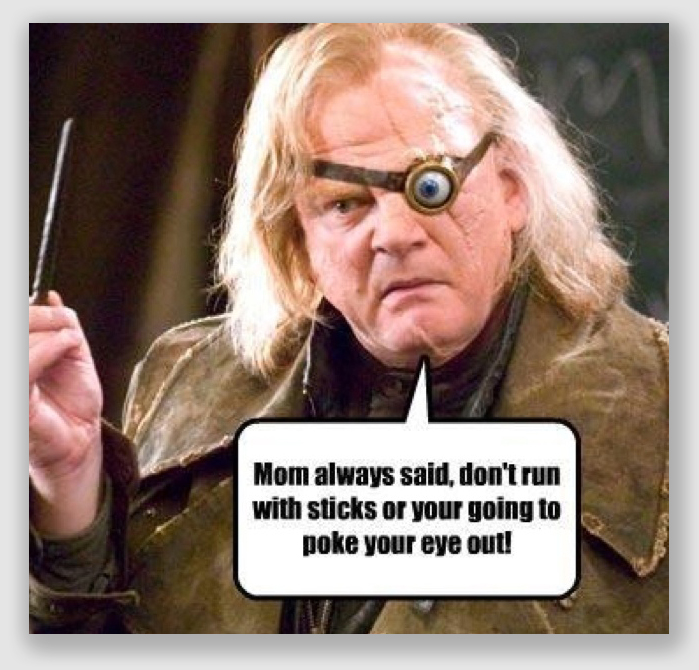
poke160829Every adult can recite the many and varied warnings and admonitions we heard from parents when we were kids. Among them were “you’ll catch your death of cold,” “clean up your plate, because there are starving kids in India/China/Africa.” We imagine Momma Trump telling a young Donald to “always tell the truth.” Good advice that can save you headaches later. 

And, of course, there’s that Christmas Story classic, “you’ll shoot your eye out.”

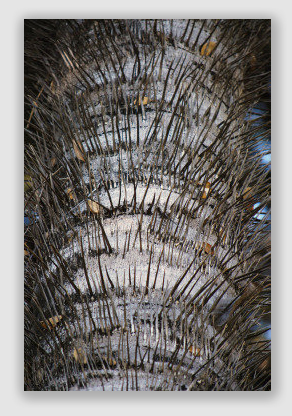
Today’s case is about Peter Robles, a kid who didn’t shoot out his eye but did poke it out. Petey, an impetuous 3-year-old, ran straight into a very sharp palm frond while playing in the Severyn family’s yard next door to his house.

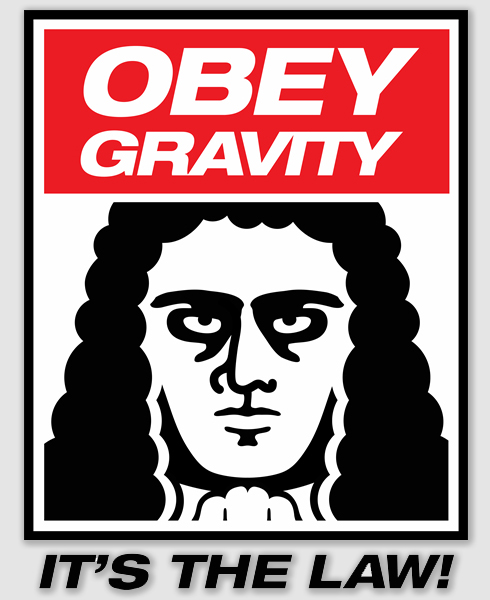
We remember when the neighbor kid climbed our magnolia tree once while it was raining. (We, or maybe our mother, had enough sense that we were kept indoors, out of the rain). The neighbor kid lost his footing on a slippery bough, fell, and whacked his chin on the branch as he passed on the way to the ground. Even then, the law of gravity was in force.

obey160829The neighbor boy showed up the next day with stitches and haughtily told us that his parents were going to sue our parents. Not really understanding the law, we had visions of losing outr house, car and toys, and being reduced to panhandling on the village square. Had we really appreciated the law, we would not have been scared. We would have been petrified.

In today’s case, the toddler’s parents really did sue, complaining that the palm trees were a “hidden peril” in the neighbor’s property and that he had thus breached his duty to little Peter. The Robles said the little boy was an “invited guest,” and thus the Severyns had a duty to warn the kid about the hidden dangers of sharp palm fronds.

The Court of Appeals disagreed, patiently explaining to a lawyer who may well have slept through the first year of law school how the status of the person on the landowner’s property determines the duty of care the owner owes. The Court quite reasonably found that the palm trees were anything but “hidden.” Even if the Severyns had been sloppy in trimming the palm tree – something that had not been established – the negligent trimming did not make the trees appear deceptively safe. Even Petey’s dad had told the boy to be careful when playing at the Severyns (as if we didn’t have that warning go in one ear and out the other countless times during our youth).

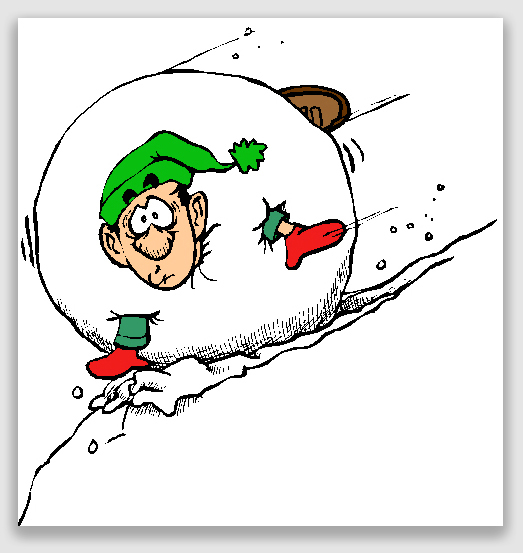
oneear160829Sure the boy was only three years old, the Court said, but even taking his tender age into account, the Severyns did not owe him a duty greater than the one they discharged toward him.

We have railed about it before, the American perception that once a victim has been injured, a jury is duty-bound to look around the courtroom for someone who should be made to pay for it. There’s no discounting the sadness of seeing someone accidentally killed or maimed for life, but as the late President Jimmy Carter pointed out, life is often unfair

Robles v. Severyn, 504 P.2d 1284, 19 Ariz. App. 61 (Ct.App. Ariz. 1973). Peter Robles, a 3-½ year old, was playing at a neighbor’s house with permission when he somehow impaled his left eye with a sharp palm frond. No one saw the accident, but the boys had been playing among the trees when it happened. The palms were in a row alongside a fence at the border of the Severyns’ property, with short, squat trunks and narrow, long fan leaves.

Peter’s parents sued the Severyns to recover for injuries Peter suffered as a result of a “sharp palm frond penetrating his left eye” while he was playing on the Severyn property as an “invited guest.” The complaint alleged that the palm trees “had a misleading, hidden, and dangerous defect to a child of tender years, which danger defendants had specific knowledge of,” and that it “constituted a hidden trap to children playing in the area.”

The Severyns got the case thrown out by the trial court on summary judgment. The single question on appeal was whether the trial court erred in doing so.

Held: Dismissal was proper. A landowner’s duty to a person on his property is determined by that person’s status. The evidence shows that young Peter was a social guest. In Arizona, a social guest is not an invitee but merely a licensee despite the fact that he is on the premises pursuant to an invitation from one in possession. The general rule is that one who goes upon another’s property as a gratuitous licensee must take it in the condition he finds it and must assume all risks incidental to such condition. This rule applies to children as well as adults, and to natural as well as artificial conditions. The owners of the premises owe no duty to a guest other than to refrain from knowingly letting him or her run upon a hidden peril, or wantonly or willfully causing the guest harm. However, the rule is that a host who knows of a concealed danger upon the premises is guilty of negligence if he permits the guest, unwarned of the peril, to come into contact with that danger, and he may be held liable to the guest for an injury thus sustained.

Palm trees can provide the unsuspecting with an unpleasant time.

Palm trees can provide the unsuspecting with an unpleasant time.

The Court held that the “hidden peril” doctrine did not apply. The trees were neither hidden nor did they have a deceptive quality. The accident occurred during daylight hours and the trees were clearly visible. Peter had been cautioned by his father before to be careful playing. The Court said that even if it assumed that the Severyns were negligent in failing to trim the branches, such a failure did not give the trees a deceptive or innocent appearance. If a dangerous condition existed, the Court held, it was an obvious one, and the Severyns thus had no duty to warn. The Robles stressed Peter’s age, arguing that a 3-year-old child could not have realized that these trees were dangerous. While the Court admitted that it was true, it did not believe that “all circumstances giving rise to a possible danger to a child create a factual question as to whether a ‘hidden danger’ exists. One would have to ‘childproof’ his property if such were the case.”

The Court ruled that while the care to be taken by the owner or occupant must be commensurate with the danger to, and with the immaturity and inexperience of, the child to be protected, any requirement in this respect must not be so onerous as to make the ownership or possession of property burdensome instead of enjoyable. The use of property should not be burdened with the need to take precautions against every conceivable danger to which an irrepressible spirit of adventure may lead a child. There is no duty to take precautions where to do so would be impracticable, unreasonable, or intolerable.

– Tom Root

 TNLBGray140407

Case of the Day – Friday, June 27, 2025

HOW MUCH IS ENOUGH?

A eucalyptus tree, similar to the one that offended Ms. Cannon

A eucalyptus tree, similar to the one that offended Ms. Cannon.

There was a time, back when people of grit populated the land, that a landowner only had one choice when his neighbor’s trees encroached – to cut ‘em back. The Massachusetts Rule was the coin of the realm: if you didn’t like your neighbor’s tree overhanging your eaves, or its roots wrapping around your sewer line, you only had one option. The courts didn’t want to hear about it. Self-reliance was what it was all about.

Then along came the Hawaii Rule, which suggested that a naturally growing tree could be or could become a nuisance, and that an aggrieved landowner could sue for an order requiring its removal. One rule does not necessarily negate the other. So when does one oil up the chainsaw, and when does one fire up the word processor?

The Massachusetts Rule is, generally speaking, a blunt instrument. It’s one thing to cut away branches that pose a threat (or even an inconvenience) to your property. But what if cutting a limb back to the property line leaves a 15-foot leafless stub extending from the branch to the boundary. That’s not necessarily according to ANSI Standard A-300, but on the other hand, you don’t have the right to trim it properly unless your neighbor consents to you coming onto his or her land to do so.

Or, more dangerously, what if you cut back roots to the extent that the tree loses too much subsurface support, and falls on your neighbor’s new Bugatti Chiron? Are you liable? After all, you did no more than what the Massachusetts Rule permitted you to do.

The Hawaii Rule, on the other hand, is Doug Lewellyn’s dream. What an All-American solution – let’s sue! When is harm sensible? When your foundation walls collapse? When a dead branch falls on your Bugatti? When leaves clog the filter on your swimming pool? How much harm is enough?

Joan Cannon lived next to Lamar Dunn. Joan was unhappy with the roots from the Dunns’ eucalyptus tree, which were encroaching underground onto her land, as roots are wont to do. After all, a tree will quite often send roots out 35 feet or more from the base of the trunk, and the root system has little regard for some lines drawn on a recorder’s map.

We’re not sure why Joan was so exercised. Maybe she was naturally crotchety. Perhaps she was unusually territorial. Maybe her neighbor had a nice Bugatti, while Joan drove a Yugo. What we can be sure of is that the eucalyptus roots weren’t really causing any harm.

encroach160715

Sometimes encroaching roots can be an inconvenience.

That didn’t stop Joan from suing the Dunns.  The trial court denied an award of any damages and refused to order Lamar the appellee to remove the offending roots and tree. Joan appealed.

The Court of Appeals considered the classic Restatement of the Law trespass approach, which held simply that if a neighbor owns something that trespasses, he or she has to remove it if there is a duty to remove it, regardless of whether it causes harm or not. That’s the rub, the court said. When does such a duty arise?

The court found guidance in the Restatement on nuisance and held that a duty to remove offending branches or roots arose when some actual and sensible or substantial damage has been sustained. Joan’s general objection to the unseen eucalyptus roots did not equate to harm. Thus, the roots could remain.

Cannon v. Dunn, 145 Ariz. 115, 700 P.2d 502 (Ariz.App. Div. 2 1985). This case involves the liability of Lamar Dunn, an adjoining landowner, for roots from a eucalyptus tree that invaded the subsurface of land belonging to his neighbor, Joan Cannon. The trial court found that the roots had caused no actual damage, and denied an award ordering the Dunns to remove the offending roots and tree.

Joan appealed.

Held: Dunn did not have to remove the roots. The Court of Appeals rejected Cannon’s argument that it should apply the Restatement (Second) of Torts § 158 (1965), which stated that “one is subject to liability to another for trespass, irrespective of whether he thereby causes harm to any legally protected interest of the other if he intentionally… fails to remove from the land a thing which he is under a duty to remove.”

The Court said that it was “obvious that one must first determine whether there is a duty to remove the object and that in this case § 158(c) really begs the question.” More to the point, the Court observed, was the Restatement (Second) of Torts § 840 (on nuisances), which held that a possessor of land is not liable to his adjoining landowner for a nuisance resulting solely from a natural condition of the land.

Ms. Cannon could not prove any damages flowing from the alleged encroachment ... unlike this guy.

Ms. Cannon could not prove any damages flowing from the alleged encroachment … unlike this guy.

The Court paid lip service to the Massachusetts Rule, noting that Arizona law permitted a “landowner who sustains an injury by the branches or roots of a tree or plant on adjoining land intruding into his domain, regardless of their non-poisonous character may, without notice, cut off the offending branches or roots at the property line.” At the injured landowner’s expense, of course.

But when some actual and sensible or substantial damage has been sustained, the Court said, the injured landowner may maintain a nuisance action for abatement of the nuisance, and compel the removal of the branches or roots at the tree owner’s expense. However, where no injury has been sustained, no lawsuit be brought for either an injunction or damages.

– Tom Root
TNLBGray140407

Case of the Day – Tuesday, March 18, 2025

WHO GIVES A HOOT?

mexowl160422

The Mexican Spotted Owl is easily identified by its distinctive headgear.

Now a paean to the Mexican Spotted Owl, that cute, furry little critter. Well, maybe it’s not furry – more like feathery – but the bird is an endangered species just the same.

When Precision Pine & Timber landed 14 contracts to destroy wildlife habitats — uh, make that harvest timber — its performance of the agreements got derailed by a U.S. District Court, which stopped the Forest Service because it had been sloppy in figuring out how to save the owls. The contracts covered the eventuality, but Precision Pines was entitled to ask for its “out-of-pocket” expenses incurred if the performance of the contracts was delayed. And performance was indeed delayed… for up to 15 months as the Forest Service was sent back to school by the district court until it got its analysis of the spotted owl problem done to the court’s satisfaction.

The Forest Service extended the termination date of the contracts, but Precision Pines nevertheless counted up its expenses and turned in a bill for a breathtaking $13 million. The Forest Service took a sharp pencil to the invoice and offered about $18 grand. So Precision Pines sued, arguing it was entitled to a “lost volume” theory. Follow this: if Precision Pines hadn’t been delayed, it would have made a ton of money during those 15 months that, because of the interruption, it didn’t make until much later. If it had made the money when it originally contracted to make it, it would have used the profits to invest in other contracts, where it would have made profits to invest in other contracts, and so on.

Like a snowball rolling down a slope, the few bucks from the interrupted contract would have yielded an avalanche of green someday. But the Court said while that might be so, it didn’t make the deals that never were legitimate damages from the interrupted timber deals. The damages were simple: the profits that weren’t made during the period of delay, minus the profits made after the contracts resumed.

The wise old Mexican Spotted Owls couldn’t have reached a better decision.

Precision Pine & Timber, Inc. v. United States, 81 Fed. Cl. 235, 2007 U.S. Claims LEXIS 295, 2007 WL 2753329 (Fed.Cl., Sept. 14, 2007). Precision Pine & Timber held 14 timber contracts with the U.S. Forest Service. In August 1995, the Forest Service suspended the contracts after a U.S. District Court required the Forest Service to submit its Land and Resource Management Plans for consultation with the Fish and Wildlife Service in light of the listing of the Mexican Spotted Owl as a threatened species.

About eight weeks after the Mexican Spotted Owl suspensions were imposed, the Forest Service released three of the 14 timber sale contracts from the suspension. The balance did not get released for more than a year afterward. Each of the suspended contracts contained a provision on interruption or delay that provided in the event of interruption or delay of operations, Precision Pine’s exclusive remedy was an adjustment of the contract term and out-of-pocket expenses incurred as a direct result of the interruption or delay. Out-of-pocket expenses did not include lost profits, replacement cost of timber, or any anticipatory losses.

Profits begat profits, Precision Pine argued ... and the pile grows ever larger.

Profits begat profits, Precision Pine argued … and the pile grows ever larger.

Throughout the suspensions, Precision Pine considered the Forest Service to have breached the timber sale contracts, but Precision Pines treated the breaches as partial and resumed harvesting timber after the suspensions were lifted. Precision Pines requested contract term adjustments for each contract affected by the suspensions, which were granted, and it submitted claims for $13,097,209.62 in damages resulting from the suspension of the 14 contracts under the “lost-volume” seller theory. The Forest Service decided Precision Pines was entitled to only $18,242.78 in damages. Precision Pines sued.

Held: The Forest Service breached the contracts, but the damages were severely curtailed.

The Court held that the lost volume seller theory, as formulated by Precision Pines, depended on showing that its failure to make profits on the 14 timber contracts in a timely manner rendered it unable to participate in other future contracts, thus missing out on profits from those deals. The Court held that such future damages for independent and collateral timber contracts not related to the subject matter of the breached contracts were unrecoverable.

youlose160422

A wise owl, indeed …

The Court further held that permitting Precision Pines to use these unrecoverable damages to reduce the amount of the deduction required to be made in the lost profits calculus — to account for the profits earned on the breached contracts — would be the functional equivalent of actually awarding damages for the lost profits on the future additional contracts. What’s more, the Court said that even if Precision Pine’s theory of recovery did not require it to show unrecoverable damages, Precision Pines had failed to show that it met the criteria for application of a modified lost-volume theory.

The Court found that the plaintiff was entitled to recover lost profits on the breached contracts as measured by the expected profits it would have earned on the breached contracts during the suspension period, minus profits it actually earned on the breached contracts in the post-suspension period. And that was it.

– Tom RootTNLBGray

Case of the Day – Friday, February 21, 2025

PARTITION

stooges160331What happens when landowners can’t get along? Not like husbands and wives – that kind of “not getting along” will always be with us. Rather, what happens when heirs end up owning property together, with each having a fractional piece and no one being able to agree with anyone else about anything?

When that happens – as it did in today’s case – the law provides that land may be partitioned, that is, divided among the owners according to statute. Where reasonable division isn’t feasible, the land is sold and the proceeds are divided.

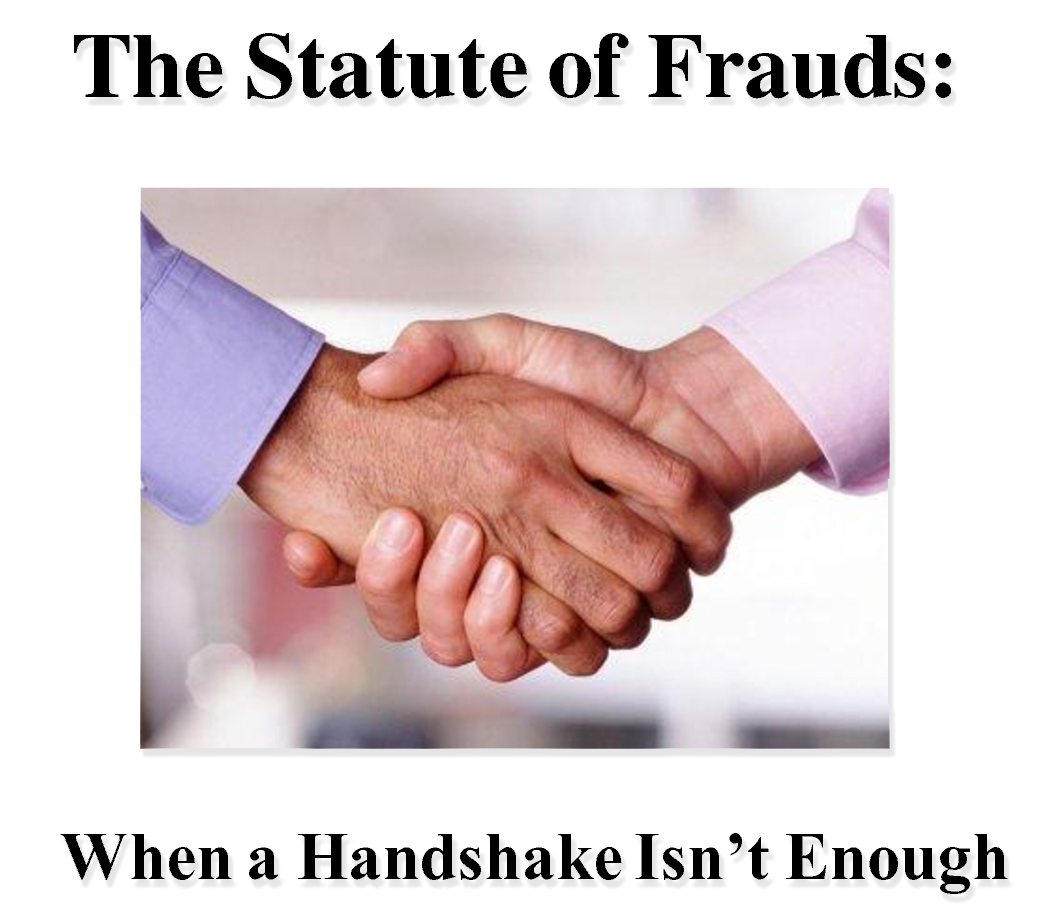
There’s another legal concept important for today’s case, and that’s what’s commonly known as the Statute of Frauds. The Statute of Frauds was intended to prevent frauds by requiring that certain types of agreements be in writing. Traditionally, the statute of frauds requires a signed agreement for

• contracts in consideration of marriage (including prenuptial agreements);

• contracts that by their terms cannot be performed within one year;

• contracts relating to an interest in land (including contracts of sale, mortgages and easements);

• contracts by the executor of a will to pay an estate debt with his or her own money;

• contracts for the sale of goods totaling $500 or more; or

• contracts in which one party becomes a surety for another party’s debt or other obligation.

The contracts covered by the Statute of Frauds can be remembered by using the mnemonic device “MY LEGS”: Marriage, contracts for more than one Year, Land, Executor (or Estate), Goods ($500 or more), Surety.

shake160330In today’s case, one landowner – called a co-tenant because the owners owned the land as a tenancy in common (an expression having nothing to do with rental) – wanted to cut down trees on two of the parcels. When the other co-tenants complained, the first (we’ll call him Greedy Gus) said he was taking the two lots on which the trees were located anyway, and letting the other owners have the more expensive, better parcel. The other owners (think of them as Sloppy and Hasty) agreed with his oral proposal and even made a $16,000 equalization payment as part of the understanding. But when they finally got around to signing an agreement, Greedy Gus wanted to change the deal. Now he sought a whopping big equalization payment, one Sloppy and Hasty wouldn’t pay.

No deal was signed, and Gus then sued for partition under the statute (which would have valued the entire property and given him a much larger stake than what the others said he had agreed to). Sloppy and Hasty counter-claimed, but the trial court granted summary judgment for Gus. S & H appealed, and the Court of Appeals sided with them.

The appellate panel held that there were enough facts in play to require the matter to go to a jury, but the Arizona Supreme Court had the last word.  Both the appeals court and the Supreme Court warned Sloppy and Hasty, the two co-tenants who were arguing for the existence of an agreement, that the alleged voluntary partition agreement was subject to the Statute of Frauds, and the amount of paper evidencing an agreement was pretty sparse.  Partial performance of a contract will exempt it from the Statute of Frauds: if I sell you a lot, and accept your payment but refuse to give you a deed, the partial performance — your payment — excuses non-compliance with the Statute. Here, the Court of Appeals was pretty clearly unimpressed with the suggestion that the tree cutting was enough performance to excuse the lack of paper.  It offered Sloppy and Hasty their day in court, but the day didn’t look too promising.

badday160331The day turned out to be anything but promising.  The Arizona Supreme Court held that in order to constitute partial performance, the act had to unequivocally prove the existence of the unwritten contract.  In other words, “part performance must consist of acts that ‘cannot, in the ordinary course of human conduct, be accounted for in any other manner than as having been done in pursuance of a contract’.  The Supreme Court said that “in addition to providing an equitable basis for ordering specific performance, acts of part performance serve an important evidentiary function – they excuse the writing required by the statute because they provide convincing proof that the contract exists.  So that this exception does not swallow the rule, the acts of part performance take an alleged contract outside the statute only if they cannot be explained in the absence of the contract.”

Here, the Supreme Court ruled, the acts that Sloppy and Hasty called evidence of part performance were really acts that were as consistent with their one-third co-tenancy interest as they were of anything else.  With no partial performance, the unwritten contract went unenforced, too.

Owens v. M.E. Schepp Ltd. Partnership, 182 P.3d 664 (Supreme Court of Arizona, 2008).  The parties owned undivided interests as tenants in common in contiguous residential lots. Hal Owens had a two-thirds interest and Schepp Partnership had a one-third interest. Two of the three lots were vacant, and a residence and guest house were on the third. The guest house was rented to third parties, but one of the Schepp partners lived in the residence.

Perhaps one of the first cases of partitioning ...

     Perhaps one of the first cases of partitioning …

Hal sued for partition of the lots and an accounting for rents and profits. Schepp Partnership answered and counterclaimed for specific performance of an alleged voluntary partition agreement or, alternatively, damages for a purported reduction in the value of two of the lots caused by Hal’s removal of mature trees. Schepp Partnership argued that statutory partition was not available to Hal because he had entered into the voluntary partition agreement.

While meeting with the Schepps over a City notice to clean up the lots, Hal had said he wanted to remove a row of mature, 65-foot tamarack trees along the northern edge of the lots. Thomas Schepp objected, saying the neighbors would be upset. Hal responded that he would decide what to do because he was taking two lots and leaving the most developed one to Schepp Partnership. He also told the partners that because Schepp Partnership would be getting the more valuable lot, it might cost the partners some money.

The parties agreed to divide the lots in this manner but did not reach an agreement on any equalization payment. The Schepp brothers understood, however, that Hal might make a future claim for such payment. Soon after the meeting, Hal removed the trees. He told one of the Schepps that because he had paid a great deal of money for the two lots, the choice to remove the trees was his alone. Hal and Thomas Schepp then agreed a second time that Hal would take two lesser-value lots and Schepp Partnership would take the developed one. Based on this agreement to split the lots, the Schepps allowed Hal to remove the mature trees. Schepp Partnership later paid Hal $16,600, one-third of the total removal cost, as compensation to Hal in light of Schepp Partnership’s receipt of the more valuable lot.

A few months later, the Schepp Partnership sent a partition agreement to Hal for execution, but he returned it unsigned objecting to the lack of an equalization payment provision. Hal proposed that Schepp Partnership pay him $233,333 and grant him an access easement as equalization. The parties negotiated but never reached an agreement regarding additional compensation. The trial court granted partial summary judgment for Hal, ordering statutory partition and appointment of commissioners and dismissing the counterclaim for specific performance, holding that there was never an agreement as to how the property was to be divided between the parties. The Schepps appealed.

The Court of Appeals reversed the trial court, but the Schepps couldn’t find much solace in that fact. Partition is a means of dividing real property among certain types of owners. Property may be partitioned by agreement, or — if agreement cannot be reached — according to the requirements of state law. Voluntary agreements to partition real property are preferred to and controlling over involuntary partition proceedings.

sof160331A contract is formed when there is a bargain – consisting of promises exchanged – and consideration. To be enforceable, a contract must be reasonably certain and definite. Agreements leaving material terms for future resolution can be enforceable nonetheless if the parties sufficiently manifested mutual assent to be bound by those agreements. Where terms are missing, extrinsic evidence can be used to establish the meaning of the parties’ contract and supply omitted terms.

Here, the Court of Appeals said, a genuine issue of fact existed as to whether the co-tenants mutually agreed to be bound by an oral partition agreement. That issue of fact precluded summary judgment. But any alleged agreement between the co-tenants to partition the lots constituted an agreement for sale of their respective interest in the other’s remaining real property for purposes of the statute of frauds. And in order to satisfy the statute of frauds, the agreement must be in writing.

Subsequently, the Arizona Supreme Court disagreed, reinstating the original trial court decision.  It held that no trial was necessary because neither the Partnership’s withdrawal of its objection to the tree removal nor its payment of one-third of the landscaping contractor’s bill was “unequivocally referable” to the alleged contract.  Put differently, neither act is of such character as not to be reasonably explicable on other grounds.  While it is true that partial performance of an oral contract is enough to take the agreement outside of the Statute of Frauds, the Partnership did nothing that proved the deal through partial performance. Thus, the contract should have been – but was not – put in writing.

– Tom Root

TNLBGray

Case of the Day – Monday, August 5, 2024

THE ONLY THING THAT STINKS IS THE PLAINTIFF’S CASE

P.J. had a live-in girlfriend named Callie. As near as anyone could tell, she did not pay to live there, at least not with remuneration to P.J. that would be reportable to the IRS. But when P.J.’s condo suffered damage from intruding tree roots, Callie recognized an opportunity.

P.J. first convinced the condo association, which owned the offending tree, to cut it down. After that, he sued for the damages the roots had caused to his sewer system and basement. But right in the middle of his lawsuit, girlfriend Callie figured that she was really sort of P.J.’s tenant, and her careful legal research – probably Renting Out Your Property For Dummies – she decided that she had been grievously injured by the obnoxious smell in the guest bathroom, which she was certain was from the offending tree roots.

And, this being America, what do we do when we think we have been grievously injured? We sue.

We’ve smelled some pretty malodorous bathrooms before, but tree roots never appeared to be the cause. Still, Callie jumped headlong into her own lawsuit against the condo association and its management company because — after all — she complained that she had been embarrassed when guests used her bathroom.

The trial and appellate courts made short work of Callie’s complaint. A tenant, they said, cannot sue because of damage to the property being rented. Instead, a tenant has to allege some injury to the tenancy, that is, the tenant’s right to use the property.

Callie’s lawyer (we assume she had one, although not much of one) failed to allege that Callie had suffered any concrete injury because of the smell. What’s worse, the lawyer forgot to produce any evidence that the tree roots had anything to do with the smell at all (if there was a smell).

P.J., the property owner, competently handled his lawsuit and won some damages from the condo association. His putative tenant and honeybunny did not.

Larsen v. Snow Property Services, 2017 Ariz. App. Unpub. LEXIS 241, 2017 WL 899881 (Ct. App. Arizona, Mar. 7, 2017): Callie Larsen and a guy named P.J. are a couple. (The opinion never mentions P.J.’s surname, but we imagine that it was not “Funnybunny“). P.J. owned a condo in a development controlled by Wind Drift Master Community Association and managed by Snow Property Services. Although she was P.J.’s squeeze, Callie decided she was really his tenant. This epiphany occurred about the time she figured out she could score some money damages from a couple of deep-pocketed defendants.

In 2012, P.J. complained to Snow about damage to the basement walls of his condo caused by the roots of a tree located on Wind Drift’s adjoining property. Snow removed the tree within about two months.

Callie was not satisfied. She claimed the removal of the tree did not resolve the damage, and an unpleasant smell remained in the guest bathroom. In March 2013, P.J. sued Wind Drift, and after a jury trial in 2016, he got a judgment for the damage the tree roots caused his condo.

Meanwhile, Callie was a busy little tenant (if a tenant she was). She sued Snow and Wind Drift herself in late 2014, alleging negligence, breach of contract, and trespass to her interests as a tenant. The defendants moved for summary judgment, arguing Callie had no proof her tenancy interest (assuming there was one) had been injured or damaged. The superior court agreed and threw Callie’s case out.

Callie appealed.

Held: Callie had shown no damages that would let her recover.

Callie complained that the trial court incorrectly determined that, as a tenant, she was not entitled to recover damages for physical damage done to the property that constituted her “tenancy.”

But that was not quite the case. Her trial court held that claims for property damage caused by tree roots are not hers to bring. The court held that these claims (if they exist) belong to the property owner, not the tenant. If the tenant has suffered damage to her tenancy, the trial court said, (that is, her right to possess and enjoy the property), then her remedy is against her landlord under the terms of her rental agreement (which, conveniently, was not in writing). The trial court did not find any admissible evidence of damages to Callie’s tenancy caused by the now-removed toxic tree. Thus, the trial court’s ruling was not based on Callie’s lacking standing, but rather on a lack of admissible that her tenancy was injured by recoverable damages.

Callie contended there is a “universal rule that tenants may recover for damage to rental property.” Even if that is so, the Court of Appeals said, the tenant still must produce some evidence from which a reasonable jury could find in favor of the plaintiff. Callie claimed negligence, breach of contract, and trespass against Snow and Wind. But each of those, the Court said, requires proof of damages.

Such is always true for negligence or breach of contract. But at common law, trespass required no showing of damage. Callie’s trespass claim, however, was special: she did not claim that Snow or Wind had trespassed, but rather the roots of a tree Wind owned and Snow managed had trespassed. Most states do not recognize the theory that a tree can trespass on behalf of its owner. Not so in Arizona. Even so, Arizona law holds that a “landowner upon whom a sensible injury has been inflicted by the protrusion of the roots of a noxious tree or plant has the right to an action at law in trespass,” but “where there is no injury or damages “no action may be had.”

Contrary to Callie’s claim, the Court of Appeals said, the trial court did not base its ruling on Callie’s lacking standing to sue, but rather on Callie’s utter lack of admissible proof of recoverable damages as a tenant. Callie’s “tenancy” consisted of the “use and occupancy” of P.J.’s property pursuant to whatever terms their purported oral rental agreement may have contained (or as long as he wanted her, whichever came first). Arizona law defines a tenant as “a person entitled under a rental agreement to occupy a dwelling unit to the exclusion of others.” A.R.S. § 33-1310(16). Thus, the Court said, in order to support her claims against Snow and Wind, Callie had to present admissible evidence supporting her claim of injury to herself or her tenancy, not damage to property she did not own.

Callie asserted a “loss of quiet enjoyment of property she rented.” The record showed, however, that at all times she was able to occupy, use, and exclude others from the property in a manner consistent with the terms of her purported oral rental agreement. During her deposition, Callie complained about an embarrassing smell in her guest bathroom, but she admitted she continued to use it. She speculated that the odor resulted from one or more pipes cracked by the tree roots, but she did not submit any admissible evidence linking the tree roots to the smell. She claimed there were times she could not park in the driveway due to the root protrusion, but she did not establish any exclusion from use, damage to her vehicle, or costs incurred for alternate parking.

In a last-minute Hail Mary, Callie submitted a report from a real estate broker saying the rental value of the property was diminished by about $800.00 a month as a result of the damage attributed to the intruding tree roots. The Court observed that even if the report were competent evidence of damage, its defects were legion: (1) the real estate associate broker was not shown to be an expert, (2) the report contained the disclaimer that it was “not an appraisal,” (3) the report assumed the smells in the condo were caused by the tree roots without any evidence that was so, and (4) the report was not supported by an affidavit.

The Court said that as for harm to Callie herself, while she asserted she had been harmed by the smelly bathroom, she could not identify any injury other than embarrassment about the smell when guests used the bathroom. She never claimed specifically that the reek harmed her physically or emotionally. More significantly, the Court said, “she has not presented admissible evidence establishing the source of the odor or that the cause of that source of odor is attributable to Defendants. Stated simply, the evidence offered by [Callie] does not rise above allegation and speculation.”

– Tom Root

TNLBGray140407

Case of the Day – Friday, August 2, 2024

NINE-TENTHS OF THE LAW

The old (and not necessarily flawed) legal aphorism goes something like “possession is nine-tenths of the law.” In the world of Federal Tort Claims Act litigation, the expressions would just as accurately read “discretion is nine-tenths of the law.”

Yesterday, we discussed the Federal Tort Claims Act, and its function as a waiver of sovereign immunity to permit suit against the United States for some kinds of claims.

What we did not tell you yesterday is that there are some exceptions you should know about. If a federal law enforcement agent seizes all of your stuff and then destroys it? Tough luck, fella. If the Postal Service loses your mail? You can guess. A surly Social Security Administration clerk punches you when you complain that you got shorted on your check? Pound sand. Don’t believe it? Read Title 28, U.S. Code, Section 2680(a).

Of all the exceptions, the one hardest to fathom (and easiest for the government to game us with) is the first exception. A district court has no jurisdiction (which means it cannot hear your lawsuit) over claims “based upon the exercise or performance or the failure to exercise or perform a discretionary function or duty on the part of a federal agency or an employee of the Government.” 28 U.S.C. § 2680(a).

Some of this makes sense. The government decided not to build a dam on a river above your town. That does not mean the government is liable for the next flood. The government-run control tower at an airport closes at 10 p.m. The government is not liable for a collision on the runway at midnight.

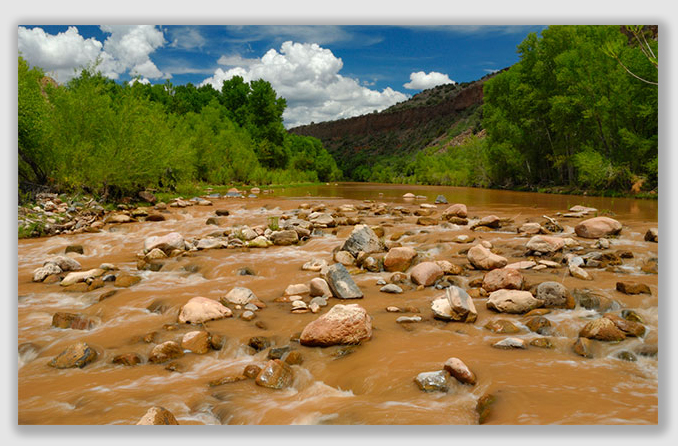
But some of it may not. In today’s case, the U.S. Geological Survey constructed a “cableway” – a cable strung over a wild and scenic river in Arizona for the purpose of accessing a “streamgage” station, a series of devices used to measure river flow, temperature, turbidity and water level. When a helicopter struck the naked and unmarked cable, killing everyone on board, the survivors sued the USGS under the FTCA for negligence in failing to mark an obvious danger. After all, the USGS had had aircraft strike its cableways before. You’d think the agency would know better.

The Court of Appeals, however, affirmed that the USGS’s failure to mark the cable fell “squarely in this discretionary function exception.” With no evident sense of irony, the Court warned that the “invocation of the discretionary function doctrine in cases involving public safety should not be read as giving the government a pass every time it raises the exception.” Judging from this case, it is difficult to accept the Court’s admonition at face value.

Perry v. United States (In re Morales), 895 F.3d 708, 710 (9th Cir. 2018). The U.S. Geological Survey is a federal agency responsible for collecting scientific information about the “geological structure, mineral resources, and products of the national domain.” As part of its duties, USGS collects streamflow data and water quality samples to predict floods, manage drinking water, evaluate water quality standards, aid in the preservation of aquatic habitats, and investigate streamflow history and climate change. This information is collected through “streamgage” sites that include a continuously functioning measuring device that collects the mean daily streamflow in a particular watercourse. When a streamgage site is installed in a location without a bridge, USGS generally builds a cableway — a cable car suspended from a wire rope—to provide USGS personnel with safe access to the site.

In 1934, USGS installed a streamgage site and cableway over the Verde River Canyon in Prescott National Forest, Arizona. USGS has operated the streamgage site since 1932. The cable stretched 286 feet across the canyon at a height of 40 feet above the river. Despite the cable being virtually invisible from 100 feet or more away, or to aircraft flying at the same height, USGS did not mark the cableway or add warning signs because the cable did not meet the criteria for marking under USGS policy.
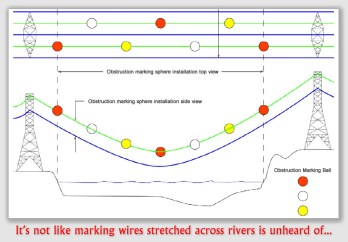
Since 1980, USGS has modified its policy on marking several times, often in response to accidents involving cableways. In each case, however, it adopted Federal Aviation Administration standards for marking obstructions to airspace. The FAA regs required marking of objects more than 200 feet above the ground (“AGL”), and suggested that marking of cableways should be considered if they are hazardous to low-flying aircraft. USGS District offices were directed “to review all… cableway installations and decide which may be hazardous to low-flying aircraft,” and to develop “[a] plan… to install markers on those cableways designated as potentially hazardous.”

After an aircraft struck an unmarked cableway in 1995, USGS considered “a broad policy to require the marking of all cableways” but ultimately decided against it after consulting with an FAA Air Specialist. The specialist reviewed photographs and aeronautical charts for a subset of cableways and recommended against marking them because none met the FAA criteria for marking obstructions. The expert recommended against marking any USGS cableways that did not meet the FAA criteria.

USGS later issued Memorandum No. 2000.13, which recognized that “Congress has charged the FAA with the responsibility to promote the safety of aircraft and the efficient use of navigable airspace,” and repeated USGS’s policy that structures over 200 feet AGL “should normally be marked,” but specified nothing for cableways under 200 feet AGL. In 2008, USGS issued a policy manual — Survey Manual, No. SM 445-2-H (the “2008 Survey Manual’’) — that was functionally the same as the 2000 Memorandum. The 2008 Survey Manual repeated that it was USGS policy to comply with the FAA’s obstruction marking regulations.

Even though the default policy was not to mark cableways under 200 feet, USGS also considered site-specific and other factors to determine whether to mark cableways that did not meet FAA criteria. The specific considerations relevant to the Verde River cableway included the absence of any prior accidents; the cost of installation; the physical risk to employees installing markers; the risk of confusion to pilots who expect to see markings at higher heights; the likelihood of vandalism by marksmen and accompanying economic and safety concerns; and the United States Forest Service’s scenic integrity objectives to “minimize or eliminate visual distractions” in the area given the Verde River’s designation as a “Wild and Scenic River.”
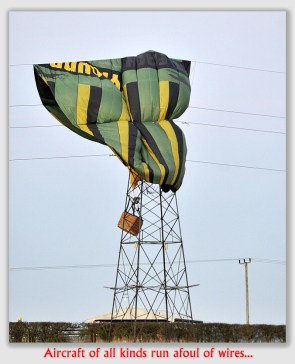
In June 2012, a helicopter flown by Raymond Perry crashed in the Prescott National Forest, killing Perry and his three passengers. The chopper struck the unmarked cableway suspended forty feet above the Verde River by USGS as part of its cableway. Although the cable was virtually invisible to aircraft pilots, USGS placed no markers or warning signs out because the unmarked cableway complied with the FAA obstruction regulations.

Following the accident, Perry’s estate sued, claiming that USGS was negligent for failing to mark the cable. The district court held that the decision not to mark the cable was a discretionary function of USGS, and thus exempt from the Federal tort Claim Act. It thus held it lacked subject matter jurisdiction and dismissed the lawsuit.

Perry’s estate appealed.

Held: USGS was exempt from liability because its decision not to mark the cableway was a discretionary function of the agency.

The FTCA waives the government’s sovereign immunity for tort claims arising out of negligent conduct of government employees and agencies acting within the scope of their duties, allowing a plaintiff to sue the government “under circumstances where the United States, if a private person, would be liable to the claimant in accordance with the law of the place where the act or omission occurred.” If there is no waiver of sovereign immunity through the FTCA, the district court lacks subject matter jurisdiction and the case must be dismissed.

One exception to the broad waiver of sovereign immunity under the FTCA is called the discretionary function exception. That exception provides immunity from suit for any claim “…based upon the exercise or performance or the failure to exercise or perform a discretionary function or duty on the part of a federal agency or an employee of the Government, whether or not the discretion involved be abused.” The purpose of the exception is to prevent “judicial ‘second guessing’ of legislative and administrative decisions grounded in social, economic, and political policy through the medium of an action in tort.”

There is a two-step process to determine applicability of the exception. First, a court must decide whether the act is “discretionary in nature,” which necessarily involves an element of judgment or choice. The “judgment or choice” requirement is not met where a “federal statute, regulation, or policy specifically prescribes a course of action for an employee to follow.” If a statute or policy directs mandatory and specific action, the inquiry comes to an end: there can be no element of discretion when an employee has no rightful option but to adhere to the directive.

If discretion is involved, a court must consider whether the discretion “is of the kind that the discretionary function exception was designed to shield”—that is, governmental actions and decisions grounded in social, economic, and political policy. The focus is on whether the actions are “susceptible to a policy analysis,” not whether the government actually considered such public policy judgments when making the decision.

No federal statute, regulation, or policy specifically prescribed the marking of the Verde River cableway. Instead, the decision whether to mark the cableway was a result of considered judgment and choice. The Verde River cableway fell within USGS’s default policy not to mark cableways that did not meet the FAA’s 200-feet AGL criteria. Nor did the cableway trigger any of the verification requirements set forth in the 2008 Survey Manual and 2000 Memorandum, which only applied to cableways exceeding 200 feet AGL that were not marked.

Thus, there was no mandatory directive within USGS’s policies to mark the cable. That USGS policy let its personnel consider specific factors which necessarily varied by site “highlights that judgment was involved in the decision.” This is not an instance, the Court said, “in which USGS’s policy identified site-specific considerations that mandated marking. No such guidance was provided in any USGS policy, so USGS employees were left to exercise their judgment when deciding whether to mark a particular site.”

Although its policy directed personnel “to review” all cableways, “decide which may be hazardous,” and develop a plan to install markers at those sites, USGS’s language cannot be construed as a “mandatory and specific” directive to mark the Verde River cableway. Rather, the policy left employees with a discretionary choice about which cableways were hazardous and which should be marked.

What’s more, the Court held that USGS’s decision is susceptible to policy analysis grounded in social, economic, and political concerns. USGS’s decision to defer to the FAA as the agency charged with “the responsibility to promote the safety of aircraft and the efficient use of navigable airspace”’ is grounded in social, economic, and political policy. USGS recognized the FAA’s role and expertise in regulating navigable airspace and affirmatively decided to defer to the agency’s standards with respect to marking.
Verde River

As well, USGS’s decision was susceptible to a number of additional social, economic, and political considerations. There were competing safety concerns, such as the risk of confusing pilots “who expect to see obstruction markers only at higher levels” and the risk to USGS personnel tasked with the installation or maintenance of the markers. Economic factors were also considered, such as the cost of installation and maintenance of the markers, particularly given the likelihood of vandalism. USGS also knew of USFS’s objective to minimize visual distractions to meet “scenic integrity objectives” given the Verde River’s designation as a “Wild and Scenic River’ and bald eagle nesting area.

“All of these considerations,” the Court ruled, “embody the type of policy concerns that the discretionary function exception is designed to protect, reflecting that USGS’s decision was based on competing policy considerations related to safety to aircraft, safety to USGS personnel, financial burden, protection of scenic integrity, and respect to the objectives of land-management agencies.”

The Court refused Perry’s argument that the government ought not to be allowed to invoke the discretionary function exception whenever a decision involves considerations of public safety. Such a “sweeping exemption would severely undermine the discretionary function exception and is unsupported by our precedent,” the Court held. “In case after case, we have considered the government’s balancing of public safety with a multitude of other factors.” Here, USGS’s decision not to mark the cableway was “actually susceptible to policy analysis, including deference to another agency’s expertise, competing safety interests, financial burden, and the effect on scenic integrity.”

The Court warned that its “invocation of the discretionary function doctrine in cases involving public safety should not be read as giving the government a pass every time it raises the exception. We emphasize that the government bears the burden of sustaining the discretionary function exception and that the record must bear the weight of that burden.”

– Tom Root

TNLBGray140407

Case of the Day – Thursday, June 27, 2024

HOW MUCH IS ENOUGH?

A eucalyptus tree, similar to the one that offended Ms. Cannon

A eucalyptus tree, similar to the one that offended Ms. Cannon.

There was a time, back when people of grit populated the land, that a landowner only had one choice when his neighbor’s trees encroached – to cut ‘em back. The Massachusetts Rule was the coin of the realm: if you didn’t like your neighbor’s tree overhanging your eaves, or its roots wrapping around your sewer line, you only had one option. The courts didn’t want to hear about it. Self-reliance was what it was all about.

Then along came the Hawaii Rule, which suggested that a naturally growing tree could be or could become a nuisance and that an aggrieved landowner could sue for an order requiring its removal. One rule does not necessarily negate the other. So when does one oil up the chainsaw, and when does one fire up the word processor?

The Massachusetts Rule is, generally speaking, a blunt instrument. It’s one thing to cut away branches that pose a threat (or even an inconvenience) to your property. But what if cutting a limb back to the property line leaves a 15-foot leafless stub extending from the branch to the boundary. That’s not necessarily according to ANSI Standard A300, but on the other hand, you don’t have the right to trim it properly unless your neighbor consents to you coming onto his or her land to do so.

Or, more dangerously, what if you cut back roots to the extent that the tree loses too much subsurface support, and falls on your neighbor’s new last-of-its-kind Bugatti Chiron? Are you liable? After all, you did no more than what the Massachusetts Rule permitted you to do.

The Hawaii Rule, on the other hand, is Doug Lewellyn’s dream. What an All-American solution – let’s sue! When is harm sensible? When your foundation walls collapse? When a dead branch falls on your Tourbillon? When leaves clog the filter on your swimming pool? How much harm is enough?

Joan Cannon lived next to Lamar Dunn. Joan was unhappy with the roots from the Dunns’ eucalyptus tree, which were encroaching underground onto her land, as roots are wont to do. After all, a tree will quite often send roots out 35 feet or more from the base of the trunk, and the root system has little regard for some lines drawn on a recorder’s map.

We’re not sure why Joan was so exercised. Maybe she was naturally crotchety. Perhaps she was unusually territorial. Maybe her neighbor had a nice Bugatti, while Joan drove a Yugo. What we can be sure of is that the eucalyptus roots weren’t really causing any harm.

encroach160715

Sometimes encroaching roots can be an inconvenience.

That didn’t stop Joan from suing the Dunns.  The trial court denied an award of any damages and refused to order Lamar the appellee to remove the offending roots and tree. Joan appealed.

The Court of Appeals considered the classic Restatement of the Law trespass approach, which held simply that if a neighbor owns something that trespasses, he or she has to remove it if there is a duty to remove it, regardless of whether it causes harm or not. That’s the rub, the court said. When does such a duty arise?

The court found guidance in the Restatement on nuisance and held that a duty to remove offending branches or roots arose when some actual and sensible or substantial damage had been sustained. Joan’s general objection to the unseen eucalyptus roots did not equate to harm. Thus, the roots could remain.

Cannon v. Dunn, 145 Ariz. 115, 700 P.2d 502 (Ariz.App. Div. 2 1985). This case involves the liability of Lamar Dunn, an adjoining landowner, for roots from a eucalyptus tree that invaded the subsurface of land belonging to his neighbor, Joan Cannon. The trial court found that the roots had caused no actual damage, and denied an award ordering the Dunns to remove the offending roots and tree.

Joan appealed.

Held: Dunn did not have to remove the roots. The Court of Appeals rejected Cannon’s argument that it should apply the Restatement (Second) of Torts § 158 (1965), which stated that “one is subject to liability to another for trespass, irrespective of whether he thereby causes harm to any legally protected interest of the other, if he intentionally… fails to remove from the land a thing which he is under a duty to remove.”

The Court said that it was “obvious that one must first determine whether there is a duty to remove the object and that in this case § 158(c) really begs the question.” More to the point, the Court observed, was the Restatement (Second) of Torts § 840 (on nuisances), which held that a possessor of land is not liable to his adjoining landowner for a nuisance resulting solely from a natural condition of the land.

Ms. Cannon could not prove any damages flowing from the alleged encroachment ... unlike this guy.

Ms. Cannon could not prove any damages flowing from the alleged encroachment … unlike this guy.

The Court paid lip service to the Massachusetts Rule, noting that Arizona law permitted a “landowner who sustains injury by the branches or roots of a tree or plant on adjoining land intruding into his domain, regardless of their non-poisonous character may, without notice, cut off the offending branches or roots at the property line.” At the injured landowner’s expense, of course.

But when some actual and sensible or substantial damage has been sustained, the Court said, the injured landowner may maintain a nuisance action for abatement of the nuisance, and compel the removal of the branches or roots at the tree owner’s expense. However, where no injury has been sustained, no lawsuit be brought for either an injunction or damages.

– Tom Root
TNLBGray140407