Case of the Day – Monday, August 4, 2025

LITIGATION IS A SINGLE-ELIMINATION PLAYOFF

We’re approaching that magical time when football and baseball seasons overlap. Two games, so different. Football is time management, while a baseball contest can continue while glaciers whiz by. And the playoffs – in baseball, a team can have an off night or two, but still take the Series. Football is “one and done.”

Maybe we’re simple people, but we like the football playoffs, where a single game determines who goes on and who goes home. Single elimination. Boom, and it’s over… just like that.

That’s how the judicial system works. If you’re sued and win, the loser does not get another bite of the apple. No do-overs. No mulligans. Of course, if you’re sued and lose, the same is true.

Mary Shiel and her neighbors, Keli Jo and John Rowell, enjoyed what the court called “an uncomplicated and pleasant relationship; throughout the years, there would be soirees, weddings, and the usual and customary events that form the bonds of comity in the community.”

All was not placid, however. There was a tree, you see…

Mary and the Rowells shared a property line on which a tree grew. And grew and grew. The tree seemed to favor Mary, because it did most of its growing in her direction. The limbs bothered Mary, and as the tree grew, so did her aggravation. The friendship frayed, and the police were called more than once. Finally, the Rowells had to get protective orders from their now-manic neighbor.

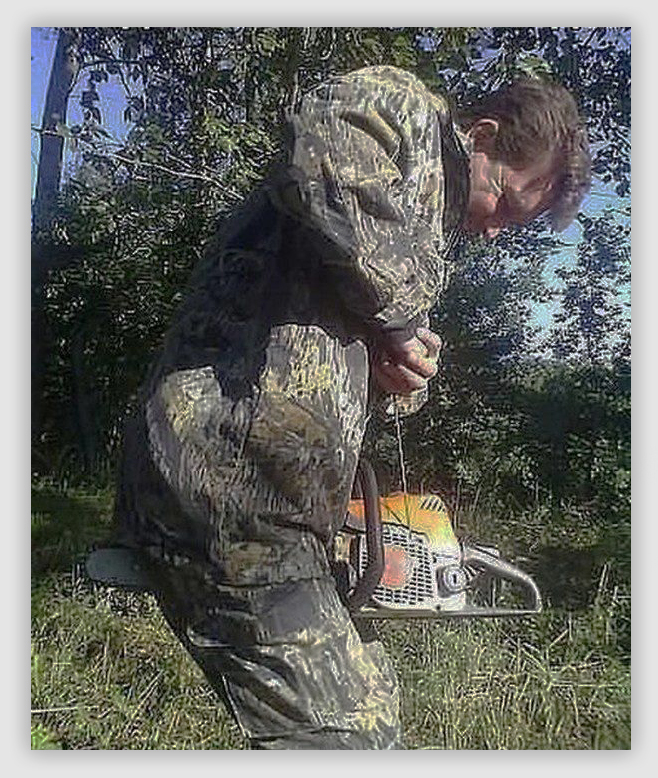
Any reader of this column knows the Massachusetts Rule. Like Dorothy, Mary had her own ruby slippers, or maybe a ruby-encrusted chainsaw. She had the power to remove those offending branches whenever she wanted. Except Mary didn’t want to. She wanted the Rowells to trim it for her.

Finally, she sued in Small Claims Court. Uncharacteristically for Small Claims Court, the magistrate conducted a full hearing, where Mary was remonstrated repeatedly not only by the magistrate but by her own lawyer. After testimony that consumed 68 pages of transcript, the Small Claims Court unsurprisingly found for the Rowells, holding that Massachusetts follows the Massachusetts Rule. If Mary didn’t like the branches, she could remove them herself.

Unsatisfied with the result, Mary hired another attorney and had him file a complaint in the Quincy District Court, alleging nuisance and trespass. That’s when Mary found out she was playing football, not baseball.

Shiel v. Rowell, 2017 Mass.App.Div. LEXIS 30 (Ct.App. Massachusetts, August 9, 2017). It is well established in Massachusetts that an individual whose property is damaged by an overhanging tree has no cause of action against a landowner of the property upon which the tree lies. The Massachusetts Rule empowers the aggrieved neighbor to engage in self-help and lop off the trespassing boughs.

Mary sued the Rowells in Small Claims Court. That Court ruled that the Rowells were not responsible for the branches overhanging Mary’s place. Mary did not much like the result, so she hired a new lawyer and sued the Rowells in Quincy District Court, alleging the same causes of action litigated in the small claims hearing.

The Rowells filed a motion to dismiss the case, claiming both res judicata – a legal doctrine that literally means “the thing has been adjudicated” – and that the Massachusetts Rule required dismissal. The District Court judge ruled that the Massachusetts Rule claim was directly on point, so it was not necessary to reach the res judicata question. The judge dismissed Mary’s lawsuit.

Mary appealed.

Held: Mary had no right to force the Rowells to trim the tree.

The appellate court made short work of Mary’s appeal, observing that she did not “ascribe fault to the trial court’s decision other than that the judge should have disregarded the settled law and applied a different standard.” Mary wanted the court to adopt the Hawaii Rule, which the court called “a deciduously dissimilar state, which rejected the Massachusetts Rule for one providing a homeowner with a cause of action against a neighbor’s tree encroachment. We decline to fell judicial precedent.”

Litigation is football. When the trial is over, it is over. Single elimination. Sudden death. Mary thought she was in the baseball postseason and had multiple games. She only needed one win, and in the end, reverted to football with a “Hail Mary,” asking a court in the home of the Massachusetts Rule to go Hawaiian.

Your season’s over, Mary. Now go trim those branches.

– Tom Root

TNLBGray140407

Case of the Day – Friday, August 1, 2025

WHEN GOOD TREES GO BAD

The tree was just doing what trees do.

The tree was just doing what trees do.

Your tree is growing, man. Do something!

That was Ed Chandler’s lament to his neighbors, the Larsons. The nerve of those Larson people, owning a tree growing near the boundary with Ed’s place. What’s worse, they had the unmitigated gall to permit the tree to drop its leaves on Ed’s property, and to let the tree’s roots grow up to his garage foundation. Ed complained mightily, but to no avail.

Ed could have stood for merely mitigated gall, but not this unmitigated kind. Oh, the humanity! So, this being America in general and Illinois in particular, Ed sued. He claimed that “as a consequence of the growth of that tree, plaintiff’s garage had been severely and greatly damaged from the roots of the tree so that ‘the foundation has been broken, walls damaged and the roof coming apart’.”

The trial judge, being a flinty, self-reliant sort, threw out the suit, holding that the tree was doing what trees do – growing – and the Larsons weren’t responsible for that. The Court of Appeals disagreed, citing Professor William L. Prosser’s gold-standard treatise on tort law:

“[I]t is scarcely suited to cities, to say that a landowner may escape all liability for serious damage to his neighbors, merely by allowing nature to take its course. A different rule accordingly has been developing as to urban centers. * * * [W]hen the tree is in an urban area, * * * the landowner now has a duty of reasonable care, including inspection to make sure that the tree is safe. Recent decisions have extended the right to reasonable protection from travelers on the street to adjoining landowners as well.”

Like it or not, the Massachusetts Rule increasingly seems to be a relic of a bygone era. The Illinois courts still seem to discount normal tree problems – falling leaves, sap, and the like – but when genuine harm (we call it “sensible harm”) results to an adjoining landowner from a tree’s natural development, the tree’s owner may be liable for repairs and removal of the tree.

eviltree160815Chandler v. Larson, 148 Ill.App.3d 1032, 500 N.E.2d 584 (Ct. App. Ill. 1986). Chandler complained that his next-door neighbor, Larson, had a tree that for some time had been growing over and onto Chandler’s property, with the roots growing under his garage and the leaves growing above his property. As a result of the tree’s growth, Chandler’s garage foundation has been broken, with the walls damaged and the roof coming apart. Chandler asked the Larsons to cut down their tree, but they refused. Chandler asked for an injunction ordering that the tree be destroyed. The trial court refused.

Held: The appeals court ruled that an urban property owner owed his adjoining landowner the duty of reasonable care, which necessarily would include taking reasonable steps to prevent damage to the adjoining landowner’s garage caused by roots of the urban property owner’s trees. A complaint that alleged that the adjoining landowner had placed the urban property owner on notice that the roots from his trees were causing considerable damage to the adjoining landowner’s garage and alleged that although the urban property owner had received the notice, he refused to uproot the tree or to use other methods which would prevent further harm, stated a good cause of action for negligence.

The ruling is substantially at odds with the traditional Massachusetts Rule that an owner of land is entitled to grow trees on any or all of his land and that their natural growth reasonably will result in the extension of roots and branches onto adjoining property, and the adjoining landowner’s only remedy is to trim back the roots and branches. The appeals court in this case held urban landowner Larson to a higher “city dweller” standard. This standard is generally known as the Hawaii Rule, which imposes liability upon the adjoining landowner if the trees, plants, roots, or vines cause harm in ways other than by casting shade or dropping leaves, flowers, or fruit.

– Tom Root

TNLBGray140407

Case of the Day – Thursday, July 31, 2025

A SLOPPY AND LAZY TRIAL JUDGE

You have to appreciate the careful prose of an appellate court. Today’s case was brought in 1999, but was still sputtering along eight years later. The Rhode Island Supreme Court thought it knew why.

Never-ending litigation ... Rhode Island style

Never-ending litigation … Rhode Island style …

After a few pointed comparisons of the case to Jarndyce v. Jarndyce, the Rhode Island Supreme Court asked the trial court what the Dickens was going on. The trial judge took his dear sweet time writing a decision — about five years — leading the Supreme Court to mention in a note, “We are mindful of the inordinate delay of the decision of the trial justice, which this Court does not favor.”

Beautiful understatement! The Supremes were saying to the trial judge, “Hey, dude, you’re lazy!” Of course, in the decision, the high court also implicitly said, “Hey, dude, you’re incompetent, too.” The reason for that was the trial judge’s failure to make the findings the Supreme Court needed to adequately review the decision.

A court speaks through its opinions, and when the trial court doesn’t make findings of fact, no one wins. The winner doesn’t know why he won, the loser doesn’t know why he lost, and the rest of us can’t derive any useful guidance from the case. In this case, an unusual argument arose in the battle over the location of an easement. The easement holder claimed the prior owner had obstructed the easement — a driveway — and demanded that the easement and everything on it be shifted a few feet to the south. This is called an easement by substitution. Some testimony suggested that an easement by substitution had been created. But the trial court couldn’t be bothered to make any findings on the issue, leaving everyone to puzzle whether something hadn’t been proven, some witness hadn’t been believed, or just what?

Perhaps a little burninating in the Ocean State?

Perhaps a little burninating of indolent trial judges was called for in the Ocean State?

So after eight years, the case landed back in the trial court’s lap. Maybe the judge was waiting for the owners to tire of it all and settle, or to die or move to Florida… or for Rhode Island to be swallowed by the rising seas, or be consumed by an angry dragon… anything that would spare this poor trial judge from having to do his duty.

Nardone v. Ritacco, 936 A.2d 200 (Sup.Ct. R.I., Dec. 3, 2007). Nardone’s property bordered Lawton Foster Road. Ritacco owned an adjacent parcel of land behind Nardone’s property, with no frontage on Lawton Foster Road. In 1965, Nardone’s predecessor-in-interest, Ralph C. James, Sr., granted Ritacco a 50-foot right-of-way along the northern boundary line of what is now Nardone’s property. The right-of-way for ingress from and egress to Lawton Foster Road has been the subject of many years of litigation.

On Memorial Day 1999, Ritacco cut trees and vegetation within the right-of-way. Nardone sued for temporary and permanent injunctive relief to prohibit Ritacco from cutting the trees and from trespassing on Nardone’s land. The trial court entered a preliminary injunction and later found Ritacco in contempt of the order by cutting trees and vegetation outside the right-of-way. A key issue was the location of the right-of-way. In addition to arguing that the right-of-way was not originally located along the northern boundary of Nardone’s property but rather inside the boundaries of the land, Ritacco also asserted two alternative claims for relief: the existence of an easement by prescription as well as an easement by substitution over plaintiffs’ driveway. The trial court decided for Nardone, clarifying that the right-of-way was located along the northern boundary of Nardone’s property. Nardone appealed.

Held: A remand was necessary to determine whether Rotacco had acquired an easement by prescription or by substitution over Nardone’s driveway. The Supreme Court held that the trial court had properly found that the right-of-way over Nardone’s land was located on the northern boundary of the land. The deed itself placed right-of-way “along the northerly boundary line” of the premises, and Nardone’s expert witness testified that, upon examining the property, the boundaries were clear and the right-of-way was located along the northern boundary of the property. Ritacco’s expert had said that the deeds were not clear, but he hadn’t inspected the property itself, and the trial court’s discounting of his testimony was therefore reasonable.

Does this pass for judicial garb in Rhode Island?

Does this pass for judicial garb in Rhode Island?

However, Ritacco had also claimed that he had acquired an easement on land inside the Nardone boundaries by prescriptive easement. The trial court had ruled against him without a trial, but the Supreme Court ordered a remand for trial on the issues. The Supreme Court held that the trial court hadn’t addressed the issue of Ritacco’s permissive use of the driveway, let alone determine whether sufficient factual support existed to conclude that permission to use the driveway was given by Nardone or his predecessors-in-interest. A party who claims an easement by prescription bears the burden of establishing by clear and convincing evidence actual, open, notorious, hostile, and continuous use under a claim of right for at least ten years. In this case, the Court ruled, the trial judge had failed to make the specific findings of fact upon which he based his decision. When that happens, the trial court risks reversal or remand unless the record yields a full understanding and resolution of the controlling and essential factual and legal issues.

Here, there were unaddressed issues that were raised in pleadings and testified to at trial, including Ritacco’s testimony that perhaps Nardone’s predecessor-in-interest had granted him an easement by substitution. When the owner of a servient estate encloses the original easement with a wall or other structure and points out another way of ingress and egress that is accepted by the owner of the dominant estate, the new way may become the easement by substitution. The Supreme Court said that testimony indicated that James may have granted Ritacco an easement by substitution. However, the trial court failed to determine whether sufficient factual support existed to conclude that an easement by substitution was granted.

– Tom Root

Case of the Day – Wednesday, July 30, 2025

MEANWHILE, BACK AT THE RANCH …

ranch

… that confounded sodbuster neighbor just done cut our power line with his plow. In the ensuing fire that swept across the plain, the trees planted in our windbreak went up like Roman candles, and the ranch hands couldn’t stop the conflagration. Sure, the farmer was negligent, but to what extent?

One of the first things new law students learn is the lesson of Hawkins v. McGee, the “case of the hairy hand,” in which we find that the measure of damages is the difference between the value before the breach or the negligence, and the difference after the breach. Nebraska law in this case held that if the trees were used for residential or recreational purposes, the damages are the replacement cost of the trees up to the value of the real estate. But if they were just used for agricultural purposes, the Hawkins v. McGee formulation is fine.

hairyhandHere, replacement of the trees would cost over $270,000, but the reduction in the value of the farmland was only $30,000. David Spicer, the owner of the ranch, tried to bootstrap himself into qualifying for the “recreational” formulation by arguing that not only did he use the windbreak for the usual agricultural purposes, but he relied on it for recreational purposes as well, including for his kids’ 4-H projects. The 4-H projects argument was especially touching, except that David Spicer’s youngest kid was 25 years old. And we thought AI was fake from time to time…

The trial court granted summary judgment on the damages question, holding that the replacement cost exceeded the value of the land and that $30,000 was adequate to compensate for the loss of the trees. The Court of Appeals ruled, however, that whether the trees were recreational in nature or agricultural in nature was a question of fact, and the trial court was wrong to resolve that question without a trial.

The issue of how to value the loss of trees – especially where the value of the tree to the homeowner is due to noneconomic reasons such as beauty, sentimentality or recreational value – arises often, and for good reason. The aphorism in real estate is that the value of a home depends on location, location, location. Much could be said of trees as well. The mighty oak that shades the plantation house is worth far more than its identical twin standing a quarter mile into the woods behind the fields. Determining exactly how much more may require juries to consider not so much stumpage prices as the quality of 4-H projects.

Spicer Ranch v. Schilke, 734 N.W.2d 314 (Neb.App., 2007). Schilke farmed leased land next to the Spicer Ranch. While he was plowing one day, he cut a power line leading to some irrigation pumps. A fire resulted, which, before it burned out, destroyed a windbreak on Spicer Ranch consisting of red cedar and juniper trees, and located about five hundred yards from the ranch house. Spicers used the windbreak, which was on a 110-acre tract of land, in the normal fashion of slowing the wind, providing shelter for cattle, for calving, for horses and for general farm use. David Spicer – mindful of how damages were figured in cases such as these – also maintained that he used the trees for recreational purposes, including his kids’ cataloging the trees for 4-H projects (except it turned out that his youngest child was 25 years old). Spicer sued for negligence, which was pretty much conceded.

Claiming the windbreak was worth $270,000 was just so much puffery ...

The Court found that Spicer’s claim that the windbreak was worth $270,000 was just puffery …

In an affidavit to the trial court, Spicers’ expert valued the windbreak at $270,000 for replacement of the trees. But the trial court granted summary judgment to Schilke, finding that to value the trees on the 110-acre tract at $270,000 far exceeded the value of the real estate involved. The trees included only made up a small percentage of the tract, the Court found, and that small percentage of land likewise would not be permanently damaged because of the loss of the trees. The trial court awarded Spicer Ranch $30,000 as the highest amount of damages suffered by Spicer Ranch.

The sodbuster was relieved. The rancher was not… and appealed.

Held: Summary judgment was reversed on the damages issue. Spicer Ranch argued the district court erred in using a “before and after” measurement of damages. Instead, it said, to determine compensatory damages for destroying trees and for related damage to the land – where the owner of land intends to use the property for residential or recreational purposes – the owner is not limited to the difference in value of the property before and after the damage or to the stumpage or other commercial value of the timber, but instead may recover the cost of reasonable restoration of the property to its preexisting condition or to a condition as close as reasonably feasible.

The Court of Appeals noted that the trial court’s implicit rationale for its calculation of damages is that the land was used for the farming business, not for any recreational purposes, apparently because of the age of the youngest child was then 25 years old. The trial court’s finding failed to account for the material question of fact as to whether the windbreak was used for residential and recreational purposes, as stated in David’s affidavit, or whether the windbreak was simply a “normal and average farm windbreak,” as could be implied from David’s deposition testimony and as stated in the affidavit of a real estate appraiser. The Court of Appeals noted that the measure of a plaintiff’s damages would depend upon the evidence presented at trial and might require alternative instructions, depending upon the jury’s determination of contested factual issues. Because a material issue of fact existed, the Court of Appeals held, summary judgment with respect to damages was improper.

Even under the “before and after” theory of damages used by the trial court, the evidence revealed a range of damages — not just a fixed, undisputed figure of $30,000. The trial judge made a factual finding when he awarded Spicer Ranch $30,000, which he said “is the highest amount of damages suffered by the Ranch according to the before and after damage appraisal.” He should have simply determined whether a material issue of fact existed with respect to damages, and – if one did – set the case for trial. The matter had to be returned to the trial court.

– Tom Root
TNLBGray140407

Case of the Day -Tuesday, July 29, 2025

WE ONLY GET WHAT WE GIVE

It seems like only last week, but it was well over 20 years ago that my daughter, then an Ivy League freshman but now a mom and Ph.D., introduced me to the very short-lived, corporation-hating New Radicals. I guess I was supposed to be scandalized by the band’s criticism of society and the frequent references to drugs and sex that permeate the band’s one and only album. Sorry, Sweetie, I told her, but I came of age in the 60s (I dimly recall). Nothing scandalizes me.

I think she was disappointed that I added the New Radicals’ only hit to my snazzy white iPod (remember those?). I liked the rather anti-Marxist sentiment of “you only get what you give.”

The defendants in today’s case found out a bit late that a corollary to that aphorism is “you only get what we give.”

McCammon's excuse - the dog chewed off the boughs - didn't cut it with the jury.

McCammon’s excuse – an arboriculture version of “the dog ate my homework” – didn’t really resonate with the jury.

In many ways, a civil action is little more than a gladiatorial contest, with the court serving as the referee, applying procedural rules, interpreting the law when necessary, and correcting inequities only in the most egregious circumstances. That’s sort of what happened when the McCammons – garden center owners who were buying tree boughs wholesale from “Trees 4U” – cut the boughs they needed not only from the trees Reicosky had designated but also from some landscape trees they had been told not to damage (sounds kind of like Adam and Eve and the tree of knowledge, doesn’t it?).

The owners of “Trees 4U” — the Reicoskys — told McCammon that those trees were definitely not for him, and sued. They claimed that McCammon had destroyed $35,000 worth of trees, and they sought treble damages under Ohio law. McCammon claimed that Mr. Reicosky had given him permission to cut boughs from the landscape trees. Mr. Reicosky denied it. It was up to the jury to decide whose story to believe, and it believed Mr. Reicosky.

There may not have been any compelling basis for believing the one story over the other, but when the jury makes its decision, it has pretty much settled things. It’s sort of how pro football was before instant replay: what the official said happened was what had happened. (Cursed instant replay … but that’s a rant for another day, )

The other problem the McCammons faced came with jury instructions. A trial court gives a jury detailed instructions on what the law is so that jurors can decide how the facts they find (such as determining that McCammon cut boughs from Reicosky’s landscape trees after Reicosky said not to) will lead to the legal outcome (McCammon thereby committed a trespass and was reckless). Both sides may suggest jury instructions to the Court. Here, McCammon didn’t think things through, foolishly agreeing with an instruction that the jury should figure damages by adding the market value of the tree times the number of trees. Later on, McCammon realized that the real measure of damages should be lost profits, that is, the market value of the trees minus the cost of producing and selling them. After all, even kids running a lemonade stand know that you only get to keep the money you’re paid minus what it cost you to buy the lemonade and handmade sign. McCammon complained that he should receive a new trial because the jury hadn’t considered the costs of production when calculating damages.

The Court of Appeals said McCammon was out of luck. The jury had made its decision on his liability, and whether it was what the Court agreed with or not, there was enough evidence for a rational jury to reach its finding. And as for the damages, well, Mr. McCammon, “we get what we give.” The instruction might have been flawed, even unfair to the McCammons, but the McCammons were happy enough with it when it was given. A party can’t make a mistake, and then cry foul that the mistake happened.

Bough? Wow.

Bough? Wow.

Reicosky v. McCammon, Case No. 2006 CA 00342, 2008-Ohio-2775, (Ct.App. Ohio, Feb. 19, 2008), 2008 WL 442567, 2008 Ohio App. LEXIS 2344. The McCammons ran a garden center, from which they sold, among other things, tree boughs to cover gravesites. They had trouble getting enough boughs and began buying them from the Reicoskys, who operated “Trees 4U.” The Reicoskys delivered them one year, but in subsequent years, let the McCammons come to the “Trees 4U” tree farm and cut the boughs they needed. The first year the McCammons did so, the Reicoskys instructed them not to take any boughs from trees east of a particular drainage ditch, because those were landscape trees to be resold.

The McCammons limited their cutting to the west side of the ditch one year, but the next year came back, and this time cut boughs from the landscape trees on the east side of the ditch as well. The McCammons said Mr. Reicosky had given them permission to do so on trees taller than 16 feet east of the ditch. Mr. Reicosky denied doing so and claimed he lost 211 trees, worth over $35,000. The Reicoskys sued.

There's an old legal aphorism - never trust the judgment of twelve people who aren't smart enough to know how to get out of jury duty.

There’s an old legal aphorism – never trust the judgment of twelve people who aren’t smart enough to know how to get out of jury duty.

At trial, the jury heard both sides and then found for Reicosky, holding that he had suffered $35,000 in damage. The trial court trebled this under Ohio’s treble damages statute. The McCammons’ motion for a directed verdict – in which they argued that no evidence supported the finding of recklessness that was needed for treble damages – was denied by the trial court. Likewise, the McCammons’ motion for a new trial – based on the fact that the jury considered the market value of the destroyed trees without deducting any of the costs associated with selling the trees — was turned down. The McCammons appealed.

Held: The treble damages were upheld. The Court of Appeals observed that it was limited to determining whether there was any evidence that could have convinced a rational juror that the McCammons had been reckless. The evidence, because the Reicoskys were the winners, had to be construed in favor of the Reicoskys.

The Court concluded that the jury simply chose to believe Mr. Reicosky’s version of what happened — that he had never given permission to cut east of the ditch and had previously made clear that the trees there were off limits — and to reject Mr. McCammon’s version. The jury is the fact finder, and its determinations as to who to believe are entitled to great deference by reviewing courts. The jury having accepted that the McCammons trespassed on the east side of the ditch without permission, the Court of Appeals was not entitled to decide that it might like Mr. McCammon’s recitation of events better.

As for the faulty calculation of damages, the Court said that McCammons’ complaint was too little, too late. The McCammons had the opportunity to ensure that the jury instructions accurately described how to deduct costs from the market price to determine lost profits. Instead, they submitted a jury instruction that was identical to the one the Court used, which omitted any direction on how to calculate damages by deducting costs from the market price. The Court found that “any error in the jury’s determining of damages was invited by [the McCammons]. Under the invited error doctrine, ‘a party will not be permitted to take advantage of an error which he himself invited or induced’.”

– Tom Root

TNLBGray140407

Case of the Day – Monday, July 28, 2025

SMOKEY’S REVENGE

California, land of perpetual drought, wildfires of Biblical proportions, rivers running down the streets. The news out of California never seems to be good. It’s the kind of thing Smokey Bear always warned us about (and no, his name is not “Smokey the Bear.” I thought it might be interesting to revisit the tale of another large corporation involved in a wildfire, the Great Storrie Fire of 23 years ago.

One hot August day in northern California, a Union Pacific track repair crew let some grass next to the tracks catch fire. They tried to put the blaze out … rather ineffectively, it turns out.

The Bear was not amused.

The Bear was not amused.

By the time it was all over, 81 square miles of national forest burned in the Storrie Fire of August 2000. The Forest Service, which has compiled a poor record of reforestation – chiefly because of a lack of money – sued Union Pacific for the cost to rehabilitate the burned-out area. Smokey Bear would have his day in court.

Before the case was to go on trial, the lawyers tussled over the proper measure of damages. The railroad argued that the correct measure was the diminution of property value caused by the fire. What’s more, the losses had to be mitigated by the value of the timber that could be salvaged from the burned land. The catch was that most of the land was restricted by law and could not be harvested until the law expired several years after the fire. Union Pacific argued that if it could have been sold, it would have fetched so much that the damages only reached about $5.7 million.

The Government cried foul, contending that the traditional measure of damages wasn’t appropriate for natural resources. Instead, it claimed damages to the timber, damages to the soil, reforestation costs and loss of environmental habitat to birds and mammals on the order of $167 million.

Over 71,000 acres were burned by a railroad crew's careless fire.

Over 71,000 acres were burned by a railroad crew’s careless fire.

Big difference! So the crucial battle was joined, well before the trial commenced, when the court was asked to rule on what damages would be allowed. When the decision was handed down, it turned out to be a bad day for the railroad. The trial court showed little sympathy for Union Pacific, holding that California law let the Government pile on the damages – timber, soil, reforestation, and loss of habitat. What’s more, in a double whammy if ever there was one, the District Court ruled that even though the timber on the restricted land couldn’t be sold in 2000 (and couldn’t be for many years thereafter, because the law was extended), the value of the timber was appropriately considered in setting damages. OK, Union Pacific conceded, but then the salvage value of the timber left on the restricted land should be considered in mitigation. No, the Court disagreed, it couldn’t be considered … because it couldn’t be sold. The law, you know.

Having been thoroughly sandbagged by the Court, the railroad knew better than to go to trial. It settled the case for $102 million. And that was real money back then.

For all of the Court’s feel-good rhetoric about the sacred trust of the national forest, the Forest Service hadn’t done very much to remedy the mess the fire left behind in the eight years after the fire. Private landowners who suffered loss have done much more, but then they’re not hamstrung by regulation and interest groups. Once the Union Pacific millions started pouring in, the Forest Service didn’t have any excuse for further sloth.

How about Union Pacific? A settlement of over $100 million has to hurt, right? Take heart — the venerable old railroad had insurance.

As for the national forest, it’s slowly returning to green. But even an untrained eye looking at August 2013 satellite pictures can tell that the timber is gone. To the north and west of Storrie, rising from the Feather River, the unforested land stands in obvious contrast to the rest of the area.

The interesting tree law lesson drawn from today’s case is the Federal District Court’s free-wheeling approach to damages. With a creative lawyer, a political hot potato and a sympathetic court, the sky can be the limit.

United States v. Union Pacific Railway Co., 565 F.Supp.2d 1136 (E.D.Cal., 2008). A Union Pacific (“UP”) track repair crew negligently ignited the fire while repairing a rail, and — not recalling their Boy Scout days — didn’t put it out properly. The resulting conflagration, known as the “Storrie Fire,” destroyed 52,000 acres of National Forest in August 2000. The Government sued UP.

Union Pacific on span northeast of Storrie.

Union Pacific on a span northeast of Storrie.

The issue raised before the Federal district court concerned the proper measures of natural resource damages, whether diminution of the market value of the forest land was the overarching measure of the Government’s damage in the case, and if not, whether the Government may recover as separate injuries timber damages of over $121 million, reforestation costs of $33 million, and loss of habitat and environment during the period of regrowth of $13 million.

Also, some of the National Forest had been specified by Congress as being temporarily exempt from timber harvest. Had the trees on these lands not been wholly destroyed by the fire, the Government could have harvested the trees over time, after the expiration of the law. Similarly, no logging or reforestation was allowed in the Bucks Lake Wilderness at the time of the fire, and the general forest areas were lands where commercial logging may occur, subject to other legal restrictions, such as environmental assessment requirements.

The Government conducted salvage sales of the charred timber that was not located on restricted lands, recovering $335,616. UP contended that a post-fire salvage sale of the burned timber on the restricted lands — had federal law permitted it — would have generated over $73.6 million. UP claimed that at most, the Government incurred only $5.7 in net lost timber value ($79.3 million minus $73.6 million).

Held: The U.S. District Court found that the loss in market value of the land was not the proper measure of damages. Instead, the Government could argue to the jury that it was entitled to recover damages for damages to the trees, the soil and pre-merchantable timber, and its loss of use of habitat and environmental services during the period of forest regrowth. UP would not be allowed to argue at trial that it was entitled to an offset based on the theoretical salvage value of the timber. Finally, the Government’s habitat equivalency damages were legally permissible.

California law applied to the Government’s damage claims. Although UP argued that under California law, the measure of damage for negligent injury was the difference between the value of the property before and after the injury. The Court agreed this was generally correct, but California law also held that [t]here is no fixed rule for the measure of tort damages under Civil Code § 3333 … [and t]he measure that most appropriately compensates the injured party for the loss sustained should be adopted.” The general measure of tort damages under California law is broadly defined as “… the amount which will compensate for all the detriment proximately caused thereby, whether it could have been anticipated or not.”

Don't kid yourself - the case was a political hot potato, and politics undoubtedly influenced the District Court decision.

Don’t kid yourself – the case was a political hot potato, and politics undoubtedly influenced the District Court decision.

Thus, the Court held, the Government – as the injured party here – was entitled to full compensation for all of its damages, considering the unique character of the land at issue and that natural resources have values not fully captured by the market system. Resource damages, including timber damages, rehabilitation, and restoration costs, and environmental and habitat damages, were all recoverable as separate injuries, the Court ruled. In this case, the fire damaged the Government’s property and reduced its value, not only through the destruction of trees used for timber but through damage to the soil. In addition, the USFS was required by law to replant to a certain minimum density, and they incurred expenses in their salvage operation. These, the Court said, were separate injuries.

UP also argued that the Government couldn’t recover damages for the value of the trees located on the restricted lands because commercial logging of those lands was not permitted by law. But, the Court held when the Storrie Fire occurred in August 2000, the restriction was set to expire in 2004. Had the fire not destroyed the trees within the restricted areas, the trees would have been commercially available for harvesting within a few years, and the Government could have recovered their timber market value. Instead, as a result of the damage caused by the fire and the subsequent decay of the burned trees, the trees were dead or dying and no longer had any viable timber value. That the law had been extended post-fire, the Court ruled, was of no consequence because, at the relevant time in 2000, the law had a definite expiration date.

UP argued that in areas where commercial logging is not allowed the reasonable cost of reforestation is the proper measure of damages, but the Court rejected the argument. It said that the Government’s timber damages of $121.9 million were supported by detailed expert analysis of actual timber values. The Court waxed eloquent that UP had wholly ignored the wilderness areas in question “[w]ere national treasures created by Congress ‘to secure for the American people of present and future generations the benefits of an enduring resource of wilderness…’” In such circumstances, the Court held, the Government could recover damages for the timber burned in the wilderness areas. Destroyed timber values were a relevant means to capture at least part of the lost value of the burned lands because there is no available real property market value by which to determine the pre- and post-fire value of thousands of acres of national forest lands that can’t be sold.

UP asserted that if such damages were permitted by the court, it should be allowed to argue to the jury that the damages calculation did not account for the full administrative costs that the Government would have incurred in marketing unburned timber at the prices it claims, including environmental assessment costs and road-building costs. The Court disagreed, holding that the harm in this case was caused by UP’s admitted negligence, which essentially created a “forced sale” of the trees. Thus, the Court said, deduction for administrative costs was not appropriate.

The area of the fire – 23 years later, growth was still sparse.

Finally, UP argued it was entitled to an offset of the timber damages based upon the amount UP contended the Government could have obtained in a theoretical post-fire salvage sale of the timber on the restricted lands, $73.6 million. The Government argued against this, noting that the law prohibited the post-fire salvage sale. UP agreed but pointed out that the law also prohibited a pre-fire sale, and thus, if the Government were permitted damages based in part on the theoretical pre-fire, sale value of the timber on these lands, UP should also receive a corresponding offset to those damages based on a theoretical post-fire salvage sale.

The Court disagreed, holding that salvage value is a question of mitigation after actual damages have been ascertained and then only for amounts that were realized or could have been realized. Thus, assessing the Government’s actual damages is a separate inquiry from assessing the Government’s duty to mitigate its damages after the commission of the tort. Under the doctrine of avoidable consequences (or mitigation of damages), the person injured by another’s wrongful conduct may not recover continuing damages “that the injured person could have avoided by reasonable effort or expenditure.” Thus, the Court said, UP was entitled to an offset of damages only for the salvage value realized by the Government for its salvage sale with respect to timber not located on the restricted lands.

– Tom Root

Case of the Day – Friday, July 25, 2025

WHERE THERE’S SMOKE, THERE’S FIRE

fire160805We’re on vacation. Last night, we enjoyed an uncharacteristically cool July evening in front of a roaring campfire. That reminded me to provide, as a public service, a surprising and useful piece of information: campfires can be hot, even when you can’t see flames.

Now, you may say, “This is transpicuously obvious!” (especially if you have an excellent command of vocabulary), but alas, this is not necessarily so. Ask the Morrises of Texas. They went camping at beautiful Goliad State Park, taking over a campsite that had been recently vacated by another camper. Their 3-year-old wandered into the campfire ring, where the child was burned. Not being folks to look at themselves in the mirror and ask why they hadn’t supervised an inquisitive child who was exploring a strange and exciting new location, the Morrises sued the Parks and Wildlife Department for not making sure the campfire pit was cold, and the previous camper for not putting her fire completely out.

The Parks Department claimed it was immune from liability under the Texas Tort Claims Act and Recreational Use Statute, but the Morrises claimed the Department and the prior camper were grossly negligent, which – if true – would deny the Department the protection of the statute.

The trial court disagreed, as did the Court of Appeals. In a decision sure to be denounced by Smokey T. Bear, the Court held that it was socially useful for a prior camper to leave a smoldering fire for the next camper to build on, and anyway, it was sort of foreseeable to the Morrises that a campfire pit might be hot and the kind of place from which you’d want to keep your 3-year-old somewhat distant.

The Department was found to be immune from suit, and the prior camper left the courtroom a happy but smarter one. She’ll no doubt douse her campfires in the future, just like Smokey advises.

Darn good advice...

   Darn good advice…

Morris v. Texas Parks and Wildlife Dept., 226 S.W.3d 720 (Tex.App., 2007). The Morrises arrived at Goliad State Park, where they set up their campsite. Shortly after arriving at the Park, their 3-year-old child fell into a campfire ring containing hot coals from a previous fire. The toddler suffered second and third-degree burns requiring medical treatment.

The Morrises sued the Texas Department of Parks & Recreation and Sandra Carson — the previous camper at the site — alleging common-law negligence and gross negligence. Carson filed a motion for summary judgment, and the Department claimed governmental immunity as a “plea to the jurisdiction.” The trial court granted both defendants’ motions, and the Morrises appealed.

Held: The trial court was right to dismiss the case. As to camper Carson, the Court quickly disposed of the Morrises’ negligence claim. Carson, the Court said, had no legal duty to the next campers to extinguish her campfire. The campfire was left burning in a place designated for fires at that campsite, and it was hardly unforeseeable to the Morrises that hot coals might be found within the campfire ring. The Park did not require or expect campers to extinguish fires left in designated campfire rings. In fact, the Court held, there was significant social utility in a policy that encouraged campers to leave unextinguished fires from which the next camper could start his or her campfire.

Yeah, prior camper - I'm talkin' to YOU.

Yeah, prior camper – I’m talkin’ to YOU.

As for the Department of Parks, the Morrises attempted to circumvent sovereign immunity by claiming that the Department was grossly negligent in not inspecting campfire rings to ensure that the fires were extinguished. Under the common law doctrine of sovereign immunity, the Court said, a governmental unit is immune from suit for the performance of governmental functions. The Department had waived sovereign immunity under the Texas Tort Claims Act to the extent specified by the recreational use statute, which is to injuries caused through gross negligence. To establish liability for a premises defect — which is what the hot campfire pit was — under the Tort Claims Act, a plaintiff must prove either willful, wanton, or grossly negligent conduct, or that the defendant had actual knowledge of the dangerous condition, the plaintiff did not, and the defendant failed to warn of the condition or make the condition safe.

In this case, the Court ruled, the Morrises’ task was more daunting because a landowner has no duty to protect trespassers from obvious defects or conditions. A hot campfire ring from the previous night’s camping was a condition inherent in the use to which the land was put, and thus, the Department had no duty to protect the Morrises’ child from the obvious and expected condition. Thus, the Court held, under the recreational use statute there could be no gross negligence on the part of the Department because there was no duty.

A substantial part of the case related to the proper venue for the case, a matter of great procedural interest to lawyers but not terribly relevant to the proper application of the recreational use statute.

– Tom Root
TNLBGray140407