Case of the Day – Friday, June 27, 2025

HOW MUCH IS ENOUGH?

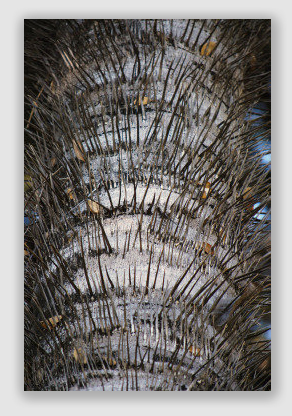
A eucalyptus tree, similar to the one that offended Ms. Cannon

A eucalyptus tree, similar to the one that offended Ms. Cannon.

There was a time, back when people of grit populated the land, that a landowner only had one choice when his neighbor’s trees encroached – to cut ‘em back. The Massachusetts Rule was the coin of the realm: if you didn’t like your neighbor’s tree overhanging your eaves, or its roots wrapping around your sewer line, you only had one option. The courts didn’t want to hear about it. Self-reliance was what it was all about.

Then along came the Hawaii Rule, which suggested that a naturally growing tree could be or could become a nuisance, and that an aggrieved landowner could sue for an order requiring its removal. One rule does not necessarily negate the other. So when does one oil up the chainsaw, and when does one fire up the word processor?

The Massachusetts Rule is, generally speaking, a blunt instrument. It’s one thing to cut away branches that pose a threat (or even an inconvenience) to your property. But what if cutting a limb back to the property line leaves a 15-foot leafless stub extending from the branch to the boundary. That’s not necessarily according to ANSI Standard A-300, but on the other hand, you don’t have the right to trim it properly unless your neighbor consents to you coming onto his or her land to do so.

Or, more dangerously, what if you cut back roots to the extent that the tree loses too much subsurface support, and falls on your neighbor’s new Bugatti Chiron? Are you liable? After all, you did no more than what the Massachusetts Rule permitted you to do.

The Hawaii Rule, on the other hand, is Doug Lewellyn’s dream. What an All-American solution – let’s sue! When is harm sensible? When your foundation walls collapse? When a dead branch falls on your Bugatti? When leaves clog the filter on your swimming pool? How much harm is enough?

Joan Cannon lived next to Lamar Dunn. Joan was unhappy with the roots from the Dunns’ eucalyptus tree, which were encroaching underground onto her land, as roots are wont to do. After all, a tree will quite often send roots out 35 feet or more from the base of the trunk, and the root system has little regard for some lines drawn on a recorder’s map.

We’re not sure why Joan was so exercised. Maybe she was naturally crotchety. Perhaps she was unusually territorial. Maybe her neighbor had a nice Bugatti, while Joan drove a Yugo. What we can be sure of is that the eucalyptus roots weren’t really causing any harm.

encroach160715

Sometimes encroaching roots can be an inconvenience.

That didn’t stop Joan from suing the Dunns.  The trial court denied an award of any damages and refused to order Lamar the appellee to remove the offending roots and tree. Joan appealed.

The Court of Appeals considered the classic Restatement of the Law trespass approach, which held simply that if a neighbor owns something that trespasses, he or she has to remove it if there is a duty to remove it, regardless of whether it causes harm or not. That’s the rub, the court said. When does such a duty arise?

The court found guidance in the Restatement on nuisance and held that a duty to remove offending branches or roots arose when some actual and sensible or substantial damage has been sustained. Joan’s general objection to the unseen eucalyptus roots did not equate to harm. Thus, the roots could remain.

Cannon v. Dunn, 145 Ariz. 115, 700 P.2d 502 (Ariz.App. Div. 2 1985). This case involves the liability of Lamar Dunn, an adjoining landowner, for roots from a eucalyptus tree that invaded the subsurface of land belonging to his neighbor, Joan Cannon. The trial court found that the roots had caused no actual damage, and denied an award ordering the Dunns to remove the offending roots and tree.

Joan appealed.

Held: Dunn did not have to remove the roots. The Court of Appeals rejected Cannon’s argument that it should apply the Restatement (Second) of Torts § 158 (1965), which stated that “one is subject to liability to another for trespass, irrespective of whether he thereby causes harm to any legally protected interest of the other if he intentionally… fails to remove from the land a thing which he is under a duty to remove.”

The Court said that it was “obvious that one must first determine whether there is a duty to remove the object and that in this case § 158(c) really begs the question.” More to the point, the Court observed, was the Restatement (Second) of Torts § 840 (on nuisances), which held that a possessor of land is not liable to his adjoining landowner for a nuisance resulting solely from a natural condition of the land.

Ms. Cannon could not prove any damages flowing from the alleged encroachment ... unlike this guy.

Ms. Cannon could not prove any damages flowing from the alleged encroachment … unlike this guy.

The Court paid lip service to the Massachusetts Rule, noting that Arizona law permitted a “landowner who sustains an injury by the branches or roots of a tree or plant on adjoining land intruding into his domain, regardless of their non-poisonous character may, without notice, cut off the offending branches or roots at the property line.” At the injured landowner’s expense, of course.

But when some actual and sensible or substantial damage has been sustained, the Court said, the injured landowner may maintain a nuisance action for abatement of the nuisance, and compel the removal of the branches or roots at the tree owner’s expense. However, where no injury has been sustained, no lawsuit be brought for either an injunction or damages.

– Tom Root
TNLBGray140407

Case of the Day – Thursday, June 26, 2025

THE COURT CHANNELS SHAKESPEARE

Midsummer’s Night fell last weekend, making me feel a little Puckish. So I thought we’d examine two neighbors, neither of whom reacted thoughtfully to a dangerous tree. “Oh, what fools these mortals be!” Midsummer Night’s Dream, Act III, Scene 2.

Traditionally, the Massachusetts Rule – which could be summarized as “I don’t owe you nuthin’ – held that a landowner had no liability to his neighbor for harm done by overhanging branches and encroaching root systems. If the neighbor didn’t like the mess, he or she could trim away the offending branches or roots up to the property line. The courts simply didn’t want to hear about it.

However, courts had traditionally held an urban landowner to a higher standard of care when the people being protected were passing motorists on a public highway. In those cases, an urban landowner was obligated to exercise reasonable care to prevent an unreasonable risk of harm arising from the condition of trees on the land near the highway.

bellyachin140304In today’s case, Lois Lockhart had a decaying tree on her property. Neighbor Carl Mahurin complained about it, primarily because one of the branches was overhanging his property. But Lois did nothing. Neither did Carl – unless belly-aching counts as putting forth an effort.

Finally, the branch broke off and hit Carl, who was standing beneath it. You knew that had to happen, or else why would we be telling you this story? Being injured – and a little piqued that Lois had ignored his entreaties for so long – Carl sued. (You knew that would happen, too.)

Lois tried to get the case thrown out of trial court. She pointed out that Carl had nuthin’ coming from her. The traditional rule – read “Massachusetts Rule” here ­– dictated that she had no duty to protect Carl from the natural condition of her tree.

But as the great bard once wrote, “I do perceive here a divided duty.” Othello, Act I, Scene 3. And so did the trial court. It was troubled that Lockhart’s duty to strangers passing by in their Hudsons and Desotos was greater than to her neighbor. That seems divided, and irrationally so.

Lois said, “Heaven is my judge, not I for love and duty, But seeming so, for my peculiar end.” Othello, Act I, Scene 1. The trial court said that might be so, but it nevertheless sent the case to the Court of Appeals for the appellate court’s opinion as to her duty.

William Shakespeare - he foresaw the problems with the traditional liability rule hundreds of years ago.

William Shakespeare foresaw the problems with the traditional liability rule urged by Ms. Lockhart hundreds of years ago. “Wondrous strange!” indeed.

The appellate panel said, “O day and night, but this is wondrous strange!” Hamlet, Act 1, Scene 5. It could see no reason for the disparate treatment, either. Certainly, just as Lockhart owed a duty to Mordred and Mildred Motorist, she must owe the same duty to her neighbor, Carl. However, the Court of Appeals did allow that Mr. Mahurin could have entered Ms. Lockhart’s place and cut the tree down itself. So he might be contributorily negligent. Likewise, could he have been a knucklehead for standing under a tree he had complained was dangerous?

To Lockhart, the Court said, “There are more things in heaven and earth, Lois, than are dreamt of in your philosophy.” Hamlet, Act 1, Scene 5. Such as… a single duty owed by a landowner to both travelers passing on the road and her next-door neighbor. It sent the case back to trial.

Mahurin v. Lockhart, 71 Ill.App.3d 691, 390 N.E.2d 523 (Ill.App. 5 Dist. 1979). Plaintiff Carl Mahurin brought this action to recover damages for personal injuries he suffered when a dead branch extending over his property fell from a tree belonging to defendant Lois Lockhart, an adjoining landowner, and struck him. In his complaint, Mahurin alleged that Lockhart failed to prune the tree or take other necessary precautions after he warned her of the condition of the tree and the dangers it posed.

Lockhart moved to dismiss the complaint, arguing that a landowner is not liable for physical harm to others outside of her land caused by a natural condition. The trial court denied the motion to dismiss, certified that the question of law raised in Lockhart’s motion presented substantial ground for difference of opinion and that an immediate appeal would materially advance the ultimate termination of the litigation.

Held: The Court held that a landowner in a residential or urban area has a duty to others outside of his land to exercise reasonable care to prevent an unreasonable risk of harm arising from defective or unsound trees on the premises, including trees of purely natural origin.

The narrow issue before the court was to determine the extent, if any, of the duty that a landowner in a residential area owes to persons outside of his premises to remedy some defective or unsound condition of a tree upon his land when the tree and its condition were of a purely natural origin. Mahurin urged the Court to adopt the traditional rule set forth in section 363 of the Restatement (Second) of Torts. This section provided that neither a possessor of land, nor a vendor, lessor, or other transferor, is liable for physical harm caused to others outside of the land by a natural condition of the land. However, if the landowner was in an urban area, he was subject to liability to persons using a public highway for physical harm resulting from his failure to exercise reasonable care to prevent an unreasonable risk of harm arising from the condition of trees on the land near the highway.”

The traditional rule applied even though the landowner is aware of the dangerous natural condition and the expense necessary to remedy the condition is slight.

The Court noted that the traditional rule of non-liability developed at a time when land was mostly unsettled and uncultivated. The landowner – unable to keep a daily account of and remedy all of the dangerous conditions arising out of purely natural causes – was therefore shielded from liability out of necessity.

But, the Court of Appeals asked, if Carl knew the tree was dangerous, why was he standing under it? Duh, Carl ...

But, the Court of Appeals asked, if Carl knew the tree was dangerous, why was he standing under it? Duh, Carl …

The Court disagreed that the duty an urban landowner owed to a neighbor should be less than that owed to people passing in cars and trucks. It thus ruled that a landowner in a residential or urban area has a duty to others outside of his land to exercise reasonable care to prevent an unreasonable risk of harm arising from defective or unsound trees on the premises, including trees of purely natural origin.”

Therefore, Lockhart’s duty to Mahurin should “be defined using the ordinary rules of negligence. It is, therefore, appropriate for the trier of fact to consider… such factors as the nature of the locality, the seriousness of the danger, and the ease with which it may be prevented” in resolving the issue of liability.

The Court noted Lockhart’s argument that Mahurin was contributorily negligent because he stood under a tree that he, by his own admission, knew was dying and dangerous. The Court noted that the Restatement provided that a landowner is privileged to enter upon a neighbor’s land to abate a condition thereon which constitutes a private nuisance. “While this privilege alone does not establish the contributory negligence of plaintiff, it could be considered by the jury in resolving this issue.”

The Court remanded the case for trial, using the standards it had adopted.

Tom Root

TNLBGray140407

Case of the Day – Wednesday, June 25, 2025

TRUST US … WE KNOW WHAT WE’RE DOING

Anyone who hasn’t been living in a cave the past decade knows that sunny California has been just a little too sunny. The state and local governments have begged, pleaded, and cajoled homeowners to save water. Some rather severe measures have been implemented.

Maybe so, but you're not the only people around with a law degree. Some folks at the gas company have them, too.

Maybe so, but you’re not the only people around with a law degree. Some folks at the gas company have them, too.

This is not a particularly new story, but the drought persists. That’s why we recall the story that broke a few years ago that the California rich – like the rich everywhere – aren’t exactly like you and me. At least, not like me.

Sure there’s a severe shortage. And sure people should cut back. But not rich people. “We pay significant property taxes based on where we live,” one uber-wealthy property owner once complained to the Washington Post. “And, no, we’re not all equal when it comes to water.”

Ah, yes, we know what entitlement must feel like. It’s sort of like how the Andrewses, high-powered and sophisticated lawyers both, must have felt when they bought their house. You see, Mr. and Mrs. Andrews weren’t your typical blundering homebuyers. He was a tax attorney – one of the high priests of the legal profession – and she was an appellate specialist. So when they settled on a beautiful homestead in the Ohio countryside next to a hillside covered with pine trees, they figured that they understood all those ‘thences’, distances and bearings to PK nailsets, and ‘principal places of beginning’, you know, the stuff other lesser lawyers put in deeds. So how could they have missed the easement that the prior owner had granted to the gas company for two pretty big gas transmission lines buried on the place?

We’re sure they must have read it. But these legal beagles apparently never dreamed the easement meant what it said.

About four years after they moved in, the gas company came along and said the pine trees on the hill were encroaching on the easement and had to go. Being frugal as well as sharp, the Andrewses sued in a local court, acting as their own attorneys. They argued the gas company was stuck with the trees because it had let them grow there in the first place, and anyway, it hardly needed to clear-cut a swath 80 feet wide (25 feet on either side of the two pipelines and 30 feet in the middle).

FoolOl’ Abe Lincoln was right: the Andrews had a pair of fools for clients.

As it turned out, Columbia Gas had a few lawyers, too, and these guys knew easements like Mr. Andrews knew taxes. Maybe even better. The gas company removed the case to federal court, where, after a trial, the Andrewses had their heads handed to them. The Court of Appeals affirmed the defeat.

The court held that Columbia Gas hadn’t acquiesced to the trees, because they weren’t there when the pipeline was built (but were planted by a later homeowner). The fact that the gas company hadn’t cut a swath of trees from the easement in 55 years didn’t matter, nor did it matter that the gas company was cutting such a wide right-of-way on neighboring easements. The court gave credence to the Columbia Gas and state utilities commission witnesses, who carried the day by carefully explaining all of the safety, economic, and reason for the gas company to want the trees removed.

The Court ruled that absent evidence to the contrary, a judge should presume that the parties contemplated that normal development would result in some changes in the use of the easement, even if it is unlikely that the parties anticipated specific developmental changes. New technology permitting aerial inspection, new federal regulations on pipeline safety and security, and new techniques of internal pipeline inspection were all such “developmental changes,” arguing for the gas company to take a heightened interest in keeping its easement clear.

Andrews v. Columbia Gas Transmission Corporation, 544 F.3d 618 (6th Cir., 2008). In 1947, Ruby W. Davies owned the piece of land in Licking County, Ohio, where the Andrews family now lives. She granted The Ohio Fuel Gas Company an easement to build and maintain a pipeline and to “lay, maintain, operate, repair, replace and remove other lines of pipe at any points on said premises upon the payment of like consideration” and the right of “ingress and egress to and from the same” over and across the property. Ohio Fuel agreed to “pay any damages which may arise to crops and fences from the laying, maintaining, operating and final removal of said pipeline.” The agreement did not specify the width of the easement.

pipe2Pursuant to the agreement, Ohio Fuel installed two large high-pressure underground natural gas transmission pipelines through the property. The first, Line K-170, is 16 inches wide and was installed in 1947. The second, Line K-205, is 24 inches wide and was installed in 1957. The two pipelines run parallel to each other about 30 feet apart. Columbia Gas succeeded to Ohio Fuel’s interest in the right of way and still operates and maintains the pipelines. The property changed hands several times over the past 50 years. In the late 1960s, the owner built a house on it and planted pine trees on the hillside behind the house for aesthetics and erosion control. The owner was unaware that he had planted the trees within 25 feet of Line K-170.

In March 2000, the Andrewses bought the property with notice of the 1947 right-of-way agreement. By then, the pine trees had matured. The Andrewses’ decision to purchase the property was motivated in large part by the rural setting and the hillside landscaping.

Columbia Gas made no efforts to clear a right of way around the pipelines until 2004, when a work crew told the Andrewses that the location of the pipeline required them to remove the stand of pine trees. Columbia Gas claimed the right to remove the trees and to maintain a right of way totaling approximately 80 feet, 25 feet on each side of the two pipelines and the 30 feet between the two pipelines. The Andrewses sued Columbia Gas, seeking an injunction and asking for damages if the trees were cut. After trial, the court entered judgment in favor of Columbia Gas, relying on the testimony of Timothy Seibert, a long-time Columbia Gas employee responsible for overseeing the inspection and maintenance of the pipelines running through Andrewses’ property, and Paul Hollinger, an investigator for the Public Utilities Commission of Ohio, the state agency responsible for overseeing natural gas transmission lines. Based on their testimony, the Court concluded that a 50-foot right of way for each pipeline was “necessary and convenient and consistent with the language of the 1947 Davies easement.” The court declined to apply the doctrines of laches, estoppel, or waiver, noting that those doctrines do not apply to expressly granted easements under Ohio law. Finally, the Andrewses were not entitled to compensation for the removal of the trees because the right-of-way agreement only provided recovery for damage to crops and fences. The Andrewses appealed.

NHE-16006_300Held: Columbia Gas was entitled to the 80’ wide right-of-way, and the Andrewses were not entitled to damages for the lost trees. Under Ohio law, an easement is an interest in the land of another, created by prescription or express or implied grant, that entitles the owner of the easement to limited use of the land in which the interest exists. The owner of the land subject to an easement has the right to use the land in any manner not inconsistent with the easement but has no right to interfere with or obstruct the reasonable and proper use of the easement. The owner of an easement has the right to remove objects within it that unreasonably interfere with or obstruct its reasonable and proper use.

Where the terms of an expressly granted easement are ambiguous, the Court held that a judge must determine its scope from the language of the grant, the circumstances surrounding the transaction, and what is reasonably necessary and convenient to serve the purposes for which the easement was granted. Absent contrary evidence, a judge should presume that the parties contemplated that normal development would result in some changes in the use of the easement, even if it is unlikely that the parties anticipated specific developmental changes. Acquiescence for a long period of time in a certain construction of a grant of an easement estops the assertion of a different construction.

EasementsThe Andrewses argued that Columbia Gas never cleared any area within its claimed right of way, and never objected when the prior owner planted the pine trees in the late 1960s. But lack of action prior to this time did not stop the gas company from asserting its rights now. If Columbia Gas had consistently cleared only 10 feet on each side of its pipelines, the Court said, the Andrewses’ argument would have more force. But the fact that the company did nothing is not fatal to its claim. Besides, the Court said, Columbia Gas did not acquiesce to the trees. No trees were growing there in 1947, making it reasonable for the trial court to conclude that the conduct of Columbia Gas after the trees were planted did not evidence the original intent of the parties.

The Andrewses also argued that Columbia Gas acquiesced by allowing trees near its pipelines on other properties. But the original intent of the parties is the primary inquiry and only the conduct of the parties regarding the particular property at issue is relevant. The fact that the gas company may or may not have enforced its easement to its fullest width elsewhere has absolutely no bearing at all on whether it may enforce its easement to its fullest width on the Andrews property.

Capt. Picard may well have landed at the plaintiff's table in this case ...

Capt. Picard may well have landed at the plaintiff’s table in this case …

Relying on testimony by expert witnesses, the lower court ultimately concluded that a 50-foot easement was reasonably necessary and convenient for the inspection, operation, and maintenance of each of the pipelines. The factual findings upon which he based that conclusion were not clearly erroneous. Although each easement case is factually unique, almost every court that has construed an easement with similar language as the one at issue here has concluded that a 25-foot right of way on both sides of the pipeline was reasonably necessary and convenient. And it is beside the point to argue that federal regulations do not require natural gas companies to clear rights of way around their pipelines. Assuming that to be true, the regulations do not prohibit gas companies from clearing rights of way. Although federal law may be helpful in construing certain ambiguous easements, the rights granted in an easement ultimately flow from a private agreement. The difficulties Columbia Gas might face in conducting pipeline inspections was a primary ground for the lower court’s conclusion that a 50-foot right of way was reasonably necessary and convenient for each of the pipelines on the Andrews property.

Columbia Gas offered evidence that the trees hindered the company’s ability to conduct both aerial and close-interval pipeline inspections. According to an expert witness, the presence of trees within the right-of-way interfered with aerial inspections. Additionally, trees within 25 feet of the center of a pipeline could hinder the company’s ability to conduct close-interval surveys and to excavate the pipeline in the event of an anomalous inspection or an emergency, such as a leak or rupture.

The Andrewses argued that Columbia Gas had safely maintained its pipelines for decades without removing the trees and that if an emergency ever arises, it can remove the trees quickly enough at that time. The trial court recognized this as well, but also reasoned that there were some circumstances in which the additional time to remove the trees could impose a substantial hardship on customers who would be without natural gas service during the excavation, and the delay to remove the trees could unnecessarily jeopardize public safety. There was ample support in the record for the conclusion that a cleared right of way was reasonably necessary to ensure a safe, timely, and efficient excavation. The trial court also considered evidence that a 50-foot right-of-way is standard in the gas pipeline industry.

Finally, the Andrewses challenged the trial court’s determination that they are not entitled to damages for the removal of the trees. Because the trees were inconsistent with the easement rights of Columbia Gas, the company was authorized to remove them.

Thomas L. Root
TNLBGray140407

Case of the Day – Tuesday, June 24, 2025

WE’RE FROM THE GOVERNMENT, HERE TO HELP OURSELVES

Marlborough should have heeded Marlboro's advice -

Marlborough should have heeded Marlboro’s advice – “better makin’s” … as in “we’d better be makins sure we own the land befores we go diggin’ it up.”

Some time years ago, Marlborough (the City, not the cigarette) abandoned a seldom-used city street, even noting in the land record the misspelled sentiment that it “hearby abandon[ed] and discontinu[ed] any and all rights …” in the street.

Well, time passed. While much improved in the world, the competence of decision-by-committee did not.

When the Marlborough powers that be decided that a new water main had to be installed, they concluded they should go right down the right-of-way they had abandoned. “What, we abandoned it? Well,” the city fathers and mothers chuckled, “we’ll just take it back!”

And they did, too, going right up the center of the abandoned street, tearing up the place and downing a number of trees (which is how we ended up writing about this, to begin with). America’s a relatively civilized place (albeit one with a lot of lawyers), so the landowners sued.

Obtaining a judgment that the City had trespassed was easy: after all, the land records themselves revealed the City had no rights in the street. But figuring the damages was tricky, especially because the landowners wanted treble damages. In Massachusetts, a trespasser to trees is liable for treble damages unless he or she had “good cause to believe” that he or she had a right to cut down the trees. The City argued it had relied on one of its attorney-employees, who opined that the street remained a public thoroughfare despite the unambiguous and misspelled language of the recordation and Massachusetts law. The City said it took “extensive steps” to determine its rights.  Sure, and COVID-19 came from Australia, the 2020 election was rigged, and Ukraine invaded Russia.

The Court said “nonsense” to Marlborough (and probably would have said the same to that other stuff).  It seemed the plans for the water main construction themselves carried the notation “Ownership to be determined,” and the trial judge warned the City at the temporary restraining order stage that its rights were pretty shaky. But the City dug and cut on. Sow the wind, reap the whirlwind.

An interesting damages note to the case: the City offered “expert” testimony from a real estate professional as to the loss of value of the property because of the trespass, calling this a “common sense” approach to valuation. The Court rejected the expert and the approach because the loss calculation necessarily must include the value of the trees that had been cut down. Besides, the Court said, a real estate expert — no matter how good in his or her area of expertise — knew diddly-squat about trees.

street150615The damage approach approved by the Court – the “cost of cure” method – took into account the cost of replacing the trees that had been cut, as well as the removal of the larger stumps.

Smith v. City of Marlborough, 67 Mass.App.Ct. 1104, 852 N.E.2d 137, (Mass.Ct.App., 2006). Abutting landowners brought an action against the City of Marlborough, alleging that the city had trespassed, destroyed trees, and removed soil and gravel during the installation of a water main through their properties along an allegedly abandoned lane. The Superior Court entered judgment for landowners and awarded treble damages, and the City appealed.

Held: The award of treble damages was upheld. The Court agreed that the City of Marlborough had abandoned the street, and it thus committed trespass when it destroyed trees while installing a water main along the abandoned street. A recorded order stated that the city “hereby abandons and discontinues any and all rights that it now has or ever had” in the lane. The Court held that the City did not have a good reason to believe that it owned land which it had previously abandoned, and thus the landowners abutting the street — who received the property following abandonment — were entitled to treble damages due to the city’s removal of trees while installing the water main.

Marlborough tried to make Sandy Posey's 1967 country-pop song into the city anthem ...

Marlborough tried to make Sandy Posey’s 1967 country-pop song into the city anthem …

The evidence showed that the survey “was performed without the benefit of the determination of the status” of the lane and that the landowners raised questions about the ownership of the land with city personnel immediately after receiving notice of blasting near the lane, but the city continued its work nonetheless.

No one disputed the amount of damages determined under the “cost of cure” method on appeal. The damages included the cost of replacing trees, as well as the removal of stumps of larger trees that had been cut. Marlborough complained that it was deprived of an opportunity to present its own “common sense and expert approach” when its expert, a real estate appraiser, was not allowed to testify because he was not an arborist and did not determine the value of the trees.

Marlborough offered no specific allegations of errors in procedure or in the jury instructions and merely concluded that “according to common sense,” the loss of trees could not be worth more than the damages awarded for the land taking. The Court rejected this argument, too.

– Tom Root

TNLBGray140407

Case of the Day – Monday, June 23, 2025

TREBLE DAMAGES FOR TRESPASS TO TREES

AdvPossSignIn an Ohio case we were working on recently, we had occasion to consider a “wrongful cutting” statute. Many states have them, statutes that require people who trespass on land and remove trees to pay multiple damages, most commonly three times the value of the timber but in some states double damages. Usually, the statute requires that the person trespassing and removing trees have some culpability beyond mere negligence. The notion is that people who recklessly or intentionally cut down someone else’s trees need a strong incentive to abandon their nefarious ways, and awarding a multiple of actual damages is intended to encourage them to walk on the paths of righteousness.

But like any good statute (look at the federal RICO statute in the event you need some proof of this), the opportunity for misuse of the wrongful cutting law is rife. In today’s case, we start with your garden-variety adverse possession case. The plaintiff really had encroached on his neighbor’s property over a period of close to 50 years, although he had not gone to court to get record title. When the record owner of the land cut down some of the trees on land his title said still was his, the adverse possessor not only sued to quiet title – that is, get a judicial acknowledgment that he now owned the disputed strip of real estate – but even wanted treble damages for the timber his neighbor had cut.

The Massachusetts Land Court wisely declined the plaintiff’s invitation. It ruled that if your title says the land is yours, even if someone might be able to take it away from you if the case goes to court, you can hardly be blamed for cutting timber on it. The Massachusetts statute required that you have “good reason to believe that the land on which the trespass was committed” wasn’t yours, in order to be on the hook for treble damages.

The adverse possessor was already acquiring title to land he had never bought, a judicial act that some would call unjust enrichment. Giving him treble damages because the guy who owned the property, according to the title, cut down some of what the records said were his trees, would really be piling on.

Mendes v. Bachant, 15 LCR 308 (Mass. Land Ct., June 29, 2007). George Mendes bought land in 1969. At that time, a shed stood at the rear of the parcel, and in fact, intruded on land owned by a man named Gleason. Neither Mendes nor the prior owner had permission to locate a shed on Gleason’s land, and apparently, no one was aware that the shed was in the wrong place.

Mendes installed a barbeque pit on the disputed land ... do you think the Bachants were ever invited to a pig roast?

Mendes installed a barbeque pit on the disputed land … but do you think the Bachants were ever invited to a hog roast?

Gleason sold the land in 1969 to the Bachants. In the 1970s, Mendes installed a garden and trellis on the disputed land. Ten years later, Mendes replaced the shed with a larger shed, which further encroached, and built a stockade fence behind the shed, which enclosed the area in dispute. He also added a barbecue pit. Again, he did this without permission and apparently even without knowing that he was intruding.

Some 46 years or more after the first intrusion, the Bachants figured out that they held title to the disputed land, and in 2005, they tore down the fence, tore up the garden, and cut down and removed trees in the disputed area. Mendes sued, claiming the land by adverse possession and seeking damages for trespass to trees. He demanded treble damages under Massachusetts G.L. c. 242, §7 for the destroyed timber.

The Bachants said that Mendes had failed to establish what portion of their property he adversely possessed, and had not proven the elements of dominion and control or open and notorious possession sufficient to establish his claim of adverse possession. The trial issued a temporary restraining order enjoining the Bachants from undertaking any construction or related activities on the disputed land. After the trial, the court made findings.

Held: The land belonged to Mendes by adverse possession, but the Bachants weren’t liable for cutting down the trees.

The Court ruled that Mendes’ possession had been actual, exclusive, and non-permissive, exercising dominion and control for a continuous period of at least 20 years. The Bachants argued that because the land was undeveloped woods, a stricter rule applied, and Mendes was required to have enclosed the area he possessed. The Court agreed that where a party claims adverse possession of woodlands, it must also demonstrate that the land at issue was either enclosed or reduced to cultivation and, in contrast, title by adverse possession cannot be shown to wild or woodland that has always been, and remains, open and unenclosed. But, the Court said, Mendes met the stricter standard imposed upon woodland parcels by enclosing a substantial portion of the disputed area with a stockade fence and the cultivation of a vegetable garden within the same enclosure, coupled with the aforementioned additional activities.

beware140430As for the trespass to trees, the Court observed that under G.L. c. 242, §7, a person who, without the right to do so, cuts down and removes another’s trees and timber is liable for treble damages. Mendes contended that the Bachants unlawfully entered his land and removed all of the trees and brush up to his shed. The Bachants argued that they were entitled to enter upon the land pursuant to their record title. The Court didn’t buy either argument, but it observed that the statute permitted treble damages only where the trespasser did not have “good reason to believe that the land on which the trespass was committed was his own.”

Here, the Court said, the Bachants’ record title indicated they owned the disputed area. Thus, even if damages were appropriate, treble damages wouldn’t apply. All they had done was to cut trees from land that remained theirs as a matter of law until the courts said otherwise.

– Tom Root
TNLBGray140407

Case of the Day – Friday, June 20, 2025

A SQUIRRELY CAUSATION THEORY

Oh, if it were only that easy ...

Oh, if it were only that easy …

In the world of negligence, it’s not enough that the person who screws up – referred to generally as the “actor” – is stupid. After all, the world is chock-a-block with stupidity, and if being an imbecile were enough to make one liable, we’d all walk through life with our checkbooks perpetually open.

No, idiocy is not enough to create liability. Instead, the stupidity must be the “proximate cause” of the damage suffered by the plaintiff. For all of you proponents of chaos theory, you can consider it the obverse of the “Beijing Butterfly Effect.” You remember the illustration: the beat of a butterfly’s wings in Beijing today sets a minuscule air current in motion, which sets other air in motion, and so on nearly ad infinitum, until the air currents set into circulation cause a thunderstorm a week later in New York City. Small changes in input result in big changes in output. Just ask Edward Lorenz.

Lorenz was a scientist, not a lawyer. Had he been an attorney, he might have sued the butterfly because he got wet hailing a taxi at 52nd and 5th Avenue. But the law wouldn’t have been with him, because his damages – a soaking-wet bespoke wool coat and trousers – were not proximately caused by the butterfly’s erratic flight around the Forbidden City seven days prior. It’s the lesson every first-year law student learns in Palsgraf v. Long Island Railroad, a now-legendary tort case from pre-Depression New York.

Chaos isn't such a bad thing ... the theory gave us Benoit Mandelbrot's beautiful and repeating fractals.

Chaos isn’t such a bad thing … the theory gave us Benoit Mandelbrot’s beautiful and repeating fractals.

The facts were almost Rube Goldbergian. Mrs. Palsgraf – the Countess of Causation herself – had just arrived at the station to catch a commuter train. A passenger carrying a package, while hurrying to board a moving train, appeared to two Long Island Railroad employees to be falling. The employee standing on the passenger car steps tried to pull the passenger into the car while the other employee tried to push the rider into the car from behind. Their efforts to aid the passenger caused the unlucky fellow to drop the package he was holding. The box – about 15 inches long and wrapped in newspapers – struck the rails in between the cars.

The package contained fireworks, and it, of course, exploded when it hit the rails. The shock from the blast caused a panicked bystander to stumble into a pair of scales, which fell over, striking Helen Palsgraf. Palsgraf sued the Long Island Railroad (of course, because no one else in the chain of causation had any money), claiming her injury resulted from negligent acts of the Railroad’s employee in pushing the passenger onto the train. The trial court and the intermediate appeals court agreed with Mrs. Palsgraf.

The Long Island Railroad appealed the judgment to the Court of Appeals, New York’s highest court. In a celebrated opinion by then-Chief Judge Benjamin Cardozo, the Court held that there was no way the LIRR employee could have known that the newspaper-wrapped parcel was dangerous and that pushing the passenger would thereby cause an explosion. Without a reasonable perception that one’s actions could harm someone, there could be no duty towards that person, and therefore no negligence for which to impose liability. Whether the Railroad employees had acted negligently toward the passenger they manhandled was irrelevant for Palsgraf’s claim, because the only negligence that a person can sue for is a wrongful act that violates his or her own rights. “If the harm was not willful, [a plaintiff] must show that the act as to him had possibilities of danger so many and apparent as to entitle him to be protected against the doing of it though the harm was unintended.”

palsgraf150611This is known as “foreseeability,” a concept that tends to limit liability to the consequences of an act that could reasonably be foreseen rather than to every single consequence that follows. Otherwise, liability could be unlimited in scope, as causes never truly cease having effects far removed in time and space. (This returns us to the wayward Beijing butterfly). Today’s case is a current illustration of what happens when a plaintiff’s lawyer slept through that particular session of tort law class.

The actors were a dumpster, a black squirrel, and a black hole. OK, not a black hole, more like a tennis ball-sized hole that provided the furry critter with access to the dumpster. Ms. Hansen dumped her garbage in the dumpster. The dumped bags startled the squirrel, which had perhaps gotten in the dumpster through the hole. The squirrel leaped from the dumpster in alarm, and in turn startled Ms. Hansen, who fell and hurt herself.

So, who was at fault? Ms. Hansen naturally blamed the condo association and Waste Management for permitting a hole to remain in the lid (perhaps because both of the defendants had insurance). Being students of Palsgraf, the appellate panel made short work of this one, asking how the defendants could reasonably have foreseen that failing to seal a tennis ball-sized hole in the dumpster lid could cause a condo owner to fall down. They could not, of course. Ms. Hansen was out of court.

The squirrel is still on the loose.

Hansen v. Getchell, 70 Mass.App.Ct. 1101, 872 N.E.2d 840 (2007). Sandra Hansen had been a resident of the Beal’s Cove Village condominiums for nearly 10 years. She fell after being startled by a squirrel that leaped from a garbage dumpster she had opened to deposit some trash.

Hansen has owned a condominium unit at Beal’s Cove since 1997. During her years there, Hansen had actually seen animals such as raccoons and squirrels on the property, which is close to some woods. She also had seen animals at Beal’s Cove near a different dumpster, as well. However, this being America, someone had to be at fault, so she sued Getchell, trustee of the Beal’s Cove Village Condominium Trust, and Waste Management, Inc., the waste removal contractor.

Squirrels can be frightening creatures. Just look at the terror on this victim's face.

Squirrels can be frightening creatures. Just look at the terror on this victim’s face.

Hansen claimed that the dumpster had a hole in the lid the size of a tennis ball, a squirrel-size hole that had been there for weeks and which provided squirrels an unfettered means of access. Her expert opined that the failure to repair the hole in the lid was a substantial contributing cause of her injuries, and she blamed the defendants for not fixing it. The trial court granted summary judgment to the defendants because Hansen failed to establish that the defendants owed her a duty, and she failed to demonstrate a causal relationship between the claimed negligence and her resulting injury.

Held: The dismissal was upheld. The Court of Appeals said that whether the case was analyzed from the standpoint of the defendants’ duty to Hansen or from the standpoint of whether the breach of their duty proximately caused Hansen’s injury, she lost. The requisite foreseeability was absent.

Although there was evidence that the parties were aware that animals frequented the dumpster, the Court held that squirrels and other animals were a naturally occurring condition that the defendants didn’t create. There was no proof that squirrels or other animals that got in the dumpster made a habit of leaping out at unknowing depositors of trash. And even if – given the pesky and mischievous nature of squirrels – the defendants could have foreseen that they would leap from the dumpster, it wasn’t foreseeable that the leap would lead to a condominium tenant becoming injured.

In other words, it was not reasonably foreseeable that, as a direct result of the unrepaired hole in the lid, a person accessing the dumpster would be startled, fall, and become injured. Neither Getchell nor Waste Management, Inc., had a duty to guard against such unforeseeable harm.

– Tom Root

TNLBGray140407

Case of the Day – Thursday, June 19, 2025

INEXACTINESS

It’s been a long time, 46 years more or less since law school graduation. Ah, that was a time! For a sweet few months in the spring of 1977, I knew absolutely everything about the law. All anyone had to do was ask me (and sometimes they didn’t even need to ask: I’d just volunteer).

Alas, by the middle of June, a week after commencement, I was cramming for the bar exam and finding out I did not know so much after all. It’s been all downhill since then. The longer I go, the more I’m shocked to discover what I either no longer know or never knew to begin with. Beyond what lawyers should know, many clients are shocked that many learned counselors aren’t as learned as clients imagine lawyers should be, such as being to recite all 50 titles (plus appendices) of the United States Code or recall the dissent in a case decided in Pocatello, Idaho, 42 years ago.

Lawyers get called on all the time to be knowledgeable and thorough in many different areas of the law.  That’s why there are law books. And (because we’re over two decades into the 21st Century) databases. And even ChatGPT (if you don’t mind bogus cases containing bogus holdings, but be warned that the judges don’t like it much).

Today’s case reminds us why it’s a good idea for all lawyers, including the most seasoned practitioners, to look things up and review the basics whenever he or she tackles some task not performed that often. And not on ChatGPT, either.

Richard Stafursky and his siblings were squabbling over inherited land.  They settled it by Richard taking one chunk of land, and his brother and sister together owning an adjacent one.  Richard gave his siblings an easement to cut grass and brush on a 3-acre portion of his land, provided the brush they cut was under 2” in diameter.  He had a lawyer draft the easement into the deed, and then he conveyed his land — including the easement — to some tree-hugging nonprofit organization of which he was chairman.

Then the battle began.  The tree-hugging group wanted to return the whole tract to nature and told Richard’s siblings they couldn’t cut down any trees when they cut brush.  What’s more, the group transplanted native trees in the meadow that was subject to the easement.  Finally, the nonprofit sued to get the court to issue a ruling as to what the easement meant.

How’d the lawyer screw it up?  Easy. He thought he remembered how to write an easement. Easy-peasy, right? Write down the restriction, what the subservient estate holder was allowed to do or had to put up with. Then bill the client. And take a long lunch.

Had counsel refreshed his recollection of easement law, he would have recalled the nuance. Easements are driven by purpose.  That’s black-letter law in Massachusetts.  And nothing in the ‘cut no 2″-plus brush’ easement language written into the deed suggested a purpose.

No one seemed to be able to agree on why Richard had given the easement to his brother and sister.  When Richard was hauled into court as a witness, he claimed that the easement was just an artifice to help sell the property. The trial court rejected his explanation as meaningless at best and a fraud at worst.  Then Richard took a different tack, claiming there was no purpose to the easement whatsoever.  The brother and sister said the purpose was to preserve their view.  The lower court had to find some purpose in order to enforce the easement and thus decided the brother and sister’s explanation was the one that made the most sense.

The Massachusetts Court of Appeals upheld the decision, having no problem with the notion that the easement was a “view easement” (despite the apparent fact that Richard, who was trying to stick it to his siblings, denied the easement had a purpose at all).  Clearly, the easement’s lack of explanation as to its purpose and its unusual provisions about brush under 2” in diameter left the court in a position of having to provide much more guidance and interpretation than should have been necessary. In fact, had the easement been properly drafted, there would probably have been no lawsuit to begin with (assuming, of course, Richard had not wanted to stir things up in some other mischievous manner).

As the lower court quite rightly noted, all of the problems could have been avoided if the lawyer drafting the easement had shown as much care in stating the reason for the easement as he did in describing the limitations on what could be done.

World Species List-Natural Features Registry Institute v. Reading, 75 Mass.App.Ct. 302, 913 N.E.2d 925 (Ct.App. Mass. 2009) Richard Stafursky, the previous owner of some property that included a 3-acre tract, granted his brother-in-law and sister, Jim and Sandra Reading — the owners of a next-door parcel — an easement permitting them “to enter on to the [three-acre] parcel [subject to the easement] for the sole purpose of cutting grass and brush no larger than two (2) inches in diameter when measured one (1) foot from the ground, excluding any cutting of grass and brush on wooden land as shown on said survey of the three-acre easement.” At the time the easement was granted, the 3-acre parcel consisted of two open meadows with a wooded area that was not to be cut in the middle.  Richard deeded his land to the plaintiff Institute, a nature conservancy trust that he founded, which intended the return the whole large tract to its natural conditions. 

Shortly thereafter, the Institute demanded that the Readings give advance notice before exercising the easement, that the neighbors not cut any trees (even those within the size limitation) and that the neighbors not remove any trees the Institute had transplanted to the area.  The Institute contended that the sole purpose of the easement was to enable Richard to sell his property.  The neighbors replied that the purpose of the easement was to enhance their view and that they had acted within their rights as beneficiaries of the easement by cutting within the cutting area to maintain that view, and that the plaintiff does not have the right to transplant trees or other vegetation into the cutting area.

Held: The easement was a “view easement” and the neighbors had the right to exercise it.  The Court said that “we do not consider it dispositive that the easement language here does not explicitly state that the purpose of the right to cut vegetation is to permit the benefitted landowner to enjoy the view. The purpose and effect of the view easements are not simply to limit the uses that the plaintiffs can make of their own property. Rather, the view easements here have taken on the defining characteristics of an affirmative easement by conferring on the defendants the right to enter and use land in the possession of another, and we conclude that this fact is dispositive.”

The Court noted that the limitation on cutting only grass and brush that was less than two inches in diameter was consistent with the circumstances of the grant of the easement, “representing a compromise between the desired uses of the easement property – as an open meadow for a view on the one hand and the potential restoration to a natural landscape on the other.”

The Court put a stop to World Species’ attempts to regulate the easement. First, the Court held that the word “brush” in the easement language included small trees. World Species could not stop the cutting of trees, nor could it defeat the easement by transplanting trees with a trunk larger than 2 inches. The Court said to allow this “conduct is inconsistent with Readings’ view easement. The easement area would become reforested if World Species were permitted to transplant trees of that size onto the easement area as such trees would exceed the dimensions of vegetation that [the Readings were] allowed to cut, thereby creating a condition that would eventually cause the view to disappear.”

The Court did agree with the Land Court judge that the easement grant had to be exercised regularly. That is, the Court said, the “Readings must use it or lose it. If [the Readings] do not regularly cut vegetation, small trees existing on the easement area will grow until they exceed two inches in diameter when measured one foot above the ground and he will no longer be permitted to cut such vegetation. Over time, the land will become reforested and the Readings will lose the view benefit… derived from the easement.”

– Tom Root

TNLBGray140407