And Now The News …

New Haven, Connecticut, Independent, September 10, 2026: Farewell, Beech Trees. What’s Next?

In the woods of East Rock Park, a 40-foot American beech tree lies on its side. Like all the beech trees in the city, and the state more broadly, it had been infected with beech leaf disease — a rapidly spreading sickness that kills trees within years. But this particular tree didn’t fall just because it was sick. The city’s Parks Department had cut it down, as part of a study aimed at promoting forest health in parks that have been impacted by beech leaf disease. In cutting down some beech trees and treating others, the Parks Department is trying to figure out what our changing urban forests will look like in 50 years. American beech trees are a staple of forests in the eastern United States. They can grow to be 100 feet tall and live for hundreds of years. Their thick canopy keeps forests shady. They’re most known for their smooth, gray bark, which humans have taken to as a de facto canvas. “If you see someone carved their name into a tree, almost always it’s a beech tree,” Parks Director Max Webster said on Wednesday while giving the Independent a tour of a beech tree plot being studied by the city, alongside Tree Warden Annie Mixsell. But beech trees have been declining across the country in the last 15 years. They’re already picky to changes in the environment — “They’re not a super adaptable tree species,” Mixsell said — and for decades many have suffered from beech bark disease. In 2012, however, researchers in Ohio also discovered beech leaf disease. Beech leaf disease is caused by an invasive microscopic worm that feeds on beech buds and causes leaves to curl and darken as they lose their ability to photosynthesize and keep the tree alive, ultimately killing the tree within two to ten years…

Milwaukee, Wisconsin, Journal Sentinel, September 10, 2026: Are leaves from your neighbor’s tree still your responsibility?

While peak fall colors are still weeks away for Milwaukee, eventually those colorful leaves will fall to the ground. And if you’re a homeowner, it’s up to you to rake them up – even if they fell from your neighbor’s tree, Kali Murray, a property law professor at Marquette University, told the Journal Sentinel. It doesn’t matter how the leaves got there, even if your neighbor’s tree has branches hanging over your yard. You can only trim your neighbor’s tree if there are branches stretching into your yard, and even then, there are limitations. The tree needs to be trimmed within reason and can’t harm the tree. Murray recommended documenting the issue first and informing your neighbor, then trimming only the relevant parts of the tree. It might be worth simply leaving leaves wherever they fall, according to UW-Madison’s Extension Horticulture Program…

Honolulu, Hawaii, Aloha State Daily, September 10, 2026: True tales of tall trees in the Islands

Even in urban areas, trees are a part of everyone’s life. Their rate of growth is so slow that we cannot clearly see how they steadily increase in size. In fact we rarely even notice them at all until, unfortunately, they experience some calamities. Here are some tales of some high-profile Hawai‘i trees that have attracted attention over time. A Moreton Bay fig tree, originally from Australia, once dominated the waterfront All‘i Drive in Kailua Kona, Hawai‘i Island. It’s thought that this species could have been introduced to Hawaii in 1851. This particular one was planted in 1910 and obviously found this location to its liking, growing vigorously to a great size as many other related banyan trees tend to do here. Sadly, an unknown condition eventually would begin to damage this majestic tree. Large branches started to die off, eventually reducing it to a tragic stump…

Albany, New York, WTEN-TV, September 10, 2026: The legacy of a 200-year-old tree in Albany lives on

A centuries-old tree at Albany Rural Cemetery has been cut down after part of it became a hazard. But, as NEWS10’s Amber Fisher shows us, the cemetery isn’t letting its story end there. The English Oak stood along the main road into Albany Rural Cemetery for about 200 years. Recently, one of its branches broke off. The rest became a hazard, so crews cut it down. “We’ve lost a tree that we’re estimating is about 200 years old. Actually, it was here before the cemetery was founded in and dedicated in 1844.” explained Michael Radlick, chairman of the Building and Grounds Committee, trustee and treasurer for the Friends of Albany Rural Cemetery. Bruce Otto, trustee at Albany Rural Cemetery, said that the oak isn’t even native to this area, and it likely arrived with early settlers…
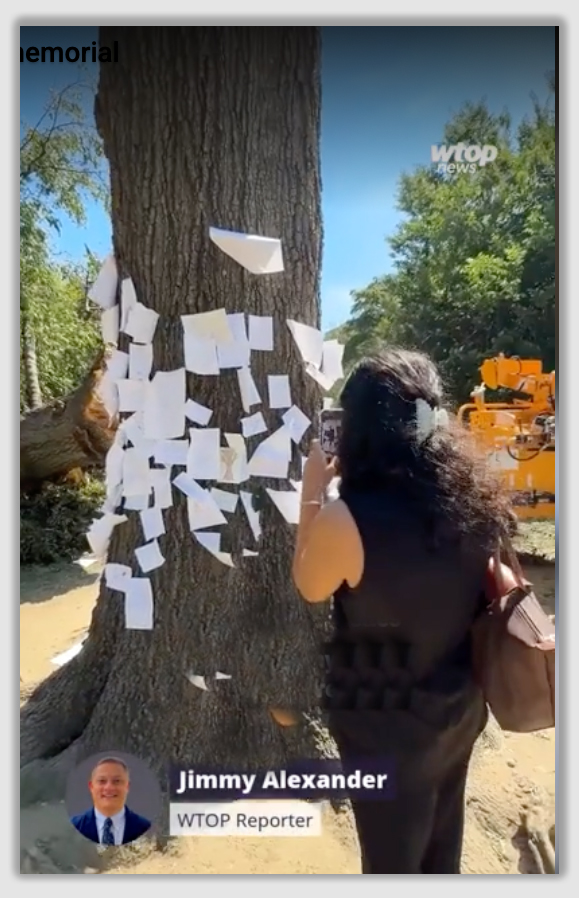
Washington, DC, Post, September 8, 2026: A beloved tree fell in Washington — and people covered it with thank-you notes

Apparently, if a tree falls in Washington, people will notice — and even mourn its collapse. When an intense storm struck the D.C. region Thursday night, lightning flashed, thunder cracked and hundreds of trees fell down. One was a massive tree in Dupont Circle that had grown there for decades until it suddenly snapped in half. Over the weekend, Washington residents began to mourn the tree, and by Monday afternoon, dozens of handwritten messages were affixed to what remained of the trunk. At its base, the trunk was as wide as a few adults. But at its jagged top, just one lone branch was left. In the notes, people shared memories of their time in the tree’s shade. They thanked it for providing oxygen. They lamented its destruction, they lamented the weather, and they lamented the U.S. government. One person attached a photo of squirrels on the tree from a few years ago. Others drew pictures…

Winchester, Virginia, Star, September 9, 2026: Box tree moths remain a threat to local boxwoods

Box tree moths continue to inflict damage on boxwood shrubs in the region. And property owners who want to protect their boxwoods from infestation are being urged to spray them. Box tree moths are an invasive pest that can inflict significant damage on boxwoods if left unchecked, according to the USDA. Once their caterpillars hatch, they quickly begin eating the leaves and then the bark of boxwoods. In Virginia, boxwoods are an extremely popular ornamental shrub. An evergreen, they were initially brought over by colonists in the 17th century. Driving around the Winchester area right now, it’s easy to spot boxwoods that have turned brown as a result of damage from box tree moths. The pest was first detected in the United States in New York in 2021. Four years later, in the summer of 2025, it was detected in Virginia for the first time in nearby Clarke and Loudoun counties. On Dec. 3, 2025, Virginia Department of Agriculture and Consumer Services (VDACS) announced a box tree moth quarantine for Frederick and Clarke counties and the city of Winchester in an effort to slow the spread of the pest from infested to uninfested areas…
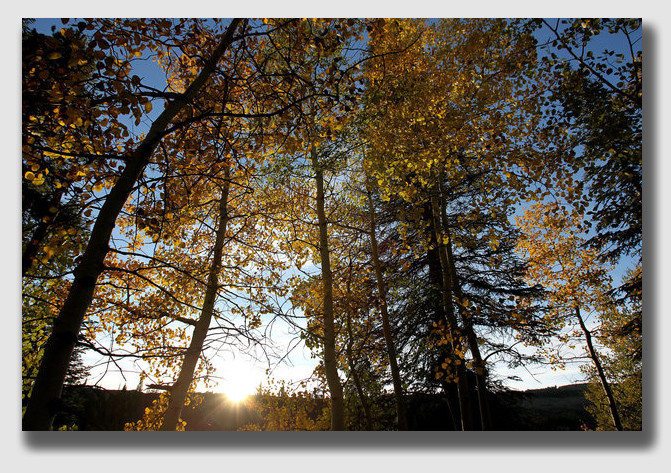
Colorado Springs, Colorado, KRCC Radio, September 9, 2026: Colorado’s fall colors are arriving early. Drought is partly to blame.

From a small plane above Colorado’s mountains, Dan West has been getting a bird’s-eye view of the state’s trees. He conducts forest surveys and has been watching for the first patches of autumnal yellow and orange to emerge. But this year, the early fall colors come with a caveat: for many trees, it’s not the seasons shifting that’s making them change. It’s drought. “Really this year we’re seeing a lot more effects from the drought than we are just from that autumnal kind of seasonal change that we would typically see,” said West, the state’s Forest Service lead entomologist. Trees across the state are showing signs of drought stress, and that’s causing some to change color and drop their leaves earlier than they normally would. And according to West, the fall foliage is running roughly a week ahead of its typical schedule in many places…

Associated Press, September 9, 2026: Wilderness advocates delay removal of tree ‘Yellowstone Forest Reserve’ surveyors inscribed in 1893

Public opposition will slow plans to remove and display a section of a dead Shoshone National Forest tree that surveyors mapping Yellowstone Forest Reserve boundaries inscribed 133 years ago. The dead Engelmann spruce still stands about 28 miles from the nearest trailhead in the Washakie Wilderness. Plans to recover the artifact via helicopter have been underway for years, and there’s even a place in the Wyoming State Museum to display it. But as plans advanced, federal land managers did not loop in the general public nor advocacy groups whose mission it is to uphold the Wilderness Act. When they ultimately learned about the project, advocates publicly objected — and let Shoshone National Forest Supervisor Ken Coffin know it…
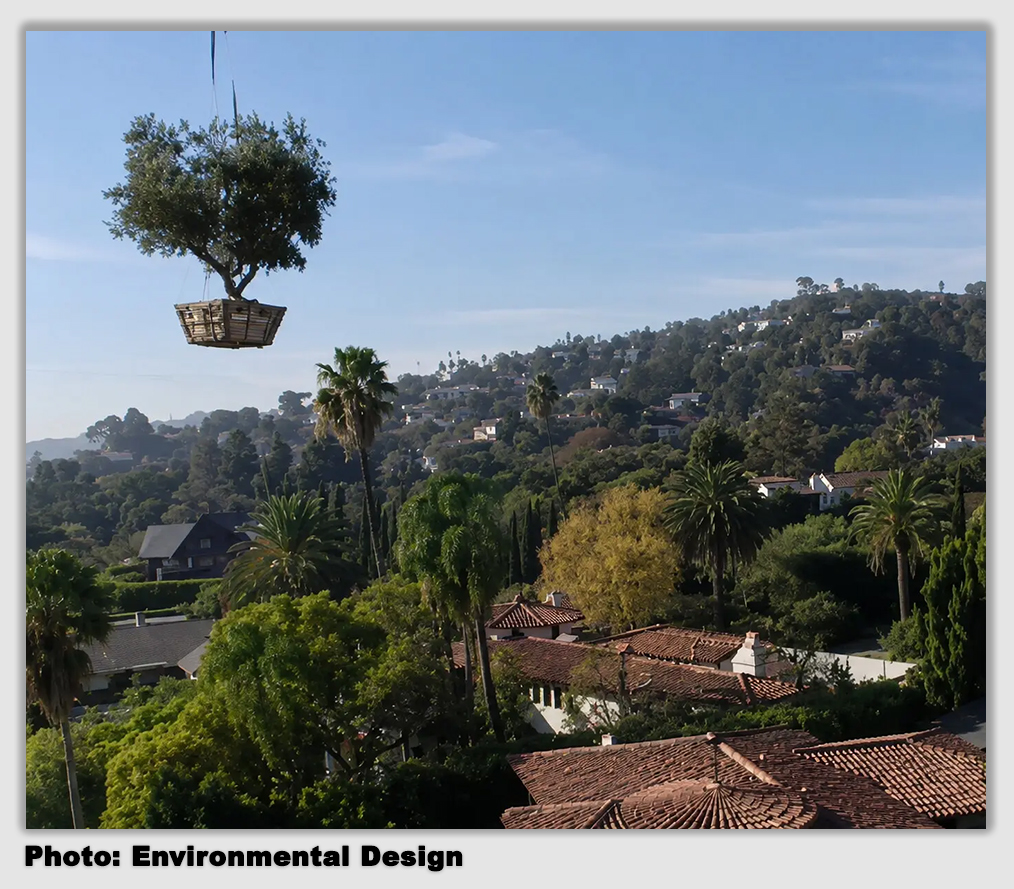
New York City, The New York Times, September 8, 2026: The Latest Wealth Flex: Big Trees

Imagine lifting a chair and moving it to a corner of the living room. Now imagine that the chair is 50 feet tall and weighs 100 tons. That, or something very like it, is the daily task of specialized workers who uproot and replant trees that may have been saplings when Ronald Reagan was a child. “Every day, that’s what we do,” said Tom Cox, a co-founder of Environmental Design, a company in Texas that sources and transplants some of the largest and heaviest trees in the world. “People who can afford it want the biggest, and they want the best in everything, and they want it now.” The commerce in old trees is certainly not new. But as the billionaire class rapidly grows and the net worth of the richest Americans soars at unprecedented rates, the mature tree business is booming, according to experts in this once-niche industry. “Of course, people have done big trees before,” Andres Blanco, a principal at Ferguson & Shamamian Architects in New York, said. “But not at this scale. The money is now out of control…”

Visual Capitalist, September 7, 2026: Ranked: The World’s Cities With the Most Tree Coverage

Tampa ranks first with a Green View Index (GVI) of 36.1%, 6.8 percentage points above Breda and Singapore. Eight cities have a GVI above 25%, including Oslo, Sydney, Vancouver, Montreal, and Cambridge. Treepedia measures greenery from a pedestrian’s perspective, capturing the share of tree canopy visible along city streets.Urban trees can reduce heat, help manage stormwater, and make streets more comfortable for pedestrians. But measuring how green a city feels at street level is more complicated than simply counting parks. This ranking uses data from Treepedia, developed by the MIT Senseable City Lab in collaboration with the World Economic Forum, to compare tree canopy visible from streets across major global cities…
CBC, September 7, 2026: Dutch elm disease ravaged Canadian cities. Can we help trees protect themselves?

Scientists in the state of Vermont have spent the summer spreading Dutch elm disease to thousands of trees. You read that correctly. Researchers with the U.S. Forest Service and the Nature Conservancy want to see if a new generation of elms — bred from survivors of the disease — might have resistance to the fungus spread by bark beetles that has been decimating elm populations in the U.S. and Canada for decades. The goal is one day repopulating areas where towering elms were once ubiquitous, lining city streets and thriving along river banks. “The loss of the trees over the years has been devastating,” Gus Goodwin, a senior conservation planner for The Nature Conservancy, told The Associated Press. Time will tell if the Vermont experiment will result in a strain of trees resistant to Dutch elm disease (DED). Researchers working on similar efforts here in Canada hope science will offer solutions at a time when the disease is becoming a threat in new areas…

Southern Living, September 7, 2026: Your Neighbor’s Tree Is Dropping Leaves In Your Yard—Who Has To Clean Them Up?

Your neighbor has a gorgeous shade tree with branches that stretch across the fence-line. For a few months, you appreciate the shade, shelter, and brilliant fall color this tree provides. But then that tree dumps a huge load of leaves onto your property. Thanks to your neighbor’s tree, you’ve got a massive cleanup job that you never asked for. Since the tree belongs to your neighbor, shouldn’t they rake up the leaves? Why not blow those leaves right back over to their side of the property line where they belong? We’re afraid we have some news for you: You are responsible for cleaning up the leaves that fell from your neighbor’s tree. Whatever falls on your property is almost always your responsibility. This includes leaves, acorns, seed pods, twigs, and even fallen branches, unless your neighbor was neglecting a diseased and rotting tree. Since no one has control over which way the wind blows or which side of the property line these “natural products” land on, everyone takes care of their own side of the fence…

href=”https://treeandneighborlawblog.com/wp-content/uploads/2013/11/tnlbgray.jpg”>TNLBGray

Case of the Day – Thursday, September 10, 2026

A KINDER, GENTLER MASSACHUSETTS RULE

We saw earlier this week that there’re some pretty tough nuts out in Washington. Ironically known as “The Evergreen State,” Washington law holds that if I hack off the roots or branches of your tree up to my property line, even if it ensures that your tree will end up in a “never-green state” (which is to say, dead, dead, dead), that’s just fine.


Today, we’re looking at the other side of the country and, for that matter, the other side of the coin. New York State takes a much more liberal view. Every homeowner still has the first prong of the Massachusetts Rule at his or her fingertips (or the tip of the chainsaw). That is, a landowner may trim branches or roots up to the property line.

However, there is a caveat. New York has codified some of its common law. That is, it has tried to distill some of the court-made law from years and years of jurisprudence into its statutes. One such code relates to real estate law and is called New York Real Property Actions and Proceedings Law.

Called the RPAPL, an unpronounceable acronym if ever there was one, that code contains § 861, which makes a landowner liable for “despoiling” a neighbor’s tree without the neighbor’s permission. In today’s case, the court let the Fliegmans go forward with their complaint that construction contractors hired by their neighbors, the Rubins – while not setting foot on their land – nevertheless caused three Fliegman trees to topple by cutting roots that had grown into the Rubins’ property. The Rubins had the right to cut encroaching roots, the court held, but not so as to harm the tree’s support structure.

Fliegman v. Rubin, 781 N.Y.S.2d 624 (S.Ct. 2nd Dist., Nov. 20, 2003). After three large trees located on Agi and Mendel Fliegmans’ property fell, damaging their home, they sued their next-door neighbors, Liebel and Dorothy Rubin, as well as their contractors. The Fliegmans argued that the trees fell because of an excavation on the Rubins’ property as part of a house construction project.

They sued, claiming negligence, trespass and violation of New York Real Property Actions and Proceedings Law § 861, Action for cutting, removing, injuring or destroying trees or timber and damaging lands thereon.

The trial court threw out the Fliegmans’ suit, and they promptly appealed.

Held: The Fliegmans could recover damages.

The fallen trees at issue were located on the Fliegmans’ property, but their roots and branches encroached onto the Rubins’ property. At common law, adjoining property owners – such as the Rubins – are permitted to trim tree branches and roots which encroach onto their property from a neighboring lot. However, the appellate court said the right to self-help is limited – in that an adjoining landowner’s right to engage in self-help “does not extend to the destruction or injury to the main support system of the tree.”

New York RPAPL 861(1) provides that “if any person cuts down or carries off any wood, underwood, tree… or otherwise despoils a tree on the land of another, without the owner’s leave… an action may be maintained against him by the owner…” The Court held that this is consistent with common law principles.

RPAPL 861 does not require a trespass to impose liability. Instead, damages may be recovered under the common law and pursuant to RPAPL 861 if a tree is, among other things, “cut down or despoiled even if the defendants herein did not enter onto the plaintiffs’ property.”

– Tom Root

Case of the Day – Wednesday, September 9, 2026

WASHINGTON STATE – GREAT COFFEE, GREAT VISTAS… AND GREAT CONFUSION

I have to confess that, although I am a proud Midwesterner, I love the State of Washington. Temperate rain forests, soaring mountains, beautiful lakes, great coffee, greater beer, and Seattle in the sunlight.

OK, not so much about the sunlight. But for that, Washington is two fantastic states: the first, a lush, moist paradise west of the crest of the Cascades; the other, a sprawling, sunny, semi-arid plain east of the mountains.

Despite my love of the place, I was unstinting in my criticism yesterday about how the Mustoe court had sanctioned an “anything goes” culture in Washington, in which a landowner could misuse the Massachusetts Rule to kill a neighbor’s tree by the indiscriminate cutting of roots and branches, regardless of effect. As long as you stay on your own property, you can trim branches and roots with a backhoe bucket, if you so choose.

Today’s case is every bit as puzzling as is Mustoe, but in quite the opposite direction. One set of neighbors hacked branches off a boundary tree to the point that the other set legitimately feared that it was so unstable it would fall. The second set of neighbors then retaliated, taking the rest of the branches off the tree. That stabilized the tree trunk but had the unfortunate side effect of killing the tree.

Neighbor One, who lacked not for chutzpah, sued Neighbor Two for timber trespass. The courts found Neighbor Two liable for treble damages under the State’s timber trespass statute, regardless of the fact that Neighbor One’s reckless trimming created a hazard tree and the need for the drastic remedy that killed the tree.

The Court, in today’s case, candidly “acknowledge[s] that under Mustoe and our holding here, it would appear that a property owner has greater rights with respect to trimming a neighboring tree than a tree standing on a common property line with a neighboring property. This outcome results from applying a statute to a situation the legislature likely did not contemplate when drafting it. Our legislature may clarify the statute’s applicability to boundary trees in future legislation.”

Of course, part of the problem may be that the lawyer for the Pelayos (Neighbor Two) forgot that the best defense is often a good offense. He did not file a timber trespass claim against the Herrings (Neighbor One), which would have placed their misconduct into play. To be sure, in any fair world, the Herrings’ conduct in removing all the branches overhanging their property also violated RCW 64.12.030 and should have mitigated, if not outright excused, the Pelayos’ cutting in response.

Herring v. Pelayo, 397 P.3d 125 (Wash.App. Div. 2, 2017). The Herrings and Pelayos are neighbors. In December 2011, the Herrings hired a tree trimmer to remove some branches from a tree located on the common property line. The Herrings did not discuss their plan to remove branches from the tree with the Pelayos prior to the work. When they discovered the trimming, the Pelayos believed that the work had caused the tree to become unbalanced, constituting a danger to their home. Three weeks after the Herring trimming, the Pelayos had a tree trimmer remove all remaining branches from the boundary tree, causing it to die. Like the Herrings, the Pelayos did not discuss their plans with the neighbors before the work.

The Herrings sued, claiming a timber trespass in violation of RCW 64.12.030 or, in the alternative, regular garden-variety trespass in violation of RCW 4.24.630. At trial, Jose testified that he knew the tree at issue was on the common property line, he told the tree trimmer to remove all of the remaining branches from the tree, he did not discuss his plan with the Herrings, (4) the tree was alive prior to the removal of the remaining branches, and (5) he believed that removing the remaining branches would kill the tree, which it did.

The Pelayos’ tree trimmer, Tim Jones, testified that he believed the tree was a danger to the Pelayos, and he had recommended that they remove the entire tree or, at least, cut off all the remaining branches. But Tim also told the Pelayos they could remove a top portion of the tree to balance it, and he admitted he might have been able to remove some of the remaining branches to make the tree safer without killing it.

The trial court held that the Pelayos committed timber trespass under RCW 64.12.030, and their defense of mitigating circumstances, allowed by RCW 64.12.040, did not apply.

Held: The Pelayos had to pay.

Jose and Blanca Pelayo argued that the trial court failed to find that their conduct in removing the branches from the boundary tree was both (1) willful and (2) without lawful authority. Without those findings, they contended, they could not have violated RCW 64.12.030.

RCW 64.12.030 provides that “whenever any person shall cut down, girdle, or otherwise injure, or carry off any tree… on the land of another person… without lawful authority, in an action by the person… against the person committing the trespasses… any judgment for the plaintiff shall be for treble the amount of damages claimed or assessed.” Washington law is clear that there must be an element of willfulness on the part of the trespasser to support treble damages under RCW 64.12.030. In this context, the Court said, “willful” simply means that the trespass was “not casual or involuntary.” The burden of proving that a trespass was casual or involuntary is upon the defendant once the fact of trespass and the damages caused thereby have been shown by the plaintiff.

Here, the Court said, the Pelayos never argued and no evidence ever suggested that the trespass was casual or involuntary. Under those circumstances, it was not necessary for the Herrings to prove willfulness.

Jose admitted at trial that he knew the Herrings had an ownership interest in the boundary tree and that he ordered the remaining branches removed, knowing that removing the branches would kill the tree. The Court said his testimony “was tantamount to a concession” that the conduct in removing the branches was willful. No other evidence would have let the trial court infer that this conduct was casual or involuntary. Therefore, no specific finding as to willfulness was required.

Next, the Pelayos argued that they were lawfully authorized to remove branches from the boundary tree that were overhanging their property. The Court made short work of that argument as well.

RCW 64.12.030 applies only to people acting without lawful authority. A landowner has the legal authority to engage in self-help and trim the branches and roots of encroaching onto his or her property. On the other hand, a landowner does not have the legal authority to cut down an encroaching tree. But here, the issue was whether a landowner may trim the branches of a tree standing on a common property line in a manner that a defendant knows will kill the tree.

The Court began by holding that trees standing directly on the property line of adjoining landowners are the common property of both landowners. The Pelayos contended that landowners had an unfettered right to trim branches that overhang their property regardless of whether the tree is situated entirely on a neighboring property or, instead, is situated on a shared property line.

Despite Washington State’s rather cavalier treatment of a tree owner’s rights vis-à-vis the neighbor in the Mustoe decision, the Court concluded that where the tree stood on a common property line, both the Pelayos and the Herrings had undivided property interests in the tree. This was consistent with the only other relevant decision on the matter, a Washington appellate decision in Happy Bunch LLC. Because the Pelayos have a property interest in the tree at issue, the Court reasoned, portions of the tree overhanging their property could not be said to be “encroaching” in the same way that the branches and roots were encroaching in Mustoe.

The Pelayos and Herrings owned the tree as tenants in common, and thus each couple was entitled to use, maintain, and possess the boundary tree, but not in a manner that “interfered with the coequal rights of the other cotenants.” Unlike a landowner engaging in self-help to trim branches overhanging his or her property from a tree situated entirely on the property of another, the Court ruled, a cotenant owning a boundary tree had a duty not to destroy the common property and thereby interfere with the rights of the other cotenants.

After all, the Court argued, if landowners had an unfettered right to cut away the portions of a common boundary tree that stand on their property, without any regard for whether such cutting would injure or destroy the tree, the timber trespass statute could become inapplicable to neighbors sharing a property interest in a boundary tree. Under the Pelayos’ argument, the Court complained, a neighbor sharing a property interest in a boundary tree could effectively destroy the tree and escape liability under the timber trespass statute if the neighbor destroys the tree in a manner that does not physically trespass on the portion of the tree situated on the neighboring property. “This result cannot withstand the plain language of RCW 64.12.030,” the Court said, “which imposes liability on ‘any person… [who] cut[s] down … or otherwise injure[s] … any tree… on the land of another person’.”

The Court observed that it also had to “give effect to language in the statute shielding from liability conduct that is taken with ‘lawful authority’… In recognition of the long-recognized lawful authority to trim overhanging vegetation, the lawful authority to use and maintain property held in common with a cotenant, and the plain language of the timber trespass statute, we hold that where a tree stands on a common property line, the common owners of the tree may lawfully trim vegetation overhanging their property but not in a manner that the common owner knows will kill the tree.”

Because the Pelayos admitted they directed the removal of the remaining branches of the boundary tree, knowing that the removal would kill the tree, they were liable under RCW 64.12.030.

The Pelayos tried to avoid being hit with treble damages under RCW 64.12.040 by arguing that mitigating circumstances applied to their conduct. They said that because they cut the tree branches while standing on their property, they had probable cause to believe that they owned the land where such conduct took place.

The Court rejected that argument, too, holding that RCW 64.12.030 violations involve direct trespass to a tree, not trespass to the land on which the tree grows. The timber trespass statute applies when a defendant commits a direct trespass that causes immediate, not collateral, injury to a plaintiff’s timber, trees, or shrubs, even if the defendant is not physically present on a plaintiff’s property.

– Tom Root

TNLBGray140407

Case of the Day – Tuesday, September 8, 2026

FOOTBALL IS (NOT SO) BACK!

It’s supposed to be the most wonderful time of the year… high school games every Friday night, my beloved Ohio State Buckeyes (and how those last-second-plus-one Wolverines?) on Saturday. Soon enough, the Super Bowl-bound Cleveland Browns will start Sunday play.

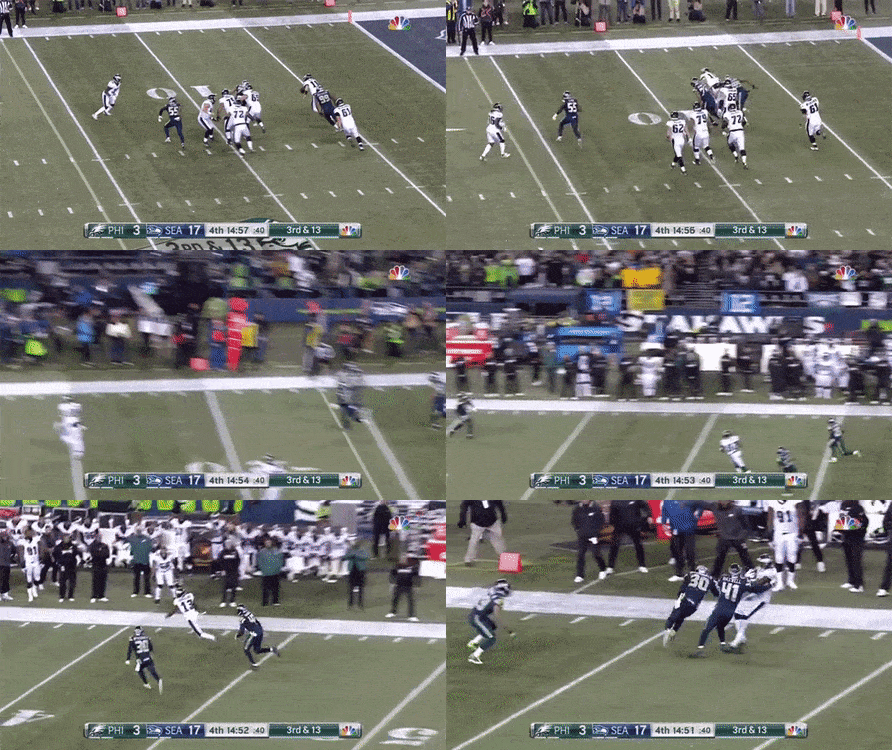
In honor of the gridiron season, I resort to cheap metaphors today while considering an unusual and (to us) troubling tree law case. Change the fact pattern by about three feet, and the outcome would have been the opposite of what the court ruled. That is, if Jennifer’s trees had been growing a yard or so south of where they were rooted, they would have been boundary trees. Neighbors Tony and Xiaoye couldn’t have touched them. But because the trunks and root flares of the conifers were all on Jennifer’s land, Tony got away with whacking away so much root support that Jennifer had to take the three trees down.

“Can they do that?” you ask, because you seem to remember a California case that said otherwise. Good recall, tree law fan. Unfortunately, the answer is pretty much, “Yeah, in Washington, they can do that.” But somehow it seems that the answer ought to be otherwise, that your right to Massachusetts Rule-style hacking at your neighbor’s tree should be informed by some kind of a duty not to kill the tree in the process.

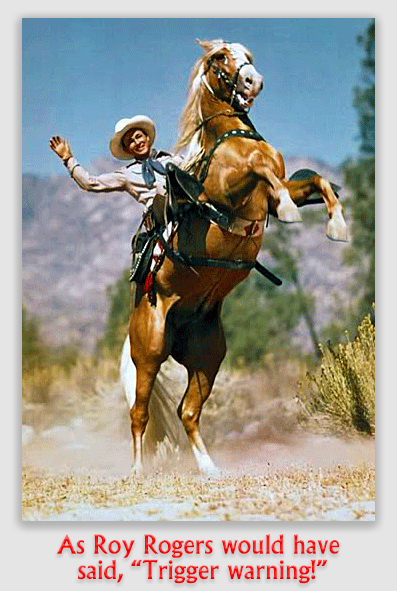
Trigger warning: the outcome of this case is tragic for the trees involved, and those sensitive readers among us who cower at the sound of chainsaws might be needlessly upset.

Mustoe v. Ma, 371 P.3d 544 (Wash.App. 2016). Jennifer Mustoe had two large Douglas fir trees located entirely on her property, about three feet from the property line. Her neighbors were Anthony Jordan and Xiaoye Ma. In October 2013, Tony dug an 18-to-20-inch-deep ditch on his property along the border of Jennifer’s lot. In the process, he exposed and removed the trees’ roots, leaving them to extend only 3-4 feet from the trunks, a loss of nearly half of the trees’ roots, all from the south side of the trees. The trees were thus exposed to southerly winds with no support, making the damaged trees likely to fall on Jennifer’s home.

The landscape value of the trees was estimated to be $16,418; the cost of their removal was estimated to be $3,913.

Jennifer filed suit against Xiaoye and Tony, asserting that Tony had negligently, recklessly, and intentionally excavated and damaged her trees. The trial court dismissed Jennifer’s claims, holding that Tony was entitled to remove those portions of roots that had encroached onto his and Xiaoye’s property and that in so doing, he did not owe Jennifer a duty of due care to prevent damage to the trees.

Jennifer appealed.

Held: The Court rejected Jennifer’s claims.

Jennifer started out a field goal behind, because she was compelled to acknowledge that Washington law lets an adjoining landowner engage in self-help and trim the branches and roots of a neighbor’s tree that encroach onto his or her property. Yet, Jennifer argued, the right to self-help does not extend to removing the tree itself, and the State’s common law “does not immunize a landowner against liability for damage to the trimmed trees.” She contended that the Court should hold that in exercising self-help, a landowner owes a duty of care to prevent damage to the trees themselves.

Jennifer thought she’d put one through the uprights and tie the score, but the Court played Lucy to her Charlie Brown. The law was clear, the Court said, that an adjoining landowner may trim only those branches or roots that encroach on his own property, but it did not hold that a landowner owes a duty to act in good faith or reasonably to prevent damage to the trees.

Jennifer also claimed that under state law, all members of society owe a broader legal duty to their fellow citizens and must not use their own property so as to cause injury to others. She cited an exception to the common enemy doctrine in water trespass cases as an example of this duty. The common enemy doctrine allows landowners to dispose of unwanted surface water in any way they see fit, without liability for resulting damage to their neighbors, but a “due care” exception requires that a landowner change surface water flow in good faith and in such a way as not to cause unnecessary damage.

The Court rejected Jenn’s comparison, observing that no court had ever extended the “due care” exception beyond surface water. The Court said, “Surface water is a common enemy precisely because it is a force of nature which may indiscriminately affect any landowner. As such, each landowner may defend against it so long as he or she does not do so in a manner that unnecessarily redirects the wrath of the common enemy upon a neighbor. Unlike surface water, tree roots and branches are not a force of nature that indiscriminately wreak havoc among adjoining landowners. Instead, they are an encroachment upon the land of one’s neighbor.

Jennifer, facing second and long, argued that Booska v. Patel, a California case, found that adjoining landowners had a duty to act reasonably in trimming encroachments where neighbors’ trees were concerned. Citing a decision from the other end of the country, Jennifer argued that in Fliegman v. Rubin, a New York court – relying on Booksa – reversed the trial court’s summary dismissal of a plaintiff’s claims for damages to his trees allegedly resulting from the defendant’s severance of roots that had encroached on to his property. The Fliegman court held there was an issue as to whether severance of the trees’ roots damaged the plaintiff’s trees because “the right to self-help is limited, in that an adjoining landowner’s right to engage in self-help ‘does not extend to the destruction or injury to the main support system of the tree… .'”

Jennifer’s court was unswayed, holding that Booska and Fliegman appeared to be “outliers.” In Alvarez v. Katz, the Vermont Supreme Court rejected the holdings in Booska and Fliegman, finding that the “right to cut encroaching trees where they enter the land of another, without regard to the impact on the encroaching tree by such cutting, is well established under Vermont law.”

Here, the Court was likewise persuaded that the law in Washington was consistent with the general rule as applied in Vermont.

Pinned deep in her own territory on third down, Jennifer aired it out. She contended that her nuisance action against Tony and Xiaoye should go forward because Tony’s excavation and removal of tree roots was unreasonable in relation to the harm it caused to her trees. A nuisance is an unreasonable interference with another’s use and enjoyment of property. RCW 7.48.010 defines an actionable nuisance as “whatever is injurious to health or indecent or offensive to the senses, or an obstruction to the free use of property, so as to essentially interfere with the comfortable enjoyment of the life and property.

The fundamental question in a nuisance issue is whether the use to which land is put can be considered reasonable in relation to all the facts and circumstances. Tony argued that Jennifer had no action for nuisance because she had no legally recognized right. The Court agreed that Jennifer had not established that she had any legal cause for complaint or interference with the lawful removal of the roots on Ma’s property.

A nuisance claim will fail if it is nothing more than a negligence claim “in the garb of nuisance” unless the negligence claim has merit. Where the alleged nuisance is a result of the alleged negligent conduct, the rules of negligence are applied.

Here, Jennifer’s nuisance claim arose from Tony’s actions that damaged the trees; the nuisance is the result of his alleged breach of duty. But there was no breach of duty: because Jennifer’s negligence claim failed, her nuisance claim did, too.

On fourth down and a mile, with only a few seconds left, Jennifer threw the Hail Mary. She complained that she was entitled to damages under the timber trespass statute, RCW 64.12.030. The statute reads, “Whenever any person shall cut down, girdle, or otherwise injure, or carry off any tree… timber, or shrub on the land of another person, … without lawful authority, in an action by the person, city, or town, against the person committing the trespasses or any of them, any judgment for the plaintiff shall be for treble the amount of damages claimed or assessed.”

Alas, the ball fell short. By its own terms, the Court said, the timber trespass statute applied only to persons acting without lawful authority. Because Tony did not act unlawfully when he removed roots that encroached onto his property, the claim fails.

– Tom Root

TNLBGray140407

Case of the Day – Friday, September 4, 2026

ALL YOUR TREE ARE BELONG TO US

If you were not following Internet culture (as oxymoronic as that phrase may be) a quarter century  ago or so, you might not recognize the badly-mangled taunt “All your base are belong to us,” derived from the poorly-translated Japanese video game, Zero Wing. It became a cult classic in 2001, and the melodious strains of the techno dance hit Invasion of the Gabber Robots can be heard in some of the goofier corners of the ‘Net – and there are plenty of those – to this very day.

allyourbaseOver the past week, we have examined Colorado’s unusual and needlessly complex approach to boundary trees. Yesterday and today, we are examining another approach, one that is simple, clean and efficient.

In today’s case, an elm tree stood on the boundary line between the Ridges and the Blahas. One can almost imagine Mr. Blaha — who was tired of the mess the elm made every fall — announcing to the tree, “you are on the way to destruction!” But the problem was that, contrary to Mr. Blaha’s belief, all the tree’s base did not belong to him, at least not just to him. Rather, the base of the tree straddled the property line between the Blaha homestead and the Ridges’ house.

Unlike the Colorado decision of Rhodig v. Keck, which we discussed in our review of Love v. Klosky last week, the Illinois court did not require that the plaintiff show who had planted or cared for the tree. Instead, its analysis was simple: the tree grew in both yards, and thus, the Ridges had an interest in the tree, as did the Blahas. This made the landowners “tenants in common,” and prohibited either from damaging the tree without permission of the other.

The Illinois view, exemplified here and in yesterday’s discussion of Holmberg v. Bergin, is the more common approach than Colorado’s “husbandry” test, and it prevails in the United States. Here, the Court issued an injunction against Mr. Blaha prohibiting him from cutting down the tree. For great justice.forgreatjustice

Ridge v. Blaha, 166 Ill.App.3d 662, 520 N.E.2d 980 (Ct.App. Ill. 1988). The Ridges sought an injunction against the Blahas to prevent them from damaging an elm tree growing on the boundary line between their respective properties. After living with the elm for many years, the Blahas tired of the tree’s unwanted effects and decided to remove it with the help of an arborist. The Ridges were not consulted, however, and when arborist Berquist came to remove the tree, plaintiffs objected that the tree belonged to them and that they did not want it destroyed.

Growing_TreeThe evidence showed that the base of the tree extended about 5 inches onto the Ridges’ property, but that the tree trunk narrowed as it rose so that at a height of 1.25 feet, the trunk is entirely on Blahas’ side of the line. Photographs were also introduced which showed the tree interrupting the boundary line fence. The trial court found that no substantial portion of the elm’s trunk extended onto the Ridges’ property and that, as such, they did not have a protectable ownership interest in the tree. The Ridges appealed.

Held: The Ridges had a protectable interest. The Court held that the fact that a tree’s roots across the boundary line, acting alone, is insufficient to create common ownership, even though a tree thereby drives part of its nourishment from both parcels. However, where a portion of the trunk extends over the boundary line, a landowner into whose land the tree trunk extends had a protectable interest even though a greater portion of the trunk lay on the adjoining landowners’ side of the boundary. That interest makes the two landowners tenants in common and is sufficient to permit the grant of an injunction against the adjoining landowner from removing the tree.

Move Zig.

– Tom Root

TNLBGray140407

Case of the Day – Thursday, September 3, 2026

WHEN A TREE GROWS ACROSS A BOUNDARY – AND CAUSES A NUISANCE

Trees often don’t start out straddling property lines. Rather, they sprout as carefree saplings, but later grow above and below the ground without regard for metes and bounds.

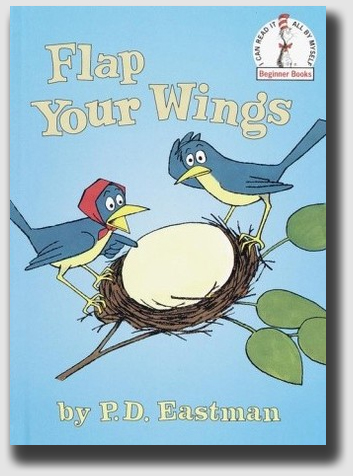
Do you remember Flap Your Wings? It’s a great children’s book by P.D. Eastman, a favorite of my 3-year-old grandson Tommy, a story in which Mr. and Mrs. Bird suddenly find an oversized egg in their nest, placed there by a well-meaning stranger who found the orb on the ground and wrongly deduced it had fallen from the tree. They love and care for the egg, but it hatches into something that unexpectedly becomes a real nuisance in their nest. A great book with a happy ending… but no spoiler alert is needed here. We won’t tell you what hatched.Flap

When the Bergins planted a tree on their land in 1942, they had little idea that it would grow into a big problem. The tree thrived over 25 years, a great oak from a little acorn having grown, so to speak. (All right, it was an elm, but you take the point…) It expanded from its modest plot toward and across the boundary line with their neighbors, in the process knocking the neighbors’ chain-link fence out of line, raising the sidewalk and causing drainage problems.

The Holmbergs argued that the tree was a nuisance, and demanded that the Bergins remove it. The Bergins argued that the tree was a boundary tree, and it thus belonged to both the neighbors and to them commonly. Therefore, they could not be charged with maintaining a nuisance.

The Court disagreed with the Bergins’ defense, ultimately adopting the rationale of the Colorado case of Rhodig v. Keck. The intent of the parties, the Court ruled, rather than the location of the tree, governed whether the tree was a boundary tree.

Little trees don't stay little

Little trees don’t stay little…

Here, the Bergins planted and maintained the tree exclusively. They and the Holmbergs neither treated nor intended the elm to be a boundary tree. Instead, the tree ended up straddling the boundary only by an accident of growth. No matter where the tree had grown to encompass, it remained the Bergins’ tree, and the court found it to be a nuisance.

The damage wrought by the tree makes an interesting comparison to the 2007 Virginia decision in Fancher v. Fagella on encroachment and nuisances. The tree’s shallow root system made remedies short of removal infeasible, and the roots seemed to run just about everywhere. The case is an excellent illustration of how the facts of the particular growth at issue can drive a court’s decision.

Holmberg v. Bergin, 285 Minn. 250, 172 N.W.2d 739 (Sup.Ct. Minn. 1969). The Bergins and Holmbergs were adjoining landowners in Minneapolis. In 1942, the Bergins planted an elm tree on their property about 15 inches north of the boundary line, and they have maintained the tree and exercised sole control over it since that time. The Holmbergs bought their place 10 years later and constructed a chain-link fence on their property 4 inches south of the common boundary line. When the fence was completed, the tree was 6 inches from it and 2 inches from the boundary line, so the tree did not touch or interfere with the fence.

By 1968, the tree was 75 feet high, with a trunk diameter of 2 1/2 feet, and it was protruding about 8 inches onto the Holmbergs’ property. Its roots extended onto Holmberg’s property and pushed the fence out of line, making it impossible to use a gate in the fence. The tree was close to both houses, and the roots, being cramped for room, have pushed up a large hump in the ground around the base of the tree. The roots raised the ground level from the base of the tree to the Holmbergs’ sidewalk and caused it to tip toward their house, resulting in drainage into their basement.

To fix the problem, the Holmbergs were forced to construct a new sidewalk, which promptly cracked as well because of the tree’s roots. If the tree were removed, the Bergins’ property value would depreciate by $5,000.

Despite the Bergins’ complaint that the tree was a boundary tree, the trial court found it a nuisance and ordered the Bergins to remove it at their own expense. No damages were awarded to the Holmbergs because they failed to take advantage of earlier opportunities to remove the roots. The Bergins appealed.

The parties had never agreed that the tree would mark their boundary - and this was important to the court

     The parties had never agreed that the tree would mark their boundary – and this was important to the court.

Held: The tree was a nuisance. The Supreme Court held that something more than the mere presence of a portion of a tree trunk on a boundary line is necessary to make the tree itself a ‘boundary line tree’ so as to bring it within the legal rule that it is owned by adjoining landowners as tenants in common.

Whether the tree marks the boundary depends upon the intention, acquiescence, or agreement of the adjoining owners or upon the fact that they jointly planted the hedge or tree or jointly constructed the fence.

Nothing in the record discloses any intention of the parties that the tree should mark a boundary line between the properties. Minnesota law is clear that one cannot exercise his right to plant a tree in such a manner as to invade the rights of adjoining landowners. When one brings a foreign substance onto his land, he must not permit it to injure his neighbor. And, the Court held, an injunction against the continuance of a nuisance — such as the one issued by the trial court — may be proper if necessary to effect a complete and comprehensive abatement of the nuisance.

– Tom Root
TNLBGray