Case of the Day – Thursday, October 23, 2025

THAT EQUITY MAY PREVAIL

A barricuda in one of its habitats - the other is a courtroom.

A barracuda in one of its habitats – the other is a courtroom.

Sometimes you really wish you knew the back story of a lawsuit. Merely reading the recitation of facts and the application of the law in some cases leaves you wondering – why is this case even in the courtroom?

Today’s case is a perfect example. The Mannings lived in a housing development. Behind their well-manicured lawn lay some scrubby, undeveloped woods. Their neighbors had a back lawn that was about 30 feet deeper, and the Manning family mistakenly thought that their own lawn must be that long, too. So they cleaned and chopped weeds, took down some saplings, and installed a park bench and baseball batting cage.

But it turned out that the land wasn’t theirs. Presently, they got a letter from some limited liability company’s lawyer, telling them to cease and desist forthwith, govern their actions accordingly, and all of that legal mumbo-jumbo. Chastened, the Mannings withdrew to their own boundary.

End of story? Nope. The owner of the land, CUDA Associates, LLC — “CUDA” undoubtedly being short for “barracuda” — sued the Mannings for the grievous harm they obviously had done to its rather decrepit piece of real estate. The ‘Cuda sued for trespass, for intentional and wrongful cutting of timber in violation of Connecticut law, and for “unjust enrichment.”

OK, fo technically, the Mannings did commit a trespass ... but they left the land in better shape than they found it.

OK, so technically, the Mannings did commit a trespass … but they left the land in better shape than they found it.

And exactly who was unjustly enriched? You have to wonder why CUDA would have sued at all. After all, there was no damage to the CUDA land. In fact, the Court suggested the Mannings had improved it. What’s more, the trespass was an honest mistake, and the trespassers withdrew as soon as their attention was called to the error. We’ll never know the whys. But the trial court pretty clearly agreed with us that the whole thing was a tempest in a teapot: the judge dryly observed that “[t]he equities in this claim clearly rest with the defendants, and as such must be balanced with the nominal losses that the plaintiff has suffered.” In other words, the Mannings’ trespass was pretty minor and done honestly enough, and CUDA didn’t really suffer for it. In fact, it was better off for the trespass, because its property was left in better shape than it would have been in had the Mannings stayed home. The whole case seemed like a monumental waste of the court’s time.

However – and we should all know this by now – litigants are allowed to waste the court’s time, and they do so daily. As maligned as lawyers are, sometimes the fees they charge are the only brakes ever applied to the wacky legal claims their clients want to press in the courtroom. Unfortunately for the Mannings, no cooler heads prevailed in the offices of CUDA’s counsel, so the suit was litigated to judgment.

The court recognized that Connecticut law dictated that damages had to be awarded, even where the trespass was trifling. So it awarded CUDA $1,500, an amount which (we hope) was probably much less than its attorney’s fee. So some justice prevailed in the end, even if it was only found in a lawyer’s pocket.

CUDA Associates, LLC v. Manning, 2008 Conn. Super. LEXIS 93, 2008 WL 249974 (Conn.Super., Jan. 8, 2008). CUDA Associates owned 3,000 square feet from which the Mannings cleared trees, removed underbrush and in effect extended the back boundary of their property line by approximately 30 feet along the entire easterly line of their backyard. All of the surrounding land owned by CUDA or its successor was undeveloped. The Mannings’ house was located in a developed residential area with housing on both sides of White Avenue, and abutting the plaintiff’s property to the east and south. The Mannings installed a park bench, a baseball practice apparatus and the cutting of certain trees and undergrowth, an intrusion into the CUDA’s property that ended when CUDA wrote to them. The Mannings were operating under a mistaken belief that the property that they had encroached upon was theirs and roughly matched the back property line of their neighbor. This mistaken belief led them to do certain clearing and cutting of trees and underbrush and to use the property for their own benefit. CUDA sued for trespass, removal of timber in violation of statute and unjust enrichment.

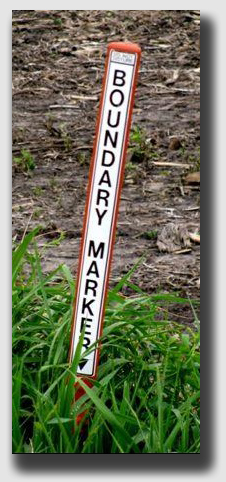
CUDA could have erected a sign that warned against trespassing and spouted a lot of legal nonsense, like this one ...

CUDA could have erected a sign that warned against trespassing and spouted a lot of legal nonsense, like this one …

Held: The Court found that the Mannings committed a trespass upon a portion of CUDA’s property for their own use and benefit, but any loss of use for CUDA was not measurable. The trespass was negligent and not intentional and, therefore, only minimal damages were awarded. As for the cutting of trees, timber or shrubbery in violation of Connecticut General Statute §52-560, while the Mannings did cut trees, CUDA failed to establish the quantity or the value of any of the trees that had been removed. In fact, the Court said, the cutting may have actually improved the overall site appearance for CUDA’s benefit. Nothing more than reasonable and ascertainable value under the statute can be awarded.

As for unjust enrichment, the Court held that the non-permanent intrusion by the Mannings was unintentional. What’s more, any benefit derived by them from the CUDA land was coincidental to the use of their own backyard property and was of a de minimis nature. The Court said that equities in this claim clearly rested with the Mannings and had to be balanced against the nominal losses that CUDA suffered. The Court awarded CUDA $400 for the common-law trespass, $600 for the timber statute violation, and $500 for unjust enrichment.

– Tom Root
tnlbgray140407

Case of the Day – Wednesday, October 22, 2025

ACQUIESCENCE

One big happy family ... until part of the homestead gets sold.

One big happy family … until part of the homestead gets sold.

Lawyers and surveyors are the first to tell you that you should always carefully survey and protect the boundaries of your property. Daily. It’s as important as flossing. And the advice is ignored just as often.

This is especially so when the adjoining property owners are family. If you can’t get along with your kin …

In today’s case, a family farm — handed down from father to son to son — had adjacent farmland parcels. The brothers owning them agreed that a barbed-wire fence they laid — measured off the centerline of a county road — was the boundary between their lands. They measured carefully and marked the fence with fed flags and pennies crimped around the barbed wire, but they didn’t use a surveyor. After all, we’re all family, so who needs to waste money on a third party?

The problem was that the county road centerline wasn’t accurate. As a result, the 60-acre parcel and the 18-acre parcel were off by about a quarter-acre in favor of the bigger piece of land. But no one knew it, and the agreed-upon boundary survived the decay of the fence, the installation of a mobile home and the digging of a well where one end of the fence formerly stood.

It wasn’t until the 18-acre parcel passed out of the family that the buyer discovered — four years after he took possession — that the presumed boundary was off a bit. What’s a quarter acre out in Nebraska farm country? For the buyer, Aaron Sila, it was a lawsuit.

A long-standing rule provides that mutual acquiescence between owners can establish a boundary line where the actual location of the line is unknown. The Nebraska trial court held, however, that the doctrine wouldn’t work in this case, because the line could easily have been calculated by a surveyor using the legal descriptions in the deed. The ruling, of course, begged the question: when exactly would a boundary be unknown if the owners hired a surveyor? Shades of Rumsfeld’s “known unknowns” and the “unknown unknowns,” back in the golden days of the Iraq invasion!

The Nebraska Supreme Court recognized that the trial court’s impossible standard effectively gutted the mutual acquiescence doctrine, and it reversed the decision. It didn’t matter, the Court said, that owners might be able to fix the actual boundary by hiring lawyers and surveyors. They in fact didn’t know where the line was for sure, and they agreed to what each knew was an approximation. It worked for longer than the 10-year statutory period, the Court found, and that was good enough to establish a new boundary by acquiescence.’

Sila v. Saunders, 743 N.W.2d 641, 274 Neb. 809 (2008). This case arose as a boundary dispute between two adjoining farm property owners, Kirk and Aaron. The properties were once part of a single farm owned by Kirk’s grandfather, but the land was divided into three parcels and given to his three sons: Vern, George, and Kirk’s father, Eugene. George got an 18-acre parcel east of a county road. Vern and Eugene were each given adjacent 30-acre parcels to the east of George’s 18 acres.

A year later, Vern died, and his 30 acres were acquired by Eugene. Kirk eventually inherited a 20-acre segment of Eugene’s 60 acres. That segment abutted the disputed 18-acre parcel originally given to George. In the early 60s, George and Eugene established the shared boundary of their properties, “[t]o split the farm up to get a boundary line so [George] knew what he owned and what my dad owned,” according to Kirk’s brother, Elloite. George and Eugene decided not to hire a professional surveyor to mark the boundary, and they mistakenly believed that the middle of the county road represented a section line marking the west boundary of George’s 18 acres. George and Eugene took a 100-foot tape measure and some flags and measured 594 feet east from the middle of the county road. They crimped a penny over the barbed wire and tied red flags on the fence at the 594-foot line of both the north and the south ends of the properties. After this, George’s crops were farmed on the west side of the boundary, and Eugene planted his crops on the east side of the boundary. An aerial photograph from the time showed a clear demarcation between the two parcels that appeared to be parallel to the county road from which the boundary had been measured.

In 1965, Kirk removed the barbed wire fence on the south end of the property but placed a water well next to the property line designated by the crimped penny. After the removal of the fence in 1965, the well was understood by George and Eugene to be the southern visual marker for the boundary between their properties. George and Eugene farmed their respective lands with the well on the south end and the crimped penny on the north end of the boundary for 21 years. When George died in 1986, Eugene and Elliotte continued to farm Eugene’s 60-acre parcel, and they also farmed George’s land for his widow, but they maintained the crop boundary line according to the well/stump boundary. When Eugene died three years later, Elliotte continued to farm George’s land and the 20 abutting acres inherited by Kirk, and he still considered the well and the tree stump as boundary markers.

Aaron Sila bought the 18 acres from George’s widow in 2001. Four years later, he hired a surveyor, who found that the centerline of the county road along the west side of Aaron’s property did not — as George and Eugene had believed — correspond to the section line. Aaron’s surveyor didn’t notice either a stump or a well as visual markers of a boundary line.

Remember Donald Rumsfeld's "unknown unknows?" The Court said that doctrine didn't limit mutual acquiescence


Remember Donald Rumsfeld’s “unknown unknowns?” The Court said that doctrine didn’t limit mutual acquiescence.

Elliotte hired a surveyor, whose survey showed the disputed area as a trapezoid of about 0.264 of an acre in issue. The trial court found that Aaron owned the disputed parcel because mutual acquiescence can only fix a boundary that is otherwise unknown. Since the true location of the boundary was set forth in the legal description and was readily ascertainable through conventional surveying techniques, the court concluded it was “known.” The court also rejected Kirk’s adverse possession claim. Kirk appealed.

Held: The trial court’s decision was reversed. The Nebraska Supreme Court held that under the doctrine of mutual recognition and acquiescence, while a boundary may be fixed in accordance with a survey when a different boundary is shown to have existed between the parties for the 10-year statutory period, it is that boundary line which is determinative and not that of the original survey. The fact that the true boundary might be “knowable” because the deed contains a metes and bounds description that a registered surveyor could have properly marked on the land — but did not — does not preclude the property owners from acquiescing in a boundary that they believe corresponds with the deed’s description.

Here, the two owners knew that the boundary line was merely an approximation of the real boundary. Nevertheless, that fact did not preclude a finding of mutual recognition and acquiescence, so long as the acquiescing parties recognized this approximation as their actual boundary. In order for mutual recognition and acquiescence to operate, there had to be an assent, by words, conduct, or silence, in a line as the boundary.

– Tom Root
TNLBGray140407

Case of the Day – Tuesday, October 21, 2025

A MATTER OF LAW

Relatively few lawsuits ever make it to trial. Most often, they are resolved by motions to dismiss – the plaintiff has made some wacky claim that, even if fully believed, would not lead to a judgment – or the undisputed evidence shows that the plaintiff cannot possibly win.

Example 1: My neighbor to the southwest has some very tall oak trees. I sue her because the leaves are falling and the wind is carrying some of them (it seems like all of them) into my yard. She would file a motion to dismiss, arguing that even if everything I say in the lawsuit is true, I am entitled to no damages, because the law does not make her liable for where the wind may carry her falling leaves.

Example 2: I sue my neighbor, claiming that she has used her Turboblast 3000 blower to push all of her leaves into my yard. If that is true, the law would call it a trespass and I could recover the cost of hauling the leaves away. But she provides affidavits of various nosy neighbors and members of her garden club, who state they watched her pile her leaves in the street (where the city wants them put), and the wind later blew the piles into my yard. All I have is my assertion that she owns a Turboblast 3000 blower, and the leaves are in my yard. In that case, the court would grant her summary judgment because no reasonable jury could find any evidence that she, and not the wind, was the culprit.

As Mark Twain was reputed to have once said, nothing spoils a good story like the arrival of an eyewitness.

When no reasonable jury could find evidence enough to believe one side of a lawsuit, we say the other side is entitled to judgment in its favor “as a matter of law.”

In today’s case, the federal district court has to pick through a motion for partial summary judgment – where the plaintiff asks for judgment that resolves some (but not everything) of what it would have to prove at trial. The court splits the baby down the middle, finding the tree trimming company had a duty to little Jimmy, who was burned by a live wire while he was playing on a swing set, but leaving for a jury the question of whether the duty was breached.

Marland v. Asplundh Tree Expert Co., Case No. 1:14-cv-40 (D.Utah, Dec. 14, 2016), 2016 U.S. Dist. LEXIS 173156, 2016 WL 7240139. Since 1997, Asplundh Tree Expert Co. has contracted with Bountiful City Light and Power to provide power line clearance services. Under that contract, Asplundh’s responsibility is limited to providing line clearance so as to prevent interruption of service by trees or tree limbs coming into contact with the lines or other electrical equipment.”

Under the agreement, Asplundh had the right and duty to remove dead, defective or fast-growing trees located so as to be a hazard to BCLP’s lines whenever “practical and permissible.” Any removal required written permission from the property owner and BCLP. Under the agreement, BCLP would provide Asplundh with an area in which to work, called a feeder. Asplundh was then responsible for clearing the lines along that feeder. This would include determining what trees needed to be trimmed or removed, obtaining the necessary approvals, then doing the actual trimming or removing.

On an early fall day in 2005, Asplundh trimmed a large Siberian Elm at Lyle Henderson’s home in Bountiful. Asplundh trimmed the tree but did not remove it and did not recommend to BCLP that it be removed. About 21 months later, a limb from the tree fell onto a power line, knocking the line into a neighboring backyard and onto a swing set where a child, Jimmy Marland (not his real name) was playing. Jimmy was seriously burned. After that mishap, BCLP got Lyle’s permission to remove the tree.

Jimmy’s parents sued on the child’s behalf, claiming Asplundh was negligent in not removing the tree. They asked for summary judgment in their favor on the issues of whether Asplundh owed Jimmy a duty, and whether he breached the duty.

Held: Scott and Jennifer were granted summary judgment on whether the duty, but not on the breach.

Summary judgment is appropriate if there is no genuine dispute as to any material fact and the party asking for summary judgment is entitled to judgment as a matter of law. In considering whether a genuine dispute of material fact exists, a court must determine whether a reasonable jury could return a verdict for the nonmoving party in the face of all the evidence presented.

To establish a claim of negligence, the Marlands had to show that Asplundh owed Jimmy a duty, (2) that Asplundh breached that duty, (3) that the breach of duty was the proximate cause of Jimmy’s injury, and (4) that Jimmy in fact suffered injuries. Here, the Marlands sought partial summary judgment, focused on the first two elements only, duty and breach.

Whether Asplundh owed Jimmy a duty of care is a legal issue for the court to decide, but if there is a duty, whether Asplundh breached it is a question of fact for the jury to decide. “Accordingly,” the court said, “summary judgment is inappropriate unless the applicable standard of care is fixed by law and reasonable minds could reach but one conclusion as to the defendant’s negligence under the circumstances.”

The Marlands argued that Asplundh’s duty arose under the Restatement (Second) of Torts § 324A, which had been adopted by the Utah Supreme Court. Section 324A holds that when someone agrees to render services for someone else, and when he or she should recognize the service is necessary for the protection of a third person, he or she is liable to the third person for physical harm resulting from his failure to exercise reasonable care in performing the service, if (a) his or her failure to exercise reasonable care increases the risk of such harm, or (b) he or she has agreed to perform a duty owed to the third person, or (c) the harm is suffered because of reliance of the other party or the third person upon the services being performed.

Here, the Court held, there was evidence that Asplundh has agreed to provide services to BCLP which Asplundh should have recognized was necessary to protect third parties like Jimmy. Utah law imposes on utility companies like BCLP the highest degree of care to prevent people from coming in contact with high-voltage electricity. Line clearance is necessary, not only to prevent interruption of service but also to prevent injuries that might result if tree limbs come into contact with electrical wires. Therefore, the court said, Asplundh would be liable to Jimmy for physical harm resulting from its failure to exercise reasonable care if at least one of three subsections in the Restatement are met:

The Court found evidence that subsections (b) and (c) applied. BCLP had a duty to prevent harm to others from its power lines and it delegated part of that duty — line clearance — to Asplundh. Because Asplundh was performing line clearance on the particular feeder, BCLP did not do so itself. Therefore, BCLP relied upon Asplundh to conduct line maintenance so it would not have to. Based upon these facts, the Court said, “There is evidence that Asplundh owed Plaintiffs a duty of care.”

The Marlands argued that “Asplundh breached its duty of care by not removing or recommending to have removed the subject tree in 2005.” Their expert witness provided an affidavit contending that Asplundh had a duty to suggest the removal of the Siberian Elm if the tree was accessible and posed a hazard based on its type, size, and proximity to the power lines. The court agreed that the affidavit stated an applicable standard of care, but even so, summary judgment was not appropriate.

The problem was that before Asplundh could remove a tree, it was required to seek BCLP’s and the homeowner’s permission. The Court agreed that the undisputed evidence showed that BCLP would have given permission to remove the tree because BCLP always gave permission when removal was recommended. But while Lyle Henderson, the homeowner, testified that on other occasions he gave “carte blanche permission” to the utility to trim the tree, there was evidence that he had refused permission to remove or even trim the subject tree in the past and was reluctant to remove the tree even after this accident. Based upon these disputed facts, the court said, the Marlands could not show, “as a matter of law, that removal of the tree would have been permitted by Mr. Henderson.”

Based on the conflicting evidence, the court said, the Marlands had failed to show “as a matter of law” that Asplundh would have received permission from the homeowner to remove the tree “and, therefore, have failed to demonstrate as a matter of law that Asplundh breached its duty of care.” Additionally, the court hints without elaboration, “even if Plaintiffs could demonstrate permissibility, various disputes exist concerning whether removal was required under the relevant standard of care.”

Note: The case went to trial. On February 21, 2017, a jury found Asplundh at fault and awarded Jimmy $3.4 million in damages.

– Tom Root

TNLBGray

Case of the Day – Monday, October 20, 2025

CHOICE VERSUS DISCRETION

It is inevitable in the exciting world of statutory construction that defendants and plaintiffs alike will vigorously overreach in applying exceptions that are written into the law until, as judges are wont to say, “the exception swallows the rule.

I have written before about sovereign immunity and the exceptions to it that must be written into the law in order for people to seek compensation for the negligent misadventures of government employees. The king of those statutes is the Federal Tort Claims Act.

The FTCA permits people to sue the government when its countless officers, agents, departments, bureaus, commissions and assorted employees commit acts of negligence. But there are exceptions, lots of exceptions. The one most often encountered is the discretionary function exception.

An example: If a government employee T-bones you in an intersection because she ignores a red light, obviously you (or your next of kin) want to sue not only her, but also Uncle Sam. You know, respondeat superior, and all of that. Plus, Uncle Sam’s pocket is as deep as pockets get, when it comes time to pay damages.

After all, there’s nothing discretionary about her conduct. Government employee or not, she does not have the discretion to ignore a stop light. The FTCA applies. Pretty slam dunk.

But what if the government agency was in the process of deciding, for example, not to inspect trees because of the cost? A tree falls on your car as you pass through the intersection, a tree that was rotten to the core, but which the agency had done nothing about because its policy was not to inspect its trees? There, the decision not to inspect was a discretionary one, a matter of government policy. In that case, the FTCA would consider you to be out of luck.

But, going back to the first example, let’s say the government employee was on her way to a meeting to decide whether to adopt the no-inspection policy. You sue for damages due to the accident, but the government argues that the agency’s decision to not inspect its trees is a discretionary act, and thus, having a meeting to reach the decision on the tree inspection policy is likewise a discretionary act, as is the decision to include the government employee-lousy driver in the meeting. But for the meeting, she would not have been driving through that traffic light at that moment. Where and when to hold the meeting, who should be invited, and so on… All discretionary acts.

Voila! Like that, the blown traffic light becomes a discretionary act, and you recover nothing. The discretionary function encompasses absolutely everything the agency does, and exception has successfully swallowed the rule.

In today’s case, the government was well on its way to doing just that, denying the parents of a dead teenager any compensation for the collapse of a tree limb by turning a failed tree inspection into a discretionary function. Fortunately for the parents, the U.S. Court of Appeals for the Ninth Circuit said, “Not so fast!”

Just because there may be a choice, the Court held in so many words, does not mean that there has been a discretionary function.

Kim v. United States, 940 F.3d 484 (9th Cir. October 10, 2019). One August night in 2015, Daniel and Grace Kim, their daughter Hannah, their teenage son Dragon, and their son’s friend Justin Lee were camping in the Upper Pines Campground in Yosemite National Park. Before dawn, a limb from a large oak tree overhanging the campsite broke and fell on the tent where the two boys were sleeping, killing them.

The Kims and Justin Lee’s parents sued under the Federal Tort Claims Act, alleging that National Park Service officials were responsible for the accident. The families raised wrongful death and negligent infliction of emotional distress claims.

The complaint also alleged that Park officials fraudulently concealed information about the danger posed by the tree so that campers would continue to patronize the campground.

The Park Service moved to dismiss the lawsuit, arguing that the FTCA did not apply because of the discretionary function exception, which bars tort claims against the United States based upon the exercise or failure to exercise a discretionary function or duty. After reviewing the Park Service’s local policies regarding tree maintenance, the district court found that decisions regarding “how to evaluate and respond to tree hazards” were subject to the discretion of Park officials. The court dismissed the complaint.

The families appealed to the U.S. Court of Appeals for the Ninth Circuit.

Held: The Court affirmed the district court’s dismissal of the plaintiffs’ claim for fraudulent concealment, but it reversed the dismissal of the negligence-based claims.

The FTCA is the only means of suing the United States, its agencies or employees for actions or omissions that constitute a tort. It is limited as to the kind of tort that he asserted, strict in the filing deadlines it imposes on plaintiffs, and fraught with pitfalls as to whether the tort – even if a permitted action and even if timely brought – can apply to the conduct in question.

Specifically, the FTCA’s discretionary function exception bars claims based upon the federal officials’ “exercise or performance or the failure to exercise or perform a discretionary function or duty.” The point of the exception is to prevent judicial second-guessing of legislative and administrative decisions grounded in social, economic, and political policy. The government bears the burden of proving the negligence related to discretionary functions, but plaintiffs usually bear the brunt of the broadly applied exception.

Determining whether the complained-of negligence relates to a mandatory or a discretionary duty is difficult. Courts evaluate the FTCA discretionary function exception in two steps. First, the court must determine whether the challenged actions involve an element of judgment or choice. Second, if the actions do involve an element of judgment, the court must determine whether that judgment is of the kind that the discretionary function exception was designed to shield, namely, only governmental actions and decisions based on considerations of public policy. The relevant choice must be susceptible to some consideration of social, economic, or political policy.

Generally, the design of a course of governmental action is shielded by the discretionary function exception, but the implementation of that course of action is not… unless the implementation itself implicates policy concerns.

Here, the government argued that whether the Park Service inspected the trees was a discretionary function, so the failure to identify the oak as a hazard did not subject the Park Service to liability. The evidence, however, showed that the Park Service did inspect the campsite trees every two years. The Court said that where the Park Service decided to inspect the trees, the argument that a decision on whether to inspect was discretionary was irrelevant.

Once the Park Service actually inspected the trees in the campground, the Court said, Park officials were required to do so in accordance with their established policies. Yosemite Park Directive No. 25 set forth the Park’s “Hazard Tree Management” program and, among other things, it specifies how Park officials are to evaluate the risk posed by trees they inspect. Yosemite used the “‘Seven-Point’ (Mills and Russel 1980) system, a professionally recognized, documented and quantified hazard tree rating system.” The system includes a “Total Hazard Rating” (ranging from two to seven) that combines a “Defect Rating” based on the tree’s potential for physical failure and a “Target Rating” based on the potential impact in the event of a failure. The system provides specific criteria for how to rate each component based on the tree’s visible features and the nature of the surrounding area. Trees with a total rating of five or higher are considered “high” risks and, according to the Park Service plan, “will require some type of abatement/mitigation.”

Once the Park officials used their discretion to adopt the Seven-Point system instead of some other method for evaluating trees, there was no discretion whether the Seven-Point system had to be properly followed. But the Park Service had a final “Hail Mary” to throw. It claimed that its implementation of the rating system is shielded by the discretionary function exception because the system itself requires officials to consider questions of public policy.

The Court rejected this argument, too. “The government appears to conflate policy considerations with technical considerations,” the Court said. “Matters of scientific and professional judgment — particularly judgments concerning safety — are rarely considered to be susceptible to social, economic, or political policy.” And scientific and professional judgment, the Court ruled, “is all the Park’s rating system requires. The system directs officials to assign certain hazard ratings based on a tree’s structural defects and its likelihood of damaging various Park features… Certainly, the system requires the careful — perhaps even difficult — application of specialized knowledge… The mere fact that experts might reach different conclusions when conducting a technical analysis does not mean that the analysis somehow turns on questions of public policy. Even if the Seven-Point system requires officials to make difficult choices, it still does not ask them to make policy choices and it does not afford them an opportunity to rate a tree based on their social, economic, or political views.”

However, the Court ruled, the fraudulent misrepresentation claim had to be rejected. Under the FTCA’s exception for claims arising out of misrepresentation or deceit, claims against the United States for fraud or misrepresentation by a federal officer are absolutely barred. “It goes without saying,” the Court found it necessary to say anyway, “that a fraudulent concealment claim sounds in fraud or misrepresentation.”

– Tom Root

TNLBGray140407

Case of the Day – Friday, October 17, 2025

THE RISK WAS OBVIOUS TO A CHILD

The McDonald's coffee lawsuit - easy to deride, but conventional wisdom is probably wrong.

     The McDonald’s coffee lawsuit – easy to deride, but conventional wisdom is probably wrong.

At least until the advent of social media, tort law was cited as the best evidence for the demise of the Republic. You know the folklore about the McDonald’s coffee case (which, in reality, wasn’t so outrageous after all) and the phony “view with alarm” e-mails that circulate about absolutely fictitious decisions.

But truth be told, most tort law decisions aren’t nearly as outrageous as its would-be reformers would have us believe. Take today’s case. Some boys were playing at a school playground when they decided to raid oranges from a neighbor’s tree. After they had gotten all the low-hanging fruit, one of them stuck his bicycle handlebars in the chain link fence, climbed up his makeshift ladder, and reached across the fence. Naturally, the bike came loose from the fence, and he fell, cutting himself on the sharp tines on top of the fence.

The boy sued the school district for maintaining a dangerous fence. The only outrage was that his lawyer decided to sue at all. The fact that no one had ever been hurt on the fence in 16 years didn’t matter. The boy’s attorney argued that it was reasonably foreseeable that young boys would be attracted to oranges adjacent to the fence and would use the fence (whether by climbing or using a bicycle or other means to fashion a ladder) to enable them to reach the fruit. The Court said ‘nonsense’.

Kids really do some pretty foolhardy things.

Kids really do some pretty dumb things…

Chain link fences are ubiquitous, the Court said, but not even kids — who are held to lower standards than adults — would think that it was a reasonable use of the property to thread bicycle handlebars through the links to make an impromptu ladder. The dangerous condition of property should be defined in terms of the manner in which it is foreseeable that the property will be used by persons exercising due care. After all, the Court said, any property can be dangerous if used in a sufficiently abnormal manner.

This decision would be refreshing were it not so commonplace. Fewer than 5 percent of all civil cases are torts, and only about 4 percent of those go to trial. Recent statistics show that plaintiffs win only about half of the trials, and only half of those winners get more than $24,000 in damages. Most tort lawsuits are losers. Contrary to conventional wisdom, tort law does not always come with a leprechaun and a pot of gold.

A Justin Bieber tattoo at age 13 would qualify as one ...

             A Justin Bieber tattoo at age 13 would qualify as such a “dumb thing.”

Biscotti v. Yuba City Unified School Dist., 158 Cal.App.4th 554 ( 2007). Nine-year-old Christian Biscotti and his friends were riding bicycles on the grounds of a public school. The boys decided to pick oranges from a tree located in a neighbor’s yard, which was separated from the school’s grounds by a metal chain link fence. The fence, installed when the school was built in 1959, had metal prongs across its top edge. After the boys had picked all the oranges they could reach from the ground, Christian placed a bicycle next to the chain-link fence, poking one handlebar through an opening in the fence to help stabilize it. He then climbed up and stood on the bicycle, balancing himself with one foot on its seat and his other foot on the bar. While Christian reached over the fence and yanked on an orange, the bicycle slipped, and he fell onto the fence. His left arm struck the metal tines and was cut.

For at least 16 years prior to the accident, there had been no reported complaints about the safety of the fence, nor had there been any reported accidents or injuries related to it. That didn’t keep Christian from suing Yuba City Unified School District, which promptly won on summary judgment. Christian appealed.

Standing on the seat and handlebars of a bike leaning against a chain-link fence ... who could imagine that could go so wrong?

Standing on the seat and handlebars of a bike leaning against a chain-link fence in order to pick an orange … who could imagine that such a reasonable activity could go so wrong?

Held: The school district was not liable. In California, public entity liability for personal injury — governed by statute — is imposed for injuries caused by a dangerous condition of public property where a plaintiff establishes that the property was in a dangerous condition at the time of the injury, that the injury was proximately caused by the dangerous condition, that the dangerous condition created a reasonably foreseeable risk of the kind of injury which was incurred, and that the public entity had actual or constructive notice of the dangerous condition a sufficient time prior to the injury to have taken measures to protect against the dangerous condition. A “dangerous condition” of public property is a condition of property that creates a substantial risk of injury when the property is used with due care in a manner in which it is reasonably foreseeable that it will be used. The intent of these statutes, the Court said, is to impose liability only when there is a substantial danger that is not apparent to those using the property in a reasonably foreseeable manner with due care.

The Court held that Christian failed to raise an issue of material fact as to whether the school district maintained a dangerous condition on its property. The Court said that the risk of falling and being seriously injured would be obvious even to a nine-year-old boy at the time Christian poked the handlebar of his bicycle into an opening in the chain link fence, climbed onto the bicycle, balanced himself with one foot on the seat and his other foot on the bar, and reached over the fence to pick an orange from a tree on the adjacent property. While unfortunate, the injury that resulted when the readily apparent risk of falling became a reality is not compensable. The undisputed facts established that Christian was not using the fence with due care in a manner in which it is reasonably foreseeable that it will be used.

The lesson the boy learned, the Court observed, is that tort law did not protect him from the consequence of his careless decision.

– Tom Root

TNLBGray140407

Case of the Day – Thursday, October 16, 2025

SELF-HELP CONDEMNATION

Condemnation is the process by which a public entity takes private property. The 5th Amendment requires that due process be followed, in that the taking not be arbitrary and be the result of necessity, that the owner is fairly compensated for the property that has been taken, and, of course, that the owner has a chance to challenge the taking in court.

Occasionally, the government may take a piece of property by conduct. A good example would be the passage of a state law to preserve wilderness, the effect of which would be to close roads through state forests that cut off access to private property for lumbering. Then, the proceeding is called inverse or reverse condemnation, a suit against a government to recover the fair market value of property that has, in effect, been taken and appropriated by the government’s activities, when no eminent domain proceedings are used.

None of this seems to have much to do with trees, especially your rights to compensation if state employees come onto your land and cut down a tree because they’re geographical klutzes. After all, the state has to intend to take your property (and take specific steps to do so) in a condemnation action. Even where the condemnation is a reverse one, the state has to deliberately do whatever it does to cause your property to lose value.

That’s why I was surprised and a little troubled by the Commonwealth of Kentucky’s response to its highway department employees’ goof in cutting down a boundary line tree without the approval of the private landowner. If the trespassers had been Joe’s Tree Service, we know how it would have turned out: a trespass action, with damages for the trespass and tree removal. But because the employees worked for the state, poor Gini Grace found out much after the fact that what had occurred was not a trespass, but a reverse condemnation.

To be fair, Gini’s lawyer might have saved the action as a negligence case and not a reverse condemnation had the complaint alleged negligence-type damages beyond the loss of the tree. But to me, that note in the opinion seemed to be a make-weight. Had her complaint alleged a torn-up lawn, driven-over shrubs, and Moon Pie wrappers littered about, I suspect the court would just have found a different way to get to its reverse-condemnation conclusion.

Not only did the rules get rewritten when the state trespassed on Gini’s place, but they were rewritten after the fact. Gini, don’t ever play poker with the Commonwealth of Kentucky, lest you learn too late that a pair of twos really does beat a royal flush.

Grace v. Commonwealth, Case No. 2018-CA-001488-MR (Ct.App Ky. Oct. 11, 2019) 2019 Ky. App. Unpub. LEXIS 727.

The Kentucky Department of Highways (“KYTC”) is responsible for maintaining state highways, including the elimination of hazards. In March 2012, KYTC removed a tree that KYTC believed to be located, at least partly, on the right-of-way and encroaching the highway. Gini Grace filed a complaint with the Kentucky Claims Commission, alleging that KYTC negligently trespassed and cut down her tree. KYTC moved to dismiss the claim.

The Commission found that two-thirds of the tree was on the state right-of-way and the remaining portion was on Gini’s land. It found KYTC negligent for failing “to conduct a reasonable inquiry and ascertain where the property lines were before they cut the tree,” and awarded Grace $11,666.66 plus the cost of removing the stump.

The McCracken Circuit Court reversed the order of the Commission and dismissed Gini’s claim, concluding it was a claim for reverse condemnation, rather than negligence. And, because the Commission only has jurisdiction over “negligence claims for the negligent performance of ministerial acts against the Commonwealth,” the Court ruled that it lacked subject matter jurisdiction over Gini’s claim. Gini appealed.

Held: The Commission lacked jurisdiction over Gini’s claim, and the claim thus had to be dismissed.

The Kentucky Claims Commission has “primary and exclusive jurisdiction over all negligence claims for the negligent performance of ministerial acts against the Commonwealth, any of its cabinets, departments, bureaus, or agencies, or any officers, agents, or employees thereof while acting within the scope of their employment.”

Reverse condemnation is a suit against a government to recover the fair market value of property that has, in effect, been taken and appropriated by the activities of the government when no eminent domain proceedings are used. Gini Grace’s claim form filed with the Commission alleged that a “tree, 3ft in diameter was cut down by the Highway Dept. without my permission.” This was the only injury asserted. Gini did not allege any additional damage to her property arising from KYTC’s negligence. Therefore, the Court ruled, Gini’s claim to recover the value of the tree “is in the nature of a claim for reverse condemnation.”

Gini argued that she claimed negligence because her claim form indicated KYTC “negligently trespassed” onto her property to remove the tree. The Court admitted that a trespass was necessary to cut the tree, but ruled that the damages Gini claimed do not emanate from the trespass, but from the taking.

KYTC was negligent in failing to determine whether the tree was on the state right-of-way, but Kentucky law holds that where an entity possessing the power of eminent domain prematurely enters upon private premises, the exclusive remedy of the landowners is based on Kentucky Constitution, Section 242, which provides that ‘just compensation for property taken’ shall be made. This rule preempts claims asserting negligent trespass that result in a taking.

Because Grace’s injury arose from KYTC’s premature entry onto her property and removal of the tree, her sole remedy lies in an action for inverse condemnation. Therefore, the Commission lacked subject-matter jurisdiction over her claim.

– Tom Root

Case of the Day – Wednesday, October 15, 2025

MULLIGAN SEASON


I may slip over the border (the border between the U.S.A. and our neighbor to the north) to enjoy turkey and all the fixings. My favorite holiday of the year is Thanksgiving, and thanks to a cultural quirk, our Canadian cousins celebrate it way before we do. Monday may have been Indigenous Columbus Day in the United States, but it’s turkey day in the provinces. Well, turkey and Jiggs’ Dinner and butter tarts.

And then, we get a mulligan, a do-over, on Thanksgiving in 45 days. Life is good. And after that, we’ll get Thanksgiving Day over, and over and over until the leftovers are either eaten or spoil.  As Yogi Berra might have said, today’s case and Thanksgiving dinner will both be déjà vu all over again.

It seems there was trouble in Randolph County, Alabama, up near the Georgia line. The Ledfords had purchased a nice vacation home on a lake, next to a place owned by the Youngs. While the Youngs appreciated the natural setting, the Ledfords were more concerned that nature’s bounty – specifically one large pine tree on the boundary between the Ledford’s land and the Young property – was going to fall on their house. They wanted the tree cut down. The Youngs refused. The matter ended up in court.

Of course, regular treeandneighborlawblog readers know how that should have turned out: if the tree really sits on the boundary line, both landowners have to agree before it can be cut down. The trial court reasoned otherwise. Under the Massachusetts Rule, a landowner can trim parts of a tree that overhang or grow under his or her property, all the way from the center of the earth to the sky. So that meant the Ledfords could cut out half of the tree, the court mused. That would kill the tree, but the court interpreted the Massachusetts Rule to mean that since you’re allowed to hack at the roots and branches of a tree without regard to the damage you cause, then you can take down the whole boundary tree if you like. The trial court gave the Ledfords the go-ahead to take down the tree.

The Youngs appealed, and common sense prevailed. The Court of Appeals explained the proper boundary tree rule, reversing the trial court’s errant ruling. But in so doing, a few judges on the appeal panel wondered aloud (or at least, in the written opinion) why the Ledfords hadn’t argued that they had the right to cut down the pine tree because it was a nuisance. Remember Fancher v. Fagella? One judge went so far as to say that if the record held evidence of nuisance, he would have upheld the trial court, wrong though its reasoning was.

Do we have to spell it out? The trial court was just plain wrong.

Do we have to spell it out? The trial court was plain wrong.

Well, the Ledfords could take a hint. When the case went back to the trial court “for proceedings consistent with this opinion,” as appellate decisions like to say, they asked for a do-over, a second hearing, this one on nuisance. ‘Hold the phone!’ the Youngs cried. ‘The Court of Appeals said the Ledfords lost. The tree stays standing. Game over.’

The trial court gave the Ledfords their mulligan. It ordered a second hearing and afterward found the pine tree to be a nuisance. The Ledfords were told they could cut it down. Again.

The Youngs went back to the Court of Appeals for a writ of mandamus, essentially a request that the Court issue an order telling the trial court that it couldn’t hold the second hearing. The appellate court refused to do so. Applying an obscure rule called the “law of the case” doctrine, the appellate court held that while the trial court was required to apply the ruling the court of appeals had issued, that ruling was just that the Ledfords could not cut down a boundary tree without the agreement of their neighbors. The court of appeals did not say the tree had to remain – just that if it was to be cut down, it couldn’t be on the basis originally articulated by the trial court.

The lessons here? The Ledfords’ attorney should have argued nuisance to begin with. It should have been clear that arguing that his clients could cut down a boundary tree was a loser. Besides, in civil litigation, you argue as many alternative theories as possible to get your clients where they want to end up. Who knows which one will be a winner?

Of course, the Ledfords ended up winning, and the pine tree lost. But as an old judge once cautioned us, you should never dig up more snakes than you can kill. Why buy a second trip to a court of appeals by leaving out an argument, and asking for a mulligan later?

A few too many snakes? The Ledford's lawyer courted procedural trouble.

A few too many snakes dug up here? The Ledfords’ lawyer courted procedural trouble.

Ex parte Young, 79 So.3d 656 (Ala.Civ.App. 2011): The Ledfords owned a vacation house with a pine tree located slightly over 10 feet from Ledford’s house, on the boundary between their property and that of the Youngs. Fearing that [a] strong wind against the tree could cause it to fall on the home and could cause damage to the [house] as well as serious injury to any occupants,’ the Ledfords wanted a court order that they could cut it down.

The Youngs argued that the pine tree was ‘a true boundary line tree’ and contended that it could not be cut down by either property owner without permission of the other. After a hearing in which the Ledfords, the Youngs, and a forester hired by the Youngs all gave testimony, the trial court held that Ledford and her husband could remove the tree at their convenience, taking steps to minimize damage to the Youngs’ lot. The trial court held that because Alabama law let a landowner remove any trees on his or her property up to the property line, and that the right extended to the center of the earth and into the sky, the Ledfords were free to hack into the pine tree up to the property line and then cut from that point down to hell and up to heaven. The Court said that “[s]ince [the Ledfords] unquestionably has the right to remove any portion of the tree that is located on [their] side of the property line and since doing so would likely kill the tree, the Court is of the opinion that [they] should be allowed to completely remove the tree to ensure” that the property and the health of anyone there are protected.

When the case got to the Court of Appeals the first time, it was promptly reversed. Rejecting the trial court’s tortured “center of the earth to the sky” analysis, the appellate court ruled that “[i]n the special case of a boundary-line tree, … each adjacent landowner has ownership rights that cannot be trumped by the other’s desires in the manner suggested by the trial court’s judgment” and that the Ledfords – contrary to the trial court’s judgment – could not properly “‘cut into the tree to the property line and then cut from that point to the center of the earth and into the sky'” without incurring liability to the Youngs.

But the appellate court went a little further. In a concurring opinion, two of the judges on the appellate panel observed that the action had been argued on the basis of the Ledfords’ contention that they were entitled to remove the boundary-line tree at issue merely because its trunk was located in part on their property. The judges noted that whether the “boundary-line tree at issue in this case constituted a nuisance for which an exception to the general rule set forth in the main opinion might apply” had not been litigated. A third judge on the panel said that had the record contained evidence indicating that the tree at issue posed a danger to the Ledfords’ house,” he would have voted to affirm the judgment instead of reverse it.

After the appellate judgment issued, the Ledfords asked the trial court for another hearing to consider whether the pine tree was a nuisance. The Youngs argued that the appeals court had decided in their favor, and the case should be closed. But the trial court had another hearing, and afterward it decided that the tree was a nuisance and that the Ledfords could remove it on that basis.

The Youngs filed a petition for a writ of mandamus, asking the appeals court to order the trial court to enter judgment for them and end the proceeding.

Held: The Ledfords could cut down the tree. A court will issue a writ of mandamus only when the petitioner has a clear legal right to the order sought; the respondent has an imperative duty to perform, accompanied by a refusal to do so; there is no other adequate remedy at law; and the court has jurisdiction of the court.

Mulligan140206Here, the Court of Appeals said, the only real question was whether the trial court had the right to hold a second trial in this matter. The Youngs contended that the prior appellate court’s decision was final as to all matters before it and that the trial court, after that initial appeal, was not allowed to hold another hearing and take additional testimony without permission of the appellate court to do so. The court of appeals agreed with that statement of the law but said that only the particular issue that had formed the basis of the trial court’s judgment – whether Ledfords could unilaterally remove the boundary-line tree simply because the majority of it was located on their side of the common boundary – was addressed. Based upon that conclusion, the court of appeals had reversed the trial court’s judgment letting the Ledfords unilaterally remove the tree,” and remanded the cause “for further proceedings consistent with [that] opinion.”

Because of the limited scope of the trial court’s previous judgment, no one had ruled on whether the boundary-line tree posed a danger to Ledford’s home or amounted to a nuisance. While the prior decision was thelaw of the case,” nothing in the prior opinion limited the trial court from ruling on the nuisance question, which the court of appeals admitted remained open for decision. Deciding to examine the nuisance question did not put the trial court in the position of doing something contrary to what the court of appeals had ordered.

– Tom Root

TNLBGray140407