Case of the Day – Friday, October 9, 2026

DO YOU KNOW THE MUFFIN MAN?

the-muffin-man-07So who lived on Byrum Lane-O?

No, it wasn’t the Muffin Man, but the Clarks. They had assembled several parcels of land into a pretty nice cattle spread and homestead along the Jefferson River. And they had always used Byrum Lane. The road passed across their land, across the Dwyer Place and ultimately back to some more of their land and up to their house.

Back in the 1960s, the land around the Byrums’ cow palace was subdivided into smaller lots for homes, on almost none of which (other than the Clarks’ place) had been built. Meanwhile, all the landowners and their guests used Byrum Lane, and had for a long while. The County had even maintained the road sporadically.

But then came the legal drama. When the Clarks completed their new home, the Dwyers (or maybe the Dwyers’ descendants, who were the parties to the case) told the Clarks they couldn’t use the road anymore. The Clarks sued, arguing they had a prescriptive easement. A prescriptive easement is much like adverse possession (the doctrine that lets an especially brazen and long-term trespasser gain title to your land). However, unlike adverse possession, a prescriptive easement isn’t about ownership; rather, it’s about the right to use someone else’s property. If you have used someone else’s driveway openly, notoriously, adversely, continuously and without interruption for the period of time required by statute, an easement in your favor has been created just by force of your chutzpah.

In this case, the Clarks had used Byrum Lane without permission for years, as had their predecessors, and as had just about everyone else. The County even maintained it for a while, seemingly unsure whether it was a public right-of-way. The specific issue before the Supreme Court was whether the prescriptive easement extended to the Clarks’ use of Byrum Lane to reach a house on a parcel that didn’t exist when the prescriptive easement came into being. The Court said they could. The land had been subdivided before the prescriptive easement came into being, so the Dwyers had reason to think that if an easement had come into being prescriptively, it could be used to reach one of the homes which were contemplated on the vacant lots.

private160122 Clark v. Heirs and Devisees of Dwyer, 339 Mont. 197, 170 P.3d 927 (Mont. Supreme Court, 2007). The Clarks owned real estate they acquired as several tracts over a seven-year period beginning in 1979. The Dwyers owned real property that bordered a piece of the Clark land with railroad tracks acting as a visible property line. The Dwyer property was bordered on the east by a county road named “Waterloo Road” and on the north by a roadway known as “Byrum Lane.”

Byrum Lane extended from Waterloo Road, across the Dwyer property, and across the northern border of the Clarks’ property, which lay between the Dwyer land and property owned by George and Virginia Byrum, before continuing onto the Byrums’ property southwest of the Clarks’ land. In essence, Byrum Lane dissects the Clarks’ land.

The Byrums used Byrum Lane under two recorded easements in their favor. The portion of Byrum Lane crossing the Clarks’ land is a recorded 60-foot-wide roadway and utility easement. The portion of Byrum Lane from Waterloo Road over the Dwyer property is a 30-foot-wide road and utility easement. This portion of Byrum Lane crosses the Dwyer property from Waterloo Road for about 834 feet before reaching the Clarks’ property.

Historically, Byrum Lane was used by the Clarks and their predecessors to access the tracts the Clarks had purchased. From 1979 to 1986, Byrum Lane served as the Clarks’ sole access to their house. From 1986 to 1991, the Clarks used Byrum Lane to feed livestock, load hay, and move equipment. Later, after they built a new house in 1988 on one of their tracts that previously had no residence, the Clarks continuously used Byrum Lane (although they also had access to their house by way of a roadway from Waterloo Road).

The Clarks claimed a prescriptive easement along Byrum Lane, allowing them to access their land over the Dwyer property. Following trial, the court found that Byrum Lane had been used by the public and Clarks’ predecessors since the early 1900s, had been maintained by the county road department on occasion, was generally known as a public road which the public had a right to use long before the Dwyers purchased their property, and had been used without permission by the Clarks and Byrums (as well as others) since the time the Dwyers bought their land. The Dwyers and Byrums argued that the Clarks didn’t have the right to use the road to reach a residence on a tract that hadn’t had one when the prescriptive easement came into existence.

The trial court disagreed, saying that all owners of the road were put on notice in the 1960s that the road was intended to service residences when the subdivision of the property into various tracts took place. The court concluded that the Clarks established the elements of a prescriptive easement, an open, notorious, exclusive, adverse, continuous, and uninterrupted use of the roadway for at least five years. The Dwyers appealed.

barricade160122Held: The Supreme Court upheld the trial judge. The Dwyers complained that the trial court had no business making findings about the road’s public-use nature. The Supreme Court disagreed, holding that although the action involved an alleged private easement, the public-use findings served only to give credibility to the private easement claim and had no other legal effect.

To establish a private prescriptive easement, the Court said, a party must show open, notorious, exclusive, adverse, continuous, and uninterrupted use of the claimed easement for the full five-year statutory period required by Montana Code § 70-19-404. Open and notorious use is a distinct, positive assertion of a right that is hostile to the owner’s rights and brought to the owner’s attention. Once a prescriptive easement is established, the easement holder is limited to the use and frequency of use established during the prescriptive period. If an easement is not specifically defined, it is considered to be of a size that is reasonably necessary and convenient for the purpose for which it was created, and not more. Once established, a prescriptive easement “runs with the land,” meaning the benefit or burden passes automatically to successors.

Applying these principles, the Supreme Court found that the Clarks had a prescriptive easement to use Byrum Lane. The right to use the private prescriptive roadway easement provided subdivision access extended to the Clarks’ and other tracts, lands that never had residences. The Court said the tracts were subdivided before the prescriptive easement arose, and subdividing them put all landowners on notice that the disputed roadway was intended to service all residences. Furthermore, the disputed roadway had been used to service parcels for several decades.

– Tom Root

 TNLBGray

And Now The News …

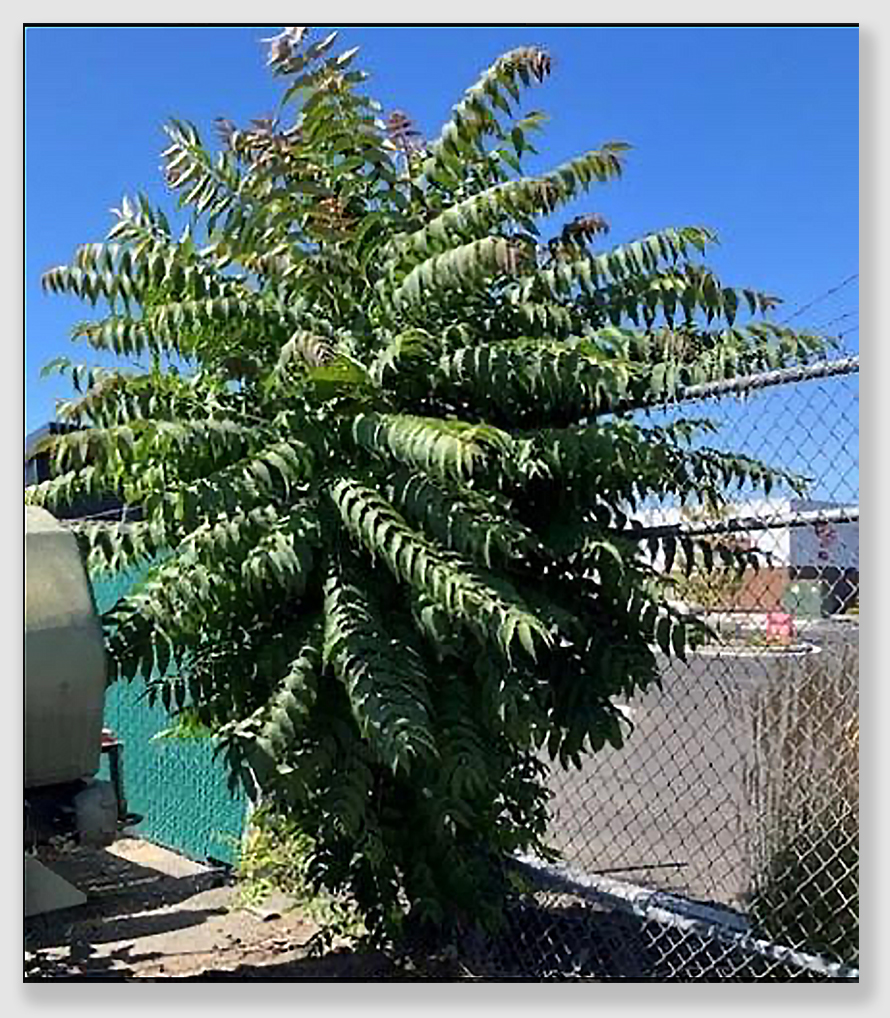
Denver, Colorado, KUSA-TV, October 8, 2026: Local group works to kill invasive tree of heaven in Denver’s neighborhoods

The easiest way to bring a neighborhood together is to rally around a bad neighbor. To Mike Miller, one of Denver’s worst neighbors is the Ailanthus tree — commonly known as the tree of heaven. “This is a tree of heaven gone wild,” Miller said while pointing out a lot with seemingly endless trees of heaven on it. “Somebody didn’t take care of it, and this is what it turns into.” Not only do the trees take over lots — they also spread seeds — about 300,000 can come from one female tree, and many of those seeds are viable. It is hard to walk anywhere in the city and not see a few, or an entire grove, of the tree. That’s why Miller and a group of other tree of heaven un-enthusiasts joined together over the last year to create the Denver Invasive Species Coalition. “You cannot be on a bike or in a car for longer than 30 seconds without seeing a stand in them somewhere,” group member Suzanne Smith said. Part of the reason these trees are everywhere is because they will grow anywhere. The other part is because people do not know how to kill them.
“It’s so damn difficult to find the information,” Miller said. “I got mine chopped down by an arborist and he treated it and it spread…”

Burlington, Vermont, WCAX-TV, October 8, 2026: Rutland students help restore American chestnut trees

Students in Rutland are helping to conserve the American chestnut, a tree once common in Vermont and nearly wiped out by blight. While it might not seem like a major orchard, nine chestnut trees at Mount St. Joseph Academy are an important learning tool for some of the students who have passed through its halls. Tom Estill has taught Rutland students for years, including some in a group on Thursday. “We’re doing something really small, but it can have a profound effect down the road to bringing back the American chestnut tree. So, it’s wonderful to see the kids so excited about it,” Estill said. The local resident has extensive knowledge of the tree that was once common in the area and around the country. American chestnut trees were nearly wiped out after a pathogen was first discovered at the turn of the century. Now, Estill is working to repopulate the species, even though he knows the blight will eventually kill the trees planted here…

Philadelphia, Pennsylvania, Philadelphia Magazine, October 8, 2026: A Developer and West Philly Neighbors Battle It Out Over a Tree

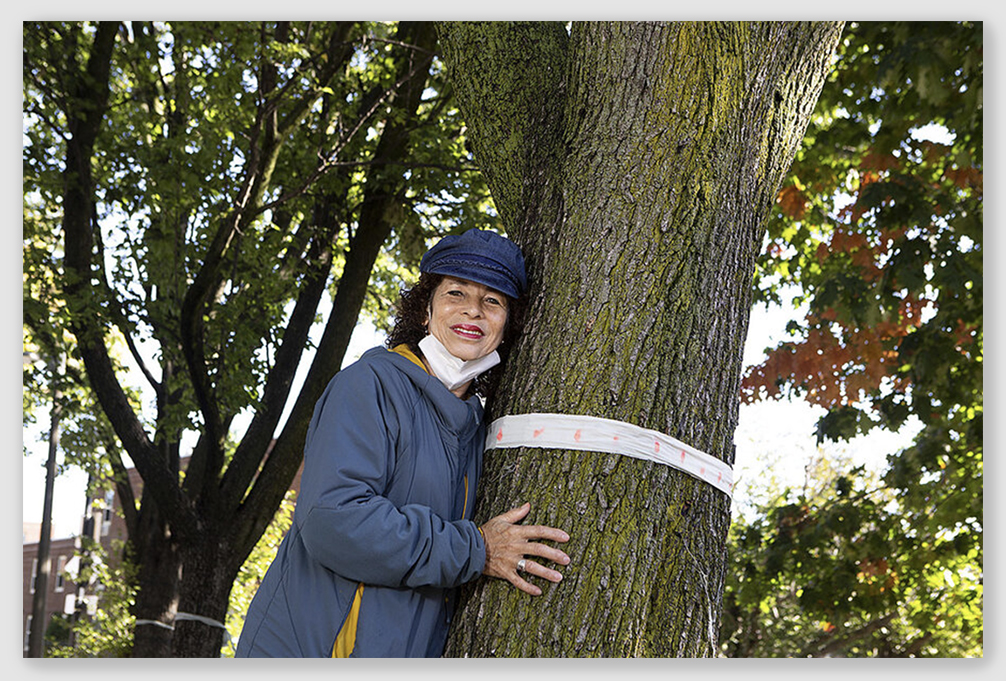
Two Mondays ago, Beth Duddy was enjoying the early fall weather, relaxing on her second floor porch of the apartment she rents near the corner of 46th and Springfield in West Philadelphia. She was taking in the sunshine and ample birdsong when her peace was suddenly interrupted by the sound of loud machinery. She peered down the street and saw a crew removing large branches from a lovely willow oak tree in front of 4601 Springfield Avenue. One of the workers had climbed up the tree and two others stood below. Duddy, a retired copyeditor, walked outside to speak to the workers. She asked what they were doing and they told her they’d been hired to cut the tree down and remove the stump. “I asked them if they had a permit, and they said no,” Duddy says. So Duddy stood next to the tree, making it impossible for them to continue their work, in a move reminiscent of 1970s activists who chained themselves to trees. Alas, Duddy didn’t have a chain at the ready…

New Haven, Connecticut, Yale Daily News, October 8, 2026: Residents reported hazardous trees to Yale for years before worker death

After the family of the landscaper who died last year while working on Yale’s golf course sued the University, alleging “carelessness and negligence,” Yale is now claiming in court that the contractor who employed the landscaper should be responsible for any damages and injuries. But three residents of Conrad Drive, the golf course’s only exit road and where Luis Alberto Morocho Marcatoma was fatally electrocuted in August 2025, said the incident was not the first time a tree on their street had taken down a power line. They recalled trees on Conrad Drive — which straddles University and New Haven properties — taking out their electricity on several occasions and said they frequently flagged the hazardous trees before Marcatoma’s death. “Prior to the landscaper’s death, we had many conversations with Yale Golf Course personnel and with the City of New Haven requesting that trees be trimmed and/or removed to prevent trees from taking down power lines,” Joel Abraman, who has lived on Conrad Drive since 1978, wrote in a text message to the News…

Lexington, Kentucky, WKYT-TV, October 7, 2026: ‘Bradford Pear Bounty’ initiative aims to restore native plants across Kentucky

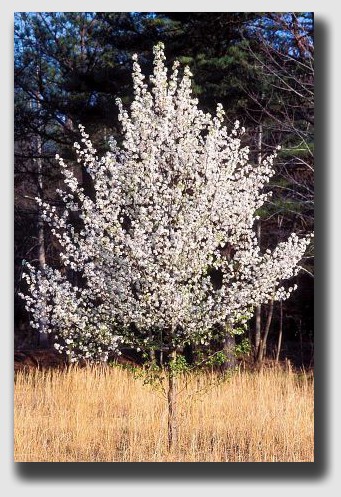
The “Bradford Pear Bounty” program is encouraging people across Kentucky to help combat an invasive plant species. The program is put on by the University of Kentucky Martin-Gatton College of Agriculture, Food and Environment, UK Forest Health Extension, participating county Extension offices and the Kentucky Division of Forestry. According to the university, Bradford pear trees are an invasive plant, which are non-native species that spread aggressively and cause environmental or economic harm. People with Bradford pear trees can find a local “Bradford Pear Bounty” event, cut down their Bradford pear tree and take a picture to receive a free native tree to take home…

Astoria, Oregon, The Daily Astorian, October 7, 2026: Astoria tree removal damages Shively Park trees

Austin Wienecke, a master arborist with Arbor Care stopped in at The Astorian on Friday, Sept. 25. He was concerned about a tree that had been taken down at Astoria’s Shively Park. Wienecke said it was done improperly. It had created a hazard for people at the park and the felling of the tree had permanently damaged several other trees. At the behest of the Astoria Parks and Recreation Dept., he and his team were out picking up the pieces on Friday, Oct.3. On Sept. 17, Luke Colvin, Arbor Care’s owner went to Shively Park with the Astoria Parks and Recreation Department to do a walkthrough of a potential disc golf course that would surround the perimeter of the park. He was there to see if any trees surrounding the park would present a hazard to disc golfers once the course was built. In a different area, next to the entrance of the park and away from the proposed golf course, Colvin had observed a large hemlock that showed visible signs of internal decay. On Sept. 18, Wienecke was dispatched to the park to learn more about the decay and give the city a recommendation on what to do next. Wienecke said after he submitted his report on Tuesday, Sept. 21 the department asked how much it would be to remove it. “We gave (our cost estimate) and then we were told our bid wasn’t necessary. They’d found a lower bidder who could do it the next day…”

Cleveland, Ohio, WOIO-TV, October 7, 2026: Bratenahl board delays tree plan for Taylor Swift and Travis Kelce property over height dispute; neighbors express concerns

Bratenahl board delays tree plan for Taylor Swift and Travis Kelce property over height dispute; neighbors express concerns
A rear-yard tree plan for a Bratenahl property owned by Taylor Swift and Travis Kelce went before the village’s Architectural Review Board Tuesday night and hit a snag over the height of proposed trees. A village solicitor Dave Matty said the setback line in Bratenahl applies to anything behind the home in this situation and needs to be a certain height as far as the mature nature of the landscaping. The solicitor said the entire front setback has approval. A board member said privacy and screening can be achieved with plants less than 10 foot in height. Tiny Construction LLC says there was some confusion over the tree restrictions, but now that it’s aware of the 10-foot limit, it’s willing to make adjustments and follow the law. However, neighbors said the process has been difficult, citing lost lake views and a shared sewer line. Chuck Bauernschmidt said he has lived in Bratenahl for four decades and is concerned about trees being removed. “I live here, been here for 47 years. I take offense when we start knocking trees down,” Bauernschmidt said. Bauernschmidt adds he is trying to protect his home…

Wausau, Wisconsin, Pilot and Review, October 7, 2026: I thought that was my tree’: Wausau upholds $550 damage fee

A Wausau committee upheld a $550 fee Monday against a homeowner who says he never knew the tree his contractor damaged belonged to the city. The Parks and Recreation Committee voted 4-0 to affirm the assessment against the Stoneridge Drive homeowner. His contractor dug a drainage trench that severely damaged the roots of a city-owned linden in the public right-of-way. The committee deliberated in closed session before voting. Alder Carol Lukens was excused. Under city code, no one may cut below ground or otherwise disturb a tree in a public area without a written permit from the city forester. Plumbing Inspector Dennis Kurszewski testified that no permits were sought for the work, which required excavation and lateral permits. Kurszewski also testified that the curb was damaged. When a permit is sought, Wausau Water Works, sewer staff and the city forester are notified so they can check for problems before the permit is issued, Kurszewski said. The homeowner told the committee he bought the house in September 2024 and was never told about water problems. The first spring, the basement flooded, ruining the finished space and about $30,000 worth of belongings, he said. Remediation still isn’t finished…

Tucson, Arizona, Arizona Daily Star, October 5, 2026: Arizona border protesters removed; ‘Grandmother’ cottonwood toppled

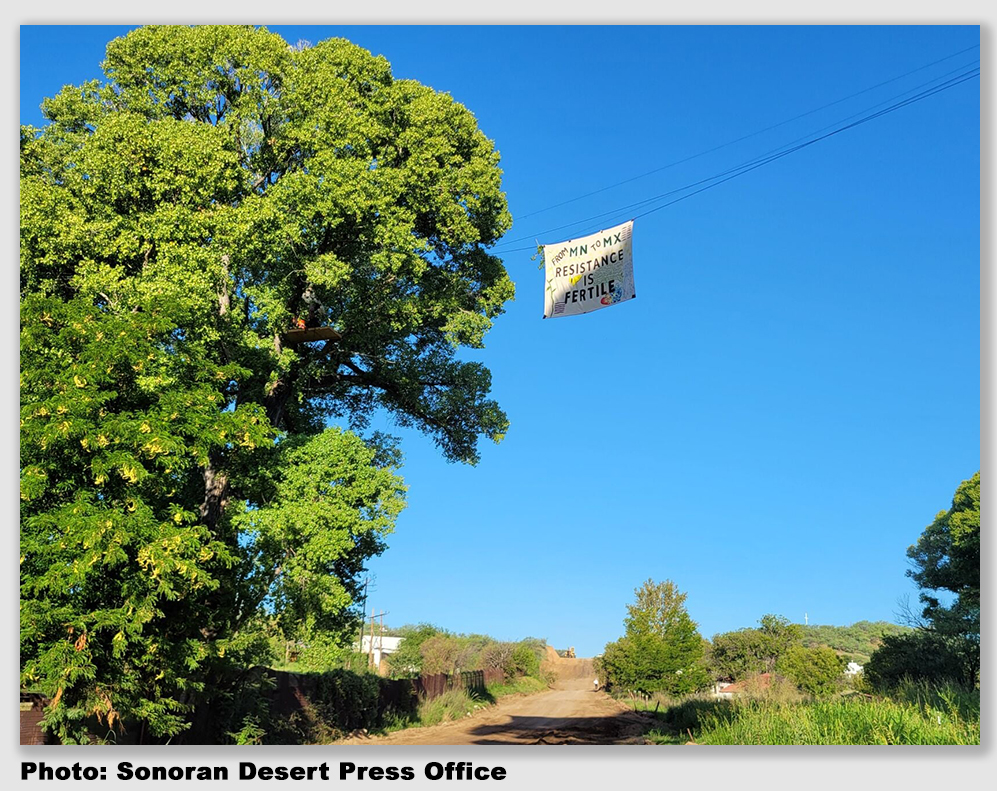
A giant cottonwood along the U.S.-Mexico border in Arizona was knocked down by heavy equipment Monday, after authorities cleared out protesters who had been camping in the tree for more than two months to try to save it from destruction. In a video posted on social media at just after 9 a.m. Monday, people can be heard screaming as the massive tree crashes to the ground in Lochiel, about 85 miles southeast of Tucson. The toppling came after law enforcement officers raided a nearby encampment of self-described “land defenders” just after sunrise and used a crane to pull a demonstrator from the branches of the tree, according to Erick Meza, borderlands coordinator for the Sierra Club who has also been serving as a spokesman for the protest group. Meza said Border Patrol arrested about a dozen people, though some of them were in the process of being released early Monday afternoon. U.S. Customs and Border Patrol spokeswoman Jessica Turner confirmed the removal of the tree but did not acknowledge the law enforcement action or provide any information about it. Turner did not respond to the Star’s questions about how many arrests were made or provide the locations and alleged offenses of those taken into custody. According to a press release from the protest group, more than 50 armed Border Patrol agents entered the encampment on private property next to the border at 6:30 a.m. The release states that the officers ignored demands for a warrant and refused to identify themselves as they knocked down tents and tackled protesters…

Albany, New York, WRGB-TV, October 5, 2026: They warned their neighbor about a dead tree for years, then it destroyed their home

For years, Danielle and Walter Conklin say they worried a dead tree across the road from their home on a neighbor’s property would eventually come crashing down. They say they warned their neighbor about it countless times, but nothing was done. On March 12, they say their worst fear became reality. The massive tree fell on to their home, narrowly missing family members inside. Within seconds, the house they called home for nearly 25 years was destroyed. Now, six months after the March 12 incident, Danielle and Walter Conklin, their two children, and four pets are still living in a hotel, facing tens of thousands of dollars in expenses and an uncertain path toward rebuilding the home…

Kirksville, Missouri, KTVO-TV, October 5, 2026: The Colors of Fall, how they can be influenced by tree type and environmental factors

It is already the first week of October and most of the trees in the Tri-State area are mostly green. Most of the ones that have remained green are Oak trees. But if you are driving around, some trees are already showing a small bit of color. “We will start to see Hickories and Maples starting to change. Walnuts will also start to turning yellow and loose their leaves a little bit earlier than other species. But we are mainly looking for the Hickories to start turning that yellow,” said Sam Kosark, a Community and Private Land Forester for the Missouri Department of Conservation. Other species that are already changing are understory Dogwoods, Cottonwood, Locust, and Buckeye. Outside air can have a decent impact on color timing, color duration, and intensity. Unusual temperatures and moisture can cause unnecessary stress on the leaves. “We are now just getting into some fall temperatures, but that just puts more stress on the leaves and they are already getting to the end of their growing cycle,” Kosark mentioned. “So if it is dry and hot later in the fall, they will start turning (brown) Quicker instead of hanging on to those colors longer…”

TNLBGray

Case of the Day – Thursday, October 8, 2026

DIAMONDS ARE FOREVER – EASEMENTS, NOT NECESSARILY…

Easements are fairly easy to grant. A blank piece of paper, a wild notion that some right should be given to your neighbor, a notary public to make it all legal, and maybe a fifth of good whisky to make you sufficiently reckless, and you can blot your title for a good long time.

How long, you ask? How about “perpetually,” the answer usually goes. But not always. Normally, one would hope that the easement was drafted precisely enough to specify its duration, or at least leave the intent of the grantor clear. But not always.

Young law students learn quickly enough in contract law that where a time for performance is not specified, a “reasonable” period of time is assumed. A “reasonable time” varies according to subject. If I promise the neighbor kid I will pay $20.00 to have my lawn cut, the little layabout cannot wait two months before showing up with the mower expecting the deal to still apply. On the other hand, if I agree with a neighbor that if he plants an apple tree on my land for me, he can have half of the apples, he can wait 15 years before showing up with a basket, and I have no beef with him.

So it is with easements. In today’s case, neighbors granted mutual easements a half-century earlier, relating to maintaining a fence, letting one cross the other’s property, and letting one party cut timber on the other’s land. No term was specified. When the fence maintenance and property crossing continued for 50 years, the court had no problem. But the timber harvest was clearly, according to the court, intended to be accomplished in the short term. The holder of the timber harvesting right could not wait two score and ten before arriving with his saw.

You snooze, you lose.

Lewison v. Axtell, 195 N.W. 622 (Supreme Court, Iowa, 1923). Ollie Lewison and Oscar Axtell owned tracts of land on both sides of the Iowa River. The prior owners of both properties had signed a contract many years before – in fact, 20 years before the predecessors sold their land to Ollie and Oscar – that granted easements for the construction and maintenance of a fence along Ollie Lewison’s tract, as well as a right for Oscar Axtell to pass through Lewison’s property. In exchange for the fence, the prior owner of Oscar Axtell’s tract was given the right to trim timber and brush from certain areas of the Ollie Lewison property.

When Ollie and Oscar took possession of their respective tracts, neither deed mentioned the easement contract.

The fence remained in place for many years, during which time Ollie Lewison had allowed Oscar Axtell to cross his property. However, when Oscar Axtell decided to remove timber from Ollie Lewison’s property, Ollie sued to prevent Oscar from doing so, claiming that too much time had elapsed for him to exercise that right. The trial court ruled in Ollie’s favor.

Oscar Axtell appealed.

Held: Oscar was not permitted to cut any timber on Ollie’s land.

The Supreme Court of Iowa defined the sole issue as being “whether the [defendant] now has a right to remove timber or brush from [the plaintiff’s property].” In Iowa, the Court said, “contracts for the purchase of growing trees must remove the same within the time specified, and, if the contract is silent as to time, then within a reasonable time after the contract becomes effective.” In this case, the Court found that Oscar Axtell was required to have removed the trees within a reasonable time, and – given that he had been in possession of his tract for more than 30 years without doing so – his attempt to do so was no longer reasonable.

The Supreme Court conceded that the question could have gone either way, but its conclusion was buttressed by the fact that some rights in the contract – such as the right to build a fence and for Oscar Axtell to pass across Lewison’s land – were described as “perpetual,” but the right to cut the timber was devoid of any language suggesting the original parties had foreseen, when signing the contract a half-century earlier, that the timber harvesting would extend into perpetuity as well.

– Tom Root

TNLBGray

Case of the Day – Wednesday, October 7, 2026

I’M FROM MISSOURI

All right, I’m not from Missouri, but I have passed through the “Show Me State” a few times, and it’s a pretty nice place. But given their reputation for being hard to convince, how would Missourians treat encroachments on their property by trees that aren’t theirs?

On one hand, there’s the state nickname. The most well-known and widespread story features Missouri’s United States Congressman, Willard Duncan Vandiver, who gave a speech in 1899 to some Philadelphians in which he said:


”I come from a state that raises corn and cotton and cockleburs and Democrats, and frothy eloquence neither convinces nor satisfies me. I am from Missouri. You have got to show me.”


His statement may be interpreted as a claim that Missourians are not naïve: If you want someone to believe you, you better have convincing evidence. 

On the other hand, Missouri’s official motto is “Salus populi suprema lex esto,” which my sainted Latin teacher, the late Emily Bernges, would have told us translates to “the welfare of the people shall be the supreme law.”

All right, let’s run with that.

When Pete Hasapopoulos’s driveway started crumbling from neighbor Joyce Murphy’s Chinese elms, was his good the supreme law? Or, because Missourians are not naïve, should he have known Joyce’s Chinese elms would grow? After all, a natural tree largely does what it wants to do. It may sit on one owner’s property, but above ground, the branches may spread over the neighbor’s property, and leaves or fruit or even deadfall may make a mess of the neighbor’s house, outbuildings or yard. Underground, the root systems may spread until they meet retaining walls, basements, septic systems and underground utilities.

This phenomenon is called “encroachment.”

Traditionally, the rule has been that any property owner has the right to trim back branches and root systems to the property line, at his or her own expense. This “self-help” doctrine is known as the Massachusetts Rule, named for the Massachusetts case Michalson v. Nutting in which it was first articulated. The dark side of the Massachusetts Rule was that no matter how destructive the neighbor’s tree was to your property, you had no right to sue your neighbor to force him or her to trim the tree or roots or to get any financial help from your neighbor for costs you incurred in doing it.

As American society became more urbanized, other courts took a more liberal view. When a neighbor’s banyan tree – a monstrosity of a tree – began overgrowing Mr. Whitesell’s property in Honolulu, he sued his neighbor to get a court order to force the neighbor to take care of the problem. Impressed by the sheer magnitude of the nuisance caused by the tree, the Hawaii court held in Whitesell v. Houlton that while anyone had the right of self-help as described in the Massachusetts Rule, when a tree caused sensible harm to a neighbor, the owner of the offending tree could be ordered to trim the tree or roots at his or her own expense. This is called the Hawaii Rule.

The Hawaii Rule has gained traction in several states over the past 20 years. Tennessee, New Mexico, North Dakota, Arizona and New York follow it. Several other states follow the rule in some form.

But not in Missouri. What’s that? “Show me,” you demand? All right, you’re from Missouri. We will.

Hasapopoulos v. Murphy, 689 S.W.2d 118 (Court of Appeals of Missouri, Eastern District, 1985). Pete Hasapopoulos experienced problems from overhanging branches and driveway cracking caused by the roots of two Chinese elm trees owned by the next-door neighbor, Joyce Murphy. The trial court held that Joyce was not liable, and Pete appealed.

Held: Joyce prevailed.

The Court of Appeals, agreeing with other jurisdictions “which find no cause of action for damages to neighboring property caused by encroachment of the roots or branches of healthy trees,” found that Joyce was not liable. At the same time, it held that Pete retained a right of self-protection by cutting off the offending roots or branches at the property line.”

The Court observed that Missouri is “squarely among those jurisdictions which find no cause of action for damages to neighboring property caused by encroachment of the roots or branches of healthy trees, but leaves the plaintiff to his right of self-protection by cutting off the offending roots or branches at the property line.” And here, Pete had no proof the chinese elms were defective.

Application of the Massachusetts Rule, the Court said, results in no injustice in this case. “Neither plaintiffs nor defendant committed a wrongful act. We are not inclined to find defendant acted unreasonably in permitting perfectly healthy trees to grow, and certainly defendant intended no harm thereby. The trees and their proximity to plaintiffs’ land existed when plaintiffs purchased their residence. They must be charged with awareness of the potential effects of growing trees. Plaintiffs had recourse to self-help to protect against damage and eliminate annoyance from overhanging branches for 15 years before they had the branches cut off at the property line. Imposing liability on the tree owner under such circumstances would create the potential for continuous controversy between neighbors and could promote harassment and vexatious litigation, disrupting neighborhood serenity. Possible exposure to liability would warrant the uprooting of trees and shrubbery in proximity to boundary lines, resulting in non-aesthetic barrenness.”

– Tom Root

TNLBGray

Case of the Day – Tuesday, October 6, 2026

HE SAID, SHE SAID…

This is probably the right time, what with midterm election drama being played out across the country, for today’s case. I’m in Ohio, where Trump bro and former DOGE manager Vivek Ramaswamy is running for governor and denying claims by Dr. Amy Acton that he ripped off old people by marketing useless drugs. Amy, meanwhile, denies that she’s a drunk and drug abuser who let old people die in nursing homes when she ran Ohio’s COVID response.

What’s true?  Probably none of the above, but he said blah-blah-blah about her while she said yada-yada about him. The New York Times says that Acton-Ramaswamy electoral matchup “may be the ugliest in the country.” As an Ohioan, I’m proud that my state is Number One in something.

Today, in their honor, we’ll embrace the mayhem and run with our own “he said, she said” case, a peculiar turn-of-the-last-century trespass to timber case from New Jersey.

The defendant farmer was accused of trespassing onto the plaintiff’s land without permission and cutting down 32 trees. He said he only cut 13 trees, and anyway, he had permission from the plaintiff’s father (the plaintiff being a fair damsel who, back then, couldn’t be worrying her pretty little head about real property management).

The plaintiff’s dad, unsurprisingly, denied giving permission.

It seemed pretty clear that the jury bought the plaintiff’s version of events. The damages awarded could not have been for just 13 trees, implying the jury must have believed that Farmer Ruddy had taken all 32. The jury’s finding of trespass necessarily meant it disbelieved Farmer Ruddy’s story about looking at the trees with the plaintiff’s father and making a deal.

After the obligatory denial that it was not second-guessing the jury, the court of appeals held that punitive damages were not proper where the case was nothing more than “an honest dispute as to permission for the act found to be a trespass…” Sure, and Bonnie and Clyde thought they had permission to take money that wasn’t theirs from the bank. So their offense was really just “an honest dispute as to permission for the act” found to be a robbery accompanied by lots of gunfire.

If Farmer Ruddy did not have permission (as the jury found), then his testimony about walking the boundary with Ms. Hollister’s father was a woof story. And necessarily, Farmer Ruddy’s conduct in trespassing and taking the trees was wanton and malicious.

The court of appeals was simply substituting its own conclusions for those of the jury, rewriting the verdict as best it could by reducing the damages by about half.

This is not only an old decision, it’s an awful one. The Court may have been swayed by George Ruddy’s motive, to remove the shade from his field and thereby make it more productive. It may have preferred George’s detailed testimony over getting permission from plaintiff Minnie Hollister’s dad, whose hot denials may have sounded hollow. It may have figured that some woods belonging to a mere girl should not be favored over a field owned by a man.

Who knows (but the Court)? The point is that those conclusions are factual, and in this country, findings of fact are made by the jury, not an appeals court. This is raw judicial encroachment on the jury function, 19th-century style.

And some think that judicial activism is a recent phenomenon.

Hollister v. Ruddy, 66 N.J.L. 68 (N.J. 1901). Farmer George Ruddy had a problem. Minnie Hollister’s trees that stood along the boundary with his field threw so much shade that a healthy part of the cropland was not healthy at all. George cut down some trees, the exact number being an issue, some of which were boundary trees.

Minnie claimed that George had no permission to remove any trees at all. George testified that he had obtained permission from Minnie’s father, who had the authority to approve tree removal. George gave convincing testimony that he had driven the elder Hollister from town to the field, that they discussed the trees and shade problems they caused, that the trees were only fit for firewood, and that George even offered to sell the wood and give all of the proceeds to Minnie (because his only interest was in making the field more productive). Farmer Ruddy said he had cut only 13 trees on the boundary, not the 32 trees Minnie claimed were gone.

No matter. The jury believed Minnie Hollister and found that George had trespassed. Miss Minnie recovered $400.00 in damages to the trees and punitive damages of $350. George appealed.

Held: Minnie was not due any punitive damages.

The trial court had instructed the jury that after it figured out the value of the timber that was improperly taken, “if you believe that the action of this defendant, in entering upon the plaintiff’s land and cutting the trees, was wanton, willful and malicious, and that he meant to take property that he knew was not his own, and cut down the trees maliciously and carried them away without the plaintiff’s knowledge or consent, you may add such damages as you think is proper punishment for a man who willfully does an illegal act of trespass of that character.”

The court of appeals agreed with the jury instruction, but it found that the clear weight of the evidence showed that Farmer Ruddy had not cut or authorized the cutting of more than the 13 trees that stood on or near the boundary line and that the trees he cut were fit only to be cut for cordwood. Their value, based on the trial court testimony, was about $20.00. But even if the jury thought that George Ruddy had cut all 32 trees, the most they could have been worth was about $400.00. So plainly, the appellate court concluded, the jury must have allowed punitive damages.

The Court ruled that the right to award punitive damages rests primarily upon a single ground – wrongful motive. But here, the Court said, there was no competent evidence that George had authorized cutting anything more than the trees on or along the boundary line, and he claimed that he cut them because they shaded his field and prevented the raising of full crops. He also claimed that he had procured permission from the elder Hollister, who was in charge of the property, to cut those trees, although Mr. Hollister hotly denied this.

The Court conceded that “the verdict determined that permission was not given, and on that point alone we would not disturb it; but it seems to us quite plain that the jury was not justified in finding the defendant’s conduct wanton or malicious. Without conceding that for a mere trespass on lands and the cutting of trees that have no special value in themselves, and the cutting of which inflicts no peculiar injury on the landowner, punitive damages can ever be properly awarded, we see no ground for their allowance on the testimony above cited.”

The Court characterized the trespass case as “an honest dispute as to permission for the act found to be a trespass. It is true that some of the trees cut were exactly on the boundary line, and it is argued that that fact gave them a peculiar value. No such value was contended for or submitted to the jury. The line was not obliterated, for the stumps of the trees remained in the earth, and the line itself was shown by a post and wire fence, which, though considerably fallen into decay, still left the boundary line between the parties clearly discernible. There was no peculiar injury or any indignity inflicted on the plaintiff. It will be enough if she gets just compensation, which, of course, may include the value, if any, of any of the trees as line trees.”

– Tom Root

TNLBGray

Case of the Day – Monday, October 5, 2026

TALKIN’ ‘BOUT THE BIG “D”

fence150113Nothing can come between brothers… except maybe an angry ex.

As brothers, Jerry and Kenneth were tight, just good ‘ol boys down on the farm. Their folks had given them 20 acres each, two small farms next to each other.

Ken got his farm first, and he put up a rickety, crooked fence, one good enough to keep cows penned up but not much as a boundary marker. A few years later, he gave brother Jerry permission to put up his own cattle pen, attached to Ken’s wandering fence. The upshot of all this sloppy fence building was that a 2.6-acre parcel belonging to Ken was on Jerry’s side of the fence. So what? They were brothers, after all. Ken didn’t mind, and he and Jerry both used the little piece of land. Jerry built a pond on part of it. Ken harvested some of the timber standing on it and sold the lumber for profit.

So the boys lived side by side, happily ever after. Well, not quite. Seems after about 20 happy years, Jerry’s wife had had enough of the cows, enough of the ponds, and mostly, enough of Jerry. So it was the big “D” for Jerry, and when the smoke cleared, his ex owned a good chunk of his place.

She didn’t much like the ambiguous status of the 2.6 acres, so she sued Ken. Why not? She had just sued his brother, and look how well it turned out for her! The ex claimed the 2.6 acres by adverse possession. However, her ex-brother-in-law wasn’t the pushover Jerry had been. The trial court agreed that it couldn’t be adverse possession unless Jerry had held the 2.6 acres in a manner hostile to his brother’s rights. And, after all, they were family.

Divorce150113Simply put, there was no evidence that Jerry had fenced in his brother’s land except with his brother’s permission. Permissive possession, simply put, is not adverse.

Cleveland v. Killen, 966 So.2d 848 (Miss.App., 2007). Ken and Jerry each owned a 20-acre tract of land located next to each other in Neshoba County. Ken’s tract lay directly north of Jerry’s, and a straight property line divided the two parcels.

Ken received his land from his folks in the 1960s. When Jerry got his share in 1970, he wanted to build a fence for some cows. Jerry got Ken’s OK to “tie on” additional fencing to a fence that Ken had built on his own property, a crooked thing that was sort of parallel to the boundary line, but not intended to represent the boundary line. In fact, none of the parties seemed to know where the exact boundary line was when Jerry built the fence. Since Ken’s fence spanned the middle of the property, Jerry began at the corners and added fencing eastward and westward to the edges of the property. Combined with Kenneth’s portion, this let Jerry fence his cattle without building a fence across the entire property. But because Ken’s original fence was north of the actual property line, the completed fence separated the 2.6 acres in dispute from the remainder of Ken’s property.

split150113For a long time, there was no conflict about who owned the 2.6 acres now in dispute. Jerry used the land for gardening and for animals, and Ken cut timber on the land and built a gate in the fence so he could run his cattle over to Jerry’s pond. Some 20 years after Jerry built the original fence, he put in a pond, about a third of which was on Ken’s land but on Jerry’s side of the fence. Again, there was no conflict.

At least not until Jerry’s wife divorced him and got a remainder interest in his 20 acres. Ex-wife Tommie sued Ken when he hired a surveyor to mark the property and then built a fence that represented the true property line. By then, Jerry was suffering from dementia and didn’t testify. The trial court found for Ken, and Tommie appealed.

Held: The land was not lost to Tommie by adverse possession, the Court of Appeals held, affirming the trial court. The Court found that the evidence was sufficient to show that Jerry had had Ken’s permission to use the 2.6-acre parcel in question. The landowners were brothers who had lived side by side with their families for 35 years with no disputes; there was evidence that Jerry had asked for Ken’s OK to build a fence (which Ken had given), the brothers thereafter used each other’s property, Ken brought his cattle across the land to use the pond, and Ken even cut down some trees located in the disputed area and kept the profit he received from selling the timber.

As a rule, permissive possession of land — even if continued for a long time — doesn’t confer title on the person who possesses it until a positive assertion of a right hostile to the owner has been made. If there never had been a request or a grant of permission to use land, the use would have been adverse, not permissive. But here the proof wasn’t there.

When a close family relationship is involved, proof of adverse possession is not ordinarily as easy to establish as it is when the parties are strangers.

– Tom Root

TNLBGray

Case of the Day – Friday, October 2, 2026

THE EAGLE HAS LANDED

Unlike the kid above, our Ralph wasn't quick like a bunny when the branch fell.

Unlike the kid above, our Ralphie wasn’t quick like a bunny when the branch fell.

When the elder Mr. Eagle volunteered to help trim a tree at his church, his son Ralph tagged along. It seems that Ralphie was anxious to help Daddy.

Ah, the brashness of youth! The lad (he was 50 years old, but he still lived with mom and dad, so he was unquestionably a kid, albeit a big one) shouldered the three septuagenarians aside and climbed the ladder himself. Well, one thing led to another, and the group of tree-trimming amateurs lost control of a limb. The limb fell, the 70-year old man holding the ladder jumped out of the way to avoid being hit, and the falling limb knocked the ladder over. Ralphie fell off the ladder and landed — hard.

Having his eye on the collection plate, the litigious Eaglet sued the Church, the other retirees and, of course, his own father (with whom he resided) for negligence. He claimed that the volunteers were acting as agents of the church, making the church liable.

The trial court rejected this and dismissed the case. The Court of Appeals agreed, finding that as volunteers, the tree-trimming crewmembers owed each other reasonable care at most. And it wasn’t reasonable to believe the man holding the ladder would stand and take a hit when the limb fell. There wasn’t evidence that any of the trimmers were negligent, so the Church couldn’t be liable.

As for premises liability, the Court said, the evidence showed Eagle had volunteered to help three old men do something dangerous: he should have seen it coming. In reading the decision, one gets the impression that neither the trial court nor the appellate panel thought much of the young Eagle, who horned in on the volunteer effort, ignored his father’s request that he not participate, and then — after getting hurt — sued everyone involved.

FallingMan15101Eagle v. Owens, Case No. C-060446, 2007-Ohio-2662, 2007 Ohio App. LEXIS 2469 (Ct.App. Hamilton Co., 2007). A small church needed tree trimming. During a Sunday service, the pastor had asked for volunteers to perform the tree-trimming task. The church typically relied on volunteers for landscaping work, including potentially dangerous work such as trimming trees. Merida and Owens volunteered. Both had performed similar tasks for the church on several occasions in the past without incident.

Before leaving the church that day, the two volunteers stood by the tree to examine what had to be done. When Eagle’s father walked by, they recruited him to help them. Eagle’s father was a deacon of the church, an unpaid, rotating position that required him to make decisions for the church’s benefit with the four other deacons. Ultimately, the three men, all over 70, agreed to meet the next morning to do the task.

When the elder Eagle arrived the next day, he brought his 50-year-old son with him. The son thought the other volunteers were too old, so he took over trimming from a ladder perch. Before the younger Eagle began sawing, his father insisted on changing the rope’s position around the limb. Merida remembered telling Eagle’s father that he didn’t like the change, but he claimed he deferred to him because he was a deacon. The limb did not fall cleanly, and its branches knocked over the ladder the younger Eagle was standing on. One of the men holding the ladder ran to avoid being struck by the limb. Eagle fell and was injured.

He sued everyone who was there, as well as the church, alleging that they had “carelessly and negligently caused a tree limb to fall and strike” him. He also complained that his father, Owens, and Merida were all acting as agents or employees of the church when the accident occurred, and that the church was responsible for the acts of its agents. The individual defendants moved for summary judgment, arguing that Eagle assumed the risk of injury by participating in an inherently dangerous activity. The church moved for summary judgment on the respondeat superior claim, arguing that it could not be liable because the individual defendants were not negligent, were not agents of the church, and Eagle had assumed the risk.

The trial court granted summary judgment for the defendants without giving any reasons or issuing a decision. The younger Eagle appealed.

Held: The young Eagle’s wings were clipped. The Court agreed with the trial court’s dismissal, holding that as nonprofessional volunteers, the defendants at most owed Eagle a duty of reasonable care under the circumstances. Eagle did not present any testimony, expert or otherwise, to demonstrate how his father’s, Merida’s, or Owens’ conduct fell below a standard of reasonable care. No one foresaw that the branches on the limb would strike Eagle after breaking off from the trunk, and no one expected Owens to hold the ladder if it swayed while Eagle was on it, because it was obvious that he was physically unable to do so. And if he had stayed to steady the ladder, he likely would have been struck and injured by a large limb.

fallsign150114The Court held that the duty of reasonable care did not require such a foolish act of bravery, despite Eagle’s assertion that he would have steadied the ladder and suffered the blow if the roles had been reversed. To establish a claim against the church under the doctrine of respondeat superior, the record must show that a principal-agent relationship existed and that the agent committed the tortious conduct within the scope of his agency.

Here, the Court said, it did not need to determine whether reasonable minds could have concluded that any of the three men were agents of the church and whether Eagle was injured by acts taken within the scope of that agency because the individual defendants did not act tortiously towards Eagle in carrying out the task. Where there is no actionable conduct by an agent, there can be no vicarious liability for the principal. Finally, on the claim of premises liability, the Court held that in determining the duty the church owed to Eagle, it had to focus on Eagle’s status as a participant in the tree-trimming task, because his injury resulted from his participation in this task and not from his status as a person present on the church’s property in general.

It was undisputed that Eagle was warned of the danger, that the church had always used volunteers – including Merida and Owens – to perform similar tree-trimming tasks in the past, and that these volunteers had always performed without incident. Eagle did not present any testimony from a tree-trimming professional to attack the church’s decision to use these same volunteers to remove this limb. The Court concluded that reasonable minds could come to only one conclusion: the church did not breach a duty of care owed to Eagle.

– Tom Root

TNLBGray