Case of the Day – Tuesday, September 24, 2024

IT DOES NOT MAKE SENSE

Every good trial lawyer knows how to employ the Chewbacca Defense.

Every good trial lawyer knows how to employ the Chewbacca Defense.

Sometimes you wonder when you read a decision, “What were they thinking? That does not make sense.”

Today’s case is something like that. The facts are straightforward enough. Smith sold a gas station-restaurant-bar to Mendonsa, but carefully secured Mendonsa’s promise that he wouldn’t let the trees on the plot get so high that they shaded Smith’s adjacent orchard. Wouldn’t you know it, Mendonsa at some point decided he liked tall trees, or he didn’t like trimming trees, or he couldn’t find his clippers, or something. He let the trees grow, and they shaded four of Smith’s something-berry trees (we have no idea what he was raising in the orchard, but this being California, they probably weren’t plantain trees).

Anyway, Smith sued, and Mendonsa, for some foolish reason, fought the action. The trial court found for Smith in due course and then worked some rump math, figuring the past damages were about $140.00 a year (this was 1952, when a dollar was worth a bit more than now), and multiplied over three years, the damages were $420.00 (or $4,862 in 2024 dollars). The Court also enjoined Mendonsa from maintaining trees over 15 feet or branches which were hanging over Smith’s land.

On appeal, Mendonsa complained that the damage calculations were too imprecise and that the injunction was unduly burdensome on him. The Court of Appeals disagreed, finding the calculations pretty good for an uncertain case, and anyway complaining that “[t]he wrong was that of the appellants and they are not in a favored position to urge the technical rules governing awards of damages.”

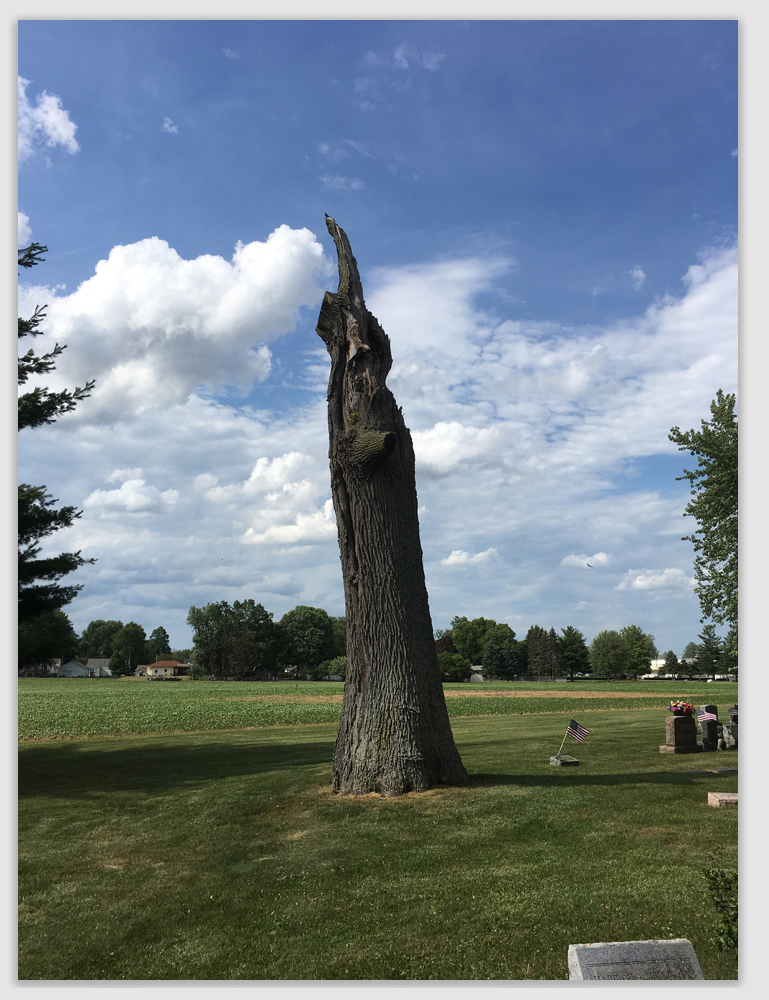
This case may be the legal equivalent of this - what were they thinking?

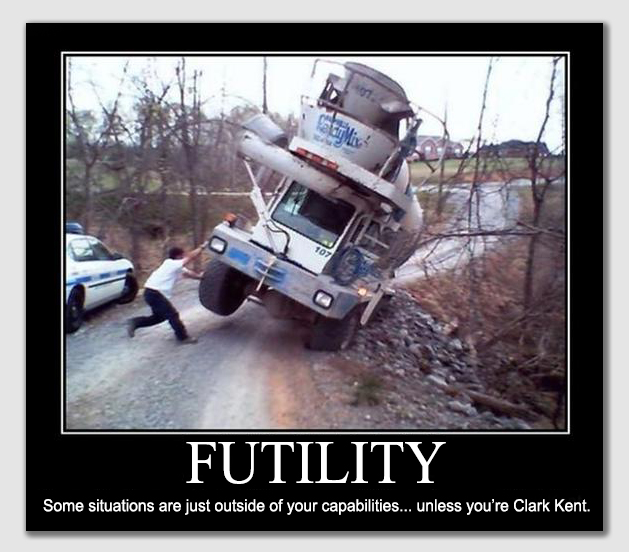
This case may be the legal equivalent of this – what were they thinking?

Huh? In the words of South Park’s parody of Johnnie Cochran in the legendary Chewbacca defense: “that does not make sense.” If the wrongdoer isn’t entitled to argue that the court has to follow the “technical rules” of assessing damages, then who is? It’s a cinch the plaintiff isn’t going to do anything to restrain the court in calculating damages. This is probably one of those “hard cases make bad law” kinds of decisions … but even so, it’s difficult to feel much sorrow for Mr. Mendonsa, who should have been enjoined and been made to pay damages.

A deal’s a deal, after all.

Smith v. Mendonsa, 108 Cal.App.2d 540, 238 P.2d 1039 (Ct.App. Cal. 1952). Smith entered into an agreement with Mendonsa concerning the use of a gas station, restaurant and bar he had sold to him. Mendonsa agreed that he would permit no trees to remain on the site which exceeded a height of 15 feet;, and that if any tree got taller than that height, Smith would have the right to remove the same. The purpose of the agreement was to prevent the shading of Smith’s orchard next door. land and to prevent trees on the appellants’ property from overhanging it. Mendonsa let the trees get too tall, and Smith sued to enforce the deal. The trial court agreed with Smith and awarded him money damages for past violations as well as an injunction prohibiting Mendonsa from maintaining any tree in excess of 15 feet in height or from permitting branches of any tree to overhang the orchard. Mendonsa appealed, complaining that the damages awarded weren’t supported by the record and that the injunction was too harsh.

Mendonsa let the trees get a little too tall …

Held: The damages and injunction were upheld. The Court observed that the record showed that the shading of the orchard trees near  Smith’s property line was detrimental to the growth of the trees themselves and would, during some seasons, decrease the yield of fruit on the affected trees. Four trees were affected, the evidence showed, and while the proof of damage was not exact, it nonetheless gave some fairly definite basis for computation.

With respect to growing crops, the measure of damages is the market value of the probable yield without detriment, minus the cost of producing and marketing, and minus the return actually received. The damages awarded amounted to about $140.00 per year, and the period of the damage was three years. Additionally, there was damage in that the trees themselves were retarded in growth by the shade.

The Court concluded that the record furnished adequate support for the award made. Anyway, the Court said, Mendonsa was in the wrong, and thus he was not in any position to demand the application of the technical rules governing awards of damages. Where a party has suffered damage, the Court held, a liberal rule should be applied in allowing a court or jury to determine the amount, and that, given proof of damage, uncertainty as to the exact amount is no reason for denying recovery.

As for the injunction, the Court held, in cases involving promises as to use of property, injunctive relief — depending upon the inadequacy of damages — may be granted. A deal is a deal, the Court seemed to say, and where Mendonsa made the promise to keep the trees trimmed back and then violated it, the award of a perpetual injunction from maintaining any tree in excess of the agreed-upon height and from permitting branches to overhang was not an abuse of the trial court’s discretion.

It is, after all, the duty of the court to encourage the keeping of agreements properly made and to give adequate remedy for breach thereof when it occurs, particularly where the breach is deliberate and wrong is willful.

– Tom Root

TNLBGray

Case of the Day – Monday, September 22, 2024

A GAME OF INCHES

Baseball, they say, is a game of inches. So are boundary trees, called “line trees” in the State of Pennsylvania (which, by the way, also calls itself a “Commonwealth” instead of a “State”).

Life imitates art, I guess. Last weekend, I hauled away our 25-year old shed. I am replacing it with a newer, larger shed – complete with electricity, windows, and (if I have anything to do with it) a beer refrigerator. Replacing it will come with a set of problems, specifically a line of arborvitae trees, standing behind the shed along the property line.

The arborvitae were tiny little shrubs when our next-door neighbor (two owners ago) planted them in the late 1990s. Now, they’re monsters.

I need to trim back a few of the arborvitae before the concrete pad for the new shed gets poured. Having read some of what I have written about boundary trees over the past few weeks, I figured I had better be sure I was dealing with some good old-fashioned Massachusetts Rule trimming of branches overhanging my property (and not with some oversized arborvitae that had grown across the property line to become boundary trees).

I found the iron pin on one end of the property line and the post on the other, and I ran a line through the trees. Sure enough, two of them have grown across the property line. Lucky for me, the ones I need to trim are still solidly anchored completely on my neighbor’s land. Those I can trim back, exercising both my Massachusetts Rule rights and my ratcheting loppers.

It seems strange that a matter of inches differentiates the trees I can trim with abandon and the trees that I cannot touch without my neighbor’s permission. (I have a great neighbor, by the way, so it is probably not a problem).  Nevertheless, the perverseness of the interplay between boundary trees and encroaching trees that stand completely on land other than one’s own is puzzling and irritating to me in an academic and legal way.

My situation is similar to the one in today’s case, which pits a car wash against a restaurant over a row of pine trees that may or may not be on the boundary. Because of the vagaries of how the pine trees at the root of the lawsuit grew along the property line, no one really won: the restauranteur wanted the trees gone, and the car wash owner wanted the trees to remain.

In the end, some of the trees stayed, some did not. And it was all a game of inches…

Wolfinger v. Moates, 7 Pa. D. & C.4th 220 (Pa.Com.Pl. 1990). A line of pine trees separated the Wolfinger Car Wash property from the Moats Restaurant property. Bill Moats received complaints from his patrons about the pine trees, that encroached on his parking lot, scratched diners’ cars and dropped pine cones everywhere (even damaging his lawnmower).

Bill decided to cut down the trees. He told his neighbor, “Suds” Wolfinger, what he planned. Suds was shocked. He liked the trees, partly because they served as a barrier between his business and the restaurant. Plus, his customers preferred parking under them, using the shade while they wiped down their cars. Suds asked Bill not to cut them down.

Bill cut them down anyway, taking out four of the 13 trees on his first day wielding his chainsaw. Suds raced to his lawyer, and together they raced to the courthouse for a temporary injunction. After Bill was forced to stop, Suds tried to make the injunction permanent.

The court found that the two tracts of real estate shared a common boundary line, and 13 trees stood on or near the line. A survey showed that the first five trees, including the four Bill had cut down, were all on his property. Lucky Bill. The next three, however, straddled the boundary. The  Court referred to them as “line trees.” Tree No. 9 was on Bill’s land, but some bark on the flare touched the boundary line. The last four trees were all on Bill’s land.

Held: Bill was not allowed to cut the three trees that straddled the boundary.

Pennsylvania law made it unlawful “for any owner or owners of any undivided interest in timber land within this Commonwealth to cut or to remove, or to cause to be cut or removed, from the said land, any timber trees, without first obtaining the written consent of all co-tenants in said premises.”

The Court held that the statute dictated its holding that the owners of adjacent tracts of real estate own all trees growing on their common boundary line as tenants in common. Tenants in common are prohibited from unilaterally cutting down or removing such commonly owned line trees.

Applying the general rules of law governing tenancy in common, the Court held, “We conclude neither adjoining real estate owner may remove a tree growing on a common boundary line. Consequently, in the case at bar, notwithstanding the fact that only inches of the trunks of trees 6, 7 and 8 are on the boundary line between the properties of the plaintiffs and defendants, those trees are jointly owned by plaintiffs and defendants. Therefore, defendants may not remove them.”

Suds was not satisfied. He argued that Tree No. 9 was commonly owned as well because the bark of the tree’s trunk touched the boundary line. Citing the Illinois case Ridge v. Blaha, the Court held that the critical question was “whether any portion of the trunk of the elm tree grows on plaintiff’s property… The law… is determined by the exact location of the trunk of the tree at the point it emerges from the ground.” The fact that the bark of Tree No. 9 touched the line, the Court said, was insufficient to create a tenancy in common.

Trees 1 through 5 and 9 through 13, therefore, were Bill’s sole property. He could cut them down as he wished. But the injunction would become permanent on Trees No. 6 through 8, leaving them to provide both shade and pine cones.

– Tom Root

TNLBGray140407

Case of the Day – Friday, September 20, 2024

THE OYES DON’T HAVE IT

You sort of wonder how a kerfuffle over some lilac bushes and a bridal wreath bush in a backyard can end up in the state supreme court. I mean, even back in 1983, legal fees were not insignificant. These bushes were on the back boundary of a couple of properties, so we’re not even talking curb appeal.

Regardless, Raymond Oye did not like the shrubs on the property line. He and his wife thought they were ugly. Neighbor Lou Ann Patterson did not. But Ray started tearing them out anyway. When Lou Ann protested, Mr. Oye said, ‘Nay.’

There ensued a trial, an appeal and a trip to the Supreme Court in Lincoln, Nebraska, the principal purposes of which seemed to have been to enrich some lawyers and reach a result Mr. Oye should have seen coming like a freight train through a tunnel. Now mind you, we have no problem with enriching lawyers. We sort of see it as a happy ending. But not everyone feels that way, nor should they.

More than once, we’ve told would-be clients to save their money and suck it up, because they weren’t going to win. We often quote the old legal saw, “A bad settlement is better than a good lawsuit.” It’s an enduring aphorism, probably because it’s true.

In this case, the Oyes didn’t have it, and never did. Compromise with Ms. Patterson would have been much cheaper.

Patterson v. Oye, 214 Neb. 167, 333 N.W.2d 389 (Supreme Ct. Neb. 1983). Lou Ann Patterson owned a piece of property next to Ray and Jeanette Oye’s place. Their backyards abutted on a 132-foot north-south line, with Lou Ann’s property being slightly higher at the boundary line. Lou Ann’s house was built by Truman Clare in 1955, and she bought it in 1972. The Oyes’ residence was built in 1956 by Elmer Larsen, who planted lilac bushes and some beautiful bridal wreath on the southern third of the boundary line.

Both Elmer and Truman said the bushes contributed to their privacy and improved the general appearance of their backyards. When Elmer sold the property to Lou Ann, the bushes were at least six feet high and had spread out by natural growth. Some other bushes grew on the property line, and Elmer trimmed them, but he never claimed to own the bushes.

Between 1973 and 1977, Lou Ann and the Oyes both maintained the bushes, although the Oyes performed more work than Lou Ann did. Nevertheless, Lou Ann considered the bushes to be growing on the boundary line and to be common property. She said that they provided her privacy and added to the aesthetic value of the property. The Oyes claimed that they owned the bushes inasmuch as Elmer had planted them and they had done most of the caring for the bushes. In fact, Ray Oye claimed that in 1973, Lou Ann told him she thought the hedge belonged to him.

The Oyes considered the brilliant purple of the lilacs and delicate whites of the bridal wreath to be ugly. Ray wanted to remove the hedge and build a rock wall, partly to divert runoff from his land. So Ray started to work, removing about 48 feet of bushes at the north end of the boundary line before Lou Ann objected. The neighbors’ efforts at compromise failed, so Lou Ann sued, alleging trespass and asking for damages and an injunction.

As of the time of trial, the remaining bushes were 12 to 18 inches wide at their base, growing on the boundary line, and were untrimmed, spread out and intermingled with other growth. The cost of replacing the bushes Ray had torn out was from $300 to $1,500.

The trial court found that the shrubs were on the boundary line and issued an injunction against Ray and Jeanette cutting any more of the bushes. The court further ruled that Oyes owed Lou Ann $400.00 in trespass damages.

The Oyes appealed.

Held: A tree, standing directly upon the line between adjoining owners so that the line passes through it, is the common property of both parties, and neither owner may cut and destroy it without the consent of the other. When one common owner threatens damage to a commonly owned tree or shrub, a court may issue an injunction to prevent the damage.

Traditionally, where the tree trunk impinges upon the lot line, “and when the respective owners have for years jointly cared for the tree, and divided the expenses of protecting it… then each has an interest in the tree sufficient to demand that the owner of the other portion shall not destroy the tree.” The equities in a boundary tree favor the shade and other benefits of a tree.

The Supreme Court of Nebraska found that Lou Ann and the Oyes owned the bushes growing on their common boundary line as tenants-in-common and that the Oyes wrongfully removed and destroyed about 48 feet of those bushes, for which the trial court properly assessed $400 in damages. The Court found that if the Oyes continued on their course of conduct, they might “harm, damage, or destroy some or all of the remaining bushes growing on the boundary line, which would cause irreparable damage to plaintiff and unnecessary litigation, and that the terms of the trial court’s injunction are equitable.”

The Oyes argued that the injunction would impose years of unreasonable future hardship on them and invite abuse from Lou Ann. The Court was unmoved: “Defendants are reminded that the law provides avenues of relief in the event they feel aggrieved. Where there is a change of circumstances, they may apply to the court to vacate or modify the decree.”

To channel the late Rodney King, Mr. and Mrs. Oye, can’t we all just get along?

– Tom Root

TNLBGray

Case of the Day – Thursday, September 19, 2024

RIGHT THING, WRONG REASON

The right things usually get done for the wrong reasons. The Internet, which knows all (or soon will) attributes the aphorism to James Carville, but I remember the exact line being penned by Washington columnist Drew Pearson in a political potboiler of his, The President, which I read as a lad in the summer of 1971.

Sorry, James, When it comes to credit for this particular witticism, you didn’t build that.

Today’s case is a reminder to all the states that claim the Massachusetts Rule, the Hawaii Rule, the Virginia Rule and so on that there is nothing new under the sun. Well before those rules came into being, the Washington State Supreme Court grappled with the encroachment issue and reluctantly decided an early version of the Hawaii Rule: where there is encroachment that causes “sensible harm,” the adjoining landowner may either trim back the offending growth or sue to force the tree’s owner to do it.

Ironically, settling the law (the right thing to do) probably got done for the wrong reason (bad blood between neighbors). We have seen how the Massachusetts Rule began in Michigan. Now, it seems the Hawaii Rule may have started in Washington.  Sorry, Hawaii, you didn’t build that.

Truly, there’s nothing new under the sun.

Gostina v. Ryland, 116 Wash. 228, 199 P. 298 (Supreme Ct. Wash. 1921). A.L. Ryland had owned his place for many years when new neighbors, the Gostinas, moved in next door. A.L. had a Lombardy poplar tree growing about two feet from the Gostina property and a fir tree in the rear of the property, also about two feet from the division fence. On top of that, A.L. maintained a creeping vine, growing in a rustic box on top of a large stump, a few feet from the division fence, and some raspberry bushes and a rosebush growing near the property line.

About a year after they moved in, the Gostinas had their lawyer write to A.L. to tell him the branches of his fir tree were overhanging the Gostina property and dropping needles and that A.L.’s ivy was running under the fence and onto the Gostinas’ lawn. The lawyer demanded that A.L. cut off the fir tree branches at the point where they crossed the boundary line, remove the ivy from the Gostinas’ property, and keep the tree and ivy from encroaching ever again.

A.L. was unimpressed, so the Gostinas brought a suit for abatement of a nuisance. (And we thought frivolous litigation was a recent phenomenon!) A.L. argued that the lawsuit was merely for spite and vexation, and that the Gostinas knew the tree and ivy were there when they moved in. Only after a neighborly disagreement, A.L. claimed, did the Gostinas sue.

The trial court did not care about such nonsense, holding that where branches of trees overlap adjoining property, the owner of the adjoining property has an absolute legal right to have the overhanging branches removed by a suit of this character.

The Gostinas appealed.

Held: A.L.’s tree and ivy were a nuisance, and the Gostinas’ claimed damages, although ridiculously minor, were enough to permit them to maintain a nuisance action against A.L. Ryland.

The Court agreed that under Washington law, trees and plants growing into the yard of another constituted a nuisance, “to the extent to which the branches overhang the adjoining land. To that extent they are technical nuisances, and the person over whose land they extend may cut them off, or have his action for damages, if any have been sustained therefrom, and an abatement of the nuisance against the owner or occupant of the land on which they grow; but he may not cut down the tree, neither can he cut the branches thereof beyond the extent to which they overhang his soil.”

From ancient times, the Court said, it has been a principle of law that the landowner has the exclusive right to the space above the surface of his or her property: “To whomsoever the soil belongs, he also owns to the sky and to the depths. The owner of a piece of land owns everything above it and below it to an indefinite extent.” On the same principle, the Court held that the branches of trees extending over adjoining land constitute a nuisance, at least in the sense that the owner of the land encroached upon may himself cut off the offending growth.

A property owner may not “maintain an action against another for the intrusion of roots or branches of a tree which is not poisonous or noxious in its nature. His remedy in such cases is to clip or lop off the branches or cut the roots at the line.” What it came down to, the Court held, was that “the powerful aid of a court of equity by injunction can be successfully invoked only in a strong and mischievous case of pressing necessity” and there must be “satisfactory proof of real substantial damage.”

Here, the Court said, what the Gostinas complained of was “so insignificant that respondents did not even claim them or prove any amount in damages–but simply proved that the leaves falling from the overhanging branches of the poplar tree caused them some additional work in caring for their lawn; and that the needles from the overhanging branches of the fir tree caused them some additional work in keeping their premises neat and clean, and fell upon their roof and caused some stoppage of gutters; and that sometimes, when the wind blew in the right directions, the needles blew into the house and annoyed the occupants. We cannot avoid holding, therefore, that these are actual, sensible damages, and not merely nominal, and, although insignificant, the insignificance of the injury goes to the extent of recovery, and not to the right of action.”

Since the Gostinas had the statutory right to bring an action for abatement of a nuisance and had shown some “actual and sensible damages, although insignificant,” they are entitled to go forward with the suit. “The remainder of the trees will doubtless shed their leaves and needles upon the respondents’ premises,” the Court prophesied, “but this they must endure positively without remedy.”

The Court was not really that fooled: this was a spite suit, but that alone was not disqualifying. While the Gostinas’ action against A.L. “has some appearance of being merely a vexatious suit,” the Court said, A.L. did “admit that the tree boughs do overhang respondent’s lot to some extent. There is sufficient foundation in fact to sustain a case…”

– Tom Root

TNLBGray

Case of the Day – Wednesday, September 18, 2024

BLINDED BY THE LIGHT

revveduplikeadeuce140721None of us really knew what the lyrics were to that great piece of mid-’70s music by Manfred Mann’s Earth Band (written and first recorded by Bruce Springsteen). You know, Springsteen wrote the second line as “cut up like a deuce.” Not until Manfred Mann rewrote the line to be “revved up like a deuce,” did the mondegreen of the line famously become a reference to a feminine hygiene product.

But we digress. We’re really talking light and soybeans here. Recently, the vigilant treeandneighborlawblog editors read a book review for a new tome on light pollution called The End of Night.” It reminded us how soybeans like the dark, and about the plight of Farmer Smalley.

Farmer Smalley raises soybeans in Wyandot County, Ohio. When the Ohio Department of Transportation installed high mast lighting at the US 30/US 23 interchange, Mr. Smalley’s soybeans would not flower and flourish under the bright nighttime lights. This is apparently not an unknown effect. He sued the DOT in the Ohio Court of Claims, seeking damages in a self-written complaint.

soybeans140721The Clerk heard the matter administratively and concluded that the lights were not a nuisance, apparently because of the benefit such lights had for the motoring public. However, the loss of two acres of beans did constitute a constitutional “taking of property” for which he should be compensated. The damages were pretty meager for 2007: $512 plus his $25 filing fee.

Still, the Clerk did not dismiss out of hand the notion that light pollution could constitute a nuisance in some circumstances, those where the social benefit of the light was insignificant next to the interference caused the neighbor.

A few months later, the full Court of Claims reversed the judgment. It held that the Ohio constitution did not permit compensation for consequential damages to property, only for the actual taking of property. Because of that. Farmer Smalley’s loss was not compensable.

Even so, both the Court and the Clerk apparently accepted the notion that the light pollution damaged Smalley’s property. It was just that the damage, however real, could not be compensated.

lightpoll140721Smalley v. Ohio Dept. of Transportation, 142 Ohio Misc.2d 27, 869 N.E.2d 777, 2007 -Ohio- 1932 (Ohio Ct.Cl., Mar. 15, 2007). Farmer Smalley has a soybean field next to a four-lane highway intersection. The Ohio Department of Transportation constructed high-mast lighting at the intersection in 2005, and since then, Farmer Smalley’s soybeans failed to mature during the growing season. Smalley was forced to mow down two acres of failed crop, a failure he attributes to the lighting. He lost about 120 bushels of beans, which — at $6.00 a bushel — were worth $720.

Farmer Smalley sued the DOT in the Ohio Court of Claims. DOT admitted it had installed the mast lighting, which it said was intended to “safely illuminate the expressway.” DOT argued the installed lights “are the safest and most efficient lighting source given the traffic flow and lighting required at interchanges.” It admitted that light did “occasionally bleed onto adjacent property [and] there is little doubt that defendant’s light encroaches upon plaintiff’s property.” It argued, however, that it could not be held liable for any damage to the plaintiff’s bean crop caused by its light encroachment. It also argued that Farmer Smalley’s cost of raising the beans was $256.47 an acre, reducing his net loss to $512.94.

Held: The Clerk of the Court held that the light pollution was not a nuisance. However, he found that the actual harm suffered by the farmer was different in kind from harm suffered by the general public, as required to establish a taking under the “Takings Clause” of the Ohio Constitution.

It appears that farmer Smalley filed his complaint himself, because DOT flailed about in its defense as if it wasn’t sure where the farmer was going. It argued at length that its lighting was not a nuisance, because Smalley had offered no proof that DOT was negligent in erecting the lighting. It asked the Court to weigh the benefit that the high mast lighting gave to thousands of motorists against the harm the lights caused the plaintiff in destroying two acres of his bean crop.

lights140721The Clerk sagely noted that DOT “… essentially proposed that plaintiff should have to bear a financial burden for his crop loss in a situation where he was legally using his land for a specific valuable purpose and the harm caused was attributable to the acts of DOT.”

He defined an absolute nuisance as a distinct civil wrong arising or resulting from the invasion of a legally protected interest, one consisting of unreasonable interference with the use and enjoyment of the property of another. Such a nuisance was the doing of anything without just cause or excuse, the necessary consequence of which interferes with or annoys another in the enjoyment of his or her legal rights, or the collecting and keeping on one’s premises of anything inherently dangerous or likely to do mischief, if it escapes, which, escaping, injures another in the enjoyment of his legal rights. A qualified nuisance, on the other hand, was distinguished from absolute nuisance as being dependent upon negligence consists of anything lawfully but so negligently or carelessly done or permitted as to create a potential and unreasonable risk of harm which, in due course, results in injury to another.

Considering the utility of the high mast lighting to the motoring public, the Clerk correctly concluded that the lighting was neither an absolute nor qualified nuisance. But that didn’t mean that Mr. Smalley was out of luck. Under the “Takings Clause,” any taking — whether it be physical or merely deprives the owner of an intangible interest appurtenant to the premises — entitles the owner to compensation. In order to establish a taking, a landowner must demonstrate a substantial or unreasonable interference with a property right, and such interference may involve the actual physical taking of real property, or it may include the deprivation of an intangible interest in the premises. Something more than the loss of market value or loss of comfortable enjoyment of the property is needed, to constitute a taking under the “Takings Clause:” governmental activity must physically displace a person from space in which he was entitled to exercise dominion consistent with the rights of ownership. To constitute a taking, an actual harm suffered by the plaintiff must differ in kind rather than in degree from the general public.

Later, the full court reversed on different grounds, holding that the Ohio Constitution did not permit compensation for less than a full loss of land.

Nevertheless, the notion that light can constitute a nuisance and that a property owner suffering from light shining onto his or her land from another location appears to be accepted.

– Thomas L. Root

TNLBGray

Case of the Day – Tuesday, September 17, 2024

YOU PAYS YOUR MONEY AND YOU TAKES YOUR CHANCE

Over the past few days, we have seen several divergent views on boundary tree ownership: the Colorado view that ownership depends on the intent of the property owner; the Illinois view that ownership is determined simply by where the tree is growing; and the Connecticut view that both owners can hack at the branches and roots of a boundary tree with abandon.

Today, a Georgia court adds to the mayhem. In its view, a boundary tree is not the common, undivided property of either owner. Instead, it is owned in “severalty,” a term only a lawyer could love. “Severalty” means that Owner A is the exclusive owner of the parts of the tree on her property. Owner B is the exclusive owner of the parts of the tree on his property, and – in addition (and this is a big “in addition”) – each owner is deemed to have granted an “easement of support” to the other, meaning neither owner can do anything to his or her side of the tree that would kill the other side.

This sounds a lot like the Connecticut rule, except that the owners could mess a little with the trunk, as long as it does not make a mess of things on the other side. What is really interesting is that the case focuses on each owner’s obligation to not let the tree become dangerous to the other. That’s an aspect of boundary tree ownership we haven’t contemplated before.

Just maybe Georgia has something here. We would be more amenable if it could be described without employing the term “severalty.”

But what does this suggest if you’re in a state other than Connecticut, Minnesota, Georgia, Illinois or Colorado? Well, in that case, you pay your money and take your chance.

Willis v. Maloof, 184 Ga.App. 349 (Ga.App. 1987). Mike Maloof was severely injured when a tree fell on him. Throughout the over thirty years he and defendant Bill Willis had lived as next-door neighbors, Mike had always assumed the tree belonged to Bill. It turned out that Mike was wrong: the tree actually grew on the boundary between their properties. Mike claimed the tree was diseased and that Bill should be liable for negligently failing to remove or remedy the hazard created by the tree. The jury could not reach a verdict, and the trial court denied Bill a directed verdict.

Bill appealed.

Held: Adjoining landowners of a boundary tree do not own the tree as tenants in common, but instead, each owner holds an interest “in severalty” on the part of the tree that rests on his or her side of the line, with an easement of support from the other. Thus, the Court said, Bill is entitled to a directed verdict in his favor, and owes Mike nothing.

The Court admitted that the issue of ownership and control over a boundary tree was one that had never been decided in Georgia. The Court analogized the issue to the rule applicable to party walls. By owning the part of the tree on his or her property, each of the landowners “has an interest in that tree, a property in it, equal in the first instance to, or perhaps rather identical with, the part which is upon his land; and in the next place embracing the right to demand that the owner of the other portion shall so use his part as not unreasonably to injure or destroy the whole.”

Like with a party wall, the parties owning a boundary tree have a duty to maintain it and take reasonable steps to guard against any hazardous condition it may pose.

In this case, the Court said, Mike had presented no evidence that Bill had breached his duty to maintain the tree. The owner of a tree is liable for injuries from a falling tree only if he knew or reasonably should have known the tree was diseased, decayed or otherwise constituted a dangerous condition. He or she has no duty to “constantly check all… trees for non-visible rot as the manifestation of decay must be visible, apparent, and patent so that one could be aware that high winds might combine with visible rot and cause damage.” Bill worked around the base of the tree often as he cultivated a vegetable garden in his yard near the tree, year after year. He denied any knowledge that the tree was diseased and denied seeing any evidence which would lead him to suspect the tree was unhealthy.

Mike’s expert, who inspected the tree after it fell, testified that at least three visible conditions told him the tree was diseased and posed a hazard. The bark at the base of the tree curved under instead of outward, indicating to the expert that the tree was virtually devoid of roots. A cavity or hollow in the side of the tree and fungus growing on the bark indicated to the expert that the tree was decaying. The expert said that in his opinion the average person’s “attention would have been drawn” to these conditions.

The Court didn’t bite. “Even assuming defendant should have noticed these conditions, the appellate panel found, “no evidence was presented from which a jury could find that defendant should reasonably have known the tree was diseased. The expert witness presented testimony from which a jury could find that the tree was in fact diseased. However, the testimony of the expert witness did not establish that a layman should have reasonably known the tree was diseased.”

Even though each owner had an exclusive right to the part of the tree on his side of the boundary, the distinction was not relevant regarding the duty to maintain a single, indivisible tree. The disease in this tree was systemic and not confined to one side of some imaginary line. Therefore, the duty to maintain the tree could not be apportioned on some pro-rata basis depending upon the percentage of the girth of the tree which grew on either side of the property line.

Bill’s only duty was that of the reasonable man. The law did not charge him with an expert’s understanding of the inspection, care and maintenance of trees. Even Mike admitted he did not think the tree in question was dangerous or defective. Several other neighbors also testified the tree was bearing green leaves at the time it fell and did not appear to be diseased. Because Mike failed to present any evidence that Bill was or should have been aware that the tree was hazardous, Bill was entitled to a directed verdict, and one should have been granted.

– Tom Root

TNLBGray

Case of the Day – Monday, September 16, 2024

NIGHT OF THE ATTACK ROOSTERS

madrooster170227There is little doubt that we in this country enjoy pampering like nowhere else. Animals we once ate for sustenance (or because they tasted good) are now our pets: not only dogs and cats, but Vietnamese pot-bellied pigs, hedgehogs, and even emotional support ducks.

(This has nothing to do with Haitians, dogs and cats, Springfield, Ohio, or the Republican presidential ticket.)

And when we jet off to LA for the Oscars, or Cannes for the movies, or even Munich for Oktoberfest, we need a pet sitter to watch our precious Fluffy. Someone like Josie Gilreath, Professional Pet Sitter.

Come to think of it, Josie – a proud member of the National Association of Professional Pet Sitters (motto: “The ONLY national non-profit organization for professional pet sitters”) – might not be available. She’s still convalescing after a particularly harrowing pet-sitting experience after an encounter with Bruce and Jodi Smith. While watching the Smiths’ chickens, Josie was injured by the Smiths’ attack rooster, who was apparently doing what attack roosters do, which is attack. The kerfluffle left Josie with a serious infection having long-term consequences.

Josie sued, complaining that the Smiths were liable, but the trial court wasn’t buying it. Maybe it was Josie’s 9 years of experience as a professional pet sitter. Maybe it was the sign in the Smiths’ yard that said “CAUTION – AREA PATROLLED BY ATTACK ROOSTER SECURITY CO.” Maybe it was the fact Josie had worked for the Smiths before and had been warned, “Rooster Will Attack!” Of course, it could have been that Jodi Smith had advised Josie to use a garbage can lid for defense against the rooster.

Whatever the reason, the court held Smiths had not withheld any information from Josie, and that by taking the pet-sitting job, Josie had assumed the risk that the rooster would assault her. Thus, she collected nothing.

sign170227Interesting story, one might think, if you own a rooster. True enough, but there’s a tree lesson here. Josie held herself out as a specialist in pet sitting. Like a homeowner who knows she has a danger tree and hires a tree service to remove it, the Smiths had no duty to give Josie any special warnings. Ordinarily, the Court said, “there is no duty to give warning to the members of a profession against generally known risks.”

Josie was a professional pet sitter with nine years of experience, and admitted she had a responsibility to educate herself about the animals she takes care of, yet failed to do so for roosters. The Smiths cannot be blamed, the Court held, if Josie failed to inform herself of those risks.

Likewise, a tree service hired to remove a dangerous tree has no right to expect the homeowner to warn of dangers associated with the job.

Gilreath v. Smith, Case No. A16A1747 (Ct.App. Georgia, Feb. 17, 2017). While pet-sitting for Bruce and Jodi Smith, Josephine Gilreath was attacked and injured by the Smiths’ rooster, which caused a serious infection with long-term consequences. Gilreath sued, but the trial court granted summary judgment in favor of the Smiths on the ground that Gilreath assumed the risk. Gilreath appealed.

Held: Josie Gilreath cannot collect, because she assumed the risk.

For nine years, Josie was self-employed as a pet sitter doing business as Crabapple Critters. During that time, she took care of “horses, dogs, cats, all sorts of animals.” Josie belonged to the National Association of Professional Pet Sitters, an organization so august that it even has a website. Although she had worked briefly on two farms, taking care of horses, prior to working for the Smiths, Josie did not have any training or experience with chickens. As a pet sitter, Josie has a responsibility “to a point” to educate herself about the kind of animals she would be working with, but prior to accepting the job with the Smiths, she had not done any research on how to care for roosters and had not heard anything about their temperament.

For several years before the incident, the Smiths had three dogs and some chickens, including at least one rooster named Sam. The chickens, including Sam, were kept in a coop that had two signs on it, one that said “WELCOME” and one that said “CAUTION AREA PATROLLED BY ATTACK ROOSTER SECURITY CO.” Sam had previously attacked Jodi Smith and her mother, but the Smiths never told that to Josie.

Josie provided pet-sitting services to the Smiths twice before, including taking care of the chickens. Once, the Smiths hired Josie to watch the animals for four days and instructed her on proper feeding the chickens. This included, among other things, opening the door to the coop to fill up the water dishes. Jodi Smith told Josie, “You do not have to fill them up if you feel uncomfortable with Sam the Rooster. I use a garbage can lid to separate myself from him.” Another time, Jodi gave Josie a note to “Just throw food into cages. Rooster will attack!”

The third time, the Smiths gave Josie no further instructions but asked her to collect eggs from the chickens. When she tried to do so, the rooster attacked. It was ugly.

The Court held that Josie assumed the risk of injury because she fully appreciated the danger involved and with her freedom of choice limited by neither circumstances nor coercion, deliberately chose an obviously perilous course of conduct.

The Smiths were obligated to show that Josie had knowledge of the danger, understood and appreciated the risks associated with such danger, and voluntarily exposed herself to those risks. The Court said that “knowledge” does not refer to a comprehension of general, non-specific risks. Rather, the knowledge that a plaintiff who assumes the risk must subjectively possess is that of the specific, particular risk of harm associated with the activity or condition that proximately causes injury.

Here, the Court said, Josie had been warned of the relevant danger during her prior pet sitting, that the rooster would attack and that a garbage can lid was useful for controlling the rooster. Josie claims that if she had known that the rooster had actually attacked Jodi Smith and Jodi’s mother, she “probably” would not have taken the job. But the Court said that was a distinction without a difference: being warned that the rooster will attack is the same as having been warned that the rooster had attacked in the past.

Josie has no evidence the Smiths had superior knowledge of the risks associated with the danger. Although the Smiths knew that the rooster had attacked two people, there is no evidence that they knew that the rooster could cause wounds or infections of the sort that Josie suffered. Ordinarily, there is no duty to give warning to the members of a profession against generally known risks. And Josie, an experienced and professional pet sitter, admitted that she had a responsibility to educate herself about the animals entrusted to her care but failed to do so for roosters. “The Smiths cannot be blamed,” the Court said, “if Josie Gilreath failed to inform herself of those risks.”

Finally, the Court said, Josie admitted that she chose to take the job knowing that she had been told that the rooster would attack. She admitted that she could have turned down the job but chose not to. The Court found she had equal knowledge of the danger and risks and acquiesced in exposing herself to the risk without taking any precautions.

– Tom Root

TNLBGray