Case of the Day – Tuesday, December 17, 2024

DUMB AND DUMBER

What do you call a guy who volunteered to help his father-in-law cut down a tree and who witnessed first-hand the risk that a branch would bounce back and endanger the workers, but then went ahead and clobbered himself by – guess what – letting a branch bounce back and hit him?

So what do you call a guy who breaks both wrists doing that, and then sues his father-in-law?

This case illustrates the various rungs of the guest ladder that a person standing in your front yard might occupy. The bottom rung, of course, is a slimy trespasser. The top would be the owner. In between are a business invitee, a social invitee and a licensee.

Dumber thought he could promote himself to the status of licensee as though he were an employee of his father-in-law (who must have been a tolerant soul to let his daughter marry this guy). The Arkansas Supreme Court knocked him down a few rungs but undoubtedly made him feel better by explaining that the rung did not matter. The very patient father-in-law had not just warned him of the danger, but he had shown him the danger and how to ensure it did not come to pass.

Some people simply won’t learn.

Young v. Paxton, 316 Ark. 655, 873 S.W.2d 546 (Supreme Court of Arkansas, 1994). Don Young brought a negligence action against his father-in-law, Gerald Paxton, for injuries that he sustained on Gerald’s land as a result of trimming limbs from a tree. Gerald successfully moved for summary judgment. Don appealed, arguing that material issues of fact remained to be decided, including whether he held the status of a licensee or invitee on Gerald’s property, and whether Gerald’s negligence was the proximate cause of his injuries.

On a fine June Saturday, Don walked over to his father-in-law’s house in Saline County. There he found Gerald trimming the limb of a hardwood tree with a chainsaw while standing on a 20-foot extension ladder. The tree was over 15 feet tall with limbs drooping to the ground. Gerald had previously cut three or four limbs down.

The ladder Gerald was using rested against the limb which he was attempting to trim. As he began to cut the limb which the ladder was leaning against, the limb began to rise as the weight from the severed part fell away. Gerald asked Don to get a rope from his shop. Don located a rope and returned to the tree, and at Gerald’s request, he threw him the rope.

Gerald then wrapped the rope around the limb. Don held the rope while standing on the ground to prevent it from “bucking” and dislodging the ladder when the cut part of the limb fell away. As Don held the limb securely with the rope, Gerald cut the end of the limb and climbed down the ladder.

Gerald then showed Don where to place the ladder in order to cut another limb. The ladder was placed against the designated limb, and Don climbed up with the chainsaw and proceeded to cut it. This occurred five minutes after Gerald cut the limb with Don’s help. When the weight of the cut part fell away, the limb rose and the ladder lost its support, causing Don to fall. Because of the fall, Don badly hurt both wrists.

Don sued Gerald for $25,000 in damages, alleging that Don was a licensee on Gerald’s property and that his injuries were proximately caused by Gerald’s failure to supply proper tools to use to perform the task that he asked Don to perform; failure to properly supervise the cutting; and failure to secure the limb.

Gerald filed for summary judgment, arguing that Don had admitted that he was a licensee on Gerald’s property and that there was no proof that Gerald had violated any duty owed Don by acting willfully or wantonly towards him. Gerald argued that Don knew or should have known the dangers posed by cutting branches from the tree. In the alternative, the motion stated that as a matter of law, Don had failed to present any proof that Gerald’s conduct proximately caused his injury.

Don then filed an amended complaint, alleging that Don came onto Gerald’s property at Gerald’s express or implied invitation and acted for the parties’ mutual benefit by cutting the branches. Don further alleged that as an invitee Gerald failed to use ordinary care to avoid injury to him because Gerald knew or reasonably should have known that danger existed.

The trial court granted Gerald’s motion for summary judgment, and Don appealed.

Held: Don will collect not a dime.

The Court noted that an invitee may be a public invitee or a business invitee. A business visitor is one who enters or remains on land for a purpose connected with the business dealings of the owner. A public invitee is invited to enter or remain on land as a member of the public for a purpose for which the land is held open to the public.

However, one who goes upon the premises of another with the consent of the owner for his own purposes and not for the mutual benefit of himself and the owner is not an invitee but a licensee. The Supreme Court declined to extend the invitee status to persons on the premises of another primarily for social reasons.

The law of negligence requires as essential elements that a plaintiff show that a duty was owed and that the duty was breached. A property owner owes his or her licensee the duty to refrain from causing the licensee injury by willful or wanton conduct, and as well owes a duty to warn of hidden dangers or risks. To constitute willful or wanton conduct, there must be a deliberate intention to harm or utter indifference to, or conscious disregard of, the safety of others.

But, the Court ruled, the duty to warn does not extend to obvious dangers or risks that the licensee should have been expected to recognize. Indeed, there is no obligation to protect the invitee against dangers that are known to him, or which are so apparent that he may reasonably be expected to discover them and be fully able to look out for himself.

The Court said an invitee may be a public invitee or a business invitee; a business visitor is one who enters or remains on land for a purpose connected with the business dealings of the owner, while a public invitee is invited to enter or remain on land as a member of the public for a purpose for which the land is held open to the public. However, one who goes upon the premises of another with the consent of the owner for his own purposes and not for the mutual benefit of himself and the owner is not an invitee but a licensee; invitee status has not been extended to persons on the premises of another primarily for social reasons.

Where there was no evidence that Don was invited onto the property, he was not visiting his father-in-law for any stated business purpose and expected no pay for his assistance, no reasonable jury could have found otherwise, and, thus, no material issue of fact existed on this point. What’s more, the Court found, there was no evidence that Gerald acted willfully or wantonly to cause Don any injury. In fact, the evidence showed that Gerald advised Don that the limb would have a tendency to rise as the weight from a severed branch fell away, and Don had even seen it happen a few minutes before when he helped Gerald when faced with the same risk. Even if Don had not known of the risk when he arrived, the court said, that risk was brought to his full attention before the accident.

It is a landowner’s duty to use ordinary care to maintain the premises in a reasonably safe condition for an invitee, the Court said, but that duty usually is satisfied when the danger is either known or obvious to the invitee. There is no obligation to protect an invitee against dangers that are known to him, or which are so apparent that he may reasonably be expected to discover them and be fully able to look out for himself.

So, the Court concluded that regardless of Don’s status as a licensee or invitee, Gerald did not breach the duty of care owed. He perpetrated no willful or wanton injuries on Don, who was well aware of the danger involved in the limb cutting.

Because breach of a duty owed is an essential element in a cause of action for negligence, and that element was lacking, Gerald was fully entitled to summary judgment.

– Tom Root

TNLBGray140407

Case of the Day – Monday, December 16, 2024

AT THE ZOO

Dick, Jane and Mom have fun at the Zoo ... as long as they can dodge the falling trees.

Dick, Jane and Mom have fun at the Zoo … as long as they can dodge the falling trees.

Simon and Garfunkel told us that the monkeys stood for honesty, the giraffes were insincere, and the elephants were kindly but dumb. We don’t know about that, but they were right when they sang that “it’s all happening at the zoo.”

Just ask Ms. Cherney. She’d tell you that Simon and Garfunkel failed to mention the ficus trees. One ficus tree at the Zoo — the North Carolina Zoological Park — fell on poor Ms. Cherney, injuring her. That began an eight-year legal odyssey through the North Carolina legal system, through the Industrial Commission (which hears tort claims made against the state), the Court of Appeal, the Supreme Court, back to the Commission, and again to the courts.

In the penultimate chapter, the North Carolina Court of Appeals ruled that Cherney had no evidence that the Zoo personnel had any basis to believe the ficus was about to fall. Of course, the evidence also suggested that the whole idea of having a ficus growing too large in an indoor setting and not being properly maintained was rather daft. And whose fault was that? The beavers, perhaps?

A dissenting judge vigorously disputed this, pointing out that the tree had been cabled to a wall to help support it. The very fact that the Zoo believed that cables were needed was evidence that they knew the tree was a hazard, the dissenter argued.

Usually, dissenting opinions are little more than curiosities. On three-judge appellate panels, 2-1 majorities carry the day. Despite the fact the dissenter probably thought he was talking to himself, he nonetheless explained in detail how the record supported finding the Zoo liable. This time, however, the dissenting judge found that he had some fans – the justices on the North Carolina Supreme Court.

The Supremes reversed the Court of Appeals in a terse per curiam opinion (that means “by the court,” usually a shorter decision on a non-controversial issue not signed by an individual judge) agreeing with Judge Wynn’s analysis.

bracing150225This kind of thinking does raise a conundrum. Bracing or cabling a tree is a well-established practice in arboriculture. There’s even an ANSI standard for it. Could it be that cabling a tree may be prudent from an arboriculture standpoint but legally dangerous? A careful tree professional would probably take from this decision the notion that he or she would be well advised to tell any client for whom a tree is cabled or braced that the very fact the tree was braced means it should be considered to be a hazard tree. That, of course, would bring with it responsibilities for regular inspection and – just ask Ms. Cherney – notice to people who could be affected if the tree falls.

Cherney v. North Carolina Zoological Park, 648 S.E.2d 242 (N.C.App., Aug. 7, 2007), reversed, 362 N.C. 223, 657 S.E.2d 352 (N.C. Supreme Court, 2008). Tinya Cherney was in the enclosed African Pavilion at the North Carolina Zoological Park near the center when a large ficus tree fell hitting a palm tree. Both trees then fell on her, pinning her to the floor of the walkway in the African Pavilion. The impact caused vertigo, broke her right femur, cracked three ribs, broke her back and wrenched her knee.

The injury occurred because the ficus tree — which was indoors – had been permitted to grow too large for its roots or, alternatively, had not been properly maintained to prevent it from becoming unsafe. The ficus tree was under the exclusive control of the Zoo’s personnel and not subject to wind or any other natural force. A hearing examiner at the North Carolina Industrial Commission awarded Cherney $500,000 in damages. Unhappy at the result, the Zoo appealed.

If your tree needs to be cabled like this, it's time to let it go - preferably not onto a passerby.

If your tree needs to be cabled like this, that could mean it’s time to let it go – preferably not onto a passerby.

The full Commission reversed the award and found for the Zoo. Cherney appealed to the North Carolina Court of Appeals, which affirmed the Commission’s claim. She took it to the North Carolina Supreme Court, which reversed and remanded the case for fresh consideration. The Commission then entered a second decision denying Cherney’s claim. She again appealed.

The Court of Appeals held that the Commission’s second decision denying Cherney’s claim was proper, even though the Supreme Court had ruled in her favor on her appeal from the first decision of the Commission denying her claim. The Court of Appeals agreed with the Commission that the evidence showed that neither the zoo’s curator of horticulture nor her staff knew or should have known that the ficus tree that fell in the zoo exhibit was likely to fall and that there was no showing that any member of the curator’s staff violated any applicable standard of care.

In a carefully crafted dissent, Judge Wynn observed that the evidence showed that when the ficus tree was replanted, “six, seven-strand 3/8″ cables going in four directions were looped around the tree and attached to the planter walls” in order “to aid the tree in keeping it upright and to assist in monitoring the tree.” The cables were inspected monthly by the Zoo staff. Two of the four cables had snapped when the tree fell on Ms. Cherney. The judge argued that the “very fact that the tree was cabled to the planter walls illustrates that the Zoo and its employees had “express or implied knowledge” that the tree might fall; if there had been no danger, then the tree would not have needed to be cabled in such a fashion, nor would the Zoo employees have needed to monitor it so closely.”

bracingb150225The dissent argued that the question was not whether the tree was likely to fall, as the Commission thought it was. Rather, the issue was whether a Zoo visitor – such as Ms. Cherney or one of the tens of thousands of kids who passed through each year – was unnecessarily exposed to danger and was not warned of a hidden hazard. The dissent believed that they were, and the Zoo had a duty to warn visitors of the possibility that the tree might fall.

The North Carolina Supreme Court reversed the appellate panel and specifically adopted Judge Wynn’s reasoning as its basis for doing so.

– Tom Root

TNLBGray140407

Case of the Day – Friday, December 13, 2024

DON’T SIT ON YOUR RIGHTS

burgerk150223Today’s case appears at first blush to be nothing more than a titanic conflict between a fast food purveyor and a strip mall, hardly the material that will get a tree or neighbor law fan’s blood pumping. But it illustrates a few worthwhile points.

A Burger King and a Long John Silver’s sat next to each other in Bay City, Michigan. The owners of the lots agreed to mutual easements so that patrons of each could use a common driveway while their arteries clanged shut from the cholesterol and trans fat. The easements were written without the benefit of a legal description of the land subject to the easement (perhaps to save the $300 or so a surveyor would have cost). Sometime after that, the Burger King was dethroned, and the restaurant was torn down. The buyer of the land, the strip mall next door, tore down the BK and expanded the mall. In so doing, the developer built over where one of the access drive easements lay (although the actual common driveway had never been constructed).

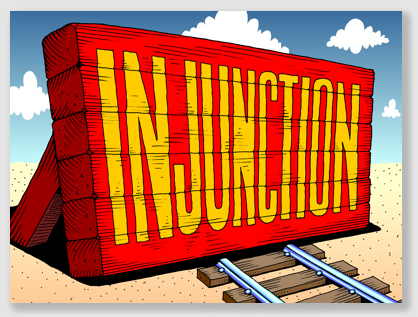
The Long John Silver’s crew observed the construction, but the company didn’t complain until the construction was completed. Then, the fish folks sought an injunction in federal court to get the offending building torn down. The Court agreed that the mall developer had violated the easement, but the facts that the remedy was so drastic (tearing down the building) and the fact that Long John Silver’s sat on its complaint during the construction and said nothing when the mall developer could have remedied the problem easily. That is called “laches,” and the law doesn’t think much of people who engage in it.

The case wasn’t resolved at that point, but Long John Silver’s was more likely to just win the difference in the value of the real estate (about $35,000, or 1,591 8-piece family meals). But the lesson is that if you sit on your rights and permit the other party to really damage you, you may be severely limited in your remedies.

The lesson of laches - don't sit on your rights.

The lesson of laches – don’t sit on your rights.

BR Associates, Inc. v. LaFramboise, 2007 U.S. Dist. LEXIS 46036, 2007 WL 1840031 (E.D.Mich., June 26, 2007). BR operated a Long John Silver’s restaurant just west of a busy intersection in Bay City, Michigan. LR owned a commercial plaza east of the Long John Silver’s at the intersection itself. In 2004, a Burger King operated on the LR site, but it closed and was sold to LR. LR demolished the Burger King and added to its existing plaza, making space for five new tenants. BR’s fish fryers were aware of the construction, and they informed BR’s corporate offices of the activity.

BR never complained during the construction. But after LR was done, BR claimed that the plaza blocked an easement arising out of a written agreement entered into by BR and the old Burger King owner, in which BR and the prior owner gave a mutual “perpetual, non-exclusive easement” for the customers of each other to use two driveways (the “North Access Drive” and the “South Access Drive”) on the easement areas, which were the boundaries of the two properties. Under the easement, the parties had the right “to relocate from time to time and in each party’s own discretion, those driving aisles and ingress and egress points located on their own Parcels … provided that such relocation does not adversely effect [sic] the other party’s right to use the Easement Area … [and] upon the mutual written agreement of the parties hereto.”

Apparently, the contemplated South Access Drive was never constructed when the Burger King still operated. The easement agreement did not specify the width or the length of the access drives nor did it include a legal description of the areas. LR did not get BR’s permission to move the North Access Drive, nor did it have permission to completely block the South Access Drive, which it did as a result of the construction.

BR sued LR for trespass during the construction, but mostly for breach of the easement agreement, seeking an injunction to compel LR to honor the easement. BR contended that LR’s conduct violated the easement agreement and placed an increased burden on the easement. LR’s actions constituted a trespass, in BR’s view, and created additional wear and tear on BR’s parking lots. Finally, LR’s activities interfered with BR’s business. BR claimed that the easement agreement simply did not contemplate loading and unloading of vendor vehicles as well as parking or that LR would use BR’s property for uses beyond simple customer ingress and egress contemplated by the easement agreement.

LR argued that any recovery for breach of the easement agreement should be limited to $35,000 because BR’s appraiser valued its property with the easement at $650,000 and without the easement at $615,000. BR and LR both moved for summary judgment on all issues.

Imagine 1,591 of these monster meals - that's probably what the damages will buy.

Imagine 1,591 of these monster meals – that’s probably what the damages will buy.

Held: BR was entitled to summary judgment on some claims, and others would go to trial. The District Court noted that Michigan law defined an easement as the right to use the land of another for a specific purpose. In order to create an express easement, there must be language in the document manifesting a clear intent to create a servitude. Any ambiguities are resolved in favor of use of the land free of easements. The unambiguous language of an agreement controls the determination of whether a breach has occurred.

Here, the Court said, there could be no dispute the LR breached the express terms of the easement when it constructed the addition to the plaza. The easement agreement provided that an “access drive” could only be relocated upon the parties’ mutual written agreement. LR didn’t contend that it got BR’s consent. Instead, it claimed that the South Access Drive never came into existence at all. No curb cut was made, and the electrical installations otherwise blocking the south access drive and preventing its use were never removed. The parties’ course of performance, LR argued, demonstrated that there was never an intent to open the south access drive.

However, the Court found that the parties’ mutual intent was clearly expressed in the plain language of the easement agreement, which granted BR a “perpetual, non-exclusive easement.” The fact that one of the access drives hadn’t been built, the Court said, provided no basis to depart from the language of the agreement. However, the Court noted that requiring LR to remove the building blocking the south access drive was unjustified because BR waited until construction was complete to seek any type of relief. It couldn’t identify the specific dimensions of the South Access Drive. Neither party required that level of precision in the easement agreement. The Court said it would be difficult, if not impossible, to fashion such injunctive relief to the extent of the breach. Finally, destroying the structure would necessarily be economic waste.

The Court refused summary judgment on BR’s remaining issues, denied summary judgment on all of LR’s issues, and set trial dates.

– Tom Root

TNLBGray

Case of the Day – Thursday, December 12, 2024

LICENSE TO SWIM

facts130307One of Harry S (and, yes, there properly is no period after his middle initial, which stands for nothing) Truman’s favorite admonitions was that one should never confuse wishes for facts. In today’s case, Bill Johnson wanted to have the rights to use John Bradley’s lake so much that he convinced himself over time that he did have the rights. But (as another American president once said), “Facts are stubborn things.” The fact was, Bill didn’t own the rights at all.

Up in Shawangunk Ridge country, John Bradley built himself a nature preserve, including rehabilitating an old dam and lake.  It was a pretty nice place, so nice, in fact, that his neighbor, Bill Johnson, found it irresistible. 

Bill had property that came within 10 feet of the lake, and he found it convenient to push the boundaries just a bit so he could boat and swim as well (the court opinion said he used it “for his boating and bathing activities,” and we’d prefer to assume that he wasn’t floating around with a bar of Ivory soap). Property owner Bradley put up fences, sent letters, and threatened and cajoled, but nothing seemed to deter Bill from using the pond as an extension of his place.

Johnson argued he had the right under the deed for his place that had been given to his predecessor in title, Miltie Quackenbush. That deed slapped a number of restrictions on the Johnson land, which included language that held no water rights in the lake were granted “except that the grantee named in this particular instrument and his or her family and the guests of his or her family are hereby permitted to use and enjoy the waters of Tillson Lake for fishing, boating and bathing.” Johnson took this language and ran with it (or swam with it).

private160307Unfortunately, the Court said Johnson was all wet. Johnson said the deed restrictions and covenants “ran with the land,” which means that they applied not just to Milton Quackenbush, but to everyone who ever bought the land after him. The Court disagreed. It said that a restriction or covenant was true where the deed language was unequivocal in doing so. Johnson’s argument sank because the fishing, bathing and boating exception — only one clause in a long list of restrictions and covenants — was clearly limited to the grantee “named in this particular instrument” — and that grantee was Miltie Quackenbush, not Bill Johnson.

State v. Johnson, 846 N.Y.S.2d 671, 45 A.D.3d 1016 (N.Y.A.D. 3 2007). The Awosting Reserve was founded by John Bradley in the late 1950s as a nonprofit organization for the purpose of preserving the natural wilderness of the Shawangunk Mountains. In 1994, Ridge Lake Partners, of which Bradley was a member, bought property that later became Tillson Lake. Ridge Lake got permission from the Department of Environmental Conservation to repair a dam on its land and flood a portion of the property that had formerly been a lake. It did so, clearing, refilling, and safeguarding the newly formed Tillson Lake, including installing a metal fence around the lake and a posting of “no trespassing” and “private property” signs every hundred feet.

pool160307The Awosting Reserve bought the lake and adjoining lands in 2002, including Lake Avenue, the only access road to the lake. By a 1994 deed, Bill Johnson obtained title to a parcel of land separated from the lake by a strip of land about 10 feet wide and 60 feet long. Johnson’s deed incorporated by restrictions and covenants contained in the deed from prior grantors Hassie Tillson and Carolyn Tillson to prior grantee J. Milton Quackenbush and Helen Quackenbush, stating “the above-described premises are sold and conveyed and accepted upon and under the following restrictions and covenants on the part of the parties of the second part [Quackenbush] their heirs and assigns forever.” The sixth enumerated restriction said that “[n]o water rights in and to Tillson Lake or the inlet thereto or the outlet therefrom is granted except that the grantee named in this particular instrument and his or her family and the guests of his or her family are hereby permitted to use and enjoy the waters of Tillson Lake for fishing, boating and bathing.”

The language of the grant further permitted the grantee “to use and enjoy the waters of Tillson Lake … subject to the rules, by-laws and regulations of the Tillson Lake Property Owners Association, which … may be changed, altered or amended at any time.” The final portion of the Tillson to Quackenbush deed stated that “the above restrictions, agreements and covenants shall run with the land.” Johnson said that since the time of his purchase, he has consistently used, mowed and cleared the strip in order to access Tillson Lake for his boating and bathing activities.

Beginning in 1998, Bradley complained that he regularly saw Johnson trespass on Awosting’s land, cutting timber, mowing the grass and using the lake even after being told repeatedly that he was to leave. Since 1998, the lock on the gate nearest to Johnson’s property was frequently broken and replaced by a lock similar in appearance. In 2002, Bradley told Johnson to remove a dock he had built from Tillson Lake. Two years later, Johnson stacked firewood, parked his vehicle, planted grass seed and erected a wooden fence across a portion of Cherry Street, a private road owned by the Awosting Reserve.

In 2004, the Awosting sent Johnson a letter telling him to get his personal property out of Tillson Lake. When none of these entreaties was successful, Awosting sued Johnson for trespass, seeking a permanent injunction barring him from entering the property or using the lake. Johnson counterclaimed, asserting, among other things, easements by prescription and adverse possession. The trial court granted judgment to Awosting.

Johnson appealed.

posted160307Held:  Johnson had trespassed, and an injunction issued barring him from further trespassing. The Court rejected Johnson’s claim of an easement, holding that to create an easement by express grant there must be a writing containing plain and direct language evincing the grantor’s intent to create a right in the nature of an easement rather than a revocable license. The writing must unequivocally establish that the grantor’s intent was “to give for all time to come a use of the servient estate to the dominant estate.” If there is an ambiguity with regard to the permanency of the restriction placed on the servient estate, it is to be treated as a license or an easement in gross which is revocable at will by the grantor.

Here, although Johnson said that the last portion of the Tillson to Quackenbush deed — which said that “the above restrictions, agreements and covenants shall run with the land” — created an easement entitling him to the use of Tillson Lake, the Court held that the license allowing the specific grantee to use Tillson Lake for boating, bathing and fishing was merely a temporary exception to the enjoining restriction which was intended to run with the land.

Extensive record evidence established Johnson’s trespass both on the Cherry Street property, as well as Tillson Lake. Finding these acts to establish the plaintiff’s prima facie burden of a trespass, the Court said, and it was up to Johnson to show that he had either a lawful right to enter these properties or had the owner’s permission. He did not do so.

– Tom Root

TNLBGray

Case of the Day – Wednesday, December 11, 2024

HIGHWAYS, BYWAYS AND WATERWAYS

By now, we all know that the modern arboriculture negligence rule places a duty on urban landowners to use reasonable care to inspect trees that could otherwise injure the public if they fell onto public highways, sidewalks and the such.

Today’s case has a twist, however, in that the owner’s tree fell onto a boat on the Cape Fear River, not a highway at all. Or was it?

This is where the courts try to honor the intent of the rule, whether they say so or not. Here, the boaters were waiting to use the landowner’s public boat ramp, which the landowner had installed to benefit its bait shop, located right next to the ramp. The court did not expressly say so, but it clearly believed that the duty owed to an “invitee” – someone whose presence was desired for the benefit of the owner – was higher than it might be to a casual passer-by, even if North Carolina law said all comers – invitees, licensees and trespassers – were entitled to the same protection.

The other interesting aspect of the decision was the blurring of the old rural-urban distinction. Sure, the Court said, the land was undeveloped and out in the middle of nowhere. But it was developed, at least for tree inspection purposes, around the boat ramp, which was good enough.

Wallen v. Riverside Sports Ctr., 173 N.C. App. 408, 618 S.E.2d 858 (Ct.App. N.C., Sept. 2, 2004). Since 1977, brothers John and Sol Rose operated Riverside Sports Center. Riverside leases 25 acres of undeveloped land fronting the Cape Fear River next to Person Street in Fayetteville, North Carolina. On a portion of the leased property, Riverside operates a small bait and tackle shop and a boat repair business. Riverside held a permit from the Army Corps of Engineers to build a boat ramp by the repair shop.

As part of the construction of the boat ramp, Riverside installed wooden “pylons” in the river. These pylons, also called “fender piles,” were placed both upstream and downstream from the boat ramp to prevent logs floating downstream from harming the boat dock or ramp. Customers often tied their boats to the pylons while waiting to use the ramp.

In late August 2001, Tim met Rick George and his son at Riverside to go fishing. At about 4:00 p.m., George paid the access fee and launched his pontoon boat using Riverside’s ramp. After the party had fished for a while, the wind picked up and dark clouds rolled in. They decided to get off of the river until the storm passed. By the time Tim and Rick got back to the Riverside boating facility, it was raining and there were four boats ahead of them waiting to use the ramp to get off the river. Rick tied his boat to one of the downstream pylons. Tim and Rick began putting a tarp over the boat to keep it dry. Rick said he heard a loud noise, like an artillery round, and felt something hit the boat. When he turned, he saw Tim on his back, unconscious.

A box elder tree had fallen and struck Tim, rendering him a paraplegic.

Tim sued Riverside, alleging he was injured by their negligence. He asserted that Riverside failed to exercise reasonable care to keep the premises in a reasonably safe condition and more specifically, that they failed to properly inspect their property and remove dead trees around the pylons. As a result of their negligence, Tim said, he was injured. Riverside filed for summary judgment, contending Tim (a) failed to show Riverside owed any duty to him; (b) failed to show the defendants were negligent; and (c) failed to show that his injury was reasonably foreseeable to Riverside. The trial court granted Riverside’s motion for summary judgment.

Tim appealed.

Held: Tim had raised a genuine issue of fact about Riverside’s duty to him and whether it was negligent, and the case must proceed to trial.

The Court of Appeals began its analysis skeptically, noting that summary judgment is seldom appropriate in a negligence action. In order to establish a prima facie case of negligence against a defendant like Riverside, a plaintiff like Tim must show (1) the defendant owed the plaintiff a duty of care; (2) the defendant’s conduct breached that duty; (3) the breach was the actual and proximate cause of the plaintiff’s injury; and (4) the plaintiff suffered damages as a result of the injury.”

In North Carolina, the Court observed, the law had evolved to hold that a landowner has a duty to exercise reasonable care regarding natural conditions on his land, which lies adjacent to a public highway, in order to prevent harm to travelers using the highway. A landowner is subject to liability only if he has actual or constructive notice of a dangerous natural condition.

To impose liability upon property owners, plaintiffs must show not only that the tree constituted a dangerous condition to users of the adjacent public road, but that the landowners had actual or constructive notice of the dangerous condition.

The Court ruled that Riverside “had a duty to exercise reasonable care with respect to natural conditions on their land, which was adjacent to a public highway.” However, Riverside would be shown to be negligent only if it had actual or constructive notice of a dangerous natural condition existing upon its property.

At the time Tim was injured, he was on the Cape Fear River, a navigable waterway. Under North Carolina law, the river is a “public highway,” since navigable waters constitute a public highway.

The record contained no evidence that Riverside or its principals had actual notice of the decayed condition of the box elder tree. Thus, the Court looked for evidence that Riverside had constructive notice of the tree’s condition sufficient to withstand its motion for summary judgment. Each party offered affidavits from expert arborists expressing opinions about the condition of the box elder tree, and those affidavits directly contradicted each other. The evidence, taken in the light most favorable to Tim (the non-movant for summary judgment) showed that Riverside Sports Center has been in business since 1977, the principals knew that customers routinely tied their boats to the downstream pylons to prevent the boats from drifting downstream while they waited to use the boat ramp, that there were trees along the riverbank, the limbs of which hung over the river in the area of the downstream pylons, and that Riverside had had employees previously trimmed the trees on both sides of the ramp.

Tim’s expert said the trunk of the box elder that had fallen had snapped off 13 feet above the ground about two years earlier, and a portion of the upper tree trunk had broken off 6 to 10 years before that, causing the tree bark to be stripped, and created a V-shaped wound on the tree, which accelerated decay. The trunk was leaning at a “very pronounced angle, from the top of the bank” out over the river in the direction of the pylon where Rick had tied his boat. The expert said in his affidavit that the tree was about 40′-60′ feet in length and was definitely capable of striking Rick’s boat. The expert also said that he believed that the box elder “had been extensively decayed for many years prior to its breaking, that it exhibited a number of conspicuous dead branches and external trunk decay, and that these obvious symptoms of decline and hazard-potential (dead branches and trunk decay), should have been observed with considerable concern by the owners of the property (particularly because of the strong lean of the tree towards the water) …”

The Court held that this opinion presented a genuine issue of material fact on the issue of constructive notice.

Finally, the Court ruled that in order for a defendant to be liable for a negligence claim, the injury must be reasonably foreseeable. A plaintiff must show that a person of ordinary prudence would have known that Tim’s injury or some similar injurious result was reasonably foreseeable. The Court wrote that “given the facts as recited above in our discussion of duty, constructive notice, and negligence, we hold that the evidence taken in the light most favorable to plaintiff demonstrates there existed a genuine issue of material fact on the issue of foreseeability.”

– Tom Root
TNLBGray140407

Case of the Day – Tuesday, December 10, 2024

HALFWAY BETWEEN MASSACHUSETTS AND HAWAII

In the world of tree encroachment, regular readers of this site know that there is a continuum of liability extending from the Back Bay of Boston all the way to Mauna Kea on the Big Island of Hawaii.

We all know about the Massachusetts Rule, which holds that a landowner has no liability whatsoever for encroachments of the branches or roots of his or her tree over, on or under neighboring land. Your neighbor doesn’t like it? That’s why Poulan sells chainsaws.

On the other end is the Hawaii Rule, where with the privilege of tree ownership comes great responsibility. If you own a tree that causes sensible harm to your neighbor’s property and you know or should know that, you are liable for harm that it causes.

In today’s case, there is no doubt that Ken and Jeannine Carvalho suffered harm from roots belonging to Larry and Judy Wolfe’s trees. When the foundation damage was discovered, the Carvalhos reported it to the Wolfes, who then cut the trees down.

But that was not good enough. I suspect the Carvalhos hoped to nick the Wolfes’ homeowners’ insurance. It seems a shame that their lawyer’s pleading skills were not equal to the aggressiveness of the Carvalhos’ avarice. Or maybe they demanded that counsel bring the suit, and he or she was honest in not claiming the Wolfes knew or intended the roots grow into Carvalhos’ foundation when neither evidence nor common sense suggested they did.

Still, the case gave Oregon a chance to stake out a position on the continuum that certainly was not the Massachusetts Rule but wasn’t the Hawaii Rule, either. Instead, the Oregon Rule – such as it is – comes out something like halfway between.

Carvalho v. Wolfe, 207 Ore. App. 175, 140 P.3d 1161 (Ct.App. Oregon 2006). The former owners of Larry and Judy Wolfe’s property planted trees along the property line. Once the property became theirs, the Wolfes became responsible for the ongoing care, maintenance, and control of those trees.

In 2004, Ken and Jeannine Carvalho discovered that trees’ roots had grown all the way to the foundation of their home, causing structural damage that then amounted to over $61,000 and that was increasing. After the Carvalhos discovered the damage, the Wolfes cut down the trees but did nothing to be sure the roots had stopped growing.

The Carvalhos sued the Wolfes for trespass and nuisance. In their trespass claim, Ken and Jeannine alleged that they had legal possession of their property and that they did not authorize the entry “of any trees, roots, or vegetation of any kind onto their land from defendants’ land.” In their nuisance claim, the Carvalhos said the roots “have severely and unreasonably invaded plaintiffs’ land” and that the invasion had interfered with their “ability to use and enjoy their land” as a result of the damage to their house. The Carvalhos did not allege in either claim that the Wolfes acted with any specific level of culpability or that they were engaged in an ultrahazardous activity.

The Wolfes moved to dismiss both claims for failure to state a claim for relief. They asserted that the Carvalhos’ claim was fatally defective in several respects, including by failing to allege the Wolfes had been negligent or had engaged in an ultrahazardous activity by allowing the roots to encroach on the Carvalho property. The Wolfes also argued that the encroaching tree roots did not constitute a nuisance, because a landowner is limited by law to using self-help remedies for such encroachment and not to seeking relief from the courts. The trial court agreed, granted the Wolfes’ motion and entered a judgment dismissing the action.

The Carvalhos appealed the denial of the trespass and nuisance claims.

Held: The Carvalho claims were properly dismissed.

Each of the Carvalhos’ theories of liability – trespass and nuisance – involved a different kind of interference with their interest in their land. An actionable invasion of a possessor’s interest in the exclusive possession of land is a trespass; an actionable invasion of a possessor’s interest in the use and enjoyment of his land is a nuisance. Courts in some places have concluded that tree roots or branches that intrude into or over neighboring lands may be either a trespass or a nuisance; others have rejected liability under either theory.

The Court of Appeals reviewed the two cases of the extreme ends of the tree encroachment continuum. In Michalson v. Nutting, the Massachusetts court held that there was no distinction between an intrusion by overhanging branches and one by invading roots. In either case, an owner has the right to grow trees on its land, which naturally leads to branches and roots crossing the boundary line. When that happens, the owner of the other land is limited to cutting the branches and roots where they intrude, a holding now known as the Massachusetts Rule.

On the other end of the continuum was Whitesell v. Houlton, in which a banyan tree’s branches overhung the plaintiffs’ property, damaged their garage and threatened additional damage until the plaintiffs had them cut back. The Hawaii court held that the Massachusetts Rule was unfair. “Because the owner of the tree’s trunk is the owner of the tree, we think he bears some responsibility for the rest of the tree,” the Court ruled. Thus, Hawaii provides that, if the owner of a tree knows or should know that it constitutes a danger, the owner is liable for harm that it causes on or off the property. In that case, the damaged or imminently endangered neighbor may require the tree’s owner to pay for the damages and to cut back the endangering branches or roots.

Splitting the difference was Abbinett v. Fox, the New Mexico case in which roots from the defendants’ cottonwood tree damaged structures on the plaintiffs’ property. The New Mexico Court of Appeals discussed Michalson and Whitesell, ultimately holding that, although landowners may use their property in ways that maximize their own enjoyment, they may not unreasonably interfere with the rights of adjoining landowners or create a private nuisance.

Here, the Court noted that intrusions were different in each of the cases that we discussed. In Michalson, the defendants simply planted the tree and refused to remove the roots; there is no suggestion that they intentionally or negligently caused harm to the plaintiffs. In Whitesell, however, the defendants knew or should have known that their tree would cause damage to the plaintiffs’ property, which in Oregon would support a finding that they intended to cause that harm.

Unlike the Massachusetts and Hawaii Rules, the Court ruled that “the issue of culpability is decisive in this case. Thus, we do not need to decide whether we would agree with the Hawaii and New Mexico courts if defendants had acted with some level of culpability or if they had been engaged in an ultrahazardous activity.”

At common law, an unauthorized entry onto the soil of another was in itself a trespass. Oregon law appears to have applied that rule of strict liability, with one court holding that because “we hold that the intrusion in his case constituted a trespass it is immaterial whether the defendant’s conduct was careless, wanton and willful or entirely free from fault.” But an Oregon Supreme Court holding applied the rule that “there is liability for an unintentional intrusion only when it arises out of negligence or an ultrahazardous activity.” After these decisions, Oregon law applying to both nuisance and trespass claims required that a plaintiff allege that the “defendant’s actions were intentional, negligent, reckless or an abnormally dangerous activity.”

Here, the Carvalhos did not allege that the Wolfes acted with any level of fault or that they were engaged in an ultrahazardous activity. Rather, they simply sought to hold Larry and Judy strictly liable for the damage that the trees caused. However, the Court ruled, “neither trespass nor nuisance provides for strict liability except for an ultrahazardous activity. While the Wolfes might be liable for intentional trespass or nuisance if they knew or should have known that their caring for the trees would result in the tree roots damaging the Carvalhos’ house, the Carvalhos did not allege that the Wolfes had or should have had that knowledge. While they do allege that the Wolfes have not taken any action to ensure that the trees have been killed and the growth of their roots permanently stopped, Ken and Jeannine seemed to be careful to not allege either that the growth is continuing or that defendants knew or should have known that it is continuing.

By failing to allege that the Wolfes acted or failed to act with any form of culpability, and to allege that they engaged in conduct that could make them strictly liable for trespass or nuisance, the Carvalhos failed to state a claim for relief under either nuisance or trespass.

– Tom Root

TNLBGray140407

Case of the Day – Monday, December 9, 2024

THE COMPANY WE KEEP

Most of us heard our mothers tell us, once we turned 11 years old or so, that hanging with the wrong crowd could give us a bad reputation. Some of us heeded the advice. A few of us did not but emerged mostly unscathed. Others of us had our halos tarnished.

Scientists have now discovered that trees in every forest “are connected to each other through underground fungal networks. Trees share water and nutrients through the networks, and also use them to communicate. They send distress signals about drought and disease, for example, or insect attacks, and other trees alter their behavior when they receive these messages.”

They may also from time to time convince each other to engage in underage drinking, shoplifting, staying out too late, trying pot and engaging in reckless sexual conduct. That may be how good trees go bad.

Last week, a Michigan court said as much, arguing that if some trees on a property misbehaved and shed branches, breaking power lines, that made it reasonably foreseeable that other nearby trees would do the same.

And why not? The law has a canon of statutory construction, noscitur a sociis, meaning that a word is known by the company it keeps. It’s true for kids, true for words… Why not true for trees as well?

Holmes v. Consumers Energy Co., Case No. 365883 (Ct.App. Michigan, December 4, 2024), 2024 Mich.App. LEXIS 9654.  A tree on Jim McGinn’s property lost a branch in a storm. The branch struck a power line, causing it to sag over the street. Brittany Holmes was injured when she drove her car into the line.

Brittany sued Jim McGinn and Consumers Energy Co., the utility that owned the power line, for negligence, alleging that they each had a duty to maintain the trees on the McGinn homestead so that a fallen branch could not create the kind of hazard that injured her. Brittany claimed defendants Jim and Consumers breached their duty by failing to trim the tree despite it having dropped branches in the past that hit the line.

Jim and Consumers countered that they did not owe Brittany a duty and that the storm that dropped the branch that hit the power line that sagged into Brittany’s car was not foreseeable. The trial court agreed that there was no evidence suggesting that the defendants could have reasonably foreseen that this particular branch on this particular tree would fall on the power line, and it granted summary judgment for Jim and Consumers.

Brittany appealed.

Held: Jim was off the hook, but the question of whether Consumers was liable would have to go to a jury.

To establish a prima facie case of negligence, Brittany had to show that the defendants owed her a legal duty, (2) the defendants breached that legal duty, (3) she suffered damages, and (4) the defendants’ breach was a proximate cause of her damages.

In determining whether a duty exists, courts must examine “a wide variety of factors, including the relationship of the parties and the foreseeability and nature of the risk.” No duty can be imposed unless the harm was foreseeable. “The ultimate inquiry in determining whether a legal duty should be imposed,” the Court said, “is whether the social benefits of imposing a duty outweigh the social costs of imposing a duty.”

A utility company, particularly an electric company, is charged with a duty to protect against foreseeable harm and must “exercise reasonable care to reduce potential hazards as far as practicable.” The question is whether it was foreseeable that the particular tree from which the limb fell would drop a branch on the particular line.

Here, records showed four different outages had occurred during the eight-year period preceding the mishap that injured Brittany in 2018. Consumers had responded to outages at Jim McGinn’s property due to downed trees in 2010, 2012, 2013, and 2014. “Given that these particular power lines had been damaged by trees so many times,” the Court ruled, “it was foreseeable that these particular power lines could once again be damaged by trees.”

Consumers argued that imposing a duty in this case would create a “doomsday scenario” in which utility companies would need to take “a scorched-earth approach to vegetation clearance” involving the removal of “millions of trees.” Not so, the Court said:

Rather, we make the simple observation that when trees repeatedly damage the same power line at the same location, it is reasonably foreseeable that this will continue to happen absent some sort of remedial action. We also note that cutting down trees is not the only option for preventing these hazards because there was evidence that the power line was not placed at a safe location, and there was evidence regarding the possibility of the utility line being buried.

The Court said that the fact that another tree caused damage at Jim’s place before is “strong evidence that Consumers failed to fulfill its duty to prevent another tree from causing damage at the same location.” The record contained no evidence that Consumers took any steps to prevent future tree problems. Consumers cited evidence it had followed prevailing industry standards regarding vegetation clearance. The Court was unimpressed: “While this evidence has the potential to be persuasive if presented to a fact-finder, it is not sufficient to prevent this case from being decided by a jury.”

What the Court said it meant by its decision is that “the history of trees damaging power lines at this location created a duty to prevent future damage, and there is a genuine issue of material fact regarding whether Consumers breached this duty.”

It seems more like the Court was ruling that a tree is known by the company it keeps.

– Tom Root